Since the 1980s Hugh Romney has been waging a campaign for president, though not on his own behalf. Romney, an entertainer better known by the stage name “Wavy Gravy,” is the man behind Nobody for President, described in a 1988 Reuters dispatch quoted by this column four years ago this week:
The signs sprouting in the crowd were a little different from the usual campaign fare: “Nobody is Perfect,” “Nobody Cares About the Homeless,” and “Nobody Bakes Better Apple Pie than Mom.”
Bumper stickers were selling out fast. “U.S. Out of North America: Nobody for President in 1988” appeared to be the most popular.
Meanwhile, The Wall Street Journal reports that Mitt Romney, no relation, is waging an “increasingly lonely challenge to Donald Trump,” the presumptive Republican presidential nominee. No, this Romney isn’t running for president either, though he’s done so twice before:
Mr. Romney, 69, wasn’t worried when Mr. Trump joined the race in June, believing the 16 other Republicans made up a “very capable, well-experienced, very deep field.” Along with other politicians, he expected the businessman to implode after his pronouncement attacking illegal immigrants. . . .
Conservative stalwarts [have] revived a push for a third-party candidate, with a keen interest in Mr. Romney. “I made it clear I’m not running,” he said.
So the “challenge” consists merely of speaking against Trump, and it’s not clear he’ll even keep that up:
At his oceanfront home, Mr. Romney said he didn’t expect to criticize Mr. Trump further but wouldn’t rule it out.“I know that some people are offended that someone who lost and is the former nominee continues to speak, but that’s how I can sleep at night,” he said. “And there are some people, though it’s a small number, who still value my opinion.”
“I know that some people are offended that someone who lost and is the former nominee continues to speak, but that’s how I can sleep at night,” he said. “And there are some people, though it’s a small number, who still value my opinion.”Mr. Romney said he won’t vote for Mr. Trump or [Hillary] Clinton. “Hopefully, I will find a name I can support,” he said. “If not, I will write in a name.”
Mr. Romney said he won’t vote for Mr. Trump or [Hillary] Clinton. “Hopefully, I will find a name I can support,” he said. “If not, I will write in a name.”For this Romney, then, it’s Anybody for President. (Well, anybody except the candidates, or himself.) Bill Kristol,
For this Romney, then, it’s Anybody for President. (Well, anybody except the candidates, or himself.) Bill Kristol, editor of the Weekly Standard, is on the same page, except that he thinks “it would be great if Romney chose to run.” It would also be great, Kristol adds, if Joe Lieberman, Paul Ryan, Mitch Daniels, Condoleezza Rice, Marco Rubio, Jeb Bush, Nikki Haley or Susana Martinez ran. And it would be pretty good if Mike Pompeo, Adam Kinzinger, Judd Gregg or Mel Martinez would run. They’re all on Wikipedia.
Failing that, Kristol observes, “someone who hasn’t yet held elective office” could run. He suggests David French, a writer for National Review who earlier this week published an article titled “Mitt Romney, Run for President”:
I happen to know David French. To say that he would be a better and a more responsible president than Hillary Clinton or Donald Trump is to state a truth that would become self-evident as more Americans got to know him. There are others like him. There are thousands of Americans who—despite a relative lack of fame or fortune—would be manifestly superior to our current choices. And there are many, many others who stand ready to help whoever emerges to have the basic resources, assistance, and infrastructure to mount a credible effort.
We suppose we should disclose that we too know French, find him likable, and give him a favorable job-approval rating, though we find his anti-Trump stuff overwrought. It occurs to us it would be funny if he ran for president of France, since victory would yield a word palindrome: French President French. But we have no clue if he’s even eligible over there.
As for the American presidency, French’s response to Kristol’s floating his nom is noncommittal. This morning he tweeted: “An independent campaign against Trump/Clinton is a national necessity.” We’re taking that as a non.
Kristol’s list raises other questions. Jerry Skurnik, an occasional contributor to this column, wonders where is Kristol’s former boss, the seasoned elder statesman Dan Quayle. For that matter, where’s Kristol himself? If writing an article urging Mitt Romney to run qualifies French to run, then why doesn’t writing an article urging French to run qualify Kristol to run? Recognizing that this line of thought poses a danger of infinite regress, we peremptorily declare that, in the words of Gen. Sherman, “even if unanimously elected [we] should decline to serve.”
On the other side, what’s Joe Lieberman doing on there? He’s a Democrat, was Al Gore’s running mate, and cast the deciding vote leading to the enactment of ObamaCare—not exactly a conservative stalwart, unless support for the Iraq war is sufficient to earn that distinction.
And what about Marco Rubio? Did Kristol miss the news that Jennifer Rubin (or as we’ve come to think of her, Ayn Rand Jr.) has expelled Florida’s junior senator from the conservative movement? “Rubio has ceded a potential role in the rebuilding of the GOP post-Trump,” Rubin decrees. “A man of such flimsy character and fleeting convictions cannot be part of the rehab process that will go on once the election is over.”
The Washington Examiner’s Philip Klein details the offense that led to Rubio’s excommunication:
On Thursday, Rubio took another step toward fully embracing Trump for the presidency by telling CNN’s Jake Tapper that he not only planned to attend the Republican convention, but that he would be “honored” to speak on Trump’s behalf.
That’s unacceptable, as per Klein, because Rubio previously said harsh things about Trump:
Rubio’s assaults on Trump during the primary season were about more than “policy differences.” In addition to repeatedly calling Trump a “con artist,” Rubio: predicted that a Trump presidency would bring “chaos”; said Trump was “wholly unprepared to be president”; and warned about handing over control of the U.S. nuclear arsenal to an “erratic individual” and a “lunatic.”
Klein thinks this inconsistency reveals “Rubio’s true character—and it is not pretty.” He imagines that primary rivals’ uniting after a heated campaign is something other than politics as usual.
But if Rubio is disqualified for supporting and denouncing Trump at different times, why isn’t Romney, who praised Trump to the skies when collecting his endorsement in 2012? Never mind, we suppose that question is Mitt, or rather moot. …
For his part, Kristol isn’t quite ready to climb aboard the Clinton jalopy. “The fact” of Mrs. Clinton’s “unfitness for the Oval Office” is, to him, as “self-evident” as that of Trump’s. But what happens if he is unable to persuade Anybody to run? Will he join Hugh Romney’s Nobody for President effort?
That might be tough, too. It would require Kristol to admit Nobody is better than Donald Trump.
-
No comments on Why don’t YOU run?
-
The number one single today in 1963:
Today in 1967, the Beatles released “Sgt. Pepper’s Lonely Hearts Club Band”:
The number one single today in 1968:
Today in 1969 during their Montreal “Bed-In” (moved from New York City due to a previous marijuana conviction), John Lennon and Yoko Ono, with backing vocals from Timothy Leary, Tommy Smothers, Dick Gregory, DJ Murray the K, Allen Ginsburg and others, recorded this request:
The number one single today in 1970:
-
People touting the presidential race as being between The Donald and Hillary! forget that there is no provision for only two political parties in the U.S. Constitution; in fact, there is no provision for political parties, period.
I have been touting Comrade Sanders’ need to run as a third-party candidate once he loses the Democratic nomination to Hillary!; in fact, his failure to run as a non-Democrat would end the credibility of his campaign. If he is sincere about his (wrong-headed) principles, as even his detractors claim, he has to run this fall. If his supporters are sincere, they need to push Sanders to run, because it has been obvious for more than a year that the Democratic Party has no intention of allowing anyone but Hillary! to get the nomination.
Jonah Goldberg has a scenario for a four-way race:
As it stands now, it seems almost inconceivable that Sanders could become the Democratic nominee — unless the FBI indicts Hillary Clinton before the convention, or she reveals herself to be some sort of animatronic device sent from the future to bore us to death (which would make her ineligible under the “natural born” clause of the Constitution). The former seems about as plausible as the latter, given that Trump’s nomination makes it even less likely the Feds will risk interfering with the election. But by staying in the race, Sanders is clearly hurting Clinton. A raft of new polling has Trump either tied or beating Clinton. If Sanders got out and supported Clinton, many of the “Never Hillary” liberals would come home to the Democrats, just as many anti-Trump conservatives have made peace with the presumptive nominee. The polling suggests that a unified Democratic party would give Clinton a daunting lead over Trump. And yet Bernie just won’t go. Why?
Part of the answer is personal: He’s simply having the time of his life. This is a man who was kicked out of a hippie commune in 1971 for talking about politics too much when people were trying to work. The young socialist liked chatting about revolutionary labor more than actually laboring for the revolution.
After spending decades as a gadfly on the periphery of national politics, suddenly he’s the belle of the ball. Millions of people are hanging on his every word rather than trying to escape the conversation. That has to be a heady thing for someone so in love with his own voice. It’s like he spent all his life hanging around minor-league baseball and, in his golden years, somehow become a sensation in the majors. Why quit? To preserve his viability to run when he’s 78 or 84?
More important, he really believes in his “political revolution.”
As a result, it looks like Sanders is creating a liberal tea-party movement within the Democratic party. He’s endorsed the primary opponent of the hapless, pro-Clinton chair of the DNC, Debbie Wasserman Schultz. He’s sharing some of his dragon’s horde of campaign cash with handpicked progressive candidates. And he’s encouraging his supporters to harden their animosity toward Clinton.
At this point, the smart thing to do from the purist-progressive perspective would probably be to continue fighting within the Democratic party for ever more leverage over the Clinton campaign and in Congress, while the best thing for the party would be for him to fold up shop immediately.
What if Sanders does neither? What if he concludes that the party rigged the game against him and bolts to run as the independent he is? Would the Green Party — which ran Ralph Nader to disastrous effect for Democrats in 2000 — nominate him at their August convention?
One might assume that the obvious effect of a Sanders independent bid would be a Trump victory in November. Indeed, Trump, with his trademark subtlety, has encouraged Sanders to run as an independent for the obvious reason that doing so would doom Clinton’s candidacy.
But in this season where the standard playbook is as outdated as the instruction manual for a Commodore 64 computer, Sanders’s third-party bid could well encourage a fourth-party bid from an authentic conservative, such as [2012 Republican nominee Mitt] Romney or Nebraska Senator Ben Sasse. And in a four-way race (or five-way, if you include the Libertarian party), all bets are off. Theoretically, a winning share of the popular vote in a four-way race could be 26 percent. In a five-way race, 21 percent (which is where Romney is polling right now). States that haven’t been competitive in decades would suddenly become battlegrounds. Of course, if no one gets a majority in the Electoral College, the decision goes to the House, for even more exciting postseason drama.
Trump just wants to win. Sanders wants to smash the status quo in both parties. The opportunity is staring him in the face.
-
There is a sarcastic phrase from, I believe, a movie from the ’80s, that rhetorically asks “What could possibly go wrong?” in response to what should be an obviously bad idea.
Ben Shapiro has an answer:
In 2008, then-senator Barack Obama announced in his second autobiography, The Audacity of Hope, “I serve as a blank screen on which people of vastly different political stripes project their own views.” Obama campaigned on supposed practicality and ad hoc politicking. This left his most cynical detractors shadowboxing at the leftist positions they knew that he actually held, even as the media and his supporters tut-tutted such catastrophic thinking.
Then, it turned out, Obama’s detractors were right.
Donald Trump may despise President Obama enough to question his origin of birth (he pulls all the girls’ pigtails, from Marco Rubio to Ted Cruz). But he mimics Obama’s tabula rasa campaign to perfection. He’s an ink blot. When Trump’s detractors point out that Trump has swiveled on every major campaign promise, every major issue, Trump supporters accuse them of going full Rohrshach in Watchmen: Every ink blot, they say, can’t be an image of an atrocity. Some, they say, must be butterflies and clouds.
What, they ask, could go so wrong in a Trump presidency? Here, then, is an attempt to realistically assess what a Trump presidency would look like. My biases are clear up front: I don’t trust Trump. I don’t trust his promises, because he has shown no willingness to hold to them. I don’t trust his ideology, because he proclaims that his guiding star is his own self-assurance. I trust Trump to be Trump: a man of convenience, a thinker of no great depth, a reactionary with no constitutional understanding and a willingness to maximize executive power.
Here we go.
A President Trump would indeed sign an executive order to build a wall with Mexico. After being informed by his advisers that such a wall would actually look more like sections of barrier punctuated by high-tech touch fences, Trump would also quietly concede — he would build the sections that resemble a wall, mostly for symbolic purposes. Trump would probably staff up Immigration and Customs Enforcement, but we’d see no mass deportations. He would revoke President Obama’s DACA (deferred action for childhood arrivals) program, but he would not replace it with a harsh enforcement operation — the costs and political blowback would be too steep, which is why Trump is already talking about both touchback amnesty and negotiation with Democrats. Despite promises to do so, Trump would not dramatically curtail the number of high-tech visas handed out; he’s made clear that he believes American wages are already too high, and he disowned this part of the Jeff Sessions plan in one of the GOP-primary debates. Trump would, however, implement new restrictions on immigration from Muslim countries.
A President Trump would also move quickly on global trade. He would utilize executive orders to effectively scrap trade deals, nullifying decades of trade negotiations. In retaliation, major trade partners including China, Mexico, and Canada would raise their own trade barriers. China would begin selling American debt on the open market, understanding that American economic growth decreases the possibility of bond repayment. In response, Trump would buy up bonds on the global market, inflating the dollar. Recession would be the inevitable result. In response, Trump would probably fall back on taxing the rich, given his stated preference for lashing out at hedge-fund managers and high-income earners. As a consequence, investment would stall.
Faced with the dilemma of filling Justice Antonin Scalia’s empty seat on the Supreme Court, Trump would look to his advisers for a list of possible nominees — as he has done recently in releasing his first iteration of such a list. But if Democrats in the Senate, either from a position of majority or a position of minority, threatened to shut down his nomination or filibuster it (as they surely would), Trump would instead submit the name of a well-liked federal judge of “high intellect” but no serious conservative record. Republicans in the Senate, preferring compromise to infighting with their own president, would sign on to Trump’s pick; his pick, a stealth leftist such as David Souter, would be confirmed by a wide majority. A religious-freedom case would rise to the Supreme Court level, and the Court would find that religious organizations have no right to “discriminate” against same-sex couples; Trump would vow to enforce the law, just as he has said that Obergefell is settled law.
A bill from the Republican House to repeal Obamacare would undoubtedly stall in the Senate. Trump would refuse to use the power of the podium to push it forward. He would probably also refuse to slash funding for Medicaid expansion at the state level, explaining that he believes it is the government’s role to ensure that Americans do not die in the street.
In response to the continued foreign-policy threat of ISIS, Trump would arrange a meeting with Vladimir Putin, brokered by Putin-friendly adviser Paul Manafort. Putin would pledge to work with Bashar Assad to fight ISIS; he has already pledged the same to President Obama. Instead, however, Assad will continue to devastate all his domestic opponents, leaving ISIS untouched.
Trump might also pledge to meet with the Iranians, who would probably flatter him and tell him that they would help the fight against ISIS so long as he pressured Israel not to move against Hezbollah or Hamas. Trump, citing his ability to make great deals and falling back on advice from advisers such as Pat Buchanan and James Baker, would try to force Israel to sit down with the Palestinian Authority. No deal would be reached, of course, but Trump would tell Israel that American aid to Israel is not worth the return. Israel’s enemies would take note and plan more aggressive action.
In other parts of the world, a President Trump would pull back American involvement dramatically. He could begin withdrawing troops from South Korea and Germany and Japan, insisting that they pay more of their own defense budget. He would merely shrug at Chinese aggression in the South China Sea — it’s far away and has no direct impact on American lives. He would almost certainly continue to cede ground to Vladimir Putin not only in Ukraine but also in Moldova and Georgia. Trump would pressure NATO allies to pick up more of the defense burden (he has already vowed to do this). NATO allies would decline to do so. Putin would then begin threatening Estonia and Latvia in an attempt to break NATO once and for all; Trump would do almost nothing in response.
Bedeviled by negative press coverage, Trump would certainly ice out his media opponents and grant special access to his favorite outlets. He would also target his political opponents via his Chris Christie–led Department of Justice and the Internal Revenue Service, as he has promised to do.
And then there’s Trump’s rhetoric. It’s unlikely he’d fulfill his promise to become presidential. Instead, he’d no doubt indulge in conspiracy theories and insult battles with leaders both foreign and domestic. He would openly threaten to ruin anyone who opposed him. He would empower elements of his base to threaten his opposition — a sort of counter–Black Lives Matter movement from the alt-right.
The ink-blot presidency would roll forth, policy after policy. Trump’s defenders would find enough here to like that they’d proclaim him a successful president; his opponents would point to his foreign-policy and economic failures as evidence that he lied to his own supporters throughout his campaign.
One thing is certain: There’s nothing here that even hints at constitutional conservatism. Trump’s face, like Obama’s before him, would become the face of his party. In the wake of Trump’s continuous policy and media onslaught, the principles of limited government would disappear. Conservatives would fall in line behind Trump, seeking to uphold his agenda because he was “their man.” Those who failed to fall in line would be labeled enemies of the country in Republican circles. A New American Consensus would be formed, merging the ad hoc populist Right and the Democratic Left. The era of conservatism would end.
That is an optimistic view compared with Brad Thor, who appeared with Glenn Beck to say …
Brad Thor, author of the new book Foreign Agent, joined The Glenn Beck Program to sound the alarm and rally Americans behind stopping Donald Trump — and he came out with both guns blazing.
“I think Trump is an extinction-level event potentially for our republic, for democracy. This is one of the greatest crises our nation has seen since the Great Depression, since World War II — is a potential Donald Trump presidency. It is a disaster for liberty,” Thor said. …
“Listen, Andrew Sullivan, who I’m not a big fan…I don’t agree with a lot of stuff Andrew Sullivan writes … he wrote a brilliant piece recently in New York Magazine, and he said, “Democracies end when they are too democratic.” And he looked at Plato’s republic and some of the thoughts Plato had on democracy, and how, when there are no values, when anything is possible, when everything goes, that’s when a tyrant steps in and takes control of what Plato calls an “obedient mob.” It’s exactly what Trump has done. It is a brilliant, brilliant piece of writing. And I encourage everybody to read it,” Thor said. …
Glenn reminded Thor of when he rang the bell about Barack Obama, but never said anything like an “extinction-level event.”
“Listen, I believe it was somebody at National Review that used that exact term, and it resonated with me. …Trump is a boorish orange raccoon. He is an absolute jackass. He is. I’ve said that on your show before. I despise Trump just because he’s such a boorish jackass. But the problem is, is that — damn it, damn it fellow Republicans — damn you, fellow conservatives, who cannot see the potential for tyranny in this man. Shame on you, shame on you all. And damn you all to hell who refuse to acknowledge the potential for tyranny.
“I don’t care that things might be good under Trump. That’s not good enough to gamble America’s freedom away on. It is there for everyone with eyes to see, that this man is a potential tyrant. He is a caudillo; he is a South American strongman waiting to come into power here in the United States. He will demonize anybody that stands in his way. Congress will not stop this man. We had some of our best and brightest in my lifetime on the GOP side, lined up in this primary, and he steamrolled all of them. And he didn’t do it with great ideas. He did it by being an ass, by insulting them, by making things up.
“How the hell do you debate with somebody who pulls facts out of his butt? This guy talked about stuff that wasn’t even true. These poor Republicans brought knives to a tactical nuke fight. They couldn’t win against him. And you’re telling me Congress will stand up to tyranny from Donald Trump? It will never happen. He will demagogue members of the press, members of Congress, judges. He will steamroll them, the same way dictators in South America do. It’s going to happen here. We cannot cede the battlefield to this man. There is still a fight to be had and still a fight to be won. Let’s get back in this fight.”
-
We started and ended with jazz yesterday, so it’s worth noting that today is the anniversary of the release of the first jazz record, “Darktown Strutters Ball”:
The number nine …
… seven …
… and five singles today in 1969:
-
David Horowitz has today’s Memorial Day thought:
Let’s begin with two statements on race — one that is offensive and false, the other self-evidently true. Taken together, they illuminate the toxic state of the national dialogue on race.
The false statement is that America is a racist country or, in its unhinged version: America is a “white supremacist” nation. This accusation is one that so-called progressives regularly make against a country that outlaws racial discrimination, has twice elected a black president, two black secretaries of state, three black national security advisers and two successive black attorneys general along with thousands of black elected officials, mayors, police chiefs and congressmen. In addition, blacks play dominant roles in shaping America’s popular and sports cultures, and thus in shaping the outlooks and expectations of American youth.
The claim that America is a white supremacist nation is not only deranged and racist against whites, but is an act of hostility toward blacks, who enjoy opportunities and rights as Americans that are greater than those of any other country under the sun, including every African nation and Caribbean country governed by blacks for hundreds and even thousands of years.
The self-evidently true statement about race in America is that America is not a racist country but, in fact, the most tolerant and inclusive nation embracing large ethnic minorities on earth. Yet this true statement cannot be uttered in public without inviting charges of “racism” against the speaker. Consequently, all public figures and most people generally, clear their throats before speaking about race by genuflecting to the claim that racism against blacks is still a prevalent and systemic problem even though there is no credible evidence to sustain either claim.
By contrast, the offensively false statement that America is a racist nation, is one that our current (black) president has endorsed. According to President Obama, “racism is still part of our DNA that’s passed on.” Variations of the claim are ubiquitous among self-styled liberals, progressives, so-called civil rights leaders and campus protesters. The title of a recent book by a black university professor summarizes this politically correct slander: “Democracy in Black: How Race Still Enslaves the American Soul.” The core claim of the Black Lives Matter movement — which is the chief activist force in advancing this claim, and is “strongly supported” by 46 percent of Democrats, according to a recent Wall Street Journal poll — is that America is a white supremacist nation, whose law enforcement agencies regularly gun down innocent blacks.
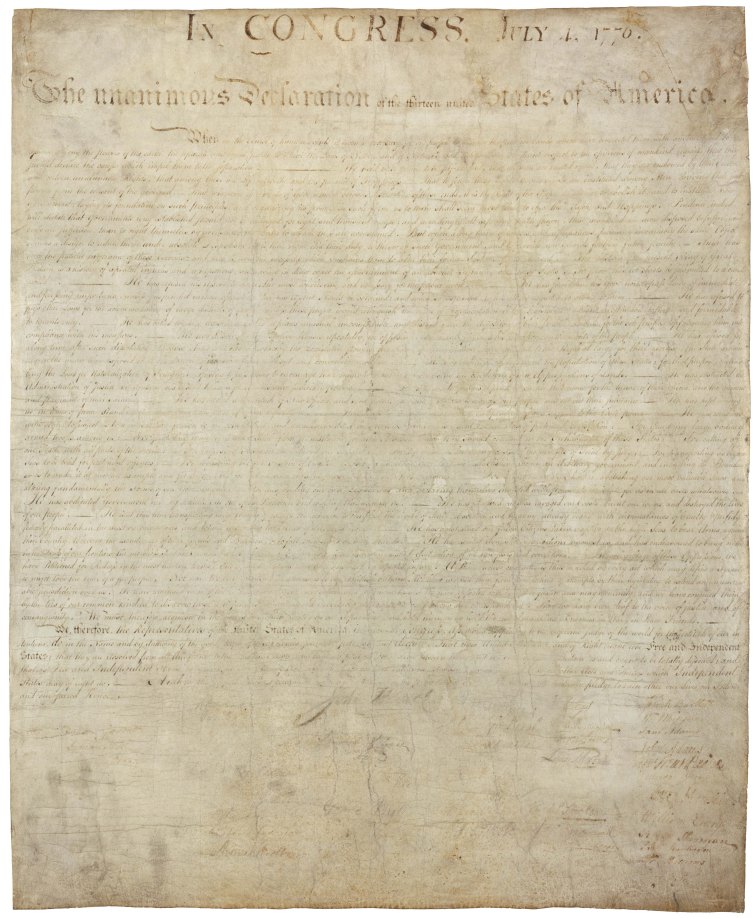
Contrary to Mr. Obama’s malicious assertion about his own country, the DNA of America — unique among the nations of the world — is not racism but the exact the opposite. In its very beginnings, America dedicated itself to the proposition that all men are created equal and were endowed by their Creator with the right to be free. Over the next two generations, America made good on that proposition, though this achievement is regularly slighted by “progressives” because it didn’t take place overnight.
-
Barack Obama walked right up to the line of apologizing for the U.S.’ bombing Hiroshima and Nagasaki, Japan, to force the end of World War II.
This is what Obama said, according to UPI via Breitbart:
President Barack Obama traveled to Hiroshima, Japan, on Friday, marking the first time a U.S. president has visited the site of the world’s first nuclear attack, carried out more than 70 years ago.
Obama arrived in Hiroshima Friday afternoon and along with Japanese Prime Minister Shinzo Abe, laid a wreath at the Hiroshima Peace Memorial — a UNESCO World Heritage Site that was built in 1915. Thirty years later, it was nearly decimated by the atomic bomb dropped by the United States. The structure, in fact, was the only one left standing near the bomb’s hypocenter.
The president is in Japan for the G7 Summit in Ise-Shima, following a visit to Vietnam.
“Seventy-one years ago on a bright cloudless morning, death fell from the sky and the world was changed,” Obama said at the Hiroshima Peace Memorial Park. “A flash of light and a wall of fire destroyed a city, and demonstrated that mankind possessed the means to destroy itself.”
Hiroshima was the first of two U.S. nuclear targets intended to bring an end to World War II in August 1945. Just after 8 a.m. on Aug. 6, a 393d Bombardment Squadron B-29, called the Enola Gay, dropped the bomb known as “Little Boy” on the southwestern Japanese industrial town.
The bomb contained about 140 pounds of uranium-235 and took about 45 seconds to reach its explosion altitude of 1,900 feet.
“Let all the souls here rest in peace, for we shall not repeat the evil,” the president said. “We come to ponder the terrible force unleashed in the not so distant past. We come to mourn the dead.”
Survivors in the Japanese town would later say they remembered seeing an extremely bright flash in the sky and heard a loud boom. Up to 80,000 people — about a third of Hiroshima’s population — were killed by the initial blast and firestorm. Another 70,000 were injured. Thousands more died in the decades after from radiation sickness.
Three days later, the world’s second, and most recent, atomic bombing leveled the city of Nagasaki, about 250 miles southwest of Hiroshima. Six days after the second bombing, Japan surrendered and brought World War II to an end.
Obama’s definition of “evil” was the decision to use the bombs instead of invading Japan, which, according to the military and historians, would have resulted in 1 million U.S. casualties and 2 million to 3 million Japanese casualties, both military and civilian. If you understand math, you understand that 80,000 plus 70,000 plus “thousands” plus however many casualties took place in Nagasaki are less than 2 to 3 million.
(By the way: For those who didn’t study history, this is what the Japanese did before and during World War II, including to Americans.)
Ben Shapiro adds:
On Friday, President Obama said America’s use of the A-bomb to end the threat of Japanese fascism sprang from American desire for conquest, suggested that America had ushered in an age of “atomic warfare,” and said that we could achieve a “world without nuclear weapons” if only we clapped for Tinkerbell. This came shortly after his visit to Vietnam, where his White House announced that America would start selling weapons to the communist dictatorship.
Yes, our president is a total disgrace. …
In case you were wondering, at no point did Obama mention Pearl Harbor and the dead there, or the more than 100,000 Americans who lost their lives in the Pacific theater, or the half-million to one million Americans who would have had to sacrifice themselves to storm the island of Japan using conventional means. As Noah Rothman tweets this morning, veterans were overjoyed at the use of the A-bomb, knowing it ended the war and meant they would live to see their children.
Obama noted that war is not unique in human history; he even went full moral relativist with regard to World War II itself: “the war grew out of the same base instinct for domination or conquest that had caused conflicts among the simplest tribes, an old pattern amplified by new capabilities and without new constraints.”
This is disgusting. If you can’t spot the bad guys and the good guys in World War II, of all conflicts, you’re on the side of a valueless nihilism that allows the possibility of future world wars – after all, you can’t take a strong stand against evil if it doesn’t exist. Japan was wrong. America was right. Germany was wrong. America was right. End of story. …
Obama noted that war is not unique in human history; he even went full moral relativist with regard to World War II itself: “the war grew out of the same base instinct for domination or conquest that had caused conflicts among the simplest tribes, an old pattern amplified by new capabilities and without new constraints.”
This is disgusting. If you can’t spot the bad guys and the good guys in World War II, of all conflicts, you’re on the side of a valueless nihilism that allows the possibility of future world wars – after all, you can’t take a strong stand against evil if it doesn’t exist. Japan was wrong. America was right. Germany was wrong. America was right. End of story.
But Obama continued his relativistic reverie:
How easily we learn to justify violence in the name of some higher cause. Every great religion promises a pathway to love and peace and righteousness, and yet no religion has been spared from believers who have claimed their faith as a license to kill.
Some religions are worse than others. Some ideologies are worse than others. But not according to Obama. We’re all equal in sin, according to the President of the United States – and the only solution is to destroy American nationalism, and replace it with some sort of Obama-created philosophy of peace:
The wars of the modern age teach us this truth. Hiroshima teaches this truth. Technological progress without an equivalent progress in human institutions can doom us. The scientific revolution that led to the splitting of an atom requires a moral revolution as well. That is why we come to this place….we have a shared responsibility to look directly into the eye of history and ask what we must do differently to curb such suffering again.
Here’s an answer: take pre-emptive action to stop tyrannically fascist states from starting wars and then vowing to fight them to the last man. But Obama forbids that solution expressly:
We may not be able to eliminate man’s capacity to do evil, so nations and the alliances that we form must possess the means to defend ourselves. But among those nations like my own that hold nuclear stockpiles, we must have the courage to escape the logic of fear and pursue a world without them. We may not realize this goal in my lifetime, but persistent effort can roll back the possibility of catastrophe. We can chart a course that leads to the destruction of these stockpiles. We can stop the spread to new nations and secure deadly materials from fanatics.
Obama is doing none of those things, because to deprive some nations of nuclear weapons while leaving moral nations with them would violate his code of moral equivalence. That’s why Iran will go nuclear within the next decade, why North Korea has gone nuclear, why rogue states around the world are rushing, in the absence of American power and influence, to arm up.
Obama doesn’t want realism. He wants the remaking of the world in his personal image. He wants humanity itself changed:
We must change our mind-set about war itself….we must reimagine our connection to one another as members of one human race. For this, too, is what makes our species unique. We’re not bound by genetic code to repeat the mistakes of the past. We can learn. We can choose. We can tell our children a different story, one that describes a common humanity, one that makes war less likely and cruelty less easily accepted…. Those who died, they are like us. Ordinary people understand this, I think. They do not want more war. They would rather that the wonders of science be focused on improving life and not eliminating it. When the choices made by nations, when the choices made by leaders, reflect this simple wisdom, then the lesson of Hiroshima is done.
Hiroshima was not a “mistake.” It was a wartime decision. Pearl Harbor wasn’t a “mistake.” It was an attack driven by an aggressive and imperialistic Japanese policy that also resulted in the invasion of China and the murder of 100,000 civilians there.
But Obama thinks that the way to stop war is to kill ideology altogether, not to support and strengthen proper ideologies. This is John Lennon’s Imagine on crack. And in practice, it’s meant the death of hundreds of thousands of people as Obama has pulled out of Iraq, sinking the region into total war up to and including the use of chemical weapons; the murder of thousands in Ukraine, as Obama has left the field clear for Vladimir Putin; the strengthening of the Iranian and North Korean terror regimes. Obama’s foreign policy leads to Hiroshima faster than Ronald Reagan’s peace through strength.
Obama continued, “The world was forever changed here, but today the children of this city will go through their day in peace.” Neglecting to mention that Japanese children were living in peace thanks precisely to the use of the A-bomb he was decrying, Obama concluded, “What a precious thing that is. It is worth protecting, and then extending to every child. That is a future we can choose, a future in which Hiroshima and Nagasaki are known not as the dawn of atomic warfare but as the start of our own moral awakening.”
As Jim Geraghty correctly notes at National Review, “Hiroshima and Nagasake weren’t the dawn of atomic warfare. Nobody’s used an atomic or nuclear weapon since then…How many people would have bet in 1945 that no nuclear weapons would be used in war in the next seventy years?” Also worth noting: as Max Roser shows, war deaths have declined markedly since the advent of nuclear weapons and interstate-conflict war deaths have declined most dramatically, largely because everybody knows that if things go too far, someone will push the button. According to Milton Leitenberg of Cornell University, there were somewhere between 136.5 and 148.5 million war deaths during the 20th century. “Only” 41 million of those came after 1945.
But Obama can’t acknowledge facts or history – they undercut his basic argument, which is that peace can only be achieved by unilateral surrender of American patriotism and by the rise of a borderless, nationless, valueless world.
Hiroshima happened because the world slept as fascism rose; Obama wishes to sleep on evil again (or worse, forward it), hoping that national narcolepsy becomes contagious internationally, and we share the same peaceful dreams. We don’t. If we go to sleep again, our enemies will use that reverie to rise. But Americans increasingly believe in Obamaism – more Americans now think using the A-bomb was wrong than right. The result will be more Hiroshimas after 70 years of nuclear peace.
Memorial Day ceremonies are taking place today throughout the U.S. to commemorate, among the almost 1.4 million American servicemen and servicewomen who died for their country, the 407,300 American soldiers who died in World War II. Imagine commemorating the deaths of 2.4 million Americans instead.
-
Two more Beatles anniversaries today: “Love Me Do” hit number one in 1964 …
… four years before the Beatles started work on their only double album. Perhaps that work was so hard that they couldn’t think of a more original title than: “The Beatles.” You may know it better, however, as “the White Album”:
-
This is more a pop than rock anniversary: One of the two funniest songs Johnny Cash performed, “One Piece at a Time,” hit number 29 today in 1976:
Birthdays start with Gary Brooker of Procol Harum:
-
Paul McCartney must like releasing albums in May. Today in 1971, he released his second post-Beatles album, “Ram,” which included his first post-Beatles number one single:
Birthdays today include Papa John Creech of the Jefferson Airplane:
Gladys Knight: