• Presty the DJ for Oct. 16

    October 16, 2011
    Music

    Today in 1972, Creedence Clearwater Revival split up:

    The number one single today in 1999:

    Today in 2006, CBGB, the New York rock club that launched many rock acts, closed:

    Birthdays begin with C. Fred Turner, who sang and played bass for Bachman–Turner Overdrive:

    Bob Weir plays guitar for the Grateful Dead:

    Tony Carey of Rainbow and the Planet P Project:

    Who is Michael Balzary? You know him better as Flea, bass player of the Red Hot Chili Peppers:

    Share this on …

    • Click to share on X (Opens in new window) X
    • Click to share on Facebook (Opens in new window) Facebook
    • Click to share on LinkedIn (Opens in new window) LinkedIn
    • Click to email a link to a friend (Opens in new window) Email
    • Click to print (Opens in new window) Print
    Like Loading…
    No comments on Presty the DJ for Oct. 16
  • Presty the DJ for Oct. 15

    October 15, 2011
    Music

    The number one single today in 1966:

    Today in 1971, Rick Nelson was booed at Madison Square Garden in New York when he dared to sing new material at a concert. That prompted him to write …

    If I told you the number one British album today in 1983 was “Genesis,” I would have given you the artist and the title:

    The number one album today in 1994 was REM’s “Monster”:

    Who shares a birthday with my wife?  One-hit-wonder Barry McGuire:

    Richard Carpenter, the surviving half of the Carpenters:

    Chris DeBurgh:

    Since it’s my wife’s birthday, here are her two favorite rock songs:

    On a non-sports note, because she was in Guatemala with the Peace Corps, she missed this:

    Share this on …

    • Click to share on X (Opens in new window) X
    • Click to share on Facebook (Opens in new window) Facebook
    • Click to share on LinkedIn (Opens in new window) LinkedIn
    • Click to email a link to a friend (Opens in new window) Email
    • Click to print (Opens in new window) Print
    Like Loading…
    1 comment on Presty the DJ for Oct. 15
  • Presty’s preferable prep pigskin playoff plan

    October 14, 2011
    Sports

    Tonight is the final night of regular-season high school football in Wisconsin.

    It is the first time the season has ended on a Friday in many years. (I may have announced the last Friday night season-finale game in the state, in fact, between winless Fennimore and winless Dodgeville in 1989.) Over the past couple of decades, teams have been playing their final regular-season games on Thursday or even Wednesday in anticipation of the first playoff game the following Tuesday.

    Coaches didn’t like the Thursday–Tuesday–Saturday cycle of putting three football games within 10 days at the end of the season. This has become more of an issue since the playoffs were expanded to 224 out of the state’s 400 or so high school teams (including co-op or tri-op teams). The WIAA has eliminated that issue by moving the season back, which means that the regular season now starts two weeks before Labor Day and ends in mid-October, which means that more of the football season is played (and more importantly preseason practice begins) in what is traditionally hot weather. The 2012 season will feature just eight regular-season games lest preseason practice start Aug. 1 to get the nine regular-season games and five rounds of playoffs in before gun deer hunting begins the Saturday before Thanksgiving.

    You might have figured out by that previous paragraph that high school football is an example of either Sir Isaac Newton’s Third Law of Motion — for every action there is an equal and opposite reaction — or the Law of Unintended Consequences, or a game of Whackamole — fix one thing and something else comes up.

    High school football playoffs are 35 years old in Wisconsin. (But some states have no statewide football playoffs.) And for at least that long the WIAA has been fiddling with the football playoff format at the behest of coaches, school administrators and others. The playoffs started with four classes in 1976, went to five divisions in 1978, six in 1981, and seven in 2002, two years after the Wisconsin Independent Schools Athletic Association was swallowed up by the WIAA. The playoffs started with four teams per class in 1976, went to eight teams per division in 1981, then 16 per division in 1987, and 32 per division in 1996.

    And yet, football is the only WIAA-sanctioned high school sport in Wisconsin where not every team plays in the playoffs. I have yet to get a satisfactory answer as to why football is singled out other than some variation of “because it’s football.” (Which is kind of an after-the-fact justification of my not playing high school football … that and my lack of athletic ability and my disinterest in spending much of my sacrosanct summer getting my brains beaten in by someone bigger and meaner than me.)

    One objection to letting everyone into the playoffs is what happens when a number one seed plays a winless team in the first round. (One athletic director from whom I heard this coached a team that went from a state championship one season to a winless season three years later.) Of course, the same thing happens now when teams on top of their conferences play their bottom brethren.

    Football is the 800-pound gorilla in the room whenever conference arrangements are discussed. Conferences are arranged based on three criteria, the third being the sports offered among the schools. Criterion 1A is the size of the schools; criterion 1B is the distance between the schools. Whether 1A or 1B is more important depends on the decade; we appear to be in an era where 1A trumps 1B, which is odd in an era of gas prices approaching $4 per gallon and diesel approaching $5 per gallon and, by the way, a lousy economy. On the other hand, the sport in which the disparity of school size has the biggest impact is football; generally, the bigger the school, the more players you have available.

    The WIAA proposed a radical change in high school football two years ago when it created a plan to replace conference affiliation for football with eight-team football-only districts. Teams that finished first through fourth would advance to the playoffs; teams that finished fifth through eighth would have one more game against a team that finished in its same position in another district. I still like the so-called district proposal, because it would allow conferences to be realigned based on geography while football districts would be based on enrollment, but apparently few others did.

    The newest proposal leaves conferences where they are, but changes things more radically in other senses. The traditional formula of nonconference game(s) followed by conference games followed by playoffs would be rearranged. Each team would play seven conference games, followed by a playoff game. Playoff winners would move on, while playoff losers would go into an “extended season” of two more games (along with the losers of second-round games), so that every school would play at least 10 games. The “extended season” would be similar to today’s nonconference game(s) except that teams that lose their playoff game wouldn’t know who they would be playing in their final two games.

    One advantage of the new proposal is that it treats football the same as all other WIAA-sanctioned sports. Another is that it would, I think, improve the lot of perennial non-playoff teams not because every team would get into the playoffs, but because seasons would be longer. One reason the same teams end up in the playoffs every season, I believe, is that playoff teams get more practice than non-playoff teams, since their seasons are longer. (Unlike in some football-crazy states, teams do not practice after their seasons end.) That’s helpful for the non-seniors, this season’s backups who become next season’s key performers.

    My example is the Ripon football team between 2003 and 2006, when the Tigers won two state titles and advanced to the third round in two other seasons. Over those four seasons of nine regular-season games, the Tigers played 52 football games, which means they had (under the aforementioned three-games-in-10-days schedule) 12 more weeks of practice than non-playoff teams of that era.

    The downside is that it would eliminate some of the great nonconference rivalries, such as tonight’s annual China Bull game between Omro and Winneconne. In the aforementioned 2003-to-2006 period, Ripon played Sheboygan Falls in each team’s last game before their conference seasons. The first three seasons, Ripon won 56–36, 15–8 and 12–6 in three tremendous games. Playing two games at the end of the season with not much at stake is not likely to generate much fan interest.

    My suggestion is to move one of those “extended season” games from the end to the beginning — to give each team, as in the district proposal, one nonconference game followed by seven conference games followed by a playoff game, with the playoff losers then playing one more game, instead of two. That gives everyone 10 games and, more importantly, 10 weeks of practice when the season begins. The top two teams in each division would be back to 14 games instead of 13 in the current proposal, but that affects just 14 of the state’s more than 400 football teams. This isn’t a perfect plan, but I think it deals with the major downsides of the current playoff system and the current alternatives.

    High school sports is supposed to be about the benefits of participating — learning how to work together for common goals, placing the team over the individual, learning how to prepare, the importance of doing well whether you’re recognized or not, and learning how to deal with adversity. It is also about working and preparing to win, even if you don’t win. I don’t believe any of that would be lost by letting all teams into the football playoffs, since every other team (and every varsity individual) in every other sport gets to participate in the postseason. And it might improve the state of football overall because teams would practice and play more.


    Share this on …

    • Click to share on X (Opens in new window) X
    • Click to share on Facebook (Opens in new window) Facebook
    • Click to share on LinkedIn (Opens in new window) LinkedIn
    • Click to email a link to a friend (Opens in new window) Email
    • Click to print (Opens in new window) Print
    Like Loading…
    1 comment on Presty’s preferable prep pigskin playoff plan
  • Presty the DJ for Oct. 14

    October 14, 2011
    Music

    The number one song today in 1957 was the Everly Brothers’ first number one:

    The number one British single today in 1960:

    The number one album today in 1967 is about an event that supposedly took place on my birthday:

    Today in 1971, Arco Industries filed suit against John Fogerty because it claimed that Creedence Clearwater Revival’s “Travelin’ Band” …

    … “contained substantial material copied” from Little Richard’s “Good Golly Miss Molly”:

    The suit was later dropped.

    The number one song today in 1972 was perhaps the first song ever written about a carnivorous rat:

    The number one album today in 1989:

    Birthdays begin with Cliff Richard, a much bigger star on the other side of the Atlantic than here:

    Colin Hodgkinson of Whitesnake:

    Justin Hayward of the Moody Blues:

    Dan McCafferty of Nazareth:

    Thomas Dolby:

    One death of note: Composer and conductor Leonard Bernstein, today in 1989:

    Share this on …

    • Click to share on X (Opens in new window) X
    • Click to share on Facebook (Opens in new window) Facebook
    • Click to share on LinkedIn (Opens in new window) LinkedIn
    • Click to email a link to a friend (Opens in new window) Email
    • Click to print (Opens in new window) Print
    Like Loading…
    No comments on Presty the DJ for Oct. 14
  • The nickname that must not be named

    October 13, 2011
    Wisconsin politics

    On Friday, the oldest high school football rivalry in the state resumes as Berlin plays at Ripon.

    It may be the last meeting between the Berlin Indians and the Ripon Tigers. That is because by this time next year, Berlin will have to have another nickname besides “Indians,” thanks to the state Department of Public Instruction, which ruled that Berlin’s “Indians” is derogatory.

    Or perhaps not. The Mukwonago school district won in Waukesha County Circuit Court when a judge declared the Indian mascot law unconstitutional under the provision in which a DPI examiner decides whether the mascot is permissible. The judge ruled that having a DPI examiner, attorney Paul Sherman, decide was a conflict of interest. Sherman also decided that Berlin can’t be the Indians anymore, according to the Milwaukee Journal Sentinel.

    Kevin Binversie describes how we got to this silliness:

    Under Wisconsin law, school districts are placed under a quasi-judicial procedure before the state’s Department of Public Instruction, or DPI, if any complaint from a district resident is filed against the school. It would then be up to a DPI bureaucrat to decide if the mascot “promotes stereotyping, pupil harassment, and discrimination.”

    Each of the four schools — Osseo–Fairchild, Kewaunee, Mukwonago and Berlin — hit with complaints violated the law. Since these rulings came down, Kewaunee changed its name from Indians to Storm before a hearing took place, and according to the Wisconsin Interscholastic Athletic Association, Osseo–Fairchild has yet to determine a replacement for its old nickname, Chieftains.

    Four other school districts — Gale–Ettrick–Trempealeau, Menominee, Poynette and Wonewoc–Center — switched their nicknames in the past four years. Menominee School District officials told WEAU-TV in Eau Claire in September the reason for their switch was out of fear that they may be the next target of a complaint to DPI.

    This law likely was intended as the start of a second attempt to purge Native American mascots in Wisconsin. In the early 1990s, under fear and threat of costly lawsuits, many school districts backed away from their original nicknames. Sheboygan South’s Redmen became the Redwings, and the Indians of Seymour became the Thunder. Meanwhile, dozens of schools known as either the Raiders or Warriors found themselves in binds over whether their logo would lead to costly litigation.

    The law stipulates that only one complaint from one school district resident is required to start the nickname-erasure process. (And it certainly demonstrates the times we live in when governmental bodies make decisions because of fear of what a higher level of government will do to them.) Read the Save the Berlin High School Mascot! group on Facebook, and you will conclude that the complainant in Berlin’s case did it out of spite to his neighbors.

    Additional controversy in Berlin’s case comes from the Berlin High School Homecoming parade, where three students carried this sign:

    My wife, who  is part American Indian (which means our kids are too), grew up on a farm between Lancaster (Flying Arrows) and Potosi (Chieftains). Northeast of Lancaster is the Riverdale (Chieftains) and Seneca (Indians) school districts. Potosi is in the same athletic conference as Belmont (Braves) and Black Hawk (Warriors). South of Ripon is Waupun (Warriors), and west of Ripon is Wisconsin Dells (Chiefs).

    This is not limited to high schools. After I announce the Tigers and Indians Friday, I’ll be announcing Ripon College against Beloit College Saturday afternoon. Ripon used to be known as the Redmen, reportedly (though this is not clear) to honor 1920s Ripon football player and coach Donald “Red” Martin. The Redmen became the Red Hawks in the 1990s. Two weeks ago, Ripon played Knox College, which changed its nickname from the Siwash (formerly a local tribe) to the Prairie Fire for the same reasons.

    The Democratic-controlled Legislature passed and Gov. James Doyle signed the anti-Indian-mascot bill (which included no state aid for the expenses of replacing a mascot, making it yet another unfunded mandate) after major lobbying by the Wisconsin Indian Education Association, which claims that “Indians are people — not mascots.” So, you ask, where is the effort to extend this people-not-mascots initiative to places like Stoughton (Vikings), Freedom (Irish), Sparta (Spartans) or Oostburg (Flying Dutchmen)? Why are, in order, Norwegians, Irish, Greeks or Dutch Wisconsinites not fighting to eliminate those nicknames? (For that matter, one would think given Ireland’s history with Great Britain that the Irish would be trying to eliminate the nickname of my alma mater, Madison La Follette — the Lancers and our English logos.)

    There are two reasons. The first is that the WIEA claims to have education on its side. It has an entire page of the supposedly pernicious effects of Indian mascots on American Indian children. Read through, and you’ll get an idea of the progressivism at its worst, tyranny of the experts, psychobabble, political correctness and, to borrow George W. Bush’s phrase, soft bigotry of low expectations inherent in educational research today.

    Binversie brings up the other reason:

    With the Mukwonago decision now out there, it may be the opportune time to repeal the current flawed law or simply correct it. State Rep. Steve Nass, R-Whitewater, has been working on repeal legislation for a year and said last week’s decision could spark enough action inside the Legislature for his bill to move out of the Assembly’s Homeland Security and State Affairs Committee.

    Nass is cautious about its chances for success though, blaming backroom dealing among committee chairman Karl Van Roy, R-Green Bay, Assembly Speaker Jeff Fitzgerald, R-Horicon, and moneyed interests fueled by tribal casinos.

    “From the beginning, Chairman Van Roy has refused to allow this bill to move forward in the committee process,” Nass said. “Chairman Van Roy’s decision has previously been backed by Speaker Fitzgerald based on the strong opposition of the state’s Indian Tribes, especially the Potawatomi Tribe.”

    Van Roy was one of two Republicans to vote for the original legislation in 2010.

    Thanks to Indian tribal gaming, the tribes are big political players in this state. Given tribes’ support of Democrats ever since the federal court ruling that allowed tribal gaming as long as the state allows such gaming as a lottery and bingo (which was in part paid off by Doyle’s indefinitely extending tribal gaming compacts a decade ago), Van Roy and Fitzgerald are mistaken if they think they’re going to get more tribal money or votes by burying the bill in committee. The spurious accusations of racism against Republicans haven’t gone away in the two years since this legislation became law, have they?

    There are some interesting local ironies. The 14th Senate District is represented by Sen. Luther Olsen (R–Ripon), a Berlin High School graduate. The 14th also includes the Weyauwega–Fremont School District, which shares Berlin’s nickname. Yet Olsen has not publicly (as far as I know) come out to support repealing the bill. Olsen’s Recallarama opponent, Rep. Fred Clark (D–Baraboo), who voted for the bill when the Democrats controlled the Assembly, never bothered to explain where Berlin, Weyauwega–Fremont and other Indian-nicknamed school districts should get the money to change athletic and band uniforms, insignia on athletic facility walls, and other uses of the logos.

    The other irony is in the circuit court decision, as Mike Nichols notes:

    As he said during his deposition in the lawsuit against him and [Superintendent of Public Instruction Tony] Evers, he works for DPI, whose leadership is on record as saying it wants to get rid of all race-based nicknames. The way the law and DPI are structured, it would probably be impossible for Sherman to be fair to school districts and keep his job.

    The process, in other words, is biased against districts that happen to have harmless nicknames tied to the American Indian history of their communities.

    The districts are getting railroaded because, under a state law [Circuit Judge Donald] Hassin said he finds “uncommonly silly,” a single complaint filed with DPI against a school district will almost certainly result in the district having to find a new nickname.

    The district gets a hearing in front of someone such as Sherman — but the result is essentially predetermined because the burden is not on those who complain to prove the districts are discriminating with their nicknames. The burden is on the districts to prove they are not.

    This, it turns out, is about as easy as proving you’ve never swallowed a salamander or worn pink underwear. You can argue all you want that you find salamanders unappetizing and much prefer lavender, but how do you prove it?

    Patrick Gasper, spokesman for DPI, said the department is required to uphold the law and hasn’t decided whether to appeal Hassin’s decision.

    Maybe they should make a different sort of appeal: one to the Legislature to get rid of the officially silly law once and for all.

    Until then, there are dozens of school districts in Wisconsin where a citizen could file a complaint and, without proving anything, get DPI to aid and abet in labeling the district discriminatory — no matter what the facts are.

    Too bad the folks who fight so hard against bias don’t recognize it in themselves.

    The final irony is that no one chooses an athletic mascot for the purpose of self-derogation. Most athletic logos are chosen because of the kinds of qualities inherent in the symbol — strength, bravery, endurance, cleverness,  and so on. (Berlin’s “Indians” are named for the Mascoutin tribe, which formerly lived in the area.)

    If there is any derogatory intent, it’s found not in the athletic teams, but in their opponents should they, for instance, call to “Scalp the Indians” or “Sink the Vikings” or whatever. That is covered in the WIAA’s and Midwest Conference’s admonitions, announced before games, against derogatory cheers. But if that weren’t the case, so what? (Neither the First Amendment to the U.S. Constitution nor the Wisconsin Constitution give you the right to not have your feelings hurt or to not be offended.) Binversie points out:

    But is it racist to have a mascot of just “Indians” or something like “Blackhawks,” the second-most common Native American mascot name in Wisconsin?

    Hardly.

    Mascots are not meant by design to be divisive entities in their communities, but instead they are rallying point, something the community can get behind and join. This may be why those committed to the extinction of all Native American mascots in Wisconsin also are opposed to letting communities decide these matters on their own through local referendums.

    They know the votes aren’t there to get the outcome they would prefer, so they are left with resorting to using the governmental cudgel of DPI to get what they want.

    The law needs to be changed to give, at minimum, communities a voice in their own defense, if not just a voice before their own state government. If it can’t be changed for the betterment of that principle, then it needs to be repealed outright.

    What happens next in Berlin is an interesting question, because it gives the school district the unappealing choice of spending thousands of dollars defending itself in court, or spending thousands of dollars getting rid of all the logos, particularly given the unpopularity of the latter choice. The Berlin School District’s administrator told WFRV-TV that the school district wouldn’t appeal. On the other hand, a public meeting about the mascot will be held Monday evening. (And given the Waukesha County decision and the similarity to the Berlin case, one wonders if the law now can be legally enforced, since the constitutional flaw was in how the law was written.)

    I’m surprised no one has yet brought up the R-word — recall — against any Berlin school board member who supports eliminating the Indian mascot. Unlike the recalls over public employee collective bargaining, eliminating the Berlin Indian will cost the school district significant money. If I lived in the Berlin school district and the mascot was changed against my wishes, I would certainly feel free to never again vote for any referendum the school district sought, whether for a new school building or to exceed revenue caps.

    This is the sort of thing that makes people hate government. To assuage a special interest group, state government mandates spending millions of dollars (the collective cost of erasing Indian mascots from Wisconsin) and/or otherwise depriving us of our liberties and our traditions in the name of trendy social change. Who benefits from getting rid of Indian mascots? No one.

    Share this on …

    • Click to share on X (Opens in new window) X
    • Click to share on Facebook (Opens in new window) Facebook
    • Click to share on LinkedIn (Opens in new window) LinkedIn
    • Click to email a link to a friend (Opens in new window) Email
    • Click to print (Opens in new window) Print
    Like Loading…
    1 comment on The nickname that must not be named
  • Prozac for the president, and lithium for liberals?

    October 13, 2011
    US politics

    The Wall Street Journal’s James Taranto thinks Democrats and liberals are bracing for the de-election of President Obama in 13 months:

    [HotAir.com’s Howard] Portnoy observes: “What I believe is happening is that the left is reading the handwriting on the wall and resigning itself to the harsh reality [that] the man they trusted to ‘fundamentally transform America’ is on the verge of being unelected.”

    We’d go a step further. Not only does Obama’s re-election look to be in serious jeopardy, but his presidency has been an almost unmitigated disaster for progressive liberalism, nearly every tenet of which has been revealed to be untenable either practically, politically or both.

    Stimulus Sr. discredited Keynesian demand-side economics–the notion that the way to produce employment and growth is through massive government spending. The real tragedy is that even after blowing hundreds of billions of dollars, Obama and many other Democrats failed to learn the lesson.

    ObamaCare proved a political fiasco, showing that there are limits to Americans’ willingness to tolerate the expansion of the welfare state. Because most provisions have not yet taken effect, the policy disaster is delayed and may be averted if either Congress repeals it in 2013 or the Supreme Court strikes it down as unconstitutional next year. The latter case would mark a huge legal defeat for liberalism. It would be the first time since the New Deal that the court has recognized a serious limitation on Congress’s power to regulate interstate commerce.

    Even something as small as Bank of America’s recently announced $5-a-month debit-card fee is liberal policy failure. The fee is intended to recoup money lost by price controls on merchant fees included in last year’s Dodd-Frank law.

    The power of unions has diminished, with Wisconsin, the first state to establish so-called collective bargaining for government employees, having abolished it. “Card check,” which would have enabled unions to take over workplaces without approval by secret ballot, couldn’t even get past a Democratic Congress. Neither could “cap and trade,” the administration’s plan to combat global warming–a phenomenon increasingly many Americans suspect is a hoax.

    The administration’s only major success has been in the area of terrorism. Osama bin Laden and Anwar al-Awlaki are dead, and long may they rot. But their deaths were not the result of progressive liberal policies. Except in the area of interrogation, the current administration has largely kept its predecessor’s antiterror policies, albeit often reluctantly. …

    The left got what it wanted in 2008: a liberal president with a sweeping agenda and big Democratic majorities capable of enacting it. The result has been a great and failed experiment in progressive politics and governance. In due course, one hopes, the left will absorb some lessons–but for now, they seem to be suffering a nervous breakdown.

    This is similar to the strange narrative that suggests that Obama is clinically depressed, reported a month ago by Gawker:

    We hear the New York Times is looking into whether it’s all starting to get to him—like, clinically.

    We’re told by a source inside the Times that the paper is preparing a story arguing that Obama no longer finds joy in the political back-and-forth, has seemed increasingly listless to associates, and is generally exhibiting the litany of signs that late-night cable commercials will tell you add up to depression. Or maybe Low T.

    Either way, the investigation was described to us as taking seriously the notion that Obama may be suffering from a depressive episode. Of course, absent a telltale Wellbutrin prescription or testimony from the man himself, it’s really impossible to achieve a reliable diagnosis. And a story like “Obama Appears to Suffer From Depression” can be easily downgraded to “Political Travails Begin to Take Personal Toll on Obama.” So the story in question, if it ever comes out, may not end up supporting the depression thesis. But rest assured: There are people at the Times who, based on the paper’s reporting, believe Obama is depressed—the kind of depression where, if he weren’t the president of the United States, he wouldn’t be getting out of bed in the morning.

    Given what Obama and his minions have been doing to the country, if Obama is indeed depressed, this could be considered karmic payback, except that said payback doesn’t help the country at all. (As I’ve pointed out before, we do not want Joe Biden as president either.) It also could be the result of unrealized optimism that Obama, who has never lacked for ego, could indeed transform the country — you know, “care for the sick and good jobs for the jobless,” “when the rise of the oceans began to slow and our planet began to heal,” etc., etc., etc.

    George Will once wrote that “The nice part about being a pessimist is that you are constantly being either proven right or pleasantly surprised,” which is why he claimed that pessimists are happier than optimists. I assume, for instance, that despite the continued efforts of Obama and his apparatchiks (see Occupy Wall Street) to ruin our lives and destroy this country, the Republicans will screw up and we’ll be stuck with the audacity of hype for another four years. Obama should remember the words of his favorite failed economist, John Maynard Keynes: “In the long run we are all dead.”


    Share this on …

    • Click to share on X (Opens in new window) X
    • Click to share on Facebook (Opens in new window) Facebook
    • Click to share on LinkedIn (Opens in new window) LinkedIn
    • Click to email a link to a friend (Opens in new window) Email
    • Click to print (Opens in new window) Print
    Like Loading…
    No comments on Prozac for the president, and lithium for liberals?
  • Presty the DJ for Oct. 13

    October 13, 2011
    Music

    The number one British album today in 1973 was the Rolling Stones’ “Goats Head Soup,” despite (or perhaps because of) the BBC’s ban of one of its songs, “Star Star”:

    Who shares a birthday with my brother (who celebrated his sixth birthday, on a Friday the 13th, by getting chicken pox from me)? Start with Paul Simon:

    Robert Lamm plays keyboards — or more accurately, the keytar — for Chicago:

    Sammy Hagar:

    Craig McGregor of Foghat:

    John Ford Coley, formerly a duet with England Dan Seals:

    Rob Marche played guitar for the Jo Boxers, who …

    One death of note: Ed Sullivan, whose Sunday night CBS-TV show showed off rock and roll (plus Topo Gigio and Senor Wences) to millions, died today in 1974:

    Share this on …

    • Click to share on X (Opens in new window) X
    • Click to share on Facebook (Opens in new window) Facebook
    • Click to share on LinkedIn (Opens in new window) LinkedIn
    • Click to email a link to a friend (Opens in new window) Email
    • Click to print (Opens in new window) Print
    Like Loading…
    No comments on Presty the DJ for Oct. 13
  • Government Motors, and Grossly Missing the market

    October 12, 2011
    US business, US politics, Wheels

    I have spent time on Twitter and Facebook making fun of our vice president, Joe Biden, the possessor of a two-digit IQ but a mile-wide mouth.

    I’ve written that Biden makes Dan Quayle look like a Phi Beta Kappa in comparison. Biden is Barack Obama’s impeachment insurance. Biden is to national politics what former U.S. Rep. Steve Kagen (D–Appleton) was to Wisconsin politics — someone whose ego was in inverse proportion to his intelligence.

    But to prove that a stopped (digital) clock is right once a day, Biden has one commendable attribute: He owns a Corvette, as he bragged in an interview with Car and Driver:

    C/D: Which cars do you most recall?

    JB: I bought a ’51 Studebaker. My dad thought it was nice and calm, but it had that overdrive, and it was fast. Then I bought a 1952 Plymouth convertible, candy-apple red with a split windshield. I think that was my favorite. I had a ’56 Chevy, then in college I bought a 100,000-mile Mercedes 190SL with those Solex carburetors that never functioned. And I still have my 1967 Goodwood-green Corvette, 327, 350-horse, with a rear-axle ratio that really gets up and goes. The Secret Service won’t let me drive it. I’m not allowed to drive anything. It’s the one thing I hate about this job. I’m serious.

    Well, we can all hope that Biden gets the chance to drive the Corvette after Jan. 20, 2013. I’m serious.

    Not surprisingly, Biden touts the government bailouts of General Motors and Chrysler:

    C/D: It must be gratifying to see Chrysler pay off its government loans six years early. Where is GM in its payback schedule?

    JB: GM is on schedule. They’ve paid back a significant portion. We still hold 33.3 percent of GM common equity, but the point is that 33.3 percent is worth something. So taxpayers have an asset. But the best news is GM is talking about hiring back essentially the last of the laid-off workers by year’s end. No one ever thought we’d get there.

    C/D: You said the loss of GM and Chrysler would’ve killed a million jobs?

    JB: One million, absolutely. The critics talk about, “Oh, the market would have balanced things out.” But that’s like saying, “In the long run, we’ll all be dead.” Had we not forced the car companies to reorganize, then given them help, well, the failure of the suppliers then could have caused Ford to fail as well. So this has exceeded everyone’s expectations.

    That’s Biden’s (which means Obama’s) view. Now here’s reality, as observed by Megan McArdle of The Atlantic:

    What lesson, exactly, are we supposed to learn from this “success”?  What question did it answer? “Can the government keep companies operating if it is willing to give them a virtually interest free loan of $50 billion, and a tax-free gift of $20 billion or so?”  I don’t think that this was really in dispute. When all is said and done, we will probably have given them a sum equal to its 2007 market cap and roughly four times GM’s 2008 market capitalization.
    No, the question was not whether GM could make a profit after a bankruptcy that stiffed most of its creditors and shed the most grotesque burdens of its legacy costs, nor whether giving companies money will make them more profitable.  The question is whether it was worth it to the taxpayer to burn $10-20 billion in order to give the company another shot at life. To put that in perspective, GM had about 75,000 hourly workers before the bankruptcy. We could have given each of them a cool $250,000 and still come out well ahead compared to the ultimate cost of the bailout including the tax breaks–and over $100,000 a piece if we just wanted to break even against our losses on the common stock.
    And if we’d done that, we’d have saved ourselves in other ways.  We would have reduced some of the overcapacity that plagues the global industry.  We would not have seen the government throwing its weight into a bankruptcy proceeding in order to redistribute money from creditors to pensioners, which isn’t a good precedent.
    But even if you still think that the bailout was a good idea, there’s something you should consider before we start celebrating the administration’s Solomonic wisdom: the Obama administration’s rush to dispose of its GM stake before the 2012 election is probably costing us billions. No one I interviewed for my piece on GM was exactly enthusiastic about an early IPO; doing it so quickly meant that the company had very little to show in the way of earnings and stability.

    Car and Driver didn’t bother to ask Biden why the Obama administration is working hard to make sure that no one will be able to buy the 2000s equivalent of Biden’s Corvette. Fuel economy regulations the administration is jamming down our throats and pollution regulations Obama is trying to jam down our throats mean that cars will get smaller and less capable but more expensive. (Particularly pickup trucks and sport-utility vehicles, which GM was able to build and sell at a profit before 2008 happened. GM also makes money on Corvettes.) But that’s OK because given what the Obama administration is doing to the economy and specifically to the dollar (not to mention Obama’s plans for carbon taxes), neither you nor I will be able to afford a new vehicle from GM or any other carmaker anyway. (Which appears to be what the administration wants given the money it is wasting on “high-speed” rail.)

    This is the kind of “industrial policy” that a majority of voters decided they wanted in November 2008. That includes the infamous Cash for Clunkers, explained in this comment:

    You had people with 15 year old Ford Explorers that were paid off that still ran perfectly fine.  Sure their mpgs went from 18mpg to 28.  However, their monthly payments went from $0 to $400.  In the course of a 5 year loan that’s $24,000.  That much money buys you 6,000 gallons of gas (at $4/gal) which allows you to drive a bit over 100K miles. You’d have to drive for a decade just to break even.  I’m also willing to bet that an Explorer can run another 10 years before going to the scrap yard over your brand new Chevy Cruze.

    The question car enthusiasts ask is what car-buyers will get in exchange for the tens of billions of our tax dollars. And based on this Motor Trend interview with GM’s Mark Reuss, you should not be optimistic:

    With CAFE regulations only expected to tighten, Reuss sees the truck market evolving into more specialized vehicles. Referencing his time abroad living in countries with much higher fuel prices, Reuss noted that people tended to use the best vehicle for their needs rather than a catch-all pickup truck like you find in America today. He gave the example of a flower shop making deliveries with a full-size [Ford] E-Series van when a Transit Connect would work fine. Where today he sees American craftsman buying a pickup truck that can do anything from hauling the family to hauling a horse trailer, in the future he sees them buying fewer all-purpose trucks and more vehicles that fit their specific needs.

    You may have seen Chevrolet’s incredibly annoying Volt commercials. If you have, you know that the Volt is a gas/electric car that can be plugged in. Chevy’s goal was to sell 10,000 Volts in 2011, at about $32,500, including a $7,500 federal tax rebate. According to Jalopnik.com, through the end of September, Chevy had shipped to dealers (sales plus those sitting on car lots) 3,895 Volts, with more than 2,600 of them for sale. Do the math, and in nine months Chevy has sold around 1,200 Volts, about 130 of them per month, including 723 in September. In contrast, Chevy sold 5,246 Suburbans in September.

    The financial experts say that families should spend no more than one-third to one-half their annual income on a vehicle. (As of 2009, the average car cost 22.1 weeks of family income.) When you consider all the things that families do — commuting to work, transporting kids to their various activities, or pulling a trailer, camper or boat — the idea that a family will buy one vehicle per family need is absurd, not to mention unaffordable. Between costs and the fact that vehicles last longer, families will be looking for more, not less, out of their vehicles. If GM can’t figure that out, then all that taxpayer money was wasted, because GM will not be long for this world. (Nor, one thinks, will be activities that require further carbon emissions, such as boating or snowmobiling.)

    Alfred Sloan, the long-time chairman of GM, was fond of a term called “planned obsolescence,” which would prompt new car sales when cars wore out or their owners got tired of them. That seems to be what the carmakers seem to be refoisting on consumers with such technologies as cylinder deactivation and start–stop, where cars’ engines shut off at stop lights to allegedly save fuel and emissions.

    The latter came to mind Monday when I dropped off our oldest son at his soccer match, went back home to pick up our daughter from Girl Scouts, and returned to the other side of Ripon to pick up our other son (his school is across the street from the park where the soccer field is located), and watch said soccer match. Between our house and the school and soccer field, route alternative one includes three stoplights, one four-way stop sign and two additional stop signs; alternative two replaces the two stoplights with one more four-way stop and two more stop signs. One trip means a dozen opportunities for your start–stop-equipped car to shut off its engine. It is impossible for me to imagine that such a system will not decrease the life of the vehicle on which it is equipped. That may represent an opportunity to sell another car for GM; for me,  it’s a reason to not buy a car so equipped.

    GM’s recent government-fueled (see McArdle’s explanation) profits notwithstanding, the thing automakers appear to have not grasped yet is that their future includes fewer, not more, vehicle sales. Businesses make profits in an era of reduced sales by increasing profits on each sale. If cars last longer, over time automakers will sell fewer of them, and at some point carmakers will run out of new markets. (China, for instance, which appears to be taking a 180-degree turn away from freedom.) A company increases profits by some combination of increasing revenues and reducing expenses. (See United Auto Workers.)

    This is the time of year where automakers used to roll out their new cars and car enthusiasts would be excited about said new cars. Automakers now roll them out all year, but even independent of that, there’s nothing particularly exciting or, more importantly, useful coming from the automakers these days that could be considered affordable. I will believe in the value of hybrids or all-electric vehicles as soon as our family of five and all their stuff can fit in one and be transported to our three-digit-mileage destination without making their parents bankrupt paying for said vehicle. That’s not happening anytime soon.

    Share this on …

    • Click to share on X (Opens in new window) X
    • Click to share on Facebook (Opens in new window) Facebook
    • Click to share on LinkedIn (Opens in new window) LinkedIn
    • Click to email a link to a friend (Opens in new window) Email
    • Click to print (Opens in new window) Print
    Like Loading…
    No comments on Government Motors, and Grossly Missing the market
  • Presty the DJ for Oct. 12

    October 12, 2011
    Music

    We begin with an entry from the It Seemed Like a Good Idea at the Time Dept.: Today in 1956, Chrysler Corp. launched its 1957 car lineup with a new option: a record player. The record player didn’t play albums or 45s, however; it played only seven-inch discs at 16⅔ rpm. Chrysler sold them until 1961.

    Today in 1957, Little Richard was on an Australian tour when he publicly renounced rock and roll and embraced religion and announced he was going to record Gospel music from now on. The conversion was the result of his praying during a flight when one of the plane’s engines caught fire.

    Little Richard returned to rock and roll five years later.

    The number one song today in 1963:

    The number one album today in 1968 was Big Brother and the Holding Company’s “Cheap Thrills”:

    The short list of birthdays starts with a British composer familiar to high school band members everywhere: Ralph Vaughan Williams:

    Sam Moore, half of Sam and Dave:

    The deep-voiced Melvin Franklin was one of the original Temptations:

    Pat Dinizio sang for the Smithereens:

    Two deaths of note: Gene Vincent died of a perforated ulcer at 36 today in 1971:

    Ricky Wilson, who played guitar for the B-52s, died of AIDS today in 1985:

    Share this on …

    • Click to share on X (Opens in new window) X
    • Click to share on Facebook (Opens in new window) Facebook
    • Click to share on LinkedIn (Opens in new window) LinkedIn
    • Click to email a link to a friend (Opens in new window) Email
    • Click to print (Opens in new window) Print
    Like Loading…
    No comments on Presty the DJ for Oct. 12
  • Second verse, same as the first, six years later

    October 11, 2011
    US politics, Wisconsin politics

    One of the unpleasant aspects of the two-party system is how people decide to run for an office then, after they don’t win but their primary competitor does, you never hear from them until the winner loses or decides to leave office.

    Consider, for instance, Nancy Nusbaum, who ran against U.S. Rep. Toby Roth (R–Appleton) in 1994, then ran against Steve Kagen, who mistakenly won the Eighth Congressional District Democratic primary in 2006. Regardless of whether you agree with Nusbaum politically, anyone who knows her knows that Nusbaum clearly had more political experience and more going on upstairs than Kagen. So why didn’t Nusbaum ran against Kagen, who embarrassed the Eighth Congressional District every time he opened his mouth, in 2008 or 2010?

    Another candidate against Kagen was Jamie Wall, the Green Bay business consultant and former state Department of Commerce administrator who ran against Kagen in 2006 (but not 2008 or 2010), and now wants to run against the man who mercifully ended (for now) Kagen’s political career, U.S. Rep. Reid Ribble (R–Sherwood).

    The Green Bay Press–Gazette reports that Wall is “Frustrated with what he sees as a ‘mess’ in Washington,” as if this is a new development:

    “Congress is broken,” Wall said. “It’s time for members of Congress to act like adults instead of squabbling children (and) focus on the issues that matter more than anything to the people who sent them to Washington, which is the economy and jobs.” …

    Wall cast himself as a problem solver who would approach the nation’s challenges in a pragmatic, bipartisan spirit.

    “We have a serious, serious problem with the job situation here,” Wall said. “We really need people who will make this their priority and are willing to work in a practical manner to get things done for the citizens of the country and state. We don’t have that right now.”

    “In the business world,” Wall continued, “what you do when you’re faced with a problem is you get all the facts together and you think about what they mean. You talk to people who know something about the problem and you come to a solution in a practical way and execute it. That’s certainly not what the pattern of behavior has been in Congress lately. You have people with ideological lines drawn in the sand (who) won’t work well with others, won’t play with others.”

    Problem-solver Wall quickly morphed into Democratic attack dog Wall:

    “I’ve never met Congressman Ribble, but I do think that he’s part of a broken system which is not serving the American people or the people in Northeast Wisconsin well.”

    When pressed to identify specific areas of disagreement with Ribble on policy, Wall noted Ribble’s support for a federal budget plan closely associated with U.S. Rep. Paul Ryan, R-Janesville, who chairs the House Budget Committee that also includes Ribble.

    Wall claims the plan would “end Medicare as we know it,” a recurring Democratic line of attack Republicans have pilloried as a cynical ploy to scare seniors. …

    To help kick-start the nation’s sputtering economy, Wall voiced support for portions of President Barack Obama’s $447 billion jobs plan, known as the American Jobs Act.

    In addition to applauding the president’s proposed extension of a payroll tax cut as “something people of both parties should be able to agree on,” Wall said he favored new infrastructure spending to boost the economy, especially at a time when federal borrowing rates are hovering around 2 percent.

    “Right now, we have literally thousands of people who used to work in the construction industry right here in Northeast Wisconsin,” Wall said. “We have decaying infrastructure … That all adds up to me to a case for targeted spending in infrastructure to put people back to work to and — over the long term — make the economy more productive. I’d start with those ideas.”

    To review: Wall thinks absolutely nothing should be changed about a program created in the 1960s in a country with substantially different demographics (as in a shrinking ratio of workers to recipients) than 2011 America. Wall believes that, since the $787 billion stimulus bill didn’t delivered the promised less-than-8-percent unemployment, a stimulus bill with a different price tag will. And Wall apparently has nothing to suggest to revitalize the economy after all the jobs from the American Recovery and Reinvestment Act (to wit, the U.S. 41 project jobs) go away. Great problem-solving skills, there, Jamie.

    My advice to Democrats running or planning to run in 2012: You need to find a new hymnal. The approval ratings for President Obama continue to plunge downward. The approval ratings for Congress are worse, but the latter set of approval ratings include congressmen of both parties. Voters who don’t like John Boehner get Nancy Pelosi instead. You think that’s progress?

    If the tea party contributed only one thing to American politics, it was to focus attention on the deficit and our $14 trillion debt. Independent of what the money-for-nothing Occupy _______ people think, financial responsibility is now the order of the day. (If for no other reason than the fact that financial irresponsibility on numerous levels helped cause the mess we’re in today.)

    Democrats need to convince voters that they can be trusted to, you know, do better than run some of the largest state deficits in the nation, as Gov. James Doyle and majority Democrats did in 2009–10. Want to complain about Republican wasteful spending? Fine. (There are numerous GOP targets from which to choose.) But replacing a president and party that generated record deficits in the first eight years of the 2000s with a president and party that exceeded even that in the last two years of the 2000s’ first decade did not strike voters as progress, as Nov. 2’s election results demonstrated.

    The political narrative is that Republicans are for tax breaks regardless of what they do to the deficit, and Democrats are for increasing government spending regardless of what it does to the deficit. Demographics (all the 2006 Democratic U.S. Senate winners get to stand for reelection) and history (the House of Representatives hasn’t swung from one party to the other and back since the 195os), and an economy that is not likely to be perceived as better one year from now, make 2012 likely to be a bad year for Democrats. If Democrats want to change that, they need to change themselves.

    If Wall thinks Eighth Congressional District Democrats are as stupidly liberal as the Occupy _______ types are, he’s going to lose the 2012 race too.


    Share this on …

    • Click to share on X (Opens in new window) X
    • Click to share on Facebook (Opens in new window) Facebook
    • Click to share on LinkedIn (Opens in new window) LinkedIn
    • Click to email a link to a friend (Opens in new window) Email
    • Click to print (Opens in new window) Print
    Like Loading…
    No comments on Second verse, same as the first, six years later
Previous Page
1 … 991 992 993 994 995 … 1,031
Next Page

Website Powered by WordPress.com.

Steve Prestegard.com: The Presteblog

The thoughts of a journalist/libertarian–conservative/Christian husband, father, Eagle Scout and aficionado of obscure rock music. Thoughts herein are only the author’s and not necessarily the opinions of his family, friends, neighbors, church members or past, present or future employers.

  • Steve
    • About, or, Who is this man?
    • Facebook
    • Twitter
    • Adventures in ruralu0026nbsp;inkBack in June 2009, I was driving somewhere through a rural area. And for some reason, I had a flashback to two experiences in my career about that time of year many years ago. In 1988, eight days after graduating from the University of Wisconsin, I started work at the Grant County Herald Independent in Lancaster as a — well, the — reporter. Four years after that, on my 27th birthday, I purchased, with a business partner, the Tri-County Press in Cuba City, my first business venture. Both were experiences about which Wisconsin author Michael Perry might write. I thought about all this after reading a novel, The Deadline, written by a former newspaper editor and publisher. (Now who would write a novel about a weekly newspaper?) As a former newspaper owner, I picked at some of it — why finance a newspaper purchase through the bank if the seller is willing to finance it? Because the mean bank lender is a plot point! — and it is much more interesting than reality, but it is very well written, with a nicely twisting plot, and quite entertaining, again more so than reality. There is something about that first job out of college that makes you remember it perhaps more…
    • Adventures in radioI’ve been in the full-time work world half my life. For that same amount of time I’ve been broadcasting sports as a side interest, something I had wanted to since I started listening to games on radio and watching on TV, and then actually attending games. If you ask someone who’s worked in radio for some time about the late ’70s TV series “WKRP in Cincinnati,” most of them will tell you that, if anything, the series understated how wacky working in radio can be. Perhaps the funniest episode in the history of TV is the “WKRP” episode, based on a true story, about the fictional radio station’s Thanksgiving promotion — throwing live turkeys out of a helicopter under the mistaken belief that, in the words of WKRP owner Arthur Carlson, “As God is my witness, I thought turkeys could fly.” [youtube=http://www.youtube.com/watch?v=ST01bZJPuE0] I’ve never been involved in anything like that. I have announced games from the roofs of press boxes (once on a nice day, and once in 50-mph winds), from a Mississippi River bluff (more on that later), and from the front row of the second balcony of the University of Wisconsin Fieldhouse (great view, but not a place to go if…
    • “Good morning/afternoon/evening, ________ fans …”
    • My biggest storyEarlier this week, while looking for something else, I came upon some of my own work. (I’m going to write a blog someday called “Things I Found While Looking for Something Else.” This is not that blog.) The Grant County Sheriff’s Department, in the county where I used to live, has a tribute page to the two officers in county history who died in the line of duty. One is William Loud, a deputy marshal in Cassville, shot to death by two bank robbers in 1912. The other is Tom Reuter, a Grant County deputy sheriff who was shot to death at the end of his 4 p.m.-to-midnight shift March 18, 1990. Gregory Coulthard, then a 19-year-old farmhand, was convicted of first-degree intentional homicide and is serving a life sentence, with his first eligibility for parole on March 18, 2015, just 3½ years from now. I’ve written a lot over the years. I think this, from my first two years in the full-time journalism world, will go down as the story I remember the most. For journalists, big stories contain a paradox, which was pointed out in CBS-TV’s interview of Andy Rooney on his last “60 Minutes” Sunday. Morley Safer said something along the line…
  • Food and drink
    • The Roesch/Prestegard familyu0026nbsp;cookbookFrom the family cookbook(s) All the families I’m associated with love to eat, so it’s a good thing we enjoy cooking. The first out-of-my-house food memory I have is of my grandmother’s cooking for Christmas or other family occasions. According to my mother, my grandmother had a baked beans recipe that she would make for my mother. Unfortunately, the recipe seems to have  disappeared. Also unfortunately, my early days as a picky, though voluminous, eater meant I missed a lot of those recipes made from such wholesome ingredients as lard and meat fat. I particularly remember a couple of meals that involve my family. The day of Super Bowl XXXI, my parents, my brother, my aunt and uncle and a group of their friends got together to share lots of food and cheer on the Packers to their first NFL title in 29 years. (After which Jannan and I drove to Lambeau Field in the snow,  but that’s another story.) Then, on Dec. 31, 1999, my parents, my brother, my aunt and uncle and Jannan and I (along with Michael in utero) had a one-course-per-hour meal to appropriately end years beginning with the number 1. Unfortunately I can’t remember what we…
    • SkålI was the editor of Marketplace Magazine for 10 years. If I had to point to one thing that demonstrates improved quality of life since I came to Northeast Wisconsin in 1994, it would be … … the growth of breweries and  wineries in Northeast Wisconsin. The former of those two facts makes sense, given our heritage as a brewing state. The latter is less self-evident, since no one thinks of Wisconsin as having a good grape-growing climate. Some snobs claim that apple or cherry wines aren’t really wines at all. But one of the great facets of free enterprise is the opportunity to make your own choice of what food and drink to drink. (At least for now, though some wish to restrict our food and drink choices.) Wisconsin’s historically predominant ethnic group (and our family’s) is German. Our German ancestors did unfortunately bring large government and high taxes with them, but they also brought beer. Europeans brought wine with them, since they came from countries with poor-quality drinking water. Within 50 years of a wave of mid-19th-century German immigration, brewing had become the fifth largest industry in the U.S., according to Maureen Ogle, author of Ambitious Brew: The Story of American Beer. Beer and wine have…
  • Wheels
    • America’s sports carMy birthday in June dawned without a Chevrolet Corvette in front of my house. (The Corvette at the top of the page was featured at the 2007 Greater Milwaukee Auto Show. The copilot is my oldest son, Michael.) Which isn’t surprising. I have three young children, and I have a house with a one-car garage. (Then again, this would be more practical, though a blatant pluck-your-eyes-out violation of the Corvette ethos. Of course, so was this.) The reality is that I’m likely to be able to own a Corvette only if I get a visit from the Corvette Fairy, whose office is next door to the Easter Bunny. (I hope this isn’t foreshadowing: When I interviewed Dave Richter of Valley Corvette for a car enthusiast story in the late great Marketplace Magazine, he said that the most popular Corvette in most fans’ minds was a Corvette built during their days in high school. This would be a problem for me in that I graduated from high school in 1983, when no Corvette was built.) The Corvette is one of those cars whose existence may be difficult to understand within General Motors Corp. The Corvette is what is known as a “halo car,” a car that drives people into showrooms, even if…
    • Barges on fouru0026nbsp;wheelsI originally wrote this in September 2008.  At the Fox Cities Business Expo Tuesday, a Smart car was displayed at the United Way Fox Cities booth. I reported that I once owned a car into which trunk, I believe, the Smart could be placed, with the trunk lid shut. This is said car — a 1975 Chevrolet Caprice coupe (ours was dark red), whose doors are, I believe, longer than the entire Smart. The Caprice, built down Interstate 90 from us Madisonians in Janesville (a neighbor of ours who worked at the plant probably helped put it together) was the flagship of Chevy’s full-size fleet (which included the stripper Bel Air and middle-of-the-road Impala), featuring popular-for-the-time vinyl roofs, better sound insulation, an upgraded cloth interior, rear fender skirts and fancy Caprice badges. The Caprice was 18 feet 1 inch long and weighed 4,300 pounds. For comparison: The midsize Chevrolet of the ear was the Malibu, which was the same approximate size as the Caprice after its 1977 downsizing. The compact Chevrolet of the era was the Nova, which was 200 inches long — four inches longer than a current Cadillac STS. Wikipedia’s entry on the Caprice has this amusing sentence: “As fuel economy became a bigger priority among Americans…
    • Behind the wheel
    • Collecting only dust or rust
    • Coooooooooooupe!
    • Corvettes on the screen
    • The garage of misfit cars
    • 100 years (and one day) of our Chevrolets
    • They built Excitement, sort of, once in a while
    • A wagon by any otheru0026nbsp;nameFirst written in 2008. You will see more don’t-call-them-station-wagons as you drive today. Readers around my age have probably had some experience with a vehicle increasingly rare on the road — the station wagon. If you were a Boy Scout or Girl Scout, or were a member of some kind of youth athletic team, or had a large dog, or had relatives approximately your age, or had friends who needed to be transported somewhere, or had parents who occasionally had to haul (either in the back or in a trailer) more than what could be fit inside a car trunk, you (or, actually, your parents) were the target demographic for the station wagon. “Station wagons came to be like covered wagons — so much family activity happened in those cars,” said Tim Cleary, president of the American Station Wagon Owners Association, in Country Living magazine. Wagons “were used for everything from daily runs to the grocery store to long summer driving trips, and while many men and women might have wanted a fancier or sportier car, a station wagon was something they knew they needed for the family.” The “station wagon” originally was a vehicle with a covered seating area to take people between train stations…
    • Wheels on theu0026nbsp;screenBetween my former and current blogs, I wrote a lot about automobiles and TV and movies. Think of this post as killing two birds (Thunderbirds? Firebirds? Skylarks?) with one stone. Most movies and TV series view cars the same way most people view cars — as A-to-B transportation. (That’s not counting the movies or series where the car is the plot, like the haunted “Christine” or “Knight Rider” or the “Back to the Future” movies.) The philosophy here, of course, is that cars are not merely A-to-B transportation. Which disqualifies most police shows from what you’re about to read, even though I’ve watched more police video than anything else, because police cars are plain Jane vehicles. The highlight in a sense is in the beginning: The car chase in my favorite movie, “Bullitt,” featuring Steve McQueen’s 1968 Ford Mustang against the bad guys’ 1968 Dodge Charger: [youtube=http://www.youtube.com/watch?v=GMc2RdFuOxIu0026amp;fmt=18] One year before that (but I didn’t see this until we got Telemundo on cable a couple of years ago) was a movie called “Operación 67,” featuring (I kid you not) a masked professional wrestler, his unmasked sidekick, and some sort of secret agent plot. (Since I don’t know Spanish and it’s not…
    • While riding in my Cadillac …
  • Entertainments
    • Brass rocksThose who read my former blog last year at this time, or have read this blog over the past months, know that I am a big fan of the rock group Chicago. (Back when they were a rock group and not a singer of sappy ballads, that is.) Since rock music began from elements of country music, jazz and the blues, brass rock would seem a natural subgenre of rock music. A lot of ’50s musical acts had saxophone players, and some played with full orchestras … [youtube=http://www.youtube.com/watch?v=9CPS-WuUKUE] … but it wasn’t until the more-or-less simultaneous appearances of Chicago and Blood Sweat u0026amp; Tears on the musical scene (both groups formed in 1967, both had their first charting singles in 1969, and they had the same producer) that the usual guitar/bass/keyboard/drum grouping was augmented by one or more trumpets, a sax player and a trombone player. While Chicago is my favorite group (but you knew that already), the first brass rock song I remember hearing was BSu0026amp;T’s “Spinning Wheel” — not in its original form, but on “Sesame Street,” accompanied by, yes, a giant spinning wheel. [youtube=http://www.youtube.com/watch?v=qi9sLkyhhlE] [youtube=http://www.youtube.com/watch?v=OxWSOuNsN20] [youtube=http://www.youtube.com/watch?v=U9U34uPjz-g] I remember liking Chicago’s “Just You ‘n Me” when it was released as a single, and…
    • Drive and Eat au0026nbsp;RockThe first UW home football game of each season also is the opener for the University of Wisconsin Marching Band, the world’s finest college marching band. (How the UW Band has not gotten the Sudler Trophy, which is to honor the country’s premier college marching bands, is beyond my comprehension.) I know this because I am an alumnus of the UW Band. I played five years (in the last rank of the band, Rank 25, motto: “Where Men Are Tall and Run-On Is Short”), marching in 39 football games at Camp Randall Stadium, the Hubert H. Humphrey Metrodome in Minneapolis, Michigan Stadium in Ann Arbor, Memorial Stadium at the University of Illinois (worst artificial turf I had ever seen), the University of Nevada–Las Vegas’ Sam Boyd Silver Bowl, the former Dyche Stadium at Northwestern University, five high school fields and, in my one bowl game, Legion Field in Birmingham, Ala., site of the 1984 Hall of Fame Bowl. The UW Band was, without question, the most memorable experience of my college days, and one of the most meaningful experiences of my lifetime. It was the most physical experience of my lifetime, to be sure. Fifteen minutes into my first Registration…
    • Keep on rockin’ in the freeu0026nbsp;worldOne of my first ambitions in communications was to be a radio disc jockey, and to possibly reach the level of the greats I used to listen to from WLS radio in Chicago, which used to be one of the great 50,000-watt AM rock stations of the country, back when they still existed. (Those who are aficionados of that time in music and radio history enjoyed a trip to that wayback machine when WLS a Memorial Day Big 89 Rewind, excerpts of which can be found on their Web site.) My vision was to be WLS’ afternoon DJ, playing the best in rock music between 2 and 6, which meant I wouldn’t have to get up before the crack of dawn to do the morning show, yet have my nights free to do whatever glamorous things big-city DJs did. Then I learned about the realities of radio — low pay, long hours, zero job security — and though I have dabbled in radio sports, I’ve pretty much cured myself of the idea of working in radio, even if, to quote WAPL’s Len Nelson, “You come to work every day just like everybody else does, but we’re playing rock ’n’ roll songs, we’re cuttin’ up.…
    • Monday on the flight line, not Saturday in the park
    • Music to drive by
    • The rock ofu0026nbsp;WisconsinWikipedia begins its item “Music of Wisconsin” thusly: Wisconsin was settled largely by European immigrants in the late 19th century. This immigration led to the popularization of galops, schottisches, waltzes, and, especially, polkas. [youtube=http://www.youtube.com/watch?v=yl7wCczgNUc] So when I first sought to write a blog piece about rock musicians from Wisconsin, that seemed like a forlorn venture. Turned out it wasn’t, because when I first wrote about rock musicians from Wisconsin, so many of them that I hadn’t mentioned came up in the first few days that I had to write a second blog entry fixing the omissions of the first. This list is about rock music, so it will not include, for instance, Milwaukee native and Ripon College graduate Al Jarreau, who in addition to having recorded a boatload of music for the jazz and adult contemporary/easy listening fan, also recorded the theme music for the ’80s TV series “Moonlighting.” Nor will it include Milwaukee native Eric Benet, who was for a while known more for his former wife, Halle Berry, than for his music, which includes four number one singles on the Ru0026amp;B charts, “Spend My Life with You” with Tamia, “Hurricane,” “Pretty Baby” and “You’re the Only One.” Nor will it include Wisconsin’s sizable contributions to big…
    • Steve TV: All Steve, All the Time
    • “Super Steve, Man of Action!”
    • Too much TV
    • The worst music of allu0026nbsp;timeThe rock group Jefferson Airplane titled its first greatest-hits compilation “The Worst of Jefferson Airplane.” Rolling Stone magazine was not being ironic when it polled its readers to decide the 10 worst songs of the 1990s. I’m not sure I agree with all of Rolling Stone’s list, but that shouldn’t be surprising; such lists are meant for debate, after all. To determine the “worst,” songs appropriate for the “Vinyl from Hell” segment that used to be on a Madison FM rock station, requires some criteria, which does not include mere overexposure (for instance, “Macarena,” the video of which I find amusing since it looks like two bankers are singing it). Before we go on: Blog posts like this one require multimedia, so if you find a song you hate on this blog, I apologize. These are also songs that I almost never listen to because my sound system has a zero-tolerance policy — if I’m listening to the radio or a CD and I hear a song I don’t like, it’s, to quote Bad Company, gone gone gone. My blonde wife won’t be happy to read that one of her favorite ’90s songs, 4 Non Blondes’ “What’s Up,” starts the list. (However,…
    • “You have the right to remain silent …”
  • Madison
    • Blasts from the Madison media past
    • Blasts from my Madison past
    • Blasts from our Madison past
    • What’s the matter with Madison?
    • Wisconsin – Madison = ?
  • Sports
    • Athletic aesthetics, or “cardinal” vs. “Big Red”
    • Choose your own announcer
    • La Follette state 1982 (u0022It was 30 years ago todayu0022)
    • The North Dakota–Wisconsin Hockey Fight of 1982
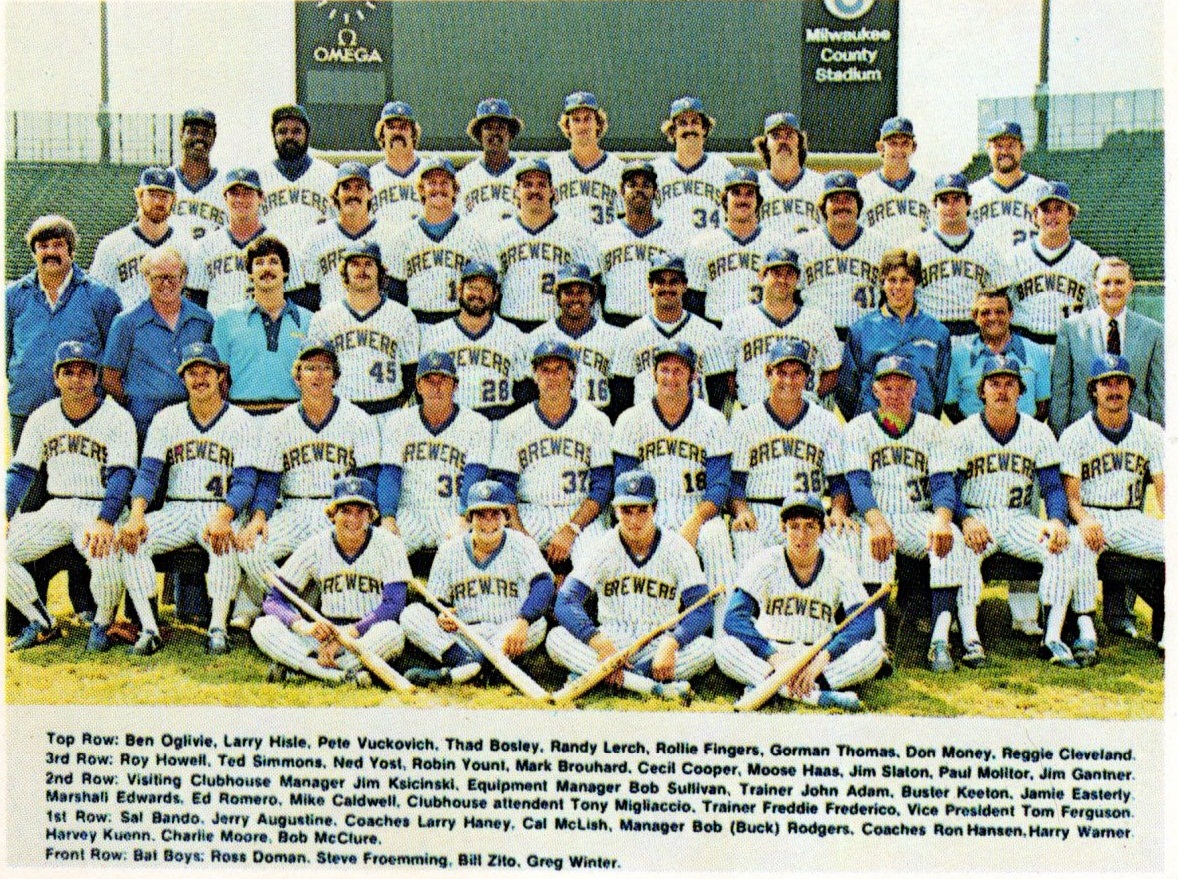
    • Packers vs. Brewers
  • Hall of Fame
    • The case(s) against teacher unions
    • The Class of 1983
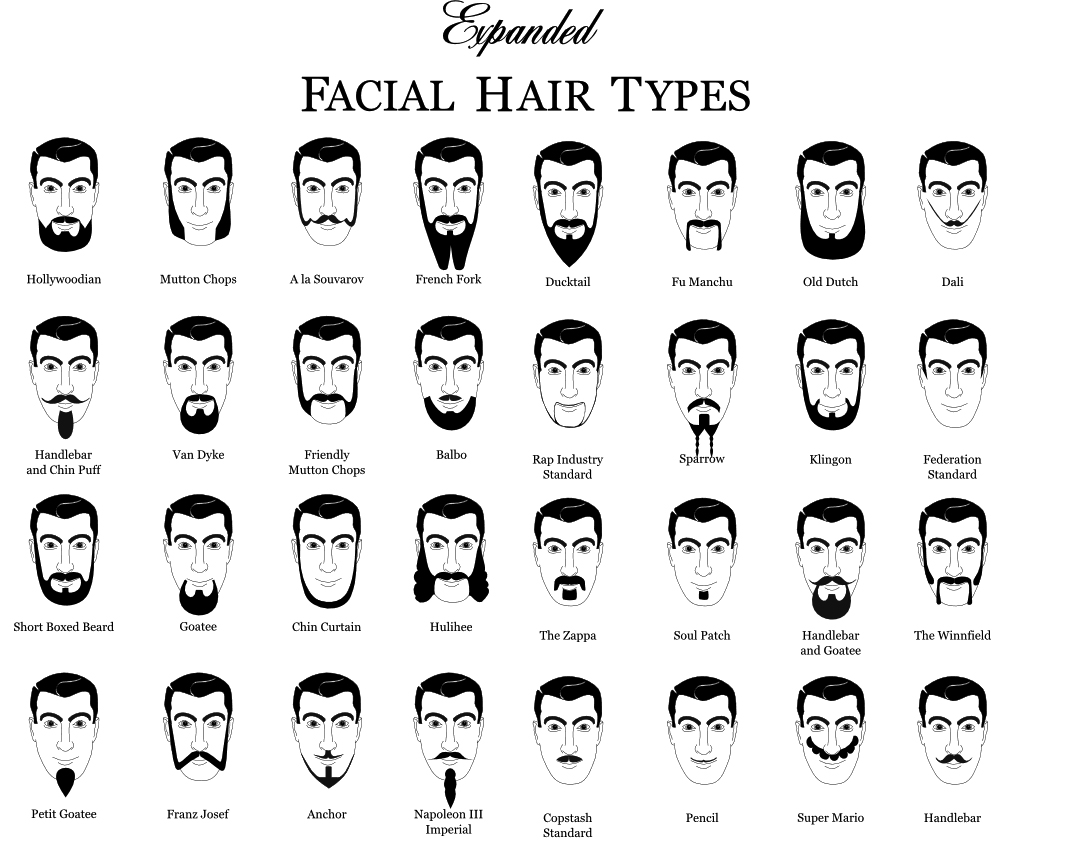
    • A hairy subject, or face the face
    • It’s worse than you think
    • It’s worse than you think, 2010–11 edition
    • My favorite interview subject of all time
    • Oh look! Rural people!
    • Prestegard for president!
    • Unions vs. the facts, or Hiding in plain sight
    • When rhetoric goes too far
Privacy & Cookies: This site uses cookies. By continuing to use this website, you agree to their use.
To find out more, including how to control cookies, see here: Cookie Policy
  • Subscribe Subscribed
    • Steve Prestegard.com: The Presteblog
    • Join 198 other subscribers
    • Already have a WordPress.com account? Log in now.
    • Steve Prestegard.com: The Presteblog
    • Subscribe Subscribed
    • Sign up
    • Log in
    • Report this content
    • View site in Reader
    • Manage subscriptions
    • Collapse this bar
%d