The number one single today in 1959, which (1) extended Christmas beyond where non-Episcopalians (who would tell you that Christmas lasts until Epiphany) would want it, and (2) proves yet again that there is no accounting for taste:
Today in 1970, the Who’s Keith Moon was trying to escape from a gang of skinheads when he accidentally hit and killed chauffeur Neil Boland.
The problem was Moon’s attempt at escape. He had never passed his driver’s license test.
Long-time (or perhaps long-suffering) readers know that I’m from Madison, I watched a lot of TV as a youth, and I have an interest in media history, including Madisonmedia history.
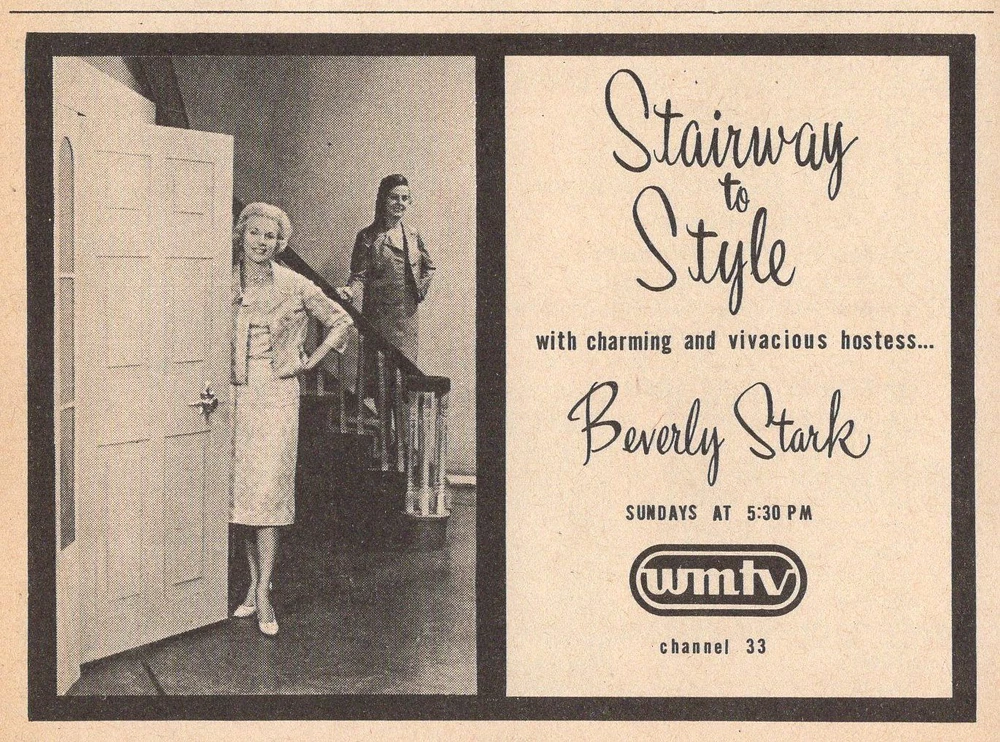
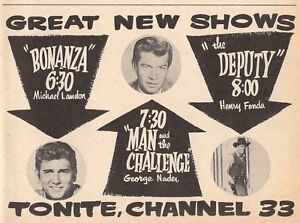
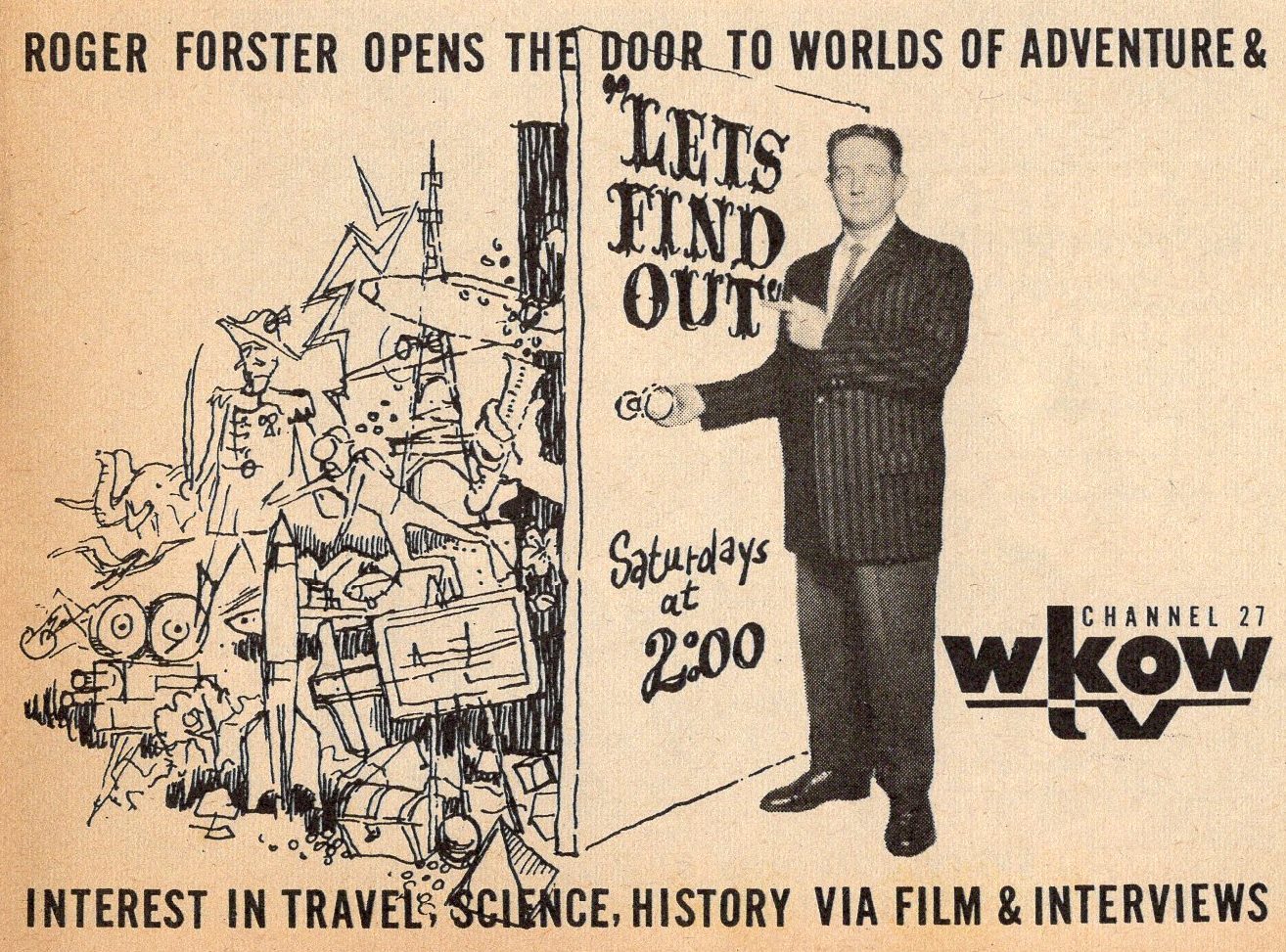
All of that came together when I was as usual looking for something else and came upon a bunch of TV Guide ads from Madison TV stations that apparently are for sale on eBay. The possible irony here is that my parents never subscribed to TV Guide, though my grandparents (who were able to get both Wisconsin and Iowa TV stations due to living in Southwest Wisconsin) did.
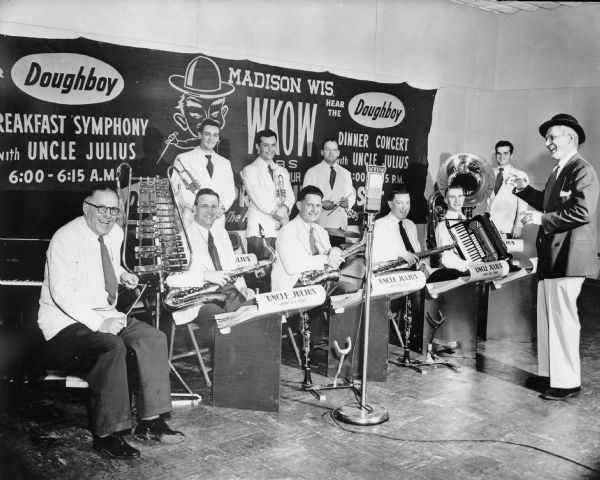
It appears that WKOW may have been a country station based on this 1952 Wisconsin Historical Society photo. So perhaps things went full circle when what became WTSO went back to country in the mid-1970s.
… was Madison’s first commercial TV station after the Federal Communications Commission lifted its Korean War-era moratorium on new TV station licenses.
The owners of WKOW ended up creating their own statewide network, starting WAOW-TV in Wausau in 1965, then WXOW-TV in La Crosse, and then WQOW-TV in Eau Claire. (There is also WYOW-TV in Eagle River and WMOW-TV in Crandon.) The TV stations were sold to one company in 1978, another in 1978, and another in 1985, around the time that I was sitting in UW–Madison journalism classes listening to the School of Journalism director say that TV stations were “licenses to print money.” Six years later, WKOW’s owner filed for bankruptcy, meaning either that my prof was wrong or that TV stations were not always licenses to print enough money. WKOW was then purchased by its previous owner, who had purchased a “beautiful music” FM station in Baraboo with a freakishly large FM signal, changed its format to oldies, and made enough from one radio station to repurchase four TV stations.
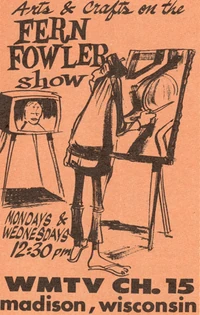
WKOW was originally a CBS station because WKOW radio was a CBS affiliate. Station number two was WMTV, originally at channel 33, which went on the air about a week after WKOW.
WMTV also originally carried NBC, ABC and Dumont, a practice that in some TV markets continued into the 1980s.
The Dumont network died in 1956.
WISC-TV arrived in 1956 as Madison’s only VHF station, on channel 3. WISC-TV was started by WISC radio, which became WISM radio, which was Madison’s top 40 radio station, and thus the station most non-adults listened to.
CBS decided that being on channel 3 (more coverage for less power) beat being on channel 27 and moved to WISC, which left WKOW without a network until it got ABC from WMTV, which moved from channel 33 to channel 15 in 1960.
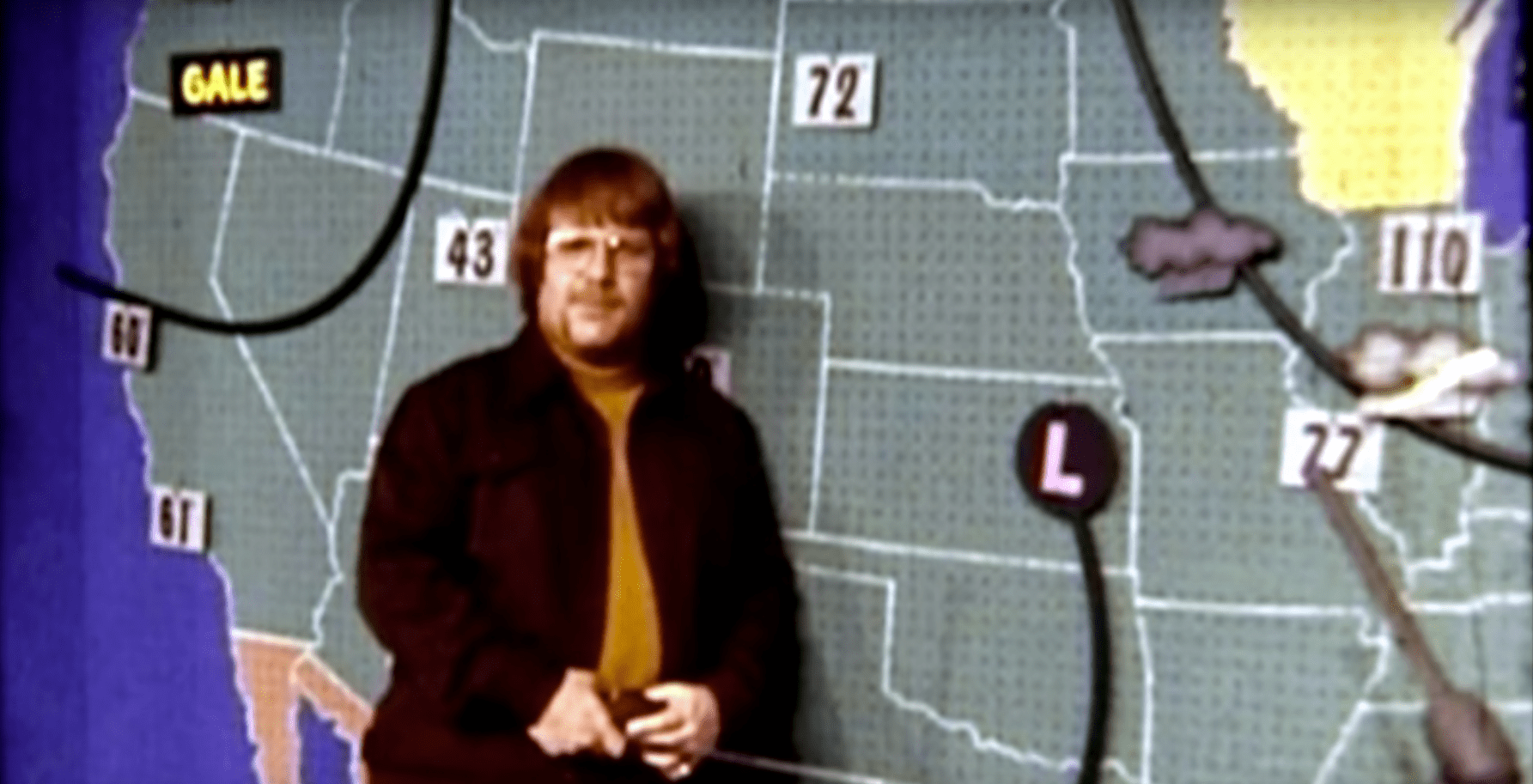
That, however, isn’t the whole story about WISC. My source is the late John Digman, former WISC reporter and weatherman (not “meteorologist”) who talked to my high school journalism class while working in Madison radio, and sadly died of a heart attack at 40. (His daughter went to La Follette.)
This has to be some sort of put-on by Digman. How can it be 110 in Chicago and 27 in St. Louis?)
Digman told the class (and I may have been the only student listening to this) that WISC was supposed to be on channel 21 while WHA-TV, the state’s first noncommercial TV station, was supposed to have channel 3, but WHA went on the air in 1954 not on channel 3 and WISC went on the air in 1956 not on channel 21.
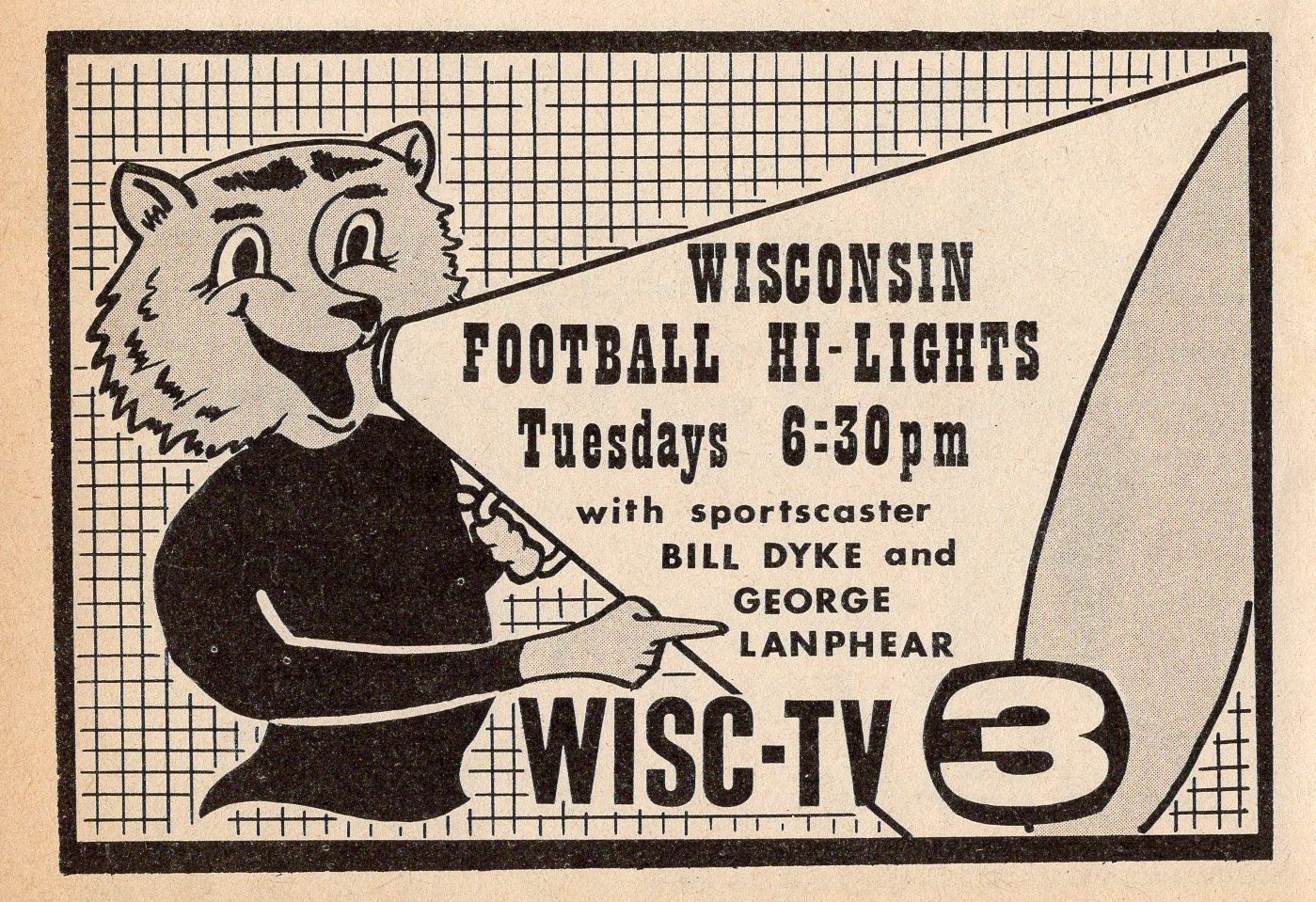
Speaking of WISC … Bill Dyke had one of southern Wisconsin’s most interesting careers. He was a disc jockey at WISC and WISM and did sports (at least in 1959 here) and other things on channel 3. Dyke was credited by Vilas Craig, who created southern Wisconsin’s first rock and roll band, for playing Vicounts records (with, as you know, my father on piano) on the radio.
Dyke parlayed his broadcast career into two two-year terms as mayor of Madison. Then he was defeated by Paul Soglin in 1973. Then after Soglin left the first time (voluntarily, as opposed to the other two times), Dyke, who as a side thing was a producer of the movie “The Giant Spider Invasion,” …
… and Soglin did a weekly point/counterpoint appearance on WISC’s Live at Five. Dyke ended up as Iowa County circuit judge before he died.
This is from 1964, when apparently ABC’s and WKOW’s evening news were 15 minutes each. Cochran was a former FBI agent who got to announce John F. Kennedy’s assassination on ABC’s glitch-filled newscast. Russell later became WTSO’s station manager.
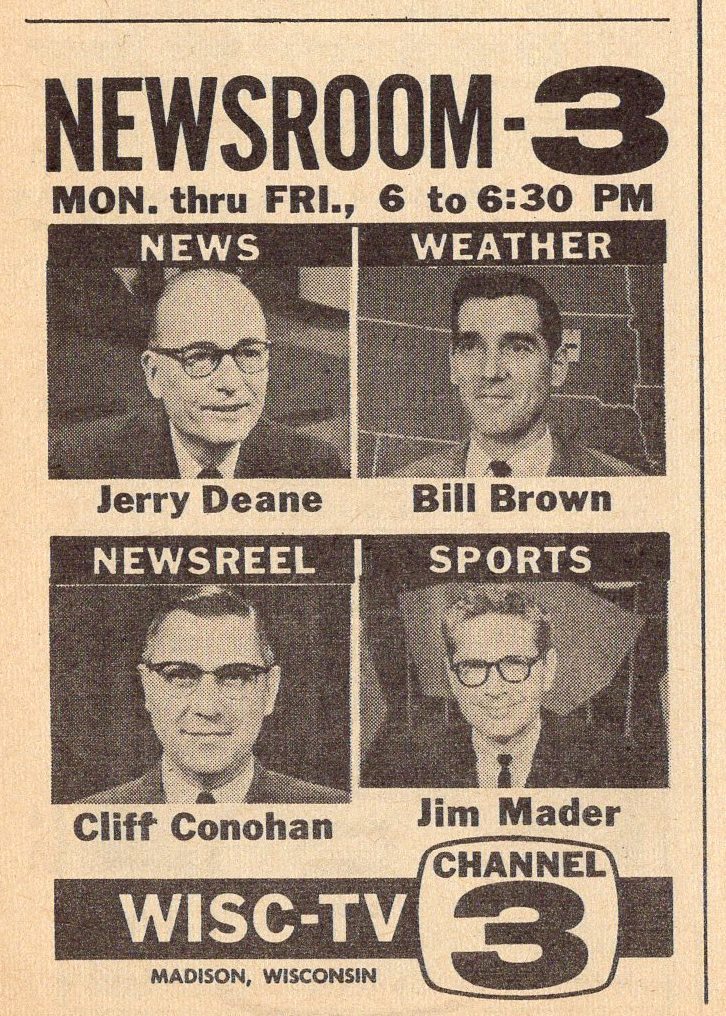
That same year …
Jerry Deane (real last name Druckenrod) did the news. Bill Brown did weather before moving to news when Deane was moved to “The Farm Hour,” where he read not just the news but farm prices. I remember watching Deane reading farm prices and having no idea what any of them meant. (My first Boy Scout Scoutmaster, who worked for Oscar Mayer, told me what “canners and cutters” were.) Mader was better known in Madison for being the morning DJ on WIBA radio and for narrating Zimbrick Buick commercials.
Schermerhorn started in sports, and then apparently moved to sales, but was best known for hosting “Dairyland Jubilee,” a Sunday morning polka show.
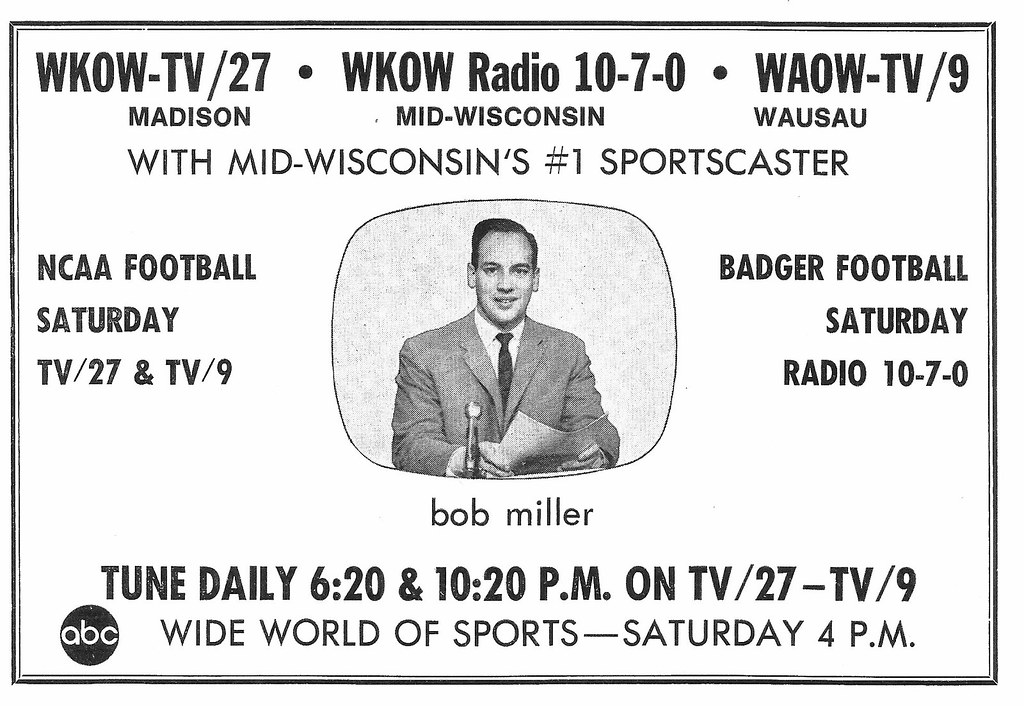
By 1969, Bob Miller was the sports guy on WKOW TV and radio and its Wausau station, WAOW-TV. Miller’s radio duties included Wisconsin Badger hockey, which meant Miller got to announce the Badgers’ first national championship. That proved good for Miller’s career, because on the recommendation (following pestering, the story goes) of Los Angeles Lakers announcer Chick Hearn, the Lakers’ owner hired Miller to announce the Kings hockey team.
Miller’s replacement was Paul Braun, who had been announcing hockey (and, one assumes, other sports) at WMAD radio. While Miller got to announce UW’s first hockey championship, Braun got to announce the next four (on WTSO and then WIBA), and did cable TV for national championship number six.
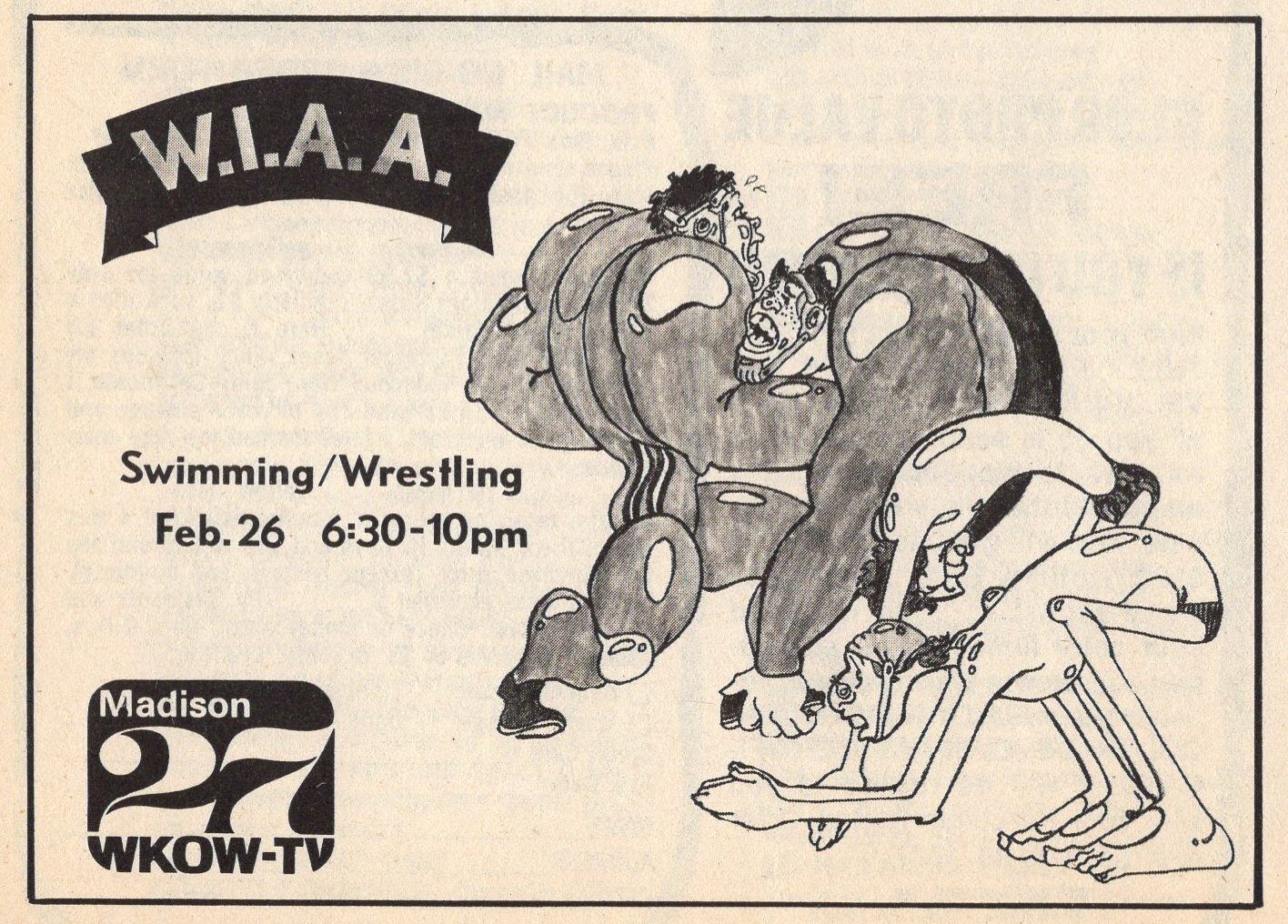
This is from 1977, back when WKOW’s month of state tournament coverage began with a tape-delayed broadcast of state swimming from the UW–Madison Natatorium and then live coverage of the state wrestling finals. (Which I got to cover on radio last year for the first time.) One week later was state hockey, followed by girls basketball and then boys basketball — in this case, my alma mater’s first state title.
After Miller and before this, WKOW employed Gary Bender, who went to college with the eventual owner of the station. Bender was a busy guy, doing the sports in Madison, announcing Badger football on Saturdays and then announcing Packer football on Sundays, both with Jim Irwin.
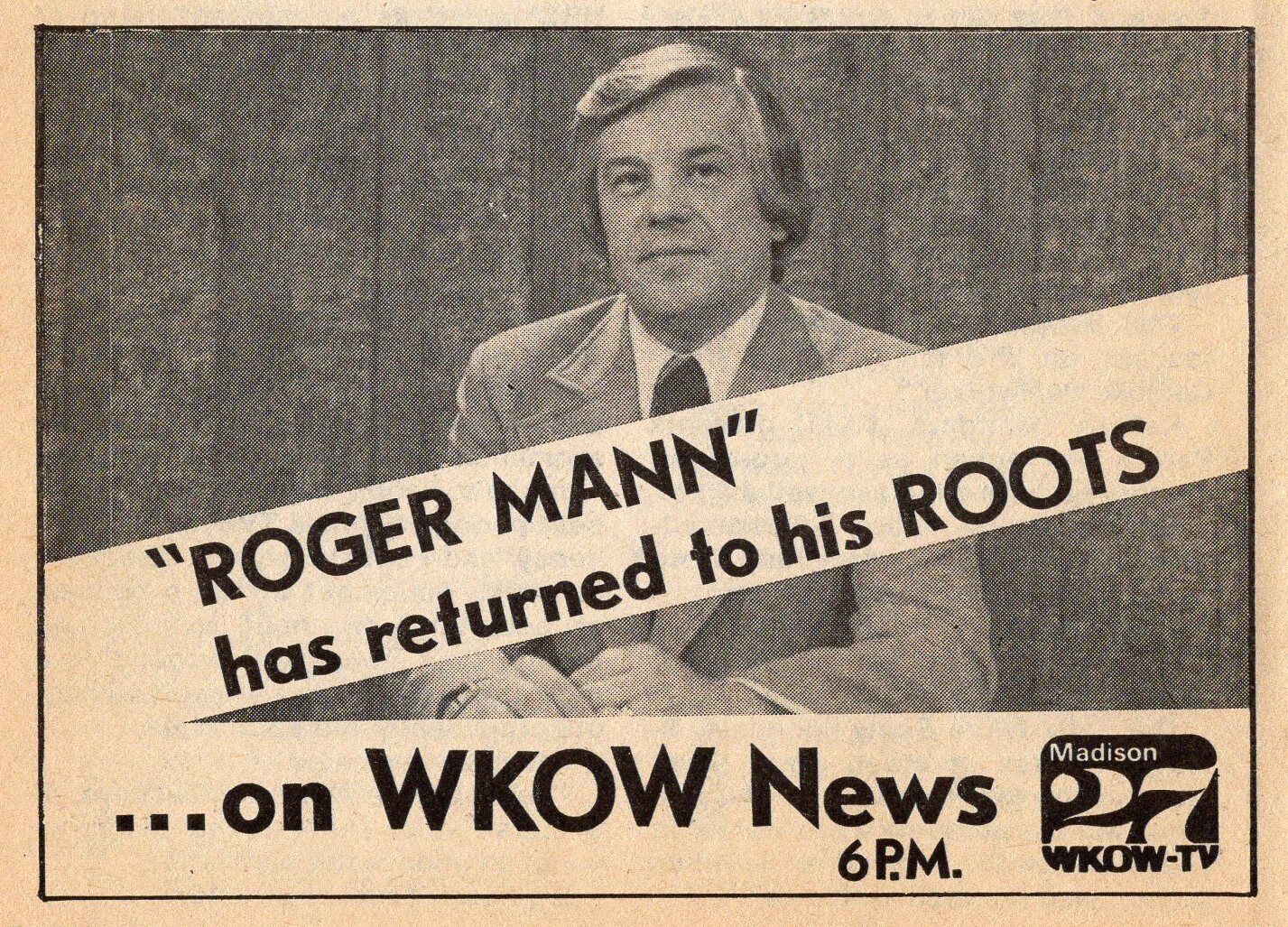
WKOW’s news anchor for most of the 1970s was Milwaukee native (or so I’m told) Roger Mann, who came to Madison, left and then came back.
After and before Mann was John Lindgren, who went to WKOW from WISC when in-market moves were hardly ever done (and it’s still rare in the Madison market).
Lindgren then went to Kentucky and was on two TV stations there. Then he contracted colon cancer, but continued to work while fighting the disease, which ended up killing him at 55 in 2001.
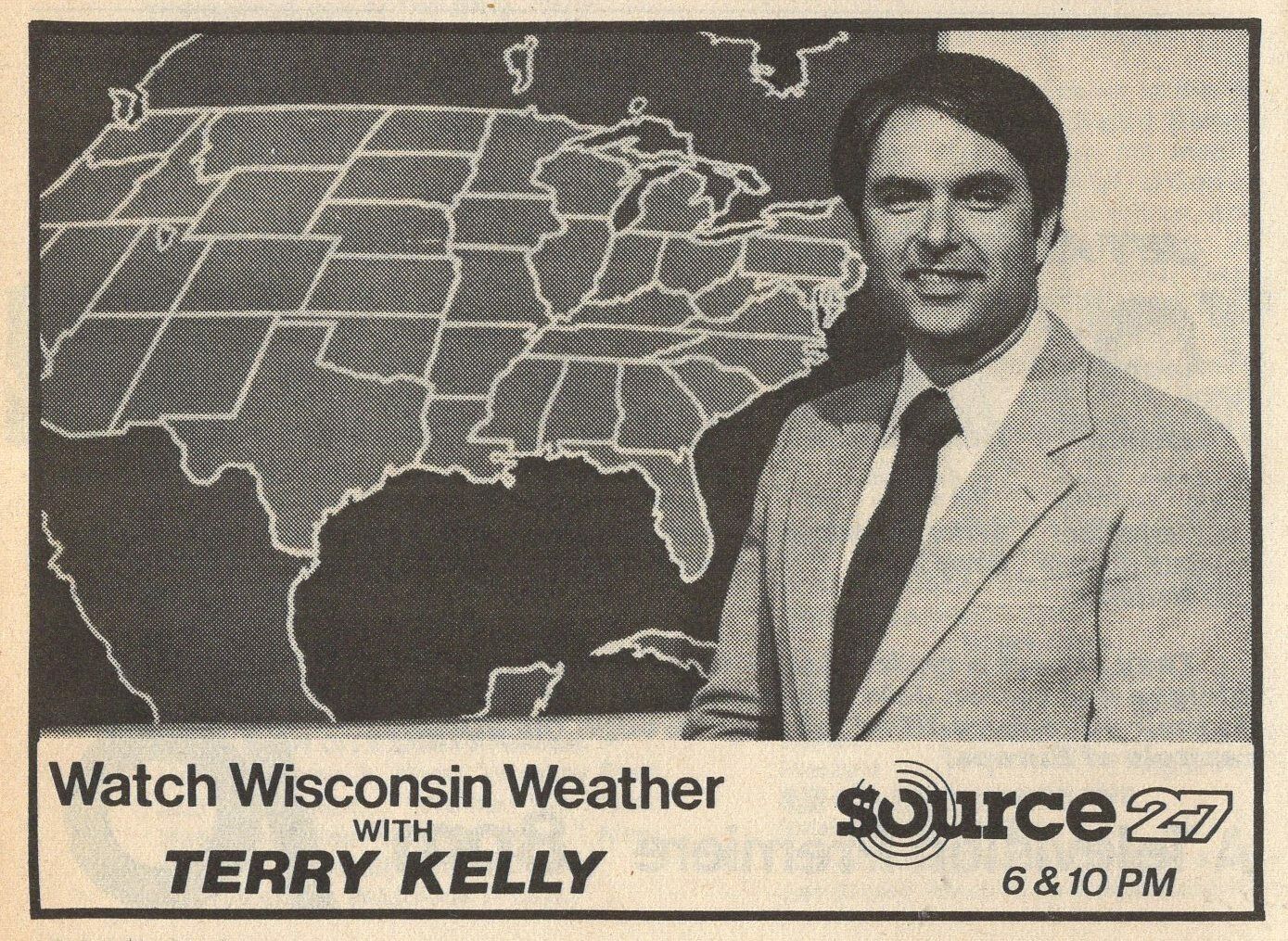
The weather was done by …
… Terry Kelly, who was the first in Madison to have the cool weather gadgets, most of them developed by his company, Weather Central. Kelly also was known for horrible puns just before going to commercial.
Kelly’s predecessor was Tom Skilling, who worked at WKOW and WTSO while he was a student at UW–Madison. Skilling then spent three years at WITI-TV in Milwaukee, where he did forecasts with Albert the Alley Cat. Those were the days.
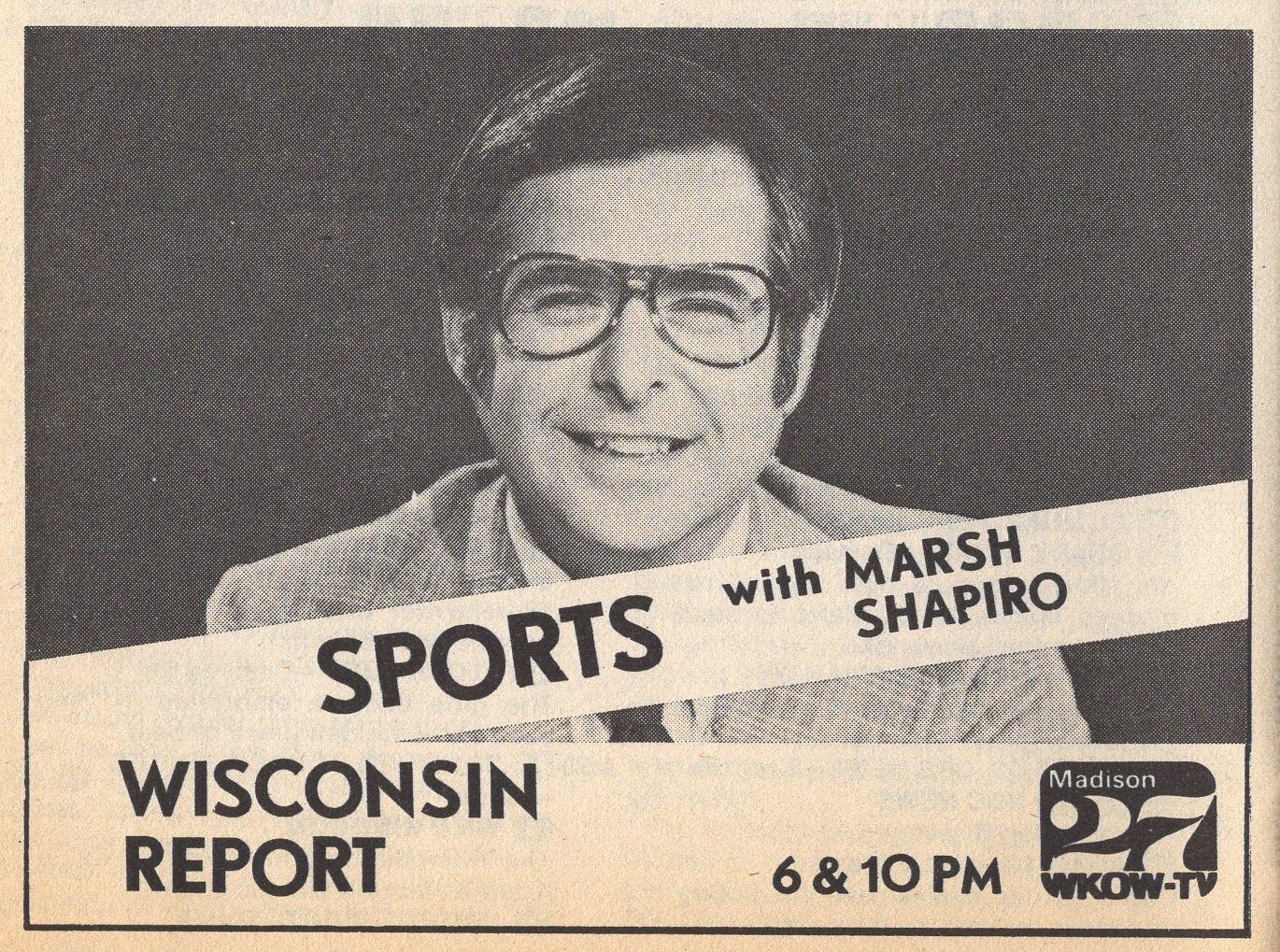
This next photo almost needs no introduction …
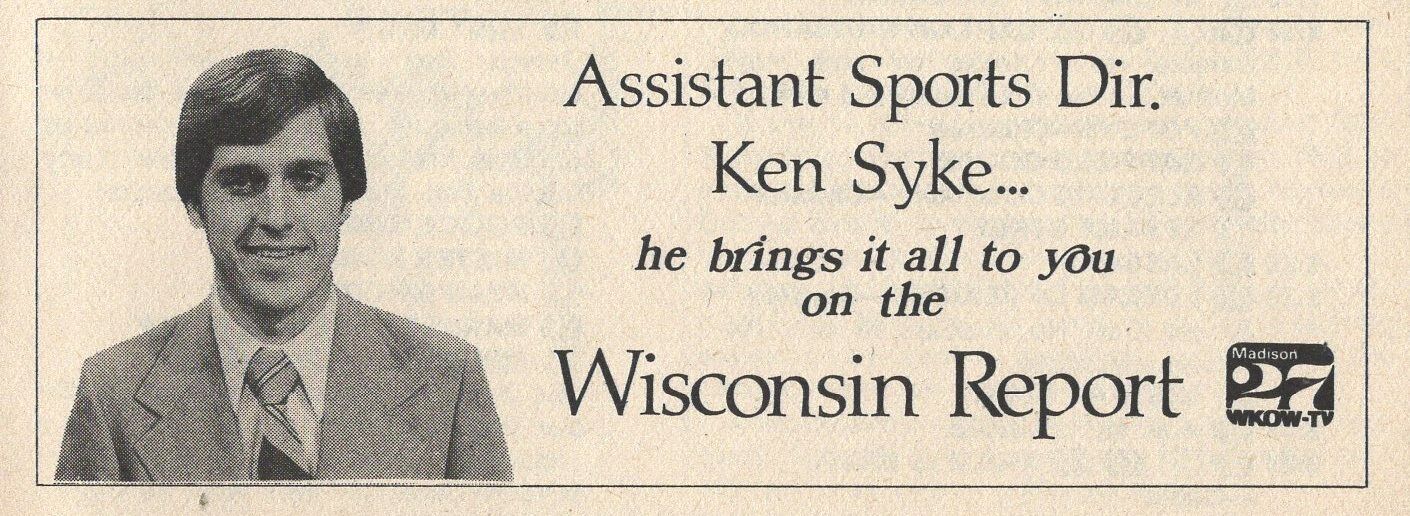
… Marsh Shapiro, sportscaster, and before that “Marshall the Marshal,” and along with that owner of the Nitty Gritty bar, along with …
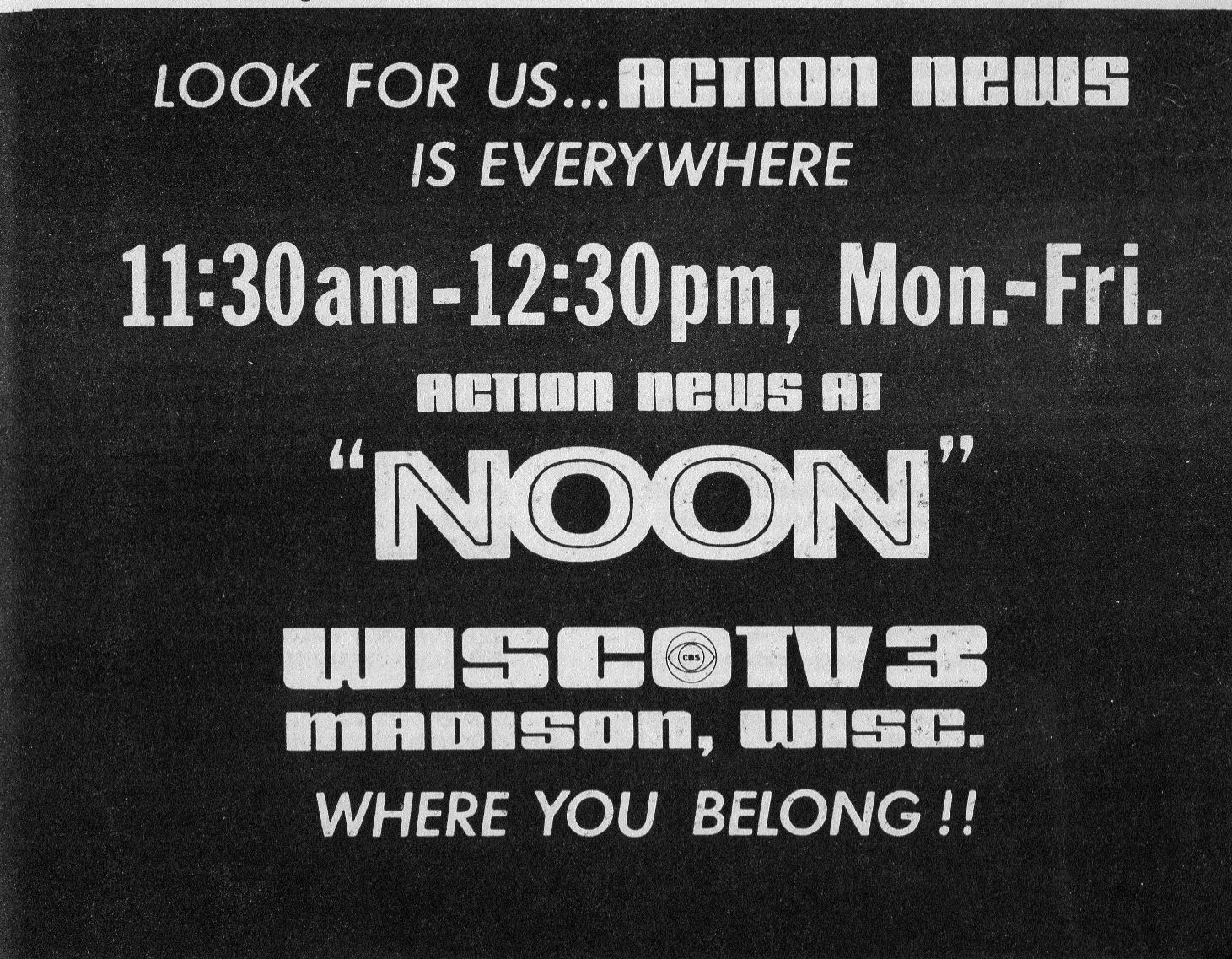
This apparently is also from 1977. WISC was the first station in the market to do news besides noon, 6 and 10. Before that WISC ran a one-hour “Eyewitness News” at 6 p.m. starting in 1971. (According to Digman it was because WISC was having license problems. Also according to Digman the news was a little thin at times.) “Eyewitness News” was replaced by “Action News,” with a 5 p.m. newscast that became “Live at 5,” which is still on.
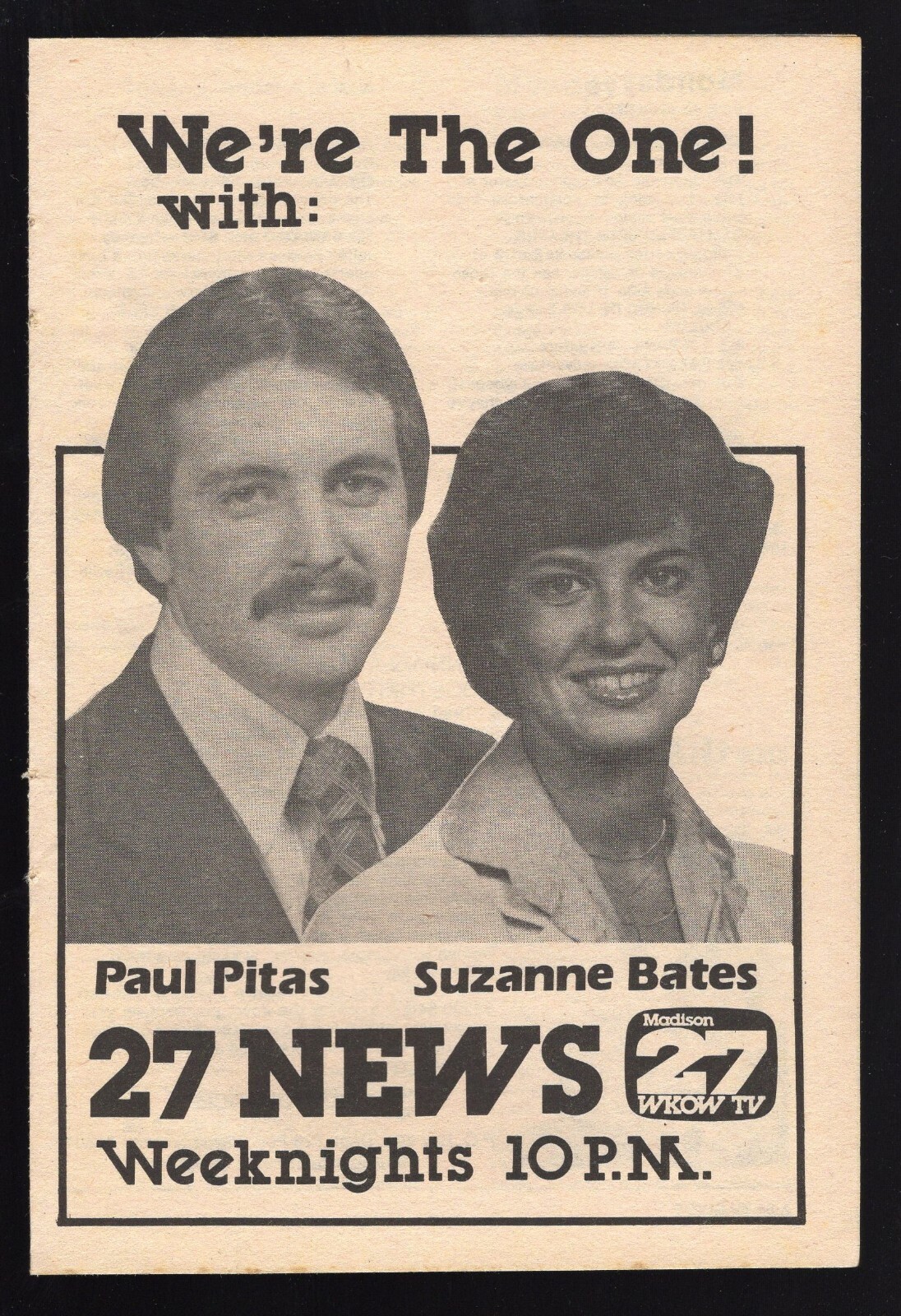
By 1980, Mann was gone, replaced by two people, Paul Pitas and Suzanne Bates. The last time I saw Pitas, he was doing public relations for Culver’s, which is probably not a bad gig.
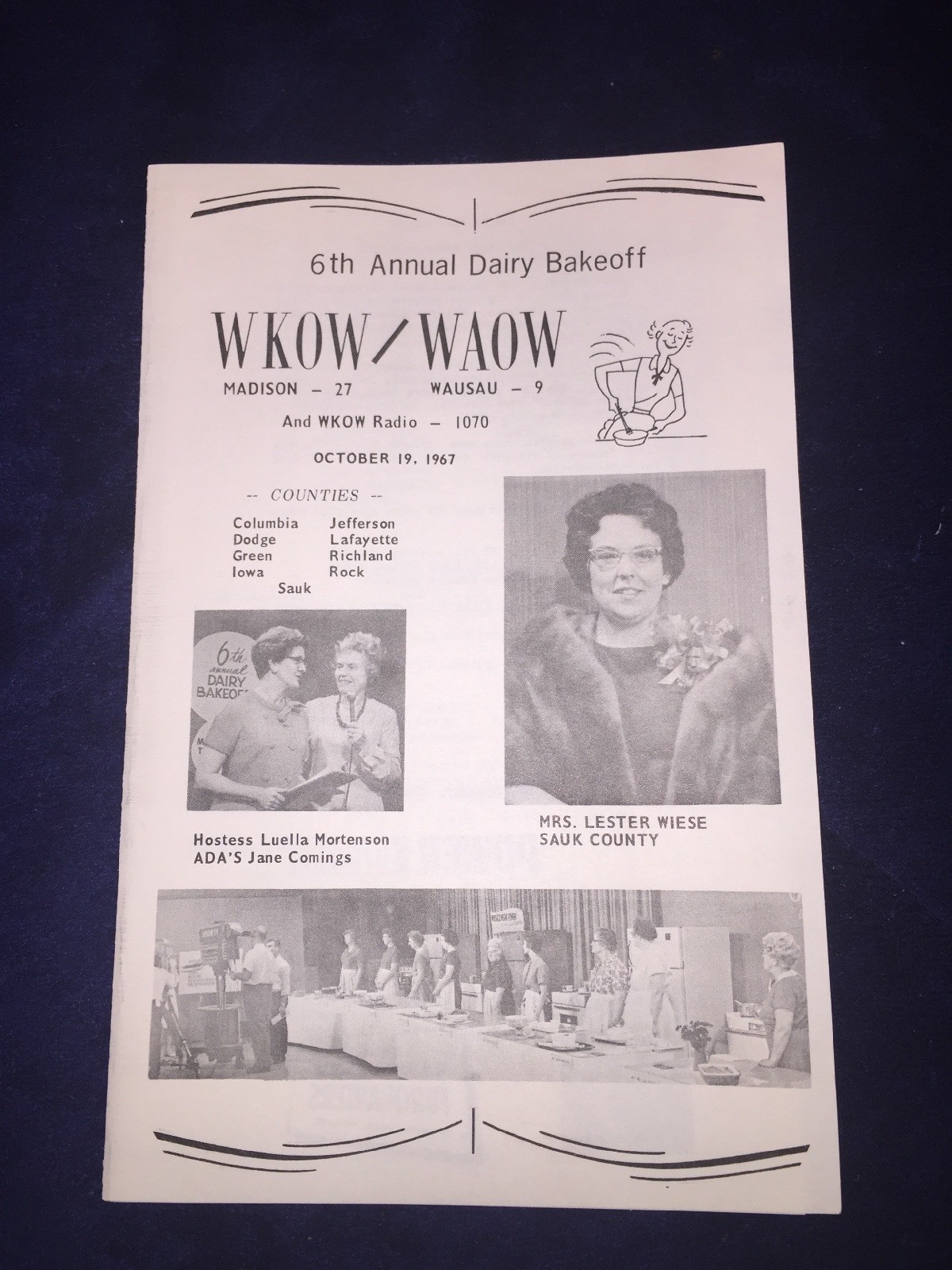
Finally, here is something you never see from radio or TV stations anymore:
It’s a radio- and TV-station-sponsored bake-off, which was cosponsored by a TV station that, I assume, didn’t have a strong enough signal to get to any of the counties whose cooking women were eligible for the contest. (I wonder how Wausau viewers felt about that.) Click here for the recipes.
The Dubuque Telegraph Herald found a candidate for president (because that’s where they all are now):
Democratic presidential candidate Pete Buttigieg told a crowd of 600 in Maquoketa on Monday that a cornerstone of his presidency would be not forgetting people in conservative areas, even those who don’t vote for him.
“You can’t love a country if you hate half of the people in it,” said the mayor of South Bend, Ind., during a town hall at Maquoketa Middle School.
He later added, “When the presidency is working well, you can look at the White House, look at the president, even if you wouldn’t vote for them, and feel the presidency is still working for you. Plus, wouldn’t it be nice to have a president who, when you turn on the television, your blood pressure goes down a little bit?”
What president in your lifetime would that have been, would-be president Pete? Bill Clinton? (Who resulted in George W. Bush.) Barack Obama? (Who resulted in Donald Trump.) Jimmy Carter? (Who resulted in Ronald Reagan, not that Buttigieg probably remembers either, since he was born in 1982.)
As for being the president of all, Buttigieg favors gun control, which is unconstitutional. Democrats don’t care about the constitution beyond abortion rights and (for now) the presidential impeachment provisions. Buttigieg supports Medicare for All, which should offend fiscal conservatives those who correctly believe that government should not be in charge of anyone’s health care. Buttigieg is also gay, which is an affront to those who believe what the Bible says about non-man/woman marital relationships, and in fact his entire campaign has been a big fat middle finger toward conservative Christians. But he’s going to be the president of everyone. Riiiiiiiiiiight.
Buttigieg is not qualified to be president, and given his current position will never be qualified to be president. South Bend, Ind., is home of one of the world’s most famous universities, Notre Dame. Any politician with any ability at all would have made South Bend into the ultimate U.S. college town, drawing millennials in like flies to … well, you know. But South Bend is closer to the center of industrial blight than a college town, and Buttigieg has succeeded at nothing to improve South Bend. And he thinks he should be president.
The number one album today in 1965 was the soundtrack to “Roustabout”:
Today in 1968, the complete shipment of John Lennon and Yoko Ono’s new album, “Two Virgins,” was confiscated by New Jersey authorities due to the album cover. A revised cover was used in record stores:
Click here to see why the album cover was revised.
The number one album today in 1971 was fellow ex-Beatle George Harrison’s “All Things Must Pass”:
The year having almost run out, it’s time again for That Was the Year That Was 2019, idea stolen from …
At the end of 2018 I wrote a predictions piece for Right Wisconsin. How accurate was I?
By the end of the year the incompetence of Tony Evers as an administrator will be revealed. The state Senate will reject Evers’ choice for tourism secretary and at least one other cabinet appointment.
Exit Brad Pfaff, briefly the secretary of agriculture, trade and consumer protection. Sara Meaney hasn’t been confirmed as secretary of tourism by the state Senate yet, and I predict she won’t be.
Conservative media will report numerous stories about turmoil in Evers’ administration as well as in the Department of Justice under the equally incompetent Attorney General Josh Kaul.
The Kaul stories haven’t come out, though he is as predictably left-wing as this state’s Democratic attorneys general have been. All Evers has is inability to get his appointees confirmed, violations of the Open Records Law, failure to deal with the news media as a public official should, and unconstitutional proposals. Other than that, Evers is doing a bang-up job.
Evers’ 2019–21 state budget will be declared “dead on arrival” by both Robin Vos and Scott Fitzgerald. Said dead budget will include a 50-cent-a-gallon gas tax increase, as well as merging all state law enforcement (State Patrol, Capitol Police, etc.) under the DOJ. Evers will veto the 2019–21 budget the legislature passes, and the state media will spend the last half of the year reporting about the state budget crisis (which means the state will continue spending at 2017–19 levels. By the end of the year, the legislature and Evers will “compromise” on a 25-cent-a-gallon tax increase.
I was wrong about this prediction because I failed to predict how much Evers would cave in. It makes you think there is only one party, the Incumbent Party.
Evers’ administration will not bother to report that the cash surplus under Gov. Scott Walker has disappeared by the end of 2019.
The surplus isn’t gone — yet — but it’s not where it was.
By the end of the year President Donald Trump will have an “establishment” opponent for the GOP nomination, and 17 declared Democratic opponents.
I was two off. There were 15 candidates as of Dec. 3. Is Republican governor-turned-Libertarian-vice-presidential-candidate Bill Weld (who wasn’t much of a Libertarian) an establishment Republican now?
The Packers will hire Josh McDaniels as their coach.
Neither the Packers nor anyone else hired McDaniels.
Madison and Milwaukee will continue to suck.
No more comment needed there.
Despite Democrats’ wishes and predictions, the economy will not go into recession in 2019, though economic growth will slow, for which Trump will be blamed.
Got that one right.
Most of the ruminations about 2019 you read or will read are negative, though none will be as amusing as Dave Barry:
It was an extremely eventful year.
We are using “eventful” in the sense of “bad.”
It was a year so eventful that every time another asteroid whizzed past the Earth, barely avoiding a collision that would have destroyed human civilization, we were not 100 percent certain it was good news.
We could not keep up with all the eventfulness. Every day, we’d wake up to learn that some new shocking alleged thing had allegedly happened, and before we had time to think about it, the political-media complex, always in Outrage Condition Red, would explode in righteous fury, with Side A and Side B hurling increasingly nasty accusations at each other and devoting immense energy to thinking up ways to totally DESTROY the other side on Twitter, a medium that has the magical power to transform everything it touches, no matter how stupid it is, into something even stupider.
Predictably, Donald Trump was impeached. Also predictably, Trump will not be convicted by the Senate next year. Less predictably, reports One America News Network:
According to Democrat presidential hopeful Tulsi Gabbard, her party’s vote on impeachment may backfire in 2020. While taking to Twitter on Monday, the Hawaii lawmaker posted a video suggesting that the House impeachment push has increased the probability Republicans will flip seats red in 2020.
Gabbard was the only Democrat to vote “present” on both articles of impeachment against President Trump after citing her concerns with the partisanship throughout the probe.
In her most recent video, she said she is concerned Democrat’s efforts to impeach President Trump will lead to a Republican controlled House, Senate and White House after next year’s elections.
In 2020, we will have a new president in the White House. How many of you do NOT want that to be Donald Trump? I certainly don’t. Unfortunately, the House impeachment of the president has greatly increased the likelihood Trump will remain the president for the next 5 years … pic.twitter.com/FRRlbWHyo7
Gabbard added that beating President Trump isn’t the only goal for Democrats in 2020. She said they also need to come together as a party to work toward peace and equality.
The stock market was so impressed with Impeacharama that it was at record levels on and off throughout 2019, reaching another record on the last day of the year. This is important only because everyone should be a long-term investor and not hyperventilate about occasional bad days. It also indicates, even though there are better ways than the stock market to measure the economy (economic growth and U6 unemployment, to name two), that money seems unconcerned about Trump’s political adventures.
Trump’s greatest accomplishment of 2019 was driving his opponents they’re-coming-to-take-me-away-ha-ha crazy.
Rural Wisconsin isn’t going crazy, but rural Wisconsin can’t be happy with the Trump-led trade war, which hammered farmers at the same time that continuously wet weather hammered farmers. And yet I don’t see erosion of Trump support in rural areas, in large part because Democrats are too stupid to grasp why rural areas supported Trump in 2016.
Meanwhile, Empower Wisconsin was so impressed with Evers’ first year it named him Tool of the Year:
Tony Evers finished his 2018 campaign for governor by insisting that he did not plan to raise taxes if elected.
Well, he was elected, and it took but a few weeks before he shot that pledge to hell. Even the folks at Politifact, ever generous about Evers’ trouble with the truth, gave the governor a “Full Flop.”
He proposed $1 billion-plus in tax hikes in his budget plan — from gas tax increases to a proposal to do away with a successful manufacturing tax credit.
In Evers’ first year in office, the Democrat pitched a mind-boggling number of far-left initiatives. He jumped on board the climate change alarmist train, pushed a costly Medicaid expansion plan, and his agencies have attempted to ratchet up regulation on business and property owners.
Meanwhile, even the most apolitical state agencies, like the Department of Tourism, have become centers of the liberal social justice movement.
The administration’s meddling in Taiwan tech giant Foxconn’s business could cost Wisconsin the most transformative economic development deal in state history.
Evers issued more executive orders this year — 61 as of last week — than any other governor in Wisconsin history, according to a review by WisPolitics.com. Many of them create some committee or another. The governor and his defenders will tell you he has done so because the Republican-controlled Legislature refuses to work with him. He has done so because he knows Republicans and the people in the scores of districts that sent them to Madison would never go along with such a liberal agenda.
Which brings us to the biggest myth going in Wisconsin politics, that Tony Evers is a nice-guy moderate who simply wants to do the work of the people. The nice guy charade must have disappeared after the governor called his Republican opponents “amoral” and “stupid” and “bastards.” But the silly caricature continues thanks to the positive paint of a pliant mainstream media.
More than anything, Gov. Tony Evers has proven what many suspected during the campaign, that he is an empty vessel into which his far left ministers have poured radical policy ideas.
In other words, Tony is a tool.
The news media, meanwhile, had quite a bad year, and 2020 will probably be worse. Big newspapers are getting almost as bad as public broadcasting in begging for money — in this case, subscriptions based on their excellent-in-their-own-minds news coverage. Like Democrats who can’t fathom why people might support Trump, the national news media can’t grasp why people might look at their incessant attacks on Trump and Republicans and conservatives generally and conclude they can spend their money better elsewhere. Journalists, who increasingly are not like normal people (as in not married, no kids, non-homeowner, non-gun owner, non-churchgoer) should learn some humility.
Because some people can’t count, you have probably read reflections about the end of the 2010s, even though 2020 is actually the last year of the decade of the 2010s. (Confused? When was Year Zero?) Here is one in graphic form, from Matt Ridley:
History‘s greatest trick is that our innate human bias toward normalcy always lures us into complacency. You wake up in the morning and the coffee still tastes largely the same, the water runs, the lights come on. It feels almost ordinary. You walk the dogs, check the news, and while on some rare days it’s a 9/11, even the biggest moments in history are hard to see up close.
The idea of change coming in sharp, traumatic, explosive moments is largely an illusion. The signs are always there before the moments that make the history books and the “where were you when?” times.
The water comes to a boil slowly and the frog, or in America’s case 330 million frogs, don’t notice until it’s too late. And no, this is not an allusion to climate change.
So we probably won’t be able to identify exactly when it happened, but sometime in this last decade, we lost the thread. Something actually broke. We fumbled away our continuity, our resilience, the uniquely American proposition that we’re bending the arc of history the right direction. We stopped believing in our almost magical national felicity for getting out of our own way and finally, stubbornly, doing the right thing.
The 2010s didn’t have a 9/11 moment. They didn’t have a Nixon resignation moment (all bets are off for the 2020s on that one, though). There was no hot global conflagration, no assassination attempt on a president, no Pearl Harbor, no Hurricane Katrina or Andrew.
Instead, we had a grinding series of more picayune, more insidious changes. Bit by bit, technology changed the culture. Bit by bit, the culture changed us.
As a result, this passing decade was marked by something darker, more divisive, more dangerous and ultimately more consequential. It was a time where all the small threads wove together into a kind of messy whole, and where a new era of bitterness and spite tore us apart in ways as surely as the 1960s cultural moment did.
Console yourself with this thought: As bad as 2019 was, 2020 will unquestionably be worse. It’s an election year.
As always, may your 2020 be better than your 2019. That’s a wish, not a prediction.
This is about Wisconsin’s Rose Bowl trip for New Year’s Day — the 10th in UW’s history, but the seventh since Barry Alvarez arrived on campus — and the Packers’ upcoming playoffs.
Each seems to not entirely impress people. The Badgers lost twice to Ohio State (whereas everyone else the Buckeyes played until Clemson lost just once) and had a bad loss to Illinois. No other UW Rose Bowl team had a bad loss on their schedule, except the 1994 (Minnesota), 1999 (Cincinnati), 2010 (Michigan State), 2011 (ditto) and 2012 (five of them) teams. The list does not include the 1998 Badgers, who nonetheless were so unimpressive to ESPN’s Craig James that he called them the worst team to ever get to the Rose Bowl … which then made them the worst team to ever win a Rose Bowl, I guess.
UW in fact never seems to impress anyone because of its traditional plodding style, except perhaps for the Russell Wilson season. When Paul Chryst was UW’s offensive coordinator, the Badgers ran the same plays, but they were much better disguised. They appear to have gone backwards with Chryst as the coach for some reason. Jack Coan hopefully won’t be the quarterback next season (once Graham Mertz is off his redshirt), but there really is no game-breaking receiver on the roster, including Quintez Cephus. On the other hand, Chryst is so far undefeated in bowl games, so whether fans like the style or not, the substance is a lot of wins. (Remember, no one complains about boring winning offenses.)
The thing about the Rose Bowl is that it’s not just about football. The UW Marching Band is in Pasadena for the first time with new director Corey Pompey.
Pompey appears to have made improvements without getting rid of the important things.
The second Bucky vs. Ducky Rose Bowl matchup features the Big Ten’s second best team (which is playing longer than its champion is) against a team that surprised most football observers by upsetting Utah, a team thought to be in contention for the College Football Playoff, in the Pac 12 championship game. The Ducks are 15th in the Football Bowl Subdivision in scoring offense, while Wisconsin is 10th in scoring defense. Wisconsin is 22nd in the FBS in scoring offense, while Oregon is eighth in scoring defense. However, most observers seem to believe the Big T1e4n is a better conference than the Pac 12, which struggles to have a CFP-worthy team and in fact hasn’t had one the past couple of seasons.
This will probably be the key: UW is 14th in rushing offense, while Oregon is 10th in rushing defense. Oregon is 43rd in rushing offense, while UW is eighth in rushing defense. That favors Wisconsin, unless the Badgers put the ball on the ground.
Speaking of unimpressive yet successful, there are the Packers, which had to overcome a 17–3 halftime deficit to beat the Lions on (once again) a game-winning field goal Sunday. That makes the Packers the number two seed for the upcoming NFC playoffs, giving the Packers a week off and a second-round home game against Philadelphia (which beat the Packers on a tipped interception), Seattle or San Francisco (which hammered the Packers in Santa Clara) in round two Jan. 12.
At the risk of grandiose predictions, this team sort of reminds me of the 2010 Packers, which needed to win their final two games of the regular season to get into the playoffs, and then had to win three road games to get to the Super Bowl. Teams with struggling offenses and relatively stout defenses (though there was much complaining about this year’s defense for the number of points they gave up in wins) tend to win games like Sunday’s.
The converse is the 2011 Packers, which were an offensive machine on the way to a 15–1 regular-season record, only to lose at home in their first playoff game. You’ve heard the phrase offense wins games; defense wins championships. (A more amusing take comes from former Vikings coach Bud Grant, who observed, “Defense wins games; offense sells tickets.”)
The NFC frankly is not that good this season, which makes one think any of the six playoff teams could get to the Super Bowl. Yes, that includes Green Bay. The Packers also could lose their first playoff game.
 Bill Dyke had one of southern Wisconsin’s most interesting careers. He was a disc jockey at WISC and WISM and did sports (at least in 1959 here) and other things on channel 3. Dyke was credited by Vilas Craig, who created southern Wisconsin’s first rock and roll band, for playing Vicounts records (with, as you know, my father on piano) on the radio.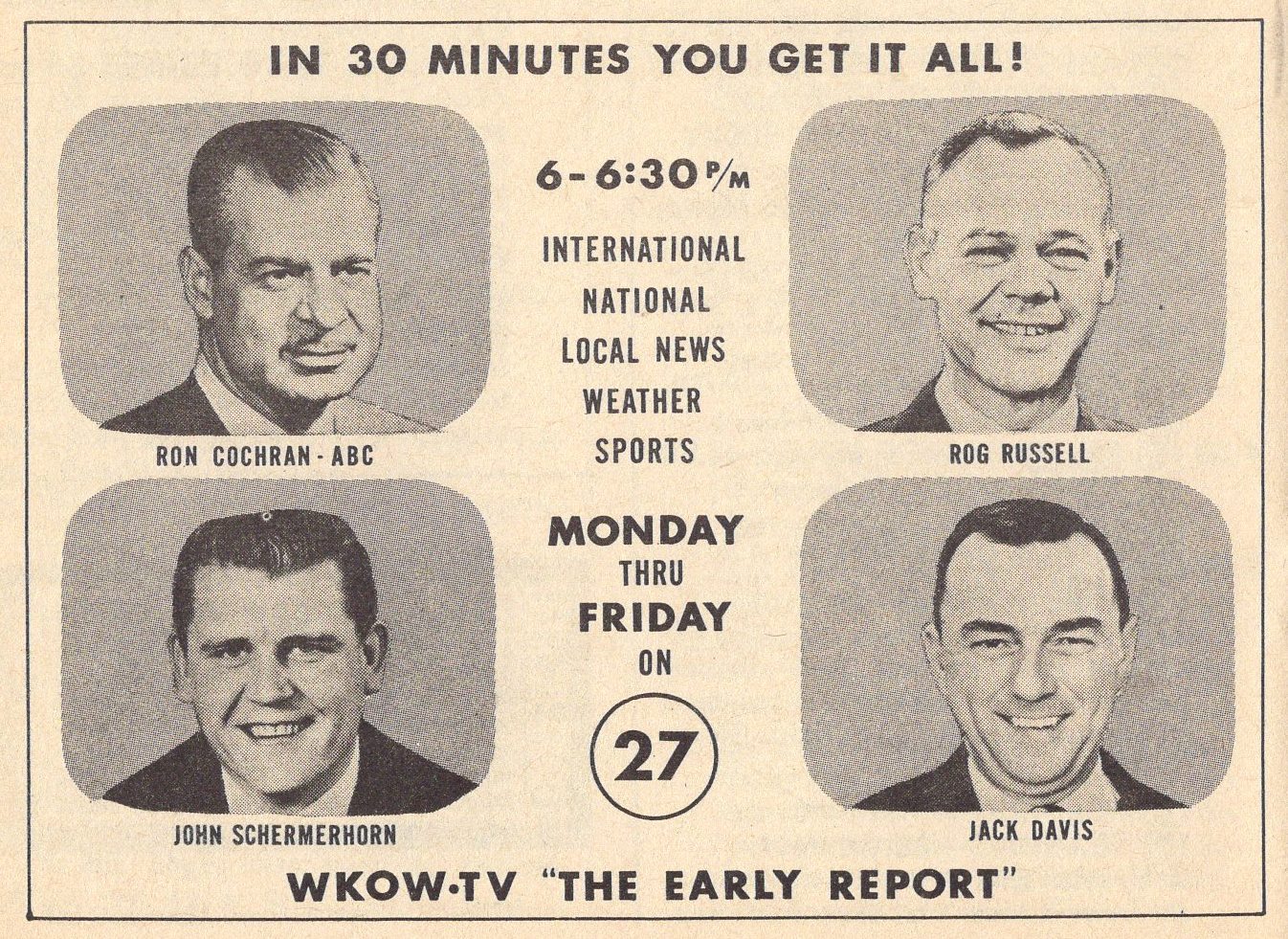
+Sg~~/s-l1600.jpg)


 Steve Prestegard.com: The Presteblog