• My ultimate Super Bowl

    February 5, 2012
    Packers

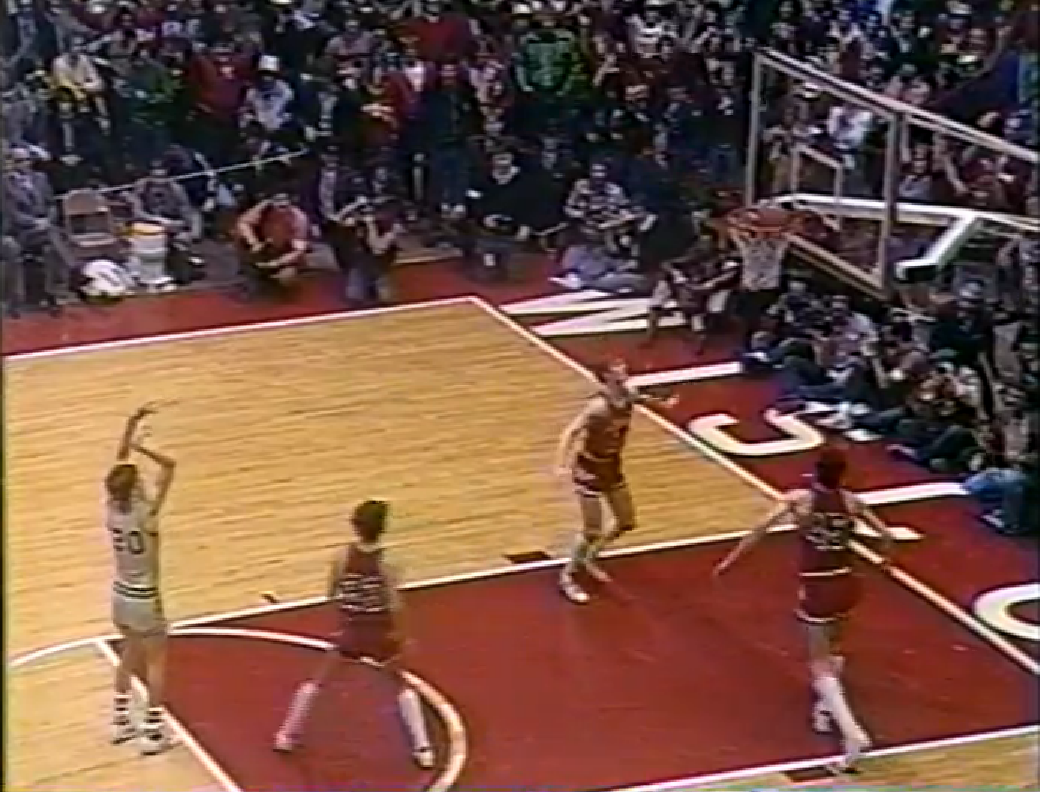
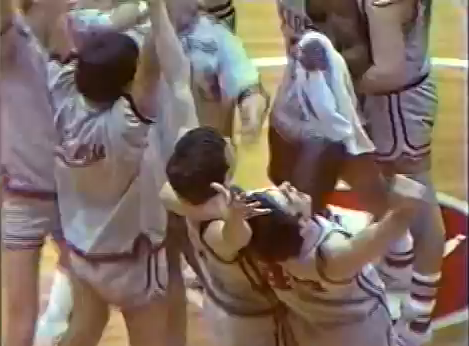
    Super Bowl XLVI wasn’t a bad game (particularly the finish), but it was missing a team, of course.

    Between my overscheduled weekend and my head getting plugged, I lacked motivation to write a Super Bowl column.

    Then, while watching (particularly the halftime show, which was a yawner), I wondered what might be the ultimate Super Bowl, which would be in parts, of course.

    The broadcast begins with for my money the best NFL theme of all time that few remember:

    You need a pregame with the world’s greatest marching band:

    The National Anthem:

    It begins with a bang, on a certain team’s second offensive play:

    Add an unlikely hero, Max McGee, who demonstrated the best way to prepare for a Super Bowl is to be out all night with two women:

    A better halftime than Madonna:

    How about a kickoff return?

    The Minister of Defense:

    Another huge defensive play:

    The best game-winning drive in Super Bowl history, called by my all-time favorite NFL announcer:

    One more defensive stand …

    … and a trophy at the end …

    … with one more band performance:

    The ultimate Super Bowl wraps up with the ultimate NFL Films Super Bowl music from, oddly enough, the Super Bowl V video:

    Share this on …

    • Click to share on X (Opens in new window) X
    • Click to share on Facebook (Opens in new window) Facebook
    • Click to share on LinkedIn (Opens in new window) LinkedIn
    • Click to email a link to a friend (Opens in new window) Email
    • Click to print (Opens in new window) Print
    Like Loading…
    No comments on My ultimate Super Bowl
  • Presty the DJ for Feb. 5

    February 5, 2012
    Music

    The number one single today in 1966:

    The number one single today in 1983:

    Today in 2006, the Rolling Stones played during the halftime of the Super Bowl:

    Birthdays begin with Motown songwriter Barrett Strong:

    Corey Wells of Three Dog Night:

    Two members of Blood Sweat and Tears: Trumpet player Chuck Strong …

    … was born one year before Al Kooper:

    David Denny played guitar for the Steve Miller Band:

    J.R. Cobb of the Atlanta Rhythm Section:

    Duff McKagan played bass for Guns N Roses:

    Chris Barron sang for the Spin Doctors:

    Two deaths of note today: Rudy Pompilli, saxophone player of Bill Haley and the Comets, in 1976 …

    … and Doris Coley of the Shirelles in 2000:

    Share this on …

    • Click to share on X (Opens in new window) X
    • Click to share on Facebook (Opens in new window) Facebook
    • Click to share on LinkedIn (Opens in new window) LinkedIn
    • Click to email a link to a friend (Opens in new window) Email
    • Click to print (Opens in new window) Print
    Like Loading…
    No comments on Presty the DJ for Feb. 5
  • Presty the DJ for Feb. 4

    February 4, 2012
    Music

    The number one single on both sides of the Atlantic today in 1965:

    The number one British album today in 1967 was “The Monkees”:

    The number one single on both sides of the Atlantic today in 1978:

    The number one single today in 1984:

    Birthdays begin with John Steel, the first drummer for the Animals:

    Florence Larue of the Fifth Dimension:

    Margie and Mary Ann Ganser, singers for the Shangri-Las:

    Roy Yeager, drummer for the Atlanta Rhythm Section:

    Who is Vincent Furnier? You know him as Alice Cooper:

    Phil Ehart of Kansas:

    Jerry Shirley, drummer of Humble Pie:

    Natalie Imbruglia:

    One death of note today in 1983: Karen Carpenter:

    Share this on …

    • Click to share on X (Opens in new window) X
    • Click to share on Facebook (Opens in new window) Facebook
    • Click to share on LinkedIn (Opens in new window) LinkedIn
    • Click to email a link to a friend (Opens in new window) Email
    • Click to print (Opens in new window) Print
    Like Loading…
    No comments on Presty the DJ for Feb. 4
  • Mr. Arsenault’s Wild Ride

    February 3, 2012
    Sports

    Every year when I figure out my winter sports announcing schedule, I highlight one specific date.

    That date is today, when Ripon College hosts Grinnell College in men’s basketball. (Which you can watch at 7 Central time online.) The Grinnell–Ripon game is the most exciting, yet most difficult-to-announce, game I do every year, which is why I look forward to it.

    If you like basketball on fire, this is what you want to see. The safest bet every season is that Grinnell will finish first in points scored per game, and worst in points allowed per game. This year’s Pioneers are scoring 114.2 points per game and giving up 96.3 points per game. The next closest offense is Ripon, which is scoring 79.4 points per game. The next closest defense is Lawrence, which is giving up 80 points per game. (Grinnell is number one in the Midwest Conference in scoring margin, which is the best indicator other than win–loss record of how good a team is.)

    The flood of points and shots isn’t what makes announcing the Pioneers difficult. The pace is frenetic, to say the least — Grinnell shoots as fast as they can, usually either a three-point shot or a layup, and after they score or lose the ball they press and trap their opponent to try to get the ball back. The other adventure for sportscasters and public address announcers is that Grinnell brings in between three and five players every time they substitute, which is once every scoreboard minute or so,  in order to keep up the defensive pressure. (Ripon College’s PA announcer always suggests fans consult their souvenir programs. It’s easier to announce who’s in on TV than trying to do that and keep up with the action on the radio.)

    Grinnell is Division III college basketball’s answer to UNLV and Loyola Marymount, two teams that let ‘er rip in the late 1980s and early 1990s, and before that the National Basketball Association of the 1960s and 1970s, when the scoreboard displayed three digits per side every game night. Grinnell has led college basketball — not just Division III, but all of college basketball — in scoring 16 of the past 18 seasons and three-point shooting in 14 of the past 18 seasons. The 2003–04 Pioneers set a record by scoring 126.2 points per game, breaking their own 2001–02 season record of 124.9 points per game. The first seven names in the Midwest Conference single-game scoring record list, the first nine names in the conference single-season scoring list, and the first four names in the career scoring list are Pioneers.

    The architect of this chaos is David Arsenault, who has been causing his Midwest Conference coaching brethren fits since 1989. (The first time Ripon played an Arsenault-coached Grinnell team in Iowa, Ripon won 134–131.) For once, the Grinnell College Web page that says that Arsenault “has become nationally and internationally renowned for his innovative coaching techniques and offensive-minded basketball” is not hype:

    A by-product of his high-flying, fast-paced basketball has been increased player participation, enthusiastic home crowds and a virtual assault on the offensive records section compiled by the NCAA Statistics Office.

    Not to mention on-floor success. Grinnell’s 1996 Midwest Conference title was its first since 1962. (The Pioneers beat Ripon in the conference championship game, with Grinnell’s Ed Brands scoring 60.) Under Arsenault, who was hired to coach a team that had had 25 consecutive losing seasons, Grinnell has won four Midwest Conference regular-season titles and two conference tournament titles. When Grinnell opened its new gymnasium, ESPN televised the game, and Sports Illustrated previewed the game. Grinnell is the only Midwest Conference team that gets national publicity beyond scoreboard sections of newspapers or websites, including USA Today, the New York Times and the Los Angeles Times.

    Arsenault described his system thusly to SI: “We’re trying to perfect chaos. Most basketball today, especially at the professional level, has a lot of dead time. We send a new group of five out there every 35 seconds to run around and create as much disturbance as they can.” Another way to look at it is to watch how a team down eight points with 90 seconds left plays, and think of playing like that all 40 minutes.

    Arsenault must have the easiest time of any Division III basketball coach in recruiting, irrespective of Division III’s lack of athletic scholarships. If a basketball player goes to Grinnell, he’s going to play. There is no alternative. The Pioneers’ leading scorer, Griffin Lentsch, plays just 20.5 minutes per game (yet leads the Midwest Conference in scoring at 26.2 points per game). Twenty-one Pioneers have played this season, and 14 players have played in every game this season. If Division III basketball is about participation, then Grinnell men’s basketball certainly achieves that standard.

    And if Division III basketball is about academics over athletics, Grinnell succeeds there too. Grinnell fits no one’s definition of an athletic factory. (The average SAT score of a Grinnell student is 1350.) Arsenault took a sabbatical one season to write The Running Game — A Formula for Success and a video, “Running to Extremes.” He has since produced another video, “Running to Win.” Someone else is selling “The Grinnell System” video package, which is a high compliment indeed.

    There is not only a method to this madness, but a statistical method to this madness. Several years ago, Arsenault commissioned some Grinnell students to figure out the statistical measures that predicted Grinnell’s success. Since this formula was discovered, meeting all five criteria has failed to produce a win only once, when Grinnell shot 16 percent from the field that night:

    1. Shoot at least 94 shots per game, which averages to one shot every 12 seconds. (This year, Grinnell is averaging only 85 shots per game.)
    2. Shoot 25 more shots than Grinnell’s opponent. (This year, they’re shooting 22 more shots per game.)
    3. Shoot three-point shots on at least half of their shots. (This season, 61.1 percent of their shots are beyond the three-point arc.)
    4. Generate at least 32 turnovers per game. (Just 28.4 turnovers per game this season. Their turnover ratio is plus 14.)
    5. Get offensive rebounds on at least one-third of Grinnell’s missed shots. (This year, they’re getting offensive rebounds on 40 percent of Grinnell’s missed shots, and the Pioneers lead the conference in offensive rebounds per game.)

    The result of this style of play could best be described as feast or famine, over an entire game or season. I’ve seen both Grinnell and Ripon come back from deficits of 20 or more points, and I’ve seen Grinnell and Ripon blow leads of 20 or more points. No lead by Grinnell or its opponent is safe, because the Pioneers never (or at least from what I’ve seen) let up on their style of play. Grinnell has both big wins and big losses (one year I announced a 99–55 Ripon win, and the Pioneers hold the record for points scored in a loss, 157–149 to Illinois College in 1994), and it seems that Grinnell most often finishes near the top or near the bottom of the conference.

    I’ve called several Grinnell–Ripon games. The first season I announced Ripon games, I watched the two teams’ game in Ripon (Ripon 143, Grinnell 118) a couple weeks before Ripon’s trip to Grinnell. But watching that kind of game is not the same thing as announcing it. Five minutes into the Ripon-at-Grinnell game, I was running out of gas. (Part of it may have been the fact that Grinnell’s old Darby Gymnasium, described as the Boston Garden of the Midwest Conference, was infernally hot.)

    Ripon won 110–107. That night also was the first night of the 1999 NBA season following that year’s lockout. Only one NBA team reached 110 points that night, and none of the games reached 217 combined points.

    Since then, Grinnell–Ripon games I’ve announced include 103–100 in 2001, 124–110 in 2006,  120–118 in 2007, 137–129 in 2009, 127–107 in 2010, and 125–113 last season. In one of those games, the halftime score was 74–67. I got the halftime stats from Ripon’s sports information director, looked them over, and started laughing, because the halftime stats had more numbers on them than some games’ final stats.

    The reaction of Grinnell’s opponents to the Pioneers’ contrarian style is interesting. I once asked Bob Gillespie, Ripon’s long-time coach, about Grinnell’s style. Gillespie replied that he wouldn’t coach that way, but it worked for Grinnell because they had won conference championships with that approach.

    When USA Today did a story about Grinnell basketball last decade, the coach of one of Grinnell’s regular-season opponents called Grinnell’s style a travesty of basketball. (The coach took that comment somewhat back when the New York Times came calling.) The irony of that comment is that that particular opponent played similarly, though not to Grinnell’s extremes — they ran a lot, shot a lot of threes, scored a lot of points and gave up a lot of points. Another former rival said he loved watching Grinnell, but he hated playing Grinnell.

    I give Arsenault a lot of credit for being willing to do this. Most team sports appear to have a sort of coaching groupthink, where peer pressure prevents a coach from doing something out of the box, like, say, never punting. (In the NFL, Tuesday Morning Quarterback swears that coaches coach with the goal of reducing the margin of defeat.) Ask yourself how many coaches in any sport would actually say ”We have fun. It’s almost a lost art in sports.” At a bare minimum, it’s highly entertaining to watch, and everybody plays because everybody has to play. One would think the Grinnell system would be quite effective in a college or high school conference known for its half-court slow-tempo style of play. (It would be interesting to take over a moribund high school girls’ basketball program, like this one, and see if this approach would work.)

    Most teams, even those that play a deliberate style against anyone else, apply the take-what-the-defense-gives-you (or, in the words of former Iowa football coach Hayden Fry, “scratch where it itches”) approach to Grinnell. If you can get the ball out of the backcourt and their press, you are likely to have a high-percentage shot available for you. And that’s by design — Grinnell is happy to trade your two-point basket for their three-point basket. Ripon once lost to Grinnell despite shooting 67 percent from the field. Most teams therefore don’t shoot many threes against Grinnell unless they’re behind. (It shouldn’t be surprising that in addition to leading the Midwest Conference in points per game, scoring margin, three-point field goals, assists, assist-to-turnover ratio, blocked shots and turnover margin and assist-to-turnover ratio, Grinnell also leads the conference in average game attendance and road game attendance.)

    Grinnell started this season with a bang by beating Principia 145–97, a game in which Grinnell deviated from its usual substitution pattern to allow Lentsch to score a Division III record 89 points. (The previous record was set by, of course, a Grinnell alumnus.) The Pioneers won 126–98, 150–137, 117–107, and 115–103. Their only loss was to Carroll 109–106 Jan. 14.

    Tonight’s game is a rematch of their Dec. 3 meeting in Grinnell, won by the Pioneers 125–103. It will not only be an entertaining game, but a big game, given that Grinnell is tied for first and Ripon is tied for third in the Midwest Conference. (The team with which Ripon is tied for third, St. Norbert, is Grinnell’s Saturday opponent.) Since only four teams make the Midwest Conference basketball tournaments, a team that wants to have a shot at March basketball needs to finish in the top four, and it’s quite helpful to host the tournament, which the regular-season champion gets to do.

    In addition to the conference implications, this should be a good game because Ripon leads the conference in scoring among teams not named Grinnell, and in free throw shooting. Grinnell plays physical defense (to say the least), so shooting 78.1 percent from the line should help the Red Hawks tonight. (Ripon is one of the few basketball teams I’ve seen that succeeds in any tempo of game and doesn’t try to control the pace of the game.)

    Arsenault won’t be at the game, though. He’s on sabbatical this semester. (And unless you knew what Arsenault looked like, you wouldn’t recognize him as a coach, given that he usually sits on the far end of the bench and almost never even stands up during play.) His son, also named David, owner of the Division III record for assists in a game (34), is the interim coach this semester. Given Grinnell’s scores in the second semester, the younger Arsenault appears to coach like his father.

    So if you’re interested in the most entertaining basketball you’ll see this season, come to the Storzer Center on the (west end of the campus of) Ripon College this evening, or watch us online. (Or if you’re busy Friday night, watch Grinnell at St. Norbert Saturday.) I guarantee you won’t be bored.

    Share this on …

    • Click to share on X (Opens in new window) X
    • Click to share on Facebook (Opens in new window) Facebook
    • Click to share on LinkedIn (Opens in new window) LinkedIn
    • Click to email a link to a friend (Opens in new window) Email
    • Click to print (Opens in new window) Print
    Like Loading…
    4 comments on Mr. Arsenault’s Wild Ride
  • Presty the DJ for Feb. 3

    February 3, 2012
    Music

    Today in 1959, one night after their concert at the Surf Ballroom in Clear Lake, Iowa, Buddy Holly, Richie Valens and J.P. “The Big Bopper”  Richardson got on a Beechcraft Bonanza in Mason City, Iowa, to fly to Fargo, N.D., for a concert in Moorhead, Minn.

    The trio, along with Dion and the Belmonts, were part of the Winter Dance Party Tour, a 24-city tour over three weeks, with its ridiculously scheduled tour dates connected by bus.

    Said bus, whose heater broke early in the tour, froze in below-zero temperatures two nights earlier between the scheduled concert in the Duluth, Minn., National Guard Armory, and the next scheduled location, the Riverside Ballroom in Green Bay.

    Holly’s drummer had to be hospitalized with frostbite in his feet, and Valens also became ill. The tour got to Green Bay, but its scheduled concert in Appleton that evening was canceled.

    After the concert in Clear Lake, Holly decided to rent an airplane. Holly’s bass player, Waylon Jennings, gave his seat to the Big Bopper because he was sick, and Valens won a coin flip with Holly’s guitarist, Tommy Allsup. Dion DiMucci chose not to take a seat because the $36 cost equaled his parents’ monthly rent.

    As he was leaving, Holly told Jennings, “I hope your ol’ bus freezes up,” to which Jennings replied, “Well, I hope your ol’ plane crashes!”

    Shortly after the 12:55 a.m. takeoff, the plane crashed, instantly killing Holly, Valens, the Big Bopper and the pilot.

    The scheduled concert that evening went on, with organizers recruiting a 15-year-old, Robert Velline, and his band the Shadows. Bobby Vee went on to have a good career.

    The number one single today in 1968:

    The number one single today in 1973:

    The number one album today in 1979 was the Blues Brothers’ “Briefcase Full of Blues”:

    Birthdays begin with one of Dion’s Belmonts, Angelo D’Aleo:

    Dennis Edwards of the Temptations:

    Eric Haydock played bass for the Hollies:

    Dave Davies of the Kinks:

    Two-hit wonder Melanie Safka:

    Tony Butler played bass for Big Country:

    Lol Tolhurst played keyboards for the Cure:

    Who is Richie Kotzen? You know him as Mr. Big:

    Share this on …

    • Click to share on X (Opens in new window) X
    • Click to share on Facebook (Opens in new window) Facebook
    • Click to share on LinkedIn (Opens in new window) LinkedIn
    • Click to email a link to a friend (Opens in new window) Email
    • Click to print (Opens in new window) Print
    Like Loading…
    No comments on Presty the DJ for Feb. 3
  • Republicans vs. business

    February 2, 2012
    US business, US politics

    Republicans like to think that their political worldview is based on time-honored concepts like natural law, freedom and individual rights, and not on craven political considerations.

    Unfortunately for the GOP, their presidential race suggests the latter, not the former. How bizarre is it that Newt Gingrich decries Mitt Romney, whose Bain Capital actually created jobs, as a “vulture” capitalist? Whatever happened to rewarding risk and initiative, and praising, not condemning, those who drive the American economy? (And how bizarre is it that Romney can’t put away Gingrich, who got $600,000 from Fannie Mae, the Government Sponsored Enterprise whose fingerprints are all over the late 2000s recession?)

    Unfortunately for Romney, he’s not helping his own cause by veering between stereotypical right-wing hardened hearts (he claimed “I’m not concerned about the very poor,” which sounds bad, although I’d be more concerned about the middle class, as he then said he was) and unintelligent liberal ideas (indexing the minimum wage to inflation).

    The GOP better figure this out since Romney appears to be on the way to the GOP nomination, lest the GOP blows what follows:

    The map is a Washington Examiner extrapolation of the most recent Gallup Poll presidential approval/disapproval numbers. Obama has more negatives than positives in the red states, and if the vote in the presidential election followed those trends, well, Obama better be making plans for his life after Jan. 20.

    But the GOP is certainly capable of screwing it up. Despite the fact that the economy is practically guaranteed to not be noticeably better by Election Day (and may become much worse), and despite the fact that Obamacare is tremendously unpopular (for good reason), and despite the fact that Obama’s greatest successes are what he was not able to do (i.e. raise taxes beyond the dozen or so tax increases we’re enjoying now), none of the remaining GOP presidential candidates are able to cross the spot where party popularity translates into electability.

    It would help if presidential candidates didn’t demonize one of their core constituencies, the people who will have to pull the economy out of its apparent doldrums. Jim Pethokoukis passes on Ed Yardeni, an economist who attended something called the Distressed Investing Summit and Turnaround Awards Gala:

    No one said, “Greed is good.” I did hear one investment banker say that Chapter 11 is good. Bankruptcy is better than liquidation. He observed that in America the legal system is sensibly designed to restructure distressed companies rather than to shut them down. I heard lots of heart-warming stories about how these fearless capitalists took lots of risks to turn companies around by replacing incompetent or corrupt managers with their own management pros.

    Yes, in some instances, these fine folks had to fire other fine folks to boost the productivity and competitiveness of their acquired companies. That’s the heartless part of these heart-warming stories. However, in most cases, there were happy endings, which averted both the total liquidation of the enterprises and the termination of all their workers. The remaining employees certainly benefitted when their restructured companies were revived.

    When these turnaround artists succeed, they can get very rich by taking their companies public or by selling them to other companies. Again, some workers may lose their jobs in the process, but it beats the alternative. That’s just one important example of how the 1% really do help the 99%. At the end of last year, Wilbur Ross, who is a private-equity billionaire, observed that entrepreneurship and capitalism didn’t cause the financial crisis: He added, “Tearing down the rich does not help those less well-off. If you favor employment, you need employers whose businesses are flourishing.”

    … Today, one of the main sources of the economy’s resilience is the availability of so much private equity to purchase and revive distressed companies. Too bad Mitt Romney, who made his fortune as a private equity investor, hasn’t figured out yet how to explain this to the public.

    Pethokoukis adds: “Mitt Romney might want to memorize this.” And not just Romney.

    Share this on …

    • Click to share on X (Opens in new window) X
    • Click to share on Facebook (Opens in new window) Facebook
    • Click to share on LinkedIn (Opens in new window) LinkedIn
    • Click to email a link to a friend (Opens in new window) Email
    • Click to print (Opens in new window) Print
    Like Loading…
    2 comments on Republicans vs. business
  • Presty the DJ for Feb. 2

    February 2, 2012
    Music

    First: I have been asked to say that it’s a great day for groundhogs. Thus, a decades-long tradition is not only maintained, but expanded online.

    (By the way: If a groundhog near you predicts six more weeks of winter, you are authorized to kill the groundhog to prevent that prediction from ever happening again. The fact that winter in Wisconsin lasts more like 12 weeks from now regardless of groundhog predictions is beside the point.)

    Today in 1959, Buddy Holly, Richie Valens and the Big Bopper all appeared at the Surf Ballroom in Clear Lake, Iowa.

    That would be their final concert appearance because of what happened after the concert.

    Today in 1973, a bad thing to happen to a piano player happened — Keith Emerson of Emerson Lake & Palmer injured his hands when a piano, rigged to explode during a concert, exploded prematurely. That would not make him a …

    That same day, or night, was the premiere of NBC-TV’s “The Midnight Special”:

    The number one British album today 1974 was the Carpenters’ “The Singles 1969–1973”:

    The number one single on both sides of the Atlantic today in 1985:

    Today in 2004, CBS-TV apologized for the previous day’s Super Bowl XXXVIII halftime show, which featured …

    Singer Justin Timberlake also apologized, saying, “I am sorry that anyone was offended by the wardrobe malfunction during the half-time performance of the Super Bowl,” thus adding the phrase “wardrobe malfunction” to our cultural lexicon.

    Birthdays begin with Alan Caddy, guitarist for the Tornadoes:

    Graham Nash played for the Hollies and Crosby Stills and Nash (and occasionally Young):

    Ronnie Goodson of John Fred and His Playboy Band:

    Howard Bellamy was one of the Bellamy Brothers:

    Peter Lucia of Tommy James and the Shondells:

    Alan McKay played guitar for Earth Wind & Fire:

    Ross Valory played bass for the Steve Miller Band and Journey:

    Robert Deleo of the Stone Temple Pilots:

    Ben Mize played drums for the Counting Crows:

    One death of note, today in 2007: Billy Henderson of the Spinners:

    Share this on …

    • Click to share on X (Opens in new window) X
    • Click to share on Facebook (Opens in new window) Facebook
    • Click to share on LinkedIn (Opens in new window) LinkedIn
    • Click to email a link to a friend (Opens in new window) Email
    • Click to print (Opens in new window) Print
    Like Loading…
    No comments on Presty the DJ for Feb. 2
  • Town and gown

    February 1, 2012
    Culture, Ripon
    This Ripon Commonwealth Press photo of the singing of Ripon's Alma Mater proves that (1) I was at Founders Day and (2) I don't sing in public.

    I spent Tuesday morning at Ripon College’s Founders Day.

    Our family is associated with two of the oldest institutions in Ripon. Jannan is a graduate and former employee of Ripon College, for which I announce football and basketball. (Including Friday night’s men’s basketball game against 113-point-per-game Grinnell at 7 Central time; click here to be highly entertained.) One of the founders of both Ripon and Ripon College, Alvan Bovay, also was a founder of St. Peter’s Episcopal Church. (Bovay also was a founder of the Republican Party, as a reader reminded me, in a building here in Ripon, but this post is not about partisan politics.)

    It’s rather ironic that we live here. I think I was the first to visit Ripon, having spent a week at the college in June 1982 for Badger Boys State. I don’t think Jannan planned to come back to Ripon other than for reunions once she graduated in 1987 and headed off to the Peace Corps. But 11 years after her graduation, Jannan started working at her alma mater, and a year later we moved here from Appleton. Neither of us expected to raise not only “townies,” but cradle Episcopalians. (As with many small towns, no one who moves here really is a Riponite, supposedly.)

    For a college whose enrollment has never exceeded 1,000 or so, Ripon College has some famous alumni, including actors Harrison Ford, Spencer Tracy and Frances Lee McCain (Marty McFly’s mother), singer Al Jarreau, and recently deceased CBS-TV reporter Richard Threlkeld. An early scene in “Raiders of the Lost Ark” makes a reference to a “Dr. Tyree,” the same last name as a longtime Ripon philosophy professor. Jarreau’s Wisconsin concerts have featured him singing Ripon’s Alma Mater. (Which has the same melody as Kellerman’s resort.) I have Threlkeld’s book, Dispatches from the Former Evil Empire, which he signed “From one ink-stained wretch to another.”

    I find living in a small college town full of appeal. I walked to the college for Founders Day. Were it not for all the stuff I have to bring along (headsets, spotter board, clipboards,  etc.), I could walk to Ingalls Field (where football has been played since the 1880s) to announce Red Hawk and Tiger games. Before our three townies arrived, one summer a professor hosted an independent film series that included some great movies, including the original “Insomnia,” “The Opposite of Sex” (featuring this quote that must be seen, not merely read, to be appreciated) and “Kissed.” The college brings in the Milwaukee Symphony Orchestra every year. Being a college town, Ripon also features businesses that would not be seen in towns of the same size without a college. (Unfortunately, that does not yet include a microbrewery.)

    People associated with the college participate in all sorts of ways in community life. One professor is on the Ripon Board of Education. Another professor is our Fond du Lac County supervisor. (Which reminds me: About that county sales tax, Marty …) An assistant dean (who appears to have approximately 387 titles at Ripon) serves on the board of Ripon Medical Center. The former president of the college served with me on our sons’ charter school board. Professors and college employees do a lot elsewhere throughout Ripon.

    Even though there are 13 UW four-year universities and 20 private colleges in this state, Ripon is arguably one of the few real college towns in this state. Fond du Lac has not only Marian University but UW–Fond du Lac and Moraine Park Technical College, yet no one thinks of Fond du Lac as a college town. UW–Oshkosh is the third largest campus in the UW System, but no one thinks of Oshkosh as a college town either. La Crosse has both UW–La Crosse and Viterbo University, but is not a college town. Neither Appleton, home of Lawrence University, nor De Pere, home of St. Norbert College, nor Beloit, home of Beloit College, feel like college towns either. Platteville and Whitewater are college towns.

    The definition of “college town” is not merely a town with a college in it, but a town whose college is most, not just some, of the town’s identity. (So is Madison a college town? That depends on what you think is most dominant about Madison, state government or the UW. Milwaukee, despite having what should be called the University of Milwaukee, Marquette University, Alverno College, the Milwaukee Institute of Art and Design, Milwaukee School of Engineering and Mount Mary College, is definitely not a college town.) One could, I suppose, divide the college’s enrollment by its total population to determine the college’s effect on where it’s located. I prefer to use the test Supreme Court Justice Potter Stewart used to define obscenity — you know it when you see it.

    The relationship between a college and the community it’s located in is described as “town–gown relations.” Founders Day is the college’s way of honoring Ripon-area institutions or individuals — this year, Ripon Medical Center. (Which is kind of amusing given that RMC now is part of Agnesian Health Care, which is sponsored by the Congregation of Sisters of St. Agnes, which also sponsors … Marian University.)

    Town–gown relations are never perfect. Anytime Ripon College wants to do something development-wise, it must get the approval of the city’s Plan Commission, on which I served for four years. Two controversial issues I voted for were the college’s request to close two city streets going through campus, in order to make that part of campus more pedestrian-friendly, and the construction of a new dorm. The first proposal was opposed by one longtime city resident who asserted that once a street goes on the official city map, it can, or should, never be taken off. (You may not know that there is a bypass of Ripon, which exists only on the official city map.)

    As for the second issue, I don’t live close enough to campus to notice, but neighbors probably would tell you that college students don’t always act in a respectful manner toward their neighbors who are not part of the campus. That, however, is part of living across the street from an institution that has been there since 1851, an institution whose presence should be obvious to would-be property owners across the street. (Moreover, upon complaints of students speeding down one street, the Ripon police observed the street long enough to discover that the speeders were not students, but residents.) That’s also part of being between 18 and 22 years old, a period sometimes noted for poor personal judgment, as those who survived that age sometimes don’t want to admit.

    The residents of a college town take particular interest in the college. That can sometimes be a challenge for college administration. I wonder, for instance, why the college doesn’t promote itself more actively nationally, or for that matter even in Ripon. I notice that since the college started charging admission for football and basketball games, attendance has dropped at football and basketball games. I suspect the college has even more events beyond sports that many Riponites don’t even know are taking place at the college. (On the other hand, I speak from experience that it’s difficult to communicate with those who don’t want to be communicated with.)

    Ripon College is a residential undergraduate-only liberal arts college. It has few commuter students, almost no adult students, and no advanced-degree students. Looking at trends in higher education, one has to wonder how long places like Ripon College will remain viable given increasing complaints about higher education costs, not to mention the increasing belief that the purpose of a college education (or equivalent) is getting the first post-college job. (And let’s face it, one motivation of the conservative critique of higher education is the conservative belief that higher education isn’t friendly to conservatives or conservative ideas — a belief created by personal experience in many cases.)

    Indeed, the concept of the liberal arts, which I’ve heard described as “learning how to learn,” seems not very popular these days, which is too bad. Degrees do not equal wisdom or common sense. But we need a more, not less, educated citizenry, and educated in areas beyond their vocation. (What purpose is a college education in a vocation if people are going to change their careers several times in their lifetimes?)

    After Founders Day, I ate (and ate and ate and ate) lunch with Ripon’s mayor and city administrator and an alderman, where some of what’s in this blog came up. My hope is that Ripon College can serve to attract Ripon College students to stay in Ripon beyond their graduation — to, as we ended up doing, come to Ripon more often than for class reunions. Ripon needs more “townies” who realize how important Ripon College is to Ripon.

    Share this on …

    • Click to share on X (Opens in new window) X
    • Click to share on Facebook (Opens in new window) Facebook
    • Click to share on LinkedIn (Opens in new window) LinkedIn
    • Click to email a link to a friend (Opens in new window) Email
    • Click to print (Opens in new window) Print
    Like Loading…
    1 comment on Town and gown
  • Presty the DJ for Feb. 1

    February 1, 2012
    Music

    Today in 1949, RCA released the first 45-rpm record.

    The seven-inch size of the 45, compared with the bigger 78, allowed the development of jukeboxes.

     The number one single today in 1964:

    The number one single today in 1969:

    The number one single today in 1975:

    The number one single today in 1992:

    Today in 2004, Super Bowl XXXVIII, a great game, was obscured by its halftime show:

    The number one single today in 2005, 45 years after its original release:

    Today in 2008, NASA chose the first song to be beamed directly into space:

    Birthdays begin with Bob Shane, one of the original Kingston Trio:

    Don Everly of the Everly Brothers …

    … was born the same day as Ray Sawyer, better known as Dr. Hook:

    Rick James:

    Mike Campbell played guitar for Tom Petty and the Heartbreakers:

    Who is Antoine Patton? Maybe you know him as Big Boi of OutKast:

    One death of note, today in 1989: Paul Robi of the Platters:

    Share this on …

    • Click to share on X (Opens in new window) X
    • Click to share on Facebook (Opens in new window) Facebook
    • Click to share on LinkedIn (Opens in new window) LinkedIn
    • Click to email a link to a friend (Opens in new window) Email
    • Click to print (Opens in new window) Print
    Like Loading…
    No comments on Presty the DJ for Feb. 1
  • Wisconsin and our neighbors

    January 31, 2012
    US politics, Wisconsin politics

    If you conclude that all the non-national political news of the nation, or at least the Midwest, is being generated in Wisconsin these days, well, that’s not entirely correct.

    To the south, Illinois, one of the few states whose finances were worse than Wisconsin’s, took the raise-taxes-and-bend-over-to-the-public-employee-unions approach. And, the Chicago Tribune reports:

    Think back to 1/11/11, the night Democrats in the General Assembly raised personal and corporate income taxes by 67 and 46 percent. That legislation didn’t cut spending by one dime. Never forget the assurances, though, that these tax increases would pay the state’s debts and prevent future budget deficits …

    One year later, though, stand back with us and look at all their carnage:

    • Earlier this month, Moody’s Investors Service cited “weak management practices” when it awarded Illinois the nation’s lowest credit rating. Standard & Poor’s added insult to injury: “If Illinois does not make meaningful changes to further align revenue and spending and address its accumulated deficit (accounts payable and general fund liabilities) for fiscal years 2012 and 2013, we could lower the rating this year. … A downgrade could also be triggered if pension funding levels continue to deteriorate or debt levels increase significantly …”

    • As [state budget director] David Vaught unwittingly attests, lawmakers continue to spend too much of other people’s money. [Gov. Pat] Quinn’s office now expects this fiscal year’s supposedly balanced budget to finish $507 million in the red. That’s right, even with $7 billion a year in new revenue from their tax hikes, this crowd still can’t balance a budget.

    • Let alone pay those old bills. A new report from Comptroller Judy Baar Topinka carries the headline, “Backlog persists despite new revenue.” Deadbeat Illinois owes some $8.5 billion in old bills, tax refunds, employee health insurance and interfund borrowing debts. That’s roughly one-fourth of the state’s spending this year from its general funds. …

    So Vaught is more right than he may want to admit: Until Illinois lowers its overhead (pension and Medicaid costs, that’s you), even tax hikes can’t, in truth, relieve “a squeeze for everything else.“

    That probably won’t change until lawmakers cut their spending on that unaffordable overhead and deploy more tax hike revenue to pay old bills. Remember, the only reason Illinois has any old bills is that Springfield spent more money, and promised public employees far more in retirement perks, than revenues justified.

    Worst of all, perhaps, the Democrats’ tax increases are stifling the economic growth that would boost those revenues. With their votes, they made Illinois an even higher-cost state for job creators.

    After the fiscal disaster area left by Gov. James Doyle and the 2009–10 Legislature, Wisconsin’s state budget is now legally, if not actually, balanced. Illinois’ budget appears to be neither legally nor actually balanced. More than one Wisconsinites has asked why Gov. Scott Walker is being recalled and not Quinn.

    A recall attempt is in the works to our east, but for reasons unrelated to state finances, reports the Detroit Free Press:

    If there’s anything Bill Schuette has established in his first year as Michigan’s attorney general — besides an appetite for media attention rivaling that of Sarah Palin or Geoffrey Fieger — it’s that he won’t stand for the federal government to trample on the rights of the people of Michigan.

    Unless, or course, the right in question is one that Michigan’s top law enforcement official never cared for in the first place. In which caseany pretext for ignoring, circumventing or violating the state law that guarantees it is welcome.

    I speak, of course, of Schuette’s maniacal campaign to single-handedly repeal the Medical Marijuana Act that Michigan voters adopted in 2008 — by a considerably wider margin (63%-37%), it should be noted, than Schuette enjoyed in his own victory (53%-42%) over a weak Democratic opponent two years later. …

    But the AG has also exploited his office to target medical marijuana users and providers — precisely the people Michigan voters sought to protect from criminal prosecution when they adopted the MMA. That’s a flagrant abuse of authority — one that undermines respect for the law in general, not just the statute Schuette seeks to subvert.

    In his latest initiative, Schuette has opined that police have a legal obligation not to return pot seized from licensed medical marijuana patients because possession of marijuana is still prohibited under federal law. (Never mind that the U.S. Justice Department, which has bigger fish to fry, especially in Detroit, has made clear its lack of interest in prosecuting patients in Michigan and other states that have authorized medical marijuana.)

    In fact, the AG warned in an opinion issued late last week, officers who return illegally confiscated marijuana (in seeming compliance with a provision of the MMA that specifically bars its seizure from medical users licensed by the state) are themselves risking criminal prosecution as drug dealers.

    Really? And what sort of prosecutor would file charges against a police officer for that? Even Schuette isn’t that deranged. …

    But more than 3 million Michigan residents have made it clear they want licensed patients to be able to use marijuana for medicinal purposes. That’s almost twice as many as voted for Schuette in 2010.

    So Schuette’s campaign to emasculate the MMA isn’t just unprincipled; it’s an affront to democratic rule — and to the rule of law he took an oath to uphold.

    Nothing that Walker has done as governor justifies Recallarama. An attorney general’s willful flouting of the law probably justifies a recall, since attorneys general are supposed to enforce all laws, not just the ones they like, and not just the ones floating between their ears. As for Quinn, does mere grotesque incompetence justify a recall? If it does, then since a majority of Illinois voters were stupid enough to vote for Quinn (who took office after Gov. Rod Blagojevich’s corruption conviction), perhaps Illinois voters should recall themselves.

    Share this on …

    • Click to share on X (Opens in new window) X
    • Click to share on Facebook (Opens in new window) Facebook
    • Click to share on LinkedIn (Opens in new window) LinkedIn
    • Click to email a link to a friend (Opens in new window) Email
    • Click to print (Opens in new window) Print
    Like Loading…
    4 comments on Wisconsin and our neighbors
Previous Page
1 … 967 968 969 970 971 … 1,031
Next Page

Website Powered by WordPress.com.

Steve Prestegard.com: The Presteblog

The thoughts of a journalist/libertarian–conservative/Christian husband, father, Eagle Scout and aficionado of obscure rock music. Thoughts herein are only the author’s and not necessarily the opinions of his family, friends, neighbors, church members or past, present or future employers.

  • Steve
    • About, or, Who is this man?
    • Facebook
    • Twitter
    • Adventures in ruralu0026nbsp;inkBack in June 2009, I was driving somewhere through a rural area. And for some reason, I had a flashback to two experiences in my career about that time of year many years ago. In 1988, eight days after graduating from the University of Wisconsin, I started work at the Grant County Herald Independent in Lancaster as a — well, the — reporter. Four years after that, on my 27th birthday, I purchased, with a business partner, the Tri-County Press in Cuba City, my first business venture. Both were experiences about which Wisconsin author Michael Perry might write. I thought about all this after reading a novel, The Deadline, written by a former newspaper editor and publisher. (Now who would write a novel about a weekly newspaper?) As a former newspaper owner, I picked at some of it — why finance a newspaper purchase through the bank if the seller is willing to finance it? Because the mean bank lender is a plot point! — and it is much more interesting than reality, but it is very well written, with a nicely twisting plot, and quite entertaining, again more so than reality. There is something about that first job out of college that makes you remember it perhaps more…
    • Adventures in radioI’ve been in the full-time work world half my life. For that same amount of time I’ve been broadcasting sports as a side interest, something I had wanted to since I started listening to games on radio and watching on TV, and then actually attending games. If you ask someone who’s worked in radio for some time about the late ’70s TV series “WKRP in Cincinnati,” most of them will tell you that, if anything, the series understated how wacky working in radio can be. Perhaps the funniest episode in the history of TV is the “WKRP” episode, based on a true story, about the fictional radio station’s Thanksgiving promotion — throwing live turkeys out of a helicopter under the mistaken belief that, in the words of WKRP owner Arthur Carlson, “As God is my witness, I thought turkeys could fly.” [youtube=http://www.youtube.com/watch?v=ST01bZJPuE0] I’ve never been involved in anything like that. I have announced games from the roofs of press boxes (once on a nice day, and once in 50-mph winds), from a Mississippi River bluff (more on that later), and from the front row of the second balcony of the University of Wisconsin Fieldhouse (great view, but not a place to go if…
    • “Good morning/afternoon/evening, ________ fans …”
    • My biggest storyEarlier this week, while looking for something else, I came upon some of my own work. (I’m going to write a blog someday called “Things I Found While Looking for Something Else.” This is not that blog.) The Grant County Sheriff’s Department, in the county where I used to live, has a tribute page to the two officers in county history who died in the line of duty. One is William Loud, a deputy marshal in Cassville, shot to death by two bank robbers in 1912. The other is Tom Reuter, a Grant County deputy sheriff who was shot to death at the end of his 4 p.m.-to-midnight shift March 18, 1990. Gregory Coulthard, then a 19-year-old farmhand, was convicted of first-degree intentional homicide and is serving a life sentence, with his first eligibility for parole on March 18, 2015, just 3½ years from now. I’ve written a lot over the years. I think this, from my first two years in the full-time journalism world, will go down as the story I remember the most. For journalists, big stories contain a paradox, which was pointed out in CBS-TV’s interview of Andy Rooney on his last “60 Minutes” Sunday. Morley Safer said something along the line…
  • Food and drink
    • The Roesch/Prestegard familyu0026nbsp;cookbookFrom the family cookbook(s) All the families I’m associated with love to eat, so it’s a good thing we enjoy cooking. The first out-of-my-house food memory I have is of my grandmother’s cooking for Christmas or other family occasions. According to my mother, my grandmother had a baked beans recipe that she would make for my mother. Unfortunately, the recipe seems to have  disappeared. Also unfortunately, my early days as a picky, though voluminous, eater meant I missed a lot of those recipes made from such wholesome ingredients as lard and meat fat. I particularly remember a couple of meals that involve my family. The day of Super Bowl XXXI, my parents, my brother, my aunt and uncle and a group of their friends got together to share lots of food and cheer on the Packers to their first NFL title in 29 years. (After which Jannan and I drove to Lambeau Field in the snow,  but that’s another story.) Then, on Dec. 31, 1999, my parents, my brother, my aunt and uncle and Jannan and I (along with Michael in utero) had a one-course-per-hour meal to appropriately end years beginning with the number 1. Unfortunately I can’t remember what we…
    • SkålI was the editor of Marketplace Magazine for 10 years. If I had to point to one thing that demonstrates improved quality of life since I came to Northeast Wisconsin in 1994, it would be … … the growth of breweries and  wineries in Northeast Wisconsin. The former of those two facts makes sense, given our heritage as a brewing state. The latter is less self-evident, since no one thinks of Wisconsin as having a good grape-growing climate. Some snobs claim that apple or cherry wines aren’t really wines at all. But one of the great facets of free enterprise is the opportunity to make your own choice of what food and drink to drink. (At least for now, though some wish to restrict our food and drink choices.) Wisconsin’s historically predominant ethnic group (and our family’s) is German. Our German ancestors did unfortunately bring large government and high taxes with them, but they also brought beer. Europeans brought wine with them, since they came from countries with poor-quality drinking water. Within 50 years of a wave of mid-19th-century German immigration, brewing had become the fifth largest industry in the U.S., according to Maureen Ogle, author of Ambitious Brew: The Story of American Beer. Beer and wine have…
  • Wheels
    • America’s sports carMy birthday in June dawned without a Chevrolet Corvette in front of my house. (The Corvette at the top of the page was featured at the 2007 Greater Milwaukee Auto Show. The copilot is my oldest son, Michael.) Which isn’t surprising. I have three young children, and I have a house with a one-car garage. (Then again, this would be more practical, though a blatant pluck-your-eyes-out violation of the Corvette ethos. Of course, so was this.) The reality is that I’m likely to be able to own a Corvette only if I get a visit from the Corvette Fairy, whose office is next door to the Easter Bunny. (I hope this isn’t foreshadowing: When I interviewed Dave Richter of Valley Corvette for a car enthusiast story in the late great Marketplace Magazine, he said that the most popular Corvette in most fans’ minds was a Corvette built during their days in high school. This would be a problem for me in that I graduated from high school in 1983, when no Corvette was built.) The Corvette is one of those cars whose existence may be difficult to understand within General Motors Corp. The Corvette is what is known as a “halo car,” a car that drives people into showrooms, even if…
    • Barges on fouru0026nbsp;wheelsI originally wrote this in September 2008.  At the Fox Cities Business Expo Tuesday, a Smart car was displayed at the United Way Fox Cities booth. I reported that I once owned a car into which trunk, I believe, the Smart could be placed, with the trunk lid shut. This is said car — a 1975 Chevrolet Caprice coupe (ours was dark red), whose doors are, I believe, longer than the entire Smart. The Caprice, built down Interstate 90 from us Madisonians in Janesville (a neighbor of ours who worked at the plant probably helped put it together) was the flagship of Chevy’s full-size fleet (which included the stripper Bel Air and middle-of-the-road Impala), featuring popular-for-the-time vinyl roofs, better sound insulation, an upgraded cloth interior, rear fender skirts and fancy Caprice badges. The Caprice was 18 feet 1 inch long and weighed 4,300 pounds. For comparison: The midsize Chevrolet of the ear was the Malibu, which was the same approximate size as the Caprice after its 1977 downsizing. The compact Chevrolet of the era was the Nova, which was 200 inches long — four inches longer than a current Cadillac STS. Wikipedia’s entry on the Caprice has this amusing sentence: “As fuel economy became a bigger priority among Americans…
    • Behind the wheel
    • Collecting only dust or rust
    • Coooooooooooupe!
    • Corvettes on the screen
    • The garage of misfit cars
    • 100 years (and one day) of our Chevrolets
    • They built Excitement, sort of, once in a while
    • A wagon by any otheru0026nbsp;nameFirst written in 2008. You will see more don’t-call-them-station-wagons as you drive today. Readers around my age have probably had some experience with a vehicle increasingly rare on the road — the station wagon. If you were a Boy Scout or Girl Scout, or were a member of some kind of youth athletic team, or had a large dog, or had relatives approximately your age, or had friends who needed to be transported somewhere, or had parents who occasionally had to haul (either in the back or in a trailer) more than what could be fit inside a car trunk, you (or, actually, your parents) were the target demographic for the station wagon. “Station wagons came to be like covered wagons — so much family activity happened in those cars,” said Tim Cleary, president of the American Station Wagon Owners Association, in Country Living magazine. Wagons “were used for everything from daily runs to the grocery store to long summer driving trips, and while many men and women might have wanted a fancier or sportier car, a station wagon was something they knew they needed for the family.” The “station wagon” originally was a vehicle with a covered seating area to take people between train stations…
    • Wheels on theu0026nbsp;screenBetween my former and current blogs, I wrote a lot about automobiles and TV and movies. Think of this post as killing two birds (Thunderbirds? Firebirds? Skylarks?) with one stone. Most movies and TV series view cars the same way most people view cars — as A-to-B transportation. (That’s not counting the movies or series where the car is the plot, like the haunted “Christine” or “Knight Rider” or the “Back to the Future” movies.) The philosophy here, of course, is that cars are not merely A-to-B transportation. Which disqualifies most police shows from what you’re about to read, even though I’ve watched more police video than anything else, because police cars are plain Jane vehicles. The highlight in a sense is in the beginning: The car chase in my favorite movie, “Bullitt,” featuring Steve McQueen’s 1968 Ford Mustang against the bad guys’ 1968 Dodge Charger: [youtube=http://www.youtube.com/watch?v=GMc2RdFuOxIu0026amp;fmt=18] One year before that (but I didn’t see this until we got Telemundo on cable a couple of years ago) was a movie called “Operación 67,” featuring (I kid you not) a masked professional wrestler, his unmasked sidekick, and some sort of secret agent plot. (Since I don’t know Spanish and it’s not…
    • While riding in my Cadillac …
  • Entertainments
    • Brass rocksThose who read my former blog last year at this time, or have read this blog over the past months, know that I am a big fan of the rock group Chicago. (Back when they were a rock group and not a singer of sappy ballads, that is.) Since rock music began from elements of country music, jazz and the blues, brass rock would seem a natural subgenre of rock music. A lot of ’50s musical acts had saxophone players, and some played with full orchestras … [youtube=http://www.youtube.com/watch?v=9CPS-WuUKUE] … but it wasn’t until the more-or-less simultaneous appearances of Chicago and Blood Sweat u0026amp; Tears on the musical scene (both groups formed in 1967, both had their first charting singles in 1969, and they had the same producer) that the usual guitar/bass/keyboard/drum grouping was augmented by one or more trumpets, a sax player and a trombone player. While Chicago is my favorite group (but you knew that already), the first brass rock song I remember hearing was BSu0026amp;T’s “Spinning Wheel” — not in its original form, but on “Sesame Street,” accompanied by, yes, a giant spinning wheel. [youtube=http://www.youtube.com/watch?v=qi9sLkyhhlE] [youtube=http://www.youtube.com/watch?v=OxWSOuNsN20] [youtube=http://www.youtube.com/watch?v=U9U34uPjz-g] I remember liking Chicago’s “Just You ‘n Me” when it was released as a single, and…
    • Drive and Eat au0026nbsp;RockThe first UW home football game of each season also is the opener for the University of Wisconsin Marching Band, the world’s finest college marching band. (How the UW Band has not gotten the Sudler Trophy, which is to honor the country’s premier college marching bands, is beyond my comprehension.) I know this because I am an alumnus of the UW Band. I played five years (in the last rank of the band, Rank 25, motto: “Where Men Are Tall and Run-On Is Short”), marching in 39 football games at Camp Randall Stadium, the Hubert H. Humphrey Metrodome in Minneapolis, Michigan Stadium in Ann Arbor, Memorial Stadium at the University of Illinois (worst artificial turf I had ever seen), the University of Nevada–Las Vegas’ Sam Boyd Silver Bowl, the former Dyche Stadium at Northwestern University, five high school fields and, in my one bowl game, Legion Field in Birmingham, Ala., site of the 1984 Hall of Fame Bowl. The UW Band was, without question, the most memorable experience of my college days, and one of the most meaningful experiences of my lifetime. It was the most physical experience of my lifetime, to be sure. Fifteen minutes into my first Registration…
    • Keep on rockin’ in the freeu0026nbsp;worldOne of my first ambitions in communications was to be a radio disc jockey, and to possibly reach the level of the greats I used to listen to from WLS radio in Chicago, which used to be one of the great 50,000-watt AM rock stations of the country, back when they still existed. (Those who are aficionados of that time in music and radio history enjoyed a trip to that wayback machine when WLS a Memorial Day Big 89 Rewind, excerpts of which can be found on their Web site.) My vision was to be WLS’ afternoon DJ, playing the best in rock music between 2 and 6, which meant I wouldn’t have to get up before the crack of dawn to do the morning show, yet have my nights free to do whatever glamorous things big-city DJs did. Then I learned about the realities of radio — low pay, long hours, zero job security — and though I have dabbled in radio sports, I’ve pretty much cured myself of the idea of working in radio, even if, to quote WAPL’s Len Nelson, “You come to work every day just like everybody else does, but we’re playing rock ’n’ roll songs, we’re cuttin’ up.…
    • Monday on the flight line, not Saturday in the park
    • Music to drive by
    • The rock ofu0026nbsp;WisconsinWikipedia begins its item “Music of Wisconsin” thusly: Wisconsin was settled largely by European immigrants in the late 19th century. This immigration led to the popularization of galops, schottisches, waltzes, and, especially, polkas. [youtube=http://www.youtube.com/watch?v=yl7wCczgNUc] So when I first sought to write a blog piece about rock musicians from Wisconsin, that seemed like a forlorn venture. Turned out it wasn’t, because when I first wrote about rock musicians from Wisconsin, so many of them that I hadn’t mentioned came up in the first few days that I had to write a second blog entry fixing the omissions of the first. This list is about rock music, so it will not include, for instance, Milwaukee native and Ripon College graduate Al Jarreau, who in addition to having recorded a boatload of music for the jazz and adult contemporary/easy listening fan, also recorded the theme music for the ’80s TV series “Moonlighting.” Nor will it include Milwaukee native Eric Benet, who was for a while known more for his former wife, Halle Berry, than for his music, which includes four number one singles on the Ru0026amp;B charts, “Spend My Life with You” with Tamia, “Hurricane,” “Pretty Baby” and “You’re the Only One.” Nor will it include Wisconsin’s sizable contributions to big…
    • Steve TV: All Steve, All the Time
    • “Super Steve, Man of Action!”
    • Too much TV
    • The worst music of allu0026nbsp;timeThe rock group Jefferson Airplane titled its first greatest-hits compilation “The Worst of Jefferson Airplane.” Rolling Stone magazine was not being ironic when it polled its readers to decide the 10 worst songs of the 1990s. I’m not sure I agree with all of Rolling Stone’s list, but that shouldn’t be surprising; such lists are meant for debate, after all. To determine the “worst,” songs appropriate for the “Vinyl from Hell” segment that used to be on a Madison FM rock station, requires some criteria, which does not include mere overexposure (for instance, “Macarena,” the video of which I find amusing since it looks like two bankers are singing it). Before we go on: Blog posts like this one require multimedia, so if you find a song you hate on this blog, I apologize. These are also songs that I almost never listen to because my sound system has a zero-tolerance policy — if I’m listening to the radio or a CD and I hear a song I don’t like, it’s, to quote Bad Company, gone gone gone. My blonde wife won’t be happy to read that one of her favorite ’90s songs, 4 Non Blondes’ “What’s Up,” starts the list. (However,…
    • “You have the right to remain silent …”
  • Madison
    • Blasts from the Madison media past
    • Blasts from my Madison past
    • Blasts from our Madison past
    • What’s the matter with Madison?
    • Wisconsin – Madison = ?
  • Sports
    • Athletic aesthetics, or “cardinal” vs. “Big Red”
    • Choose your own announcer
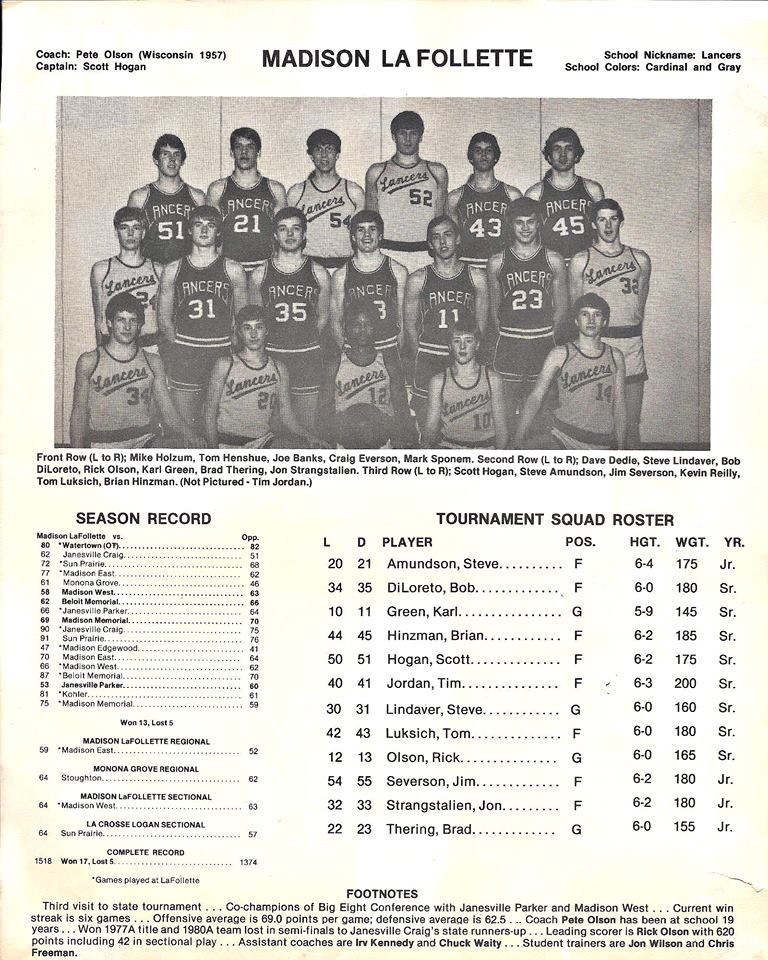
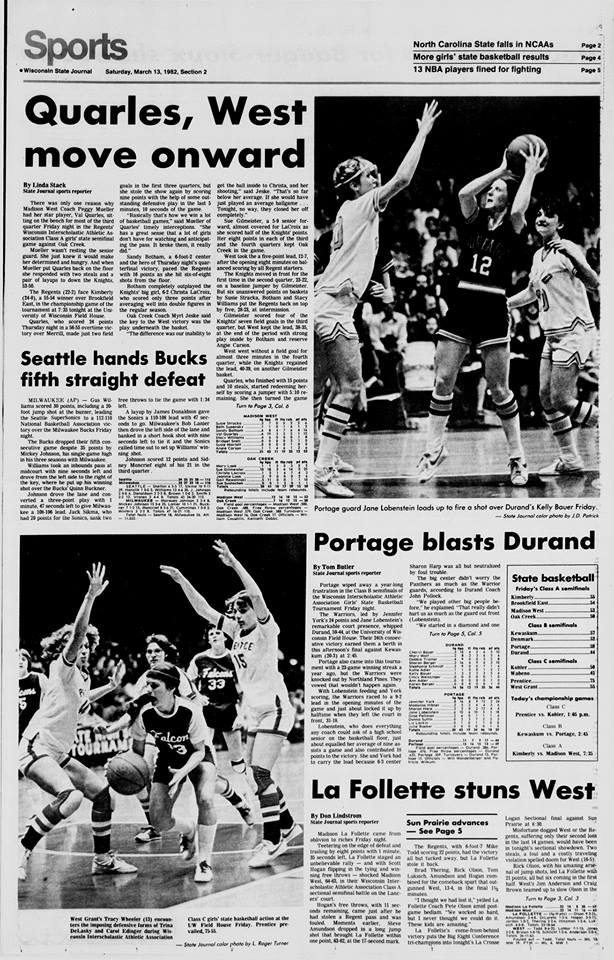
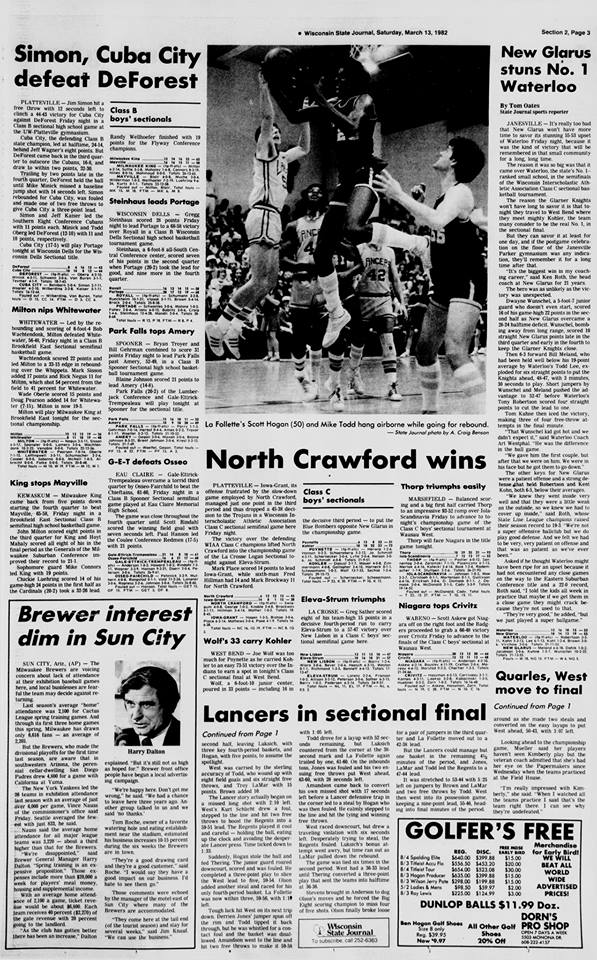
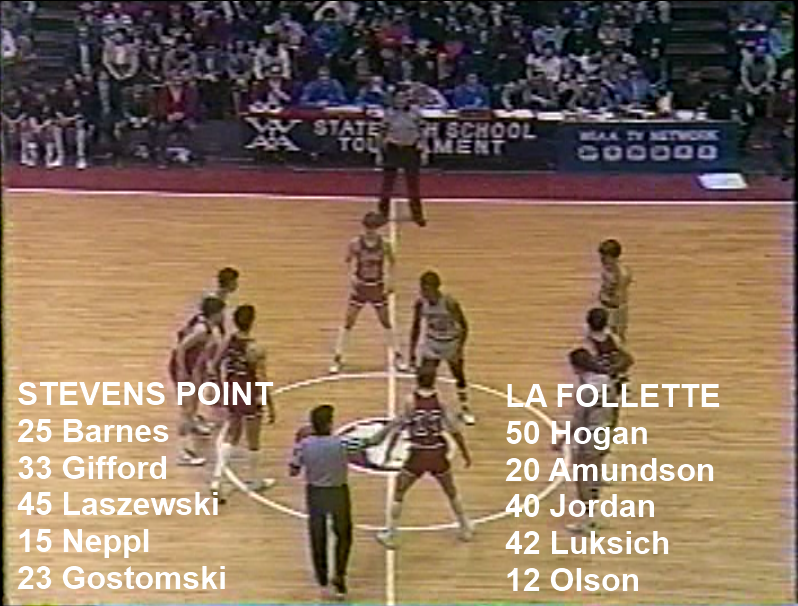
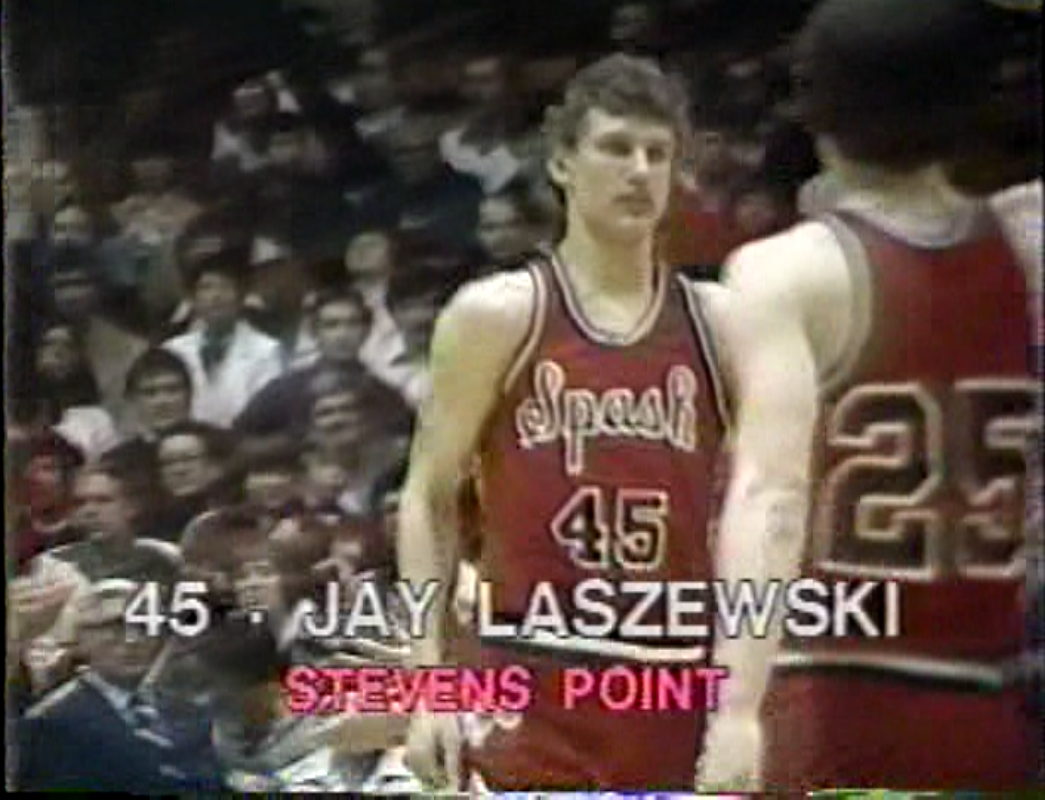
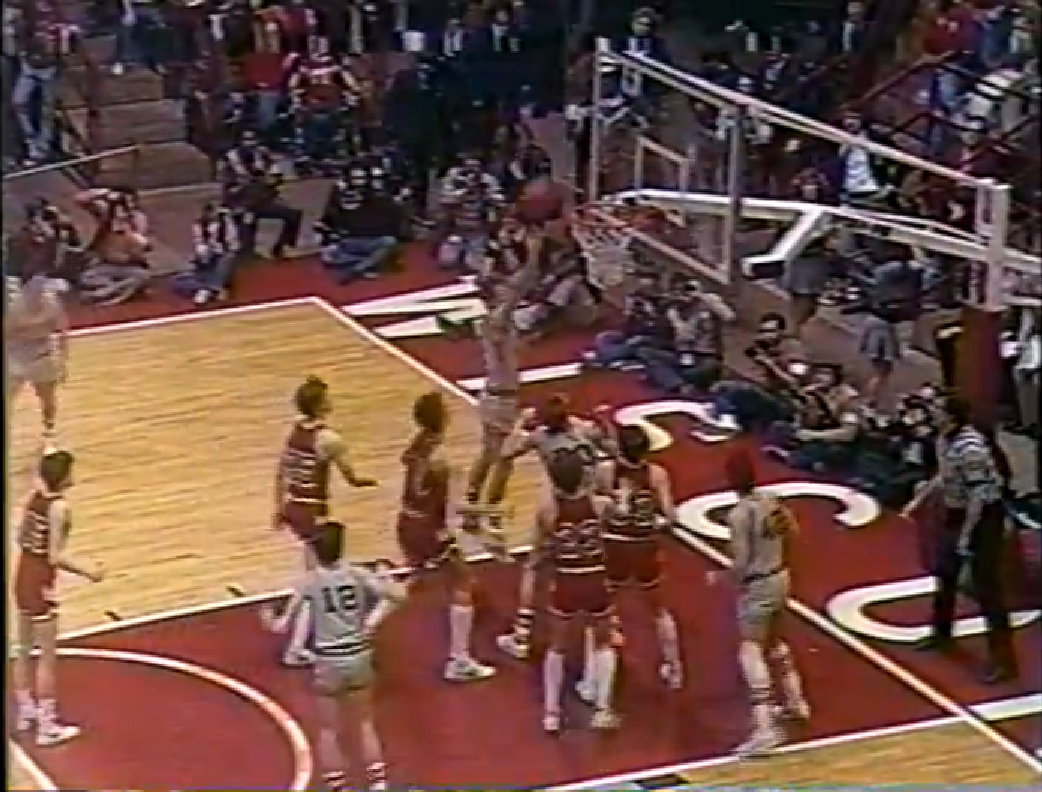
    • La Follette state 1982 (u0022It was 30 years ago todayu0022)
    • The North Dakota–Wisconsin Hockey Fight of 1982
    • Packers vs. Brewers
  • Hall of Fame
    • The case(s) against teacher unions
    • The Class of 1983
    • A hairy subject, or face the face
    • It’s worse than you think
    • It’s worse than you think, 2010–11 edition
    • My favorite interview subject of all time
    • Oh look! Rural people!
    • Prestegard for president!
    • Unions vs. the facts, or Hiding in plain sight
    • When rhetoric goes too far
Privacy & Cookies: This site uses cookies. By continuing to use this website, you agree to their use.
To find out more, including how to control cookies, see here: Cookie Policy
  • Subscribe Subscribed
    • Steve Prestegard.com: The Presteblog
    • Join 198 other subscribers
    • Already have a WordPress.com account? Log in now.
    • Steve Prestegard.com: The Presteblog
    • Subscribe Subscribed
    • Sign up
    • Log in
    • Report this content
    • View site in Reader
    • Manage subscriptions
    • Collapse this bar
%d