• Conservatives and the liberal arts

    March 30, 2015
    Culture, US politics

    During a school board forum last week, one of the candidates said he thought national and state standards pushing Science, Technology, Engineering and Mathematics was giving short shrift to other areas.

    The candidate is a retired Army officer who noted that while STEM is important, so is studying human behavior. (STEM never caused a war, but human behavior certainly does.)

    University of Virginia English Prof. Christopher J. Scalia adds:

    Conservatives should be among the strongest defenders of the liberal arts, for at least two reasons: one economic, the other philosophical and political.

    A recent study by the Georgetown University Center on Education and the Workforce did show that unemployment rates for recent humanities and liberal-arts majors are higher than for, say, biology and life-science students. But the difference is not great: In 2011-12 the rates were 8.4% and 7.4%, respectively. The unemployment rate for recent computer-science, statistics and mathematics graduates was 8.3%. So while humanities and liberal-arts graduates are not making out like bandits, the difference between them and their STEM peers is exaggerated.

    Income data provide an even stronger rebuttal to the stereotypes. The National Center for Higher Education Management Systems and the Association of American Colleges and Universities found that humanities and social-sciences majors earn more right after college than students majoring in physical sciences, natural sciences and math. And although they earn less at that stage than peers who major in professional and pre-professional fields, they earn more than those peers by the time they reach the peak earning years of 56-60 years old. (On the other hand, science and math majors earn much more than either group of majors during those peak years.)

    Income and employment are surely important, but financial reward is not all that a college education offers to student and the state. By perpetuating this notion, conservatives ignore a long tradition that places the liberal arts in the center of a thriving society and an informed citizenry.

    Thomas Jefferson recognized that a broad education could ensure the survival of the new democracy. He recognized that “even under the best forms, those entrusted with power have, in time, and by slow operations, perverted it into tyranny.” To defend against this threat, Jefferson wanted “to illuminate, as far as practicable, the minds of the people at large, and more especially to give them knowledge of those facts, which history exhibiteth, that, possessed thereby of the experience of other ages and countries, they may be enabled to know ambition under all its shapes, and prompt to exert their natural powers to defeat its purpose.”

    The liberal arts, Jefferson recognized, have a practical value that has nothing to do with direct economic benefits: They are linked to the vitality of a commonwealth and the survival of a free people. It’s easy to see how such knowledge could help a politician, but Jefferson encouraged a general education for “the people at large” to protect themselves from politicians. …

    Apart from specific historical and philosophical knowledge, the liberal arts also provide general intellectual tools that reinforce democracy. Liberal-arts professors use the phrase “critical thinking skills” so often that our students could turn it into a drinking game. But we do so because the term conveys a serious and valuable idea: Students who read and comprehend difficult works, engage with sophisticated ideas, and express themselves clearly are well-suited to contribute to a representative government. Such a citizenry is valued by the left—speak truth to power!—but also by the right, which distrusts centralized power and promotes a stronger civil society.

    Yes, college is too expensive. Of course, we need to find ways to control tuition and to ensure that graduates don’t find themselves chained by debt. But conservatives won’t solve these problems by scorning the liberal arts. Instead, they will deprive students of our great intellectual heritage and leave them less capable of governing themselves—and that would be profoundly unconservative.

    But don’t believe one of those liberal arts types — ask University of Memphis chemistry Prof. Loretta Jackson-Hayes:

    Our culture has drawn an artificial line between art and science, one that did not exist for innovators like Leonardo da Vinci and Steve Jobs. Leonardo’s curiosity and passion for painting, writing, engineering and biology helped him triumph in both art and science; his study of anatomy and dissections of corpses enabled his incredible drawings of the human figure. When introducing the iPad 2, Jobs, who dropped out of college but continued to audit calligraphy classes, declared: “It’s in Apple’s DNA that technology alone is not enough — it’s technology married with liberal arts, married with the humanities, that yields us the result that makes our heart sing.” (Indeed, one of Apple’s scientists, Steve Perlman, was inspired to invent the QuickTime multimedia program by an episode of “Star Trek.”)

    Carly Fiorina, former CEO of Hewlett-Packard, credits her degree in philosophy and medieval history in helping her be the first woman to lead a high-tech Fortune 20 corporation. “If you go into a setting and everybody thinks alike, it’s easy,” she has said. “But you will probably get the wrong answer.” …

    A scientist trained in the liberal arts has another huge advantage: writing ability. The study of writing and analyses of texts equip science students to communicate their findings as professionals in the field. My students accompany me to conferences, where they do the talking. They write portions of articles for publications and are true co-authors by virtue of their contributions to both the experiments and the writing. Scientists are often unable to communicate effectively because, as Cornell University president David J. Skorton points out, “many of us never received the education in the humanities or social sciences that would allow us to explain to nonscientists what we do and why it is important.”

    To innovate is to introduce change. While STEM workers can certainly drive innovation through science alone, imagine how much more innovative students and employees could be if the pool of knowledge from which they draw is wider and deeper. That occurs as the result of a liberal arts education.

    Many in government and business publicly question the value of such an education. Yet employers in every sector continue to scoop up my students because of their ability to apply cross-disciplinary thinking to an incredibly complex world. They like my chemistry grads because not only can they find their way around a laboratory, but they’re also nimble thinkers who know to consider chemistry’s impact on society and the environment. Some medical schools have also caught on to this. The University of Pennsylvania School of Medicine has been admitting an increasing number of applicants with backgrounds in the humanities for the past 20 years. “It doesn’t make you a better doctor to know how fast a mass falls from a tree,” Gail Morris, head of the school’s admissions, told Newsweek. “We need whole people.”

    No discovery in science or math will ever eliminate the need to be able communicate. That means communicating with each other, as well as communicating your own ideas.

    Share this on …

    • Share on X (Opens in new window) X
    • Share on Facebook (Opens in new window) Facebook
    • Share on LinkedIn (Opens in new window) LinkedIn
    • Email a link to a friend (Opens in new window) Email
    • Print (Opens in new window) Print
    Like Loading…
    No comments on Conservatives and the liberal arts
  • Presty the DJ for March 30

    March 30, 2015
    Music

    The number one single today in 1957 was the first number one rock and roll single to be written by its singer:

    The number one single today in 1963 …

    … which sounds suspiciously similar to a song released seven years later:

    (more…)

    Share this on …

    • Share on X (Opens in new window) X
    • Share on Facebook (Opens in new window) Facebook
    • Share on LinkedIn (Opens in new window) LinkedIn
    • Email a link to a friend (Opens in new window) Email
    • Print (Opens in new window) Print
    Like Loading…
    No comments on Presty the DJ for March 30
  • Presty the DJ for March 29

    March 29, 2015
    Music

    The number one British single today in 1963 may make you tap your foot:

    Today in 1966, Mick Jagger got in the way of a chair thrown onto the stage during a Rolling Stones concert in Marseilles, France.

    The title and artist are the same for the number one album today in 1969:

    (more…)

    Share this on …

    • Share on X (Opens in new window) X
    • Share on Facebook (Opens in new window) Facebook
    • Share on LinkedIn (Opens in new window) LinkedIn
    • Email a link to a friend (Opens in new window) Email
    • Print (Opens in new window) Print
    Like Loading…
    No comments on Presty the DJ for March 29
  • Presty the DJ for March 28

    March 28, 2015
    Music

    Today in 1964, the Beatles were the first pop stars to get memorialized at Madame Tussaud’s Wax Museum …

    … while in the North Sea, the pirate Radio Caroline went on the air:

    The number one British single today in 1970:

    (more…)

    Share this on …

    • Share on X (Opens in new window) X
    • Share on Facebook (Opens in new window) Facebook
    • Share on LinkedIn (Opens in new window) LinkedIn
    • Email a link to a friend (Opens in new window) Email
    • Print (Opens in new window) Print
    Like Loading…
    No comments on Presty the DJ for March 28
  • The dead end of an era

    March 27, 2015
    media, Wheels

    There are supposedly no irreplaceable people in the work world.

    There are, however, people in the media world who are so identified with their work that they really cannot be replaced. Paul Harvey was one. Heaven help the eventual replacement for the Dodgers’ Vin Scully.

    And now there is Jeremy Clarkson, “sacked,” to use the British term, by the BBC (“the Beeb,” as it’s known across the pond) from “Top Gear”:

    Jeremy Clarkson’s contract will not be renewed after an “unprovoked physical attack” on a Top Gear producer, the BBC’s director general has confirmed.

    Tony Hall said he had “not taken this decision lightly” and recognised it would “divide opinion”.

    However, he added “a line has been crossed” and he “cannot condone what has happened on this occasion”.

    Clarkson was suspended on 10 March, following what was called a “fracas” with Top Gear producer Oisin Tymon.

    The row, which took place in a Yorkshire hotel, was said to have occurred because no hot food was provided following a day’s filming.

    An internal investigation began last week, led by Ken MacQuarrie, the director of BBC Scotland.

    It found that Mr Tymon took himself to hospital after he was subject to an “unprovoked physical and verbal attack”.

    “During the physical attack Oisin Tymon was struck, resulting in swelling and bleeding to his lip.”

    It lasted “around 30 seconds and was halted by the intervention of a witness,” Mr MacQuarrie noted in his report.

    “The verbal abuse was sustained over a longer period” and “contained the strongest expletives and threats to sack” Mr Tymon, who believed he had lost his job.

    Mr Tymon did not file a formal complaint and it is understood Clarkson reported himself to BBC bosses following the incident.

    After that, the BBC’s director of television, Danny Cohen, felt he had no choice but to suspend the presenter pending an investigation. …

    Jeremy Clarkson took a slightly dull and failing car programme and turned it in to the biggest factual TV show in the world.

    But this sacking has nothing to do with style, opinions, popularity – or even his language on the show.

    It’s about what stars are allowed to get away with off screen, a topic that’s been top of the agenda for the BBC in recent months.

    The corporation has had to overhaul all of its policies and attitudes towards bullying and harassment, and a long verbal tirade and a physical assault would have crossed the line for any member of staff.

    Clarkson may be popular with the audience, and the BBC really did not want to lose him, but this was a star who admitted he was on his final warning and a corporation that was under intense scrutiny over what its top talent can and cannot get away with.

    Top Gear, which is one of BBC Two’s most popular programmes, will continue without Clarkson, who will now become the subject of a bidding war by other broadcasters.

    The magazine show is one of the BBC’s biggest properties, with overseas sales worth an estimated £50m a year for the corporation’s commercial arm, BBC Worldwide. …

    Whether Clarkson’s co-presenters James May and Richard Hammond will remain on the show has yet to be confirmed.

    All three had their contracts up for renewal this year, with Clarkson’s due to expire at the end of March.

    Hammond tweeted: “Gutted at such a sad end to an era. We’re all three of us idiots in our different ways but it’s been an incredible ride together.”

    May also updated his Twitter profile to say: “Former TV presenter”.

    This is most likely the end of the original Top Gear as we know it. (Though Clarkson and his colleagues may well end up on another British channel on another show, as a Facebook friend predicted Wednesday.)

    The considerable irony here is that had Clarkson been an American media figure he probably would not have been fired. We Americans are the supposed prudes, and yet for decades people in the entertainment world have gotten away with actions far worse than this (see Polanski, Roman) and maintained their jobs. Notice that after “misremembering” his exploits in Iraq NBC hasn’t fired Brian Williams … yet. Keith Olbermann is, to use the name of one of his segments, apparently The Worst Person in the World to work with, and yet he moves from one employer to another.

    On the other hand, some of the things Clarkson has said over the years probably would have gotten him fired here. Clarkson fits the British definition of “politically incorrect,” and once called former British prime minister Gordon Brown … a term that will certainly not be reprinted here. (No, it doesn’t start with the letter F. It’s worse.) That’s a bit ironic given that the U.S. has the First Amendment and Britain has no counterpart, but on this side of the Atlantic free speech is not unlimited, particularly when it offends the chronically offended.

    Facebook Friend Larry L. Tebo compares Clarkson with the great American car writers:

    Love him or otherwise, Jeremy Clarkson stands apart from every other living automotive journalist simply due to the fact that he has so much STYLE. I’ve loved great automotive journalists since I was a boy first reading Ken Purdy’s prose and even the pedestrian-but-informative output of Floyd Clymer. I loved Brock Yates gonzo style and incisiveness, and David E. Davis’ intelligence, wit, and again…..STYLE led an entire generation of car guys to the promised land of “no boring cars”, and indeed, no boring stories. Charles Fox wrote about cars with a feeling of beauty in his words. Jean Shepherd wrote about everything, but when he wrote about automobiles, as he did for quite some time as a monthly columnist in Car and Driver, he brought the human spirit of warmth along with his incomparable humor to the subject, making cars much more than just machines. That’s what all these writers did with cars, and that is what makes them so special. Clarkson is almost like a distillation of all of these greats, IMO, into one very cranky, very funny, very irritating, yet a very ingratiating person who commands attention because he is so damned GOOD at what he does.

    Why is Clarkson so important in the car world? Jalopnik explains:

    The third biggest loser in this sad saga of Top Gear is the wider car media, and the business that surrounds it. Of course the first is the vast fan base that has followed the show for many years. The second, assuming the brand struggles to survive, is the team who work on it – and I can’t imagine how they feel right now. But sitting here it strikes me that so many people also engaged in this business of writing or making films about cars haven’t stopped to understand just what Top Gear did for all us ordinary folk. Nor what it did for the car industry in general.

    Top Gear has acted like some vast, entirely free marketing service for all of us. I have always viewed it as the primary sales funnel for my videos, and the analytics support the theory: 350 million people watch the three boys doing their thing on a Sunday night and a very small percentage think they might want to know a bit more about the car featured that week, and so they type the car’s name into YouTube and they might just happen across one of our low-budget productions. A very small percentage of 350 million is still a very large number.

    I’m like that little, nagging fish constantly nibbling a whale shark’s barnacles. I’m a TG parasite, and it’s worked bloody well for me up to now.

    More importantly Jeremy, James and Richard have not just maintained the public’s love affair with the motor car, they’ve grown it – a feat I’d have thought impossible ten years ago in the face of political and environmental pressures. The conventional car print media – the one I have always been a part of – has failed in many ways with dwindling circulations and diminished influence, but its biggest crime is a total failure to connect with a younger audience. Thankfully for all of us, Top Gear’s role as compulsory Sunday night family viewing has excited a whole new generation of youngsters to not only be interested in cars, but to love cars. And for that I think it has already shaped the car industry as we currently know it, and how it will be in the future.

    I suspect Clarkson and his colleagues will reappear elsewhere. Clarkson is the indispensable man of “Top Gear.” (The lack of him is why the U.S. “Top Gear” is severely lacking.)

    Share this on …

    • Share on X (Opens in new window) X
    • Share on Facebook (Opens in new window) Facebook
    • Share on LinkedIn (Opens in new window) LinkedIn
    • Email a link to a friend (Opens in new window) Email
    • Print (Opens in new window) Print
    Like Loading…
    No comments on The dead end of an era
  • Cruz Country, or politics getting in the way of music

    March 27, 2015
    Culture, Music, US politics

    Republican presidential candidate Ted Cruz announced this week (from Politico):

    In an interview Tuesday on “CBS This Morning,” the Texas senator told his TV hosts that he “grew up listening to classic rock” but that that soon changed.

    “My music taste changed on 9/11,” Cruz said.

    “I actually intellectually find this very curious, but on 9/11, I didn’t like how rock music responded,” he said. “And country music, collectively, the way they responded, it resonated with me.” …

    Cruz did not mention any specific country music that resonated with him or which rock artists did not respond well to the terror attacks.

    “I had an emotional reaction that said, ‘These are my people,’” Cruz said. “So ever since 2001, I listen to country music.”

    Salon has a predictable take:

    But it’s interesting nonetheless that Cruz now considers himself a country fan because country music is different than it used to be. And you can trace the change to right about that time. It has traditionally valued “authenticity” giving high praise to those who know how to keep their country real. It’s debatable as to how sincere that commitment has been but the musicians and the fans used to truly believe in the small town ethos, religion and patriotism which have always been fundamental to the genre.

    There is a rebellious streak as well, some of it coming from an unlikely source for such a traditional form: women. Back in the 1960s when southern culture was resisting the changes wrought by the counter culture, singers like Loretta Lynn sang about being freed from non-stop pregnancies by the invention of the pill and Jeannie C. Reilly “socked it to” the uptight conservative hypocrites of the Harper Valley PTA. Ted Cruz is probably too young to even know about those songs, but I think we can be sure he wouldn’t approve of them even today. They displayed a shocking irreverence toward family values.

    But if the transformed Cruz is a fan of the modern stuff it’s a good bet that a conservative fellow like him (albeit one who once refused to associate with anyone who didn’t go to an Ivy League college) is into what they call “bro-country.” (The dudes who sing those songs like to think of themselves as “outlaws” but their juvenile commercial tropes bear as much resemblance to the original country outlaws like Waylon Jennings, Willie Nelson and Johnny Cash as they do to Mozart and Beethoven.) …

    When country loving social conservatives like Cruz and Huckabee complain about violent rap lyrics or get upset about the sexual impropriety of pop music they either aren’t listening to modern country or they’re unaware that the traditional values many of “their people” are celebrating in song these days aren’t about family, God and and the red, white and blue. They’re about crude, drunken jerks treating women like whores. I suspect that’s not the image to which Senator Cruz was trying to relate when he confessed to converting to country at the age of 31.

    This whole thing is silly, obviously. Ted Cruz’s musical tastes are only interesting to the extent they make him seem like a regular guy. But come on — nobody changes what music they like for political reasons. That pandering comment is so awkward and calculated it makes him sound like an automaton.  In fact, it’s very hard to believe that Ted Cruz has any interest in music at all. The image that comes to mind when you see him isn’t some guy rocking out to the Stones or singing along to “The Angry American.” It’s Richard Nixon walking on the beach in his black socks and wing tips.

    In addition to the obligatory slam of “bro-country,” the Salon writer threw in an obligatory mention of the Dixie Chicks, who announced in France that as Texans they were ashamed of George W. Bush. Which ended their careers in the country genre (and really as relevant music acts) not because they dissed Bush, but because they dissed all their soon-to-be-former country fans who voted for Bush.

    In addition to ignoring rock music’s 9/11 responses such as Bruce Springsteen’s “The Rising,” Neil Young’s “Let’s Roll” and the U2 Super Bowl show, Cruz’s statement comes off as inauthentic pandering. (I don’t support Cruz for president because I support no one either now or formerly in Congress. Governors should be the only people allowed to run for president for the foreseeable future.) There are certainly artists who write and perform music to express their political beliefs, whether or not they should. I doubt that many music fans listen to music based on adherence to their own political worldview. I haven’t been listening to more country based on anything other than how it sounds.

    Share this on …

    • Share on X (Opens in new window) X
    • Share on Facebook (Opens in new window) Facebook
    • Share on LinkedIn (Opens in new window) LinkedIn
    • Email a link to a friend (Opens in new window) Email
    • Print (Opens in new window) Print
    Like Loading…
    2 comments on Cruz Country, or politics getting in the way of music
  • Presty the DJ for March 27

    March 27, 2015
    Music

    Today in 1958, CBS Records announced it had developed stereo records, which would sound like stereo only on, of course, stereo record players.

    The irony is that CBS’ development aided its archrival, RCA, which owned NBC but also sold record players:

    (For similar reasons NBC was the first network to do extensive color. NBC was owned by RCA, which sold TVs.)

    (more…)

    Share this on …

    • Share on X (Opens in new window) X
    • Share on Facebook (Opens in new window) Facebook
    • Share on LinkedIn (Opens in new window) LinkedIn
    • Email a link to a friend (Opens in new window) Email
    • Print (Opens in new window) Print
    Like Loading…
    No comments on Presty the DJ for March 27
  • Why non-Badger fans should root for the Badgers

    March 26, 2015
    Badgers

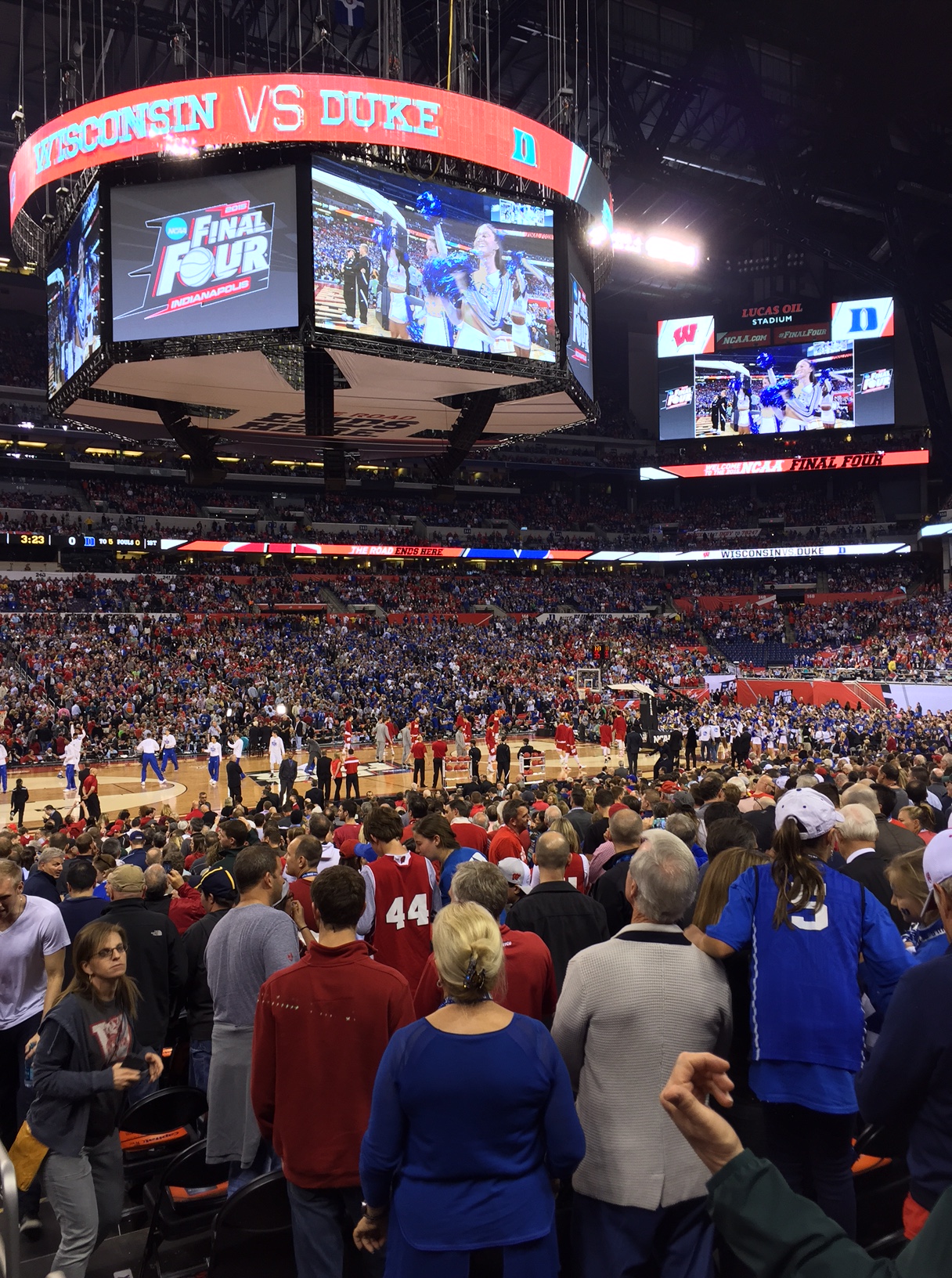
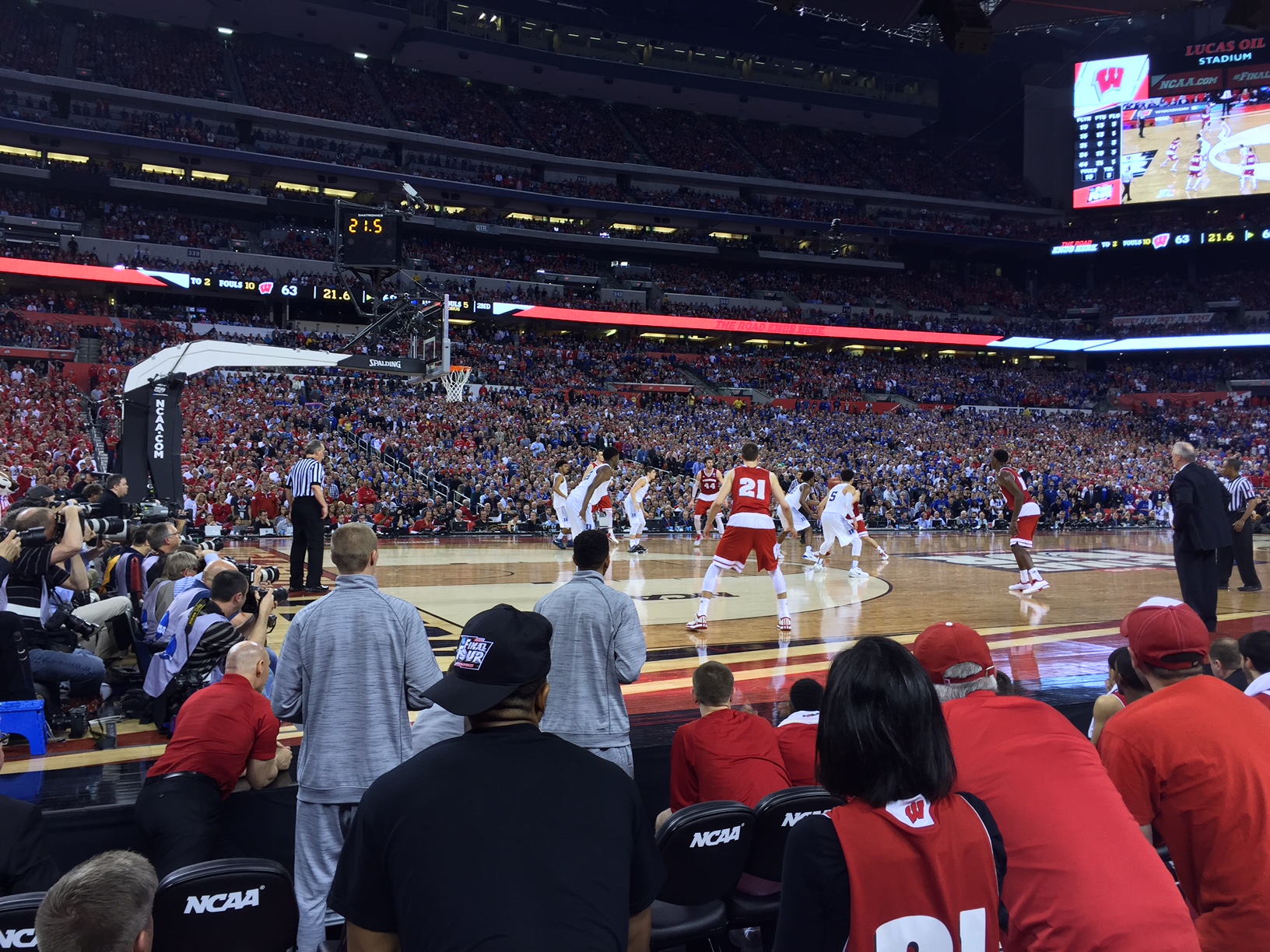
    USA Today reports on the personality of the Wisconsin Badgers, who play North Carolina in the West Region semifinal tonight:

    Whether it’s two-man passing drills or player-coach communication, there is a way of doing things within the basketball program under coach Bo Ryan that is as consistent as the state’s fall foliage. To Ryan, the old-school coach with a peach basket in his office, it may as well be 1985. The reason the regimen doesn’t change much? It works.

    This year — as a seasoned team continues one of the most celebrated runs in program history — there is another calling card: Laughter. It may as well be the locker room soundtrack for a team that finds itself in its fourth Sweet 16 in five years.

    “We can flip a switch,” senior Josh Gasser said. “It’s important to have fun. With this team especially, the looser we play, the better we are. … We are all goofballs. We are all kids, but we can still be adults and take care of business on the court.”If you’re looking for a stressed No. 1 seed buckling under the pressure of trying to reach a second consecutive Final Four, you’ve come to the wrong locker room. They may not be quite as free-spirited as the 2013 Florida Gulf Coast players — a No. 15 seed that laughed and dunked its way to the Sweet 16 — but good luck finding another Sweet 16 team this loose.

    What distinguishes this Wisconsin team, which will play North Carolina in Thursday’s West Regional semifinals, from the 13 others under Ryan is not necessarily the talent or experience (and the Badgers are rich on both fronts). Assistant Lamont Paris says the difference is the blend of personalities that creates a unique mood — at specific times — in practice, film sessions or even on rare occasions during games.

    This team can toggle from laser-focused to light-hearted and back to ultra-serious as easily as they execute a jump stop.

    “That is a unique trait this team has,” Paris said. “Most teams cannot do that. For most teams, the water faucet is on or off. … It’s a looser climate overall.”

    ***

    Even in the waning moments of Sunday’s victory against Oregon, with the outcome still in the balance, Sam Dekker managed a smile as one of the boys tasked with wiping the court had a small mishap.

    Even in the locker room the day before the game, players roared in laughter as they spotted a media member they thought was a spitting image of Kaminsky. And there was sophomore Nigel Hayes — often the instigator of comedic shenanigans — tossing out challenging words — cattywampus, onomatopoeia and antidisestablishmentarianism — during the press conference to keep the NCAA site stenographer on her toes.

    “I loved it,” Gasser said.

    When characterizing the looser mood of the Badgers, Hayes uses the apt metaphor of a muscle. Much like the team’s intensity, a muscle cannot be flexed 24 hours a day, or it’s not pliable. It needs to relax at times, and when you do flex it, the muscle is potent.

    “If you were to just sit and flex all your muscles,” Hayes said, “you’d just pass out or be lightheaded. Every now and then you need to let go and then, when you get on the court, flex again.”

    This approach works for this Badgers team because, well, it works. Under the spotlight and scrutiny of March — and through the grind of a season that, frankly, will be judged on whether they can reach the Final Four in April — a little levity goes a long way.

    “I’ve seen a lot of teams in this tournament so far just come in really tight,” Koenig said, “especially the higher seeds and with all these upsets. They are playing really tight. We do a really good job just playing loose.

    This team has a little more leeway because of consistent results. The team has lost just three games all season, and only two with national player of the year candidate Kaminsky on the court. Paris said the team has not had consecutive games in which he has not felt good about the way they played.

    When it comes to player-initiated levity, Paris said, “You can’t do it and play average basketball because then it is a hoax.” The light-heartedness happens “often enough, but not too often. If it’s happening too much then it’s a circus and loses its value. It happens when it needs to happen and only then.”

    ***

    Players say the tone is set from the top. Film sessions are critical for constructive criticism; the tenor is serious. But occasionally, in an effort to keep things fresh and light, Ryan will remind players what can be lost amid the grind: This is fun.

    On one occasion, Koenig said, Ryan showed a video clip of Kaminsky getting fouled and pouting. Ryan sneaked in a quick scene of “Napoleon Dynamite” because of similarities in the title character’s appearance with the 7-footer. Everyone erupted in laughter. Then, quickly back to the next teaching clip.

    Against Minnesota earlier this season, Hayes says he slipped and went down on his knee, kept his dribble and scored. Ryan used the clip in film session, then stopped it and started playing Harlem Globetrotters music.

    “People on our team understand situations really well,” Kaminsky said. “We know when to be really serious and to be hard on people. We know when to be light and when to take a step back and appreciate what we are doing. This is definitely one of the more interesting teams in the country because of the personalities and characters we have on the team. It’s so much fun.”

    The biggest change can be seen during some teaching moments in practice. As players are getting scolded, possibly after consecutive turnovers, a player may break the silence with a question or perhaps even a carefully worded and placed light-hearted comment.

    “These guys can get away with it just because of how their personalities are,” Paris said. “No one would even try it in the past … Then 45 seconds later we go back to playing intensely. They only play one way.”

    Hayes says perhaps half-joking (it’s impossible to know) that the lighter climate is a credit to his sophomore class because they arrived with a mix of personalities. He said they weren’t the “uptight, keep-to-yourself type of guys and our personalities have definitely rubbed off throughout the whole team. We are a lot looser and have a lot more camaraderie.”

    ***

    Players use a group app on their cell phones to send one another pictures, personal jabs and one-liners. Sometimes it ‘s personal, all the times it’s hilarious.

    “We love to give each other crap,” Koenig said. “My roommate reads them and dies laughing. No filter. Nigel has more corny jokes to the media. Adults think he is funny. But I’m actually the funny one.”

    No cliques on this team. Gasser says he will stay in the Kohl Center up to 12 hours a day hanging in the locker room or playing video games. There is no rush to go home.

    The Badgers excel in many areas, including minimizing fouls and turnovers. Keeping quiet is not one of them.

    Though the light atmosphere may have been in the embryonic stage last season, Hayes showed what was to come as a freshman when Ryan applauded Hayes for coming early to an early-season practice by saying “Good job, the early bird catches the worm.”

    Hayes responded with, “Coach, do you know that the second mouse always gets the cheese?”

    Looking back now, Ryan said, “I thought that was pretty good. I had never heard that one. He can tell you what a big group of geese are, he can tell you what a big group of sheep are. He has all those names they give to groups of animals and still has time to make the Dean’s List. That’s amazing.”Hayes says if they preface one player’s name with the word “uh”, it will trigger immediate laughter. The reason? Top secret.Players now have almost as many inside jokes as they do ways to attack defenses with the nation’s most efficient offense. Hayes calls sophomore Vitto Brown a storytelling maestro who can spin a compelling, if not embellished yarn as soon as he enters a room.

    He said players will spontaneously strike a runner’s pose, as if ready to burst out of the starting block, for another personal joke. Another antic is attaching nonsensical accents to random words they come across.

    “We make the words sound nothing like they are supposed to,” Hayes said. “Take ‘federal prison.’ Frank may walk in and say, ‘Feder-ah-ley Pri-zone.’ It may not be funny to anyone else. It’s really funny to us.”

    If these cast of characters win four more games, it’s anyone’s guess how they’ll pronounce two other words: National champions. That remains the singular goal. And by laughing at times in pursuit of it, they believe their muscles will flex best when most needed.

    “Don’t tell any other team that!” Hayes warned. “They may start doing it too, and play better.”

    Then this happened:

    Before the Badgers’ round-of-32 game against Oregon, Hayes tested the stenographer in Omaha with a series of challenging words before answering a reporter’s question.

    The moderator allowed him to do the same on Wednesday in Los Angeles, but Hayes was impressed with more than just her transcription abilities this time around.

    Oops.

    Those microphones pick up everything. Hayes’ reaction, along with teammates Sam Dekker and Frank Kaminsky, made the moment even funnier, too.

    Some of this probably comes from Ryan, who, not trying to be funny, once interrupted a game by telling one of his assistants to make sure one of his players’ hair was cut before the next practice. Anyone who has heard Ryan’s news conferences and his habit of answering the question he wants to answer, which is not necessarily the question he’s asked, knows that he’s not the dour autocrat many coaches seem to be.

    As you know, I was in the UW Marching Band for five years. Among other things, the UW Band has been known for its institutional sense of humor. That’s immediately noticeable at any public band appearance. (In Seattle, band members said, “Hey Seattle! Is that the Space Needle or are you just glad to see me?”) College humor (mostly of the you-had-to-be-there style) is what it is, but you have to have a slightly warped view of the world to present to the world 3/4-time, Chinese and Russian versions of “On Wisconsin.” One UW Band concert featured a spontaneous performance of Milli Vanilli, which of course involved no actual playing. (Think air trumpet.) And of course there was the final band concert for a senior, whose mother was noted by UW Band director Mike Leckrone as wearing a shirt that said “My son plays in the Wisconsin Band,” after which Leckrone said, “I hear he’s not very good.” (Rim shot.)

    As a UW student I knew a few football and basketball players. I attended a couple of practices, and remember thinking at the time that being a college athlete didn’t seem very fun. (Independent of all the losses of the ’80s teams.) I had to be at the UW Fieldhouse for some reason one night, and the basketball team was there eating dinner. (Chicken, for those interested.) Not a word was said, and they all seemed to be rather grim. Certainly athletic teams have their own moments outside the public eye, and they were getting a paid-for education at a world-class university, but

    Certainly athletic teams have their own moments outside the public eye, and they were getting a paid-for education at a world-class university, but no one seemed to be very happy to be there. In contrast, marching band practices opened with a drill that evolved into including the Bugs Bunny square dance song. And we definitely had more fun on the road trips (while being more successful) than the football team did.


    Share this on …

    • Share on X (Opens in new window) X
    • Share on Facebook (Opens in new window) Facebook
    • Share on LinkedIn (Opens in new window) LinkedIn
    • Email a link to a friend (Opens in new window) Email
    • Print (Opens in new window) Print
    Like Loading…
    No comments on Why non-Badger fans should root for the Badgers
  • Recession and (non)recovery

    March 26, 2015
    US politics

    Zero Hedge has bad news about Barack Obama’s Recovery in Name Only:

    If you believe that ignorance is bliss, you might not want to read this article.  I am going to dispel the notion that there has been any sort of “economic recovery”, and I am going to show that we are much worse off than we were just prior to the last economic crisis. …

    For each of the charts that I am about to share with you, I want you to focus on the last shaded gray bar on each chart which represents the last recession.  As you will see, our economic problems are significantly worse than they were just before the financial crisis of 2008. …

    #1 The National Debt

    Just prior to the last recession, the U.S. national debt was a bit above 9 trillion dollars. Since that time, it has nearly doubled. So does that make us better off or worse off? The answer, of course, is obvious. And even though Barack Obama promises that “deficits are under control”, more than a trillion dollars was added to the national debt in fiscal year 2014. What we are doing to future generations by burdening them with so much debt is beyond criminal. And so what does Barack Obama want to do now? He wants to ramp up government spending and increase the debt even faster. …

    Presentation National Debt

    #2 Total Debt

    … Back in 1975, our total debt level was sitting at about 2.5 trillion dollars. Just prior to the last recession, it was sitting at about 50 trillion dollars, and today we are rapidly closing in on 60 trillion dollars.

    Presentation Credit Market Instruments

    #3 The Velocity Of Money

    When an economy is healthy, money tends to change hands and circulate through the system quite rapidly. So it makes sense that the velocity of money fell dramatically during the last recession.  But why has it kept going down since then?

    Presentation Velocity Of M2

    #4 The Homeownership Rate

    Were you aware that the rate of homeownership in the United States has fallen to a 20 year low? Traditionally, owning a home has been a sign that you belong to the middle class. And the last recession was really rough on the middle class, so it makes sense that the rate of homeownership declined during that time frame. But why has it continued to steadily decline ever since?

    Presentation Homeownership Rate

    #5 The Employment Rate

    … Just prior to the last recession, approximately 63 percent of the working age population of the United States was employed.  During the recession, this ratio fell to below 59 percent and it stayed there for several years. Just recently it has peeked back above 59 percent, but we are still very, very far from where we used to be, and now the next economic downturn is rapidly approaching.

    Presentation Employment Population Ratio

    #6 The Labor Force Participation Rate

    So how can Obama get away with saying that the unemployment rate has gone down dramatically? Well, each month the government takes thousands upon thousands of long-term unemployed workers and decides that they have been unemployed for so long that they no longer qualify as “part of the labor force”. As a result, the “labor force participation rate” has fallen substantially since the end of the last recession…

    Presentation Labor Force Participation Rate

    #7 The Inactivity Rate For Men In Their Prime Working Years

    If things are “getting better”, then why are so many men in their prime working years doing nothing at all? Just prior to the last recession, the inactivity rate for men in their prime working years was about 9 percent. Today it is just about 12 percent.

    Presentation Inactivity Rate

    #8 Real Median Household Income

    Not only is a smaller percentage of Americans employed today than compared to just prior to the last recession, the quality of our jobs has gone down as well. This is one of the factors which has resulted in a stunning decline of real median household income.

    Presentation Real Median Household Income

    I have shared these next numbers before, but they bear repeating. In America today, most Americans do not make enough to support a middle class lifestyle on a single salary.  The following figures come directly from the Social Security Administration…

    -39 percent of American workers make less than $20,000 a year.

    -52 percent of American workers make less than $30,000 a year.

    -63 percent of American workers make less than $40,000 a year.

    -72 percent of American workers make less than $50,000 a year.

    We all know people that are working part-time jobs because that is all that they can find in this economy. As the quality of our jobs continues to deteriorate, the numbers above are going to become even more dismal.

    #9 Inflation

    Even as our incomes have stagnated, the cost of living just continues to rise steadily. For example, the cost of food and beverages has gone up nearly 50 percent just since the year 2000.

    Presentation Food Inflation

    #10 Government Dependence

    As the middle class shrinks and the number of Americans that cannot independently take care of themselves soars, dependence on the government is reaching unprecedented heights.  For instance, the federal government is now spending about twice as much on food stamps as it was just prior to the last recession.  How in the world can anyone dare to call this an “economic recovery”?

    Presentation Government Spending On Food Stamps

    So you tell me – are things “getting better” or are they getting worse?


    Share this on …

    • Share on X (Opens in new window) X
    • Share on Facebook (Opens in new window) Facebook
    • Share on LinkedIn (Opens in new window) LinkedIn
    • Email a link to a friend (Opens in new window) Email
    • Print (Opens in new window) Print
    Like Loading…
    No comments on Recession and (non)recovery
  • From state to statewide

    March 26, 2015
    media

    On Friday shortly after 8 a.m., I will be on Wisconsin Public Radio for the Joy Cardin Show Week in Review.

    Wisconsin Public Radio’s Ideas Network can be heard on WHA (970 AM) in Madison, WLBL (930 AM) in Auburndale, WHID (88.1 FM) in Green Bay, WHWC (88.3 FM) in Menomonie, WRFW (88.7 FM) in River Falls, WEPS (88.9 FM) in Elgin, Ill., WHAA (89.1 FM) in Adams, WHBM (90.3 FM) in Park Falls, WHLA (90.3 FM) in La Crosse, WRST (90.3 FM) in Oshkosh, WHAD (90.7 FM) in Delafield, W215AQ (90.9 FM) in Middleton, KUWS (91.3 FM) in Superior, WHHI (91.3 FM) in Highland, WSHS (91.7 FM) in Sheboygan, WHDI (91.9 FM) in Sister Bay, WLBL (91.9 FM) in Wausau, W275AF (102.9 FM) in Ashland, W300BM (107.9 FM) in Madison, and of course online at www.wpr.org.

    I suppose this is the result of having run out of basketball to announce.

    Share this on …

    • Share on X (Opens in new window) X
    • Share on Facebook (Opens in new window) Facebook
    • Share on LinkedIn (Opens in new window) LinkedIn
    • Email a link to a friend (Opens in new window) Email
    • Print (Opens in new window) Print
    Like Loading…
    No comments on From state to statewide
Previous Page
1 … 719 720 721 722 723 … 1,038
Next Page

Website Powered by WordPress.com.

Steve Prestegard.com: The Presteblog

The thoughts of a journalist/libertarian–conservative/Christian husband, father, Eagle Scout and aficionado of obscure rock music. Thoughts herein are only the author’s and not necessarily the opinions of his family, friends, neighbors, church members or past, present or future employers.

  • Steve
    • About, or, Who is this man?
    • Facebook
    • Twitter
    • Adventures in ruralu0026nbsp;inkBack in June 2009, I was driving somewhere through a rural area. And for some reason, I had a flashback to two experiences in my career about that time of year many years ago. In 1988, eight days after graduating from the University of Wisconsin, I started work at the Grant County Herald Independent in Lancaster as a — well, the — reporter. Four years after that, on my 27th birthday, I purchased, with a business partner, the Tri-County Press in Cuba City, my first business venture. Both were experiences about which Wisconsin author Michael Perry might write. I thought about all this after reading a novel, The Deadline, written by a former newspaper editor and publisher. (Now who would write a novel about a weekly newspaper?) As a former newspaper owner, I picked at some of it — why finance a newspaper purchase through the bank if the seller is willing to finance it? Because the mean bank lender is a plot point! — and it is much more interesting than reality, but it is very well written, with a nicely twisting plot, and quite entertaining, again more so than reality. There is something about that first job out of college that makes you remember it perhaps more…
    • Adventures in radioI’ve been in the full-time work world half my life. For that same amount of time I’ve been broadcasting sports as a side interest, something I had wanted to since I started listening to games on radio and watching on TV, and then actually attending games. If you ask someone who’s worked in radio for some time about the late ’70s TV series “WKRP in Cincinnati,” most of them will tell you that, if anything, the series understated how wacky working in radio can be. Perhaps the funniest episode in the history of TV is the “WKRP” episode, based on a true story, about the fictional radio station’s Thanksgiving promotion — throwing live turkeys out of a helicopter under the mistaken belief that, in the words of WKRP owner Arthur Carlson, “As God is my witness, I thought turkeys could fly.” [youtube=http://www.youtube.com/watch?v=ST01bZJPuE0] I’ve never been involved in anything like that. I have announced games from the roofs of press boxes (once on a nice day, and once in 50-mph winds), from a Mississippi River bluff (more on that later), and from the front row of the second balcony of the University of Wisconsin Fieldhouse (great view, but not a place to go if…
    • “Good morning/afternoon/evening, ________ fans …”
    • My biggest storyEarlier this week, while looking for something else, I came upon some of my own work. (I’m going to write a blog someday called “Things I Found While Looking for Something Else.” This is not that blog.) The Grant County Sheriff’s Department, in the county where I used to live, has a tribute page to the two officers in county history who died in the line of duty. One is William Loud, a deputy marshal in Cassville, shot to death by two bank robbers in 1912. The other is Tom Reuter, a Grant County deputy sheriff who was shot to death at the end of his 4 p.m.-to-midnight shift March 18, 1990. Gregory Coulthard, then a 19-year-old farmhand, was convicted of first-degree intentional homicide and is serving a life sentence, with his first eligibility for parole on March 18, 2015, just 3½ years from now. I’ve written a lot over the years. I think this, from my first two years in the full-time journalism world, will go down as the story I remember the most. For journalists, big stories contain a paradox, which was pointed out in CBS-TV’s interview of Andy Rooney on his last “60 Minutes” Sunday. Morley Safer said something along the line…
  • Food and drink
    • The Roesch/Prestegard familyu0026nbsp;cookbookFrom the family cookbook(s) All the families I’m associated with love to eat, so it’s a good thing we enjoy cooking. The first out-of-my-house food memory I have is of my grandmother’s cooking for Christmas or other family occasions. According to my mother, my grandmother had a baked beans recipe that she would make for my mother. Unfortunately, the recipe seems to have  disappeared. Also unfortunately, my early days as a picky, though voluminous, eater meant I missed a lot of those recipes made from such wholesome ingredients as lard and meat fat. I particularly remember a couple of meals that involve my family. The day of Super Bowl XXXI, my parents, my brother, my aunt and uncle and a group of their friends got together to share lots of food and cheer on the Packers to their first NFL title in 29 years. (After which Jannan and I drove to Lambeau Field in the snow,  but that’s another story.) Then, on Dec. 31, 1999, my parents, my brother, my aunt and uncle and Jannan and I (along with Michael in utero) had a one-course-per-hour meal to appropriately end years beginning with the number 1. Unfortunately I can’t remember what we…
    • SkålI was the editor of Marketplace Magazine for 10 years. If I had to point to one thing that demonstrates improved quality of life since I came to Northeast Wisconsin in 1994, it would be … … the growth of breweries and  wineries in Northeast Wisconsin. The former of those two facts makes sense, given our heritage as a brewing state. The latter is less self-evident, since no one thinks of Wisconsin as having a good grape-growing climate. Some snobs claim that apple or cherry wines aren’t really wines at all. But one of the great facets of free enterprise is the opportunity to make your own choice of what food and drink to drink. (At least for now, though some wish to restrict our food and drink choices.) Wisconsin’s historically predominant ethnic group (and our family’s) is German. Our German ancestors did unfortunately bring large government and high taxes with them, but they also brought beer. Europeans brought wine with them, since they came from countries with poor-quality drinking water. Within 50 years of a wave of mid-19th-century German immigration, brewing had become the fifth largest industry in the U.S., according to Maureen Ogle, author of Ambitious Brew: The Story of American Beer. Beer and wine have…
  • Wheels
    • America’s sports carMy birthday in June dawned without a Chevrolet Corvette in front of my house. (The Corvette at the top of the page was featured at the 2007 Greater Milwaukee Auto Show. The copilot is my oldest son, Michael.) Which isn’t surprising. I have three young children, and I have a house with a one-car garage. (Then again, this would be more practical, though a blatant pluck-your-eyes-out violation of the Corvette ethos. Of course, so was this.) The reality is that I’m likely to be able to own a Corvette only if I get a visit from the Corvette Fairy, whose office is next door to the Easter Bunny. (I hope this isn’t foreshadowing: When I interviewed Dave Richter of Valley Corvette for a car enthusiast story in the late great Marketplace Magazine, he said that the most popular Corvette in most fans’ minds was a Corvette built during their days in high school. This would be a problem for me in that I graduated from high school in 1983, when no Corvette was built.) The Corvette is one of those cars whose existence may be difficult to understand within General Motors Corp. The Corvette is what is known as a “halo car,” a car that drives people into showrooms, even if…
    • Barges on fouru0026nbsp;wheelsI originally wrote this in September 2008.  At the Fox Cities Business Expo Tuesday, a Smart car was displayed at the United Way Fox Cities booth. I reported that I once owned a car into which trunk, I believe, the Smart could be placed, with the trunk lid shut. This is said car — a 1975 Chevrolet Caprice coupe (ours was dark red), whose doors are, I believe, longer than the entire Smart. The Caprice, built down Interstate 90 from us Madisonians in Janesville (a neighbor of ours who worked at the plant probably helped put it together) was the flagship of Chevy’s full-size fleet (which included the stripper Bel Air and middle-of-the-road Impala), featuring popular-for-the-time vinyl roofs, better sound insulation, an upgraded cloth interior, rear fender skirts and fancy Caprice badges. The Caprice was 18 feet 1 inch long and weighed 4,300 pounds. For comparison: The midsize Chevrolet of the ear was the Malibu, which was the same approximate size as the Caprice after its 1977 downsizing. The compact Chevrolet of the era was the Nova, which was 200 inches long — four inches longer than a current Cadillac STS. Wikipedia’s entry on the Caprice has this amusing sentence: “As fuel economy became a bigger priority among Americans…
    • Behind the wheel
    • Collecting only dust or rust
    • Coooooooooooupe!
    • Corvettes on the screen
    • The garage of misfit cars
    • 100 years (and one day) of our Chevrolets
    • They built Excitement, sort of, once in a while
    • A wagon by any otheru0026nbsp;nameFirst written in 2008. You will see more don’t-call-them-station-wagons as you drive today. Readers around my age have probably had some experience with a vehicle increasingly rare on the road — the station wagon. If you were a Boy Scout or Girl Scout, or were a member of some kind of youth athletic team, or had a large dog, or had relatives approximately your age, or had friends who needed to be transported somewhere, or had parents who occasionally had to haul (either in the back or in a trailer) more than what could be fit inside a car trunk, you (or, actually, your parents) were the target demographic for the station wagon. “Station wagons came to be like covered wagons — so much family activity happened in those cars,” said Tim Cleary, president of the American Station Wagon Owners Association, in Country Living magazine. Wagons “were used for everything from daily runs to the grocery store to long summer driving trips, and while many men and women might have wanted a fancier or sportier car, a station wagon was something they knew they needed for the family.” The “station wagon” originally was a vehicle with a covered seating area to take people between train stations…
    • Wheels on theu0026nbsp;screenBetween my former and current blogs, I wrote a lot about automobiles and TV and movies. Think of this post as killing two birds (Thunderbirds? Firebirds? Skylarks?) with one stone. Most movies and TV series view cars the same way most people view cars — as A-to-B transportation. (That’s not counting the movies or series where the car is the plot, like the haunted “Christine” or “Knight Rider” or the “Back to the Future” movies.) The philosophy here, of course, is that cars are not merely A-to-B transportation. Which disqualifies most police shows from what you’re about to read, even though I’ve watched more police video than anything else, because police cars are plain Jane vehicles. The highlight in a sense is in the beginning: The car chase in my favorite movie, “Bullitt,” featuring Steve McQueen’s 1968 Ford Mustang against the bad guys’ 1968 Dodge Charger: [youtube=http://www.youtube.com/watch?v=GMc2RdFuOxIu0026amp;fmt=18] One year before that (but I didn’t see this until we got Telemundo on cable a couple of years ago) was a movie called “Operación 67,” featuring (I kid you not) a masked professional wrestler, his unmasked sidekick, and some sort of secret agent plot. (Since I don’t know Spanish and it’s not…
    • While riding in my Cadillac …
  • Entertainments
    • Brass rocksThose who read my former blog last year at this time, or have read this blog over the past months, know that I am a big fan of the rock group Chicago. (Back when they were a rock group and not a singer of sappy ballads, that is.) Since rock music began from elements of country music, jazz and the blues, brass rock would seem a natural subgenre of rock music. A lot of ’50s musical acts had saxophone players, and some played with full orchestras … [youtube=http://www.youtube.com/watch?v=9CPS-WuUKUE] … but it wasn’t until the more-or-less simultaneous appearances of Chicago and Blood Sweat u0026amp; Tears on the musical scene (both groups formed in 1967, both had their first charting singles in 1969, and they had the same producer) that the usual guitar/bass/keyboard/drum grouping was augmented by one or more trumpets, a sax player and a trombone player. While Chicago is my favorite group (but you knew that already), the first brass rock song I remember hearing was BSu0026amp;T’s “Spinning Wheel” — not in its original form, but on “Sesame Street,” accompanied by, yes, a giant spinning wheel. [youtube=http://www.youtube.com/watch?v=qi9sLkyhhlE] [youtube=http://www.youtube.com/watch?v=OxWSOuNsN20] [youtube=http://www.youtube.com/watch?v=U9U34uPjz-g] I remember liking Chicago’s “Just You ‘n Me” when it was released as a single, and…
    • Drive and Eat au0026nbsp;RockThe first UW home football game of each season also is the opener for the University of Wisconsin Marching Band, the world’s finest college marching band. (How the UW Band has not gotten the Sudler Trophy, which is to honor the country’s premier college marching bands, is beyond my comprehension.) I know this because I am an alumnus of the UW Band. I played five years (in the last rank of the band, Rank 25, motto: “Where Men Are Tall and Run-On Is Short”), marching in 39 football games at Camp Randall Stadium, the Hubert H. Humphrey Metrodome in Minneapolis, Michigan Stadium in Ann Arbor, Memorial Stadium at the University of Illinois (worst artificial turf I had ever seen), the University of Nevada–Las Vegas’ Sam Boyd Silver Bowl, the former Dyche Stadium at Northwestern University, five high school fields and, in my one bowl game, Legion Field in Birmingham, Ala., site of the 1984 Hall of Fame Bowl. The UW Band was, without question, the most memorable experience of my college days, and one of the most meaningful experiences of my lifetime. It was the most physical experience of my lifetime, to be sure. Fifteen minutes into my first Registration…
    • Keep on rockin’ in the freeu0026nbsp;worldOne of my first ambitions in communications was to be a radio disc jockey, and to possibly reach the level of the greats I used to listen to from WLS radio in Chicago, which used to be one of the great 50,000-watt AM rock stations of the country, back when they still existed. (Those who are aficionados of that time in music and radio history enjoyed a trip to that wayback machine when WLS a Memorial Day Big 89 Rewind, excerpts of which can be found on their Web site.) My vision was to be WLS’ afternoon DJ, playing the best in rock music between 2 and 6, which meant I wouldn’t have to get up before the crack of dawn to do the morning show, yet have my nights free to do whatever glamorous things big-city DJs did. Then I learned about the realities of radio — low pay, long hours, zero job security — and though I have dabbled in radio sports, I’ve pretty much cured myself of the idea of working in radio, even if, to quote WAPL’s Len Nelson, “You come to work every day just like everybody else does, but we’re playing rock ’n’ roll songs, we’re cuttin’ up.…
    • Monday on the flight line, not Saturday in the park
    • Music to drive by
    • The rock ofu0026nbsp;WisconsinWikipedia begins its item “Music of Wisconsin” thusly: Wisconsin was settled largely by European immigrants in the late 19th century. This immigration led to the popularization of galops, schottisches, waltzes, and, especially, polkas. [youtube=http://www.youtube.com/watch?v=yl7wCczgNUc] So when I first sought to write a blog piece about rock musicians from Wisconsin, that seemed like a forlorn venture. Turned out it wasn’t, because when I first wrote about rock musicians from Wisconsin, so many of them that I hadn’t mentioned came up in the first few days that I had to write a second blog entry fixing the omissions of the first. This list is about rock music, so it will not include, for instance, Milwaukee native and Ripon College graduate Al Jarreau, who in addition to having recorded a boatload of music for the jazz and adult contemporary/easy listening fan, also recorded the theme music for the ’80s TV series “Moonlighting.” Nor will it include Milwaukee native Eric Benet, who was for a while known more for his former wife, Halle Berry, than for his music, which includes four number one singles on the Ru0026amp;B charts, “Spend My Life with You” with Tamia, “Hurricane,” “Pretty Baby” and “You’re the Only One.” Nor will it include Wisconsin’s sizable contributions to big…
    • Steve TV: All Steve, All the Time
    • “Super Steve, Man of Action!”
    • Too much TV
    • The worst music of allu0026nbsp;timeThe rock group Jefferson Airplane titled its first greatest-hits compilation “The Worst of Jefferson Airplane.” Rolling Stone magazine was not being ironic when it polled its readers to decide the 10 worst songs of the 1990s. I’m not sure I agree with all of Rolling Stone’s list, but that shouldn’t be surprising; such lists are meant for debate, after all. To determine the “worst,” songs appropriate for the “Vinyl from Hell” segment that used to be on a Madison FM rock station, requires some criteria, which does not include mere overexposure (for instance, “Macarena,” the video of which I find amusing since it looks like two bankers are singing it). Before we go on: Blog posts like this one require multimedia, so if you find a song you hate on this blog, I apologize. These are also songs that I almost never listen to because my sound system has a zero-tolerance policy — if I’m listening to the radio or a CD and I hear a song I don’t like, it’s, to quote Bad Company, gone gone gone. My blonde wife won’t be happy to read that one of her favorite ’90s songs, 4 Non Blondes’ “What’s Up,” starts the list. (However,…
    • “You have the right to remain silent …”
  • Madison
    • Blasts from the Madison media past
    • Blasts from my Madison past
    • Blasts from our Madison past
    • What’s the matter with Madison?
    • Wisconsin – Madison = ?
  • Sports
    • Athletic aesthetics, or “cardinal” vs. “Big Red”
    • Choose your own announcer
    • La Follette state 1982 (u0022It was 30 years ago todayu0022)
    • The North Dakota–Wisconsin Hockey Fight of 1982
    • Packers vs. Brewers
  • Hall of Fame
    • The case(s) against teacher unions
    • The Class of 1983
    • A hairy subject, or face the face
    • It’s worse than you think
    • It’s worse than you think, 2010–11 edition
    • My favorite interview subject of all time
    • Oh look! Rural people!
    • Prestegard for president!
    • Unions vs. the facts, or Hiding in plain sight
    • When rhetoric goes too far
Privacy & Cookies: This site uses cookies. By continuing to use this website, you agree to their use.
To find out more, including how to control cookies, see here: Cookie Policy
 

Loading Comments...
 

    • Subscribe Subscribed
      • Steve Prestegard.com: The Presteblog
      • Join 197 other subscribers
      • Already have a WordPress.com account? Log in now.
      • Steve Prestegard.com: The Presteblog
      • Subscribe Subscribed
      • Sign up
      • Log in
      • Report this content
      • View site in Reader
      • Manage subscriptions
      • Collapse this bar
    %d