Skip to content
  • The day of the killer tornadoes

    May 2, 2011
    weather

    First, a photo from a friend of my wife, shot in Cullman, Ala.:

    Next, the video that must be seen to be believed:

    This shows the number of tornado watches that were in effect at 5:44 p.m. Central time Wednesday:

    I followed the storm coverage from Birmingham and then Atlanta online Wednesday. As I tweeted, there were colors on the weather radar that I had never seen before, indicating the intensity of some of the storms.

    With final death tolls still to be determined, this is being reported as the second deadliest tornado outbreak in U.S. history, passing up the April 1974 “Super Outbreak” (commemorated in the documentary “The Day of the Killer Tornadoes“), and exceeded only by the Tri-State Tornado (which probably was a series of tornadoes) March 18, 1925,  among modern-measured tornado outbreaks.

    The Meteorological Musings blog has a succinct explanation that may explain why so many people died Wednesday:

    Here is some of what I believe is true, pending formal investigation.
    • This was a historic event. It appears (not sure yet) to be the worst tornado outbreak, in terms of number of F-4 and F-5 tornadoes (the upper 2% in damage potential) since April 3, 1974. It also appears similar to the “Enigma Outbreak” (same geographic area) of February, 1884. The latter is estimated to have killed as many as 1,200.
    • When dealing with F-4 and F-5 tornadoes, there is no assurance of survival. For example, in Greensburg, KS in 2007, eight of the 9 people killed (out of the 1,500 in the tornado’s path) were in shelter, including basements. The South has relatively few basements and many tens of thousands were in the path of these tornadoes. The bathtub offers reasonable protection for the far more common F-1 to F-3 tornadoes. It offers little protection during F-4 and F-5 tornadoes where everything is swept away.
    • Earlier tornadoes knocked out the communications infrastructure. This is a problem I have not previously encountered. It was first reported by a Birmingham TV station today. There are reports that because of the multiplicity of tornadoes, the power had been lost in the first wave of storms and so TV, internet, etc., were not available when the second wave occurred. These people likely did not get the warning. We do not yet know how widespread this problem was.
    • Mobile homes. We talked about this less than two weeks ago. I was in Charlotte a week ago today and was told by insurance industry people that the tie-down laws are not enforced (no requirement for inspection upon occupancy). I have seen video of mobile homes that were not tied down and were without wind skirting. They also told me few mobile home parks had shelters. If true, this is a deadly combination. In the April 15-16, 2011 tornadoes from Mississippi to North Carolina, 86% of the deaths were in mobile homes.

    The “communications infrastructure” referred to in his third bullet point may have included, based on reports of last week, National Weather Service radio. A morning wave of severe weather not only knocked out power, but may have knocked down towers. This is critical given that weather radio gets out the warnings before media, since the warning is given by computer then automatically broadcast.

    There are two additional potential factors; one is a fact, the other is conjecture. The 1974 outbreak was in a country that had less than 200 million people in it. Last week’s outbreak was in a country that has more than 300 million people, and the South has grown faster than most other parts of the country. All other things being equal, if areas are more dense people, the possibility for higher casualties increases.

    From all indications, the warnings did in fact get out. (As they did during our tornadoes of early April.) Improved weather radar technology (in the 1974 outbreak, “weather radar” was World War II-surplus aviation radar) meant storms are easier to track, and their severity is more apparent. (And it certainly was apparent Wednesday night.)

    One wonders, though, about, for lack of a better term, “warning fatigue.” Despite the fact that the Weather Service predicted our early April tornado outbreak several days in advance, there remains skepticism up here about storm warnings because everyone can remember at least one time when the Weather Service got it wrong. As noted here before, to the usual tornado-warning criteria of a radar signature or an actual sighting has been added what I call a “STCOPAT” — Severe Thunderstorm Capable of Producing a Tornado. (Such as the STCOPAT that sent us into our basement without a tornado actually occurring.) The South gets more tornadoes than here, so I can’t say if the South gets “warning fatigue,” but one wonders how many people were skeptical about the warnings until the weird-colored skies and the dreaded freight train sound, and by then it’s probably too late.

    Another reason I like Meteorological Musings is because the blogger is correctly skeptical about another popularly attributed cause for last week’s severe weather: global warming — oops, anthropogenic climate change or whatever it’s being called these days. He quotes from (more accurately, tears apart) a New York Times story:

    The Times’ article begins with this statement:

    The cruelty of this particular April, in the number of tornadoes recorded, is without equal in the United States.

    This may or may not be true. The statement is at least premature. The NWS Storm Prediction Center March 8th changed its methodology which allows more reports of tornadoes and other severe storms to be logged (see first note here). We don’t know yet whether this is a record April.

    Tornadoes in particular, researchers say, straddle the line between the known and the profoundly unknowable.
    “There’s a large crapshoot aspect,” said Kevin Trenberth, a senior scientist at the National Center for Atmospheric Research in Boulder, Colo.

    It is correct that we do not fully understand the physics of tornadogenesis but we understand the conditions under which large tornadoes (like Wednesday’s) form so we can forecast them and issue warnings for them with high accuracy. If you don’t believe it, just scroll back through the forecasts of the last three weeks on this blog or, for Wednesday’s storms go here or here for just two examples. It is hardly a “crapshoot.” …

    The next paragraphs are, I suspect, the real motivation for this article:

    When technology can predict oncoming storm tracks and conditions with greater certainty than ever, and scientists assert with growing unanimity a human impact on climate, what is a natural act of God and what is more correctly the province of humans themselves? Where is the place of psychic shelter in an age when the lines between fate and human action are blurred?
    The prevalence of hurricanes, droughts and floods has been linked in many climate models to the impact of a warming planet. Such a connection is more tentative when it comes to twisters.

    Ah, ‘climate change.’ The article goes on to discuss the Times‘ linking of these tornadoes to climate change. This linkage can be easily refuted.

    This is a graph of world temperatures complied by the University of East Anglia’s Climate Research Unit (global warming advocates). I have placed arrows pointing to the temperatures in 1884 (the “Enigma Outbreak” which killed as many as 1,200 in the South), the 1936 Tupelo/Gainesville tornadoes (which killed 800+), the “Superoutbreak” of tornadoes in 1974, and Wednesday’s. Note that these tornado outbreaks — which killed even more people — all occurred with cooler atmospheric temperatures. It is absurd to link Wednesday’s tornadoes to current world temperatures!

    The article goes on to babble,

    If scientists cannot be sure — or trusted, as doubters of climate change might say — then where should an ordinary person on the ground turn for solace or strength in the raging maw of a storm?

    Can’t be “trusted”? As an atmospheric scientist, I resent this. Meteorologists have worked tirelessly over the last month to provide excellent forecasts and warnings of these storms that have been credited with having hundreds of lives.

    Few publications can go off the rails like the Times when they want to find an excuse to write about ‘climate change.’ It would be nice if, occasionally, they got their facts right. 

    But for the mainstream news media, which has thrown skepticism about the main cause and, more importantly, answers to global climate change that predates man and the Industrial Age (two words: Better adapt), facts get in the way of their story line.

    That is the mainstream media’s excuse. There is no excuse for this:

    ThinkProgress: Storm victims kind of had it coming, didn’t they?
    Unlike James Wolcott, the writer doesn’t actually root for bad weather, he’s simply using the tragedy in the South to proselytize for his belief system.

    The congressional delegations of these states — Alabama, Tennessee, Mississippi, Georgia, Virginia, and Kentucky — overwhelmingly voted to reject the science that polluting the climate is dangerous. They are deliberately ignoring the warnings from scientists.

    Translation: ‘You know, it’s really awful what happened down there and all, but if you don’t believe in global warming, Gaia will end you.’
    Thankfully, there is some pushback against this view from those in a position to know about such things, but I’m sure that opinion will be dismissed as heresy by the true believers.  There’s a bloody shirt to wave, after all.  Mankind must atone for its sins.
    I do wonder, however, whether those who warn of the dangers of global warming realize that blaming all unusual weather on their favored boogeyman leaves them open to criticism like this.  Just so you know, that isn’t the only post at the blog along these lines.  JammieWearing Fool finds another.

    Meteorological Musings also passes on information about how to help the tornado victims. Somehow, I doubt ThinkProgress fans (one of whom’s address is at 1600 Pennsylvania Ave. in Washington, D.C.) will contribute.

    Share this on …

    • Share on X (Opens in new window) X
    • Share on Facebook (Opens in new window) Facebook
    • Share on LinkedIn (Opens in new window) LinkedIn
    • Email a link to a friend (Opens in new window) Email
    • Print (Opens in new window) Print
    Like Loading…
    No comments on The day of the killer tornadoes
  • >Presty the DJ for May 2

    May 2, 2011
    Uncategorized

    >Today is the 51st anniversary of what I used to consider the greatest radio station on the planet in its best format:

    Since WLS didn’t convert from country (they were known as the “Prairie Farmer”) to top 40 until 1960, Link Wray would have been a golden oldie, not on the weekly Silver Dollar Survey:

     
    Today is also the birthday of John Verity of Argent …
     
    … who was born the same day as Randy Cain of the Delfonics …

    … who was born the same day as the Kinks drummer Bob Henrit:

    … who was born one year earlier than Lesley Gore:

    Also with a birthday is Lou Gramm of Foreigner, one of the name-brand rock groups of the ’70s and ’80s:

     
    One year later was born bassist John Glascock of Jethro Tull:

    Share this on …

    • Share on X (Opens in new window) X
    • Share on Facebook (Opens in new window) Facebook
    • Share on LinkedIn (Opens in new window) LinkedIn
    • Email a link to a friend (Opens in new window) Email
    • Print (Opens in new window) Print
    Like Loading…
    No comments on >Presty the DJ for May 2
  • Welcome to Na’ar, Osama

    May 1, 2011
    Uncategorized

    While we wait for whatever’s stopping President Obama from announcing Osama bin Laden’s death, Fox News is calling this a great triumph for the U.S., and NBC News is calling it a great triumph for Obama.

    Whatever.

    After the 9/11 terrorist attacks,  masterminded by bin Laden, the Onion ran this piece:

    Hijackers Surprised To Find Selves In Hell

    JAHANNEM, OUTER DARKNESS—The hijackers who carried out the Sept. 11 attacks on the World Trade Center and Pentagon expressed confusion and surprise Monday to find themselves in the lowest plane of Na’ar, Islam’s Hell.
    “I was promised I would spend eternity in Paradise, being fed honeyed cakes by 67 virgins in a tree-lined garden, if only I would fly the airplane into one of the Twin Towers,” said Mohammed Atta, one of the hijackers of American Airlines Flight 11, between attempts to vomit up the wasps, hornets, and live coals infesting his stomach. “But instead, I am fed the boiling feces of traitors by malicious, laughing Ifrit. Is this to be my reward for destroying the enemies of my faith?”
    The rest of Atta’s words turned to raw-throated shrieks, as a tusked, asp-tongued demon burst his eyeballs and drank the fluid that ran down his face.

    Feel free to click here, substitute “bin Laden” for any hijacker reference, and enjoy.

    Share this on …

    • Share on X (Opens in new window) X
    • Share on Facebook (Opens in new window) Facebook
    • Share on LinkedIn (Opens in new window) LinkedIn
    • Email a link to a friend (Opens in new window) Email
    • Print (Opens in new window) Print
    Like Loading…
    1 comment on Welcome to Na’ar, Osama
  • Back when we cared about the Bucks

    April 30, 2011
    media, Sports

    Today is the 40th anniversary of the Milwaukee Bucks’ first and only NBA title, when the Bucks defeated the Baltimore Bullets (now Washington Wizards) to sweep the 1971 NBA Finals.

    The narrator of the preceding video is Eddie Doucette, the Bucks’ first and most memorable announcer. (How many announcers do you know have their own dictionary?)

    The Bucks were just in their third season of existence. Their first year went sufficiently badly that they were part of the coin flip for the first draft pick. The Bucks won the coin flip and selected UCLA center Lew Alcindor. (Who, I concluded a few years later from a sports book I read in third grade, was a dead ringer for Kareem Abdul-Jabbar.) One year later, the Bucks traded for guard Oscar Robertson, and that pair dominated the NBA in 1970–71, ending with …

    The Bucks never won an NBA title after that (they’re still in the NBA, although they seem unlikely to contend for a title in my lifetime), although 1971–72 was highlighted by their beating the Los Angeles Lakers to end the Lakers’ NBA-record 33-game winning streak. Two years after that, the Bucks got to the NBA Finals again, losing in seven games to Boston despite perhaps the best playoff game ever, the double-overtime sixth game.

    (The CBS announcer on the preceding clips is, believe it or don’t, Pat Summerall, working with Rick Barry, who was still an active player at the time.)

    The Bucks originally were in the NBA’s Western Conference before moving to the Eastern Conference in the 1980s. They probably should have stayed in the West. In the 1980s, with Don Nelson as coach and such players as Sidney Moncrief and Marques Johnson, the Bucks were widely thought of as the NBA’s fourth best team. Unfortunately, two of the top three were in the same conference — Boston (Larry Bird) and Philadelphia (Julius Erving), one of which usually ended the Bucks’ season in the playoffs. (Had the Bucks been in the West, they would have had to get past one team, the Magic Johnson-led Lakers.)

    Then Herb Kohl bought the Bucks, Nelson and Kohl didn’t get along, Nelson left and the Bucks descended into irrelevance except for a couple years when George Karl was hired as coach, culminating in the 2000–01 season, when the Bucks lost the Eastern Conference finals to … Philadelphia. Did you know the Bucks didn’t make the playoffs this season? You’re forgiven if you didn’t notice.

    Share this on …

    • Share on X (Opens in new window) X
    • Share on Facebook (Opens in new window) Facebook
    • Share on LinkedIn (Opens in new window) LinkedIn
    • Email a link to a friend (Opens in new window) Email
    • Print (Opens in new window) Print
    Like Loading…
    1 comment on Back when we cared about the Bucks
  • The good and the bad of Star Trek

    April 29, 2011
    media

    Earlier this week, The Volokh Conspiracy posted a podcast about the politics of Star Trek. (Find that illogical? Then stop reading. I’m a blogger, not a librarian.)

    Star Trek, for those who have been stranded on Delta Vega for the past few decades (that, by the way, is three Star Trek references in four sentences), was a groundbreaking science fiction TV series during the tumultuous 1960s. Just four years after the Cuban Missile Crisis, when it seemed as though the U.S. and Soviet Union were intent on leaving the world suitable only for cockroaches, here was a TV series that suggested that people of both sexes and all races would not merely survive, but thrive to explore “strange new worlds … to seek out new life and new civilization … to boldly go where no man* has gone before.” It also suggested a logical destination of the space race, which culminated in the 1960s with man on the Moon, continuing to, in the setting of the original series, faster-than-light-speed travel to be able explore millions of planets suitable for supporting human life.

    * The word “man,” of course, referred to “mankind,” not just men. Remember that this was written in the 1960s. Later versions changed “no man” to “no one,” not the first change that was not a positive change.

    Star Trek has had a huge impact on pop culture for a series that lasted just three seasons, the last of which forgettable at best. It was the first serious science fiction TV series that featured a world different from this one (“The Twilight Zone” and “The Outer Limits” were usually set on present-day Earth) as its setting. The format allowed drama, action and adventure, and even comedy interspersed with metaphorical explorations of issues of the turbulent 1960s. Some of the era’s greatest science fiction writers wrote scripts for the original series.

    One of the things science fiction allows you to do (similar to any setting before, or after, or away from contemporary today) is explore contemporary themes in a non-contemporary setting. The original series explored racism, bigotry, sexism, economic equality, international relations, wars and “police actions,” cold wars, big countries interfering with small countries, genocide, drugs as escape, guilt and innocence, the conflict between man and technology, and such personal traits as power, our own duality, love, obsession, vengeance and death. Or, if you like, a series like Star Trek allows you to combine, or alternate, action, drama, comedy, farce, pathos and any other dramatic forms writers like. (Although some episodes resist classification.)

    The beauty of Star Trek was that, as long as the viewer was willing to suspend disbelief (which is required of all fiction — ever seen a red police car with a big white stripe in real life, or a doctor who loses a limb and then his life to a helicopter, or a TV series that lasts four times as long as the war on which it’s based?), the viewer would be presented with a message, or with 60 minutes of entertainment, or both. (Or neither, in the case of much of the original series’ third season.)

    Yes, this is merely a TV series, although no other TV series spawned five spinoff series, 11 movies, hundreds of fiction and nonfiction books, and an entire subculture that started with just 79 hour-long episodes. (Not bad for a series that couldn’t beat such competition as “My Three Sons,” various movies on CBS, “The Tammy Grimes Show,” “Bewitched,” “Gomer Pyle, U.S.M.C.” — for those who think Star Trek is a fantasy, imagine the Marines allowing Gomer Pyle to enlist — “Hondo” and “Judd for the Defense” in the Nielsen ratings.) Many TV series have been on longer (for instance, “M*A*S*H” and “ER”), but neither have been, or will be, as long-lasting as Star Trek. (The one “M*A*S*H” spinoff, called “After MASH,” lasted 1½ seasons.) As with any entertainment set in a period different from the present, attitudes in the series do reflect, in the case of the original series, the 1960s, with, in some cases, unfortunate results.

    There is also a perception that the acting style of, specifically, star William Shatner was over the top, but if you watch other TV series from the ’60s, the acting style of Star Trek actors is consistent with the ’60s TV drama standard, which was closer to stage acting than movie acting. (Shatner was a Shakespearean stage and movie actor of note when he was cast as Capt. James T. Kirk.) The byplay among Kirk, Spock and Dr. McCoy makes all but the worst episodes (more on that later) worth watching.

    My favorite character is Kirk. (The fact that I’m a Myers–Briggs ESTJ has nothing to do with that, I think.) As portrayed in the first series, he is the fully realized man — an explorer, a fearless warrior when he needs to be, compassionate, someone who does the right thing instead of the safe or expedient thing (it’s hard to imagine the career of someone in today’s military surviving the number of head-butting incidents with higher authority), a wit (he had — will have? — good writers), willing to nuke the rulebook when appropriate, cool or hot when necessary, an idealist and an optimist, full of both guts and character, and capable of earning almost fanatic loyalty from his people. (And with an active, though exaggerated, social life.) If those sound like the qualities of a good CEO or even manager, that may not have been an accident.

    My favorite episodes, in the order that they appeared: First pilot “The Cage” (which was not used as the pilot, but was turned into a two-part episode in the series’ first season), second pilot “Where No Man Has Gone Before,” “The Corbomite Maneuver,” “Balance of Terror,” “Arena,” “Tomorrow Is Yesterday,” “Court Martial,” “A Taste of Armageddon,” “Devil in the Dark,” “The Alternative Factor,” “The Changeling,” “Mirror, Mirror,” “The Doomsday Machine,” “Journey to Babel,” “Obsession,” “The Trouble with Tribbles,” “A Piece of the Action,” “The Immunity Syndrome,” “Patterns of Force,” “The Ultimate Computer,” and “The Enterprise Incident.”

    (One irony is how real-life technology exceeded dramatic technology. The “communicator” the series used was the size of what now is a standard cellphone, and the “tricorder” was closer to the size of a VHS tape than today’s PDA — which, come to think of it, can do both functions. Experiments have tried to move matter from one place to another similar to the series’ transporter, which of course was created to avoid the special effects costs of having a spaceship land and take off every time a planet was to be visited.)

    I watch TV and movies (sorry, “films”) and listen to music for entertainment, not usually for deeper messages. There is, however, one facet of Star Trek (other than the completely disastrous third season of the original series) that didn’t bother me when I started watching the series, but now gets my attention. It is the same quality that sinks many predictions of the future — the idea that human nature will be somehow defeated in the future.

    Most characters in each iteration of the series are either Enterprise crew members, scientists, people the Enterprise meets in their explorations, or aliens. The original series (with the exception of two episodesfeaturing miners and one featuring a bar/trading post owner) has just two characters who could be considered businessmen, and shady ones at that — Cyrano Jones, who introduced the 23rd century to tribbles, and Harcourt Fenton “Harry” Mudd, who didn’t let the law interfere with, for instance, human smuggling.

    The next series, “Star Trek: The Next Generation,” goes even farther. A first-season episode features the discovery of a satellite inside which three people from the 20th century were cryogenically frozen. One of them was a Donald Trump-type who discovered that all his wealth had disappeared, but that was OK because, in the words of the captain, in the 23rd century “We have eliminated need.” That series also introduced the Ferengi, which “have a culture which is based entirely upon commerce”; more accurately, the Ferengi combine the worst stereotypical abuses of unfettered capitalism with the worst stereotypical abuses of patriarchy. Suffice it to say that it is not a positive portrait.

    It would be a fair statement to say that the economics of Star Trek are clearly utopian, at least vaguely socialist, certainly based on central planning, and sufficiently redistributionist to be able to supposedly “eliminate need.” Others would go farther and claim that the Star Trek universe is a communist (note the small C) society, featuring the abolition of property rights; state control of transportation, communication and industry; the elimination of religion (or replacement of it with a religion that worships technology and humanism); a two-class system with military, politicians and scientists in one class and everyone else in the other class (just like the U.S.S.R. was); inordinate military control and influence (ditto); and “enforced social uniformity.” Other than the military part, think of John Lennon’s “Imagine.” (More on the philosophy of Star Trek, which could be described as “universal humanism,” can be read here and here.)

    One person actually created what he thought was the economic history of the United Federation of Planets (the 23rd century’s answer to the United Nations), based on an economic concept called “participatory economics.” As this person put it:

    As far as I know, the creators and owners of Star Trek have never made specific the economic system that is used in the Star Trek universe. I doubt they have much of an idea, other than it’s not capitalism, doesn’t use “free” markets, and is probably quite just. From various quotes from movies and the TV shows, we know that they don’t use money (Star Trek IV), they use “credits” (Deep Space Nine), that the encouraged point to life is self improvement, not aggrandizement by wealth (The Next Generation) …

    This, of course, is where you know it’s fiction. One of the main premises of the series is that nation–states have been superseded by nation–planets, beginning with Earth. It may be a stretch to suggest that planetary unity is absolutely impossible, but consider this planet, a collection of nations, ethnicities, cultures, languages and religions, at least one of which (radical Islam) having as its goal the conversion or destruction of those who don’t adhere to that religion. World War II ended not because the Allies and the Axis agreed that their differences were not as important as their similarities; World War II ended because the Allies defeated the Axis. The Cold War ended not because the West and the Warsaw Pact had a kumbaya revelation; the Cold War ended because the West’s superior military and economic power forced the implosion of the Soviet Union and its satellite countries, helped in large part to those satellite countries’ citizens figuring out that life away from Communist control was a whole lot better than life under Communist control.

    You may think that’s a grim view of history. (Not as grim as Star Trek’s version, though, which includes eugenics wars during Bill Clinton’s presidency — you’d think I’d remember that from my first stint as editor of Marketplace, but somehow I don’t — and a third world war with 600 million dead and nuclear winter in the middle of this century.) It is a realistic view of history and not grim because, fortunately, the correct side — the side that values freedom and individuality — has prevailed so far. To paraphrase John F. Kennedy, a unified world cannot exist half-nonfree and half-free. To have a unified world, either both sides have to have the same values, or one side has to prevail. So far, totalitarian governments and movements, whose values are certainly different from ours, have lost to governments based on freedom. And there’s that pesky link between economic freedom and political freedom (one of the personal freedoms) that keeps popping up despite the best efforts of governments to break it or claim it doesn’t exist.

    The notion that enterprise and money will go away in the future is similarly dubious, requiring you to believe that resources eventually will become unlimited, but still must be administered by an all-powerful all-encompassing government. (If resources are unlimited, then why does anyone have to administer them?) Commerce goes back more than 2,000 years on this planet, starting millennia before anyone figured out theories of economics, capitalism and markets. One Web page terms “a planet-wide government that runs everything, and has abolished money” as “a veritable planetary DMV.” (That is a line I will probably appropriate to categorize any new government venture — say, nationalized health care.)

    As another observer/fan puts it:
    The basic problem is that Leninist workers paradises don’t work. That’s why the Soviet Union early on abandoned its efforts to have a cashless society and reintroduced the use of money.
    Money plays a vital role: It tells you how much somebody wants something that is in short supply. Person A wants to have something that Person B also wants to have (say, a nice fluffy tribble that has been safely neutered). Who wants it more? Money is the best way to settle that. (Fisticuffs not being a good way.) You want this tribble? How much are you willing to pay for it? Supply and demand. …
    A society of humans couldn’t be more advanced than us and yet lack money. Whether cash or electronic, money is the most efficient way of settling how wants what how much and thus who gets it. It’s the best way to organize resources on a wide scale. Any other system is going to be inefficient and result in the misallocation of resources and greater human suffering.

    Then there’s that sticky issue of religion, which is as fundamental a flaw in the concept of Star Trek as its pseudoeconomics, as this writer points out:

    NO human civilization has been able to erase the religious impulse from the minds of the majority of its people. NO human civilization has successfully combined lock-step totalitarian government with soft, fuzzy good feelings and compassion. NO human civilization has successfully combined excellence in all areas of human endeavor with collectivist, socialist economics and politics. I just can’t believe it. First of all, no society in the history of the world that has been Marxist, as the Fed[eration] clearly is, has achieved anything worth a darn. The only ones that have been even close to successful are the Soviet Union (now extinct, or at least dormant) and China (which is a stable society with roots far deeper than its present government). In the Trek timeline, there was a period of horrific genocidal war in the 21st century followed by a worldwide dark age. What motive could get humanity all the way to the stars by the 23rd? What got Western civilization through the “dark age” that followed the sack of Rome? Sunny confidence in the essential goodness of human nature? A love for scientific exploration? Baloney. There are basically two motives behind all human progress: economic advancement (for either survival or profit) and religious belief. Both were absolutely essential to the successful Middle Ages that followed. Both were necessary for the birth of modern science in the Renaissance. A society must be very advanced and leisured indeed to produce philosophers that churn out anti-capitalist and anti-religious ideas and a rarefied intelligentsia that takes them seriously.

    Star Trek could be, probably unintentionally, an exploration of the tension between freedom and security. Humans, Vulcans and other sentient beings in the 23rd century can have the bottom two levels of Maslow’s hierarchy of needs satisfied by the mighty Federation, leaving them to strive toward the top three levels. That, however, sounds like a sterile and pretty uninteresting, not to mention completely self-absorbed, life. Forget about creating something; never mind about meeting the needs of others. (Oh, that’s right — there will be no need by then!) And, by the way, your choices will have been guided, if not predetermined, by the Department of All. Your freedom of choice, after all, includes your freedom to make what others might consider to be the wrong choice. President Gerald Ford, not known to be a Star Trek fan, nailed it nonetheless: “A government big enough to give you everything you want is big enough to take from you everything you have.”

    Star Trek creator Gene Roddenberry, who was a visionary to merely think of the concept (which he described as “Wagon Train to the stars”), fell into the utopian trap of believing that not only would things change in the future, but human nature would change. The characters of Star Trek are idealized people (not surprising given that they are staffing the flagship of their fleet), when the reality is that we flawed humans make mistakes, have always made mistakes, and will always make mistakes, some even with disastrous consequences. We have to consciously choose to do the right thing, every time we have a choice. That ability to make choices not only makes us human; it gives us reasons to get up in the morning.

    In the episode “A Taste of Armageddon,” Captain Kirk has destroyed the computer that allows one planet to wage war with another without using actual weapons; their “war” is a computer game until Kirk puts a stop to it. When the planet’s ruler claims that, like humans, they are “a killer species” and thus unable to not wage war, Kirk answers:

    All right — it’s instinctive. But the instinct can be fought. We’re human beings, with the blood of a million savage years on our hands. But we can stop it! We can admit we’re killers, but we’re not going to kill today. That’s all it takes. Knowing that you’re not going to kill … today. Call Vendekar [the other warring planet]; I think you’ll find them just as horrified, shocked, as appalled as you are — willing to do anything to avoid the alternative I’ve given you — peace or utter destruction. It’s up to you.

    And on that note … peace. Live long and prosper.

    Share this on …

    • Share on X (Opens in new window) X
    • Share on Facebook (Opens in new window) Facebook
    • Share on LinkedIn (Opens in new window) LinkedIn
    • Email a link to a friend (Opens in new window) Email
    • Print (Opens in new window) Print
    Like Loading…
    4 comments on The good and the bad of Star Trek
  • >Presty the DJ for April 29-May 1

    April 29, 2011
    Uncategorized

    >Today’s rock music history starts with the birthday of Jean “Toots” Thielemans, whose harmonica skills got noticed by Mr. William Joel:

    Carl Gardner, singer for the Coasters:

    Manfred Mann bassist Klaus Voorman made a major contribution to the Beatles:

    Perhaps the most tragic duo in Motown history was Tammi Terrell (died of a brain tumor) and Marvin Gaye (shot to death by his father):

    I wonder if Tommy James’ dog Sam still eats purple flowers:

    Those of us from the ’80s may not know the name of Deborah Iyall, until the words “Romeo Void” are mentioned:

    Saturday is the anniversary of the release of two Paul McCartney & Wings albums — “Red Rose Speedway,” best known for “My Love,” and “Wings at the Speed of Sound,” which included:

    We don’t usually do country here, but we have to note the birthdays of Johnny Horton …

    … and Willie Nelson:

    Don’t fall asleep listening to Santo and Johnny, because Johnny Farina’s birthday is today:

    May Day includes the anniversary of the release of the Rolling Stones’ “Brown Sugar”:

    It’s also the birthday of Harry Belafonte …

    … and Judy Collins (who spoke at a Marian University commencement; she was, to put it mildly, captivating) …

    … and Rita Coolidge …

    … and Jerry Weiss of Blood Sweat & Tears …

    … and guitarist Steve Farris of Mister Mister …

    … and bassist Johnny Colt of the Black Crowes:

     
    Today is also the anniversary of the death of one of the more unique talents in music, drummer Spike Jones:

    Share this on …

    • Share on X (Opens in new window) X
    • Share on Facebook (Opens in new window) Facebook
    • Share on LinkedIn (Opens in new window) LinkedIn
    • Email a link to a friend (Opens in new window) Email
    • Print (Opens in new window) Print
    Like Loading…
    No comments on >Presty the DJ for April 29-May 1
  • The more things change: School finance edition

    April 28, 2011
    Wisconsin politics

    Several media outlets, including the Grant County Herald Independent in Lancaster (the first newspaper I worked for, back when Ronald Reagan and the first George Bush were president) and the Wisconsin State Journal, are reporting an unprecedented number of teacher retirements as the latest consequence of Gov. Scott Walker’s attempt to defang public employee unions.

    The Herald Independent’s story (to which I can’t post since the Herald Independent is not online, so you’ll have to trust me) includes a number of teachers from not just my days at the Herald Independent, but from my wife’s days as a Lancaster High School student.

    That is big news. It would be unprecedented big news if your memory includes only years that begin with the number 2. Back in the late 1980s and early 1990s (and possibly before that), the state would occasionally encourage early retirements as, yes, a way to reduce spending on employee compensation, since the teachers in the classroom the longest were the highest paid given how teachers’ pay is set.

    In those days, the “rule of 85” applied — if your age and years as a teacher (or other government employee, although I don’t recall covering other government employee retirements) totaled 85 (for instance, you were 55 years old and you had taught for 30 years), you could retire with full benefits. The “rule of 85” appears to have been replaced by “the rule of 30” — full retirement benefits kick in for anyone in the Wisconsin Retirement System with 30 years’ service, although retiring employees younger than 57 have reduced benefits until their 57th birthday.

    The difference between then and now is that early teacher retirements are being portrayed in the media as a bad thing, in which teachers (including a present and former teacher of one of my children) are being forced to retire because of evil Fuhrer Walker. In the previous era, early teacher retirements were portrayed as a way to reduce school district spending because the retiring teachers would be replaced by younger teachers who, one assumes, were making less money.

    Everyone’s personal finances are their own business and no one else’s, of course. (Government employees’ personal finances are the business of taxpayers to the extent that taxpayers have been paying their salaries for as long as they have been in government employ.) It seems a waste for someone who is still productive to be forced to retire because of their fears over what they think might happen to their retirement benefits. It also seems a waste for productive teachers to be seen essentially as a replaceable commodity, as one might have concluded back in the 20th century. (However, as long as colleges and universities continue to pump out education graduates every year, well, draw your own conclusions.)

    That gets to a reality that has been lost in Walker’s war with the unions. Teachers are paid on a scale on which one axis is years in the classroom and level of education is on the other. Teachers who are coaches or have other extra responsibility get a little additional pay. There is no other way for high-quality teachers to make more money other than by earning an advanced degree, other than merely showing up for work. The union environment doesn’t allow for individual reward, while also protecting teachers whose level of performance means they shouldn’t be teaching.

    Employees, particularly teachers, should want to be judged on their own performance, because lumping them together with minimum-effort or minimum-performance employees doesn’t benefit the high performers. And given that we taxpayers pay teacher salaries, that is absolutely the taxpayer’s business.

    Share this on …

    • Share on X (Opens in new window) X
    • Share on Facebook (Opens in new window) Facebook
    • Share on LinkedIn (Opens in new window) LinkedIn
    • Email a link to a friend (Opens in new window) Email
    • Print (Opens in new window) Print
    Like Loading…
    No comments on The more things change: School finance edition
  • >Presty the DJ for April 28

    April 28, 2011
    Uncategorized

    >Today’s highlight in rock history is just this: Today in 1975, Ringo Starr appeared on CBS-TV’s “The Smothers Brothers” …

    … after which John Lennon appeared on NBC-TV’s “Tonight Show.”

     
    Which brings this thought to mind: On the occasions I have radio ambitions (before I sit quietly and wait for them to pass), I have had the non-original thought to have a regular contest in which the same song performed by two different artists was played, and the first correct answer for song title and artists would win two of something. I don’t have two of anything to give away, but Lennon is artist number two for today’s double play:

    Share this on …

    • Share on X (Opens in new window) X
    • Share on Facebook (Opens in new window) Facebook
    • Share on LinkedIn (Opens in new window) LinkedIn
    • Email a link to a friend (Opens in new window) Email
    • Print (Opens in new window) Print
    Like Loading…
    1 comment on >Presty the DJ for April 28
  • Reaction vs. reaction

    April 27, 2011
    Wisconsin politics

    Madison attorney Carl Sinderbrand is not happy with the attacks on his wife, Dane County Circuit Judge Maryann Sumi, as his Madison.com letter shows:

    During the past several months, my family has been subjected to the worst kind of partisan demagoguery, false accusations, vulgar correspondence, and even threats — solely because my wife, Judge Maryann Sumi, has done her job as an impartial, nonpartisan judge. …
    The Wisconsin I adopted more than 35 years ago, in which I was educated, raised a family, and built a career, was known for tolerance and respect for fellow citizens. Political disputes generally have been addressed on their merits. Rhetoric has often been sharp and the “spin” usually inaccurate, but typically within the bounds of reason and personal integrity.
    Political discourse in 2011 has lost its integrity, morality, and sense of honor. The language of our elected officials and their operatives has devolved to abusive and dishonorable depths.
    An administration official referred to the protests as creating a “holocaust.” A legislator compared the governor’s anti-union goals to “Hitler.” Others have referred to union supporters as “thugs.”
    A judge’s efforts to enforce the public’s statutory right of access to their government is demeaned in the foulest terms. The vitriol has reached unseemly extremes, and it is undermining the important role of government in serving the public interest.
    Wisconsin, we must find our way. We must return to political discourse that is reasoned, measured, and honest. We must remind our elected officials in the Capitol that we are not all red or blue, and that partisan affiliation is way down the list of how we define ourselves. We must restore personal integrity to that beautiful building, and respect for those who choose to serve the people.
    Enough is enough.

    First, Sinderbrand is defending his family, as he should. It’s nice that he is even-handed enough to note that the term “holocaust” to describe something other than the actual Holocaust is as improper as comparing Gov. Scott Walker to the evil most responsible for said Holocaust. (We’re going to have to agree to disagree about “thugs” given that that is precisely how union activists have been acting in Madison and elsewhere.)

    Another point, however, comes from two comments:

    I’m glad you like your wife. Just realize that most or us want our elected representatives to make the laws, not a judge who is answerable to no one or at least thinks she should be answerable to no one.
    Mr Sumi…you are right on one thing – enough is enough. But don’t lecture me and try to speak down to me with your moral discourse on what’s happening to the state of Wisconsin. I, too, have lived most of my life in this great state, but I have seen it taken down by all-too powerful unions, causing many companies to leave the state. I am appalled at the level of taxes I pay here – far more than in other states that enjoy a much higher standard of living and that are actually attracting businesses that create jobs.

    Both comments get to the crux of what has been happening in Madison for much of 2010 and all of 2011 so far. Sinderbrand seems to miss the blowback that has been the logical result of an electorate that believes it was ignored by the previous occupant of the Executive Residence and his Democratic, union, environmentalist and, yes, trial lawyer buddies, which completely controlled state government in the late 2000s. There is no other explanation for the Nov. 2 election results, which were the biggest election-to-election voter reversal I’ve ever seen in my lifetime of living in this state.

    (As it happens, Sinderbrand does not seem to be a trial lawyer based on his biography, but the difference between “lawyer” and “trial lawyer” is a distinction without a difference among most non-lawyers. And Sumi is not “answerable to no one,” since judges in this state, from Sumi’s circuit court level to the Supreme Court, are elected by voters.)

    Many people voted as they did Nov. 2 out of a belief that the regulators, attorneys and judges have been running things in this state to the detriment of us taxpayers for a long time. Sinderbrand mentions having lived in this state for 35 years; that would be the same approximate time that Wisconsin’s annual per capita income growth has trailed the national average. Some people have done well; many have not, and the state has underperformed in such measures of business vitality as start-ups and incorporations and venture capital for so long that several think tanks and both nominated candidates for governor noted the state’s poor business climate.

    Sinderbrand is right that “Political discourse in 2011 has lost its integrity, morality, and sense of honor.” That is because politics is about one thing, only one thing, and nothing but one thing: Winning. The losers do not make laws; the winners do. The previous winners raised taxes by more than $2 billion while still succeeding in creating more red ink than Wisconsin has spring flood waters. That made all of us Wisconsinites losers.

    Share this on …

    • Share on X (Opens in new window) X
    • Share on Facebook (Opens in new window) Facebook
    • Share on LinkedIn (Opens in new window) LinkedIn
    • Email a link to a friend (Opens in new window) Email
    • Print (Opens in new window) Print
    Like Loading…
    No comments on Reaction vs. reaction
  • >Presty the DJ for April 27

    April 27, 2011
    Uncategorized

    >Today in rock music (which I should try to say in the sound of Casey Kasem, whose birthday is today) begins with the birthday of April Wine drummer Jerry Mercer:

    Stylistics singer Herbie Murrell:

    Kate Pierson of the B-52s:

    Ace Frehley of Kiss:

    Sheena Easton:

    Adam and the Ants guitarist Marco Pirroni (which I guess makes him either an Italian beer or one of the Ants):

    Share this on …

    • Share on X (Opens in new window) X
    • Share on Facebook (Opens in new window) Facebook
    • Share on LinkedIn (Opens in new window) LinkedIn
    • Email a link to a friend (Opens in new window) Email
    • Print (Opens in new window) Print
    Like Loading…
    1 comment on >Presty the DJ for April 27
Previous Page
1 … 1,036 1,037 1,038 1,039 1,040 … 1,044
Next Page

Website Powered by WordPress.com.

Steve Prestegard.com: The Presteblog

The thoughts of a journalist/libertarian–conservative/Christian husband, father, Eagle Scout and aficionado of obscure rock music. Thoughts herein are only the author’s and not necessarily the opinions of his family, friends, neighbors, church members or past, present or future employers.

  • Steve
    • About, or, Who is this man?
    • Facebook
    • Twitter
    • Adventures in ruralu0026nbsp;inkBack in June 2009, I was driving somewhere through a rural area. And for some reason, I had a flashback to two experiences in my career about that time of year many years ago. In 1988, eight days after graduating from the University of Wisconsin, I started work at the Grant County Herald Independent in Lancaster as a — well, the — reporter. Four years after that, on my 27th birthday, I purchased, with a business partner, the Tri-County Press in Cuba City, my first business venture. Both were experiences about which Wisconsin author Michael Perry might write. I thought about all this after reading a novel, The Deadline, written by a former newspaper editor and publisher. (Now who would write a novel about a weekly newspaper?) As a former newspaper owner, I picked at some of it — why finance a newspaper purchase through the bank if the seller is willing to finance it? Because the mean bank lender is a plot point! — and it is much more interesting than reality, but it is very well written, with a nicely twisting plot, and quite entertaining, again more so than reality. There is something about that first job out of college that makes you remember it perhaps more…
    • Adventures in radioI’ve been in the full-time work world half my life. For that same amount of time I’ve been broadcasting sports as a side interest, something I had wanted to since I started listening to games on radio and watching on TV, and then actually attending games. If you ask someone who’s worked in radio for some time about the late ’70s TV series “WKRP in Cincinnati,” most of them will tell you that, if anything, the series understated how wacky working in radio can be. Perhaps the funniest episode in the history of TV is the “WKRP” episode, based on a true story, about the fictional radio station’s Thanksgiving promotion — throwing live turkeys out of a helicopter under the mistaken belief that, in the words of WKRP owner Arthur Carlson, “As God is my witness, I thought turkeys could fly.” [youtube=http://www.youtube.com/watch?v=ST01bZJPuE0] I’ve never been involved in anything like that. I have announced games from the roofs of press boxes (once on a nice day, and once in 50-mph winds), from a Mississippi River bluff (more on that later), and from the front row of the second balcony of the University of Wisconsin Fieldhouse (great view, but not a place to go if…
    • “Good morning/afternoon/evening, ________ fans …”
    • My biggest storyEarlier this week, while looking for something else, I came upon some of my own work. (I’m going to write a blog someday called “Things I Found While Looking for Something Else.” This is not that blog.) The Grant County Sheriff’s Department, in the county where I used to live, has a tribute page to the two officers in county history who died in the line of duty. One is William Loud, a deputy marshal in Cassville, shot to death by two bank robbers in 1912. The other is Tom Reuter, a Grant County deputy sheriff who was shot to death at the end of his 4 p.m.-to-midnight shift March 18, 1990. Gregory Coulthard, then a 19-year-old farmhand, was convicted of first-degree intentional homicide and is serving a life sentence, with his first eligibility for parole on March 18, 2015, just 3½ years from now. I’ve written a lot over the years. I think this, from my first two years in the full-time journalism world, will go down as the story I remember the most. For journalists, big stories contain a paradox, which was pointed out in CBS-TV’s interview of Andy Rooney on his last “60 Minutes” Sunday. Morley Safer said something along the line…
  • Food and drink
    • The Roesch/Prestegard familyu0026nbsp;cookbookFrom the family cookbook(s) All the families I’m associated with love to eat, so it’s a good thing we enjoy cooking. The first out-of-my-house food memory I have is of my grandmother’s cooking for Christmas or other family occasions. According to my mother, my grandmother had a baked beans recipe that she would make for my mother. Unfortunately, the recipe seems to have  disappeared. Also unfortunately, my early days as a picky, though voluminous, eater meant I missed a lot of those recipes made from such wholesome ingredients as lard and meat fat. I particularly remember a couple of meals that involve my family. The day of Super Bowl XXXI, my parents, my brother, my aunt and uncle and a group of their friends got together to share lots of food and cheer on the Packers to their first NFL title in 29 years. (After which Jannan and I drove to Lambeau Field in the snow,  but that’s another story.) Then, on Dec. 31, 1999, my parents, my brother, my aunt and uncle and Jannan and I (along with Michael in utero) had a one-course-per-hour meal to appropriately end years beginning with the number 1. Unfortunately I can’t remember what we…
    • SkålI was the editor of Marketplace Magazine for 10 years. If I had to point to one thing that demonstrates improved quality of life since I came to Northeast Wisconsin in 1994, it would be … … the growth of breweries and  wineries in Northeast Wisconsin. The former of those two facts makes sense, given our heritage as a brewing state. The latter is less self-evident, since no one thinks of Wisconsin as having a good grape-growing climate. Some snobs claim that apple or cherry wines aren’t really wines at all. But one of the great facets of free enterprise is the opportunity to make your own choice of what food and drink to drink. (At least for now, though some wish to restrict our food and drink choices.) Wisconsin’s historically predominant ethnic group (and our family’s) is German. Our German ancestors did unfortunately bring large government and high taxes with them, but they also brought beer. Europeans brought wine with them, since they came from countries with poor-quality drinking water. Within 50 years of a wave of mid-19th-century German immigration, brewing had become the fifth largest industry in the U.S., according to Maureen Ogle, author of Ambitious Brew: The Story of American Beer. Beer and wine have…
  • Wheels
    • America’s sports carMy birthday in June dawned without a Chevrolet Corvette in front of my house. (The Corvette at the top of the page was featured at the 2007 Greater Milwaukee Auto Show. The copilot is my oldest son, Michael.) Which isn’t surprising. I have three young children, and I have a house with a one-car garage. (Then again, this would be more practical, though a blatant pluck-your-eyes-out violation of the Corvette ethos. Of course, so was this.) The reality is that I’m likely to be able to own a Corvette only if I get a visit from the Corvette Fairy, whose office is next door to the Easter Bunny. (I hope this isn’t foreshadowing: When I interviewed Dave Richter of Valley Corvette for a car enthusiast story in the late great Marketplace Magazine, he said that the most popular Corvette in most fans’ minds was a Corvette built during their days in high school. This would be a problem for me in that I graduated from high school in 1983, when no Corvette was built.) The Corvette is one of those cars whose existence may be difficult to understand within General Motors Corp. The Corvette is what is known as a “halo car,” a car that drives people into showrooms, even if…
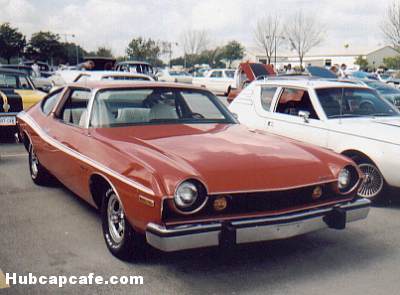
    • Barges on fouru0026nbsp;wheelsI originally wrote this in September 2008.  At the Fox Cities Business Expo Tuesday, a Smart car was displayed at the United Way Fox Cities booth. I reported that I once owned a car into which trunk, I believe, the Smart could be placed, with the trunk lid shut. This is said car — a 1975 Chevrolet Caprice coupe (ours was dark red), whose doors are, I believe, longer than the entire Smart. The Caprice, built down Interstate 90 from us Madisonians in Janesville (a neighbor of ours who worked at the plant probably helped put it together) was the flagship of Chevy’s full-size fleet (which included the stripper Bel Air and middle-of-the-road Impala), featuring popular-for-the-time vinyl roofs, better sound insulation, an upgraded cloth interior, rear fender skirts and fancy Caprice badges. The Caprice was 18 feet 1 inch long and weighed 4,300 pounds. For comparison: The midsize Chevrolet of the ear was the Malibu, which was the same approximate size as the Caprice after its 1977 downsizing. The compact Chevrolet of the era was the Nova, which was 200 inches long — four inches longer than a current Cadillac STS. Wikipedia’s entry on the Caprice has this amusing sentence: “As fuel economy became a bigger priority among Americans…
    • Behind the wheel
    • Collecting only dust or rust
    • Coooooooooooupe!
    • Corvettes on the screen
    • The garage of misfit cars
    • 100 years (and one day) of our Chevrolets
    • They built Excitement, sort of, once in a while
    • A wagon by any otheru0026nbsp;nameFirst written in 2008. You will see more don’t-call-them-station-wagons as you drive today. Readers around my age have probably had some experience with a vehicle increasingly rare on the road — the station wagon. If you were a Boy Scout or Girl Scout, or were a member of some kind of youth athletic team, or had a large dog, or had relatives approximately your age, or had friends who needed to be transported somewhere, or had parents who occasionally had to haul (either in the back or in a trailer) more than what could be fit inside a car trunk, you (or, actually, your parents) were the target demographic for the station wagon. “Station wagons came to be like covered wagons — so much family activity happened in those cars,” said Tim Cleary, president of the American Station Wagon Owners Association, in Country Living magazine. Wagons “were used for everything from daily runs to the grocery store to long summer driving trips, and while many men and women might have wanted a fancier or sportier car, a station wagon was something they knew they needed for the family.” The “station wagon” originally was a vehicle with a covered seating area to take people between train stations…
    • Wheels on theu0026nbsp;screenBetween my former and current blogs, I wrote a lot about automobiles and TV and movies. Think of this post as killing two birds (Thunderbirds? Firebirds? Skylarks?) with one stone. Most movies and TV series view cars the same way most people view cars — as A-to-B transportation. (That’s not counting the movies or series where the car is the plot, like the haunted “Christine” or “Knight Rider” or the “Back to the Future” movies.) The philosophy here, of course, is that cars are not merely A-to-B transportation. Which disqualifies most police shows from what you’re about to read, even though I’ve watched more police video than anything else, because police cars are plain Jane vehicles. The highlight in a sense is in the beginning: The car chase in my favorite movie, “Bullitt,” featuring Steve McQueen’s 1968 Ford Mustang against the bad guys’ 1968 Dodge Charger: [youtube=http://www.youtube.com/watch?v=GMc2RdFuOxIu0026amp;fmt=18] One year before that (but I didn’t see this until we got Telemundo on cable a couple of years ago) was a movie called “Operación 67,” featuring (I kid you not) a masked professional wrestler, his unmasked sidekick, and some sort of secret agent plot. (Since I don’t know Spanish and it’s not…
    • While riding in my Cadillac …
  • Entertainments
    • Brass rocksThose who read my former blog last year at this time, or have read this blog over the past months, know that I am a big fan of the rock group Chicago. (Back when they were a rock group and not a singer of sappy ballads, that is.) Since rock music began from elements of country music, jazz and the blues, brass rock would seem a natural subgenre of rock music. A lot of ’50s musical acts had saxophone players, and some played with full orchestras … [youtube=http://www.youtube.com/watch?v=9CPS-WuUKUE] … but it wasn’t until the more-or-less simultaneous appearances of Chicago and Blood Sweat u0026amp; Tears on the musical scene (both groups formed in 1967, both had their first charting singles in 1969, and they had the same producer) that the usual guitar/bass/keyboard/drum grouping was augmented by one or more trumpets, a sax player and a trombone player. While Chicago is my favorite group (but you knew that already), the first brass rock song I remember hearing was BSu0026amp;T’s “Spinning Wheel” — not in its original form, but on “Sesame Street,” accompanied by, yes, a giant spinning wheel. [youtube=http://www.youtube.com/watch?v=qi9sLkyhhlE] [youtube=http://www.youtube.com/watch?v=OxWSOuNsN20] [youtube=http://www.youtube.com/watch?v=U9U34uPjz-g] I remember liking Chicago’s “Just You ‘n Me” when it was released as a single, and…
    • Drive and Eat au0026nbsp;RockThe first UW home football game of each season also is the opener for the University of Wisconsin Marching Band, the world’s finest college marching band. (How the UW Band has not gotten the Sudler Trophy, which is to honor the country’s premier college marching bands, is beyond my comprehension.) I know this because I am an alumnus of the UW Band. I played five years (in the last rank of the band, Rank 25, motto: “Where Men Are Tall and Run-On Is Short”), marching in 39 football games at Camp Randall Stadium, the Hubert H. Humphrey Metrodome in Minneapolis, Michigan Stadium in Ann Arbor, Memorial Stadium at the University of Illinois (worst artificial turf I had ever seen), the University of Nevada–Las Vegas’ Sam Boyd Silver Bowl, the former Dyche Stadium at Northwestern University, five high school fields and, in my one bowl game, Legion Field in Birmingham, Ala., site of the 1984 Hall of Fame Bowl. The UW Band was, without question, the most memorable experience of my college days, and one of the most meaningful experiences of my lifetime. It was the most physical experience of my lifetime, to be sure. Fifteen minutes into my first Registration…
    • Keep on rockin’ in the freeu0026nbsp;worldOne of my first ambitions in communications was to be a radio disc jockey, and to possibly reach the level of the greats I used to listen to from WLS radio in Chicago, which used to be one of the great 50,000-watt AM rock stations of the country, back when they still existed. (Those who are aficionados of that time in music and radio history enjoyed a trip to that wayback machine when WLS a Memorial Day Big 89 Rewind, excerpts of which can be found on their Web site.) My vision was to be WLS’ afternoon DJ, playing the best in rock music between 2 and 6, which meant I wouldn’t have to get up before the crack of dawn to do the morning show, yet have my nights free to do whatever glamorous things big-city DJs did. Then I learned about the realities of radio — low pay, long hours, zero job security — and though I have dabbled in radio sports, I’ve pretty much cured myself of the idea of working in radio, even if, to quote WAPL’s Len Nelson, “You come to work every day just like everybody else does, but we’re playing rock ’n’ roll songs, we’re cuttin’ up.…
    • Monday on the flight line, not Saturday in the park
    • Music to drive by
    • The rock ofu0026nbsp;WisconsinWikipedia begins its item “Music of Wisconsin” thusly: Wisconsin was settled largely by European immigrants in the late 19th century. This immigration led to the popularization of galops, schottisches, waltzes, and, especially, polkas. [youtube=http://www.youtube.com/watch?v=yl7wCczgNUc] So when I first sought to write a blog piece about rock musicians from Wisconsin, that seemed like a forlorn venture. Turned out it wasn’t, because when I first wrote about rock musicians from Wisconsin, so many of them that I hadn’t mentioned came up in the first few days that I had to write a second blog entry fixing the omissions of the first. This list is about rock music, so it will not include, for instance, Milwaukee native and Ripon College graduate Al Jarreau, who in addition to having recorded a boatload of music for the jazz and adult contemporary/easy listening fan, also recorded the theme music for the ’80s TV series “Moonlighting.” Nor will it include Milwaukee native Eric Benet, who was for a while known more for his former wife, Halle Berry, than for his music, which includes four number one singles on the Ru0026amp;B charts, “Spend My Life with You” with Tamia, “Hurricane,” “Pretty Baby” and “You’re the Only One.” Nor will it include Wisconsin’s sizable contributions to big…
    • Steve TV: All Steve, All the Time
    • “Super Steve, Man of Action!”
    • Too much TV
    • The worst music of allu0026nbsp;timeThe rock group Jefferson Airplane titled its first greatest-hits compilation “The Worst of Jefferson Airplane.” Rolling Stone magazine was not being ironic when it polled its readers to decide the 10 worst songs of the 1990s. I’m not sure I agree with all of Rolling Stone’s list, but that shouldn’t be surprising; such lists are meant for debate, after all. To determine the “worst,” songs appropriate for the “Vinyl from Hell” segment that used to be on a Madison FM rock station, requires some criteria, which does not include mere overexposure (for instance, “Macarena,” the video of which I find amusing since it looks like two bankers are singing it). Before we go on: Blog posts like this one require multimedia, so if you find a song you hate on this blog, I apologize. These are also songs that I almost never listen to because my sound system has a zero-tolerance policy — if I’m listening to the radio or a CD and I hear a song I don’t like, it’s, to quote Bad Company, gone gone gone. My blonde wife won’t be happy to read that one of her favorite ’90s songs, 4 Non Blondes’ “What’s Up,” starts the list. (However,…
    • “You have the right to remain silent …”
  • Madison
    • Blasts from the Madison media past
    • Blasts from my Madison past
    • Blasts from our Madison past
    • What’s the matter with Madison?
    • Wisconsin – Madison = ?
  • Sports
    • Athletic aesthetics, or “cardinal” vs. “Big Red”
    • Choose your own announcer
    • La Follette state 1982 (u0022It was 30 years ago todayu0022)
    • The North Dakota–Wisconsin Hockey Fight of 1982
    • Packers vs. Brewers
  • Hall of Fame
    • The case(s) against teacher unions
    • The Class of 1983
    • A hairy subject, or face the face
    • It’s worse than you think
    • It’s worse than you think, 2010–11 edition
    • My favorite interview subject of all time
    • Oh look! Rural people!
    • Prestegard for president!
    • Unions vs. the facts, or Hiding in plain sight
    • When rhetoric goes too far
Privacy & Cookies: This site uses cookies. By continuing to use this website, you agree to their use.
To find out more, including how to control cookies, see here: Cookie Policy
  • Subscribe Subscribed
    • Steve Prestegard.com: The Presteblog
    • Join 197 other subscribers
    • Already have a WordPress.com account? Log in now.
    • Steve Prestegard.com: The Presteblog
    • Subscribe Subscribed
    • Sign up
    • Log in
    • Report this content
    • View site in Reader
    • Manage subscriptions
    • Collapse this bar
%d