• Presty the DJ for April 11

    April 11, 2018
    Music

    The number one single today in 1954:

    Today in 1964, the Billboard Hot 100 could have been called the Beatles 14 and the non-Beatles 86, topped by …

    The number one single today in 1970:

    (more…)

    Share this on …

    • Share on X (Opens in new window) X
    • Share on Facebook (Opens in new window) Facebook
    • Share on LinkedIn (Opens in new window) LinkedIn
    • Email a link to a friend (Opens in new window) Email
    • Print (Opens in new window) Print
    Like Loading…
    No comments on Presty the DJ for April 11
  • A fiscal responsibility feature, not a bug

    April 10, 2018
    Wisconsin politics

    The MacIver Institute follows up on the April 3 election:

    Voters across the state agreed to raise taxes by $563 million during Tuesday’s spring election. Of a proposed $667 million overall tax hike, the vast majority – 84 percent – were approved.

    A data release from the Wheeler Report compiled the results of the 66 referendum votes. Fifty school districts came to voters asking for more money for various projects, including the construction of brand new schools, building repairs, operations, staff raises, and other expenses. On Tuesday, voters approved tax hikes in 43 school districts.

    The majority of tax increases approved Tuesday came in the form of new debt. Twenty-two districts will issue new debt or bonds totaling $438.7 million – 82 percent of the proposed new debt put before voters.

    School districts have state-imposed revenue limits that protect Wisconsinites from constantly-increasing property taxes. However, districts can still ask voters for more by coming to them with referenda during regularly-scheduled primary and general elections.

    In the past, districts could propose referenda during special elections and could repeatedly propose the same project in consecutive elections. Gov. Scott Walker and the state Legislature have shared a commitment to lowering property tax burdens, spurring referendum reforms to ensure more voters have a say in matters of large tax hikes.

    The largest increase in any one district is in Chippewa Falls School District, which will issue $65 million in debt to build a new elementary school, update the middle school and add a new laboratory onto the high school. The district plans to pay off the debt over 20 years.

    Residents of that district will see a $1.25 property tax increase for every $1,000 of total tax assessed value on their home. The owner of a property valued at $200,000 will see a $250 per-year tax increase.

    After Chippewa Falls, the next largest new debt will be issued by DC Everest Area, where voters approved $59,875,000 in debt for a school building and improvement program.

    River Falls voters approved two separate asks – one bond for $45,860,000, and another for $2,100,000 – totaling just under $48 million in debt. The larger bond will fund various upgrades and renovations in school buildings, while the $2 million bond will pay for new turf, outdoor lighting, and parking. Area taxpayers will pay off those bonds for the next 19 years, through 2037.

    Sixteen school districts offered multiple referenda, splitting their “asks” into two questions. Of the 16, voters in just one district, Kiel Area, approved one while denying the other, showing that relatively few voters split their votes and tended to either approve or deny all proposed spending.

    Voters in Alma, Benton, and ten other districts approved issuing debt for projects across two different referenda. In Delavan-Darien, Frederic, and Peshtigo, voters rejected both referenda proposed by each district.

    A smaller proportion of the new tax hikes, $123.4 million overall, will come in the form of one-time spending, also known as non-recurring spending. Just two of 25 referenda failed in that category, with voters approving 97 percent of the total proposed $126.7 million in spending.

    Howard-Suamico School District got voters’ approval to exceed the revenue limit for five years, beginning in the 2018-19 school year, to reduce class sizes, provide employee raises, and maintain facilities. That’ll cost area taxpayers $5.85 million every year for five years, adding up to more than $29 million. The district estimates that local property taxes will not increase because of old debt retiring at the same time.

    Voters in La Crosse also approved a spending hike totaling more than $20 million over revenue limits. The debt is considered one-time spending, but the district is asking voters to extend a current levy limit override for another five years. Had they voted no, owners of a home worth $100,000 would have seen a $96 annual decrease in property taxes – but the referendum passed, keeping taxes at the same level. The district will use the money to maintain current operations and make various facilities upgrades.

    Just six of the 66 referenda on the ballot Tuesday asked voters to approve recurring, ongoing spending increases over state-mandated limits. Four of them – in Alma, Almond-Bancroft, Benton, and Shullsburg – passed, totaling $1,250,000 in new spending overall. Those districts will begin exceeding their revenue cap, spending more than the limit beginning in the coming 2018-19 school year.

    Last year, 40 of 65 school district referenda passed, totaling almost $700 million in tax increases. The MacIver Institute covered the votes here.

    The current school funding environment dates back to the 1990s, when state law was changed to limit annual revenue increases and require referenda to exceed revenue caps.

    Back when I started in this line of work I was told by someone whose job was working with school districts on financing building projects that people would not walk across the street to vote Yes, but they would walk miles in the snow to vote No. That was in the days when property tax mil rates were as high as $30 per $1,000 assessed valuation (I worked in a part of the state that had three of the 11 highest mil rates in the entire state) and no building project referendum ever passed on the first or first two votes. (And in some cases for entire decades.)

    The fact that 61 percent of referenda passed last year and 84 percent passed this year seems to me to be a sign that the system created two decades ago has succeeded in holding down, relatively speaking, property taxes to the point where voters feel free to vote for building projects or exceeding revenue caps without feeling that increasing taxes will force them out of their homes. School district voters also have the power to vote on the use of their own property taxes not just for building projects, but for year-to-year spending. In other words, the system seems to be working.


    Share this on …

    • Share on X (Opens in new window) X
    • Share on Facebook (Opens in new window) Facebook
    • Share on LinkedIn (Opens in new window) LinkedIn
    • Email a link to a friend (Opens in new window) Email
    • Print (Opens in new window) Print
    Like Loading…
    1 comment on A fiscal responsibility feature, not a bug
  • Give presidents gubernatorial power

    April 10, 2018
    US politics

    Christian Schneider:

    When President Donald Trump last week called for Congress to approve an executive “line-item veto,” it provoked convulsions among America’s Googletariat.

    “Trump has a secret plan to evade the Constitution and create a line-item veto, apparently,” read a headline in the Washington Post. “Trump administration botches basic civics while calling for line-item veto,” wrote one of the Post’s “fact checkers.” MSNBC host Rachel Maddow’s blog mocked Trump for falling for a “misguided gimmick” pushed by congressional Republicans in the 1990s. “A quarter of a century later, it feels like we’re watching an episode of That ’90s Show,” snarked Maddow’s blog.

    It would probably surprise former Democratic Wisconsin Sen. Russ Feingold and Democratic President Barack Obama that they were complicit in this mid-90’s Republican subterfuge. Because in the past, both have joined Republicans like current Speaker of the House Paul Ryan in proposing a version of the line-item veto they considered to be constitutional. (The idea is far from new; President Ulysses S. Grant first asked for the authority in the 1860s.)

    Back in the 1990s, Congress passed a bill providing the president with a clean authority to veto specific spending items from legislation. President Bill Clinton signed the law, but the Supreme Court overturned it in 1998, arguing that allowing the president to unilaterally approve or deny programs constituted a violation of the separation of powers. The president must, according to the court, “approve all the parts of a bill, or reject it in toto.”

    Since then, both Democrats and Republicans (and now Donald Trump, who is either depending on what cable news show he just watched) have been looking for a constitutional way to implement a line-item veto. They have primarily settled on a structure where the president, after signing a spending bill, could identify a number of pork-barrel programs to which he or she objected. Those items would then be sent back to Congress and put to a separate vote — if an item couldn’t withstand an open-air vote, it would be eliminated and the money initially intended for the program would be applied to deficit reduction.

    In joining Feingold and Obama in pushing for this expanded veto authority, Ryan argued it was the best way to trim unnecessary spending tucked into massive bills. In the days of out-of-control earmarks, when the House and Senate had to vote on a final version of a spending bill, legislators were typically voting on a “conference report” — a non-amendable agreement between the two houses with myriad special spending projects packed in at the last minute. The president can only give the package a full thumbs’ up or down, regardless of how wasteful some of the spending hidden in the bill may be.

    Aside from such a system being a recipe for scandal, Ryan and Feingold argued an altered line-item veto would shine some sunlight on wasteful spending tucked into massive bills. In a 1996 interview, Ryan said he hoped he could “embarrass things out of bills” by forcing individual votes on unnecessary projects.

    The primary opponents of the line-item veto are legislative leaders, who need pork-barrel spending projects to buy votes from their members. As Speaker of the House, Nancy Pelosi (D-Calif.) fought against it when it was proposed by President George W. Bush. In 2006, then-Senate Minority Leader Harry Reid (D-Nev.) said he likes “the line-item veto about like I like a bad sore throat.”

    However, the Ryan-Feingold-Obama-Bush plan (at the time given the sexy name “The Expedited Line-Item Veto and Rescissions Act”) still allowed Congress to have final say on whether a program was approved. Further, it would grant the president lesser veto powers than 46 governors currently enjoy — that includes Wisconsin, where a governor can still strike full sentences and write in different spending amounts, creating new laws never intended by the Legislature.

    An altered line-item veto wouldn’t be a panacea for solving government overspending. But exposing earmarks was a good idea then and still is now.  Just because one version of the line-item veto has been struck down doesn’t mean there are aren’t other equally valuable, bipartisan options available – they’re just harder to Google than “Stupid Face Trump Dummy Supreme Court Line Item Veto Fathead.”

    Share this on …

    • Share on X (Opens in new window) X
    • Share on Facebook (Opens in new window) Facebook
    • Share on LinkedIn (Opens in new window) LinkedIn
    • Email a link to a friend (Opens in new window) Email
    • Print (Opens in new window) Print
    Like Loading…
    No comments on Give presidents gubernatorial power
  • Presty the DJ for April 10

    April 10, 2018
    Music

    The number one single today in 1965:

    The number one album today in 1976 was Peter Frampton’s “Frampton Comes Alive,” the best selling live album in rock music history:

    The number one album today in 1993 was Depeche Mode’s “Songs of Faith and Devotion”:

    Birthdays start with one-hit wonder Sheb Wooley:

    (more…)

    Share this on …

    • Share on X (Opens in new window) X
    • Share on Facebook (Opens in new window) Facebook
    • Share on LinkedIn (Opens in new window) LinkedIn
    • Email a link to a friend (Opens in new window) Email
    • Print (Opens in new window) Print
    Like Loading…
    No comments on Presty the DJ for April 10
  • Who’s at fault for Trump’s increasing popularity

    April 9, 2018
    media, US politics

    Matthew Walther:

    Was anyone surprised by the recent CNN poll finding President Trump’s approval rating at 42 percent, the highest it has been since the first Infrastructure Week?

    The thousand undifferentiated scoops in the phantasmal Mueller investigation, the vicissitudes of his hundred shifting positions on DACA and the fabled border wall, Stormy Daniels, a reversal of course in Syria and Afghanistan, moronic schemes from the White House to turn food stamps into some kind of vast network of state-run bread and milk distribution centers, endless championing of the Wall Street gazillionaires against whom he had supposedly been running in 2016, relentless staff turnaround, a so-far-illusory trade war conducted from the internet with minimal strategy or cohesion, even “covfefe”: Not one of these things matters to the not-quite-majority of Americans who voted for Trump. They still like him.

    Why shouldn’t they? The reasons for opposing Trump were clear from the beginning. He was a crude, mean-spirited man whose most noteworthy accomplishments were kicking old people out of their homes to make room for casino parking lots, speculating publicly about whether the duly elected president of the United States was a jihadist plant, and pretending to fire Gary Busey in the fake board-room of a made-up company on NBC. It was only the staggering irrelevance of what all 15 other Republican candidates were saying — it is almost sad now to think of the millions of words of Heritage Foundation PowerPoints still gathering virtual dust on Jeb Bush’s website — that made his candidacy possible. Years later the GOP is still talking nonsense about freedom and entrepreneurship, the Democrats are still obsessed with where people go to the bathroom, and Trump is still being rude on television. Nothing has changed. If anything, there is good reason to believe that in the weeks and months to come polls without the historic Republican bias of Rassmussen will approach the 50 percent mark.

    It’s not surprising that after little more than a year in office many people who voted for a president still support him. But it’s also surprising that a president who has been the object of more negative reporting than any in our history still enjoys something like the same middling base of support he had before taking office. Unless it’s the negative reporting that is the problem, which I suspect is very largely the case. You can only ask adults to participate in the fiction that a retweet of a wrestling GIF is a credible threat of violence against some nerd reporters at a cable station or delight in what you hope will be the failure of American trade policy before they decide to tune you out. Very largely this had already happened by Inauguration Day, but now the work of MSNBC and The New York Timesand PolitiFact is complete. Millions of Americans do not know the difference between what is true and what is false and have decided that they do not much care either.

    There was, I like fondly to imagine, a different course that might have been taken here. It is just possible, I suppose, that members of my profession could have exercised their reasoning faculties to decide what in the administration was good, what was bad, what was unremarkable or indistinguishable from what any modern president would do, what was painfully idiotic, what was, perhaps, evil. We chose not to exercise this responsibility. Instead we decided to indulge in our live-action roleplaying fantasies about being brave selfless journos taking on a mean demagogue because we love the Constitution so much.

    There is, however, a faint glimmer of hope for Trump’s enemies in the media. Making it work would require the coordinated efforts of a vast number of persons — conspiracy is the word for it, or maybe even “collusion” — but that shouldn’t be difficult in the era of modern internet-based communication. If we want to convince people who voted for him that the president no longer deserves their support, we need to stop talking about him. Or to be more precise, we need to stop making Trump the universal metric according to which all of human conduct is weighed and considered.

    If Trump argues against free trade, consider the issue on its merits. The idea that liberalizing the production and distribution of goods and services across national borders will automatically enrich everyone — instead of just the already wealthy in rich and poor countries alike — has had its critics on the left and the right for centuries; even President Obama was skeptical of NAFTA during his first Senate campaign and as late as the 2008 election he was telling audiences that it should be renegotiated. When Trump criticizes Amazon for its monopolistic practices, don’t turn it into a tedious finger-wagging exercise in fact-checking (and if you work for a newspaper owned by its founder and CEO, maybe avoid saying anything if you don’t have to); subject the company to the same scrutiny you would reserve for any other giant corporation that treats America’s cities as its fiefdoms and her people as its grateful serfs.

    Pretending that anything the president says or does is bad because he is the one saying or doing isn’t just bad journalism. You might as well be wearing a MAGA hat and whooping about the Wall.

    Share this on …

    • Share on X (Opens in new window) X
    • Share on Facebook (Opens in new window) Facebook
    • Share on LinkedIn (Opens in new window) LinkedIn
    • Email a link to a friend (Opens in new window) Email
    • Print (Opens in new window) Print
    Like Loading…
    No comments on Who’s at fault for Trump’s increasing popularity
  • Presty the DJ for April 9

    April 9, 2018
    Music

    The number 15 British song today in 1966 was written by Mick Jagger and Keith Richards:

    The number one single today in 1966:

    The number one single today in 1977:

    (more…)

    Share this on …

    • Share on X (Opens in new window) X
    • Share on Facebook (Opens in new window) Facebook
    • Share on LinkedIn (Opens in new window) LinkedIn
    • Email a link to a friend (Opens in new window) Email
    • Print (Opens in new window) Print
    Like Loading…
    No comments on Presty the DJ for April 9
  • Presty the DJ for April 8

    April 8, 2018
    Music

    Today in 1967, John Lennon took his Rolls–Royce to J.P. Fallon Ltd. in Surrey, England, to see if it could paint the car in psychedelic colors. The result three months later:

    The number one single today in 1973:

    (more…)

    Share this on …

    • Share on X (Opens in new window) X
    • Share on Facebook (Opens in new window) Facebook
    • Share on LinkedIn (Opens in new window) LinkedIn
    • Email a link to a friend (Opens in new window) Email
    • Print (Opens in new window) Print
    Like Loading…
    No comments on Presty the DJ for April 8
  • Presty the DJ for April 7

    April 7, 2018
    Music

    Today in 1956, the CBS Radio Network premiered Alan Freed’s “Rock and Roll Dance Party.”

    The number one single today in 1958:

    Today in 1962, Mick Jagger and Keith Richards met someone who called himself Elmo Lewis. His real name was Brian Jones.

    (more…)

    Share this on …

    • Share on X (Opens in new window) X
    • Share on Facebook (Opens in new window) Facebook
    • Share on LinkedIn (Opens in new window) LinkedIn
    • Email a link to a friend (Opens in new window) Email
    • Print (Opens in new window) Print
    Like Loading…
    1 comment on Presty the DJ for April 7
  • Bochco

    April 6, 2018
    media

    Steven Bochco, one of the most influential TV producers of the past 30 years died Sunday. Todd VanDerWerff explains:

    As a TV writer in the late 1960s and ’70s, Bochco worked on everything from Columbo to McMillan & Wife, cranking out sharp scripts for the well-oiled TV machines of the time. But it was when he joined the then-powerful MTM Productions (the company behind classic sitcoms like The Mary Tyler Moore Show and The Bob Newhart Show) to help the company jump-start its drama division that he became someone who must be acknowledged in even the most cursory summaries of TV’s history.

    His first show with MTM, Paris, which ran for 13 episodes in 1979 and 1980, was groundbreaking for the time, starring James Earl Jones as a police captain whose relationships with the officers working under him were satisfyingly complex. What’s more, the show actually followed him home to see how he interacted with his wife, something few police dramas had done before. In its interest in contemporary issues and the protagonist’s personal life, Paris served as a cursory blueprint for what was to come.

    But it was Bochco’s next show that would change everything. Co-created with Michael Kozoll, Hill Street Blues would debut in 1981 on NBC and run for 144 episodes that altered television forever. From its storytelling style to its visuals, Hill Street rewrote the rules of what a TV drama could be, and made possible the boom in great drama that followed in the ’90s and 2000s.

    Here, then, are Hill Street Blues and four other TV shows that will help you understand why Steven Bochco is one of the all-time greatest TV producers.

    1) Hill Street Blues

    If you were to watch just one series to understand how dramatically Bochco changed the game, make it this one. Even better, take a look at one of the great dramas of the ’70s — like The Rockford Files, for instance — then look at this one to see just how differently it approached its storytelling.

    Hill Street Blues, which debuted in 1981 and ran until 1987, is often incorrectly cited as the first serialized TV drama. Daytime and primetime soaps had, of course, been telling continuing stories for decades at that point. But what Hill Street did was wed this storytelling model, which was written off by many critics of the time as disreputable, to the slightly more prestigious cop drama.

    The show bears some similarities to Paris. The police officers of Hill Street Station (in an unnamed city somewhere east of the Mississippi) dealt with major social issues they encountered throughout their neighborhood, some of which walked right through the door and into their station. The camera followed the officers home to see what their personal lives were like, and the series was interested in how those personal lives affected their professional ones.

    But it was Bochco and Kozoll’s interest in merging serialization and case-of-the-week storytelling that proved most revolutionary. Hill Street didn’t push the reset button at the end of every episode. Events that happened in one episode affected the next, and over the series’ 144 episodes, viewers learned so much about the show’s characters from how they were affected by the cases they took on.

    The two also brought a bolder cinematic language to the series, using documentary-style techniques that made it feel as if viewers were just dropping in on some real station somewhere, unannounced, enhancing the feel that everything in the show was really happening somewhere.

    MTM pushed Bochco off the series in its fifth season, and while the show ran until season seven without him (under the tutelage of his protege David Milch, himself a major TV influence), it never quite recaptured the glories of its early days, when it looked radically different from everything else on TV. To watch Hill Street in 2018 is to find it a little quaint — TV drama has evolved considerably since then — but it’s impossible to imagine almost any drama on the air now without nodding toward the influence of this one series.

    2) Doogie Howser, MD

    Typically, a glance at Bochco’s work would go from Hill Street to the other drama series he co-created that won four Emmys for Best Drama — 1986’s LA Law. But while that series has its charms, its reliance on sensationalism that no longer seems as sensational has made it age the most poorly of Bochco’s well-known series.

    Instead, take a look at this 1989 to 1993 series, co-created with David E. Kelley (another Bochco protege who went on to great things in his own right). Following a whiz kid teenager who is already in his second year of residency as a surgeon at the age of 16, Doogie is not a particularly great television show, but it’s useful for looking at a form Bochco was interested in but never quite cracked: the dramedy. (His other good series in this form is the even more obscure John Ritter vehicle Hooperman.)

    Doogie and Hooperman were part of a late ’80s movement toward comedies that were filmed more like movies and not in front of live studio audiences. As such, they didn’t feature the sounds of audience laughter and were often less reliant on punchlines and more reliant on a kind of soft-focus drama — too light to have the sharper edges of a Hill Street but darker than something like contemporary comedy Cheers. And if you’re thinking that sounds a lot like many comedies on the air right now, you wouldn’t be wrong.

    These days, Doogie is better known for its high-concept premise and launching the career of its star, Neil Patrick Harris, but it’s worth checking out to see yet another TV form in its early days, with Bochco right there helping it along.

    Doogie was produced as part of a six-year, 10-series deal with ABC that Bochco signed in 1987. It was a deal that would go on to produce many of his most memorable series. But it was also a deal that would produce his most infamous flop.

    3) Cop Rock

    No list of bizarre TV flops is complete without 1990’s Cop Rock, a one-season weirdo that was co-created with William M. Finkelstein, which wedded Bochco’s beloved cop show format to original songs written by Randy Newman. This means that, yes, Cop Rock was a musical, something wildly original at the time but also so out there that nobody was quite ready for it.

    That can sometimes mean a series that was ahead of its time, but Cop Rock isn’t quite that. It has its moments (as a recent DVD release by Shout Factory makes clear), but it’s also clear that no one involved has quite thought through what the series will look like beyond, “I guess the cops will sing every once in a while?” Discussing the serious social issues that animated a lot of Bochco’s work via song and dance ended up feeling as if it was trivializing them, unfortunately.

    But it’s still worth checking out an episode of the show (or, really, just a few clips on YouTube) to see a series so far ahead of its time that TV is only really just now figuring out what a musical drama might look like. And it’s also worth remembering that for all his hits, Bochco had a lot of flops too — though few as memorable as this one.

    4) NYPD Blue

    Bochco’s biggest success with ABC (where he made his home for almost 20 years, going beyond his original six-year deal) was this 1993 debut, co-created with Milch, which ran for 12 seasons and 261 episodes, following the officers of a New York police precinct as they worked cases, dealt with personal problems, and confronted social issues of the day. If that sounds a lot like Hill Street, well, you’re not wrong. But while NYPD was nowhere near as influential as that earlier show, it changed TV in more subtle ways.

    The one that seemed most important at the time was the show’s embrace of rawer language and sexual content than other series of the time. (Famously, ABC put several warnings about nudity on the broadcast of the series’ pilot — but all that was shown were a couple of bare butts, rather than the much more salacious images the warnings seemed to promise.)

    Watching the series in 2018 will probably lead you to wonder why anybody was so upset, but several local ABC affiliates refused to air NYPD Blue when it debuted. That it no longer seems all that coarse in 2018 is probably a sign of how it really did change television.

    But a more lasting legacy stems from the series’ protagonist, Dennis Franz’s Andy Sipowicz, a racist cop who didn’t always play by the rules but got results, darn it. He feels, at many turns, heavily modeled on Popeye Doyle, the cop played by Gene Hackman in the Oscar-winning 1971 film The French Connection. But Bochco and Milch (who wrote the operatic scripts for the series’ first seven seasons) used television to dig deeper into what made Sipowicz the man he was, changing and even softening him over time.

    If you don’t particularly feel like watching a racist cop antihero in 2018, that more than makes sense. But Sipowicz is an important step in TV’s embrace of the antihero. He’s not as revolutionary as All in the Family’s Archie Bunker (who came to TV in 1971) or Tony Soprano (who debuted in 1999), but he comfortably straddles the gap between the two. He was a dark and complicated character at a time when TV was sorely lacking for such a thing.

    And if you do feel like checking NYPD Blue out, you’re in luck. The entire series was just added to Hulu.

    5) Murder One

    Here’s another Bochco series (co-created with Charles H. Eglee and Channing Gibson) that didn’t work out, running for just two seasons between 1995 and 1997. But the storytelling model it used ended up being hugely influential around a decade later. It just took a move to cable to do so.

    The idea behind Murder One was that every season of the show would follow one murder trial from start to finish, as a team of lawyers tried to defend their client and, along the way, figure out who really did it, all the better to exonerate him. And the first season, which followed the investigation of the murder of 15-year-old Jessica Costello, stuck to that core idea, with numerous twists and turns and several memorable performances (most notably from Stanley Tucci as a possibly sociopathic philanthropist whose path intersected with Jessica’s).

    The problem was that a traditional 22-episode broadcast TV season was a little too much for a story like this, leading to some serious dead weight in the middle (though both the first two and last two hours are excellent). In season two, Murder One went from one case to a handful, which played out over the course of the season, but that, weirdly, wasn’t as gripping. The show was canceled.

    The producers of the later series 24, which took some cues from Murder One, would solve this by piling story arcs on top of each other across their 24-episode seasons. But it took the cable drama, with its 10- and 13-episode seasons, to really solve the problem. On a cable show, the “case of the season” had enough space to really allow time to dig into all of the suspects, but not so much space that the writers had to vamp for time (at least when it was done well).

    This means that, weirdly, in the Netflix era, Murder One is the show of Bochco’s that perhaps looks the most influential. But that was the man’s career in a nutshell. Even when he was producing a series that didn’t work, he was reinventing television.

    Ryan Parker writes about perhaps Bochco’s most notable character:
    When Dennis Franz learned on Sunday that his longtime friend and former TV boss, Steve Bochco, had died after a battle with cancer, he simply could not process what he was hearing.

    “It was a day of shock for me,” the actor on Tuesday told The Hollywood Reporter. Bochco was 74.

    Knowing one another for decades and working together on some of television’s most iconic, groundbreaking programs, Franz simply could not wrap his mind around the loss of the the strong-willed writer and producer who created Hill Street Blues, NYPD Blue and L.A. Law, among other shows.

    “I consider Steven to be a leader and a visionary in television,” says Franz, who played Detective Andrew “Andy” Sipowicz for the full 12-season run of ABC’s NYPD Blue. “He left such a beautiful legacy of so much memorable work, which to me puts him in an icon status.”

    Franz worked closely with Bochco initially playing most notably fan favorite Lt. Norman Buntz on NBC’s Hill Street Blues, which ran from 1981 to 1987, before starring on ABC’s NYPD Blue.

    Franz tells THR the part of Sipowicz was created for him and he was cast six months before there was an initial script, but he was not thrilled about the role at first. And it took an important lunch with Bochco to help him settle in, Franz says.

    “I read about my guy, and I thought, ‘Who is going to care about this guy?’” the actor recalls. “He gets shot at the end of the pilot, and I thought, ‘Who is going to care if he lives or dies? He is a womanizer. He is a drunk. He is a racist. He is a loose cannon. He is a bad cop and bad man.’ And I expressed those feelings to Steven, and he said, ‘You know, you will find a way to make him sympathetic.’ And I asked how I was going to go about that, and he said, ‘It is inherent in your personality. You have this.’ And never did he say, ‘You’re right, we’ll change the character.’”

    Sipowicz would ultimately become the focal point of the series as the seasons progressed and a pop-culture icon in his own right.

    Franz and Bochco would go on to meet at least once a year for lunch to discuss the show and ideas they had for where it could go.

    “Once you became one of Steven Bochco’s actors — which many actors wished they could do — you’re very proud to be a part of his group. He took you into his confidence and made you feel really special,” Franz says. “He was aware of his impact on people, especially those working on his shows. So, when he did come by, it was just to give you a hug and say hello. So, in that respect, he was very hands-off on production and allowed everyone to do their work as comfortably as possible. But, he was very hands-on when it came to the show itself, the editing and overview of it all.”

    More than any other quality Bochco exhibited, Franz was in awe of the late writer-producer standing his ground with the networks to fully realize his vision for his shows.

    In particular, the partial nudity on NYPD Blue when it premiered in September 1993 caused quite a commotion. But Bochco didn’t flinch, Franz remembers.

    “The partial nudity was one of the requests that Steve strongly asked for in the beginning of the production from the network,” Franz recalls. “He wanted to push the envelope quite a bit. So a lot was made of that. I always had great respect and admiration for his uncompromising artistic vision. He just didn’t want people to tell him what he couldn’t do. When you think about it, a great painter, you can’t tell them, ‘You can’t have this or that color.’ That’s the way Steven was as a writer and as a visionary.”

    Of course, that also meant it was just a matter of time before it was Franz’s turn to show some skin.

    “[David] Caruso, in every episode, he had to bare his ass,” Franz relates. “And we were shooting on the streets of New York, and the show had been on for a couple of weeks, and people passing by would yell out, ‘Yo, Sipowicz! When are we going to see your ass?!’”

    The actor continues, laughing, “So later comes the script and Steven said, ‘Your turn has come.’ Everyone signed a nudity clause, so yes, everyone knew there was a possibility. And yes, you look in the mirror at your ass and think, ‘Oh, Christ, what am I going to do about this thing?!’ So I started to exercise, but then stopped because I thought, ‘This is not going to work, so to hell with it. I am what I am.’ It turned out to be a playful, fun, silly thing. Fortunately the show was so much more than just bare asses.”

    The pair’s final annual lunch would be to talk about how the show would end and what would happen to Sipowicz. Franz remembers it well.

    “Of course me, just being an actor, I wanted a big explosion or something dramatic to happen, something very big,” he explains. “Steven said, ‘Nah. This has been a long journey of watching Andy grow over 12 years. And he’s not the guy he was when we started the show … so wouldn’t it be nice to see him move on and try to accept what he hated most — to be a leader? No big explosions. It is going to continue. It is going to go on.’ So that is why the show ended the way it ended.”

    Indeed, Sipowicz’s story came to an end with Franz’s character promoted to sergeant, taking command of the detective squad.

    Says Franz, “Once again, Steve had the foresight to see what was the correct way to go.”

    Share this on …

    • Share on X (Opens in new window) X
    • Share on Facebook (Opens in new window) Facebook
    • Share on LinkedIn (Opens in new window) LinkedIn
    • Email a link to a friend (Opens in new window) Email
    • Print (Opens in new window) Print
    Like Loading…
    No comments on Bochco
  • A top 10 of speed on the screen

    April 6, 2018
    media, Wheels

    One of the media trends facilitated by social media is a list of the top _____ of ______.

    While top ___ lists have been around since mass media, late night TV host David Letterman probably gets credit for popularizing them.

    I have recently seen a couple of top 10 lists about car movies, or movies where cars play a prominent role. I somewhat agree with one and not the one I can’t find.

    Letterman was trying to be funny. Others try to be insightful or merely controversial, since each obviously is merely one opinion and not (usually) based on anything close to objectivity. My list is based on my own subjective opinion of the vehicles involved, along with if a non-car-buff can watch without being bored into slumber.

    Anyway, here is my top 10 ist of car movies, which does not include several worthy honorable mention selections, such as “Mad Max” and “The Road Warrior,” “Le Mans,” “Grand Prix” (no, those are not two movies about Pontiacs), “Live and Let Die” (in fact one could do an entire list of James Bond movies rated by car chase), “The Driver,” “To Live and Die in L.A.,” “The Transporter,” and so on.

    Number 10:

    This was a better movie than “Cannonball Run,” which consisted of fine cars, but not very fine acting.

    Number 9:

    Not the Nicholas Cage remake.

    Number 8:

    We didn’t include Reynolds’ “Cannonball Run,” but we will include this because it combines cool car scenes with a compelling story of brotherly revenge. Ned Beatty did a great job as a malevolent redneck sheriff. The sequel, “Gator,” lacks the car chases, though it does have a boat chase.

    Number 7:

    This might be the best movie overall of this list. The cars are cool, and so is the music for those who grew up in that age. (For those unaware: The ’55 Chevy the future Han Solo crashes in a drag race was the repainted car in “Two Lane Blacktop” of two years earlier.)

    Number 6:

    Not the Mark Wahlberg remake.

    Number 5:

    Reynolds returns. (The sequels are not worth your time, however.)

    Number 4:

    Not the Viggo Mortenson remake.

    Number 3:

    Number 2:

    And the number 1 car movie of all time according to myself:

    The greatest car chase of all time, plus young Jacqueline Bisset, oily politician Robert Vaughn, a compelling story, a fantastic Lalo Schifrin soundtrack, and the greatest car chase of all time.


    Share this on …

    • Share on X (Opens in new window) X
    • Share on Facebook (Opens in new window) Facebook
    • Share on LinkedIn (Opens in new window) LinkedIn
    • Email a link to a friend (Opens in new window) Email
    • Print (Opens in new window) Print
    Like Loading…
    No comments on A top 10 of speed on the screen
Previous Page
1 … 460 461 462 463 464 … 1,035
Next Page

Website Powered by WordPress.com.

Steve Prestegard.com: The Presteblog

The thoughts of a journalist/libertarian–conservative/Christian husband, father, Eagle Scout and aficionado of obscure rock music. Thoughts herein are only the author’s and not necessarily the opinions of his family, friends, neighbors, church members or past, present or future employers.

  • Steve
    • About, or, Who is this man?
    • Facebook
    • Twitter
    • Adventures in ruralu0026nbsp;inkBack in June 2009, I was driving somewhere through a rural area. And for some reason, I had a flashback to two experiences in my career about that time of year many years ago. In 1988, eight days after graduating from the University of Wisconsin, I started work at the Grant County Herald Independent in Lancaster as a — well, the — reporter. Four years after that, on my 27th birthday, I purchased, with a business partner, the Tri-County Press in Cuba City, my first business venture. Both were experiences about which Wisconsin author Michael Perry might write. I thought about all this after reading a novel, The Deadline, written by a former newspaper editor and publisher. (Now who would write a novel about a weekly newspaper?) As a former newspaper owner, I picked at some of it — why finance a newspaper purchase through the bank if the seller is willing to finance it? Because the mean bank lender is a plot point! — and it is much more interesting than reality, but it is very well written, with a nicely twisting plot, and quite entertaining, again more so than reality. There is something about that first job out of college that makes you remember it perhaps more…
    • Adventures in radioI’ve been in the full-time work world half my life. For that same amount of time I’ve been broadcasting sports as a side interest, something I had wanted to since I started listening to games on radio and watching on TV, and then actually attending games. If you ask someone who’s worked in radio for some time about the late ’70s TV series “WKRP in Cincinnati,” most of them will tell you that, if anything, the series understated how wacky working in radio can be. Perhaps the funniest episode in the history of TV is the “WKRP” episode, based on a true story, about the fictional radio station’s Thanksgiving promotion — throwing live turkeys out of a helicopter under the mistaken belief that, in the words of WKRP owner Arthur Carlson, “As God is my witness, I thought turkeys could fly.” [youtube=http://www.youtube.com/watch?v=ST01bZJPuE0] I’ve never been involved in anything like that. I have announced games from the roofs of press boxes (once on a nice day, and once in 50-mph winds), from a Mississippi River bluff (more on that later), and from the front row of the second balcony of the University of Wisconsin Fieldhouse (great view, but not a place to go if…
    • “Good morning/afternoon/evening, ________ fans …”
    • My biggest storyEarlier this week, while looking for something else, I came upon some of my own work. (I’m going to write a blog someday called “Things I Found While Looking for Something Else.” This is not that blog.) The Grant County Sheriff’s Department, in the county where I used to live, has a tribute page to the two officers in county history who died in the line of duty. One is William Loud, a deputy marshal in Cassville, shot to death by two bank robbers in 1912. The other is Tom Reuter, a Grant County deputy sheriff who was shot to death at the end of his 4 p.m.-to-midnight shift March 18, 1990. Gregory Coulthard, then a 19-year-old farmhand, was convicted of first-degree intentional homicide and is serving a life sentence, with his first eligibility for parole on March 18, 2015, just 3½ years from now. I’ve written a lot over the years. I think this, from my first two years in the full-time journalism world, will go down as the story I remember the most. For journalists, big stories contain a paradox, which was pointed out in CBS-TV’s interview of Andy Rooney on his last “60 Minutes” Sunday. Morley Safer said something along the line…
  • Food and drink
    • The Roesch/Prestegard familyu0026nbsp;cookbookFrom the family cookbook(s) All the families I’m associated with love to eat, so it’s a good thing we enjoy cooking. The first out-of-my-house food memory I have is of my grandmother’s cooking for Christmas or other family occasions. According to my mother, my grandmother had a baked beans recipe that she would make for my mother. Unfortunately, the recipe seems to have  disappeared. Also unfortunately, my early days as a picky, though voluminous, eater meant I missed a lot of those recipes made from such wholesome ingredients as lard and meat fat. I particularly remember a couple of meals that involve my family. The day of Super Bowl XXXI, my parents, my brother, my aunt and uncle and a group of their friends got together to share lots of food and cheer on the Packers to their first NFL title in 29 years. (After which Jannan and I drove to Lambeau Field in the snow,  but that’s another story.) Then, on Dec. 31, 1999, my parents, my brother, my aunt and uncle and Jannan and I (along with Michael in utero) had a one-course-per-hour meal to appropriately end years beginning with the number 1. Unfortunately I can’t remember what we…
    • SkålI was the editor of Marketplace Magazine for 10 years. If I had to point to one thing that demonstrates improved quality of life since I came to Northeast Wisconsin in 1994, it would be … … the growth of breweries and  wineries in Northeast Wisconsin. The former of those two facts makes sense, given our heritage as a brewing state. The latter is less self-evident, since no one thinks of Wisconsin as having a good grape-growing climate. Some snobs claim that apple or cherry wines aren’t really wines at all. But one of the great facets of free enterprise is the opportunity to make your own choice of what food and drink to drink. (At least for now, though some wish to restrict our food and drink choices.) Wisconsin’s historically predominant ethnic group (and our family’s) is German. Our German ancestors did unfortunately bring large government and high taxes with them, but they also brought beer. Europeans brought wine with them, since they came from countries with poor-quality drinking water. Within 50 years of a wave of mid-19th-century German immigration, brewing had become the fifth largest industry in the U.S., according to Maureen Ogle, author of Ambitious Brew: The Story of American Beer. Beer and wine have…
  • Wheels
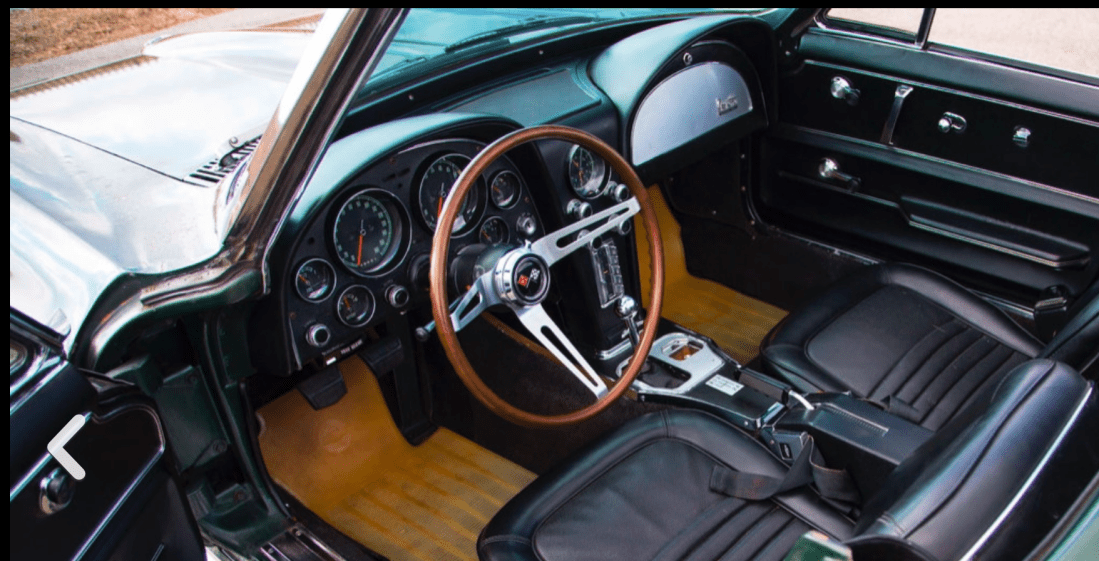
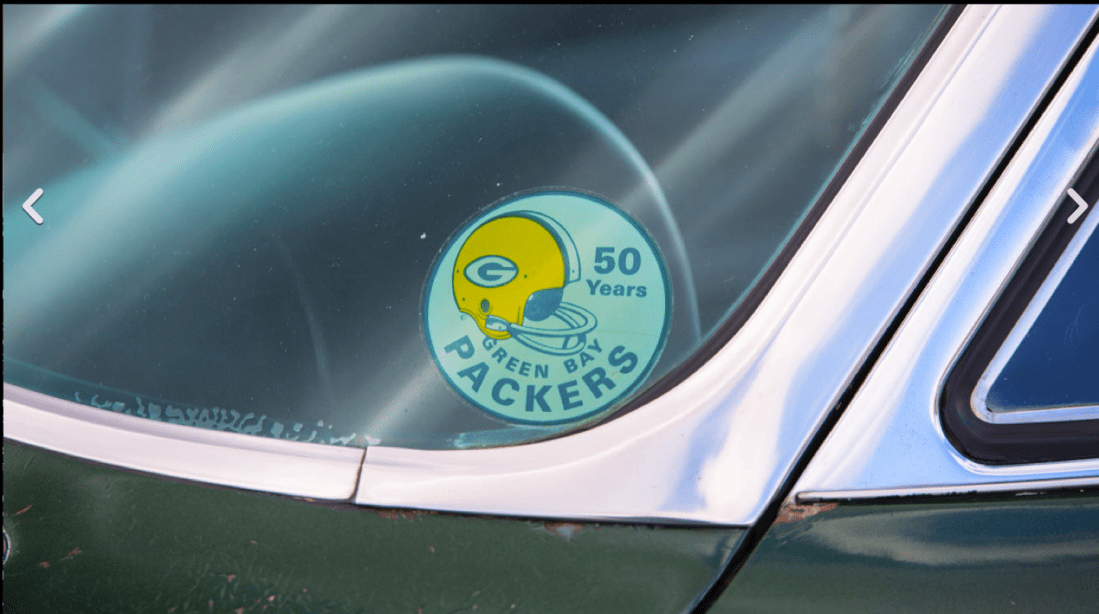
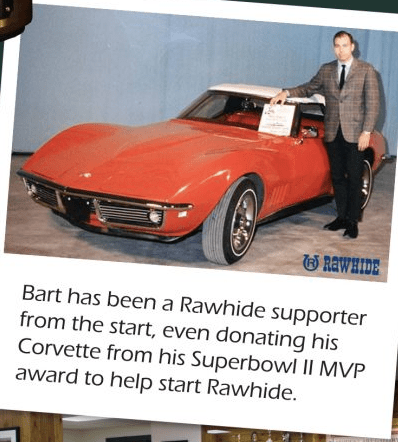
    • America’s sports carMy birthday in June dawned without a Chevrolet Corvette in front of my house. (The Corvette at the top of the page was featured at the 2007 Greater Milwaukee Auto Show. The copilot is my oldest son, Michael.) Which isn’t surprising. I have three young children, and I have a house with a one-car garage. (Then again, this would be more practical, though a blatant pluck-your-eyes-out violation of the Corvette ethos. Of course, so was this.) The reality is that I’m likely to be able to own a Corvette only if I get a visit from the Corvette Fairy, whose office is next door to the Easter Bunny. (I hope this isn’t foreshadowing: When I interviewed Dave Richter of Valley Corvette for a car enthusiast story in the late great Marketplace Magazine, he said that the most popular Corvette in most fans’ minds was a Corvette built during their days in high school. This would be a problem for me in that I graduated from high school in 1983, when no Corvette was built.) The Corvette is one of those cars whose existence may be difficult to understand within General Motors Corp. The Corvette is what is known as a “halo car,” a car that drives people into showrooms, even if…
    • Barges on fouru0026nbsp;wheelsI originally wrote this in September 2008.  At the Fox Cities Business Expo Tuesday, a Smart car was displayed at the United Way Fox Cities booth. I reported that I once owned a car into which trunk, I believe, the Smart could be placed, with the trunk lid shut. This is said car — a 1975 Chevrolet Caprice coupe (ours was dark red), whose doors are, I believe, longer than the entire Smart. The Caprice, built down Interstate 90 from us Madisonians in Janesville (a neighbor of ours who worked at the plant probably helped put it together) was the flagship of Chevy’s full-size fleet (which included the stripper Bel Air and middle-of-the-road Impala), featuring popular-for-the-time vinyl roofs, better sound insulation, an upgraded cloth interior, rear fender skirts and fancy Caprice badges. The Caprice was 18 feet 1 inch long and weighed 4,300 pounds. For comparison: The midsize Chevrolet of the ear was the Malibu, which was the same approximate size as the Caprice after its 1977 downsizing. The compact Chevrolet of the era was the Nova, which was 200 inches long — four inches longer than a current Cadillac STS. Wikipedia’s entry on the Caprice has this amusing sentence: “As fuel economy became a bigger priority among Americans…
    • Behind the wheel
    • Collecting only dust or rust
    • Coooooooooooupe!
    • Corvettes on the screen
    • The garage of misfit cars
    • 100 years (and one day) of our Chevrolets
    • They built Excitement, sort of, once in a while
    • A wagon by any otheru0026nbsp;nameFirst written in 2008. You will see more don’t-call-them-station-wagons as you drive today. Readers around my age have probably had some experience with a vehicle increasingly rare on the road — the station wagon. If you were a Boy Scout or Girl Scout, or were a member of some kind of youth athletic team, or had a large dog, or had relatives approximately your age, or had friends who needed to be transported somewhere, or had parents who occasionally had to haul (either in the back or in a trailer) more than what could be fit inside a car trunk, you (or, actually, your parents) were the target demographic for the station wagon. “Station wagons came to be like covered wagons — so much family activity happened in those cars,” said Tim Cleary, president of the American Station Wagon Owners Association, in Country Living magazine. Wagons “were used for everything from daily runs to the grocery store to long summer driving trips, and while many men and women might have wanted a fancier or sportier car, a station wagon was something they knew they needed for the family.” The “station wagon” originally was a vehicle with a covered seating area to take people between train stations…
    • Wheels on theu0026nbsp;screenBetween my former and current blogs, I wrote a lot about automobiles and TV and movies. Think of this post as killing two birds (Thunderbirds? Firebirds? Skylarks?) with one stone. Most movies and TV series view cars the same way most people view cars — as A-to-B transportation. (That’s not counting the movies or series where the car is the plot, like the haunted “Christine” or “Knight Rider” or the “Back to the Future” movies.) The philosophy here, of course, is that cars are not merely A-to-B transportation. Which disqualifies most police shows from what you’re about to read, even though I’ve watched more police video than anything else, because police cars are plain Jane vehicles. The highlight in a sense is in the beginning: The car chase in my favorite movie, “Bullitt,” featuring Steve McQueen’s 1968 Ford Mustang against the bad guys’ 1968 Dodge Charger: [youtube=http://www.youtube.com/watch?v=GMc2RdFuOxIu0026amp;fmt=18] One year before that (but I didn’t see this until we got Telemundo on cable a couple of years ago) was a movie called “Operación 67,” featuring (I kid you not) a masked professional wrestler, his unmasked sidekick, and some sort of secret agent plot. (Since I don’t know Spanish and it’s not…
    • While riding in my Cadillac …
  • Entertainments
    • Brass rocksThose who read my former blog last year at this time, or have read this blog over the past months, know that I am a big fan of the rock group Chicago. (Back when they were a rock group and not a singer of sappy ballads, that is.) Since rock music began from elements of country music, jazz and the blues, brass rock would seem a natural subgenre of rock music. A lot of ’50s musical acts had saxophone players, and some played with full orchestras … [youtube=http://www.youtube.com/watch?v=9CPS-WuUKUE] … but it wasn’t until the more-or-less simultaneous appearances of Chicago and Blood Sweat u0026amp; Tears on the musical scene (both groups formed in 1967, both had their first charting singles in 1969, and they had the same producer) that the usual guitar/bass/keyboard/drum grouping was augmented by one or more trumpets, a sax player and a trombone player. While Chicago is my favorite group (but you knew that already), the first brass rock song I remember hearing was BSu0026amp;T’s “Spinning Wheel” — not in its original form, but on “Sesame Street,” accompanied by, yes, a giant spinning wheel. [youtube=http://www.youtube.com/watch?v=qi9sLkyhhlE] [youtube=http://www.youtube.com/watch?v=OxWSOuNsN20] [youtube=http://www.youtube.com/watch?v=U9U34uPjz-g] I remember liking Chicago’s “Just You ‘n Me” when it was released as a single, and…
    • Drive and Eat au0026nbsp;RockThe first UW home football game of each season also is the opener for the University of Wisconsin Marching Band, the world’s finest college marching band. (How the UW Band has not gotten the Sudler Trophy, which is to honor the country’s premier college marching bands, is beyond my comprehension.) I know this because I am an alumnus of the UW Band. I played five years (in the last rank of the band, Rank 25, motto: “Where Men Are Tall and Run-On Is Short”), marching in 39 football games at Camp Randall Stadium, the Hubert H. Humphrey Metrodome in Minneapolis, Michigan Stadium in Ann Arbor, Memorial Stadium at the University of Illinois (worst artificial turf I had ever seen), the University of Nevada–Las Vegas’ Sam Boyd Silver Bowl, the former Dyche Stadium at Northwestern University, five high school fields and, in my one bowl game, Legion Field in Birmingham, Ala., site of the 1984 Hall of Fame Bowl. The UW Band was, without question, the most memorable experience of my college days, and one of the most meaningful experiences of my lifetime. It was the most physical experience of my lifetime, to be sure. Fifteen minutes into my first Registration…
    • Keep on rockin’ in the freeu0026nbsp;worldOne of my first ambitions in communications was to be a radio disc jockey, and to possibly reach the level of the greats I used to listen to from WLS radio in Chicago, which used to be one of the great 50,000-watt AM rock stations of the country, back when they still existed. (Those who are aficionados of that time in music and radio history enjoyed a trip to that wayback machine when WLS a Memorial Day Big 89 Rewind, excerpts of which can be found on their Web site.) My vision was to be WLS’ afternoon DJ, playing the best in rock music between 2 and 6, which meant I wouldn’t have to get up before the crack of dawn to do the morning show, yet have my nights free to do whatever glamorous things big-city DJs did. Then I learned about the realities of radio — low pay, long hours, zero job security — and though I have dabbled in radio sports, I’ve pretty much cured myself of the idea of working in radio, even if, to quote WAPL’s Len Nelson, “You come to work every day just like everybody else does, but we’re playing rock ’n’ roll songs, we’re cuttin’ up.…
    • Monday on the flight line, not Saturday in the park
    • Music to drive by
    • The rock ofu0026nbsp;WisconsinWikipedia begins its item “Music of Wisconsin” thusly: Wisconsin was settled largely by European immigrants in the late 19th century. This immigration led to the popularization of galops, schottisches, waltzes, and, especially, polkas. [youtube=http://www.youtube.com/watch?v=yl7wCczgNUc] So when I first sought to write a blog piece about rock musicians from Wisconsin, that seemed like a forlorn venture. Turned out it wasn’t, because when I first wrote about rock musicians from Wisconsin, so many of them that I hadn’t mentioned came up in the first few days that I had to write a second blog entry fixing the omissions of the first. This list is about rock music, so it will not include, for instance, Milwaukee native and Ripon College graduate Al Jarreau, who in addition to having recorded a boatload of music for the jazz and adult contemporary/easy listening fan, also recorded the theme music for the ’80s TV series “Moonlighting.” Nor will it include Milwaukee native Eric Benet, who was for a while known more for his former wife, Halle Berry, than for his music, which includes four number one singles on the Ru0026amp;B charts, “Spend My Life with You” with Tamia, “Hurricane,” “Pretty Baby” and “You’re the Only One.” Nor will it include Wisconsin’s sizable contributions to big…
    • Steve TV: All Steve, All the Time
    • “Super Steve, Man of Action!”
    • Too much TV
    • The worst music of allu0026nbsp;timeThe rock group Jefferson Airplane titled its first greatest-hits compilation “The Worst of Jefferson Airplane.” Rolling Stone magazine was not being ironic when it polled its readers to decide the 10 worst songs of the 1990s. I’m not sure I agree with all of Rolling Stone’s list, but that shouldn’t be surprising; such lists are meant for debate, after all. To determine the “worst,” songs appropriate for the “Vinyl from Hell” segment that used to be on a Madison FM rock station, requires some criteria, which does not include mere overexposure (for instance, “Macarena,” the video of which I find amusing since it looks like two bankers are singing it). Before we go on: Blog posts like this one require multimedia, so if you find a song you hate on this blog, I apologize. These are also songs that I almost never listen to because my sound system has a zero-tolerance policy — if I’m listening to the radio or a CD and I hear a song I don’t like, it’s, to quote Bad Company, gone gone gone. My blonde wife won’t be happy to read that one of her favorite ’90s songs, 4 Non Blondes’ “What’s Up,” starts the list. (However,…
    • “You have the right to remain silent …”
  • Madison
    • Blasts from the Madison media past
    • Blasts from my Madison past
    • Blasts from our Madison past
    • What’s the matter with Madison?
    • Wisconsin – Madison = ?
  • Sports
    • Athletic aesthetics, or “cardinal” vs. “Big Red”
    • Choose your own announcer
    • La Follette state 1982 (u0022It was 30 years ago todayu0022)
    • The North Dakota–Wisconsin Hockey Fight of 1982
    • Packers vs. Brewers
  • Hall of Fame
    • The case(s) against teacher unions
    • The Class of 1983
    • A hairy subject, or face the face
    • It’s worse than you think
    • It’s worse than you think, 2010–11 edition
    • My favorite interview subject of all time
    • Oh look! Rural people!
    • Prestegard for president!
    • Unions vs. the facts, or Hiding in plain sight
    • When rhetoric goes too far
Privacy & Cookies: This site uses cookies. By continuing to use this website, you agree to their use.
To find out more, including how to control cookies, see here: Cookie Policy
  • Subscribe Subscribed
    • Steve Prestegard.com: The Presteblog
    • Join 198 other subscribers
    • Already have a WordPress.com account? Log in now.
    • Steve Prestegard.com: The Presteblog
    • Subscribe Subscribed
    • Sign up
    • Log in
    • Report this content
    • View site in Reader
    • Manage subscriptions
    • Collapse this bar
%d