Jannan shot these photos of the interesting clouds outside once the severe weather passed tonight.
No comments on Cue Lena Horne
Jannan shot these photos of the interesting clouds outside once the severe weather passed tonight.
The George Mason University Mercatus Center released its 2011 Freedom in the 50 States index.
Wisconsin ranks 25th among the 50 states, two positions better than in 2007. Wisconsin ranks 18th in personal freedom and 31st in economic freedom.
In the Midwest, Wisconsin trails Indiana (fourth), Missouri (sixth) and Iowa (13th), but ranks better than Michigan (27th), Minnesota (34th), Illinois (41st) and Ohio (42nd). New Hampshire tops the list, and New York is at the bottom.
The index ranks the states on economic and personal freedom based on the premise that freedom is grounded “on an individual-rights framework. In our view, individuals should be allowed to dispose of their lives, liberties, and properties as they see fit, as long as they do not infringe on the rights of others.”
That, of course, is contrary to the toxic brew that has been politics in this state for basically all of its history. The Wisconsin Taxpayers Alliance’s Why Are Wisconsin’s Taxes High? quotes historian Daniel Elazar as putting Wisconsin into the third of three groups of political cultures among the states — “Moralistic,” which considers government “a positive instrument with a responsibility to promote the general welfare.” Elazar put an interesting mix of nine states in that category — Maine, Vermont, Michigan, Wisconsin, Minnesota, North Dakota, Colorado, Utah and Oregon. That is as opposite as you can get from the “Individualistic” model, found in a belt of states almost exactly south of the Moralistic Belt, that “emphasizes the centrality of private concerns” and places “a premium on limiting community intervention.” When the study was written in 2003, seven of the nine Moralistic states ranked in the top 18 states for tax burden, which shows off Wisconsin’s Socialist roots as well.
The study’s rankings are based on fiscal (government spending and taxation) and regulatory (“labor regulation, health-insurance coverage mandates, occupational licensing, eminent domain, the tort system, land-use regulation, and utilities”) policy, as well as a category called “paternalism” that includes home- and private-school regulations as well as measures of personal freedom. Not only is this the only study (according to the authors) of objective measures of economic and personal freedom among the states, it also recognizes that economic freedom (mostly favored by Republicans) and personal freedom (sometimes favored by Democrats) are inseparable.
First, the relative good news, in personal freedom:
The state has mandatory interdistrict public-school choice and a voucher program. Regulation of private schools, including general curriculum oversight, is light. Homeschools are also regulated with some annoying notification requirements. Wisconsin has very respectable asset-forfeiture laws (over one standard deviation better than average). Like North Dakota, Wisconsin has very high victimless-crime arrest rates (both as a percentage of the population and as a percentage of all arrests). On the other hand, its drug law-enforcement rate is actually below average. Alcohol laws are among the best in the country, with taxes fairly low across the board. Wisconsin does not authorize sobriety checkpoints and, before the data cutoff, was one of three states not to require auto insurance (it has since passed a law). Cigarette taxes are very high, but smoking bans allow numerous exceptions. Wisconsin enacted a domestic-partnership law after the cutoff date for our data.
Law enforcement and the prohibition lobby have been lobbying for sobriety checkpoints (which are blatant violations of the Fourth and Fifth amendments) and more restrictive drunk driving laws, but legislators have so far resisted them. (Wisconsin’s drunk driving problem is the number of drivers with unbelievably large numbers of drunk driving convictions, not the penalties for first-offense drunk driving or the legal definition of intoxication.) The anti-smoking zealots don’t believe the smoking bans are restrictive enough, while those who believe in economic freedom believe that bar owners should be able to decide for themselves whether or not to allow smoking.
Now, the bad news, in economic freedom:
In terms of economic freedom, the state’s spending and debt are roughly average. However, government spending on transportation and public safety are above national norms. The overall tax burden is quite a bit higher than average, as are individual income and property taxes. Eminent-domain-law reform has stalled and could go a lot further. Wisconsin has deregulated cable service but still needs further deregulation in other areas. The state has a prevailing-wage law, but minimum wage is not above the federal level. Occupational licensing is average and there is no community rating for health insurance (there are rate bands for small-group insurers).
I can certainly believe the part about government spending on public safety, given the presence of the waste of tax dollars that is the Town of Ripon Police Department and the Wisconsin State Patrol. The Mercatus Center helpfully points out Wisconsin’s totals in state and local government spending (23.3 percent), taxes (11 percent) and debt (19.8 percent) as a percentage of personal income to prove that the overall tax burden is “quite a bit higher than average.” (Fourth highest, as you know.)
One and a half of the Mercatus Center’s policy recommendations are already getting legislative attention: “Reduce the income-tax burden while cutting back spending in areas above the national average, like education,” and “Broaden the school-choice/school-voucher reforms.” The third area has gotten little attention, but needs attention: “Reform eminent-domain laws,” to prevent unfairly-compensated government land grabs in the name of development. The half is in taxes, because too many people in this state persist in the delusion that more money automatically means better schools.
I can’t tell if Wisconsin is going in the right direction or not. The Walker administration’s defanging of public employee unions is in the courts, tax cuts haven’t taken effect and aren’t large enough anyway, and we don’t have concealed-carry yet. (Concealed-carry is in fact about freedom. You have heard of the Second Amendment, right?) Going from 27th to 25th is not really progress, but had the Nov. 2 election results been different, we’d be heading toward 50th instead of the correct direction.
You might call this a transition day in rock music history. For instance, one year to the day after the Rolling Stones released “Jumpin’ Jack Flash” …
… Brian Jones left the Stones, to be replaced by Mick Taylor. Less than a month later, Jones was found dead in the bottom of his swimming pool. (At the time, Jones was living on a farm previously owned by A.A. Milne, who wrote Winnie the Pooh.)
Five years after Jones quit the Stones, Rick Wakeman said no to playing any more for Yes:
Five years later, Paul McCartney and Wings released “Back to the Egg,” their final studio album:
Birthdays start with Nancy Sinatra …
… born the same day as Sherman Garnes of Frankie Lymon and the Teenagers:
Chuck Negron sang for Three Dog Night:
Who is William Royce? You know him better as Boz Scaggs (who attended UW–Madison with Steve Miller and was in Miller’s first band):
Mick Box played guitar for Uriah Heep:
Jeff Rich played drums for the Climax Blues Band, which …
Mick Hucknall sang for Simply Red:
Nick Rhodes played keyboards for Duran Duran:
Regular readers of my previous blog know that my favorite economists are Brian Wesbury and Robert Stein from First Trust Advisors, who describe their blog as “the antidote to conventional wisdom, dedicated to helping readers understand the complexity of modern economics from a supply-side, free market perspective.”
So Wesbury and Stein begin with one version of conventional wisdom, beginning with the unwisdom of Harold Camping’s inaccurate (yet again) prediction of the end of the world May 21:
Let’s imagine that the world really did end. Let’s imagine that we’re now living in an artificial world. Federal Reserve Chairman Ben Bernanke is making the sun rise with monetary policy. Federal spending is generating oxygen and enormous increases in federal debt are making water. Everything seems relatively normal, but it’s all ultimately just a mirage, created by artificial means, and it can’t last forever.
Of course this is an extreme example, but that’s what it seems many believe about the economy today.
It all goes back to 2008 when the economy crashed, supposedly all by itself, in what was called “the worst crisis since the Great Depression.” The pundits said capitalism had failed. Many predicted the complete collapse of the economy, a worthless dollar, and a “new normal” – it was the “end of the world” as we knew it.
And while the economy could be doing better, real GDP has expanded for seven straight quarters – we’re now in the eighth. Corporate profits are at a record; the S&P 500 is up 100% from the bottom; consumer spending is $450 billion above its pre-panic 2008 peak, and private sector payrolls have expanded for 15 straight months.
So, which is it – fake, or real? Did the economy crash and burn, only to be supported in an artificial state by government actions? Or, was all that “end of the world” talk a prediction that did not come true? Are all the same old real world things – like creative destruction, supply and demand, innovation, or trial and error – still happening like they always have? …
We do not believe that capitalism failed and that the world as we knew it is over. The crisis was caused by a failure of government policy. The bubble in housing was caused by low Fed rates and housing subsidies. The Panic of 2008 was caused by a set of misguided reactions to the bursting of that bubble (mark-to-market accounting and TARP).
In our view, quantitative easing has had little impact – the money supply (M1 or M2) is not expanding as rapidly as many think. Moreover, and this is key, the massive increase in government spending has been a drag on growth, not a boost. In other words, the end of quantitative easing, spending cuts and a new focus on government debt reduction are things to rejoice about.
We are not in the majority, nor are we ignoring our economic problems. We just believe the economy did not come to an end back in 2008 and we do not believe recent growth has been created artificially.
But a large, loud and sincere group is still convinced the economy is broken and fragile. They see the recent slowdown in economic growth – real GDP growth looks to be growing at only a 1.5% annual rate in Q2 – as another sign that it really has been the end of the economic world. Gloom and doom are back on the table.
Never mind that much of the slowdown is so obviously tied to temporary Japan-related disruptions in manufacturing and tornado-related dips in home building. That doesn’t matter if you really believe the end is near.
But, when we move through these temporary problems, when auto production overcomes the parts-related slowdown and spikes back up at about a 100% annual rate in Q3, real GDP will sharply accelerate again.
Well, of course the economy didn’t come to an end in 2008. The economy is not “broken,” but it would seem to be at least “fragile.”
I’m not an economist (and I don’t play one on TV). Maybe my current view is skewed by my current employment situation. (Remember: A recession is when a neighbor loses his job; a depression is when you lose your job.) But there is little question that if Barack Obama were a Republican, you would read nothing but doom and gloom about the current state of the economy, far more than is being reported now.
The lesson of every recession dating back to the early 1980s and probably before that is that jobs are the last thing to recover after a recession. Friday’s job news was unspinnably bad news — just 54,000 jobs created and a 9.1 percent unemployment rate in May. Even the 90.9 percent of people with jobs are suffering from the effects of soaring gasoline prices thanks in large part to the Federal Reserve’s continued weak-dollar policy and the Obama Administration’s continuing failure to be serious about the federal budget deficit and debt. And in a state where tourism is one of the three top industries, high (and rising) gas prices should be a major concern.
Does this (from Reuters) read like a recovery to you?
For smaller businesses that depend on the financial well-being of their customers in order to make a profit, the damage to household balance sheets has been difficult to shrug off.
“We’ve been in business for 37 years and survived five recessions,” said Frank Goodnight, president of Diversified Graphics, a commercial printer and publisher in Salisbury, North Carolina.
“This recession will be equal to all five put together plus about double. And we don’t think it’s really going to turn around in another year.” …
“The problem with a ‘soft patch’ in the economy is that you don’t get two of them in the first two years of a normal recovery,” said David Rosenberg, chief economist at Gluskin Sheff.
(The aforementioned “smaller businesses that depend on the financial well-being of their customers in order to make a profit” are, by the way, every business.)
Remember that this is one year after the “summer of recovery.” Remember that President Obama commanded businesses to hire employees. But businesses aren’t hiring employees to fill nonexistent and unanticipated orders; that’s the only conclusion you can make from the job numbers. And unemployed people do not buy such big-ticket items as houses, cars and large home appliances. Nor do people who are employed but feel uncertain about their economic prospects. Spending one-fourth of the gross domestic product and generating deficit and debt numbers that no one reading this blog will live to see paid off hasn’t worked for this country, has it?
The American Enterprise Institute’s Michael Barone makes an interesting observation:
Obamacare and the Dodd-Frank financial-regulation bill are scheduled to be followed by thousands of regulations that will impose impossible-to-estimate costs on the economy.
That seems to have led to a hiring freeze. The Obama Democrats can reasonably claim not to be responsible for the huge number of layoffs that occurred in the months following the financial crisis of fall 2008. And Treasury Secretary Timothy Geithner and Federal Reserve Chairman Ben Bernanke did manage to help stabilize financial markets.
But while the number of layoffs is now vastly less than in the first half of 2009, the number of new hires has not increased appreciably. Many more people have been unemployed for longer periods than in previous recessions, and many more have stopped looking for work altogether.
It’s hard to avoid the conclusion that the threat of tax increases and increased regulatory burdens have produced something in the nature of a hiring strike. …
Obama had already ignored his own deficit-reduction commission in preparing his annual budget, which was later rejected 97–0 in the Senate. Now he was signaling that the time for governing was over and that he was entering campaign mode 19 months before the November 2012 election.
People took notice, especially those people who decide whether to hire or not. Goldman Sachs’s Current Activity Indicator stood at 4.2 percent in March. In April — in the middle of which came Obama’s GW speech — it was 1.6 percent. For May, it is 1.0 percent.
“That is a major drop in no time at all,” wrote Business Insider’s Joe Weisenthal.
After April 13, Obama Democrats went into campaign mode. They staged a poll-driven Senate vote to increase taxes on oil companies.
They launched a Medi-scare campaign against Ryan’s budget resolution that all but four House Republicans had voted for. That seemed to pay off with a special election victory in the New York 26th congressional district.
The message to job creators was clear. Hire at your own risk. Higher taxes, more burdensome regulation and crony capitalism may be here for some time to come.
Hoping for bad economic news because you don’t like who’s in charge in Washington is against your own interests. But if things are getting better, that has escaped notice of working people and business people. And if business isn’t doing well, its employees aren’t doing well.
The Rolling Stones had a big day today in 1963: They made their first TV appearance and released their first single:
The number one song today in 1975 (pictured with the official tractor of Roesch Farms):
Five years later, Gary Numan drove his way to number nine:
Birthdays start with Tom Jones, one of those who don’t need a microphone for you to hear him:
Clarence White played guitar for the Byrds:
Jack Ryland sang for Three Dog Night:
Prince:
Dave Navarro of the Red Hot Chili Peppers:
Given today’s forecast, we probably should add a few meteorologically appropriate selections:
A surprising exchange of views took place last week on Charlie Sykes’ show on WTMJ and his Facebook page.
Several Milwaukee conservatives, including WTMJ’s Sykes and Jeff Wagner and the Milwaukee Journal Sentinel’s Patrick McIlheran, are opposed to concealed-carry legislation that is so-called “constitutional carry” — that is, essentially unrestricted concealed-carry, with no training or registering required.
First: With all due respect to Flynn, he disrespected the officers he was supposed to be commending and, more importantly, the people who pay his salary by deviating to condemn the concealed-carry bill he considers too extreme.
Those who oppose concealed-carry — in fact, those who oppose the Second Amendment and firearm rights entirely — are crowing that this means constitutional carry is, well …
Sykes and Wagner call the proposed laws “way too extreme” and say support for these bills comes from the “kook fringe.”
Like all of us, Sykes and Wagner sound just disgusted that our legislature is considering legislation that requires no background checks and no safety training whatsoever. Heck, you can almost see Wagner throwing his hands in the air, when he says sarcastically, “Let’s let everybody carry guns.”
When right wing radio hosts – who generally support concealed, loaded weapons in public – call pro gun legislation “screwed up,” you know it’s extreme.
“Extreme” is a better description of the anti-gun movement. Their solution to crime is for you to cower in your homes in fear and, if someone breaks into your house or assaults you, try to understand the root causes of their misbehavior while hoping the police show up.
You’ve read about the boycott of some Wisconsin businesses by public-sector unions. Well, two sides can play that game:
Milwaukee “conservative” radio talk show hosts Charlie Sykes and Jeff Wagner think people who support Constitutional Carry are “The kook fringe”
How nice of supposedly “conservative” radio show hosts to give the anti’s talking points. …
Email the advertising sales manager Tom Sheridan: tsheridan@620wtmj.com and let him know that Wisconsin Carry and the USCCA chose this past week to run our 2-week series of ads on WISN radio instead of WTMJ in part because of comments like Charlie and Jeff’s.
Since when did wanting smaller government and fewer taxes become “Kook fringe?”
Since when did not wanting meaningless permits and registration (its a felony for felons to carry and police, using their radio, can determine in SECONDS during a stop if a person who is carry is legal to do so) become “kook fringe”
Since when did embracing personal accountability VOLUNTARY training and knowing that people either already have or will seek training out of self-preservation (not shooting themselves handling their gun AND staying out of jail because using your gun unlawfully will get you a quick trip to jail) and government training mandates are not effective, become kook fringe?
EVEN the NRA is pushing AGAINST training mandates. Are their 100,000+ members in Wisconsin the “kook fringe”?
In 2010 the Wisconsin GOP changed their party platform at the state convention to support right to carry concealed WITHOUT a permit. Are they all “kook fringe”
The massive Wisconsin Tea-Party coalition and all of its 100+ independent member groups support constitutional carry. Are they and the 10’s of thousands of law-abiding everyday folks they consist of all “kook fringe”?
It appears there is an out-of-touch “kook fringe” in this story, but its the radio talk show hosts who sit on their perch behind microphones, pretend to be conservatives and talk down to the rest of us.
I would point out as someone with a marketing background that advertising on a radio station that did not carry the aforementioned objectionable opinions may be less than effective, but it is their money.
Flynn’s and Chisholm’s position prove the point I made last week on Facebook that law enforcement is not necessarily a friend of your constitutional rights, particularly law enforcement leadership. Police chief organizations have more often than not come out against concealed-carry, although police officer organizations seem less opposed.
And, to be perfectly blunt, I do not care what Flynn’s or Chisholm’s opinion — or, more bluntly, the opinion of anyone in law enforcement — is about concealed-carry. The Second Amendment and the state Constitution guarantee our rights to own and possess firearms. Period. Police chiefs, sheriffs, district attorneys and judges should have only the same opinion pull that any ordinary citizen has. Their job is to enforce the law, not pontificate on it.
The objections to unrestricted concealed-carry are based, to be equally blunt, on fear. And that is misdirected fear. No gun I have ever seen has loaded itself, pointed itself at a target, and fired. The people that concealed-carry legislation will affect are those who respect the law enough to follow its provisions, and those who respect firearms enough to become familiar with their weapons to the point of practicing enough with them
There has never — never — been a firearms law that has deterred a criminal. The experience of Great Britain, which has banned most firearms for decades (their gun ban is so complete that waivers had to be created for shooting events to take place at the 2012 Olympics), shows that the bad guys simply replace some other lethal weapon they can get for the lethal weapon they can’t get. Pass any law you want; criminals do not care because they are criminals.
James Wigderson has more proof:
Liberal writer Jim Rowen offers a blog post that I think is pretty typical of those who are opposed to legalized concealed carry in this state. Ralph Lang was planning on shooting people at an abortion clinic when a gun he had went off in his hotel room. Rowen wrote,
For gun-crazy legislators trying to make it as easy to carry a concealed weapon in Wisconsin as a wallet, the fortuitous capture of a man admitting his murderous intentions should be a major, major teachable moment.
What is the lesson? That maybe someone at the clinic should consider carrying a gun in case a nut decides to commit an act of violence?
Because if the person was intent on committing homicide, violating the current law against concealed carry of a weapon wasn’t much of a deterrent. Making concealed carry legal would not have affected this case at all, anymore than the current prohibition on concealed carry affected Lang’s decision making.
Interesting, isn’t it, that there is only one constitutional right we have that requires, in some people’s minds, restrictions. The old saw that the First Amendment is not absolute in that you can’t yell “Fire!” in a crowded theater (a reference becoming sadly obsolete in the Internet age) is not correct: You can yell “Fire,” and then you can live with the consequences of your actions by getting firsthand experience in the criminal courts system. There were no requirements that women be trained in how to vote when the 19th Amendment was passed, or for 18- to 20-year-olds when the 26th Amendment was passed.
Rowen and others of his left-wing ilk clearly believe the Second Amendment needs to be removed from the Constitution, as with the similar gun-rights provision in the state Constitution — passed with three-fourths of the voters voting for it, mind you. And if they feel that way, they should try to abolish the Second Amendment, just as the 21st Amendment eliminated the 18th Amendment — passing both houses of Congress and getting 38 state legislatures to pass the amendment. They will not succeed, of course, because they are wrong about gun rights, and most people believe they are wrong about gun rights.
Wisconsin and Illinois are the only states without concealed-carry. The experience of 48 other states shows that legalizing concealed-carry does not create a Wild West environment where people routinely settle arguments with their 9mm pistols, whether or not citizens have to get a concealed-carry permit or whether they have to train before being authorized to carry a concealed weapon. The police have a saying that applies to private citizens too: Better to be judged by 12 than carried by six.
The number one song today in 1955 was probably played around the clock by the first top 40 radio stations:
Anniversary greetings to David Bowie and Iman, married today in 1992:
Birthdays include one of the great Motown voices, the late Levi Stubbs of the Four Tops:
Gary “U.S.” Bonds:
Drummer Laudir de Olivera of the greatest rock group of all time (once upon a time), Chicago:
Dwight Twilley:
Larry “The Mole” Taylor of Canned Heat:
Terry Williams was a part of Kenny Rogers’ band during his transition from folk to rock, the First Edition:
Steve Vai played guitar for Frank Zappa, the David Lee Roth band and Whitesnake:
Not that my parents were paying attention, but the number one song two days into my life was:
Twenty-eight years later, the number one song was by a group that sang about aging nearly two decades earlier:
Birthdays start with Floyd Butler, who sang for the Fifth Dimension …
… and the Friends of Distinction:
For fans of the movie “Pulp Fiction,” Don Reid of the Statler Brothers has a birthday today:
Reid was born one year before the triumvirate of Fred Stone of Sly and the Family Stone:
… Fuzzy Fuscaldo of Captain Beefheart …
… and Michael Monarch of Steppenwolf:
And if you are from the ’80s, you know that Berlin (whose Teri Nunn has a birthday today) is not merely the home of the football team that Ripon beats like a drum:
I was one day old when the Rolling Stones released “Satisfaction”:
Four years later, the Beatles released “The Ballad of John and Yoko”:
The short list of birthdays today includes Roger Brown, who played saxophone for the Average White Band …
… born the same day as the only surviving member of the Mamas and the Papas, Michelle Phillips:
Jimmy McCulloch played guitar for Stone the Crows, Thunderclap Newman and Wings:
Those readers from the ’80s know that DeBarge is not how Tattoo would identify a barge coming to Fantasy Island:
Steffen Lessard plays bass for the Dave Matthews Band:
Today is also the anniversary of the death of bass player Ronnie Lane of the Faces, who died of multiple sclerosis at 50:
The Faces provided part three of our double play:
Today is my birthday. (In case you couldn’t figure that out from one hour ago.) And as with my previous 45 birthdays, there is no Corvette in my driveway. Life is unfair.
There are, however, Corvettes in other driveways. (Probably few in journalists’ driveways, although I was surprised to see the kinds of cars parked in the media parking at Road America when I was last there.) And there will be more Corvettes in more driveways given that GM is reportedly designing the next Corvette, the seventh generation of America’s sports car. GM is spending $131 million on improvements to the Corvette plant in Bowling Green, Ky., which also is the home of the National Corvette Museum.
First, a photographic tour of generations one through six:


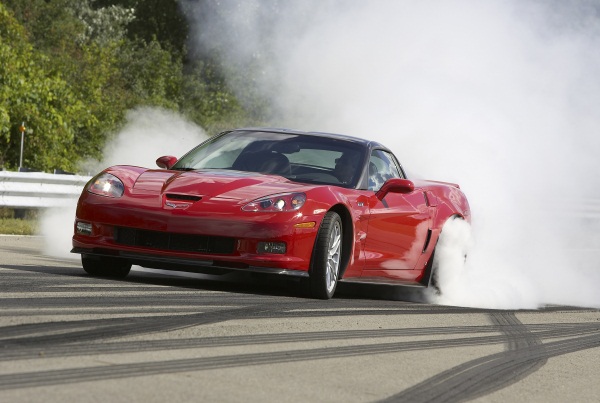
The current Corvette is one of the most accomplished cars on the planet. For between $49,045 (base coupe) and $110,300 (the ZR1), you can buy a car that will go from standing stop to 60 mph in no slower than 4.3 seconds, will race one-quarter mile in no slower than 12.6 seconds, will reach top speed of at least 190 mph, and will get up to 26 mpg on the highway. You can take your significant other and a weekend’s worth of luggage wherever you can reach in a day’s drive.
For those who want numbers: The base Corvette costs $114.06 per horsepower, and the ZR1 costs $172.88 per horsepower. A Porsche Boxster costs $188.63 per horsepower, and a Ferrari California costs $423.84 per horsepower. The most expensive Corvette is more of a performance bargain than the least expensive Porsche.
But don’t take my word, watch the videos:
Corvettes have always been front-engine rear-drive two-seat coupes or convertibles. They have been powered by V-8s (all, except for the four-cam LT-5 built at Mercury Marine’s Stillwater, Okla., plant of the overhead-valve variety) in all but their first two model years, and they have had at least an available manual transmission (and with some engines it was the only available transmission) in all but three model years. Hidden headlights were featured in generations two through five, a triumph of styling over function.
As noted in my previous Corvette writings, the automobile media swoons (I was going to use another metaphor, but given what’s happened in the past week or so, give me some credit for taste) every time GM appears to be about to roll out a new Corvette.
The first heavy breathing about a new Vette that I remember was in 1973, when Motor Trend, the first car magazine I ever read, announced GM was going to introduce not one, but two new Corvettes, both powered by the then-exotic rotary engines. One was going to be a two-rotor Corvette …
 … and the other was going to be a ground-shaking four-rotor Corvette:
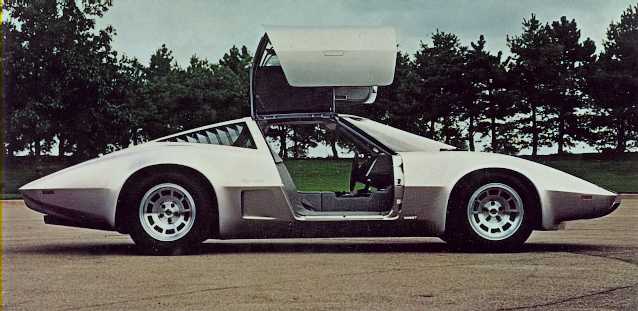
Neither of those predictions was correct, nor was the prediction nine months later:


For one thing, GM (and everyone else except Mazda) abandoned rotary engines due to their poor fuel economy and emissions and other problems. The silver gull-wing-doored Vette had its four-rotor replaced by a 400 V-8 and, voila, became the Aerovette. And pretty much since then (and even before then), some Vette enthusiasts have pined for a mid-engine Vette, and auto publications have predicted that the “next” Corvette will be mid-engined.
(Motor Trend has a reputation for not being particularly critical about the cars it reviews. Motor Trend also has a reputation of making Corvette predictions into cover stories, as these covers demonstrate:


Many Corvette drawings over the years were drawn by designer Harry Bradley. Dean’s Garage helpfully put many of them in one spot. All of these were, to quote the December 1976 cover blurb, Vettes you’ll never see. But the issues sold well at the newsstands, I’m sure.)
Mid-engine cars (that is, cars whose engines are between the axles, whether in front of the rear axle or behind the front axle) are claimed to have better handling since the engine is closer to the drive axle (assuming it’s a rear-drive car) and there is less weight on the steering axle. (Anyone who has driven, say, a C3 with a big-block iron-block V-8 but without power steering can sympathize.) The Ford GT, built in 2005 and 2006, was mid-engined as was the Ford GT-40, the ’60s LeMans racer from which it was derived.
This strikes me as one of those be-careful-what-you-ask-for propositions. Yes, mid-engine cars are more exotic. GM’s experience with exotic technology over the years has been, shall we say, not entirely positive. (Four words: “Cadillac V8-6-4.” I also refer to my experience of briefly being locked inside a C6 at the Greater Milwaukee Auto Show, given that the C6 has no interior or exterior door handles.) GM also has worked mightily to make today’s Corvette a potential everyday-driver, including actual (though not much) storage space. Can golf clubs or a couple of overnight bags fit into the front trunk of, say, a Porsche 911? And imagine the reaction the first time you drive your mid-engine Vette to an oil change store, or the bill for an oil change at your favorite Chevy dealership.
The same warning about exotic tech could apply to other items on the Vette wish list such as all-wheel drive, features seen in the supercar class. (GM North America president Mark Reuss was quoted as saying he wants the next Corvette to be “a truly global competitor.”) I enjoy technology as much as anyone, but I’ve also owned enough cars to know that the more things the car can do, the more things on the car can break. Owners of C4 Corvettes, cars equipped with digital instrument panels, have discovered the digital dashes don’t work so well (as in, in some cases, not at all) as the cars reach their third decade.
The Corvette rumor mill started running in overdrive when the movie “Transformers: Revenge of the Fallen” was released with the Corvette Stingray concept, which includes, of all things, the one-year split rear window:

 Back in December, Rick “Corvette” Conti repeated Motor Trend’s report about the next-generation Corvette’s styling:

 I’m not sure I like this. Corvettes have always had flowing lines (particularly the C3), and “flowing” is not how I’d describe this design, although from the A-pillar forward it does remind one of a C3, which is good. The reason the romantic split-window design was a one-year-only design was that, regardless of how owners thought it looked, drivers found it obstructed rear vision.
Then in March, Conti passed on Car & Driver magazine’s rendition of the C7 Vette, which is certainly preferable:

In addition to the Corvette’s being America’s most enduring sports car, the Corvette is also America’s most modified sports car, in concept and reality. One thing you may have noticed by now is that few enthusiasts ever seem satisfied with the looks of the car, and to borrow the old Ford phrase, they seem to have a better idea. (The Aerovette could never have been built, for instance, because of the federal 5-mph-bumper requirement, the reason the C3 lost its chrome bumpers. We won’t get into how consumers would have felt about gull-wing doors.)
Then there’s the issue of the engine. Reports for more than a year have claimed that the next Corvette will have a turbocharged V-6 and not a V-8 due to fuel economy concerns. (Which seems silly; even though the current Corvette is rated at 26 highway mpg, people do not buy Corvettes for their gas-sipping qualities.) The V-6 rumors have fallen back in favor of a more interesting rumor: a choice of a smaller version of the current V-8 (whose 405 horsepower propels the base model from 0 to 60 mph in 4.2 seconds), or a much smaller multiple-cam V-8, perhaps half the size of the current engine but with some kind of forced induction for maximum horsepower at higher rpm.
Either engine choice sounds intriguing, with two caveats. Conti’s Motor Trend report indicated GM was trying to get its cylinder-deactivation software to work on the engine, which should be anathema even if it works better than the aforementioned V8-6-4. All of the engines I’m aware of with cylinder-deactivation are hooked up to automatics. I have read about sequential gearboxes and automated manuals and other supposedly superior alternatives to sticks, but if there is a Park gear and not a clutch pedal, it seems to me to not belong in a sports car, at least not as the only transmission choice.
There is one more issue about creating a Corvette to compete with high-end Ferraris, Porsches, etc. Recall that the list price of the 2011 ZR1 is $110,300. The Porsche Carrera Turbo S coupe, with a 530-horsepower flat-6, lists for $160,700. The Lamborghini Gallardo, with a 550-horsepower V-12 engine, starts at $212,000. The Ferrari 458 Italia, with a 570-horsepower V-8, lists for $225,325. The base model Corvette is a performance bargain; so is the ZR1 when compared with its supercar brethren. But the Corvette lacks the international cachet of the Porsche, Ferrari, etc., and is unlikely to get more merely by adding more supercar stuff. One also wonders how many people would be willing to pay, say, $200,000 for a Corvette.
The old Army tagline was: “Be all that you can be.” At some point you were probably given the advice to be yourself. The current Corvette is not a “truly global competitor” not because of its performance (there is not a single car in this blog entry with a better power-to-weight ratio than the ZR1), but because of its poor quality interior more than anything else. So improve the interior. But if GM thinks someone in the market for a 458 Italia will switch instead to whatever the better-than-ZR1 is, I’m not sure that’s going to be happen. And GM will be making a mistake if in its attempt to be world-class it ends up losing potential customers because the Corvette has a world-class price tag out of the reach of potential customers.
 Steve Prestegard.com: The Presteblog