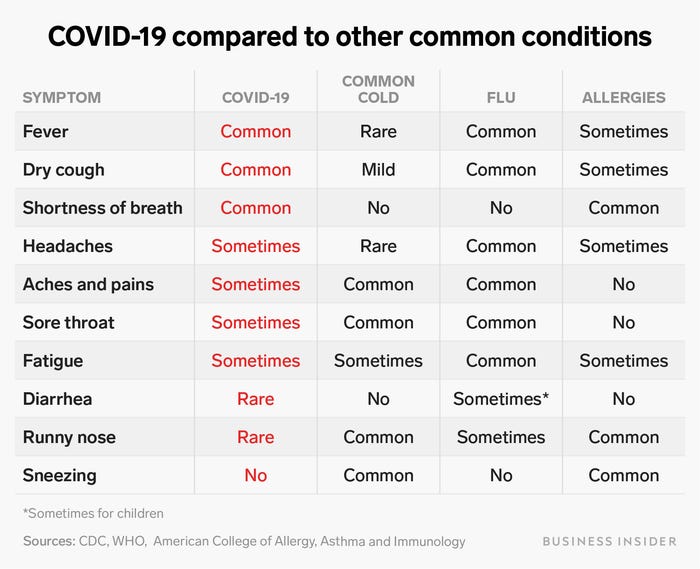
Business Insider composed this list from various health sources:
And the U.S. Army compiled a list of things to do if you are self-quarantining.

No comments on What coronavirus is, and what coronavirus is not
Business Insider composed this list from various health sources:
And the U.S. Army compiled a list of things to do if you are self-quarantining.
Today’s blog is about a member of my family who died earlier this month. A gathering of a group of his friends is taking place Saturday, when I cannot be there due to sportscasting commitments.
Even though I come from a relatively small family, I had a lot of relatives in my parents’ generation, some of whom are still living. My father was the oldest boy in his family, and my mother was the youngest of three, so I had aunts and uncles older and younger than my parents.
On my father’s side, I have three aunts I could describe as the “cool aunts.” Two are younger than my father, and the one who is older lives in California and New Mexico, which makes her automatically cool. Whatever fashion look I got from middle school Christmas gifts came from them.
Greg was one of the uncles who married into the family. With one exception, all the uncles in my family married into the family. After I started watching movies. I decided that Greg was like having Steve McQueen as your uncle, and the uncle I’m related to was like having Burt Reynolds as your uncle. (He died in 2016.)
Greg went into the Army after high school and then the Special Forces in Vietnam, was injured there and then spent nearly a year at an Army hospital in Okinawa. He almost never talked about his Vietnam experience. He was one of those people you had to work on to get him to open up, but when you did, he could be hilarious.
He talked quite a bit about his experience immediately after Vietnam, which was three years at UW–Madison as an engineering student on the GI Bill in the height of the protests against the war in which he had just fought. Greg had a second-floor apartment on State Street, and would watch the daily antiwar protest start on the Library Mall and then proceed up State Street to the Capitol, with the protestors/mob smashing business windows along the way. He knew Paul Soglin when Soglin was a UW Law School student and a leader of the protesters.
One day, Greg went to a class. This happened to be the day of a student strike protesting the war, which was to close the campus. As he told the story, he found his access to the classroom blocked by a student who announced he couldn’t go in. Greg said he had a class. The student said he couldn’t go in. The student found out that getting in the way of an ex-Green Beret was a poor decision on the student’s part. As Greg told the story, he was the only student who actually went to class that day, which made him easy to find when the police came to arrest him for assault, which was later amended down to disorderly conduct.
My uncle and aunt lived in Auburn, N.Y., for a few years. (That was where, as Greg told the story, their motorcycle broke down.) Then they came back to Wisconsin so Greg could take over his father’s building business. Thereafter he was a stockbroker and then started a machine shop in Appleton, which made him a reader of Marketplace Magazine back in a previous life of mine. He was a fan of my work.
Greg was never a parent, so he probably didn’t really know how to deal with little kids. I do recall that he would take quarters and hold them in his fists, and my brother and I would work to get the quarters out. That was difficult, because he was a strong guy.
One of the purposes of cool uncles is for them to introduce you to activities your parents may not necessarily endorse. That included driving their truck in a field a couple of years before I was legally able to do so. A couple of decades later, in their basement following the Packers’ clinching their second consecutive Super Bowl berth, I sat in their basement and smoked the only tobacco product I have ever smoked in my life — a Cuban cigar.
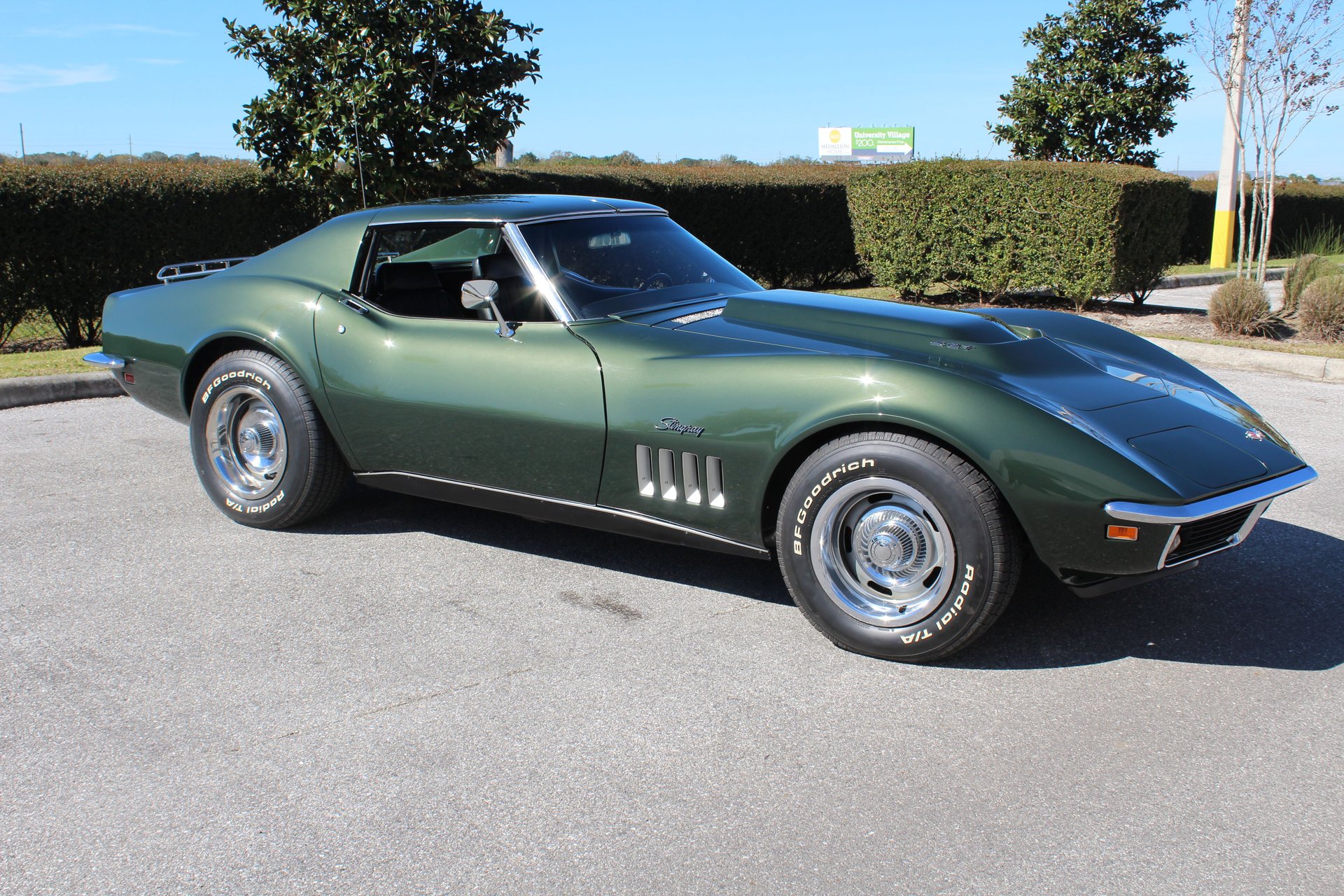
Before that, he purchased a dark green 1969 Corvette. (Which replaced a Harley–Davidson motorcycle.) I’m not sure which 427 V-8 engine it had, but I do know it had the M-22 “rock crusher” four-speed manual transmission. It did not, however, have power steering or brakes. He took it out with me one day, and we reached, shall we say, extralegal speeds. And then he let me drive it. I had never driven a stick before, nor had I ever driven a car without power steering before. (They’re easier to drive while moving.) He was amazingly patient while I figured out how to take off without killing the engine. Later on he bought another one he was going to rebuild, but I don’t believe he ever finished it.
He was single-minded in his pursuit of his hobbies. The first I remember was photography. He had more lenses and filters than I previously seen in 1970s-vintage photography (before zoom lenses became a thing). He also thought it was fun to take his flash and fire it in people’s faces to temporarily blind them. Sometime later he took up pool, and then after his vision made it hard (in his opinion) to play he dropped that for piano.
They had a succession of dogs. The first I remember was Brandy, a golden retriever that might have been the best-trained dog I have ever seen. If you snapped your finger, she would stick out a front paw for a handshake. She went bird-hunting, even when she was old enough to need painkiller shots before she went out. On the day of the bicentennial Independence Day, Greg, Brandy, my dad, my brother and I all went out on the Madison lakes in a boat he owned, on one of those perfect summer days. Earlier that day our new puppy, Dolly, followed Brandy around so close that she kept getting hit in the face by Brandy’s tail.
Brandy was followed by Kelly, an Irish setter. I went out with them as he was training her, and nearly collapsed laughing when she started barking at a bulldozer blade that was just sitting in the woods. Greg thought that was less funny than I did.
About a decade later, when Mrs. Presteblog and I were living in Appleton, they went to a Caribbean island for a diving vacation. My brother was tasked with caring for Kelly and their other dog (I believe she was Susie the black-and-white setter), but he had to be out of town that weekend, so he asked me to feed them and let them out. I got to their house, and of course the dogs were overjoyed to see humans and seemed quite sad at the prospect of my leaving them alone. And so I brought them back to our house, where we had our two dogs and one cat, for the rest of the weekend.
Nick the male spaniel thought having three girl dogs around was the greatest thing ever. Puzzle the female spaniel did not agree, and decided to follow me around even more than usual out of jealousy we had never seen before from her. The cat, meanwhile, got up on our fish mounted in our loft, a place we never would have guessed she could have reached due to her girth, to stay away from the dogs while monitoring their presence. We have a photo of my feeding four dogs treats, all of them at rapt attention.
They also had, for a while, big birds. I got an introduction to one of them when he let out a macaw (Tigger, I think, was his name) and said macaw flew up onto my back, and then walked up to my shoulder.
I didn’t hunt with Greg, but cars were a common interest, as were the Packers, in their Gory Years and then in the 1990s when they returned to the top of the NFL. So was music.
One day we visited them in Richland Center. They had what appeared to be a state-of-the-then-art sound system with big speakers and a reel-to-reel tape player. For whatever reason he decided to play Chicago’s “Ballet for a Girl from Buchannon,” which included “Make Me Smile.” I had heard the latter, but not the whole thing. And never as loudly as he played it that day.
Did that make an impression? Well, I have seen Chicago four times in concert, most recently in Madison in May, with our trumpet- and trombone-playing sons.
I always looked forward to going to their house. He started presenting us with Bloody Marys you could chew and beer chasers. We watched Super Bowl XXXI there, with my parents and a group of their friends. (Afterward we decided in a snowstorm to drive to Lambeau Field, but that’s another story.)
One Sunday we decided to visit Frank’s Pizza Palace in Appleton. He wasn’t dressed for the day when we got there, and so someone made a comment about that. He didn’t say anything, but went upstairs and returned a half-hour later, wearing a suit, outdressing everyone else in the restaurant.
An even more epic night than that was Dec. 31, 1999, when the family determined the best way to depart 1999 and welcome 2000 was a course-per-hour dinner. We went along with our oldest son, who couldn’t see anything because he was four months in utero. I remember driving home after 2 a.m., listening, for one of the few times in my life, to Art Bell to see if any of the more dire predictions of Y2K were coming true. The next day — actually later that day — we drove back to watch the 2000 Rose Bowl.
These are my experiences with Greg that stand out. I hadn’t seen him for a few years after my uncle and aunt divorced. I now regret not having reached out to him since then. We’ll have to schedule a Bloody Mary you can chew sometime this weekend in his memory.
Louis M. Profeta, M.D.:
“Colleges should do this and colleges should do that, everyone says?” I walked across the front of the auditorium, stopped and faced the two hundred young men who had invited me to their fraternity house to speak. “Really?” I paused some more. “Colleges are supposed to do what … protect you from you?”
It was a simple question, one they perhaps had not thought about in a world where some modern parenting involves hermetically sealing the previous 18–20 years of their lives from anything that could possibly hurt them. In reality, some of their parents—people who love them the most—were setting them up for academic failure, a lifetime of addiction … and even worse … their death.
“It’s the incoming freshmen that cause most of the problems,” the upperclassman told me as he walked me to my car. “They come in, away from mom and dad, and they are out of fucking control. Trying to fit in, I guess, things like that. Most of the upperclassmen, well, I mean are kind of over that. More future-oriented, I imagine,” he said, kind of exasperated.
“I believe it, I absolutely believe it,” I said. I thanked him for his leadership and went on my way, pretty much the same thing I’d had been hearing all over.
It had been about two years since I wrote the viral essay, “A Sunday Talk on Sex, Drugs, Drinking, and Dying with the Frat Boys,” and since then I had been traveling the country speaking on campuses brave enough to have me. I hadn’t held anything back from the students. I warned them beforehand. I was coming from a different place, a place where doctors do rape exams, pump veins full of narcan and epinephrine, look at the clock and pronounce time of death and break horrible news to moms and dads. I had become kind of sick of it (giving out the bad news, I mean). It didn’t seem like much was working to change the tide of opiate abuse, reckless behavior, and other causes of death in young people so I figured I’d start going to the source and begging these students to, well, grow the fuck up.
Most loved the candor, the openness, the willingness of a seasoned ER doctor to answer uncomfortable questions about drugs and alcohol, sexual assault, and hazing, and a whole host of semi-taboo topics. But it was the questions when the “adults” were out of the room that made me say to myself, “Holy shit … so many of these ‘kids’ have absolutely no business being in college.”
“What about whippets, what if I just snorted one xanax, can you really soak a tampon in alcohol and get drunk, is cough syrup OK to mix with vodka, is ecstasy and molly the same thing, can’t you just strap a backpack to them to keep them from rolling over so they don’t choke on their own vomit, what about phenergan, what’s in skittles (not the candy), how many milligrams of THC can you eat and not die, are they starting to add stuff to coke (not the cola) that makes you more hyped, how much does it cost to go to an ER, will you call my parents if I go, how can you tell if your roommate is suicidal, what if you know your roommate is using heroin … should I tell their parents, how do I tell if the ‘bars’ I bought online are not fentanyl, I got raped last year … should I tell someone now, I think my roommate is going to probably kill herself…who do I tell?”
As I’ve traveled the country, these are just some of the questions and emails I have gotten from your college students. I try to approach them with openness and honesty, as a doctor and a father who almost lost a child to cancer, and I tell them that I want them to live a long life and experience the joy of holding their own child in their arms one day. I tell them they can always email me and I’ll find them help if they need it. Occasionally, they do. Most of the time it’s a parent who drops me a note and says something like, “Thank you, my kid called me tonight after your talk and apologized for every stupid thing they ever did.”
Yeah. These are a fraction of the questions your kids are asking me, and I have come to the simple realization: some of these young men and women are simply too emotionally immature and lack the basic self-control and sense of personal responsibility to be in college.
College will still be there. It is not a race to adulthood.
Let that sink in for a second: Some of your kids, in fact many of your kids are not ready for college—and if you think college administrators can or will protect them, you are dead wrong. They’ll act like they have it under control and tout their counseling services, student health, etc., but they don’t. When things go bad, they’ll point the finger at fraternities, or a toxic sports culture, or bullying, or whatever in order to shift the blame rather than admitting that they accept too many students that are simply too immature to be there. If you don’t believe me, think about what college campuses would look like if you could only attend once you turned 20 or 21. Give me one year of age over a hundred extra points on the SAT any day.
I watched a documentary recently on D-Day. I’ve been somewhat of a student of WWII and veteran issues for years. What keeps me fascinated is the realization that many of these soldiers were mere kids by today’s standards—18- or 19-year-olds, fresh out of high school, and I try to imagine them in today’s world and I simply can’t see them snorting xanax, or doing a beer bong, or sharing adderall, or chowing down on a handful of THC-loaded gummy bears. These were 18-year-olds, but in terms of today’s measure of maturity and responsibility, they might as well have been 50. I can pretty well damn near guarantee if social media was around then none of the D-Day mothers would be posting.
“Well, we had to get Kyle moved into to his dorm, register for classes, pick his schedule, tour the campus, find out where his classes are, get him linens and a dorm fridge, meet his roommate, and go to parent orientation.” Post after post making moving into a dorm and registering for classes sound like a Homeric poem. “Well first we had to get Kyle on a ship that would not be crushed on the rocks by the songs of the sirens and then we had to get him a sword and a shield so he could kill a cyclops. I read where this one guy used his shield as a mirror to cut off Medusa’s head, so we’re going to Costco later to see if they carry that one…”
It’s sad and disconcerting because at the very core of this is a parent, consciously or not, treating an adult like a child. As an ER doctor who is now talking to these young men and women, I want to offer a few words of caution. We need to love them like our child but send them off as adults.
Do not send children to college.” College is for men and women. It is a place to expand the minds of these young scholars who, if they did not have the good fortune or desire to get a higher education, would be jumping into the workforce or the military right out of high school. It is a place to explore career options, expose oneself to diversity of thought, hone social and life skills, and to make contacts that might translate into future business opportunities or life partnerships.
It is NOT a defacto summer camp. It is NOT a surrogate parent. It is NOT a place to grow up, and it’s about time we step back and contemplate, “Is my child emotionally and mentally ready for college?” instead of “Does my kid have the aptitude for college?” The former is infinitely more important to consider than the latter.
We need to ask ourselves, “Does my child have the strength of character to say no? How independent are they really? Would I feel comfortable leaving my house for two months right now with them alone, by themselves, fending completely? Could I go a week, two weeks, three weeks without talking to them secure in the knowledge that they are fine? Does that describe my child?”
Give me one year of age over a hundred extra points on the SAT any day.
If the answer to any of those questions is no, perhaps a year waiting tables, doing construction, working in a nursing home, taking a welding class, community and environmental activism, learning about automotive maintenance, being a janitor, or bussing tables would be the best thing for them. Anything but tossing them into an environment full of sedatives, weed, beer bongs, fentanyl, cocaine, sexual promiscuity, peer pressure group-think, and a thousand temptations you never even knew existed.
College will still be there. It is not a race to adulthood. We do not have to disguise putting off college with terms like “gap year” or “intern year” or “leap year” or whatever. There was a time when gap year actually meant you worked at the GAP for a year, and got a ten percent discount on shirts and shorts, too.
Who the hell cares what our friends are doing with their own kids? Who cares where they bought their shield and sword. I, for one, wish I had taken a year or two off between high school and college. In fact, I wish I had served in the armed forces, for that matter. I went from kindergarten to residency. I could have used a couple years to grow up, too.
We need to encourage our kids to slow it down, to take a longer path to college, perhaps. Expose our kids to real education—the kind of education that comes with a W-2, a boss, getting up early and working late and interacting with people who can’t afford a higher education. Make them appreciate the life experiences that come with nailing a 2 x 4, washing dishes, wheeling people to X-ray, picking up garbage, answering telephones. Make them earn their spending money BEFORE college and decide on their own if they’d rather use it on alcohol, weed, a four-block Uber ride, or laundry and food.
Teach them these things and send them off to school as adults.
Or someone else may just teach them how to snort xanax instead.
Before the slaughter of dozens of people in Christchurch, New Zealand, and El Paso this year, the accused gunmen took pains to explain their fury, including their hatred of immigrants. The statements that authorities think the men posted online share another obsession: overpopulation and environmental degradation.
The alleged Christchurch shooter, who is charged with targeting Muslims and killing 51 people in March, declared himself an “eco-fascist” and railed about immigrants’ birthrates. The statement linked to the El Paso shooter, who is charged with killing 22 people in a shopping area this month, bemoans water pollution, plastic waste and an American consumer culture that is “creating a massive burden for future generations.”
The two mass shootings appear to be extreme examples of ecofascism — what Hampshire College professor emerita Betsy Hartmann calls “the greening of hate.”
Many white supremacists have latched onto environmental themes, drawing connections between the protection of nature and racial exclusion. These ideas have shown themselves to be particularly dangerous when adopted by unstable individuals prone to violence and convinced that they must take drastic actions to stave off catastrophe.
The alleged El Paso shooter’s document is full of existential despair: “My whole life I have been preparing for a future that currently doesn’t exist.”
In recent years, the mainstream environmental movement has moved strongly in the direction of social justice — the opposite of what hate groups seek. Now, the leaders of those organizations fear white nationalists are using green messages to lure young people to embrace racist and nativist agendas.
“Hate is always looking for an opportunity to grab hold of something,” said Mustafa Santiago Ali, a vice president of the National Wildlife Federation and an expert on environmental justice. “That’s why they use this ecological language that’s been around for a while, and they try to reframe it.”
Michelle Chan, vice president of programs for Friends of the Earth, said, “The key thing to understand here is that ecofascism is more an expression of white supremacy than it is an expression of environmentalism.”
This is all happening in a rhetorically and ideologically overheated era in which public discourse is becoming toxic, not only in the dark corners of the Internet but among those occupying the highest elective offices. Environmental activists want to create a sense of urgency about climate change, the loss of biodiversity and other insults to the natural world, but they don’t want their messages to drive people into deranged ideologies.
There is a danger of “apocalypticism,” said Jon Christensen, an adjunct assistant professor at the University of California at Los Angeles who has written extensively on the use and misuse of dystopian environmental scenarios.
It’s important, he said, to provide people with potential solutions and reasons to be hopeful: “There’s definitely a danger of people taking dire measures when they feel there’s no way out of it.”
Hartmann, who has tracked ecofascism for more than two decades, echoes that warning, saying environmentalists “need to steer away from this apocalyptic discourse because it too easily plays into the hands of apocalyptic white nationalism.”
The leaders of several major environmental organizations say that white supremacy is antithetical to their movement.
“What we saw in the El Paso manifesto is a myopic, hateful, deadly ideology that has no place in the environmental movement,” said Michael Brune, executive director of the Sierra Club.
Echoing that was Andrew Rosenberg, director of the Center for Science and Democracy at the Union of Concerned Scientists: “We need to speak out so that our members know that under no circumstances are we buying into this kind of philosophy.”
The alleged gunmen in El Paso and Christchurch did not emerge from the green movement. The documents attributed to them are primarily focused on race, cultural identity, immigration and the fear of a “great replacement” of whites by people of other races. The “eco” part of the equation is arguably an add-on.
But these people did not come up with their hateful ideologies in a vacuum. They have tapped into ideas about nature that are in broad circulation among white nationalists. Before the Unite the Right rally in Charlottesville in 2017, for example, white nationalist leader Richard Spencer published a manifesto that had a plank on protecting nature.
Ecofascism has deep roots. There is a strong element of it in the Nazi emphasis on “blood and soil,” and the fatherland, and the need for a living space purified of alien and undesirable elements.
Meanwhile, leaders of mainstream environmental groups are quick to acknowledge that their movement has an imperfect history when it comes to race, immigration and inclusiveness. Some early conservationists embraced the eugenics movement that saw “social Darwinism” as a way of improving the human race by limiting the birthrates of people considered inferior.
“There’s this idea coming out of the eugenics movement that nature, purity, conservation were linked to purity of the race,” said Hartmann, the author of “The America Syndrome: Apocalypse, War and our Call to Greatness.”
Conservationists have a long history of wrestling with questions about immigration and population growth. Some of those on the environmental left have seen the explosion in the human population — which is nearing 8 billion and has more than doubled in the past half-century — as a primary driver of the environmental crisis. That argument has then been adopted by racists.
The alleged Christchurch shooter began his online screed by writing, “It’s the birthrates. It’s the birthrates. It’s the birthrates,” and then warned of the “invasion” by immigrants who will “replace the White people who have failed to reproduce.”
The document thought to have been posted by the alleged El Paso shooter cites birthrates among the “invaders” trying to enter the United States and asserts, “If we can get rid of enough people, then our way of life can become more sustainable.”
This line of thought is dismaying to Paul Ehrlich, 87, a professor emeritus at Stanford University whose 1968 bestseller, “The Population Bomb,” proved hugely influential.
“They often cite me, even though I’ve spent my life trying to fight racism,” Ehrlich said.
John Holdren, a Harvard professor who co-authored articles with Ehrlich and later served eight years as President Barack Obama’s science adviser, said the environmental movement grappled decades ago with the perceived racist undertones of the emphasis on population growth.
“A lot of people felt they were getting burned by talking about population growth and its adverse impact,” Holdren said. As a result, he said, the movement’s leaders began focusing on the education and empowerment of women, which has led to falling birthrates around the world as women take control of their reproductive lives.
A refrain among environmentalists is that if anti-immigrant groups are genuinely concerned about degradation of the natural world, they’re targeting the wrong people. Climate change hasn’t been driven by poor people struggling to get by. The activities of wealthy nations have been the main historical source of greenhouse gas emissions, the depletion of natural resources and the destruction of habitats.
Ali, the environmental justice expert, said he often hears people say population growth is the big problem today, and he shoots that down.
“My response to them is, ‘Who are the people we need to limit? Who are the people making decisions about that?’ . . . Until we have true equity and equality and a balance of power, then we know vulnerable communities are going to end up on the negative side of the ledger, whatever the tough choices are,” Ali said.
Interesting that the apocalyptic language used by environmentalists for decades is now paying off.
There’s been quite a debate going on over the past week over a currently-popular gun control proposal, the “red flag” law.
That law is ostensibly supposed to keep guns out of the wrong hands. David Kopel testified before a U.S. Senate committee:
“Red flag” laws or “extreme risk protection orders” have been enacted in several states. While the idea for these laws is reasonable, some statutes are not. They destroy due process of law, endanger law enforcement and the public, and can be handy tools for stalkers and abusers to disarm the innocent victims. Nearly a third of such orders are improperly issued against innocent people. …
Bills that claim to be about “Extreme Risk Protection Orders” are not correct; the bills cover much lower-level risks, or just “a danger.” Likewise, the term “red flag” is dubious because some bills label as dangerous the peaceable exercise of constitutional rights. A more accurate name for these laws is “gun confiscation orders.” Such orders can be legitimate when fair procedures accurately identify dangerous individuals. Such laws include the following features:
- Petitions initiated by law enforcement, not by spurned dating partners or relationships from long ago.
- Ex parte hearings only when there is proof of necessity.
- Proof by clear and convincing evidence, which has been corroborated.
- Guarantees of all due process rights, including cross-examination and right to counsel.
- Court-appointed counsel if the respondent so wishes.
- A civil remedy for victims of false and malicious petitions.
- Safe and orderly procedures for relinquishment of firearms.
- Strict controls on no-knock raids.
- Storage of relinquished firearms by responsible third parties.
- Prompt restoration of concealed carry permits for the falsely accused.
- Prompt return of firearms upon the termination of an order.
- Renewal of orders based on presentation of clear and convincing proof.
- Not allowing time-limited orders to be bootstrapped into lifetime federal prohibition.
Maryland has a red-flag law. And this is how Maryland’s red flag law works, according to the Baltimore Sun:
Two Anne Arundel County police officers serving one of Maryland’s new “red flag” protective orders to remove guns from a house killed a Ferndale man after he refused to give up his gun and a struggle ensued early Monday morning, police said.
The subject of the protective order, Gary J. Willis, 60, answered his door in the 100 block of Linwood Ave. at 5:17 a.m. with a gun in his hand, Anne Arundel County police said. He initially put the gun down next to the door, but “became irate” when officers began to serve him with the order, opened the door and picked up the gun again, police said. …
A spokeswoman for the Maryland Judiciary denied a request to see any and all requests for protection orders made at the residence on Linwood Avenue, citing the law, which states that anything related to an order is confidential unless the court rules otherwise.
Michele Willis said she had grown up in the house and had been there Sunday night to move out her son, who had been helping to care for her grandmother.
Her uncle, Gary Willis, lived in an apartment above the garage; she said other family members, including her grandmother, another uncle, two aunts and Gary Willis’ girlfriend were also at the home Sunday night.
She said her uncle “likes to speak his mind,” but she described him as harmless.
“I’m just dumbfounded right now,” she said. “My uncle wouldn’t hurt anybody.”
David Altschul reports on the Wall Street Journal’s reporting:
Would it be politically incorrect to say that, victimized by “gun control fever,” Democrats who want to win elections are shooting themselves in the foot? THE WALL STREET JOURNAL’s Kimberley A. Strassel cites the following facts in today’s paper: 1) Both the El Paso and Dayton shooters passed background checks; 2) 42% of American adults live in a house with a firearm; 3) In rural areas, it’s 58%; 4) among independents, 48% live in a house with a firearm; 5) 48% of white men are gun-owners; 6) 25% of self-identiifed Democrats live in a gun household, many in the areas of Iowa, Michigan, Ohio, Pennsylvania and Wisconsin where Hillary lost; and 7) Nearly 3/4 of the Americans who are current gun-owners say they “can’t see themselves ever NOT owning a gun.” Strassel mentions the gun-control frenzy being fomented by the front-seaters in the 2020 DNC clown car: out of touch with the nation, as usual
When the government starts “red-flagging” people, it can set up a dangerous momentum> Here’s how Lee J. Cobb explained his decision to rat out 20 of his friends to the House Un-American Activities Committee: ‘When the facilities of the government of the United States are drawn on an individual it can be terrifying. The blacklist is just the opening gambit—being deprived of work. Your passport is confiscated. That’s minor. But not being able to move without being tailed is something else. After a certain point it grows to implied as well as articulated threats, and people succumb. My wife did, and she was institutionalized. The HUAC did a deal with me. I was pretty much worn down. I had no money. I couldn’t borrow. I had the expenses of taking care of the children. Why am I subjecting my loved ones to this? If it’s worth dying for, and I am just as idealistic as the next fellow. But I decided it wasn’t worth dying for, and if this gesture was the way of getting out of the penitentiary I’d do it. I had to be employable again.
Daniel McCarthy asks a good question:
The normally sober Associated Press is reporting the Senate’s vote to overturn Trump’s declaration of emergency in the southern border as ‘a stunning rebuke’ and ‘a remarkable break between Trump and Senate Republicans.’ But it isn’t.
The 12 Senate Republicans who joined forces with every Democrat in the vote to annul Trump’s declaration did so for predictable ideological reasons. Libertarian-leaning Republicans such as Rand Paul, Mike Lee, and Pat Toomey voted to overturn the emergency on ‘constitutionalist’ grounds, seeing the National Emergencies Act of 1976 as constitutionally dubious or worse and rejecting the mechanism by which it allows the president to appropriate funds.
Most of the rest of the Republicans voting to put a stop to the president’s declaration represented the party’s establishment wing — the likes of Susan Collins and Lisa Murkowski on the party’s left or Rob Portman, Roy Blunt, and Lamar Alexander in its dying center. Mitt Romney’s vote with this group isn’t a surprise: he’s set out since his election last November to be every liberal’s favorite Republican and a champion of the NeverTrump cause. Marco Rubio, who still courts the right, nonetheless voted the way his rather liberal record on immigration would have suggested.
In short, this vote expressed old divisions in the GOP, not a sudden turn against President Trump. The important thing to note is that these divisions are persistent — there remain libertarian/constitutionalist, moderate/establishment, and basically neoconservative factions in the party. Together with the Democrats they still can’t stop Trump’s emergency declaration: a two-thirds majority in both chambers would be needed to overturn Trump’s inevitable veto of the cancellation bill, and a veto-proof majority isn’t available in either the House or the Senate, let alone both.
Trump remains the strongest force in the GOP, and this vote doesn’t suggest he’s losing ground, even if the defection of Jerry Moran or Tom Wicker on this vote wasn’t a forgone conclusion the way Rand Paul’s or Susan Collins’s was. Ben Sasse, a Republican who talks a lot about his principles and independence, didn’t break with the president, and neither did Ted Cruz, who keeps close track of how the right is moving. If a revolt were really underway, they would have been part of it.
The trouble for Trump’s agenda lies in the future: whenever he leaves office, who will lead his coalition? His mix of immigration restrictionism, trade protectionism, and foreign-policy restraint is accepted by congressional Republicans, but few of them seem as committed to it as the smaller factions are to their alternative positions. Yet those smaller factions have their own limitations — the establishment Republicans are not replenishing their ranks, Mitt Romney notwithstanding, and the constitutionalists may have had their ‘libertarian moment’ five or ten years ago, when the Tea Party was the expression of the populist right and Rand Paul seemed poised to be a top-tier 2016 contender.
The perseverance and ideological focus of the constitutionalists with the right-wing visceral appeal of Trump would make for a formidable combination. Either alone, however, leaves the GOP’s future in question — a return to establishment Republicanism or neoconservatism 1.0 seems implausible, but a drift into inertia is all too likely if there’s not more to Trumpism than Trump. The obstacle for those who want to see something like Trump’s agenda prevail isn’t the handful of Republicans who openly oppose it, but the large number who only passively support it.
I have written here about the Far East Side of Madison, where I grew up. (Including what could have been, but wasn’t, the neighborhood high school.)
The Facebook Historic Madison group discovered two newspaper ads. First, chronolotgically speaking, from 1961:

Quoting from myself (actually another blog):
The first subdivision in the area south of Cottage Grove Road east of U. S. 51 was Harry Vogts’ Acewood from 1959. By 1962 many small, medium, and large builders and developers were active in the area; two of the larger were Towne Realty of Milwaukee that used Findorff, a Madison company, to build its houses, and the Lucey Realty Service owned by Patrick J. Lucey who was governor of Wisconsin from 1971 to 1977.
Many streets are named for local residents: Steinhauer Trail, Starker Avenue, Vinje Court, and Droster Road. Several are for builders; Montgomery Drive is for William C. Montgomery. First names are common as in Bonnie Lane, Ellen Avenue, Wendy Lane,and Melinda Drive. Female names greatly outnumber male names. Painted Post Road is from Lucey’s Painted Post Subdivision. Bird streets are Meadowlark Drive, Sandpiper Lane, Pelican Circle, and Tern Court. …
One major street, Acewood Boulevard, began about 1959 in Harry Vogts’ Acewood subdivision. Vogts (1908-1994) owned Ace Builders, Inc., and had already named one subdivision in Glendale Aceview.
New Acewood (which one assumes was phase 2 of Acewood) was the neighborhood to which we moved in 1966, five years after this ad. All the houses I rememberhad one-car garages, which worked fine for my parents at the time since they had only one car.
But while my parents were situating in their new-to-them house, to the east was …
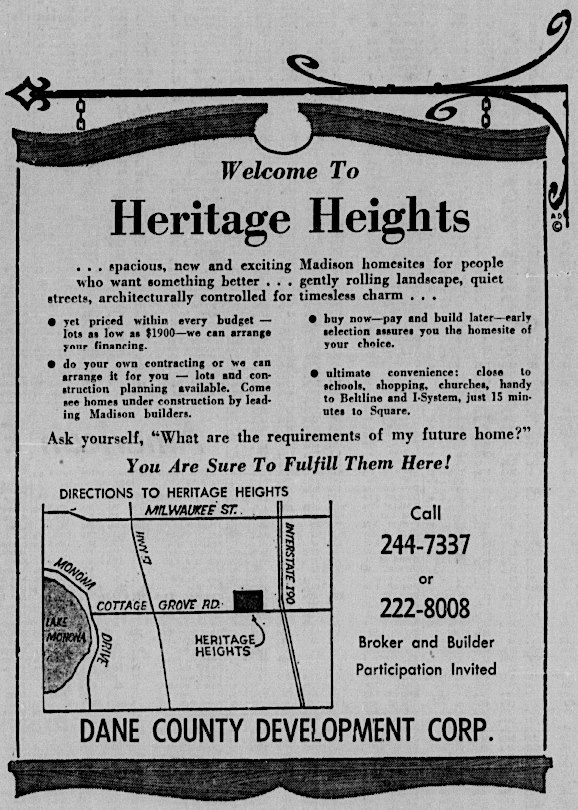
By 1958 when large scale suburban development began in the area east of U. S. 51, south of Milwaukee Street, and north of Cottage Grove Road, developers such as Aaron Elkind, Donald Sanford, and Albert McGinnis knew a lot about selling houses to middle income clients.
They made certain that subdivisions named Kingston-Onyx, Rolling Meadows, and Heritage Heights promised pleasant surroundings. Streets with names such as Diamond, Turquoise, and Crystal sparkled with the promise of a high-quality product in a landscape filled with singing birds on streets named Chickadee Court, Bob-o-link Lane, and Meadowlark Drive.
Heritage Heights suggested merry England with Kingsbridge Road, Queensbridge Road, and Knightsbridge Road.
As I’ve written before, this was the neighborhood that was probably as suburban as you could get while still beingwithin the Madison city .limits. Thanks to the lakes and surface streets not really designed for the traffic they ended up getting, getting downtown or to the UW campus took more time than the crow needed to fly. Other than three hellish years at Schenk Middle School (which may have been the fault of the students more than anything else), life seemed pretty safe to the point of dullness in Heritage Heights, which makes you think of …
… the unofficial theme song of our ’80s neighborhood.
As long as we’re running the wayback machine, we should bring up this Facebook gem:

Before McDonald’s became ubiquitous, and well before anyone in the Culver family thought of dumping A&W and going off on their own, there was Kelly’s, which as you’ll note from the menu was kind of McDonald’s without golden arches but with the dancing Pickle Pete.
The slightly odd thing here is that the listed menu does not include hot dogs. I know that Kelly’s had hot dogs, because for some reason I wouldn’t eat hamburgers until sometime in grade school.
WISC-TV remembered Kelly’s and another burger place:
P-P-Pickle P-P-Pete!!!
Once upon a time, Kelly’s Hamburgers was a national chain that competed with the likes of McDonald’s. Madison had several Kelly’s locations around town, but locally, the restaurants are best remembered for their iconic mascot—a smiling dill pickle slice with a stutter, called Pickle Pete. He appeared in newspaper ads and radio jingles in the ’60s and ’70s and, as best as we know, Pickle Pete was unique to the Madison market. …
A Night at the Drive-In
For east-siders, few places from the mid-20th century are more fondly remembered than the Monona Root Beer Drive-In across from Olbrich Park. Famed for its curly fries made by hand, the drive-in was best known by the nickname the “Hungry Hungry” because of the large neon sign that flashed the word “hungry.” Some Madisonians even recall seeing the sign across Lake Monona from downtown. This photo belongs to former drive-in owner Tim Femrite, who worked there in the ’50s as a teenager. “I started there humping cars—that means waiting on them,” Femrite says. “I cut buns, peeled onions, pattied hamburgers. It was hot in the summertime, but it was fun.”
Facebook Friend Michael Smith:
Statistically speaking, voting for a Democrat is more of a danger to public safety than the Second Amendment will ever be.
From their stances on an ever expanding welfare state, open borders and terrorism, Democrat policies pose a statistically significant safety risk to the general public – including political beliefs of all types.
You have to show ID and undergo a background check to buy a gun, you do neither to vote – actually, Democrats think it is discriminatory to require an ID to vote.
I expect now that California is 100% owned and operated by a radically progressive Democrat Party, it will continue down a path to Venezuelation. Not even Venezuela’s rich natural resources saved it and neither will those of California. Illinois is a good predictor of where California is likely to wind up. Illinois is California without the beaches and mountains.
But given the socialist nature of our federal government, California and other Democrat dominated states assume that the other 49 states will bail them out.
Secession has been bandied about by both right and left as a reaction to political changes but I wonder if the trigger for secession (we don’t have a mechanism, to expel a state from the union) might wind up being more financially related than politically related.
I think think the catalyst, the spark that sets the whole shebang aflame and finally pushes this over the edge might be what comes of three things of which I have been thinking:
1. States with lower tax rates are going to draw greater populations and more revenue generating businesses.
2. They are going to object to paying for the spending in the spendthrift states – bailing other states out.
3. Population and business shifts will deplete the tax base of states with entrenched governments, unfunded pension liabilities and powerful public sector unions, thereby exacerbating the problems in states like Illinois, New York and California.
I predict that the straw that finally breaks the camel’s back will be a lawsuit, one filed by a high tax state like California against states that have low or no state income or property tax rates because they are unfairly “pricing” their states – the effect of which is to rob the high tax states of the taxpayers necessary to support their respective state governments. If the burden is increased in one state by out-migration, that will be called “unfair” and I think these states will turn to the courts for a remedy.
There are states now that levy fees that are essentially “exit taxes” that you must pay when you move to another state – but no matter how high those are, they are a one-time shot, not long term, recurring revenue.
There is a possibility that a governor or a state attorney general might try the invoke the Commerce Clause but I think it is more likely they would try to use the Fourteenth Amendment which states, in part:
“No State shall make or enforce any law which shall abridge the privileges or immunities of citizens of the United States; nor shall any State deprive any person of life, liberty, or property, without due process of law; nor deny to any person within its jurisdiction the equal protection of the laws.”
Sound ridiculous?
My peeps, we eat ridiculous for breakfast these days. We start there and end the day with absurdity for dinner.
If the courts agree that when one state with lower taxes draws a taxpayer or business away, it is equal to depriving the people of a bankrupt state of the “privileges” in that state associated with being a “citizen of the United States” and that based on the equal protection clause, all states must have “equivalent” tax rates to prevent taxpayers shopping low tax states.
This argument has already been used effectively in the federal takeover of education when it comes to programs offered and levels of funding. The Feds simply institute things like Title IX and you either comply or your funding goes away and you get sued. I think we will see an attempt before the end of Trump’s next term to apply the same technique to taxes. The debasement of the Tenth Amendment has already done damage, potentially irreparable damage, to state sovereignty – so I would not be surprised to see such a gambit attempted.
Mark my words, could be headed for a crisis of constitutional proportions – and it will be started by a lawsuit.
The Associated Press reports a story you will never read again:
A new study finds that Wisconsin’s tax burden has dropped to a nearly 50-year low.
The Wisconsin Policy Forum report released Wednesday examines state and local taxes as a share of personal income. The report says that taxes accounted for 10.5 percent of income, down slightly from 10.6 percent last year.
That marks the seventh straight year of declines. It’s the lowest level going back to 1970, the earliest on record for the nonpartisan group.
The report says that the tax burden dropped primarily because personal income grew more quickly than did taxes. Income was up 3.6 percent while state and local taxes grew by 2.3 percent and federal taxes went up 0.7 percent.
The report says the tax burden is at its nearly 50-year low thanks largely to rising incomes, low unemployment and state-imposed property tax limits and cuts.
Of course, the Axis of Evil made sure we won’t be bothered with lower taxes, low unemployment and growing personal income ever again. Leave Wisconsin while you still can.
Readers may recall that I voted for Evan McMullin, not Donald Trump (don’t even ask if I’d consider voting for Hillary Clinton), in the 2016 presidential election.
McMullin then created the Stand Up Republic group, which instead of touting traditional (as opposed to Trump’s definition of) conservative ideals, has spent nearly two years doing nothing more than attacking Trump.
Yesterday, Stand Up Republic bent over for Wisconsin Democrats:
In a lame-duck session last week, the Republican-controlled Wisconsin legislature voted in favor of sweeping measures that would significantly curb the power of incoming Democratic Governor Tony Evers and incoming Attorney General Josh Kaul. These measures include broadly restricting Evers’ and Kaul’s ability to roll back or alter policies passed by statewide Republican lawmakers. The move was a nakedly partisan effort to curb the effects of electoral defeats.
Wisconsin’s Republicans aren’t the first people to think of this tactic; Democrats and Republicans have done it before. But these blatant power grabs are anti-democratic, and they should garner bipartisan outcry. Actions like this undermine the power of incoming elected officials with whom the losing party disagrees. The cornerstone of functional democracy is the peaceful transition of power from one political party to the next, and the expectation that both sides will play by the same electoral rules for the same offices because neither side can anticipate who might win the next election. Using the power of an elected office to weaken other offices based on party affiliation is damaging to faith in the institutions themselves. The measures passed last week undermine the power of the American voter by attempting to deny the authority of elected office to incoming officials, based solely on their policy preferences.
Wisconsin Republicans didn’t stop there. Last week they also voted to restrict the early voting period to a maximum of two weeks statewide. Rather than allow counties to make their own decisions on election processes, the GOP took control of the process in order to limit it. Once again, the legislature is instituting broad changes aimed at protecting their own electoral interests rather than respecting the independence and integrity of the state’s institutions.
Unfortunately, what happened in Wisconsin last week is a successful attempt to undermine our democracy by trying to take power out of the hands of duly elected state politicians. This time, it’s Republicans; tomorrow it may be Democrats. Party affiliation simply should not matter in the peaceful transition of power. We as Americans should stand up to any such anti-democratic power grabs, even when – perhaps especially when – they advantage our own political preferences. Ultimately, it’s up to us as voters to hold our representatives accountable for putting the strength of democratic institutions above their own political interests.
You might think that a site that calls itself a “Republic” would know the difference between a republic and democracy, but in this case you’d be wrong. The fact is that Walker is governor and the current Legislature is in office until the new governor and Legislature are sworn into office Jan. 7. To claim that the current governor and Legislature must not do anything legislatively and bend over for the next governor is ridiculous and insulting to everyone who voted Nov. 6.
Moreover, it is appallingly ignorant to believe that the Wisconsin Democratic Party has any intention at all of respecting traditional conservative ideals of any kind, let alone what Walker did over the past eight years. The idea that anything is OK if passed by our duly elected representatives, which is what McMullin is essentially arguing, is a big steaming, asphysicating pile of slurry.
Back when McMullin was running, he listed 10 reasons to vote for him that included:
7. Win or lose, he has the power to carry the conservative principles away from the shark infested waters and to the shore.
Not anymore, it seems. Of course, McMullin then said …
If it’s down to Hillary and Trump, Trump is taking a loss. It would require a miracle for him to win (one that’s not beyond Hillary, I suppose).
… so he must be used to being wrong by now.
 Steve Prestegard.com: The Presteblog