My instinct for self-promotion requires me to say that I will be returning to the airwaves 31 years after I started on the airwaves with Cuba City at Platteville in football tonight at 6:40 Central time here.
My open (which I write out in advance so that I don’t, uh, stumble over, uh, something I am, uh, winging) indicates that this season will be unlike any football season before, because of changes to conferences in the southwestern half of Wisconsin, and will be unlike next season, due to changes to conferences statewide.
But upon further review, last year might have pegged the weirdometer in all the sports I covered. These are the things that happened In games I broadcasted over the past year:
A football game had to be moved from the local university, where the local high school plays, to the local high school the following afternoon because of predicted severe weather that did not materialize. The local high school had not hosted a varsity football game since the doors opened in 1967 until that day.
For the second consecutive year, the local high school had a weather delay during its Homecoming game. Fortunately the game was finished that night instead of the following afternoon, which happened the previous year.
The local high school had a winning record, but losing conference record, and therefore missed the playoffs, while a few schools had losing records and made the playoffs. (The tiebreaker was win percentage, and 4–5 is better than 3–4, which is better than 2–3.) One of those latter teams then won two road playoff games, making it one of the top eight teams in its division.
I announced a state semifinal game after spending three days in Missouri, where we went (blissfully missing Election Day) to pick up our military police oldest son from basic training. The radio station sports director was taken aback when he called me the night before the game and I told him I was in East St. Louis. But we got back, and I announced the game as scheduled.
I then announced a state championship game, a broadcast that didn’t go very well technologically. But the team we were announcing won, so no one cared.
The winter sports season started out fine. Then came New Year’s Day, and like a flipped switch every team’s schedule got blown apart because of weather — heavy snow, fog, freezing rain and ice storms, and bitter cold. Games were scheduled four and five times. One game was rescheduled to a Monday after school was out, giving the varsity game a youth basketball sort of vibe. For the first time in more than 30 years of doing this I got to announce “Five minutes left in the first half, and as of now we are in a winter storm warning.”
One of those weather postponements forced fans from one school to drive two hours on consecutive nights for a girls’ regional final and a boys’ regional quarterfinal. The schools involved should have scheduled a doubleheader, but no one did, or the Wisconsin Interscholastic Athletic Association didn’t, or doesn’t, approve something with common sense. (The drive home the second night was enlivened by freezing fog.)
Our radio station group had fewer boys basketball teams that survived the regional round than announcers, so I wasn’t assigned to any sectional games. But the day I thought my winter season was over, I was assigned to an Illinois “supersectional” game at Northern Illinois University in DeKalb, Ill. That put me at center court announcing a game featuring the eventual Illinois Class 1A state champion, which happens to be the alma mater of Chicago trumpet player Lee Loughnane.
It was a great experience, even though I spent the next day at home with food poisoning.
I also got to announce state wrestling for the first time. It was an interesting broadcast experience because the radio station sells hundreds of live-read ads (as opposed to prerecorded ads), so I got to read a lot of ads.
A couple months later, I got assigned to announce postseason softball and baseball during a spring that, even by Wisconsin standards, was pretty hideous. I had no weather cancellations, but the weather in most games was bad enough for me to wear the radio stations’ logo-equipped winter jackets and broadcast from a park shelter that at least kept the rain out, but focused the wind to create a wind tunnel-like effect.
Before one of those games, an assistant coach from the team I was covering asked where it would be online. He told me that a friend of his in Colorado, a graduate of the home team who was the son of two graduates of the road team, wanted to listen. So I mentioned the Coloradan on the air, and he said he listened.
Two days later, I got to announce the previous game’s winner in an 11-inning sectional final. The coach of the opponent, which had ended my team’s season the previous season, was having back problems, so I interviewed him squatting on the dugout floor while he lay on his stomach on the dugout bench. He had told friends of his, and I had told the opposing school, where the game would be, and so my game had quite a large online audience, while the opposing school’s fans sat right behind me, and I engaged them in conversation during the broadcast. That team, which won the sectional final minutes before the game probably would have been suspended due to darkness, ended up winning state.
(While that was happening, another school we were covering was leading 1–0 in the sixth inning, though its opponent had two runners aboard. And then the rains came, and the unpires ruled the game couldn’t continue, and so the host won, making the losing team’s fans angry that insufficient effort, they thought, was made to dry out the field. The host ended up winning state.
Then came baseball, which started with a sectional final trip in the rain, making me wonder if the game would actually be played. It did delay the game … about five minutes, though it rained out another game. So just before my semifinal game I got a text asking if I could announce the rained-out game the next day. So in 24 hours I announced four baseball games, happily with the right teams winning, in the final case due to the opposing team’s trotting out several pitchers, none of whom could find the strike zone.
(The technological adventure of the second pair of games included the cellphone on which we announce the games overheating because, unlike the previous day, it was sunny and hot. Fortunately there was a concession stand with a refrigerator and freezer, and so I ran to the concession stand and got ice in a bag, on which we put the phone, covered from the sun by an equipment case, so we could get on the air.)
Both our teams ended up playing each other in a state semifinal, guaranteeing us two days at state. Our game fortunately ended before the next division’s games were interrupted by a seven-hour-long rain delay, part of which we spent entertaining the announcer of the late game and young TV sports people in our broadcast booth. The semifinal winner ended up losing the state title, but in such a case they got to play in, and I got to announce, the last game of the season.
Not bad for a part-time guy, methinks. Have I mentioned I am really lucky to be doing this?
One reason why high school sports is so fun to cover is that you might think you know who will win, and that team may well win, but not always. You have to expect, or at least anticipate, the unexpected in sports, and that applies to sports broadcasting too.
From 20 feet away, one designer used to tell me, all newspapers look the same: vertical rectangles with black ink on them. But the announcement earlier this month that the country’s two largest newspaper companies have agreed to merge is a reminder that there are actually two very different ways to look at them. To some, local newspapers are simply cash machines, from which investors can make withdrawals until there’s nothing left. To others, they are community trusts, essential civic resources to be sustained.
The acquisition of Gannett, publisher of USA Today and other papers, by GateHouse Media represents the apotheosis of the newspaper as a financial instrument. GateHouse, the buyer, is the largest owner of U.S. newspapers by titles. Gannett is the largest owner of U.S. newspapers by circulation. The new company, to carry the Gannett name, would have a print circulation of more than 8.5 million.
Should the Department of Justice approve the deal, it would be allowing the creation of a behemoth that dwarfs other newspaper companies, one that would dominate local journalism in many states, and have unparalleled national reach in print. The new company says its first order of business will be to realize $275 million to $300 million a year in “run-rate cost synergies.” In plain English, that means many journalists will lose their jobs.
Print advertising and print circulation are declining at a rapid rate, and digital growth is not making up the difference. Gannett and GateHouse are hoping that, together, they can grow efficient enough to survive. But the deal makes me think of two drowning giants grabbing onto each other to try to save themselves. While I long ago learned to be careful about predicting the future in print, my guess is that it won’t be too many years before they pull each other under. Just consider these recent findings from the Pew Research Center. U.S. newspaper circulation is now at its lowest level since 1940, even as the national population has grown from 132 million to nearly 330 million. Last year, daily circulation—print and digital—was down 8 percent, and Sunday circulation was down 9 percent. The numbers were even worse for print, which posted 12 and 13 percent declines, respectively. While overall digital advertising spending increased by 23 percent in 2018, that wasn’t enough to offset the losses in print advertising—total ad revenue for newspaper companies was down by 13 percent. In consequence of this decline, newspaper-newsroom employment continues to shrink. It’s down 47 percent since 2004. But even if the new Gannett manages to beat the odds and stay afloat, the prognosis for the papers it owns is grim. Gannett papers today largely look and sound the same. They feature similar, centrally produced news reports, and offer little individuality or quirky local flavor.
Gannett was the pioneer of this approach. As it grew, from the late 1960s until the early 1980s, it boasted that its quarterly profits were always bigger than the one before. The result, according to the Pulitzer Prize–winning journalist Ben Bagdikian in his 1983 book, The Media Monopoly, “Profit squeezes and indifference to comprehensive local news is the norm.” GateHouse came along in the late 1990s and one-upped the earlier generations of newspaper chains. It went bankrupt in 2013 after it had spread across 330 markets in 21 states. The reborn company now operates in 612 markets in 39 states.
The consequences of this approach for local communities and for the fabric of our country are already clear—and grave. If some of these papers shrivel or even shut down to produce “run-rate cost synergies”—since the merger announcement, GateHouse has already cut staff at four newspapers—we’ll end up with more news deserts, communities without local newspapers. Other papers may be so diminished that they’re local newspapers in name only. That will leave some of the country’s most vulnerable residents without the information to help them participate in public life, including by voting, or the protections that investigative reporting can bring. The decline and failure of local newspapers means fewer eyes on the powerful, higher public borrowing costs, and more.
Something like this has already happened in recent years to local television news. Sinclair Broadcast Group, the nation’s largest broadcaster, is notorious for distributing packaged segments to all of its stations, and for having its anchors across different markets use exactly the same words, sometimes reflecting partisan positions.
It’s reasonable to fear that the new Gannett—which would own more than 260 daily news organizations, and hundreds of weeklies—might have a similarly negative impact on even more parts of our country.
Many dedicated, talented journalists are doing meaningful work today at both GateHouse and Gannett newspapers. I know some of them. In my role at UC Berkeley’s Investigative Reporting Program, I work closely with Gannett journalists I admire. And earlier this year, I was among the judges who gave GateHouse the top award for innovation at a major newspaper conference. Not for its journalism, though. Instead, Gatehouse was recognized for its booming and profitable events business, which it has successfully replicated in many of its markets.
However, the positive efforts of some at the two companies today don’t lessen the profound reason for concern.
There has to be a different path forward, one that doesn’t call for emptying newspapers like ATMs, or consolidating them under the control of a massive corporation. Every community deserves to have a place it can turn to each day to understand itself, to see itself reflected truthfully, and where its members can learn about others who are different from themselves and get the information they need to participate in our democracy.
One promising model is being tested in Pennsylvania. ThePhiladelphia Inquirer is now a public-benefit corporation, owned by the nonprofit Lenfest Institute for Journalism. Instead of maximizing profit for shareholders, the Inquirer can balance meeting the needs of its community with the need to make a profit. It can seek community support in new ways because it’s acting as a community resource, not a money machine.
It’s not a given that this approach will succeed. But I think it’s our best hope. I heard Terry Egger, the paper’s publisher and CEO, speak at a conference in Las Vegas this spring. He said he tells his colleagues that they don’t work for any of the company’s print or digital titles—they work for the region’s people. He asks them to ask themselves: How are you making their lives better?
His message to the community and his staff emphasizes the importance of a free press. It’s a message that he can offer unequivocally because he’s clear about the mission of his news organization. And he’s using it to seek and receive community support, from foundations and individuals.
It’s possible to imagine a very different kind of network from the one the new Gannett promises to build. Community foundations and leaders around the country, along with people and businesses who care about the health of their local communities, can band together to support their local press.
I was the founding editor of one such news organization, Honolulu Civil Beat. We started it as a for-profit company. But after a few years, its board concluded that it needed to take a different path. As a nonprofit, it could develop deeper ties to the community that would give it a greater likelihood of sustainability.
Today I serve as an adviser to the Colorado Media Project, an effort to help meet the information needs of Coloradans by strengthening the state’s news ecosystem. This effort was triggered by the gutting of The Denver Post by its hedge-fund owner, Alden Global Capital; the rebellion of its editorial page; and the departure of many of its best journalists to form a new local-news organization, The Colorado Sun.
The state, and nation, are facing a crisis in local media. Our answers don’t have to be newspapers as we’ve known them until now, ink on paper. Despite what my designer friend told me years ago, newspapers were never just that. They were reflections of the fabric of their community. Some, frankly, didn’t live up to their calling. Others punched above their weight class. But no matter what, we almost always knew that a community would be worse without them.
What we need is not a giant local-news company along the lines of the new Gannett, structured to reduce expenses and buy time until it finds a way to ride the digital wave. What we need instead is a network of local-news organizations that can offer tools that enable local people to focus on the important job of telling their communities’ stories.
The result may look like a vertical rectangle covered in black ink, or take an entirely different form. But what will really differentiate it is its commitment to the service of a common cause, one that’s essential if the United States is to thrive in the 21st century.
Everyone who subscribes to the Green Bay Press–Gazette, The Post~Crescent in Appleton, the Wausau Daily Herald or the seven other Wisconsin dailies owned by Gannett know what having Gannett as your publisher is like. (Gannett purchased eight dailies from Thomson, which was no one’s idea of a quality newspaper publisher either, in 2000.) The smaller the newspaper is, the more it is like the next-door newspaper, including a couple pages of rewarmed USA Today news (which I call USA Yesterday) and a generic sports section.
I was in Appleton in June for the state baseball tournament, held at Fox Cities Stadium in Grand Chute. I picked up The Post~Crescent on two mornings, and found not one word about state baseball, despite the fact it was held down the street from The Post~Crescent’s office.
How does the Gannett sale apply to the state’s largest newspaper, the Milwaukee Journal Sentinel? Bruce Murphy:
Back in the fall of 2015, when the purchase of the Milwaukee Journal Sentinel by the Gannett chain was announced, I predicted significant cuts for the newspaper under the new ownership. Looking at the staff count at other Gannett papers, and adjusting for market size, I predicted the Journal Sentinel would lose 35 to 40 editorial staff.
I was wrong. Back then the Journal Sentinel had 117 editorial staff (editors, writers, photo, design and online people). Today that’s down to 88 staff, a loss of 29 staff, not quite as bad as I predicted. That may be because the JS has always rated near the top among newspapers in market penetration — the percent of residents subscribing to the newspaper — which makes it a slightly larger readership than its metro population might suggest.
Still, that was a 25 percent reduction in staff, which is huge, and there is every reason to believe more cuts are to come. That’s because Gannett is having financial problems which may force more cuts, and because it could be absorbed by Gatehouse Media (under a merger plan where Gatehouse would get slightly more stock — just over 50 percent — and thus control the new company). And Gatehouse has a reputation for slashing staff even more aggressively than Gannett has.
But that deal may not go through, because MNG Enterprises, the owner of Digital First Media, has just purchased 9 percent of the stock of the parent company of Gatehouse Media, with the apparent aim of trying to kill the merger with Gannett. Why? Perhaps because Digital First has also had its eye on Gannett, but back in February Gannett’s board of directors rejected the buyout bid from the hedge fund that owns Digital First Media.
If Digital First ever got its hands on Gannett that would be disastrous. As L.A. Times reporter Matt Pearce tweeted back when it was bidding for Gannett: “Digital First Media’s hedge fund owner slashes local newsrooms to the bone, soaks them for profits and then spends money on things that aren’t journalism. If they’re knocking on the door, you should lock the deadbolt.”
With luck Gannett will avoid a buyout that ugly. But it is difficult to see any scenario — even if Gannett continues on its own — under which the JS doesn’t continue to bleed staff. Yet I don’t expect the JS to go out of business. From a market perspective there is sufficient reason to keep the paper going, yet little reason to resist more cuts in staff.
A newspaper like the Journal Sentinel has little market power in the digital ad world, which is dominated by Google, which makes nearly as much from advertising as the entire media industry. And that doesn’t take into account Facebook’s massive impact on where advertising dollars go.
Gannett’s strategy has been to build readership, market power and the ability to negotiate for better ad rates by buying up local newspapers, in essence trying to consolidate a declining industry. The company owns at least 104 local newspapers and more than 1,000 weeklies. Gannett’s goal is to gain as many local markets as possible to wrap some local coverage around its national USA Today stories, which can be republished at little cost in all of its local newspapers and weeklies.
It also consolidates costs by centralizing printing, circulation and copy editing for its newspaper chain. The JS newsroom is managed by the Gannett corporate office in Virginia. The JS website is also managed from the central office based not on the importance of a particular story, but on algorithms measuring traffic and then highlighting the most popular stories.
In short, there won’t be any sleepless nights at Gannett if a key story in city or county government is missed by the Journal Sentinel. First, because Gannet’s management doesn’t live in Wisconsin. Second, because the most popular stories at the Journal Sentinel are sports stories, typically seven to eight of the top 10 most popular stories on any given day. And third because covering city and county government is labor intensive and you can get as much (and probably more) readership at jsonline.com by simply republishing lifestyle or sports stories from USA Today or any of its 100-plus daily newspapers.
When local and state news stories are published at jsonline, the algorithms take over: they might get buried by the website in half a day. The goal is to direct readers to the most popular stories and that’s typically sports and lifestyle, particularly dining, weather reports and then the national stories done by USA Today. It may also mean grabbing a story from another of its papers that did well and giving it prominence on the JS website.
The recent decision by the Journal Sentinel to put up a harder pay wall for most local and state stories has blocked all the free riders, reducing the readership even more for those stories, compared to those republished from other Gannett papers that have no pay wall.
So if you’re Gannett, from an online traffic perspective, whether it’s city, suburban or county coverage or education coverage, none of it matters much. The JS hasn’t had a full-time county reporter since Steve Schultze took a buyout some four years ago. And it barely covers City Hall any more. When future cuts come the 34 staff listed under News and Investigations will likely be the most vulnerable.
The staff you need to protect are sports reporters and the dining writer, because those stories get way more readership than news. The most important news beat is the state Capitol, because you have more potential readers impacted by state government, and there the newspaper has maintained two reporters. So far. Meanwhile there are 17 staff handling sports for the newspaper.
All of which I’m sure is killing Journal Sentinel editor George Stanley, who truly cares about covering the news, as well as the paper’s news staff. But when it’s not a priority for the owners, and when a reporter’s important but not-so-sexy story is soon buried on the website, it begins to seem silly to go to all that effort.
Meanwhile, Gannett is doing all it can to push readers to drop print subscriptions and switch to digital readership. When everything is centralized and nationalized, an ever-thinner local print edition is not really a priority. Moreover print advertising is dying: the Sunday paper still looks fat, but that’s mostly adverting supplements prepared by businesses who simply pay an insert fee to be stuffed into the paper, which generates much less revenue than a display ad published by the newspaper.
While I have been describing the approach of Gannett, anyone who takes over that chain will operate similarly because of the brutal dynamics of the online ad market. The media is now competing with the massive international scale of monopoly companies like Google and Facebook, who can deliver ads to huge numbers of people, targeted to exactly the audience you want, say a young urban female interested in rock music. Which means news publications need the most online readership they can get, to give them more market power when competing for advertisers.
So Gannett or whoever buys the company has every incentive to keep every local newspaper going in those 100-plus cities. Gatehouse does look to combine papers in nearby cities, and should it take over Gannett would probably do some consolation of the latter company’s three newspapers in Wisconsin’s Fox Valley. But Milwaukee is far too large a market and too far from any nearby city to consolidate with another newspaper. Better to keep the JS going and simply trim its staff as needed.
All of which means the Journal Sentinel won’t go out of business, but will never again be what it once was. The paper is likely to continue losing staff and importance to readers who care about the news.
Temple poses an interesting idea that may work in some markets. His ignorance of how business works shows in the assumption that “nonprofit” means you don’t have to make a profit. “Nonprofit” means that profits aren’t distributed to owners and it doesn’t pay income taxes. “Nonprofit” doesn’t mean it can spend more money than it brings in, or even spend as much money as it brings in. Any venture that doesn’t bring in more money than it spends is doomed to eventual failure.
The good thing about my job is that while I am required to write objectively about what I cover, I can also add my two cents worth in the appropriate place. Which I did.
Several years ago I passed on an opinion from a Roman Catholic priest who quoted C.S. Lewis as saying that there is no right to happiness, only to, as the Declaration of Independence says, pursue happiness. He concluded:
So we do not have a right to be happy. The assumption that we do lies behind the utopian turmoil of our times. The attempt to guarantee our right to be happy invariably leads to economic bankruptcy and societal coercion. By misunderstanding happiness and its gift-response condition, we impose on the political order a mission it cannot fulfill. We undermine that limited temporal happiness we might achieve if we are virtuous, prudent, and sensible in this finite world.
The column mentions retired UW Band director Mike Leckrone’s phrase “moments of happiness.” (Which he didn’t come up with until after I graduated. Which makes me think my leaving may have been one of his “moments of happiness.”) The column mentions that in the past few months I’ve had a few, including two sportscasting firsts (announcing the right team in a state football championship game and announcing an Illinois substate game), performing at Leckrone’s final three UW Varsity Band concerts, and seeing Chicago with my trumpet-, trombone- and guitar-playing sons.
I suppose my own definition of temporal happiness could be listening to this and this while driving a Corvette with Mrs. Presteblog as passenger on a beautiful summer day, perhaps on the way to or from eating a bacon cheeseburger, steak or shrimp, on the way to or from announcing a sporting event. But I think the aforementioned priest has it right when he says that there is no guarantee of earthly happiness.
Forget asking about citizenship status on the next Census. I’ve always wanted to have the Census ask: “Were you at Woodstock in 1969?” The event was such an icon for the appalling baby boomer generation (to which I sadly belong) that I estimate that you’d get 5 million Yes responses to the question. Maybe that many people believe they were there by astral projection during an acid trip or something.
There was an attempt to organize a 50-year anniversary festival at Woodstock for this weekend, but the effort fizzled. One practical problem, I imagine, is that no vendor could be found to produce enough LSD suppositories.
It is a good time to go back and take in the nonsense written about Woodstock by the mainstream media at the time, and reflect how nothing has changed when it comes to media idiocy and superficiality.
Woodstock set off a fresh round of self-congratulation about the idealism of the young generation. The absence of destructive chaos was taken as evidence of the moral superiority of the counterculture’s rejection of middle class materialism. It was, in Abbie Hoffman’s words, “the birth of the Woodstock Nation and the death of the American dinosaur.” “This festival will show,” Woodstock organizer Michael Lang said, “that what this generation is about is valid … This is not just about music, but a conglomeration of everything involved in the new culture.” The New York Times thought Woodstock was “essentially a phenomenon of innocence,” while Time magazine chirped that Woodstock
may well rank as one of the significant political and sociological events of the age. . . [T]he revolution it preaches, implicitly or explicitly, is essentially moral; it is the proclamation of a new set of values … With a surprising ease and a cool sense of authority, the children of plenty have voiced an intention to live by a different ethical standard than their parents accepted. The pleasure principle has been elevated over the Puritan ethic of work. To do one’s own thing is a greater duty than to be a useful citizen. Personal freedom in the midst of squalor is more liberating than social conformity with the trappings of wealth. Now that youth takes abundance for granted, it can afford to reject materialism.
“To do one’s own thing is a greater duty than to be a useful citizen”?? Yup—that pretty much sums up the ethos of modern liberalism. Or as Harry Jaffa put it more bluntly, the core principle of modern liberalism is “every man his own tyrant.”
The New Left was not thrilled with the spin surrounding Woodstock because it suggested that the revolution of youth was far less political than cultural. After all, the New Left has struggled to get a mere 10,000 to come to Chicago the summer before. “Our frivolity maddened the Left,” one concertgoer remarked. “We did not even collect pennies for SANE [Society for the Abolition of Nuclear Energy].” Abbie Hoffman had been booed when he attempted to offer some political remarks: The Who’s Pete Townshend whacked Hoffman with his guitar to get him off the stage. But the ever-protean ideological Left managed to adapt. Leftist writer Andrew Kopkind wrote that Woodstock represented
a new culture of opposition. It grows out of the disintegration of old forms, the vinyl and aerosol institutions that carry all the inane and destructive values of privatism, competition, commercialism, profitability and elitism. . . For people who had never glimpsed the intense communitarian closeness of a militant struggle—People’s Park or Paris in the month of May or Cuba—Woodstock must always be their model of how good we will all feel after the revolution … [P]olitical radicals have to see the cultural revolution as a sea in which they can swim.
A surprisingly sympathetic account of Woodstock in National Review noted that Woodstock was “a moment of glorious innocence, and such moments happen only by accident, and then not often. . . [T]hese accidental bursts of aimless solidarity do not last forever.” In fact the purported innocence and new moral world of Woodstock would prove as evanescent as the summer showers that cooled off the concertgoers at Max Yasgur’s farm. A few months later the attempted sequel to Woodstock at California’s Altamont Pass ended violently when the Hells Angels hired as stage security proved they were not yet ready to be part of the Age of Aquarius. The Hells Angels beat a concertgoer to death just a few feet in front of Mick Jagger, who was in the middle of singing “Sympathy for the Devil.” In contrast to the encomiums to Woodstock, there was little media commentary suggesting that Altamont showed a dark side of the counterculture.
Good riddance to the whole scene I say.
P.S. I do recall a line from Jay Leno back when there was a 30th anniversary concert at Woodstock: “They had to fly in five helicopters of food. And that was just for David Crosby.” Heh.
A more current statement about Crosby would be that they would have to make accommodations for his second liver.
One of the comments about Hayward’s piece:
Two friends were discussing the summer of ’69. One mentioned he attended and enjoyed Woodstock. The other said he didn’t go as he was kinda busy at the time. “Oh, doing what?”…. “Vietnam.” I swear there was then an audible Pacman death sound effect.
And …
I almost made it to Woodstock. I got within around 50 miles from the farm but detoured and entered West Point on July 3. It was very hot and humid in Beast Barracks but they let us Plebes eat a real meal the day of the moon landing. Yeah, it was a great summer.
Be that as that may (I didn’t go; I was 4), I do not write today to denigrate Woodstock, because there is one aspect I find slightly outrageous and considerably more humorous — the bands that did not go to Woodstock, and why they didn’t.
The list begins with Chicago, which certainly would have fit …
… but didn’t get the chance because promoter Bill Graham booked the group into one of his clubs. That made them unavailable, and Graham substituted the group he was promoting, Santana. As bass player/singer Peter Cetera later put it, “We were sort of peeved at him for pulling that one.”
“I asked our manager Terry Ellis, ‘Well, who else is going to be there?’ And he listed a large number of groups who were reputedly going to play, and that it was going to be a hippie festival,” Jethro Tull‘s Ian Anderson once told SongFacts, “and I said, ‘Will there be lots of naked ladies? And will there be taking drugs and drinking lots of beer, and fooling around in the mud?’ Because rain was forecast. And he said, ‘Oh, yeah.’ So I said, ‘Right. I don’t want to go.’ Because I don’t like hippies, and I’m usually rather put off by naked ladies unless the time is right.”
Jeff Beck Group
Reason: They Broke Up
Jeff Beck and an all-star band that featured Rod Stewart, Nicky Hopkins, Aynsley Dunbar and Ronnie Wood were actually scheduled to play — only to split up just before Woodstock. Seems Beck simply disappeared on a plane back home, according to Rod Stewart in his autobiography ‘Rod,’ because he was worried about a possible marital infidelity. Not that Stewart was that concerned about missing out. “Ah, well,” he writes. “Seen one outdoor festival you’ve seen them all.”
Led Zeppelin
Reason: They Had A New Jersey Show
Led Zeppelin was invited, of course. But manager Peter Grant apparently decided that headlining their own concert was preferable. Instead, the band headed off to the Asbury Park Convention Hall in New Jersey, just south of Woodstock, for two of the festival’s four days. Grant, in ‘Led Zeppelin: The Concert File,’ said “I said no because at Woodstock we’d have just been another band on the bill.
Iron Butterfly
Reason: They Wanted a Helicopter
Riding the popularity of In-A-Gadda-Da-Vida, Iron Butterfly decidedly overreached with its pre-appearance demands — supposedly asking for such niceties as a helicopter ride in from a New York airport, an immediate start time on stage upon arrival, complete payment upon completion of set and an immediate return helicopter ride for airport departure. The story is they were told that promoters were considering it, but ultimately it seems nobody ever called Iron Butterfly back. “Apparently the agent had a real attitude,” festival co-creator Michael Lang has said, “and we were up to our eyeballs in problems.”
The Beatles
Reason: Yoko?
Rumors of the Beatles‘ appearance at Woodstock were everywhere, likely fueled by their surprise 1969 rooftop concert in London. Reasons as to why they ultimately did not play are just as rampant. One theory has John Lennoninsisting that Yoko Ono appear on stage. Another cited immigration problemsfor Lennon. Still another, that the group simply couldn’t get together at that late stage.
Bob Dylan
Reason: Sick Kid
Another huge star, another raft of innuendo. Bob Dylan reportedly said no because one of his kids fell ill. There was also a rumor that he had become annoyed with the gathering hippies around his home, which stood near the town of Woodstock. Whatever the reason, it didn’t keep him from playing another huge festival — and just two weeks later — at the Isle of Wight. Dylan reportedly left for England aboard the Queen Elizabeth 2 on August 15, 1969, the day the original Woodstock Festival started. Dylan then moved away from upstate New York, complaining that his house was being beseiged by “druggies.”
The Rolling Stones
Reason: Filming a Forgotten Movie
The Rolling Stones declined because Mick Jagger was in Australia that summer, filming a forgotten movie called ‘Ned Kelly.’ You don’t remember ‘Ned Kelly’? It’s the poorly received 1970 Tony Richardson-directed biopic of a 19th-century Australian bushranger. Also, Keith Richards‘ girlfriend Anita Pallenburg had just given birth to son Marlon that week in London.
Joni Mitchell
Reason: Silly Scheduling Issue
Joni Mitchell reportedly wanted to play Woodstock, but was dissuaded from making the trip by manager David Geffen, reportedly because he wanted her fresh for an appearance on ‘The Dick Cavett Show.’ In a twist, she would end up performing on that TV program with two other participants in the Woodstock festival – David Crosby and Stephen Stills of Crosby Stills and Nash, and Jefferson Airplane. Worse still, she’d be forced to write ‘Woodstock,’ one of her better-known songs, based on boyfriend Graham Nash‘s account of the event.
The DoorsReason: Thought Monterey Was BetterThe Doors apparently gave Woodstock strong consideration, only to decline the invitation. Not because of a scheduling conflict, however. Robby Kriegerwould later say, “We never played at Woodstock because we were stupid and turned it down. We thought it would be a second class repeat of Montery Pop Festival.” John Densmore, however, had other ideas. He was actually at the festival. Densmore appears side stage during Joe Cocker‘s set in the concert film.
Roy Rogers
Reason: Hated the Idea
The revelation that old-timey TV cowboy Roy Rogers had actually been invited, as well, remains something of a shock. Apparently, as Michael Lang relayed in an interview for the expanded Woodstock DVD, the idea was for Rogers to close out the festival with a rendition of ‘Happy Trails.’ It didn’t happen, of course, but only because “his manager didn’t think it was such a great idea.” Hard to argue with that, isn’t it?
Rogers may sound crazy, but remember that Sha Na Na was there.11 Points contributes a few more, including alternate explanations:
Frank Zappa and the Mothers of Invention – too much mud
Zappa turned down the gig last minute because he heard rain was coming and didn’t want to play around all that mud. (Bad for the festival, good for one of his future children who no doubt would’ve gotten a name like Runny Soil Zappa or Muddlicious Orthopedic June Caralarm Zappa.) …
The Doors – fear of getting shot by someone in the crowd
Apparently, by 1969, Jim Morrison had such a raging case of agoraphobia that he refused to play outdoors because of a genuine belief that it would give snipers too good of a shot. Really. And, at that point, he still wasn’t The Saint so he couldn’t just roam around in disguise.
The Beatles – Yoko wasn’t invited too
One of the biggest questions in music history is “Why weren’t the Beatles at Woodstock?” It’s up there with “Who was so vain that they probably thought this song was about them?”, “Did Rob Base just say he ‘can’t stand sex’?” and “Did New Kids On The Block really think people wouldn’t notice that Hangin’ Tough and You Got It (The Right Stuff) are the same basic song?” And there are three theories why the Beatles didn’t end up as a part of the festival…
(1) John couldn’t get a visa to come to the U.S. because of his drug arrests. (And Nixon didn’t like him.) (2) Other than their B-Sharps-inspiring rooftop concert in January of 1969, they hadn’t played a show together since 1966. (3) John agreed to play but only if Yoko’s Plastic Ono Band also got an invite… and the Woodstock organizers said hell no.
I’d say #1 is the most boring theory, #3 is the most entertaining theory… and #2 is probably the most accurate theory. …
Eric Clapton – in England with Steve Winwood working really hard on getting their new band off the ground
Woodstock caught Clapton at an awkward time. The Yardbirds were long dead, Cream was recently dead, and Clapton decided to pour all of his effort into launching his new supergroup, Blind Faith. So, rather than play Woodstock, Clapton and his Blind Faith bandmade Steve Winwood decided to have a retreat to really work on their music. It didn’t work — Blind Faith would barely last another few months.
I will draw a parallel to this in a few years when LeBron James and Dwyane Wade skip the 2012 Olympics to practice working together over the summer when they realize their results produced by their superteam is less than the sum of its parts.
Procol Harum were invited but declined because the festival was happening at the end of a long tour and the impending birth of band member Robin Trower’s child.
The Moody Blues were included on the original Wallkill poster as performers, but decided to back out after being booked in Paris the same weekend. …
Tommy James and the Shondells declined the invitation, Tommy James would later say “We could have just kicked ourselves. We were in Hawaii, and my secretary called and said, ‘Yeah, listen, there’s this pig farmer in upstate New York that wants you to play in his field.’ That’ s how it was put to me. So we passed.”. (Linear notes to “Tommy James and the Shondells: Anthology”).
Arthur Lee and Love declined the invitation, but Mojo Magazine later described inner turmoil within the band which caused their absence at the Woodstock festival.
Free was asked to perform and declined.
Spirit declined and instead launched a promotional tour.
Mind Garage declined because they thought the festival would be no huge deal and they had a higher paying gig elsewhere. …
Joni Mitchell was recommended by her agent to appear on the Dick Cavett show rather than at the Woodstock festival. It is also believed that Mitchell was discouraged from performing at another festival after a particularly nasty crowd at the Atlantic City Pop Festival who actually made her cry. …
Lighthouse the Canadian band was booked to play, but backed out for fear that Woodstock would be a bad scene.
Like majority of the bands who passed on Woodstock, The Byrds turned down their invitation to play, assuming that Woodstock would be no different from any of the other music festivals that summer. And like most bands who turned it down, they regretted their decision. Financial reasons were also cited for declining the invitation. Bassist John York recalls,
“We were flying to a gig and Roger [McGuinn] came up to us and said that a guy was putting on a festival in upstate New York. But at that point they weren’t paying all of the bands. He asked us if we wanted to do it and we said, ‘No’. We had no idea what it was going to be. We were burned out and tired of the festival scene. […] So all of us said, ‘No, we want a rest’ and missed the best festival of all.”
A new study released today found Wisconsin is the No. 22 best state for journalists to live and work.
Despite being the only industry outside of government mentioned in the Bill of Rights, the free press has been under fire in recent years including loss of jobs, decreasing print circulation and increasing anti-media sentiment.
The rankings were determined by factoring in the latest statistics and trends in employment opportunities, median salary, cost of a living and safety concerns including attacks on media members.
Below are Wisconsin findings from the study:
Journalist Employment per 1,000 Jobs:.22%
Projected Change in Employment by 2026: 21.6%
Percentage of Journalist Attacks in Last Three Years: 0%
Annual Median Wage: $31,020
Median Monthly Rent: $1,000
Below are national findings from the study:
26 journalists have been physically attacked in 2019
5 best states for journalists are Oklahoma, Kentucky, Nebraska, New Mexico, and Delaware
5 worst states for journalists are Oregon, Maryland, Tennessee, Alabama, and Iowa
5 best cities for journalists are D.C., New York, Kansas City, Minneapolis and Louisville.
5 worst cities for journalists are: San Jose, Nashville, Riverside, Baltimore and Buffalo.
I can understand Washington’s and New York’s listings. Any capital city of any state ought to be good for journalists. I am unclear about the other rankings.
Low pay. Stressful work. Terrible schedules. People yelling “fake news!” at you — or worse. The modern American journalist has a largely thankless job, but it’s one that nonetheless is crucial to any functioning democracy.
Outside of government, the press is the only industry specifically referenced in the Bill of Rights, and throughout our history, many of the worst abuses of power have come to light only after dogged reporters and journalists got involved.
There’s no doubt that the past few decades have been tough on journalism in the United States. Newspaper circulation has plummeted, and newsrooms have shed thousands of jobs. In fact, between 2006 and 2017, employment in newspaper editorial departments fell by nearly 50%.
Adding to the average journalist’s stress over whether they’ll even have a job tomorrow is the continuing erosion of the public’s trust in news media. While the numbers have ticked up over the past couple of years, public trust in the news media fell to just 32% in 2016, down from a post-Watergate high of 72% in 1976.
All is not lost, though: Enrollment at many major journalism schools, including Columbia, USC and Northwestern has risen over the past couple of years, which would seem counterintuitive if, as people suggest, the industry is dying.
The U.S. is a vast and complicated country, and the day-to-day reality in one place may bear no resemblance to what happens elsewhere. So we wanted to explore where the young journalists who will soon be starting their careers should consider looking for work.
You can jump to the bottom to see our complete methodology, but our rankings of best and worst states and cities for journalists plots every state and the 50 largest U.S. cities on a scale based on how difficult the life of a journalist is likely to be. The calculation includes things like ease of finding a job, typical wages, how expensive rent is and how likely attacks against journalists are. In our scale, higher numbers equate to a worse outlook.
And now, fun with graphics, including a bad math error:
I’ve always said that journalism is the opposite of math, but let’s see if I can illustrate the error. Look at the top eight (and lower is better here):
Oklahoma.
Kentucky.
Nebraska.
New Mexico.
Delaware, Maine and Rhode Island.
Arizona.
Wrong! If Delaware, Maine and Rhode Island tie for sixth, Arizona is not sixth, it’s eighth. Therefore, Wisconsin is not tied for 22nd, it’s tied for 30th.
The news release says Wisconsin journalism employment is going to change 21.6 percent by 2026. The map says Wisconsin journalism employment is going to shrink 21.6 percent by 2026. I can believe the drop given that daily newspapers are cutting employment, including the state’s largest, the Milwaukee Journal Sentinel, due to its ownership for multiple reasons. On the other hand, it’s hard to believe Wisconsin would rank 22nd (actually 30th) with that much journalism job shrinkage.
(The writer’s answer is that the copy indicates change, not positive or negative change. My answer is that someone should have proofread this before it got sent to journalists.)
This is also missing an important feature that might be difficult to categorize, but is vital nonetheless — the strength, or lack thereof, of that state’s freedom of information (in Wisconsin, open meetings and open records) laws. Those are critical to a journalist’s being able to do his or her job. (Here is one ranking, which proves that it’s actually not that difficult to rank.)
This is also weak in another area by only comparing rents and not comparing overall cost of living. The states that pay the highest tend to have the highest costs of living, and vice versa. Housing costs are most people’s largest expense, but journalists do eat.
Time for the obligatory head-shaking because Orange Man Bad!
Even if you agree with his position, it’s impossible to argue that President Donald Trump does not see the news media as his enemy. And while it’s irresponsible to draw a direct correlation between the president’s rhetoric and every attack on any journalist in the United States, there can be no doubt that general hostilities against the press have heated up. So far in 2019, 29 journalists have been physically attacked and since 2017, 46 reporters have been attacked while they were covering protests. In 2018, five journalists were killed, four of them during the horrific mass shooting of the Capital Gazette newsroom in Maryland.
The U.S. Press Freedom Tracker, a joint effort by the Freedom of the Press Foundation and the Committee to Protect Journalists, monitors attacks on the press, whether in the form of physical attacks, arrests, rhetoric or other attempts to restrain press freedom.
More than 300 incidents have been cataloged over the past few years, with the majority taking place or impacting journalists in D.C. and California.
“Chilling statement”? That used to be a memorable day’s work. (I’ve written here before that I once received a phone call at a TV station that someone was “going to blow up your fucking station” because it preempted Formula 1 racing for infomercials. And I’ve had interesting encounters with school board presidents and Catholic bishops, as you know.)
Without a free press, those who would seek to take advantage of the American public would likely be able to do so without fear of consequences. A strong, independent press holds those in power to account in a way that individual citizens cannot do.
The average American spends over an hour every day consuming news, whether in print, on TV or online. Behind each of those headlines and every one of those longform thinkpieces is a team of journalists who’ve decided to devote their lives to a job whose public perception ranks behind undertakers.
In this fractious age where news happens seemingly nonstop, it can be helpful to pause for a moment and consider that without a journalist, you wouldn’t even know that news happened.
Assuming that this news release is in fact news and not a PR factory’s self-promotional tool. I think a certain president would say …
It is somewhat amazing that The Atlantic printed this:
Donald Trump’s supporters would like to be clear: They are tired of being called racists.
Leave it to the president’s eldest son to set the tone. Last night at the 17,500-person-capacity U.S. Bank Arena downtown here, Donald Trump Jr. strode onto the stage two hours before the president was scheduled to speak. The venue was already brimming.
It had been a rough week for his father. On July 28, President Trump was once again deemed racist after lashing out at House Oversight Chairman Elijah Cummings, whose district includes part of Baltimore. Trump referred to the city 40 miles north of Washington as “a disgusting, rat and rodent infested mess” in which “no human being would want to live.” Those comments came shortly after the president suggested that four progressive congresswomen of color “go back” to the “totally broken and crime infested places from which they came,” prompting the crowd at his July 17 rally in Greenville, North Carolina, to chant, “Send her back!” Trump—though he later disavowed the chant—did nothing to stop it.
Last night, Trump supporters in Cincinnati were eager to defend their man.
“It’s amazing that when Donald Trump makes a comment about Baltimore, it’s racist, it’s terrible, it’s this. But when the mayor of that town, when the congressman from that town, says the exact same thing, ‘Oh! No problem!’” Trump Jr. boomed, referring to a statement that Cummings made in 1999, calling Baltimore “drug-infested.”
“It’s sad,” he continued, “that using ‘racism’ has become the easy button of left-wing politics. All right? Because guess what? It still is an issue … But by making a mockery of it by saying every time you can’t win a fight—‘Oh! We’re just gonna push the button! It’s racist’—you hurt those that are actually afflicted by it. People hear it, they roll their eyes, and they walk on. And that’s a disgrace, and that’s what you’ve been given in the identity politics of the left.”
The crowd erupted in jeers and boos. It was a segment of Jr.’s speech that in many ways echoed that of a speaker who’d appeared before him, Brandon Straka, a gay Trump supporter who founded the WalkAway movement to encourage people to leave the Democratic Party. “Insinuations of bigotry and racism,” Straka claimed, were “divisive tactics” used by the “liberal media to control minorities in this country.” “This is a president who serves minorities,” he said, “because he loves minorities.”
As speakers mounted their defenses of the president, it seemed apparent that supporters were cheering them on as a means of affirming not just Trump, but also themselves. Because to accuse a politician of holding virulent racist beliefs is also, if only implicitly, to condemn his or her voters of harboring those same tendencies.
And that’s what the rally-goers I spoke to last night seemed most nonplussed by—not so much that Trump had been roundly condemned in recent days as a racist, or a bigot, but that they, by virtue of association, had been as well. But rather than distancing them from Trump, the accusations have only seemed to strengthen their support of this president. To back down, they suggested, would be to bow down to the scourge of political correctness.
“We’re all tired of being called racists,” a 74-year-old bespectacled white man named Richard Haines told me. “You open your mouth, you’re a racist. My daughter is a liberal, and she’s [using the word] all the time. We don’t talk politics; we can’t—all the time she always accuses me of hate.”
Haines, who told me he had just returned to the United States from Thailand, where he had done missionary work for 15 years with impoverished children, said that he knew what real racism looked like—that his father was a “bigot” who “didn’t like black people.”
“Donald is not racist, you know?” Haines said. “He makes a statement, and they take the words out of context and try to twist everything so that he’s a racist. And I think it’s gonna backfire.”
Before the rally began, I sat down on the floor of the arena with two women—Roseanna, 50, and Amy, 48—who felt similarly. (Neither woman was comfortable providing her last name for this story.) Roseanna, who wore a red T-shirt, white shorts, and a MAGA hat adorned with multiple buttons, including one featuring the likeness of Hillary Clinton behind bars, had driven an hour and a half from Lexington, Kentucky. She defended Trump’s statements about Baltimore. “He didn’t say nothing about the color of somebody’s skin,” Roseanna said, yet it seemed like everyone was “wishing him toward ‘He’s a bigot.’
“I’m sick to death of it. I have 13 grandchildren—13,” she continued. “Four of them are biracial, black and white; another two of them are black and white; and another two of them are Singapore and white. You think I’m a racist? I go and I give them kids kisses like nobody’s business.”
When I asked Roseanna and Amy whether they would join in a “Send her back!” chant were it to take place that night, both women said no, but out of deference to Trump. “He apologized for that, so I think us as Trump supporters will respect him for that,” Roseanna said. She then shared her thoughts on the chant’s target, Representative Ilhan Omar of Minnesota, who came to America as a refugee from Somalia.
“Look, but she is gonna get—you know, I don’t want her stinkin’ Muslim crap in my country,” Roseanna said.
“Sharia law,” Amy chimed in. Her iridescent CoverGirl highlighter glinted under the stadium lights. “Sharia law.”
“That’s not America,” Roseanna said. “She is a Muslim through and through …She wants that all here.” She wondered aloud whether Omar had come to the U.S. illegally. (There is no evidence this is true.)
After a pump-up playlist that included Elton John, The Sundays, and Céline Dion, and after a brief speech by Vice President Mike Pence, the president himself took the stage. It wasn’t long before Trump brought up “the four congresswomen” and bemoaned the conditions of inner cities after years of Democratic leadership. He said he could name one city after another that’s “failed,” “but I won’t do that.” He flashed a grin. “I don’t want to be controversial.” (Multiple rally-goers shouted, “Baltimore!”)
The president’s speech was ultimately more memorable for what wasn’t said than for what was. The rally included its share of greatest hits—a “Build the wall” demand here, a “Lock her up” chant there, a rant about windmills as bird killers, among other things—but there were no deafening incantations about ejecting American citizens of color from their home.
Robert Morris, a 72-year-old man who was fixing his van outside the arena before the rally started, had predicted as much to me. “We’re not that kind. They got a little carried away there,” he said of the Greenville crowd. Morris, too, said he was tired of being called a racist. Just yesterday, he said, he’d given a stranger $20 to help his foster child, who was black. And he sends money as often as he can to a school charity in the Dominican Republic. So if anybody started a chant like that, Morris said, “I’ll tell them, ‘Shut it down. You’re acting like them. We’re not them.’ The Democrats—they call names, they accuse, they’re always slandering, they always have a negative.”
“Send her back?” No, he said, that wouldn’t happen again, because “we’re positive.” He chuckled a bit. “But I’d buy her a ticket so she can go on a cruise back.” Omar was, he said, “a very ungrateful person.”
Imagine if the news media tried to understand Trump supporters instead of merely denigrating them as racist hicks, as I’m sure most of The Atlantic’s readers did upon reading this.
The MacIver Institute proves that anyone who claims that only Republicans hate the news media are lying:
The MacIver Institute is suing Gov. Tony Evers for excluding its journalists from press briefings and refusing to provide them with press material that is shared with other news outlets.
Since Gov. Evers took office in January 2019, his administration has refused to include MacIver News Service reporters on invitations to press events, which makes it harder for the news outlet’s reporters to stay up-to-speed on the governor’s activities. The Evers administration also blocked MacIver journalists from participating in a budget press briefing that was open to other journalists.
The Evers administration’s actions violate the journalists’ constitutional right to free speech, freedom of the press and equal access. While no press outlet has a constitutional right to an exclusive interview or off-the-record tidbit, government officials may not target certain journalists that they disfavor for discriminatory treatment. The First Amendment prohibits government from discriminating against certain news outlets based on their editorial viewpoint. The Constitution also says state governments cannot treat people unequally, which the governor’s office does by targeting MacIver for exclusion while inviting numerous other journalists to these events.
The case, MacIver Institute v. Evers, was filed in the U.S. District Court for the Western District of Wisconsin on Tuesday.
“Gov. Evers should not block MacIver journalists from public press briefings and limit their access to government activities. Our reporters have the same constitutional rights as every other journalist in Wisconsin, and we have a duty to keep the public informed about what’s happening in state government,” said Brett Healy, president of the MacIver Institute. “While we hoped Gov. Evers would do the right thing and treat our journalists they way they treat others, the administration has refused. We now have no option but to sue. A free and vibrant press is critical to democracy, and to ensuring the people of Wisconsin are informed and engaged on what’s happening in their state. We hope to quickly resolve this issue, not just so that our journalists can go about their important work but to ensure no future governor engages in the same unconstitutional practices.”
The MacIver Institute is represented by the Liberty Justice Center, a public interest law firm based in Chicago.
The MacIver News Service has approached the administration numerous times in attempts to rectify the situation amicably, but its efforts have been ignored. On April 4, MacIver News Service hand-delivered to administration officials a letter from attorneys for the journalists, demanding that the MacIver reporters receive the same access to public press events and information as journalists from other news outlets. Even after the letter, the Evers administration has persisted in its course of conduct, continuing to exclude the MacIver journalists from media advisories and press briefings.
That’s despite prominent left-leaning contacts being included on those very same lists, such as The ProgressiveMagazine, Devil’s Advocate Radio, The Capital Times newspaper, the Democratic Party of Wisconsin, Democratic legislative offices and left-wing advocacy groups such as One Wisconsin Now.
“The First Amendment guarantees freedom of the press. Courts nationwide have held this means government officials can’t pick and choose which reporters cover their public events. Gov. Evers has spent the past six months excluding the MacIver journalists from his press conferences and briefings. That’s wrong,” said Daniel Suhr, associate senior attorney at the Liberty Justice Center. “Our country relies on vigilant watchdogs from the news media, and government officials can’t duck hard questions by barring anyone who might ask those questions in a briefing.”
The lawsuit seeks to guarantee access for MacIver News Service journalists to all Gov. Evers’ press announcements. It is available online here.
It will take a higher-level judge to tell Evers that politicians do not get to pick and choose who covers them and who can’t.
This weekend Chevrolet is bringing a 2020 Corvette to Road America in Elkhart Lake.
I’m not going. I have other plans. Although I’ve always enjoyed Road America since the first time I went there in the 1980s (where there are photos of me appearing to break into a Ferrari and I got one of the worst sunburns of my life), I prefer the July vintage event, during one of which I found this:
No, I didn’t buy it.
Chevrolet also released its dealer tour schedule. The C8 is going to make one appearance in Wisconsin, on Sept. 30. (Which, if you consult your 2019 calendar, is on a Monday.) It will make two in Illinois, and one in Iowa.
The color I would like …
… isn’t offered, of course.
Readers know that I have been skeptical about this Corvette, largely because of its lack of manual transmission, which is a basic piece of any sports car. The rear/mid-engine placement of the engine is an application of technology from a company with historical difficulty in bringing new tech to the public that works as intended all the time.
It has been reported repeatedly that Zora Arkus-Duntov, stepfather of the Corvette (he didn’t create the Corvette, Harley Earl did, but Duntov wrote a detailed letter to GM chronicling everything wrong with the first Corvette, and so GM hired him), thought the Corvette should be mid-engine. (Which the Corvette actually has been for several years. A mid-engine car has its engine either behind the front wheels or ahead of the back wheels. Duntov sought a rear/mid-engine instead of a front/mid-engine.)
Well, with all due respect to Duntov, and not being an automotive engineer myself, I wonder how many rear/mid-engine cars he actually used on a daily basis, or got a dealer to fix, or tried to fix without having actual automotive engineering skills. Those people, not car engineers, are the owners of Corvettes.
Ate Up With Motor describes the C2 and C3 conflict between styling and engineering:
The design of the Sting Ray had been the source of many clashes between Bill Mitchell and Zora Arkus-Duntov. Duntov was contemptuous of the car’s nonfunctional styling gimmicks and poor aerodynamics; the C2 had low drag, but an alarming amount of high-speed lift. Duntov was only an engineer, however, while Mitchell was a vice president of one of GM’s most powerful departments. Although Mitchell never enjoyed the almost unquestionable clout of his predecessor, who had had the patronage of GM chairman Alfred P. Sloan, GM’s senior management was well aware that Mitchell’s work was responsible for a great deal of GM’s market domination. In a clash between Duntov and Mitchell, the victor was inevitable.
Duntov wanted the Corvette Sting Ray’s replacement, which originally was slated to appear for the 1967 model year, to be smaller, leaner, and more aerodynamic, ideally with a rear- or mid-mounted engine. Mitchell, for his part, loved to make cars look aerodynamic, but he wasn’t terribly concerned if they actually were or not.
Like Harley Earl before him, Mitchell was a believer in the formula of longer-lower-wider, and he felt sports cars should have long hoods. He was no fan of the rear-engine layout that Duntov wanted, which he thought would be ugly. Mitchell envisioned the third-generation Corvette more like the XP-755 show car, known as Mako Shark.
Contemporary automotive journalists sneered at the many gimmicks of the Mako Shark and its successor, the 1965 Mako Shark II, both of which were the work of stylist Larry Shinoda, designer of the Sting Ray. Duntov didn’t care much for it either, but public reaction was favorable and in short order, the Mako Shark was approved as the basis of the third-generation C3 Corvette.
As for Duntov’s desired mechanical changes, GM senior management had no stomach for an expensive revamp of the Sting Ray platform. With Corvette sales on the upswing, there seemed to be no reason to mess with success.
A repair guy figured out a problem about the engine’s location:
That silly line of buttons down the center console. In person, it’s not nearly as awkward or intrusive as we thought from the photos—it actually looks kind of slick. That is, until you look more closely at the plasticky, cheap-looking buttons that fill it: They’re straight from the corporate parts bin. We understand why, but we can’t say we like it.
No manual transmission option. Yes, we know hardly anyone would buy a manual version. Ain’t care.
The rear end in general. We’re no purists (no specific number of taillamps, or their shape, is essential, for example) but we know a hot mess when we see it. Our design editor feels the same way.
The forthcoming bench racing.The Corvette’s price-to-performance ratio is going to spawn a whole generation’s worth of “just get a Corvette instead of X” posts on every forum we read, and likewise letters to the Automobile editors.
The wait. We still have months and months before we drive it, and before it goes on sale.
Best Things About the C8 Corvette
It’s less than $60,000! That’s Supra money for what is likely to be McLaren 570S-like performance. Even if “less than” means “$59,999” and comes before destination charges, it’s still something special.
Zero to 60 mph takes less than three seconds with the Z51 package and performance exhaust.That’s the best kind of crazy. Did we mention the price for this level of performance?
The engine and transaxle are super, super low in the car. This will certainly aid in handling.
The fit and finish. While the cars at the unveil we attended were hand-built prototypes, the interior materials’ quality and fit and finish are definitely intended to answer 30 or more years of criticism of the Corvette’s cabin. It’s a shockingly nice place to be—as long as you don’t look too closely at those buttons. Also, it’s available with brown paint.
The small, square steering wheel looks like it will be a joy to use. Plus, it leaves enough room for drivers more than six feet tall and of a certain leg diameter to move around as we attempt to tame Chevy’s mid-engine beast.
I’m not sure I agree with at least three of those five points, two of which are contradictory. The chance someone will drive off with a C8 for less than $60,000 is zero, merely due to GM’s destination and other charges and dealer markups, which will be substantial. That doesn’t include one single option — such as the Z51 option, without which there is no claimed 0–60 time, which itself is a Chevy claim unproven by anyone not employed by GM. So you can have a sub-$60,000 Corvette (except you can’t), or you can go 0–60 in 2.8 seconds (though that remains to be seen), but not both.
As for the steering wheels worked better in a non-round shape, all cars would have non-round steering wheels. The bottom of the steering wheel was squared off on C6s and C7s, and though I don’t like the look, that might be said to have a function. (Except that I have driven legs-only with round steering wheels for years without mishap.)
I was working hard in 1955 on a C2 planned for 1958, but its advanced rear-transaxle chassis finally achieved production only with the 1997 C5. That layout did reach production in 1977—outside General Motors—with the Porsche 928, created in part by Anatole Lapine, who’d worked with me on the stillborn ’50s C2. I know little about behind-the-scenes projects that might have occurred during the 40 years between my departure from GM in 1957 and the arrival of the C5 but I suspect that there were a lot of exciting and highly feasible—but not fundable—projects. I do know that Zora Arkus-Duntov advocated for mid-engine Corvettes at least 60 years ago, and that he built a mid-engine CERV research single-seater in the Fifties with its small block V-8 behind the driver. So this car has come to market extremely late.
Some 1970s mid-engine GM concept cars were built to show off the Wankel rotary engines GM might have built, but they were not specifically Corvette prototypes in name. Which is too bad, because they were better-looking than this actual C8. I am deeply sorry to be severely disappointed by the styling of the C8. I hoped for something really new and exciting, not a boringly generic supercar, mostly indistinguishable from the many and varied unimaginative devices that show up regularly at the Geneva auto show. Its styling is confused—and downright messy in fact. I count a dozen horizontal lines, not to mention four convoluted taillights; four nice rectangular exhaust tips; plus varied slots, vents, grilles, indented surfaces, and wing elements . . . just across the rear fascia. The front is no better, and the profile with its short, stumpy nose is equally surprising. Maybe it’s all meant to look purposeful, but to me it seems just a careless, cluttered graphic composition, not worthy of Corvette history and what we expect of this technically brilliant descendant of the Jaguar-inspired elegant original C1 from 1953.
I have no doubt that this will be a very good car, with truly world class performance coupled with American-style daily usefulness and (perhaps) easy servicing—dry-sump engines are not typical dealer shop fare. But I’d have liked to see some traces of the Astrovette or the four-rotor mid-engine concept from the Bill Mitchell era.
That would be one of these:
XP-819 (shown in front of a C2) was a rear-engine prototype, with the engine behind the rear wheels, instead of in front, as with the C8. The past several Corvettes have been technically front/mid-engine, with the engine in front but behind the front wheels, for better weight distribution.XP-880, also known as the Astro II.XP-882.The AeroVette started with a four-rotor Wankel rotary engine, then went to a 400 V-8, both mounted behind the driver’s seat. Those are hinged gullwing doors, an idea whose time never came at GM.The red car is the Corvette Indy, which begat CERV III.
Compare and contrast previous Corvettes to the C8 in this magnificent illustration by Paco Ibarra:
The problem with nearly every rear/mid-engine car I have ever seen is there is usually more car behind the B-pillar (behind the door) than in front of the A-pillar (ahead of the door), which makes it look imbalanced in the wrong direction. As it is, nothing about this C8 screams Corvette to me; it looks like a teenage kid’s dream of a midengine car that could be made by anybody.
Another point made elsewhere is that GM is coming out with an exotic car supposed to make people forget about Ferraris and Porsches and Lamborghinis (oh my!), and yet it has the same engine the C7 has — a naturally aspirated overhead two-valve V-8. It is a very good overhead-valve V-8, and it wouldn’t stop me from buying a Corvette, but it seems illogical to feel the need to make it mid-engine with an exotic dual-clutch transmission without, say, a four-valve overhead-cam V-8 similar to the “King of the Road” C4. Anyone snobbish enough to turn up his nose over a front-engine Corvette isn’t going to be more convinced by a mid-20th century engine design that lacks the exotica of whatever Ferrari is sticking under its hoods now. (Or an exotic transmission installed in part because of the laziness or inabiliity of potential buyers to shift and use a clutch.)
You might say that the C7 engine is terrific, and it is. You might also point out my previous point about unproven GM tech. But the supposed point here is to make the Corvette appeal to those who wouldn’t buy Corvettes previously because they’re not supercarish enough (independent of the most important consideration, performance vs. price), and on that important point it fails because it’s not a Chevrolet, not a Corvette, and not a car with a 21st-century engine made of unobtainium. And in the process, GM alienated all the Corvette fans who wanted a better iteration of the previous formula (front-mid-engine, rear-drive, available manual transmission) that is one of the few profitable cars GM makes.
The worst thing about the C8 actually has nothing to do with the car, and has everything to do with people’s reactions to the car. One expects GM to shift the hype machine into overdrive. But one would hope adults would be at least somewhat resistant to the hype machine, particularly journalists. The aforementioned writing is all I could find from the auto enthusiast publications remotely critical of the C8.
In 1968 Car & Driver tested the first C3 Corvette and pronounced it undrivable because it was put together so poorly. Even after GM figured out how to put it together correctly, auto magazines pointed out correctly that the C3 was simultaneously a bigger car with less passenger and luggage space. Road & Track was particularly critical about the Corvette for decades, perhaps concluding it should have been more like a Jaguar E-Type (while ignoring British cars’ hideous quality reputations). Dissing the home team product wasn’t necessarily easy to do given GM’s advertising dollars. Now apparently they’re all sellouts.
The bigger issue, though, is that reaction to this new Corvette mirrors everything else in the sewer of our public discourse, on politics, sports teams, music preferences, what you watch (or don’t) on TV including iterations of “Star Trek,” food choices and everywhere else. We are supposed to believe, according to its uncritical fanboys, that the C8 is better than sex, chocolate chip cookies, sunny summer days and puppies, and how dare anyone express a contrary opinion.
I have read accusations that those who are not unalloyed fans of the C8 are Neanderthals stuck in the last century who can’t afford to buy one anyway, because insulting someone for their different opinion is so effective in changing opinions. (Not.) Someone actually bothered to create a Corvette owner stereotype that skipped past the usual midlife crisis trope to specifically include not gold chains and bad combovers, but jean shorts and white New Balance shoes.
No, this is not me. I own neither white New Balances nor “jorts” nor this Corvette.This is me, but sadly not my Corvette either.This is also me, but also not my Corvette.
Certainly, except possibly for the C2, every generation has been controversial for those who believe no Corvette but their favorite is really a Corvette. The C3 was way out there in appearance compared with the C2. The C4 had two horrible-looking instrument panels and was hard to get into and out of. The C5 looked blah. The C6 dumped the hidden headlights. The C7 got rid of a bunch of gauges and looked like a rearward-stretched C6.
For at least the last three generations (plus the King of the Hill C4) the Corvette has, however, been the best performance bargain on the planet, regardless of whether front-engine and rear-drive is the apotheosis of vehicular technology. GM, which has proven less than competent at big technological risks, has taken another one by selling its halo car — which has made money for GM for decades, unlike most of its current cars — with technology GM hasn’t used before and inadequately tested before it hits the market next year (there is no substitute for the real world) in a quest for buyers who don’t own Corvettes because they lack, in their misguided opinions, panache.
GM’s claim that they’re almost sold out needs a reminder that GM has not sold a single C8 Corvette. Not one. (I am highly skeptical of all the online claims of people ordering them. I could state that I own one of every generation Corvette, and no one reading this could prove otherwise.) And until they’re actually on the road, none of GM’s claims about the Corvette have proof.
GM has traditionally been one of the poorer run megacorporations for decades. (The conditions that resulted in the GM bailout far predated the Great Recession.) So maybe I shouldn’t suggest that GM could have kept building the C7, or updated it, while also selling the C8 as the Corvette Zora or something like that. The C7 makes money for GM. There is no guarantee the C8 will, and if it goes away, so will Corvette.
Retired Wisconsin State Journal state editor and columnist Steve Hopkins, who died Friday at 90, is being remembered by friends and family as a lyrical writer, dogged reporter, thoughtful editor and avid lover of the outdoors.
“He was really a legendary part of the State Journal,” said Ron Seely, who was hired by Hopkins in 1978. “A lot of people will be sad to see that he passed and will remember the pleasure of reading his columns.”
Hopkins joined the State Journal in September 1957 and retired in February 1994. During his more than 35 years at the paper, he was a copy boy, reporter, feature writer, state editor and columnist.
Seely, who worked for Hopkins for more than 15 years, said Hopkins’ love for the outdoors was probably second only to his “love for the written word.” Those two loves were combined effortlessly in his weekly outdoor column in which he would travel to different places throughout Wisconsin, describe what he saw and include a little life lesson for readers.
The column was widely popular because of his vivid descriptions, witty humor and lyrical phrasing, said Susan Lampert Smith, who also had Hopkins as an editor when she was a reporter at the State Journal.
“He took readers on walks with him,” Lampert Smith said.
In a 1993 column, Hopkins told readers that his heroes were not cowboys, but rather “the great walkers of our time.” He wrote that like Henry David Thoreau and John Muir, he walked “for pure pleasure, enjoying the freedom of movement and the relaxation of the mind it produced.”
“It was hot, humid and still. Mosquitoes and horse flies lurked in the shadows along the side of the road, hiding behind the Queen Anne’s lace, waiting to hop a ride,” Hopkins wrote in the column about a walk through the Arboretum in August 1993.
“There was not a breeze to stir the cattails along the marshy edge of Lake Wingra, nor was there as much as a ripple on the smooth surface of the lake. The sun burned like a fiery dagger through the openings in the trees overhead. The walker, lost in thought, is only vaguely aware of all of this.”
Although Hopkins loved to get lost in thought while meandering through the woods, he was also a dogged reporter, who loved breaking news and believed in the value of providing “straightforward, honest accounts” of the news as it happened, Seely said.
Lampert Smith called Hopkins an “old-school newspaper guy.” Seely noted that he insisted on being called “a newspaperman.”
“I think he was sort of in love with the idea of a hard-bitten newspaper reporter who would cover a fire, come in and bang out a story, then cover a homicide,” Seely said.
When Hopkins was Seely’s editor, Seely remembers him saying, “Just write it straight, Seely.”
George Hesselberg, who was a general assignment and police reporter when Hopkins was an editor, said Hopkins was always ready to chat about anything, and never gave anyone “that just don’t bother me look.”
“You could approach him about any possible subject in the world,” Hesselberg said.
Hopkins was down to earth, with a droll sense of humor and a quiet chuckle, Seely said.
And he brought his love of melodic writing to his editing. Hesselberg remembers how careful and observant Hopkins was when editing his prose.
Lampert Smith said Hopkins would sit down with her and explain why a sentence worked or didn’t work, and tweak the punctuation.
After retiring, Hopkins built a cabin in the hills near the Kickapoo River and published a couple books of his columns, with some of his writings winning awards.
“At 90, he was still editing the newspaper from his recliner,” his children wrote in his obituary. “He’d be editing this if he could.”
Seely said he can still picture Hopkins wearing an old, beat-up fedora, a plaid shirt, a pair of chinos, old boots and a wool vest.
When he writes, Seely said, his words “bear the stamp” of Hopkins.
“I do still think about him when I write,” Seely said. “I think, ‘What would Steve think of this?’”
Hopkins was preceded in death by his wife, Frances Zopfi Hopkins; an infant daughter, Christine Mae Hopkins; his infant grandson, Alex Steven Hopkins Anderson; and his parents, Walter and Beulah Hopkins.
He is survived by three children, Peter Hopkins, Katy Anderson and Jayne Kubler, and six grandchildren.
Even given my disinterest in outdoors things outside of Boy Scouts (too impatient to fish, bad aim for hunting), I always read Hopkins’ column from my first State Journal reading days, probably because of our common first names.
And speaking of in common … this was posted by Facebook Friend Sunny Schubert, who sat on a State Journal internship committee that interviewed me when I was a finalist for a semester internship. I didn’t exactly meet Hesselberg (whose column included things Norwegian, which had to pique my interest), but he was in the State Journal newsroom the day of the interview. (No, I didn’t get the internship, evidence of the State Journal’s conspiracy against hiring me. The actual reason, I suspect, was the State Journal’s seeking reporters with previous daily experience, which in my case totaled only seven months.) Smith, meanwhile, was my newspaper editing instructor at UW–Madison.
The ability to write must be genetic, because it’s demonstrated by whichever family member wrote Hopkins’ obituary. (Whether or not Hopkins got to edit it.) It includes:
He would like to be remembered as a newspaper man. We asked him one time what was the difference between a journalist and a newspaperman and he said, “If nobody showed up for work, newspapermen could get the paper out.”
That makes me a newspaperman, such as that means today.
Back in my business magazine days, I went to a business journalism conference at the Journal Communications headquarters in downtown Milwaukee.
In my 10 years of working for the Journal empire, it was the only chance I got to see the headquarters. (Though Mrs. Presteblog purchased a Journal Communications shirt I still own, even though it’s severely faded and two sizes too large.) I got to see Radio City, home of WTMJ and WKTI radio and WTMJ-TV, several times thanks to my appearances on “Sunday Insight with Charlie Sykes.”
Steve makes a point.
I’ve written here before about how working for Journal Communications was better in its employee-ownership days than in its publicly traded days. (The Sykes show came in the latter period; for some inexplicable reason the first time I was invited, in the late 1990s, my boss — who later proved the maxim that most people leave an employer not because of their pay, but because of their boss — said being on Sykes’ show would be a bad idea. A decade later upon my return, that boss thought it would be a good idea.) For one thing, I got very discounted long distance phone service (remember those days?) and discounted subscription rates to the Milwaukee Sentinel and then the Milwaukee Journal Sentinel.
Steve is wary about something. This was the show where, beforehand, Mikel Holt looked at what I was wearing and announced that I “dressed black.” I took that as a compliment, though I wasn’t, and still am not, sure what he specifically was referring to.
While Milwaukee Journal Sentinel Editor George Stanley likely does not read every story that appears, he surely reviewed Thursday’s piece by Tom Daykin on the relocation of the paper away from its Fourth & State headquarters.
That story included this:
The company’s roughly 260 employees will be moving to the 330 Kilbourn office complex, 330 E. Kilbourn Ave., said Andy Fisher, the Journal Sentinel’s chief business executive.
The new offices will help the Journal Sentinel better retain and attract employees, Fisher said Thursday.
“It’s a more modern facility that I think people will feel a lot more comfortable in,” he said. “It’ll have a really fresh feel.”
That rationale, of course, is preposterous. It’s the kind of spin that would be filleted by the likes of Dan Bice.
Not long ago the idea of the Journal Sentinel leaving a headquarters built almost a century ago would have been unthinkable. It is a dispiriting and symbolic development, particularly for those who can recall when the paper and its predecessors were “must read” documents in the morning (and afternoon).
When I entered the UW-Madison Journalism School in the mid-60s the daily Milwaukee Journal had a circulation of about 375,000. At the time of the 1995 merger with the Sentinel the daily circulation of the new paper was about 325,000. A year ago (February 2018) it was a meager 82,000 — a 71 per cent decline from the merger’s debut edition.
The precipitous decline mirrors a national trend. According to the authoritative Pew Research Center:
U.S. newspaper circulation reached its lowest level since 1940, the first year with available data. Total daily circulation (print and digital combined) was an estimated 28.6 million for weekday and 30.8 million for Sunday in 2018. Those numbers were down eight percent and nine percent, respectively, from the previous year, according to the Center’s analysis of Alliance for Audited Media data. Both figures are now below their lowest recorded levels, though weekday circulation first passed this threshold in 2013.
Specific Pew research on the Milwaukee market is sobering for newspaper adherents. A minuscule 13 percent of adults report they “prefer to get their local news” from print media. The numbers are even worse when considering responses to an open-ended question of where adults “most often” get their news. Only ten percent cited the Journal Sentinel. By comparison, more than four times as many cited the local affiliates of Fox, NBC, and ABC.
The implications of this seismic development, locally and nationally, are wide-ranging. TV news and social media can’t hold a candle to the potential of an economically solid newspaper staff when it comes to comprehensive news coverage and investigative reporting.
My own preoccupation involves how the decline of the Journal Sentinel (and other papers) will affect public policy. What do local officials, legislators, and their staffs now rely most on for information? Do “special interests” now call more of the shots?
What hasn’t changed is the enormous impact our elected officials can have. They decide who does and doesn’t have educational choice. They decide whether the transportation system is maintained and strengthened. They set criminal justice policy.
Among the myriad groups and associations that seek to influence these issues, all must now have elaborate websites and communication strategies that move their messages to the top of Google searches. This in turn shines a light on the undisputed left-leaning bias of Google, Facebook, Twitter and their ilk.
Yesterday’s story is hard to find on the Journal Sentinel website today. That in no way diminishes the significance. The symbolic nature of vacating the paper’s headquarters for a nondescript private office building is a bummer.
One other piece of interesting news: The Journal Sentinel (now part of Gannett, which may be in the process of being purchased by a company owned by one of the Milwaukee Bucks owners) is moving into the same building as the Wisconsin Institute for Law and Liberty. Maybe WILL can arrange to run into Journal Sentinel reporters and editorial writers and set their minds right.







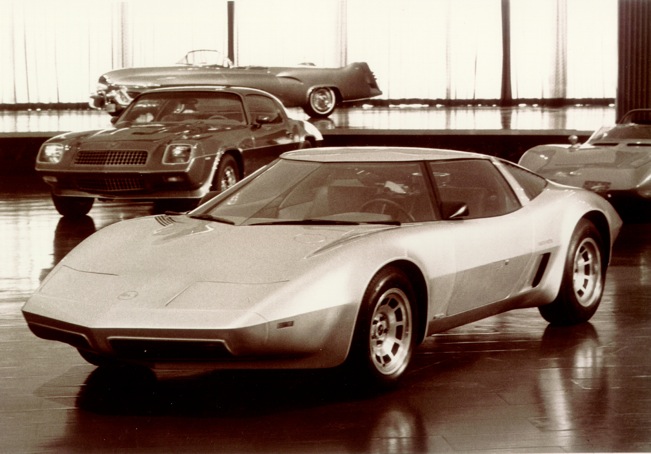



 Steve Prestegard.com: The Presteblog