We begin with what is not a music anniversary: Today in 1950, Paul Harvey began his national radio broadcast.
No comments on Presty the DJ for Dec. 3
We begin with what is not a music anniversary: Today in 1950, Paul Harvey began his national radio broadcast.
The number one album today in 1967 was the Monkees’ “Pisces, Aquarius, Capricorn and Jones Ltd.,” the group’s fourth million-selling album:
The number one single today in 1978:
Today in 1984, MTV carried the entire 14 minutes of “Thriller” for the first time:
The number one single today in 1958:
The number one British single today in 1966:
The number one single today in 1973:
Today in 1987, a Kentucky teacher lost her U.S. Supreme Court appeal over her firing for showing Pink Floyd’s movie “The Wall” to her class over its language and sexual content.
The school board that fired the teacher apparently figured that they don’t need her education.
The number one single today in 1968:
The number one bad single today in 1971 (shut your mouth):
Britain’s number one single today in 1985:
Today in 1997, Danbert Nobacon of Chumbawamba was arrested and jailed overnight in Italy for … wearing a skirt.
The number one single today in 1969 reached number one because of both sides, including one of the first songs about the singer’s future ex-wife:
The number one album today in 1986 was Bruce Springsteen and the E Street Band’s “Live/1975–85”:
I’m old enough to remember when Joe Scarborough spent most of his show kissing Donald Trump’s ass. Those were the days. Cast your mind back to 2015. Mika and Joe were still just “co-workers” and they would constantly yuck it up with then candidate Donald J. Trump. Don’t take my word for it — even the Washington Post wrote about their love affair with the Donald, describing the theme of these interviews as “bonhomie.” Erik Wemple explained, “Trump is often on the phone; some decent, journalistic questions get lobbed at Trump, often by Willie Geist; Trump makes more claims than the crew can possibly fact-check; and there’s a great deal of talk about polls.” When Willie Geist is asking the hard-hitting questions, you know you are in friendly territory.
Alas, that was then. If Scarborough’s most recent televised tirade against the former president tells us anything it is that the honeymoon is long over. Sitting next to the permanently nodding Mika, Joe ranted about the danger that is posed by candidate Donald Trump. “And if he is voted into office, then a lot of these people that are talking about literal, or figurative, or whatever the hell they’re saying, are going to look like idiots,” the host blustered. To be fair, if I was going to trust anyone on the subject of looking like an idiot, it would be Mr. Scarborough.
The fear-mongering wasn’t done just yet though. He continued, “Because he will do, he will get away with, he will imprison, he will execute, whoever he is allowed to imprison, execute, drive from the country.”
Now, I know I am not as smart as Captain Literal or Figurative or Whatever but, I do have a pretty basic question to his assertion: why didn’t Trump do any of those things — the imprisoning, the executing, the driving — the first time around? Is Trump that diabolical, that he was patiently waiting to execute people for his second term? Perhaps Trump executed and imprisoned people in his first term and I just missed it. But considering the amount of media scrutiny he received after dumping a box of fish food into a Koi pond, I think Trump executing someone would have generated a good deal of attention. If “Trump having two scoops of ice cream at dinner” was a 24-hour news cycle, surely “Trump executes political opponent” would have warranted a few days worth of coverage, no?
Speaking of the first time around, a lot of people made these same kinds of melodramatic predictions back when Scarborough was busy socializing at Mar-a-Lago with his future bride-to-be. The brilliant Beltway experts on the alphabet networks talked incessantly about the horrors that would befall us if the terrible Orange Man were ever given the keys to 1600 Pennsylvania Avenue. In fact, the Boston Globe ran an entire fake cover just to foment panic over what would happen to the country if Donald Trump were elected president.
MSNBC programming may be Trump-Derangement theater, but these doomsday actors are even less believable in the sequel. Top Gun: Maverick this ain’t. Like climate activists circling new dates on their calendars when the end of the world doesn’t materialize, these grifters simply move past their failed prognostications and start making a new one.
On X, Ben Domenech replied to the video of Scarborough’s screed and pointed out as much: “Looking at his (Trump’s) past disproves the thesis. The only way to argue this now is to say ‘he’s changed, he’s going to enact revenge, it will be different this time…’”
These phonies didn’t offer up any explanations as to why their dire predictions didn’t come to fruition during Trump’s first four years. And when they are wrong again, there will be no mea culpas from our betters in the mainstream media.
The only thing that these pompous sycophants are actually scared of is four years without Trump. The former president gave them ratings and book deals and relevance. Deep down they don’t think he is going to execute anyone. If anything he might be able to resuscitate quite a few dying careers in cable news.
I’d be remiss if I didn’t point out that it is pretty rich that an MSNBC host is accusing Trump of wanting to kill people just a few days after New York congressman Dan Goldman called for Donald Trump to be eliminated on… MSNBC. Who said irony was dead?
The other thing Scarborough and Curley both ignore is that if Trump is (re)elected next year he, like Joe Biden, will become an instant lame duck Jan. 20, 2025, the day the 2028 presidential campaigns will begin.
The number one single today in 1960:
The number one (for the second time) single today in 1963:
The number one single today in 1964:
The number one British single today in 1970:
Today in 1991, Nirvana did perhaps the worst lip-synching effort of all time of its “Smells Like Teen Spirit” for the BBC’s “Top of the Pops”:
Ryan Mills heads Up North:
It was just before 8 p.m. on a busy Friday when a fire erupted at the Al Gen Dinner Club.
Patrons of the popular restaurant in Wisconsin’s Northwoods flooded into the parking lot that night in September 2022. Some of the employees stayed behind to fight the blaze.
When firefighters arrived, smoke and flames were shooting out of the building. The firefighters contained the fire to the kitchen. The building was badly damaged, but no one was injured.
Rob Swearingen, a Republican state assemblyman who owns the business, took to Facebook, expressing his appreciation for the firefighters and thanking the community for its “outpouring of kindness & concern.”
Kirk Bangstad, the owner of a nearby brewpub and Swearingen’s one-time Democratic political rival, had a different message for his Facebook followers: “Rob Swearingen deserved for his restaurant to go under by self-inflicted arson,” he wrote.
It was an outrageous claim with no basis in truth. But it was par for the course for Bangstad, a left-wing activist, local loudmouth, and conspiracy theorist who has gained a cult following for marketing politically themed beers and painting himself as the victim of Republican chicanery.
For years now, Bangstad has been sparring with community leaders in the small town of Minocqua — the “Old Boys Network,” he calls them — who he says target him for his politics.
On his blog, Bangstad has described locals as “truck-driving Neanderthals.” He once suggested that his former landlord and landlady conspired with Minocqua leaders to run him out of town. He falsely claimed that the local newspaper publisher allowed his own brother to die in a hunting accident.
In one particularly juvenile stunt, Bangstad hung pictures of his enemies in his business’s restroom along with a sign asking patrons to “excuse us for the shit on our walls.”
Minocqua residents who spoke to National Review described Bangstad as “toxic” to the town.
After two failed bids for political office, the 46-year-old has turned himself into a left-wing agitator — he once launched a rural billboard campaign blasting Wisconsin Republicans for backing Donald Trump’s election lies, and he’s funded lawsuits against Wisconsin school districts for not forcing little kids to wear masks during the pandemic.
Seemingly no longer content with being a chaos agent in Minocqua and in rural Wisconsin, Bangstad is branching out. He is now one of the leaders of a fledgling effort to end all of Wisconsin’s school-voucher programs, which date back to the 1990s and are used by more than 50,000 predominantly low-income and minority students to escape troubled public schools.
While states like Florida and Arizona are expanding their school-choice programs to include just about every K–12 student, Bangstad wants to force Wisconsin kids back into a one-size-fits-all 1950s-era industrial model of education favored by teachers’ unions.
His Minocqua Brewing Company super PAC is funding a lawsuit, a petition for original action, urging the state’s newly constituted and progressive-leaning Supreme Court to declare Wisconsin’s voucher programs unconstitutional and to overturn the 1992 ruling that is the basis of school choice in the state.
School-choice advocates say a ruling in Bangstad’s favor would lead to chaos.
To Bangstad, school vouchers are “parasitic” and “poisonous” and part of a “political scheme to destroy public education in America.” He calls the state’s public schools “the pride and joy of Wisconsin.” He has touted his fight to end school vouchers as “righteous” and “one of the most consequential things I’ve done in my life.”
Bangstad declined a request for an interview with National Review, texting over a one-sentence statement instead: “William F Buckley must be rolling in his grave by the seismic chaos being caused by the current Republican party.”
It may seem odd that a small-town brewery owner in a state flush with beer lovers of all stripes is leading a political fight over a highly divisive issue with no real connection to brewing. But Bangstad’s Minocqua Brewing Company has long ceased to be a typical Wisconsin brewery.
During the Covid-19 pandemic, Bangstad transformed his struggling business by leaning hard into his leftist politics, shaming Republicans and Minocqua leaders for their handling of the virus, and reveling in the discord he created. His embrace of left-wing politics as a marketing strategy would make Ben & Jerry’s blush.
A review of Bangstad’s long-running blog, his business’s website, and newspaper archives dating back to the 1990s, paints a picture of a smart and eclectic man who was radicalized during the pandemic and who was driven by his “internal darkness and anger” to collectively “punish” not only his political enemies in the Republican Party, but his entire town.
Of course, he’s not against making a buck in the process.
Speaking to a local NBC affiliate in August, Bangstad said he is trying to be a progressive business owner “who actually walks the walk” and does “stuff that tries to change Wisconsin.”
“And do I hope it sells more beer?” he said. “Absolutely.”
Located in the heart of Wisconsin’s Northwoods, Minocqua, a former lake-country logging town, is now a summer playground for tourists in the Upper Midwest.
Bangstad was raised about an hour and a half south, in Stevens Point, but left Wisconsin to attend Harvard, where he studied government.
Following stints as a tech consultant, New York opera singer, and speechwriter for Anthony Weiner’s scandal-plagued mayoral race, Bangstad and his wife drifted back to Wisconsin after she was diagnosed with terminal lung cancer.
In 2015, he announced a run for Congress to end the “constant partisan bickering and gridlock that have hurt our country and left Wisconsin families behind,” but quickly ended the campaign once he realized he couldn’t raise enough money.
According to the Minocqua Brewing Company website, Bangstad and his wife bought the business in early 2016. At first, they seem to have run it like a typical small-town restaurant and brewpub, mostly free of politics. They served beer with names like “Largemouth Blonde” and “Road Kill Red.”
At the same time, Bangstad’s life was spiraling.
He became estranged from his wife after her cancer spread to her brain. She died in December 2018. He wrote about it in a blog post.
He’s also acknowledged he was abusing cocaine, but he hasn’t “been too ruined by it.”
Less than two years later, the Covid-19 pandemic threatened his business. He blamed Republicans, writing on his blog that he was “forced to lay off my staff because Donald Trump and Mitch McConnell played political football” with Covid-relief money.
In Wisconsin, he took issue with Republicans for trying to reopen the state without a plan and criticized his local police department for not enforcing a mask mandate. He called for Minocqua leaders to require people to show proof of vaccination to enter local restaurants, and he shamed his neighbors on Facebook for not taking the virus as seriously as he did.
He was filled with “grief, fear, and anger,” and facing bankruptcy, he wrote.
Bangstad told the Wausau Daily Herald in 2021 that he learned during the pandemic that he needed to “embrace politics to stay alive.”
So, embrace left-wing politics he did. And he embraced it hard.
Amid that chaos, Bangstad launched another political campaign in 2020 — an ill-fated attempt to win Swearingen’s seat in the state assembly. It didn’t go well. Bangstad received less than 37 percent of the vote, running behind Joe Biden in the area.
But he did get some attention from the New York Times for wrapping his business in a giant Biden–Harris sign, and drawing complaints from county leaders that it exceeded legal size limits. It was a harbinger of what would become Bangstad’s new business approach — eschewing local popularity and courting controversy to draw customers from far outside his Minocqua base.
That fall, Bangstad began selling “Biden Beer”— a brew he’s described as inoffensive and not bitter. He revamped his logo to include three raised fists, one holding a stalk of barley.
Now, virtually everything Bangstad sells is explicitly political. He has beers named after Bernie Sanders and Alexandria Ocasio-Cortez. In June 2021, Wisconsin senator Tammy Baldwin brought Bangstad’s Kamala Harris–themed beer to a women’s dinner with the vice president.
In addition to beer, Bangstad also sells “woke coffee” and “choice” wine — the proceeds go to pro-abortion groups, of course, not school-choice-backers.
Bangstad no longer brews his own beer. Instead, he contracts with other Wisconsin brewers and markets his products to left-wingers in the Upper Midwest and across the country.
He sold his original building during the pandemic but kept the Minocqua Brewing Company name. He has since reopened his taproom in a new space.
He proudly calls it “the least popular place in town.”
In January 2021, in an effort to up his political activism, Bangstad launched the Minocqua Brewing Company super PAC, dedicated to removing “Republican federal and state elected officials who perpetuated the election lies that caused the Insurrection of January 6, 2021, and whose downplaying of the seriousness of Covid 19 caused so many unnecessary deaths in our country.” He claims to have raised over $1 million so far.
He used the PAC to pay for billboards attacking Wisconsin senator Ron Johnson and U.S. Representative Tom Tiffany, who he has said are traitors to the country for backing Trump’s stolen-election lies. He’s also used it to fund a class-action lawsuit against school boards “outside of the more sane urban areas of Wisconsin” for not following CDC guidelines on masking kids, and to support the candidacy of hard-left judge Janet Protasiewicz for the state Supreme Court.
All the while, Bangstad continues his more parochial legal fights with town and county leaders.
He is embroiled in a legal fight with local officials over a permitting dispute for a beer garden. He has claimed the town board, and particularly the board chairman Mark Hartzheim “didn’t like my company’s progressive activism and conspired to hamstring my business.”
At one point, Bangstad sicced his supporters on the board, urging them to file complaints. They complied, sending hundreds of sometimes profane emails, including emails accusing Hartzheim of being a “rotting turd” and calling for him to “rot in hell forever.”
Attempts to reach Hartzheim for comment on the phone and via email were not successful.
One town leader, who declined to be named for this story, described Bangstad as a “conflict entrepreneur” because “the more he drums up that everybody hates him, the more his 80,000 supporters send him money.”
Krystal Westfahl, the head of Minocqua’s visitors bureau, called Bangstad’s claims that town leaders are conspiring to hurt him and his business “a bunch of bullshit.”
While other businesses in town take the time working through the permitting process, Bangstad “willfully ignores or doesn’t understand how permitting works.”
For years, Bangstad has maintained a blog on his brewery’s website where he documents his grievances, floats conspiracy theories, updates his followers on his political fights, and lets them know that they can “help the cause by simply buying” his beer and other products.
Regular readers would surmise that virtually everyone in Minocqua — town leaders, the local newspaper, even Bangstad’s former landlord — are all conspiring against him.
He’s regularly compared himself to the Dukes of Hazzard, an irreverent rebel stymieing hapless and corrupt small-town officials. He’s complained about the “alt-right zeitgeist of Minocqua,” and the “truck-driving Neanderthals” who give him the finger at least once a day.
He’s urged his supporters to boycott Minocqua until town leaders implement his progressive wish list, including forcing businesses to post signs banning guns and issuing a press release, declaring Joe Biden the “legitimate president,” and “explicitly welcoming all people of color, gender, and those of the LGBTQ community.”
One of his favorite targets over the years has been Gregg Walker, the publisher of the Lakeland Times, which has its office across the street from Bangstad’s taproom. Last year, the Times was named a Wisconsin Newspaper Association Newspaper of the Year. Bangstad has called the paper, which has a conservative editorial page, a “q-anon propaganda rag.”
Unhappy with his coverage in the paper — a Times reporter had the temerity to report that the numbers in Bangstad’s 2020 campaign-finance reports didn’t add up — he resorted to regularly calling Walker a “crook” and a “misogynist,” apparently for publishing news articles critical of female public officials. He falsely claimed that Walker published an editorial calling a female leader “retarded” — he didn’t. And he wrote blog posts spreading false rumors about Walker harming and taking advantage of his own family members.
In one case, he falsely accused Walker of refusing to aid his own brother after a hunting accident in the mid 1980s and letting him die for financial gain. Walker was 17 at the time and was five miles away, according to court records.
Bangstad also falsely accused Walker of filing for his dying and incapacitated father’s divorce “so he could direct more money from his dad’s will to himself.”
Walker sued Bangstad for defamation. Regarding the family-neglect stories, Bangstad conceded on his blog that “we let our imaginations run a bit too far” — but he added that he had an “absolute right to call [Walker] a ‘misogynist crook.’”
On his blog, Bangstad said the trial was being presided over by a “backwoods judge.” In court, he repeatedly tangled with the judge, accused him of tilting the trial in Walker’s favor, and openly questioned why he should respect the process. The judge slapped him with a contempt of court citation and a $250 fine, according to a news report.
At the end of October, the jury awarded Walker a $750,000 judgment, including $430,000 in punitive damages. It was the largest defamation judgment in state history.
The jurors asked to remain anonymous to avoid being targeted by Bangstad and his supporters.
Bangstad has vowed to appeal, writing that some of his criticisms of Walker were parodies, and that in cases where he spread false rumors on his blog, “I always used the word ‘alleged’ when repeating stories that I heard from others that I couldn’t prove to be true.” Several of Bangstad’s false claims about Walker remain on his blog.
His insurance company is now trying to drop him as a client and to get out of paying the judgment, in part because of his behavior in court. Walker’s lawyer, Matthew Fernholz, recently filed a motion calling for Bangstad to be held in contempt of court again, in part for going on Facebook Live while the jury was deliberating and criticizing the “Kangaroo Trial” and the “one-sided” judge.
Fernholz told National Review that he believes the judgment will be upheld on appeal, if there is one. He called Bangstad “very divisive.”
“Mr. Bangstad has said a lot of bad things about a lot of people, but Gregg Walker had the ability to counteract him, and he was willing to stand up and take him on,” Fernholz said. “Not everyone wants to do that or is willing to do that, but Gregg Walker did. And, there are consequences, there should be consequences, for posting false information about people, particularly when you post about their family and cross the line like that.”
While Bangstad has gained a reputation in Minocqua and in rural Wisconsin as something of a goofball, his fight to end Wisconsin’s school voucher system could have very real and very serious consequences for tens of thousands of families in the state.
Bangstad began plotting the move at least as far back as April, when Protasiewicz was elected to the Wisconsin Supreme Court, giving it a 4–3 left-wing majority. He wrote at the time that he was excited about all the “potential lawsuits we can bring to a newly-progressive” court.
He explored his options — maybe he could fight to strike down a 19th-century abortion ban or bring a legal case to “unrig our legislative maps.” But other progressives were already leading on those fronts. Bangstad looked to make his mark elsewhere.
He chose public education, writing on his blog over Memorial Day weekend that the time was right “to sue the Republican Legislature in Wisconsin to stop them from using school vouchers to bleed our public school system dry.”
The voucher system in Wisconsin is not some new creation.
The system, which is targeted at low-income and working-class families, and disproportionately benefits black and Hispanic students in Milwaukee and Racine, started with the creation of the Milwaukee Parental Choice Program in 1990. It was a bipartisan effort, and a reaction to the poor academic results in the city’s schools at the time. In 1992, the state Supreme Court upheld the program as constitutional, and it has been expanded several times since then.
Rick Esenberg, president of the Wisconsin Institute for Law & Liberty, which has filed a motion to intervene in the case, said ending the state’s voucher program after 33 years “would cause a great deal of chaos” because the students enrolled in the program, “by definition, they are from a family that doesn’t have any money. So, a lot of kids would have to be absorbed back into the public schools. That would be, particularly in Milwaukee, that would be difficult.”
Striking down a generally popular voucher program could be politically problematic, Esenberg said, because many of the voucher recipients are traditional parts of the Democratic coalition. And the court has already agreed to hear a controversial redistricting case, so taking up school vouchers may be a step too far for the progressive justices and the Democratic establishment ahead of a 2025 election that could swing the court back to the right.
Democratic governor Tony Evers’ administration has urged the court not to take the case, saying it should start at the circuit court level instead. In a Facebook post, Bangstad called Evers stance a “hard pill to swallow,” and suggested that maybe the Minocqua Brewing Company “has become a bit of a black sheep among establishment Democrats who would prefer we just went away.”
Essenberg also said he has questions about the level of funding for the challenge on Bangstad’s side: If the Supreme Court doesn’t take the case, and they have to make a long, complicated slog through the lower courts, “do they have the resources do that?”
In the wake of Protasiewicz’s election and Donald Trump’s arrest in Manhattan in early April, Bangstad took to his blog on Easter calling for a new beginning, not just for the country or for the State of Wisconsin, but for himself.
He wrote about the circumstances — his wife’s death, Covid snarling his business, a threat of bankruptcy — that he said turned him into a left-wing activist.
“Somehow I channeled all of that grief, fear, and anger into a righteous desire to punish Trump’s political sycophants in Wisconsin and poke the bright red Republican bear ‘Up North,’” he wrote, adding that he let his “internal darkness and anger get carried away.”
He also felt a need “to publicly punish the Town of Minocqua,” he wrote. “And punish I did, for three years. It felt exhilarating throughout, but as most adults know, temper tantrums don’t generally lead to successful outcomes.”
Bangstad’s antics have continued since then, including publicly disrespecting the court system and causing mayhem at a county zoning committee meeting over the summer.
Westfahl, the Minocqua visitor’s bureau president, said the picture Bangstad has painted of their community — a hateful place that is unwelcoming or unsafe for minority voices — is not an accurate one. It’s unfortunate, she said, that if “you Google ‘Minocqua,’ you’re likely going to come across the Minocqua Brewing Company.”
Yet, she minimized Bangstad’s impact on the town. Yes, he’s created some havoc and drawn the ire of many people who probably had never heard of Minocqua before and had never intended to visit, she said. But the tourists are still coming, and Minocqua still the kind of place where neighbors are neighborly, even if their politics are a little different. If anything, she said, Bangstad’s antics have led to “maybe gelling us a little closer together.”
“There’s been one person that has created such an upheaval in the way that we talk about our community,” Westfahl said. “I mean, this is a small community, we’re tight knit. Regardless of political affiliation, we all have to work together and live together.”
Most of the time, single posts on Twitter/X aren’t worth rebuking with an entire piece, but Washington Post media reporter Paul Farhi laid out an absolute banger this weekend when he lamented the idea of “citizen journalists” not being as professional, trained or equipped as he or his colleagues at major news outlets like the Post, New York Times or CNN. The idea that citizen journalists are not every bit as capable as journalists employed by these outlets (and others) is ridiculous and should be rebuffed.
Farhi posted, “Someone invented the phrase ‘citizen journalism’ a few years ago to describe amateurs doing the work of pros. Yes, it occasionally works, but probably no more often than ‘citizen cop,’ ‘citizen attorney’ or ‘citizen soldier.’”
There’s a lot to unpack here, starting with the idea of citizen versus professional journalist. When professional journalists at Newsweek sat on the Monica Lewinsky story, trying to figure out how to minimize the damage to their great white hope then-president Bill Clinton, a citizen journalist broke the story — perhaps the biggest of the decade. When professional journalists attempted to kill the John Edwards story, the National Enquirer ran with it and effectively ended any political ambitions Edwards may have had.
Citizen journalists are likely the reason Kyle Rittenhouse was cleared of a life prison sentence. It was the cameras from journalists at smaller outlets like the Daily Caller and Washington Examiner that caught the exchanges between Rittenhouse and rioters in Kenosha, Wisconsin, on video and showed Rittenhouse acted out of self-defense. It wasn’t CNN or NBC cameras.
Those are just a few examples, not to mention independent journalists who began to question the official Covid narrative coming from the Trump White House and Anthony Fauci. Citizen journalists broke open Planned Parenthood’s profit scheme.
Secondly, each example Farhi notes — a police officer, an attorney, a soldier — requires years of specialty training and licensing. Journalists require no such special qualifications like passing a bar exam, nor are they professionally penalized much for abusing their position, as police officers can be suspended, attorneys can be disbarred, and soldiers can be discharged for misconduct. It’s specifically because of this reason that anyone, any citizen with a smartphone and a video recorder can perform the job of a journalist, and many do so and are better at it than anyone at the Washington Post.
Lastly, Mr. Farhi seems unaware that the United States already employs a citizen military. It’s in our nation’s founding, and except during national service drafts in times of war, the United States military is wholly made up of volunteer citizens.
Earlier this year, Washington Post reporter Philip Bump embarrassed himself when he appeared on a podcast from a comedy club host. Perhaps Bump accepted the invite because he thought he would be getting the comic celebrity treatment. But Bump found himself flustered when confronted with text messages from Hunter Biden, which Bump has written off continuously from his column at the Post. Bump became so frustrated by text messages from the Biden family finance racket, that he asked to leave the podcast.
I would ask Paul Farhi who he thinks acted as an actual journalist in that situation? The professional paid guy for the Washington Post? Or the comedy club owner not interested in protecting Joe Biden and his family, the way they all did with Bill Clinton?
The other night I was at an event where I accidentally listened to a journalism school professor talk about the state of media today. He was talking about how dangerous social media is since it’s “pre-chewed” and “unverified,” but the legacy media, oh tower of goodness, that is Real Journalism. It’s funny because the truth is the exact opposite, of course. Social media, over the last six weeks, has shown me raw footage from the war, raw footage of Hamas taking hostages, raw footage of atrocities the legacy media downplayed or ignored or actively lied about. Over the last six weeks, legacy media has given me literal Hamas propaganda, quite proudly, on the front page, over and over again. And now we all know it. Which makes the legacy media very mad indeed. The screaming and thrashing about social media are the old world’s death throes. Don’t get me wrong; social media is a mess. Twitter?! It’s vile. It’s full of offensive lies and just offensive reality. It’s vile because the world contains vile things and people are monstrous and weird. I see images I shouldn’t. I see hedgehogs who seem too tame (is that legal?). I see Susan Sarandon retweeting MAGA accounts in ways that trouble my sleep. And yet. I would take the mess over my apportioned journalism-school-Hamas-propaganda-oatmeal any day. God bless this mess. I’m grateful for social media.
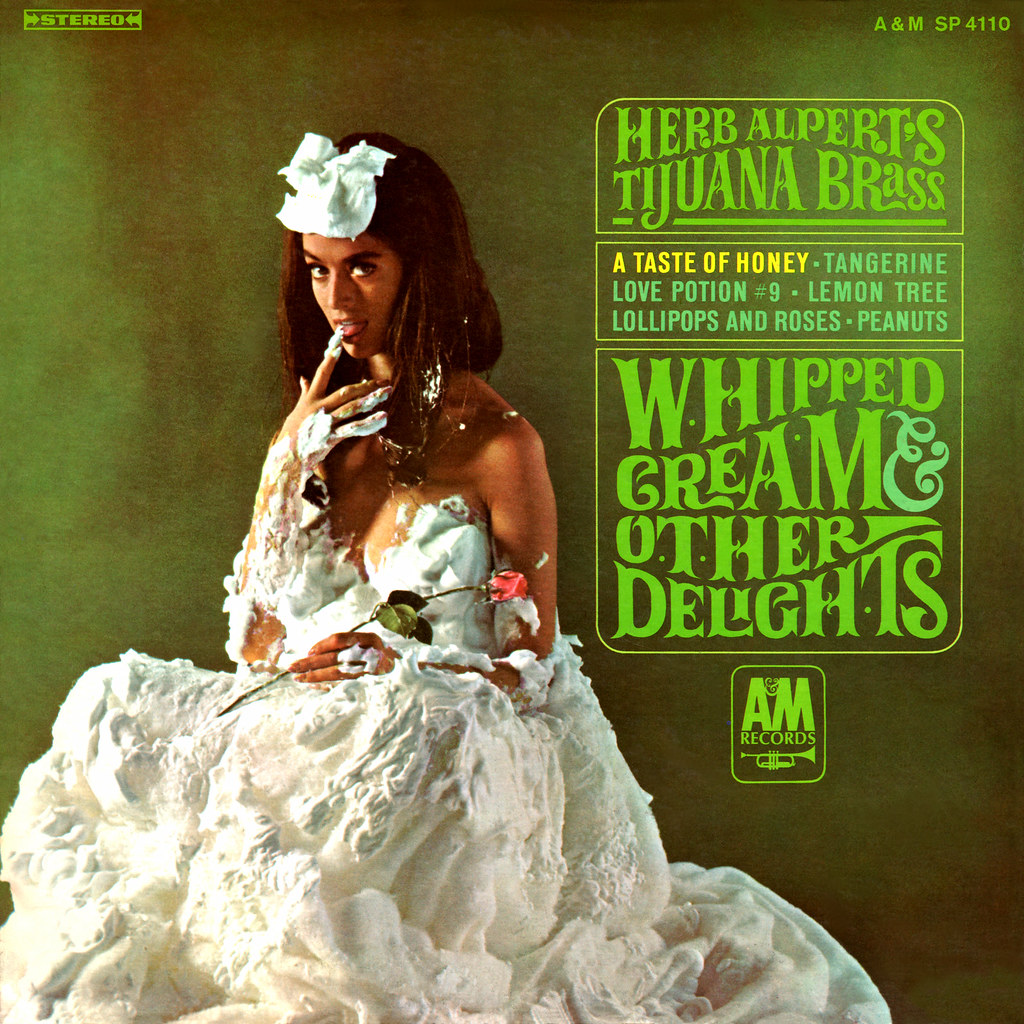
The number one album today in 1965 was Herb Alpert and the Tijuana Brass’ “Whipped Cream and Other Delights”:
The number one single today in 1966 was this one-hit wonder:
The number one British album today in 1976 was Glen Campbell’s “20 Golden Greats”:
 Steve Prestegard.com: The Presteblog