Skip to content
  • When you know it’s fiction

    February 18, 2014
    Culture, media

    Newscastic thinks every real journalist would like to be one of these five fictional journalists:

    Carl Kolchak/”Kolchak: The Night Stalker” (1974)

    Kolchak, played by Darren McGavin on the eponymous TV series, was a talented reporter in Chicago that tackled tales of the strange and supernatural with equal parts tenacity, instinct and guts. The TV show was an early forerunner to “The X-Files” and had a healthy mix of horror, crime procedural and humor. Unfortunately, Kolchak’s proof of zombies, ghosts and other creatures committing crimes around the city often went missing or was destroyed, just as deadlines hit. We’ve all been there right? Either way, plenty of journalists would love to spend their days chasing those kinds of stories rather than calling the public relations officer back for a second or third time.

    Spider Jerusalem/ “Transmetropolitan” (1997)

    The things Spider Jerusalem does to his body in the comic series “Transmetropolitan” would make Hunter S. Thompson blush. Almost every issue finds him popping pills, killing drinks and smoking anything and everything. Still, he manages to be the smart-ass journalist we all want to be, battling corruption and injustice with one hand on the keyboard and the other giving the bird. He also thrives on being hated, often back talking the public and sources in ways that have real world journalists grinning.

    Howard Beale/”Network” (1976)

    Comparing yourself to a journalist that was very likely crazy and was killed on air is not something most of us strive for, but many reporters wish they could speak as honestly and passionately as Beale, played by Peter Finch, does in his “mad as hell speech” from the movie “Network.” Many journalists struggle with dark issues like homelessness they see everyday that are of little to no interest to the main population, and while they may not have the answers, they want the people to know what is going on.

    Mackenzie McHale/ “Newsroom” (2012)

    VIA http://www.hbo.com

    The easy pick for the HBO TV series would be host Will McAvoy, but McHale is the brains behind the whole operation. She is incredibly smart and a talented journalist in her own right, covering Afghanistan, Pakistan and Iraq on the ground. Her arrival on the fictional “News Night” changed the way the show delivered the news. Under her guidance, the coverage shifted from gossipy material to real time stories with national and global implications that the average viewer should know and care about. In short, it is the newsman’s news show. The show can be preachy and can over simplify what a journalist does on a day-to-day basis, but it also makes you want to write a [Freedom of Information Act] request with gusto and call a source out in front of a crowd.

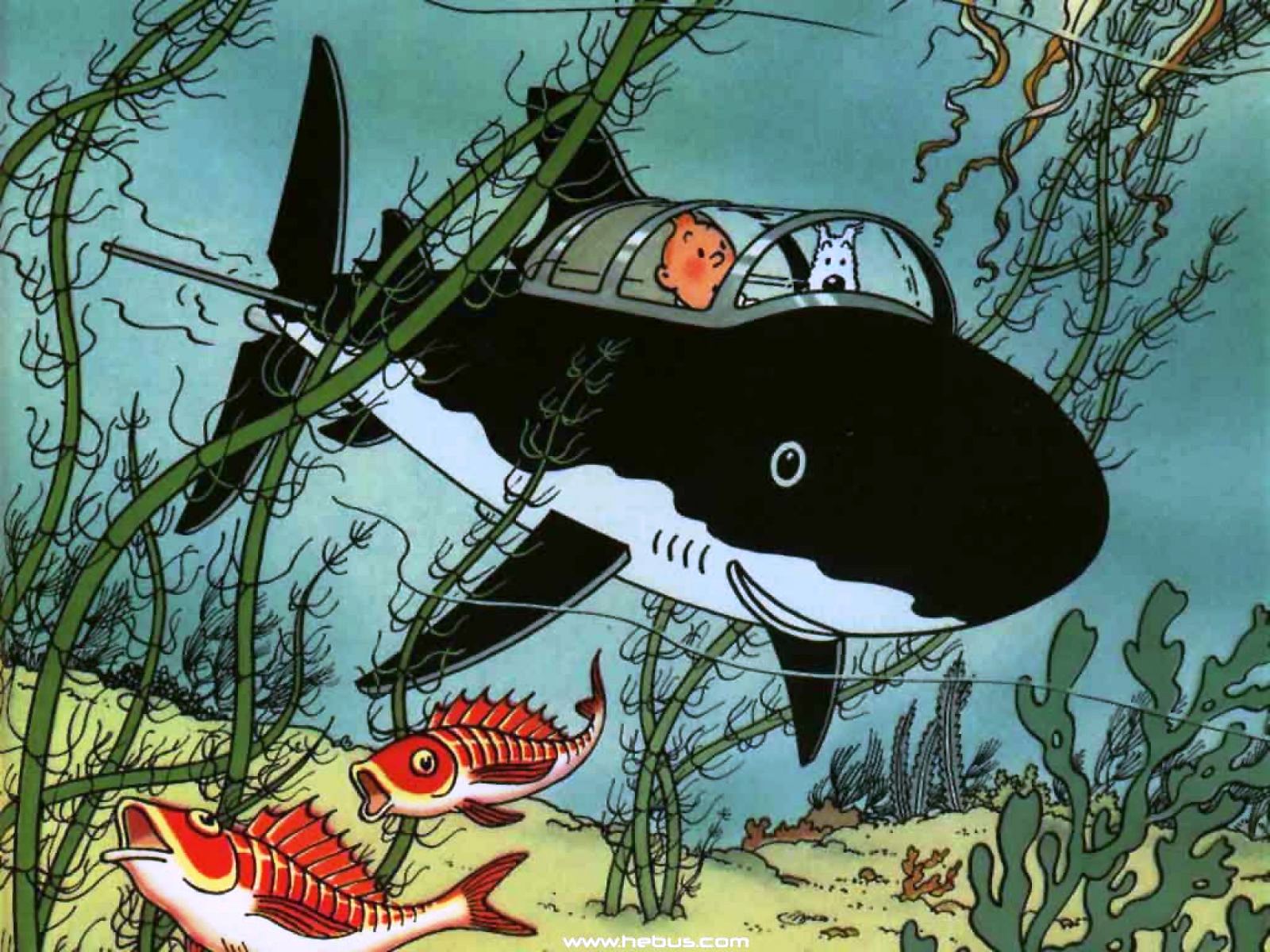
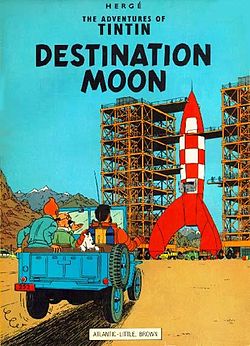
    Tintin/”The Adventures of Tintin” (1929)

    VIA http://www.bleedingcool.com

    Tintin gets around. The Dutch comic book reporter has adventure after adventure in exotic locations ranging from the Orient to the bottom of the ocean and even the moon. He has an incredible eye for detail, has a deep knowledge of automobiles and aircraft and can take care of himself in a fist fight. In later issues, he became more of a private detective and explorer and, if we are being honest, he was rarely seen turning a story in before that, but what reporter doesn’t fantasize about their talents taking them on great adventures? Especially with no editor breathing down their neck.

    Well, the first problem with this is that this list doesn’t include …

    The second thing, as I’ve written here before, is that watching journalism take place isn’t interesting. Much of it is either rote or at least routine. Watching someone stare into a computer screen and then type, well, you can see that in any modern office. Interviewing people can be interesting (or not), but in truth the only people interested in watching depictions of journalism are journalists. There are no satisfying payoffs, only the next thing to cover.

    The other thing is that it fails to acknowledge that journalists are not normal people. Other than TV news (which some argue isn’t really news), the best looking reporter is average looking at best. More likely reporters are ugly, fat, badly dressed, possessed of poor eating habits, drivers of poor quality vehicles, and often ill-mannered in public. The next journalist who can defend himself in a fight, or run two blocks without finding there isn’t enough air in the air, will be the first. (You’d think journalists would be bigger fans of concealed-carry for that reason.)

    News takes place any time of the day or night, any day of the week; therefore it has to be covered wherever and whenever it happens. Journalists are overworked (except those who work only 40 hours a week, in which case you’re not doing enough work) and, unless your name is Matt Lauer, underpaid. A proper journalist is cynical. (The old saw goes that if your mother says she loves you, check it out. The truth is that most reporters today aren’t nearly cynical enough and spend far too much time sucking up to power.) The old joke is that newsrooms put the word “fun” in “dysfunctional.”

    Consider John F. Kennedy’s assassination in 1963. Some reporters cried while reporting the story, which is inappropriate at least and appalling at worst. Some years later — notably Fort Worth newspaper reporter Bob Schieffer, now at CBS — sound strangely giddy talking about their experiences. Major breaking news is an adrenaline rush, as horrible as that sounds. (If you assume all journalists are going to Hell after this life, you’ll be right more often than not.)

    So after a quarter-century of doing this, why am I still doing this? Because I figured out (and maybe it’s a case of necessity becoming a virtue) that you should not do what you love (and you should never love your job, because neither your job nor your employer love you); you should do what you’re good at doing.

    Share this on …

    • Share on X (Opens in new window) X
    • Share on Facebook (Opens in new window) Facebook
    • Share on LinkedIn (Opens in new window) LinkedIn
    • Email a link to a friend (Opens in new window) Email
    • Print (Opens in new window) Print
    Like Loading…
    No comments on When you know it’s fiction
  • Presty the DJ for Feb. 18

    February 18, 2014
    Music

    The number one single today in 1956:

    Today in 1962, the Everly Brothers, on leave from the U.S. Marine Corps, appeared on CBS-TV’s Ed Sullivan Shew:

    The number one British single today in 1965:

    (more…)

    Share this on …

    • Share on X (Opens in new window) X
    • Share on Facebook (Opens in new window) Facebook
    • Share on LinkedIn (Opens in new window) LinkedIn
    • Email a link to a friend (Opens in new window) Email
    • Print (Opens in new window) Print
    Like Loading…
    No comments on Presty the DJ for Feb. 18
  • Guns and ganja, pistols and pot, rifles and roaches

    February 17, 2014
    Culture, US politics

    National Review’s Jim Geraghty passes on an interesting comparison by Ace of Spades:

    People will hate me for saying this, but I think the gun-grabbers are similar to the pot prohibitionists in one way.

    That way is this: Essentially both impulses come from distrusting a specific population. There is distaste for a culture, and distrust.

    The gun-grabbers think that ordinary citizens with no criminal history will become kill-crazy madmen if they carry a gun.

    This is because they generally find rural people and conservatives distasteful, and dislike their culture, and oppose their culture.

    Similarly, people who insist on keeping pot illegal have distaste for potheads, and do not like the pot culture, and distrust pot smokers

    Either of these distrusts/dislikes is permissible; people can have their own opinions. But cultural disdain should not have the force of law.

    Geraghty and Ace both point out one major difference: Gun ownership is protected by the Second Amendment, whereas marijuana has no constitutional protection. (Alcohol is sort of protected given that the 21st Amendment eliminated the 18th Amendment, which started Prohibition.)

    But the similarities are certainly there. To stereotype for a moment, liberals seem to believe that gun-owners are wild-eyed mouth-breathers who would blow away an entire room full of people upon the first flash of temper. Non-libertarian conservatives seem to believe that pot-smokers are lazy, ambition-free lumps of flesh, or that if you smoke one joint, you’ll be mainlining heroin, freebasing and/or manufacturing methamphetamine tomorrow.

    Regular readers know that, as a never-user, I am skeptical of claims of marijuana’s benefits and harm. The claim that marijuana is a gateway drug to harder drugs is more likely an observation about the user than the substance. Those who claim marijuana should be legalized, regulated and taxed need to explain why the experience with tobacco, where higher taxes have led to a black market in tobacco, should be duplicated.

    If we took personal freedom and personal responsibility more seriously as a society, this would not be a controversial subject. Instead, we have the steadily growing nanny state, in which the founding principle is that anything that is not specifically allowed is prohibited.


    Share this on …

    • Share on X (Opens in new window) X
    • Share on Facebook (Opens in new window) Facebook
    • Share on LinkedIn (Opens in new window) LinkedIn
    • Email a link to a friend (Opens in new window) Email
    • Print (Opens in new window) Print
    Like Loading…
    No comments on Guns and ganja, pistols and pot, rifles and roaches
  • Tamp down your tributes

    February 17, 2014
    media, Wisconsin politics

    Right Wisconsin subscribers can read my thoughts about retiring Sen. Dale Schultz (R–Richland Center), which include …

    This might fit a definition of political courage today: According to one of the tributes in a newspaper in his Senate district, Schultz stood up at a meeting on the proposed Lac du Flambeau Chippewa casino in Shullsburg and announced he was opposed to expanding gambling in Wisconsin. He also voted against the bill to reform the process of reviewing school tribal nicknames, despite the presence of seven high schools with Indian nicknames within his Senate district.

    The Act 10 and tribal nickname votes are freebies in a sense, since both passed without Schultz’s vote. On the other hand, Schultz’s vote against the2012 mining expansion bill killed the bill, since Schultz voted with all 16 Democrats against the bill. Schultz appears to be against Walker’s Road to Prosperity tax cuts, claiming not a single constituent of his favored tax cuts as the first use of the state surplus. That makes one think Schultz has stopped listening to his constituents who are more conservative than he is, or those constituents have decided to stop talking to Schultz.

    Share this on …

    • Share on X (Opens in new window) X
    • Share on Facebook (Opens in new window) Facebook
    • Share on LinkedIn (Opens in new window) LinkedIn
    • Email a link to a friend (Opens in new window) Email
    • Print (Opens in new window) Print
    Like Loading…
    2 comments on Tamp down your tributes
  • Presty the DJ for Feb. 17

    February 17, 2014
    Music

    The number one single today in 1962:

    The number one British single today in 1966:

    Today in 1969, Bob Dylan and Johnny Cash recorded the album “Girl from the North Country.”

    Never heard of a Dylan–Cash collaboration? That’s because the album was never released, although the title track was on Dylan’s “Nashville Skyline” album.

    (more…)

    Share this on …

    • Share on X (Opens in new window) X
    • Share on Facebook (Opens in new window) Facebook
    • Share on LinkedIn (Opens in new window) LinkedIn
    • Email a link to a friend (Opens in new window) Email
    • Print (Opens in new window) Print
    Like Loading…
    No comments on Presty the DJ for Feb. 17
  • Presty the DJ for Feb. 16

    February 16, 2014
    Music

    Today in 1964, the Beatles appeared on CBS-TV’s Ed Sullivan Shew,  for the first time since last week.

    The number one British single today in 1967 was written by Charlie Chaplin:

    Today in 1974, members of Emerson, Lake and Palmer were arrested for swimming naked in a Salt Lake City hotel pool. They were fined $75 each.

    (more…)

    Share this on …

    • Share on X (Opens in new window) X
    • Share on Facebook (Opens in new window) Facebook
    • Share on LinkedIn (Opens in new window) LinkedIn
    • Email a link to a friend (Opens in new window) Email
    • Print (Opens in new window) Print
    Like Loading…
    No comments on Presty the DJ for Feb. 16
  • Presty the DJ for Feb. 15

    February 15, 2014
    Music

    Today in 1961, singer Jackie Wilson got a visit from a female fan who demanded to see him, enforcing said demand with a gun. Wilson was shot when he tried to disarm the fan.

    The number one album today in 1964 encouraged record-buyers to “Meet the Beatles!”

    (more…)

    Share this on …

    • Share on X (Opens in new window) X
    • Share on Facebook (Opens in new window) Facebook
    • Share on LinkedIn (Opens in new window) LinkedIn
    • Email a link to a friend (Opens in new window) Email
    • Print (Opens in new window) Print
    Like Loading…
    No comments on Presty the DJ for Feb. 15
  • Rivals

    February 14, 2014
    History, Sports

    Madison Newspapers wants you!

    As a Prep Zone newsletter subscriber and/or someone has entered our contests in the past, we thought you’d want to know about our latest contest, in which we’re seeking the best high school sports rivalry in Wisconsin.

    The two winning schools in the top rivalry will each get $250 to use for their athletic programs.

    Vote!

    You can vote once per day; the field will be narrowed to the finalists on Monday, Feb. 17.

    A book about the football rivalry between Georgia and Georgia Tech is called Clean Old-Fashioned Hate. This blog is about high school rivalries, not college (for instance, Wisconsin vs. Minnesota) or pros (for instance, Packers vs. Bears), but the concept is similar.

    The easiest way to define a high school sports rivalry is: Lose to this team, and your life is temporarily ruined, at least from the fan’s perspective.

    Rivalries are big for everyone involved, but they’re bigger for fans than players. That’s because players have grown up playing each other, particularly in these days of year-round sports. Fans have less personal stake, but take it more personally. That seems odd, but it also seems to be the case. Players wear uniforms; fans dress up in team colors with various team accessories.

    The State Journal’s list does not (or did not until I added it) the longest running high school football rivalry in the state, Ripon vs. Berlin. Nor does it include Stratford–Edgar or many others outside the State Journal’s readership area.

    There are probably two kinds of high school rivalries. The first could be called Proximity Breeds Contempt — your closest rival in geography. The State Journal’s list includes Holmen–Onalaska, Middleton–Verona, De Forest–Waunakee, Lancaster–Platteville, Dodgeville–Mineral Point, Omro–Winneconne, and Kaukauna–Kimberly. That obviously also includes every in-city rivalry, such as Craig vs. Parker in Janesville, Central vs. Logan in La Crosse, Memorial vs. North in Eau Claire, and every combination of Madison high schools, but particularly East vs. La Follette and Memorial vs. West. Madison East vs. Madison West qualifies because they are the two oldest surviving high schools, since Central was replaced by Memorial in 1970.

    The other rivalry could be called Quality Breeds Contempt. That’s a sport-based rivalry, when your number one target is the traditional power in the conference. In Southwest Wisconsin basketball, that’s Cuba City, whose teams have combined for 10 state titles since 1981. In football, that’s Lancaster and Hartland Arrowhead, among others. That kind of rival produces the game on which you base your season, whether you beat the best (over time, not a single season) program in your conference.

    Both kinds of rivalry were featured in one 2003 football game, when undefeated Berlin, which was giving up 5 points a game, hosted undefeated Ripon, which was scoring more than 50 points per game. I got to announce that game, and it was a great game … at least from the perspective of the Ripon fans, because the Tigers won 49–0 on the way to their first state title. Four months later featured almost the reverse, with conference boys basketball champion Berlin beating Ripon in double overtime in the regional final on Berlin’s way to losing its sectional final to perennial state participant Seymour.

    Beating rivals makes postseason accomplishments better. One of the favorite teams I ever covered was the 1987 Madison La Follette girls basketball team, which finished 9-11 in its regular season. Two of those nine wins were over Madison East, both in overtime (including an overtime shutout of East in the regular season finale). East, thanks to its foreign exchange student, finished higher than La Follette in the Big Eight Conference. So of course La Follette and East had to play in the regional final. And of course the game went to overtime. And of course La Follette won, this time on a buzzer-beater.

    Up next was another archrival, Madison Memorial, which won the Big Eight title and beat La Follette twice in the regular season, but not the third time in the postseason. The sectional final then featured a new rival, Portage, which had beaten La Follette in the sectional final the previous year, but not this year.

    The same thing happened two years later with another team, the Lancaster baseball team, which also had a 9-11 regular season. The first postseason game was delayed two days because of rain, a problem because of the WIAA’s pitching rule, which prohibits pitchers from throwing more than seven innings over three days, and the fact that instead of starting in three days, the sectional took place after the regional game.

    After wins in the regional Thursday and the sectional semifinal Friday, Lancaster faced archrival Platteville, which had beaten the Flying Arrows like a hammer until their last regular-season meeting. Neither Lancaster nor Platteville expected to be in the sectional final anyway; both beat teams with twice as many wins. Lancaster got two innings out of its regional starter, then handed the ball to  his freshman brother for his first varsity pitching assignment, with only a state tournament berth at stake.

    Lancaster overcame a 4-0 deficit to take the lead, lost the lead in the top of the seventh inning, and then won the game in the bottom of the seventh. I’ll never forget the Arrow fans’ reaction upon the winning run’s scoring — 30 seconds of wild cheering, followed by disbelieving silence.

    One of the first high school basketball games I went to was my freshman year, a huge game between La Follette and Janesville Craig, won by the Lancers on two free throws with five seconds left. A month later, the two teams faced each other in the state Class A semifinals, where Craig ended La Follette’s season in their third meeting. Playoff arrangements more often than not follow conferences, but not always, and so for years Madison schools have been in one sectional, while Janesvilles Craig and Parker and Beloit Memorial have been in another.

    Readers of this blog know what happened two years after that. La Follette, Parker and Madison West all tied for the 1981-82 Big Eight boys basketball title. Parker went a different postseason direction and lost to Lake Geneva Badger, but La Follette and West’s third meeting was in the sectional semifinal at La Follette. Each team had a legendary coach — West’s Jim Stevens vs. La Follette’s Pete Olson. West had three 6-foot-7 starters. La Follette had guard Rick Olson, who would start four seasons at Wisconsin, plus Steve Amundson, who played at Western Michigan, and Tim Jordan, who played football for Wisconsin and the New England Patriots.

    The La Follette gym (which should be named for Pete Olson) was packed beyond capacity, hot and loud the entire 32 minutes of play. La Follette trailed 59–51 with 1:30 remaining, then, as the gym impossibly got louder, outscored West 13–4 over the final 90 seconds (in, remember, the era before the three-point shot), topped off with two free throws with 11 seconds remaining to continue La Follette’s postseason and end West’s. Given the reaction after the game, you would have thought La Follette had won state, which took another week to accomplish.

    Six years later, I changed from student to reporter, and watched La Follette knock off West 43–41 in the sectional semifinal, this time at West. One year after that, the reverse occurred, with West’s ending La Follette’s season in its own gym. Two years later, West beat La Follette to get to state. That’s what rivalries are about.

    One of the unwritten rules of sports is that if your rival gets farther in the postseason than you do, you should root for your rival. I have never understood that, not because of high school, but because of my experience as a fan of the inept 1970s Wisconsin football teams. You could set your watch to the annual annihilation of the Badgers by Michigan and Ohio State, one of which would then end up in the Rose Bowl. If you had to sit through 56–0, 59–0 and 55–2, why would you then root for the team that obviously (to a young fan) ran up the score on your team?

    This became a brief issue in between La Follette state appearances. West went to state in 1981 with a star guard who previously played at Sun Prairie. The players’ parents were divorced; one lived in Sun Prairie and the other lived in West’s attendance zone. In the days before open enrollment, it was controversial for a player to shift from one household to another to play for a better program. My geometry teacher, who bled cardinal and gray, announced before state that while we should ordinarily root for a conference team at state, it would be OK to not root for West because West was gaming the system.

    The theory, I guess, is that team A beats team B and goes on far in the postseason, that makes team B look better in retrospect. That’s one way to look at it; another perspective is that team B was just an obstacle in A’s way. If you were a Packers fan in the 1970s, that theory led you to watch the Vikings lose three Super Bowls.

    I have since devised (or stolen from somewhere else) what I’ll call the Utility Theory of Rivalry. I came up with this during the 1993 and 1998 college football seasons for the same game, Michigan and Ohio State. In each of those years, the right team needed to win for Wisconsin to have a chance to get to the Rose Bowl. So in 1993 Badger fans rooted for Michigan, and the Wolverines won. In 1998 Badger fans rooted for Ohio State, and the Buckeyes won.

    So when should you root for a rival? When that rival’s winning benefits your team. Not otherwise.

    Share this on …

    • Share on X (Opens in new window) X
    • Share on Facebook (Opens in new window) Facebook
    • Share on LinkedIn (Opens in new window) LinkedIn
    • Email a link to a friend (Opens in new window) Email
    • Print (Opens in new window) Print
    Like Loading…
    No comments on Rivals
  • Avert your eyes!

    February 14, 2014
    Sports

    Chris Mehring, the excellent announcer of the Wisconsin Timber Rattlers, has been blogging during the interminable interregnum before baseball resumes.

    (That is, if baseball is actually played in Wisconsin this year. Given the 345-foot frost depth and the depth of snow, I have my doubts.)

    I have followed the Timber Rattlers since we moved to Appleton in 1984. But apparently I wasn’t paying enough attention, because I managed to miss their interesting, to put it one way, throwback and special uniforms over the years.

    Mehring’s favorite apparently is a throwback to the 1970s of the Milwaukee Brewers …

    … which is a bit ironic for a couple of reasons. The first-season Brewers uniforms were the only-season Pilots uniforms. That’s because the bankruptcy sale to Bud Selig took place during 1970 spring training. So the franchise arrived in Arizona as the Pilots and left as the Brewers. Something similar happened to the 1953 Boston-turned-Milwaukee Braves, but all that was required there was to change the hats from a B to an M. With the Brewers, the franchise literally took the PILOTS and SEATTLE lettering off and stitched BREWERS in their place.

    This look replaced the Pilots-turned-Brewers uniforms. The other irony is that the Brewers were quite bad in this uniform. The 1978 pinstripe uniforms with the ball-in-glove logo coincided with a team that started to play like a baseball team, with the arrival of general manager Harry Dalton and manager George Bamberger.

    Since changing from the Appleton Foxes to the Timber Rattlers in 1995 and moving from ancient Goodland Field to Fox Cities Stadium, the Timber Rattlers also have honored their current and hopefully permanent parent club …

    … plus Appleton baseball teams of the past …

    … the “Star Wars” movies …

    … the nation on Independence Day …

    … the military …

    … hunting (yes, that’s camouflage and blaze orange) …

    … and mothers:

    (That look is a takeoff on the 1975–86 Houston Astros, whose uniforms with multiple shades of orange …

    … were called the “Tequila Sunrise” uniforms by some and “rainbow guts” by others.

    Given the Timber Rattlers’ colors (dark red and black), it’s surprising they haven’t chosen special rainbow-guts unis of their own, given that last year Louisville …

    … and Mississippi State did:

    Or perhaps they could emulate the worst uniform in baseball history, possibly the worst in all of sports history:

    Share this on …

    • Share on X (Opens in new window) X
    • Share on Facebook (Opens in new window) Facebook
    • Share on LinkedIn (Opens in new window) LinkedIn
    • Email a link to a friend (Opens in new window) Email
    • Print (Opens in new window) Print
    Like Loading…
    1 comment on Avert your eyes!
  • Presty the DJ for Feb. 14

    February 14, 2014
    Music

    On Valentine’s Day, this song, tied to no anniversary or birthday I’m aware of, nonetheless seems appropriate:

    The number one British single today in 1968 was written by Bob Dylan:

    The number one British album today in 1970 was “Motown Chartbusters Volume 3”:

    (more…)

    Share this on …

    • Share on X (Opens in new window) X
    • Share on Facebook (Opens in new window) Facebook
    • Share on LinkedIn (Opens in new window) LinkedIn
    • Email a link to a friend (Opens in new window) Email
    • Print (Opens in new window) Print
    Like Loading…
    No comments on Presty the DJ for Feb. 14
Previous Page
1 … 814 815 816 817 818 … 1,042
Next Page

Website Powered by WordPress.com.

Steve Prestegard.com: The Presteblog
The thoughts of a journalist/libertarian–conservative/Christian husband, father, Eagle Scout and aficionado of obscure rock music. Thoughts herein are only the author’s and not necessarily the opinions of his family, friends, neighbors, church members or past, present or future employers.

  • Steve
    • About, or, Who is this man?
    • Facebook
    • Twitter
    • Adventures in ruralu0026nbsp;inkBack in June 2009, I was driving somewhere through a rural area. And for some reason, I had a flashback to two experiences in my career about that time of year many years ago. In 1988, eight days after graduating from the University of Wisconsin, I started work at the Grant County Herald Independent in Lancaster as a — well, the — reporter. Four years after that, on my 27th birthday, I purchased, with a business partner, the Tri-County Press in Cuba City, my first business venture. Both were experiences about which Wisconsin author Michael Perry might write. I thought about all this after reading a novel, The Deadline, written by a former newspaper editor and publisher. (Now who would write a novel about a weekly newspaper?) As a former newspaper owner, I picked at some of it — why finance a newspaper purchase through the bank if the seller is willing to finance it? Because the mean bank lender is a plot point! — and it is much more interesting than reality, but it is very well written, with a nicely twisting plot, and quite entertaining, again more so than reality. There is something about that first job out of college that makes you remember it perhaps more…
    • Adventures in radioI’ve been in the full-time work world half my life. For that same amount of time I’ve been broadcasting sports as a side interest, something I had wanted to since I started listening to games on radio and watching on TV, and then actually attending games. If you ask someone who’s worked in radio for some time about the late ’70s TV series “WKRP in Cincinnati,” most of them will tell you that, if anything, the series understated how wacky working in radio can be. Perhaps the funniest episode in the history of TV is the “WKRP” episode, based on a true story, about the fictional radio station’s Thanksgiving promotion — throwing live turkeys out of a helicopter under the mistaken belief that, in the words of WKRP owner Arthur Carlson, “As God is my witness, I thought turkeys could fly.” [youtube=http://www.youtube.com/watch?v=ST01bZJPuE0] I’ve never been involved in anything like that. I have announced games from the roofs of press boxes (once on a nice day, and once in 50-mph winds), from a Mississippi River bluff (more on that later), and from the front row of the second balcony of the University of Wisconsin Fieldhouse (great view, but not a place to go if…
    • “Good morning/afternoon/evening, ________ fans …”
    • My biggest storyEarlier this week, while looking for something else, I came upon some of my own work. (I’m going to write a blog someday called “Things I Found While Looking for Something Else.” This is not that blog.) The Grant County Sheriff’s Department, in the county where I used to live, has a tribute page to the two officers in county history who died in the line of duty. One is William Loud, a deputy marshal in Cassville, shot to death by two bank robbers in 1912. The other is Tom Reuter, a Grant County deputy sheriff who was shot to death at the end of his 4 p.m.-to-midnight shift March 18, 1990. Gregory Coulthard, then a 19-year-old farmhand, was convicted of first-degree intentional homicide and is serving a life sentence, with his first eligibility for parole on March 18, 2015, just 3½ years from now. I’ve written a lot over the years. I think this, from my first two years in the full-time journalism world, will go down as the story I remember the most. For journalists, big stories contain a paradox, which was pointed out in CBS-TV’s interview of Andy Rooney on his last “60 Minutes” Sunday. Morley Safer said something along the line…
  • Food and drink
    • The Roesch/Prestegard familyu0026nbsp;cookbookFrom the family cookbook(s) All the families I’m associated with love to eat, so it’s a good thing we enjoy cooking. The first out-of-my-house food memory I have is of my grandmother’s cooking for Christmas or other family occasions. According to my mother, my grandmother had a baked beans recipe that she would make for my mother. Unfortunately, the recipe seems to have  disappeared. Also unfortunately, my early days as a picky, though voluminous, eater meant I missed a lot of those recipes made from such wholesome ingredients as lard and meat fat. I particularly remember a couple of meals that involve my family. The day of Super Bowl XXXI, my parents, my brother, my aunt and uncle and a group of their friends got together to share lots of food and cheer on the Packers to their first NFL title in 29 years. (After which Jannan and I drove to Lambeau Field in the snow,  but that’s another story.) Then, on Dec. 31, 1999, my parents, my brother, my aunt and uncle and Jannan and I (along with Michael in utero) had a one-course-per-hour meal to appropriately end years beginning with the number 1. Unfortunately I can’t remember what we…
    • SkålI was the editor of Marketplace Magazine for 10 years. If I had to point to one thing that demonstrates improved quality of life since I came to Northeast Wisconsin in 1994, it would be … … the growth of breweries and  wineries in Northeast Wisconsin. The former of those two facts makes sense, given our heritage as a brewing state. The latter is less self-evident, since no one thinks of Wisconsin as having a good grape-growing climate. Some snobs claim that apple or cherry wines aren’t really wines at all. But one of the great facets of free enterprise is the opportunity to make your own choice of what food and drink to drink. (At least for now, though some wish to restrict our food and drink choices.) Wisconsin’s historically predominant ethnic group (and our family’s) is German. Our German ancestors did unfortunately bring large government and high taxes with them, but they also brought beer. Europeans brought wine with them, since they came from countries with poor-quality drinking water. Within 50 years of a wave of mid-19th-century German immigration, brewing had become the fifth largest industry in the U.S., according to Maureen Ogle, author of Ambitious Brew: The Story of American Beer. Beer and wine have…
  • Wheels
    • America’s sports carMy birthday in June dawned without a Chevrolet Corvette in front of my house. (The Corvette at the top of the page was featured at the 2007 Greater Milwaukee Auto Show. The copilot is my oldest son, Michael.) Which isn’t surprising. I have three young children, and I have a house with a one-car garage. (Then again, this would be more practical, though a blatant pluck-your-eyes-out violation of the Corvette ethos. Of course, so was this.) The reality is that I’m likely to be able to own a Corvette only if I get a visit from the Corvette Fairy, whose office is next door to the Easter Bunny. (I hope this isn’t foreshadowing: When I interviewed Dave Richter of Valley Corvette for a car enthusiast story in the late great Marketplace Magazine, he said that the most popular Corvette in most fans’ minds was a Corvette built during their days in high school. This would be a problem for me in that I graduated from high school in 1983, when no Corvette was built.) The Corvette is one of those cars whose existence may be difficult to understand within General Motors Corp. The Corvette is what is known as a “halo car,” a car that drives people into showrooms, even if…
    • Barges on fouru0026nbsp;wheelsI originally wrote this in September 2008.  At the Fox Cities Business Expo Tuesday, a Smart car was displayed at the United Way Fox Cities booth. I reported that I once owned a car into which trunk, I believe, the Smart could be placed, with the trunk lid shut. This is said car — a 1975 Chevrolet Caprice coupe (ours was dark red), whose doors are, I believe, longer than the entire Smart. The Caprice, built down Interstate 90 from us Madisonians in Janesville (a neighbor of ours who worked at the plant probably helped put it together) was the flagship of Chevy’s full-size fleet (which included the stripper Bel Air and middle-of-the-road Impala), featuring popular-for-the-time vinyl roofs, better sound insulation, an upgraded cloth interior, rear fender skirts and fancy Caprice badges. The Caprice was 18 feet 1 inch long and weighed 4,300 pounds. For comparison: The midsize Chevrolet of the ear was the Malibu, which was the same approximate size as the Caprice after its 1977 downsizing. The compact Chevrolet of the era was the Nova, which was 200 inches long — four inches longer than a current Cadillac STS. Wikipedia’s entry on the Caprice has this amusing sentence: “As fuel economy became a bigger priority among Americans…
    • Behind the wheel
    • Collecting only dust or rust
    • Coooooooooooupe!
    • Corvettes on the screen
    • The garage of misfit cars
    • 100 years (and one day) of our Chevrolets
    • They built Excitement, sort of, once in a while
    • A wagon by any otheru0026nbsp;nameFirst written in 2008. You will see more don’t-call-them-station-wagons as you drive today. Readers around my age have probably had some experience with a vehicle increasingly rare on the road — the station wagon. If you were a Boy Scout or Girl Scout, or were a member of some kind of youth athletic team, or had a large dog, or had relatives approximately your age, or had friends who needed to be transported somewhere, or had parents who occasionally had to haul (either in the back or in a trailer) more than what could be fit inside a car trunk, you (or, actually, your parents) were the target demographic for the station wagon. “Station wagons came to be like covered wagons — so much family activity happened in those cars,” said Tim Cleary, president of the American Station Wagon Owners Association, in Country Living magazine. Wagons “were used for everything from daily runs to the grocery store to long summer driving trips, and while many men and women might have wanted a fancier or sportier car, a station wagon was something they knew they needed for the family.” The “station wagon” originally was a vehicle with a covered seating area to take people between train stations…
    • Wheels on theu0026nbsp;screenBetween my former and current blogs, I wrote a lot about automobiles and TV and movies. Think of this post as killing two birds (Thunderbirds? Firebirds? Skylarks?) with one stone. Most movies and TV series view cars the same way most people view cars — as A-to-B transportation. (That’s not counting the movies or series where the car is the plot, like the haunted “Christine” or “Knight Rider” or the “Back to the Future” movies.) The philosophy here, of course, is that cars are not merely A-to-B transportation. Which disqualifies most police shows from what you’re about to read, even though I’ve watched more police video than anything else, because police cars are plain Jane vehicles. The highlight in a sense is in the beginning: The car chase in my favorite movie, “Bullitt,” featuring Steve McQueen’s 1968 Ford Mustang against the bad guys’ 1968 Dodge Charger: [youtube=http://www.youtube.com/watch?v=GMc2RdFuOxIu0026amp;fmt=18] One year before that (but I didn’t see this until we got Telemundo on cable a couple of years ago) was a movie called “Operación 67,” featuring (I kid you not) a masked professional wrestler, his unmasked sidekick, and some sort of secret agent plot. (Since I don’t know Spanish and it’s not…
    • While riding in my Cadillac …
  • Entertainments
    • Brass rocksThose who read my former blog last year at this time, or have read this blog over the past months, know that I am a big fan of the rock group Chicago. (Back when they were a rock group and not a singer of sappy ballads, that is.) Since rock music began from elements of country music, jazz and the blues, brass rock would seem a natural subgenre of rock music. A lot of ’50s musical acts had saxophone players, and some played with full orchestras … [youtube=http://www.youtube.com/watch?v=9CPS-WuUKUE] … but it wasn’t until the more-or-less simultaneous appearances of Chicago and Blood Sweat u0026amp; Tears on the musical scene (both groups formed in 1967, both had their first charting singles in 1969, and they had the same producer) that the usual guitar/bass/keyboard/drum grouping was augmented by one or more trumpets, a sax player and a trombone player. While Chicago is my favorite group (but you knew that already), the first brass rock song I remember hearing was BSu0026amp;T’s “Spinning Wheel” — not in its original form, but on “Sesame Street,” accompanied by, yes, a giant spinning wheel. [youtube=http://www.youtube.com/watch?v=qi9sLkyhhlE] [youtube=http://www.youtube.com/watch?v=OxWSOuNsN20] [youtube=http://www.youtube.com/watch?v=U9U34uPjz-g] I remember liking Chicago’s “Just You ‘n Me” when it was released as a single, and…
    • Drive and Eat au0026nbsp;RockThe first UW home football game of each season also is the opener for the University of Wisconsin Marching Band, the world’s finest college marching band. (How the UW Band has not gotten the Sudler Trophy, which is to honor the country’s premier college marching bands, is beyond my comprehension.) I know this because I am an alumnus of the UW Band. I played five years (in the last rank of the band, Rank 25, motto: “Where Men Are Tall and Run-On Is Short”), marching in 39 football games at Camp Randall Stadium, the Hubert H. Humphrey Metrodome in Minneapolis, Michigan Stadium in Ann Arbor, Memorial Stadium at the University of Illinois (worst artificial turf I had ever seen), the University of Nevada–Las Vegas’ Sam Boyd Silver Bowl, the former Dyche Stadium at Northwestern University, five high school fields and, in my one bowl game, Legion Field in Birmingham, Ala., site of the 1984 Hall of Fame Bowl. The UW Band was, without question, the most memorable experience of my college days, and one of the most meaningful experiences of my lifetime. It was the most physical experience of my lifetime, to be sure. Fifteen minutes into my first Registration…
    • Keep on rockin’ in the freeu0026nbsp;worldOne of my first ambitions in communications was to be a radio disc jockey, and to possibly reach the level of the greats I used to listen to from WLS radio in Chicago, which used to be one of the great 50,000-watt AM rock stations of the country, back when they still existed. (Those who are aficionados of that time in music and radio history enjoyed a trip to that wayback machine when WLS a Memorial Day Big 89 Rewind, excerpts of which can be found on their Web site.) My vision was to be WLS’ afternoon DJ, playing the best in rock music between 2 and 6, which meant I wouldn’t have to get up before the crack of dawn to do the morning show, yet have my nights free to do whatever glamorous things big-city DJs did. Then I learned about the realities of radio — low pay, long hours, zero job security — and though I have dabbled in radio sports, I’ve pretty much cured myself of the idea of working in radio, even if, to quote WAPL’s Len Nelson, “You come to work every day just like everybody else does, but we’re playing rock ’n’ roll songs, we’re cuttin’ up.…
    • Monday on the flight line, not Saturday in the park
    • Music to drive by
    • The rock ofu0026nbsp;WisconsinWikipedia begins its item “Music of Wisconsin” thusly: Wisconsin was settled largely by European immigrants in the late 19th century. This immigration led to the popularization of galops, schottisches, waltzes, and, especially, polkas. [youtube=http://www.youtube.com/watch?v=yl7wCczgNUc] So when I first sought to write a blog piece about rock musicians from Wisconsin, that seemed like a forlorn venture. Turned out it wasn’t, because when I first wrote about rock musicians from Wisconsin, so many of them that I hadn’t mentioned came up in the first few days that I had to write a second blog entry fixing the omissions of the first. This list is about rock music, so it will not include, for instance, Milwaukee native and Ripon College graduate Al Jarreau, who in addition to having recorded a boatload of music for the jazz and adult contemporary/easy listening fan, also recorded the theme music for the ’80s TV series “Moonlighting.” Nor will it include Milwaukee native Eric Benet, who was for a while known more for his former wife, Halle Berry, than for his music, which includes four number one singles on the Ru0026amp;B charts, “Spend My Life with You” with Tamia, “Hurricane,” “Pretty Baby” and “You’re the Only One.” Nor will it include Wisconsin’s sizable contributions to big…
    • Steve TV: All Steve, All the Time
    • “Super Steve, Man of Action!”
    • Too much TV
    • The worst music of allu0026nbsp;timeThe rock group Jefferson Airplane titled its first greatest-hits compilation “The Worst of Jefferson Airplane.” Rolling Stone magazine was not being ironic when it polled its readers to decide the 10 worst songs of the 1990s. I’m not sure I agree with all of Rolling Stone’s list, but that shouldn’t be surprising; such lists are meant for debate, after all. To determine the “worst,” songs appropriate for the “Vinyl from Hell” segment that used to be on a Madison FM rock station, requires some criteria, which does not include mere overexposure (for instance, “Macarena,” the video of which I find amusing since it looks like two bankers are singing it). Before we go on: Blog posts like this one require multimedia, so if you find a song you hate on this blog, I apologize. These are also songs that I almost never listen to because my sound system has a zero-tolerance policy — if I’m listening to the radio or a CD and I hear a song I don’t like, it’s, to quote Bad Company, gone gone gone. My blonde wife won’t be happy to read that one of her favorite ’90s songs, 4 Non Blondes’ “What’s Up,” starts the list. (However,…
    • “You have the right to remain silent …”
  • Madison
    • Blasts from the Madison media past
    • Blasts from my Madison past
    • Blasts from our Madison past
    • What’s the matter with Madison?
    • Wisconsin – Madison = ?
  • Sports
    • Athletic aesthetics, or “cardinal” vs. “Big Red”
    • Choose your own announcer
    • La Follette state 1982 (u0022It was 30 years ago todayu0022)
    • The North Dakota–Wisconsin Hockey Fight of 1982
    • Packers vs. Brewers
  • Hall of Fame
    • The case(s) against teacher unions
    • The Class of 1983
    • A hairy subject, or face the face
    • It’s worse than you think
    • It’s worse than you think, 2010–11 edition
    • My favorite interview subject of all time
    • Oh look! Rural people!
    • Prestegard for president!
    • Unions vs. the facts, or Hiding in plain sight
    • When rhetoric goes too far
Privacy & Cookies: This site uses cookies. By continuing to use this website, you agree to their use.
To find out more, including how to control cookies, see here: Cookie Policy
  • Subscribe Subscribed
    • Steve Prestegard.com: The Presteblog
    • Join 197 other subscribers
    • Already have a WordPress.com account? Log in now.
    • Steve Prestegard.com: The Presteblog
    • Subscribe Subscribed
    • Sign up
    • Log in
    • Report this content
    • View site in Reader
    • Manage subscriptions
    • Collapse this bar
%d