• The latest outrage

    March 2, 2015
    International relations

    The Daily Caller reports:

    In a shocking report, a Kuwaiti newspaper is claiming that President Barack Obama once threatened to shoot down Israeli jets if they went through with a plan to target Iranian nuclear sites.

    Citing “well-placed sources,” Al-Jarida claims that sometime in 2014, the Israeli government made plans to attack Iran when they heard that the United States and Iran were on the cusp of striking a secret nuclear deal behind Israeli’s back. The decision was made after Israel learned the terms of the deal were supposedly “a threat to Israel’s security.”

    Israeli Prime Minister Benjamin Netanyahu allegedly came to the decision after four nights of deliberation with commanders, and Israeli jets even managed experimental test flights in Iranian airspace after evading Iranian radars. But when an Israeli official with good ties to the Obama administration revealed the planned airstrikes, Obama allegedly threatened to shoot down the Israeli jets.

    Israeli media network Arutz Sheva points out that at least one veteran Democratic statesman has been open in their opinion that the U.S. should shoot down any Iran-bound Israeli jets. “They have to fly over our airspace in Iraq,” former diplomat Zbigniew Brzezinski said in 2008, “Are we just going to sit there and watch?”

    At least some are skeptical of Al-Jarida’s report. One reporter for the conservative Jewish Press notes the story “appears at first glance to be an invention of an imaginative editor.” But the same writer notes that “Al-Jarida is considered to be a relatively liberal publication whose editor Mohammed al-Sager previously won the International Press Freedom Award of the Committee to Protect Journalists.”

    The opposing view comes from Secretary of State Lurch — I mean John Kerry; the Addams Family butler was never stupid — who actually claimed Sunday “We have a closer relationship with Israel right now, in terms of security, than at anytime in history.” The evidence suggests the opposite.

    And then there’s this, also from Breitbart:

    Kerry concluded that the US was going to “test” whether diplomacy would prevent Iran from getting a nuclear weapon and that the US deserves “the benefit of the doubt” in negotiations with Iran.

    You test scientific hypotheses. Should you really “test” whether or not a sworn enemy of the U.S. can be prevented from getting a weapon with which it could wipe out all of its Middle East neighbors, most importantly including the U.S.’ longest lasting ally? This is what Americans voted for twice.


    Share this on …

    • Share on X (Opens in new window) X
    • Share on Facebook (Opens in new window) Facebook
    • Share on LinkedIn (Opens in new window) LinkedIn
    • Email a link to a friend (Opens in new window) Email
    • Print (Opens in new window) Print
    Like Loading…
    No comments on The latest outrage
  • Presty the DJ for March 2

    March 2, 2015
    Music

    The number one British single today in 1961:

    The number one single today in 1963:

    Today in 1964, the Beatles began filming “A Hard Day’s Night,” and George Harrison met Patti Boyd, who became Harrison’s wife.

    Boyd later would become the subject of an Eric Clapton song (in fast and slow versions), and then Clapton’s wife, and then Clapton’s ex-wife.

    (more…)

    Share this on …

    • Share on X (Opens in new window) X
    • Share on Facebook (Opens in new window) Facebook
    • Share on LinkedIn (Opens in new window) LinkedIn
    • Email a link to a friend (Opens in new window) Email
    • Print (Opens in new window) Print
    Like Loading…
    No comments on Presty the DJ for March 2
  • Presty the DJ for March 1

    March 1, 2015
    Music

    Today in 1961, Elvis Presley signed a five-year movie deal with producer Hal Wallis.

    (more…)

    Share this on …

    • Share on X (Opens in new window) X
    • Share on Facebook (Opens in new window) Facebook
    • Share on LinkedIn (Opens in new window) LinkedIn
    • Email a link to a friend (Opens in new window) Email
    • Print (Opens in new window) Print
    Like Loading…
    No comments on Presty the DJ for March 1
  • Presty the DJ for Feb. 28

    February 28, 2015
    Music

    The number one single today in 1970:

    The number one single today in 1976 is the first record I ever purchased, for $1.03 at a Madison drugstore:

    Today in 1977, a member of the audience at a Ray Charles concert tried to strangle him with a rope.

    http://www.youtube.com/watch?v=xTIP_FOdq24 (more…)

    Share this on …

    • Share on X (Opens in new window) X
    • Share on Facebook (Opens in new window) Facebook
    • Share on LinkedIn (Opens in new window) LinkedIn
    • Email a link to a friend (Opens in new window) Email
    • Print (Opens in new window) Print
    Like Loading…
    No comments on Presty the DJ for Feb. 28
  • Why Star Trek is fiction

    February 27, 2015
    Culture, media

    There apparently has been an online debate about the sociology of Star Trek, summarized in the Otherwhere Gazette:

    David Gerrold has responded to William Lehman’s article “Destroy the myth, destroy the culture.” by pointing out that Gene Roddenberry’s vision of the future within the Star Trek was far more sociological than technological. He should know, he was there. In meetings with the creative staff of Star Trek, Roddenberry spoke of a future where all people had equal opportunity and access to resources. This vision is glorious in its scope and ambition. Such a world would be amazing. It is also as fictional as the Star Trek series that envisioned it.

    Go to the Lehman link, and you’ll read his piece and counterarguments, including Gerrold’s, about Roddenberry’s views of social justice incorporated into, according to Gerrold, most episodes of the first (and best) Star Trek. We, however, resume course:

    Many of the social ideas Gene Roddenberry envisioned have severe problems. Roddenberry thought of a world where people (and aliens) would all work together for the common good. Great in theory but who decides what the common good is? This shouldn’t be a problem except for two factors: available resources and the people themselves. For example: Party A wants to build a bridge to facilitate trade and party B wants to build a hospital to facilitate health. Both projects will require two cranes apiece but only three are available for both projects. Party A’s bridge will mean more resources coming to the area and an increase in the number and quality of jobs available thereby increasing the standard of living in the area. Party B’s hospital will bring more medical services to the area which will help people when they are hurt or sick. Which project takes priority? There are not enough resources to do both projects at the same time so the secondary project will at least be delayed and might possibly be canceled as other projects are put forward. Who decides which is more important? This is a problem even with human resources. Increasing the availability of education sounds very good in theory but where do you get the professors to teach the larger number of students? Also, how do you distribute this among the disciplines? The emphasis on a college education has meant we have a glut of lawyers but a dearth of welders. This is despite the fact a starting welder makes more than a starting lawyer and most lawyers don’t work at the law firms portrayed on “LA Law” or “Boston Legal”. There will never be enough resources for everything everybody wants so this part of Roddenberry’s social vision fails.

    And now is where we bring people into it. Roddenberry saw people being better than they are. He envisioned a world where people worked together to achieve their goals and the organization that facilitated this, the bureaucrats of the Federation of Planets, were all competent and did the best they could at their jobs. As far as I can recall, the Enterprise never had a supply issue (“Mudd’s Women” could be argued but I think that was more of a compensation issue). They always had enough toilet paper and spare parts. Talk about fiction! In the real world there is a rule of thumb: 20% of your workers, regardless of your profession, will be awesome, 60% will be simply do their job and go home, and the last 20% will have the other 80% asking how they got hired in the first place and why they are still around. Throw in Dr. Jerry Pournelle’s Iron Rule of Bureaucracy and you’re lucky the Federation can get a starship into orbit, much less explore strange new worlds. And never forget self-interest. Whether the bridge or hospital is built is just as likely to be decided by who the bridge is named after or who gets a job on the hospital’s board of directors as by merit.

    Ambition plays a role as well. Generally speaking, most people want tomorrow to be slightly better than yesterday. Ambition and greed are not necessarily bad. However, when an individual’s calculations have them thinking, right or wrong, that the use of force is more efficient and/or more likely to have them achieve their goals this creates a problem. You cannot take aggression away from humanity without taking away its ambition. Even Star Trek showed this in the episode “The Enemy Within”. Leaving it in means you will always have somebody who makes decisions from self-interest rather than the greater good. Take ambition away and you get the planet Miranda from “Serenity” rather than the United Federation of Planets. Make rules to mitigate the effect of ambition and you stifle the good aspects along with the bad. And, sooner or later, you’ll discover that, rather than rules eliminating aggressive behavior from people, you’ll find they have simply disguised it. People don’t “Progress” they adapt.

    In summary, we praise the technology of Star Trek because it works and gives us something to strive for. With the right combination of wires and elements we can make the technology of Star Trek a reality. Roddenberry envisioned a future society in which everybody had the ability to fulfill all their goals. However, it only works on television and we generally don’t praise things that don’t work in reality. The unfortunate truth is that we cannot fulfill Roddenberry’s vision because people are people. We must accept that people are individuals with their own wants and needs and always will be. And the individual is where Roddenberry’s social vision fails.

    Roddenberry evidently could have been from the Progressive Era, which was based on the belief that man could be perfected with the assistance of activist government and the “experts” in higher education, government and elsewhere. The irony here is that the least competent bureaucrat in the Federation was Gerrold’s own creation, Nilz Baris, the undersecretary of agricultural affairs, who blamed Kirk for the tribbles and the Klingons’ presence on Space Station K-7. (Followed by the commissioner who was fine with leaving senior Enterprise officers marooned on Murasaki 312 in “The Galileo Seven,” and the ambassador who nearly got himself and the Enterprise crew killed in “A Taste of Armageddon.”)

    The comment debate-thread included:

    Even [Star Trek: The Next Generation] covered the aggression/ambition issue with the [episode] that saw Q send Picard back in time to avoid getting stabbed. The resulting Picard was a milquetoast nobody, pigeonholed as an unhappy botanist or something equally unmemorable…

    There were a couple of things that the whole foundation relied on: cheap, unlimited energy and the ability (requiring said unlimited cheap energy) to manipulate matter (transporters and replicators). So, the bridge vs hospital problem would never really have to be addressed because they appeared as if by magic. Neither the toilet paper generally — I guess you might still run out in the stall.

    The very first lecture in “Introduction to Microeconomics” back in college had the line “wants are unlimited while resources are limited.” This really is the first law or economics. So far nobody has come up with a realistic way to change that. It remains pure hand-wavey magic whenever it’s used in fiction, less “real” than the magic of fantasy fiction.

    And just like magic in fantasy, it can be really useful in a story to look at something besides the limited resources thing.
    See also, “why RPGs don’t have you sitting there watching your character sleep for a third of the game.”

    The original Star Trek also was willing to give opposite sides of an issue a hearing: a deconstruction of “remote control” “painless” war (a stand-in for the proxy wars of the Cold War) in A Taste of Armageddon on one hand and an argument for why when your enemy arms one side in a “proxy war” you are justified in arming the other if only to restore the “balance of power” and leave the “proxy” some semblance of self-determination) in A Private Little War.

    One other thought, the social causes have changed as our society has changed. And so has the terminology. The folks that worked hard in the 60’s on our social causes of the times are not today’s Social Justice Warriors. The modern SJWs {a tag they took on their own} are on the left, but that is all the resemblence they have to the social heroes of the sixties.
    In fact, if we look to Star Trek again for inspiration, the modern SJW’s would be the Borg. Their whole existence is predicated into slotting everyone into a hole, whether you fit or not. And they absolutely lose it if you oppose them or disagree.
    What is it our heroes in Star Trek do when they run into rampaging Borg? Why they fight and work to protect individual freedom.

    “Roddenberry saw people being better than they are.”
    Sure. He saw technology better than it is too. He saw them both AS THEY COULD BE. Tech has moved faster than he envisioned, but people are getting better. Give the vision time.

    People are the same. People still murder, rape, abuse and all other manner of evil things. People will continue to do this.
    The only way to stop people from harming one another is to engineer humans to where they are no longer humans. The only way to stop humans from hating one another is to engineer them so that they are no longer humans.
    You have good people, but you have bad people as well. You always will, as long as humans are humans.
    Unless you do want to go the Miranda path and try to engineer humans to be something that they are not.

    Great article, but I need a clarification on what you mean by “progress” more specifically the idea that progress is limited by human capacity. 100 years ago, no country had universal suffrage. Slavery was common until about 200 years ago. Times changed. Now, the idea of regressing back to those once societal norms seems abhorrent, if not impossible. Clearly regression is possible (for example ISIS) but it’s also hard. Is progress just the product of cultural norms? If so, we see to have created some norms that are pretty enduring and pretty positive. There is a tone to this article that feels very postmodern in its thinking, that denies any real progress. I think progress is very clearly real, and not just technical progress and an endless progression or ever more clever gadgets, but real social progress. I’m not in any way however, a “progressive” as that modern term is used, but consider myself a classic liberal. Thing is, I have no idea what is possible for the future society of humanity. We are already working and collaborating today on levels that people just a century ago would have thought impossible. A lot of this is communitarian, some free market, but it is happening. Is a Star Trek future impossible? Well, it might seem so to us, but them universal suffrage was once considered just as impossible. Don’t count Roddenberry entirely out just yet. He may be right after all.

    Gerrold added:

    These are all good points. And probably much more grounded in reality than Gene Roddenberry’s vision of the future.
    But Star Trek as a vision wasn’t meant to be a prediction, nor was it meant to be accurate sociology either — but it was intended as a set of moral thought experiments, and perhaps even a goal to aim for, that human beings might someday learn to resolve our differences without laying hands on one another.
    As prediction, all SF stumbles. But as an ideal, Star Trek still works. That’s why it maintains its iconic status.
    Remember that line from Robert Browning’s poem, “A man’s reach should exceed his grasp, or what’s a heaven for?” That’s Star Trek too.

    The dubious economics of Star Trek got mentioned too:

    The Economics of Star Trek I always found ludicrous. By TNG it’s pointed out that man has evolved into some kind of glorious socialist, anti-materialist future. (Picard tells someone from the past that we have evolved beyond commerce and the need for money or some such). They apparently don’t use money, and let’s stop to think that things like food replicators and the holodeck, essentially solve the basic economic problem, of scarce resources and unlimited wants, if you can literally transmute matter to make a steak you have no need to explore space. Also the holodeck. My God, you guys go off and explore space, I’ll spent my entire life in my holodeck with Jessica Alba, Marilyn Monroe and the 20 year old Sofia Loren, thank you. Progress would grind to a complete halt.

    More succinctly, Roddenberry either never heard of or outright rejected Adam Smith.

    Well, yes. Several thousand years, at least, of recorded human history (merely going back to the Bible) should be enough proof that, no, mankind cannot be improved as the progressives believe. The very presence of a Federation and Starfleet proves that. One assumes that Roddenberry (who was a Los Angeles police officer before going Hollywood) would have not approved of a culture that condoned, for instance, murder; well, how do you enforce that prohibition?

    This subject came up because of a post by author Frank J. Fleming:

    When you think of a future government, probably the first thing that pops into your mind is the Federation in Star Trek. Another might be the Empire from Star Wars, but I said we’re talking about government in the future, and the Empire is from a long time ago. Anyway, the Federation is a more left-wing, highly organized type of government. And what do all the ships in the Federation have? Phasers and proton torpedos — because if you’re going to go around the galaxy telling people what to do, you’re going to need them.

    The Federation reflects a problem with our current model of government and why it might not last into the future. That’s because it’s still based on a rather primitive notion: I’m bigger than you, so you have to do what I say. The first government was probably the largest guy in the tribe ruthlessly enforcing the rule that no one could make fun of his fancy leader hat, and then things escalated from there.  In a way, government is a more civilized way of putting a gun to someone’s head to make them do something — whether those edicts come from a democratically elected government or a single guy with a fancy leader hat. The reason most people obey laws — even really asinine ones — is that they know the government is big and can hurt them if they don’t. …

    So that’s what I see: Government just won’t work in the future. Eventually the scope of humanity (and perhaps alien-ity) will get so big that governments will either become irrelevant or will have to become extremely ruthless to keep enforcing their will. And, anyway, is our vision of the future really that the only way people can live together is if we have this big entity threatening us with fines and imprisonment over millions and millions of different things? Instead I think our future — at least the one we should aim for — is using our advances in technology and our knowledge to find more ways people can work together voluntarily. We’ll always need punishments for theft and violence, but perhaps we can find ways to work together and provide for the poor and needy without all the threats over non-violent actions, such as how we choose to run our own lives or our own businesses. It does seem like a nicer, more peaceful future than our current arc.

    As far as I know, Roddenberry was not libertarian. Fleming, meanwhile, did not write “The Way to Eden,” the third-season episode with 23rd-century hippies.

    The punchline of not just Star Trek, but every piece of entertainment is, however, in this comment:

    Beyond what you said is the fact that even though ST had a message of social justice, the primary reason it succeeded as a franchise is because it told entertaining stories. Browbeat me with a message without telling me a story that keeps my attention and I’ll walk away. Make the story interesting enough for me to hang around and the message will get distributed to a wide audience.

    Fortunately for Roddenberry.

    Share this on …

    • Share on X (Opens in new window) X
    • Share on Facebook (Opens in new window) Facebook
    • Share on LinkedIn (Opens in new window) LinkedIn
    • Email a link to a friend (Opens in new window) Email
    • Print (Opens in new window) Print
    Like Loading…
    1 comment on Why Star Trek is fiction
  • The Badgerbund

    February 27, 2015
    Badgers

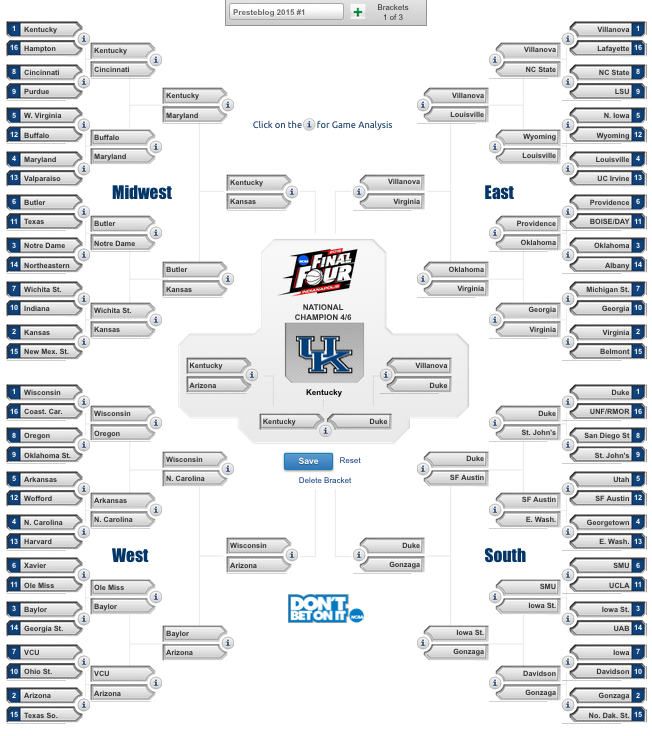
    Just in time for the NCAA Division I men’s basketball tournament, Adidas has given UW new basketball uniforms:

    Together with Adidas, the Wisconsin men’s basketball team unveiled the new Made in March uniform system on Thursday. The Badgers will wear the new uniform during the 2015 NCAA basketball postseason.

    Designed with adidas’ most innovative and advanced apparel and footwear technology, the uniform system is designed to help athletes play at their highest levels during college basketball’s biggest moments.

    The new uniforms feature enlarged team logos on the short and an extended waistband that allows players to display their school colors even when wearing home whites. Evoking a throwback feel, the asymmetrical leg trim on the shorts is inspired by the teams’ retro uniform styles.

    Jerseys were designed with the same lightweight, sweat-wicking technology used in the NBA and targeted ventilation zones on the chest, back and side to keep players cool even in the most intense moments of the game. A perforated pattern on the short maximizes comfort and breathability as the game heats up.

    The Badgers will lace-up the latest adidas basketball footwear including new colorways of the D Lillard 1, J Wall 1 and D Rose Boost 5 signature shoes from NBA All-Stars Damian Lillard, John Wall and Derrick Rose.

    From the bottom up: Basketball shoes should be white, and only white. So this is good.

    The horizontal stripe, which as a friend of mine pointed out looks just like a tuxedo cummerbund (hence his suggestion for the headline) … well, it’s a good thing there are no fat basketball players, because you may notice a trend …

    … among the eight schools whose uniforms Adidas is redesigning for March Madness 2015.

    The non-white stripes look better on the road uniforms than they do on the home uniforms. The white on the Badger road uniforms looks awful, so let’s hope Wisconsin gets a number one seed and can wear the home unis to the Final Four.

    Not that Bo Ryan or anyone else cares, but Ryan might recognize my favorite Badger basketball uniform design …

    … because that’s Ryan in the middle, between Joe Chrnelich (on the left) and Robert Jenkins. Ryan obviously has ditched the glasses, and, one assumes, the white belt and this particular polyester shirt.


    Share this on …

    • Share on X (Opens in new window) X
    • Share on Facebook (Opens in new window) Facebook
    • Share on LinkedIn (Opens in new window) LinkedIn
    • Email a link to a friend (Opens in new window) Email
    • Print (Opens in new window) Print
    Like Loading…
    No comments on The Badgerbund
  • Presty the DJ for Feb. 27

    February 27, 2015
    Music

    The number one single today in 1961:

    The number one British single today in 1964 was sung by a 21-year-old former hairdresser and cloak room attendant:

    That day, the Rolling Stones made their second appearance on BBC-TV’s “Top of the Pops”:

    (more…)

    Share this on …

    • Share on X (Opens in new window) X
    • Share on Facebook (Opens in new window) Facebook
    • Share on LinkedIn (Opens in new window) LinkedIn
    • Email a link to a friend (Opens in new window) Email
    • Print (Opens in new window) Print
    Like Loading…
    No comments on Presty the DJ for Feb. 27
  • The history of Right to Work

    February 26, 2015
    Wisconsin politics, Work

    Mike Nichols of the Wisconsin Policy Research Institute was a union member when he was a Milwaukee Journal Sentinel reporter:

    In an effort to determine whether Wisconsin should consider right-to-work legislation, WPRI decided last fall to undertake two different lines of research: a poll of public opinion and an analysis of potential economic impacts.

    We released the 2015 WPRI Poll of Public Opinion in January, and it included numerous questions regarding right-to-work. The survey of 600 Wisconsinites determined that approximately twice as many citizens of this state would vote in favor of right-to-work legislation as would vote against it (62% to 32%). Over three-quarters of respondents (77%), meanwhile, said they think no American should be required to join any private organization, such as a labor union, against his or her will.

    In addition, a plurality of the 600 respondents, said they believe a right-to-work law will be economically beneficial for the state. Four in 10 (40%) said such laws will “improve economic growth in Wisconsin,” 29% said they believe the laws “will not affect economic growth” and 27% said such laws will “reduce economic growth.”

    Our second line of inquiry – the paper in front of you titled “The Economic Impact of a Right-to-work Law on Wisconsin” – concludes that what a plurality of state residents intuitively believes is backed up by statistical analysis. Right-to-work laws are economically beneficial.

    WPRI commissioned this paper by one of America’s foremost experts on right-to-work, Ohio University economist Richard Vedder, months ago. Dr. Vedder and his colleagues, Joe Hartge and Christopher Denhart, happened to be finishing it up just when legislative leaders decided to bring a right-to-work bill to the floor this week. While they did not see the bill prior to conducting this analysis, right-to-work is a straightforward concept that varies little from state to state. As a result, we believe this paper – by comparing economic growth in states that have had right-to-work to those that have not and calculating the potential impact in Wisconsin – provides the best, most nuanced, most objective and most accurate analysis that has been done in the Badger State.

    The essential finding is clear:

    Over the last 30 years, states with right-to-work (RTW) legislation have experienced greater per capita personal income growth than other states. And that positive correlation between right-to-work and higher incomes remains true even after controlling for other important variables (such as tax rates in various states) that might have had a simultaneous impact.

    The statistical results suggest that, in fact, the presence of a RTW law added about six percentage points to the growth rate of RTW states from 1983 to 2013. With such a law, Wisconsin’s per capita personal income growth of 53% over those years would have been, instead, about 59%. Wisconsin would have gone from having economic growth below the national average over those three decades to having slightly above average growth – enough above average that it would have erased the current per capita income deficit between Wisconsin and the nation as a whole.

    We think this is extremely significant because, as the report points out, Wisconsin truly has fallen behind economically in recent decades.

    In 1950, well over $22 of every $1,000 in personal income generated in the United States was earned by Wisconsin residents. That figure has steadily fallen to only $17.55 in 2013 – a decline of well over 20%. Most of this reflects relatively slow population growth. But income growth for residents over the 1950-2013 period was below the national average. In 1950, per capita income was 1.63% below the national average; in 2013, the income deficit was more than double that.

    Wisconsin’s per capita personal income received from all sources in 2013 was $43,244, according to the Bureau of Economic Analysis – $1,521 less than the national average of $44,765.

    The regression analysis suggests that had Wisconsin adopted a RTW law in 1983, per capita income would have been $1,683 higher in 2013 than it actually was – and would have brought the state slightly over the national per capita personal income average.

    There are some caveats that apply to all such analysis. Although the results are strong, the authors – as all good economists would – urge some caution in using the precise estimation. Comparing states with right-to-work to those without is a complex undertaking. Some possible determinants of economic growth are very difficult or impossible to measure, such as the extent of statewide environmental regulations, and there may be a significant “omitted variable bias” in this simple regression model. At the same time, it is unlikely the inclusion of other variables would materially alter the estimations with respect to RTW.

    In addition, it is important to note that this is an analysis of the past – the 1980s through 2013. Labor unions today have a smaller presence than they used to, so the effects of a RTW law might reasonably be expected to have a somewhat smaller impact in the future – especially in Wisconsin where Act 10 is already having an economic impact.

    That said, it is a fact that Wisconsin has fallen behind. As this study indicates, Wisconsin’s role in the national economy has shrunk with the passage of time. The analysis suggests that passage of a RTW law likely would slow and possibly reverse this trend. Right-to-work laws in sum are economically beneficial and would help Wisconsin catch up to other states with which it competes economically.

    As importantly, we at WPRI see this as a fundamental issue of individual freedom – and it is clear that Wisconsinites of all political persuasions agree. A majority of self-identified Republicans, independents and Democrats say they would vote in favor of right-to-work legislation.

    Share this on …

    • Share on X (Opens in new window) X
    • Share on Facebook (Opens in new window) Facebook
    • Share on LinkedIn (Opens in new window) LinkedIn
    • Email a link to a friend (Opens in new window) Email
    • Print (Opens in new window) Print
    Like Loading…
    No comments on The history of Right to Work
  • Presty the DJ for Feb. 26

    February 26, 2015
    Music

    Today in 1955, Billboard magazine reported that sales of 45-rpm singles …

    … had exceeded sales of 78-rpm singles for the first time.

    The number one single today in 1966:

    (more…)

    Share this on …

    • Share on X (Opens in new window) X
    • Share on Facebook (Opens in new window) Facebook
    • Share on LinkedIn (Opens in new window) LinkedIn
    • Email a link to a friend (Opens in new window) Email
    • Print (Opens in new window) Print
    Like Loading…
    1 comment on Presty the DJ for Feb. 26
  • The right to work (without union dues)

    February 25, 2015
    Wisconsin politics, Work

    A Facebook Friend invited me to share this:

    I have a really good question here, in regards to the Right to Work Law that is being passed in Wisconsin:

    Are the unions and the government responsible for protecting the workers from what they see as their shortsightedness? Or are the workers responsible for their own free choices?

    In the end it’s about freedom and personal liberty. Let’s not curtail them.

    Politicians are infamous for doing what they think is better for you the ignorant voter, as opposed to what voters want, of course. Gov. Scott Walker has tried to dance away from right-to-work legislation because of how divisive the Act 10 debate was. But he’s going to get it with the Senate scheduled to vote on the bill today.

    I feel slightly different about the right-to-work issue (which is, let’s face it, a euphemism like the two sides of the abortion rights argument using “pro-choice” and “pro-life”) from public-sector unions only because, unlike with government unions, consumers can choose to buy products or services from businesses based on, if they choose, their union affiliation, or lack thereof.

    However, it’s perfectly obvious, just like with public sector unions’ inability to stop Act 10 from becoming law, followed by their inability to punish those who got Act 10 into law, that private-sector unions have worn out their welcome with the American voter. Driving General Motors into bankruptcy (with a big assist from GM’s inept management), rampant corruption (one word: Teamsters), being more interested in increasing union officials’ salaries than with members, failing to grasp that businesses need to be profitable first and foremost, and diverting union dues into campaign contributions for politicians and candidates not necessarily supported by union members — it’s obvious that the problems with unions are the unions’ fault and no one else’s.

    Four years ago during the Act 10 controversies unions tried to claim responsibility for every supposed worker benefit from coffee breaks to vacations. Which is laughable when you consider the number of people who contribute more to society than clock-punching union workers — they’re called “business owners,” who don’t get nights or weekends or holidays off.

    The Act 10 debate also demonstrated some uncomfortable truths about unions, ranging from their managements’ six-figure salaries when their members are making considerably less, to the fact that in many small communities government workers are making more money than the people whose salaries pay their taxes. (For instance: The average Wisconsin teacher makes more money than the median Wisconsin family income.)

    Regardless of that, there is one fundamental flaw with unions. They are essentially socialist in the concept that everyone should be treated equally, whether or not one employee works harder than others, or whether one employee needs different benefits than others. I want to have the ability to negotiate my own pay and benefits, because I know better than the union rep what I need in my own life. Most people seem to feel that way, based on declining union membership numbers.

    The concept of needing to be in a union to have a job is a reprehensible violation of our First Amendment right of free association. No one who claims to value freedom can support the closed shop. (Which is why it was amusing to read someone replace “right to work” with “freedom” in the quotes of various Democrats who oppose right-to-work.)

    Republicans have been accused of seeking political revenge by pushing right-to-work legislation through the Legislature. What a crazy thought — politicians vote for things their supporters support and vote against things their supporters oppose! (Although Barack Obama’s veto yesterday of the Keystone XL pipeline, when construction thereof would provide union jobs, is harder to understand.)

    The best way for employees to get better salaries and working conditions is through competition for employees. In the 1990s jobs that required minimum-wage skills paid better than minimum wage because there was demand for those workers. If you don’t like how you’re treated at work, you leave.

    I made a passing reference earlier today to how liberals hate markets. It’s hardly surprising because my guess is that giving employees a choice to join a union, or not, will result in employees’ not joining unions, similar to what has happened in Wisconsin since Act 10 became law.


    Share this on …

    • Share on X (Opens in new window) X
    • Share on Facebook (Opens in new window) Facebook
    • Share on LinkedIn (Opens in new window) LinkedIn
    • Email a link to a friend (Opens in new window) Email
    • Print (Opens in new window) Print
    Like Loading…
    No comments on The right to work (without union dues)
Previous Page
1 … 725 726 727 728 729 … 1,038
Next Page

Website Powered by WordPress.com.

Steve Prestegard.com: The Presteblog

The thoughts of a journalist/libertarian–conservative/Christian husband, father, Eagle Scout and aficionado of obscure rock music. Thoughts herein are only the author’s and not necessarily the opinions of his family, friends, neighbors, church members or past, present or future employers.

  • Steve
    • About, or, Who is this man?
    • Facebook
    • Twitter
    • Adventures in ruralu0026nbsp;inkBack in June 2009, I was driving somewhere through a rural area. And for some reason, I had a flashback to two experiences in my career about that time of year many years ago. In 1988, eight days after graduating from the University of Wisconsin, I started work at the Grant County Herald Independent in Lancaster as a — well, the — reporter. Four years after that, on my 27th birthday, I purchased, with a business partner, the Tri-County Press in Cuba City, my first business venture. Both were experiences about which Wisconsin author Michael Perry might write. I thought about all this after reading a novel, The Deadline, written by a former newspaper editor and publisher. (Now who would write a novel about a weekly newspaper?) As a former newspaper owner, I picked at some of it — why finance a newspaper purchase through the bank if the seller is willing to finance it? Because the mean bank lender is a plot point! — and it is much more interesting than reality, but it is very well written, with a nicely twisting plot, and quite entertaining, again more so than reality. There is something about that first job out of college that makes you remember it perhaps more…
    • Adventures in radioI’ve been in the full-time work world half my life. For that same amount of time I’ve been broadcasting sports as a side interest, something I had wanted to since I started listening to games on radio and watching on TV, and then actually attending games. If you ask someone who’s worked in radio for some time about the late ’70s TV series “WKRP in Cincinnati,” most of them will tell you that, if anything, the series understated how wacky working in radio can be. Perhaps the funniest episode in the history of TV is the “WKRP” episode, based on a true story, about the fictional radio station’s Thanksgiving promotion — throwing live turkeys out of a helicopter under the mistaken belief that, in the words of WKRP owner Arthur Carlson, “As God is my witness, I thought turkeys could fly.” [youtube=http://www.youtube.com/watch?v=ST01bZJPuE0] I’ve never been involved in anything like that. I have announced games from the roofs of press boxes (once on a nice day, and once in 50-mph winds), from a Mississippi River bluff (more on that later), and from the front row of the second balcony of the University of Wisconsin Fieldhouse (great view, but not a place to go if…
    • “Good morning/afternoon/evening, ________ fans …”
    • My biggest storyEarlier this week, while looking for something else, I came upon some of my own work. (I’m going to write a blog someday called “Things I Found While Looking for Something Else.” This is not that blog.) The Grant County Sheriff’s Department, in the county where I used to live, has a tribute page to the two officers in county history who died in the line of duty. One is William Loud, a deputy marshal in Cassville, shot to death by two bank robbers in 1912. The other is Tom Reuter, a Grant County deputy sheriff who was shot to death at the end of his 4 p.m.-to-midnight shift March 18, 1990. Gregory Coulthard, then a 19-year-old farmhand, was convicted of first-degree intentional homicide and is serving a life sentence, with his first eligibility for parole on March 18, 2015, just 3½ years from now. I’ve written a lot over the years. I think this, from my first two years in the full-time journalism world, will go down as the story I remember the most. For journalists, big stories contain a paradox, which was pointed out in CBS-TV’s interview of Andy Rooney on his last “60 Minutes” Sunday. Morley Safer said something along the line…
  • Food and drink
    • The Roesch/Prestegard familyu0026nbsp;cookbookFrom the family cookbook(s) All the families I’m associated with love to eat, so it’s a good thing we enjoy cooking. The first out-of-my-house food memory I have is of my grandmother’s cooking for Christmas or other family occasions. According to my mother, my grandmother had a baked beans recipe that she would make for my mother. Unfortunately, the recipe seems to have  disappeared. Also unfortunately, my early days as a picky, though voluminous, eater meant I missed a lot of those recipes made from such wholesome ingredients as lard and meat fat. I particularly remember a couple of meals that involve my family. The day of Super Bowl XXXI, my parents, my brother, my aunt and uncle and a group of their friends got together to share lots of food and cheer on the Packers to their first NFL title in 29 years. (After which Jannan and I drove to Lambeau Field in the snow,  but that’s another story.) Then, on Dec. 31, 1999, my parents, my brother, my aunt and uncle and Jannan and I (along with Michael in utero) had a one-course-per-hour meal to appropriately end years beginning with the number 1. Unfortunately I can’t remember what we…
    • SkålI was the editor of Marketplace Magazine for 10 years. If I had to point to one thing that demonstrates improved quality of life since I came to Northeast Wisconsin in 1994, it would be … … the growth of breweries and  wineries in Northeast Wisconsin. The former of those two facts makes sense, given our heritage as a brewing state. The latter is less self-evident, since no one thinks of Wisconsin as having a good grape-growing climate. Some snobs claim that apple or cherry wines aren’t really wines at all. But one of the great facets of free enterprise is the opportunity to make your own choice of what food and drink to drink. (At least for now, though some wish to restrict our food and drink choices.) Wisconsin’s historically predominant ethnic group (and our family’s) is German. Our German ancestors did unfortunately bring large government and high taxes with them, but they also brought beer. Europeans brought wine with them, since they came from countries with poor-quality drinking water. Within 50 years of a wave of mid-19th-century German immigration, brewing had become the fifth largest industry in the U.S., according to Maureen Ogle, author of Ambitious Brew: The Story of American Beer. Beer and wine have…
  • Wheels
    • America’s sports carMy birthday in June dawned without a Chevrolet Corvette in front of my house. (The Corvette at the top of the page was featured at the 2007 Greater Milwaukee Auto Show. The copilot is my oldest son, Michael.) Which isn’t surprising. I have three young children, and I have a house with a one-car garage. (Then again, this would be more practical, though a blatant pluck-your-eyes-out violation of the Corvette ethos. Of course, so was this.) The reality is that I’m likely to be able to own a Corvette only if I get a visit from the Corvette Fairy, whose office is next door to the Easter Bunny. (I hope this isn’t foreshadowing: When I interviewed Dave Richter of Valley Corvette for a car enthusiast story in the late great Marketplace Magazine, he said that the most popular Corvette in most fans’ minds was a Corvette built during their days in high school. This would be a problem for me in that I graduated from high school in 1983, when no Corvette was built.) The Corvette is one of those cars whose existence may be difficult to understand within General Motors Corp. The Corvette is what is known as a “halo car,” a car that drives people into showrooms, even if…
    • Barges on fouru0026nbsp;wheelsI originally wrote this in September 2008.  At the Fox Cities Business Expo Tuesday, a Smart car was displayed at the United Way Fox Cities booth. I reported that I once owned a car into which trunk, I believe, the Smart could be placed, with the trunk lid shut. This is said car — a 1975 Chevrolet Caprice coupe (ours was dark red), whose doors are, I believe, longer than the entire Smart. The Caprice, built down Interstate 90 from us Madisonians in Janesville (a neighbor of ours who worked at the plant probably helped put it together) was the flagship of Chevy’s full-size fleet (which included the stripper Bel Air and middle-of-the-road Impala), featuring popular-for-the-time vinyl roofs, better sound insulation, an upgraded cloth interior, rear fender skirts and fancy Caprice badges. The Caprice was 18 feet 1 inch long and weighed 4,300 pounds. For comparison: The midsize Chevrolet of the ear was the Malibu, which was the same approximate size as the Caprice after its 1977 downsizing. The compact Chevrolet of the era was the Nova, which was 200 inches long — four inches longer than a current Cadillac STS. Wikipedia’s entry on the Caprice has this amusing sentence: “As fuel economy became a bigger priority among Americans…
    • Behind the wheel
    • Collecting only dust or rust
    • Coooooooooooupe!
    • Corvettes on the screen
    • The garage of misfit cars
    • 100 years (and one day) of our Chevrolets
    • They built Excitement, sort of, once in a while
    • A wagon by any otheru0026nbsp;nameFirst written in 2008. You will see more don’t-call-them-station-wagons as you drive today. Readers around my age have probably had some experience with a vehicle increasingly rare on the road — the station wagon. If you were a Boy Scout or Girl Scout, or were a member of some kind of youth athletic team, or had a large dog, or had relatives approximately your age, or had friends who needed to be transported somewhere, or had parents who occasionally had to haul (either in the back or in a trailer) more than what could be fit inside a car trunk, you (or, actually, your parents) were the target demographic for the station wagon. “Station wagons came to be like covered wagons — so much family activity happened in those cars,” said Tim Cleary, president of the American Station Wagon Owners Association, in Country Living magazine. Wagons “were used for everything from daily runs to the grocery store to long summer driving trips, and while many men and women might have wanted a fancier or sportier car, a station wagon was something they knew they needed for the family.” The “station wagon” originally was a vehicle with a covered seating area to take people between train stations…
    • Wheels on theu0026nbsp;screenBetween my former and current blogs, I wrote a lot about automobiles and TV and movies. Think of this post as killing two birds (Thunderbirds? Firebirds? Skylarks?) with one stone. Most movies and TV series view cars the same way most people view cars — as A-to-B transportation. (That’s not counting the movies or series where the car is the plot, like the haunted “Christine” or “Knight Rider” or the “Back to the Future” movies.) The philosophy here, of course, is that cars are not merely A-to-B transportation. Which disqualifies most police shows from what you’re about to read, even though I’ve watched more police video than anything else, because police cars are plain Jane vehicles. The highlight in a sense is in the beginning: The car chase in my favorite movie, “Bullitt,” featuring Steve McQueen’s 1968 Ford Mustang against the bad guys’ 1968 Dodge Charger: [youtube=http://www.youtube.com/watch?v=GMc2RdFuOxIu0026amp;fmt=18] One year before that (but I didn’t see this until we got Telemundo on cable a couple of years ago) was a movie called “Operación 67,” featuring (I kid you not) a masked professional wrestler, his unmasked sidekick, and some sort of secret agent plot. (Since I don’t know Spanish and it’s not…
    • While riding in my Cadillac …
  • Entertainments
    • Brass rocksThose who read my former blog last year at this time, or have read this blog over the past months, know that I am a big fan of the rock group Chicago. (Back when they were a rock group and not a singer of sappy ballads, that is.) Since rock music began from elements of country music, jazz and the blues, brass rock would seem a natural subgenre of rock music. A lot of ’50s musical acts had saxophone players, and some played with full orchestras … [youtube=http://www.youtube.com/watch?v=9CPS-WuUKUE] … but it wasn’t until the more-or-less simultaneous appearances of Chicago and Blood Sweat u0026amp; Tears on the musical scene (both groups formed in 1967, both had their first charting singles in 1969, and they had the same producer) that the usual guitar/bass/keyboard/drum grouping was augmented by one or more trumpets, a sax player and a trombone player. While Chicago is my favorite group (but you knew that already), the first brass rock song I remember hearing was BSu0026amp;T’s “Spinning Wheel” — not in its original form, but on “Sesame Street,” accompanied by, yes, a giant spinning wheel. [youtube=http://www.youtube.com/watch?v=qi9sLkyhhlE] [youtube=http://www.youtube.com/watch?v=OxWSOuNsN20] [youtube=http://www.youtube.com/watch?v=U9U34uPjz-g] I remember liking Chicago’s “Just You ‘n Me” when it was released as a single, and…
    • Drive and Eat au0026nbsp;RockThe first UW home football game of each season also is the opener for the University of Wisconsin Marching Band, the world’s finest college marching band. (How the UW Band has not gotten the Sudler Trophy, which is to honor the country’s premier college marching bands, is beyond my comprehension.) I know this because I am an alumnus of the UW Band. I played five years (in the last rank of the band, Rank 25, motto: “Where Men Are Tall and Run-On Is Short”), marching in 39 football games at Camp Randall Stadium, the Hubert H. Humphrey Metrodome in Minneapolis, Michigan Stadium in Ann Arbor, Memorial Stadium at the University of Illinois (worst artificial turf I had ever seen), the University of Nevada–Las Vegas’ Sam Boyd Silver Bowl, the former Dyche Stadium at Northwestern University, five high school fields and, in my one bowl game, Legion Field in Birmingham, Ala., site of the 1984 Hall of Fame Bowl. The UW Band was, without question, the most memorable experience of my college days, and one of the most meaningful experiences of my lifetime. It was the most physical experience of my lifetime, to be sure. Fifteen minutes into my first Registration…
    • Keep on rockin’ in the freeu0026nbsp;worldOne of my first ambitions in communications was to be a radio disc jockey, and to possibly reach the level of the greats I used to listen to from WLS radio in Chicago, which used to be one of the great 50,000-watt AM rock stations of the country, back when they still existed. (Those who are aficionados of that time in music and radio history enjoyed a trip to that wayback machine when WLS a Memorial Day Big 89 Rewind, excerpts of which can be found on their Web site.) My vision was to be WLS’ afternoon DJ, playing the best in rock music between 2 and 6, which meant I wouldn’t have to get up before the crack of dawn to do the morning show, yet have my nights free to do whatever glamorous things big-city DJs did. Then I learned about the realities of radio — low pay, long hours, zero job security — and though I have dabbled in radio sports, I’ve pretty much cured myself of the idea of working in radio, even if, to quote WAPL’s Len Nelson, “You come to work every day just like everybody else does, but we’re playing rock ’n’ roll songs, we’re cuttin’ up.…
    • Monday on the flight line, not Saturday in the park
    • Music to drive by
    • The rock ofu0026nbsp;WisconsinWikipedia begins its item “Music of Wisconsin” thusly: Wisconsin was settled largely by European immigrants in the late 19th century. This immigration led to the popularization of galops, schottisches, waltzes, and, especially, polkas. [youtube=http://www.youtube.com/watch?v=yl7wCczgNUc] So when I first sought to write a blog piece about rock musicians from Wisconsin, that seemed like a forlorn venture. Turned out it wasn’t, because when I first wrote about rock musicians from Wisconsin, so many of them that I hadn’t mentioned came up in the first few days that I had to write a second blog entry fixing the omissions of the first. This list is about rock music, so it will not include, for instance, Milwaukee native and Ripon College graduate Al Jarreau, who in addition to having recorded a boatload of music for the jazz and adult contemporary/easy listening fan, also recorded the theme music for the ’80s TV series “Moonlighting.” Nor will it include Milwaukee native Eric Benet, who was for a while known more for his former wife, Halle Berry, than for his music, which includes four number one singles on the Ru0026amp;B charts, “Spend My Life with You” with Tamia, “Hurricane,” “Pretty Baby” and “You’re the Only One.” Nor will it include Wisconsin’s sizable contributions to big…
    • Steve TV: All Steve, All the Time
    • “Super Steve, Man of Action!”
    • Too much TV
    • The worst music of allu0026nbsp;timeThe rock group Jefferson Airplane titled its first greatest-hits compilation “The Worst of Jefferson Airplane.” Rolling Stone magazine was not being ironic when it polled its readers to decide the 10 worst songs of the 1990s. I’m not sure I agree with all of Rolling Stone’s list, but that shouldn’t be surprising; such lists are meant for debate, after all. To determine the “worst,” songs appropriate for the “Vinyl from Hell” segment that used to be on a Madison FM rock station, requires some criteria, which does not include mere overexposure (for instance, “Macarena,” the video of which I find amusing since it looks like two bankers are singing it). Before we go on: Blog posts like this one require multimedia, so if you find a song you hate on this blog, I apologize. These are also songs that I almost never listen to because my sound system has a zero-tolerance policy — if I’m listening to the radio or a CD and I hear a song I don’t like, it’s, to quote Bad Company, gone gone gone. My blonde wife won’t be happy to read that one of her favorite ’90s songs, 4 Non Blondes’ “What’s Up,” starts the list. (However,…
    • “You have the right to remain silent …”
  • Madison
    • Blasts from the Madison media past
    • Blasts from my Madison past
    • Blasts from our Madison past
    • What’s the matter with Madison?
    • Wisconsin – Madison = ?
  • Sports
    • Athletic aesthetics, or “cardinal” vs. “Big Red”
    • Choose your own announcer
    • La Follette state 1982 (u0022It was 30 years ago todayu0022)
    • The North Dakota–Wisconsin Hockey Fight of 1982
    • Packers vs. Brewers
  • Hall of Fame
    • The case(s) against teacher unions
    • The Class of 1983
    • A hairy subject, or face the face
    • It’s worse than you think
    • It’s worse than you think, 2010–11 edition
    • My favorite interview subject of all time
    • Oh look! Rural people!
    • Prestegard for president!
    • Unions vs. the facts, or Hiding in plain sight
    • When rhetoric goes too far
Privacy & Cookies: This site uses cookies. By continuing to use this website, you agree to their use.
To find out more, including how to control cookies, see here: Cookie Policy
  • Subscribe Subscribed
    • Steve Prestegard.com: The Presteblog
    • Join 197 other subscribers
    • Already have a WordPress.com account? Log in now.
    • Steve Prestegard.com: The Presteblog
    • Subscribe Subscribed
    • Sign up
    • Log in
    • Report this content
    • View site in Reader
    • Manage subscriptions
    • Collapse this bar
%d