Today in 1955, a London judge fined a man for “creating an abominable noise” — playing this song loud enough to make the neighborhood shake, rattle and roll for 2½ hours:
Today in 1968, Private Eye magazine reported that the album to be released by John Lennon and Yoko Ono would save money by providing no wardrobe for Lennon or Ono:
Today in 1959, Bertolt Brecht‘s “Threepenny Opera” reached the U.S. charts in a way Brecht could not have fathomed:
T0day in 1968, Apple Records released its first single by — surprise! — the Beatles:
Today in 1969, this spent three weeks on top of the British charts, on top of six weeks on top of the U.S. charts, making them perhaps the ultimate one-number-one-hit-wonder:
The first thing I remember really, really, really, really, really wanting to do was to drive.
If you are not remotely close to legal driving age (or you don’t live in a farm family so you can drive vehicles on the farm), how can you deal with that desire? There were, and perhaps still are, two ways. One is by buying and/or reading every car magazine you can get your hands on, from Motor Trend (a magazine famously known for never negatively reviewing a car, perhaps due to advertising revenue reasons) to Hot Rod (cars improved by fat wheels and tires, worked-upon engines, and paint schemes no manufacturer will sell you) to Car Craft (fast cars with a dollop of snark).
The other way in my case was to visit car dealers and take, then read, car catalogs. (Which, my mother would then add, would pile up in my room.) Car catalogs can be worth amazing sums of money now based on the rarity of the car and the catalog. (Unless said catalog included checkmarks and circles from the original reader as to what he would order, which greatly diminish the value of the catalog. I would go through and see what I had to get if I got, for instance, air conditioning, back in the days when car A/C was rare, and darn it to heck if I couldn’t get the biggest engine with a manual transmission.)
Before I left home, my parents may have grabbed these to make their auto purchases:
The first car of theirs I remember was a 1966 Chevy Nova wagon, in dark red. That was followed by …
… a 1969 Chevy Nomad wagon. It was LeMans blue, and it had the 350 V-8, Powerglide two-speed automatic transmission, power steering and brakes, roof rack, and power tailgate. The dealer-installed accessory presumably not included in the catalog was clear plastic dimpled seat covers for cleanup of the messes the back-seat occupants might generate. (You’ll notice the lack of the words “air conditioning” before now in this paragraph. Said seat covers could get infernally hot, at least to a four-year-old’s definition.)
The Nomad was augmented by their first second car, a 1965 Chevy Bel Air sedan, purchased six years old. (That’s why it’s not pictured here — a point I will get to eventually.) Two years later came their first new second car …
… a 1973 AMC Javelin, dark brown with a gold side stripe that started cracking about 32 seconds after the car left the dealership. This car had a 304 V-8, automatic, and power steering but not power brakes. (Nor did it have a parking brake indicator, which resulted in an interesting moment when someone tried to drive off with the parking brake.) This was the first car I drove.
The aforementioned Nomad was replaced by …
… our 1975 Chevy Caprice Classic coupe, the 18-foot-long two-door sedan, dark red with dark red full (not landau) vinyl roof and a red interior, with room for as many people as we ever wanted to fit in it, and all their stuff in the trunk.
A few years later, my parents saw their oldest son’s age nearing the magic 16, concluded that another car might be needed, and purchased …
… a 1981 Chevy Malibu Classic sedan, black with a black vinyl roof. This was for its day a good looking car. And that is the only good thing you could say about it, other than the fact that I passed my driver’s license test in it … the second time I took the test. Before that, the neighbor’s bratty little kid’s throwing rocks at it and chipping the paint was the first tipoff that the ownership experience was going to be less than satisfactory. (“Malibu” apparently is a French word meaning “lemon.”)
Upon having a fourth driver in the house, my mother apparently decided she needed a car more often than her oldest son was willing to part with the Caprice, so she bought …
… a 1985 Chevy Camaro, in bright red. The only problem I noticed with the Camaro was my trying to get in and out of it — to get out required me to put my hand on the ground to brace myself for exit. I am pretty sure no one ever sat in the back seat. Otherwise, it looked close enough to Thomas Magnum’s Ferrari that I once borrowed it to go someplace wearing a Hawaiian-like shirt. (Well, Tom Selleck and I are both 6-foot-4, and we have mustaches.)
Then I left home and took the Caprice with me. After paying for alarming (to me anyway) repair bills for the 14-year-old Caprice (in addition to paying for gas for a car that got, by then, 11 to 16 mpg in the hideous days of $1.30 a gallon gasoline), I decided to buy my first car, a 1988 Chevy Beretta. That car replaced the repair-bill experience with the car-payment and repair-bill experience. (Apparently “Beretta” is the Italian synonym for “Malibu.”)
After two years, thanks to the marvel of 2.9-percent financing, I bought my first new car …
… a 1991 Ford Escort GT, a car that, as you see, had its own special catalog. Which is how I noticed the car in the first place, because of the Cayman Green Metallic paint. (That was at a dealership that was so uninterested in selling me a car that I bought it from another Ford dealer.)
The Escort lasted seven years and 127,000 miles, but we needed more room and the car was starting to fall apart, so it was replaced by …
… a 1998 Subaru Outback, on which we put 228,000 miles.
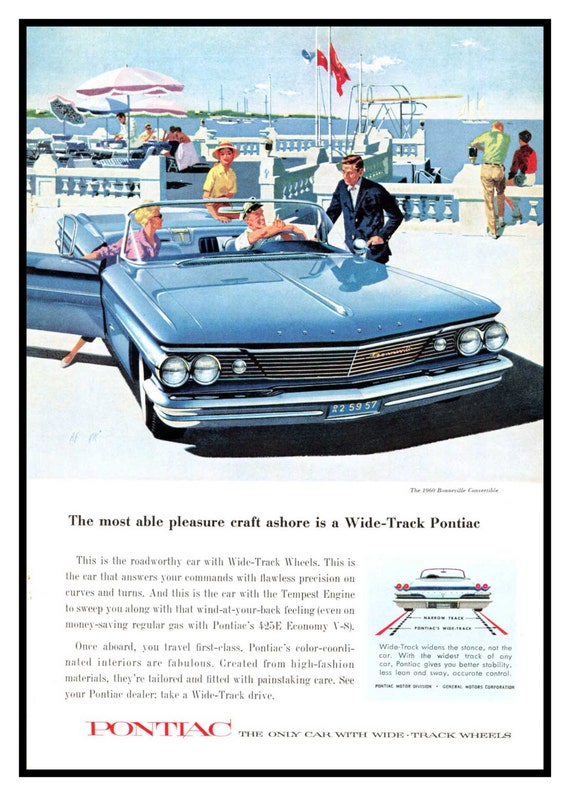
Car catalogs showed off the vehicle in perfect condition, unmaligned by such realities of life as dirty rain, bird droppings, road salt, or leaks of brown (oil), red (transmission fluid), green (antifreeze) or whatever else. In fact, creative art designers would make the car look better in print — catalogs or print ads …
… than it existed even in showroom condition.
Car catalogs also showed the drivers and passengers just short of ecstatic about their ownership experience, which is a damned lie based on the reliability of cars of the ’70s and ’80s.
Not to mention, obviously, comfortably well off. These are classic examples of the mastery theme of advertising I learned in journalism class in high school — buy this car, and your life will be so much better.
(The corollary to car catalogs, by the way, was owner’s manuals, which I would borrow and read more religiously than the car owners. But that is a subject for another week.)
For whatever reason, car dealers let me waltz in and grab what I wanted, even when I was all of 10 years old. I was even able to grab catalogs for vehicles I was unlikely to drive at any point, let alone when I reached driving age. For instance …
(Actually, I have driven trucks this size. Moving trucks. Based on past experience, I suggest the biggest International moving truck you can legally drive. The International DT466 diesel moves the truck surprisingly well, in sharp contrast to the similar Isuzu diesel, which is a dog.)
As I was writing this it occurred to me that my best friend growing up was the son of a salesman of International trucks, back when International sold pickup trucks and four-wheel-drive Scouts and Travelalls.
He never gave me one of these, though.
No discussion of car catalogs that involves me would be complete without, of course …
… the Corvette, whose catalogs I was able to get even though the car dealers from which I got these catalogs probably sold zero of them. It was, I believe, with the introduction of the C4 Corvette that Chevy dealers started charging for Corvette catalogs — $6 sticks in my mind for some reason. So I stopped getting them up until I got into the business magazine world, where I discovered that the car manufacturers would send you catalogs by request, including of the Corvette. I also got, even better, press kits, including the breathtaking announcement of the newest Chevy Impala and its revolutionary new design feature … an ignition switch on the dashboard, last seen in 1968.
Car dealers still have car catalogs, though more information — including the opportunity to order what you want, and have the dealer find one, and a sales representative contact you — is available online. When I go to the Iola Old Car Show, I still look at the old catalogs, though, and I even own a couple, including:
My stepgrandmother, who made the first Dutch apple pie I ever ate, would listen to someone tell her something and reply with “Oh, for God’s sake.”
That is the first and, for the moment, only printable reaction I have to this, from Todd Starnes:
Educators in the Volunteer State are very concerned that students might be offended by the usage of traditional pronouns like she, he, him and hers, according to a document from the University of Tennessee – Knoxville’s Office of Diversity and Inclusion.
“With the new semester beginning and an influx of new students on campus, it is important to participate in making our campus welcoming and inclusive for all,” wrote Donna Braquet in a posting on the university’s website. “One way to do that is to use a student’s chosen name and their correct pronouns.”
Braquet, who is director of the university’s Pride Center, suggested using a variety of gender neutral pronouns instead of traditional pronouns.
“There are dozens of gender-neutral pronouns,” she declared.
For all you folks who went to school back when there were only him and her – here’s a primer: some of the new gender neutral pronouns are ze, hir, zir, xe, xem and xyr.
“These may sound a little funny at first, but only because they are new,” Braquet explained. “The ‘she’ and ‘he’ pronouns would sound strange too if we had been taught ‘ze’ when growing up.”
Somehow I sincerely doubt that, but whatever. Anything goes for the sake of inclusivity, right?
“Instead of calling roll, ask everyone to provide their name and pronouns,” she wrote. “This ensures you are not singling out transgender or non-binary students.”
For example, the birth certificate might say that Big Earl is a male. But what if Big Earl identifies as a lady who wants to be called Lawanda?
According to the procedures outlined by the folks at the Office of Diversity and Inclusion, the professor is obligated to call Big Earl – Lawanda – or whatever name makes Big Earl feel more included.
“We should not assume someone’s gender by their appearance, nor by what is listed on a roster or in student information systems,” Braquet wrote. “Transgender people and people who do not identify within the gender binary may use a different name than their legal name and pronouns of their gender identity, rather than the pronouns of the sex they were assigned at birth.”
It’s all so confusing, right? So thankfully, the Office for Diversity and Inclusion has devised a way to prevent students and professors from calling “sir” a “ma’am.”
“You can always politely ask,” she wrote. “’Oh, nice to meet you (insert name). What pronouns should I use?’ is a perfectly fine question to ask.” …
I reached out to the vice chancellor for tolerance and diversity (yes they really do have such a thing) – but I’m still waiting for him or her or ze or xyr to call me back.
There you have it, folks. His and Hers is no longer good enough at the University of Tennessee – where they are willing to sacrifice anything for the sake of gender inclusivity – including common sense.
I wonder if they’ve got a gender neutral word for idiot?
I know there are some readers who would look at the source, Fox News, and assume this was made up. Here is the link to the university’s diversity page to prove that this is not fiction. The graphic is also linked from that page.
I remember as a UW–Madison political science student reading in the syllabus that I was to use “inclusive language, i.e. language that is not sexist.” That meant “he or she,” which was a bit awkward-sounding, but since I got A’s twice from that professor, apparently I was OK with that. This, however, is absurd.
A former Dane County assistant district attorney who serves as the University of Wisconsin-Madison’s director of community relations is facing criticism because he suggested that shoplifters at “big box” retailers with insurance should not be aggressively prosecuted.
Everett Mitchell, who made the remarks during a “Best Policing Practices” panel on campus last Tuesday, said in a prepared statement that he believes in the law. “I also believe in equal justice for all, and in reforms to our criminal justice system that address disparities in policing for people of color,” he said.
MediaTrackers reported Friday that Mitchell “recommended that police stop responding to shoplifting and theft at Walmart and Target as a way to reduce what he refers to as ‘over policing’ of the community.”
In his statement after the story appeared, Mitchell said he was “saddened that those with differing agendas have taken a selective portion of a larger conversation out of context in an effort to discredit my views.”
The MediaTrackers report included a brief video portion of the discussion. In it, he said: “I just don’t think that they should be prosecuting cases …for people who steal from Walmart.” Mitchell continued that he doesn’t think Target and other big box stores with insurance should be using “the fact that people steal from there as justification to start engaging in aggressive police practices, right?”
“I go to these meetings and that’s what they throw up there on the table: ‘Look at where all this crime is happening, at the East Towne and the West Towne Mall, and the Walmarts and Targets. That’s where crime is happening. That’s why we have to focus so much’…They do that all the time to justify why they’re going to over-police our children.”
Mitchell, who is African-American, said in his statement that he believes the community should explore a restorative justice model in which nonviolent offenders between the ages of 17 and 25 perform community service.
“My comments around ‘big box’ retailers were in no way an endorsement of shoplifting or other criminal behavior, but part of a point about how the distribution of police resources to areas with high numbers of misdemeanor crimes can bring low income or people of color into frequent contact with law enforcement,” he said.
Mitchell is also pastor of Christ the Solid Rock Baptist Church in Madison. One wonders how often the Ten Commandments — specifically for our purposes here “Thou shalt not steal” and “Thou shalt not covet” — are taught there. (Or, for that matter, “Thou shalt not bear false witness against thy neighbor,” since the clarification wouldn’t have occurred without the preceding kerfuffle.) For that matter, Jesus Christ’s second commandment to love thy neighbor as yourself doesn’t include stealing from your neighbor.
It would be one thing if these were private institutions, which are free to do what they wish because you are free to support them, or not. The University of Tennessee and the University of Wisconsin, however, are funded by taxpayers. This is what your tax dollars are getting you.
On Wednesday morning, a reporter and cameraman from WDBJ-TV in Roanoke, Va., broadcasted a live interview for WDBJ’s morning news.
And then this happened, as reported on ABC-TV’s Good Morning America:
The reporter conducting the interview was Alison Parker. She was 24. The cameraman photographing the interview was Adam Ward. He was 27.
The interviewee was Vicki Gardner, of the Smith Mountain Lake Chamber of Commerce. She was shot in the back, but was in stable condition after surgery.
The shooter was Vester Flanagan, a former reporter for WDBJ-TV, who shot himself to death after a police chase later Wednesday. According to the Roanoke Times, Flanagan worked at the station about nine months, then was dismissed in February 2013. One year later, Flanagan sued WDBJ alleging racial discrimination, but the case was dismissed by a judge two months after it was filed.
Flanagan apparently shot video of the shooting, walking up to the video location with a pistol and small camera. He then posted his own video. This therefore was not any kind of random act in which the victims were in the wrong place at the wrong time. The fact that, as law enforcement will tell you, most violent crimes are not random but are cases where the victim knows the assailant, may comfort some, though it won’t comfort Parker’s and Ward’s families.
The New York Post reports other things about Flanagan:
Vester Lee Flanagan, a former on-air reporter who worked under the name Bryce Williams, killed Alison Parker and Adam Ward from Roanoke affiliate WDBJ.
The 41-year-old worked with the station for about a year before being fired in 2013 after becoming increasingly “difficult” to deal with, the station’s manager, Jefferey Marks, said Wednesday during a live TV segment.
In a Twitter rant just hours after the killings, Williams complained about the way Parker, 24, and Ward, 27, treated him because he was black.
“Alison made racist comments,” he tweeted at 10:09 a.m.
“EEOC report filed,” he said. “They hired her after that???”
“Adam went to hr on me after working with me one time!!!”
In two videos posted to Williams’ Facebook and Twitter pages, which have since been deleted, he can be seen opening fire on Ward and Parker as they report live from the Bridgewater Plaza in Moneta, Va.
At one point, Williams’ pistol appears to be no more than 6 inches from Parker’s face as she unknowingly continues her interview.
In a video posted to Facebook on Aug. 20, the on-air reporter can be seen doing a local story about guns. In one shot, he can even be seen holding what appears to be a machine pistol.
ABC News received a fax from someone purporting to be Williams, which they turned over to authorities.
In addition to working in Virginia from March 2012 to February 2013, Williams worked as a multimedia journalist and general assignment reporter at a number of stations throughout the South, including WNCT in Greenville, NC, WTWC in Tallahassee and WTOC in Savannah, according to WDBJ.
Heather Myers, a weekday morning anchor who worked with Williams in Florida, tweeted Wednesday that their news director at the time fired him in 2000 for “bizarre behavior and threatening employees.”
Federal court records show that he then sued WTWC for “discrimination and retaliation,” but the case was settled, according to the website Heavy.
Williams is originally from California and graduated from San Francisco State University, according to his LinkedIn page.
Speaking on-air Wednesday, his former station manager at WDBJ described him as an “unhappy man” who eventually grew to become a nuisance.
“We employed him as a reporter and he had some talent in that respect and some experience although he’d been out of the business for a while,” Marks said. “(But) he quickly became someone who was difficult to work with. He was sort of looking out for people to say things that he could take offense to. Eventually after many incidents of his anger coming to the fore, we dismissed him. He did not take that well.”
“We had to call the police to escort him [from] the building,” Marks added.
After being released by WDBJ, Williams filed a report with the Equal Employment Opportunity Commission about numerous co-workers making racist remarks, although Marks said he couldn’t remember if Parker and Ward were included.
“None of them could be corroborated,” he explained. “We think they were fabricated. We got nothing about that. The Equal Employment Opportunity Commission dismissed the claim and that was that.”
Warped TV reporter Vester Lee Flanagan exasperated bosses with his ‘stiff and nervous’ delivery, his inability to use a teleprompter – and by wearing a President Obama badge during an election report, Daily Mail Online can reveal.
Management at WDBJ dubbed the failed newsman the ‘human tape recorder’ because he frequently parroted what interviewees had told him rather than doing his own journalism.
Flanagan, 41, clashed repeatedly with photojournalists, belittling them in public and intimidating them with his violent temper, according to internal reports.
He was also censured for wearing an Obama sticker while recording a segment at a polling booth during the 2012 US Presidential Election – a clear breach of journalistic impartiality.
The complaints are outlined in court papers seen by Daily Mail Online that include a scathing performance review carried out prior to his termination in Feb 2013. …
The station filed the documents to rebutt a wrongful termination claim which he had brought, claiming he was the victim of discrimination because he was black and gay. The station won the case.
Flanagan earned a dismal 1 out of 5 score in several categories for his poor communication skills and a failure to show respect to colleagues.
The veteran multimedia journalist was also criticized for missing deadlines and producing reports that were ‘lean on facts’ and left viewers confused. …
Those complaints echoed a May 2014 court filing in which Flanagan sued the station in Roanoke General District Court, seeking unpaid wages and damages for alleged discrimination.
In a sometimes-rambling account of his time at WDBJ Flanagan accused co-workers of racially harassing him by placing a watermelon around the office.
‘The watermelon would appear, then disappear, then appear and disappear, then appear and disappear again only to appear again,’ he wrote in a May 2014 letter to presiding Judge Francis Burkart.
‘This was not an innocent incident. The watermelon was placed in a strategic location.
Flanagan also claimed he was assaulted by a photographer, subjected to a hostile working environment and wrongfully terminated.
He demanded a jury comprised entirely of African American women and independent investigations by the FBI and Justice Department.
‘I realize this is the ultimate “David vs. Goliath” scenario … however I am neither intimidated or fearful,’ he added.
Burkart dismissed the case in July 2014 after a detailed rebuttal from WDBK bosses who argued there was not a ‘single allegation of fact’ to support Flanagan.
Furthermore they submitted pages and pages of complaints and internal emails detailing Flanagan’s poor news judgment, flawed delivery and fiery temper.
‘Your on air performance … continues to be stiff and nervous,’ News director Dan Dennison told Flanagan in a December 2012 email.
‘You hold onto scripts with both hands; even when you have a teleprompter in the studio and never refer to them.
‘This is an unnecessary crutch. Given your level of experience doing live television, our expectation is that your on-air performance should be better.’
Dennison also slammed Flanagan, who reported under the name Bryce Williams, for acting like a ‘human tape recorder’ and taking press releases and interviewees on face value.
‘Your job as a news reporter is to dig for the truth and the facts,’ he said. ‘You have a tendency to repeat instead of report on many stories which leads to thinly sourced material and a lack of substance.’ …
Flanagan’s temper was also a constant worry for bosses at WDBK, who listed a series of violent confrontations between the volatile reporter and his colleagues.
In April 2012 the California-raised Jehovah’s Witness lost his temper and verbally abused two co-workers inside a live truck, leaving them feeling ‘threatened and extremely uncomfortable.’
On May 30 he broke off three times during an interview to berate a photographer for not framing the shot as he wanted.
And six days later he accused a cameraman of taking a shaky shot and started arguing in front of shocked bystanders, according to the complaints.
After getting ‘very angry’ and storming off while filming another July 2012 report Flanagan was warned he would be fired unless he sought help from the company health advocate.
‘This is a mandatory referral requiring your compliance,’ Dennison told Flanagan. ‘Failure to comply will result in termination of employment.’
After continuing to argue with colleagues and averaging just 2.9 out of 5 in his June 2012 performance review, Flanagan was fired in February 2013 due to his ‘unsatisfactory job performance and inability to work as a team member.’
According to the court documents Police were called to remove him from the building after he told staff: ‘Call the police. I’m not leaving. I’m going to make a stink and it’s going to be in the headlines.’
So we have a disgruntled and (according to management) bad employee, a case of workplace violence and possibly mental illness, instead of yet another tired argument for gun control. (Nor is it an argument for concealed-carry, since apparently neither Parker nor Ward saw Flanagan before he started shooting them.)
ABC News also reports that Flanagan had been pitching a story to ABC without saying what the story was, and that ABC received a fax two hours after the shooting:
In the 23-page document faxed to ABC News, the writer says “MY NAME IS BRYCE WILLIAMS” and his legal name is Vester Lee Flanagan II.” He writes what triggered today’s carnage was his reaction to the racism of the Charleston church shooting:
“Why did I do it? I put down a deposit for a gun on 6/19/15. The Church shooting in Charleston happened on 6/17/15…”
“What sent me over the top was the church shooting. And my hollow point bullets have the victims’ initials on them.”
It is unclear whose initials he is referring to. He continues, “As for Dylann Roof? You (deleted)! You want a race war (deleted)? BRING IT THEN YOU WHITE …(deleted)!!!” He said Jehovah spoke to him, telling him to act.
Later in the manifesto, the writer quotes the Virginia Tech mass killer, Seung Hui Cho, calls him “his boy,” and expresses admiration for the Columbine High School killers. “Also, I was influenced by Seung–Hui Cho. That’s my boy right there. He got NEARLY double the amount that Eric Harris and Dylann Klebold got…just sayin.’”
In an often rambling letter to the authorities, and family and friends, he writes of a long list of grievances. In one part of the document, Williams calls it a “Suicide Note for Friends and Family.”
He says has suffered racial discrimination, sexual harassment and bullying at work
He says he has been attacked by black men and white females
He talks about how he was attacked for being a gay, black man
“Yes, it will sound like I am angry…I am. And I have every right to be. But when I leave this Earth, the only emotion I want to feel is peace….”
“The church shooting was the tipping point…but my anger has been building steadily…I’ve been a human powder keg for a while…just waiting to go BOOM!!!!”
Which prompted Charles W. Cooke to call this the first social media murder:
If ever there were an example of the role that fame, narcissism, and notoriety play in the motivation of public killers, we are seeing it today. Not only did the shooter commit his crime on live television, but he has subsequently posted a first-person video of the attacks to his Twitter and Facebook accounts. He is, in real-time, documenting his villainy. …
We now live in a world in which it is possible to kill a person and then to post a high-definition film of the murder a few moments later. Because Twitter and Facebook are effectively “on demand,” anybody who wishes to can implicate themselves in the game. Good people have some responsibility to refuse to do so. We are now in the age of social media. Walter Cronkite isn’t deciding for you any more. You are.
That would be, yes, a political reaction (though more about culture than about one political side), about which Jack Hunter observes:
But in the hours that followed, before anyone knew anything…
If you’re for gun control, private firearms ownership, anti-Muslim, anti-BlackLivesMatter or like stoking racism, you could find a way to inject your politics into this tragedy that could be spun any way imaginable. The less facts or details, the better.
Or you could be a decent human being and respectful of the victims and their families, at least until enough information is known to have an informed discussion.
The Committee to Protect Journalists reported that before Wednesday 39 journalists had died doing their jobs worldwide this year. Parker and Ward are the first American journalists to die for their profession since 2007, when Oakland Post editor-in-chief Chauncey Bailey was shot to death by an employee of Your Black Muslim Bakery, who allegedly killed Bailey to prevent a story about the bakery’s financial connections.
Parker and Ward died doing their jobs, though you would not think getting a live interview with a chamber of commerce official at the crack of dawn would end fatally. Live shots have become staples of TV news as the technology has made them considerably less complicated than they used to be. (Watching the video I wonder who called 911, because I assume Parker and Ward were the only people from the station at the scene. There may have been a live truck operator, but I’m guessing there wasn’t.)
This wasn’t, however, a case of someone dying while covering a war, as with The New Republic’s Michael Kelly and NBC’s David Bloom during the Iraq war. Nor was it a reporter assassinated from reporting things the subject of the reporting didn’t want reported, as happens far too often in Latin America. It happened during a seemingly innocuous live TV appearance, something that happens every day in each of the 210 U.S. TV markets, from New York City to Glendive, Mont.
I wonder if TV stations will start either reducing the number of live shots (many of which are done because they can do them, not out of any actual news value), or increase (or ask for by local police) security during live shots. Generally there isn’t any, which is why sometimes live shots include people who are not intended to be part of the live shot. Usually that’s not dangerous, and can be entertaining to watch, but not Wednesday.
Part of me wonders how this — not a live TV murder, but murders of journalists — hasn’t happened more often. I would never equate what journalists do to what police officers and firefighters do, or our military — engage in an occupation or service in which your next day at work may be your last on Earth. The occupational dangers of journalism are more health-related — too much drinking and smoking, eating bad food and not getting enough exercise.
But journalism is a line of work in which, unlike most other occupations, the product of everything you do is public, including mistakes. (Sometimes people think errors or omissions were done deliberately or with malign intent, instead of their being just mistakes.) Journalism also has become a public line of work. Putting the faces of reporters on TV, on media websites and in print means that more people know you than you know.
Journalism is also a line of work in which people can get very angry at you beyond reactions to mistakes. That includes, for instance, people you report about who don’t want to be reported about — someone facing criminal charges, or involved in some sort of public scandal, for example. (More than once I have told people who didn’t like being in the newspaper that the fact of the criminal charges they faced was public record. Many people do not appreciate the existence of public records.) The angered increasingly includes people who disagree with your publicly expressed opinion. (Which is how William F. Buckley came to name his autobiography Cancel Your Own Goddam Subscription.)
One reason that Donald Trump’s presidential campaign has become unexpectedly popular, I believe, is Trump’s taking on journalists, including Megyn Kelly of Fox and, earlier this week in Dubuque, Jorge Ramos of Univision. A lot of people don’t like journalists, period, and a lot of people assume that the sins of some journalists — sloppiness with the facts, advocacy instead of reporting, partisan or ideological slant — are what all journalists do. (Many people also seem to not realize that the First Amendment is for everyone, not just journalists.)
When I was an intern at a Madison TV station as a UW–Madison student, one Sunday morning a viewer called the newsroom to express his displeasure over our not carrying auto racing (an infomercial may have been programmed instead) by saying “Somebody’s going to blow up your fucking station” over disagreement with our programming choices. (More like “their” programming choices, since an intern has exactly zero influence with those who decide programming.) That required a call to the station’s general manager, then the Madison police. The station is still there.
A year into my first full-time job, I covered a contentious school board meeting that required publicly standing up to the school board president for the school board’s ignorance of the state’s Open Meeting Law. A week later, someone called the radio station (for which I announced sports, not news, and not full-time) to tell me I was going to be run off the road and beaten for my reporting work. That didn’t happen, but I decided to start carrying my aluminum bat in my car just in case. More recently, I got either a prediction of a threat about my immortal soul after my run-in with Madison Catholic Bishop Robert Morlino, but the source of the prediction/threat lacks standing, as the lawyers would say.
All of that was back in the day when people were paragons of self-control and self-restraint compared with today, and when our coping skills may have been better than they seem to be today. In the same way that I have predicted in this space assassinations of elected officials and their supporters, I don’t think another eight years will go by before another American journalist is murdered.
When a heavily armed man emerged from the bathroom of a European train and began what was clearly intended as a massacre of innocent, unsuspecting civilians, six men ranging in age from 22 to 62 sprang into action. A banker and a middle-aged academic, both French, were first on the scene. The sound of gunfire awakened three young American tourists: Alek Skarlatos, Spencer Stone, and Anthony Sadler. In a moment evocative of the Flight 93 passengers’ shining courage on 9/11, Skarlatos saw Ayoub El-Khazzani struggling with one of his guns and leapt up, saying simply “Let’s go” to his friends.
The three Americans, two Frenchmen, and one Briton who took on the terrorist were unarmed — though, thank God, in the case of two (the third was fit, too), their military training prepared them for violence. That’s right. For the world to be safe for most people, good people must learn the arts of war to prevent bad people from ruling through terror. It’s true of individuals, and it’s true of nations.
The Legion d’Honneur is both richly deserved and a reminder that honor, so out of fashion in our time, is awfully handy in emergencies. Spencer Stone, already slashed in the face and neck by the terrorist’s knife and with this thumb nearly severed, nevertheless went to the aid of Mark Moogalian, who was bleeding badly from a bullet wound and probably would have died without Stone’s assistance. The others, Sadler, Skarlatos, Chris Norman, and an unnamed Frenchman, subdued and tied up the terrorist, while Stone saved Moogalian’s life.
There is more to say about the three Americans. They were childhood friends who met at a Christian middle school. They are of different races, but despite the impression you’d get from the current tone of national politics, that was irrelevant to their friendship. They also seem to have been rambunctious boys — a trait that tends to be pathologized in modern America. The Sacramento Bee recounts:
Friends from age 7, they played with their siblings and neighbors up and down Woodknoll Way, favoring games such as Airsoft, in which participants shoot each other with realistic-looking replica guns that fire plastic pellets, said Peter Skarlatos, Alek’s older brother . . .
‘We’d basically turn this neighborhood into a war zone,’ the brother said, sitting on the shady front porch of his family’s ranch house Sunday afternoon. ‘Spencer and Alek were all action-oriented kinds of guys.’
When I was raising three boys, I received a few looks askance for permitting them to use play guns and to imagine themselves as soldiers. Some of the more sensitive parents in our area disapproved of the Power Rangers, a cartoonish show featuring teenaged superheroes battling goofy villains. These parents sincerely believed that we must suppress all violent tendencies in our children, especially our sons, to make a gentler world. Our boys relished the Power Rangers, with our blessing.
I believed then and still do that violent urges cannot be completely quashed, but they can be channeled into virtuous expression. There is all the difference in the world between using violence aggressively and using it defensively. As Bill Buckley used to say: One man pushes an old lady into the path of a truck. Another man pushes her out of the path of the truck. Are we to say there’s no difference between them because they both push old ladies around?
There’s one more thing to be said of the heroes on the train. They were men. So-called “traditional masculinity” is a major target of feminists on college campuses and elsewhere. That, they teach, is what creates the “rape culture.” The Obama administration has joined in (naturally). A government website urges that colleges “Promote an understanding of the ways in which traditional masculinity contributes to sexual assault and other forms of men’s violence against women.”
In Aurora, Colorado in 2012, when a crazed gunman opened fire on a crowded movie theater, no fewer than three young men covered their girlfriends with their own bodies and lost their lives in the process. That, and not the loutish behavior of some frat boys, is true “traditional masculinity” — or better, manliness.
Men have been defamed and devalued in our society for decades. Their high spirits are punished in schools. Their natural protectiveness has been scorned as sexism. The passengers on that French train are surely grateful that some manliness remains indominatable.
We begin with an interesting anniversary: Today in 1965, the Beatles used the final day of their five-day break from their U.S. tour to attend a recording session for the Byrds and to meet Elvis Presley at Presley’s Beverly Hills home.
The group reportedly found Presley “unmagnetic,” about which John Lennon reportedly said, “Where’s Elvis? It was like meeting Engelbert Humperdinck.”
One of the best political observers of my day, Jeff Greenfield, observes Barack Obama and the Democratic Party and their future:
As historians begin to assess Barack Obama’s record as president, there’s at least one legacy he’ll leave that will indeed be historic—but not in the way he would have hoped. Even as Democrats look favorably ahead to the presidential landscape of 2016, the strength in the Electoral College belies huge losses across much of the country. In fact, no president in modern times has presided over so disastrous a stretch for his party, at almost every level of politics.
Legacies are often tough to measure. If you want to see just how tricky they can be, consider the campaign to get Andrew Jackson off the $20 bill 178 years after he left the White House. Working class hero? How about slave owner and champion of Native American genocide? Or watch how JFK went from beloved martyr to the man whose imperial overreach entrapped us in Vietnam, and then back to the president whose prudence kept the Cuban Missile Crisis from turning into World War III.
Yet when you move from policy to politics, the task is a lot simpler—just measure the clout of the president’s party when he took office and when he left it. By that measure, Obama’s six years have been terrible.
Under Obama, the party started strong. “When Obama was elected in 2008, Democrats were at a high water mark,” says David Axelrod, who served as one of Obama’s top strategists. “Driven by antipathy to George W. Bush and then the Obama wave, Democrats had enjoyed two banner elections in ’06 and ’08. We won dozens of improbable congressional elections in states and districts that normally would tack Republican, and that effect trickled down to other offices. You add to that the fact that we would take office in the midst of the worst recession since the Great Depression, and it was apparent, from Day One, that we had nowhere to go but down.”
The first signs of the slowly unfolding debacle that has meant the decimation of the Democratic Party nationally began early—with the special election of Scott Brown to Ted Kennedy’s empty Senate seat in Massachusetts. That early loss, even though the seat was won back eventually by Elizabeth Warren, presaged the 2010 midterms, which saw the loss of 63 House and six Senate seats. It was disaster that came as no surprise to the White House, but also proved a signal of what was to come.
The party’s record over the past six years has made clear that when Barack Obama leaves office in January 2017 the Democratic Party will have ceded vast sections of the country to Republicans, and will be left with a weak bench of high-level elected officials. It is, in fact, so bleak a record that even if the Democrats hold the White House and retake the Senate in 2016, the party’s wounds will remain deep and enduring, threatening the enactment of anything like a “progressive” agenda across much of the nation and eliminating nearly a decade’s worth of rising stars who might help strengthen the party in elections ahead.
When Obama came into the White House, it seemed like the Democrats had turned a corner generationally; at just 47, he was one of the youngest men to be elected as president. But the party has struggled to build a new generation of leaders around him. Eight years later, when he leaves office in 2017 at 55, he’ll actually be one of the party’s only leaders not eligible for Social Security. Even as the party has recently captured more young voters at the ballot box in presidential elections, its leaders are increasingly of an entirely different generation; most of the party’s leaders will fade from the national scene in the years ahead. Its two leading presidential candidates, Hillary Clinton and Bernie Sanders are 67 and 73. The sitting vice president, Joe Biden, is 72. The Democratic House leader, Nancy Pelosi, is 75; House Whip Steny Hoyer is 76 and caucus Chair James Clyburn is 75, as is Harry Reid, the Senate Democratic leader, who will retire next year. It’s a party that will be turning to a new generation of leaders in the coming years—and yet, there are precious few looking around the nation’s state houses, U.S. House or Senate seats.
***
Barack Obama took office in 2009 with 60 Democrats in the Senate—counting two independents who caucused with the party—and 257 House members. Today, there are 46 members of the Senate Democratic caucus, the worst showing since the first year after the Reagan landslide. Across the Capitol, there are 188 Democrats in the House, giving Republicans their best showing since Herbert Hoover took the White House in 1929.
This is, however, the tip of the iceberg. When you look at the states, the collapse of the party’s fortunes are worse. Republicans now hold 31 governorships, nine more than they held when Obama was inaugurated. During the last six years the GOP has won governorships in purple and even deep blue states: Maine, Massachusetts, New Jersey, Maryland, Wisconsin, Michigan, Illinois, New Mexico, Nevada, Ohio. In the last midterms, only one endangered Republican governor—Tom Corbett in Pennsylvania—was replaced by a Democrat. (Sean Parnell in Alaska lost to an independent.) Every other endangered Republican returned to office.
Now turn to state legislatures—although if you’re a loyal Democrat, you may want to avert your eyes. In 2009, Democrats were in full control of 27 state legislatures; Republicans held full power in 14. Now? The GOP is in full control of 30 state legislatures; Democrats hold full power in just 11. In 24 states, Republicans control the governorship and both houses of the legislature—giving them total control over the political process. That increased power at the state level has already led to serious consequences for Democrats, for their political future and for their goals.
“It’s almost a crime,” Democratic Party Vice Chair Donna Brazile says. “We have been absolutely decimated at the state and local level.”
Taken as a whole, these six years have been almost historically awful for Democrats. You have to go back to the Great Depression and the Watergate years to find so dramatic a reversal of fortunes for a party. And this time, there’s neither a Great Depression nor a criminal conspiracy in the White House to explain what has happened.
Some of the party’s national erosion may well have been inevitable. The transformation of the South from a one-party Democratic region to a (virtual) one-party Republican region accounts for some of the losses to the Democratic ranks. That 2010 election gave Republicans in nine states control over redistricting, which gave them more seats in the U.S. House and state legislatures four years later. And the dramatic fallout in support from white working-class voters can be explained, in some progressives’ eyes, by a failure to address the plight of what was once the party’s base.
“These voters,” pollster Stan Greenberg wrote recently in the Washington Monthly, “are open to an expansive Democratic economic agenda—to more benefits for child care and higher education, to tax hikes on the wealthy, to investment in infrastructure spending, and to economic policies that lead employers to boost salaries for middle- and working-class Americans, especially women. Yet they are only ready to listen when they think that Democrats understand their deeply held belief that politics has been corrupted and government has failed. Championing reform of government and the political process is the price of admission with these voters.”
Whatever the explanations, there is an unsettling reality for Democrats: While they may warm themselves over presidential prospects—demographic shifts and a Republican Party deeply at war with itself and consumed by a chaotic primary highlighted by the debate earlier this month, starring Donald Trump at the center of the stage—the weather where so much of our politics and policies will be shaped looks distinctly chiller.
“We are fooling ourselves,” says one well-placed Democratic operative, “if we think we can advance a progressive agenda in Washington, if half the Congress and half the states are controlled by a Republican Party enthusiastically working to undo every trace of progressive policy.” …
Wait, you are asking: Don’t Democrats, with the demographic wind at their backs, have a good chance of holding the White House? Doesn’t the Senate map give them a real shot at retaking the Senate? Don’t national polls show that the GOP is far more unpopular than the Democratic Party?
Yes—and a third term for Democrats along with a recaptured Senate would clearly affect Obama’s political legacy. Even with those victories, however, the afflictions of Democrats at every other level would ensure enduring political trouble.
Looking out across the national landscape, the Democratic Party has a notably weak bench of top-level candidates. The losses of U.S. Senate seats and gubernatorial offices across the country have left the party starved for next generation leaders; stars like California’s Kamala Harris and New Jersey’s Cory Booker are few and far between, and red-state success stories like Kentucky’s Steve Beshear or Arkansas’s Mike Beebe are hardly household names.
There is no Unified Field Theory that accounts for all the Democrats’ woes, according to observers on both sides of the aisle. Even as the party has powered through to strong victories at the presidential level, Democrats down-ballot over the past six years have been hit with economic uncertainty, the realignment of many congressional districts and a midterm electorate that increasing looks different than the voter base of presidential elections.
“The historic voter dropoff from presidential to non-presidential years, when most state elections are held, only compounded the challenge,” Axelrod says. “The electorate in non-presidential years generally is a third smaller, and the majority of the dropoff is among Democratic-leaning voters—minorities, the poor, the young.”
For longtime Democratic operative Joe Trippi, the problems began at the end of the 1980s, when Republicans, after decades in the minority, “put everything in their energy and funding towards solving their problems in winning the House of Representatives. And [in 1994] it worked. And they also recruited for state races—we didn’t. None of the Washington committees of the Democratic Party really gave a damn who was running for attorney general or secretary of state.”
For many Democrats, the 2010 results help explain 2014; when Republicans took over nine state legislatures after the first midterms, they took with them the power to redraw legislative and congressional districts; and that, in turn, guaranteed them more seats at both the federal and state level. That explanation, though, only goes so far. The big GOP gains in the House came in 2010, when Democrats lost 64 House seats—the worst midterm showing for a party since 1894. Moreover, in 2014, the Republicans won nine Senate seats—and you can’t gerrymander a state. (What did make things worse was the spate of retirements; likely Democratic holds in West Virginia, South Dakota, Montana and Iowa all fell to Republicans.) Nor can Democrats take comfort in the constitutionally mandated structure of the Senate, where every state has two senators. Contrary to the assumption that this favors the GOP, the 10 least populous states are evenly divided—10 Republicans and 10 Democrats (counting Angus King and Bernie Sanders). And among the 10 largest states? The split is exactly the same: 10 and 10.
For Republicans, the explanation for Democratic travails is more straightforward: Voters don’t like what Obama and his party has been doing. “Today, the greatest problem Obama has is that the economy has not gotten better in the Obama years, except for those at the top. For most people, it’s either the same or worse,” says Stuart Stevens, who piloted Mitt Romney’s 2012 campaign. And, he adds, the signature achievement of the president, “Obamacare,” proved so unpopular in 2014—in large part thanks to the disastrous website rollout—that Democratic candidates were wary of even raising it.
As just one example, Stevens points to the 2014 Alaska Senate race, where one-term Democratic incumbent Mark Begich narrowly lost his reelection bid. “Begich ran ads defending many of the provisions of the law, but they never used ‘Affordable Care Act’ or ‘Obamacare,’” Stevens says. “Anytime you’re trying to defend something but won’t use its name, you’re in a tough spot.”
It’s a point given a nonpartisan spin by Norm Ornstein, who’s been observing Washington from his perch at the American Enterprise Institute for decades and argues that the Obama administration has done a remarkably poor job selling even its top accomplishments to the American people. “My puzzlement goes back to 2009,” he says. “From the beginning, it was clear that the Republicans had crafted the agenda. And Obama never offered a sense of what the stimulus did, or what his administration was doing. It’s remarkable that a campaign with incredible communications skills more or less abandoned them; it’s not that there’s magic in presidential communication, but they did nothing that was not related to the ordinary way of doing things.”
And, Ornstein adds, “the failure early on to haul at least one banker into court helped to trigger the populist uprising.”
Beyond all of these explanations, however, does lie one key factor: In 2010 and 2014, the Republicans and conservatives reaped the harvest from years of effort at the state and local levels—an effort the Democrats simply did not bother to match until very recently. …
More than a decade ago—years before the successive midterm disasters—one prominent Democrat sought to address his party’s grass-roots weaknesses. In 2005, former Vermont governor and presidential candidate Howard Dean became chair of the Democratic National Committee, and pronounced a “fifty state strategy,” looking to find candidates and foot soldiers even in deepest red America. It was a strategy that brought Dean into direct conflict with Rahm Emanuel, then head of the Democratic Congressional Campaign Committee, who wanted resources targeted to the most winnable districts. In the short run, Emanuel’s approach worked; Democrats won back control of the House in 2006. In the long run, however, it left the party virtually disarmed against a determined GOP drive to win state and local contests,
For his part, Dean—who left the DNC chairmanship in 2009—-told Governing Magazine back in 2013, “It would be a terrible mistake to leave even one state out of a basic package of training, IT and staffing,” he said. “I don’t advocate putting a zillion dollars into Alaska, but I do advocate having a competent, well-run Democratic Party in place, because you never know where lightning is going to strike.”
The political consequences of the grass-roots Democratic weakness are clear. State control means a determined party can enact laws that severely weaken the opposition. Gerrymandering is just one example. If newly Republican legislatures undo a series of laws to make voting easier—no more same-day registration, fewer early-voting days, more stringent voter ID laws—the impact will be felt most among likely Democratic voters. If states like Wisconsin weaken the power of public employee unions, or free public and private workers from paying union dues, it will mean fewer union dollars and fewer union foot soldiers for future Democratic campaigns. Politics, however, is only part of the story—and not the most important. Republican domination of state legislatures and state houses means an approach to tax policy, corporate regulation, education, the environment and abortion that is at least as consequential as the proclaimed views of a future Democratic president. …
Come January 2017, the Democratic Party may find that celebrating its third straight presidential victory comes with a distinctly hollow ring.
This is interesting given that that’s exactly what we had between 1994 and 2000, with Bill Clinton in the White House but Republicans controlling Congress. Over the past 20 years, in fact, Democrats have controlled the House just four years, despite their occupying the White House for 13 of those years.
If Greenfield is correct, if you’ve enjoyed the last five years of divided government, you’ll enjoy what happens starting, or continuing, in 2017.




 Steve Prestegard.com: The Presteblog