Skip to content
  • It’s a crime to pay too much

    November 30, 2015
    Wisconsin business, Wisconsin politics

    Appropriately for Cyber Monday, the MacIver Institute warned last week:

    Brett Healy, President of the MacIver Institute, noted that “low prices are actually illegal here in Wisconsin thanks to our antiquated minimum markup law. I cannot believe these evil corporations are trying to give Wisconsinites the lowest possible price this week when we buy the turkey and all the fixings for our Thanksgiving Day meal.” …

    Wisconsin’s Unfair Sales Act – otherwise known as the minimum markup law – was first enacted way back in 1939. The law essentially makes it illegal for retailers and wholesalers to sell merchandise at a discount. The law mandates certain products, such as gasoline, be marked up at least 9.18 percent above the wholesale cost.

    In October, the MacIver Institute obtained advertisements from Walmarts in the Chicago, Milwaukee, and Minneapolis areas. On products ranging from DVDs to school supplies, Wisconsin consumers pay up to 150 percent more than Illinoisans or Minnesotans.

    The minimum-markup law is not only an archaic relic of the Great Depression (made far worse by Progressive policies), it also is a back-door way for the state to overtax businesses by mandating higher prices (which means more sales tax revenues) and supposed profits (which means more of the highest income taxes in the entire world when coupled with federal corporate income taxes).

    A reader later forwarded this graphic:


    Only a socialist would believe government should be able to tell businesses how to price their products and services.


    Share this on …

    • Share on X (Opens in new window) X
    • Share on Facebook (Opens in new window) Facebook
    • Share on LinkedIn (Opens in new window) LinkedIn
    • Email a link to a friend (Opens in new window) Email
    • Print (Opens in new window) Print
    Like Loading…
    No comments on It’s a crime to pay too much
  • Trump vs. the media again

    November 30, 2015
    media, US politics

    James Taranto:

    “It’s clear at this point that Donald Trump acts more like a bully than a ‘traditional’ presidential candidate,” observed New York magazine’s Jesse Singal in September:

    The current leader in the GOP polls gleefully flouts all of the usual rules of political and social decorum, constantly launching attacks—many of them rather offensive—against both his political rivals and members of the media he believes have treated him unfairly. . . .

    Part of what’s been strange about the trajectory of the campaign so far is that Trump hasn’t been punished, in any real sense, for engaging in the sort of behavior that almost everyone agrees is terrible in any setting. Yes, each gross incident is followed by a wave of denunciations, but they don’t seem to have an impact—if anything, Trump seems to be gaining popularity by bullying.

    Singal consulted with a “bullying expert,” a UCLA psychologist, who advised Trump’s Republican rivals to counter his bullying by ganging up against him.

    “As of yet,” Singal observed, “that united force hasn’t quite emerged in the GOP primary.” As of now, however, it does seem to have emerged in the media, thanks to a dust-up between Trump and a reporter named Serge Kovaleski.

    In 2001, Kovaleski was working for the Washington Post. On Sept. 18 of that year, he shared a byline on a story titled “Northern New Jersey Draws Probers’ Eyes.” The story noted that Jersey City had been the base of operations for Sheik Omar Abdel-Rahman, who directed several terrorist attacks and conspiracies, including the 1993 World Trade Center bombing. “Law enforcement officials said northeastern New Jersey could be potentially fertile ground” in investigating the 9/11 attacks, the Post reported. The story included this tidbit:

    In Jersey City, within hours of two jetliners’ plowing into the World Trade Center, law enforcement authorities detained and questioned a number of people who were allegedly seen celebrating the attacks and holding tailgate-style parties on rooftops while they watched the devastation on the other side of the river.

    Trump tweeted that passage Monday, commenting “I want an apology! Many people have tweeted that I am right!” The Post’s Glenn Kessler, who had overlooked the Kovaleski piece in his Sunday “fact check” of what he called Trump’s “outrageous” claim, added an update:

    The reporters who wrote the story do not recall whether the allegations were ever confirmed. “I certainly do not remember anyone saying that thousands or even hundreds of people were celebrating,” said Serge Kovaleski, one of the reporters. “That was not the case, as best as I can remember.”​

    Fredrick Kunkle, the other reporter, added: “I specifically visited the Jersey City building and neighborhood where the celebrations were purported to have happened. But I could never verify that report.”

    Trump responded in a Tuesday speech in South Carolina, described by Politico:

    Citing a 2001 article written by Kovaleski that referred to people allegedly seen celebrating the attacks, Trump said it was “Written by a nice reporter.”

    Trump went on, “Now the poor guy—you ought to see the guy: ‘Uhh I don’t know what I said. I don’t remember.’ He’s going, ‘I don’t remember. Maybe that’s what I said.’ ” As he spoke, Trump launched into an impression which involved gyrating his arms wildly and imitating the unusual angle at which Kovaleski’s hand sometimes rests.

    Kovaleski is afflicted with arthrogryposis, a congenital joint disease that causes the hooking of his hands. Kovaleski’s current employer, the New York Times, said in a statement: “We think it’s outrageous that he would ridicule the appearance of one of our reporters.”

    Trump answered with a pair of statements of his own. One of them demanded “an apology from the failing New York Times”:

    In fact, Mr. Trump does not know anything about the reporter or anything about what he looks like.

    He was merely mocking the fact that the reporter was trying to pull away from a story that he wrote 14 years ago.

    Mr. Trump stated, “Serge Kovaleski must think a lot of himself if he thinks I remember him from decades ago—if I ever met him at all, which I doubt I did. He should stop using his disability to grandstand and get back to reporting for a paper that is rapidly going down the tubes.”

    On the facts in evidence, this columnist must side with Kovaleski and against Trump.

    For one thing, Kovaleski’s lapse of memory seems believable. The article was written a long time ago, when lots was going on. The reference to celebrations was a single paragraph in a complicated story. Evidently it was his co-author who looked into the rumor, and he did not find evidence to substantiate it. To be sure, the story speaks for itself, and it backs up Trump to a small degree. But there is no reason to suspect Kovaleski of bad faith in saying he doesn’t remember anything more that would vindicate Trump’s tale.

    Trump claims to have “one of the all-time great memories”; if so, he ought to have remembered Kovaleski given this, reported by the Times:

    In an interview on Thursday, Mr. Kovaleski said that he met with Mr. Trump repeatedly when he was a reporter for The [New York] Daily News covering the developer’s business career in the late 1980s, before joining The [Washington] Post. “Donald and I were on a first-name basis for years,” Mr. Kovaleski said. “I’ve interviewed him in his office,” he added. “I’ve talked to him at press conferences. All in all, I would say around a dozen times, I’ve interacted with him as a reporter while I was at The Daily News.”

    Video of the Trump appearance is available from Reuters, among many other sources. It appears to us far likelier that the similarity between the candidate’s gesticulations and the reporter’s infirmity was mockery than pure coincidence.

    To judge from our Twitter feed, which includes a good number of conservative journalists, that’s the media consensus across ideological lines. One suspects that, as has often happened before, Trump’s supporters will see the matter differently. Which brings us to the Trump paradox: How can his supporters and his detractors see the same behavior in such drastically different lights?

    We noted another example on Tuesday. Trump’s account of having witnessed thousands of Muslims celebrating 9/11 in New Jersey appears to be inaccurate, whether an honest error of recollection or a deliberate deception. But it challenges the official lie that, as told by Hillary Clinton, Muslims “have nothing whatsoever to do with terrorism.” Thus Trump’s supporters see him as a truth-teller even when he isn’t telling the truth.

    Evidence for this comes from a report on a South Carolina Trump rally by the Atlantic’sMolly Ball:

    “I remember seeing Muslims around the world celebrating after 9/11,” says Chip Matthews, a 63-year-old retired carpentry teacher in glasses with tinted lenses. So what if it was the Mideast and not New Jersey? “The basic point, I think, is true,” he says.

    His dispute with Kovaleski is another example of the paradox. Yes, Trump is acting the bully, picking on a disabled guy, or, as the Times puts it, ridiculing his appearance. But his supporters are likely to see it not as bullying a man but as standing up to a powerful institution—the New York Times, or the liberal media more generally. To use a dreadful expression favored by the Angry Left, Trump is either punching down or punching up, depending on just whom or what you think he’s punching.

    And media types are not above the sort of bullying they find so abhorrent when Trump does it. Consider this passage from Ball’s report (hat tip: the Daily Caller’s Chuck Ross):

    “I have got my mind made up, pretty much so,” says Michael Barnhill, a 67-year-old factory supervisor with a leathery complexion and yellow teeth. “The fact is, politicians have not done anything for our country in a lot of years.”

    Michael Barnhill is an ordinary citizen taking part in politics. Unlike Serge Kovaleski, he does not have the benefit of spokesmen to express institutional outrage when somebody publicly ridicules his appearance.

    Ball’s nasty treatment of Barnhill, of course, does not excuse the ugly aspects of Trump’s behavior. But it does help demonstrate why Trump and his supporters—as well as conservatives who don’t care for Trump—often feel put upon by the media. Recall that it was Kovaleski’s employer, the Times, that in 2011 led the effort to blame the shooting of Rep. Gabrielle Giffords on conservatives, even after it was clear that the assailant had no discernible political motive.

    Our argument is that media bias is helping to feed the Trump campaign. The converse is also true. Some journalists argue the campaign demonstrates the need for more bias. Here’s Fortune’s Mathew Ingram:

    Another factor is the traditional media approach of emphasizing objectivity and artificial balance in news coverage—what James Carey at Columbia University calls “false equivalency” and New York University professor Jay Rosen refers to as “the View from Nowhere.” As media researcher Nikki Usher put it in a recent Medium post:

    “The reporting is detached rather than a full-fledged and necessary assault on some of the worst racism we’ve ever heard from a national political figure. Trump is just making things up and no one is actually calling him on it directly in the name of objective reporting.” . . .

    Are news outlets so concerned about being seen as partisan that they don’t want to challenge such statements directly? If so, that’s yet another strike against the false objectivity standard.

    If you think journalistic objectivity is a mere pretense, then there’s really no case to be made for it. Open partisanship is better—more honest—than partisanship that pretends to be above the fray.

    But we’re old-school enough to see it differently. Perfect objectivity is an unattainable goal, but objectivity is a worthy aspiration, its pursuit a discipline that makes for better journalism. It is the source of whatever authority journalists still enjoy. In tempting them toward open partisanship, Trump may pose a greater threat to the media than the media pose to Trump.

    Share this on …

    • Share on X (Opens in new window) X
    • Share on Facebook (Opens in new window) Facebook
    • Share on LinkedIn (Opens in new window) LinkedIn
    • Email a link to a friend (Opens in new window) Email
    • Print (Opens in new window) Print
    Like Loading…
    No comments on Trump vs. the media again
  • Presty the DJ for Nov. 30

    November 30, 2015
    Music

    The number one single today in 1968:

    The number one single today in 1971 is …

    Britain’s number one single today in 1985:

    Today in 1997, Danbert Nobacon of Chumbawamba was arrested and jailed overnight in Italy for … wearing a skirt.

    (more…)

    Share this on …

    • Share on X (Opens in new window) X
    • Share on Facebook (Opens in new window) Facebook
    • Share on LinkedIn (Opens in new window) LinkedIn
    • Email a link to a friend (Opens in new window) Email
    • Print (Opens in new window) Print
    Like Loading…
    No comments on Presty the DJ for Nov. 30
  • Presty the DJ for Nov. 29

    November 29, 2015
    Music

    The number one single today in 1969 reached number one because of both sides:

    The number one album today in 1986 was Bruce Springsteen and the E Street Band’s “Live/1975–85”:

    (more…)

    Share this on …

    • Share on X (Opens in new window) X
    • Share on Facebook (Opens in new window) Facebook
    • Share on LinkedIn (Opens in new window) LinkedIn
    • Email a link to a friend (Opens in new window) Email
    • Print (Opens in new window) Print
    Like Loading…
    No comments on Presty the DJ for Nov. 29
  • Presty the DJ for Nov. 28

    November 28, 2015
    Music

    The number one single today in 1960:

    The number one (for the second time) single today in 1963:

    The number one single today in 1964:

    The number one British single today in 1970:

    Today in 1991, Nirvana did perhaps the worst lip-synching effort of all time of its “Smells Like Teen Spirit” for the BBC’s “Top of the Pops”:

    (more…)

    Share this on …

    • Share on X (Opens in new window) X
    • Share on Facebook (Opens in new window) Facebook
    • Share on LinkedIn (Opens in new window) LinkedIn
    • Email a link to a friend (Opens in new window) Email
    • Print (Opens in new window) Print
    Like Loading…
    No comments on Presty the DJ for Nov. 28
  • The latest observation of our impending demise

    November 27, 2015
    Culture, Parenthood/family, US politics

    Steven Crowder asks:

    Is liberalism killing the real, masculine male? It seems that way. Keep in mind here, that when I say “man,” I’m not talking about the clichéd embodiment of false machismo who throws back macro-brews, chases skirts and scratches himself in public. By “real” I don’t mean someone who has to be tough, brawny or even rough around the edges. …

    In all seriousness, my father (like most fathers) always taught me that a man is someone who stands by his principles, someone who lives with integrity and puts his family before himself. That last one is important, because as a young boy, it’s your pops who provides you with security.

    The financial, emotional, even physical security of the son rests squarely on the shoulders of his father. What could possibly be more manly than providing all of the above for your kin? …

    Here’s the problem with the modern, liberal man — he can never fully provide that sense of security for his family, because he doesn’t believe that he can provide it for himself.

    Liberals don’t believe in the ultimate concept of self-reliance, which is why they look to the government for stability. Extravagant welfare programs, the near impossibility of getting fired on the public dole and an increasingly complicated tax code are all products of the same deeply rooted concept that man cannot provide for himself.

    Liberals simply believe that man is not good enough. Indomitable spirits be damned! That’s why most college students are liberal. Living on a diet of Kraft Dinners and Mountain Dew would make anyone yearn for somebody else to step in and take the reins. Instead of looking to a dietician they reach for Uncle Sam (and a keg).

    When a child can see this belief in his dad’s world view, it makes him uneasy to the core. Words like “Everything’s going to be okay” ring completely hollow because children understand that daddy doesn’t even believe himself that he can make everything okay. That’s why daddy votes for Democrats.

    Every manly icon the West has ever admired has embodied the very spirit of American independence. …

    The truth is, that the spirit of the great American man is dying. In the age of entitlement mindsets and a perpetually defeatist attitude, if we don’t pro-actively pass the concept of independent self-reliance on to our children it could be lost forever.

    Crowder’s essay required all those ellipses because of his failed attempts to be funny, but his larger point is correct.

    There are two ironies in this piece. The first is that we have done this to ourselves to a large extent. Every generation is softer than the previous generation due to advances in technology and creature comforts, but that’s not what Crowder’s talking about. (Fortunately, since unlike the generation before me, I suck at athletics, I neither hunt nor fish, and I will never build an addition to any house.) Every single-parent household represents a failure, usually on the part of the father, to step up to his responsibilities once he made the mother of his children pregnant. The fact that everyone knows some children of single-parent families who turned out OK doesn’t mean that single-parent families generally turn out OK.

    One of the comments on Crowder’s piece adds:

    The self-absorption and self involvement I see in young people today starts with the parents being generally unavailable emotionally. Mothers walking, with their children asking a question, the mom relentlessly ignoring them and vigorously texting or scrolling on her phone. The young men being unable to show any respect or concern for any female, but still bonding heavily with the male group by verbal abuse of women, hooking up, no emotional content or commitment involved. Unable to become an adult because their role models were insecure, ineffective parents, in conjunction with an overbearing, intrusive government, and the overexposure to a relentless media showing parents as buffoons, plus foul-mouthed, violent, disrespectful videos. I couldn’t agree more…if you grow up insecure, you can’t make anyone else feel secure.

    Men of my grandparents’ era were unlikely to have been able to define the term “emotionally unavailable,” and perhaps many of those fathers wouldn’t fit today’s definitions of proper parents. But society isn’t getting better in any meaningful sense, is it?

    Here’s the second irony:

    By the definition of his non-political life, Theodore Roosevelt unquestionably demonstrated the manly virtues, as an outdoorsman, big game hunter and officer in the Spanish-American War. He was also, according to accounts of the time, a doting father, except for the period when he bugged out for the West after the simultaneous birth of his daughter and death of his wife and mother.

    By the definition of his political life, Roosevelt’s progressivism helped started us on the path we’re on now. I’m sure Roosevelt never intended for bigger government to replace families, but he wasn’t smart or foresighted enough to see that once the snowball started rolling, no force on Earth was going to stop government from getting bigger and bigger and bigger. I’m not sure Wisconsin’s own Fighting Bob La Follette, another giant of the Progressive Era, was smart enough to see that either, but apparently Bolshevik Bob was OK with that.

    Someone claimed to prove this premise otherwise by claiming that such traditionally blue states as New York and California have higher incomes than now-red states. The fact is that such 1-percent liberals as Warren Buffett and Bill Gates not only came from stable families, but raised stable families themselves. Apparently personal conservatism allows you to be a liberal. As Margaret Thatcher pointed out, the facts of life are conservative.

    Happy Thanksgiving? Certainly for nothing outside our own families.

    Share this on …

    • Share on X (Opens in new window) X
    • Share on Facebook (Opens in new window) Facebook
    • Share on LinkedIn (Opens in new window) LinkedIn
    • Email a link to a friend (Opens in new window) Email
    • Print (Opens in new window) Print
    Like Loading…
    No comments on The latest observation of our impending demise
  • Bad fashion statements are fashion statements too

    November 27, 2015
    media

    Bruce Andriatch forces me to post something about clothing for the second time in a month:

    The film “Spotlight” is being celebrated for its depiction of hard-working journalists from the Boston Globe exposing decades of systemic corruption within the city’s Catholic Archdiocese.

    But it also is getting rave reviews for the wardrobe designed for the actors who play the reporters and editors. Wendy Chuck, the film’s costume designer, has managed to capture the general fashion sense of print journalists which is, in a word, awful.

    “It’s an unthought-about uniform,” she said in an interview with the New York Times. “It mirrors school uniforms really. It’s something you don’t think about when you dress. You don’t really care; you’ve got other things to think about that are not clothes.”

    I wondered how a real-life print journalist would feel about Chuck’s approach. So I took time out from my busy schedule to sit down with myself to get some insight into the fashion choices my colleagues and I make every day.

    Did you see the film?

    I did. I think “All the President’s Men” has some competition when it comes to the greatest movie about newspapers ever made.

    What did you think of the clothes the actors who portrayed Globe reporters wore?

    Perfection. Everything was about a half-size too big, totally lacking in style and appeared to be purchased from a clearance sale in a department store basement several years earlier.

    Do you have a theory about why journalists dress this way?

    I’m an editor; I have a theory about everything. I like the idea that we do it because we have more important things to worry about. It’s also true that clothes cost money and we don’t have any. But I also think it’s because early in our careers, we dressed to the nines, like we were still on job interviews, because we were trying to impress people. But then we got assigned to cover cops one week, and every time we showed up to check the blotter, the detectives laughed and said we dressed more like a DA than a reporter, or asked how things were on the set of “Thirtysomething,” or whether we had a part-time job working as a mannequin at J.C. Penney, and we began to make adjustments.

    Did that happen to you?

    I really don’t want to talk about it.

    Does this apply equally to men and women?

    Oh yeah. I have walked past many female reporters and thought, “I think I have that same shirt.” And it’s not a good shirt.

    Aren’t any of the people at newspapers more fashion conscious?

    Publishers always seem to have nice suits. Some executive editors. The occasional ad rep.

    But not reporters?

    Nothing leaps to mind. One of my best friends had a Brooks Brothers suit he used to wear, if that counts. Of course he also had a pair of shoes that he kept together with duct tape.

    Describe how you decide what to wear to work every day.

    It’s not exactly a painstaking process. I have five or six go-to pairs of pants and about twice as many shirts. I try to get matches, but pretty close is good enough for me. I have two pairs of loafers, one for the olives, browns and khakis, one for the blues, grays and blacks. I do pretty well choosing socks that don’t draw attention to my shoes. Sometimes I wear a tie, sometimes not.

    Just a guess, but if I looked in your closet, would I see that most of your shirts are button-down collars and cotton-poly blends?

    Wow. That’s pretty good. To be fair, I do have a couple of 100 percent cotton shirts, but I save them for special occasions because they get pretty wrinkly and I hate taking them to the dry cleaners to be pressed.

    Why don’t you iron them?

    I’m not really sure where the iron is. Or how to work it.

    What about wearing a sportcoat to work?

    If you’re coming from a funeral, it’s OK. Otherwise, no. You usually get mocked in the newsroom if you show up wearing a sportcoat.

    Sounds like high school.

    It kind of is, but the insults are grammatically correct and involve more semicolons.

    True or false: Pleated pants are out of style.

    Do they make pants without pleats? I haven’t seen a Lands’ End catalog in a while. Can I pass?

    Nevermind. What is the oldest article of clothing that you own and regularly wear?

    Dark green Alligator sweater, 1988.

    Why do you still wear it?

    Because it fits – sort of – and it doesn’t have any holes in it.

    I’m guessing that sentence says as much about print journalist fashion as any movie.

    It’s like you can read my mind.

    Share this on …

    • Share on X (Opens in new window) X
    • Share on Facebook (Opens in new window) Facebook
    • Share on LinkedIn (Opens in new window) LinkedIn
    • Email a link to a friend (Opens in new window) Email
    • Print (Opens in new window) Print
    Like Loading…
    No comments on Bad fashion statements are fashion statements too
  • Presty the DJ for Nov. 27

    November 27, 2015
    Music

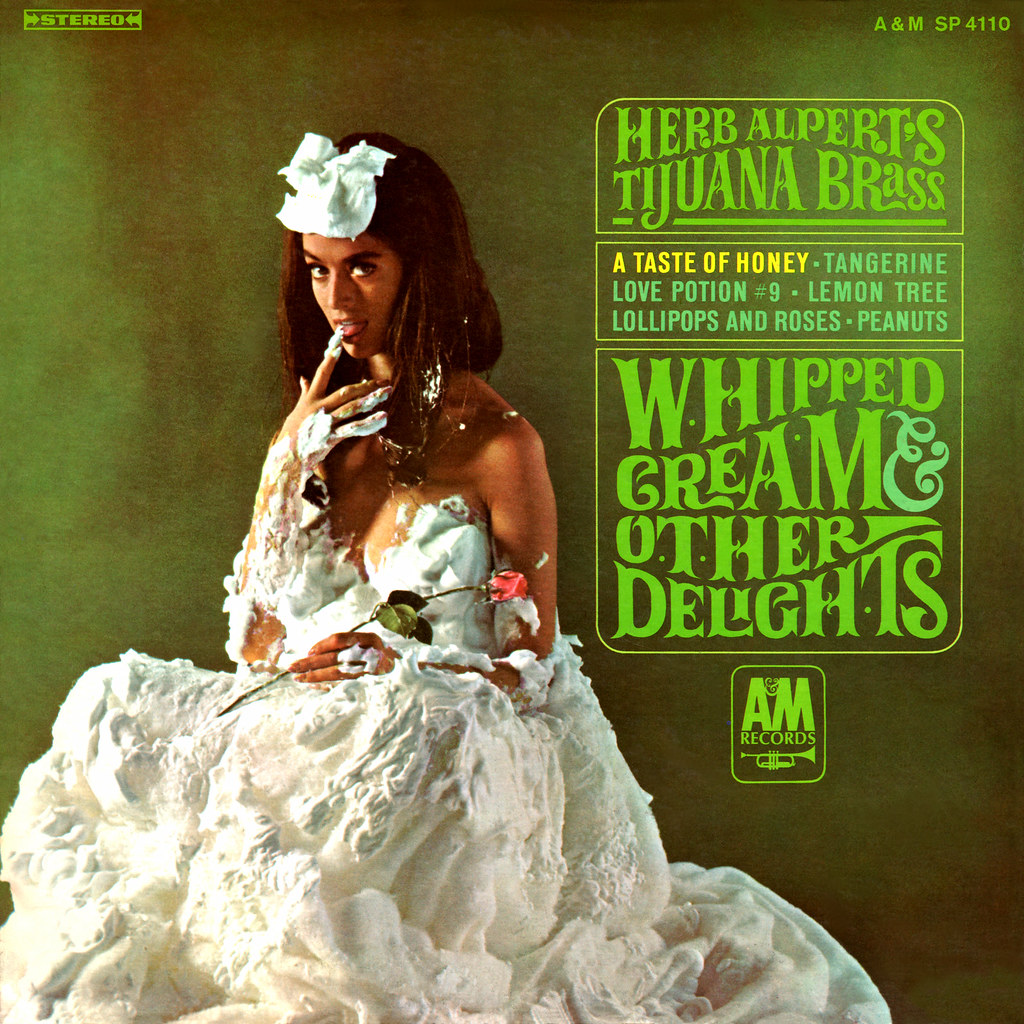
    The number one album today in 1965 was Herb Alpert and the Tijuana Brass’ “Whipped Cream and Other Delights”:

    The number one single today in 1966 was this one-hit wonder:

    The number one British album today in 1976 was Glen Campbell’s “20 Golden Greats”:

    (more…)

    Share this on …

    • Share on X (Opens in new window) X
    • Share on Facebook (Opens in new window) Facebook
    • Share on LinkedIn (Opens in new window) LinkedIn
    • Email a link to a friend (Opens in new window) Email
    • Print (Opens in new window) Print
    Like Loading…
    No comments on Presty the DJ for Nov. 27
  • Before you carve the turkey …

    November 26, 2015
    Culture, US politics

    … read James Taranto:

    It’s Thanksgiving, and the Democratic National Committee is declaring war on uncles. “The holiday season is filled with food, traveling, and lively discussions with Republican relatives about politics sometimes laced with statements that are just not true,” the DNC declares on a website called YourRepublicanUncle.com. “Here are the most common myths spouted by your family members who spend too much time listening to Rush Limbaugh and the perfect response to each of them.”

    There are 10 “myths,” with accompanying talking points in response—five about Republican presidential candidates, five about political topics. If you’re a Republican uncle and want to stump your DNC-informed niece or nephew, you might want to say something disparaging about Hillary Clinton or bring up national security, as these don’t make the list.

    The talking points are unsubtle and tendentious enough that one suspects they were written by the unwieldily named Debbie Wasserman Schultz herself. Example: If your uncle says, “I like that Donald Trump! He says what he means,” you’re supposed to respond:

    He certainly does say what he means, and most of the time, it’s xenophobic, or sexist, or out of touch, or totally irresponsible. But what’s really scary is that the rest of the GOP field agrees with him. Because Trump is leading in the polls, the other Republican candidates are competing with each other to see who can echo his message the loudest.

    In case that isn’t enough to destroy your uncle, there are a couple of follow-ups.

    The DNC idea is far from original: Battle prep for holiday political arguments has been a liberal trope for several years now. Salon’s Alex Pareene, for instance, observedChristmas in 2011 with a piece titled “How to Argue With Right-Wing Relatives” andThanksgiving in 2013 with “How to Win Thanksgiving: A Holiday Guide to Arguing With Right-Wing Relatives.” The latter he billed as “a special ‘Obamacare train wreck’ edition.”

    This year, the Puffington Host’s Chris D’Angelo explains “How to Talk to a Climate Change Denier,” while Salon’s Sarah Burris reports: “Wow, Seth Meyers Just Stripped Down Donald Trump’s Lies and Islamophobia So Clearly Even Your Racist Uncle Will Get It Now.”

    Vox has a whole package called “How to Survive Your Family’s Thanksgiving Arguments.” Six writers address particular personages (Trump, Bernie Sanders) and issues. In a hilarious attempt at appearing evenhanded, the Voxen include responses to left-wing relatives too, such as this from Zack Beauchamp:

    Your uncle says: “This Benghazi thing is pure cynical politics. Republicans are just trying to destroy [Hillary] Clinton’s campaign.”

    Your uncle’s got a point, but you can distract from the inevitable argument between him and someone more conservative at the table by pointing out that Republican incentives here aren’t always what they seem.

    Yes, some Republicans are cynically manipulating this issue for their own gain or to hurt Clinton—but some do genuinely believe the White House did something right, and some are just kind of trapped by the internal GOP politics of it all.

    There’s an asymmetry here. After all, if liberals have annoying right-wing relatives who pick arguments at Thanksgiving dinner, it follows that conservatives also have annoying left-wing relatives who do the same thing. But as far as we know, the “How to Win Thanksgiving” genre is the exclusive province of the left.

    Though this year has seen a spate of conservative satires: “How to Talk to Your Progressive Niece about Obamacare This Thanksgiving” by Ricochet’s Jon Gabriel, “Don’t Argue Like an Amateur at Thanksgiving” a series of tweets by Bloomberg’s Megan McCardle, “How to Talk to Your Pansy Marxist Nephew at Thanksgiving” by the Washington Free Beacon’s Uncle Strickland. (We haven’t seen Strickland’s byline before and suspect it’s a nom de plume.) Liberal CNN also has a half-joking piece, “Turkey Table Politics: 7 Tips to Beat the Stuffing Out of Your Rivals,” by the delightfully named Gregory Krieg.

    One serious response to all this is to suggest that holiday dinners are an inappropriate venue for the airing of political differences. The Chicago Tribune’s Alison Bowen consults psychologists for advice on “How to Keep Politics Off the Table at Thanksgiving.” The Federalist Sean Davis last year explained “Everything You Need to Know About Winning a Thanksgiving Argument”:

    Don’t start one. That’s how you win.

    Don’t be that guy. Don’t ruin Thanksgiving by thinking anyone cares about your stupid political opinions.

    And Real Clear Politics’ Heather Wilhelm bemoans “The Tightening Grip of the Politicized Life”:

    Politics, for many, has morphed into personal identity. Just look at colleges today, where opposing political sentiments or offensive statements can make students collapse like panicked, half-hearted origami. And hey, it makes sense: If politics is the be-all and end-all of life, and you honestly believe we can build a utopia buttressed by bureaucratic control, your personal worth, by logical extension, is ultimately based upon your political beliefs. No offense is too petty to let stand; no Thanksgiving dinner can be left in peace.

    This week, let’s give thanks for America’s remaining respites from the politicized life. They may be endangered, but they’re out there—and if we’re smart, we’ll work to expand them. They’re often the best places, after all, to count our many blessings.

    There is wisdom here, but we can’t agree entirely. When people gather, it is natural to talk about things that interest them, including current affairs. Such arguments are seldom “won,” but it can be interesting and enlightening to hear points of view different from one’s own. Surely there are ways of avoiding an angry “Crossfire”-style battle short of setting up a safe space where any political discussion is off-limits.

    If we were offering advice on how to talk politics at Thanksgiving (or in other ordinary social settings), it would come down to two points: 1. Think for yourself. 2. Be respectful, and prepare to back off or change the subject should things get heated.

    The latter point runs counter to the spirit of the left-wing advice, which treats conversation as a contest and futilely aims at victory. The former runs counter to its substance—namely, prepackaged talking points. Liberals have no monopoly on truculence, but the need to be told what to think does seem to set them apart.

    The left today is both doctrinaire and capricious; political correctness is unsparing in its demand for conformity to an ever-changing set of dogmas that frequently contradict each other, not to mention reality. A real-life example comes from Politico, whose Edward-Isaac Dovere claims that President Obama is doing a bang-up job combating the Islamic State but is constrained not to say so:

    Obama has more he could say in response to the questions about ISIL he’s getting pummeled with since the Paris attacks. They’re just not, according to people familiar with his thinking, things that he wants to say out loud.

    Things like, “Remember everyone panicking about how much surveillance we’re doing?” Or “How about all those people I’m killing with drones”? Those wouldn’t have quite the right ring for a president who’s come reluctantly, and with continuing reservations, to both. . . .

    The president, according to people who know him, would rather not be Big Brother Obama or Kill List Obama, and he certainly doesn’t want to be seen that way.

    That creates a tricky situation for the White House. Obama wants credit for his response to terrorism, but he doesn’t want to be attached to many of the ways he’s managed that response.

    “Obama isn’t anxious to be known as the drone president,” said a Democratic strategist familiar with his thinking. “But to anyone who looks at the strikes they’ve taken and the raids that have been authorized, he clearly is fiercely going after these guys.”

    It’s difficult to believe—and neither Dovere nor his sources explicitly claim—that Obama has been as effective against ISIS as a president unconstrained by politically correct ideology would have been. But it does seem plausible that his embarrassment over the actions he has taken makes him appear even more ineffectual than he is. If the World’s Greatest Orator can’t forthrightly explain his own policies, no wonder like-minded nieces and nephews who lack his rhetorical gifts are so intimidated by their Republican uncles.


    Share this on …

    • Share on X (Opens in new window) X
    • Share on Facebook (Opens in new window) Facebook
    • Share on LinkedIn (Opens in new window) LinkedIn
    • Email a link to a friend (Opens in new window) Email
    • Print (Opens in new window) Print
    Like Loading…
    No comments on Before you carve the turkey …
  • Three things to be thankful for

    November 26, 2015
    Packers

    Facebook reminds us that tonight at Lambeau Field, we should be thankful for …

    Milwaukee Journal Sentinel

    … instead of …

    … the quarterbacks after Bart Starr and before Brett Favre and Aaron Rodgers.

    Technically, a fourth quarterback will be there:

    Share this on …

    • Share on X (Opens in new window) X
    • Share on Facebook (Opens in new window) Facebook
    • Share on LinkedIn (Opens in new window) LinkedIn
    • Email a link to a friend (Opens in new window) Email
    • Print (Opens in new window) Print
    Like Loading…
    No comments on Three things to be thankful for
Previous Page
1 … 669 670 671 672 673 … 1,042
Next Page

Website Powered by WordPress.com.

Steve Prestegard.com: The Presteblog

The thoughts of a journalist/libertarian–conservative/Christian husband, father, Eagle Scout and aficionado of obscure rock music. Thoughts herein are only the author’s and not necessarily the opinions of his family, friends, neighbors, church members or past, present or future employers.

  • Steve
    • About, or, Who is this man?
    • Facebook
    • Twitter
    • Adventures in ruralu0026nbsp;inkBack in June 2009, I was driving somewhere through a rural area. And for some reason, I had a flashback to two experiences in my career about that time of year many years ago. In 1988, eight days after graduating from the University of Wisconsin, I started work at the Grant County Herald Independent in Lancaster as a — well, the — reporter. Four years after that, on my 27th birthday, I purchased, with a business partner, the Tri-County Press in Cuba City, my first business venture. Both were experiences about which Wisconsin author Michael Perry might write. I thought about all this after reading a novel, The Deadline, written by a former newspaper editor and publisher. (Now who would write a novel about a weekly newspaper?) As a former newspaper owner, I picked at some of it — why finance a newspaper purchase through the bank if the seller is willing to finance it? Because the mean bank lender is a plot point! — and it is much more interesting than reality, but it is very well written, with a nicely twisting plot, and quite entertaining, again more so than reality. There is something about that first job out of college that makes you remember it perhaps more…
    • Adventures in radioI’ve been in the full-time work world half my life. For that same amount of time I’ve been broadcasting sports as a side interest, something I had wanted to since I started listening to games on radio and watching on TV, and then actually attending games. If you ask someone who’s worked in radio for some time about the late ’70s TV series “WKRP in Cincinnati,” most of them will tell you that, if anything, the series understated how wacky working in radio can be. Perhaps the funniest episode in the history of TV is the “WKRP” episode, based on a true story, about the fictional radio station’s Thanksgiving promotion — throwing live turkeys out of a helicopter under the mistaken belief that, in the words of WKRP owner Arthur Carlson, “As God is my witness, I thought turkeys could fly.” [youtube=http://www.youtube.com/watch?v=ST01bZJPuE0] I’ve never been involved in anything like that. I have announced games from the roofs of press boxes (once on a nice day, and once in 50-mph winds), from a Mississippi River bluff (more on that later), and from the front row of the second balcony of the University of Wisconsin Fieldhouse (great view, but not a place to go if…
    • “Good morning/afternoon/evening, ________ fans …”
    • My biggest storyEarlier this week, while looking for something else, I came upon some of my own work. (I’m going to write a blog someday called “Things I Found While Looking for Something Else.” This is not that blog.) The Grant County Sheriff’s Department, in the county where I used to live, has a tribute page to the two officers in county history who died in the line of duty. One is William Loud, a deputy marshal in Cassville, shot to death by two bank robbers in 1912. The other is Tom Reuter, a Grant County deputy sheriff who was shot to death at the end of his 4 p.m.-to-midnight shift March 18, 1990. Gregory Coulthard, then a 19-year-old farmhand, was convicted of first-degree intentional homicide and is serving a life sentence, with his first eligibility for parole on March 18, 2015, just 3½ years from now. I’ve written a lot over the years. I think this, from my first two years in the full-time journalism world, will go down as the story I remember the most. For journalists, big stories contain a paradox, which was pointed out in CBS-TV’s interview of Andy Rooney on his last “60 Minutes” Sunday. Morley Safer said something along the line…
  • Food and drink
    • The Roesch/Prestegard familyu0026nbsp;cookbookFrom the family cookbook(s) All the families I’m associated with love to eat, so it’s a good thing we enjoy cooking. The first out-of-my-house food memory I have is of my grandmother’s cooking for Christmas or other family occasions. According to my mother, my grandmother had a baked beans recipe that she would make for my mother. Unfortunately, the recipe seems to have  disappeared. Also unfortunately, my early days as a picky, though voluminous, eater meant I missed a lot of those recipes made from such wholesome ingredients as lard and meat fat. I particularly remember a couple of meals that involve my family. The day of Super Bowl XXXI, my parents, my brother, my aunt and uncle and a group of their friends got together to share lots of food and cheer on the Packers to their first NFL title in 29 years. (After which Jannan and I drove to Lambeau Field in the snow,  but that’s another story.) Then, on Dec. 31, 1999, my parents, my brother, my aunt and uncle and Jannan and I (along with Michael in utero) had a one-course-per-hour meal to appropriately end years beginning with the number 1. Unfortunately I can’t remember what we…
    • SkålI was the editor of Marketplace Magazine for 10 years. If I had to point to one thing that demonstrates improved quality of life since I came to Northeast Wisconsin in 1994, it would be … … the growth of breweries and  wineries in Northeast Wisconsin. The former of those two facts makes sense, given our heritage as a brewing state. The latter is less self-evident, since no one thinks of Wisconsin as having a good grape-growing climate. Some snobs claim that apple or cherry wines aren’t really wines at all. But one of the great facets of free enterprise is the opportunity to make your own choice of what food and drink to drink. (At least for now, though some wish to restrict our food and drink choices.) Wisconsin’s historically predominant ethnic group (and our family’s) is German. Our German ancestors did unfortunately bring large government and high taxes with them, but they also brought beer. Europeans brought wine with them, since they came from countries with poor-quality drinking water. Within 50 years of a wave of mid-19th-century German immigration, brewing had become the fifth largest industry in the U.S., according to Maureen Ogle, author of Ambitious Brew: The Story of American Beer. Beer and wine have…
  • Wheels
    • America’s sports carMy birthday in June dawned without a Chevrolet Corvette in front of my house. (The Corvette at the top of the page was featured at the 2007 Greater Milwaukee Auto Show. The copilot is my oldest son, Michael.) Which isn’t surprising. I have three young children, and I have a house with a one-car garage. (Then again, this would be more practical, though a blatant pluck-your-eyes-out violation of the Corvette ethos. Of course, so was this.) The reality is that I’m likely to be able to own a Corvette only if I get a visit from the Corvette Fairy, whose office is next door to the Easter Bunny. (I hope this isn’t foreshadowing: When I interviewed Dave Richter of Valley Corvette for a car enthusiast story in the late great Marketplace Magazine, he said that the most popular Corvette in most fans’ minds was a Corvette built during their days in high school. This would be a problem for me in that I graduated from high school in 1983, when no Corvette was built.) The Corvette is one of those cars whose existence may be difficult to understand within General Motors Corp. The Corvette is what is known as a “halo car,” a car that drives people into showrooms, even if…
    • Barges on fouru0026nbsp;wheelsI originally wrote this in September 2008.  At the Fox Cities Business Expo Tuesday, a Smart car was displayed at the United Way Fox Cities booth. I reported that I once owned a car into which trunk, I believe, the Smart could be placed, with the trunk lid shut. This is said car — a 1975 Chevrolet Caprice coupe (ours was dark red), whose doors are, I believe, longer than the entire Smart. The Caprice, built down Interstate 90 from us Madisonians in Janesville (a neighbor of ours who worked at the plant probably helped put it together) was the flagship of Chevy’s full-size fleet (which included the stripper Bel Air and middle-of-the-road Impala), featuring popular-for-the-time vinyl roofs, better sound insulation, an upgraded cloth interior, rear fender skirts and fancy Caprice badges. The Caprice was 18 feet 1 inch long and weighed 4,300 pounds. For comparison: The midsize Chevrolet of the ear was the Malibu, which was the same approximate size as the Caprice after its 1977 downsizing. The compact Chevrolet of the era was the Nova, which was 200 inches long — four inches longer than a current Cadillac STS. Wikipedia’s entry on the Caprice has this amusing sentence: “As fuel economy became a bigger priority among Americans…
    • Behind the wheel
    • Collecting only dust or rust
    • Coooooooooooupe!
    • Corvettes on the screen
    • The garage of misfit cars
    • 100 years (and one day) of our Chevrolets
    • They built Excitement, sort of, once in a while
    • A wagon by any otheru0026nbsp;nameFirst written in 2008. You will see more don’t-call-them-station-wagons as you drive today. Readers around my age have probably had some experience with a vehicle increasingly rare on the road — the station wagon. If you were a Boy Scout or Girl Scout, or were a member of some kind of youth athletic team, or had a large dog, or had relatives approximately your age, or had friends who needed to be transported somewhere, or had parents who occasionally had to haul (either in the back or in a trailer) more than what could be fit inside a car trunk, you (or, actually, your parents) were the target demographic for the station wagon. “Station wagons came to be like covered wagons — so much family activity happened in those cars,” said Tim Cleary, president of the American Station Wagon Owners Association, in Country Living magazine. Wagons “were used for everything from daily runs to the grocery store to long summer driving trips, and while many men and women might have wanted a fancier or sportier car, a station wagon was something they knew they needed for the family.” The “station wagon” originally was a vehicle with a covered seating area to take people between train stations…
    • Wheels on theu0026nbsp;screenBetween my former and current blogs, I wrote a lot about automobiles and TV and movies. Think of this post as killing two birds (Thunderbirds? Firebirds? Skylarks?) with one stone. Most movies and TV series view cars the same way most people view cars — as A-to-B transportation. (That’s not counting the movies or series where the car is the plot, like the haunted “Christine” or “Knight Rider” or the “Back to the Future” movies.) The philosophy here, of course, is that cars are not merely A-to-B transportation. Which disqualifies most police shows from what you’re about to read, even though I’ve watched more police video than anything else, because police cars are plain Jane vehicles. The highlight in a sense is in the beginning: The car chase in my favorite movie, “Bullitt,” featuring Steve McQueen’s 1968 Ford Mustang against the bad guys’ 1968 Dodge Charger: [youtube=http://www.youtube.com/watch?v=GMc2RdFuOxIu0026amp;fmt=18] One year before that (but I didn’t see this until we got Telemundo on cable a couple of years ago) was a movie called “Operación 67,” featuring (I kid you not) a masked professional wrestler, his unmasked sidekick, and some sort of secret agent plot. (Since I don’t know Spanish and it’s not…
    • While riding in my Cadillac …
  • Entertainments
    • Brass rocksThose who read my former blog last year at this time, or have read this blog over the past months, know that I am a big fan of the rock group Chicago. (Back when they were a rock group and not a singer of sappy ballads, that is.) Since rock music began from elements of country music, jazz and the blues, brass rock would seem a natural subgenre of rock music. A lot of ’50s musical acts had saxophone players, and some played with full orchestras … [youtube=http://www.youtube.com/watch?v=9CPS-WuUKUE] … but it wasn’t until the more-or-less simultaneous appearances of Chicago and Blood Sweat u0026amp; Tears on the musical scene (both groups formed in 1967, both had their first charting singles in 1969, and they had the same producer) that the usual guitar/bass/keyboard/drum grouping was augmented by one or more trumpets, a sax player and a trombone player. While Chicago is my favorite group (but you knew that already), the first brass rock song I remember hearing was BSu0026amp;T’s “Spinning Wheel” — not in its original form, but on “Sesame Street,” accompanied by, yes, a giant spinning wheel. [youtube=http://www.youtube.com/watch?v=qi9sLkyhhlE] [youtube=http://www.youtube.com/watch?v=OxWSOuNsN20] [youtube=http://www.youtube.com/watch?v=U9U34uPjz-g] I remember liking Chicago’s “Just You ‘n Me” when it was released as a single, and…
    • Drive and Eat au0026nbsp;RockThe first UW home football game of each season also is the opener for the University of Wisconsin Marching Band, the world’s finest college marching band. (How the UW Band has not gotten the Sudler Trophy, which is to honor the country’s premier college marching bands, is beyond my comprehension.) I know this because I am an alumnus of the UW Band. I played five years (in the last rank of the band, Rank 25, motto: “Where Men Are Tall and Run-On Is Short”), marching in 39 football games at Camp Randall Stadium, the Hubert H. Humphrey Metrodome in Minneapolis, Michigan Stadium in Ann Arbor, Memorial Stadium at the University of Illinois (worst artificial turf I had ever seen), the University of Nevada–Las Vegas’ Sam Boyd Silver Bowl, the former Dyche Stadium at Northwestern University, five high school fields and, in my one bowl game, Legion Field in Birmingham, Ala., site of the 1984 Hall of Fame Bowl. The UW Band was, without question, the most memorable experience of my college days, and one of the most meaningful experiences of my lifetime. It was the most physical experience of my lifetime, to be sure. Fifteen minutes into my first Registration…
    • Keep on rockin’ in the freeu0026nbsp;worldOne of my first ambitions in communications was to be a radio disc jockey, and to possibly reach the level of the greats I used to listen to from WLS radio in Chicago, which used to be one of the great 50,000-watt AM rock stations of the country, back when they still existed. (Those who are aficionados of that time in music and radio history enjoyed a trip to that wayback machine when WLS a Memorial Day Big 89 Rewind, excerpts of which can be found on their Web site.) My vision was to be WLS’ afternoon DJ, playing the best in rock music between 2 and 6, which meant I wouldn’t have to get up before the crack of dawn to do the morning show, yet have my nights free to do whatever glamorous things big-city DJs did. Then I learned about the realities of radio — low pay, long hours, zero job security — and though I have dabbled in radio sports, I’ve pretty much cured myself of the idea of working in radio, even if, to quote WAPL’s Len Nelson, “You come to work every day just like everybody else does, but we’re playing rock ’n’ roll songs, we’re cuttin’ up.…
    • Monday on the flight line, not Saturday in the park
    • Music to drive by
    • The rock ofu0026nbsp;WisconsinWikipedia begins its item “Music of Wisconsin” thusly: Wisconsin was settled largely by European immigrants in the late 19th century. This immigration led to the popularization of galops, schottisches, waltzes, and, especially, polkas. [youtube=http://www.youtube.com/watch?v=yl7wCczgNUc] So when I first sought to write a blog piece about rock musicians from Wisconsin, that seemed like a forlorn venture. Turned out it wasn’t, because when I first wrote about rock musicians from Wisconsin, so many of them that I hadn’t mentioned came up in the first few days that I had to write a second blog entry fixing the omissions of the first. This list is about rock music, so it will not include, for instance, Milwaukee native and Ripon College graduate Al Jarreau, who in addition to having recorded a boatload of music for the jazz and adult contemporary/easy listening fan, also recorded the theme music for the ’80s TV series “Moonlighting.” Nor will it include Milwaukee native Eric Benet, who was for a while known more for his former wife, Halle Berry, than for his music, which includes four number one singles on the Ru0026amp;B charts, “Spend My Life with You” with Tamia, “Hurricane,” “Pretty Baby” and “You’re the Only One.” Nor will it include Wisconsin’s sizable contributions to big…
    • Steve TV: All Steve, All the Time
    • “Super Steve, Man of Action!”
    • Too much TV
    • The worst music of allu0026nbsp;timeThe rock group Jefferson Airplane titled its first greatest-hits compilation “The Worst of Jefferson Airplane.” Rolling Stone magazine was not being ironic when it polled its readers to decide the 10 worst songs of the 1990s. I’m not sure I agree with all of Rolling Stone’s list, but that shouldn’t be surprising; such lists are meant for debate, after all. To determine the “worst,” songs appropriate for the “Vinyl from Hell” segment that used to be on a Madison FM rock station, requires some criteria, which does not include mere overexposure (for instance, “Macarena,” the video of which I find amusing since it looks like two bankers are singing it). Before we go on: Blog posts like this one require multimedia, so if you find a song you hate on this blog, I apologize. These are also songs that I almost never listen to because my sound system has a zero-tolerance policy — if I’m listening to the radio or a CD and I hear a song I don’t like, it’s, to quote Bad Company, gone gone gone. My blonde wife won’t be happy to read that one of her favorite ’90s songs, 4 Non Blondes’ “What’s Up,” starts the list. (However,…
    • “You have the right to remain silent …”
  • Madison
    • Blasts from the Madison media past
    • Blasts from my Madison past
    • Blasts from our Madison past
    • What’s the matter with Madison?
    • Wisconsin – Madison = ?
  • Sports
    • Athletic aesthetics, or “cardinal” vs. “Big Red”
    • Choose your own announcer
    • La Follette state 1982 (u0022It was 30 years ago todayu0022)
    • The North Dakota–Wisconsin Hockey Fight of 1982
    • Packers vs. Brewers
  • Hall of Fame
    • The case(s) against teacher unions
    • The Class of 1983
    • A hairy subject, or face the face
    • It’s worse than you think
    • It’s worse than you think, 2010–11 edition
    • My favorite interview subject of all time
    • Oh look! Rural people!
    • Prestegard for president!
    • Unions vs. the facts, or Hiding in plain sight
    • When rhetoric goes too far
Privacy & Cookies: This site uses cookies. By continuing to use this website, you agree to their use.
To find out more, including how to control cookies, see here: Cookie Policy
  • Subscribe Subscribed
    • Steve Prestegard.com: The Presteblog
    • Join 197 other subscribers
    • Already have a WordPress.com account? Log in now.
    • Steve Prestegard.com: The Presteblog
    • Subscribe Subscribed
    • Sign up
    • Log in
    • Report this content
    • View site in Reader
    • Manage subscriptions
    • Collapse this bar
%d