If there is one thing that typifies those in power generally and liberal celebrities specifically, it is rank hypocrisy — “do as I say, not as I do.”
For Earth Day (which was cofounded, or so he claimed, by Ira Einhorn, whose idea of environmental responsibility was killing his girlfriend, stuffing her body in a trunk in his apartment, and running off to France), a Facebook Friend passes on this photo of the current Obama vacation (on David Geffen’s yacht) and quote:
“No challenge poses a greater threat to future generations than climate change… and the best scientists in the world are all telling us that our activities are changing the climate…
… except for vacations on board super-yachts… those are OK”
— Barack Obama
Glenn Harlan Reynolds says of global warming that he will believe it’s a crisis when people in authority start acting like it’s a crisis. That means no more large-scale carbon use by envirowackos like Al “Earth in the Balance” Gore (who has made quite the fortune by lying), Leonardo DiCaprio (who reportedly was also on the yacht), etc. Those people are playing those who are environmentally responsible for suckers.
The environmentalist movement needs to realize and admit that Gore-like dire predictions of environmental doom do not improve one’s credibility. Mark J. Perry writes:
In the May 2000 issue of Reason Magazine, award-winning science correspondent Ronald Bailey wrote an excellent article titled “Earth Day, Then and Now” to provide some historical perspective on the 30th anniversary of Earth Day. In that article, Bailey noted that around the time of the first Earth Day in the 1970, and in the years following, there was a “torrent of apocalyptic predictions” and many of those predictions were featured in his Reason article. Well, it’s now the 47th anniversary of Earth Day, and a good time to ask the question again that Bailey asked 17 years ago: How accurate were the predictions made around the time of the first Earth Day in 1970? The answer: “The prophets of doom were not simply wrong, but spectacularly wrong,” according to Bailey. Here are 18 examples of the spectacularly wrong predictions made around 1970 when the “green holy day” (aka Earth Day) started:
1. Harvard biologist George Wald estimated that “civilization will end within 15 or 30 years unless immediate action is taken against problems facing mankind.”
2. “We are in an environmental crisis which threatens the survival of this nation, and of the world as a suitable place of human habitation,” wrote Washington University biologist Barry Commoner in the Earth Day issue of the scholarly journal Environment.
3. The day after the first Earth Day, the New York Times editorial page warned, “Man must stop pollution and conserve his resources, not merely to enhance existence but to save the race from intolerable deterioration and possible extinction.”
4. “Population will inevitably and completely outstrip whatever small increases in food supplies we make,” Paul Ehrlich confidently declared in the April 1970 issue of Mademoiselle. “The death rate will increase until at least 100-200 million people per year will be starving to death during the next ten years.”
5. “Most of the people who are going to die in the greatest cataclysm in the history of man have already been born,” wrote Paul Ehrlich in a 1969 essay titled “Eco-Catastrophe! “By…[1975] some experts feel that food shortages will have escalated the present level of world hunger and starvation into famines of unbelievable proportions. Other experts, more optimistic, think the ultimate food-population collision will not occur until the decade of the 1980s.”
6. Ehrlich sketched out his most alarmist scenario for the 1970 Earth Day issue of The Progressive, assuring readers that between 1980 and 1989, some 4 billion people, including 65 million Americans, would perish in the “Great Die-Off.”
7. “It is already too late to avoid mass starvation,” declared Denis Hayes, the chief organizer for Earth Day, in the Spring 1970 issue of The Living Wilderness.
8. Peter Gunter, a North Texas State University professor, wrote in 1970, “Demographers agree almost unanimously on the following grim timetable: by 1975 widespread famines will begin in India; these will spread by 1990 to include all of India, Pakistan, China and the Near East, Africa. By the year 2000, or conceivably sooner, South and Central America will exist under famine conditions….By the year 2000, thirty years from now, the entire world, with the exception of Western Europe, North America, and Australia, will be in famine.”
9. In January 1970, Life reported, “Scientists have solid experimental and theoretical evidence to support…the following predictions: In a decade, urban dwellers will have to wear gas masks to survive air pollution…by 1985 air pollution will have reduced the amount of sunlight reaching earth by one half….”
10. Ecologist Kenneth Watt told Time that, “At the present rate of nitrogen buildup, it’s only a matter of time before light will be filtered out of the atmosphere and none of our land will be usable.”
11. Barry Commoner predicted that decaying organic pollutants would use up all of the oxygen in America’s rivers, causing freshwater fish to suffocate.
12. Paul Ehrlich chimed in, predicting in 1970 that “air pollution…is certainly going to take hundreds of thousands of lives in the next few years alone.” Ehrlich sketched a scenario in which 200,000 Americans would die in 1973 during “smog disasters” in New York and Los Angeles.
13. Paul Ehrlich warned in the May 1970 issue of Audubon that DDT and other chlorinated hydrocarbons “may have substantially reduced the life expectancy of people born since 1945.” Ehrlich warned that Americans born since 1946…now had a life expectancy of only 49 years, and he predicted that if current patterns continued this expectancy would reach 42 years by 1980, when it might level out. (Note: According to the most recent CDC report, life expectancy in the US is 78.8 years).
14. Ecologist Kenneth Watt declared, “By the year 2000, if present trends continue, we will be using up crude oil at such a rate…that there won’t be any more crude oil. You’ll drive up to the pump and say, `Fill ‘er up, buddy,’ and he’ll say, `I am very sorry, there isn’t any.’”
15. Harrison Brown, a scientist at the National Academy of Sciences, published a chart in Scientific American that looked at metal reserves and estimated the humanity would totally run out of copper shortly after 2000. Lead, zinc, tin, gold, and silver would be gone before 1990.
16. Sen. Gaylord Nelson wrote in Look that, “Dr. S. Dillon Ripley, secretary of the Smithsonian Institute, believes that in 25 years, somewhere between 75 and 80 percent of all the species of living animals will be extinct.”
17. In 1975, Paul Ehrlich predicted that “since more than nine-tenths of the original tropical rainforests will be removed in most areas within the next 30 years or so, it is expected that half of the organisms in these areas will vanish with it.”
18. Kenneth Watt warned about a pending Ice Age in a speech. “The world has been chilling sharply for about twenty years,” he declared. “If present trends continue, the world will be about four degrees colder for the global mean temperature in 1990, but eleven degrees colder in the year 2000. This is about twice what it would take to put us into an ice age.”
Let’s keep those spectacularly wrong predictions from the first Earth Day 1970 in mind when we’re bombarded in the next few days with media hype, and claims like this from the 2017 Earth Day website:
Global sea levels are rising at an alarmingly fast rate — 6.7 inches in the last century alone and going higher. Surface temperatures are setting new heat records about each year. The ice sheets continue to decline, glaciers are in retreat globally, and our oceans are more acidic than ever. We could go on…which is a whole other problem.
The majority of scientists are in agreement that human contributions to the greenhouse effect are the root cause. Essentially, gases in the atmosphere – such as methane and CO2 – trap heat and block it from escaping our planet.
So what happens next? More droughts and heat waves, which can have devastating effects on the poorest countries and communities. Hurricanes will intensify and occur more frequently. Sea levels could rise up to four feet by 2100 – and that’s a conservative estimate among experts.
Reality Check/Inconvenient Facts:
1. From the National Oceanic and Atmospheric Administration’s (NOAA) Annual Report for 2016, we’re actually in the longest major hurricane drought in US history of 11 years (and counting):
The last major hurricane (Category 3 or stronger) to make landfall in the US was Wilma on November 24, 2005. This major hurricane drought [of 11 years] surpassed the previous record of eight years from 1861-1868 when no major hurricane struck the coast of the United States. On average, a major hurricane makes landfall in the U.S. about once every three years.
2. The frequency of hurricanes in the US has been declining … in the first seven years of each decade back to the 1850s, based on NOAA data here. In the seven years between 2010 and 2016, there were only eight hurricanes (all Category 1 and 2), which is the lowest number of hurricanes during the first seven years of any decade in the history of NOAA’s data back to 1850. It’s also far lower than the previous low of 14 hurricanes during the period from 1900 to 1906.
3. What you probably won’t hear about from the Earth Day supporters is the amazing “decarbonization” of the United States over the last decade or so, as the falling CO2 emissions in the bottom chart above illustrate, even as CO2 emissions from energy consumption have been rising throughout most of the rest of the world. Energy-related carbon emissions in the US have been falling since the 2007 peak, and were at their lowest level last year in nearly a quarter century, going back to 1992. And the environmentalists and the “Earth Day” movement really had very little to do with this amazing “greening” of America. Rather, it’s mostly because of hydraulic fracturing and the increasing substitution of natural gas for coal as a fuel source for electric power …
Finally, think about this question, posed by Ronald Bailey in 2000: What will Earth look like when Earth Day 60 rolls around in 2030? Bailey predicts a much cleaner, and much richer future world, with less hunger and malnutrition, less poverty, and longer life expectancy, and with lower mineral and metal prices. But he makes one final prediction about Earth Day 2030: “There will be a disproportionately influential group of doomsters predicting that the future–and the present–never looked so bleak.” In other words, the hype, hysteria and spectacularly wrong apocalyptic predictions will continue, promoted by the “environmental grievance hustlers.”
Today in 1964, the president of Britain’s National Federation of Hairdressers offered free haircuts to members of the next number one act in the British charts, adding, “The Rolling Stones are the worst; one of them looks as if he’s got a feather duster on his head.”
One assumes he was referring to Keith Richards, who is still working (and, to some surprise, still alive) 53 years later.
The number one British single today in 1965:
The number one British album today in 1972 was Deep Purple’s “Machine Head”:
While looking for something else (Again?, readers ask), I hit upon the idea of combining two of my favorite subjects — fictional detectives and cars — though I’ve done that before here.
The imperative to create online lists of everything (i.e. top 10 reasons you should read The Presteblog, and by the way YOU WILL NOT BELIEVE NUMBER 7!) has created, to no surprise, several lists of top fictional detectives’ wheels, both here and abroad.
Remember the words “detective” (indicating non-marked police cars) and, most importantly, “fictional.” Along with Raymond Chandler’s The Simple Art of Murder and Ten Commandments for the Detective Novel, someone online created this less serious list of private-detective fiction requirements, from which number eight is appropriate for this blog:
Jazzy or Rhythmic Theme Music (if vocalized, should include your name).
At least four suits with assorted ties and one complete tux (for weddings and similar occasions).
A smartass attitude, a smart deductive wit along with a smart mouth (optional depending on who’s holding the gun).
An Admin Specialist who know where all information is stored (along with all hiding places of liquor supply)
The ability to safely tuck and roll while jumping or leaping from a moving vehicle (VERY IMPORTANT!!)
Cache of unlimited funds for informants, bribes and paying off shady gangland figures.
Backup PI partner for real sticky cases or situations (or in case of your untimely demise, will feel obligated to “do something about it”).
A jazzy looking sports car of any year, make or model (SUVs and trucks for emergencies only).
Reliable contact within the Police Department (’cause when the $#!% goes down, SOMEONE’s gonna have to answer the real tough questions).
A capable doctor and a smart, savvy lawyer (preferably of “Perry Mason” caliber).
One of the obvious cars on The Guardian‘s list, Starsky and Hutch’s Ford Torino (which, as with much of you will see herein, fits both rules 1 and 8, at least in the series’ first-season guise) …
… is about as likely to be used by real police detectives as, well, the Ferraris of “Miami Vice”:
Of course, Thomas Magnum can use a Ferrari — well, Robin Masters’ Ferrari (which was modified so Tom Selleck could sit in it):
So could San Francisco police Lt. Frank Bullitt own a Ford Mustang, because it was his personal car that he just happened to be driving on a Sunday morning while doing some work:
So could L.A. private detective Jim Rockford:
The lines got blurred with (one assumes) a Bullitt successor, the SFPD’s Nash Bridges:
To this list I add a detective who may not have made the list because he drove several cars, Joe Mannix …
This was an Oldsmobile Toronado customized into a convertible by George Barris. It was seen in the titles and few other places.
… and a car that doesn’t make nearly enough appearances on TV:
Toptenz contributed its own list of iconic British detective (well, with at least one stretch) cars:
Lotus 7, The Prisoner
Nothing was conventional in the surreal world of the 1960s series The Prisoner, including the choice of car for the lead character Number Six, played by Patrick McGoohan. Eschewing the director’s suggestion that Number Six should drive a Lotus Elan, McGoohan himself picked out the Lotus 7 arguing that the lightweight two-seater sports car better reflected Number Six’s maverick and freedom-loving persona.
Ironically, said Lotus was driven only in the beginning of every episode pre-capture and in the final scene of the last episode. Motor vehicles apparently were prohibited in The Village.
Volvo P1800, The Saint
Roger Moore’s embodiment of the suave Samaritan Simon Templar meant that nothing less than an ultra-cool car would suffice. Initially a Jaguar was sought, but the company turned down The Saint’s producers fearing that the programme would be unsuccessful. Whoops. For the next seven years Moore drove instead a Volvo P1800: a stylish 2 litre sports car that symbolised Simon Templar’s virtuous, good-looking, sophisticated yet adventurous nature. Roger Moore was so impressed by the Volvo P1800 that he bought one for himself.
Mark III Ford Capri, The Professionals
Tough, reliable, responsive, fast and able to cope in a sticky situation. Are we talking about the car or Bodie and Doyle, mercenary crime-fighters a.k.a. ‘The Professionals’? With its menacing throaty growl, the souped-up 3 litre Mark III Capri stood out in a series that featured many other cars that are considered classics today. With demanding car chases a staple of this action-packed show, the Mark III Capri was a natural choice, not only for its speed but for its (then) sleek lines and agile handling.
1983 Audi Quattro, Ashes to Ashes
“Fire up the Quattro!” barks Detective Inspector Gene Hunt. This is the 1980s, and Hunt’s sporty, four-wheel drive, red Audi Quattro is perfect for throwing around corners and mowing down piles of cardboard boxes in the high-speed pursuit of villains. Getting from 0 to 60 mph in less than six seconds and a top speed of 140mph helps. And Gene Hunt would no doubt be delighted to know that thanks to his patronage of the classic Audi Quattro demand for 1980s models doubled. Proof, as if further proof was needed, of just how iconic the cars used in British TV shows can become even now.
Ford Granada (various), The Sweeney
Jack Regan, as played by John Thaw (again) was the hard-hitting no-nonsense guv’nor in this 1970s cop series based around the crime busting exploits of the Met’s flying squad. Only a tough-looking dependable brute of a car such as the Ford Granada would do for Jack. Swapping between the Granada S and the Granada Ghia at will, Regan and his sidekick George Carter would routinely chase the baddies at high speeds in these 3 litre beasts before leaping out and cuffing the miscreants with a cry of ‘You’re nicked, Sonny’! Luckily for the production team, not only was the Granada good looking, gruff and well suited to Regan’s character it was also light for its size making it a good choice for stunt work.
The aforementioned “Ashes to Ashes” was a spinoff of the series “Life on Mars,” described thusly by Honest John:
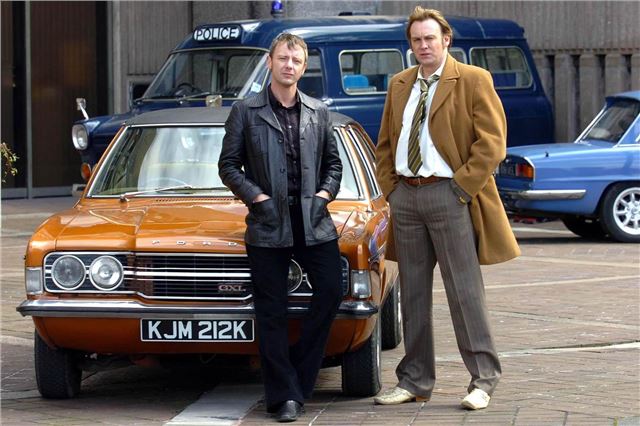
Detective Inspector Gene Hunt, star of Life On Mars, was a no-nonsense copper from the ‘70s, so what better car for him than a beige Ford Cortina? Despite famously trading up to an Audi Quattro in the Ashes To Ashes spinoff, set in the 1980s, the Hunt made his mark in a 1974 Mk III Cortina GXL.
That said, the car used for filming was actually made up of various Cortina parts, rendering it unfaithful to the model year it was supposed to be from: some viewers spotted that its spoiler, for example, wasn’t introduced until the 1975 Cortina, while the dashboard was from a later, facelifted car. Quite.
Away from the home islands, Australia brings us, of course, Mad Max:
A Danish–Swedish series called “The Bridge” apparently includes a Porsche …
‘It’s horrible, I hate that car … I don’t hate it. I love-hate it. The thing is, it’s so hard to drive. The gears are very sensitive’
Speaking of TV series I can’t watch, there is “Alarm für Cobra 11,” a series that has run on German TV for 22 years about “Die Autobahnpolizei,” highway cops:
It remains hard for me to believe that this hasn’t become a U.S. TV series. Yes, we don’t have autobahns in the U.S., but you’d think it’d be ridiculously easy to translate the German setting (to be precise, North Rhine–Westphalia) to a state with a lot of freeways — say, California or, if you want more wide open spaces, Texas — and conjure up sufficient freeway-based crime as needed. (If you need a template, watch “CHiPs.” Like California Highway Patrol motor officers Ponch and Jon, “Die Autobahnpolizei” are state cops.)
I have to add one more series that faded away far too quickly — “Chase,” a little-known Jack Webb production about a special L.A.-ish investigative unit that has all the best vehicular toys, plus a police dog:
There are two episodes (and perhaps more that are hidden) on YouTube. Each of the episodes I’ve seen ends with, of course, a chase.
Todd Radom admits to not being a great baseball player (join the crowd), but watched baseball in the 1970s because …
I was focused on Reggie Jackson’s titanic home runs, but I was also mesmerized by the green and gold Oakland A’s uniforms.
I doodled sports logos on school notebooks and conjured my own teams — not so much for games as for creating logos and uniforms for them. I studied the cap marks of Major League Baseball teams and rendered them in painstaking detail with felt-tipped markers and cheap ballpoint pens.
I was fascinated by the visual culture of sports, and I still am, having devoted my life to sports design. Lucky for me, as a young baseball fan, I hit the lottery: My formative sports-aesthetics years came in the 1970s, the game’s most vibrant, colorful decade, with its smorgasbord of audacious and often garish uniforms. Bold graphics and sensationally showy colors were synthesized into some of sports history’s most memorable uniforms — a golden age of sports identity.
Sometimes, the results were mixed — not unexpected, coming off baseball’s longstanding adherence to traditional aesthetics — but that was just fine by me. My formative years coincided with the opening of modern, multipurpose stadiums, color TV, and a new approach to what sports could look like, played by athletes with long hair and flamboyant mustaches. While any number of the uniforms were considered ugly by contemporary standards, they also projected a sense of optimism and a fresh take on a very visible and vital aspect of American popular culture.
New synthetic fabrics allowed for a far more expressive range of hues. As professional sports expanded to America’s Sun Belt, it welcomed new markets and new fans who were untethered to visual traditions that, in some cases, dated back to the years immediately following the Civil War. The Cincinnati Reds’ identity, for example, is tied to that of the original Cincinnati Red Stockings, whose roots date to 1866.
Professional leagues like the World Hockey Association, the American Basketball Association and the World Football League broke free from tradition. In 1974, the W.F.L. kicked off its inaugural season with yellow footballs, and one team— the Southern California Sun— took the field in magenta uniforms.
For me, though, the uniforms of Major League Baseball in this era were the greatest.
Take a look at images of the 1977 M.L.B. All-Star Game to see this period in all its chromatic glory. Yes, some players are clad in the traditional home whites and road grays, but scattered among them are uniforms in glorious powder blue, black, orange, red, yellow and brown — as well as one in rainbow.
The greatest ugly sports uniform of all time arrived in April 1975, when the Houston Astros revealed a new look, described as resembling “rainbow guts” or a “tequila sunrise.”
The pullover jerseys featured an alternating series of horizontal stripes, rendered in shades of orange, yellow and red, the word Astros spelled out above in clean, unembellished sans serif letterforms. A Texas-size navy blue star, nine and one-eighth inches high and placed squarely against the left side of the players’ bellies, punctuated the look.
Observers almost immediately slammed the “ugly” new look. That July, The New York Times compared the Astros’ togs to “a television test pattern.”
Tradition be damned. The Astros, renouncing baseball’s stuffy conventions, would wear the same uniforms at home and on the road. This made perfect sense, as there was certainly no mistaking the Astros for any other team.
Say what you will, the Astros looked like no other team, before or since — a singular, instantly recognizable identity.
The Astros’ look of the era might have been retina-scorching, but it perfectly reflected Houston in the mid-1970s: It was a can-do place where people migrated to dream big dreams, to drill for a never-ending supply of fossil fuels, to send Americans into space and to make money. Let New York have its austere, pinstriped Yankees, the visual embodiment of old money and Wall Street — Houston represented the future.
Baseball gave us plenty of other examples of ugly styles in those years. The back-to-back-to-back World Series champion Oakland A’s put together a dynasty in the ’70s, resplendently attired in what the team called “Kelly green, Fort Knox gold and wedding gown white.” At the other end of the spectrum were the hapless San Diego Padres, who bumped along through most of the ’70s clad in brown and gold, a look that first baseman Steve Garvey later compared to a taco.
The Chicago White Sox maintain an elevated place in the hearts and minds of ugly uniform enthusiasts everywhere. In 1976, the team owner, Bill Veeck, unveiled his team’s new uniforms. The graphic elements on the White Sox’ togs were conventional; white suits with old-fashioned navy blue letters that spelled out “Chicago” at home, with the colors reversed out on the road.
But they also featured floppy collared shirts, which were designed to be worn un-tucked. And “clamdigger” knee-length pants. And, in a spectacularly weird twist, even for the 1970s, the White Sox included shorts as part of their lineup of uniforms, a Major League Baseball first (and last). These were worn but three times, all in August, amid much ridicule and mockery, mostly from opposing players.
The Pittsburgh Pirates ensemble of the late ‘70s was a mix-and-match affair, centered around three jerseys, three sets of beltless uniform pants and two different flat-topped “pillbox-style” caps. The Bucs won the 1979 World Series in a decisive seventh game, attired in yellow-gold jerseys sandwiched by black caps and pants. They defeated the orange-clad Baltimore Orioles in a fitting conclusion for the final game of baseball’s most colorful decade.
Baseball’s Technicolor explosion of the ’70s gave way to something far more sedate and conservative during Ronald Reagan’s first presidential term. Buttoned jerseys started to replace pullovers, belts were restored to the uniform, and power blue road uniforms were supplanted by the traditional gray. In 1987 alone, roughly a third of all M.L.B. teams changed uniform styles, with each change characterized by a return to elements influenced by baseball’s mythic, distant past.
Fans have opined about the merits and misfires of their team’s uniforms since the middle of the 19th century. In 1909, the St. Louis Republic snarkily proclaimed “really, baseball uniforms are the ugliest things in the world.”
In today’s consumer culture, sports fans are the ultimate brand warriors. We wear our colors each and every day in the consummate display of brand loyalty.
The word “fan” is itself a shortened form of “fanatic.” This fervor extends to our feelings, both positive and negative, for the optics of sports. Sports fans are tribal in nature, and team branding helps to define their identities and to propel sales of licensed merchandise.
Last July I attended the M.L.B. All-Star Game in San Diego. A sea of players and coaches were lined up along the first and third baselines for the pregame ceremonies. Unlike their predecessors in the 1977 All-Star Game, every American League player was clad in white, and every National League player wore gray — they formed a vast, monochromatic sea of sameness.
I had read about the A’s green pants, as well as their gold pants …
… but I had never seen the green pants until now.
Game seven of the 1979 World Series was a water mark of some sort:
The author certainly could have added to this list the Cleveland Indians’ “blood clot” uniforms of this era:
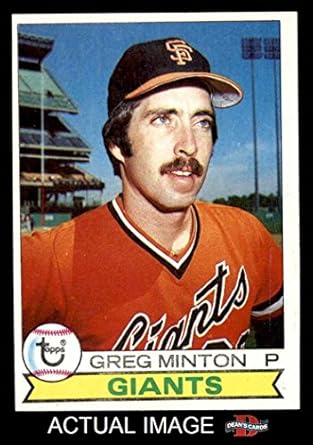
Or, for that matter, the San Francisco Giants’ pre-1983 uniforms:
Perhaps the All-Star Game was white vs. gray, but it seems as if every team has more than just white home jerseys and gray road jerseys, particularly the Brewers …
… who have navy blue “BREWERS” and “MILWAUKEE” uniforms, and have, or have in the past, had …
Throwbacks to the 1982 World Series team.These emulate a Negro League team; the Brewers will wear these against Cincinnati Aug. 12.An alternate throwback? The Brewers never wore these, but the style is based on their 1980s uniforms.“Cerveceros” is “Brewers” in Spanish.Gold jerseys.
“Birrai” apparently means “Brewers” in Italian.
Every MLB team — even the Yankees — will have four additional specialty uniforms, for Mother’s Day …
Facebook Friend Mike Smith (not the 6 a.m. Michael Smith) passes on a Washington Post story about a bill signed into law Tuesday:
After stumbling blocks and delays, sweeping bipartisan legislation to improve weather forecasting has passed the Senate.
The 65-page bill, the Weather Research and Forecasting Innovation Act of 2017, H.R. 353, contains four sections that support research and programs to improve weather forecasting and its communication on short and long time scales.
Containing scores of provisions, the bill would require the National Oceanic and Atmospheric Administration to, for example:
Develop an annual report on the state of its weather models.
Develop forecasts on the subseasonal (two weeks to three months), seasonal (three months to one year) and interannual (up to two years) time scales.
Consider options to buy commercially provided weather satellite data rather than launch expensive government satellites.
Improve its watch-and-warning system based on recommendations from social and behavioral scientists.
The bill authorizes funding for these initiatives, totaling more than $170 million, but does not necessarily signal new or increased funding for NOAA. Rather it offers guidance on what programs should receive specific funding amounts given the existing budget negotiated by the president and Congress. …
The revised legislation, after a new round of negotiations, adds two significant provisions. One is a requirement for the National Weather Service to study gaps in radar coverage across the country.
The study was advocated by Sen. Richard Burr (R-N.C.), who has long pushed for a dedicated radar site in Charlotte, along with the area’s meteorologists.
“No other city of Charlotte’s size currently has a radar situated more than 58 miles away,” Brad Panovich, chief meteorologist for the NBC affiliate serving Charlotte, wrote in a blog post in September 2015. “This has become a very dangerous situation in my opinion.”
Previously, bipartisan legislation requiring the Weather Service to install radar in cities the size of Charlotte was introduced but never passed.
The second new provision in the bill requires NOAA to acquire backup for hurricane hunter aircraft.
“[W]hile the hurricane season seems to be getting longer, the NOAA plane is getting older,” said Nelson, who championed the provision. “We must have a reliable backup. And I am pleased today that the Senate has unanimously passed this measure as part of a broader weather bill.”
Longtime weather industry lobbyist Tom Fahy from Capitol Meteorologics said the bill brought out the best in bipartisan cooperation. “Improving our weather infrastructure strengthens not only the diverse sectors of our economy but the entire country,” he said.
Senators from both sides of the political aisle cheered the bill’s passage.
“From long-term forecasting that can prevent costly agricultural losses to more actionable information about severe weather, this legislation will help save lives and reduce avoidable property loss,” Sen. John Thune (R-S.D.) said.
“Our bill strengthens the science to forecast severe heat and cold, storms, tornadoes, tsunamis and hurricanes, helping us make our warnings more timely and accurate,” Sen. Brian Schatz (D-Hawaii) said. “It also improves how the government communicates these threats to the public, so that families and businesses can be prepared and stay safe.”
The bill also has gained broad support from the weather enterprise’s private and academic sectors, including AccuWeather, GeoOptics, Panasonic Avionics, Schneider Electric, Vaisala, the University Corporation for Atmospheric Research and the University of Oklahoma.
The weather radar gap issue is pertinent, because I seem to have the habit of living in radar gaps, or at least NWS office gaps. If you live in Fond du Lac County, you are on the borderline of the NWS Ashwaubenon office and the NWS Sullivan office. Even worse, if you live in Grant County, you are on the borderline of Sullivan, the NWS office in La Crosse, and the NWS office in the Quad Cities of Illinois and Iowa. Each of those has weather radars.
Weather radar sends its signal by line of sight — straight out from the radar dish. Of course, Earth is not flat, so the farther you are from the radar the less accurate the radar is for where you are, or equally as important the direction your weather is coming from, generally west-ish. I found out at a severe weather spotter training session late last month that weather radars don’t tell you much about what’s happening below 6,000 feet anyway.
There used to be NWS offices in Dubuque, Madison and Milwaukee. The latter two were combined into the Sullivan office, and the Dubuque office (which was part-time its last 13 years, which I can attest from experience is most unhelpful during nighttime severe weather) was closed in 1995 and merged into the Quad Cities office. Weather warnings previously given from Madison were assigned to (a college classmate of mine at) the NWS La Crosse office.
Today, by the way, is the statewide tornado drill, with a fake tornado watch at 1 p.m. and two tornado warnings thereafter. Because Mother Nature loves irony, this state’s first severe weather of the year was in early March. There have been some horrible severe weather outbreaks this month, including the 1956 Berlin tornado (seven killed) …
… the 1965 Palm Sunday tornadoes (three killed near Watertown) …
… and the 1974 Super Outbreak, currently the worst in U.S. history in terms of violent tornadoes.
There are now books being written, reviewed and discussed about why Hillary Clinton lost. She has publicly blamed educated white women, the Russians, James Comey in specific and males in general. The books blame her campaign organization and the fact she was simply a flawed candidate, one so flawed that she lost to an even more flawed candidate with a better strategy.
It’s actually very simple. Here are my 5 Reasons I Don’t Have to Wake Up to a President Hillary:
1. She lost because she expected to simply be anointed as victor. She was next in line and had lost in the 2008 primaries to a popular Democrat who was popular due to his race. She expected to ride the same wave of identity politics that popularized the idea that having a black president was somehow cathartic for America and evidence of America’s remorse over slavery. She expected that simply being a woman would give her the same or even greater advantage because there are even more women in America than guilty white liberals and blacks.
2. She lost because she was told she was a lock. That Hillary would be the First Woman President was a foregone conclusion in all the mass media. Before she announced, the MSM was begging her to run – just as they are begging Fauxcohantas Warren now. From the start, she was the anointed successor to Obama. The media sought to apologize for their tawdry, slavering love affair with Obama in 2008 that cost her the nomination by covering her with soft focused cameras and softball interviews. After all, in the world of a race obsessed media, while being black doesn’t trump being a woman, it trumps being a WHITE woman, so the media sought to elevate her as their apology for supporting Obama. In the Democrat party, racism always defeats feminism. Since even before the first vote was counted on election night she was considered the winner, instead of working for votes, her campaign simply took key battleground states for granted — and they lost them, albeit with narrow margins but close only counts in horseshoes and hand grenades, not the Electoral College.
3. She lost because she is a Clinton. Being a Clinton means that she is a lying, parsing, corrupt and self-absorbed political creature, one so self-absorbed and lacking such self-awareness as to believe everything bad that happens is someone else’s fault and all good things are direct results of her actions. More than that, the Clinton political stance is known to be more moderate than left wing — actually it is more political opportunistic than ideological — this was a death sentence in a Democrat Party that has moved so far left that it it now chaired and co-chaired by a committed socialist (Tom Perez) and a Muslim congressman with ties to radical Islamic groups and the unindicted co-conspirator organization, CAIR (Keith Ellison) and whose current “stars” are a Vermont socialist who isn’t even a Democrat and a raving lunatic communist, who lies about being Native American for purposes of personal advancement. I don’t think the party of Mondale ever forgave Billy Jeff for pausing the Democrat lurch to the left in 1992.
4. She lost because even rank and file, dirt under their fingernails Democrats thought she was a reprehensible human being. The private email server/national security breach/wipe it with a cloth thing mattered to them. The evasion, outright lies and misrepresentations mattered. Huma Abedin’s connections with the MoBros bothered them. The thought of two women running the White House who had such bad judgement to marry philandering sleazeballs like Bill Clinton and Carlos Danger bothered them. To a surprising majority of Democrats, character actually mattered.Beyond a small and dedicated group of Democrat insiders (including Debbie Wasserman Schultz, Donna Brazille and the Superdelegates), Hillary is despised — the more she appeared in public, the lower her poll numbers dropped.
5. She lost because she ran a “Prevent Defense” campaign. In the words of legendary football coach John Madden, the only thing a prevent defense does is prevent you from winning. Her opponent didn’t expect to win but campaigned to win. Trump targeted key states where he could move the needle with his populist message and win electoral votes and ignored those states that were lost (like California). They counted on her national “popularity” (as shown in the national polls) to carry the day when in actuality, Trump won narrow victories in enough battleground states to win a decisive Electoral College victory even as she won the popular vote by about 3 million votes (primarily from California and New York).
None of these 5 reasons should come as a surprise, they all have been known for years. These were just the things that had to be overlooked to assume another Clinton presidency.
So guess what? In the last weeks before the election, the Hillary Clinton campaign did no polling. No. Polling. Whatsoever. Oh, it had data. Lots and lots of data. Analytics, even. Data analytics! But it had no independent information on the overall field of battle in states like Florida, Michigan, Virginia, North Carolina and Pennsylvania.
So when the election began to turn Donald Trump’s way, the Clinton campaign had no idea.
This is one of the thousand revelations in Shattered: Inside Hillary Clinton’s Doomed Campaign, the new book by Jonathan Allen and Amie Parnes that, for political junkies, redefines the word “juicy” for our time.
Campaign honcho Robby Mook “was worried about overspending . . . so he declined to use pollsters to track voter preferences in the final three weeks of the campaign.” Mook had learned from his time on the Obama 2012 campaign, Allen and Parnes write, that “old-school polling should be used for testing messages and gauging the sentiments of the electorate and that analytics were just as good for tracking which candidate was ahead and by how much in each state.”
Guess not.
Allen and Parnes report that the Republican National Committee did know — but just couldn’t accept it. The RNC didn’t brief reporters on early November polling data it had developed in Michigan and Pennsylvania “because the upticks there were so rosy that party officials didn’t believe their own data.”
The day after the election, Hillary asked Mook “which decisions had been misguided, where they had erred in strategy and tactics. ‘Our data was wrong,’ he said . . . ‘OK,’ she replied.”
It is true that, but for 100,000 votes in three states, Hillary Clinton would be president today. It is also true that she ended the election with 3 million more votes than Trump. But it is also true, as “Shattered” makes indisputably clear, that she was unquestionably the worst major presidential candidate in our lifetime.
Others (like Bob Dole) did far worse. But they likely never really had a shot. Hillary had no business losing an election to Donald Trump — but Allen and Parnes pile up headshaking detail after headshaking detail from the very beginning of her campaign to its end showing that she and her people were incapable of making a good call.
About anything.
Hillary’s dead-end defenders and those who want a Satan-ex-machina explanation for the November result can point to FBI Director James Comey’s stop-and-start-and-stop email investigation or Russian meddling. But “Shattered” should shatter any illusions that the Hillary election machine would have run smoothly or successfully in their absence. The campaign was a disaster from the get-go.
The question is: Why?
The answer, if I may be narcissistic for a moment, comes straight out of Hell of a Ride, the book I wrote in 1993 about the disastrous George H.W. Bush re-election campaign the year before.
I describe a scene in which campaign chairman Bob Teeter called Bush’s speechwriters into a meeting in June 1992.
Teeter set before them a chart that looked like the layout of “Hollywood Squares” or the “Brady Bunch” title sequence. Each of the nine boxes had a message the speechwriters were to use in crafting their work — things like “I have been president for 3½ years: Major accomplishments/record.”
The box in the center — Paul Lynde, if you will — read: “Theme/Slogan/Name.”
There was nothing else in the box. “What I want from you,” Teeter said, “is to help me fill this empty box.”
After nearly four years as president, eight years as vice president and nearly 20 years in public life before that, Bush and his closest advisers could come up with no simple reason to give the voters for presenting him with a second term.
So, too, Hillary Clinton. Whatever Trump’s manifold weaknesses, that is what he had in abundance — Make America Great Again.
Over at New York magazine, Andrew Sullivan is appalled at the Clinton family’s continued relevance:
It simply amazes me the hold this family still has on the Democratic Party — and on liberals in general. The most popular question that came from interviewer Nick Kristof’s social-media outreach, for example, was: “Are you doing okay?” Here’s Michelle Goldberg: “I find myself wondering at odd times of the day and night: How is Hillary? Is she going to be all right?” Seriously, can you imagine anyone wondering the same after Walter Mondale or Michael Dukakis or John Kerry blew elections?
And everywhere you see not an excoriation of one of the worst campaigns in recent history, leading to the Trump nightmare, but an attempt to blame anyone or anything but Clinton herself for the epic fail. It wasn’t Clinton’s fault, we’re told. It never is. It was the voters’ — those ungrateful, deplorable know-nothings! Their sexism defeated her (despite a majority of white women voting for Trump). A wave of misogyny defeated her (ditto). James Comey is to blame. Bernie Sanders’s campaign — because it highlighted her enmeshment with Wall Street, her brain-dead interventionism and her rapacious money-grubbing since she left the State Department — was the problem. Millennial feminists were guilty as well, for not seeing what an amazing crusader for their cause this candidate was.
I must admit that I’ve been amazed as well. I thought the Democrats would drop the Clintons like a hot potato, but now we’re seeing Chelsea receive fawning treatment, and Hillary still gets glowing coverage from multiple partisan outlets. Why? If you’ll indulge some dime store theorizing, let me suggest that this is a simple function of human nature. We all tend to hate self-reflection. Since the #Resistance casts the political battle in such stark, moralistic terms, how can its members possibly face what they did when they nominated Hillary? Can they truly, humbly grapple with the consequences of nominating a corrupt machine politician for the presidency? Can they truly grapple with the full extent of her deceptions and evasions? No, a clear look in the mirror means acknowledging that 2016 wasn’t a battle of good versus evil but rather a battle between two of America’s most dishonest public figures. A clear look at 2016 means dismounting from the high horse, and no one likes to dismount from the high horse. So they rehabilitate Hillary. They embrace Chelsea. And they keep believing they were on the side of the angels all along.
If you’ll indulge some dime store theorizing, let me suggest that this is a simple function of human nature. We all tend to hate self-reflection. Since the #Resistance casts the political battle in such stark, moralistic terms, how can its members possibly face what they did when they nominated Hillary? Can they truly, humbly grapple with the consequences of nominating a corrupt machine politician for the presidency? Can they truly grapple with the full extent of her deceptions and evasions? No, a clear look in the mirror means acknowledging that 2016 wasn’t a battle of good versus evil but rather a battle between two of America’s most dishonest public figures. A clear look at 2016 means dismounting from the high horse, and no one likes to dismount from the high horse. So they rehabilitate Hillary. They embrace Chelsea. And they keep believing they were on the side of the angels all along.
No, a clear look in the mirror means acknowledging that 2016 wasn’t a battle of good versus evil but rather a battle between two of America’s most dishonest public figures. A clear look at 2016 means dismounting from the high horse, and no one likes to dismount from the high horse. So they rehabilitate Hillary. They embrace Chelsea. And they keep believing they were on the side of the angels all along.
They weren’t. But feel free to persist in your illusions, Democrats. They prevent you from finding someone to run against The Donald in 2020.









 Steve Prestegard.com: The Presteblog