• Presty the DJ for Oct. 30

    October 30, 2017
    Music

    Today in 1938, CBS (radio, obviously, because there was no TV yet) broadcasted The Mercury Theater on the Air production of “The War of the Worlds,” from H.G. Wells’ novel.

    Some number of listeners who missed the opening (such as those listening to the NBC Red Network’s “Chase and Sanborn” show with ventriloquist Edgar Bergen who changed the channel when Nelson Eddy started signing) thought the simulated news bulletins were actual news bulletins about the Martian invasion, or an invasion by Nazi Germany. Half an hour into the broadcast, the CBS switchboard lit up, and police arrived at the studios. As he had planned, Welles concluded the broadcast by calling it the equivalent “of dressing up in a sheet, jumping out of a bush and saying, ‘Boo!’”

    Then, the actors and producer John Houseman (before he became a law school professor and pitchman for Smith Barney) were locked into a storeroom while CBS executives grabbed every copy of the script. And then the reporters showed up.


    The New York Times/Wikipedia
    The New York Times/Wikipedia

    At WGAR radio in Cleveland, host Jack Paar (yes, that Jack Paar) reassured callers that Martians were not actually invading. Paar was immediately accused of covering up the news.

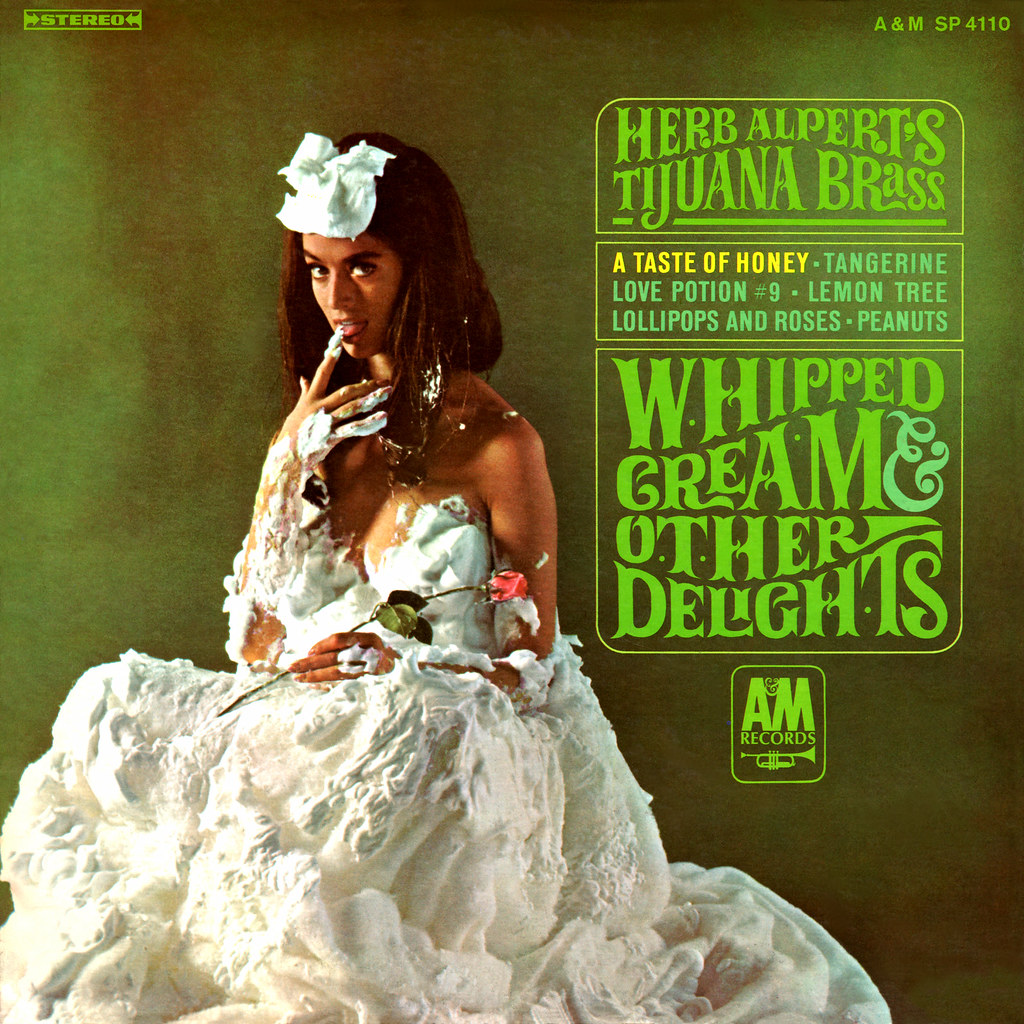
    The number one album and single today in 1971:

    A low, low moment in rock history: Today in 1978, NBC-TV broadcast “Kiss Meets the Phantom of the Park”:

    (The entire movie, believe it or don’t, can be viewed on YouTube.)

    (more…)

    Share this on …

    • Share on X (Opens in new window) X
    • Share on Facebook (Opens in new window) Facebook
    • Share on LinkedIn (Opens in new window) LinkedIn
    • Email a link to a friend (Opens in new window) Email
    • Print (Opens in new window) Print
    Like Loading…
    No comments on Presty the DJ for Oct. 30
  • Presty the DJ for Oct. 29

    October 29, 2017
    Music

    The number one song today in 1966:

    Today in 1983, Pink Floyd’s “Dark Side of the Moon” spent its 491st week on the charts, surpassing the previous record set by Johnny Mathis’ “Johnny’s Greatest Hits.” “Dark Side of the Moon” finally departed the charts in October 1988, after 741 weeks on the charts.

    (more…)

    Share this on …

    • Share on X (Opens in new window) X
    • Share on Facebook (Opens in new window) Facebook
    • Share on LinkedIn (Opens in new window) LinkedIn
    • Email a link to a friend (Opens in new window) Email
    • Print (Opens in new window) Print
    Like Loading…
    No comments on Presty the DJ for Oct. 29
  • Presty the DJ for Oct. 28

    October 28, 2017
    Music

    Today in 1956, Elvis Presley made his second appearance on CBS-TV’s Ed Sullivan Show, with Sullivan presenting Presley a gold record for …

    One year later, Presley’s appearance at the Pan Pacific Auditorium in Los Angeles prompted police to tell Presley he was not allowed to wiggle his hips onstage. The next night’s performance was filmed by the LAPD vice squad.

    One year later, Buddy Holly filmed ABC-TV’s “American Bandstand”:

    It would be Holly’s last TV appearance.

    (more…)

    Share this on …

    • Share on X (Opens in new window) X
    • Share on Facebook (Opens in new window) Facebook
    • Share on LinkedIn (Opens in new window) LinkedIn
    • Email a link to a friend (Opens in new window) Email
    • Print (Opens in new window) Print
    Like Loading…
    No comments on Presty the DJ for Oct. 28
  • The best World Series moment so far

    October 27, 2017
    media, Sports

    The Los Angeles Dodgers got Vin Scully to throw out the first pitch before World Series Game 2 Wednesday, but …

    Share this on …

    • Share on X (Opens in new window) X
    • Share on Facebook (Opens in new window) Facebook
    • Share on LinkedIn (Opens in new window) LinkedIn
    • Email a link to a friend (Opens in new window) Email
    • Print (Opens in new window) Print
    Like Loading…
    No comments on The best World Series moment so far
  • Some people call him Maurice

    October 27, 2017
    Badgers

    During the Fifth Quarter of Saturday’s Maryland–Wisconsin football game …

    … Steve Miller conducted his “Swingtown” as played by the UW Marching Band.

    Miller and UW Band director Mike Leckrone, two guys Livin’ in the USA. I wonder if Miller flew to Madison on a Jet Airliner.

    That really happened. I am not being by posting this …

    … nor am I a …

    UW Band director Mike Leckrone has such powers that he asks perhaps Wisconsin’s biggest rock act of all time to come to town, and …

    Just another example of …

    Share this on …

    • Share on X (Opens in new window) X
    • Share on Facebook (Opens in new window) Facebook
    • Share on LinkedIn (Opens in new window) LinkedIn
    • Email a link to a friend (Opens in new window) Email
    • Print (Opens in new window) Print
    Like Loading…
    No comments on Some people call him Maurice
  • Presty the DJ for Oct. 27

    October 27, 2017
    Music

    Four days before Halloween was the world premiere of the more recognizable version of Modest Mussorgsky’s “Night on Bald Mountain”:

    The song was an appropriate theme for the Friday-bad-horror-flick-show “The Inferno” on WMTV in Madison:

    Britain’s number one song today in 1957:

    The number one song today in 1963 was the Four Tops’ only number one:

    (more…)

    Share this on …

    • Share on X (Opens in new window) X
    • Share on Facebook (Opens in new window) Facebook
    • Share on LinkedIn (Opens in new window) LinkedIn
    • Email a link to a friend (Opens in new window) Email
    • Print (Opens in new window) Print
    Like Loading…
    No comments on Presty the DJ for Oct. 27
  • Dossiergate and Wisconsin

    October 26, 2017
    US politics, Wisconsin politics

    James Wigderson follows up on the big twist in Donald Trump’s Russian dossier:

    The Washington Post reported Tuesday that the Clinton campaign and the Democratic National Committee paid for the creation of a dossier of scandalous claims about President Donald Trump. While Democrats have denied any connection to the creation of the dossier, the Washington Post is reporting that Marc E. Elias, a Clinton advisor and DNC lawyer, hired Fusion GPS, a Washington firm, to conduct the research.

    The dossier, compiled by a former British spy working for Fusion GPS, contained allegations of odd sexual conduct and supposed connections between the Trump campaign and the Russian government. The contents of the dossier have been debunked, but not until they were leaked and published by Buzzfeed.

    “Elias and his law firm, Perkins Coie, retained the company in April 2016 on behalf of the Clinton campaign and the DNC,” the Washington Post reported. The Clinton campaign, through Elias and Perkins Coie, continued to pay Fusion GPS through the end of October 2016. Fusion GPS has refused to cooperate with the House Intelligence Committee regarding the funding of their research. Perkins Coie was paid

    Elias and his law firm Perkin Coie are well known to Wisconsin Democrats.

    Elias, a well-known political “fixer,” was hired by Democratic Senator Tammy Baldwin after her office ignored warnings about problems at the Veterans Affairs hospital in Tomah, WI. According to a report in the Washington Free Beacon, two “dark money” groups founded by Elias, Majority Forward and Vote Vets PAC, then ran ads attempting to defend Baldwin’s record. The money for those groups came from a “Super PAC” associated with former Senator Harry Reid, D-Nevada, called Senate Majority PAC.

    The law firm of Perkins Coie was paid $90,000 for the work by Elias for Baldwin.

    A call to Baldwin’s Washington D.C. office asking for comment on her ties to Elias was not returned by deadline.

    Republicans criticized Baldwin for her ties to Elias and Perkins Coie.

    “After helping Senator Baldwin cover up her roll in the Tomah VA scandal, Marc Elias and Perkins Coie have been caught once again lying to the voters in order to protect the political future of Democrats,” said Alec Zimmerman, spokesman for the Republican Party of Wisconsin. “Wisconsin families deserve better and Senator Baldwin needs to immediately denounce the reckless actions of her Tomah crisis attorney.”

    The campaign of Kevin Nicholson, the Delafield Republican running for Baldwin’s U.S. Senate seat, also issued a statement critical of the senator. “Tammy Baldwin spared no expense trying to keep the Tomah VA scandal quiet, so it’s sadly not surprising to learn the fixer she hired has a history of spreading sordid allegations to help liberal candidates and causes,” said Michael Antonopoulos, spokesman for Nicholson for Senate. “Tammy Baldwin will say and do anything to hang onto power.”

    So this is just a Washington scandal, right? Not really:

    Baldwin is not the only Wisconsin Democrat with ties to Perkins Coie and Marc Elias.

    Tim Burns, a candidate for the state Supreme Court, and Josh Kaul, a Democratic candidate for state Attorney General, are attorneys with the Perkins Coie law firm. Both campaigns were reached by phone Wednesday, but neither campaign responded to the request for a comment on their law firm’s role in the scandal or if the candidates were personally aware of the work by Perkins Coie and Marc Elias.

    According to the Washington Post, “The Clinton campaign paid Perkins Coie $5.6 million in legal fees from June 2015 to December 2016, according to campaign finance records, and the DNC paid the firm $3.6 million in ‘legal and compliance consulting’’ since November 2015.”

    This may enliven next year’s Supreme Court and AG races. How much do partners with law firms know about what goes on in their own law firm?

    Share this on …

    • Share on X (Opens in new window) X
    • Share on Facebook (Opens in new window) Facebook
    • Share on LinkedIn (Opens in new window) LinkedIn
    • Email a link to a friend (Opens in new window) Email
    • Print (Opens in new window) Print
    Like Loading…
    1 comment on Dossiergate and Wisconsin
  • Hillary Milhous Clinton

    October 26, 2017
    US politics

    The Washington Post:

    The Hillary Clinton campaign and the Democratic National Committee helped fund research that resulted in a now-famous dossier containing allegations about President Trump’s connections to Russia and possible coordination between his campaign and the Kremlin, people familiar with the matter said.

    Marc E. Elias, a lawyer representing the Clinton campaign and the DNC, retained Fusion GPS, a Washington firm, to conduct the research.

    After that, Fusion GPS hired dossier author Christopher Steele, a former British intelligence officer with ties to the FBI and the U.S. intelligence community, according to those people, who spoke on the condition of anonymity.

    Elias and his law firm, Perkins Coie, retained the company in April 2016 on behalf of the Clinton campaign and the DNC. Before that agreement, Fusion GPS’s research into Trump was funded by an unknown Republican client during the GOP primary.

    The Clinton campaign and the DNC, through the law firm, continued to fund Fusion GPS’s research through the end of October 2016, days before Election Day.

    Fusion GPS gave Steele’s reports and other research documents to Elias, the people familiar with the matter said. It is unclear how or how much of that information was shared with the campaign and the DNC and who in those organizations was aware of the roles of Fusion GPS and Steele. One person close to the matter said the campaign and the DNC were not informed by the law firm of Fusion GPS’s role.

    The dossier has become a lightning rod amid the intensifying investigations into the Trump campaign’s possible connections to Russia. Some congressional Republican leaders have spent months trying to discredit Fusion GPS and Steele and tried to determine the identity of the Democrat or organization that paid for the dossier.

    Trump tweeted as recently as Saturday that the Justice Department and FBI should “immediately release who paid for it.”

    Elias and Fusion GPS declined to comment on the arrangement.

    A DNC spokeswoman said “[Chairman] Tom Perez and the new leadership of the DNC were not involved in any decision-making regarding Fusion GPS, nor were they aware that Perkins Coie was working with the organization. But let’s be clear, there is a serious federal investigation into the Trump campaign’s ties to Russia, and the American public deserves to know what happened.”

    Brian Fallon, a former spokesman for the Clinton campaign, said he wasn’t aware of the hiring during the campaign.

    “The first I learned of Christopher Steele or saw any dossier was after the election,” Fallon said. “But if I had gotten handed it last fall, I would have had no problem passing it along and urging reporters to look into it. Opposition research happens on every campaign, and here you had probably the most shadowy guy ever running for president, and the FBI certainly has seen fit to look into it. I probably would have volunteered to go to Europe myself to try and verify if it would have helped get more of this out there before the election.”

    U.S. intelligence agencies later released a public assessment asserting that Russia intervened in the 2016 election to aid Trump. The FBI has been investigating whether Trump associates helped the Russians in that effort.

    The Post’s Callum Borchers adds:

    When BuzzFeed published that now-infamous dossier of unproven claims about Donald Trump and Russia, in January, former Hillary Clinton campaign aides expressed outrage that news outlets that had obtained the dossier before Election Day did not make its contents public in time to influence voters, and Clinton later aired the same grievance in her book about the presidential race.

    It turns out that the reaction of the Democratic presidential nominee and her team was disingenuous. The Washington Post reported on Tuesday night that the Clinton campaign and the Democratic National Committee helped fund the dossier, compiled by a former British intelligence officer, through a law firm hired to conduct opposition research.

    The Clinton camp left out its own role in the dossier’s creation, as it ripped the media for sitting on information that journalists had been unable to verify. What Clinton and her advisers presented as their judgment that the media had made the wrong call was, in fact, their frustration at having failed to plant negative news reports before ballots were cast.

    Recall that BuzzFeed published the dossier in full on Jan. 10, after CNN reported that the FBI had briefed President Barack Obama and then-President-elect Trump on its contents. Many journalists criticized BuzzFeed’s decision, arguing that news outlets should not spread claims they can’t corroborate, even if the FBI considers the claims significant enough to share with the president and his soon-to-be successor.

    But Clinton press aides Brian Fallon and Nick Merrill contended, on Twitter, that the real journalistic malpractice was not publishing information contained in the dossier earlier.

    Also that day, Mother Jones magazine reported that a “former senior intelligence officer for a Western country” had “provided the [FBI] with memos, based on his recent interactions with Russian sources, contending the Russian government has for years tried to co-opt and assist Trump — and that the FBI requested more information from him.” The memos comprised the dossier that BuzzFeed later published.

    Consistent with the Mother Jones report, the Times reported that “intelligence officials have said in interviews over the last six weeks that apparent connections between some of Mr. Trump’s aides and Moscow originally compelled them to open a broad investigation into possible links between the Russian government and the Republican presidential candidate.”

    “Still,” the Times added, throwing the “cold water” Merrill spoke of, “they have said that Mr. Trump himself has not become a target. And no evidence has emerged that would link him or anyone else in his business or political circle directly to Russia’s election operations.”

    Clinton complained about the Times report in her post-election book, “What Happened”:

    In the summer of 2016, according to The Washington Post, the FBI convinced a special Foreign Intelligence Surveillance Court that there was probably cause to believe that Trump adviser Carter Page was acting as a Russian agent, and the received a warrant to monitor his communications. The FBI also began investigating a dossier prepared by a well-respected former British spy that contained explosive and salacious allegations about compromising information the Russians had on Trump. The intelligence community took the dossier seriously enough that it briefed both President Obama and President-elect Trump on its contents before the inauguration .. . .

    Sources within the FBI also convinced the New York Times to run a story saying they saw “no clear link to Russia,” countering Franklin Foer’s scoop in Slate about unusual computer traffic between Trump Tower and a Russian bank.

    Note that Clinton described the dossier only as having been “prepared by a well-respected former British spy” — as if the spy, Christopher Steele, had acted on his own. Clinton certainly gave no indication that her campaign helped finance his work.

    There is a fundamental contradiction here: Clinton wanted the dossier to be viewed as credible yet she did not want to be connected to it. She hoped the media, before Election Day, would publish claims about Trump to which she was unwilling to attach her own name.


    Share this on …

    • Share on X (Opens in new window) X
    • Share on Facebook (Opens in new window) Facebook
    • Share on LinkedIn (Opens in new window) LinkedIn
    • Email a link to a friend (Opens in new window) Email
    • Print (Opens in new window) Print
    Like Loading…
    No comments on Hillary Milhous Clinton
  • Presty the DJ for Oct. 26

    October 26, 2017
    Music

    Britishers with taste bought this single when it hit the charts today in 1961:

    Today in 1965, the four Beatles were named Members of the Order of the British Empire by Queen Elizabeth. The Beatles’ visit reportedly began when they smoked marijuana in a Buckingham Palace bathroom to calm their nerves.

    The Beatles’ receiving their MBEs prompted a number of MBE recipients to return theirs. “Lots of people who complained about us receiving the MBE received theirs for heroism in the war — for killing people,” said John Lennon, previewing the public relations skills he’d show a year later when he would compare the Beatles to Jesus Christ. “We received ours for entertaining other people. I’d say we deserve ours more.”

    Lennon returned his MBE in 1969 as part of his peace protests.

    (more…)

    Share this on …

    • Share on X (Opens in new window) X
    • Share on Facebook (Opens in new window) Facebook
    • Share on LinkedIn (Opens in new window) LinkedIn
    • Email a link to a friend (Opens in new window) Email
    • Print (Opens in new window) Print
    Like Loading…
    No comments on Presty the DJ for Oct. 26
  • When the media looks down on us

    October 25, 2017
    media, US politics

    Jim Geraghty chronicles:

    Ken Stern, who worked at NPR from 1999 to 2008 and served as the institution’s CEO, chose to spend an entire year living in “red America” and getting to know the Americans who saw issues differently from him: evangelical Christians, gun owners, Tea Party activists, NASCAR fans, etcetera. He’s pleasantly surprised by what he found, and he concludes there’s a strong argument to be made that the country’s largest media institutions poorly serve large swaths of the country, out of a combination of bias, ignorance, and cultural barriers:

    Over the course of this past year, I have tried to consume media as they do and understand it as a partisan player. It is not so hard to do. Take guns. Gun control and gun rights is one of our most divisive issues, and there are legitimate points on both sides. But media is obsessed with the gun-control side and gives only scant, mostly negative, recognition to the gun-rights sides.

    Take, for instance, the issue of legitimate defensive gun use (DGU), which is often dismissed by the media as myth. But DGUs happen all the time — 200 times a day, according to the Department of Justice, or 5,000 times a day, according to an overly exuberant Florida State University study. But whichever study you choose to believe, DGUs happen frequently and give credence to my hunting friends who see their guns as the last line of defense for themselves and their families.

    Describing a storeowner who uses a firearm to drive off a would-be armed robber, Stern writes, “It’s not that media is suppressing stories intentionally. It’s that these stories don’t reflect their interests and beliefs.”

    Journalism requires judgment. If you pick up a newspaper (pardon my anachronistic examples) and everything that’s on the front page seems boring, irrelevant, and not that important to you, you probably won’t buy it or read it. Journalists and editors need to have good acumen for what’s important in the lives of their audience and a sense of how to balance what you need to read and what you want to read. We all have a sense of how the world works, and those of us who follow politics tend to develop strong, even intense beliefs of how things are and how they ought to be. Revising those beliefs is a slow and difficult process.

    The Washington Post’s health-care correspondent dismissed the trial of abortionist Kermit Gosnell as a “local crime story.” A Democratic senator is currently on trial in corruption, not far from the media capital of the country, with allegations of private jets ferrying the senator to party with gorgeous supermodels at lush tropical resorts and $100 million stolen from Medicare to pay for the lavish lifestyle and fill campaign coffers . . .  and it’s gotten intermittent coverage at best. A longtime Democratic staffer was arrested by the FBI as he attempted to flee to Pakistan, wiping his phone of all data hours earlier.

    Why do reporters in the national news media find these stories . . .  not quite as compelling as conservative journalism institutions? A pretty plausible theory is that living and working among so many other like-minded left-of-center people leaves them with an inaccurate perception of how the world actually works. In their minds, abortionists are dedicated medical professionals who risk death threats to provide vital serves to women, not monsters. Democratic senators and their staffers are good people, dedicated, principled, and law-abiding. Cases that contradict these beliefs are inconsequential exceptions, and not worthy of extended public attention.

    Orwell described this well: “The point is that we are all capable of believing things which we know to be untrue, and then, when we are finally proved wrong, impudently twisting the facts so as to show that we were right. Intellectually, it is possible to carry on this process for an indefinite time: the only check on it is that sooner or later a false belief bumps up against solid reality, usually on a battlefield . . .  To see what is in front of one’s nose needs a constant struggle.”

    No doubt, we on the right have these blind spots as well. But we have the advantage of constantly encountering the left-of-center views from dominant institutions, so I think more counter-arguments permeate our “bubble.” I think we’re slightly better at revising our beliefs in the face of contrary data, although I’m sure a lot of progressives will scoff at this. But you’ve seen quite a few prominent conservatives rethink their views on incarceration and various criminal justice issues and whether drug use should be criminalized. Most Republicans are far more wary of military interventions and the promotion of democracy abroad after the Iraq War. There’s far more acceptance of gay marriage than a decade or two ago. No one is perfect, but I think Red America understands Blue America more than Blue America understands Red America.

    Another example would be E.J. Dionne, who writes as you would expect a lifetime political writer to write:

    Permit me to confess: I am one of the very last people in the United States who does not consider the word “politician” to be an insult. On the contrary, the work politicians do is important because politics is a good and essential thing in a free society. It’s the degradation of politics in the Trump era we need to worry about, not politics itself.

    Click on the link if you want to read the rest of Dionne’s Washington-centric claptrap. One of the unfortunate realities of my line of work is its Stockholm Syndrome, where people who cover something for a long time become emotionally embedded, instead of having the correct cynical attitude about the people they’re supposed to be covering.

    The other thing, of course, is to observe that this is how you get more Trump.


    Share this on …

    • Share on X (Opens in new window) X
    • Share on Facebook (Opens in new window) Facebook
    • Share on LinkedIn (Opens in new window) LinkedIn
    • Email a link to a friend (Opens in new window) Email
    • Print (Opens in new window) Print
    Like Loading…
    No comments on When the media looks down on us
Previous Page
1 … 497 498 499 500 501 … 1,035
Next Page

Website Powered by WordPress.com.

Steve Prestegard.com: The Presteblog

The thoughts of a journalist/libertarian–conservative/Christian husband, father, Eagle Scout and aficionado of obscure rock music. Thoughts herein are only the author’s and not necessarily the opinions of his family, friends, neighbors, church members or past, present or future employers.

  • Steve
    • About, or, Who is this man?
    • Facebook
    • Twitter
    • Adventures in ruralu0026nbsp;inkBack in June 2009, I was driving somewhere through a rural area. And for some reason, I had a flashback to two experiences in my career about that time of year many years ago. In 1988, eight days after graduating from the University of Wisconsin, I started work at the Grant County Herald Independent in Lancaster as a — well, the — reporter. Four years after that, on my 27th birthday, I purchased, with a business partner, the Tri-County Press in Cuba City, my first business venture. Both were experiences about which Wisconsin author Michael Perry might write. I thought about all this after reading a novel, The Deadline, written by a former newspaper editor and publisher. (Now who would write a novel about a weekly newspaper?) As a former newspaper owner, I picked at some of it — why finance a newspaper purchase through the bank if the seller is willing to finance it? Because the mean bank lender is a plot point! — and it is much more interesting than reality, but it is very well written, with a nicely twisting plot, and quite entertaining, again more so than reality. There is something about that first job out of college that makes you remember it perhaps more…
    • Adventures in radioI’ve been in the full-time work world half my life. For that same amount of time I’ve been broadcasting sports as a side interest, something I had wanted to since I started listening to games on radio and watching on TV, and then actually attending games. If you ask someone who’s worked in radio for some time about the late ’70s TV series “WKRP in Cincinnati,” most of them will tell you that, if anything, the series understated how wacky working in radio can be. Perhaps the funniest episode in the history of TV is the “WKRP” episode, based on a true story, about the fictional radio station’s Thanksgiving promotion — throwing live turkeys out of a helicopter under the mistaken belief that, in the words of WKRP owner Arthur Carlson, “As God is my witness, I thought turkeys could fly.” [youtube=http://www.youtube.com/watch?v=ST01bZJPuE0] I’ve never been involved in anything like that. I have announced games from the roofs of press boxes (once on a nice day, and once in 50-mph winds), from a Mississippi River bluff (more on that later), and from the front row of the second balcony of the University of Wisconsin Fieldhouse (great view, but not a place to go if…
    • “Good morning/afternoon/evening, ________ fans …”
    • My biggest storyEarlier this week, while looking for something else, I came upon some of my own work. (I’m going to write a blog someday called “Things I Found While Looking for Something Else.” This is not that blog.) The Grant County Sheriff’s Department, in the county where I used to live, has a tribute page to the two officers in county history who died in the line of duty. One is William Loud, a deputy marshal in Cassville, shot to death by two bank robbers in 1912. The other is Tom Reuter, a Grant County deputy sheriff who was shot to death at the end of his 4 p.m.-to-midnight shift March 18, 1990. Gregory Coulthard, then a 19-year-old farmhand, was convicted of first-degree intentional homicide and is serving a life sentence, with his first eligibility for parole on March 18, 2015, just 3½ years from now. I’ve written a lot over the years. I think this, from my first two years in the full-time journalism world, will go down as the story I remember the most. For journalists, big stories contain a paradox, which was pointed out in CBS-TV’s interview of Andy Rooney on his last “60 Minutes” Sunday. Morley Safer said something along the line…
  • Food and drink
    • The Roesch/Prestegard familyu0026nbsp;cookbookFrom the family cookbook(s) All the families I’m associated with love to eat, so it’s a good thing we enjoy cooking. The first out-of-my-house food memory I have is of my grandmother’s cooking for Christmas or other family occasions. According to my mother, my grandmother had a baked beans recipe that she would make for my mother. Unfortunately, the recipe seems to have  disappeared. Also unfortunately, my early days as a picky, though voluminous, eater meant I missed a lot of those recipes made from such wholesome ingredients as lard and meat fat. I particularly remember a couple of meals that involve my family. The day of Super Bowl XXXI, my parents, my brother, my aunt and uncle and a group of their friends got together to share lots of food and cheer on the Packers to their first NFL title in 29 years. (After which Jannan and I drove to Lambeau Field in the snow,  but that’s another story.) Then, on Dec. 31, 1999, my parents, my brother, my aunt and uncle and Jannan and I (along with Michael in utero) had a one-course-per-hour meal to appropriately end years beginning with the number 1. Unfortunately I can’t remember what we…
    • SkålI was the editor of Marketplace Magazine for 10 years. If I had to point to one thing that demonstrates improved quality of life since I came to Northeast Wisconsin in 1994, it would be … … the growth of breweries and  wineries in Northeast Wisconsin. The former of those two facts makes sense, given our heritage as a brewing state. The latter is less self-evident, since no one thinks of Wisconsin as having a good grape-growing climate. Some snobs claim that apple or cherry wines aren’t really wines at all. But one of the great facets of free enterprise is the opportunity to make your own choice of what food and drink to drink. (At least for now, though some wish to restrict our food and drink choices.) Wisconsin’s historically predominant ethnic group (and our family’s) is German. Our German ancestors did unfortunately bring large government and high taxes with them, but they also brought beer. Europeans brought wine with them, since they came from countries with poor-quality drinking water. Within 50 years of a wave of mid-19th-century German immigration, brewing had become the fifth largest industry in the U.S., according to Maureen Ogle, author of Ambitious Brew: The Story of American Beer. Beer and wine have…
  • Wheels
    • America’s sports carMy birthday in June dawned without a Chevrolet Corvette in front of my house. (The Corvette at the top of the page was featured at the 2007 Greater Milwaukee Auto Show. The copilot is my oldest son, Michael.) Which isn’t surprising. I have three young children, and I have a house with a one-car garage. (Then again, this would be more practical, though a blatant pluck-your-eyes-out violation of the Corvette ethos. Of course, so was this.) The reality is that I’m likely to be able to own a Corvette only if I get a visit from the Corvette Fairy, whose office is next door to the Easter Bunny. (I hope this isn’t foreshadowing: When I interviewed Dave Richter of Valley Corvette for a car enthusiast story in the late great Marketplace Magazine, he said that the most popular Corvette in most fans’ minds was a Corvette built during their days in high school. This would be a problem for me in that I graduated from high school in 1983, when no Corvette was built.) The Corvette is one of those cars whose existence may be difficult to understand within General Motors Corp. The Corvette is what is known as a “halo car,” a car that drives people into showrooms, even if…
    • Barges on fouru0026nbsp;wheelsI originally wrote this in September 2008.  At the Fox Cities Business Expo Tuesday, a Smart car was displayed at the United Way Fox Cities booth. I reported that I once owned a car into which trunk, I believe, the Smart could be placed, with the trunk lid shut. This is said car — a 1975 Chevrolet Caprice coupe (ours was dark red), whose doors are, I believe, longer than the entire Smart. The Caprice, built down Interstate 90 from us Madisonians in Janesville (a neighbor of ours who worked at the plant probably helped put it together) was the flagship of Chevy’s full-size fleet (which included the stripper Bel Air and middle-of-the-road Impala), featuring popular-for-the-time vinyl roofs, better sound insulation, an upgraded cloth interior, rear fender skirts and fancy Caprice badges. The Caprice was 18 feet 1 inch long and weighed 4,300 pounds. For comparison: The midsize Chevrolet of the ear was the Malibu, which was the same approximate size as the Caprice after its 1977 downsizing. The compact Chevrolet of the era was the Nova, which was 200 inches long — four inches longer than a current Cadillac STS. Wikipedia’s entry on the Caprice has this amusing sentence: “As fuel economy became a bigger priority among Americans…
    • Behind the wheel
    • Collecting only dust or rust
    • Coooooooooooupe!
    • Corvettes on the screen
    • The garage of misfit cars
    • 100 years (and one day) of our Chevrolets
    • They built Excitement, sort of, once in a while
    • A wagon by any otheru0026nbsp;nameFirst written in 2008. You will see more don’t-call-them-station-wagons as you drive today. Readers around my age have probably had some experience with a vehicle increasingly rare on the road — the station wagon. If you were a Boy Scout or Girl Scout, or were a member of some kind of youth athletic team, or had a large dog, or had relatives approximately your age, or had friends who needed to be transported somewhere, or had parents who occasionally had to haul (either in the back or in a trailer) more than what could be fit inside a car trunk, you (or, actually, your parents) were the target demographic for the station wagon. “Station wagons came to be like covered wagons — so much family activity happened in those cars,” said Tim Cleary, president of the American Station Wagon Owners Association, in Country Living magazine. Wagons “were used for everything from daily runs to the grocery store to long summer driving trips, and while many men and women might have wanted a fancier or sportier car, a station wagon was something they knew they needed for the family.” The “station wagon” originally was a vehicle with a covered seating area to take people between train stations…
    • Wheels on theu0026nbsp;screenBetween my former and current blogs, I wrote a lot about automobiles and TV and movies. Think of this post as killing two birds (Thunderbirds? Firebirds? Skylarks?) with one stone. Most movies and TV series view cars the same way most people view cars — as A-to-B transportation. (That’s not counting the movies or series where the car is the plot, like the haunted “Christine” or “Knight Rider” or the “Back to the Future” movies.) The philosophy here, of course, is that cars are not merely A-to-B transportation. Which disqualifies most police shows from what you’re about to read, even though I’ve watched more police video than anything else, because police cars are plain Jane vehicles. The highlight in a sense is in the beginning: The car chase in my favorite movie, “Bullitt,” featuring Steve McQueen’s 1968 Ford Mustang against the bad guys’ 1968 Dodge Charger: [youtube=http://www.youtube.com/watch?v=GMc2RdFuOxIu0026amp;fmt=18] One year before that (but I didn’t see this until we got Telemundo on cable a couple of years ago) was a movie called “Operación 67,” featuring (I kid you not) a masked professional wrestler, his unmasked sidekick, and some sort of secret agent plot. (Since I don’t know Spanish and it’s not…
    • While riding in my Cadillac …
  • Entertainments
    • Brass rocksThose who read my former blog last year at this time, or have read this blog over the past months, know that I am a big fan of the rock group Chicago. (Back when they were a rock group and not a singer of sappy ballads, that is.) Since rock music began from elements of country music, jazz and the blues, brass rock would seem a natural subgenre of rock music. A lot of ’50s musical acts had saxophone players, and some played with full orchestras … [youtube=http://www.youtube.com/watch?v=9CPS-WuUKUE] … but it wasn’t until the more-or-less simultaneous appearances of Chicago and Blood Sweat u0026amp; Tears on the musical scene (both groups formed in 1967, both had their first charting singles in 1969, and they had the same producer) that the usual guitar/bass/keyboard/drum grouping was augmented by one or more trumpets, a sax player and a trombone player. While Chicago is my favorite group (but you knew that already), the first brass rock song I remember hearing was BSu0026amp;T’s “Spinning Wheel” — not in its original form, but on “Sesame Street,” accompanied by, yes, a giant spinning wheel. [youtube=http://www.youtube.com/watch?v=qi9sLkyhhlE] [youtube=http://www.youtube.com/watch?v=OxWSOuNsN20] [youtube=http://www.youtube.com/watch?v=U9U34uPjz-g] I remember liking Chicago’s “Just You ‘n Me” when it was released as a single, and…
    • Drive and Eat au0026nbsp;RockThe first UW home football game of each season also is the opener for the University of Wisconsin Marching Band, the world’s finest college marching band. (How the UW Band has not gotten the Sudler Trophy, which is to honor the country’s premier college marching bands, is beyond my comprehension.) I know this because I am an alumnus of the UW Band. I played five years (in the last rank of the band, Rank 25, motto: “Where Men Are Tall and Run-On Is Short”), marching in 39 football games at Camp Randall Stadium, the Hubert H. Humphrey Metrodome in Minneapolis, Michigan Stadium in Ann Arbor, Memorial Stadium at the University of Illinois (worst artificial turf I had ever seen), the University of Nevada–Las Vegas’ Sam Boyd Silver Bowl, the former Dyche Stadium at Northwestern University, five high school fields and, in my one bowl game, Legion Field in Birmingham, Ala., site of the 1984 Hall of Fame Bowl. The UW Band was, without question, the most memorable experience of my college days, and one of the most meaningful experiences of my lifetime. It was the most physical experience of my lifetime, to be sure. Fifteen minutes into my first Registration…
    • Keep on rockin’ in the freeu0026nbsp;worldOne of my first ambitions in communications was to be a radio disc jockey, and to possibly reach the level of the greats I used to listen to from WLS radio in Chicago, which used to be one of the great 50,000-watt AM rock stations of the country, back when they still existed. (Those who are aficionados of that time in music and radio history enjoyed a trip to that wayback machine when WLS a Memorial Day Big 89 Rewind, excerpts of which can be found on their Web site.) My vision was to be WLS’ afternoon DJ, playing the best in rock music between 2 and 6, which meant I wouldn’t have to get up before the crack of dawn to do the morning show, yet have my nights free to do whatever glamorous things big-city DJs did. Then I learned about the realities of radio — low pay, long hours, zero job security — and though I have dabbled in radio sports, I’ve pretty much cured myself of the idea of working in radio, even if, to quote WAPL’s Len Nelson, “You come to work every day just like everybody else does, but we’re playing rock ’n’ roll songs, we’re cuttin’ up.…
    • Monday on the flight line, not Saturday in the park
    • Music to drive by
    • The rock ofu0026nbsp;WisconsinWikipedia begins its item “Music of Wisconsin” thusly: Wisconsin was settled largely by European immigrants in the late 19th century. This immigration led to the popularization of galops, schottisches, waltzes, and, especially, polkas. [youtube=http://www.youtube.com/watch?v=yl7wCczgNUc] So when I first sought to write a blog piece about rock musicians from Wisconsin, that seemed like a forlorn venture. Turned out it wasn’t, because when I first wrote about rock musicians from Wisconsin, so many of them that I hadn’t mentioned came up in the first few days that I had to write a second blog entry fixing the omissions of the first. This list is about rock music, so it will not include, for instance, Milwaukee native and Ripon College graduate Al Jarreau, who in addition to having recorded a boatload of music for the jazz and adult contemporary/easy listening fan, also recorded the theme music for the ’80s TV series “Moonlighting.” Nor will it include Milwaukee native Eric Benet, who was for a while known more for his former wife, Halle Berry, than for his music, which includes four number one singles on the Ru0026amp;B charts, “Spend My Life with You” with Tamia, “Hurricane,” “Pretty Baby” and “You’re the Only One.” Nor will it include Wisconsin’s sizable contributions to big…
    • Steve TV: All Steve, All the Time
    • “Super Steve, Man of Action!”
    • Too much TV
    • The worst music of allu0026nbsp;timeThe rock group Jefferson Airplane titled its first greatest-hits compilation “The Worst of Jefferson Airplane.” Rolling Stone magazine was not being ironic when it polled its readers to decide the 10 worst songs of the 1990s. I’m not sure I agree with all of Rolling Stone’s list, but that shouldn’t be surprising; such lists are meant for debate, after all. To determine the “worst,” songs appropriate for the “Vinyl from Hell” segment that used to be on a Madison FM rock station, requires some criteria, which does not include mere overexposure (for instance, “Macarena,” the video of which I find amusing since it looks like two bankers are singing it). Before we go on: Blog posts like this one require multimedia, so if you find a song you hate on this blog, I apologize. These are also songs that I almost never listen to because my sound system has a zero-tolerance policy — if I’m listening to the radio or a CD and I hear a song I don’t like, it’s, to quote Bad Company, gone gone gone. My blonde wife won’t be happy to read that one of her favorite ’90s songs, 4 Non Blondes’ “What’s Up,” starts the list. (However,…
    • “You have the right to remain silent …”
  • Madison
    • Blasts from the Madison media past
    • Blasts from my Madison past
    • Blasts from our Madison past
    • What’s the matter with Madison?
    • Wisconsin – Madison = ?
  • Sports
    • Athletic aesthetics, or “cardinal” vs. “Big Red”
    • Choose your own announcer
    • La Follette state 1982 (u0022It was 30 years ago todayu0022)
    • The North Dakota–Wisconsin Hockey Fight of 1982
    • Packers vs. Brewers
  • Hall of Fame
    • The case(s) against teacher unions
    • The Class of 1983
    • A hairy subject, or face the face
    • It’s worse than you think
    • It’s worse than you think, 2010–11 edition
    • My favorite interview subject of all time
    • Oh look! Rural people!
    • Prestegard for president!
    • Unions vs. the facts, or Hiding in plain sight
    • When rhetoric goes too far
Privacy & Cookies: This site uses cookies. By continuing to use this website, you agree to their use.
To find out more, including how to control cookies, see here: Cookie Policy
 

Loading Comments...
 

    • Subscribe Subscribed
      • Steve Prestegard.com: The Presteblog
      • Join 198 other subscribers
      • Already have a WordPress.com account? Log in now.
      • Steve Prestegard.com: The Presteblog
      • Subscribe Subscribed
      • Sign up
      • Log in
      • Report this content
      • View site in Reader
      • Manage subscriptions
      • Collapse this bar
    %d