Ordinarily I have this attitude about grand speeches from politicians such as tonight’s State of the Union address:
However, I have to watch the State of the Union tonight — recorded, at least — because I’m going to be live on the BBC World Service’s Newshour program (or “programme” to the British), scheduled (pronounced “SHED-U-ulled”) Wednesday at 8 a.m. Central time, which I think is 2 p.m. Greenwich Mean Time, discussing said State of the Union speech. The catalogue of channels on the satellite radios in the vehicles includes the BBC World Service (which seems to employ many Irish announcers, perhaps ironically) on SiriusXM channel 120.
I also recorded some segments Friday that will probably be on the Newshour page, http://www.bbc.co.uk/programmes/p002vsnk. Any way one listens, I imagine someone sitting in an Irish pub spitting out his (lukewarm) beer upon something I say, and in this case it means the entire world will have to learn to pronounce “Prestegard.” Right.
No one from the Beeb has offered to buy me a stereotypical English breakfast …
Would I eat this? You have to ask? Breakfast is the most important meal of the day.
… but then again we’re not in Britain, though the downtown here was designed in the manner of a British village in 1835. (Meaning: Narrow streets and no place to park.)
I have determined that the older of the BBC crew is an authentic Brit because he knows what this is …
… and even in our discussion threw this in …
… while the other (from Canada, but we haven’t discussed hockey yet) knows this …
… which is a clever spinoff of this …
… which has nothing to do with these, but I decided to throw them in anyway:
(Since I’ve already included one British spelling here I will endeavour to include other British-spelled words elsewhere in this blog.)
I will watch recorded Donald Trump because I have a basketball game to announce between two former conference girls basketball rivals, Platteville and Cuba City, tonight at 7 here. The two teams have a combined 27–6 record, so it should be a good game. (I wonder if the BBC needs a basketball announcer.)
Newshour picked my corner of Wisconsin because a majority of its voters voted for Barack Obama in 2012 and Trump in 2016, and they’ve spent a few days here asking why. Of course, Wisconsinites have a reputation for merrily splitting their tickets. On the one hand, the Democrat won the state’s presidential electoral votes from 1988 to 2012, and this state had two Democratic U.S. senators from 1992 to 2010. During that time, however, there was a Republican governor for all but eight years, Republicans controlled at least one house of the Legislature most of that time (this area has been represented by a Democrat in the State Senate twice since statehood), and for the past seven years (minus a hiccup during Recallarama) have controlled both houses of the Legislature. I’m not sure if that makes Wisconsin the colour purple, as in the political centre, or it’s perhaps layered — blue on top, red below — though the entire state, minus a few legislative and Congressional districts, is pretty red right now.
Trump’s election seems to come down to one of two theories. The first is that while most establishment Republicans held their noses and voted for him, other voters voted for him because he resounded with them by refusing to play by establishment rules. The other, perhaps more simple, theory is that whatever his numerous faults are, Trump wasn’t and isn’t Hillary Clinton.
I’m certain he’ll sound statesmanlike tonight. He apparently did at Davos. It’s in those unplugged moments, when it’s him and his Twitter account, where he goes off the deep end. (Repeatedly.) The longer he’s president, though, the more I wonder if those are calculated outbursts of calculated outrage and calculated offence targeted to his true believers.
Five Thirty Eight has a dispiriting message for those obsessed with partisan gerrymandering:
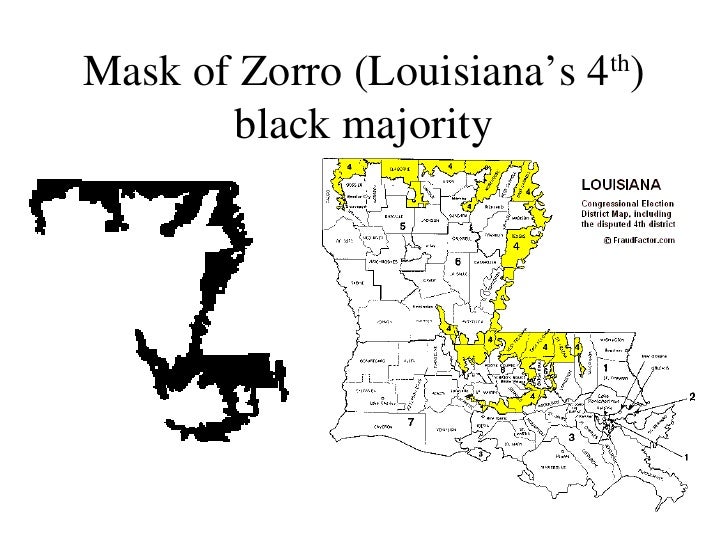
It’s easy for opponents of gerrymandering — the drawing of political boundaries for the benefit of one party or group over another — to argue what districts shouldn’t look like. All they have to do is ridicule the absurdity of the most bizarre patchworks ever woven to elect members of Congress. For example, “The Rabbit on a Skateboard,” “The Upside-Down Chinese Dragon” or the “Mask of Zorro.”
But it’s much more difficult to say what districts should look like, because reformers can disagree on what priorities should govern our political cartography. Should districts be drawn to be more compact? More conducive to competitive elections? More inclusive of underrepresented racial groups? Should they yield a mix of Democratic and Republican representatives that better matches the political makeup of a state? Could they even be drawn at random? These concepts can be difficult to define and often stand in tension with one another.
To explore how subtle (and not-so-subtle) changes to district lines can affect the makeup of the U.S. House, we embarked on a project to redraw each state’s boundaries based on different priorities. We used a web-based application created by programmer Dave Bradlee and drew new maps six different ways:
To maximize the number of usually Democratic districts
To maximize the number of usually Republican districts
To make the partisan breakdown of states’ House seats proportional to the electorate
To promote highly competitive elections
To maximize the number of districts in which one minority group makes up the majority of the voting-age population in the district (what we’ll refer to as a majority-minority district)
To be compact while splitting as few counties as possible
Additionally, we explored an algorithmic approach to optimizing district compactness developed by programmer Brian Olson.
Here’s what happened when we drew each of those maps — and why each of these priorities matters in the real world:
Republican gerrymandering
When we gerrymandered the country to favor Republicans, this is what the congressional map looked like:
There has been an explosion of gerrymandering in popular discourse over the past few years — from the pages of Teen Vogue to the theme of 5K races. It has coincided with the rise of a perception among some on the left that Republicans have hijacked the redistricting process to take over America’s legislatures — at both the state and federal levels — and shield themselves from the popular will. (David Daley’s book “Ratf**ked: The True Story Behind the Secret Plan to Steal America’s Democracy” is a good example of that narrative.) But the truth is not that simple.
Republicans didn’t achieve historic shares of power in the House and state legislatures because they engaged in skullduggery or used fancy new technology, as Daley claims. They achieved it because they enjoyed a wave election in 2010, earning enough power in state houses to redraw almost five times as many congressional districts (210 to 44) as Democrats in 2011. As a result, Republicans’ share of House seats was 4 to 5 percentage points greater than their share of the major-party vote in 2012, 2014 and 2016.
However, as bad as that math sounds for Democrats, things could be a lot worse. Our interactive estimates that if Republicans controlled the process in every state and sought maximum advantage, they could draw up to 275 “usually Republican” seats and limit the other side to 139 “usually Democratic” seats, way up from the 195 to 168 advantage they enjoy under the current lines.
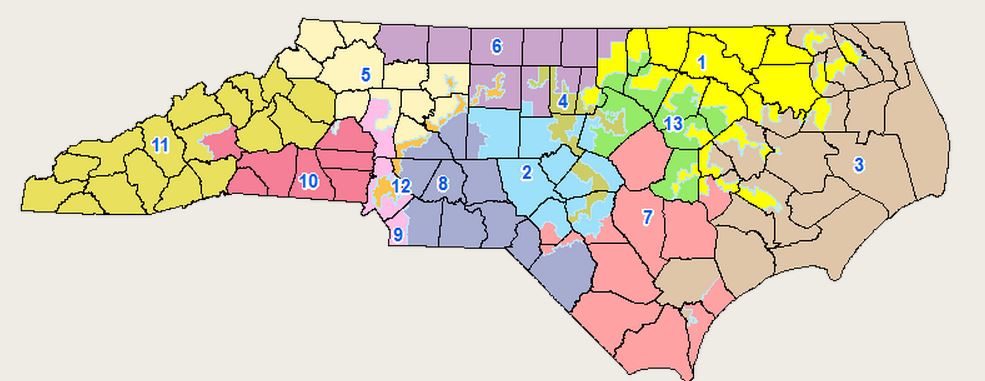
In practice, many states’ Republicans did seek maximum advantage in 2011 — often trampling districts’ compactness in the process. In North Carolina, for example, where Republicans drew 10 overwhelmingly Republican districts and three serpentine Democratic districts, not a single district had a Cook Partisan Voter Index score1 that was remotely competitive.2
But Republicans didn’t always seek to build impenetrable fortresses. In many places, their goal was to spread their advantage more thinly over a large number of districts. The risk? Over time, such maps can unravel or backfire — particularly if the party has a bad year.
For example, in 2011, Pennsylvania’s Republicans drew five districts in the Philadelphia suburbs that all leaned to the GOP but not overwhelmingly so. In 2012, these districts were instrumental in helping Republicans win 13 of the state’s 18 U.S. House seats even though GOP candidates won 83,000 fewer votes than Democrats did. This week, Pennsylvania’s Supreme Court invalidated that map as an unconstitutional partisan gerrymander. But had the map remained in effect and a few of those seats fallen to Democrats in 2018, Republicans could have found themselves wishing that they had drawn a less ambitious, more secure map.
Democratic gerrymandering
Whether left-leaning reform activists admit it or not, Democrats haven’t gerrymandered any less aggressively than Republicans. They just had less than a quarter of the power to do so in 2011, hence the GOP’s current advantage. Need proof? Just try to decipher the Rorschach test-like maps that Democrats passed in states like Georgia in 2001 and Illinois and Maryland in 2011.
To draw those contorted maps, Democrats used the same advanced mapping software that Republicans have used elsewhere. But it’s also true that Democratic gerrymanders tend to be less effective than Republican gerrymanders, and not for lack of greed or ingenuity.
Our interactive estimates that if Democrats controlled the redistricting process in every state, they could draw 263 “usually Democratic” seats and limit the GOP to 145 “usually Republican” seats. But that’s less lopsided than the 275 to 139 advantage in “usually safe” seats that the Republicans would enjoy under their fantasy scenario. Why? The reasons are rooted in several fundamental geographic and legal realities.
First, more than in past decades, Democratic voters are inefficiently clustered in big cities and college towns. In 2012 and 2016, Barack Obama and Hillary Clinton carried the popular vote while winning just 22 percent and 16 percent of America’s counties, respectively. That means that in many states, it’s easier for Republicans to pack Democratic voters into a few lopsided districts than vice versa — a natural geographic advantage for the GOP.
Second, the Voting Rights Act limits the extent to which Democrats can spread their voters across many districts, because it provides safeguards against diluting majority-minority districts3 For example, if the Voting Rights Act didn’t exist, Illinois Democrats could theoretically “unpack” Chicago’s three heavily African-American districts and spread out their overwhelmingly Democratic voters to obliterate the state’s GOP-leaning districts. Instead, the current Democratic gerrymander in Illinois has produced a modest 11-7 Democratic edge in congressional seats.
These twin hardships can force Democrats to resort to more extreme mapping acrobatics to achieve desired outcomes. Our interactive’s Democratic map isn’t just less dominant than our GOP map; it scores lower on our compactness metric (which calculates the total length of the lines used to divide states into districts) and splits counties more frequently. …
But just like Republicans, Democrats haven’t always been hyper-aggressive in practice — sometimes, the desire to protect incumbents has outweighed the desire for more power. In 2001, California’s Democrats passed a plandesigned to protect all of their 32 seats while preserving 20 Republican seats — using some pretty creative shapes in the process. They likely sold themselves short: In 2012, when an independent commission’s map took effect, Democrats gained four seats.
Compactness
Drawing districts that resemble normal shapes sounds easy enough. So why is it so hard? According to Loyola Law professor Justin Levitt’s research, 18 states have some requirement that districts be “compact.” But few states define compactness, and over the years, political scientists and mathematicians have proposed almost 100 different quantitative compactness measures, many of which conflict with one another.
Our interactive features two versions of “compact” maps, both drawn without regard to voters’ race or party. One simulates what a nonpartisan commission might draw by following existing borders like counties and cities as much as possible; the other uses a computer algorithm.
Both approaches increased the number of highly competitive districts over the current map by more than two dozen seats. The compactness map that is guided by borders scored especially highly on our compactness metrics: Compared with the current map, it reduced the total length of boundaries used to divide states into districts by 27 percent and reduced the number of times counties are split from 621 to 380.
But promoting compactness can sacrifice other goals. Because our compact maps ignored the Voting Rights Act in pursuit of geometric elegance, they feature fewer majority-minority districts than the current map does. After all, people who share the same traits — be they racial, cultural or economic — rarely live in neatly defined areas. …
Another casualty of “un-gerrymandering” can be a state’s political clout. In 2011, California’s independent commission replaced an incumbent-friendly map with one that emphasized keeping communities whole. In the ensuing 2012 election, 14 members retired or lost re-election, including once-powerful members like Republican Jerry Lewis, who delivered millions of dollars to the state from his perch atop the Appropriations Committee.
Proportionality
Gerrymandering allows majorities to seize even more power, leaving the other party underrepresented. But short of eliminating districts altogether and moving to a pure system of proportional representation, would it ever be possible to draw maps to reflect a state’s political sentiment proportionally? In trying to do so, we found that proportionality and our single-member system make awkward bedfellows.
Our interactive’s “proportionally partisan” map seeks to allocate a state’s seats to the parties in proportion to the political makeup of that state. For example, if a state has five districts and Republicans won an average of 60 percent of its major-party votes in the last two presidential elections, three districts would be drawn with a Republican lean and two would be drawn with a Democratic lean.4 In the process, it aimed to minimize the efficiency gap, a metric established by political scientists to detect the potential extent of partisan gerrymandering by measuring how many votes each party “wastes” in wins and losses. The metric is currently being considered by the Supreme Court as a way to evaluate partisan gerrymandering.
But in some states, natural political geography virtually rules out proportionality. For example, Democrats’ share of statewide votes would entitle them to one of West Virginia’s three seats in this scenario. However, there just aren’t enough Democratic-leaning precincts in West Virginia to form a Democratic-leaning district.
And in other states, the most “proportional” map was actually a partisan gerrymander: For example, achieving proportionality in California required a pro-GOP gerrymander. In Pennsylvania, it required a pro-Democratic gerrymander. This finding highlights one of the efficiency gap’s drawbacks: It could have a tough time distinguishing between true gerrymanders and natural geographic advantages.
Competitiveness
In an era when Democrats and Republicans are choosing to live next to like-minded neighbors, drawing lots of competitive districts can be tricky. In fact, in some cases, it requires conscious, pro-competitive gerrymandering. So we decided to look at what a map would look like if we gerrymandered districts so they were as competitive as possible.
Only two states have redistricting criteria that actively encourage the creation of districts that are competitive in general elections: Arizona and Washington, which both employ bipartisan redistricting commissions.
Arizona’s attempts to abide by that mandate got ugly. Its 2011 redistricting led to three closely divided districts out of nine total, including one that was won by Donald Trump and is now represented by a Democrat and another that Hillary Clinton won and is now held by the GOP. But constructing those three districts while preserving two Latino-majority districts to comply with the Voting Rights Act required some map-making gymnastics and ignited a redistricting firestorm in which the state’s leading Republicans accused the commission’s independent chair of being a Democratic lackey.
Our interactive’s “highly competitive” map features 242 districts where both parties have at least a roughly 1-in-6 chance of winning,5 a more than three-fold increase over the 72 in the current map.
The result would be a House hypersensitive to the nation’s political mood swings — and members who would have more electoral incentive to cater to voters outside their parties’ bases. But the map wouldn’t be especially compact; it would split counties more times than the current map does. And according to our model, it would elect fewer nonwhite members of Congress than the current map.
Minority representation
Today, in a nation where 39 percent of the population belongs to a racial or ethnic minority group, people who aren’t white make up just 22 percent of the House. For decades, courts have struggled to define the proper role of race in redistricting — and it may always be a moving target.
In the 1991 round of redistricting, the Bush Justice Department – armed with the power to deny maps preclearance under the Voting Rights Act – virtually forced states to maximize the number of majority-minority districts, even if they looked like inkblots. The Supreme Court later reined in the most grotesquely shaped districts. But the 1992 election launched the careers of several prominent minority politicians still serving today, including Reps. Luis Gutierrez of Illinois and Jim Clyburn of South Carolina.
Our interactive’s “majority minority” map simulates what maps might look like if that doctrine were in effect today. We found that by resorting to some extreme shapes, the number of majority nonwhite districts could be increased from 95 to 143, including 18 new African-American majority districts, 11 new Latino majority districts and three new Asian-American majority districts.
But are districts with an absolute majority of a specific minority group (51 percent Latino, for example) the best vehicles for representing minority voters? Maybe not.
First, it’s not clear such districts are as essential to electing minority candidates to Congress as they used to be. In 2016, 50 of the 96 minority members elected to the House came from districts with either a white majority or no racial majority. In other words, minority candidates are increasingly demonstrating that they can win in districts that aren’t dominated by one minority group.
Second, many scholars now wonder whether majority-minority districts have done more favors for Republicans than minorities because they’ve made surrounding districts whiter and more Republican. In the past few years, plaintiffs represented by Democratic attorneys have successfully suedto “unpack” majority-minority districts in North Carolina and Virginia on the basis that they were drawn with racially discriminatory intent by GOP legislators.
Third, 25 years after their proliferation, majority-minority districts have proved to be career cul-de-sacs for their occupants. By my count, over the past three decades, 70 House members of all races and ethnicities have won statewide office6 directly from their House seats. But only eight minority politicians representing majority-minority districts have attempted to run for statewide office — and zero won. During the same period, 28 other minority politicians have won election statewide, but none of them came from a majority-minority district.7
Algorithmic districts?
All of these complexities make it seem like randomizing the redistricting process might be a better approach. What if gerrymandering is a problem better solved by mathematicians and computer scientists than politicians and political scientists? What if we could move to a system that didn’t consider race or partisanship at all — one that had no pre-assigned winners and losers, costly litigation or drag-out fights in state capitals?
Our interactive’s algorithmically drawn map features the work of software engineer Brian Olson, whose algorithm uses census blocks to minimize the average distance between constituents and the center of their districts. The drawback? It disregards existing jurisdictional boundaries like counties, which would make real-world election administration a nightmare.
But soon it may be within our technological reach to resolve those practical concerns. If I had a magic wand, I’d develop an algorithm that: a) draws the shortest possible line(s) necessary to split a state into equally populous districts and b) requires that only as many pre-existing jurisdictions be split as necessary to achieve equally populous districts. The result might look something like our earlier map that used county borders to promote compactness.
The bottom line? Gerrymandering is a really easy practice to condemn and a really complex problem to solve. And just as there are no permanent majorities in American politics, there may never be such a thing as a perfect map.
Theoretically every single political map discriminates against the political minority of that district. I am represented, if that’s what you want to call it, in the House of Representatives by U.S. Rep. Ron Kind (D–La Crosse). If Kind had actual political views other than the most generic (promote rural areas!) and his own re-election, I could say whether he represents my views or not. If I lived a few miles east, that’s the Congressional district of U.S. Rep. Mark Pocan (D–Black Earth), who would represent literally none of my views if I lived in that district. On the other hand, Sen. Howard Marklein (R–Spring Green) and Rep. Travis Tranel (R–Cuba City) are my representatives in the Legislature, and I’ve voted for both.
The redistricting/gerrymandering process is important only if governm,ent is as grossly large as it is now. The answer to that problem lies not in how you draw up legislative districts; it’s in reducing the power of government in our lives. No politician will tell you that.
A reasonable person would have withheld judgment about the policy prescriptions advocated by Donald Trump during the 2016 presidential campaign. I certainly did.
Anything sounds great in theory, where there is no consequence and no objective measure of an idea’s potency. In the abstract and theoretical world, the only measure of an idea is the pontifications of pundits, and the belief systems from which they view the world.
Unlike us common folk, the “learned” punditry believes themselves to be infallible; they assured us that skies would fall instantly should Donald Trump be miraculously elected. But we now have a year of real-world application to assess, and it is the learned punditry on both the right and left, not us common-rabble deplorables, who have to eat crow.
While the American corporate response to tax reform has been a bit surprising, the global response to the President’s tax reforms has been nothing short of stunning. At Davos this week, senior executives from Europe’s largest firms – Siemens, Nestles, Adidas, et al – praised the President’s reforms and announced significant expansions and investments in American operations – just exactly as the President and every economically literate person predicted. And just as every snake-oil peddling, media-pimp expert promised would NEVER happen.
It was a low-key affair, that Davos roundtable; serious people around a table discussing serious things in serious tones. Business leaders, not political hacks or attention whores – nobody dressed up as a genital organ or screaming obscenities or waving signs. None of them wearing a mask or making a fist or burning a flag or anything like that; serious people responsible for the well-being of hundreds of thousands of employees and millions of shareholders. Watch the video, and compare the demeanor of those serious-minded corporate leaders to the likes of Senator Cory Booker, who came unhinged at a female witness in a recent Senate hearing.
And watch the demeanor of our President. Completely different when he is in the company of persons of accomplishment, damn-near deferential, I would say. For anyone who wonders how a group of CEO’s interact, this is it. There is a reason these people have risen through the ranks and have been entrusted with great responsibility. They do not act the fool like CNN’s Jim Acosta, when given the opportunity. That is why they are entrusted with many billions of shareholders’ assets and Acosta is entrusted with a $248 microphone.
And the list of American firms who are redirecting money previously paid in taxes to the federal sink-hole into the pockets of employees is equally jaw-dropping. The first-responders drew a cynical mocking from the “smart people” who still occupy prominent positions of influence, for reasons which defy logic daily. Crumbs, empty symbolism, a stunt, saith the media seers who have never sold anything but themselves, and have never had to meet a payroll.
But now this week it’s Starbucks, Disney, Apple joining the nearly 100 American firms to announce bonuses, wage increases, investments here at home, and repatriation of funds from abroad. These are not Trump cronies – they funded his opponents, they mocked his supporters, they showed their contempt for his populist appeal.
And now each one of them is proving him right – not by their words, but by their actions. And I will give a shout-out to Paul Ryan – the tax reform was a legislative accomplishment, and although not nearly as bold as I would like, let’s give credit where it is due. Ryan took a lot of heat, and deservedly so, but he delivered the mail.
At the end of year one of Trump, the stock market is setting new highs weekly. Isis is nearly extinct. Black unemployment is at historic lows, the economy is growing at almost double the rate that we were told was the new-normal top end. The poverty rate for married black couples who work is at record lows; indistinguishable from their white counterparts. North Korea is making nice to South Korea; NATO has faced up to its chronic underfunding; the duplicity of the Muslim countries in regards to harboring and funding terrorism has been called out and there is a major re-alignment underway. The repeal of burdensome and unnecessary regulations has been breathtaking in scope – over 1,000 in just one year.
One year. The question begs: why did President Obama not do these things?
No, seriously – ask yourself why our previous President did not do these things with two terms to get them done? These things are not ideological – economics is economics, military strategies are the realm of military science, competence in government is not a Republican or a Democrat ideal. Even libertarians want a competent, albeit drastically reduced, government.
I honestly do not know the answer to that question. But is a question that should be put to former President Obama and he should respond. But it won’t and he won’t.
It is clear that our current President loves this country, whatever else you might think of him. “America First” is a perfectly rational ideal for all Americans to get behind, because “America Thirteenth” didn’t work for us. Not so long ago, Democrats, Republicans, libertarians, socialists, and every point along the bell curve would have agreed on America First. And we will again; time heals.
We could have had these increases in wages and bonuses and investments in American jobs years ago – nobody is doing this because they like The Donald’s hairstyle. None of those corporations are doing this for the PR value. A fair number of those CEOs hate Donald Trump – I would still not walk across the street to shake his hand if he called me by name.
But I also don’t care if my plumber can’t sing opera. Just fix the leaky pipes and get on out of my house, pal. That is what I want from government, and I could care less if it gives the posers and delicate flowers in the media the vapors to see a little butt crack now and then.
And President Trump, if you are listening … keep calling a shithole a shithole; those of us who have been to those shitholes have your back. And also, please send Jeff Sessions into retirement – you got a mountain of evidence of a corrupt coup attempt from our intel community in the swamp and he is out rousting Parkinson’s victims for hitting a doob to get a moment of relief. Keep being a boss – drain the swamp in year two – that is what you were hired to do.
Today in 1942 premiered what now is the second longest running program in the history of radio — the BBC’s “Desert Island Discs”:
What’s the longest running program in the history of radio? The Grand Ole Opry.
Today in 1968, the Doors appeared at the Pussy Cat a Go Go in Las Vegas. After the show, Jim Morrison pretended to light up a marijuana cigarette outside. The resulting fight with a security guard concluded with Morrison’s arrest for vagancy, public drunkenness, and failure to possess identification.
The number one British single today in 1969 was its only British number one:
Almost a year ago I wrote about a few books, two of which were turned into movies, about fictional sports teams.
One of those was North Dallas Forty, a thinly veiled retelling of the 1960s Dallas Cowboys, which became one of those movies:
It turns out that ESPN.com wrote a more detailed comparison of the, uh, North Dallas Bulls and the Cowboys:
“North Dallas Forty,” the movie version of an autobiographical novel written by former Dallas Cowboy receiver Pete Gent, came to the silver screen in 1979. The book had received much attention because it was excellent and because many thought the unflattering portrait of pro football, Dallas Cowboys-style, was fairly accurate.
The film reached many more people than the book, and was, in many ways, a simplified version of the novel. But did it portray the NFL accurately? In the Sept. 16, 1979, Washington Post, offensive tackle George Starke wrote, “Most of what you see is close to what happens, or at least did happen when Pete Gent played.” Others disagreed. What do you think?
In Reel Life: The movie’s title is “North Dallas Forty,” and the featured team is the North Dallas Bulls. In Real Life: Why North Dallas? Gent, a rookie in 1964, explains in an e-mail interview: “I was shocked that in 1964 America, Dallas could have an NFL franchise and the black players could not live near the practice field in North Dallas — which was one of the reasons I titled the book ‘North Dallas Forty.’ I kept asking why the white players put up with their black teammates being forced to live in segregated south Dallas, a long drive to the practice field. The situation was not changed until Mel Renfro filed a ‘Fair Housing Suit’ in 1969.”
In Reel Life: In the opening scene, Phil Elliott (Nick Nolte) is having trouble breathing after he wakes up; his left shoulder’s in pain. He struggles to the bathtub, in obvious agony.
In Real Life: Jim Boeke, one of Gent’s Cowboy teammates (who also plays Stallings in the film), said this scene rings true. “I can’t say it happens to every player every morning after every game,” he told the Washington Post in 1979, “but the older you get, the more it happens to you.”
In Reel Life: As we see in the film, and as Elliott says near the end, he can’t sleep for more than three hours at a stretch because he’s in so much pain. In Real Life: Elliott is, obviously, a fictional version of Gent. “When I was younger, the pain reached that level during the season and it usually took a couple months for the pain and stiffness to recede,” says Gent. “Usually by February, I was able to sleep a good eight hours. As I got older, the pain took longer and longer to recede after the season.”
In Reel Life: Mac Davis plays Seth Maxwell, the Cowboys QB and Elliott’s close friend. In Real Life: Maxwell is a thinly disguised version of Gent’s close friend, 1960s Cowboys QB Don Meredith. According to Gent, Meredith was offered the role of Seth Maxwell. “Don was at Elaine’s one night talking with Bud Sharke, [Frank] Gifford, and several others, and Don said, ‘I just don’t want others to think that’s me.’ And Gifford said, ‘Well, it is you.’ ”
“Gent would become Meredith’s primary confidant and amateur psychologist as the Cowboys quarterback’s life would become more and more topsy-turvy as the years went on,’ writes Peter Golenbock in the oral history, “Cowboys Have Always Been My Heroes.”
In Reel Life: Throughout the film, there’s a battle of wits going on between Elliott and head coach B.A. Strothers (G.D. Spradlin). In Real Life: B.A. bears some resemblance to Tom Landry, who coached Gent on the Cowboys. “The only way I kept up with Landry, I read a lot of psychology — abnormal psychology,” says Gent in “Heroes.”
Though sometimes confused by Landry, Gent says he admired the man: “Over the course of a high school, college and pro career, an athlete is exposed to all sorts of coaches, (including) great ones who are geniuses breaking new ground in their game. Tom Landry was like that … When you are young, you think you are going to meet men like this your whole life. You think the world is full of genius, and it isn’t until you leave the game that you found out you may have met the greatest men you will ever meet.
In Reel Life: Jo Bob Priddy (Bo Svenson) and O. W. Shaddock (John Matuszak) interrupt Elliott’s relaxing bath, entering the bathroom with rifles blazing. Along with Maxwell, off-a-hunting they go. In Real Life: Former Cowboys Ralph Neely (a tackle) and Larry Cole (defensive end) told Washington Post reporter Jane Leavy that the trip was real. “Football players have only one day off a week and if they go hunting, they’re sure as hell going to shoot something,” Cole said in 1979. “We shot butterflies, field larks …” And, Neely added, a mailbox.
In Reel Life: Everyone’s drinking during the hunting trip, and one series of shots comes dangerously close to Elliott and Maxwell. In Real Life: “In Texas, they all drank when they hunted,” says Gent in “Heroes.” “That story in ‘North Dallas Forty’ of being in a duck blind and getting sprayed by shot was a true story. (Don) Talbert and (Bob) Lilly, or somebody else, started shooting at us from across the lake!” …
In Reel Life: Maxwell says, “Son, you ain’t never gonna get off that bench until you stop fighting them suckers. You got to learn how to fool them. Give ’em what they want. I know. I’ve been fooling them bastards for years.” In Real Life: Meredith never really stopped fighting “those suckers,” meaning, really, Landry. The quarterback suffered through the early years with the Cowboys and Landry, and ended up leading Dallas to within minutes of NFL championships in 1966 and 1967. Still, Landry replaced Meredith with Craig Morton during a 1968 playoff game, and that was, apparently, the last straw. Meredith retired at age 29, hoping that Landry would ask him to continue playing. Landry didn’t, saying. “Don, I think you are making the right decision.” …
In Reel Life: Elliott and Maxwell go to a table far away from the action, and share a joint. A man in a car spies on them. In Real Life: Gent says he was followed throughout the 1967 and 1968 seasons (more about this later): “One time a neighbor told me, ‘Pete, now don’t look, but there is somebody sitting in our parking lot with binoculars,’ ” he says in “Heroes.”
In Reel Life: At the party, and throughout the movie, Maxwell moves easily between teammates and groups of players, and seems to be universally respected. In Real Life: Meredith “was greatly respected by his teammates for his great skills and his nerve on the field during a period of time in the NFL when knocking out the quarterback was a tactic for winning,” says Gent. He “would take awful physical beatings and somehow keep getting up and taking the team to wins … He was one tough SOB.”
In Reel Life: The Cowboys are worshiped. They are, as Maxwell puts it, “genuine heroes.” In Real Life: The Cowboys were small time during the first half of the 1960s, but when they started winning under Landry, everything changed. “In 1964, if you bought an adult ticket, you got five kids in for nothing and a free football,” says Gent in “Heroes.” “The only time we filled the stadium was when Green Bay came. By ’66, we were sold out every game. In just two years, we went from our not being able to get a seat in a restaurant in Dallas to literally being America’s guest.”
In Reel Life: Elliott meets with B.A. The coach sits down in front of a computer, scrolling through screen after screen of information. He stops and points to the monitor. “Now that’s it, that’s it,” he says. “Phil, that’s what it all boils down to, your attitude.” In Real Life: Clint Murchison, Jr., the team’s owner, owned a computer company, and the Cowboys pioneered the use of computers in the NFL, using them as early as 1962. “The Cowboys initially used computers to do self-scouting,” writes Craig Ellenport at NFL.com. “Were they too predictable on third-and-long situations? What was the average gain when they ran that trap play last season? As the Cowboys’ organization learned more about computers, they become a greater factor in the game-plan equation. ‘It was just another weapon that we had to do the job that had to be done,’ said Landry.”
In Reel Life: Elliott, in bed with Joanne Rodney (Savannah Smith), says he’s got the best hands in the league. Elliott’s high regard of his own abilities is a continuing theme throughout the film, and there’s plenty of screen action to back up the assessment. In Real Life: Many of Gent’s teammates have said he wasn’t nearly as good as he portrayed himself in the book and the movie. “If I had known Gent was that good, I would have thrown to him more,” said Meredith, perhaps tongue-in-cheek, after reading the book.
Gent stands by his self-assessment, and says that Landry agreed about his ability to catch the ball. “Tom actually told the press that I had the best hands in the league,” says Gent. “And I did.” Gent, who played basketball in college, adds, “Catching a football was easy compared to catching a basketball.”
Gent, who was often used as a blocker, finished his NFL career with 68 catches for 898 yards and four TDs. In his best season, 1966, he had 27 catches for 484 yards and a touchdown.
In Reel Life: During a meeting, the team watches film of the previous Sunday’s game. In the film, Elliott catches a pass on third down, and everyone cheers. Except B.A., who says, “No, Seth, you should never have thrown to Elliott with that kind of coverage. Look at Delma. He’s wide open. I don’t like this buddy buddy stuff interfering with my judgment.” In Real Life: Landry stressed disciplined play, but sometimes punished players when, even though they followed his precise instructions, a play went awry. For example, Landry benched Meredith during the 1968 NFL divisional playoff game against the Browns. He threw “an interception that should have been credited against Landry’s disciplined system of play,” writes Gary Cartwright, who covered the Cowboys during the 1960s. “According to Landry’s gospel, the Cleveland defensive back who intercepted Meredith’s final pass should have been on the other side of the field. Unfortunately, the Cleveland defensive back was in the wrong place. It wasn’t that Landry was wrong; Cleveland just wasn’t right.”
In Reel Life: The game film shows Stallings going offside. B.A. castigates the player: “There’s no room in this business for uncertainty.” Later, Stallings is cut, his locker unceremoniously emptied. In Real Life: This happened to Boeke, a former Cowboys lineman, who was, in a way, playing himself in the film — Gent has said he was thinking of Boeke when he wrote this scene. “We were playing in the championship game in 1967, and Jim jumped offside, something anyone could do,” Gent told Leavy in 1979. “The NFL Films showed it from six or seven angles. They had it in slo-mo, and in overheads. It literally ended his career.” In fact, Boeke played another season for the Cowboys before being traded, but he agreed that the offside call was the beginning of the end.
In Reel Life: Art Hartman (Marshall Colt) is Maxwell’s backup at QB. He’s a very religious man, a straight arrow who is the object of some scorn. Maxwell refers to Hartman as “a dedicated young Christian stud.” In Real Life: Lots of folks have played the guessing game about who Hartman “really” is, with Roger Staubach being the most frequently mentioned candidate. But Gent denied it after the film came out. “It’s not Staubach,” he told the Washington Post in 1979. “But don’t tell him, it’ll break his heart. That character was based on any number of players who got into all that religious bull.”
For one thing, Meredith and Gent were never teammates of Staubach. Meredith and Gent left the Cowboys after the 1968 season, one year before Staubach’s rookie season.
In Reel Life: Elliott catches a pass, and is tackled hard, falling on his back. Someone breaks open an ampule of amyl nitrate to revive him. Amyl is used in other scenes in the movie. In Real Life: Gent says the drug was so prolific that, “one training camp I was surprised nobody died from using amyl nitrate.”
“In about 1967, amyl nitrite was an over-the-counter drug for people who suffered from angina,” Gent told John Walsh in a Feb. 1984 Playboy interview. “I talked to several doctors who told me it basically didn’t do any damage; it speeded up your heart and pumped a lot of oxygen to your brain, which puts you in another level of consciousness. At camp, I explained that this drug was legal and cheap — it cost about $2 for 12 ampules of it — everybody tried it and went crazy on it.”
In Reel Life: Elliott is constantly in pain, constantly hurt. In Real Life: Lee Roy Jordan told the Dallas Times that Gent never worked out or lifted weights, and that Gent was “soft.” But Gent says Jordan’s comments were not accurate: “I was not particularly strong but I took my beatings to catch the ball,” he says. “That is how you get a broken neck and fractures of the spine, a broken leg and dislocated ankle, and a half-dozen broken noses.” And, he adds, that’s how he “became the guy that always got the call to go across the middle on third down.”
In Reel Life: Elliott wears a T-shirt that says “No Freedom/No Football/NFLPA.” In Real Life: The NFL Players Association adopted this slogan during its 1974 strike.
In Reel Life: Elliott and Maxwell break into the trainer’s medicine cabinet, and take all kinds of stuff, including speed and painkillers. In Real Life: Many players said drug use in the film was exaggerated, or peculiar to Gent. “Pete’s threshold of pain was such that if he had a headache, he would have needed something to kill the pain,” Dan Reeves told the Washington Post in 1979. As for speed pills, Reeves said, “Nobody thought there was anything wrong with them. A lot of guys took those things 15 years ago, just like women took birth control pills before they knew they were bad. It’s not as true a picture as it was 10 to 15 years ago, when it was closer to the truth.”
In Reel Life: At a team meeting, B.A. scolds the team for poor play the previous Sunday. “We played far below our potential. Our punting team gave them 4.5 yards per kick, more than our reasonable goal and 9.9 yards more than outstanding …”
In Real Life: Landry rated players in a similar fashion to what’s depicted in the scene, but the system, in Gent’s opinion, wasn’t as objective as it seemed. “They literally rated you on a three-point system,” writes Gent in “Heroes.” “On any play you got no points for doing your job, you got a minus one if you didn’t do your job, you got a plus one if you did more than your job. And a good score in a game was 17 … And they would read your scores out in front of everybody else. That was another thing. Tom thought that everyone should know who was letting them down. Right away I began to notice that the guys whose scores didn’t seem to jibe with the way they were playing were the guys Tom didn’t like.”
Meredith was one of those players. “He truly did not like Don Meredith, not as a player and not as a person,” writes Golenbock.
In Reel Life: North Dallas is playing Chicago for the conference championship. The owner says, “If we win this game, you’re all invited to spend the weekend at my private island in the Caribbean.” In Real Life: According to Gent, the Murchisons did have a private island, but the team was never invited.
In Reel Life: Phil has already told B.A. that he’ll do whatever it takes to play, and before the game he takes a shot in his knee to kill the pain. In Real Life: Gent, like many pro athletes, would go to extreme lengths to play, even when badly injured. He even expresses some guilt over not playing in the “Ice Bowl,” the 1967 NFL Championship Game which the Cowboys lost in the final seconds, 21-17, to the Packers in Green Bay. The game-time temperature was minus-13. “I would have played the whole game for Bobby Hayes. [Hayes put his hands in his pockets when he wasn’t the intended receiver, a tipoff exploited by the Packers.] His hands had swollen and cracked by the second quarter. I was used to playing in cold weather, but I was in the hospital with a broken leg.
“I have always felt that it [the loss] was partly my fault. Go figure that out.”
In Reel Life: Delma Huddle (former pro Tommy Reamon) watches Elliott take a shot in his knee. He says, “No shots for me, man, I can’t stand needles … All those pills and shots, man, they do terrible things to your body.” Later, though, the peer pressure gets to Huddle, and he takes a shot so he can play with a pulled hamstring. In Real Life: Neely says this sequence rings false. “I cannot remember an instance where a player was made to feel he had to do this where he was put in the position of feeling he might lose his job.”
“Maybe Ralph can’t remember,” Gent responds in his e-mail interview. “Maybe he forgot all those rows of syringes in the training room at the Cotton Bowl. They seldom tell you to take the shot or clean out your locker. They leave you to make the decision, and if you don’t do it, they will remember, and so will your teammates. But worst of all, so will you — what if the team loses and you might have made the difference?”
In Reel Life: After one play, a TV announcer says, “I wonder if the coach called that play on the sideline or if Maxwell called it in the huddle.”
In Real Life: Who called the plays was one of many disputes between Meredith and Landry. “Landry literally could forget the game plan,” says Gent in “Heroes.” “When I would run in plays for him, he would call the wrong plays. Well, in ’66 it didn’t matter because Meredith was calling the plays, even when Landry would send them in. Lots of times Landry would send in a suggestion, and Meredith would send the player back out to publicly show up Landry. The player would start out, and Meredith would wave him back.”
In Reel Life: In the last minute of the game, Delma pulls a muscle and goes down. Elliott goes over to see how he’s doing. B.A. yells, “Elliott, get back in the huddle! The doctor will look after him. Mister, you get back in the huddle right now or off the field.” In Real Life: Landry did not respond emotionally when players were injured during a game. Cartwright contrasted Landry’s style with Lombardi’s: “When a player was down writhing in agony, the contrast was most apparent: Lombardi would be racing like an Italian fishwife, cursing and imploring the gods to get the lad back on his feet for at least one more play; Landry would be giving instructions to the unfortunate player’s substitute.”
In Reel Life: Elliott catches a TD pass with time expired, pulling North Dallas to within one point of Chicago. If they make the extra point, the game is tied and goes into overtime. But Hartman fumbles the snap, and the Bulls lose the game. In Real Life: This is similar to what happened in the 1966 NFL Championship game. The Packers led the Cowboys 34-20 with a little more than five minutes remaining. Meredith led a quick Dallas drive for one TD, and on the last drive of the game the Cowboys got to the Packers’ 2-yard line with 28 seconds left. A TD and extra point would have sent the game into OT. But Meredith’s pass was intercepted in the end zone by Tom Brown, sealing the win for the Packers and a heartbreaking loss for Dallas.
In Reel Life: After the loss, O.W. reams out Coach Johnson: “Every time I call it a game, you say it’s a business. Every time I say it’s a business, you call it a game!”
In Real Life: That speech got Matuszak the part of O.W. “(Director) Ted Kotcheff had Tooz read the speech … and Tooz blew everybody away,” says Gent.
In Reel Life: Elliott has a meeting the day after the game with Conrad Hunter (Steve Forrest). B.A., Emmett Hunter (Dabney Coleman), and “Ray March, of the League’s internal investigation division,” are also there. A league investigator recites what he saw while following Elliott during the week, including evidence that Elliott smoked a “marijuana cigarette.” In Real Life: Gent was investigated by the league. “In the offseason after the ’67 season and all during ’68 they followed me,” he says in “Heroes.” “They had guys on me for one whole season.” The investigation began, says Gent in his e-mail interview, “because I entertained black and white players at my house. I have always suspected Lee Roy (Jordan) as the snitch who informed the Cowboys and the league that I was ‘selling’ drugs (because), as he says so often in the press, ‘Pete Gent was a bad influence on the team.’ ”
In Reel Life: Elliott gives a speech about how management is the “team,” while players are just more pieces of equipment. In Real Life: Gent really grew to despise Cowboys management. “I wanted out of there,” he writes in “Heroes.” “I knew I was only going to play if they needed me, and the minute they didn’t need me, I was gone. And I knew that it didn’t matter how well I did. I could call Tom an ass—- to his face, and he wasn’t going to trade me until he had somebody to play my spot, and the moment he had somebody to play my spot, I was gone. And so from then on, that was my attitude toward Tom Landry, and the rest of the organization going all the way up to Tex Schramm.”
In Reel Life: The film stresses the conflict between Elliott’s view that football players should be treated like individuals and Landry’s cold assessment and treatment of players. In Real Life: “I’ve come to the conclusion that players want to be treated alike,” Landry told Cartwright in 1973. “They may talk about individualism, but I believe they want a single standard … If a player is contributing and performing the way he ought to, he will usually conform … We just can’t get along with a player who doesn’t conform or perform. No way.”
In Reel Life: Elliott quits after he’s told he’s suspended without pay, “pending a league hearing.” In Real Life: This scene was fiction — Gent wasn’t suspended. But the NFL didn’t take kindly to those who participated in the making of “North Dallas Forty.” Hall of Famer Tom Fears, who advised on the movie’s football action, had a scouting contract with three NFL teams — all were canceled after the film opened, reported Leavy and Tony Kornheiser in a Sept. 6, 1979, Washington Post article. And the Raiders severed ties with Fred Biletnikoff, who coached Nolte. “Freddy was not even asked back to camp,” writes Gent. Reamon, who played Delma, was cut by the 49ers after the film came out, and said he had been “blackballed.”
NFL commissioner Pete Rozelle denied any organized blacklist, but told The Post, “I can’t say that some clubs in their own judgment (did not make) decisions based on many factors, including that they did not like the movie.”
The Raiders’ “severed ties” with Biletnikoff are somewhat hard to believe. Biletnikoff retired from the NFL after the 1978 season, his 14th with the Raiders, though he was a player/coach with the Canadian Football League’s Montreal Alouettes in 1980. Nine years after that, he was hired as the Raiders’ receivers coach, which lasted until 2006.
Given the Raiders being the NFL’s rebel franchise under owner Al Davis, the only way the Raiders would have severed ties with Biletnikoff for his role with the movie is if Davis didn’t like it. The NFL’s opinion would have meant little to Davis, who sued the NFL so he could move the Raiders to Los Angeles, moving back to Oakland in 1995.


 Steve Prestegard.com: The Presteblog