Today in 1963, Capitol Records, which had previously rejected the U.S. rights to every Beatles single until then, finally released a double single, the first of which had already reached number one in the United Kingdom:
One year later, guess which group had their sixth number one of the year.
Today in 1967, BBC TV broadcasted the Beatles’ “Magical Mystery Tour” movie:
Starting shortly after my birth, my parents purchased Christmas albums for $1 from an unlikely place, tire stores.
(That’s as seemingly outmoded as getting, for instance, glasses every time you filled up at your favorite gas station, back in the days when gas stations were usually part of a car repair place, not a convenience store. Of course, go to a convenience store now, and you can probably find CDs, if not records, and at least plastic glasses such as Red Solo Cups and silverware. Progress, or something.)
The albums featured contemporary artists from the ’60s, plus opera singers and other artists.
These albums were played on my parents’ wall-length Magnavox hi-fi player.
Those albums began my, and then our, collection of Christmas music.
You may think some of these singers are unusual choices to sing Christmas music. (This list includes at least six Jewish singers.)
Of course, Christians know that Jesus Christ was Jewish.
And I defy any reader to find anyone who can sing “Silent Night” like Barbra Streisand did in the ’60s.
These albums are <a href=”http://www.great-songs-of-christmas.com/”>available for purchase online</a>, but record players are now as outmoded as, well, getting glasses with your fill-up at the gas station. (Though note what I previously wrote.)
But thanks to YouTube and other digital technology, other aficionados of this era of Christmas music now can have their music preserved for their current and future enjoyment.
The tire-store-Christmas-album list has been augmented by both earlier and later works.
In the same way I think no one can sing “Silent Night” like Barbra Streisand, I think no one can sing “Do You Hear What I Hear” (a song written during the Cuban Missile Crisis, believe it or not) like Whitney Houston:
This list contains another irony — an entry from “A Christmas Gift for You,” Phil Spector’s Christmas album. (Spector’s birthday is Christmas.)
The album should have been a bazillion-seller, and perhaps would have been had it not been for the date of its initial release: Nov. 22, 1963.
Finally, here’s the last iteration of one of the coolest TV traditions — “The Late Show with David Letterman” and its annual appearance of Darlene Love (from the aforementioned Phil Spector album), which started in 1986 on NBC …
Today in 1954, R&B singer Johnny Ace had a concert at the City Auditorium in Houston. Between sets, Ace was playing with a revolver. When someone in the room said, “Be careful with that thing,” Ace replied, “It’s OK, the gun’s not loaded. See?” And pointed the gun at his head, and pulled the trigger. And found out he was wrong.
The number one album today in 1965 was the Beatles’ “Rubber Soul”:
I rarely put my cooking messes on Instagram. I put up a picture the other day of my messy desk, and people were surprised. One thing I do try to do is be open about my family’s life and struggles when I can as best I can. I do it not to put the spotlight on me or as a plea for attention or help, but because in the internet age we all have perfect lives. At least that is the image so many of us convey. The perfect meal perfectly plated is placed on the perfectly set table as we, perfectly dressed, consume it with the perfectly paired drink. There is no illness. Our children are model angels in service of the Lord.
Except it is all a lie. Our houses are wrecks, our cookies are not perfectly round, and the chicken is dry out of the oven. Our clothes are wrinkled. Our lives are all messes to one degree or another. We all have struggles and, if I can live mine a bit publicly at least, you might realize you are not alone or realize even that you have it better than you thought. It is not a ploy for sympathy, but a reminder that you are not alone in sometimes feeling overwhelmed at the holiday season. All of us go through periods of life that are far from postcard picture perfect, even when we may not show it.
My wife has a rare, genetic form of lung cancer. There is no cure. She takes a daily pill that keeps her cancer at bay, but the cancer will one day mutate around the pill. We live in increments of a few months at a time between CT scans. And I worked myself up into being convinced I was ready to leave Fox after five years and said so. Then it turns out they were ready for me to go anyway. Now suddenly I realize half the family income is going away in a month and I’ve got credit card debts, car payments, a mortgage, and I know I’ve got a big tax bill coming even with the tax cuts. I have no idea how we will make ends meet. It sucks, I’m worried, and it’s Christmas.
But I know other people who have it far worse. I still have a radio job and I know people who are unemployed right now. I know a man in my town with kids who just lost his wife to cancer. Life is not perfect and sometimes it can overwhelm us. Sometimes we don’t see our way out of the mess we find ourselves in. And at Christmas, it is all the more stressful. We want the perfect presents, the perfect bows, the perfect tree, and the perfect memory. We want a postcard image or a magazine cover after photoshop. Such things do not really exist though.
What does exist, however, is the perfect savior. He can take your burdens and He can take mine. He wants to. He tells us He wants to. We may not know our next steps, but He has already planned them out for us. He knows where we will go and He tells us that all things work for the good of those called according to His purpose.
Christmas time can be terribly stressful as our Instagram perfect lives go searching for a perfection that does not exist in the real world. Our burdens and stresses can get the better of us. My motto is “why pray when I can worry.” I have a hard time practicing what I preach. But still, I try and so should you. We are not going to escape the worries and burdens of this world. We may wish to be relieved of present ones we constantly relive over and over knowing that it just means we will get new ones. But we do have relief in a babe in a manger who wants a personal relationship with us.
While you are overwhelmed with worries, He is knocking at your door. Will you answer?
Look, this year I know how overwhelmed you can feel. I know the stress. I am living it right now. And I know it is easier to say “trust in the Lord” than to actually trust in Him when you cannot see the way ahead. But you, like I, can pray. We can ask Him who already knows to make our paths plain. We can ask Him to help our unbelief.
The Lord God was willing to wander the desert in a tent with His people because He wanted a personal relationship with them. And He wants one with you. All you need to do is accept His invitation. There is no better time to do that than now, at the Christmas season, where we remember God made flesh, born in a food trough in the lowliest of circumstances. From a tent to a manger to a cross to a tomb and then on to glory, the whole way wanting to share your life.
If you are overwhelmed and stressed out, turn to Jesus and His perfect sacrifice and elevate your imperfect life to an eternity far greater than the best photoshop on Instagram. Merry Christmas.
Today in 1964, a group of would-be DJs launched the pirate radio station Radio London from a former U.S. minesweeper anchored 3½ miles off Frinton-on-the-Sea, England.
It’s probably unrelated, but on the same day Brian Wilson of the Beach Boys had a nervous breakdown on a flight from Los Angeles to Houston. Wilson left the band to focus on writing and producing, with Glen Campbell replacing him for concerts.
The pernicious influence of unions reared its ugly head today in 1966, when Britain’s ITV broadcast its final “Ready, Steady, Go!” because of a British musicians’ union’s ban on miming. The final show featured Mick Jagger, The Who, Eric Burdon, the Spencer Davis Group, Donovan and Dave Dee, Dozy, Beaky, Mick and Tich.
I announced a high school basketball game last night. This morning, drinking my first cup of coffee, I read this sad news from the San Diego Union–Tribune:
Legendary sports broadcaster and former Padres play-by-play announcer Dick Enberg died Thursday morning at his La Jolla home, said his wife, Barbara. He was 82.
Barbara Enberg said the family found out later in the day after Dick Enberg failed to get off a flight in Boston, where they were scheduled to meet. She said her husband appeared to be waiting for a car that was set to shuttle him to San Diego International Airport for a 6:30 a.m. flight.
“He was dressed with his bags packed at the door,” she said. “We think it was a heart attack.”
Enberg defined versatility as a broadcaster, covering 28 Wimbledon tournaments, 10 Super Bowls and eight NCAA basketball title games as the play-by-play voice of the UCLA Bruins during their dynasty-building run.
Enberg’s talented voice was paired with relentless preparation and a zest for telling the stories behind a generation’s biggest games. He cared as much about calling a water polo match as a rising star in Los Angeles as the Super Bowls, Rose Bowls, Olympics and Breeders’ Cup spotlights that followed.
His last full-time role came as the TV voice of the Padres. He retired after the 2016 season.
“We are immensely saddened by the sudden and unexpected passing of legendary broadcaster Dick Enberg,” the Padres said in a statement released late Thursday night. “Dick was an institution in the industry for 60 years and we were lucky enough to have his iconic voice behind the microphone for Padres games for nearly a decade. On behalf of our entire organization, we send our deepest condolences to his wife, Barbara, and the entire Enberg family.”
The farm kid raised in rural Armada, Mich., also gained a fierce appreciation for the small guy, the underdog and especially education — sparking the Central Michigan graduate to fund an annual scholarship.
“I’m heartbroken,” former Padres broadcast booth partner Mark Grant said Thursday night. “It’s so sad. I thought Dick was the type of guy who was going to live until he was 100, going on the circuit, talking to everybody about baseball and football and tennis.”
Enberg — known for his signature call of “Oh, my!” — channeled his passion for sports and the people behind them into a new podcast called “Sound of Success,” interviewing stars such as Billie Jean King, Bill Walton, Johnny Bench and Steve Kerr.
He told the Union-Tribune earlier this week that he hoped to lure NBA legend Magic Johnson, controversial quarterback Colin Kaepernick, Starbucks Chairman Howard Schultz and actor Jack Nicholson to his online world.
“At the very top of the list,” he said, “is Serena Williams.”
Enberg’s six-decade career felt unparalleled.
Former NFL partner Dan Dierdorf told the Union-Tribune for a 2016 story: “The man is a walking monument to sports television.”
In the same story, tennis great John McEnroe put Enberg’s mammoth, unmatched resume in perspective.
“If people ask me the top tennis players, when I throw out (Rod) Laver, (Pete) Sampras, Rafa (Nadal), Roger (Federer), I would put him in the same category,” McEnroe said. “He’s a Mount Rushmore guy.”
Service information is pending. Padres Chairman Ron Fowler, who has known Enberg for more than 25 years, said Thursday night that the team has offered the family use of Petco Park for a celebration of life.
Long recognized as one of the most versatile and enthusiastic sports announcer of his era, Enberg did it all: major league baseball, college and pro football, college basketball, boxing, tennis, golf, Olympics, Rose Bowls and Super Bowls, Breeders’ Cup horse racing — earning a trophy case full of Emmys, awards from the pro football, basketball and baseball halls of fame, niches in several broadcasting halls of fame and other assorted honors.
He also was an author, a longtime fixture at Pasadena’s Tournament of Roses parade, the host of several sports-themed TV game shows and was still calling San Diego Padres baseball games into his 80s.
“Sportscasting is a kid’s dream come true, which is one of the reasons that I keep doing it,” he said in his autobiography, “Dick Enberg, Oh My!” the “Oh my!” having been his signature call. “I can’t let my dream go. I’m still in love with what I do.”
And how well did he do it? “He could orchestrate a telecast better than anyone I’ve ever worked with,” Billy Packer, former college basketball analyst and longtime Enberg broadcast partner, once told the San Diego Union-Tribune. “I think anybody who worked with him would just stand in amazement at how great he was at anything he undertook.”
As a former teacher, Enberg was noted for his preparation and his knowledgeable yet eager approach to his craft.
“As a broadcaster, you have to be entertaining, you have to be well informed, you have to be excited about what you know and you have to have a sense of your audience — just like in a classroom,” he wrote in his book. “In fact, when I look into the camera, I’m looking into my classroom. When I’m calling a game, I can envision hands shooting up all over the country with questions. ‘Whoops,’ I’ll think, ‘perhaps we need to explain that concept or strategy a little better.’ ”
Even research and preparation weren’t always foolproof, though. Fans could be picky, and when Enberg began using one of his pet calls, “Touch ’em all!” for opposing teams’ home run hitters, Padres faithful rose up in protest and he quickly reserved that call for Padres’ home run hitters.
“Oh my!” was an Enberg family saying, his mother using it to express dismay, such as during the many hours young Dick spent broadcasting imaginary games. He used it to express wonder at athletic grace, but it could just as well have applied to his life.
Richard Alan Enberg was born Jan. 9, 1935, in Mount Clemens, Mich. The family moved to Southern California for several years, then back to Michigan, to a farm near the village of Armada. “We had a one-room schoolhouse and a two-hole toilet,” Enberg recalled for The Times years ago.
He quarterbacked his high school football team, then after graduation, enrolled at Central Michigan University in Mount Pleasant, where he played college baseball. And, fortunately, took a course in debate. One of his debate classmates was the public-address announcer for the Chippewas’ football and basketball teams, and when he graduated the job was passed down to Enberg. He also applied for a job sweeping floors, at $1 an hour, at the local radio station. A station employee liked Enberg’s voice, and instead of a broom he was handed a microphone and went to work as a weekend disc jockey, still at $1 an hour. When the station’s sports director left, Enberg moved into that slot, producing a 15-minute nightly wrap-up.
All of that was fun, but Enberg had more serious things on his mind. After graduation, he enrolled in graduate health science studies at Indiana University, eventually earning both master’s and doctoral degrees. Just as he was arriving in Bloomington, though, a Hoosier radio network was being put together and Enberg was hired, at $35 a game, to broadcast football and basketball.
Four years later, doctorate in hand, he applied for a teaching job at Indiana University. He didn’t get it, but a flier on the health sciences bulletin board, offering a teaching position at San Fernando Valley State College — now Cal State Northridge — caught his eye. Recalling his early boyhood days in Canoga Park, he applied for and got the job, teaching health science and assisting the baseball coach.
The pay was small, and the now-married Enberg went looking for extra income in the other area he knew, broadcasting. He tried more than a dozen stations in the spring of 1962, getting no call-backs. Changing tactics, he began identifying himself as Dr. Enberg, finally got put through to program directors and was able to pick up part-time work.
He got his big break in 1965. KTLA, Channel 5, was looking for a sportscaster and Enberg was hired, at $18,000 a year. “I felt guilty because that was triple what I made as a teacher,” he recalled for The Times in 1987. “Then I found out I was being paid 10% under the union minimum.”
In quick succession, Enberg was calling the weekly televised boxing cards at Olympic Auditorium, became the radio announcer for the Los Angeles Rams, and began working UCLA telecasts during the Bruins’ John Wooden-Lew Alcindor (Kareem Abdul-Jabbar) glory years.
Then it was on to a decade-long association with the Angels, until NBC called. There, he, McGuire and Packer formed an unforgettable NCAA tournament trio, Enberg serving as buffer between the “What will he say next?” McGuire and the almost dour, statistics-driven Packer. So taken was Enberg with the irrepressible McGuire — “My most unforgettable character, and there’s nobody in second place!” — that he later wrote a one-act play about him, “Coach: The Untold Story of College Basketball Legend Al McGuire.”
Basketball also gave Enberg, and his fans, an especially memorable experience. In a UCLA-Oregon game in 1970, Oregon went into a stall, leaving Enberg with little to talk about and air time to be filled. He began humming “Raindrops Keep Falling on My Head” from the big movie of the previous year, “Butch Cassidy and the Sundance Kid.”
At the next game, UCLA’s pep band played the song and the student section called for him to sing it. He demurred, saying he didn’t know the words, but they insisted and he promised he’d learn them. Then, after the last home game of the regular season, he walked to mid-court and sang.
A few days later, he heard from a music professor, who wrote, “I’ve spent 30 years studying music and you hit two notes I’ve never heard before.”
Dan Patrick pays a nice tribute:
I’ve written here before about Enberg’s announcing the football games I played on the front lawn or the street. He was my favorite announcer, so this feels like a personal loss. It’s not as if I sound like him, but the importance of preparation he always felt, and the enthusiasm he brought to every event he did are something every announcer, full-time or part-time, needs to bring to any broadcast.
I read this this morning, and it’s excellent advice, reportedly from July 2016:
“Mr. Enberg, what is the biggest piece of advice you’ve received during your career that you now pass along to future announcers?”
“Never say No to anything you’re offered. Big city, little city, Big pay or no pay, You never say No.”
Excellent advice that I have inadvertently followed.
To quote Dave Matthews, everyone goes in the end, but it’s kind of sad to watch highlights of Enberg’s 1980s NBC games with Merlin Olsen and know that neither of them are with us anymore …
… similar to watching 1970s Monday Night Football games with Frank Gifford, Howard Cosell and either Don Meredith or Alex Karras and now that none of them are around anymore.
Certainly “It’s a Wonderful Life,” which NBC stations will carry Sunday at 7 p.m. Central time, is a Christmas movie. What’s somewhat unexpected about it is that it was considered a box office failure when it first came out, as in making approximately half its production costs at the box office. (Some of that was due to stiff competition around Christmas 1946.)
What’s more interesting is the story behind the movie, particularly its star, James Stewart, as reported by the London Daily Mail:
Jimmy Stewart suffered such extreme PTSD after being a [bomber] pilot in World War II that he acted out his mental distress during ‘It’s a Wonderful Life’.
Stewart played George Bailey in the classic movie and channeled his anger and guilt into the scenes where he rages at his family.
Stewart was haunted by ‘a thousand black memories’ from his time as an Air Force commanding officer that he took with him back to Hollywood after the war.
Pilots who flew with him said that became ‘Flak Happy’ during World War II, a term to describe what is now known as Post Traumatic Stress Disorder, or PTSD.
Stewart wrestled with the guilt of killing civilians in bomb raids over France and Germany including one instance where they destroyed the wrong city by mistake.
Stewart felt responsible for the death of his men and especially one bloodbath where he lost 13 planes containing 130 men who he knew well.
Stewart never spoke about it, even to other veterans, and bottled up his emotions that came out in the acting parts he chose when he returned to Hollywood.
He acted it out during It’s a Wonderful Life, where character George Bailey unravels in front of his family – the emotional core of the film after a lifetime of setbacks, including being unable to go to war while his brother becomes a decorated hero.
Films like Shenandoah and Winchester 73 allowed Stewart to explore his dark side which was never there before he went to war.
Matzen writes that Stewart’s decision to join the military was less surprising than his decision to become an actor; his grandfather fought in the Civil War and more distant relatives fought in the Revolutionary War
Stewart was finally called up shortly before the assault on Pearl Harbor in 1941 which forced America into the World War II.
Asked by a studio boss why he wanted to give up his life in Hollywood, Stewart said: ‘This country’s conscience is bigger than all the studios in Hollywood put together, and the time will come when we’ll have to fight’.
Stewart was initially put in the Air Force Motion Picture Division because commanders wanted to use him to make films to convince more airmen to sign up.
He was also used for PR stunts until he demanded that he see combat like other airmen.
Stewart’s chance came with the creation of a B-24 bomber group, the 445th, and he was appointed commander of the 703rd squadron.
Matzen writes that the ‘key moment in Jim’s life had arrived. There would never be another like this, not before, not after’.
Speaking to DailyMail.com, Matzen said that Stewart signed up because he ‘felt he had to prove himself, especially with women, to prove he was attractive enough, charming enough’.
He said: ‘He wanted to prove he was responsible enough, that’s the key with him. He wanted to prove he was responsible enough to be an officer, that he could handle this, he could make his dad proud of him’.
According to ‘Mission’, Stewart and the 445th were deployed to Tibenham in East Anglia in England where they would carry out bombing raids on German targets.
Stewart did not stay on the ground and flew with his men.
Unlike other commanding officers Stewart, who was a Captain, took time to get to know his men as he wanted a team atmosphere.
The tactic worked but at a huge personal cost – when they started to be killed off it hit him harder.
Their first mission was to bomb a Nazi submarine facility in the city of Kiel and went off better than Stewart had expected.
As the flight got underway Stewart’s dream was finally realized – he was in combat.
Matzen writes that he ‘became part of something vital, something like the phalanx of the Roman legions’.
The biggest shock was the flak from anti-aircraft guns.
Matzen writes that the training about it ‘bore no resemblance to the experience’ and their bombers yawed left and right and pitched up and down as explosions went off all around them in the sky.
None of Stewart’s planes were shot down during the raid – but soon the bodies began fall.
During a raid on Bremen, the second largest port in Germany, enemy fighters took down a bomber called ‘Good Nuff’. Of the crew of ten, just three parachuted out.
Not for the first time, Stewart had to write a letter to the parents of the dead airmen saying they were missing and presumed dead.
A mission over Mannheim ended in catastrophe when they lost two planes with 20 men inside.
And as the weeks went on, this all began to weigh heavily on Stewart.
Matzen said: ‘He was a perfectionist and he was so hard on himself. It wasn’t just that he had responsibility for his plane, if he was in a group it was 15-20 planes and it was sometimes 75-100 planes.
‘It just got to him and it got to him pretty fast.
‘Every decision he made was going to preserve life or cost lives. He took back to Hollywood all the stress that he had built up.’
In total Stewart flew 20 missions and the stress manifested itself physically and mentally.
Stewart could not keep his food down which became a problem when he was embarking on draining eight or nine hour missions.
Stewart survived the war on peanut butter and ice cream which meant his diet consisted of just protein and sugar.
Unable to sleep, he became more and more wore down by the demanding flights – that became more and more bloody.
The worst was one that Stewart did not actually fly on, but his squadron did.
The raid on the city of Gotha, Germany, led to the loss of 13 planes, or 130 men all in one go.
Those who survived told horrific tales of bodies flying through the air and planes exploding in front of them.
More more than two hours Nazi fighters ‘poured death and destruction’ at Stewart’s men from every direction.
They used cables with bombs attached to them to bring their bombers down, fired rockets ‘like the Fourth of July’ and fired rockets at will.
Nazi pilots followed the planes as they went down to make sure there were no survivors.
Stewart heard all this and knew that the next day he had to lead the next nearly identical mission.
That night he did not sleep – miraculously his flight was nowhere near as bad.
Perhaps the episode which disturbed Stewart the most was a raid which went terribly wrong.
The 453rd were assigned to bomb a V-1 rocket facility in the northern French village of Siracourt.
The instruments in Stewart’s cockpit malfunctioned and 12 bombers deployed their payloads on the city of Tonnerre instead.
At least 30 tons of general purpose bombs rained down causing unknown numbers of civilian casualties.
Stewart’s pilots tried to cover for him but he took the blame himself, something which earned him their ultimate respect.
In all Stewart had served four-and-a-half years during World War II and was awarded the Air Medal with oak leaf clusters, Distinguished Flying Crosses and the Croix de Guerre.
Matzen told DailyMail.com that he interviewed one of the pilots who flew with Stewart who told him that Stewart once said that he had gone ‘flak happy’ and was sent to the ‘flak farm’.
‘Flak happy’ refers to what has now become known as PTSD but was little understood at the time, while the ‘flak farm’ was a treatment center for soldiers.
For Stewart his soul had been ‘ground down to nothing’ and his ‘youth had died’.
When Stewart’s mother Bessie and his father Alex saw him for the first time they were ‘shocked by what they saw – their boy had aged what seemed decades’.
Matzen writes that he was a decorated war hero, was rake thin and had gray hair and a ‘command authority’ that made his father uneasy.
Stewart faced a grim reality: He was 37 but looked 50 and his career as a romantic lead was over. He struggled to find work until director Frank Capra hired him for It’s A Wonderful Life.
Matzen said that it was a lifeline for Stewart and rehabilitated him in the eyes of Hollywood, showing directors that he could still act.
Speaking to DailyMail.com, Matzen said: ‘Jim came back from hell on earth and groped around for a movie to make, and his only offer he had was for what would become the most beloved motion picture in all American culture.
‘In an unlikely life full of unlikely things -this gangly stringbean becoming a movie star and then a war hero -this was the unlikeliest.’
The movie also provided an unlikely outlet for his still raw emotions.
Matzen said: ‘I don’t think he had that kind of capacity before the war. It enabled him to be ferocious and to have that raw emotion.
‘You see it time and time again; I think he would look for scripts where he could demonstrate that rage. I think that was the side of him that in there all the time and that’s how he would let it out.’
Stewart did not leave the military and continued to serve until May 1968 when he retired after 27 years of service during which time he was a bomber pilot during the Vietnam War.
But the memories of World War II never left him and he would see people in the street who reminded him of the airmen who had died under his command.
In ‘Mission’, Matzen writes: ‘Was he still flak happy, on a flak farm? Who could tell what was real after all that had happened over five long years.
‘The nightmares come every night.
‘There was on oxygen at 20,000 feet with 190s zipping past, spraying lead and firing rockets, flak bursting about the cockpit. B-24s hit, burning, spinning out of formation.
‘Bail out! Bail out! Do you see any chutes? How many chutes? Whose ship was it? Oh God, not him?
Not them! Bodies, pieces of bodies smacking off the windshield.
‘And the most frequent dream, an explosion under him and the plane lifted by it and the feeling that this was the end.’
The movie was directed by Frank Capra, of whom University of Nevada Prof. John Marini writes:
Frank Capra was born in Sicily in 1897 and came to America in 1903. Yet by the 1930s, his movies—movies like Mr. Deeds Goes to Town, Mr. Smith Goes to Washington, and Meet John Doe—were said to embody the best in America. Capra’s films were nominated for 35 Academy Awards and won eight, including two for best picture and three for best director. But Capra’s star faded after the Second World War, and by the end of the revolutionary decade of the 1960s, the actor and director John Cassavettes could say: “Maybe there never was an America in the thirties. Maybe it was all Frank Capra.” By that time, Capra’s films were widely viewed as feel-good fantasies about a country that never was. But is that view correct?
Capra, like Lincoln, believed that our inherited political edifice of liberty and equal rights is a fundamental good. He believed that if our treasure is in the ideas of our fathers, it is the duty of each generation to make those ideas live through the proper kind of education—including through literature and art, including his own art of filmmaking. Accordingly, he believed it is important to celebrate the deeds of those ordinary individuals who continue to exercise the virtues necessary to maintain those ideas.
In celebrating these deeds in his movies, Capra rejected social or economic theories based on progressivism or historicism—theories in which the idea of natural right is replaced with struggles for power based on categories such as race and class. Such theories had taken root not only in Soviet Russia and Nazi Germany, but elsewhere in the West—especially in the universities. …
Capra was often thought to be a populist. But Capra did not assume that a virtuous opinion existed in the people, or that the people simply needed mobilizing. He was aware that the modern public is created by modern mass media whose techniques spawn mass society, posing a danger to individual freedom. Capra wrote that his films “embodied the rebellious cry of the individual against being trampled into an ort by massiveness—mass production, mass thought, mass education, mass politics, mass wealth, mass conformity.” He did not believe in the use of mass power to improve society or to right historical wrongs. Reform, he thought, must take place through moral regeneration—thus through moral education.
Consider Capra’s 1939 film, Mr. Smith Goes to Washington, in which an idealistic man goes to Congress, runs into rampant corruption, becomes despondent, is later inspired at the Lincoln Memorial, decides against hope to stand on principle, and prevails. Capra had doubts about making Mr. Smith. While in Washington preparing for the film, he attended a press conference in which President Roosevelt outlined the great problems facing the nation. Capra wondered whether it was a good time to make a dramatic comedy about Washington politics. In his troubled state he visited the Lincoln Memorial, where he saw a boy reading Lincoln’s words to an elderly man. He decided, he later wrote, that he “must make the film, if only to hear a boy read Lincoln to his grandpa.” He left the Lincoln Memorial that day, he recalled,
with this growing conviction about our film: The more uncertain are the people of the world . . . the more they need a ringing statement of America’s democratic ideals. The soul of our film would be anchored in Lincoln. Our Jefferson Smith [the film’s lead character, played by Jimmy Stewart] would be a young Abe Lincoln, tailored to the rail-splitter’s simplicity, compassion, ideals, humor. . . . It is never untimely to yank the rope of freedom’s bell.
When watching Mr. Smith, it is important to notice where Capra locates the corruption. FDR customarily attacked “economic royalists,” or the private corruption of corporations and monopolies. For FDR, the solution to corruption was to be found through the government and through the unions, which would combat the economic forces of the private sphere. But in Mr. Smith, Capra located the corruption not in the private but in the political sphere—it was the politicians who had usurped the institutions of government on behalf of their own interests and the special interests. When Smith goes to Washington he reveres a Senator from his state who had been a friend of his father. Smith’s father, a newspaperman, had been killed while defending an independent prospector against a mining syndicate that was likely in cahoots with the union. Capra, like Smith and his father, understood America in terms of a common good—a good established by the principles of equality and liberty as the foundation of individual rights.
The setting of Mr. Smith is deliberately timeless. There is no mention of the Depression or of impending war. There is no indication of partisanship. What Capra hopes to bring to life are the words that have been carved in stone on Washington, D.C.’s monuments, but which are now forgotten. That is Jefferson Smith’s purpose as well. In a central scene in the movie, gazing at the lighted dome of the Capitol, Smith says:
… boys forget what their country means by just reading “the land of the free” in history books. Then they get to be men, they forget even more. Liberty is too precious a thing to be buried in books. … Men should hold it up in front of them every single day … and say, “I’m free to think and to speak. My ancestors couldn’t. I can. And my children will.”
What Smith is advocating in the film is the establishment of a boys camp that will teach them about the principles of their country. Moreover, it is not to be paid for by the taxpayers, but with a loan from the government to be paid for by the boys themselves. At the climax of Smith’s battle in the Senate, he says this:
Get up there with that lady that’s up on top of this Capitol dome—that lady that stands for liberty. Take a look at this country through her eyes. … You won’t just see scenery. You’ll see … what man’s carved out for himself after centuries of fighting … for something better than just jungle law—fighting so he can stand on his own two feet, free and decent—like he was created, no matter what his race, color, or creed. That’s what you’d see. There’s no place out there for graft or greed or lies—or compromise with human liberties. And if that’s what the grown-ups have done with this world that was given to them, then we better get those boys camps started fast and see what the kids can do. It’s not too late. … Great principles don’t get lost once they come to light. They’re right here. You just
have to see them again.
For Capra, like Lincoln, the problem is how to make people see the principles again.
The politicians in Washington in 1939 did not like their portrayal in Mr. Smith. Many tried to keep the movie from being shown. Capra thought it to be a ringing defense of democracy—and the people agreed. It was a tremendous success, not only in America, but throughout the world. In 1942, a month before the Nazi occupation of France was to begin, the Vichy government asked the French people what films they wanted to see before American and British films were banned by the Germans. The great majority wanted to see Mr. Smith. One theater in Paris played the movie for 30 straight nights.
By the time America entered World War II, Capra had become America’s most popular director and was president of the Screen Directors Guild. Yet four days after Pearl Harbor he left Hollywood to join the Armed Forces. He was sent to Washington and was given an office next to the Army Chief of Staff, General George Marshall. Marshall was worried that millions of men would be conscripted, many right off of the farm, having little idea of the reason for the war. He assigned Capra to make “a series of documented, factual-information films—the first in our history—that will explain to our boys in the Army why we are fighting, and the principles for which we are fighting.” Capra was nearly cowed by the assignment. He had never made a documentary. But after giving it some thought, he brilliantly dramatized the difference between the countries at war by using their own films and documentaries, in this way illustrating the character and danger of tyranny.
After the war, with the danger gone, it became increasingly clear that American intellectuals, who had rejected the political principles of the American Founding, had not understood the phenomenon of tyranny. For them, it was simply historical conditions that had established the distinction between right and wrong—or between friend and enemy—during the war. For them, in fighting the Nazis, America had simply been fighting a social movement. Subsequently, they looked on those who still revered America’s Founding principles as representing a reactionary economic and social movement to be opposed here at home. For the same reason, Capra’s wartime documentaries—known collectively as Why We Fight—came to be seen merely as propaganda.
Capra never thought of his documentaries as propaganda. He saw them as recognizing the permanent human problems—those problems that reveal the distinction between right and wrong, good and evil, justice and injustice. The fundamental distinction in politics is between freedom and slavery or democracy and tyranny. Winston Churchill said of Capra’s wartime documentaries, “I have never seen or read any more powerful statement of our cause or of our rightful case against the Nazi tyranny.” In his view, they were not propaganda at all. Churchill insisted that they be shown to every British soldier and in every theater in England. At the end of the war in 1945, General Marshall awarded Capra the Distinguished Service Medal. And on Churchill’s recommendation, Capra was awarded the Order of the British Empire Medal in 1962.
Capra’s last great movie, It’s a Wonderful Life, was made in 1946. Shortly before making it, he said, “There are just two things that are important. One is to strengthen the individual’s belief in himself, and the other, even more important right now, is to combat a modern trend toward atheism.” This movie, he wrote, summed up his philosophy of filmmaking: “First, to exalt the worth of the individual; to champion man—plead his causes, protest any degradation of his dignity, spirit or divinity.” Capra understood that Hollywood would be changing, because the culture and society had begun to change. The historical and personal categories of class and race had become political, and self-expression and self-indulgence had replaced those civic virtues that require self-restraint. In his 1971 autobiography—imagine what he would think today—he wrote that “practically all the Hollywood filmmaking of today is stooping to cheap salacious pornography in a crazy bastardization of a great art to compete for the ‘patronage’ of deviates.”
In 1982, when he was in his 85th year, Capra was awarded the American Film Institute’s Life Achievement Award. In his acceptance speech, he touched on the things that had been most important in his life. He spoke of celebrating his sixth birthday in steerage on a 13-day voyage across the Atlantic. He recalled the lack of privacy and ventilation, and the terrible smell. But he also remembered the ship’s arrival in New York Harbor, when his father brought him on deck and showed him the Statue of Liberty: “Cicco look!” his illiterate peasant father had said. “Look at that! That’s the greatest light since the star of Bethlehem! That’s the light of freedom! Remember that. Freedom.” Capra remembered. In his speech to the Hollywood elite so many years later, he revealed his formula for moviemaking. He said: “The art of Frank Capra is very, very simple. It’s the love of people. Add two simple ideals to this love of people—the freedom of each individual and the equal importance of each individual—and you have the principle upon which I based all my films.”
It is hard to think of a better way to describe Frank Capra’s view of the world, and America’s place in fulfilling its purpose, than to turn to another great American who made his living in the world of motion pictures. Ronald Reagan was a friend and admirer of Frank Capra. They were very much alike. The inscription that Reagan had carved on his tombstone could have been written by Capra: “I know in my heart that man is good. That what is right will always eventually triumph. And there is purpose and worth to each and every life.” Both Capra and Reagan looked to a benevolent and enduring Providence, and the best in man’s nature, as the ultimate grounds of political right. For them, as for Lincoln, America was more than a geographical location or a place where citizens shared a common blood or religion, or belonged to a common culture or tradition. America was a place where an enlightened understanding of “the Laws of Nature and of Nature’s God” had made it possible to establish those principles of civil and religious liberty that gave “purpose and worth to each and every life.”
Capra was aware that the moral foundations established by those principles, as well as belief in God, had become endangered by the transformations in American life following World War II. He saw the necessity of reviving the moral education necessary to preserve the conditions of freedom, because he understood that in a democracy, the people must not only participate in the rule of others, they must also learn to govern themselves.
In his last and most personal tribute to his adopted country, Capra recalled his family’s arrival at Union Station in Los Angeles after their long journey across America in 1903. When they got off the train, his mother and father got on their knees and kissed the ground. Capra’s last words to his assembled audience were these: “For America, for just allowing me to live here, I kiss the ground.” Capra did not believe that he had a right to be a citizen of America. Rather he was grateful for the privilege of living in America. He understood that freedom not only offers economic opportunity, but establishes a duty for all citizens—a duty to preserve the conditions of freedom not only for themselves, but for their posterity. Only those willing to bear the burdens of freedom have a right to its rewards.
For Capra, the real America was to be understood in terms of its virtues, which are derived from its principles. In his view, his art was dedicated to keeping those virtues alive—by making those principles live again in the speeches and deeds of that most uncommon phenomenon of human history, the American common man. It was the simple, unsophisticated, small-town common American that Capra celebrated in his films. But for Capra, as for his friend John Ford, no one epitomized this phenomenon better than Abraham Lincoln.
Proving that there is no accounting for taste, I present the number one song today in 1958:
The number one single today in 1962 was by a group whose name was sort of a non sequitur given that the group came from a country that lacks the meteorological phenomenon of the group’s title:
The number one single today in 1963 was probably played on the radio …
For those on the political right bewailing Congress’ inability to get very much accomplished this year, enjoy your bigger take-home pay starting in your first 2017 paycheck. Though this tax cut is not large enough, and isn’t even close to the size of 1980s tax cuts, I’m with Nobel Prize-winning economist Milton Friedman:
And yes, most of you reading this will be getting a tax cut, contrary to the demagoguery of the Democrats (none of whom voted for the tax cut) and their leftist apparatchiks. But don’t believe me; check for yourself on this tax cut calculator. Guy Benson notes:
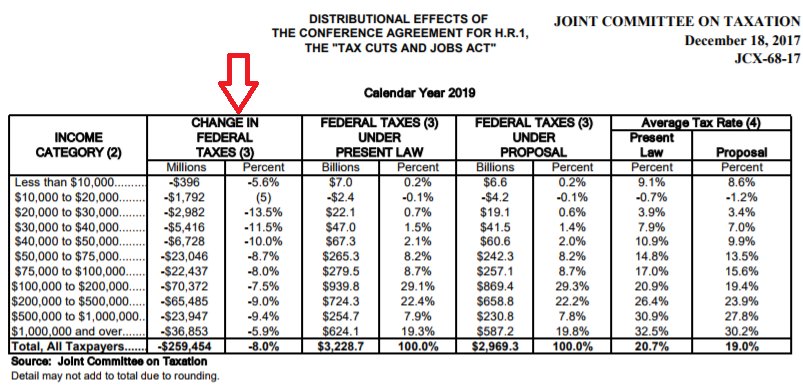
The Democrats’ central attack against the GOP tax reform bill is all too familiar: It’s a giveaway to corporations and “the rich” that hurts the middle class. They’ve falsely called the plan a tax increase on the middle class, and demagogued it as a “massive attack” on middle income taxpayers — not to mention the “end of the world.” Throughout this debate, we’ve shared data-driven analyses from three separate nonpartisan organizations: The Joint Committee on Taxation (JCT), which is an official Congressional scorekeeper, the Tax Foundation (which leans to the right), and the Tax Policy Center or TPC, (which leans to the left). In spite of the deceptive rhetoric flying around social media and the airwaves, all three outfits agreed that the GOP proposal would, on average, reduce the tax burdens of every income group in America. We’ve showcased the TPC findings because that group is typically home to Democrats’ preferred experts. Well, TPC is out with their fresh analysis of the finalized tax bill, and guess what? As we’ve been saying for weeks, it will slash taxes for the vast, vast majority of American taxpayers. … The average tax cut will be $1,600, according to TPC’s data (Republicans cite a different statistic: A tax cut of more than $2,000 for a median income family of four). Let those numbers marinate for a moment. We’ve been caught in a blizzard of misinformation claiming that this bill hurts the middle class. But even the Republican-hostile Tax Policy Center couldn’t escape the empirical conclusion that 80 percent of all Americans will see their taxes reduced under the bill — and the “losers” are limited to just five percent (largely upper income filers from high-tax blue states). And no, the “one-percenter” rich do not disproportionately benefit from the cuts.
Brian Riedl of the Manhattan Institute brings out a chart: Riedl points out that the bottom 80 percent of U.S. families income-wise, which pay 30 percent of federal income taxes, will get 35 percent of the tax cuts, and the top 1 percent of families, who pay 27 percent of federal taxes, will get just 21 percent of the tax cuts. Instead of being eliminated as was originally proposed, the state and local tax deduction is being limited to $10,000 in sales, property and income taxes, and the home mortgage interest deduction is being limited to $750,000 in principal. (The average house value in Wisconsin is $166,100 according to Zillow, and according to SmartAsset the average Wisconsin home property tax bill is $4,923.) The Wisconsin Gazette amuses me by reporting:
Perhaps not coincidentally, the top 10 states with the highest average state and local tax deductions all voted for Democrat Hillary Clinton in last year’s election. New York led the way with an average state and local tax deduction of more than $22,000, followed by Connecticut, California, New Jersey and Massachusetts.
Well, to quote Charlie Sykes and others, elections have consequences. Maybe constituents of Sen. Charles Schumer and Kirsten Gillibrand (D–New York), Richard Blumenthal and Chris Murphy (D–Connecticut), House Minority Leader Nancy Pelosi (D–California). Sens. Cory Booker and Bob Mendenez (D–New Jersey), and Sens. Elizabeth Warren and Edward Markey (D–Massachusetts) should start voting differently. For that matter, maybe their constituents should start voting differently in state and local elections. David French chronicles other Democratic stupidity:
I’m starting to think that all too many Democrats believe that private citizens and private corporations don’t actually own their private income or their private property. Otherwise, how can we explain the Democratic insistence, repeated endlessly over the last 24 hours, that Republicans somehow are poised to execute a grand “heist” by cutting corporate and individual tax rates, granting an estimated 80.4 percent of taxpayers an average tax break of $2,140.
The rhetoric was remarkable, and the hysterics weren’t confined to fringe figures on the left.
Here’s House Democratic leader Nancy Pelosi:
Shamefully, Republicans were cheering against the children as they rob from their future and ransack the middle class to reward the rich #GOPTaxScam
Democratic presidential frontrunners Elizabeth Warren and Bernie Sanders weighed in:
The bill that the Republicans jammed through the Senate tonight isn’t tax reform. It’s a heist. Let’s call this out for what it is: Government for sale. #GOPTaxScam
Note the key words. A tax cut is a “heist.” It’s “looting” the government’s money. You’re “robbing” and “ransacking” the middle class. Schumer is the most measured, and even he acts like the government is “giving” people money by granting a tax break. Yes, part of this is just talking points. They’re words chosen to win a news cycle. But they also betray a deeper problem. Taken at face value they represent a fundamental redefinition of private property. It’s part of the Democratic march towards socialism, and it doesn’t just have implications for tax rates, it has grave consequences for civil liberties as well. The traditional view of private income and private property is clear. You own and control the money you make or the property you possess. By the consent of the governed the state can tax a portion of that money and regulate your use of your property, but the fundamental presumption remains — it’s your property. It’s your money. To put it in legal terms, the government bears the burden of establishing the need for your funds or the necessity for regulation. Indeed, the Constitution establishes the primacy of individual rather than state ownership by noting that the government can take your property only for “public use” — and only after paying “just compensation.” Increasingly, however, the American Left is flipping the proposition. What’s “yours” is the array of government goods and services established by the vast and growing federal bureaucracy. What’s “yours” is the bundle of bureaucratic and regulatory rights created by an increasingly regulatory state. Thus, private property is in reality a public resource. Private businesses are “public accommodations” that can easily be commandeered to become instruments of social policy — just ask the Christian business owners required to furnish free abortifacients to their employees or to use their artistic talents to celebrate immoral events. Read through that lens, and you can easily see why Democrats use the rhetoric of theft. In Barney Frank’s memorable phrase, “Government is simply the name we give to the things we choose to do together.” It’s the core expression of American community and the primary expression of American values. It’s the centerpiece of American life. In other words — as with so many other elements of our public debate — we’re back to first principles. We’re back to culture war. Red and Blue America are once again like ships passing in the night. A conservative hears the language of “theft” and laughs. I’m not stealing from anyone if I’m allowed to keep more of my own cash. The progressive hears the same word and nods. After all, the government must fund “our” welfare state, and the more money a person has, the greater the government’s moral and legal claim on his resources.
Business owner and Facebook Friend Michael Smith observes:
I think I finally understand why the people who oppose the GOP reform oppose it. At first, I didn’t get it. I mean, even if you accept their premise that the cuts were for “the rich” and corporations, the complainants were not getting penalized – they weren’t having anything taken away from them and they weren’t being asked to fill the gap. Other than envy, why would you begrudge your neighbor or his employee getting to keep more of what they earned, especially since neither of those circumstances changed your circumstances?
Then I got it. The complainants really do think that money belongs to them. They actually do think they are losing ground and that money that they expected to be theirs is being “given” to someone else at their expense. That’s the progressive mind for you – what’s mine is mine and what’s yours is mine, too.
The tax cut bill also gets rid of one of the most onerous provisions of ObamaCare — the penalty for not having health insurance, though not until Jan. 1, 2019. Getting rid of the penalty is not the same thing as getting rid of ObamaCare, but it does defang it to some extent, which may be all Republicans can accomplish given that they can’t seem to decide to fix it (which isn’t possible) or get rid of it entirely. Some fiscal conservatives are alarmed at ballooning of the federal deficit. I am completely unimpressed with any bewailing of the deficit and debt on the left, since they said nothing while their president was generating more debt than every previous president combined, and they’re only interested in deficit and debt reduction when they’re not in power. Increasing taxes will do nothing to reduce the deficit. The only thing that will reduce the deficit, now at about 16.7 percent of spending and 20.2 percent of revenues, is to cut 16.7 percent of the budget. There are, in fact, allkinds of proposals on how to cut the deficit without raising taxes. And everyone who believes this tax cut will balloon the deficit needs to put up his or her deficit-reduction proposals that do not include tax increases, or shut up. (Even Comrade Sanders has a deficit reduction proposal, though it is predictably stupid and socialist. The tax cut bill cuts taxes on business, though not enough, since the correct business tax rate is zero. However, the tax cut already is producing dividends, as CNBC reports:
Telecom giant AT&T was quick to respond to news of U.S. tax reform, announcing it would give some employees bonuses once the legislation is signed into law. AT&T said in a press release Wednesday that it would give more than 200,000 of its U.S. workers who are union members a special bonus of $1,000. The company also increased its capital expenditures budget by $1 billion in the U.S. “Congress, working closely with the President, took a monumental step to bring taxes paid by U.S. businesses in line with the rest of the industrialized world,” CEO Randall Stephenson said in a statement. “This tax reform will drive economic growth and create good-paying jobs. In fact, we will increase our U.S. investment and pay a special bonus to our U.S. employees.” AT&T had previously said that it would invest $1 billion in the U.S. if “competitive” tax reform legislation was passed, and has said that the tax reform framework could increase demand for AT&T’s services.
Fifth Third Bancorp will pay more than 13,500 employees a bonus and raise the minimum wage of its workforce to $15 an hour after the passage of the Republican tax plan that will cut the bank’s corporate tax rate. … Wells Fargo, meanwhile, also said it would be boosting its minimum wage for employees to $15 an hour, which was prompted by the tax plan. The San Francisco-based bank also said it would target $400 million in donations to community and nonprofit organizations next year.
Boeing announced an “immediate commitment” to investing an additional $300 million in three areas that will directly benefit their employees:
$100 million for corporate giving, with funds used to support demand for employee gift-match programs and for investments in Boeing’s focus areas for charitable giving: in education, in our communities, and for veterans and military personnel.
$100 million for workforce development in the form of training, education, and other capabilities development to meet the scale needed for rapidly evolving technologies and expanding markets.
$100 million for “workplace of the future” facilities and infrastructure enhancements for Boeing employees.
Dennis Muilenburg, President, and CEO of Boeing praised the new tax reform bill, saying that it is critical for Boeing sustained long-term growth. … Comcast announced that they will give $1,000 bonuses to over 100,000 “eligible frontline and non-executive employees” & invest $50 billion over the next five years in infrastructure “based on the passage of tax reform.”
It turns out that employee pay and benefits are affected by how the business is doing. It also turns out that corporate charitable contributions are also affected by how the business is doing. More profits are better. The Tax Foundation claims:
According to the Tax Foundation’s Taxes and Growth Model, the plan would significantly lower marginal tax rates and the cost of capital, which would lead to a 1.7 percent increase in GDP over the long term, 1.5 percent higher wages, and an additional 339,000 full-time equivalent jobs.
The Tax Cuts and Jobs Act is a pro-growth tax plan, which would spur an additional $1 trillion in federal revenues from economic growth, with approximately $600 billion coming from the bill’s permanent provisions and approximately $400 billion from the bill’s temporary provisions over the budget window. These new revenues would reduce the cost of the plan substantially. Depending on the baseline used to score the plan, current policy or current law, the new revenues could bring the plan closer to revenue neutral.
Over the next decade, the Tax Cuts and Jobs Act would increase GDP by an average of 0.29 percent per year; GDP growth would be, on average, 2.13 percent, compared to 1.84 percent. In 2018, GDP growth would be 0.44 percent over the baseline forecast.
Even if all the benefits of this tax cut were not happening, there is one overriding reason to support this tax cut: It’s your money. Whether you spend it or put it away for future use, what you do with your tax cut will work for you far better than government ever will. There is, in fact, no unit of government in this nation that works even at a mediocre level of competence. There is no problem in this nation that more government and more government spending will fix.

 Riedl points out that the bottom 80 percent of U.S. families income-wise, which pay 30 percent of federal income taxes, will get 35 percent of the tax cuts, and the top 1 percent of families, who pay 27 percent of federal taxes, will get just 21 percent of the tax cuts. Instead of being eliminated as was originally proposed, the state and local tax deduction is being limited to $10,000 in sales, property and income taxes, and the home mortgage interest deduction is being limited to $750,000 in principal. (The average house value in Wisconsin is $166,100 according to
  The tax cut bill cuts taxes on business, though not enough, since the correct business tax rate is zero. However, the tax cut already is producing dividends, as
  Steve Prestegard.com: The Presteblog