• Presty the DJ for June 1

    June 1, 2019
    Music

    The number one single today in 1963:

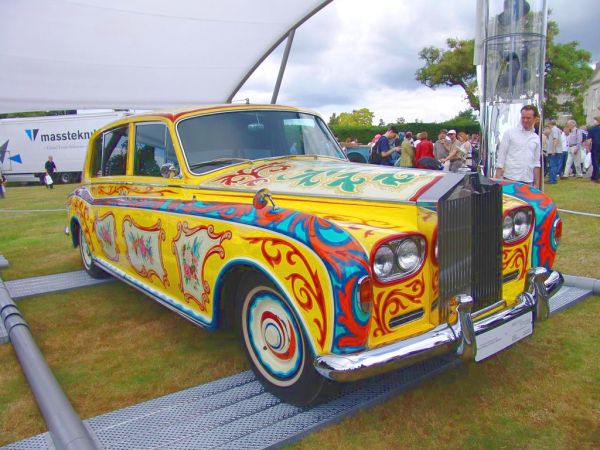
    Today in 1967, the Beatles released “Sgt. Pepper’s Lonely Hearts Club Band”:

    The number one single today in 1968:

    Today in 1969 during their Montreal “Bed-In” (moved from New York City due to a previous marijuana conviction), John Lennon and Yoko Ono, with backing vocals from Timothy Leary, Tommy Smothers, Dick Gregory, DJ Murray the K, Allen Ginsburg and others, recorded this request:

    The number one single today in 1970:

    (more…)

    Share this on …

    • Share on X (Opens in new window) X
    • Share on Facebook (Opens in new window) Facebook
    • Share on LinkedIn (Opens in new window) LinkedIn
    • Email a link to a friend (Opens in new window) Email
    • Print (Opens in new window) Print
    Like Loading…
    No comments on Presty the DJ for June 1
  • The cultural cold civil wars

    May 31, 2019
    Culture, US politics

    Sumantra Maitra:

    Mayor Pete Buttigieg, in a fiery recent speech, said “The struggle is not over when transgender troops, ready to put their lives on the line for this country, have their careers threatened with ruin one tweet at a time by a commander in chief who himself pretended to be disabled to get out of serving when it was his turn.”

    In the comments aimed at the LGBT community, he railed against U.S. Vice President Mike Pence, a prime target if there was one.

    “That’s the thing that I wish the Mike Pences of the world would understand,” he thundered, “That if you have a problem with who I am, your problem is not with me. Your quarrel, sir, is with my creator.”

    A tad perplexing given that Pence has never given any indication of having a problem with Mayor Pete.

    In fact, in June 2015, then Indiana Governor Mike Pence was asked about Buttigieg’s sexual orientation. He responded: “I hold Mayor Buttigieg in the highest personal regard. We have a great working relationship, and I see him as a dedicated public servant and a patriot.”

    Likewise, in March of the same year, the then Governor tweeted that if he finds any restaurant discriminating against anyone on the basis of sexuality, he would personally be opposed to it.

    It defies logic that the party of Harvey Weinstein would complain about Mike Pence bringing about The Handmaid’s Tale; a man who believes in 1950s style chivalry. But it is for that 1950s chivalry itself, Pence and his family has been repeatedly targeted by activistsas well as the media.

    These paradoxical attacks on Pence are the culmination of the forces we have observed in the past few years. In order to understand that, one needs to understand the liberal crusaders.

    Modern liberalism, for lack of a better word, is a religion.

    It may sound counterintuitive for an idea superficially claiming to be emancipatory being as rigid as a religion, however especially post-2016, liberalism turned into a religion scorned, beaten back, and is now taking a crusading turn.

    Look to Stephen Pinker, one of the grinning saints of modern providential liberalism.

    You can find a detailed review of his new book Enlightenment Now: The Case for Reason, Science, Humanism, and Progress, here. Basically, Pinker doesn’t understand what “enlightenment” is.

    He considers everything that happened since 1590 to be good. He doesn’t consider the Judeo-Christian values and cultural forces, the reactionary movements, Bernini, Bach, Beethoven, to be of any influence on the enlightenment, and never answers why the Renaissance happened only in Europe, not elsewhere. Pinker also cherry-picks data to suit his findings on declining violence. The reaction to my review was hysterical. Saints must not be critiqued.

    While the theory of liberalism as a philosophy arose as an emancipatory idea against faith, family, and flag conservatism in Europe, it slowly morphed into a quasi-religious force of its own, and mostly due to its own inherent contradictions.

    Like Marxism, another philosophical theory determined to “free” people from the bonds of bourgeoisie family and morality and religion, ultimately turned religious, liberalism has followed the same path.

    Every global Abrahamic religion had a peaceful rise, until it faced organized or mass opposition. Christianity rose peacefully till it came into conflict with the pagan religions in Greece and Rome, and then again, during the Crusades against Islam.

    Islam had a whole period of invasion when it destroyed the pagan religions in Persia and the Levant, as well as coming into conflict with Christianity.

    Liberalism, which was a theory of individual rights, now faces its own crusading moment.

    During the 1960s liberalism came into conflict with the idea of faith, family, and flag conservatism across the West. The idea was to destroy the bonds of conservative morality, in favor of radical emancipatory individualism. But it took a crusading turn during the post 1990s Soviet collapse. Liberalism contained within itself a providential sense of history as an arc, that is destined to have a glorious end, much like all major Abrahamic religions awaiting God’s kingdom. Liberalism also has the concept of “original sin”, in this case, known as “privilege”, from which you can never be truly free, regardless of your financial or social position. And finally, liberalism has a crusading zeal, a universalist aspect at odds with its own inherent individualism. And that is where all the problems lie.

    Superficially, individual rights should be all good. But individualism is contradictory, and some people’s right to religion clashes with some other people’s right to sexuality. Both might co-exist without coming into conflict, but liberalism’s crusade sees it wishing to eradicate any rival religion and spread its liberal values, norms, rules and mores.

    Coexistence is impossible with such an expansionist, pervasive force. When you see a push for transgender troops or female infantry even at the risk of efficiency and cohesion in the armed forces, this is a refusal to co-exist.

    When LGBT rights clash with a Christian baker’s faith, even when there are hundreds of other cake shops available, or when drag shows that openly exploit children come into conflict with parental rights, this is a refusal to co-exist.

    The same idea leads to foreign interventions and wars with culturally alien countries.

    That crusading zeal is universal and it won’t end anytime soon. History needs to have its liberal kingdom of heaven in the future, and any rival religious force that stands in the way needs to be eradicated. Opposing history’s arc makes you a heretic against the one true faith, not to be won over with an idea, but to be vanquished.

    In that light, it is understandable why the reaction post-2016 was so severe.

    A religion which is destined to be the future cannot be thwarted.

    In Western societies, as organized Judeo-Christian values continue to recede (compared to non-Western societies, like Eastern Europe, India, or the Middle East, where strong cultural and religious values are ascendant), liberalism is supposed to fill the void.

    But in 2016 it was rejected by almost half of the electorate. And the crusade began.

    Up until 1990, liberals were happy to accept defeat and understand that power changes and is cyclical. That has changed. No election, no result, nothing will be considered valid anymore, unless there’s absolute submission to liberal faith.

    It didn’t take long for Mayor Pete to be pilloried for being insufficiently pure by his own side.

    There is a reason crusading, fanatical religions mellow down with time. Any and all fanaticism contains within itself the seeds of self-destruction. Fanaticism alienates normal people, purifying fire and hypocrisy, and fanatical liberalism is no exception.

    There’s a reason why Mike Pence is never charged with #MeToo offenses, but a lot of liberals have been. There’s a reason why there’s a growing backlash against unethical Trans lobby groups and experiments on children across the Atlantic.

    Unless liberals learn to co-exist and follow the principle of live and let live, they will be the prime driver to the backlash against themselves.

    Conservatives also need to realize that one cannot simply be a passive observer against fanaticism, hoping the time just passes. It won’t stop with a Christian baker, or even with Mike Pence.

    The rights of one’s faith will continue to be eroded, as the march of liberalism continues.

    Jonathan V. Last comments about the civil war of sorts within the political right:

    Yesterday my friend, Sohrab Ahmari, wrote an attack on National Review’sDavid French explaining why French and people like him are dangerous.

    Ahmari’s view is that he wants “to fight the culture war with the aim of defeating the enemy and enjoying the spoils in the form of a public square re-ordered to the common good and ultimately the Highest Good.”

    He seeks “government intervention” to tackle unspecified societal problems, though he does allow that “Government intervention will not be the answer to every social ill.”

    He castigates French for not agreeing to support Donald Trump by saying that “he has kept his hands clean, his soul untainted.” He does not seem to mean this as a compliment. Because he follows it by insisting that “But conservative Christians can’t afford these luxuries.”

    And finally there is this:

    Progressives understand that culture war means discrediting their opponents and weakening or destroying their institutions. Conservatives should approach the culture war with a similar realism. Civility and decency are secondary values. They regulate compliance with an established order and orthodoxy. We should seek to use these values to enforce our order and our orthodoxy, not pretend that they could ever be neutral. To recognize that enmity is real is its own kind of moral duty.

    I do not doubt that Sohrab sincerely believes all of this.

    But instead of pushing back against this or that point, I would offer the following:

    If it is true that our cultural conflicts are so deep that we are enemies with our fellow Americans—that there is real enmity—then the die is already cast.

    If Sohrab is correct that conservatives and progressives are engaged in war and that only the election of this president, or that senator, or the confirmation of this other Supreme Court justice will postpone the end times, then the end times are already upon us.

    Because one side can’t keep their finger in the dyke for forever. Eventually it must crack and we must all be washed out to sea.

    I don’t think I harbor many illusions about the world. If you’ll forgive me saying so, I might be the least sentimental person you know.

    And it seems to me that American society is, in important ways, much healthier and more unified than it has been at many points during our history. Things are better than they were in 1860. Or 1870. Better than during the Great Depression. Better than during the 1970s.

    Do you remember the 1970s? Major cities burning every summer? Murder rates soaring across the country? Student radicals setting off bombs and taking over university buildings with guns?

    Pick a random Tuesday from 1977 and there’s a fair chance it would be the biggest news day of the year for us in 2019.

    (My favorite case in point: In 1977, 12 Muslim terrorists seized control of three buildings in Washington. At the B’Nai Brith headquarters, they herded about 100 hostages onto the roof and held them at gunpoint for two days. This was all happening literally four blocks from the White House. And this was such business-as-usual for the ’70s that today nobody even remembers it happened.)

    Not everything is better. By some measures—say, the disintegration of the family—we are much worse off today.

    But my point is that this is how it always is. Nothing is ever solved. Nothing is ever finished. American society lurches from one set of problems to another. Some things improve, others degenerate.

    And our big societal conflicts tend not to be resolved, but rather to be subsumed into the next set of conflicts, and paved over as we move forward.

    I say none of this to be optimistic—I am not, by nature, an optimist. But simply to say that the conflicts of today look a lot like the conflicts of yesterday. And the day before that.

    If you thought that civility and decency were cardinal virtues in the last era, then they are probably still cardinal virtues today.

    This seems to be the conundrum currently of Trump, although since I remember the history that’s taken place during my lifetime I remember George W. Bush and Ronald Reagan being seen as equally, depending on the moment, stupid, dense and dangerous to life itself on earth.

    Share this on …

    • Share on X (Opens in new window) X
    • Share on Facebook (Opens in new window) Facebook
    • Share on LinkedIn (Opens in new window) LinkedIn
    • Email a link to a friend (Opens in new window) Email
    • Print (Opens in new window) Print
    Like Loading…
    No comments on The cultural cold civil wars
  • Presty the DJ for May 31

    May 31, 2019
    Music

    We started and ended with jazz yesterday, so it’s worth noting that today is the anniversary of the release of the first jazz record, “Darktown Strutters Ball”:

    The number nine …

    … seven …

    … and five singles today in 1969:

    (more…)

    Share this on …

    • Share on X (Opens in new window) X
    • Share on Facebook (Opens in new window) Facebook
    • Share on LinkedIn (Opens in new window) LinkedIn
    • Email a link to a friend (Opens in new window) Email
    • Print (Opens in new window) Print
    Like Loading…
    No comments on Presty the DJ for May 31
  • Amash vs. Trump

    May 30, 2019
    US politics

    Conor Friedersdorf:

    “They don’t support FISA reform,” he declared. “They are not protecting your rights. They want to protect the president. But the rest of you, forget about it. The government can spy on all of you, and they don’t give one crap about it.”But it was Amash’s comments about character and virtue that best underscored why he presents a potent challenge to Trump loyalists in the Republican Party.  “More than anyone in our government, we need the president to be ethical, to be of high moral character, and to do the right thing,” he said. “And the pattern you find in the Mueller report is someone who does not meet that standard.”Trump’s moral deficiencies trouble many of Amash’s constituents.“As a retired educator, a grandparent, a parent, someone who has taught in Sunday schools, I don’t know how we tell our children not to lie, that it’s wrong to lie, when it’s evident throughout the highest levels of government,” one woman said. “I don’t know how we teach our children not to bully on the playground when bullying comments are constantly coming out in the media.”The crowd responded powerfully when Amash spoke against the example Trump was setting for children, perhaps because Amash made the version of a moral critique most likely to resonate with constitutional conservatives and libertarians. After a Trump supporter noted that the economy is strong and complained that many Americans oppose the president anyway, for example, Amash said:

    Think about how well things are going with the economy and people are still so mad. Why is that? … I think it’s because of the tone we’re setting at the top. We’re not treating one another with respect. We need to bring that back. We need to treat one another with love and respect. And we don’t have that right now. If there’s one thing that I pray and hope for our country it’s that we’ll love each other and care about each other regardless of our backgrounds and differences.

    This kind of division is dangerous and it destroys liberty.

    I’m a big believer in liberty and the Constitution. Nobody cares about liberty in Congress more than I do. One thing you see around the world is liberty cannot survive in a system where people hate each other and where there is no virtue. You can’t have a system like that. Our Founders and Framers talked about that. You have to have people who care about virtue and you have to have love.

    If you hate each other, if you disparage each other, other systems prevail … When you have people who are angry and upset at each other all the time, you’re much more likely to create a system where the government takes more control.

    Later, another Trump supporter declared that the people applauding Amash for coming out for impeachment might pretend to like him, but were unlikely to vote for him in the next election. He chided Amash to wake up to that reality. Amash replied:

    I represent the entire district. So it doesn’t matter to me if a person voted for me or didn’t vote for me, or donated to me or didn’t donate to me. I think I’ve been pretty clear about that. That’s not going to change my principles and who I am … I agree with you that many of the people cheering me on aren’t going to support my campaign. I don’t care. It doesn’t matter to me. This is what it means to be a bigger person. It doesn’t matter to me that some people won’t support me or are hypocritical. You have to do the right thing regardless.

    Amash’s criticism of Trump may never spur an impeachment inquiry. But the nature of it forces conservative Trump voters to make a clarifying choice: To stay loyal to a president of bad character, they must attack a man of good character who votes in accordance with the principles they share.

    Charles Sykes (yes, that Sykes) adds:

    The Trump playbook isn’t working with Justin Amash.

    He hasn’t been bullied or insulted into submission; the tweets haven’t worked, the trolls and flying monkeys of social media haven’t intimidated him; and he seems to have shrugged off threats of a primary challenge and the condemnation by the inaptly-named Freedom Caucus.

    And yesterday, after quadrupling down on his condemnation of President Trump he got standing ovations from his hometown crowd.

    Of course, it’s possible to overestimate all of this: he remains very much an outlier in his own party and at home it’s not clear how much of the support he’s getting is from the hard-core GOP base. So far, Amash’s call for impeachment represents less the stirring of a GOP conscience than it has served to highlight the atrophy of that organ under Trump.

    And yet.

    Among Republicans, breaking with Trump is supposed to be a form of ritualized political seppuku. Ask Jeff Flake or Mark Sanford. There’s a reason why even Mitt Romney seems to have gone into the witness protection program these days.

    Even when Trump goes to a foreign country and sides with a blood-soaked dictator to score political points against a domestic critic or when he tosses out insane conspiracy theories and accuses his critics of “treason,” we’ve become accustomed to the GOP crickets.

    There’s a logic behind all of this. Polls would suggest that they have no choice: 90 percent of Republicans back the president and conservative media has become both a safe space for MAGAism and a powerful enforcement mechanism for conformity.

    Then there is the Trump realpolitik: Nearly the entire incentive structure of Republican politics now pushes elected officials towards acquiescence. If you want to be relevant or have influence . . . or matter at all in conservative politics these days, you have to go along.

    Once the bargain has been struck, there is no going back. After a while what was grudging becomes habit and morphs into a culture. …

    Does this matter? He’s just a lone voice. But maybe it does, because it creates a counter-narrative: there is political life after independence. Conscience is not suicide. Check out this tweet from our former colleague Haley Byrd:

    Delayed tweet, sorry. Video of Justin Amash being greeted with a standing ovation before his town hall began: pic.twitter.com/Mf8z7zYGkU

    — Haley Byrd (@byrdinator) May 28, 2019

    Perhaps there is a constituency for principle after all. Who knew?

    Meanwhile, Amash is drawing attention for making a stronger case for impeachment than the Democrats. If you haven’t read yesterday’s tweet storm, it’s well worth your time.

    Attorney General Barr has deliberately misrepresented key aspects of Mueller’s report and decisions in the investigation, which has helped further the president’s false narrative about the investigation.

    — Justin Amash (@justinamash) May 28, 2019

    And just gets better. Read the whole thing.

    Exit take: It’s happening. Matt Lewis says it’s time for conservatives to draft Amash for president.

    It’s not a crazy idea.

    Well, Sykes may not think it’s crazy, but it is highly unlikely to happen. Libertarians are now pondering whether Amash should run for president as a Libertarian party candidate.

    So if Amash is opposed to Trump, he must be one of those renegades who doesn’t vote with his own party, right? Well, FiveThirtyEight did the math …

    … and finds something I’ve noticed about such Wisconsin Republican renegades as Dale Schultz, Luther Olsen and Mike Ellis — they are less likely to vote Republican when the GOP is in control than when it isn’t. In the 2017–18 House of Representatives, when the GOP was in charge, Amash voted Trump positions only 54 percent of the time. This year, with Democrats in control, Amash votes Trump positions 92 percent of the time.

    Part of the reason is that the out-of-power party tends to stick together, and individual majority-party legislators have more power with a small majority. But Amash presumably could score points with his constituents by voting against Trump this year, and yet he hasn’t done that very often. One would think Amash would know his district and his constituents better than national political pundits.

    For what it’s worth, the GOP needs more small-L libertarians in it. (I shocked my opponent, The Capital Times and The Nation’s John Nichols, on Wisconsin Public Radio when I said I supported Amash instead of Paul Ryan for speaker of the house.) I bet Michigan dairy farmers are feeling the same pain as Wisconsin dairy farmers over the Trump trade war. Trump lost some of his Second Amendment credentials by favoring a ban on bump stocks, which among other things fails the test of effectiveness.

    As someone who is neither a Trump cheerleader nor a NeverTrumper — in other words, someone who praises Trump when warranted and criticizes Trump when warranted — I am certain conservatives would have cheered had Barack Obama faced a primary challenger in 2012, and they may have quietly cheered on Comrade Sanders not because they agreed with him, but because he made Hillary Clinton’s political life difficult. So to condemn Amash because he has differences with Trump, even though he votes with Trump most of the time, is inconsistent and excessively purist.


    Share this on …

    • Share on X (Opens in new window) X
    • Share on Facebook (Opens in new window) Facebook
    • Share on LinkedIn (Opens in new window) LinkedIn
    • Email a link to a friend (Opens in new window) Email
    • Print (Opens in new window) Print
    Like Loading…
    No comments on Amash vs. Trump
  • Trump vs. the Terrible 24

    May 30, 2019
    US politics

    Andrew Egger:

    Even though he was nominally busy in Japan, President Trump found time over the weekend to take shots at Democratic frontrunner Joe Biden. Rather than dunking on Biden’s public handsiness or challenging his claim to the mantle of America’s blue-collar champion, however, Trump went after Biden’s stewardship of the Violent Crime Control and Law Enforcement Act, a 1994 measure eventually signed by President Bill Clinton that increased federal funding for law enforcement nationwide.

    Anyone associated with the 1994 Crime Bill will not have a chance of being elected. In particular, African Americans will not be able to vote for you. I, on the other hand, was responsible for Criminal Justice Reform, which had tremendous support, & helped fix the bad 1994 Bill!

    — Donald J. Trump (@realDonaldTrump) May 27, 2019

    ….Super Predator was the term associated with the 1994 Crime Bill that Sleepy Joe Biden was so heavily involved in passing. That was a dark period in American History, but has Sleepy Joe apologized? No!

    — Donald J. Trump (@realDonaldTrump) May 27, 2019

    To the degree that a Trump tweet can still raise eyebrows, this one did. After all, there was no fiercer citizen advocate in the early ’90s for cracking down on crime than Donald Trump, who infamously took out full-page ads in several newspapers calling on New York to “Bring back the death penalty! Bring back our police!” during the 1989 case of the Central Park Five, who were falsely convicted of attacking and raping a jogger.

    That Trump’s a colossal hypocrite is not exactly new news. What’s interesting here is the way that he is now bringing the tactics that won him the 2016 Republican primary into the 2020 Democratic primary—a contest in which he’ll play an enormous role without even participating.

    Trump and Biden have actually followed very similar paths on criminal justice: advocates of strong enforcement in the ’90s who have evolved away from mass incarceration and stringent sentencing in the last few years. Biden, for his part, followed the Democratic party as it gradually moved away from Clinton-era support of law-and-order policies through the Obama era to the present day.

    This year, Biden has struck an uneasy balance between suggesting that he had been wrong to support the 1994 crime bill and insisting it wasn’t as bad as critics say: “I haven’t always been right, I know we haven’t always done things the right way, but I’ve always tried,” he said at a Martin Luther King Jr. Day breakfast in January. He then added: “The idea that the crime bill generated mass incarceration, it did not generate mass incarceration.”

    Trump’s move to support criminal justice reform, on the other hand, has been both recent and sudden, in keeping with his we’ve-always-been-at-war-with-Eastasia style. When he was running for president, restoring law and order to a lawless America was a common refrain; during his inaugural address, he railed against the “American carnage” of impoverished inner cities and the “crime and gangs and drugs that have stolen too many lives and robbed our country of so much unrealized potential.” At some point, however, Trump’s focus shifted: He still talks about these things with regard to immigrant crime, but less so with that committed by U.S. citizens.

    Of course, going from “Make America Great Again” in 2016 to “Keep America Great” in 2020 requires a shift in the language used to describe America. But there’s also plenty of reason to believe Trump has simply come around naturally on the issue of Americans given unjustly onerous sentences for relatively insignificant crimes (thanks in great part to the lobbying of, of all people, Kim Kardashian West).

    All of this is to say that Trump would have every incentive, under ordinary political circumstances, to defend Biden from attacks about the 1994 crime bill—attacks that, until this weekend, had been lodged by other 2020 Democrats, from Kamala Harris to Bill de Blasio. It’s the crazy radical progressives, he might have said, who want to prioritize the comfort of felons over that of law-abiding, who want to demonize our police, who want to take us back to the dark ages of the crime-sodden ’70s and ’80s. That was the backhanded tone he struck last month, when Biden first entered the race: Joe’s a moron, of course, but at least he’s not evil!

    Welcome to the race Sleepy Joe. I only hope you have the intelligence, long in doubt, to wage a successful primary campaign. It will be nasty – you will be dealing with people who truly have some very sick & demented ideas. But if you make it, I will see you at the Starting Gate!

    — Donald J. Trump (@realDonaldTrump) April 25, 2019

    But Trump’s abandoned that tactic now that Biden is surging in the polls. You can’t become frontrunner without Trump painting a target on your back.

    This was always the greatest strategic difference between Trump and his bundle of foes during the 2016 Republican primary. Each of them had his or her carefully cultivated political brand that defined natural enemies: establishment types against Tea Partiers, restrained blue-state governors against celebrity legislators; Chamber of Commerce mainstays against Bible Belters. When Trump came out of nowhere to take a commanding lead in the field, nobody seemed able to audible away from those strategies, opting instead to keep digging away at their chosen opponent and hope the Trump bubble would pop on its own.

    Trump’s political strategy, meanwhile, was incredibly straightforward: At any given moment, he was attacking whichever candidate seemed strongest. Summer 2015, when Jeb Bush seemed like he had the inside track? Punch—Jeb’s a low-energy establishment loser. Late 2015, when Ben Carson was surging? Punch—Carson’s totally incapable of governing and probably mentally unstable. Early 2016, by which point Ted Cruz was pretty much the last other guy with a heartbeat? Ted’s the biggest liar you ever met, a maniac, incapable of making deals and getting things done, his dad probably helped kill JFK, punch, punch, punch.

    We already know the Democratic royal rumble is likely to prove brutal with 24 contenders and counting in the ring and the desperate desire to depose Trump as soon as possible stressing everybody out. Now throw Trump himself into that mix, and realize that he’s likely to treat this cycle like Russia treated the last one: trolling and rabble-rousing online, throwing daily Twitter bombs at candidates he thinks he can damage, and just generally multiplying the chaos by any means possible.

    It’s going to be a long 18 months.

    It’s going to be a long 18 months because the presidential election cycle should never begin before New Year’s Day. For those who are not Democrats, though, it will be fun to see Trump, who lives in the head of every Democrat, it seems, to force each candidate to defend himself or herself against Trump in addition to the other candidates.


    Share this on …

    • Share on X (Opens in new window) X
    • Share on Facebook (Opens in new window) Facebook
    • Share on LinkedIn (Opens in new window) LinkedIn
    • Email a link to a friend (Opens in new window) Email
    • Print (Opens in new window) Print
    Like Loading…
    No comments on Trump vs. the Terrible 24
  • Presty the DJ for May 30

    May 30, 2019
    Music

    Two more Beatles anniversaries today: “Love Me Do” hit number one in 1964 …

    … four years before the Beatles started work on their only double album. Perhaps that work was so hard that they couldn’t think of a more original title than: “The Beatles.” You may know it better, however, as “the White Album”:

    (more…)

    Share this on …

    • Share on X (Opens in new window) X
    • Share on Facebook (Opens in new window) Facebook
    • Share on LinkedIn (Opens in new window) LinkedIn
    • Email a link to a friend (Opens in new window) Email
    • Print (Opens in new window) Print
    Like Loading…
    No comments on Presty the DJ for May 30
  • The boycotts that aren’t

    May 29, 2019
    media, US politics

    Erick Erickson:

    A whole lot of journalists are lazy progressive hipsters who hang out around the same people who think the same things and are, as a result, easily manipulated and played. Also, many of them are so liberal and have so many biases that it makes it even easier for progressives to spoon feed stories to journalists.

    With some solid exceptions, an unfortunate number of journalists at most news organizations will gladly and repeatedly take pre-packaged stories from progressive interest groups and turn them into big stories. It’s why the New York Times ran those stupid stories about Marco Rubio’s tickets in 2016. It is why much of the national press is breathlessly reporting that Netflix is threatening to leave Georgia over its fetal heartbeat law. There’s just one problem — Netflix made no such threat.

    This is all pre-packaged PR by a progressive PR firm and reporters, already more likely than not to be biased in favor of abortion rights, are falling all over themselves to report it.

    What did Netflix actually say? Netflix said it’d donate to the ACLU to fight the law and maybe, possibly if the law is declared constitutional it might then consider reconsidering its business in Georgia.

    Netflix is not going anywhere. Frankly, Netflix cannot afford to move production to higher cost states. It has Disney about to fire up a Netflix killer, it has exorbitant costs, and it has zero intellectual property to leverage against King Rat once it is up and running. It has to save money with Georgia’s lucrative tax credits.

    The Netflix story is as badly reported as the others.

    The media reported that Reed Morano pulled out of Georgia over the fetal heartbeat law, but that’s not really true. Morano was going to go scout out Georgia, but had not committed to any locations in Georgia or any other state for that matter. Georgia did not lose the business. No one had the business to begin with.

    Likewise, CNN and other outlets reported that Kristen Wiig was scrapping a Georgia shoot, but there was no shooting in Georgia. It’s a story about a vacation in Florida that was never going to be filmed in Georgia anyway. It only got off the ground last month.

    The media has breathlessly reported all these stories, but gotten every one of them wrong. Netflix is not leaving Georgia. The other two were not even committed to or planning on being in Georgia.

    A progressive PR firm was able to get sympathetic progressives in Hollywood to saber rattle, knowing they could spin sympathetic reporters and it turns out they were right.

    They will keep dripping these stories out in the run up to the 2020 election in Georgia. We will next hear about Disney pulling a Netflix. Then there’ll be other studios. Other actors with no projects in Georgia will say they canceled a project because it was going to be filmed in Georgia. Details will be nebulous.

    This is all part of the playbook and at this point it is hard to conclude anything except the media is being willfully complicit in all of this.

    Of course, there’s going to be another progressive outrage at some point and all the studios will start virtue signaling on those instead and everyone will forget about Georgia.

    Share this on …

    • Share on X (Opens in new window) X
    • Share on Facebook (Opens in new window) Facebook
    • Share on LinkedIn (Opens in new window) LinkedIn
    • Email a link to a friend (Opens in new window) Email
    • Print (Opens in new window) Print
    Like Loading…
    No comments on The boycotts that aren’t
  • A story you probably thought you’d never see

    May 29, 2019
    US business, Wheels

    Douglas A. McIntyre:

    Fiat Chrysler Automobiles proposed a merger with Renault that would create the world’s third-largest carmaker. The eroding economics of the industry make such deal more likely by the day. Deep trouble at Ford Motor and General Motors’ need for more heft to compete with rivals Toyota and Volkswagen make a marriage between the two largest car companies increasingly probable.

    Fiat Chrysler argues that a tie-up with Renault will lead to $5.5 billion in savings. As car sales have flattened in the United States and started to drop in China, the two largest markets in the world offer less hope for revenue improvement. Neither company has much of a sales footprint in China. Renault has none at all. Both have a strong market share in Europe, but it is one of the most competitive markets in the world. At the low end of the market, VW is the dominant force. At the high end, it is BMW and Mercedes.

    While GM and Ford both have a strong market share in the United States, Ford has stumbled. It has withdrawn most of its sedans in the American market because sales have shifted from cars to sport utility vehicles, crossovers and pickups. Ford’s only bright spot in the United States is its F-Series full-sized pickup, which is the top-selling vehicle in the nation. Ford’s sales in China are abysmal and falling. GM’s are strong, but it is up against other car companies, both local and global, that need the largest car market to be successful.

    Ford’s management, under CEO Jim Hackett and Executive Chair William Ford, has shown it can cut costs. It recently cut 7,000 white-collar workers. That will save $600 million. Hackett has set total savings of $14 billion for the five-year period that began last year. He also said the company will invest $11 billion to have 40 electric and hybrid cars by 2022. Not many outsiders believe he can make his goal. Ford may build more electric cars and hybrids, but selling them is another matter. The competition in this market runs from tech companies like Alphabet’s Waymo to Tesla, startups and every major manufacturer in the world. There is no evidence Ford is ahead of this wave, and so far, it appears the company is behind it. Confidence in Hackett, in particular, is low.

    GM is better regarded than Ford, primarily because of the work of CEO Mary Barra. She has been CEO of GM since 2014. It also has cut costs. However, many outsiders believe it is ahead of most of its rivals in both the electric and self-driving car businesses. GM owns 75% of Cruise Automation, a leader in artificial intelligence of future cars.

    GM has two other advantages over most global manufacturers. It is among the leaders in car sales in China. With its joint venture partners, it sold 813,973 vehicles in the first quarter. GM is also the leader in U.S. car sales, with about 17% of the market.

    One of the primary hurdles GM would have if it took over Ford is that the market share of the two in the United States would be close to 30%. Either U.S. regulators would need to accept that, or the combined company would need to sell or spin out some of its brands. The most likely of these are GM’s Buick or GMC truck business.

    While GM may have a future as a standalone car company over the next decade, Ford does not. Its market cap is down 42% over the past five years, while GM’s is close to flat. The savings in a combination would be well into the billions of dollars. A marriage of the two also could compete effectively with Toyota, VW and perhaps the new Fiat Chrysler and Renault combo. GM also has the advantage that it is considered to make among the most dependable American cars.

    Who would have predicted a GM–Ford merger at any point?

    The possible irony here is that GM has fallen out of favor with many car buyers due to its bailout in 2008. And GM clearly has issues with those not turned off by the bailout, as GM Authority reports:

    During GM’s Q1 2019 earnings call, a Barclays Capital analyst asked GM CEO Mary Barra a rather interesting question: whether the automaker’s products lack the desirability of key rivals, particularly when it comes to vehicle design and effective marketing tactics that attract buyers.

    “We’ve talked over the years about the cultural change you did at GM and a greater focus on cost accountability, making sure you’re in the right product and geographies to drive profit,” asked Brian Arthur Johnson of Barclays Capital. “But one thing I do hear from investors is, if they look at GM design, broadly speaking, both the vehicles, the interiors, the advertising it just doesn’t, in some people’s view, have the kind of pizzazz as you might see. I don’t always like going back to Tesla, but it’s not lost on some of us that one of your designers created Elon’s vehicle lineup.

    So just, how are you thinking about the state of design overall at GM? Is it an important differentiator? Or do you think it’s more important to get capable vehicles out there and kind of play it more on the profit and the cost game? And if it is more important, what would you — what are you trying to do to kind of move it to the next level?”

    GM CEO Mary Barra responded with the following, providing some insight into the automaker’s thinking and processes:

    “I think it’s incredibly important. You have to do everything to win in this market. And design is a very important piece of it. I think we have a very disciplined process where we clinic data and understand the customers in segment and what they’re looking for, how they view products. Full-size truck is different than a Cadillac is different than a compact SUV like the Chevrolet Equinox. And so, we have a very rigorous process on how we develop trucks and really focus on putting the customer at the center as we do those designs.

    But all aspects are critically important. I think if you – you mentioned advertising as well. I think Cadillac is a really good example as you’ve seen the shift that we’ve made. And Steve Carlisle can do a better job of telling you, but the list that we’ve had with Cruise, with the right campaign has been very very successful. And I would also say, when you look at brand building, there’s been tremendous improvement across all of our brands and strengthening from the key brand metrics.

    So we’re focused on having beautifully designed products that people want and desire and got to have to having the right contenting, so we could have the right package and efficiency and affordability for the customer and winning in the marketplace and then having advertising that breaks through. But sometimes the advertising that breaks through and is most effective with the customers isn’t the one that wins all the awards.”

    That seems like a nice reply, but it still doesn’t really explain what the automaker will do to solve the elephant in the room, which is that a significant amount of U.S. car buyers do not desire GM, its brands or products when shopping for a car – whether due to prior quality or reliability issues, image-related factors, or an entire list of other potential reasons. It’s a serious problem, one that leaves GM competing for a smaller portion of buyers.

    Meanwhile, some of the automaker’s newest vehicle designs have been critiqued for being bland or unattractive, including such models as the all-new 2019 Chevrolet Silverado, refreshed 2019 Camaro, and the all-new 2020 Cadillac CT5.

    In addition, the Super Cruise campaign mentioned by Barra might make for a good talking point, but its success is very limited. The spot in question – called Pioneers – isn’t focused on Super Cruise, but rather mentions it in passing, while also bringing up a whole bunch of other Cadillac attributes. But apparently, it’s effective.

    Or not if it’s not actually selling GM cars.

    This will be really interesting to watch.


    Share this on …

    • Share on X (Opens in new window) X
    • Share on Facebook (Opens in new window) Facebook
    • Share on LinkedIn (Opens in new window) LinkedIn
    • Email a link to a friend (Opens in new window) Email
    • Print (Opens in new window) Print
    Like Loading…
    No comments on A story you probably thought you’d never see
  • Presty the DJ for May 29

    May 29, 2019
    Music

    This is more a pop than rock anniversary: One of the two funniest songs Johnny Cash performed, “One Piece at a Time,” hit number 29 today in 1976:

    Birthdays start with Gary Brooker of Procol Harum:

    (more…)

    Share this on …

    • Share on X (Opens in new window) X
    • Share on Facebook (Opens in new window) Facebook
    • Share on LinkedIn (Opens in new window) LinkedIn
    • Email a link to a friend (Opens in new window) Email
    • Print (Opens in new window) Print
    Like Loading…
    No comments on Presty the DJ for May 29
  • A job I’m not applying for

    May 28, 2019
    media, Wisconsin politics

    A Facebook Friend pointed out that the owner of the Wisconsin State Journal in Madison, Lee Enterprises, is looking for …

    Reporter – State Government

    News & Editorial  Madison, Wisconsin  Madison, Wisconsin

    Position at Wisconsin State Journal

    The Wisconsin State Journal, south-central Wisconsin’s leading news source, is seeking a smart and aggressive reporter to join its state government reporting team.

    This is both the opportunity you’ve been looking for and the hardest job you’ll ever love. As one of two Capitol reporters, you’ll be expected to produce high-impact enterprise and watchdog stories amid the daily demands of reporting from a supercharged partisan environment. Coverage areas include all three branches of state government, politics and elections in a vibrant and constantly evolving political culture that is often in the national spotlight.

    Experience in accountability reporting, aggressive use of public records laws, facility with data and an ability to develop sources and establish trust and credibility on both sides of the aisle is required. This position also demands an ability to report in real time for our online platforms and via social media, and an aptitude or desire to shoot video. At least five years of daily newspaper reporting experience is preferred. Past political coverage is desired, but a can-do attitude and demonstrated work ethic matter more.

    To be considered for the position applicants must apply online at www.Madison.com/workhere by June 10, 2019. Please include a cover letter and five samples of your work or links to five recent stories.

    Capital Newspapers offers:

    • Competitive compensation
    • Great benefits package including medical, dental, vision, and life, insurances; matching 401k plan; paid maternity and paternity leaves; and regular paid time off
    • Culture of teamwork, professional work environment, and a focus on growth opportunities
    • Free print subscription to the Wisconsin State Journal and free digital subscription to Madison.com for all employees

    Affirmative Action/Equal Opportunity Employer:
    The Capital Newspapers organization is an affirmative action employer. We are committed to maintaining a workforce that accurately reflects our audience and expands our voice.

    Pre-employment background and drug screenings apply.

    Once upon a time — say, 20 to 25 years ago — I would have jumped at this. Not anymore, and for several reasons, the least of which is that according to their requirements I’m not qualified, since my 7.5 months of (very strange) experience at a daily newspaper is short of their five years requirement. The idea that weekly reporters are unfamiliar with deadlines is ridiculous. I have written more stories the day of production at the various places I’ve worked because the news came up just that day. Anyone who has done web content that has to be done right now is not unfamiliar with daily deadlines. I’m probably more qualified than some daily reporters on that point.

    The State Journal is, remember, the newspaper I started reading, according to my parents, when I was 2 years old. (I bet nobody on the WSJ staff can say that.) I’ve been in the State Journal a few times, including two city spelling bee wins and therefore two state spelling bee appearances.

    Wisconsin State Journal, May 1, 1977. That’s the look on my face when a few wild guesses got me a city spelling bee title.

    Eight years later I woke up one August Sunday morning and grabbed the State Journal to find out, to my surprise, I was pictured on the front page, because I sat next to a fellow UW Band member who had a Packers helmet-shaped umbrella, and the band had played at the previous day’s Packer preseason game. (A 33–0 loss to Washington, which was on its way to winning that season’s Super Bowl.)

    Washington 33, Packers 0, which explains my disgusted look below the helmet umbrella. Note that this 1987 photo was taken by the same photographer who took my photo in 1977.

    I also contributed to the State Journal’s state basketball tournament 100th-anniversary special section, giving an abridged version of my high school’s 1982 state champion team.

    I am well qualified other than that five-year thing. I majored in journalism and political science, I’ve interviewed every governor since Tony Earl and more state legislators than I can count. I can count as one of my career highlights telling a Catholic bishop that he can’t throw out a reporter in a public building. (Similar to what I told a school board president less than a year into this silly line of work.) And to fit in this 21st-century media age of ours, I can be a political pundit, on radio and TV, literally worldwide.

    Wisconsin is a fascinating state politically speaking, though less so than it used to be, given that both parties have purged themselves of their more moderate elements. (Time was when the GOP had remnants of the old Progressive Party as late as the 1980s, and I recall a state representative, a Democrat, who Republicans told me was more conservative than some Republicans.) This is, after all, the same state that brought the nation Fighting Bob La Follette and Joe McCarthy. (Who defeated Fighting Bob’s son in a U.S. Senate GOP primary.)

    So why am I not applying? First, with 31 years of doing this (including this blog and its predecessor opinion blog), I am now more used to telling people what to do than being told what to do. (Though at present I don’t really have anyone to tell what to do in the day job.) I tell people I hate politicians, including the ones I vote for. “Hate” is sometimes a strong word, but I certainly assume they’re all in it for their own political power and are therefore not averse to not telling the truth, the whole truth and nothing but the truth. (As for their sycophants and other supporters, I believe you are what you believe in.)

    The State Journal has been, based on the reports of others, bled considerably by its owner because of its owner’s poor newspaper purchase decisions. Daily newspapers are as a whole doing worse than weeklies, comparatively speaking.

    I am also really, really tired of the political bullshit, basically at every level of government. (A political reporter who hates politics? A government reporter who increasingly hates government?) I would say that Republicans are often wrong, but Democrats are nearly always wrong, and that “wrong” thing applies to nonpartisan politicians too. Beyond party and ideology, political reporters spend far too much time covering the horse race and stories of zero importance to real people (which I tried to point out, not always successfully, in my radio pundit days), and infinitely too much time copying and pasting the news releases that come into their mailboxes from politicians, would-be politicians and their supporters and opponents, and too little time answering the question that has been posted on top of my monitor for more than two decades: What does this story mean to the reader? That is particularly an important question to answer for political crap.

    If the State Journal wanted some street cred with the political right of Wisconsin (who are more likely newspaper readers and subscribers than those on the left side), they would hire someone like me, but they won’t. Those who know my conservatarian bent who lack that in Madison would probably refuse to talk to me or call me rude names. (Of course, I could write a story about that.) It would be fun to, as I’ve been known to do at political meetings, sit in the audience at a meeting and glower at the participants. I bet Tony Evers would really, really love me.

    And yet, the odious phrase “the personal is political” should be erased from our collective consciousness because it should not apply. The State Journal is looking for a reporter and not a columnist to tell the Madison lefties (who are presumably their readers) what a bunch of self-centered idiots they are. (Arguably repeatedly telling your readership they’re wrong is a subpar way to boost your business, particularly in this era in which the only acceptable views are views that agree with yours.) I believe that neither Wisconsin nor Madison is the center of the universe, and while visiting my hometown is sometimes fun, the vast majority of Madison’s people are not people I would choose to associate with, let alone have as neighbors. (As if anyone can afford Madison house prices.) I also suspect I’d have to give up my side sports broadcasting thing, which is more fun than my day job.

    Being hated by various State Capitol types would be fun, or would have been fun, but that was then, and I prefer living with real people, not in the People’s Republic of Madison.


    Share this on …

    • Share on X (Opens in new window) X
    • Share on Facebook (Opens in new window) Facebook
    • Share on LinkedIn (Opens in new window) LinkedIn
    • Email a link to a friend (Opens in new window) Email
    • Print (Opens in new window) Print
    Like Loading…
    1 comment on A job I’m not applying for
Previous Page
1 … 367 368 369 370 371 … 1,034
Next Page

Website Powered by WordPress.com.

Steve Prestegard.com: The Presteblog

The thoughts of a journalist/libertarian–conservative/Christian husband, father, Eagle Scout and aficionado of obscure rock music. Thoughts herein are only the author’s and not necessarily the opinions of his family, friends, neighbors, church members or past, present or future employers.

  • Steve
    • About, or, Who is this man?
    • Facebook
    • Twitter
    • Adventures in ruralu0026nbsp;inkBack in June 2009, I was driving somewhere through a rural area. And for some reason, I had a flashback to two experiences in my career about that time of year many years ago. In 1988, eight days after graduating from the University of Wisconsin, I started work at the Grant County Herald Independent in Lancaster as a — well, the — reporter. Four years after that, on my 27th birthday, I purchased, with a business partner, the Tri-County Press in Cuba City, my first business venture. Both were experiences about which Wisconsin author Michael Perry might write. I thought about all this after reading a novel, The Deadline, written by a former newspaper editor and publisher. (Now who would write a novel about a weekly newspaper?) As a former newspaper owner, I picked at some of it — why finance a newspaper purchase through the bank if the seller is willing to finance it? Because the mean bank lender is a plot point! — and it is much more interesting than reality, but it is very well written, with a nicely twisting plot, and quite entertaining, again more so than reality. There is something about that first job out of college that makes you remember it perhaps more…
    • Adventures in radioI’ve been in the full-time work world half my life. For that same amount of time I’ve been broadcasting sports as a side interest, something I had wanted to since I started listening to games on radio and watching on TV, and then actually attending games. If you ask someone who’s worked in radio for some time about the late ’70s TV series “WKRP in Cincinnati,” most of them will tell you that, if anything, the series understated how wacky working in radio can be. Perhaps the funniest episode in the history of TV is the “WKRP” episode, based on a true story, about the fictional radio station’s Thanksgiving promotion — throwing live turkeys out of a helicopter under the mistaken belief that, in the words of WKRP owner Arthur Carlson, “As God is my witness, I thought turkeys could fly.” [youtube=http://www.youtube.com/watch?v=ST01bZJPuE0] I’ve never been involved in anything like that. I have announced games from the roofs of press boxes (once on a nice day, and once in 50-mph winds), from a Mississippi River bluff (more on that later), and from the front row of the second balcony of the University of Wisconsin Fieldhouse (great view, but not a place to go if…
    • “Good morning/afternoon/evening, ________ fans …”
    • My biggest storyEarlier this week, while looking for something else, I came upon some of my own work. (I’m going to write a blog someday called “Things I Found While Looking for Something Else.” This is not that blog.) The Grant County Sheriff’s Department, in the county where I used to live, has a tribute page to the two officers in county history who died in the line of duty. One is William Loud, a deputy marshal in Cassville, shot to death by two bank robbers in 1912. The other is Tom Reuter, a Grant County deputy sheriff who was shot to death at the end of his 4 p.m.-to-midnight shift March 18, 1990. Gregory Coulthard, then a 19-year-old farmhand, was convicted of first-degree intentional homicide and is serving a life sentence, with his first eligibility for parole on March 18, 2015, just 3½ years from now. I’ve written a lot over the years. I think this, from my first two years in the full-time journalism world, will go down as the story I remember the most. For journalists, big stories contain a paradox, which was pointed out in CBS-TV’s interview of Andy Rooney on his last “60 Minutes” Sunday. Morley Safer said something along the line…
  • Food and drink
    • The Roesch/Prestegard familyu0026nbsp;cookbookFrom the family cookbook(s) All the families I’m associated with love to eat, so it’s a good thing we enjoy cooking. The first out-of-my-house food memory I have is of my grandmother’s cooking for Christmas or other family occasions. According to my mother, my grandmother had a baked beans recipe that she would make for my mother. Unfortunately, the recipe seems to have  disappeared. Also unfortunately, my early days as a picky, though voluminous, eater meant I missed a lot of those recipes made from such wholesome ingredients as lard and meat fat. I particularly remember a couple of meals that involve my family. The day of Super Bowl XXXI, my parents, my brother, my aunt and uncle and a group of their friends got together to share lots of food and cheer on the Packers to their first NFL title in 29 years. (After which Jannan and I drove to Lambeau Field in the snow,  but that’s another story.) Then, on Dec. 31, 1999, my parents, my brother, my aunt and uncle and Jannan and I (along with Michael in utero) had a one-course-per-hour meal to appropriately end years beginning with the number 1. Unfortunately I can’t remember what we…
    • SkålI was the editor of Marketplace Magazine for 10 years. If I had to point to one thing that demonstrates improved quality of life since I came to Northeast Wisconsin in 1994, it would be … … the growth of breweries and  wineries in Northeast Wisconsin. The former of those two facts makes sense, given our heritage as a brewing state. The latter is less self-evident, since no one thinks of Wisconsin as having a good grape-growing climate. Some snobs claim that apple or cherry wines aren’t really wines at all. But one of the great facets of free enterprise is the opportunity to make your own choice of what food and drink to drink. (At least for now, though some wish to restrict our food and drink choices.) Wisconsin’s historically predominant ethnic group (and our family’s) is German. Our German ancestors did unfortunately bring large government and high taxes with them, but they also brought beer. Europeans brought wine with them, since they came from countries with poor-quality drinking water. Within 50 years of a wave of mid-19th-century German immigration, brewing had become the fifth largest industry in the U.S., according to Maureen Ogle, author of Ambitious Brew: The Story of American Beer. Beer and wine have…
  • Wheels
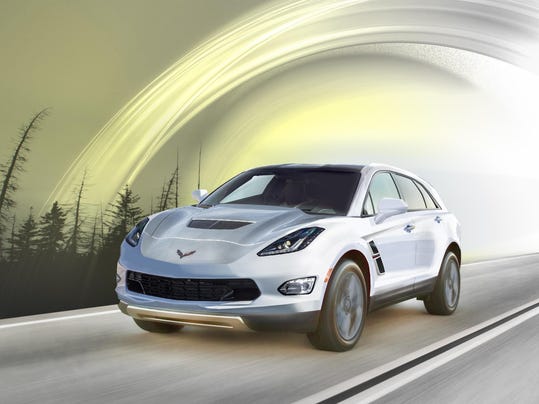
    • America’s sports carMy birthday in June dawned without a Chevrolet Corvette in front of my house. (The Corvette at the top of the page was featured at the 2007 Greater Milwaukee Auto Show. The copilot is my oldest son, Michael.) Which isn’t surprising. I have three young children, and I have a house with a one-car garage. (Then again, this would be more practical, though a blatant pluck-your-eyes-out violation of the Corvette ethos. Of course, so was this.) The reality is that I’m likely to be able to own a Corvette only if I get a visit from the Corvette Fairy, whose office is next door to the Easter Bunny. (I hope this isn’t foreshadowing: When I interviewed Dave Richter of Valley Corvette for a car enthusiast story in the late great Marketplace Magazine, he said that the most popular Corvette in most fans’ minds was a Corvette built during their days in high school. This would be a problem for me in that I graduated from high school in 1983, when no Corvette was built.) The Corvette is one of those cars whose existence may be difficult to understand within General Motors Corp. The Corvette is what is known as a “halo car,” a car that drives people into showrooms, even if…
    • Barges on fouru0026nbsp;wheelsI originally wrote this in September 2008.  At the Fox Cities Business Expo Tuesday, a Smart car was displayed at the United Way Fox Cities booth. I reported that I once owned a car into which trunk, I believe, the Smart could be placed, with the trunk lid shut. This is said car — a 1975 Chevrolet Caprice coupe (ours was dark red), whose doors are, I believe, longer than the entire Smart. The Caprice, built down Interstate 90 from us Madisonians in Janesville (a neighbor of ours who worked at the plant probably helped put it together) was the flagship of Chevy’s full-size fleet (which included the stripper Bel Air and middle-of-the-road Impala), featuring popular-for-the-time vinyl roofs, better sound insulation, an upgraded cloth interior, rear fender skirts and fancy Caprice badges. The Caprice was 18 feet 1 inch long and weighed 4,300 pounds. For comparison: The midsize Chevrolet of the ear was the Malibu, which was the same approximate size as the Caprice after its 1977 downsizing. The compact Chevrolet of the era was the Nova, which was 200 inches long — four inches longer than a current Cadillac STS. Wikipedia’s entry on the Caprice has this amusing sentence: “As fuel economy became a bigger priority among Americans…
    • Behind the wheel
    • Collecting only dust or rust
    • Coooooooooooupe!
    • Corvettes on the screen
    • The garage of misfit cars
    • 100 years (and one day) of our Chevrolets
    • They built Excitement, sort of, once in a while
    • A wagon by any otheru0026nbsp;nameFirst written in 2008. You will see more don’t-call-them-station-wagons as you drive today. Readers around my age have probably had some experience with a vehicle increasingly rare on the road — the station wagon. If you were a Boy Scout or Girl Scout, or were a member of some kind of youth athletic team, or had a large dog, or had relatives approximately your age, or had friends who needed to be transported somewhere, or had parents who occasionally had to haul (either in the back or in a trailer) more than what could be fit inside a car trunk, you (or, actually, your parents) were the target demographic for the station wagon. “Station wagons came to be like covered wagons — so much family activity happened in those cars,” said Tim Cleary, president of the American Station Wagon Owners Association, in Country Living magazine. Wagons “were used for everything from daily runs to the grocery store to long summer driving trips, and while many men and women might have wanted a fancier or sportier car, a station wagon was something they knew they needed for the family.” The “station wagon” originally was a vehicle with a covered seating area to take people between train stations…
    • Wheels on theu0026nbsp;screenBetween my former and current blogs, I wrote a lot about automobiles and TV and movies. Think of this post as killing two birds (Thunderbirds? Firebirds? Skylarks?) with one stone. Most movies and TV series view cars the same way most people view cars — as A-to-B transportation. (That’s not counting the movies or series where the car is the plot, like the haunted “Christine” or “Knight Rider” or the “Back to the Future” movies.) The philosophy here, of course, is that cars are not merely A-to-B transportation. Which disqualifies most police shows from what you’re about to read, even though I’ve watched more police video than anything else, because police cars are plain Jane vehicles. The highlight in a sense is in the beginning: The car chase in my favorite movie, “Bullitt,” featuring Steve McQueen’s 1968 Ford Mustang against the bad guys’ 1968 Dodge Charger: [youtube=http://www.youtube.com/watch?v=GMc2RdFuOxIu0026amp;fmt=18] One year before that (but I didn’t see this until we got Telemundo on cable a couple of years ago) was a movie called “Operación 67,” featuring (I kid you not) a masked professional wrestler, his unmasked sidekick, and some sort of secret agent plot. (Since I don’t know Spanish and it’s not…
    • While riding in my Cadillac …
  • Entertainments
    • Brass rocksThose who read my former blog last year at this time, or have read this blog over the past months, know that I am a big fan of the rock group Chicago. (Back when they were a rock group and not a singer of sappy ballads, that is.) Since rock music began from elements of country music, jazz and the blues, brass rock would seem a natural subgenre of rock music. A lot of ’50s musical acts had saxophone players, and some played with full orchestras … [youtube=http://www.youtube.com/watch?v=9CPS-WuUKUE] … but it wasn’t until the more-or-less simultaneous appearances of Chicago and Blood Sweat u0026amp; Tears on the musical scene (both groups formed in 1967, both had their first charting singles in 1969, and they had the same producer) that the usual guitar/bass/keyboard/drum grouping was augmented by one or more trumpets, a sax player and a trombone player. While Chicago is my favorite group (but you knew that already), the first brass rock song I remember hearing was BSu0026amp;T’s “Spinning Wheel” — not in its original form, but on “Sesame Street,” accompanied by, yes, a giant spinning wheel. [youtube=http://www.youtube.com/watch?v=qi9sLkyhhlE] [youtube=http://www.youtube.com/watch?v=OxWSOuNsN20] [youtube=http://www.youtube.com/watch?v=U9U34uPjz-g] I remember liking Chicago’s “Just You ‘n Me” when it was released as a single, and…
    • Drive and Eat au0026nbsp;RockThe first UW home football game of each season also is the opener for the University of Wisconsin Marching Band, the world’s finest college marching band. (How the UW Band has not gotten the Sudler Trophy, which is to honor the country’s premier college marching bands, is beyond my comprehension.) I know this because I am an alumnus of the UW Band. I played five years (in the last rank of the band, Rank 25, motto: “Where Men Are Tall and Run-On Is Short”), marching in 39 football games at Camp Randall Stadium, the Hubert H. Humphrey Metrodome in Minneapolis, Michigan Stadium in Ann Arbor, Memorial Stadium at the University of Illinois (worst artificial turf I had ever seen), the University of Nevada–Las Vegas’ Sam Boyd Silver Bowl, the former Dyche Stadium at Northwestern University, five high school fields and, in my one bowl game, Legion Field in Birmingham, Ala., site of the 1984 Hall of Fame Bowl. The UW Band was, without question, the most memorable experience of my college days, and one of the most meaningful experiences of my lifetime. It was the most physical experience of my lifetime, to be sure. Fifteen minutes into my first Registration…
    • Keep on rockin’ in the freeu0026nbsp;worldOne of my first ambitions in communications was to be a radio disc jockey, and to possibly reach the level of the greats I used to listen to from WLS radio in Chicago, which used to be one of the great 50,000-watt AM rock stations of the country, back when they still existed. (Those who are aficionados of that time in music and radio history enjoyed a trip to that wayback machine when WLS a Memorial Day Big 89 Rewind, excerpts of which can be found on their Web site.) My vision was to be WLS’ afternoon DJ, playing the best in rock music between 2 and 6, which meant I wouldn’t have to get up before the crack of dawn to do the morning show, yet have my nights free to do whatever glamorous things big-city DJs did. Then I learned about the realities of radio — low pay, long hours, zero job security — and though I have dabbled in radio sports, I’ve pretty much cured myself of the idea of working in radio, even if, to quote WAPL’s Len Nelson, “You come to work every day just like everybody else does, but we’re playing rock ’n’ roll songs, we’re cuttin’ up.…
    • Monday on the flight line, not Saturday in the park
    • Music to drive by
    • The rock ofu0026nbsp;WisconsinWikipedia begins its item “Music of Wisconsin” thusly: Wisconsin was settled largely by European immigrants in the late 19th century. This immigration led to the popularization of galops, schottisches, waltzes, and, especially, polkas. [youtube=http://www.youtube.com/watch?v=yl7wCczgNUc] So when I first sought to write a blog piece about rock musicians from Wisconsin, that seemed like a forlorn venture. Turned out it wasn’t, because when I first wrote about rock musicians from Wisconsin, so many of them that I hadn’t mentioned came up in the first few days that I had to write a second blog entry fixing the omissions of the first. This list is about rock music, so it will not include, for instance, Milwaukee native and Ripon College graduate Al Jarreau, who in addition to having recorded a boatload of music for the jazz and adult contemporary/easy listening fan, also recorded the theme music for the ’80s TV series “Moonlighting.” Nor will it include Milwaukee native Eric Benet, who was for a while known more for his former wife, Halle Berry, than for his music, which includes four number one singles on the Ru0026amp;B charts, “Spend My Life with You” with Tamia, “Hurricane,” “Pretty Baby” and “You’re the Only One.” Nor will it include Wisconsin’s sizable contributions to big…
    • Steve TV: All Steve, All the Time
    • “Super Steve, Man of Action!”
    • Too much TV
    • The worst music of allu0026nbsp;timeThe rock group Jefferson Airplane titled its first greatest-hits compilation “The Worst of Jefferson Airplane.” Rolling Stone magazine was not being ironic when it polled its readers to decide the 10 worst songs of the 1990s. I’m not sure I agree with all of Rolling Stone’s list, but that shouldn’t be surprising; such lists are meant for debate, after all. To determine the “worst,” songs appropriate for the “Vinyl from Hell” segment that used to be on a Madison FM rock station, requires some criteria, which does not include mere overexposure (for instance, “Macarena,” the video of which I find amusing since it looks like two bankers are singing it). Before we go on: Blog posts like this one require multimedia, so if you find a song you hate on this blog, I apologize. These are also songs that I almost never listen to because my sound system has a zero-tolerance policy — if I’m listening to the radio or a CD and I hear a song I don’t like, it’s, to quote Bad Company, gone gone gone. My blonde wife won’t be happy to read that one of her favorite ’90s songs, 4 Non Blondes’ “What’s Up,” starts the list. (However,…
    • “You have the right to remain silent …”
  • Madison
    • Blasts from the Madison media past
    • Blasts from my Madison past
    • Blasts from our Madison past
    • What’s the matter with Madison?
    • Wisconsin – Madison = ?
  • Sports
    • Athletic aesthetics, or “cardinal” vs. “Big Red”
    • Choose your own announcer
    • La Follette state 1982 (u0022It was 30 years ago todayu0022)
    • The North Dakota–Wisconsin Hockey Fight of 1982
    • Packers vs. Brewers
  • Hall of Fame
    • The case(s) against teacher unions
    • The Class of 1983
    • A hairy subject, or face the face
    • It’s worse than you think
    • It’s worse than you think, 2010–11 edition
    • My favorite interview subject of all time
    • Oh look! Rural people!
    • Prestegard for president!
    • Unions vs. the facts, or Hiding in plain sight
    • When rhetoric goes too far
Privacy & Cookies: This site uses cookies. By continuing to use this website, you agree to their use.
To find out more, including how to control cookies, see here: Cookie Policy
 

Loading Comments...
 

    • Subscribe Subscribed
      • Steve Prestegard.com: The Presteblog
      • Join 198 other subscribers
      • Already have a WordPress.com account? Log in now.
      • Steve Prestegard.com: The Presteblog
      • Subscribe Subscribed
      • Sign up
      • Log in
      • Report this content
      • View site in Reader
      • Manage subscriptions
      • Collapse this bar
    %d