First, a non-rock anniversary: Today is the 95th anniversary of the first broadcasted baseball game, on KDKA in Pittsburgh: Harold Arlen described Pittsburgh’s 8–0 win over Philadelphia.
Speaking of Philadelphia … today in 1957, ABC-TV picked up WFIL-TV’s “American Bandstand” …
… though ABC interrupted it in the middle for “The Mickey Mouse Club.”
Today in 1966, the Beatles recorded “Yellow Submarine” …
Gene Veith writes from the Lutheran perspective of a fundamentalist ex-Christian (according to himself):
Josh Harris had earlier repudiated his book I Kissed Dating Goodbye, which launched the “courtship movement” and “the purity culture” that influenced a whole generation of Christian young people. A few days ago, he announced that he is divorcing his wife of 22 years and leaving their three children. The next day he announced that he is no longer a Christian.
In his Instagram post in which he renounced his Christianity, Harris quoted Martin Luther on how the whole life of the believer should be repentance. (That is #1 of the 95 theses.) Harris, who was once a megachurch pastor, said that he has “lived in repentance for the last several years,” and that he is now repenting his former opposition to the LGBT movement and to same-sex marriage. Such all-pervasive guilt–which is not what Luther meant by repentance–has led him not to Christ but to running away from Christ. “By all the measurements that I have for defining a Christian,” he concludes, “I am not a Christian.”
Rod Dreher gives him credit for refusing to stretch the Bible and distort Christianity to support his new unbelief. Dreher brings up a recent discussion in which Harris said that it would make more sense to reject Christianity altogether than to accept the contortions of progressive theology, which try to interpret away the sexual prohibitions of the Bible.
Still, I wonder about “all the measurements that I have for defining a Christian.” Such “measurements” may have led to his problems in the first place, defining Christianity first in terms of one’s “purity” and then turning against it when he fails his new purity tests.
David French, responding to Harris’s leaving the faith, recalls his own experience as a youth pastor, working with teenagers influenced by the purity culture. French says that the problem with Harris’s approach is not that it upheld Christian sexual morality–that was the good part about it–but that it put forward a Christianity without Christ:
It worked like this — sexual sin stained young persons, even if Christ forgave them. They would walk into marriage diminished in some crucial ways. The white dress, fundamentally, was a lie. And the message wasn’t confined to sexuality. Did you drink? Did you smoke a joint? Each one of those things altered a person’s self-definition. They were no longer “pure.” They could never be “pure” again.
All too many times, I saw the despair. A young person would come to me and say, “I screwed up.” They would really mean, “I’m ruined.” Their storybook dreams were dead. A 17-year-old with (God willing) 70 years of life ahead of him would approach me carrying the awful burden of thinking that he had defined his life forever. He was no longer — and never would be — the person he wanted to be.
Sometimes the despair would trigger wild rebellion. If they’re “ruined,” then why should they care about obedience? There are two states of being — virgin or not, teetotaler or not — and if you’re not, then you might as well indulge yourself. Other times the despair would trigger constant, nagging guilt and regret. A girl would walk down the aisle to marry a man who loved God and loved her, and she’d feel a shadow on her soul.
In point of fact, the gospel message rests first on bad news, then on indescribably good news. The bad news is simple: You were never “pure.” It’s not as if sex or drink or drugs represent the demarcation line between righteous and unrighteous. They are not and were never the “special” sins that created particularly acute separation from God. Yes, they could have profound earthly consequences, but they did not create unique spiritual separation.
The indescribably good news is that from the moment of the confession of faith, believers are not defined by their sin. They’re not defined even by their own meager virtues. They’re defined by Christ. Moreover, they find that “for those who love God, all things work together for good, for those who are called according to his purpose.” This does not by any stretch mean that past sin wasn’t sin — one of my best friends is an eleven-years-sober addict who did dreadful things during his worst days — but it does mean that their past now gives them a unique ability to reach suffering people. Their terrible stories and past pain have been redeemed, transformed into instruments of grace and mercy.
Joy Pullman, from a Lutheran perspective, shows how legalism (the notion that Christianity is all about what I have to do) leads naturally first to antinomianism (the rejection of morality altogether, since I can’t achieve it) and then to unbelief (giving up on the whole impossible project). This is a theological error, she says, that pervades contemporary evangelicalism:
Is there going to be a public reckoning with evangelicalism’s major heresies that fuel cycles of this kind of legalistic faddishness? As Harris’s experience — and the history of American Christianity (indeed, of the world) — shows, legalism leads inevitably to antinomianism. Antinomianism is the fancy theology term for rebelling against God’s law after observing how hard it is to keep it. It’s how Puritans turn into Social Gospelers. Thus, as is human nature, people ping-pong between opposite sides of the gutter rather than taking a straight course between them. But Christianity delineates the straight course, not the gutters.
The answer to legalism isn’t antinomianism. The answer to finding you can’t keep all God’s laws isn’t to say thus God must not actually have any laws. It isn’t to say “I believed that God has careful designs for sex and marriage, but I and lots of people can’t stay in line with them so I’ll just pretend God isn’t real or maybe none of his rules are.” It’s to receive the truth that God perfectly kept all his laws for you, which prompts such great joy that you actually begin to want to do what is right — which the laws defined in the first place. It’s not law or gospel, legalism or license. It’s both, which is liberty.
How many other tragedies, scandals, and apostasies among contemporary Christians are also due to this kind of theological confusion? Reformed theologian Carl Trueman relates what happened with Harris to the meltdown of other leaders of the “Young, Restless, and Reformed” movement in Calvinist megachurches, of which Harris was a prominent figure (who took over a ministry vacated over a sex scandal). Could such legalism and the consequent antinomianism and unbelief be a factor in the Roman Catholic sex scandals?
We Lutherans are not exempt from scandals like those, and antinomianism is a besetting heresy of ours. But at least we are fixated on the distinction between the Law and the Gospel; how Christianity is not about our works but the work of Christ for us; that we are all “sinful and unclean” but that Christ redeems us “with His holy, precious blood and with His innocent suffering and death, that I may be His own and live under Him in His kingdom” (Small Catechism).
At a time when many evangelical theologians are running away from the doctrines of the Atonement and justification by grace through faith in Christ, this sad business is a reminder of the continuing necessity of a strong understanding of the Gospel. Lutherans can help convey that to the rest of Christendom. Meanwhile, as Joy Pullman concludes, “If you go to church, don’t go to one that consistently gets this basic and important point of theology wrong.”
Some Christians, and some non-Christians, try to criticize the church by telling the Gospel story of the woman about to be stoned, and Jesus Christ’s stepping in and suggesting that he who had no sin should start firing away. The biggest flaw in this is that the storyteller seems to omit Christ’s next five words: “Go and sin no more.”
However, no reading of the Bible I have ever done suggests that Christ expects us to be perfectly sinless. That is impossible, because we are human beings, and as the writer points out we have never been pure. I believe Christ does expect Christians to lead, or at least try to lead, a better life, but we do not lose Christ’s love when we fail to do that.
Here are two sort-of secular examples to prove my religious point. Baseball pitcher Orel Hershiser, who would sing hymns on the mound when he was in a stressful situation, said that he went on the mound trying to give up no hits. When he gave up a hit, he then resolved to give up no hits after that. And when he gave up another hit, he resolved to give up no hits after that. Hershiser never threw a no-hitter in his career, but he was one of the better pitchers in baseball in his day. That seems like a more Christian attitude (if it’s sincere) than the idea that Christians must lead perfect, sinless lives, because we can’t.
One of my two favorite phrases from Vince Lombardi is “If we chase perfection, we can catch excellence.” Lombardi did go to daily Mass, so maybe that’s where it came from. Put the two together and it seems to me that the Christian responsibility includes loving your neighbor (and as a former priest of mine put it, sin is against God, your neighbor and yourself), but when we fail to do that (and at some point we will), try again.
Today in 1957, the Everly Brothers performed on CBS-TV’s Ed Sullivan Shew …
… performing a song about a couple who falls asleep on a date, making others assume that they spent the night together when they didn’t. The song was banned in some markets.
Today in 1958, Billboard magazine combined its five charts measuring record sales, jukebox plays and radio airplay to the Hot 100. And the first Hot 100 number one was …
Today in 1967, a 16-year-old girl stowed away on the Monkees’ flight from Minneapolis to St. Louis. The girl’s father accused the Monkees of transporting a minor across state lines, presumably for immoral purposes.
Today in 1970, Beach Boy Dennis Wilson married his second wife.
Possibly connected: Jim Morrison of the Doors was arrested for public drunkenness after being found passed out on the front steps of a house.
Today in 1963, two years and one day after the Beatles started as the house band for the Cavern Club in Liverpool, the Beatles performed there for the last time.
Three years later, the South African government banned Beatles records due to John Lennon’s infamous “bigger than Jesus” comment.
Five years later and one year removed from the Beatles, Paul McCartney formed Wings.
This weekend Chevrolet is bringing a 2020 Corvette to Road America in Elkhart Lake.
I’m not going. I have other plans. Although I’ve always enjoyed Road America since the first time I went there in the 1980s (where there are photos of me appearing to break into a Ferrari and I got one of the worst sunburns of my life), I prefer the July vintage event, during one of which I found this:
No, I didn’t buy it.
Chevrolet also released its dealer tour schedule. The C8 is going to make one appearance in Wisconsin, on Sept. 30. (Which, if you consult your 2019 calendar, is on a Monday.) It will make two in Illinois, and one in Iowa.
The color I would like …
… isn’t offered, of course.
Readers know that I have been skeptical about this Corvette, largely because of its lack of manual transmission, which is a basic piece of any sports car. The rear/mid-engine placement of the engine is an application of technology from a company with historical difficulty in bringing new tech to the public that works as intended all the time.
It has been reported repeatedly that Zora Arkus-Duntov, stepfather of the Corvette (he didn’t create the Corvette, Harley Earl did, but Duntov wrote a detailed letter to GM chronicling everything wrong with the first Corvette, and so GM hired him), thought the Corvette should be mid-engine. (Which the Corvette actually has been for several years. A mid-engine car has its engine either behind the front wheels or ahead of the back wheels. Duntov sought a rear/mid-engine instead of a front/mid-engine.)
Well, with all due respect to Duntov, and not being an automotive engineer myself, I wonder how many rear/mid-engine cars he actually used on a daily basis, or got a dealer to fix, or tried to fix without having actual automotive engineering skills. Those people, not car engineers, are the owners of Corvettes.
Ate Up With Motor describes the C2 and C3 conflict between styling and engineering:
The design of the Sting Ray had been the source of many clashes between Bill Mitchell and Zora Arkus-Duntov. Duntov was contemptuous of the car’s nonfunctional styling gimmicks and poor aerodynamics; the C2 had low drag, but an alarming amount of high-speed lift. Duntov was only an engineer, however, while Mitchell was a vice president of one of GM’s most powerful departments. Although Mitchell never enjoyed the almost unquestionable clout of his predecessor, who had had the patronage of GM chairman Alfred P. Sloan, GM’s senior management was well aware that Mitchell’s work was responsible for a great deal of GM’s market domination. In a clash between Duntov and Mitchell, the victor was inevitable.
Duntov wanted the Corvette Sting Ray’s replacement, which originally was slated to appear for the 1967 model year, to be smaller, leaner, and more aerodynamic, ideally with a rear- or mid-mounted engine. Mitchell, for his part, loved to make cars look aerodynamic, but he wasn’t terribly concerned if they actually were or not.
Like Harley Earl before him, Mitchell was a believer in the formula of longer-lower-wider, and he felt sports cars should have long hoods. He was no fan of the rear-engine layout that Duntov wanted, which he thought would be ugly. Mitchell envisioned the third-generation Corvette more like the XP-755 show car, known as Mako Shark.
Contemporary automotive journalists sneered at the many gimmicks of the Mako Shark and its successor, the 1965 Mako Shark II, both of which were the work of stylist Larry Shinoda, designer of the Sting Ray. Duntov didn’t care much for it either, but public reaction was favorable and in short order, the Mako Shark was approved as the basis of the third-generation C3 Corvette.
As for Duntov’s desired mechanical changes, GM senior management had no stomach for an expensive revamp of the Sting Ray platform. With Corvette sales on the upswing, there seemed to be no reason to mess with success.
A repair guy figured out a problem about the engine’s location:
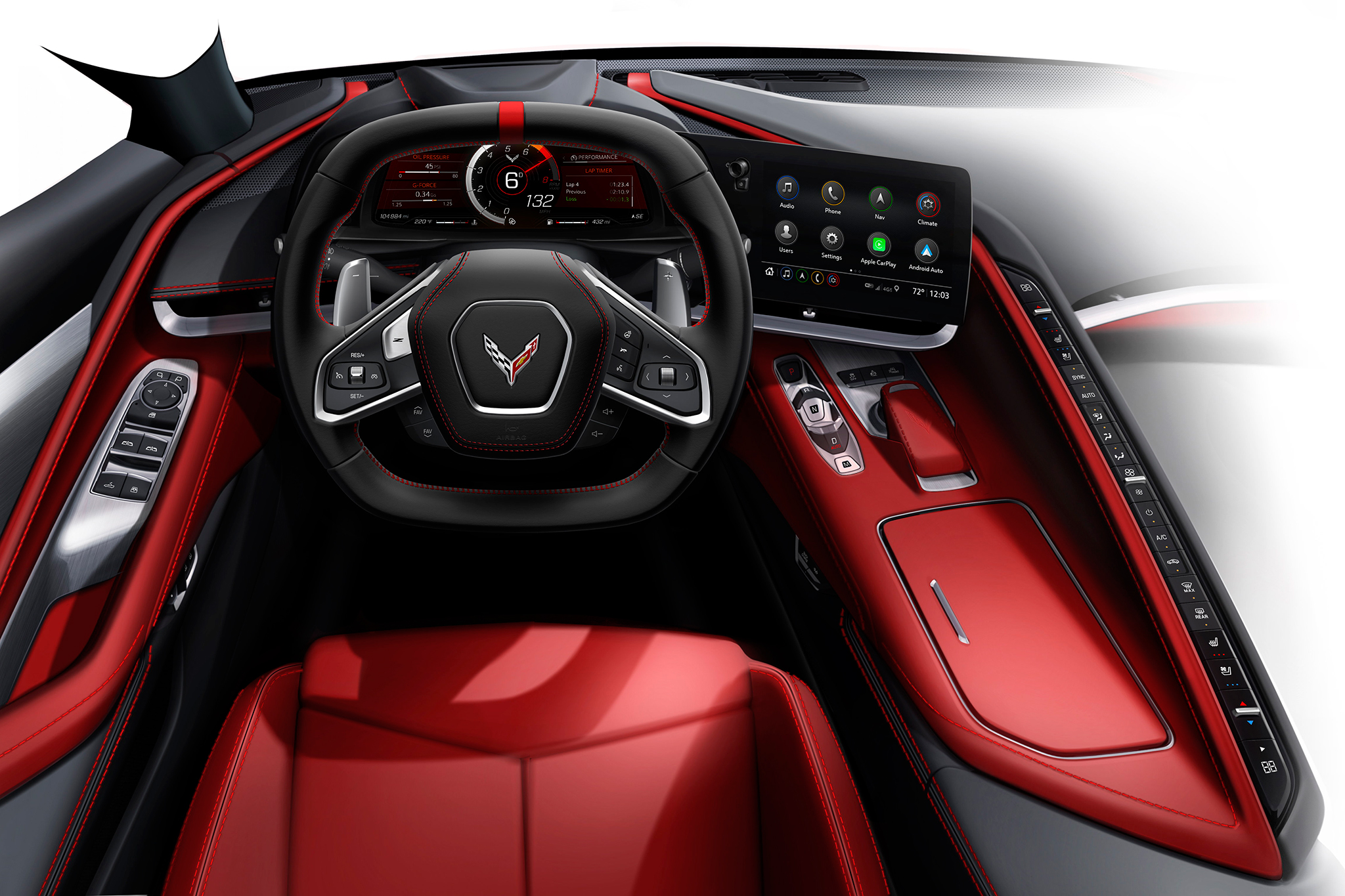
That silly line of buttons down the center console. In person, it’s not nearly as awkward or intrusive as we thought from the photos—it actually looks kind of slick. That is, until you look more closely at the plasticky, cheap-looking buttons that fill it: They’re straight from the corporate parts bin. We understand why, but we can’t say we like it.
No manual transmission option. Yes, we know hardly anyone would buy a manual version. Ain’t care.
The rear end in general. We’re no purists (no specific number of taillamps, or their shape, is essential, for example) but we know a hot mess when we see it. Our design editor feels the same way.
The forthcoming bench racing.The Corvette’s price-to-performance ratio is going to spawn a whole generation’s worth of “just get a Corvette instead of X” posts on every forum we read, and likewise letters to the Automobile editors.
The wait. We still have months and months before we drive it, and before it goes on sale.
Best Things About the C8 Corvette
It’s less than $60,000! That’s Supra money for what is likely to be McLaren 570S-like performance. Even if “less than” means “$59,999” and comes before destination charges, it’s still something special.
Zero to 60 mph takes less than three seconds with the Z51 package and performance exhaust.That’s the best kind of crazy. Did we mention the price for this level of performance?
The engine and transaxle are super, super low in the car. This will certainly aid in handling.
The fit and finish. While the cars at the unveil we attended were hand-built prototypes, the interior materials’ quality and fit and finish are definitely intended to answer 30 or more years of criticism of the Corvette’s cabin. It’s a shockingly nice place to be—as long as you don’t look too closely at those buttons. Also, it’s available with brown paint.
The small, square steering wheel looks like it will be a joy to use. Plus, it leaves enough room for drivers more than six feet tall and of a certain leg diameter to move around as we attempt to tame Chevy’s mid-engine beast.
I’m not sure I agree with at least three of those five points, two of which are contradictory. The chance someone will drive off with a C8 for less than $60,000 is zero, merely due to GM’s destination and other charges and dealer markups, which will be substantial. That doesn’t include one single option — such as the Z51 option, without which there is no claimed 0–60 time, which itself is a Chevy claim unproven by anyone not employed by GM. So you can have a sub-$60,000 Corvette (except you can’t), or you can go 0–60 in 2.8 seconds (though that remains to be seen), but not both.
As for the steering wheels worked better in a non-round shape, all cars would have non-round steering wheels. The bottom of the steering wheel was squared off on C6s and C7s, and though I don’t like the look, that might be said to have a function. (Except that I have driven legs-only with round steering wheels for years without mishap.)
I was working hard in 1955 on a C2 planned for 1958, but its advanced rear-transaxle chassis finally achieved production only with the 1997 C5. That layout did reach production in 1977—outside General Motors—with the Porsche 928, created in part by Anatole Lapine, who’d worked with me on the stillborn ’50s C2. I know little about behind-the-scenes projects that might have occurred during the 40 years between my departure from GM in 1957 and the arrival of the C5 but I suspect that there were a lot of exciting and highly feasible—but not fundable—projects. I do know that Zora Arkus-Duntov advocated for mid-engine Corvettes at least 60 years ago, and that he built a mid-engine CERV research single-seater in the Fifties with its small block V-8 behind the driver. So this car has come to market extremely late.
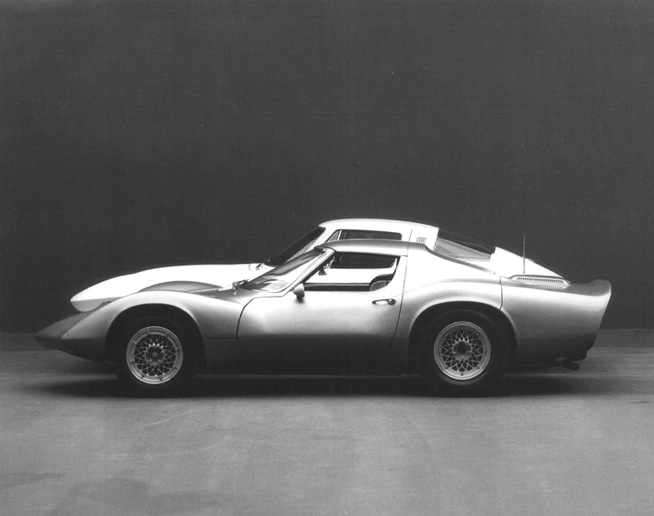
Some 1970s mid-engine GM concept cars were built to show off the Wankel rotary engines GM might have built, but they were not specifically Corvette prototypes in name. Which is too bad, because they were better-looking than this actual C8. I am deeply sorry to be severely disappointed by the styling of the C8. I hoped for something really new and exciting, not a boringly generic supercar, mostly indistinguishable from the many and varied unimaginative devices that show up regularly at the Geneva auto show. Its styling is confused—and downright messy in fact. I count a dozen horizontal lines, not to mention four convoluted taillights; four nice rectangular exhaust tips; plus varied slots, vents, grilles, indented surfaces, and wing elements . . . just across the rear fascia. The front is no better, and the profile with its short, stumpy nose is equally surprising. Maybe it’s all meant to look purposeful, but to me it seems just a careless, cluttered graphic composition, not worthy of Corvette history and what we expect of this technically brilliant descendant of the Jaguar-inspired elegant original C1 from 1953.
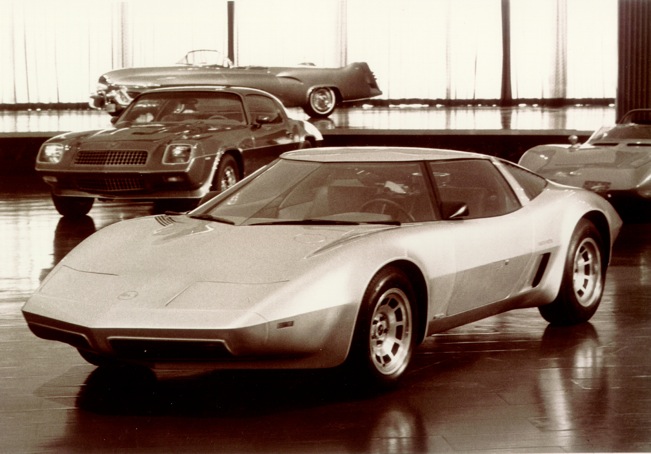
I have no doubt that this will be a very good car, with truly world class performance coupled with American-style daily usefulness and (perhaps) easy servicing—dry-sump engines are not typical dealer shop fare. But I’d have liked to see some traces of the Astrovette or the four-rotor mid-engine concept from the Bill Mitchell era.
That would be one of these:
XP-819 (shown in front of a C2) was a rear-engine prototype, with the engine behind the rear wheels, instead of in front, as with the C8. The past several Corvettes have been technically front/mid-engine, with the engine in front but behind the front wheels, for better weight distribution.XP-880, also known as the Astro II.XP-882.The AeroVette started with a four-rotor Wankel rotary engine, then went to a 400 V-8, both mounted behind the driver’s seat. Those are hinged gullwing doors, an idea whose time never came at GM.The red car is the Corvette Indy, which begat CERV III.
Compare and contrast previous Corvettes to the C8 in this magnificent illustration by Paco Ibarra:
The problem with nearly every rear/mid-engine car I have ever seen is there is usually more car behind the B-pillar (behind the door) than in front of the A-pillar (ahead of the door), which makes it look imbalanced in the wrong direction. As it is, nothing about this C8 screams Corvette to me; it looks like a teenage kid’s dream of a midengine car that could be made by anybody.
Another point made elsewhere is that GM is coming out with an exotic car supposed to make people forget about Ferraris and Porsches and Lamborghinis (oh my!), and yet it has the same engine the C7 has — a naturally aspirated overhead two-valve V-8. It is a very good overhead-valve V-8, and it wouldn’t stop me from buying a Corvette, but it seems illogical to feel the need to make it mid-engine with an exotic dual-clutch transmission without, say, a four-valve overhead-cam V-8 similar to the “King of the Road” C4. Anyone snobbish enough to turn up his nose over a front-engine Corvette isn’t going to be more convinced by a mid-20th century engine design that lacks the exotica of whatever Ferrari is sticking under its hoods now. (Or an exotic transmission installed in part because of the laziness or inabiliity of potential buyers to shift and use a clutch.)
You might say that the C7 engine is terrific, and it is. You might also point out my previous point about unproven GM tech. But the supposed point here is to make the Corvette appeal to those who wouldn’t buy Corvettes previously because they’re not supercarish enough (independent of the most important consideration, performance vs. price), and on that important point it fails because it’s not a Chevrolet, not a Corvette, and not a car with a 21st-century engine made of unobtainium. And in the process, GM alienated all the Corvette fans who wanted a better iteration of the previous formula (front-mid-engine, rear-drive, available manual transmission) that is one of the few profitable cars GM makes.
The worst thing about the C8 actually has nothing to do with the car, and has everything to do with people’s reactions to the car. One expects GM to shift the hype machine into overdrive. But one would hope adults would be at least somewhat resistant to the hype machine, particularly journalists. The aforementioned writing is all I could find from the auto enthusiast publications remotely critical of the C8.
In 1968 Car & Driver tested the first C3 Corvette and pronounced it undrivable because it was put together so poorly. Even after GM figured out how to put it together correctly, auto magazines pointed out correctly that the C3 was simultaneously a bigger car with less passenger and luggage space. Road & Track was particularly critical about the Corvette for decades, perhaps concluding it should have been more like a Jaguar E-Type (while ignoring British cars’ hideous quality reputations). Dissing the home team product wasn’t necessarily easy to do given GM’s advertising dollars. Now apparently they’re all sellouts.
The bigger issue, though, is that reaction to this new Corvette mirrors everything else in the sewer of our public discourse, on politics, sports teams, music preferences, what you watch (or don’t) on TV including iterations of “Star Trek,” food choices and everywhere else. We are supposed to believe, according to its uncritical fanboys, that the C8 is better than sex, chocolate chip cookies, sunny summer days and puppies, and how dare anyone express a contrary opinion.
I have read accusations that those who are not unalloyed fans of the C8 are Neanderthals stuck in the last century who can’t afford to buy one anyway, because insulting someone for their different opinion is so effective in changing opinions. (Not.) Someone actually bothered to create a Corvette owner stereotype that skipped past the usual midlife crisis trope to specifically include not gold chains and bad combovers, but jean shorts and white New Balance shoes.
No, this is not me. I own neither white New Balances nor “jorts” nor this Corvette.This is me, but sadly not my Corvette either.This is also me, but also not my Corvette.
Certainly, except possibly for the C2, every generation has been controversial for those who believe no Corvette but their favorite is really a Corvette. The C3 was way out there in appearance compared with the C2. The C4 had two horrible-looking instrument panels and was hard to get into and out of. The C5 looked blah. The C6 dumped the hidden headlights. The C7 got rid of a bunch of gauges and looked like a rearward-stretched C6.
For at least the last three generations (plus the King of the Hill C4) the Corvette has, however, been the best performance bargain on the planet, regardless of whether front-engine and rear-drive is the apotheosis of vehicular technology. GM, which has proven less than competent at big technological risks, has taken another one by selling its halo car — which has made money for GM for decades, unlike most of its current cars — with technology GM hasn’t used before and inadequately tested before it hits the market next year (there is no substitute for the real world) in a quest for buyers who don’t own Corvettes because they lack, in their misguided opinions, panache.
GM’s claim that they’re almost sold out needs a reminder that GM has not sold a single C8 Corvette. Not one. (I am highly skeptical of all the online claims of people ordering them. I could state that I own one of every generation Corvette, and no one reading this could prove otherwise.) And until they’re actually on the road, none of GM’s claims about the Corvette have proof.
GM has traditionally been one of the poorer run megacorporations for decades. (The conditions that resulted in the GM bailout far predated the Great Recession.) So maybe I shouldn’t suggest that GM could have kept building the C7, or updated it, while also selling the C8 as the Corvette Zora or something like that. The C7 makes money for GM. There is no guarantee the C8 will, and if it goes away, so will Corvette.
The U.S. national women’s soccer team managed to alienate people who should have been fans by stridently dissing conservatives on the way to their Women’s World Cup win.
One year from now, the team will compete in the 2020 Olympics in Tokyo, assuming the team doesn’t do what, if they were serious about their pay situation, it should have done — strike.
Two pieces of news cast new light on the finances of international soccer and the U.S. women’s team. First, from Brad Polumbo:
The United States has the best women’s soccer team in the world, as evidenced by our recent Women’s World Cup win. But we’re told that the women’s team still faces blatant sexism and a pay gap compared to our men’s team.
That’s what woke feminists like USWNT Captain Megan Rapinoe keep telling us. In fact, the women’s team has even filed a lawsuit against U.S. Soccer alleging gender-based pay discrimination. I’ve already made the argument against equal pay and explained why Rapinoe is far from a good role model, but a new open letter and fact sheet released by U.S. Soccer completely refutes the equal pay crusaders’ argument.
My letter and fact sheet to our soccer community about the @USWNT lawsuit. We’re committed to doing right by our women’s players, and I’m optimistic we can get this done. https://t.co/5bzV4KRFdm (1/2) pic.twitter.com/GYYnPH1Z7c
First, it reveals that while U.S. Soccer is the target of the USWNT’s equal pay lawsuit, they’re not even the ones paying the men and women unequally. According to U.S. Soccer President Carlos Cordeiro, they actually pay the women more than the men. He writes:
Over the past decade, U.S. Soccer has paid our Women’s National Team more than our Men’s National Team. From 2010 through 2018, U.S. Soccer paid our women $34.1 million in salaries and game bonuses and we paid our men $26.4 million—not counting the significant additional value of various benefits that our women’s players receive but which our men do not.
How’s that for sexist? Cordeiro explains that this pay gap — in favor of the women — is due to different pay structures the men and women have negotiated, as the women’s team is given an annual salary and benefits while the men are paid more sporadically, proportional to participation. This disparity is necessary because the men have more professional soccer opportunities outside of international competition, such as the leagues in Europe and Major League Soccer. National soccer is a side gig for them, not a full-time job.
Now, it is true that the men’s World Cup offers significantly higher prize money, and that when prize money is counted, the men received $41 million from 2010 to 2018 and the women received just $39.7 million despite vastly outperforming the men relative to their own competition. And more generally, the winning team in the last men’s World Cup received $38 million in prize money, while the winners of this year’s Women’s World Cup get a relatively modest $4 million.
But this is up to the International Federation of Association Football, not U.S. Soccer, which means the “equal pay” lawsuit hasn’t even been filed against the right entity. Moreover, the differential in prize money offered by FIFA is explained by differences in revenue generation and viewership, not sexism.
Almost half the world watched the men’s 2018 World Cup, with nearly 3.6 billion total viewers tuning in to watch some part of the tournament. The final match alone reached an audience of over 1.1 billion people. Subsequently, the tournament’s sponsor, FIFA, brought in a profit of over $6 billion.
The women’s team garners significant but substantially lower viewership. We don’t have data for the 2019 tournament, but during the women’s last World Cup in 2015, 764 million viewers tuned in for some portion of the tournament. This is quite good, but it still pales in comparison to the men’s tournament’s audience.Unsurprisingly, Cordeiro’s letter explains, “We look forward to the day when Americans choose to spend their time and money equally between women’s and men’s soccer.” But as the U.S. Soccer fact sheet makes clear, today is not that day, and the pay structures reflect that reality.
U.S. Soccer Federation president Carlos Cordeiro hit back hard at the women’s national team over equal pay.
With the World Cup in the news after we won the whole thing, the issue of pay between the men’s and women’s national teams has once again been a hot topic for debate. A lawsuit is currently underway over the pay disparities between the two teams. The issue at the core is simple. The women are more successful, but women’s soccer doesn’t generate the same kind of cash the men do.
Now, Cordeiro is claiming they actually lose money.
According to TMZ Sports, Cordeiro released a statement on Monday saying the following in part:
From 2009 through 2019 — a timeframe that includes two Women’s World Cup championships — the Women’s National Team has earned gross revenue of $101.3 million over 238 games, for an average of $425,446 per game, and the Men’s National Team has earned gross revenue of $185.7 million over 191 games, for an average of $972,147 per game. More specifically, WNT games have generated a net profit (ticket revenues minus event expenses) in only two years (2016 and 2017). Across the entire 11-year period, WNT games generated a net loss of $27.5 million.
U.S. Women’s National Team spokesperson Molly Levinson responded in part by calling the numbers “false” and the statement from Cordeiro a “ruse.” She also said the women’s team wants to “be paid equally for equal performance.”
If the women’s national team has actually lost money since 2009, then I don’t even know why we’re having this debate. Sports leagues and teams aren’t paid simply by how much they win.
They’re paid in large part by revenue generated. It’s why the worst NBA team still makes much more money than the best team in the WNBA.
It’s called economics, and it’s really not that difficult to figure out.
If the numbers are false, then that’s a different story. Luckily, that seems like that something that would be very easy to fact check.
I have no idea how this lawsuit will end, but I find there to be next to no outcome where it turns out the women generate more revenue than the men historically.
The women should try to get as much money as possible, but they’re only ever going to get cash as it’s tied to revenue.
Anybody who doesn’t understand that fact just doesn’t understand sports.
Or business. Of course, liberals have a well-known hatred of markets.
My position on cars and driving has always been that driving represents transportation freedom — the ability to go where you want to go when you want to go.
That cannot be said about any other form of transportation, including airplanes, trains and mass transit.
There is another thing about driving, though, noted in The Shop:
Countless millions of Americans find relief from their over-connected, stressed-out lives in the simple pleasures of yoga and meditation.
Then there are car lovers.
“What I remember most are those precious times I fired up my car with no particular place to go and no precise timetable, owing my punctuality to no one and my presence only to myself,” auto journalist Jack Baruth writes in a new book on the relationship many Americans feel between the cars they love and their peace of mind.
The book, titled Never Stop Driving: A Better Life Behind the Wheel, features essays and musings on the driving life by some of the nation’s leading automotive journalists and an array of celebrity car fans, including Jay Leno, Mario Andretti, Patrick Dempsey and others.
Why this book now?
“The book is essentially a love letter to the art and act of driving,” said Larry Webster, the editor and lead author of the book. “With driverless cars on the horizon, it’s worth celebrating the fact that, for many people, there are enormous benefits to simply taking a drive in the country or getting dirty under the hood.”
Packed with photos that complement the writing, Never Stop Driving: A Better Life Behind the Wheel is available through The Shop by Hagerty and via retailers nationwide. All proceeds from books purchased through The Shop by Hagerty will fund driver’s education scholarships for young drivers through Hagerty’s License to the Future initiative.
The company’s stated ongoing mission is to Save Driving in the coming age of autonomy and make sure that people who choose to continue to drive themselves always have a share of the road.
“People who love cars aren’t against driverless cars—far from it. They’re going to do a lot of good for society,” Webster said. “But we do want to protect something that also means a lot, and that’s driving yourself when you want to. I hope we never lose that. That’s what the Save Driving campaign is all about.”
Back to school shoppers looking to take advantage of a tax-free holiday this year will have to find another way to save on school supplies.
With summer vacation finally coming to an end, students like Bella Callahan are already looking for new school supplies.
“It bittersweet going back to school,” she said. “I’m going to be a senior so I need notebooks, folders, stuff for my locker, pens, and pencil. Normally it cost about $100 for all of our stuff.”
Since back to school shopping can get pretty expensive, Wisconsin held its first tax free holiday for shoppers in early August last year. During that time, shoppers could buy select clothing, technology, and other supplies without paying the 5% sales tax.
“I think they should have the tax free weekend because it helps a lot of parents. Especially when they only have one income and grandparents have to help,” said Callahan.
The tax-free weekend was also beneficial for a lot of stores in the state.
“It helps all the retailers when we have the tax free because they would buy the bigger stuff. If you had a students going back to college they would buy things like furniture, desks and that kind of stuff,” said Meijer Store Manager Don Mettler.
But Democratic Gov. Tony Evers has confirmed that the state will no longer participate in the event this year. He said it was a one-time deal enacted under the former Republican Gov. Scott Walker.
“I think parents are going to be purchasing school supplies whether they have an incentive or not. I just don’t think the incentive actually worked,” said Evers.
Without the tax-free weekend, some stores are already looking at other ways to provide financial relief to shoppers
“One of the things we are doing at Meijer to offset that is giving a 15% off to all teachers. So if they come in and show their ID at the service they can get that coupon, and us it all the way till the 28th of September,” said Mettler.
Sixteen states will hold a sales tax holiday this year, which is down from a peak of 19 in 2010.
“The incentive actually worked”? Parents bought school supplies and saved on sales taxes. So it did work to save parents money. But Marie Antoinette Evers is opposed to anything that would slow down the siphon of money from state taxpayers’ pockets to himself.
It should be noted that the Tax Foundation disapproves of sales tax holidays. (Which I am sure had absolutely no effect on Evers’ stupid attitude.) To which Milton Friedman would say …
Parents who voted for Evers last November: Congratulations. Enjoy losing money this year. As for the rest of us …
… maybe you should take a trip to Iowa this weekend.
The three-day event will focus on fighting climate change — though it’s unknown how much time the attendees will spend discussing their own effect on the environment, such as the scores of private jets they arrived in and the mega yachts many have been staying on.
“Everything is about global warming, that is the major topic this year,” a source told The Post.
Their three-day summer camp will cost the tech giant some $20 million, sources said.
Many of the guests, including Obama and DiCaprio — who has his own climate change foundation — have described global warming as the biggest threat to future generations.
The Post crunched the numbers and found that 114 first class seats from Los Angeles to Palermo, Italy, where Camp guests landed, would spew an estimated 784,000 kilograms of CO2 into the air.
“Google Camp is meant to be a place where influential people get together to discuss how to make the world better,” one regular attendee told The Post.
“There will likely be discussions about online privacy, politics, human rights, and of course, the environment, which makes it highly ironic that this event requires 114 private jets to happen,” they said.
Attendees pay for their own travel to Sicily, but then Google foots the bill for everything at the opulent Verdura Resort, which reportedly features two golf courses and where rooms start at $903 a night.
Sources tell The Post that guests were personally invited by Google founders Larry Page and Sergey Brin.
Billionaire Dreamworks founder David Geffen, meanwhile, gave Perry and Bloom a ride on his $400 million yacht, Rising Sun.
Also on hand for the environmental gabfest was the megayacht Andromeda, a 351-foot behemoth owned by a New Zealand billionaire and which features its own helipad.
Many of the attendees were seen in photos tooling around the island in high-speed sports vehicles, including Perry, who has made videos for UNICEF about climate change and was seen in a Maserati SUV that gets about 15 mpg city.
Stella McCartney, Bradley Cooper, Nick Jonas and Priyanka Chopra plus Gayle King will also be on hand. Even Mark Zuckerberg of Google’s rival, Facebook, was invited, according to local reports.
Guests dine among ancient temples and are treated to performances by the likes of Sting, Elton John and Coldplay’s Chris Martin, before retiring to their suites at the Verdura Resort.
The tech company goes to extreme measures to keep its camp a secret — all hotel staff and security have to sign non-disclosure agreements, a source told the Daily Mail in 2018.
Glenn Harlan Reynolds said he would believe that global climate change is a crisis when people in charge start acting like it’s a crisis. So it’s not.







 Steve Prestegard.com: The Presteblog