CNN agreed Tuesday to settle a lawsuit brought by Covington Catholic High School student Nicholas Sandmann.
Sandmann sought $275 million from CNN over their coverage of the confrontation he and his classmates had with an elderly Native American man while visiting Washington, D.C. on a school trip in January of last year. The amount of the settlement was not made public during a hearing at the federal courthouse in Covington on Tuesday, according to a local Fox affiliate.
“CNN brought down the full force of its corporate power, influence, and wealth on Nicholas by falsely attacking, vilifying, and bullying him despite the fact that he was a minor child,” reads the suit, which was filed in March.
Sandmann and his family still have lawsuits pending against NBC Universal and the Washington Post over their coverage of the incident. The Sandmann family sought a combined $800 million in damages from CNN, the Post, and NBC Universal.
“This case will be tried not one minute earlier or later than when it is ready,” Sandmann’s attorney Lin Wood said of the remaining lawsuits.
Numerous national media outlets painted Sandmann and his classmates as menacing — and in some cases, racist — after an edited video emerged of Sandmann smiling inches away from the face of Nathan Phillips, an elderly Native American man, while attending the March for Life on the National Mall. A more complete video of the encounter, which emerged later, showed that Phillips had approached the Covington Students and began drumming in their faces, prompting them to respond with school chants.
The lawsuit filed by Sandmann’s attorneys in the Eastern District of Kentucky identified 53 statements included in CNN’s coverage of the incident as defamatory. One such statement, included in a CNN opinion piece, accused the students of acting with “racist disrespect” towards Phillips. Meanwhile, Bakari Sellers, a CNN contributor, publicly mused about assaulting the 16-year-old Sandmann while HBO host Bill Maher called him a “little prick.”
CNN filed a motion to dismiss the suit in May on the grounds that accusations of racism are not actionable in defamation cases because the allegation can’t be proven true or false. They similarly argued they could not be held liable for uncorroborated claims that Sandmann and his classmates chanted “build the wall” during the encounter.
It is not defamatory to say the Covington students “expressed support for the President or that he echoed a signature slogan of a major political party,” CNN’s motion to dismiss states.
An investigation conducted by an outside firm contracted by the Diocese of Covington found “no evidence that the students performed a ‘Build the wall’ chant” and further found that Phillips’s account of the incident “contain some inconsistencies” that could not be explored because investigators were unable to reach him.
Phillips initially claimed that the boys approached him but later admitted that he walked into their group after a video emerged debunking his initial claim. According to his second account, Phillips was attempting to defuse a confrontation between the students and a group of Black Hebrew Israelites, who can be heard on video shouting racial and homophobic slurs at the boys.
Roger J. Foys, the bishop of Covington, celebrated the report as a vindication of the students.
“Our students were placed in a situation that was at once bizarre and even threatening,” he said in a statement. “Their reaction to the situation was, given the circumstances, expected and one might even say laudatory.”
The settlement most likely won’t include a publicly reported monetary amount (because legally civil lawsuits settlements are a contract between the winner and the loser), nor will, I’m sure, it include an admission of guilt, fault or wrongdoing on CNN’s part. But the fact a settlement exists and is being reported indicates that the monetary amount is more than zero and that either CNN decided it was going to lose, or settled for some amount to make the lawsuit go away.
Maybe, though, it will give national media a reason to rethink, or think over more closely, its news coverage if they start not just getting sued, but losing, and regardless of what mealymouthed lawyers want you to believe, CNN obviously lost. The media is neither perfect nor infallible.
Did you know that CNN has a reporter on the “disinformation” beat?
I’ll skip the cheap joke about his never having to leave the office, and note that the network is now grousing about the Christian conservative satire site the Babylon Bee, which has earned the ire of a number of liberals for making jokes at their expense.
The story drawing CNN’s outrage — “Democrats Call For Flags To Be Flown At Half-Mast To Grieve Death Of Soleimani” — is good satire. It slightly exaggerates the reaction many on the left have had to the killing of the Iranian mass murderer. Anyone who read the Washington Post’s headline calling Soleimani a “most revered military leader,” watched ABC’s Martha Raddatz offering adulatory treatment of the terrorist from Iran, or listened to Elizabeth Warren struggle to call him a murderer after her initial statement is in on the joke.
That some people believe the Babylon Bee piece is also a sign that it is good satire. How many Americans, after all, still believe that Sarah Palin, rather than Tina Fey, said, “I can see Russia from my house?” Satire relies on a level of plausibility. If the only brand of political humor permitted is vapid enough for even the dumbest or most humorless person to comprehend, we’re going to end up in a world with a lot more Andy Borowitzes.
CNN’s Donie O’Sullivan offers only three examples of gullible conservatives buying the satire — the Babylon Bee piece has over 500,000 shares on Facebook — but he’s alarmed that too many Americans have been hoodwinked. “To put this in perspective,” he writes, “this is the same number of engagements the top NY Times and CNN stories on Facebook had over the past week. A lot of people sharing this ‘satirical’ story on Facebook don’t know it is satire.”
There will always be chumps who fall for bogus news stories — in particular, bogus news stories that comport with their preconceived notions about the world. Yet media coverage of “disinformation” is a highly specialized concern. In 2006, more than half of Democrats still thought it likely, or somewhat likely, that George W. Bush had had advance knowledge of the 9/11 attacks. I don’t remember panicky reporters signing up for the disinformation beat back then. Last I looked, 67 percent of Democrats believed it was “definitely true” or “probably true” that the Russkies had altered votes to get Donald Trump elected. Why no concern over this dangerous falsehood? Perhaps because the call is coming from inside the house.
You might recall the decade-long love affair with The Daily Show. If not, a recent piece in the Washington Post — headlined “Jon Stewart’s ‘Daily Show’ changed how we consume news. His political influence still endures” — is here to remind you that the show
made Stewart a household name, trusted implicitly by the left and respected, if grudgingly, by many on the right. Twenty years after he began hosting the satirical show that changed how we consume news, Stewart remains a uniquely influential figure in politics. The comedian doesn’t just fight the system — he understands how it works.
Years ago, a producer from The Daily Show called me to discuss the possibility of being interviewed about a book I’d written. In this case, the producer claimed to be supportive of my positions. One thing was certain, though: If The Daily Show disagreed with you, it was going to edit the interview to make you look like a simpering idiot. Why? Because Stewart’s satirical show, often funny, featured jokes almost exclusively mocking conservatives. The widely celebrated Colbert Report’s satirical conceit was to paint conservatives as cartoonishly irrational buffoons. Stewart was the most trusted source of political news for Millennials. How many young liberals had their worldview formed by these “selectively edited” segments?
The Babylon Bee’s real crime, of course, is that it mocks all the wrong people. Many of the people it mocks, incidentally, are now part of a concerted effort to inhibit political speech — or to shame tech companies into inhibiting political speech. As always, a lot of this effort is nothing but cynical partisanship. But some of it taps into a longstanding anxiety about conservative susceptibility to deception. I mean, how else could these people possibly believe the dumb things they do — right?
“Having a disclaimer buried somewhere on your site that says it’s ‘satire’ seems like a good way to get around a lot of the changes Facebook has made to reduce the spread of clickbait and misinformation,” O’Sullivan notes. I’m certain there was a good reason that Juvenal didn’t slap a “THIS IS SATIRE” warning on his poems. Notifying people of impending satire is the most effective way to kill the mood.
The gravest contention O’Sullivan makes — and he’s not the only one — is that the Babylon Bee isn’t merely in the business of being a funny conservative site, but that it also exists to spread misinformation about Democrats. Where is his evidence? Did the Babylon Bee once put “satire” on all its headlines, and change that policy to circumvent Facebook’s ridiculous policing of speech?
What’s most annoying about all this situational and insincere freakout about the veracity of social-media news feeds is that the people who claim to be most concerned about it have done far more damage to the public’s trust than has any satirical site — not only by spreading half-truths and stoking political hysteria, but by undermining their reputation and leaving millions of Americans without any reliable mainstream news organizations to count on.
The number one single today in 1959, which (1) extended Christmas beyond where non-Episcopalians (who would tell you that Christmas lasts until Epiphany) would want it, and (2) proves yet again that there is no accounting for taste:
Today in 1970, the Who’s Keith Moon was trying to escape from a gang of skinheads when he accidentally hit and killed chauffeur Neil Boland.
The problem was Moon’s attempt at escape. He had never passed his driver’s license test.
Long-time (or perhaps long-suffering) readers know that I’m from Madison, I watched a lot of TV as a youth, and I have an interest in media history, including Madisonmedia history.
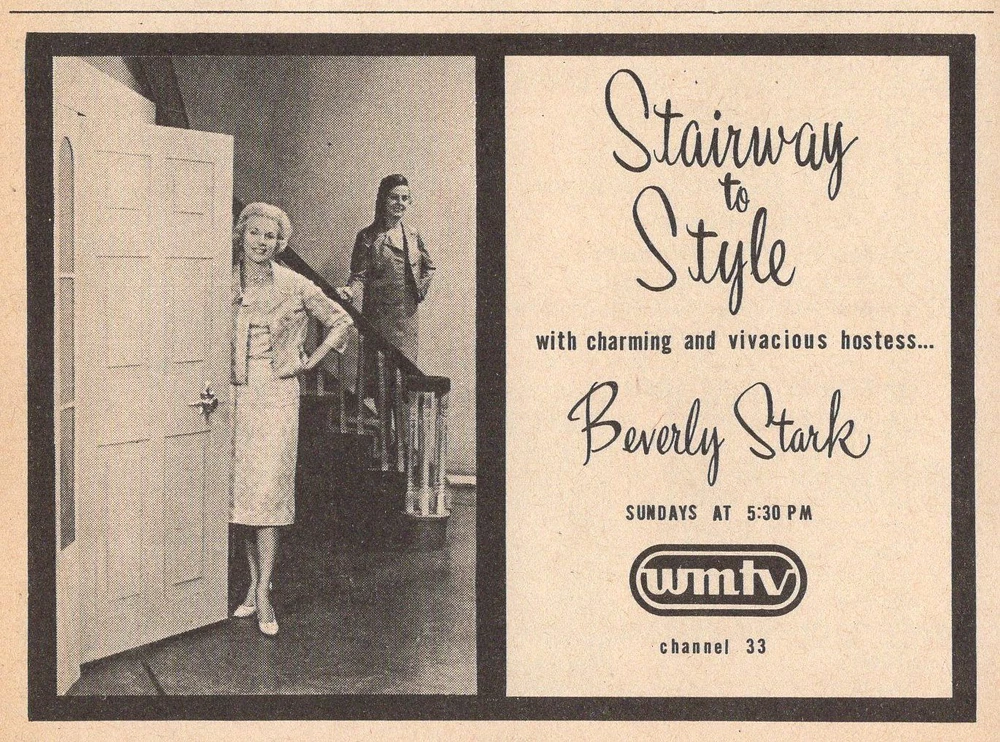
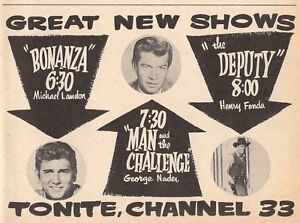
All of that came together when I was as usual looking for something else and came upon a bunch of TV Guide ads from Madison TV stations that apparently are for sale on eBay. The possible irony here is that my parents never subscribed to TV Guide, though my grandparents (who were able to get both Wisconsin and Iowa TV stations due to living in Southwest Wisconsin) did.
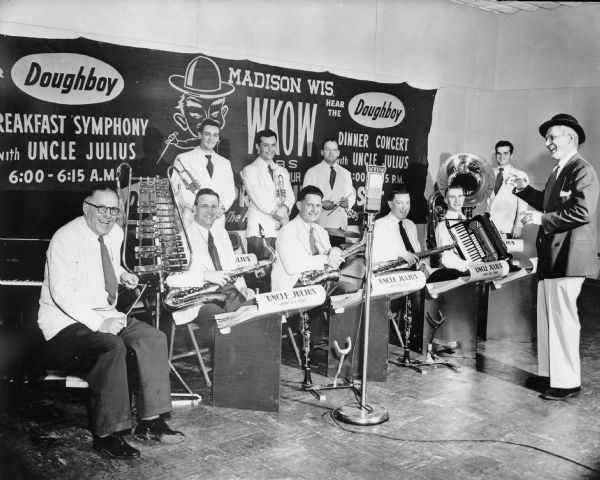
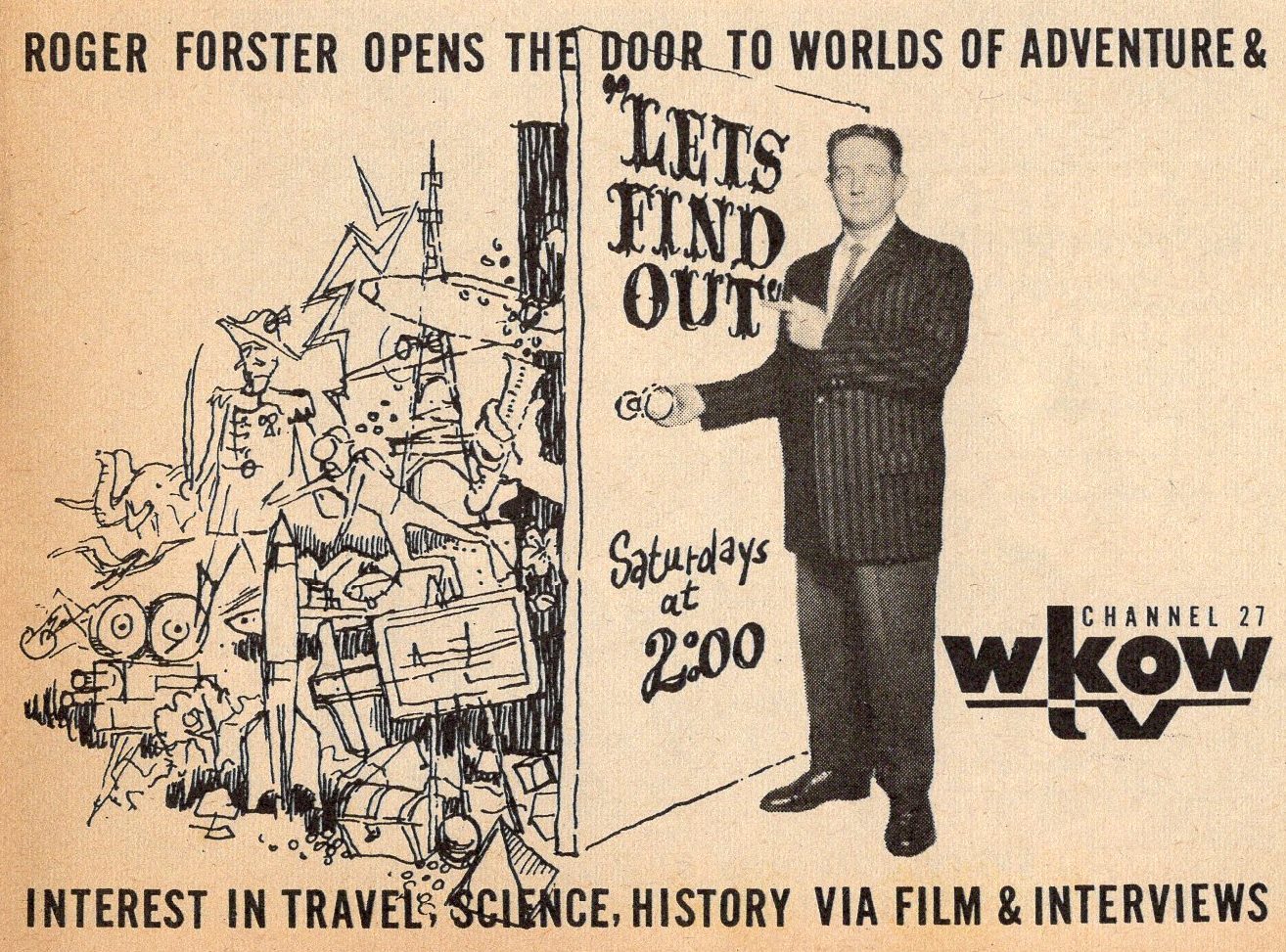
It appears that WKOW may have been a country station based on this 1952 Wisconsin Historical Society photo. So perhaps things went full circle when what became WTSO went back to country in the mid-1970s.
… was Madison’s first commercial TV station after the Federal Communications Commission lifted its Korean War-era moratorium on new TV station licenses.
The owners of WKOW ended up creating their own statewide network, starting WAOW-TV in Wausau in 1965, then WXOW-TV in La Crosse, and then WQOW-TV in Eau Claire. (There is also WYOW-TV in Eagle River and WMOW-TV in Crandon.) The TV stations were sold to one company in 1978, another in 1978, and another in 1985, around the time that I was sitting in UW–Madison journalism classes listening to the School of Journalism director say that TV stations were “licenses to print money.” Six years later, WKOW’s owner filed for bankruptcy, meaning either that my prof was wrong or that TV stations were not always licenses to print enough money. WKOW was then purchased by its previous owner, who had purchased a “beautiful music” FM station in Baraboo with a freakishly large FM signal, changed its format to oldies, and made enough from one radio station to repurchase four TV stations.
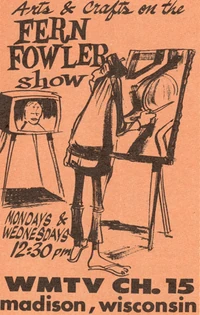
WKOW was originally a CBS station because WKOW radio was a CBS affiliate. Station number two was WMTV, originally at channel 33, which went on the air about a week after WKOW.
WMTV also originally carried NBC, ABC and Dumont, a practice that in some TV markets continued into the 1980s.
The Dumont network died in 1956.
WISC-TV arrived in 1956 as Madison’s only VHF station, on channel 3. WISC-TV was started by WISC radio, which became WISM radio, which was Madison’s top 40 radio station, and thus the station most non-adults listened to.
CBS decided that being on channel 3 (more coverage for less power) beat being on channel 27 and moved to WISC, which left WKOW without a network until it got ABC from WMTV, which moved from channel 33 to channel 15 in 1960.
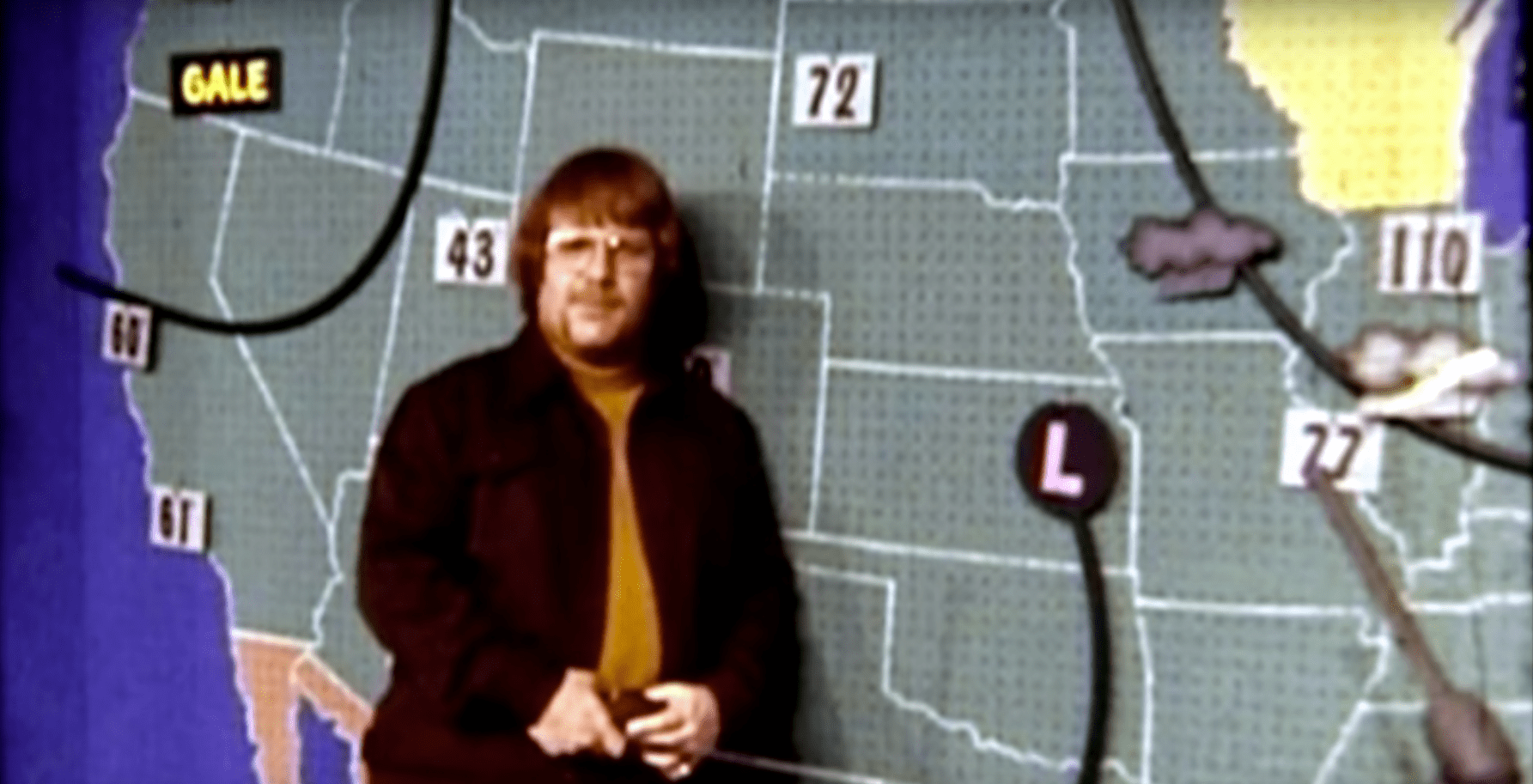
That, however, isn’t the whole story about WISC. My source is the late John Digman, former WISC reporter and weatherman (not “meteorologist”) who talked to my high school journalism class while working in Madison radio, and sadly died of a heart attack at 40. (His daughter went to La Follette.)
This has to be some sort of put-on by Digman. How can it be 110 in Chicago and 27 in St. Louis?)
Digman told the class (and I may have been the only student listening to this) that WISC was supposed to be on channel 21 while WHA-TV, the state’s first noncommercial TV station, was supposed to have channel 3, but WHA went on the air in 1954 not on channel 3 and WISC went on the air in 1956 not on channel 21.
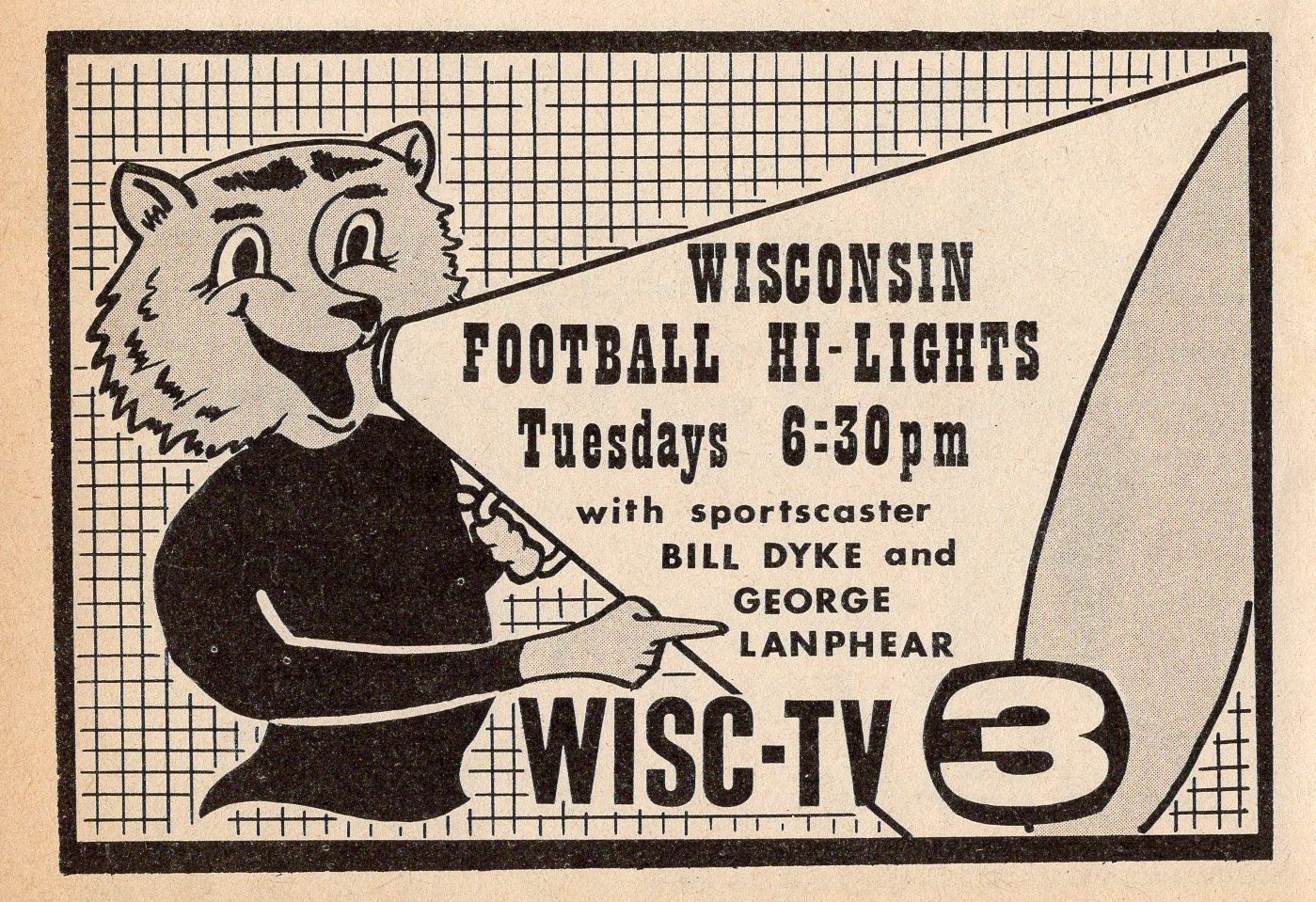
Speaking of WISC … Bill Dyke had one of southern Wisconsin’s most interesting careers. He was a disc jockey at WISC and WISM and did sports (at least in 1959 here) and other things on channel 3. Dyke was credited by Vilas Craig, who created southern Wisconsin’s first rock and roll band, for playing Vicounts records (with, as you know, my father on piano) on the radio.
Dyke parlayed his broadcast career into two two-year terms as mayor of Madison. Then he was defeated by Paul Soglin in 1973. Then after Soglin left the first time (voluntarily, as opposed to the other two times), Dyke, who as a side thing was a producer of the movie “The Giant Spider Invasion,” …
… and Soglin did a weekly point/counterpoint appearance on WISC’s Live at Five. Dyke ended up as Iowa County circuit judge before he died.
This is from 1964, when apparently ABC’s and WKOW’s evening news were 15 minutes each. Cochran was a former FBI agent who got to announce John F. Kennedy’s assassination on ABC’s glitch-filled newscast. Russell later became WTSO’s station manager.
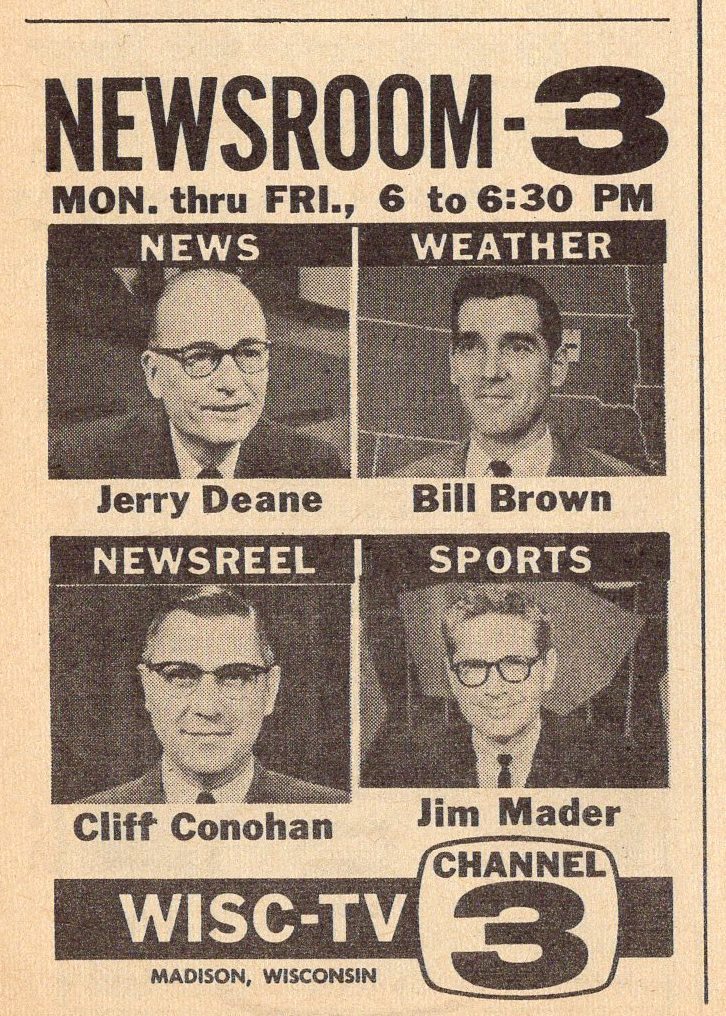
That same year …
Jerry Deane (real last name Druckenrod) did the news. Bill Brown did weather before moving to news when Deane was moved to “The Farm Hour,” where he read not just the news but farm prices. I remember watching Deane reading farm prices and having no idea what any of them meant. (My first Boy Scout Scoutmaster, who worked for Oscar Mayer, told me what “canners and cutters” were.) Mader was better known in Madison for being the morning DJ on WIBA radio and for narrating Zimbrick Buick commercials.
Schermerhorn started in sports, and then apparently moved to sales, but was best known for hosting “Dairyland Jubilee,” a Sunday morning polka show.
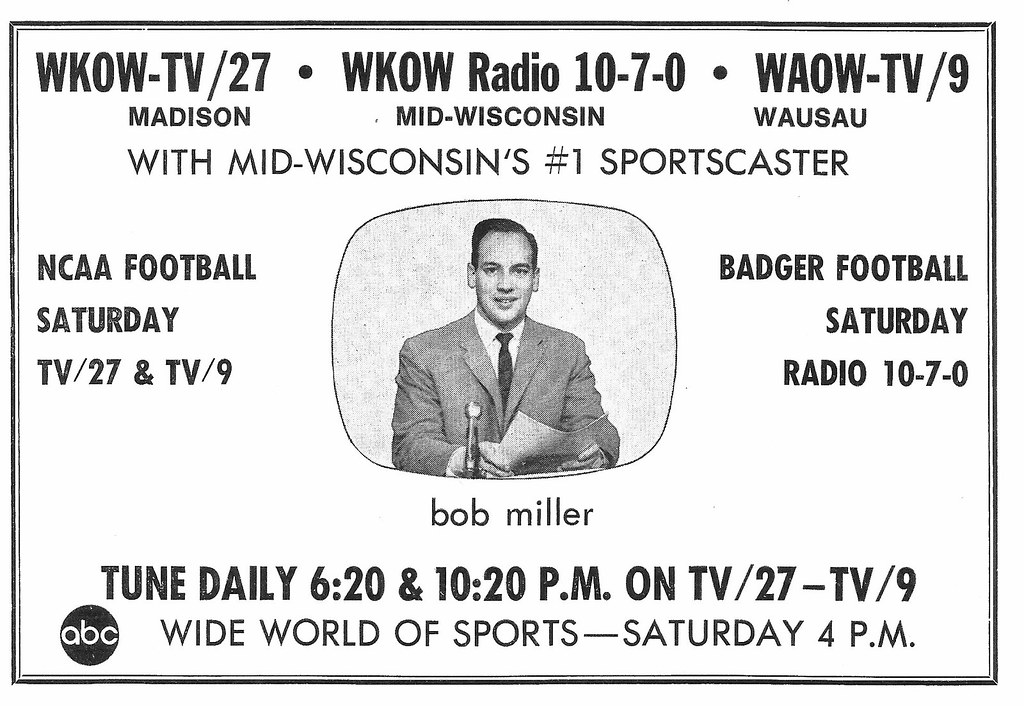
By 1969, Bob Miller was the sports guy on WKOW TV and radio and its Wausau station, WAOW-TV. Miller’s radio duties included Wisconsin Badger hockey, which meant Miller got to announce the Badgers’ first national championship. That proved good for Miller’s career, because on the recommendation (following pestering, the story goes) of Los Angeles Lakers announcer Chick Hearn, the Lakers’ owner hired Miller to announce the Kings hockey team.
Miller’s replacement was Paul Braun, who had been announcing hockey (and, one assumes, other sports) at WMAD radio. While Miller got to announce UW’s first hockey championship, Braun got to announce the next four (on WTSO and then WIBA), and did cable TV for national championship number six.
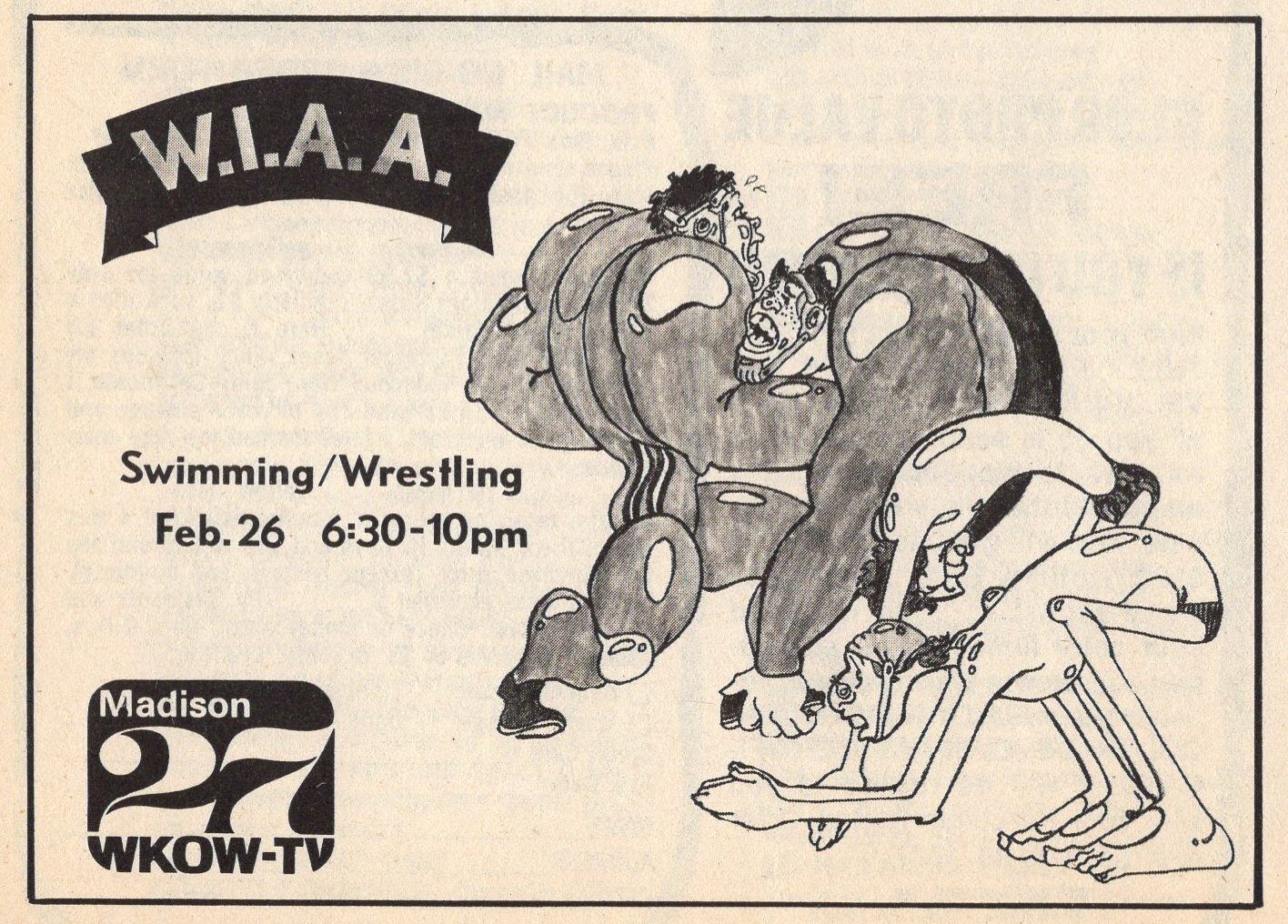
This is from 1977, back when WKOW’s month of state tournament coverage began with a tape-delayed broadcast of state swimming from the UW–Madison Natatorium and then live coverage of the state wrestling finals. (Which I got to cover on radio last year for the first time.) One week later was state hockey, followed by girls basketball and then boys basketball — in this case, my alma mater’s first state title.
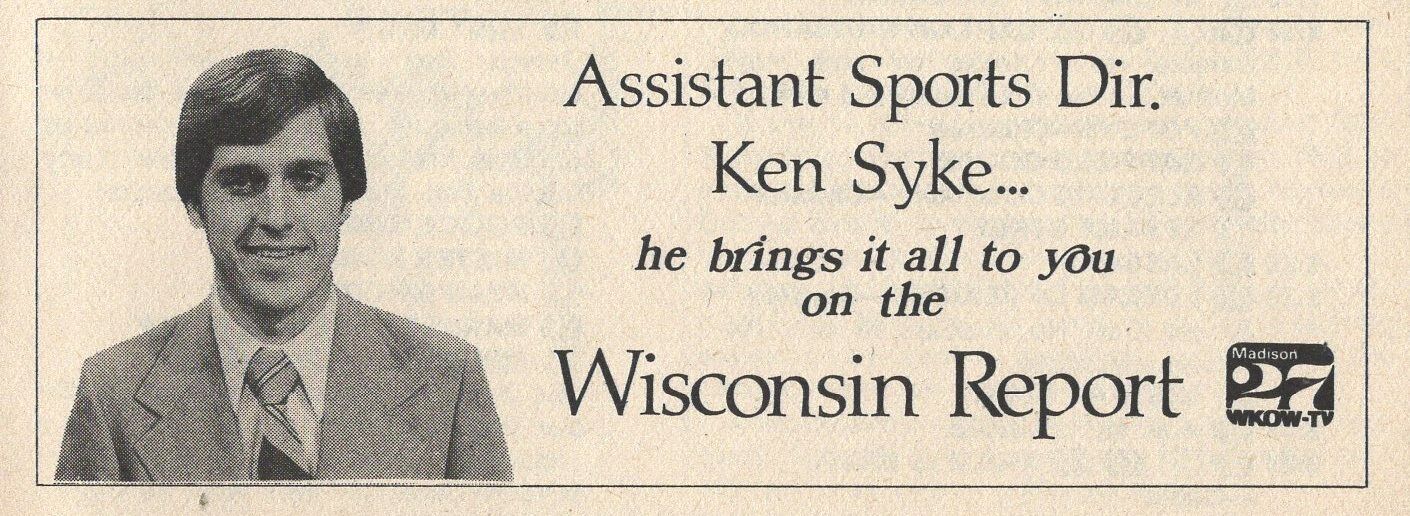
After Miller and before this, WKOW employed Gary Bender, who went to college with the eventual owner of the station. Bender was a busy guy, doing the sports in Madison, announcing Badger football on Saturdays and then announcing Packer football on Sundays, both with Jim Irwin.
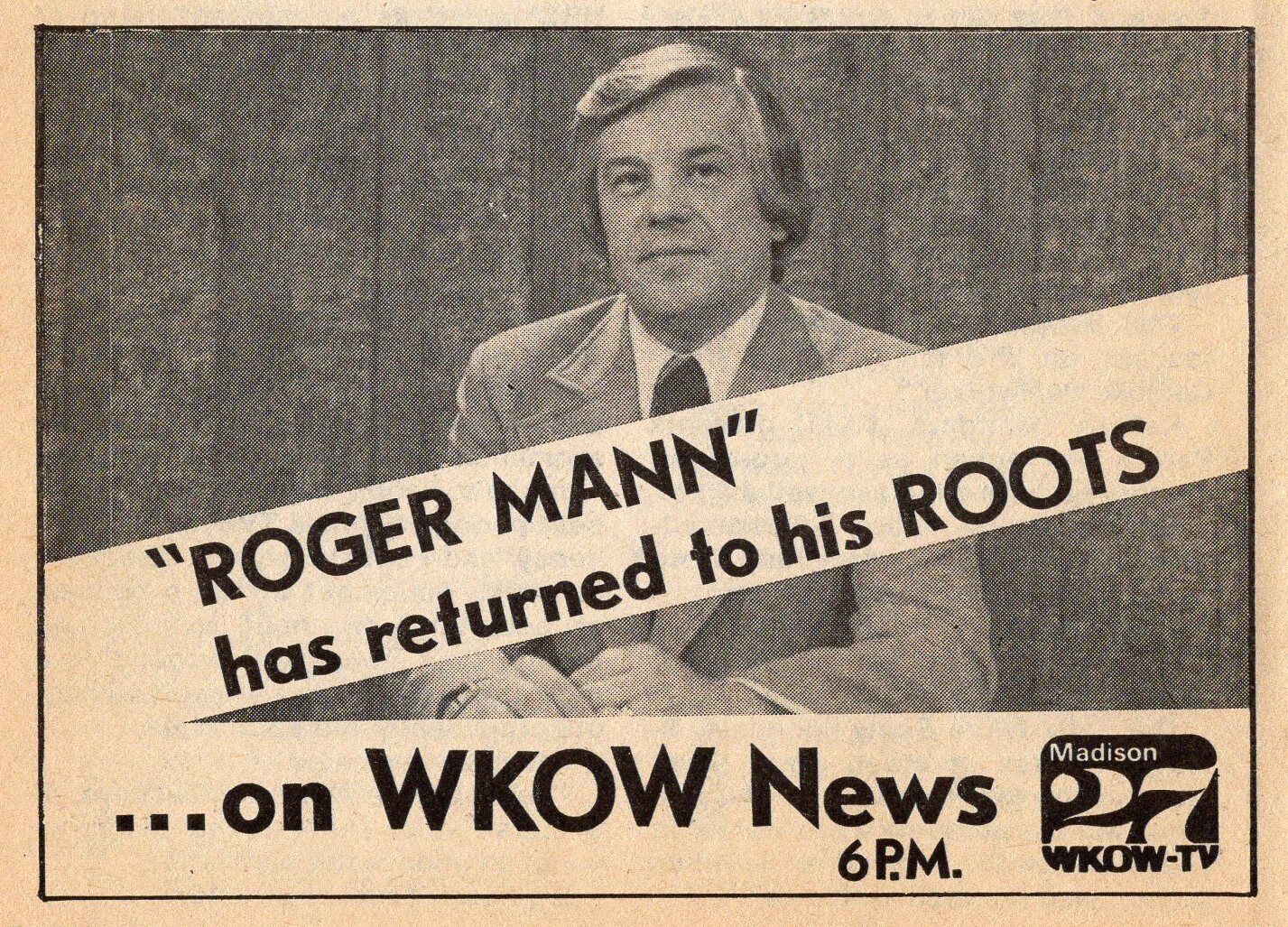
WKOW’s news anchor for most of the 1970s was Milwaukee native (or so I’m told) Roger Mann, who came to Madison, left and then came back.
After and before Mann was John Lindgren, who went to WKOW from WISC when in-market moves were hardly ever done (and it’s still rare in the Madison market).
Lindgren then went to Kentucky and was on two TV stations there. Then he contracted colon cancer, but continued to work while fighting the disease, which ended up killing him at 55 in 2001.
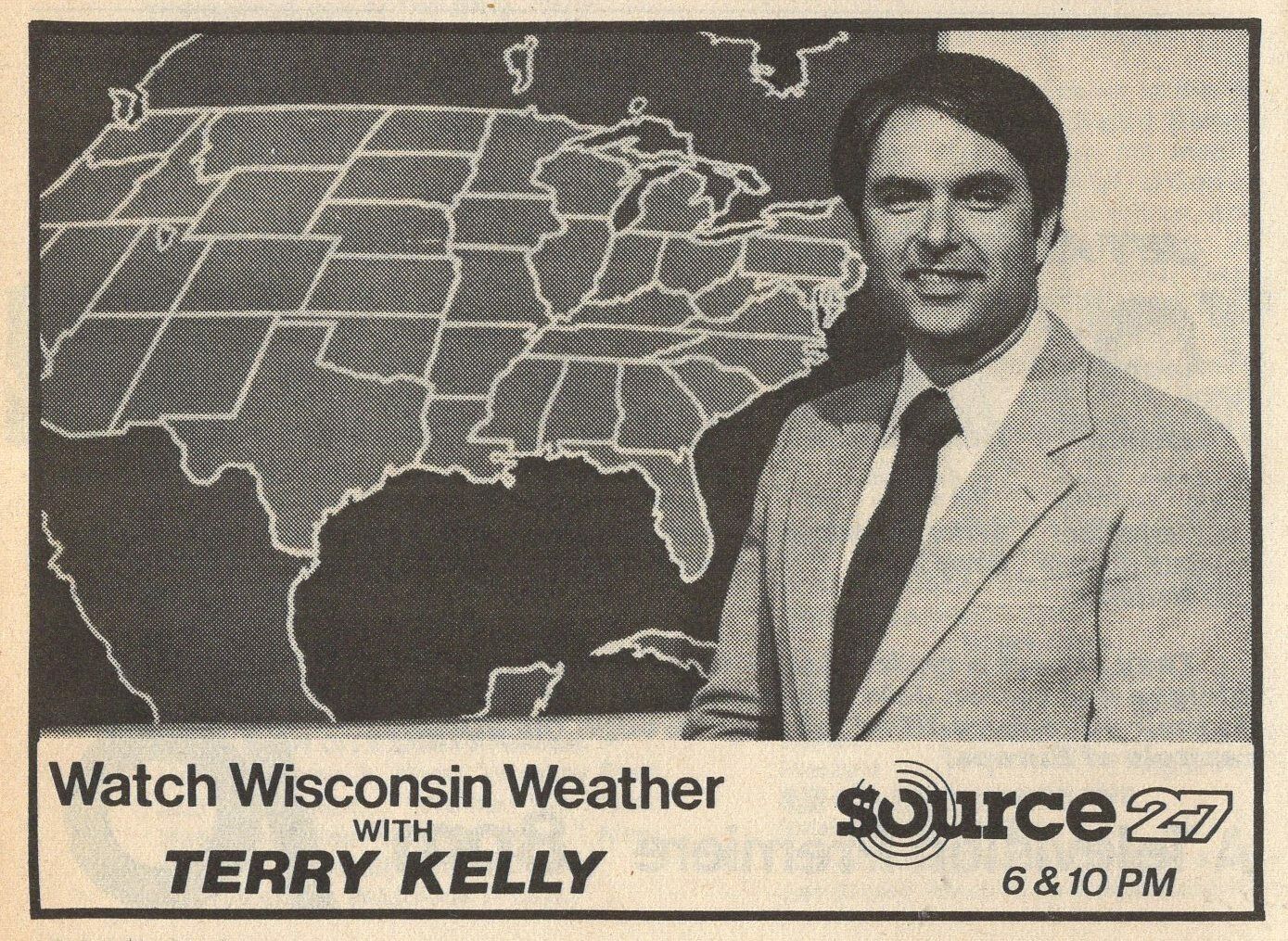
The weather was done by …
… Terry Kelly, who was the first in Madison to have the cool weather gadgets, most of them developed by his company, Weather Central. Kelly also was known for horrible puns just before going to commercial.
Kelly’s predecessor was Tom Skilling, who worked at WKOW and WTSO while he was a student at UW–Madison. Skilling then spent three years at WITI-TV in Milwaukee, where he did forecasts with Albert the Alley Cat. Those were the days.
This next photo almost needs no introduction …
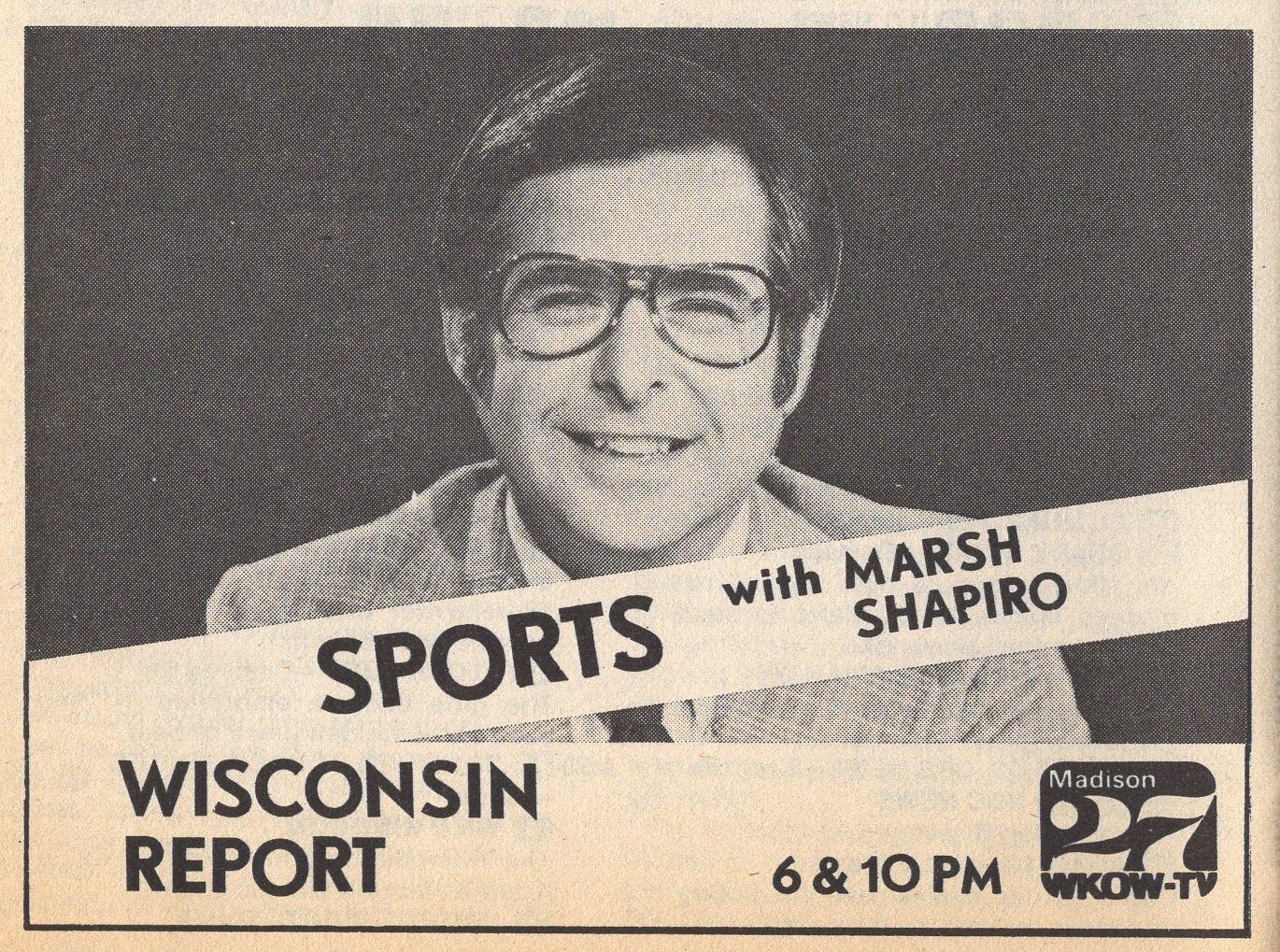
… Marsh Shapiro, sportscaster, and before that “Marshall the Marshal,” and along with that owner of the Nitty Gritty bar, along with …
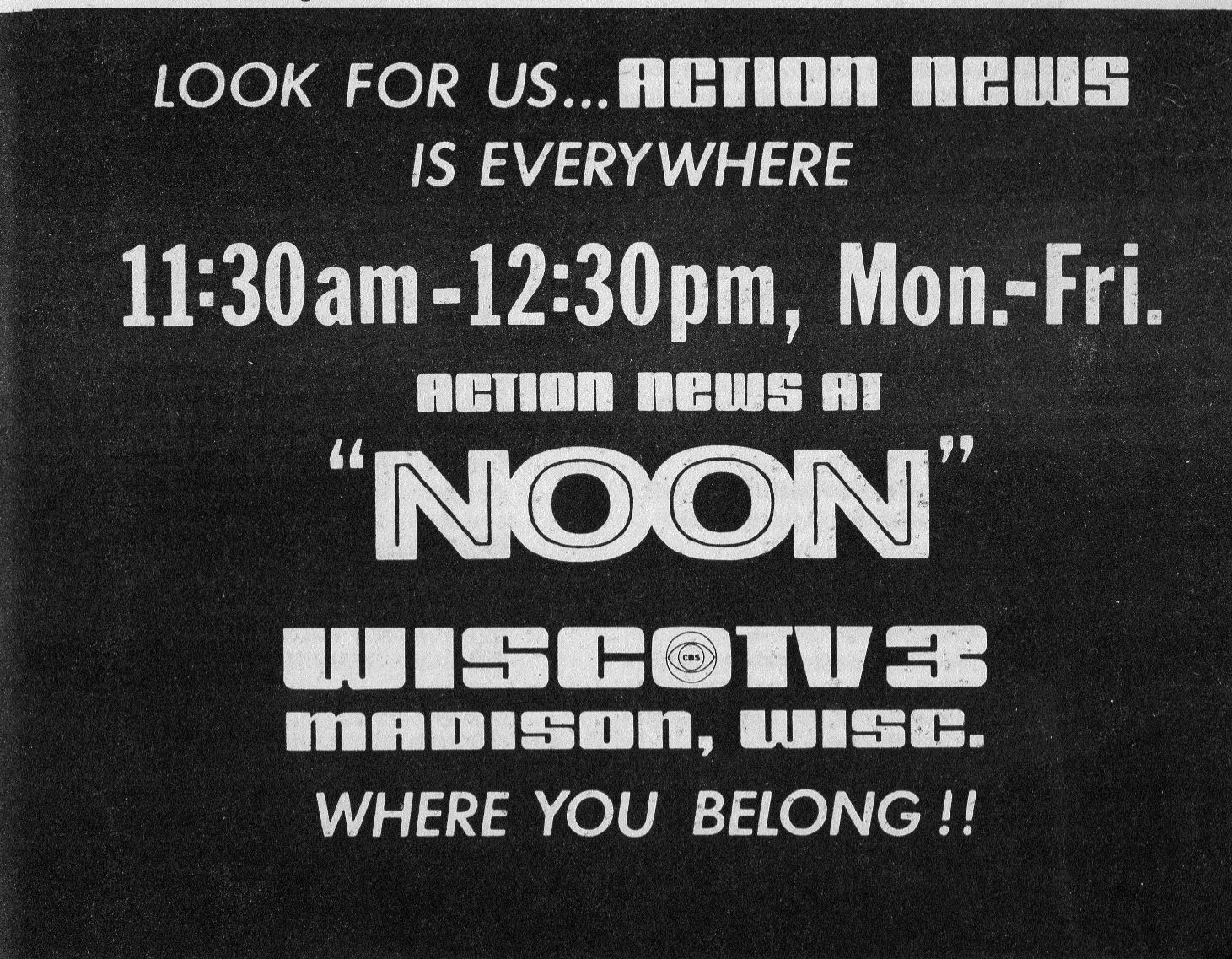
This apparently is also from 1977. WISC was the first station in the market to do news besides noon, 6 and 10. Before that WISC ran a one-hour “Eyewitness News” at 6 p.m. starting in 1971. (According to Digman it was because WISC was having license problems. Also according to Digman the news was a little thin at times.) “Eyewitness News” was replaced by “Action News,” with a 5 p.m. newscast that became “Live at 5,” which is still on.
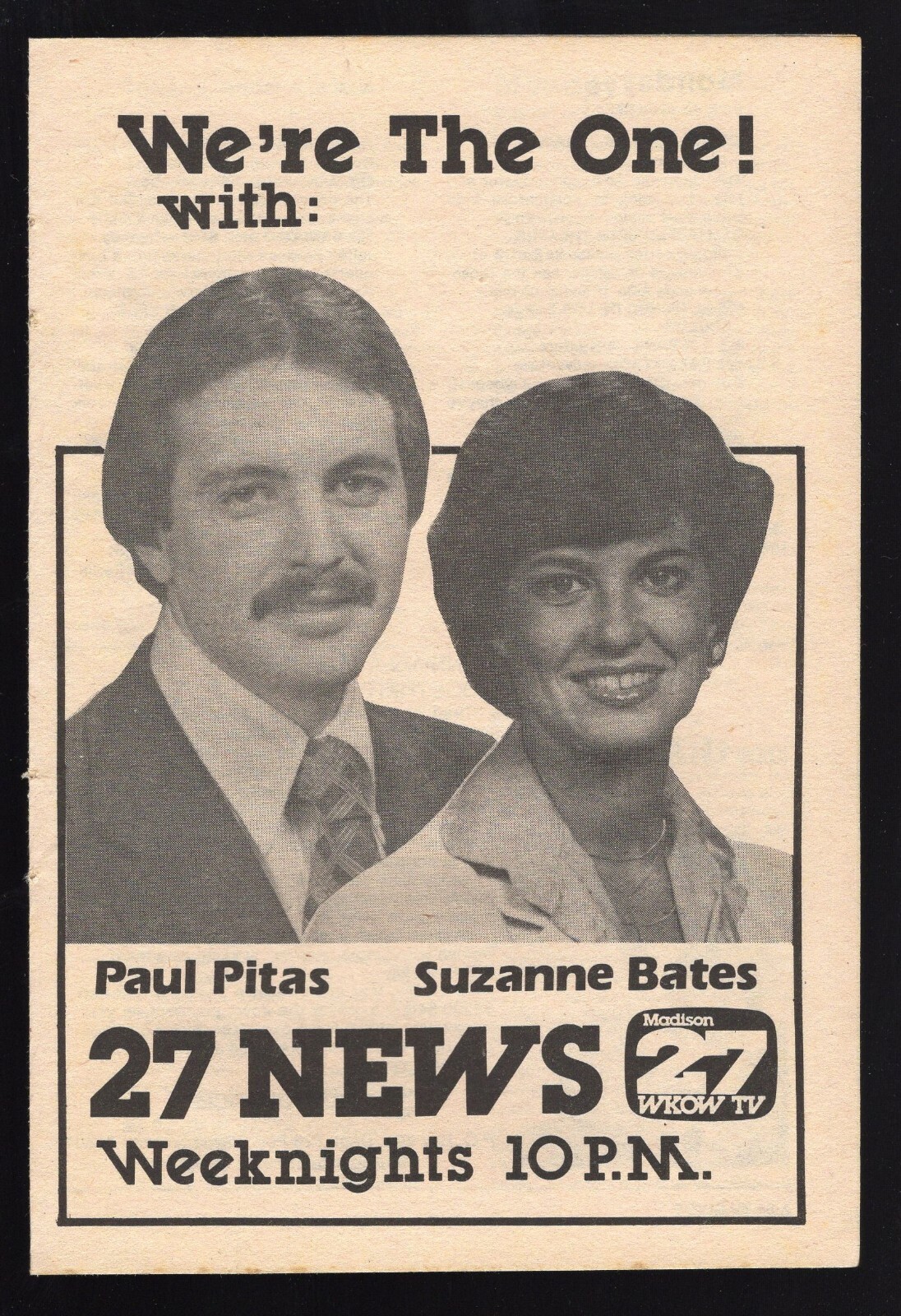
By 1980, Mann was gone, replaced by two people, Paul Pitas and Suzanne Bates. The last time I saw Pitas, he was doing public relations for Culver’s, which is probably not a bad gig.
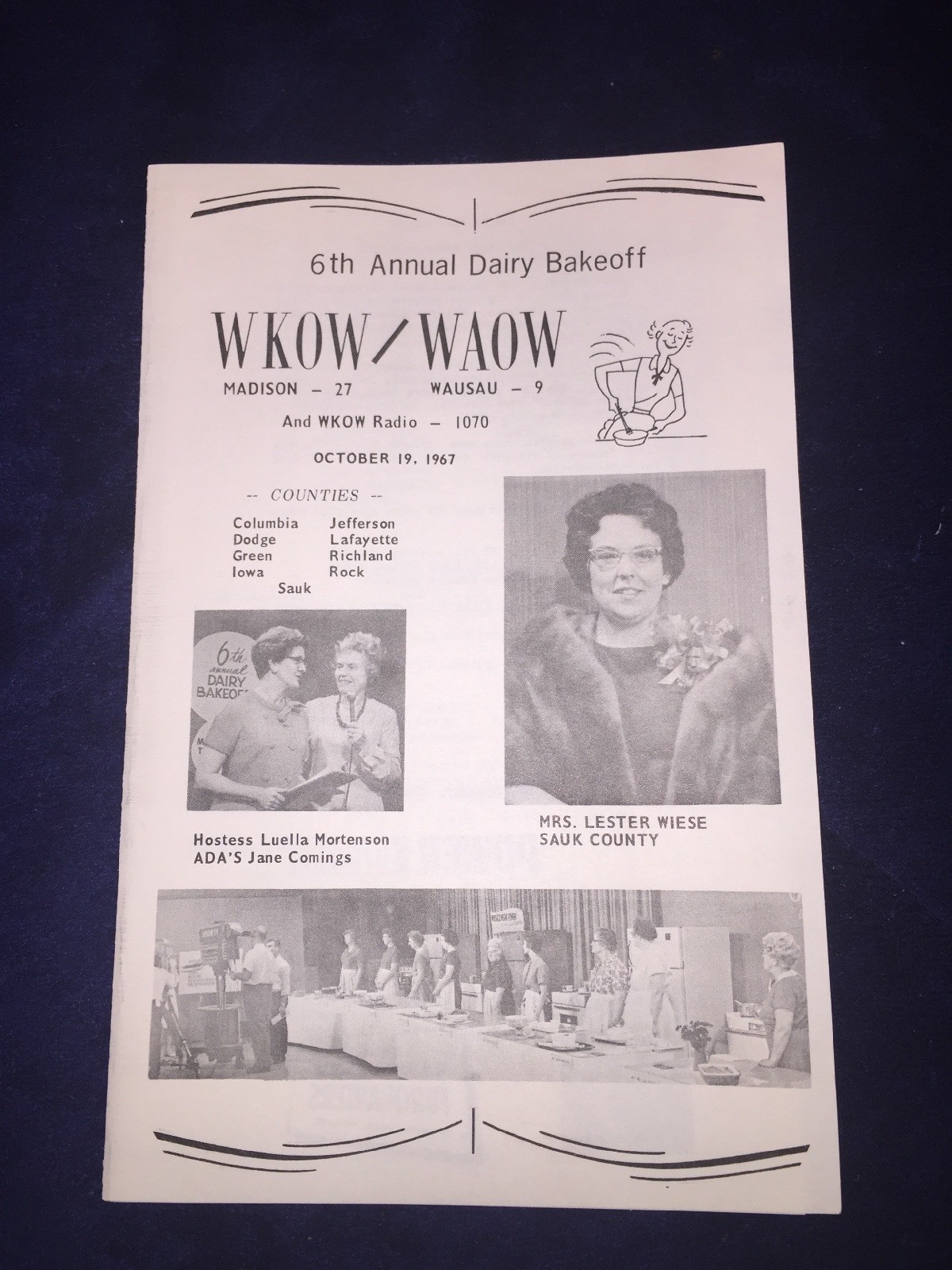
Finally, here is something you never see from radio or TV stations anymore:
It’s a radio- and TV-station-sponsored bake-off, which was cosponsored by a TV station that, I assume, didn’t have a strong enough signal to get to any of the counties whose cooking women were eligible for the contest. (I wonder how Wausau viewers felt about that.) Click here for the recipes.
 Bill Dyke had one of southern Wisconsin’s most interesting careers. He was a disc jockey at WISC and WISM and did sports (at least in 1959 here) and other things on channel 3. Dyke was credited by Vilas Craig, who created southern Wisconsin’s first rock and roll band, for playing Vicounts records (with, as you know, my father on piano) on the radio.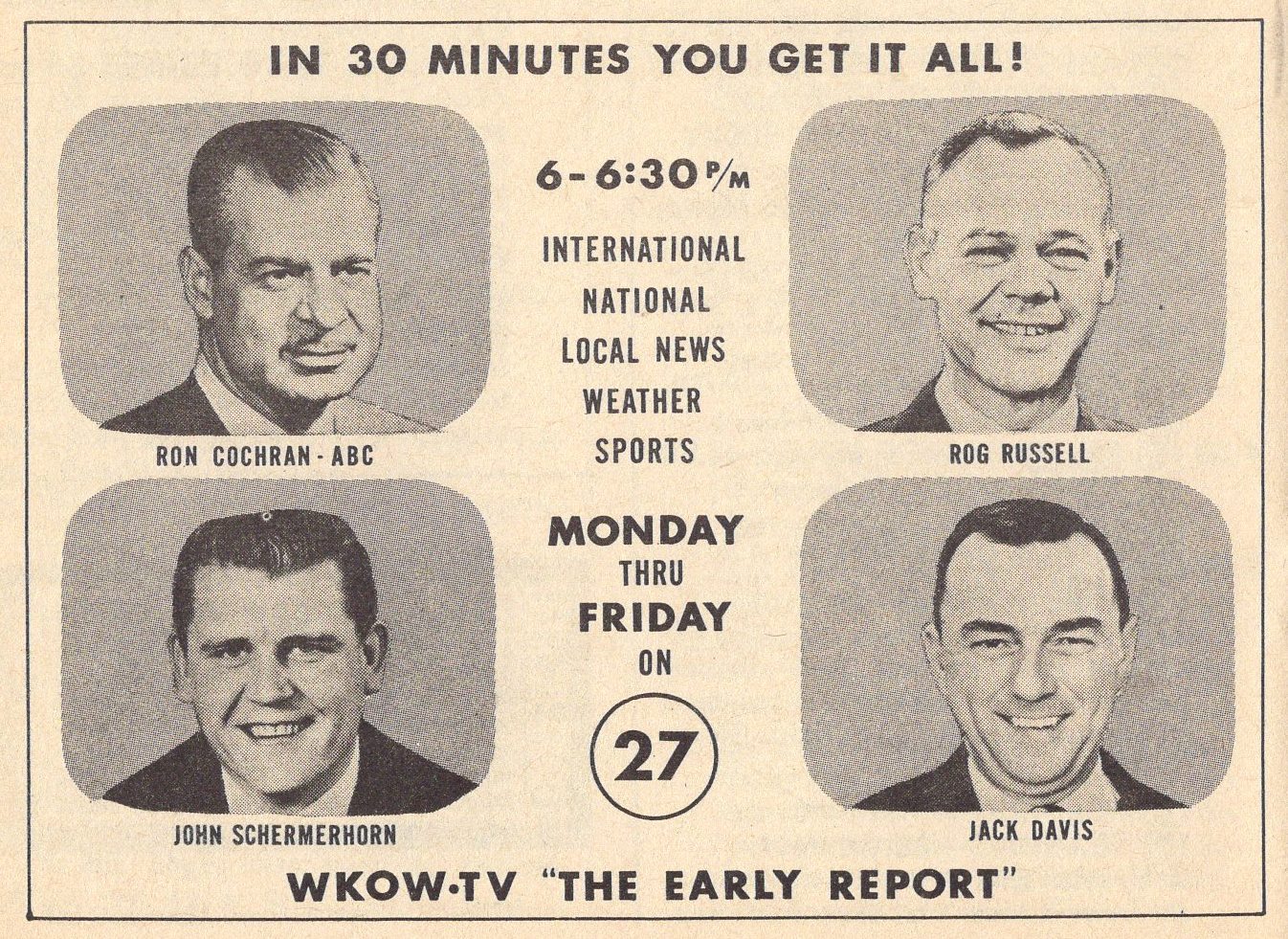
+Sg~~/s-l1600.jpg)
 Steve Prestegard.com: The Presteblog