If you wanna be happy, listen to the number one single today in 1963:
Another one-hit wonder had the number one single today in 1968:
The number one single today in 1974 might be the very definition of the term “novelty song”:
The number one British single today in 1975:
(Which more appropriately should have been called “Stand by Your Men,” since Tammy Wynette had had three husbands up to then, and two more thereafter.)
First, for those who believe the British are the height of sophistication and are so much more couth than us Americans: This was the number one song in the U.K. today in 1986:
The chicken is not having a birthday. Pervis Jackson of the Spinners is:
So is drummer Bill Bruford, who played for Yes, King Crimson and Genesis:
Today in 1980, Brian May of Queen collapsed while onstage. This was due to hepatitis, not, one assumes, the fact that Paul McCartney released his “McCartney II” album the same day.
Today’s rock music birthdays start with someone who will never be associated with rock music: Liberace, born in West Allis today in 1919.
Actual rock birthdays start with Isaac “Redd” Holt of Young–Holt Unlimited:
Nicky Chinn wrote this 1970s classic: It’s it’s …
Roger Earl of Foghat …
… was born one year before Barbara Lee of the Chiffons …
… and drummer Darrell Sweet of Nazareth:
William “Sputnik” Spooner played guitar for both the Grateful Dead …
… and The Tubes:
Richard Page of Mr. Mister:
Krist Novoselic of Nirvana was born one year before …
… Miss Jackson if you’re nasty:
Finally, Patrick Waite, bassist and singer for Musical Youth, which did this ’80s classic, dude:
I was young in the 1970s (weren’t we all), when I first started becoming interested in cars.
I was interested in other four-wheeled vehicles too, including custom vans. No, not this van …
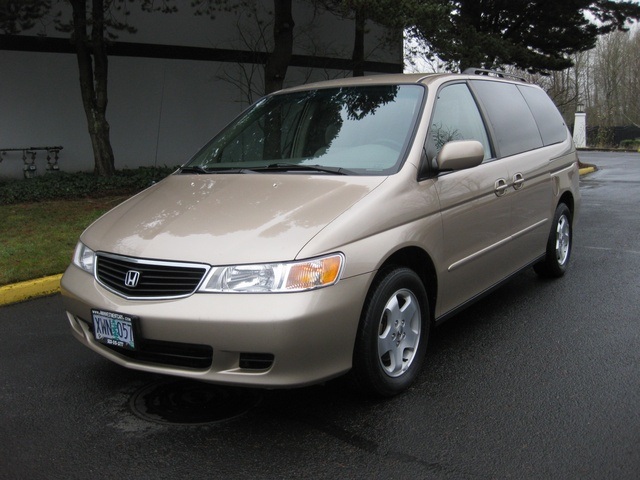
… which is technically a minivan, (a depiction of) our 2001 Honda Odyssey. As an appliance, it was a marvel of function and design. As a driving experience, it was like driving a Honda Accord, because it was based on an Accord, also a marvel of design and function, though if you use a synonym you can spell “function” without “fun.”
For some reason (coronavirus boredom?) Automobile Magazine found a list of van-based movies, which was the genesis for this blog:
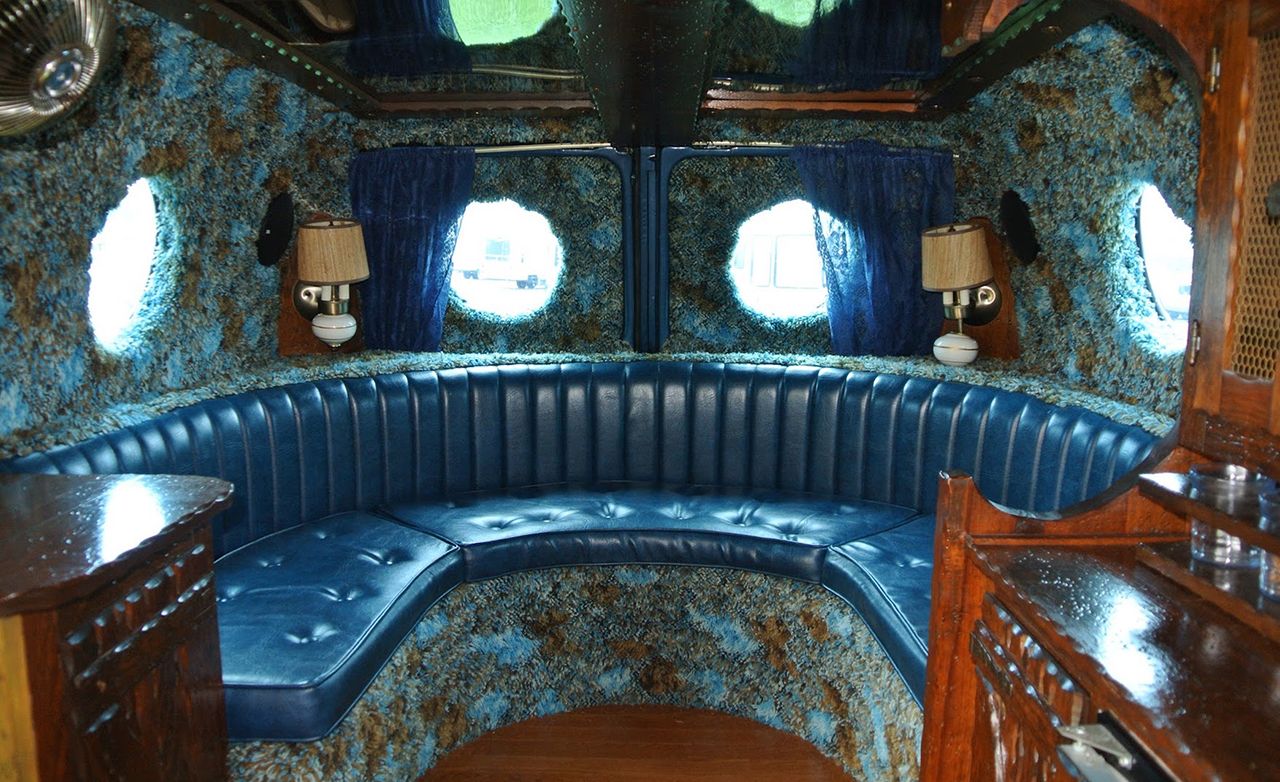
Sometimes bad can be good—especially when we are referring to vansploitation movies of the 1970s. Like the hot-rod and biker movies of the 1950s and 1960s, the 1970s was the golden age of movies about vans. But let us be clear: This genre of celluloid includes some of the cheesiest, most sexist, and dumbest plotlines in motion picture history—think “Smokey and the Bandit” meets “Porky’s”—but it also includes some of the coolest customized vans of all-time. Chances are you’ve probably never heard of or ever watched any of these silly vansploitation flicks, so know up front that the vans usually feature wild paint jobs with suggestive graphics, shag carpeting, CB radios, waterbeds, mirrors on the ceiling, refrigerators, toasters, and much more.
Here are four essential vansploitation movies to check out.
“Blue Summer” (1973)
The earliest known vansploitation movie of the ’70s is “Blue Summer,” directed by Chuck Vincent—who is known mostly for directing a number of the era’s adult films. Basically, it is the story of two beer-swilling high-school graduates who meet female hitchhikers, a preacher, a righteous biker, and other crazy locals in their groovy Dodge van with flowers all around and a butterfly up front. The beat-up gray van is named “The Meat Wagon” by its owner, and you can guess that this one isn’t exactly for the kiddos.
“Supervan” (1977)
This vansploitation film features one of the coolest custom vans of all time. The star of “Supervan” is named “Vandora,” and it’s a solar-powered machine with lasers that was created by George Barris. The legendary “King of Kustomizers” used a Dodge Sportsman as the base for his futuristic ride, and he also appears as a judge in the movie. Poet and writer Charles Bukowski also makes a cameo and can be seen briefly during a wet t-shirt contest. You can skip the first 20 minutes of this movie because that’s when Vandora finally enters the scene. Far out, man.
“The Van” (1977)
“Bobby couldn’t make it … till he went Fun-Truckin’!” teases the poster for this classic pile of vansploitation. “The Van” is directed by Sam Grossman and is about a kid that spends all of his money on a customized bright yellow Dodge dubbed “The Straight Arrow.” It has a huge glass window with giant phallic arrow graphics on its sides—it’s not very subtle at all. Strangely, the theme song “Chevy Van” by Sammy Johns is used throughout the movie’s terrible soundtrack. Go figure. Also as a bonus, funnyman Danny DeVito co-stars in a pre-“Taxi” type of role with a slight “It’s Always Sunny in Philadelphia” character vibe.
“Van Nuys Blvd.” (1979)
This one is the best of the vansploitation bunch, as “Van Nuys Blvd.” is the culmination of the vansploitation genre. It is still cheesy but also the easiest one of these movies to watch. It is directed by William Sachs and stars Bill Adler as a small-town hayseed who heads to the bright lights of Van Nuys, California, to cruise his Ford Econoline van on the now legendary boulevard. It also stars Cynthia Wood, a former Playboy Playmate of the Year who drives and races a bad ass Dodge Tradesman van of her own. This one is definitely the “American Graffiti” of vansploitation movies, and it is more than worth a look for its footage of the Southern California car-culture scene of its day.
The 1970s was the apotheosis of van movies because the 1970s was the apotheosis of custom vans. The vehicle originally on a truck chassis with a body designed for various commercial uses could be customized from front bumper to back bumper, outside and inside, for the owner’s needs, including sleeping. (Solo or otherwise.)
As with other vehicles of the day, vans could be mechanically improved by choices of wheels and tires, additions of sidepipes, or engine upgrades. None of that changed the reality of the van as large and heavy.
Owners could augment the interior with upgraded front seats, sunroofs, tables, mini-refrigerators wired into the van’s electrical system, beds, and (inevitably shag) carpeting.
Van exteriors, specifically the vast expanse between the front doors and the back doors, were a canvas for the creativity or interests (and budget) of the owner:
In this you could rock all night and party all day in Detroit Rock City.The Denimachine was a promotion with Ford, Coca~Cola and Levis. I think I tried to win this. I didn’t win, and I may have been ineligible due to age anyway.This is the Dodge Santana, which demonstrates one way tall people could customize their vans — extend their height.For those who think vans are too high, one could chop them, as happened with ’40s and ’50s cars. And there was nothing stopping anyone — except their skills and wallets — from, say, adding a rear axle.)If you had enough money, and were tall enough to get in, you could buy this Pathfinder four-wheel-drive conversion. Imagine driving that in high winds. (For that matter, imagine a four-wheel-drive Santana in high winds. Semis with empty trailers would be more stable.)Remember Scooby-Doo’s Mystery Machine?This GMC van was part of the 1980s TV series “The A-Team.”
Interestingly for a manufacturer that usually was the third of the Big Four (then Big Three), Dodge built the van that seemed to get the most praise from van magazines. And then Dodge looked at what people were doing to its vans and decided to help by introducing …
… the Street Van, with factory semi-customization.
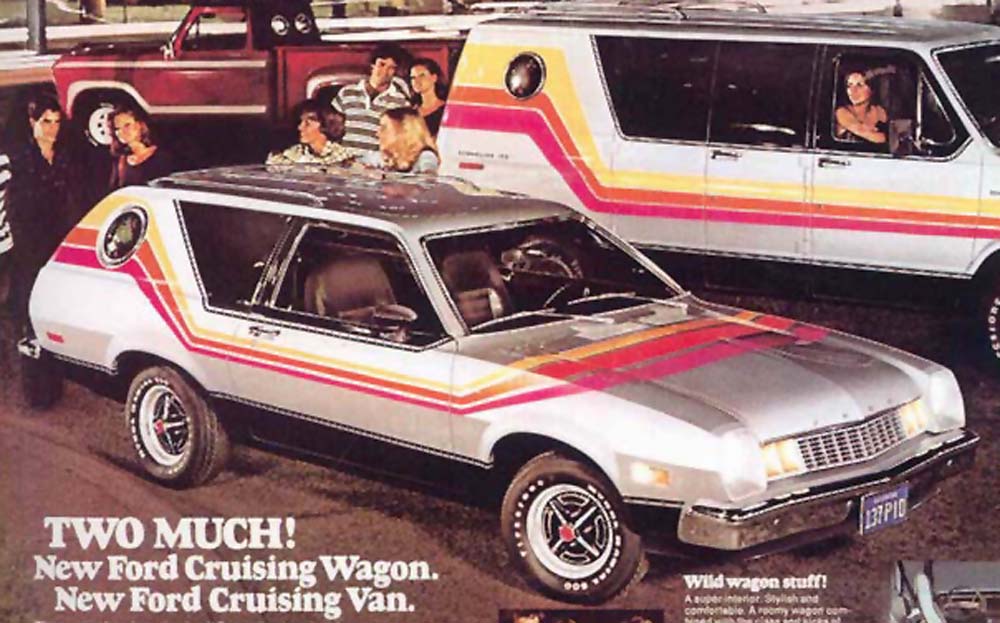
Ford saw (or learned about that), and decided to produce …
… the Cruising Van, done one better (or worse) by …
… the Pinto-based Cruising Wagon, yet another Detroit-created vehicular answer in search of a question. (Or, if you will, the love child of a Cruising Van and a 1950s-vintage sedan delivery.)
Not to be outdone, Chevrolet showed up with …
… the Van Sport (not to be confused with the Sportvan, a van with seating for up to 12 and windows).
My idea was to make a lifesize version of this Hot Wheels van, with chrome (!) paint and flames:
(The Hot Wheels car is on sale for $100, by the way. Ponder that one.)
The custom van was a fad of the ’70s, brought to us by the Baby Boomer generation that enjoyed unprecedented (until then) prosperity, health (for those who avoided the Vietnam War) and cheap gas prices.
Dear grads, lockdown class of 2020: Switch off “Animal Crossing,” wrap up that episode of “The Masked Singer,” pause practicing your TikTok “Renegade” dance, finish ironically chugging your Corona beer, and listen up—Karens, Beckys and Chads, too.
Yes, someone owes you an apology. You’re heading into the worst job market, competing with 33 million recently laid-off plus furloughed employees. I told you to take that antifungals course. To paraphrase the philosopher Bluto, 3¾ years of college down the drain. All this from a coronavirus 22-year-olds have a statistically insignificant chance of dying from. You will forever be Generation C. All of Gen X through Z’s FOMO—fear of missing out—has morphed into FOGO, fear of going out.
You got cheated out of a graduation ceremony, but don’t despair: Facebook to the rescue. This Friday it’s hosting #Graduation2020. Woo-hoo! And professors be damned—“words of wisdom” will come from Oprah, Awkwafina, Jennifer Garner, Lil Nas X and Simone Biles, with special musical guest Miley Cyrus. But, get this, only two of those six graduated from college and they are all incredibly successful. I think this is Harvard dropout Mark Zuckerberg rubbing it in.
They may not be sages, but neither are the people you trusted who got you to blow through your parents’ savings. Especially since you finished classes via videoconference—remember, you can’t Zoom a zoomer because a zoomer can’t be zoomed (ask your dad). The only good news is that you won’t have bad dreams like the rest of us about missing class or that last test. You likely passed automatically.
You were told to go to college, study hard and you’ll get a good job. But that model has been broken for a while. Instead you got cancel culture, pronoun police, plus diversity and inclusion—of everything but sound ideas, which need to be free to mingle and test-drive. You’ve been run down, you’ve been lied to. You ended up with someone else’s agenda.
“You’re going to find that many of the truths we cling to depend greatly on our own point of view. . . . The truth is often what we make of it; you heard what you wanted to hear, believed what you wanted to believe.” Sound familiar? For 20 points, who said it? Socrates? Kant? Hume? Rousseau?
These aren’t the ideas you’re looking for. The continued lockdowns are proof that those we trust, politicians and omniscient public-health officers, flunked economics. You probably took an Econ 101 course filled with tired Keynesian dogma. Or a comparative-lit class that ignored the Western canon. Or consumed a culty climate catechism.
You might even have trusted to expect a sustainable, intersectional, collectivist utopianism paying you to sit at home collecting Universal Basic Yang Bucks. Well, you’re sitting at home all right—unemployed and maybe unemployable. If you’re floundering, don’t expect anyone to admit, “You messed up, you trusted us.”
But it’s not too late. All of a sudden, everything is up for grabs. Education. Health care. Travel. Energy. Commercial real estate. Government. Transportation. Missing meat! Most of these are crony industries being destroyed before our eyes. It’s time to trust progress, price signals and perpetual change. Are you ready?
You’ll have to stay focused, because the indoctrination will continue even after graduation. When you hear about stakeholder capitalism, living wages, network neutrality, income equality, election meddling or gig workers as employees, it’s often a front for someone else’s agenda. Movies are infused with manipulative messages. Many articles on technology and Silicon Valley shoehorn in the obligatory “you didn’t build that” paragraph—it was government-funded research. That’s like saying Mark Zuckerberg didn’t build Facebook because he learned fractions at a public school in fourth grade. Again, other people’s big government agenda. Trust yourself to build the future while others wait for government help.
The Showtime series “Billions,” a comic-book rendition of Wall Street, has the tag line “Trust No One”—a bit much. My advice? Take it all in and then make up your own mind. Read voraciously and watch studiously, but always with a skeptical eye. And don’t fall for windbags at cocktail parties or protest marches. Trust your own judgment.
There are really only a few things you can trust. Trust data: the sum of available information, the more the better. Trust markets: the sum of price signals and what everyone thinks that’s hard to distort. And finally, trust your gut: the sum of your experiences. Let’s face it, that’s why you went to college, to hear new things, learn new perspectives, and share ideas with new people. Trust me: Use all of that and you’ll be successful. And the “truth is what you make of it” quote? Obi-Wan Kenobi said it a long time ago. He didn’t graduate college either.
Safer at Home’s apparent demise is entirely the fault of the Evers administration, though Republicans in the state Legislature deserve blame, as I’ve written here before, for relying on the courts instead of their own legislative power to negate or at least modify Safer at Home. But the strikedown of Safer at Home is the fault of its creators, and those were not Republicans. If you do something and the legal system smacks you down, that’s your fault for doing that didn’t pass legal or constitutional muster.
There are both legal and political dimensions to this. It is impossible for me to believe that no one in the Evers administration believed there might be legal problems with the vast array of Evers’ executive orders. Lawyers are supposed to find potential legal problems, even theoretical legal problems, and if no one in the Evers administration did, then Evers (or whoever did his administration’s hiring) did a bad job of hiring legal counsel. It’s as if the Evers administration is one big echo chamber where never is heard a discouraging word.
The political dimension is even worse. I’ve quoted one of my favorite political truths that crises are crises only when people in charge act as if they are crises. That has not been the case among the political class, beginning with Evers. A statesman would have asserted that this was a serious situation, and as evidence have showed how he worked with his political opposition on something that everyone, whether they voted for him or not, should be able to live with.
Evers claimed during a press conference in April that he believed “my people” talked to “their people” — that is, respectively, Evers’ staff and staff for Assembly Speaker Robin Vos (R–Rochester) and Senate Majority Leader Scott Fitzgerald (R–Juneau) — almost every day. For those who believe Evers’ decisions are actually the decisions of his staff, notably chief of staff Maggie Gau, that was an accidentally revealing statement.
It is also revealing that Evers did not himself talk to Assembly Republicans until the lawsuit against Safer at Home was already in the Supreme Court. That and the systematic lightening of Safer at Home makes one think that decisions have been made for some time on something other than “data and science” — specifically, a political conclusion that Safer at Home wasn’t as legally safe as Evers kept asserting.
A governor who realized that he was the governor of Wisconsinites who didn’t vote for him and/or voted for Republicans to represent them in the Legislature would have followed the maxim to keep your friends close and your enemies closer by giving the opposition at least an opportunity to participate in the creation of Safer at Home. If the GOP leadership refused, Evers could have said during his news conferences that he gave the GOP a chance and they wouldn’t cooperate. If for no other reason, the political aspirations of Vos (governor) and Fitzgerald (Congress) would have forced them to work with Evers.
(The latter point is not the same thing as Evers’ assertions that the Republicans had no plan. The Republicans had at least two plans, the plan from Rep. Cory Horlacher (R–Mukwonago) and the Wisconsin Manufacturers & Commerce plan. Maybe Evers didn’t like those plans, but the GOP had plans, even though the GOP did little to advance those plans in the Legislature.)
Evers himself said he didn’t think he and the GOP were that far apart. We may find out whether that’s true given that the six-day extension sought in the GOP lawsuit wasn’t approved because the opinion written by Chief Justice Patience Roggensack said Evers and the GOP should have been working together in the period after the Supreme Court heard oral arguments in the case to come up with something that passed legal and constitutional muster.
I wish the Supreme Court had invalidated the statute upon which Safer at Home was (illegally) created. It is impossible for me to believe that those who wrote the state Constitution ever intended for unlimited governmental power to be wielded by someone for whom no one had the chance to vote on the grounds of an “emergency,” something that can be abused to, for instance, intern Japanese–Americans during World War II.
Had the Evers administration possessed some legal sense, it would have sent Safer at Home through the correct rule-making process. That would have resulted in some changes, but that would have co-opted the GOP since whichever committee(s) would have signed off on Safer at Home. That’s a real definition of “we’re all in this together,” not what those supporting lockdowns while suffering no financial hardship were asserting.
Evers has a news conference today at 1:30 p.m. I assume Evers will continue his verbal war that fired up last night against legislative Republicans. An honest governor would instead say something like this:
“The Safer at Home order was intended to protect Wisconsinites from this virus. But in doing so we made some decisions that according to the highest court in our state are not proper under state law, and we are a land of laws, not of men0. I call upon the leaders of the Legislature to work with us so that we keep Wisconsinites state in ways that are appropriate under state law and our state Constitution.”
First of all – the court’s decision is no cause for unbridled celebration. Nor is this a time for public tantrums. It is time for the Governor and the leaders of the Legislature to develop, pass and implement bipartisan plans to:
Continue to mitigate the risk of the Coronavirus;
Safely and briskly resume economic and social activities with new social distancing guidelines;
Address the budgetary shortfalls at the State and Local levels that have resulted from the current Safer at Home orders and whatever soon-to-be-imposed regulations and laws.
We were encouraged that the Governor and Legislative leaders met last week after almost two months of talking past each other. It is in the best interest of everyone in Wisconsin that they now meet, every day, until the three areas listed above have been adequately addressed.
It is not time to lift all restrictions. On this point the vast majority of Wisconsinites agree. We remain in the middle of a pandemic. But it is time to move forward.
Yet, even as restrictions are removed and revised, a heightened level of personal vigilance will be needed for years. Indeed, the key to fighting this pandemic is personal responsibility – our culture has adapted to this long term fight. And it is the voluntary actions of citizens that will defeat the virus.
But as government officials ask us to be responsible and empathetic, we ask the same of our government officials.
It’s time to move forward, together, and create a steady recovery plan that is so widely-accepted and praised that the November elections will be about who gets the most credit for the achievement, not who gets the blame for failing to act.
When the Republicans and Democrats meet, we hope they bring medical professionals and researchers into the discussion (scientists, not merely advocates for the various components of our health care system). We have a deep and devoted cadre of them in the public and private sector here in Wisconsin.
We would prefer to have these meetings be public, broadcast and live streamed. New public health policies will be more broadly embraced and adhered to if they are borne of a process that was transparent. Ultimately, our government’s actions will be more apt to be followed if they are draped in the legitimacy that open meetings would provide.
In the event that these meetings are not public, we would hope to see bipartisan daily briefings that summarize the days accomplishments and forecast the work ahead.
One likely scenario is the Department of Health Services will promulgate an emergency rule, which would immediately be subjected to legislative review by the Joint Committee for the Review of Administrative Rules. So, JCRAR could be the forum where the bipartisan compromise is forged. In theory, the full legislature could convene to pass their own plan in bill form but the subsequent veto battles would have politicians fighting and place the economic and physical health of Wisconsinites in the crossfire.
It is time to put partisanship aside. Ignore the vitriol from the extreme ends of the political spectrum and instead focus on the possible, not the ideologically pure. It is time to meet and work together, to protect public health, preserve our healthcare system, and get Wisconsin’s economy and society working again.
For what it’s worth, we drafted the bulk of this piece BEFORE we knew the outcome of the court case. Because the task before our leaders would be the same whether Governor Evers’ Administration had unlimited authority or not.
It’s time to come together to open Wisconsin and fight the Coronavirus at the same time. For the sake of jump-starting the discussions, here’s an opening offer our leaders could consider.
[This] morning, all businesses, whether they provide goods or services, could (if they so choose) open at 20% of their fire code capacity.
In counties where the positive test result percentages and hospitalization rates are less than 50% of the Statewide average, that restriction could be 40% of the occupancy limit.
Social distancing, hygiene and mask use should continue to be promoted.
All employees who can reasonably perform their duties remotely should be allowed to do so.
Houses of worship could also open, subject to their respective county’s occupancy limits.
Continue to expand the occupancy limits by 20% of fire code capacity per week, as long as case and testing numbers remain steady or in decline.
In areas where the positive test percentage remains at or above 10%, cap the occupancy at 60% of the fire code limit.
Impose tighter restrictions where caseloads spike.
This is not a perfect plan. But it’s a starting point. They need to start somewhere. All or nothing gets us nothing.
Now is the time for heroes. We believe that together our leaders can become heroes. Let’s see if they believe the same.
There is a tide in the affairs of men, Which taken at the flood, leads on to fortune. Omitted, all the voyage of their life is bound in shallows and in miseries. On such a full sea are we now afloat. Julius Caesar, Act 4, scene 3, 218-222.
The Wisconsin Supreme Court has struck down Gov. Tony Evers’ order shutting down daily life to limit the spread of coronavirus — marking the first time a statewide order of its kind has been knocked down by a court of last resort.
The state’s highest court, which is controlled by conservatives, sided with Republican lawmakers Wednesday in a decision that curbed the Evers administration’s power to act unilaterally during public health emergencies.
The 4-3 decision was written by four of the court’s conservatives – Chief Justice Patience Roggensack and Justices Rebecca Bradley, Daniel Kelly and Annette Ziegler.
The court’s fifth conservative, Brian Hagedorn, wrote a dissent joined by the court’s two liberals, Ann Walsh Bradley and Rebecca Dallet. (The Bradleys are not related.)
The ruling, for now, throws out the administration’s tool to control the disease for which there is no vaccine and comes at a time when Evers has already begun lifting some restrictions as the spread of the virus slows down for now.
It will force the Democratic governor and Republican-controlled Legislature to work together on the state’s response to the ebbs and flows of the outbreak — a dynamic the two sides have rarely been able to achieve before.
GOP lawmakers who brought the lawsuit have said the legal challenge was necessary to get a seat at the table where Evers and state health officials make decisions about how to respond to the outbreak, which has killed 418 people in the state in two months.
The order expires Tuesday.
The ruling giving them the ability to block the Evers administration during the pandemic comes a day after a new statewide poll showed the public trusts Evers more than the Republican-led Legislature on when to begin reopening and relaxing restrictions related to the outbreak.
Evers has maintained his administration needs to be nimble and is relying on health experts to guide his decisions. He has said the procedure GOP lawmakers want will mean the state won’t be able to act quickly.
The court agreed with Republican lawmakers and required Department of Health Services Secretary Andrea Palm and Evers to use a process known as rulemaking, which allows a committee with some of Evers’ biggest critics to have veto power over a plan the DHS puts forward.
Wisconsin was one of 43 states to be locked down by its governor and as of Wednesday, it was one of 11 with such restrictions still in place.
At the heart of the lawsuit is a state law governing communicable diseases that says, “The department (of Health Services) may close schools and forbid public gatherings in schools, churches, and other places to control outbreaks and epidemics,” and gives the department the power to “authorize and implement all emergency measures necessary to control communicable diseases.”
The first laws providing powers to government officials were crafted in 1887, about 30 years before the 1918 flu pandemic that epidemiologists have said is similar to this year’s coronavirus outbreak.
In 1981, amid the HIV and AIDS epidemic, the state Legislature gave the power to DHS to issue orders — instead of using rulemaking.
Said Legislature was controlled by Democrats with a not particularly partisan governor, Lee Sherman Dreyfus.
Wednesday’s ruling came after a few thousand protested against the governor’s restrictions at rallies across the state, some comparing Evers to a murderous dictator and others complaining the order had nearly ruined their livelihoods.
More than 500,000 people filed for unemployment since Evers ordered the closure of businesses providing what the state has defined as non-essential services, like restaurants, hair salons, and tattoo parlors.
But the orders also had broad support from the public. A poll released Tuesday by the Marquette University Law School showed 69% of voters surveyed believed Evers’ actions were appropriate, though that support had decreased since March when more than 80% supported the restrictions.
In March, 83% of Republicans said closures were appropriate, compared with 49% in the new poll.
Among Democrats, support slipped from 95% in March to 90% in the current poll while among independents support slipped from 79% to 69%.
The public also trusted Evers more than the Republican-led Legislature on when to begin reopening and relaxing restrictions related to the outbreak, according to the poll.
Fifty-three percent said they trusted Evers more than the Legislature while 33% said they trusted the Legislature more to make those decisions.
The decision was not a surprise after Evers and his administration came under fire last week by conservative justices during oral arguments, including from one who compared his order to close businesses and schools amid the coronavirus outbreak to government oppression.
“Isn’t it the very definition of tyranny for one person to order people to be imprisoned for going to work among other ordinarily lawful activities?” asked Justice Rebecca Bradley, who later questioned whether the administration could use the same power to order people into centers akin to the U.S. government’s treatment of Japanese Americans during World War II.
The next Evers news conference should be interesting, don’t you think?



.ashx?modified=20171115205521)











 Steve Prestegard.com: The Presteblog