• Presty the DJ for March 17

    March 17, 2021
    Music

    This being St. Patrick’s Day, we should have a bit o’ the Irish, including a video I first watched while eating corned beef at an Irish bar in Cuba City today in 1993 …

    … plus Van Morrison …

    (more…)

    Share this on …

    • Share on X (Opens in new window) X
    • Share on Facebook (Opens in new window) Facebook
    • Share on LinkedIn (Opens in new window) LinkedIn
    • Email a link to a friend (Opens in new window) Email
    • Print (Opens in new window) Print
    Like Loading…
    No comments on Presty the DJ for March 17
  • Советская американская пресса

    March 16, 2021
    media, US politics

    Matt Taibbi has an odd habit:

    I collect Soviet newspapers. Years ago, I used to travel to Moscow’s Iszailovsky flea market every few weeks, hooking up with a dealer who crisscrossed the country digging up front pages from the Cold War era. I have Izvestia’s celebration of Gagarin’s flight, a Pravda account of a 1938 show trial, even an ancient copy of Ogonyek with Trotsky on the cover that someone must have taken a risk to keep.

    These relics, with dramatic block fonts and red highlights, are cool pieces of history. Not so cool: the writing! Soviet newspapers were wrought with such anvil shamelessness that it’s difficult to imagine anyone ever read them without laughing. A good Soviet could write almost any Pravda headline in advance. What else but “A Mighty Demonstration of the Union of the Party and the People” fit the day after Supreme Soviet elections? What news could come from the Spanish civil war but “Success of the Republican Fleet?” Who could earn an obit headline but a “Faithful Son of the Party”?

    Reality in Soviet news was 100% binary, with all people either heroes or villains, and the villains all in league with one another (an SR was no better than a fascist or a “Right-Trotskyite Bandit,” a kind of proto-horseshoe theory). Other ideas were not represented, except to be attacked and deconstructed. Also, since anything good was all good, politicians were not described as people at all but paragons of limitless virtue — 95% of most issues of Pravda or Izvestia were just names of party leaders surrounded by lists of applause-words, like “glittering,” “full-hearted,” “wise,” “mighty,” “courageous,” “in complete moral-political union with the people,” etc.

    Some of the headlines in the U.S. press lately sound suspiciously like this kind of work:

    — Biden stimulus showers money on Americans, sharply cutting poverty

    — Champion of the middle class comes to the aid of the poor

    — Biden’s historic victory for America

    The most Soviet of the recent efforts didn’t have a classically Soviet headline. “Comedians are struggling to parody Biden. Let’s hope this doesn’t last,” read the Washington Post opinion piece by Richard Zoglin, arguing that Biden is the first president in generations who might be “impervious to impressionists.” Zoglin contended Biden is “impregnable” to parody, his voice being too “devoid of obvious quirks,” his manner too “muted and self-effacing” to offer comedians much to work with. He was talking about this person:

    Forget that the “impregnable to parody” pol spent the last campaign year jamming fingers in the sternums of voters, challenging them to pushup contests, calling them “lying dog-faced pony soldiers,” and forgetting what state he was in. Biden, on the day Zoglin ran his piece, couldn’t remember the name of his Defense Secretary Lloyd Austin, and referred to the Department of Defense as “that outfit over there”:

    It doesn’t take much looking to find comedians like James Adomian and Anthony Atamaniuk ab-libbing riffs on Biden with ease. He checks almost every box as a comic subject, saying inappropriate things, engaging in wacky Inspector Clouseau-style physical stunts (like biting his wife’s finger), and switching back and forth between outbursts of splenetic certainty and total cluelessness. The parody doesn’t even have to be mean — you could make it endearing cluelessness. But to say nothing’s there to work with is bananas.

    The first 50 days of Biden’s administration have been a surprise on multiple fronts. The breadth of his stimulus suggests a real change from the Obama years, while hints that this administration wants to pick a unionization fight with Amazon go against every tendency of Clintonian politics. But it’s hard to know what much of it means, because coverage of Biden increasingly resembles official press releases, often featuring embarrassing, Soviet-style contortions.

    When Biden decided not to punish Saudi Prince Mohammed bin Salman for the murder of Washington Post writer Jamal Khashoggi on the grounds that the “cost” of “breaching the relationship with one of America’s key Arab allies” was too high, the New York Times headline read: “Biden Won’t Penalize Saudi Crown Prince Over Khashoggi’s Killing, Fearing Relations Breach.” When Donald Trump made the same calculation, saying he couldn’t cut ties because “the world is a very dangerous place” and “our relationship is with the Kingdom of Saudi Arabia,” the paper joined most of the rest of the presscorps in howling in outrage.

    “In Extraordinary Statement, Trump Stands With Saudis Despite Khashoggi Killing.” was the Times headline, in a piece that said Trump’s decision was “a stark distillation of the Trump worldview: remorselessly transactional, heedless of the facts, determined to put America’s interests first, and founded on a theory of moral equivalence.” The paper noted, “Even Mr. Trump’s staunchest allies on Capitol Hill expressed revulsion.”

    This week, in its “Crusader for the Poor” piece, the Times described Biden’s identical bin Salman decision as mere evidence that he remains “in the cautious middle” in his foreign policy. The paper previously had David Sanger dig up a quote from former Middle East negotiator Dennis Ross, who “applauded Mr. Biden for ‘trying to thread the needle here… This is the classic example of where you have to balance your values and your interests.’” It’s two opposite takes on exactly the same thing.

    The old con of the Manufacturing Consent era of media was a phony show of bipartisanship. Legitimate opinion was depicted as a spectrum stretching all the way from “moderate” Democrats (often depicted as more correct on social issues) to “moderate” Republicans (whose views on the economy or war were often depicted as more realistic). That propaganda trick involved constantly narrowing the debate to a little slice of the Venn diagram between two established parties. Did we need to invade Iraq right away to stay safe, as Republicans contended, or should we wait until inspectors finished their work and then invade, as Democrats insisted?

    The new, cleaved media landscape advances the same tiny intersection of elite opinion, except in the post-Trump era, that strip fits inside one party. Instead of appearing as props in a phony rendering of objectivity, Republicans in basically all non-Fox media have been moved off the legitimacy spectrum, and appear as foils only. Allowable opinion is now depicted stretching all the way from one brand of “moderate” Democrat to another.

    An example is the Thursday New York Times story, “As Economy Is Poised to Soar, Some Fear a Surge in Inflation.” It’s essentially an interview with JP Morgan Chase CEO Jamie Dimon, who’s worried about the inflationary impact of the latest Covid-19 rescue (“The question is: Does [it] overheat everything?”), followed by quotes from Fed chair Jerome Powell insisting that no, everything is cool. This is the same Larry Summers vs. Janet Yellendebate that’s been going on for weeks, and it represents the sum total of allowable economic opinions about the current rescue, stretching all the way from “it’s awesome” to “it’s admirable but risky.”

    This format isn’t all that different from the one we had before, except in one respect: without the superficial requirement to tend to a two-party balance, the hagiography in big media organizations flies out of control. These companies already tend to wash out people who are too contentious or anti-establishment in their leanings. Promoted instead, as even Noam Chomsky described a generation ago, are people with the digestive systems of jackals or monitor lizards, who can swallow even the most toxic piles of official nonsense without blinking. Still, those reporters once had to at least pretend to be something other than courtiers, as it was considered unseemly to openly gush about a party or a politician.

    Now? Look at the Times feature story on Biden’s pandemic relief bill:

    On Friday, “Scranton Joe” Biden, whose five-decade political identity has been largely shaped by his appeal to union workers and blue-collar tradesmen like those from his Pennsylvania hometown, will sign into law a $1.9 trillion spending plan that includes the biggest antipoverty effort in a generation…

    The new role as a crusader for the poor represents an evolution for Mr. Biden, who spent much of his 36 years in Congress concentrating on foreign policy, judicial fights, gun control, and criminal justice issues… Aides say he has embraced his new role… [and] has also been moved by the inequities in pain and suffering that the pandemic has inflicted on the poorest Americans…

    You’d never know from reading this that Biden’s actual rep on criminal justice issues involved boasting about authoring an infamous crime bill (that did “everything but hang people for jaywalking”), or that he’s long been a voracious devourer of corporate and especially financial services industry cash, that his “Scranton Joe” rep has been belied by a decidedly mixed historyon unions, and so on. Can he legitimately claim to be more pro-union than his predecessor? Sure, but a news story that paints the Biden experience as stretching from “hero to the middle class” to “hero to the poor,” is a Pravda-level stroke job.

    We now know in advance that every Biden address will be reviewed as historic and exceptional. It was a mild shock to see Chris Wallace say Biden’s was the “the best inaugural address I have ever heard.” More predictable was Politico saying of Thursday night’s address that “it is hard to imagine any other contemporary politician making the speech Biden did… channeling our collective sorrow and reminding us that there is life after grief.” (Really? Hard to imagine any contemporary politician doing that?).

    This stuff is relatively harmless. Where it gets weird is that the move to turn the bulk of the corporate press in the “moral clarity” era into a single party organ has come accompanied by purges of the politically unfit. In the seemingly endless parade of in-house investigations of journalists, paper after paper has borrowed from the Soviet style of printing judgments and self-denunciations, without explaining the actual crimes.

    The New York Times coverage of the recent staff revolt at Teen Vogue against editor Alexi McCammond noted “Staff Members Condemn Editor’s Decade-Old, Racist Tweets,” but declined to actually publish the offending texts, so readers might judge for themselves. The Daily Beast expose on Times reporter Donald McNeil did much the same thing. Even the ongoing (and in my mind, ridiculous) moral panic over Substack ties in. Aimed at people already banished from mainstream media, the obvious message is that anyone with even mildly heterodox opinions shouldn’t be publishing anywhere.

    Those still clinging to mainstream jobs in a business that continues to lay people off at an extraordinary rate read the gist of all of these stories clearly: if you want to keep picking up a check, you’d better talk the right talk.

    Thus you see bizarre transformations like that of David Brooks, who spent his career penning paeans to “personal responsibility” and the “culture of thrift,” but is now writing stories about how “Joe Biden is a transformational president” for casting aside fiscal restraints in the massive Covid-19 bill. When explaining that “both parties are adjusting to the new paradigm,” he’s really explaining his own transformation, in a piece that reads like a political confession. “I’m worried about a world in which we spend borrowed money with abandon,” he says, but “income inequality, widespread child poverty, and economic precarity are the problems of our time.”

    Maybe Brooks is experiencing the same “evolution” Biden is being credited with of late. Or, he’s like a lot of people in the press who are searching out the safest places on the op-ed page, the middle of the newsroom middle, in desperate efforts to stay on the masthead. It’s been made clear that there’s no such thing as overdoing it in one direction, e.g. if you write as the Times did that Biden “has become a steady hand who chooses words with extraordinary restraint” (which even those who like and admire Biden must grasp is not remotely true of the legendary loose cannon). Meanwhile, how many open critics of the Party on either the left, the right, or anywhere in between still have traditional media jobs?

    All of this has created an atmosphere where even obvious observations that once would have interested blue-state voters, like that Biden’s pandemic relief bill “does not establish a single significant new social program,” can only be found in publications like the World Socialist Web Site. The bulk of the rest of the landscape has become homogenous and as predictably sycophantic as Fox in the “Mission Accomplished” years, maybe even worse. What is this all going to look like in four years?

    Share this on …

    • Share on X (Opens in new window) X
    • Share on Facebook (Opens in new window) Facebook
    • Share on LinkedIn (Opens in new window) LinkedIn
    • Email a link to a friend (Opens in new window) Email
    • Print (Opens in new window) Print
    Like Loading…
    No comments on Советская американская пресса
  • Presty the DJ for March 16

    March 16, 2021
    Music

    The number one British single today in 1959:

    Today in 1964, the Beatles set a record for advance sales, even though with 2.1 million sales the group would argue …

    The number one single today in 1967:

    (more…)

    Share this on …

    • Share on X (Opens in new window) X
    • Share on Facebook (Opens in new window) Facebook
    • Share on LinkedIn (Opens in new window) LinkedIn
    • Email a link to a friend (Opens in new window) Email
    • Print (Opens in new window) Print
    Like Loading…
    No comments on Presty the DJ for March 16
  • Cancel wokeness

    March 15, 2021
    media, US politics

    Glenn Harlan Reynolds:

    Most Americans hate woke politics — and most minorities don’t share “woke” priorities. Indeed, according to pollster David Shor, woke excesses are causing black voters to flee the Democratic Party. Despite endless charges of “racism,” former President Donald Trump took the biggest share of minority voters of any Republican in my lifetime.

    Woke tyrants ride high, even so; according to a Cato/YouGov poll, 62 percent of Americans self-censor their political expression. Only a tiny minority of consumers care about Mr. Potato Head’s toxic masculinity, about “Aunt Jemima” as a brand or about the #MeToo aggressions of Pepé Le Pew. Yet corporations, universities and governments rush to placate that minuscule slice of the population, trashing large chunks of our culture in the process.

    It’s happening not because anybody voted for it, but because a small but determined and vicious minority is bullying people to go along, relying on cowardice and groupthink to achieve ends that could never happen via majority vote: How do you think Dr. Seuss would have done in a referendum?

    How does this happen? To some degree, the woke abuse the good nature of Americans. For the most part, Americans want their fellow citizens to be happy. If they hear something makes others unhappy, they generously look to change things.

    And there’s fear. Writing about the goings-on at New York’s Dalton School, Bari Weiss notes that even parents who think the political correctness has gone too far are afraid to speak out: They think their kids’ shot at the Ivy League could be at risk. And it’s not just Dalton.

    Weiss quotes one mother: “I look at the public school, and I am equally mortified. I can’t believe what they are doing to everybody. I’m too afraid. I’m too afraid to speak too loudly. I feel cowardly. I just make little waves.” Another says: “It’s fear of retribution. Would it cause our daughter to be ostracized? Would it cause people to ostracize us? It already has.”

    In his book “Skin in the Game,” Nicholas Nassim Taleb writes about the surprising ability of small but intransigent minorities — 3 percent to 4 percent is enough — to change the direction of entire societies. He writes: “The most intolerant wins. . . . Yes, an intolerant minority can control and destroy democracy. . . . [I]t will eventually destroy our world. So, we need to be more than intolerant with some intolerant minorities.”

    Does this mean we should be less tolerant of our own minoritarian tyrants? In a word, yes.

    I don’t mean that they should be forced into camps, or even driven from their jobs and from polite society, as the woke are all too willing to do to their opponents. But they need to be deprived of the thing that is most important to their self-image: moral credibility.

    The woke think of themselves — and want everyone else to think of them — as deeply moral. If they have a flaw, it’s that they just care too much. They’re too idealistic, too empathetic, too eager to make the world a better place.

    That’s bulls–t (pardon my French, Pepé!). If you look at what they do, rather than what they say about themselves, it quickly becomes obvious that the woke are horrible, awful people, and they should be treated as such and reminded of this whenever they raise their head.

    Historically, it’s not the good guys who are out burning books and censoring speech. It isn’t the caring, empathetic people who try to destroy lives based on something someone said years ago, often while young, often taken out of context. It isn’t the good guys who take undisguised glee at the ruining of lives, families and careers.

    You know who does these things? Horrible, awful people. Selfish people. People with serious mental and emotional problems who seek some sort of vindication for their deficient characters by taking power trips while imposing suffering on others.

    Treat these tyrants as what they are: awful people who shouldn’t be listened to and who need to work hard on joining the better half of the human race. And remind them of it, over and over. Because it’s true. Deep down, they know it, too.

    James Freeman adds:

    The professor raises a good question, and now we have an answer. Hillel Italie of the Associated Press reports:

    Oh, the books that sold last week by Dr. Seuss.

    More than 1.2 million copies of stories by the late children’s author sold in the first week of March — more than quadruple from the week before — following the news that his estate was pulling six books because of racial and ethnic stereotyping. For days virtually every book in the top 20 on Amazon’s bestseller list was by Dr. Seuss.

    According to NPD BookScan, which tracks around 85% of retail sales, the top sellers weren’t even the books being withdrawn. “The Cat in the Hat” sold more than 100,000 copies, compared to just 17,000 in the previous week. “Green Eggs and Ham” topped 90,000 copies, and “One Fish Two Fish Red Fish Blue Fish” sold around 88,000.

    Perhaps readers wanted to grab these titles before they get cancelled, too. Consumers are expressing with their wallets exactly how they feel about the latest trend in nonpublishing. And Mr. Reynolds is urging more clear and candid expression:

    Historically, it’s not the good guys who are out burning books and censoring speech. It isn’t the caring, empathetic people who try to destroy lives based on something someone said years ago, often while young, often taken out of context. It isn’t the good guys who take undisguised glee at the ruining of lives, families and careers.

    You know who does these things? Horrible, awful people.

    Contributing to the Journal’s Future View column, Dartmouth College student Brian Drisdelle takes a more charitable view of the wokesters but also raises the question of results:

    The urge to “cancel” is born of the desire to root out racism and insensitivity, unquestionably a noble intention. The issue is that it is far easier to tear down than it is to create.

    It’s hard to imagine a good result based on the report from Therese Joffre of Hope College:

    CEOs, bureaucrats, professors, journalists and even middle-class suburban moms all want to display their newfound wokeness by canceling other people. Those who don’t lead this movement, follow. People go along with whatever the woke mob chooses to care about and believes to be racist; it helps protect their jobs and reputations. It also preserves their self-image as good antiracists. On campus, students want to please their professors and peers as well as feel that they’re changing the world. Many of my classmates will furnish liberal rhetoric to get an A, so of course they do the same to win their audiences’ approval on Twitter or Instagram.

    University of Iowa law student Luke Kennedy concludes:

    Cancellations of figures like Dr. Seuss will continue to succeed so long as the only political group that feels free to share its opinions is the far left. This guarantees it will sound the loudest, even though it isn’t representative. Even worse, the group’s ideology holds both that words are violence and that silence is violence; only echoing its words is acceptable.

    Share this on …

    • Share on X (Opens in new window) X
    • Share on Facebook (Opens in new window) Facebook
    • Share on LinkedIn (Opens in new window) LinkedIn
    • Email a link to a friend (Opens in new window) Email
    • Print (Opens in new window) Print
    Like Loading…
    No comments on Cancel wokeness
  • Presty the DJ for March 15

    March 15, 2021
    Music

    Since today is the Ides (Ide?) of March, let’s begin with the Ides of March …

    … an outstanding example of brass rock.

    Today in 1955, Elvis Presley signed a management contract with Andreas Cornelis van Kuijk, an illegal immigrant from the Netherlands who named himself Colonel Tom Parker.

    The number two single that day:

    The number one British album today in 1969 was Cream’s “Goodbye,” which was, duh, their last album:

    (more…)

    Share this on …

    • Share on X (Opens in new window) X
    • Share on Facebook (Opens in new window) Facebook
    • Share on LinkedIn (Opens in new window) LinkedIn
    • Email a link to a friend (Opens in new window) Email
    • Print (Opens in new window) Print
    Like Loading…
    No comments on Presty the DJ for March 15
  • Presty the DJ for March 14

    March 14, 2021
    Music

    The texting shorthand term “smh” (“shakes my head”) didn’t exist in 1955 because texting didn’t exist in 1955.

    But surely “smh” was invented for things like this: Today in 1955, CBS talent scout Arthur Godfrey made a signing decision between Elvis Presley and Pat Boone.

    Godfrey chose Boone.

    (more…)

    Share this on …

    • Share on X (Opens in new window) X
    • Share on Facebook (Opens in new window) Facebook
    • Share on LinkedIn (Opens in new window) LinkedIn
    • Email a link to a friend (Opens in new window) Email
    • Print (Opens in new window) Print
    Like Loading…
    No comments on Presty the DJ for March 14
  • Presty the DJ for March 13

    March 13, 2021
    Music

    The number one single on both sides of the Atlantic today in 1960:

    Today in 1965, Eric Clapton quit the Yardbirds because he wanted to continue playing the blues, while the other members wanted to sell records, as in …

    The number one single today in 1965:

    Today in 1967, the Beatles hired Sounds, Inc. for horn work:

    (more…)

    Share this on …

    • Share on X (Opens in new window) X
    • Share on Facebook (Opens in new window) Facebook
    • Share on LinkedIn (Opens in new window) LinkedIn
    • Email a link to a friend (Opens in new window) Email
    • Print (Opens in new window) Print
    Like Loading…
    No comments on Presty the DJ for March 13
  • Beyond the coach

    March 12, 2021
    Badgers

    Nick Niendorf:

    The Badgers are once again on the hunt for a new head coach.

    Wisconsin fired head coach Jonathan Tsipis on Tuesday after the Badgers were blown out in the first round of the Big Ten Tournament by Illinois, 67-42.

    The Badgers put up just two points in the first quarter of the game and were unable to mount a comeback, losing to an Illini squad that had won just four games all season. The loss ended Tsipis’ tenure with a 50-99 overall record.

    “I appreciate Coach Tsipis’s efforts during his five years with us, but we feel it is time for a new direction for our women’s basketball program,” director of athletics Barry Alvarez said in a press release.

    While Wisconsin looked to be making progress in Tsipis’ third season after going 15-18, the Badgers failed to build on that momentum. They went 3-15 in Big Ten play the next year and won just one B1G game this season.

    Wisconsin is now one decade and two head coaches removed from their last winning season.

    As the oft-applied logic of college program building goes: who you hire is important, but the coach you hire after that is who really matters. But what if a program’s expectations grow too lofty too quick?

    For the Badgers, that second hire was Lisa Stone, in 2003. Stone succeeded Jane Albright, who had just finished a 7-21 season with the Badgers.

    But Albright was only one year removed from a 19-12 record and a first-round appearance in the NCAA Tournament. She had turned the Badgers program around immediately in her first season at UW in 1994 and amassed a 154-86 record, a WNIT title and five NCAA Tournament appearances before her final year.

    The down year, however, was enough to convince Wisconsin’s leadership — who had agreed with Albright at the beginning of the season that she would either get a long-term extension at year’s end or be out of a job — that Albright wasn’t worth the investment. Albright resigned at the end of the season when the extension didn’t come.

    “The on-court success for our women’s basketball program has been clearly inconsistent with the resources we have committed to this program, and we have not achieved our desired goals of a Big Ten conference championship and deep penetration into the NCAA tournament,” then-UW senior associate athletic director Jamie Pollard said at the time.

    Stop me if this sounds familiar.

    Stone, Albright’s successor, struggled in her first three seasons at Wisconsin, but then made the WNIT three years in a row, including a Finals appearance. She hit pay dirt a year later after a 21-11 season landed the Badgers in the NCAA Tournament for the first time in almost a decade.

    Only a year after Stone received the Big Ten Coach of the Year award for her efforts, she was fired in 2011 following a 16-15 season and a WNIT second-round exit. Alvarez echoed the words of Pollard eight years earlier and said the “program has not reached and maintained the level of success I believe is possible.”

    Wisconsin nailed the first part of their program rebuild back in 1994. They found a coach who was successful right away, who established a clear basketball identity in the program and who even made it to the second round of March Madness a couple times.

    But Wisconsin’s leadership had drawn their line in the sand, and the newfound success Albright had brought the Badgers wasn’t enough.

    Truth be told, Wisconsin still did well to hire Stone despite the self-inflicted circumstances. Stone continued some of Albright’s success and kept Wisconsin relevant in the Big Ten. Even if she wasn’t the coach to take them to the next tier, few coaches are, and sustained competitiveness is worth a lot in college basketball, especially when you’re not a blue blood.

    Now, rather than searching for that second coach in the program building equation, Wisconsin is back to where they were all those years ago. Let’s just hope they’re lucky enough to land the next Jane Albright or Lisa Stone.

    Note how well Albright and Stone did compared with other UW coaches:

    • Marilyn Harris (1974–76): 16–20. (This was when women’s basketball wasn’t an NCAA sport yet.)
    • Edwina Qualls (1976–86): 131–141. Her best season was 19–8 in 1982–83. By the end of her stay, Qualls had, I recall, a somewhat toxic relationship with the Madison media.
    • Mary Murphy (1986–1994): 87–135. Her best season was 20–9, 13–5 in the Big Ten, and the Badgers’ first NCAA tournament appearance.
    • Albright (1994–2003): 161–107, with five NCAA tournament appearances, runner-up in the 1999 Women’s National Invitation Tournamenbt, and 2000 WNIT champions.
    • Stone (2003–11): 128–118, with 23 of those wins and 13 of those losses in 2006–07, when the Badgers were WNIT runners-up. Despite four WNIT trips and an NCAA appearance, Stone was fired in favor of …
    • Bobbie Kelsey (2011–16): 47–100.
    • Jonathan Tsipis (2016–21): 50–99.

    After having been fired following her fifth consecutive UW winning season, Stone is now the coach at Saint Louis, where she has had six consecutive winning seasons, including an 11–3 record this season. Albright was fired after a 7–21 season, and went on to Wichita State and Nevada, where she had losing career records. That 7–21 season, however, followed back-to-back NCAA tournament trips.

    Whatever progress Albright and Stone made was erased in Kelsey’s tenure. Her nadir, and the road to her eventual firing, came when she was asked a question about Barneveld native Hannah Whitish, who had a great career at Nebraska:

    That is the sort of thing you say to your team in practice or in a team meeting, not to the press. (Though I’m sure the assembled reporters and the Madison sports media loved this.) Throwing your team under the bus in public has not been shown to improve their performance. Players insufficiently motivated to work to improve themselves should be a high school issue, not an issue for student–athletes on scholarship. Did Kelsey recruit the wrong players, or did she insufficiently motivate her own team well before this? Either way, the responsibility ends up in the same place.

    So UW replaced two coaches with winning records with two coaches who had records deep in the Loss column. I’m a little surprised Tsipis got fired, especially after this COVID season, but evidently UW athletic director Barry Alvarez wasn’t seeing the kind of progress he wanted to see.

    To some extent, though, this is Alvarez’s fault. UW has had a decades-long problem of failing to get the state’s best players, from Janel McCarville (Minnesota) to Whitish, to play at UW. They did have one of the state’s best players, Estella Mosckkau, this past season, but that was after she played at Stanford for three seasons. She averaged 5.8 points a game this season.

    One list of non-Badgers from Wisconsin includes Megan Gustafson (Iowa), Arike Ogunbowale (Notre Dame), Natisha Hiedeman and Allazia Blockton (Marquette), Chelsea Brackmann (Bradley), and Sydney Cooks (Michigan State, then Mississippi State).

    The state’s top recruit, Beaver Dam’s Matyson Wilke, is reportedly coming to Wisconsin. But UW–Green Bay, coached by Kevin Borseth (whom UW should have hired but did not because he was the wrong gender), has the second-, third- and fourth-ranked recruits.

    That list of non-Badgers is not like, say, Diamond Stone spurning UW for Maryland (and then playing in Europe after failing in the NBA following one season as a Terrapin) or Tyler Herro rejecting UW for Kentucky (and then the NBA), or the Hauser brothers getting Minnesota coach Richie Pitino to give them a package deal that was half-unwarranted. Everyone knows that Wisconsin men’s basketball isn’t about one-and-done players. The list one paragraph ago constitutes players that either weren’t recruited by UW, or found UW wanting. Alvarez needs to find out why and change that if he expects the next coach to be better than the previous two.

    It would also be helpful if the new coach could build a wall around the state as Alvarez managed to do with his football team. (For that matter it would be interesting if UW were to contact those non-Badgers and ask them why they didn’t come to UW.) The problem doesn’t seem to be girls basketball talent in Wisconsin; it seems to be girls basketball talent in Wisconsin that doesn’t want to play for the University of Wisconsin.

    There is a template for success. That is the UW women’s volleyball team, currently ranked number one in Division I, with several NCAA tournament trips over three coaches (the first of whom, Steve Lowe, died of lung cancer not caused by smoking). I suspect UW succeeds in volleyball because of sufficient resources, and UW fails in women’s basketball because of insufficient resources. (Apparently not in coach pay, though, based on this interesting conparison.) A more successful program would attract more fans (UW ranked 25th in Division I and ninth in the Big T1e4n in attendance in 2019–20, averaging not even 4,000 in the 17.287-seat Kohl Center) and therefore more money.

    At this point it also might be time to change coach hiring models. It seems unlikely that UW will promote one of its assistants, as the Badgers did with men’s basketball coach Greg Gard (after Bo Ryan quit in midseason, which reportedly did not make Alvarez happy at all) or Alvarez’s successor Bret Bielema (which worked, his personality notwithstanding, until Bielema’s ego reached the size of his stomach). As with any coach hire, sometimes it works, sometimes it doesn’t (see Brad Soderberg, who replaced Dick Bennett after his midseason resignation, only to be ushered out the door after a disastrous NCAA tournament appearance, and football coach Jim Hilles, who replaced Dave McClain after his death, then was not hired for the full-time job after three wins).

    Stone, Kelsey and Tsipis were all assistants from successful programs hired to be head coaches for the first time. That worked with Alvarez and hockey coaches Mark Johnson and Tony Granato. (With former Virginia assistant Bill Cofield, not so much.)

    The other model is to hire a head coach from a smaller school — for instance, football coach Paul Chryst (although he arguably was from both camps having been an assistant for Bielema), Ryan and his predecessor Bennett. Albright coached at Northern Illinois before heading north on Interstate 90. Of course, that model doesn’t always work either (see Morton, Don, and Andersen, Gary).

    Since no one else seems to have compiled a list, here’s a possible list (based, by the way, on no inside information):

    • Alaska–Anchorage coach Ryan McCarthy, who has won 83 percent of his games in nine seasons as a head coach of the Division II school.
    • Missouri State coach Amaka Agugua-Hamilton, who is 46–6 in her two seasons. “Coach Mox” and McCarthy seem to come up in head coach candidate conversations for other schools.
    • Drake coach Jennie Baranczyk, a former Iowa player and Marquette assistant who has won 68 percent of her games.
    • Oregon associate head coach Mark Campbell. (Having flopped with two promoted assistant coaches, the Badgers probably should look deeper into what the assistant coach does if Alvarez wants to find an assistant coach.)
    • Nicki Taggart Collen, head coach of the WNBA’s Atlanta Dream, who played at Purdue and Marquette (and before that Platteville High School) and has had several successful stints as a college assistant. Collen would be an outlier hire as was Stu Jackson, who got UW to its first men’s basketball appearance in 47 seasons, then left to return to the NBA.

    Share this on …

    • Share on X (Opens in new window) X
    • Share on Facebook (Opens in new window) Facebook
    • Share on LinkedIn (Opens in new window) LinkedIn
    • Email a link to a friend (Opens in new window) Email
    • Print (Opens in new window) Print
    Like Loading…
    No comments on Beyond the coach
  • The panic, one year later

    March 12, 2021
    Culture, US politics

    James Freeman:

    A year after the World Health Organization declared a Covid pandemic and government health authorities encouraged politicians to order societal shutdowns, America has only begun to pay the staggering cost.

    Matthew Impelli writes at Newsweek:

    Dr. Jay Bhattacharya, a professor at Stanford University Medical School, recently said that COVID-19 lockdowns are the “biggest public health mistake we’ve ever made…The harm to people is catastrophic.”

    …Bhattacharya, who made the comments during an interview with the Daily Clout, co-authored the Great Barrington Declaration, a petition that calls for the end of COVID-19 lockdowns, claiming that they are “producing devastating effects on short and long-term public health.”

    Newsweek shares a more recent email from Dr. Bhattacharya:

    We will be counting the catastrophic health and psychological harms, imposed on nearly every poor person on the face of the earth, for a generation.

    At the same time, [lockdowns] have not served to control the epidemic in the places where they have been most vigorously imposed. In the US, they have – at best – protected the “non-essential” class from COVID, while exposing the essential working class to the disease. The lockdowns are trickle down epidemiology.

    Dr. Bhattacharya and the tens of thousands of other medical practitioners and scientists who signed the declaration have been arguing against lockdowns for months:

    The most compassionate approach that balances the risks and benefits of reaching herd immunity, is to allow those who are at minimal risk of death to live their lives normally to build up immunity to the virus through natural infection, while better protecting those who are at highest risk. We call this Focused Protection.

    Adding insult to the injuries caused by politicians who rejected this sensible approach is that the relative risks were largely understood at the dawn of the lockdown era. It was already clear that for most people the virus was not a dire threat. A year ago today, the Journal’s Betsy McKay, Jennifer Calfas and Talal Ansari reported:

    Roughly 80% of cases of Covid-19—the illness caused by the novel coronavirus—tend to be mild or moderate, and more than 66,000 people globally have recovered. But those who are older or have underlying health conditions, such as heart disease, lung disease or diabetes, are at a higher risk.

    Instead of focusing on the protection of the elderly and those with particular vulnerabilities, credentialed government experts like Dr. Anthony Fauci continued to suggest school closures and broad limits on business activity as appropriate responses in areas where the virus was spreading.

    This column’s March 10, 2020, edition warned about the cost of lockdowns and noted:

    To this point the coronavirus has taken a heavy toll on the elderly but not so much on kids. Many children may have such mild cases that nobody ever even realizes they’re sick.

    This column also suggested that “President Donald Trump should first ask his economic team to estimate the costs and benefits of coronavirus countermeasures” and noted that the “unintended consequences of such interventions are not just financial.”

    Pro Publica’s Alec MacGillis writes this week about adolescent mental-health disasters in the small town of Hobbs, N.M. He notes that across the U.S., while the lockdown was catastrophic, the virus was never a huge threat to the young:

    The median age for COVID-19 fatalities in the U.S. is about 80. Of the nearly 500,000 deaths in the U.S. analyzed by the Centers for Disease Control and Prevention as of early March, 252 were among those 18 or younger — five hundredths of a percent of the total.

    Mr. MacGillis then describes a number of local tragedies in Hobbs, including the story of 11-year-old Landon Fuller, who took his life after riding his bike to a field near his house:

    “I think the big question we all have is why, and we will never know the reason why,” his mother, Katrina Fuller, told an Albuquerque TV talk show in July. “The only thing that I was able to find was in his journal, was that he had wrote that he was going mad from staying at home all the time and that he just wanted to be able to go to school and play outside with his friends. So that was the only thing that I can imagine what was going through his head at that time.”

    The financial costs of lockdown will also punish children. By denying children education, shutdowns have robbed America’s youngsters of future earnings. University of Chicago economist Casey Mulligan reported last year that just one day of nationwide school closures would cost America’s kids $1.6 billion of education.

    At the same time, shutdowns necessitated massive government spending of borrowed money to offset the loss of normal economic activity. So U.S. children were handed a massive additional debt burden at the same time their ability to generate future income was reduced.

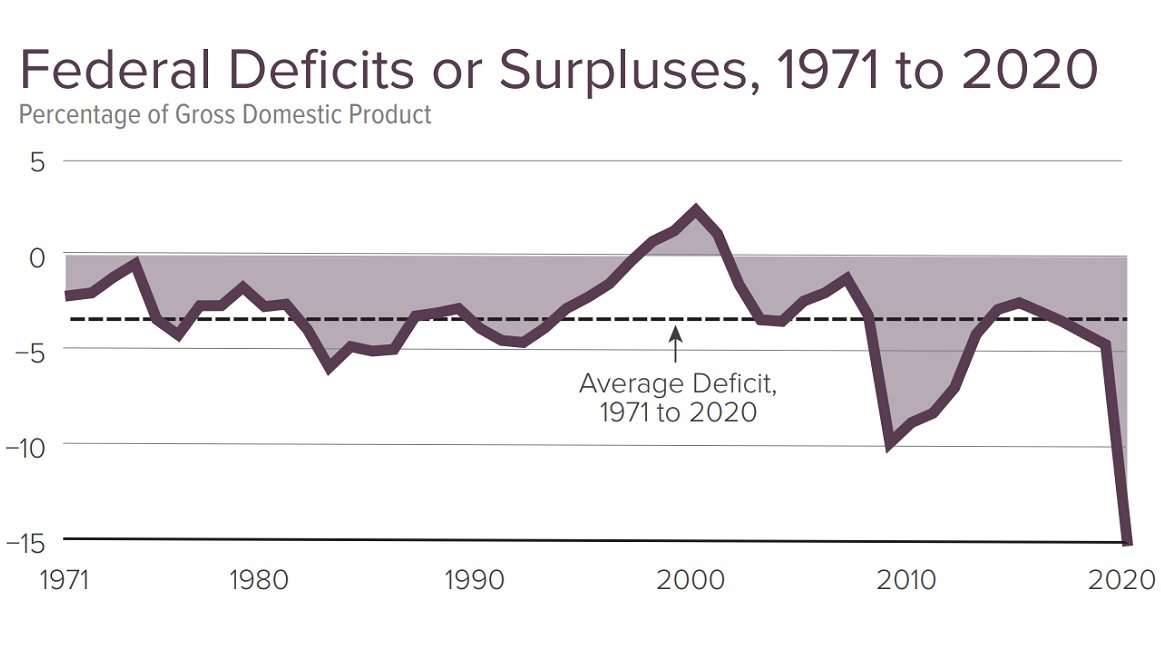
    In the last year the United States has added more than $4 trillion in federal debt, and that doesn’t even count the historic Biden spending surge, which kicks off today with his signature on the massive new stimulus plan.

    Yet as the country was locking down last spring, Dr. Fauci described the impact on Americans as “inconvenient” and later acknowledged that he did not do cost-benefit analysis and really had no idea what the consequences were for students: “I don’t have a good explanation, or solution to the problem of what happens when you close schools, and it triggers a cascade of events that could have some harmful circumstances.”

    In March of last year, Dr. Fauci told National Public Radio that the U.S. “would not have a vaccine available for at least a year to a year and a half—at best.”

    Thank goodness he was wrong about that. Dr. Fauci’s other errors have been much more painful for Americans to bear.

    I know three people who died from COVID. Freeman’s conclusion is nonetheless absolutely correct. The federal and Wisconsin government’s performance against COVID ranks among the worst government failures in history. Educators say it will take years for children to recover from the lost fourth quarter of last school year. Some people — for instance, those whose businesses were ordered closed because they were “nonessential,” and then their businesses closed for good — will never recover.


    Share this on …

    • Share on X (Opens in new window) X
    • Share on Facebook (Opens in new window) Facebook
    • Share on LinkedIn (Opens in new window) LinkedIn
    • Email a link to a friend (Opens in new window) Email
    • Print (Opens in new window) Print
    Like Loading…
    No comments on The panic, one year later
  • Presty the DJ for March 12

    March 12, 2021
    Music

    The number one single today in 1966 (which means that it predated the movie by two years):

    The Beatles had an interesting day today in 1969. Paul McCartney married Linda Eastman …

    … while George Harrison and wife Patti Boyd were arrested on charges of possessing 120 marijuana joints.

    (more…)

    Share this on …

    • Share on X (Opens in new window) X
    • Share on Facebook (Opens in new window) Facebook
    • Share on LinkedIn (Opens in new window) LinkedIn
    • Email a link to a friend (Opens in new window) Email
    • Print (Opens in new window) Print
    Like Loading…
    No comments on Presty the DJ for March 12
Previous Page
1 … 231 232 233 234 235 … 1,034
Next Page

Website Powered by WordPress.com.

Steve Prestegard.com: The Presteblog

The thoughts of a journalist/libertarian–conservative/Christian husband, father, Eagle Scout and aficionado of obscure rock music. Thoughts herein are only the author’s and not necessarily the opinions of his family, friends, neighbors, church members or past, present or future employers.

  • Steve
    • About, or, Who is this man?
    • Facebook
    • Twitter
    • Adventures in ruralu0026nbsp;inkBack in June 2009, I was driving somewhere through a rural area. And for some reason, I had a flashback to two experiences in my career about that time of year many years ago. In 1988, eight days after graduating from the University of Wisconsin, I started work at the Grant County Herald Independent in Lancaster as a — well, the — reporter. Four years after that, on my 27th birthday, I purchased, with a business partner, the Tri-County Press in Cuba City, my first business venture. Both were experiences about which Wisconsin author Michael Perry might write. I thought about all this after reading a novel, The Deadline, written by a former newspaper editor and publisher. (Now who would write a novel about a weekly newspaper?) As a former newspaper owner, I picked at some of it — why finance a newspaper purchase through the bank if the seller is willing to finance it? Because the mean bank lender is a plot point! — and it is much more interesting than reality, but it is very well written, with a nicely twisting plot, and quite entertaining, again more so than reality. There is something about that first job out of college that makes you remember it perhaps more…
    • Adventures in radioI’ve been in the full-time work world half my life. For that same amount of time I’ve been broadcasting sports as a side interest, something I had wanted to since I started listening to games on radio and watching on TV, and then actually attending games. If you ask someone who’s worked in radio for some time about the late ’70s TV series “WKRP in Cincinnati,” most of them will tell you that, if anything, the series understated how wacky working in radio can be. Perhaps the funniest episode in the history of TV is the “WKRP” episode, based on a true story, about the fictional radio station’s Thanksgiving promotion — throwing live turkeys out of a helicopter under the mistaken belief that, in the words of WKRP owner Arthur Carlson, “As God is my witness, I thought turkeys could fly.” [youtube=http://www.youtube.com/watch?v=ST01bZJPuE0] I’ve never been involved in anything like that. I have announced games from the roofs of press boxes (once on a nice day, and once in 50-mph winds), from a Mississippi River bluff (more on that later), and from the front row of the second balcony of the University of Wisconsin Fieldhouse (great view, but not a place to go if…
    • “Good morning/afternoon/evening, ________ fans …”
    • My biggest storyEarlier this week, while looking for something else, I came upon some of my own work. (I’m going to write a blog someday called “Things I Found While Looking for Something Else.” This is not that blog.) The Grant County Sheriff’s Department, in the county where I used to live, has a tribute page to the two officers in county history who died in the line of duty. One is William Loud, a deputy marshal in Cassville, shot to death by two bank robbers in 1912. The other is Tom Reuter, a Grant County deputy sheriff who was shot to death at the end of his 4 p.m.-to-midnight shift March 18, 1990. Gregory Coulthard, then a 19-year-old farmhand, was convicted of first-degree intentional homicide and is serving a life sentence, with his first eligibility for parole on March 18, 2015, just 3½ years from now. I’ve written a lot over the years. I think this, from my first two years in the full-time journalism world, will go down as the story I remember the most. For journalists, big stories contain a paradox, which was pointed out in CBS-TV’s interview of Andy Rooney on his last “60 Minutes” Sunday. Morley Safer said something along the line…
  • Food and drink
    • The Roesch/Prestegard familyu0026nbsp;cookbookFrom the family cookbook(s) All the families I’m associated with love to eat, so it’s a good thing we enjoy cooking. The first out-of-my-house food memory I have is of my grandmother’s cooking for Christmas or other family occasions. According to my mother, my grandmother had a baked beans recipe that she would make for my mother. Unfortunately, the recipe seems to have  disappeared. Also unfortunately, my early days as a picky, though voluminous, eater meant I missed a lot of those recipes made from such wholesome ingredients as lard and meat fat. I particularly remember a couple of meals that involve my family. The day of Super Bowl XXXI, my parents, my brother, my aunt and uncle and a group of their friends got together to share lots of food and cheer on the Packers to their first NFL title in 29 years. (After which Jannan and I drove to Lambeau Field in the snow,  but that’s another story.) Then, on Dec. 31, 1999, my parents, my brother, my aunt and uncle and Jannan and I (along with Michael in utero) had a one-course-per-hour meal to appropriately end years beginning with the number 1. Unfortunately I can’t remember what we…
    • SkålI was the editor of Marketplace Magazine for 10 years. If I had to point to one thing that demonstrates improved quality of life since I came to Northeast Wisconsin in 1994, it would be … … the growth of breweries and  wineries in Northeast Wisconsin. The former of those two facts makes sense, given our heritage as a brewing state. The latter is less self-evident, since no one thinks of Wisconsin as having a good grape-growing climate. Some snobs claim that apple or cherry wines aren’t really wines at all. But one of the great facets of free enterprise is the opportunity to make your own choice of what food and drink to drink. (At least for now, though some wish to restrict our food and drink choices.) Wisconsin’s historically predominant ethnic group (and our family’s) is German. Our German ancestors did unfortunately bring large government and high taxes with them, but they also brought beer. Europeans brought wine with them, since they came from countries with poor-quality drinking water. Within 50 years of a wave of mid-19th-century German immigration, brewing had become the fifth largest industry in the U.S., according to Maureen Ogle, author of Ambitious Brew: The Story of American Beer. Beer and wine have…
  • Wheels
    • America’s sports carMy birthday in June dawned without a Chevrolet Corvette in front of my house. (The Corvette at the top of the page was featured at the 2007 Greater Milwaukee Auto Show. The copilot is my oldest son, Michael.) Which isn’t surprising. I have three young children, and I have a house with a one-car garage. (Then again, this would be more practical, though a blatant pluck-your-eyes-out violation of the Corvette ethos. Of course, so was this.) The reality is that I’m likely to be able to own a Corvette only if I get a visit from the Corvette Fairy, whose office is next door to the Easter Bunny. (I hope this isn’t foreshadowing: When I interviewed Dave Richter of Valley Corvette for a car enthusiast story in the late great Marketplace Magazine, he said that the most popular Corvette in most fans’ minds was a Corvette built during their days in high school. This would be a problem for me in that I graduated from high school in 1983, when no Corvette was built.) The Corvette is one of those cars whose existence may be difficult to understand within General Motors Corp. The Corvette is what is known as a “halo car,” a car that drives people into showrooms, even if…
    • Barges on fouru0026nbsp;wheelsI originally wrote this in September 2008.  At the Fox Cities Business Expo Tuesday, a Smart car was displayed at the United Way Fox Cities booth. I reported that I once owned a car into which trunk, I believe, the Smart could be placed, with the trunk lid shut. This is said car — a 1975 Chevrolet Caprice coupe (ours was dark red), whose doors are, I believe, longer than the entire Smart. The Caprice, built down Interstate 90 from us Madisonians in Janesville (a neighbor of ours who worked at the plant probably helped put it together) was the flagship of Chevy’s full-size fleet (which included the stripper Bel Air and middle-of-the-road Impala), featuring popular-for-the-time vinyl roofs, better sound insulation, an upgraded cloth interior, rear fender skirts and fancy Caprice badges. The Caprice was 18 feet 1 inch long and weighed 4,300 pounds. For comparison: The midsize Chevrolet of the ear was the Malibu, which was the same approximate size as the Caprice after its 1977 downsizing. The compact Chevrolet of the era was the Nova, which was 200 inches long — four inches longer than a current Cadillac STS. Wikipedia’s entry on the Caprice has this amusing sentence: “As fuel economy became a bigger priority among Americans…
    • Behind the wheel
    • Collecting only dust or rust
    • Coooooooooooupe!
    • Corvettes on the screen
    • The garage of misfit cars
    • 100 years (and one day) of our Chevrolets
    • They built Excitement, sort of, once in a while
    • A wagon by any otheru0026nbsp;nameFirst written in 2008. You will see more don’t-call-them-station-wagons as you drive today. Readers around my age have probably had some experience with a vehicle increasingly rare on the road — the station wagon. If you were a Boy Scout or Girl Scout, or were a member of some kind of youth athletic team, or had a large dog, or had relatives approximately your age, or had friends who needed to be transported somewhere, or had parents who occasionally had to haul (either in the back or in a trailer) more than what could be fit inside a car trunk, you (or, actually, your parents) were the target demographic for the station wagon. “Station wagons came to be like covered wagons — so much family activity happened in those cars,” said Tim Cleary, president of the American Station Wagon Owners Association, in Country Living magazine. Wagons “were used for everything from daily runs to the grocery store to long summer driving trips, and while many men and women might have wanted a fancier or sportier car, a station wagon was something they knew they needed for the family.” The “station wagon” originally was a vehicle with a covered seating area to take people between train stations…
    • Wheels on theu0026nbsp;screenBetween my former and current blogs, I wrote a lot about automobiles and TV and movies. Think of this post as killing two birds (Thunderbirds? Firebirds? Skylarks?) with one stone. Most movies and TV series view cars the same way most people view cars — as A-to-B transportation. (That’s not counting the movies or series where the car is the plot, like the haunted “Christine” or “Knight Rider” or the “Back to the Future” movies.) The philosophy here, of course, is that cars are not merely A-to-B transportation. Which disqualifies most police shows from what you’re about to read, even though I’ve watched more police video than anything else, because police cars are plain Jane vehicles. The highlight in a sense is in the beginning: The car chase in my favorite movie, “Bullitt,” featuring Steve McQueen’s 1968 Ford Mustang against the bad guys’ 1968 Dodge Charger: [youtube=http://www.youtube.com/watch?v=GMc2RdFuOxIu0026amp;fmt=18] One year before that (but I didn’t see this until we got Telemundo on cable a couple of years ago) was a movie called “Operación 67,” featuring (I kid you not) a masked professional wrestler, his unmasked sidekick, and some sort of secret agent plot. (Since I don’t know Spanish and it’s not…
    • While riding in my Cadillac …
  • Entertainments
    • Brass rocksThose who read my former blog last year at this time, or have read this blog over the past months, know that I am a big fan of the rock group Chicago. (Back when they were a rock group and not a singer of sappy ballads, that is.) Since rock music began from elements of country music, jazz and the blues, brass rock would seem a natural subgenre of rock music. A lot of ’50s musical acts had saxophone players, and some played with full orchestras … [youtube=http://www.youtube.com/watch?v=9CPS-WuUKUE] … but it wasn’t until the more-or-less simultaneous appearances of Chicago and Blood Sweat u0026amp; Tears on the musical scene (both groups formed in 1967, both had their first charting singles in 1969, and they had the same producer) that the usual guitar/bass/keyboard/drum grouping was augmented by one or more trumpets, a sax player and a trombone player. While Chicago is my favorite group (but you knew that already), the first brass rock song I remember hearing was BSu0026amp;T’s “Spinning Wheel” — not in its original form, but on “Sesame Street,” accompanied by, yes, a giant spinning wheel. [youtube=http://www.youtube.com/watch?v=qi9sLkyhhlE] [youtube=http://www.youtube.com/watch?v=OxWSOuNsN20] [youtube=http://www.youtube.com/watch?v=U9U34uPjz-g] I remember liking Chicago’s “Just You ‘n Me” when it was released as a single, and…
    • Drive and Eat au0026nbsp;RockThe first UW home football game of each season also is the opener for the University of Wisconsin Marching Band, the world’s finest college marching band. (How the UW Band has not gotten the Sudler Trophy, which is to honor the country’s premier college marching bands, is beyond my comprehension.) I know this because I am an alumnus of the UW Band. I played five years (in the last rank of the band, Rank 25, motto: “Where Men Are Tall and Run-On Is Short”), marching in 39 football games at Camp Randall Stadium, the Hubert H. Humphrey Metrodome in Minneapolis, Michigan Stadium in Ann Arbor, Memorial Stadium at the University of Illinois (worst artificial turf I had ever seen), the University of Nevada–Las Vegas’ Sam Boyd Silver Bowl, the former Dyche Stadium at Northwestern University, five high school fields and, in my one bowl game, Legion Field in Birmingham, Ala., site of the 1984 Hall of Fame Bowl. The UW Band was, without question, the most memorable experience of my college days, and one of the most meaningful experiences of my lifetime. It was the most physical experience of my lifetime, to be sure. Fifteen minutes into my first Registration…
    • Keep on rockin’ in the freeu0026nbsp;worldOne of my first ambitions in communications was to be a radio disc jockey, and to possibly reach the level of the greats I used to listen to from WLS radio in Chicago, which used to be one of the great 50,000-watt AM rock stations of the country, back when they still existed. (Those who are aficionados of that time in music and radio history enjoyed a trip to that wayback machine when WLS a Memorial Day Big 89 Rewind, excerpts of which can be found on their Web site.) My vision was to be WLS’ afternoon DJ, playing the best in rock music between 2 and 6, which meant I wouldn’t have to get up before the crack of dawn to do the morning show, yet have my nights free to do whatever glamorous things big-city DJs did. Then I learned about the realities of radio — low pay, long hours, zero job security — and though I have dabbled in radio sports, I’ve pretty much cured myself of the idea of working in radio, even if, to quote WAPL’s Len Nelson, “You come to work every day just like everybody else does, but we’re playing rock ’n’ roll songs, we’re cuttin’ up.…
    • Monday on the flight line, not Saturday in the park
    • Music to drive by
    • The rock ofu0026nbsp;WisconsinWikipedia begins its item “Music of Wisconsin” thusly: Wisconsin was settled largely by European immigrants in the late 19th century. This immigration led to the popularization of galops, schottisches, waltzes, and, especially, polkas. [youtube=http://www.youtube.com/watch?v=yl7wCczgNUc] So when I first sought to write a blog piece about rock musicians from Wisconsin, that seemed like a forlorn venture. Turned out it wasn’t, because when I first wrote about rock musicians from Wisconsin, so many of them that I hadn’t mentioned came up in the first few days that I had to write a second blog entry fixing the omissions of the first. This list is about rock music, so it will not include, for instance, Milwaukee native and Ripon College graduate Al Jarreau, who in addition to having recorded a boatload of music for the jazz and adult contemporary/easy listening fan, also recorded the theme music for the ’80s TV series “Moonlighting.” Nor will it include Milwaukee native Eric Benet, who was for a while known more for his former wife, Halle Berry, than for his music, which includes four number one singles on the Ru0026amp;B charts, “Spend My Life with You” with Tamia, “Hurricane,” “Pretty Baby” and “You’re the Only One.” Nor will it include Wisconsin’s sizable contributions to big…
    • Steve TV: All Steve, All the Time
    • “Super Steve, Man of Action!”
    • Too much TV
    • The worst music of allu0026nbsp;timeThe rock group Jefferson Airplane titled its first greatest-hits compilation “The Worst of Jefferson Airplane.” Rolling Stone magazine was not being ironic when it polled its readers to decide the 10 worst songs of the 1990s. I’m not sure I agree with all of Rolling Stone’s list, but that shouldn’t be surprising; such lists are meant for debate, after all. To determine the “worst,” songs appropriate for the “Vinyl from Hell” segment that used to be on a Madison FM rock station, requires some criteria, which does not include mere overexposure (for instance, “Macarena,” the video of which I find amusing since it looks like two bankers are singing it). Before we go on: Blog posts like this one require multimedia, so if you find a song you hate on this blog, I apologize. These are also songs that I almost never listen to because my sound system has a zero-tolerance policy — if I’m listening to the radio or a CD and I hear a song I don’t like, it’s, to quote Bad Company, gone gone gone. My blonde wife won’t be happy to read that one of her favorite ’90s songs, 4 Non Blondes’ “What’s Up,” starts the list. (However,…
    • “You have the right to remain silent …”
  • Madison
    • Blasts from the Madison media past
    • Blasts from my Madison past
    • Blasts from our Madison past
    • What’s the matter with Madison?
    • Wisconsin – Madison = ?
  • Sports
    • Athletic aesthetics, or “cardinal” vs. “Big Red”
    • Choose your own announcer
    • La Follette state 1982 (u0022It was 30 years ago todayu0022)
    • The North Dakota–Wisconsin Hockey Fight of 1982
    • Packers vs. Brewers
  • Hall of Fame
    • The case(s) against teacher unions
    • The Class of 1983
    • A hairy subject, or face the face
    • It’s worse than you think
    • It’s worse than you think, 2010–11 edition
    • My favorite interview subject of all time
    • Oh look! Rural people!
    • Prestegard for president!
    • Unions vs. the facts, or Hiding in plain sight
    • When rhetoric goes too far
Privacy & Cookies: This site uses cookies. By continuing to use this website, you agree to their use.
To find out more, including how to control cookies, see here: Cookie Policy
  • Subscribe Subscribed
    • Steve Prestegard.com: The Presteblog
    • Join 198 other subscribers
    • Already have a WordPress.com account? Log in now.
    • Steve Prestegard.com: The Presteblog
    • Subscribe Subscribed
    • Sign up
    • Log in
    • Report this content
    • View site in Reader
    • Manage subscriptions
    • Collapse this bar
%d