• The liberal 0-for-2

    June 25, 2022
    US politics

    The Wall Street Journal on Thursday:

    The Supreme Court’s 6-3 ruling Thursday on gun rights boils down to this: The Second Amendment doesn’t disappear when you walk out your front door. Stated that way, it sounds obvious, but many appeals judges have disagreed. For a frustrating decade, the Supreme Court was too gun-shy to set them straight, but Justice Clarence Thomas’s majority opinion was worth the wait.

    New York State Rifle and Pistol Association v. Bruen challenged the Empire State’s regulations on carrying a firearm in public. Open carry in New York is banned. With certain exceptions, such as for judges, getting a permit to carry a handgun that’s concealed requires demonstrating “proper cause.” That has been interpreted to mean “a special need” for self-defense, beyond that of “the general community or of persons engaged in the same profession.”

    In other words, shopkeepers who must carry cash through high-crime neighborhoods are out of luck. But as Justice Thomas points out, the Constitution protects a right not only to “keep” but also to “bear” arms. “Most gun owners do not wear a holstered pistol at their hip in their bedroom or while sitting at the dinner table,” he writes. “To confine the right to ‘bear’ arms to the home would nullify half of the Second Amendment’s operative protections.”

    This does not mean urban America will soon resemble the Wild West. Forty-three states, Justice Thomas says, already have “shall issue” regimes, meaning carry permits are available to everyone who meets objective criteria. That process can be rigorous and might include fingerprinting, firearms training, background checks, and so forth. A concurring opinion by Justice Brett Kavanaugh, joined by Chief Justice John Roberts, stresses that the Court is not calling such rules into question.

    What’s unconstitutional is that six states—New York, New Jersey, Maryland, Massachusetts, California and Hawaii—offer residents no clear path to carry a gun to defend themselves. As Justice Thomas says: “The Second and Fourteenth Amendments protect an individual’s right to carry a handgun for self-defense outside the home.” Those states can still regulate carry permits, but they can’t deny such permits to law-abiding citizens.

    This is a landmark holding. In Heller (2008) the Court recognized the Second Amendment as an individual right. Then for a decade it stood by as appeals courts upheld gun restrictions that eroded Heller. Lower-court judges, Justice Thomas says, err when they try to balance state interests in gun laws against the burden on the Second Amendment. This forces judges to make empirical judgments, and he says it’s “inconsistent with Heller’s historical approach and its rejection of means-end scrutiny.”

    To uphold a gun restriction, Justice Thomas says, the government must show that it is “consistent with the Nation’s historical tradition of firearm regulation.” He then surveys the history of gun limitations before and after the Founding. “None of these historical limitations on the right to bear arms approach New York’s proper-cause requirement,” Justice Thomas concludes, “because none operated to prevent law-abiding citizens with ordinary self-defense needs from carrying arms in public for that purpose.”

    He acknowledges a few counterexamples but says the weight of the evidence is against New York. This is the right originalist analysis: What did the Second Amendment mean to the people who passed it?

    This rejection of a balancing test for regulations that trespass on the “core” of a constitutional right ought to discipline lower-court judges. And it has implications for other rights, not least campaign-finance restrictions that run afoul of the First Amendment.

    The Wall Street Journal Friday:

    Can America still settle its political conflicts democratically, and peacefully? We’re about to find out after the Supreme Court Friday overturned Roe v. Wade and returned the profound moral issue of abortion to the states and democratic assent, where it has always belonged.

    Critics say the Court’s 6-3 decision in Dobbs v. Jackson Women’s Health Organization is rule by unelected judges. But Roe was the real “exercise of raw judicial power,” as Justice Byron White put it in dissent in 1973. That’s when seven Justices claimed to find a constitutional right to abortion that is nowhere mentioned in the Constitution and had no history in American common law. The Court on Friday finally corrected its mistake, which has damaged the legitimacy of the Court and inflamed our politics for 49 years.

    The Justices in the majority deserve credit for sticking with their convictions despite the leak of Justice Samuel Alito’s opinion in May. The leak was probably intended to create a furor to pressure the Justices to change their mind, and it has led to protests in front of their homes and even an apparent assassination attempt against Justice Brett Kavanaugh. By holding firm, they showed the Court can’t be intimidated.

    Justice Alito’s majority opinion hews closely to his draft, and it is a careful, thoughtful survey of abortion law and its history in the constitutional order. His opinion takes apart, brick by logical brick, the reasoning of Roe and Planned Parenthood v. Casey, the other main abortion precedent the Court overrules in Dobbs.

    The central point, underscored by Justice Kavanaugh in his concurrence, is that abortion can be found nowhere in the Constitution. The parchment is neutral on the issue. The supporters of an abortion right claim to have found it in the due process clause of the 14th Amendment, which was ratified in 1868. But until the latter part of the 20th century, the idea of a right to abortion could be found nowhere in American law. No state constitutions included it, and until shortly before Roe no court had recognized such a right. Justice Harry Blackmun ignored that history and invented the right in Roe.

    Casey entrenched Roe in 1992, yet it did so without considering that history, while asserting that abortion was part of a gauzy right to privacy that includes “intimate and personal choices.” The three controlling Justices in Casey sought to balance that right against the “potential life” of a baby in the womb.

    But their judgment of how to strike that balance supplanted the moral choices of millions of Americans. “Our Nation’s historical understanding of ordered liberty does not prevent the people’s elected representatives from deciding how abortion should be regulated,” writes Justice Alito.

    The three dissenting Justices claim the majority has steamrolled the doctrine of stare decisis, or respect for precedent. But Justice Alito’s opinion deals step by step with the Court’s traditional stare decisis analysis, and his most telling point is that Roe and Casey haven’t come close to settling the issue.

    The controlling Justices in Casey went so far as to make an essentially political plea that Americans let their ruling settle the abortion issue. It was a futile attempt to end debate on a question that touches people at their deepest moral convictions. Abortion continues to roil American politics, and states continue to pass laws challenging the logic of both opinions. When a ruling is still controversial and unworkable after five decades, that is compelling evidence it was wrongly decided.

    Chief Justice John Roberts writes in a concurrence that the Court did not have to overturn Roe to uphold Mississippi’s ban on abortion after 15 weeks in this case. He says this would have been more judicially modest and less jolting to the public.

    We agree on his point about upholding the Mississippi law, but such a halfway ruling would only have been a legal holding action. More states would have written more laws that would have challenged Roe and Casey, and sooner or later the Court would have had to overrule both or uphold some remnant of them as settled law. Better to take this opportunity to return the issue to the states sooner rather than later.

    The political left is making much of Justice Clarence Thomas’s argument in a concurrence that the Court should revisit all of its precedents that are based on the use of substantive due process to find rights in the Constitution. That includes precedents on contraception and gay marriage.

    Substantive due process is a long-time preoccupation of Justice Thomas, and we respect him for it. But the doctrine is also deeply embedded in countless Court precedents that have far better stare decisis claims than does Roe. Overturning the Obergefell ruling on gay marriage, for example, would jeopardize hundreds of thousands of legal marriage contracts. That’s the definition of a reliance-interest justification for upholding a precedent. Justice Thomas also acknowledges in his concurrence that abortion is different from these cases, and note that no other Justice joined his opinion.

    Which brings us back to the politics of abortion and democracy. The debate will now shift from courts to the political branches, which should be healthy for the judiciary. Democrats made clear on Friday that they will make abortion rights a major campaign theme in the midterm elections, and President Biden declared that “this is not over.”

    Fair enough. Both sides of the abortion debate will now have to achieve their policy goal the old-fashioned way—through persuasion, not judicial fiat. Some in the pro-life movement want Congress to ban abortion nationwide. But that will strike many Americans as hypocritical after decades of Republican claims that repealing Roe would return the issue to the states.

    A national ban may also be an unconstitutional intrusion on state police powers and federalism. Imposing the abortion values of Mississippi or Texas on all 50 states could prove to be as unpopular as New York or California trying to do the same for abortion rights.

    One tragedy of Roe is that it pre-empted an abortion debate that was moving in the states a half century ago. That debate can now resume. Some states will ban it in most cases, while others like California may seek to pay for the abortions of women from other states.

    It will take awhile, and more than one election, but we hope that eventually the public through its legislators will find a tolerable consensus, if not exactly common ground. That’s the best we can ask for in our imperfect republic, if we can keep it.

    James Freeman chronicles the more hysterical reaction:

    In their more candid moments even leftist luminaries like the late Justice Ruth Bader Ginsburg admitted significant flaws in Roe v. Wade. But now that the Supreme Court has returned the contentious issue of abortion to the people and their elected representatives, Roe’s flaws don’t make it any easier for some activists to accept that each state will now be free to set its own policies.

    It’s understandable to be deeply disappointed and even sad when your side loses an important case, What is not unacceptable is for the attorney general of the United States to forget his duty to enforce the law and instead to express publicly his contempt for it. The Supreme Court has ruled today and Merrick Garland has issued a press release in opposition to the ruling as if he is a political candidate running a campaign against the justices. In a release from the Department of Justice Mr. Garland states:

    “Today, the Supreme Court overturned Roe v. Wade and Planned Parenthood v. Casey and held that the right to abortion is no longer protected by the Constitution.

    “The Supreme Court has eliminated an established right that has been an essential component of women’s liberty for half a century – a right that has safeguarded women’s ability to participate fully and equally in society. And in renouncing this fundamental right, which it had repeatedly recognized and reaffirmed, the Court has upended the doctrine of stare decisis, a key pillar of the rule of law.

    “The Justice Department strongly disagrees with the Court’s decision. This decision deals a devastating blow to reproductive freedom in the United States. It will have an immediate and irreversible impact on the lives of people across the country. And it will be greatly disproportionate in its effect – with the greatest burdens felt by people of color and those of limited financial means.

    One can make substantive arguments against the attorney general’s various claims but even if one shares his politics, issuing such screeds and seeking to undermine the authority of the court should be anathema to any responsible law-enforcement officer.

    It’s critical that Mr. Garland regains his composure and focuses on his job. As Kyle Mann of the satirical website Babylon Bee notes with graveyard humor, there could be a violent reaction to today’s ruling from extremists:

    Authorities are warning tonight’s protests may escalate from “mostly peaceful” to “somewhat peaceful”

    Those protesting the ruling have a particular challenge in that there is now some disagreement among themselves about what exactly they are advocating and for whom. The left has been engaged in a confusing internal debate about what a woman is. This week the abortion rights organization NARAL Pro-Choice America didn’t necessarily help clarify things by tweeting:

    If your feminism doesn’t include trans women and girls, it’s not feminism.

    If your feminism doesn’t understand how anti-trans policies disproportionately impact BIPOC folks, particularly Black trans women and girls, it’s not feminism

    The tweet also included emojis for emphasis. Of course before assessing the impact of today’s ruling on BIPOC folks it’s important to know what BIPOC means. A 2020 Vox story carried the headline “Why the term ‘BIPOC’ is so complicated, explained by linguists,” and now includes this note at the bottom of the article:

    Correction: An earlier version of this article defined BIPOC as standing for “Black and Indigenous people of color.” It stands for Black, Indigenous, people of color.

    Now comes an email from Lisa Burkert of the public-relations firm The TASC Group relaying a statement on today’s ruling from Sean Ebony Coleman, founder and executive director of LGBTQ center Destination Tomorrow:

    “We need to highlight the fact that this Supreme Court decision will impact anyone with a uterus, whether or not they are female identified. Poor Black and brown LBT people in rural areas will suffer the most. Reproductive rights are human rights, and no one should be forgotten in this fight, especially trans masculine folks. The fact that this is happening during Pride month should also not be lost on us – at a time when we are celebrating freedom, our freedoms are being challenged and taken away. This is our call to action. All those who are not cis, white males are in danger. Those in the margins must come forward, band together and fight.”

    As this column noted earlier in the week, efforts among progressive leftists to band together have lately been especially challenging. And today’s issue seems to be getting more and more complex. Perhaps state legislators can figure out which abortion laws make sense for the individuals in their particular jurisdictions. Experienced legislators tend to have the ability to understand how the wants and needs of their constituents change over time, and also have an instinct for positioning themselves for future electoral success.

    Take for example, the experienced legislator who became our president in 2021. Way back in 1986 the Journal’s Al Hunt wrote about Sen. Joe Biden (D., Del.):

    He says he opposes efforts to limit a woman’s right to an abortion, but also opposes federal funds to finance abortions. Yet he did vote in the Judiciary Committee for one anti-abortion constitutional amendment, and has fudged a few times on funding measures — earning the enmity of both sides.

    “Joe Biden moans a lot and then usually votes against us,” says Jeannie Rosoff, a top official of the pro-choice Planned Parenthood. “It’s very difficult to know whether this issue is purely personal, purely political or a combination of both with him.” Meanwhile, Douglas Johnson of the anti-abortion National Right to Life organization complains: “It appears to us that in recent years Sen. Biden has made a political judgment that he should be more pro-abortion.”

    One can never precisely predict the evolution of politicians or voters’ preferences. But perhaps in another 36 years Mr. Biden will be a Roe opponent again.

    Share this on …

    • Share on X (Opens in new window) X
    • Share on Facebook (Opens in new window) Facebook
    • Share on LinkedIn (Opens in new window) LinkedIn
    • Email a link to a friend (Opens in new window) Email
    • Print (Opens in new window) Print
    Like Loading…
    No comments on The liberal 0-for-2
  • Presty the DJ for June 25

    June 25, 2022
    Music

    There seems to be a blue theme today, starting with the first birthday, Harold Melvin, who had Blue Notes:

    Carly Simon:

    (more…)

    Share this on …

    • Share on X (Opens in new window) X
    • Share on Facebook (Opens in new window) Facebook
    • Share on LinkedIn (Opens in new window) LinkedIn
    • Email a link to a friend (Opens in new window) Email
    • Print (Opens in new window) Print
    Like Loading…
    No comments on Presty the DJ for June 25
  • The author of your pain at the pump

    June 24, 2022
    US politics

    James Freeman:

    People wondering who’s really in charge at the White House may be reassured to know that the emerging economic policy appears to be the work of a career politician.

    In the Washington Post Tyler Pager, Jeff Stein, Tony Romm and Cleve Wootson report:

    President Biden appealed to Congress on Wednesday to suspend the federal gas tax, saying it was critical to reduce the pain Americans are feeling at the pump. “I promise you I’m doing everything possible to bring the price of energy down,” Biden said, as images of oil pumps and gas stations flickered on the wall behind him.

    But the notion of a gas tax holiday was met with instant criticism — not only from members of both parties on Capitol Hill, but even from many officials within the administration who said privately that it would probably do little to significantly lower gas prices.

    Top Treasury Department officials expressed doubts about the gas tax holiday, and at least two top White House economists also privately conveyed reservations, according to two people familiar with the internal deliberations who spoke on the condition of anonymity to disclose sensitive conversations.

    No doubt White House economists familiar with the concepts of supply, demand and incentives are also not entirely on board with the president’s decision to blame high gas prices on each industry in the supply chain. Having previously aimed his rhetoric at oil producers and refiners, the president is now blustering his way down the distribution channel. In the Eisenhower Executive Office Building on Wednesday Mr. Biden said:

    My message is simple. To the companies running gas stations and setting those prices at the pump: This is a time of war, global peril, Ukraine. These are not normal times.

    Bring down the price you are charging at the pump to reflect the cost you are paying for the product. Do it now. Do it today. Your customers, the American people, they need relief now.

    Nothing encourages people you intend to eventually put out of business like demanding they should also forgo profits today. Mr. Biden also claimed on Wednesday:

    Now, I fully understand that a gas tax holiday alone is not going to fix the problem, but it will provide families some immediate relief — just a little bit of breathing room — as we continue working to bring down prices for the long haul.

    Does the president really mean it when he says he’s working to bring down prices for the long haul? If so, he’s blessed with yet another opportunity to encourage U.S. oil production before he jets off next month to encourage Saudi oil production.

    In the New York Times Lisa Friedman reports from Washington:

    President Biden’s top aides are weighing whether to ban new oil and gas drilling off America’s coasts, a move that would elate climate activists but could leave the administration vulnerable to Republican accusations that it is exacerbating an energy crunch as gas prices soar.

    By law, the Department of Interior is required to release a plan for new oil and gas leases in federal waters every five years. Deb Haaland, the Interior secretary, has promised Congress a draft of the Biden plan will be available by June 30.

    Spoiler alert: U.S. consumers and PGA Tour officials should prepare themselves for some bad news. It appears that at the margin Mr. Biden continues to favor the accumulation of oil wealth in Dhahran rather than Houston. “Several people familiar with the administration’s decision-making said it is likely to block new drilling in the Atlantic and Pacific oceans,” reports Ms. Friedman, who also notes:

    Last month the Biden administration canceled lease sales in federal waters off Alaska’s Cook Inlet, citing a lack of industry interest.

    The Cook Inlet basin, at one time Alaska’s primary source of oil, is now mainly a source of natural gas for local utilities and large-scale projects have been rare in recent years, energy experts said. Still, the industry wants the Arctic waters available for future possible leases.

    If the past is prelude, the future will not bring much oil availability from federal lands during the Biden era. Adds Ms. Friedman:

    Shortly after taking office, President Biden signed an executive order to pause the issuing of new leases — but a successful legal challenge from Republican states and the oil industry has forced the administration to hold new lease sales.

    The administration is appealing that ruling.

    Share this on …

    • Share on X (Opens in new window) X
    • Share on Facebook (Opens in new window) Facebook
    • Share on LinkedIn (Opens in new window) LinkedIn
    • Email a link to a friend (Opens in new window) Email
    • Print (Opens in new window) Print
    Like Loading…
    No comments on The author of your pain at the pump
  • Presty the DJ for June 24

    June 24, 2022
    Music

    Proving that there is no accounting for taste, I present the number six song today in 1972:

    Twenty years later, Billy Joel got an honorary diploma … from Hicksville High School in New York (where he attended but was one English credit short of graduating due to oversleeping the day of the final):

    (more…)

    Share this on …

    • Share on X (Opens in new window) X
    • Share on Facebook (Opens in new window) Facebook
    • Share on LinkedIn (Opens in new window) LinkedIn
    • Email a link to a friend (Opens in new window) Email
    • Print (Opens in new window) Print
    Like Loading…
    No comments on Presty the DJ for June 24
  • The purpose of business

    June 23, 2022
    US business, US politics

    George Will:

    Semantic infiltration is the tactic by which political objectives are smuggled into discourse that is ostensibly, but not actually, politically neutral. People who adopt a political faction’s vocabulary also adopt — perhaps inadvertently, but inevitably — the faction’s agenda. So, everyone who values economic dynamism, and the freedom that enables this, should recoil from the toxic noun “stakeholder.”

    The Oxford Reference definition is “all those with interests in an organization,” including “shareholders, employees, suppliers, customers, or members of the wider community (who could be affected by environmental consequences of an organization’s activities).” Which means: everyone. “All” in the “wider community” who claim an “interest.” Anyone can make such claims; no one can refute them.

    A former governor of the Bank of England (Mark Carney), the head of the world’s largest investment firm (Larry Fink of BlackRock) and the CEO of the largest U.S. bank (Jamie Dimon of JPMorgan Chase) have joined forces to make capitalism “sustainable” through “ESG” (environmental, social and governance) investing. Although fashionable, this is of dubious legality. (See below: fiduciary duty.) The Economist’s “Schumpeter” columnist notes that sanctimony accompanies such “financial do-goodery.” Of course: ESG appeals to people for whom mere business — the creation of wealth and opportunity — lacks the cachet of politics.

    Although progressivism presents itself as modernity on the march, its stakeholder doctrine echoes feudalism. Phil Gramm, a former U.S. senator, and Mike Solon, president at US Policy Strategies, writing in the Wall Street Journal, note that in feudalism’s “communal world,” workers had obligations to the church, the local aristocracy, the guild and the village: These “stakeholders” leeched away portions of what workers produced.

    Today, Gramm and Solon say, about 70 percent of corporate revenue goes to labor, and 72 percent of the value of publicly traded U.S. companies is “owned by pensions, 401(k)s, individual retirement accounts, charitable organizations, and insurance companies funding life insurance policies and annuities.” So, the wealth of workers, and of current and future retirees, is diminished when “stakeholders” get corporations to sacrifice the goal of maximizing economic value to noneconomic, generally political goals.

    Stakeholder capitalism violates fiduciary laws that require those entrusted with investors’ money to employ it “solely in the interest of” and “for the exclusive purpose of providing benefits to” the investors. (Emphasis added.) Sen. Marco Rubio’s proposed Mind Your Own Business Act would enhance shareholders’ power to sue corporate management for breach of fiduciary duty when corporations take actions “on a primarily non-pecuniary” (usually political) basis, or use primarily non-pecuniary public reasoning to justify corporate actions

    Although progressives are especially disposed to break all private entities to the saddle of politics, factions of all persuasions can infuse politics into this and that: A Texas law, itself a political gesture, requires banks that underwrite the state’s municipal bond market to certify that their political gestures do not include forbidding transactions with the firearms or ammunition manufacturers and retailers. One affected bank: Dimon’s JPMorgan Chase.

    The New York Times recently interviewed two advocates of ESG investing. One said, in effect, that only such investing fulfills fiduciary obligations because the welfare of those whose money is being used depends on “a planet that is livable.” Meaning: Politically enlightened ESG advocates know what unenlightened investors would want if they were as intelligent and virtuous as the advocates.

    The other ESG enthusiast the Times interviewed said “social justice investing” is “the deep integration of four areas: racial, gender, economic and climate justice.” And the “single-issue CEO” — the kind focused on maximizing shareholders’ value — is “not the way of the future.” This is often the progressives’ argument-ending declaration: Non-progressives are on the wrong side of history, so they can be disregarded until history discards them.

    The Times’s interviewer observed that “defining justice seems messy these days.” These days? Actually, justice has been a contested concept since Plato wrote. For today’s ESG advocates, however, the millennia-long debate is suddenly over: Justice is 2022 American progressivism, period.

    In a dynamic society, resources are efficiently disposed by corporate managements whose primary duty, which other corporate activities do not compromise, is to maximize shareholder value by profitably supplying the demand for goods and services. Furthermore, in a congenial society, boundaries are respected: Most people say about most things, “This is none of my business.”

    Self-proclaimed stakeholders, parasitic off others’ labor and accumulation, assert that everything is their business. Actually, although everyone has a right to advocate progressivism, no one has a right to insist on a stake in deploying others’ property for the stakeholders’ political ends.

    The concept of an investor society — expanding investment opportunities to the roughly 30 percent of Americans not investing now — is something that Republicans should be focusing on instead of things that will never happen (i.e. undoing the 2020 presidential election).

    Republicans should also be pointing out that the problems of today’s economy — rampant and worsening inflation led by spiraling energy prices — were the result not of the flaws of capitalism (which is flawed only because every single human institution is flawed since humans are involved), but by the flaws of government — specifically, Biden’s crappy energy policies, as noted by U.S. Rep. Dan Crenshaw (R–Texas):
    There are (at minimum) 5 things that Biden can do right now to increase production. First, he can lift the development restrictions on federal lands and waters, and reinstate any canceled sales and leases that took place on them. Second, the admin can fix the NEPA permitting process by establishing agency uniformity in reviews, limiting reviews to two years, and reducing ridiculous burdens placed on projects. Third, accelerate LNG exports and approve pending LNG applications. Fourth, end permitting obstruction on natural gas projects by stopping any efforts to overstep its permitting authority by the Federal Energy Regulatory Commission. And finally, Biden needs to roll back the 30+ regulations that this administration alone has put on the entirety of the oil and gas industry since taking office.

    Share this on …

    • Share on X (Opens in new window) X
    • Share on Facebook (Opens in new window) Facebook
    • Share on LinkedIn (Opens in new window) LinkedIn
    • Email a link to a friend (Opens in new window) Email
    • Print (Opens in new window) Print
    Like Loading…
    No comments on The purpose of business
  • The 70% society

    June 23, 2022
    US business, US politics

    Former U.S. Sen. Phil Gramm (R–Texas) and Mike Solon:

    No one appreciated the power of capitalism more than its greatest antagonist, Karl Marx. Born of the Enlightenment, embodied in the Industrial Revolution, capitalism, according to Marx, “accomplished wonders far surpassing Egyptian pyramids, Roman aqueducts, and Gothic cathedrals . . . achieving more massive and colossal productive forces than have all preceding generations together” in “scarce one hundred years.”

    Based on the erroneous notion that all value comes from labor, Marx assumed that the financier, entrepreneur and manager were noncontributing claimants on the fruits of the worker’s labor and that government could displace them and then “wither away” as growth occurred spontaneously. Most subsequent collectivists have assumed the same thing. In this utopia, workers would then receive all value created in society.

    Government was never able to replicate the efficiency and innovation of private finance, entrepreneurs and managers, and it was freedom and prosperity, not government, that always withered away. But because of the misery Marxism has imposed, the world has a living memory and therefore some natural immunity to a system in which government takes the commanding heights of the economy.

    No such immunity exists to the older and therefore more dangerous socialism of the pre-Enlightenment world. In the communal world of the Dark Ages, the worker owed fealty to crown, church, guild and village. Those “stakeholders” extracted a share of the product of the sweat of the worker’s brow and the fruits of his thrift. Growth stagnated as the rewards for effort and thrift were leached away.

    The 18th-century Enlightenment liberated mind, soul and property, empowering people to think their own thoughts and ultimately have a voice in their government, worship as they chose, and own the fruits of their own labor and thrift. As Enlightenment economist Adam Smith put it, “the property which every man has in his own labor, as it is the original foundation of all property, so it is the most sacred and inviolable.”

    The British Parliament repealed royal charters, permitted businesses to incorporate simply by meeting preset capital requirements, and established the rules of law governing private competition. Most important, laws were made through a process of open deliberation with public votes. This democratic process replaced the intimidation of medieval stakeholders, who under the communal concept of labor and capital took a share of what others produced.

    These Enlightenment ideas spawned the Industrial Revolution and gave birth to the modern world, as described by Marx. As people sought their own advancement under a system of private property and the rule of law, as if guided by Adam Smith’s “invisible hand,” they promoted the public interest without intention or knowledge of doing so. Freedom and self-interest unleashed the world’s greatest productive effort and continue to drive progress to this day.

    The pre-Enlightenment world was dominated by the powerful, who defined the public interest to benefit themselves and imposed their will on productive members of society. When labor and capital are forced to share what they produce with stakeholders, the reward for working and savings is plundered.

    In the post-Enlightenment world, people were empowered to pursue their own private interests. Private interests and free markets accomplished what no benevolent king’s redistribution, no loving bishop’s charity, no mercantilistic protectionism, and no powerful guild ever did—deliver broad, unending prosperity.

    Remarkably, amid the recorded successes of capitalism and failures of socialism rooted in Marxism, pre-enlightenment socialism is re-emerging in the name of stakeholder capitalism. These stakeholders claim that “you did not build your business” and that your labor and thrift should serve their definition of the public interest.

    The initial target of this extortion is corporate America. Stakeholders argue that rich capitalists who own big businesses already get more than they deserve. But since roughly 70% of corporate revenues go to labor, the biggest losers in stakeholder capitalism are workers, whose wages will be cannibalized. And of course, the idea that rich capitalists own corporate America is largely a progressive myth. Some 72% of the value of publicly traded companies in America is owned by pensions, 401(k)s, individual retirement accounts, charitable organizations, and insurance companies funding life insurance policies and annuities. The overwhelming majority of involuntary sharers in stakeholder capitalism will be workers and retirees.

    The mantra that private wealth must serve the public interest has been boosted by one of capitalism’s great innovations, the index fund. What investors gained in the efficiency of the index fund’s low fees, they are now losing as index funds use the extraordinary voting power they possess in voting other people’s shares. Whether their motives are promoting the marketing of their index funds, doing “good” with other people’s money, or, as Warren Buffett’s longtime partner Charlie Munger claimed, playing “emperor,” they have empowered the environmental, social and governance (ESG) agenda. Other stakeholders are sure to pile on, as evidenced by Sens. Bernie Sanders and Elizabeth Warren’s effort to get BlackRock to use its share-voting power to pressure a private company to yield to union demands.

    Stakeholder capitalism imperils more than prosperity, it imperils democracy itself. Self-proclaimed stakeholders demand that workers and investors serve their interests even though no law has been enacted imposing the ESG agenda.

    The fiduciary laws require those entrusted with the investors’ money to use it “solely in the interest of . . . for the exclusive purpose of providing benefits to” the investor. The index funds that enable stakeholders to intimidate public boards are violating federal fiduciary requirements and those government agencies that enforce stakeholder capitalism are engaged in an unconstitutional takings under the Fifth Amendment of the Constitution.

    In our post-Enlightenment world, public interests beyond the confluence of private interests are defined by the public actions of a constitutionally constrained government. By overturning the Enlightenment, stakeholder capitalism not only endangers capitalism and prosperity, it endangers democracy and freedom as well.

    Let’s repeat a paragraph for emphasis:

    But since roughly 70% of corporate revenues go to labor, the biggest losers in stakeholder capitalism are workers, whose wages will be cannibalized. And of course, the idea that rich capitalists own corporate America is largely a progressive myth. Some 72% of the value of publicly traded companies in America is owned by pensions, 401(k)s, individual retirement accounts, charitable organizations, and insurance companies funding life insurance policies and annuities. The overwhelming majority of involuntary sharers in stakeholder capitalism will be workers and retirees.

    That means Democrats lose in stakeholder capitalism too.


    Share this on …

    • Share on X (Opens in new window) X
    • Share on Facebook (Opens in new window) Facebook
    • Share on LinkedIn (Opens in new window) LinkedIn
    • Email a link to a friend (Opens in new window) Email
    • Print (Opens in new window) Print
    Like Loading…
    No comments on The 70% society
  • Presty the DJ for June 23

    June 23, 2022
    Music

    Today in 1956, perhaps the first traffic safety song, “Transfusion,” reached number eight:

    Today in 1975 was not a good day for Alice Cooper, who broke six ribs after falling off a stage in Vancouver:

    Today in 1979, the Knack released “My Sharona”:

    (more…)

    Share this on …

    • Share on X (Opens in new window) X
    • Share on Facebook (Opens in new window) Facebook
    • Share on LinkedIn (Opens in new window) LinkedIn
    • Email a link to a friend (Opens in new window) Email
    • Print (Opens in new window) Print
    Like Loading…
    No comments on Presty the DJ for June 23
  • What “Maverick” says about us

    June 22, 2022
    Culture, media, US politics

    Kyle Smith:

    American culture underwent such volcanic changes starting in the mid-Sixties that when American Graffiti arrived in 1973, the movie seemed like a time capsule from an ancient epoch — even though it was set only eleven years earlier.

    A good-natured comedy about clean-cut teenagers driving harmlessly around small-town California while listening to the radio, American Graffiti kicked off a cultural reaction: Suddenly, stories that cast their gaze back in time, before the recent abominations of Vietnam, assassinations, and hippie folk singers, became massive hits. The pre–Kennedy assassination era was now perceived as simpler, tidier, and carefree. No time period is free of hysteria and traumatic events, but forgetting the bad stuff and remembering the cuteness and whimsy can be powerfully attractive. So Happy Days, Laverne and Shirley, and Grease blew up. Rocky, a big-hearted romance built around a boxing saga that could have been written in 1953, led the box office for 1976 and won the Best Picture Oscar over a scathing sociopolitical satire, Network, and two films about moral and political degeneracy: Taxi Driver and All the President’s Men. Capping it all off, in the 1980 presidential election, a hippie-beloved president who openly indulged American angst was supplanted by an unabashed square — a former G.E. spokesman who radiated good cheer and robust self-confidence.

    And what is happening today? America has endured a period of upheaval comparable to the late Sixties. The last couple of years in particular were a nightmare tableau of endless wailing and suffering: Guernica with Lester Holt. Somehow, the country’s biggest race crisis in half a century transpired in the midst of our biggest health crisis in a century.

    In 2022, America is exhausted, frustrated, and burned out. What people are longing for is a reset, a reversion to norms. The period before #MeToo, before the murder of George Floyd and #BlackLivesMatter, and before Covid-19, now looks as quaint as the Fifties did in the Carter era. True, the 2008 financial crisis, the Iraq War, and the age of spectacular terrorism make it hard to identify any period this century when things were placid, but that just means any creator who can recapture the optimism of the last 15 years of the 20th century is going to get extremely rich.

    Top Gun: Maverick is not a great movie. Neither was American Graffiti! However, its success makes it an important movie. It reveals something about ourselves.

    The numbers are astonishing. After a huge opening on Memorial Day weekend of $161 million, TG: M held up with an unheard-of drop of only 30 percent the following weekend, and has continued to pack theaters all month, even though it’s aimed pretty squarely at people over 40. Movies for the middle-aged have a very low box-office ceiling because midlife types are busy raising kids and working their tailbones off. People in this age group often tell me they’re too busy and too tired to drag themselves out to the multiplex, given that their home-viewing setup is perfectly adequate (and offers immediate access to the Pinot Grigio in the fridge). Yet Top Gun: Maverick is the highest-grossing movie of Tom Cruise’s career. It appears likely to be the highest-grossing movie of the year.

    One big hook is that its action scenes are not merely fierce and engaging, they unabashedly celebrate the military. People who don’t get out to the movies much want to see TG:M because there’s nothing else like it. Along with small business, the military is one of only two beloved institutions left, and yet Hollywood mostly leaves unslaked this thirst for red-blooded, let’s-smoke-those-bogeys jingoism. Another plus is that the movie’s characters are simple and its storytelling clean, linear, and uncluttered. Middle-aged viewers appreciate the break from the trickiness of the refracted-multiverse movies and their demands that you do your homework before you go to the movies by watching 60 hours of television.

    Many conservatives are calling TG:M a rebuke to wokeness, but that’s not quite right. It isn’t an anti-woke movie; it’s merely a woke-free movie. It ignores the kinds of disputes that engage crazy people on Twitter and that increasingly obsess the TV and film industries. (Anyway, it does feature a lady pilot, in the interest of being — try not to blow a gasket here — “inclusive.”) By turning back the clock to that 1986 feel, it dodges all the frazzled political discourse of recent years. No black guys get racially profiled. No women get sexually assaulted. Nobody thinks masculinity is toxic and no one calculates how much F-18 fuel consumption contributes to climate change.

    “Finally!” cries the audience. Top Gun: Maverick may not be a classic, but it’s certainly a relief. Audiences were dying for a return to the uncomplicated slam-bang of Eighties and Nineties blockbusters, when identity politics were a strange campus hobby that hadn’t yet infected the entire culture.

    Show business these days is at pains to avoid listening to the audience, instead pursuing critical acclaim by producing, say, a Black Lives Matter remake of The Wonder Years or an all-female, multicultural 1776. Some of these creations are more interesting than others, but they’re all chasing the same niche. Meanwhile, you can hardly turn on a baseball game without being blindsided by an identity-politics message. There’s a fortune to be made for entertainment producers who offer the audience a chance to get away from all this — the politics, the guilt, the rancor, and the obsessive focus on bad news. When the media feel the need to bleed, Americans feel the need for speed.

    Share this on …

    • Share on X (Opens in new window) X
    • Share on Facebook (Opens in new window) Facebook
    • Share on LinkedIn (Opens in new window) LinkedIn
    • Email a link to a friend (Opens in new window) Email
    • Print (Opens in new window) Print
    Like Loading…
    No comments on What “Maverick” says about us
  • Presty the DJ for June 22

    June 22, 2022
    Music

    Today in 1959, along came Jones to peak at number nine:

    Today in 1968, here came the Judge to peak at number 88:

    Today in 1985, Glenn Frey may have felt the “Smuggler’s Blues” because it peaked at number 12:

    (more…)

    Share this on …

    • Share on X (Opens in new window) X
    • Share on Facebook (Opens in new window) Facebook
    • Share on LinkedIn (Opens in new window) LinkedIn
    • Email a link to a friend (Opens in new window) Email
    • Print (Opens in new window) Print
    Like Loading…
    No comments on Presty the DJ for June 22
  • Lockdown 2022

    June 21, 2022
    US politics

    Michael Smith …

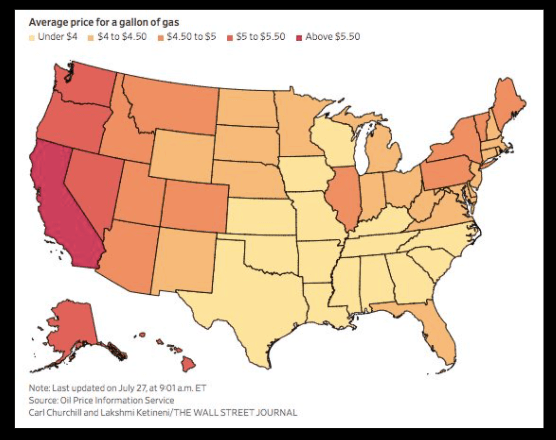
    Had a casual conversation with an acquaintance today about their plans for the summer. He told me they were staying close to home this year because they can’t afford airfare or even gas to go anywhere other than somewhere in state. He has a pickup like mine with a 36 gallon tank he uses for his business and he had just filled it up, costing him over $180.

    They have four kids under 16, so I can understand what a hit to the pocketbook this is.

    He told me this was going to be the first time ever the kids had not been on a vacation out of state.

    As I thought about it this afternoon, I realized that Democrats have found a way to redistribute fun. The crushing inflation, the high prices of gas and plane tickets have taken away what for this family was a fun tradition.

    That prompted this comment:

    They really liked the lock downs. Lock down summer 2022 edition.
    Imagine not being able to afford to see your family.

    Share this on …

    • Share on X (Opens in new window) X
    • Share on Facebook (Opens in new window) Facebook
    • Share on LinkedIn (Opens in new window) LinkedIn
    • Email a link to a friend (Opens in new window) Email
    • Print (Opens in new window) Print
    Like Loading…
    No comments on Lockdown 2022
Previous Page
1 … 165 166 167 168 169 … 1,034
Next Page

Website Powered by WordPress.com.

Steve Prestegard.com: The Presteblog

The thoughts of a journalist/libertarian–conservative/Christian husband, father, Eagle Scout and aficionado of obscure rock music. Thoughts herein are only the author’s and not necessarily the opinions of his family, friends, neighbors, church members or past, present or future employers.

  • Steve
    • About, or, Who is this man?
    • Facebook
    • Twitter
    • Adventures in ruralu0026nbsp;inkBack in June 2009, I was driving somewhere through a rural area. And for some reason, I had a flashback to two experiences in my career about that time of year many years ago. In 1988, eight days after graduating from the University of Wisconsin, I started work at the Grant County Herald Independent in Lancaster as a — well, the — reporter. Four years after that, on my 27th birthday, I purchased, with a business partner, the Tri-County Press in Cuba City, my first business venture. Both were experiences about which Wisconsin author Michael Perry might write. I thought about all this after reading a novel, The Deadline, written by a former newspaper editor and publisher. (Now who would write a novel about a weekly newspaper?) As a former newspaper owner, I picked at some of it — why finance a newspaper purchase through the bank if the seller is willing to finance it? Because the mean bank lender is a plot point! — and it is much more interesting than reality, but it is very well written, with a nicely twisting plot, and quite entertaining, again more so than reality. There is something about that first job out of college that makes you remember it perhaps more…
    • Adventures in radioI’ve been in the full-time work world half my life. For that same amount of time I’ve been broadcasting sports as a side interest, something I had wanted to since I started listening to games on radio and watching on TV, and then actually attending games. If you ask someone who’s worked in radio for some time about the late ’70s TV series “WKRP in Cincinnati,” most of them will tell you that, if anything, the series understated how wacky working in radio can be. Perhaps the funniest episode in the history of TV is the “WKRP” episode, based on a true story, about the fictional radio station’s Thanksgiving promotion — throwing live turkeys out of a helicopter under the mistaken belief that, in the words of WKRP owner Arthur Carlson, “As God is my witness, I thought turkeys could fly.” [youtube=http://www.youtube.com/watch?v=ST01bZJPuE0] I’ve never been involved in anything like that. I have announced games from the roofs of press boxes (once on a nice day, and once in 50-mph winds), from a Mississippi River bluff (more on that later), and from the front row of the second balcony of the University of Wisconsin Fieldhouse (great view, but not a place to go if…
    • “Good morning/afternoon/evening, ________ fans …”
    • My biggest storyEarlier this week, while looking for something else, I came upon some of my own work. (I’m going to write a blog someday called “Things I Found While Looking for Something Else.” This is not that blog.) The Grant County Sheriff’s Department, in the county where I used to live, has a tribute page to the two officers in county history who died in the line of duty. One is William Loud, a deputy marshal in Cassville, shot to death by two bank robbers in 1912. The other is Tom Reuter, a Grant County deputy sheriff who was shot to death at the end of his 4 p.m.-to-midnight shift March 18, 1990. Gregory Coulthard, then a 19-year-old farmhand, was convicted of first-degree intentional homicide and is serving a life sentence, with his first eligibility for parole on March 18, 2015, just 3½ years from now. I’ve written a lot over the years. I think this, from my first two years in the full-time journalism world, will go down as the story I remember the most. For journalists, big stories contain a paradox, which was pointed out in CBS-TV’s interview of Andy Rooney on his last “60 Minutes” Sunday. Morley Safer said something along the line…
  • Food and drink
    • The Roesch/Prestegard familyu0026nbsp;cookbookFrom the family cookbook(s) All the families I’m associated with love to eat, so it’s a good thing we enjoy cooking. The first out-of-my-house food memory I have is of my grandmother’s cooking for Christmas or other family occasions. According to my mother, my grandmother had a baked beans recipe that she would make for my mother. Unfortunately, the recipe seems to have  disappeared. Also unfortunately, my early days as a picky, though voluminous, eater meant I missed a lot of those recipes made from such wholesome ingredients as lard and meat fat. I particularly remember a couple of meals that involve my family. The day of Super Bowl XXXI, my parents, my brother, my aunt and uncle and a group of their friends got together to share lots of food and cheer on the Packers to their first NFL title in 29 years. (After which Jannan and I drove to Lambeau Field in the snow,  but that’s another story.) Then, on Dec. 31, 1999, my parents, my brother, my aunt and uncle and Jannan and I (along with Michael in utero) had a one-course-per-hour meal to appropriately end years beginning with the number 1. Unfortunately I can’t remember what we…
    • SkålI was the editor of Marketplace Magazine for 10 years. If I had to point to one thing that demonstrates improved quality of life since I came to Northeast Wisconsin in 1994, it would be … … the growth of breweries and  wineries in Northeast Wisconsin. The former of those two facts makes sense, given our heritage as a brewing state. The latter is less self-evident, since no one thinks of Wisconsin as having a good grape-growing climate. Some snobs claim that apple or cherry wines aren’t really wines at all. But one of the great facets of free enterprise is the opportunity to make your own choice of what food and drink to drink. (At least for now, though some wish to restrict our food and drink choices.) Wisconsin’s historically predominant ethnic group (and our family’s) is German. Our German ancestors did unfortunately bring large government and high taxes with them, but they also brought beer. Europeans brought wine with them, since they came from countries with poor-quality drinking water. Within 50 years of a wave of mid-19th-century German immigration, brewing had become the fifth largest industry in the U.S., according to Maureen Ogle, author of Ambitious Brew: The Story of American Beer. Beer and wine have…
  • Wheels
    • America’s sports carMy birthday in June dawned without a Chevrolet Corvette in front of my house. (The Corvette at the top of the page was featured at the 2007 Greater Milwaukee Auto Show. The copilot is my oldest son, Michael.) Which isn’t surprising. I have three young children, and I have a house with a one-car garage. (Then again, this would be more practical, though a blatant pluck-your-eyes-out violation of the Corvette ethos. Of course, so was this.) The reality is that I’m likely to be able to own a Corvette only if I get a visit from the Corvette Fairy, whose office is next door to the Easter Bunny. (I hope this isn’t foreshadowing: When I interviewed Dave Richter of Valley Corvette for a car enthusiast story in the late great Marketplace Magazine, he said that the most popular Corvette in most fans’ minds was a Corvette built during their days in high school. This would be a problem for me in that I graduated from high school in 1983, when no Corvette was built.) The Corvette is one of those cars whose existence may be difficult to understand within General Motors Corp. The Corvette is what is known as a “halo car,” a car that drives people into showrooms, even if…
    • Barges on fouru0026nbsp;wheelsI originally wrote this in September 2008.  At the Fox Cities Business Expo Tuesday, a Smart car was displayed at the United Way Fox Cities booth. I reported that I once owned a car into which trunk, I believe, the Smart could be placed, with the trunk lid shut. This is said car — a 1975 Chevrolet Caprice coupe (ours was dark red), whose doors are, I believe, longer than the entire Smart. The Caprice, built down Interstate 90 from us Madisonians in Janesville (a neighbor of ours who worked at the plant probably helped put it together) was the flagship of Chevy’s full-size fleet (which included the stripper Bel Air and middle-of-the-road Impala), featuring popular-for-the-time vinyl roofs, better sound insulation, an upgraded cloth interior, rear fender skirts and fancy Caprice badges. The Caprice was 18 feet 1 inch long and weighed 4,300 pounds. For comparison: The midsize Chevrolet of the ear was the Malibu, which was the same approximate size as the Caprice after its 1977 downsizing. The compact Chevrolet of the era was the Nova, which was 200 inches long — four inches longer than a current Cadillac STS. Wikipedia’s entry on the Caprice has this amusing sentence: “As fuel economy became a bigger priority among Americans…
    • Behind the wheel
    • Collecting only dust or rust
    • Coooooooooooupe!
    • Corvettes on the screen
    • The garage of misfit cars
    • 100 years (and one day) of our Chevrolets
    • They built Excitement, sort of, once in a while
    • A wagon by any otheru0026nbsp;nameFirst written in 2008. You will see more don’t-call-them-station-wagons as you drive today. Readers around my age have probably had some experience with a vehicle increasingly rare on the road — the station wagon. If you were a Boy Scout or Girl Scout, or were a member of some kind of youth athletic team, or had a large dog, or had relatives approximately your age, or had friends who needed to be transported somewhere, or had parents who occasionally had to haul (either in the back or in a trailer) more than what could be fit inside a car trunk, you (or, actually, your parents) were the target demographic for the station wagon. “Station wagons came to be like covered wagons — so much family activity happened in those cars,” said Tim Cleary, president of the American Station Wagon Owners Association, in Country Living magazine. Wagons “were used for everything from daily runs to the grocery store to long summer driving trips, and while many men and women might have wanted a fancier or sportier car, a station wagon was something they knew they needed for the family.” The “station wagon” originally was a vehicle with a covered seating area to take people between train stations…
    • Wheels on theu0026nbsp;screenBetween my former and current blogs, I wrote a lot about automobiles and TV and movies. Think of this post as killing two birds (Thunderbirds? Firebirds? Skylarks?) with one stone. Most movies and TV series view cars the same way most people view cars — as A-to-B transportation. (That’s not counting the movies or series where the car is the plot, like the haunted “Christine” or “Knight Rider” or the “Back to the Future” movies.) The philosophy here, of course, is that cars are not merely A-to-B transportation. Which disqualifies most police shows from what you’re about to read, even though I’ve watched more police video than anything else, because police cars are plain Jane vehicles. The highlight in a sense is in the beginning: The car chase in my favorite movie, “Bullitt,” featuring Steve McQueen’s 1968 Ford Mustang against the bad guys’ 1968 Dodge Charger: [youtube=http://www.youtube.com/watch?v=GMc2RdFuOxIu0026amp;fmt=18] One year before that (but I didn’t see this until we got Telemundo on cable a couple of years ago) was a movie called “Operación 67,” featuring (I kid you not) a masked professional wrestler, his unmasked sidekick, and some sort of secret agent plot. (Since I don’t know Spanish and it’s not…
    • While riding in my Cadillac …
  • Entertainments
    • Brass rocksThose who read my former blog last year at this time, or have read this blog over the past months, know that I am a big fan of the rock group Chicago. (Back when they were a rock group and not a singer of sappy ballads, that is.) Since rock music began from elements of country music, jazz and the blues, brass rock would seem a natural subgenre of rock music. A lot of ’50s musical acts had saxophone players, and some played with full orchestras … [youtube=http://www.youtube.com/watch?v=9CPS-WuUKUE] … but it wasn’t until the more-or-less simultaneous appearances of Chicago and Blood Sweat u0026amp; Tears on the musical scene (both groups formed in 1967, both had their first charting singles in 1969, and they had the same producer) that the usual guitar/bass/keyboard/drum grouping was augmented by one or more trumpets, a sax player and a trombone player. While Chicago is my favorite group (but you knew that already), the first brass rock song I remember hearing was BSu0026amp;T’s “Spinning Wheel” — not in its original form, but on “Sesame Street,” accompanied by, yes, a giant spinning wheel. [youtube=http://www.youtube.com/watch?v=qi9sLkyhhlE] [youtube=http://www.youtube.com/watch?v=OxWSOuNsN20] [youtube=http://www.youtube.com/watch?v=U9U34uPjz-g] I remember liking Chicago’s “Just You ‘n Me” when it was released as a single, and…
    • Drive and Eat au0026nbsp;RockThe first UW home football game of each season also is the opener for the University of Wisconsin Marching Band, the world’s finest college marching band. (How the UW Band has not gotten the Sudler Trophy, which is to honor the country’s premier college marching bands, is beyond my comprehension.) I know this because I am an alumnus of the UW Band. I played five years (in the last rank of the band, Rank 25, motto: “Where Men Are Tall and Run-On Is Short”), marching in 39 football games at Camp Randall Stadium, the Hubert H. Humphrey Metrodome in Minneapolis, Michigan Stadium in Ann Arbor, Memorial Stadium at the University of Illinois (worst artificial turf I had ever seen), the University of Nevada–Las Vegas’ Sam Boyd Silver Bowl, the former Dyche Stadium at Northwestern University, five high school fields and, in my one bowl game, Legion Field in Birmingham, Ala., site of the 1984 Hall of Fame Bowl. The UW Band was, without question, the most memorable experience of my college days, and one of the most meaningful experiences of my lifetime. It was the most physical experience of my lifetime, to be sure. Fifteen minutes into my first Registration…
    • Keep on rockin’ in the freeu0026nbsp;worldOne of my first ambitions in communications was to be a radio disc jockey, and to possibly reach the level of the greats I used to listen to from WLS radio in Chicago, which used to be one of the great 50,000-watt AM rock stations of the country, back when they still existed. (Those who are aficionados of that time in music and radio history enjoyed a trip to that wayback machine when WLS a Memorial Day Big 89 Rewind, excerpts of which can be found on their Web site.) My vision was to be WLS’ afternoon DJ, playing the best in rock music between 2 and 6, which meant I wouldn’t have to get up before the crack of dawn to do the morning show, yet have my nights free to do whatever glamorous things big-city DJs did. Then I learned about the realities of radio — low pay, long hours, zero job security — and though I have dabbled in radio sports, I’ve pretty much cured myself of the idea of working in radio, even if, to quote WAPL’s Len Nelson, “You come to work every day just like everybody else does, but we’re playing rock ’n’ roll songs, we’re cuttin’ up.…
    • Monday on the flight line, not Saturday in the park
    • Music to drive by
    • The rock ofu0026nbsp;WisconsinWikipedia begins its item “Music of Wisconsin” thusly: Wisconsin was settled largely by European immigrants in the late 19th century. This immigration led to the popularization of galops, schottisches, waltzes, and, especially, polkas. [youtube=http://www.youtube.com/watch?v=yl7wCczgNUc] So when I first sought to write a blog piece about rock musicians from Wisconsin, that seemed like a forlorn venture. Turned out it wasn’t, because when I first wrote about rock musicians from Wisconsin, so many of them that I hadn’t mentioned came up in the first few days that I had to write a second blog entry fixing the omissions of the first. This list is about rock music, so it will not include, for instance, Milwaukee native and Ripon College graduate Al Jarreau, who in addition to having recorded a boatload of music for the jazz and adult contemporary/easy listening fan, also recorded the theme music for the ’80s TV series “Moonlighting.” Nor will it include Milwaukee native Eric Benet, who was for a while known more for his former wife, Halle Berry, than for his music, which includes four number one singles on the Ru0026amp;B charts, “Spend My Life with You” with Tamia, “Hurricane,” “Pretty Baby” and “You’re the Only One.” Nor will it include Wisconsin’s sizable contributions to big…
    • Steve TV: All Steve, All the Time
    • “Super Steve, Man of Action!”
    • Too much TV
    • The worst music of allu0026nbsp;timeThe rock group Jefferson Airplane titled its first greatest-hits compilation “The Worst of Jefferson Airplane.” Rolling Stone magazine was not being ironic when it polled its readers to decide the 10 worst songs of the 1990s. I’m not sure I agree with all of Rolling Stone’s list, but that shouldn’t be surprising; such lists are meant for debate, after all. To determine the “worst,” songs appropriate for the “Vinyl from Hell” segment that used to be on a Madison FM rock station, requires some criteria, which does not include mere overexposure (for instance, “Macarena,” the video of which I find amusing since it looks like two bankers are singing it). Before we go on: Blog posts like this one require multimedia, so if you find a song you hate on this blog, I apologize. These are also songs that I almost never listen to because my sound system has a zero-tolerance policy — if I’m listening to the radio or a CD and I hear a song I don’t like, it’s, to quote Bad Company, gone gone gone. My blonde wife won’t be happy to read that one of her favorite ’90s songs, 4 Non Blondes’ “What’s Up,” starts the list. (However,…
    • “You have the right to remain silent …”
  • Madison
    • Blasts from the Madison media past
    • Blasts from my Madison past
    • Blasts from our Madison past
    • What’s the matter with Madison?
    • Wisconsin – Madison = ?
  • Sports
    • Athletic aesthetics, or “cardinal” vs. “Big Red”
    • Choose your own announcer
    • La Follette state 1982 (u0022It was 30 years ago todayu0022)
    • The North Dakota–Wisconsin Hockey Fight of 1982
    • Packers vs. Brewers
  • Hall of Fame
    • The case(s) against teacher unions
    • The Class of 1983
    • A hairy subject, or face the face
    • It’s worse than you think
    • It’s worse than you think, 2010–11 edition
    • My favorite interview subject of all time
    • Oh look! Rural people!
    • Prestegard for president!
    • Unions vs. the facts, or Hiding in plain sight
    • When rhetoric goes too far
Privacy & Cookies: This site uses cookies. By continuing to use this website, you agree to their use.
To find out more, including how to control cookies, see here: Cookie Policy
  • Subscribe Subscribed
    • Steve Prestegard.com: The Presteblog
    • Join 198 other subscribers
    • Already have a WordPress.com account? Log in now.
    • Steve Prestegard.com: The Presteblog
    • Subscribe Subscribed
    • Sign up
    • Log in
    • Report this content
    • View site in Reader
    • Manage subscriptions
    • Collapse this bar
%d