Two minutes into Sunday’s Lions–Packers game, I commented that anyone who bought tickets to the game (including, I’m guessing, a fair number of non-season-ticket-holders, given the date of the game and the fact the game didn’t mean anything to the Packers) was getting ripped off.
Never mind. If you weren’t entertained by Packers 45, Lions 41, there’s something wrong with you. No Aaron Rodgers, Greg Jennings, Randall Cobb, James Starks, Clay Matthews or Charles Woodson? No problem. The combined 1,125 yards broke the old record set in the 48–47 win over Washington in 1983. (Packers president Mark Murphy played in that game for the Redskins. The next day’s headline in the Washington Post was hilarious: “The defense rests.”)
To repeat: The Packers were missing seven starters (including offensive lineman Bryan Bulaga) against one of the better teams in the NFC, and still won. (And, by the way, finished their season by sweeping the NFC North.)
As numerous commentators predicted afterward, backup quarterback Matt Flynn may have made himself a career on another team for next season. All Flynn did was throw for a team-record 480 yards and a team-record six touchdown passes, the last to Jermichael Finley with 1:10 left, ending a game-winning drive that went 80 yards in 1:29. And despite giving up 575 yards of offense, including a record 525 yards passing by Matthew Stafford, the Packers got the one defensive play they needed, a Sam Shields interception with 25 seconds left.
Rain. Sleet. Snow. Below-freezing temperature readings and swirling winds gusting over 30 mph at kickoff.
So, naturally, two quarterbacks who’d never started a game before at fabled Lambeau Field combined to pass for 1,000 yards and 11 touchdowns Sunday.
Right.
The Detroit Free Press’ Drew Sharp quoted Lions coach Jim Schwartz:
“They couldn’t have played worse,” Schwartz said about the Lions’ secondary. “We covered poorly. We tackled poorly. We played man-to-man poorly. We blitzed poorly. We played zone poorly.” …
They’re still in the playoffs, but this loss exponentially increased the odds that it will be an abbreviated stay. Had they merely accepted the Packers’ graciousness, they would have ensured themselves a much easier first-round opponent — the inevitable NFC East champion. But now, the Lions (10-6) must go back to New Orleans (13-3), where it already has been suggested that Drew Brees’ production against this Lions’ secondary could be measured in miles rather than yards. …
This was a junior varsity version of the Packers that the Lions couldn’t beat.
That phrase “there’s something wrong” has been a theme the second half of the season. ESPN noted that the Packers set a record for giving up pass yardage in a season. The Packers finished 32nd of the 32-team NFL in yardage given up — just the third time the Packers finished dead last in defensive yardage, in addition to 1956 (4–8) and 1983 (8–8) — although they were 14th in points given up. One reason for the difference between yards and points is the Packers’ turnover margin of +24, behind only San Francisco. The Packers also had the fewest penalties (tied with Indianapolis) and had the second fewest penalty yards.
For those who believe those who don’t learn from football history are doomed to repeat it: The Packers scored the most points in team history and the second most points in NFL history this season, behind only the 2007 Patriots. But none of the top four single-season scoring offenses won that season’s Super Bowl.
On the other hand, it was noted later that New England is the AFC’s number one seed at 13–3. None of those 13 wins was over a team with a winning record. One of the functions of the sports media is to pick on whoever is the flavor of the day, when they’re not being front-runners, that is.
The better harbinger is what’s happened to the NFL’s 15–1 teams. The 1984 49ers and 1985 Bears won their seasons’ Super Bowls, while the 1998 Vikings and 2004 Steelers lost their conference title games.
Niyo makes the most pertinent point about the Packers’ defense:
And that, in a nutshell, is what today’s NFL has become. It’s a shooting gallery, with trigger-happy quarterbacks and their offensive coordinators calling the shots, more often than not.
How else do you explain what we’ve seen lately, with Brees breaking Dan Marino’s decades-old single-season record for passing yardage last week, only to have the Patriots’ Tom Brady do the same Sunday? And to have Stafford, a 23-year-old essentially completing his first full season, nearly match them both, throwing for 520 yards and five touchdowns Sunday to finish the regular season with a whopping 5,038 passing yards.
How else do you explain the fact that the top-seeded teams in both the NFC (Green Bay) and the AFC (New England) were ranked 31st and 32nd in the league, respectively, in total defense? New Orleans was ranked 26th, one spot ahead of the 1–15 Indianapolis Colts, by the way.
The Packers have two weeks to get ready for probably the winner of the Atlanta–New York Giants game Jan. 15 at 3:30 p.m., which means they’ll face two teams they’ve already beaten this season. (The other possibility is Detroit again if the Lions upset New Orleans Saturday night, but see the previous comment about how many miles the Lions defense will give up to the Saints.)
This is not a normal NFL season. Keep that in mind when thinking about the Packers’ chances to repeat as Super Bowl champions. Stop worrying about the Packer defense and remember this from earlier this season: In 15 of the 21 previous seasons the Super Bowl champion finished either first or second in the NFL in point differential. New Orleans was first this season, +208. Green Bay was second, +201. So my prediction based on that is that either the Saints or the Packers will win Super Bowl XLVI.
Adidas rolled out the Badgers’ uniforms for today with less hoopla than Nike would:
The roses inside the logo and numbers are nice. The Michelin Man look reminds one that both Badgers losses, as well as the 1963 Rose Bowl loss, came in the “stormtrooper” look. And as I’ve argued in this space, the Badgers’ “brand” is not particularly well designed.
On the other side of the field:
At least it incorporates Oregon’s actual colors, green and yellow/gold. These obviously were not designed by an announcer, given the black numbers on the green jersey.
As for the game, Isthmus’ Jason Joyce sees it as good vs. evil:
Wisconsin enters this year’s game as a six-point underdog to fifth-ranked Oregon, a team that’s easy to root against. The big news out of Oregon this week literally placed style ahead of substance as Nike unveiled the duds (Nike calls it an “integrated uniform system”) the Ducks will wear on Monday. It’s the sartorial equivalent of picking up the kids from soccer in a Lamborghini. The Ducks will look less like a college football team than a futuristic, evil robot army.
To adherents of Wisconsin’s run-first, pro-style, smash-mouth brand of football, Oregon’s frantically paced spread-option attack represents pure evil. The Ducks average over 46 points and 515 yards of offense per game to Wisconsin’s 44 and 466. Their no-huddle approach often finds the Ducks snapping the ball within 10 seconds of the end of the previous play. They’re unlike any team Wisconsin has faced this season.
In addressing how the Badgers can handle Oregon’s high-octane attack, Wisconsin coach Bret Bielema points to the Ducks’ recent record in games where they’ve had extended time to prepare: the 2011 season opener against LSU, last season’s BCS title game against Auburn and the 2010 Rose Bowl against Ohio State. All three were losses.
Independent of the over-the-top metaphor, the time between the Big Ten title game and the Rose Bowl certainly gave UW enough time to prepare for Oregon’s insanely fast attack. The problem will not be strategy, but execution thereof. The ideal would be for the Badgers to score every time they have the ball at the end of a 10- to 15-play drive. The ideal also would be to force Oregon to cough up the ball; in the Ducks’ losses to LSU and USC, Oregon totaled five lost fumbles, which is how you lose a game despite having more yardage than your opponent.
UW is faster than most previous Badger teams and most Big Ten teams. Which doesn’t mean they’re fast enough to match up with the Ducks. Just remember that getting to the Rose Bowl and losing is better than not getting to the Rose Bowl. (See UW, 1963–1992.)
The number one album today in 1965 was the soundtrack to “Roustabout”:
Today in 1968, the complete shipment of John Lennon and Yoko Ono’s new album, “Two Virgins,” was confiscated by New Jersey authorities due to the album cover. A revised cover was used in record stores:
The number one album today in 1971 was George Harrison’s “All Things Must Pass”:
Speaking of passing, Wis U.P. North reminds us that today is the anniversary of the 55-mph speed limit, signed into law by Richard Nixon. Never mind Watergate; Nixon should have been impeached for signing this stupid idea into law. There is only one truly irreplaceable, nonrenewable resource — time.
The number one British album today in 2005 was Green Day’s “American Idiot”:
Just two birthdays today: Roger Miller …
… and Chick Churchill, who played guitar for Ten Years After:
Three deaths of note: Tex Ritter, country singer and father of John, in 1974 …
… David Lynch of the Platters in 1981 …
… and guitarist Randy California of Spirit, who drowned while saving his 12-year-old son from a rip tide off Hawaii in 1997:
I’m going to guess that not many readers will read this immediately upon posting.
Perhaps that was the problem for the Beatles in 1962, when they went to Decca Records for an audition, and Decca declined to sign them.
Before that, the number one single (for the second time) today in 1956:
Today in 1964, BBC-TV premiered “Top of the Pops”:
The number one single today in 1966:
Today in 1967, the Doors made their first live TV appearance, on KTLA in Los Angeles:
Today in 1968, the ABC Radio Network split into four separate networks, each with their own news sounder:
The number one British single today in 1977 got almost no American airplay:
Today in 1982, ABBA made its final live appearance:
The short list of birthdays starts with Country Joe MacDonald:
Jim Gordon was a drummer for such groups as Derek and the Dominos who ended his career by murdering his mother and receiving a life sentence upon conviction:
Morgan Fisher played keyboards for Mott the Hoople:
The last Presteblog of 2011 is called That Was the Year That Was 2011, a tradition of the Marketplace of Ideas column from 1994 to 2000 and then of the Marketplace of Ideas blog from 2008 to 2010.
The title comes from the British TV series “That Was the Week that Was,” a weekly satirical series that made David Frost and Roy Kinnear popular:
While the TWTYTW 2010 blog no longer exists (ask my former employer what happened to it), a video version of sorts does still exist courtesy of FDL Podcasting:
There was one prediction that I didn’t make — the creation of this blog for the reason you all know. For what it’s worth, this blog is nine months old today. This was not how I planned to spend three-fourths of 2011, but someone once said that if you want to make God laugh, tell him your plans.
I also didn’t predict that I’d be on Facebook, and I don’t believe Google+ existed when this blog began. The former has been more satisfying than the latter, largely because Facebook has allowed me to reconnect with people I’d lost track of, in one case, from middle school. (That, I should point out, includes the one Facebook Friend I deFriended, and the one Facebook Friend who deFriended me. The latter was because my political views angered him for the last time; the first was because he was as much of an idiot on Facebook — unless you think a 45-year-old fan of “The Jersey Shore” is not incredibly strange, that is — as he was in high school. C’est la vie.)
This is an opinion blog, which means readers get opinions here every day, whether about federal or state politics, American or Wisconsin business, food and drink (I’m in favor of both), motor vehicles, the media, music, sports (particularly the Packers and Badgers), and whatever else comes to my mind. As I’ve written before, after the best thing someone can tell a reader — something like “I enjoy your work and I agree with you” — the second best thing someone can tell a writer is something along the line of “I read your stuff, and you are absolutely wrong.” (I’m getting a lot of that recently; can’t imagine why.) The worst thing someone can tell a writer is something like “You write? I’ve never read your stuff.” My blog software tells me that people are reading this blog, whether they agree with what I write or not.
I continue to be what (at least) two people have called me: a “media ho’.” I occasionally appear on WTMJ-TV’s “Sunday Insight with Charlie Sykes” …
… and Wisconsin Public Radio’s Friday Week in Review, and, twicethis month, WTDY in Madison. That is the logical result of never saying no to a media invitation, I guess. This is also a personal blog, so readers have gotten to read (or, if you like, have had to endure) the unusual facets of my past in small-town newspapers (including my biggest story), radio and sports announcing.
I’m pretty sure the largest number of blog entries this year (other than the daily “Presty the DJ” pieces) involved state politics. We endured several state Senate recalls (all but two of which were unsuccessful) because of the efforts of Gov. Scott Walker and Republicans to undo the disaster area that was state finance under the Doyle (mis)administration and the 2009–10 Legislature. The 15 percent of state workers who work for government had a different opinion, as Christian Schneider notes:
The year began with an appeal for more civility in politics, in the wake of the shooting of Arizona Democratic Congresswoman Gabrielle Giffords. Yet when the Capitol explosion began in mid-February, Walker and legislators of both parties started receiving death threats. State Sen. Spencer Coggs called Walker’s plan “legalized slavery,” and state Sen. Lena Taylor (along with dozens of protesters) compared Walker to Adolf Hitler. A Democratic Assemblyman yelled “you’re fucking dead” to a Republican colleague on the chamber floor following debate on Walker’s plan. Protesters targeted Walker’s children on Facebook, and Republican Rep. Robin Vos was assaulted with a flying pilsner.
So shocking was Walker’s plan that President Barack Obama criticized the governor, deeming it an “assault” on unions. Yet if Walker was a first-time union assailant, Obama continues to be a serial offender — federal employees aren’t allowed to collectively bargain for wages and benefits. …
During the summer, unions spent over $20 million to unseat six Republican state senators who voted for Walker’s plan. This exposed exactly why it’s about the money. Government employees merely serve as conduits for taxpayer funds to work their way to the unions, who then spend money electing obeisant legislators to negotiate favorable contracts. Shockingly, lefty “good government” groups appear not to have a problem with this blatant purchase of favors.
It was a year that granted the definition of the word “democracy” a previously unimaginable elasticity. While bullhorns around the Capitol blared “this is what democracy looks like,” 14 Democratic state senators fled to Illinois to prevent democracy from occurring. Later, a single Dane County judge would overturn Walker’s law, which irony-deficient Assembly Minority Leader Peter Barca called “a huge win for democracy in Wisconsin.” The law would later be reinstated by an incredulous state Supreme Court. …
2011 was the year that public-sector bargaining became a fundamental human right, bestowed on the people of Wisconsin from the heavens. “We will not be denied our God-given right to join a real union,” thundered Marty Beil, head of the Wisconsin State Employees Union, in February.
Yet God apparently first appeared in Wisconsin in 1959, when Democratic Gov. Gaylord Nelson signed the nation’s first public-sector collective bargaining law. It was a shrewd political move — four years earlier, unions had financed 55% of unsuccessful Democrat William Proxmire’s gubernatorial campaign. The year before Nelson created the law, Democrats had a $10,000 deficit in their state account; four years later, that had turned into a $50,000 surplus. At the time, it looked a lot less like a divine right and more like a naked political favor. (God has yet to visit 24 other states, which either have limited or no public-sector collective bargaining at all.)
Public-sector unions want you to believe that they are synonymous with public-sector employees. They are not. No self-respecting professional teacher should want to have anything to do with teacher unions, the biggest blight upon our educational system. That’s my opinion, but that was also the opinion of the late Steve Jobs.
One should never expect the unvarnished truth during the political process, but unions and their apparatchiks took falsehoods to new depths during Recallarama. Unfortunately for unions, evidence contrasting their assertions existed online. Unfortunately for Democrats and unions and other lefties, the more than $40 million they spent succeeding in reducing the state Senate Republican margin from 19–14 to 17–16, or 16 Republicans, 16 Democrats and one RINO, Dale Schultz.
One should never expect ideological or philosophical consistency from human beings, so keep that in mind when you read tributes to the Occupy ______ types. Most of the same people falling all over themselves praising the protesters were singing quite a different tune when the tea party movement began in 2009. Other than the obvious ideological differences, the biggest difference between Occupy _____ and the tea party movement is that the tea party movement succeeded in electing its candidates in November 2010. Occupy _____ has not one single electoral win and not one single political accomplishment yet. That includes Red Fred Clark, who a majority of 14th Senate District voters foundwanting.
One should never expect politicians to do what they say they’re going to do immediately (or perhaps not at all), but Walker doesn’t deserve an A grade yet. The state’s business climate rankings are better than they were a year ago, but 24th, 25th, 38th and 40th, with a C grade, is not nearly good enough. Until Wisconsin gets consistent top five rankings, Wisconsin will continue to trail the nation in business creation and per capita personal income growth, Wisconsinites will continue to suffer from excessive unemployment and insufficient income, and state and local governments will continue to lack the kind of revenue that comes from a healthy economy.
Speaking of the economy, it is in “recovery,” if that’s what you want to call it. The brilliance of the Obama administration is demonstrated in the current national unemployment rate of 8.6 percent, after nearly three years of the stimulus that stimulus supporters guaranteed would reduce unemployment below 8 percent. Since everyone who was paying attention knew that one major argument for the stimulus was to trade job creation now for higher unemployment (during a theoretically recovered economy) later, you can safely conclude there will be no improvement in unemployment for the foreseeable future. The “jobless recovery” has been predicted for three decades; well, it’s here now, which means that the economy will not be noticeably better in consumer spending generally or purchasing of big-ticket items specifically.
As usually happens, a number of stories didn’t get the attention they should, as WND.com notes:
1. The true rate of unemployment and inflation and the real state of the U.S. economy, which is far worse than reported.
The figure was five times the 2010 gross domestic product of the United States and exceeded the estimated gross domestic product for the world by approximately $14.4 trillion, according to economist John Williams.
The difference between the $1.3 trillion “official” 2010 federal budget deficit numbers and the $5.3 trillion budget deficit is that the official budget deficit is calculated on a cash basis, where all tax receipts, including Social Security tax receipts, are used to pay government liabilities as they occur.
“The government cannot raise taxes high enough to bring the budget into balance,” Williams said. “You could tax 100 percent of everyone’s income and 100 percent of corporate profits and the U.S. government would still be showing a federal budget deficit on a GAAP accounting basis.”
What’s more, the seasonally-adjusted rate adjusted for long-term discouraged workers – who were defined out of official existence in 1994 – was more than 22 percent in November.
The Bureau of Labor Statistics broadest measure of unemployment, which includes the short-term discouraged and other marginally attached works, along with part-time workers who can’t find full-time employment is more than 15 percent.
Methodological shifts in government reporting also have depressed reported inflation. If inflation were calculated the way it was in 1990, the annual rate would be nearly 7 percent. …
7. The real impact on the U.S. economy of Obama’s $787 billion stimulus.
While the Recovery Act boosted the economy in the short term, the extra debt generated by the stimulus “crowds out” private investment and “will reduce output slightly in the long run – by between 0 and 0.2 percent after 2016.”
The Obama administration had promised that at the peak of spending, 3.5 million jobs would be produced. …
8. The harmful impact of unions on the American economy.
“The most fundamental fact about labor unions is that they do not create any wealth,” he said.
Sowell pointed to a bill the Obama administration is trying to push through Congress, called the “Employee Free Choice Act,” as the best example of “the utter cynicism of the unions and the politicians who do their bidding.”
“Employees’ free choice as to whether or not to join a union is precisely what that legislation would destroy,” he said. …
While private-sector workers, using secret-ballot elections, have increasingly voted against being represented by unions in secret-ballot elections, government unions continue to thrive as taxpayers “provide their free lunch.” …
In September, Teamsters union President James Hoffa, addressing a large Labor Day rally, brazenly proclaimed that labor unions – especially the huge government employee unions like the 3-million-member National Education Association and 2-million-member Service Employees International Union – provide the ground troops in the ongoing war to “fundamentally transform” America into a socialist utopia.
“President Obama, this is your army! We are ready to march! Let’s take these son-of-a-b*tches out and give America back to an America where we belong,” he shouted, referring to the tea party movement.
The Obama administration has been generously “funding” the union army since the inauguration, from the General Motors bailout, which blatantly favored union workers, to Obamacare, whose burdensome new regulations don’t apply to many unions thanks to special White House waivers. Obama’s early executive order required all federal agencies to accept construction bids only from contractors who agree to use union workers, and he packed the D.C. bureaucracy with union officials.
Thank heavens for the current state of sports in Wisconsin. The Brewers got into the National League Championship Series (a place I predict they will not revisit soon), the Badgers are playing in their second consecutive Rose Bowl Monday (for my prediction, see this space Monday morning), and the Packers are the number one seed in the NFC playoffs a season after their fourth Super Bowl win. (I’ll have more to write about their next Super Bowl opportunity in January.) For those of us who endured such football as in 1988 (the Packers were 4–12 and the Badgers were 1–10), this still has an air of unreality to it.
Other interesting (and better) things happened in 2011. Our family set a personal record by heading for the basement three times as the tornado sirens went off for a non-test. The first happened while our German/French (now Italian) foreign exchange student was here. My, uh, freer schedule allowed me to go on field trips with our kids, including a church camp.
On to the year to come. I predict that the current economy will not be enough to get a majority of voters to fire Obama and his toadies. (Even if I run.) Too many Americans are still enthralled with the promise of Obama, even though the performance is best noted by his failures, and even though his biggest accomplishment (if that’s what you want to call it), ObamaCare, is tremendously unpopular with voters. (Perhaps they’ll start noticing when their employers drop employee health insurance, which will begin happening this coming year.)
The second reason for my prediction is that the Republicans are not exactly blowing the socks off voters through the interminable presidential-candidate-selection process, are they? There is no way in hell I will vote for Obama, and nor should you, but I can’t say there is a single GOP candidate I support for any reason than the fact that that candidate is not Obama. The fact that other voters feel like I do will be shown by support for a third-party — maybe more than one, in fact — candidate for president, including possibly Republican-turned-Libertarian Gary Johnson, Republican-about-to-turn-Libertarian Ron Paul, and Donald Trump.
Democrats shouldn’t jump for joy, though, because Republicans will not only retain the House of Representatives, but they will win the Senate in November. The demographic realities of the 2012 and 2014 Senate races will mean that, if my prediction (Obama’s winning with less than 50 percent of the popular vote) is correct, the gridlock you see in Washington will continue for most of this decade. I hope you enjoy it.
By the end of 2012, Wisconsin Democrats and their comrades will discover that Recallarama part deux was bad strategy, because whatever money they spend on defeating Walker in a recall election (which will result in Walker’s winning, by the way) cannot be used for (1) the U.S. Senate election, featuring socialist U.S. Rep. Tammy Baldwin (D–Madison); (2) efforts to unseat freshman U.S. Reps. Sean Duffy (R–Ashland) and Reid Ribble (R–Sherwood); efforts to win back (3A) the state Senate and (3B) Assembly by recall or by the November election; and, oh, by the way, (4) Obama’s campaign in this supposedly swing state.
It would be nice if Democratic and Republican office-holders and candidates would engrave in their brains article 1, section 22 of the state Constitution, which I repeat here for those Wisconsinites ignorant of it:
The blessings of a free government can only be maintained by a firm adherence to justice, moderation, temperance, frugality and virtue, and by frequent recurrence to fundamental principles.
My longer-term prediction is that this scorched-earth politics of ours will be reality for the foreseeable future, both at the national and state levels. Politics today is a zero-sum game — one side wins, the other side loses. How do you get past that, particularly when one side seeks to steal from the other? (That is exactly what Occupy ______ wants to do, either because they believe that’s how to solve unsolvable income and wealth inequality, or because they’re thieves at heart.) The 2011 Legislature is the direct result of the 2009–10 Legislature and its abuses of taxpayers, and whenever Democrats regain control of the Legislature, they will stick it to Republicans and their allies however, whenever and wherever they can. That wasn’t how politics worked when I was a UW Political Science student, but it is now.
The way I always end That Was the Year That Was is with these words: May your 2012 be better than your 2011. That may seem to be a low standard. That may also not be possible.
Similar to Christmas, more happened on New Year’s Eve in rock history than one might think.
Today in 1961, the former Pendletones made their debut with their new name at the Long Beach Civic Auditorium in California: the Beach Boys:
Today in 1963, the Kinks made their live debut at the Lotus House Restaurant in London:
The number one single today in 1966:
Today in 1984, Rick Allen, drummer for Def Leppard, was on his way to a New Year’s party when a Jaguar passed him and refused to let him pass. Allen missed a turn, lost control and crashed his Corvette. Not wearing a seat belt, Allen was thrown from the Corvette, and his left arm was severed.
Today in 1991, Ted Nugent donated 200 pounds of venison to a Detroit food kitchen, saying, “I kill it, you grill it”:
Today in 2005, a British poll named this the country’s most popular song:
Birthdays begin with Andrew Summers of The Police:
Who is Henry Deutschendorf? You knew him as John Denver:
Burton Cummings of the Guess Who …
… was born one year before LaDonna Adrian Gaines, better known as Donna Summer:
Tom Hamilton of Aerosmith:
Fermin Goytisolo of KC and the Sunshine Band:
Three deaths of note today: Songwriter Bert Berns in 1967 …
… Rick Nelson in a plane crash in 1985 …
… and Kevin McMichael, guitarist for Cutting Crew, of lung cancer in 2003:
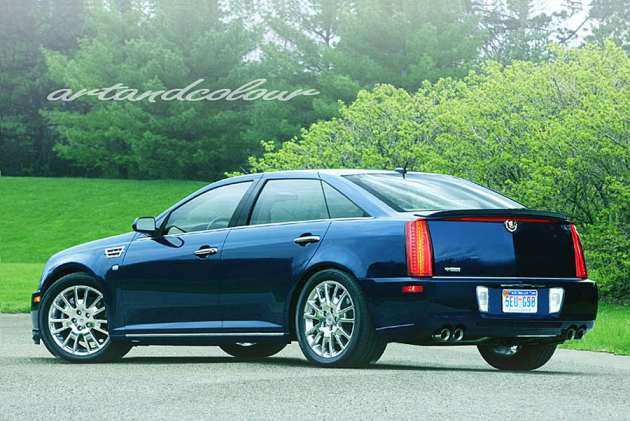
The headline is literary license: I have never owned a Cadillac, but I have driven my parents’ Cadillac CTS, and I was a passenger in my grandparents’ two Cadillac Coupes de Ville. (That would be the French way to describe the plural of “Coupe de Ville.”) The choice was either that headline or a favorite phrase of my sons, “Cadillac whack,” in which a Caddy sighting is followed by a punch.
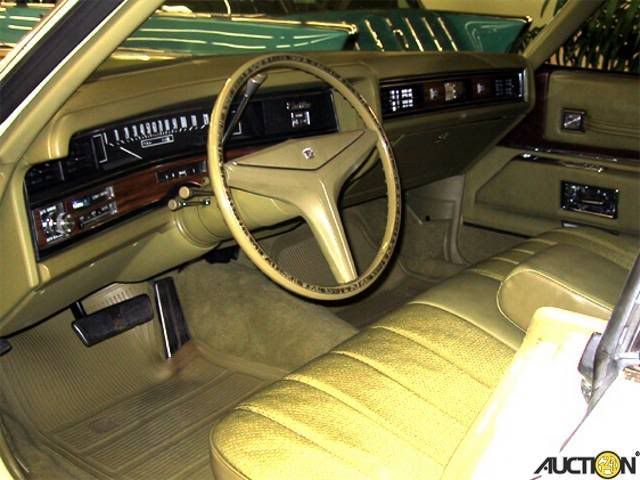
The difference between my grandparents’ Cadillacs — a 1971 and 1973 Coupe de Ville, both light yellow, one with a black vinyl top, the other with a white vinyl top — and my parents’ Cadillac shows how the American auto industry has changed in four decades.
Cadillac is the second oldest car manufacturer (behind Buick), created, ironically, from the remnants of Henry Ford’s first car company. The Cadillac brand (named for the founder of Detroit, by the way) has a long line of innovations, beginning with interchangeable parts, and including the first commercially available V-8 engine, the first mass-produced enclosed body, a modern electrical system with lights and starter, shatter-resistant glass, a body designed by stylists, synchromesh manual transmission (they should have stopped there), V-16 engine, modern high-compression overhead-valve V-8 engine, automatic dimming headlights, power memory seats, and automatic temperature control heating and air conditioning, among numerous others.
Cadillac’s history includes Nicholas Dreystadt, General Motors’ national service manager, who in 1933 convinced GM management to abandon the brand’s policy of not selling to blacks. (Black boxers, singers, lawyers and doctors were buying Cadillacs anyway; they were paying whites to buy them for them, which was money that could have gone to GM.) One year later, Cadillac sales increased by 70 percent, and GM made Dreystadt Cadillac’s general manager; Dreystadt responded by figuring out how to reduce production costs so that building Caddys cost as much as building Chevys, despite the huge price difference. (That’s called “profit.”) The Phillips screw was first used on 1937 Cadillacs. Cadillacs have been the most popular source of hearses (built by companies not named Cadillac) for decades, and until ambulances began to be built on truck and van bodies, Cadillacs were popular ambulance conversions.
Through the 1960s and 1970s, Cadillac stopped innovating, and GM was content to have Cadillac the “standard of the world” in size. Our next-door neighbor owned a late-’60s Caddy.
I had a math teacher in middle school who owned a British roadster that could have fit into the trunk of his ’69 Coupe de Ville.
My grandparents’ Coupes de Ville made our 1975 Chevrolet Caprice look … smaller. (Nothing could really make the Caprice look “small.”) By the mid-’70s, Cadillacs had 500-cubic-inch V-8s sitting between their front wheels, although said V-8s weren’t all that powerful in the smog-control pre-computer days.
Other than their sheer size, I remember my grandparents’ Coupes de Ville for the gadgets I’d never seen in a car before then. I’d never seen power windows or power seats on a car before then. Instead of just one cigarette lighter, the passenger door and the armrests for the two outside rear seats had cigarette lighters and ashtrays as well. (Which I suppose was convenient for my stepgrandmother, who smoked.) The back seat had two lamps for young back-seat passengers to play with (there were lamps all over the interior), as well as a pull-out armrest. The windshield wiper and washer controls (including a control called “Mist,” the precursor, I suppose, to intermittent wipers) were mounted on the driver’s-side door. Both had air conditioning (the latter at least had Automatic Climate Control), and I believe both had the signal-seeking AM/FM stereo radio, and that was the first time I’d ever seen a power antenna. A night trip also revealed the fiberoptic lights mounted on the front fenders and at the top of the rear window to show whether the headlights, turn signals and taillights were working. How did you know you were in a luxury car? The electric clock had Roman numerals! (Since the de Villes were purchased used, I don’t know if the original owners spent the $85 for the Medici Velour Lap Robe and Pillow.)
That’s what I could see. What I heard, other than the four-note horn (not sure what the chord was, but it certainly sounded better than the usual F horn), wasn’t much due to the pounds and pounds of sound insulation. I never got to drive the newer Coupe de Ville, but one can draw conclusions based on my once seeing an Eldorado drive across a rail crossing in Madison; half a block later, the Eldo was still rolling up and down.
Complex created a list of the top 100 Cadillacs (real and concept), including, in chronological order:
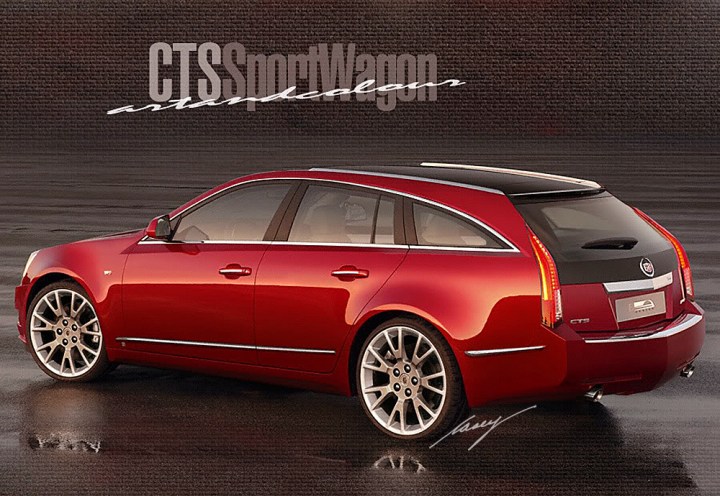
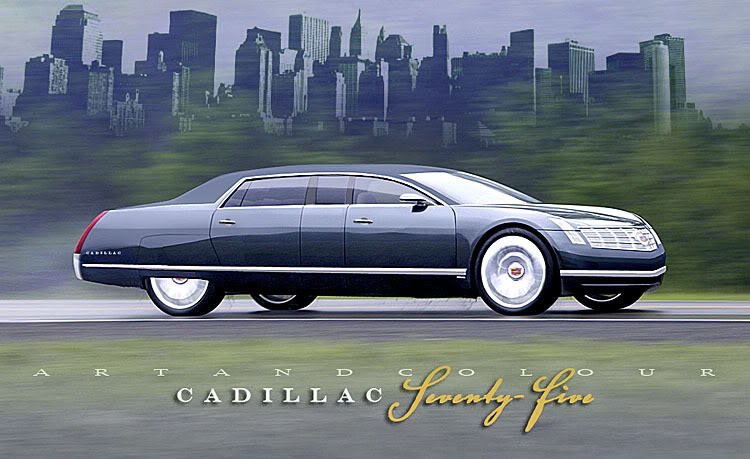
The 1912 Model Thirty was the first car with an electric starter.The 1927 La Salle was the first American car designed by a stylist and not an engineer.1928 Series 341 with the 341 L-head V-8.A V-12-powered Series 370A roadster was the 1931 Indianapolis 500 pace car.If that wasn’t enough power for you, there was the V-16-powered 452A.The 1946 Series 62 …… and the Sixty Special were the first post-World War II Cadillacs.The 1948 Series 61 Sedanette was the first new postwar Cadillac. Note the first tailfins.The 1949 Coupe de Ville featured Cadillac’s new overhead-valve V-8. GM is still using that basic engine in the CTS-V today.This custom 1952 Coupe de Ville was shortened by 10 inches with a prototype metal roof to make it "part Cadillac and part sports car."The 1953 Series 62 Eldorado.1954 Series 62 convertible.The 1957 Eldorado Brougham was more expensive than a Rolls–Royce Silver Cloud.The 1959 Eldorado Biarritz featured the highest tailfins in Detroit history. (The 1969 Dodge Charger and 1970 Plymouth Superbird don’t count.)1959 bubble-top limousine, about which Complex says, "Perhaps Kennedy should have stuck with the Caddy, as the Lincoln he was shot in offered much clearer sight-lines to the passengers."The 1967 Eldorado, the first front-drive Eldorado.The 1970 Coupe de Ville convertible was the last convertible de Ville.The 1976 Eldorado convertible was GM’s last big convertible. (The previous iteration looked better.)The 1976 Seville was 1,000 pounds lighter than the de Ville of the same model year. An aunt and uncle of mine owned one.The 1979 Eldorado was part of GM’s late-’70s downsizings, at the same time as the Buick Riviera and Oldsmobile Toronado.1980 Fleetwood Brougham coupe. (Needs fender skirts.)The 1987 Allante would have been more successful had it not been front-wheel-drive.The last of the big rear-drive Caddys, the Corvette engine-powered 1996 Fleetwood Brougham.2002 Cien concept, a V-12 roadsterRear-wheel drive returned with the 2002 CTS, the first Caddy with the "Art and Science" design.2003 Sixteen concept, powered by, yes, a V-16.The 2003 XLR, Cadillac’s answer to the Corvette.The 400-horsepower 2004 CTS-V.A 2005 DTS with the Northstar V-8 and Magnetic Ride Control.The 2005 STS added all-wheel-drive.The 2008 CTS reintroduced Cadillac into markets it hadn’t sold in in years.The 2009 CTS-V added 156 horsepower to the first-edition CTS-V.2010 CTS-V coupe, with a 556-horsepower V-8 and available six-speed manual transmission.2011 Ciel concept, a four-door convertible.The 2011 CTS-V wagon, the ultimate grocery-getter.
The opposite of Complex’s list proves my favorite saying that change is inevitable, but progress is not. Cars used to have gauges for the basic engine functions — fuel level, engine temperature, oil pressure and whether the battery is charging or discharging.
Cadillac replaced the last three gauges with lights indicating dysfunction, known shortly thereafter as “idiot lights.”
Cadillacs were available with Oldsmobile-sourced diesel engines in the late ’70s and early ’80s. Given that the Olds diesels were adapted from gas engines instead of designed from scratch as diesels, the resulting bad performance (however you define “performance”) has been accused of souring American car buyers off diesels ever since then. The next great idea was the “V-8-6-4,” which shut off two or four cylinders when they were not needed. Most V-8-6-4 buyers had the systems disconnected because of the crudeness of computer car controls of the day. Someone at Cadillac thought Caddying-up a Chevrolet Cavalier was a good idea, resulting in the Cimarron, which was not. After the Cimarron bit the dust, Cadillac imported an Opel and called it a Catera, “the Caddy that zigs.” Right idea, wrong application.
The aforementioned Seville points to a direction Cadillac finally aimed at after years of aimlessness. The “internationally sized” Seville was similar in size to luxury BMWs and Mercedes–Benzes, whose sales were growing. Today’s CTS and CTS-V are more successful competitors to BMW, Mercedes and Audi, as in better performance at a lower price. It’s too bad for GM that it took GM as long as it did to figure out how to compete.
The last Caddy on Complex’s list is the car I’d own if I was in position to buy a Cadillac. The CTS-V is what Cadillac calls “the world’s fastest family of vehicles,” and there is something appealing about a 556-horsepower vehicle to transport the kids to their various activities or me to a game. The only thing it probably could use is all-wheel drive, but that is a small price to pay to get a 556-horsepower wagon with a manual transmission. (All the CTS-Vs are available with the proper transmission.)
I will be appearing on Sly in the Morning on WTDY (1670 AM) in Madison Friday around 9 a.m.
This will be the second time I’ve been on WTDY since my noting the differences between Madison (as well as Milwaukee, though they are different) and the rest of Wisconsin. Sly’s and his listeners’ reaction thereto killed an hour of Sly’s show, which resulted in another blog entry, which resulted in my first Slypearance. (I made up that word because a reader claims that if Sly criticizes you, you have been Slymed. Lest you try the same thing, I point out that I own the copyright on any compound word that starts with “Preste_____”, such as the name of this blog.)
Since I wasn’t sure what Sly wanted to talk about earlier this month, I do what I always do before a media appearance, news, sports or otherwise — what I call “game prep” whether or not an actual game is involved. The previous “game prep” is the outline of today’s blog.
I haven’t lived in Madison since May 22, 1988, one week after my graduation from UW–Madison, when I jumped in my car and headed to my first job at the Grant County Herald Independent in Lancaster. (I pointed out on Sly’s show that this is all the fault of the Wisconsin State Journal, which has resolutely refused to hire me for years. I could have added WKOW-TV, where I was a news and sports intern, or the holders of the broadcast rights to UW football, basketball and hockey, but I forgot.)
The first point I made 2½ weeks ago was that …
It took my leaving Madison in 1988 (never to return as a resident, I guarantee you) to see not only that there is much, much more to Wisconsin than Madison, but also the institutionalized sense of superiority and arrogance found within Dane County (and the closer you get to Madison the worse it is).
The corollary to the point that no one has yet refuted is that …
… there is a kind of diversity that is totally absent in Madison — political and ideological diversity. Madison’s city council for years felt the need to express itself on such subjects as the Vietnam War and Central America, when non-politically interested Madisonians were more interested in how their tax dollars were being spent and how the streets were being plowed in the winter. (In my neighborhood’s case, the answer was “not.”) The type of liberal who elsewhere in the state would be seen as wacky-lefty is pretty much mainstream in the People’s Republic of Madison. Madison has a socialist (really) congresswomon, Tammy Baldwin, who if Wisconsinites are not careful will be their next U.S. senator.
Isthmus, which now carries [former Madison mayor Dave] Cieslewicz’s column, axed the column and blog of former Dane County Sup. David Blaska over “economic pressures” (read: people threatening advertisers because they don’t like reading anything other than liberal BS) and their decision to rejigger their editorial content to “inform rather than persuade.” That would seem more believable had they not decided to retain Cieslewicz, who from what I’ve read is more interested in persuading than informing.
My point about Madison’s ideological intolerance has been proven twice since then. On Facebook I made a simple three-phrase post about the conservative tenets of government’s staying out of my life. And I was immediately accused by a fellow ’80s UW–Madison student (from Monona, but the mindset is the same) of how I supposedly feel about abortion, Muslims, gays and Latinos, despite the fact that none of those subjects was included in my three-phrase post.
The second instance of ideological intolerance was by a former grade and middle school classmate of mine, who on this blog wrote:
I have casually read your comments for the last few years and have to say I am disappointed. You rail against Madison, it’s teachers and the environment that helped make you successful. … Your family had a good neighborhood and schools in the city you now hate. I am glad you will never move back, you and yours are not welcome here.
Had my former classmate read this blog more thoroughly, he would have read what I wrote here about growing up in Madison …
Most of us (certainly me) probably need to thank our parents for their contributions to the Madison in which they raised us. Many, including my parents, came to Madison from various other places, sometimes for better occupational opportunity, or perhaps because they thought Madison would be a better place to raise their kids than where they grew up. They were the people went to work every weekday (or more), paid the high taxes, took up their free time with various civic involvements, endured the institutional strangeness, and made the other sacrifices parents make for their kids.
You may have concluded from reading this blog and its predecessor that I have a love–hate relationship with my hometown. That’s actually not accurate — you can love neither things nor places, since neither is capable of loving you back. (That includes jobs, by the way.) I think I had a very nice, mostly uneventful childhood in a place that really doesn’t exist anymore, or at least exist in the way I remember it.
Ideological intolerance is a rather esoteric complaint. A more practical complaint is Madison’s institutional dysfunction. The city received a $200 million gift (go back and read those five previous words) toward the creation of an arts center, the Overture Center. Despite the size of that gift, the center quickly accumulated $28.6 million in debt, and was facing closing before the city agreed to buy the center and pay off the debt. For those who think bailouts are exclusive to the federal government, well, they’re not.
Madison’s most recent kerfuffle that doesn’t involve Capitol Square protesters was the failure of Madison’s best-known hotel, the Edgewater, to receive $16 million in Tax Incremental District financing for its proposed expansion. Longtime Ald. Tim Bruer was quoted after the eight-hour Common Council meeting that killed the financing plan that “it could haunt the city for decades to come.”
Speaking of decades, there is the Monona Terrace Convention Center, which opened in 1997, only 59 years after Frank Lloyd Wright — yes, that Frank Lloyd Wright — first proposed the project. Between 1954, when Madison voters approved a $4 million referendum to build an “auditorium and civic center,” and 1997 the project’s cost ballooned to $67.1 million, which is more than three times the 1954–1997 inflation rate. (And since the project was funded in part by “direct support from the State of Wisconsin,” it was paid for by your tax dollars, not just Madison’s.)
Of course, mentioning that Madison puts the word “fun” into “dysfunction” means I am repeating a “tired myth,” according to the Capital Times, which used to be a daily newspaper:
The same city that is filled with liberals, socialists, elitists and, heaven forbid, public employees, is also rife with politicians and bureaucrats bent on making life hell for developers.
Unless, that is, you actually listen to the mayor and the city’s economic development director, both of whom express a vision for and urgency about the redevelopment path ahead.
Mayor Paul Soglin and Aaron Olver are focused on a series of infill projects in which tracts would be redeveloped with an eye to creating commercial, retail and residential space, thus enlarging Madison’s tax base.
Yes, but what about those recent, high-profile bumps in the development road?
Well, I don’t think it’s an indictment of the city’s approach that the developer’s high-pressure Edgewater campaign failed to convince policymakers to pony up five times the amount of taxpayer subsidy the project would normally merit. …
Soglin says a key is that potential sites for infill development, whether east, west or south of downtown, are all close to healthy neighborhoods, “and there is a variety of retail from the practical and necessary to the interesting and different.”
Olver contends that the careful scrutiny typical of projects in Madison is a plus. “Madison is full of smart, civically engaged, well-educated people and that contributes to this dynamic, but what also makes Madison great is that we have people who care passionately,” he says.
For most, I suspect ensuring that Madison’s proverbial bricks are put together in that spirit works just fine.
My four years on Ripon’s Plan Commission proved that infill development is what everyone wants, but it is much more expensive and an inevitable compromise. Ripon (which as a college town has at least as many “smart, civically engaged, well-educated people” per capita as Madison does) has several vacant lots in older residential areas. Building modern houses attractive to future buyers using current zoning standards in areas where the existing houses predate current zoning standards creates obvious problems.
The other thing that comes to mind from the Capital (Arrogance) Times is that developers can only develop where city government wants them to develop, jumping through whatever hoops the city chooses to put in front of them. That restricts development to developers who are used to all those hoops that Soglin helped put in during his three separate terms as mayor. That helps explain why one of the Madison area’s biggest private sector employers, Epic Systems, is in Verona, not Madison.
The preceding examples of what the real world would define as dysfunction (which apparently qualify as normalcy in the People’s Republic of Madison) might seem to you just expensive annoyances. In 1968, the state Department of Transportation proposed replacing what was called the South Beltline — U.S. 12/18 from Nob Hill east past U.S. 51, known as Broadway in Monona — with a modern freeway. Which got the environmentalists upset, because to them wetlands are more important than fatal traffic crashes, which were alarmingly frequent on Broadway:
Concerns for the impacts of a proposed “beltline” highway on the south side of Madison brought a handful of wetland enthusiasts together in 1969-1970. This loosely formed group called itself the Dane County Wetlands Association, later the Southern Wisconsin Wetlands Association. At a time when most people didn’t know what a wetland was, the group … was crusading to protect important wetlands on Madison’s urban fringe. …
The struggle was truly a “David and Goliath” experience for the persistent wetland preservationists, as they were a handful of citizens challenging the powerful Department of Transportation at a time when there were no federal or state laws to protect wetlands. Although the group caused some delays, and some accommodations were made by DOT, the Beltline inevitably was constructed.
The Beltline “inevitably” opened in 1988 after many deaths and injuries, including permanent injuries, of which I can attest. (Unless you think a survivor of one of those fatal crashes suffering permanent injury is no big deal, that is.) The fact that the wetlands displaced by South Beltline construction were replaced with new wetlands of double the size (of which I once got a media tour in a boat) still failed to satisfy some environmentalists.
The plants-before-people crowd triumphed outside Madison too. Traffic on U.S. 12 between Middleton and Sauk City vastly exceeded the capacity of the two-lane road for years, but, reports WisconsinHighways.org:
While proposals to upgrade the US-12 corridor between Middleton and Sauk City had been advanced for decades, a 17-member “US-12 Study Committee” of local citizens was appointed in 1990 specifically to provide recommendations to WisDOT and the state legislature as to which improvements were desired for the highway. …
Even with the several years of public hearings and the formation of the “US-12 Study Committee” by the state Legislature, various citizen groups fought WisDOT over the US-12 corridor improvements stating the upgrades would encourage sprawl, take valuable farmland and threaten the Baraboo Hills, a National Natural Landmark. However, the corridor had become increasingly unsafe over the years. While various roadway deficiencies, flooding problems and capacity dificiencies were contribtions, crash statistics clearly pointed to the need for a new alignment. WisDOT statistics note that from 1985 through 1996, 2,200 crashes occurred—nearly one every two days—with 688 of those resulting in non-fatal injuries and 31 fatalities. WisDOT made several rounds of safety-related improvements over the years only to note the crash and fatality levels not decreasing.
I drive the Beltline and U.S. 18/151 every time we visit the in-laws. I’m guessing my ashes will be dissolved by the four winds before Madison’s current favorite bottleneck, Verona Road from the Beltline southwestward toward Verona, is converted to something approximating a modern road. (The state Department of Transportation estimates “2030 or beyond,” the last word being the key term. I would take the northern bypass around Madison instead, but there is no northern bypass (by the modern definition), nor will there ever be.
Official Madison also appears to be blind to its diminishing quality of life that may or may not be coincidental to its increasing population. Before conservative David Blaska was booted off the pages of the Isthmus tabloid for daring to write conservative things, he wrote about “filthy language, littering, vandalism, intimidation, drugs, gangs, [and] killings” in Madison neighborhoods about which official Madison either yawns or wrings its hands and moans about “root causes.” South Madison has had problems for decades that the city has failed to deal with as well. I knew my hometown wasn’t the same place when drive-by shootings started happening at my high school in what then was the most white-collar part of Madison. I have no idea what Madison police actually do; from what I read in media reports law enforcement isn’t one of their jobs anymore. The spiraling residential real estate prices are great for existing homeowners, less great for those who want to move to Madison, which may be why residential development is occurring more outside Madison than in Madison.
The latest attempt to do something about those “root causes” was a proposed charter school targeted to minority boys, killed by the Madison school board because of the school district’s contract with Madison Teachers Inc. (I’m guessing the massive business support for the charter school worked against it too.) I’d like to say that such a teacher-union-before-students attitude exists only in Madison, but as we’ve seen this year, it exists elsewhere too. It is, however, a fine example of the limousine liberalism of Madison, particularly since there appears to be no other serious proposal to deal with the achievement gap between Madison’s white students and Madison’s non-white students.
There is also the institutional weirdness of Madison, which I found reasonably entertaining 25 years ago, but would find decreasingly entertaining as a property taxpayer and parent in Madison. Madison’s most odious institution is the Freedom from Religion Foundation, which seeks not its own adherents’ freedom from any evidence of any religion, but your mandated adherence to its own anti-Christian doctrine. The organization is fine taking potshots at Christianity and Christians, but lacks the courage to utter one public word about Islam. I wonder why.
The Daily Cardinal, one of the UW’s student newspapers, noted the end of the Vietnam War in April 1975 with an end-of-the-world-type-size headline of “VICTORY!” (The more than 1 million Cambodians killed by the winning side after the war ended might disagree with that assessment.) Sly’s former employer proposed changing the liberal talk format of one of its radio stations, a move stopped by protesters, who seemed to not grasp that liberal talk radio as an all-day format is a commercial failure. The city in 2008 actually considered banning drive-thru restaurants. As a parent of young children, I would prefer to be able to drive through the city whose taxes I pay without having to explain to them naked bicycling protesters.
My parents endured the abuse of their tax dollars and the official disrespect of their views as Madison homeowners for 40 years. Even though I get more libertarian as I get older, I choose to participate in none of what I’ve written about because I refuse to become a political prisoner of the People’s Republic of Madison. Which is apparently OK because, to directly quote my former classmate, “you and yours are not welcome here.” If I were interested in living in a Madison-like environment, I’d move to Austin, Texas. Texas taxes are lower, and the weather is better.







 Steve Prestegard.com: The Presteblog