Any moment now, millions of Americans will jump in their vehicles and head toward family and friends to celebrate this Christmas weekend.
And, according to the National Transportation Safety Board, any of them who dare use their cellphone will be the driving equivalent of Ted Bundy.
The NTSB recommended last week that states ban cellphone use by drivers, even hands-free cellphones, except in emergencies. This, according to OpenMarket.org, is the reaction to a crash involving two school buses, a tractor–trailer and a pickup truck, in which two people died and 38 were injured.
Readers of my previous blog know that I am skeptical about a lot of government initiatives that are supposedly about improving highway safety — excessively low speed limits, speed traps, air bags, red-light cameras (which are illegal in Wisconsin for now and unconstitutional everywhere) and sobriety checkpoints (ditto), among others. Traffic laws should be based on, to quote the National Motorists Association, “sound traffic-engineering principles,” and enforcement of those laws should be based on actual evidence of breaking those laws (for instance, actual evidence of impaired driving, not merely what a driver blows on a Breathalzyer).
Three years of covering car crashes and drunk-driving conditions for a county-seat weekly newspaper proved a surprising fact: Despite the state’s 0.10 blood alcohol level (at the time) to define intoxication, most drunk driving tickets were issued at an average around 0.16. Since police need a reason to pull you over (for instance, driving too fast or too slow, not staying in your lane, or having lights not working on your car), that fact demonstrates that regardless of the legal definition of drunk driving, obviously some drivers can drive legally drunk without attracting police attention. (Which means dropping the legal-intoxication limit to 0.08 will not reduce drunk driving.) Another item on the list of the grotesque failures of the 2009–10 Legislature was its passage of a ban on texting while driving, which has proven — surprise! — ignored and unenforceable.
This should not be viewed as a slam only against Democrats, by the way. The administration of Ronald Reagan, that foe of big government, nonetheless forced states to increase the legal drinking age to 21 through threatening them with the loss of federal highway funds. Waupaca County, not known as a haven of Democrats, bans cellphone use without bothering to tell drivers through signs at the county lines. Democrats and Republicans alike have voted for or signed into law bills to pass feel-good legislation such as those listed two paragraphs ago that does not improve road safety.
That includes, by the way, cellphone bans. The Insurance Institute for Highway Safety did a study about cellphone bans, reports National Public Radio:
The institute’s own study shows that states with cellphone bans have seen no real decrease in accident rates.
“The curious thing is that even as cellphone use has increased exponentially by drivers in vehicles, we see no surge in crashes,” [spokesman Russ] Rader says. “So as this trend has accelerated, with more and more people having phones in their cars and using them, the number of overall crashes has been declining.” …
[Jonathan] Adkins of the Governors Highway Safety Association acknowledges that there is no evidence proving that state bans reduce crashes.
“People in the safety community have been able to show that enforcing the ban has reduced the number of people actually using the phone while they drive,” he says. “But we haven’t been able to show that that actually reduces accident or crash rates.”
That was the case two years ago, when Radley Badko of the Cato Institute pointed out:
Since 1995, there’s been an eightfold increase in cellphone subscribers in the United States, and we’ve increased the number of minutes spent on cellphones by a factor of 58.
What’s happened to traffic fatalities in that time? They’ve dropped—slightly, but they’ve dropped. Overall reported accidents since 1997 have dropped, too, from 6.7 million to 6 million. Proponents of a ban on cellphones say those numbers should have dropped more. “We’ve spent billions on air bags, antilock brakes, better steering, safer cars and roads, but the number of fatalities has remained constant,” safety researcher David Strayer told the New York Times in July. “Our return on investment for those billions is zero. And that’s because we’re using devices in our cars.”
Strayer would have a point if he were looking at the right statistics. But we drive a lot more than we did in 1995. Deaths in proportion to passenger miles are a far better indicator of road safety than overall fatalities. In 1995, there were 1.72 deaths for every 100 million miles traveled. By 2007, the figure had dropped to 1.36, a 21 percent decline. That’s hardly remaining constant.
Glenn Harlan Reynolds wrote for Popular Mechanics that the NTSB has similarly been less than honest in pushing the cellphone ban:
First, the Missouri crash was largely caused by more mundane safety issues that the NTSB seems to have deliberately downplayed. For all the discussion of the dangers of texting and driving, the NTSB report contains this rather significant finding: “Had the driver of the following school bus maintained the recommended minimum distance from the lead school bus, she would have been able to avoid the accident.”
That’s right: Don’t follow too closely, just like they teach you in driver’s ed. And why did the first school bus rear-end the pickup? According to the NTSB, that was “the result of the bus driver’s inattention to the forward roadway, due to excessive focus on a motorcoach parked on the shoulder of the road.”
So, despite the focus on texting as a cause of this particular accident, and on this accident as purported evidence that drivers should be banned from using portable devices, NTSB’s own report shows that the drivers involved in this scary wreck were involved because of driver inattention having nothing to do with cellphones, texting, or any other personal electronic devices. It was just the old-fashioned kind of driver inattention that has caused most accidents since the beginning of the automobile age, and that could have been prevented by a little attention to proper following distance and the road ahead.
Apparently playing fast and loose with the facts is approved in the cause of highway safety. Mona Charen dug into the NTSB proposal:
Is there an epidemic of fatal crashes caused by texting and talking on cell phones? NTSB Chairman Deborah A.P. Hersman implied as much. She noted that cell phones and Personal Digital Assistants are ubiquitous.
She cited a study suggesting that 21 percent of drivers in the Washington, D.C. area admit to texting while driving, and she stated flatly that 3,000 people lost their lives last year due to texting in the driver’s seat.
Is that true? No. In a detailed report on distracted driving issued earlier this year, the National Highway Traffic Safety Administration found that only 995 deaths resulted from distraction by cell phones in 2010. The 3,000-person figure refers to all distracted driving.
The Chicken Littles in D.C. notwithstanding, the roads are getting safer, not more dangerous. The number of car accident fatalities has been dropping steadily for decades. In 1990, 44,599 people lost their lives in crashes.
In 2010, 32,885 were killed — a decrease that is even more significant considering the rise in the total number of licensed drivers and cars on the road. According to the NHTSA, there were 1.7 deaths per 100 million vehicle miles driven in 1994, but only 1.14 in 2009, the lowest level in 60 years.
Alcohol related fatalities are also down. In 1999, 22,587 people died in crashes in which alcohol was a factor. By 2004, again, despite the increase in cars and drivers, the number was 16,694.
Apparently, interfering with personal liberty is also approved in the cause of safety. Walter Olson adds:
NTSB is also, to quote PC World, “encouraging electronics manufacturers — via recommendations to the CTIA-The Wireless Association and the Consumer Electronics Association — to develop features that ‘disable the functions of portable electronic devices within reach of the driver when a vehicle is in motion.’” In the perfect Nannyland of the future, your phone will turn itself off when the government wants it to — even if you were in the middle of placing one of those emergency calls (“Honey, get out of the house, the flood waters are rising”) that will supposedly still be permitted.
Tech commentators are blasting the agency for jumping the gun on the evidence, to say nothing of ignoring values of personal liberty. A PC Magazine writer points out that while there is a safety case to be made against texting behind the wheel — a practice that encourages the driver to look away from the road for extended periods — the NTSB is short of statistics (as opposed to scary anecdotes) to show that phone conversation itself is a dire problem. …
Something doesn’t add up here. Commercial drivers, since the early-1980s CB radio craze and long before, have been using mobile communications for purposes other than emergencies and driving assistance, and their safety record is not notably atrocious. Hang up on this bad idea now, please.
The evidence that cellphone use is inherently more dangerous than other driver distractions remains uncompelling. More dangerous than talking with a passenger? More dangerous than eating or drinking (particularly, say, hot coffee?) More dangerous than consulting your GPS device? More dangerous than adjusting your sound system or climate control system? More dangerous than looking at a road map? More dangerous than looking at road signs? More dangerous than looking at your car’s speedometer when you see a police car?
Cellphone use or texting while driving plus everything in the previous paragraph and more (for instance, applying makeup, shaving or reading a book) that lead to bad driver acts are already prohibiting under state law, ranging from inattentive driving (which gets you a ticket) to negligent use of a motor vehicle (which is a felony). So the texting ban is legally redundant, as would a ban on cellphone use, in addition to being unenforceable.
Cellphone bans are also inherently anti-business. (I’m sure you’re shocked — shocked! — to read about another anti-business initiative from the Obama administration.) If you own a business and a customer of yours has a problem, you need to solve that problem immediately, whether you’re in the office or not, lest you lose that customer and that customer’s financial contribution to your business. Hersman made one of those blithe statements that only a speechwriter could write — “No call, no text, no update, is worth a human life” — but could only be delivered by someone who apparently has never had a private-sector employer. Perhaps someone should tell Hersman about the source of her agency’s funding — taxes.
So what is the proposed cellphone about? OpenMarket.org displays the correct skepticism:
Obviously NTSB isn’t going to call for bans on speaking in motor vehicles or isolating the driver from the rest of the cab with soundproofing technology. But there are plenty more potential internal distractions to worry about: watching your kids in the backseat through the rear-view mirror, reading a map, eating and drinking, smoking, grooming, adjusting the stereo, using a navigation device, adjusting climate controls, retrieving objects from seats or the floor, etc.
All of these internal distraction factors are primarily or partially responsible for some accidents. Rather than instituting bans on what drivers may or may not be doing inside their automobiles, licensing and testing authorities ought to be educating drivers on safe driving behaviors. Multitasking while driving naturally increases crash risk, but does anyone for a minute believe that prohibiting all multitasking (whatever that even means) would be enforceable or even beneficial? …
The move by NTSB is clearly political and lacks any rational basis. Given their limitations and not wanting to appear useless, as is often the case for nanny state bureaucrats, they must do “something” — even if that “something” will fail to achieve what its backers claim. If states are serious about improving highway safety, they ought to ignore NTSB’s recommended bans and work on improving their driver education programs. NTSB’s handwaving is nothing more than a distraction from a very serious issue.
Charen brings up two other inconvenient points:
But here’s an arresting statistic: In [1999 and 2004], men were almost three times as likely as women to be drunk drivers. Shall we ban men behind the wheel? …
There would be zero traffic fatalities if we simply banned cars. But the freedom and conveniences are seen to outweigh the cost in lost lives. Preventing the (perhaps) three percent of traffic fatalities caused by cell phones is nanny statism at its worst.
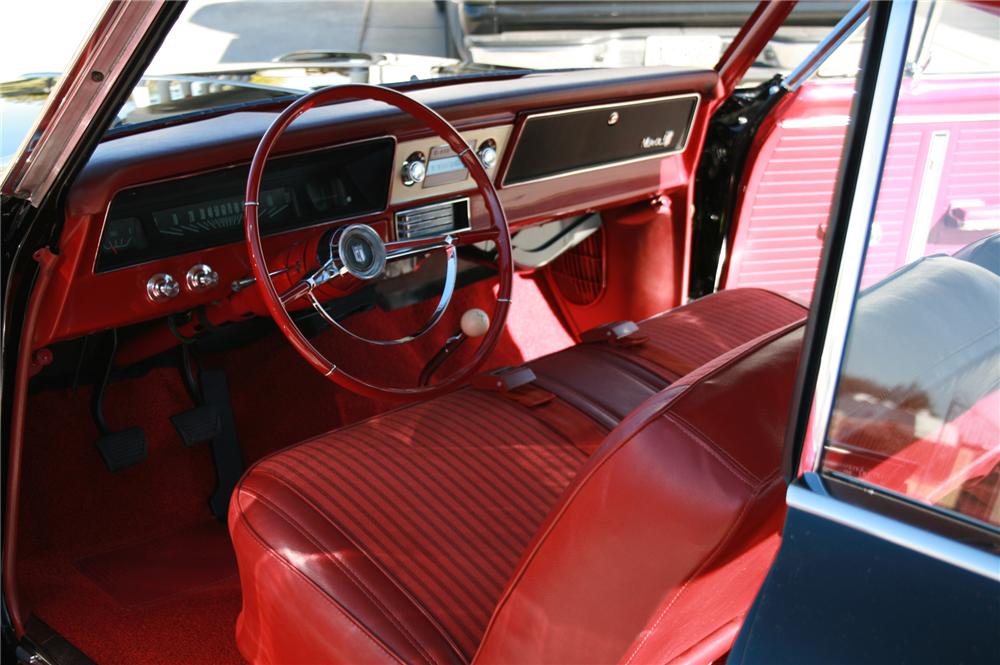


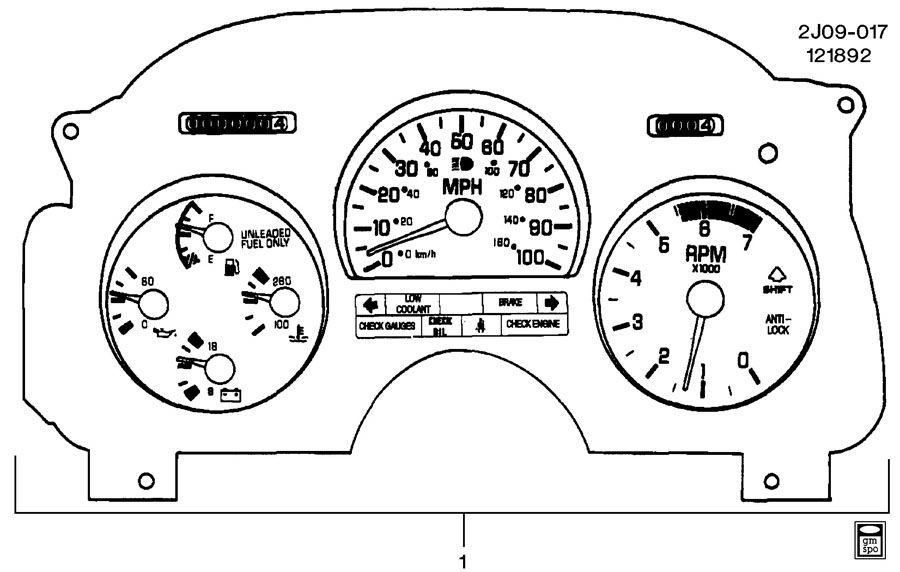
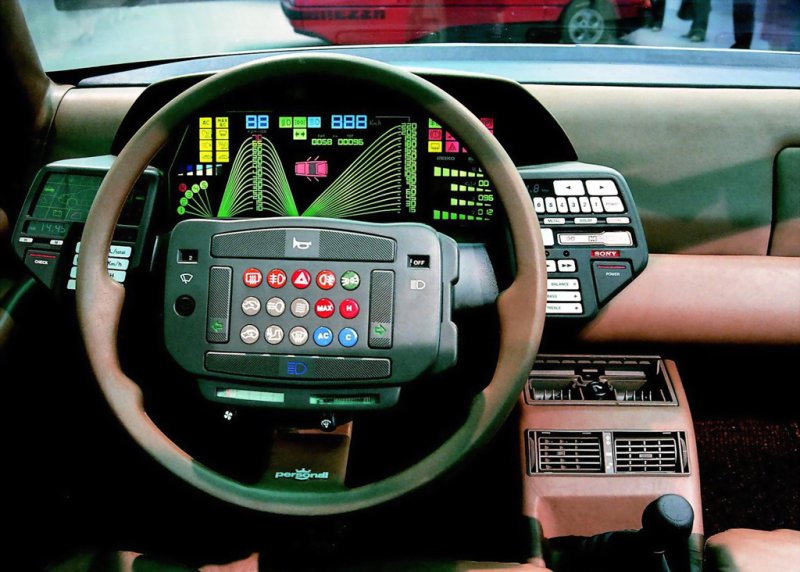


 The cars had similar, though separately designed, engines. Six years after Cadillac’s overhead-valve V-8, the ’55 full-size and Corvette offered an optional V-8, Chevy’s first in almost 40 years. The same basic design is available today in Corvettes, Camaros, pickups and the Suburban and Tahoe. The
  Chronologically speaking model-year-wise, the first Chevy I remember is my grandparents’ 1959 El Camino, in this Aspen Green (although theirs did not have the chrome wheels or whitewalls). My grandparents bought it for my grandmother’s next-door second-hand store. After they closed the store, my grandfather drove it to work at the Department of Natural Resources nursery just outside Boscobel.
 I apparently lived in Chevy neighborhoods while in Madison. The next door house (where our babysitters came from) owned a Corvair. Up the street, the father of friends of ours drove a 1969 Impala coupe. And when we moved to the house my parents built, two houses down was the first
  The Nomad was LeMans Blue, not this green, and it had a roof rack. It didn’t have many options besides that — AM radio and a power tailgate window. It could move quite smartly, given that my father selected one from an Oregon Chevy dealer with the most powerful available V-8, 255 horsepower and 365 lb-ft of torque, attached to a two-speed automatic. (I sat behind my father, so I can tell you how fast it could go.)
 That was quite an album for its day, featuring performers you would have heard of in 1970 —
  (Theirs had the dog-dish hubcaps, but not the roof rack.)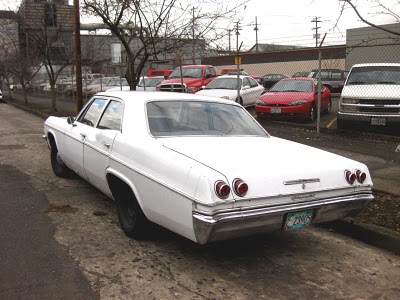
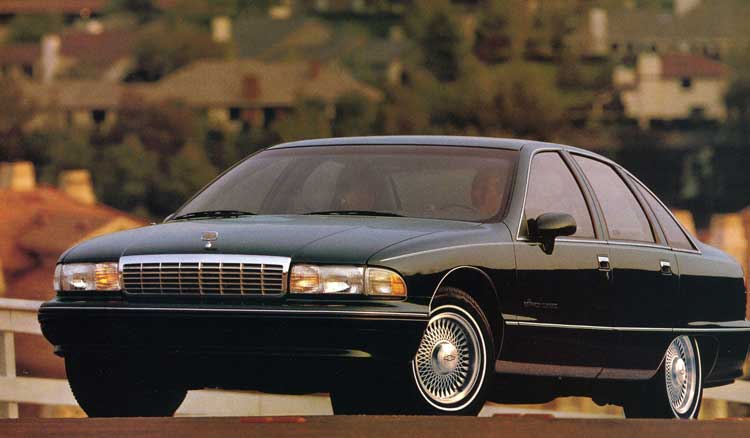
 … while my parents moved up to
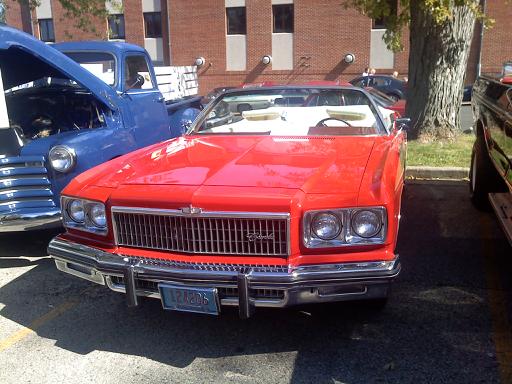
  This was a car. (Dark red, not black, and without the color-keyed hubcaps and with a full vinyl roof.) It was 18 feet 1 inch long, weighed 4,300 pounds, and required careful parking. (Note the huge front bumper guards; the way to get it into the garage was to drive slowly until the front bumper hit the concrete steps into the house.) On the other hand, it ate up the miles in Chevrolet-level luxury. And it was built down Interstate 90 at the GM Janesville plant, which employed one of my neighbors. This is undoubtedly where I developed my affinity for


 This is the Ford Cobra Snakehead, designed on computer by
  I’m not necessarily sold on this design, which to me looks like the product of a May–December romance of a C3 Corvette and a C7 Corvette, with some late 1990s Mustang in it. Others have pointed out that the hood line is too high.
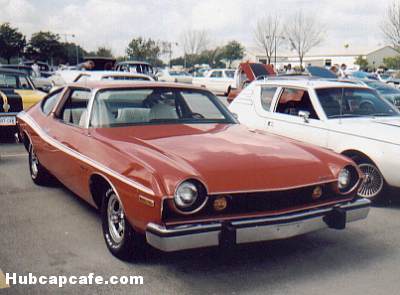
 Ford — that is, its Lincoln–Mercury dealers — sold the
 This is not about Ford’s needing a Corvette-fighter any more than anyone needs a Corvette. (Why, look at me: I’ve never owned a Corvette … not that I’m bitter about that or anything …) Corvettes are halo cars for GM, and, I would argue, Ford — the only non-federally-bailed-out member of the Big Three — should have its own halo car.









 Steve Prestegard.com: The Presteblog

