While Wisconsin is preparing for its West Region semifinal game against Baylor Thursday night, archrival Marquette is preparing to find a new coach after the departure of Buzz Williams to Virginia Tech.
Since this is the Lenten season of confession and penance, I must admit that I hate Marquette. This photo symbolizes why:
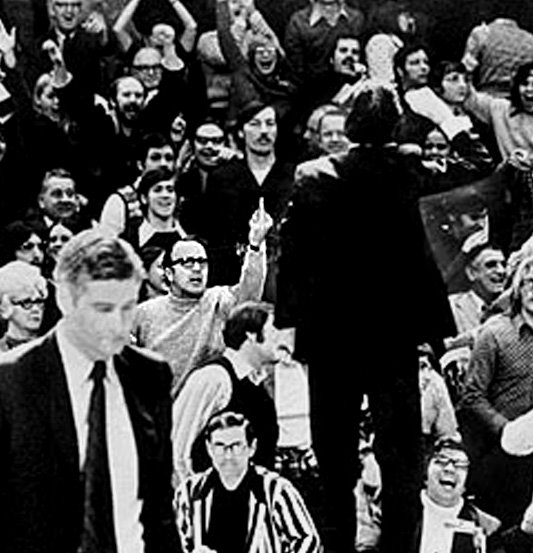
This is from a February 1974 Wisconsin–Marquette game at the Milwaukee Arena. The guy on the table is, of course, Marquette coach Al McGuire, celebrating Marquette’s 59–58 win. The guy walking off the floor is Wisconsin coach John Powless. (Who is still with us as one of the best senior tennis players in the country.) The guy giving McGuire the one-finger salute is Glenn Hughes, father of UW basketball players Kim and Kerry Hughes, who were on the losing end of this game.
McGuire was 20–4 against Wisconsin. When I looked that up, I couldn’t believe that statistic … that McGuire ever lost to Wisconsin. Indeed, when I started watching UW basketball, McGuire was in the midst of his personal 15-game winning streak over Wisconsin. Not until the 1978–79 season, two years after McGuire retired as the national champion coach, did I see Wisconsin beat Marquette.
There were some years in the ’70s when Wisconsin would play (and thus lose to) Marquette twice — once in the Milwaukee Classic (where Marquette and Wisconsin were supposedly co-hosts), and then alternating between Madison and, believe it or not, Milwaukee, presumably because it was theoretically possible that Marquette and Wisconsin wouldn’t meet in the Milwaukee Classic championship game. Glenn Hughes might have been particularly ticked because this Marquette win followed another Marquette win, 49–48, one month earlier.
There is some irony that Marquette has played a few games in Madison not involving Wisconsin. That started in 1969 when (for an unfathomable reason) the UW Fieldhouse (which was decaying even then) hosted the NCAA Midwest Regional. Marquette beat sixth-ranked Kentucky 81–74 before losing to Purdue 75–73 in overtime in the regional final. Then, in 1980, Marquette played a home game at the Dane County Coliseum and beat 10th-ranked Duke 80–77. (The Blue Devils, then coached by Mike Krzyzewski’s predecessor, practiced at my high school. The victim was one of our gym’s backboards, destroyed by Duke’s Gene Banks.)
That sort of playing in your archrival’s home is rare, but not unprecedented. In the years before North Carolina opened the Dean Smith Center, the Tar Heels would play home games in Charlotte and Greensboro, in part because the Dean Dome’s predecessor, Carmichael Auditorium, seated only 10,000. For a few years Kentucky played one home game per season in Louisville, in the days when Louisville and Kentucky didn’t play each other every season. For that matter, it wouldn’t be the craziest idea for Wisconsin to play one home game each season at the Bradley Center, for the same reasons it’s a good idea for Wisconsin to play one regular-season football game at Lambeau Field. It’s the University of Wisconsin, not the University of Madison, after all.
Regular readers know that I don’t really subscribe to the root-for-your-rival-after-you’re-out theory of fandom. I’ve never quite understood the logic of rooting for a team that whipped your butt earlier in a particular season. (And whether it was Michigan or Ohio State in football, Marquette and basically any Big 10 team in basketball, the Bears and Vikings over the Packers, or the Yankees over the Brewers, the team I was rooting for was almost always on the wrong side of the scoreboard.) The only way you should root for your archrival is if a particular game result benefits your team (for instance, the 1993 and 1998 Michigan–Ohio State games, which led to Wisconsin’s 1994 and 1999 Rose Bowl berths).
Even in the years when I worked for a Catholic college, supposedly on the same side as Marquette against the much better funded UW schools, I still cannot root for Marquette. Even when the Warriors won the 1977 NCAA title, I didn’t root for them. Even after his retirement, when McGuire revealed himself to be a fascinating person (you must read Dick Enberg’s book Oh My! for all the dimensions of McGuire) and, when paired with Billy Packer on college basketball games, to be a hilarious broadcasting experience, I would still rather eat lead paint than root for the Golden Eagles.
Thursday’s Louisville–Kentucky game, as you know, features Cardinal coach, and former Wildcat coach, Rick Pitino, who brought the UK program out of the hell of NCAA probation and won a national championship before leaving for the NBA (for the second time, which was no better an idea than the first). If you think it’s strange for a team to play a home game in its archrival’s arena, imagine the oddity of seeing your former coach on the wrong sideline.
The minister who married us was an Iowa fan when they had a church in Iowa. (No, I don’t root for the Hawkeyes either.) They now live in southern Indiana, and they’re big Louisville fans. He posted on Facebook earlier this week that he didn’t grasp the Kentucky–Louisville hatred given that, he claims, Iowa fans root for archrival Iowa State, and vice versa, outside when Iowa plays Iowa State.
To repeat how I started this meandering blog, Marquette is now looking for a new coach after Williams’ departure.
Why did Williams leave? The Milwaukee Journal Sentinel’s Bob Wolfley chronicles some theories from inside the media:
When asked about Buzz Williams’ decision to leave Marquette for Virginia Tech, college basketball analyst Dan Dakich said it seemed to him that Williams was running from a job rather than to one.
In his view, Williams was reacting more to a push than a pull.
“Buzz is smart,” Dakich said Saturday during a telephone interview. “In this day and age, win. If there is any difficulty at all, and I don’t know if there is or isn’t, if you feel it slipping or you feel like you are butting heads, then get out.” …
Dakich was asked if he thought coaching in the ACC, even in the bottom tier, rather than the new Big East, played a significant role in Williams’ decision.
“When you make a decision like that, everything comes into play,” Dakich said. “Everything is a body punch. There are a few knockout punches. Salary. Maybe TV opportunities. So absolutely I think that (conference affiliation) would come into play. Because think about what he is doing. Think about the dramatic shift to where he’s going. He’s going from an urban setting where it was kind of set up for him. Now he going to a place where it’s a rural setting. He’s really taking a culture leap. Not backwards step, just a 180-degree turn. When you do that, that tells me you are unhappy with a lot of things, your current employer. Or, as I say, you are just trying to get out before they get you.” …
Fran Fraschilla, a college basketball analyst for ESPN, said he was not surprised Buzz Williams left his job at Marquette, but he was surprised that it was for the job at Virginia Tech.
Fraschilla is a friend of Williams, in the network of coaches or former coaches with whom he regularly communicates. Fraschilla modestly does not claim the status of mentor in his relationship with Williams.
“There was something missing the last year or so,” Fraschilla said Friday night during a telephone interview. “I could see that Buzz was not quite as happy, for whatever reason. I don’t know what it was. I know he loves his team. Obviously he is a committed guy to his job. He took his responsibility at Marquette very seriously, understood the mission of the school. I just felt that it he thought he needed change. I don’t know why Virginia Tech was the spot for him. As you know Buzz is very (particular) about things, thinks things out. Must have seen something at Virginia Tech that made him feel like this is a good time to leave.” …
Fraschilla said Williams’ six year tenure at Marquette just reached a max point.
“At Marquette you have to grind every single day,” Fraschilla said. “It’s a great job. I have seen the place packed when (Tom) Crean was there. When Buzz was there. Some great tradition, great history. But sometimes you get a sense that five or six years is enough. You need a change. That’s the way things are. You know and I know there are people in Milwaukee who probably think he is a terrible coach. I can tell you as someone who has been around the game a long time he’s a heck of a young coach with tremendous energy.
“He always kept mentioning family to me the last few years,” Fraschilla said. “Asked me how much I missed coaching, why I loved TV so much. (I said) I love being around my family. He said, I don’t want to see my kids grow up without a dad. I don’t know what aspect of that relates to his taking that job.”
Other college basketball analysts offered their reaction to Williams’ decision.
“He’s a hell of a coach and a great guy,” Charles Barkley of Turner Sports said on air Friday night. “Virginia Tech got a really, really good coach.”
Said Clark Kellogg of CBS Sports: “It’s interesting when you think about the landscape of college coaching, it’s hard now because of the pressure that these coaches are under to stay in a place for a long period of time. The support starts to wane if you have a bumpy year or two.”
Williams succeeded Tom Crean after Crean left for Indiana. (Thus, hated archrival becomes hated conference archrival, though perhaps not for long.) Crean succeeded Mike Deane after Deane left for Lamar. Deane succeeded Kevin O’Neill after O’Neill (and his mouth) left for Tennessee. O’Neill succeeded Bob Dukiet after Marquette fired Dukiet.
That list of Golden Eagle begats in reverse proves that Marquette is not a destination job. Williams’ departure is a bit puzzling given that he apparently didn’t get a huge raise to go to Virginia Tech, but Virginia Tech plays in the ACC, and Marquette does not, with the implosion of the Big East.
This is also an awkward time to be choosing a coach, since Marquette presently has neither a full-time athletic director nor a president. If that sounds familiar, it should — that was where Wisconsin was while choosing a coach to replace the late Dave McClain, with AD Elroy Hirsch about to retire and the chancellor position about to be vacated. The football coach, Don Mor(t)on, and the athletic director, Ade Sponberg, were eventually fired by the chancellor, Donna Shalala. The backward hiring was probably unavoidable at the time, but the results were disastrous.
The leading candidate Monday was Virginia Commonwealth coach Shaka Smart, who is from Oregon. Tuesday’s reports indicated Smart was going to stay at VCU, moving attention to Syracuse assistant Mike Hopkins, though Boston College reportedly is pursuing Hopkins too.
So imagine this future scenario: Marquette hires a young coach. Wisconsin’s Bo Ryan retires, while the new coach puts in a few years at Marquette. Would a Marquette coach become a UW candidate?
This sort of almost happened. After UW fired Brad Soderberg, the hot UW candidate was Rick Majerus, who used to coach for … Marquette. (Majerus ended his Marquette tenure — he became the coach after replacing Hank Raymonds, who in turn replaced McGuire; both Raymonds and Majerus were McGuire’s assistants — to become a Bucks assistant coach. After Majerus decided the NBA wasn’t for him after all, he went to Ball State and then Utah, where he took the Utes to an improbable national championship game.)
What makes this unlikely is the different approaches Wisconsin and Marquette have taken in basketball since McGuire arrived in Milwaukee. McGuire recruited from New York (where he grew up) and Chicago until Milwaukee started producing players. Wisconsin hasn’t been able to get the best Milwaukee players for decades; if they don’t go to Marquette, they leave the state. (For that matter, UW hasn’t even gotten Madison’s best players, with Memorial’s Wesley Matthews, whose father played at Wisconsin and assistant coach Bo Ryan, and Vander Blue going to Marquette.) Whether because of UW’s academic standards (which don’t seem to be at the same level on the east end of Interstate 94), or the Badgers’ style of play dating back at least to the Dick Bennett days, or whatever other reason(s), the team that plays at the Kohl Center usually plods (this year being a notable exception), and the team that plays at the Bradley Center usually doesn’t.
Basketball is the number one sport at Marquette, so the basketball coach is the athletic department, and indeed perhaps the single most recognizable representative of the university. Bo Ryan is certainly recognizable, but he’s not the only UW athletic representative, let alone representative of the university.
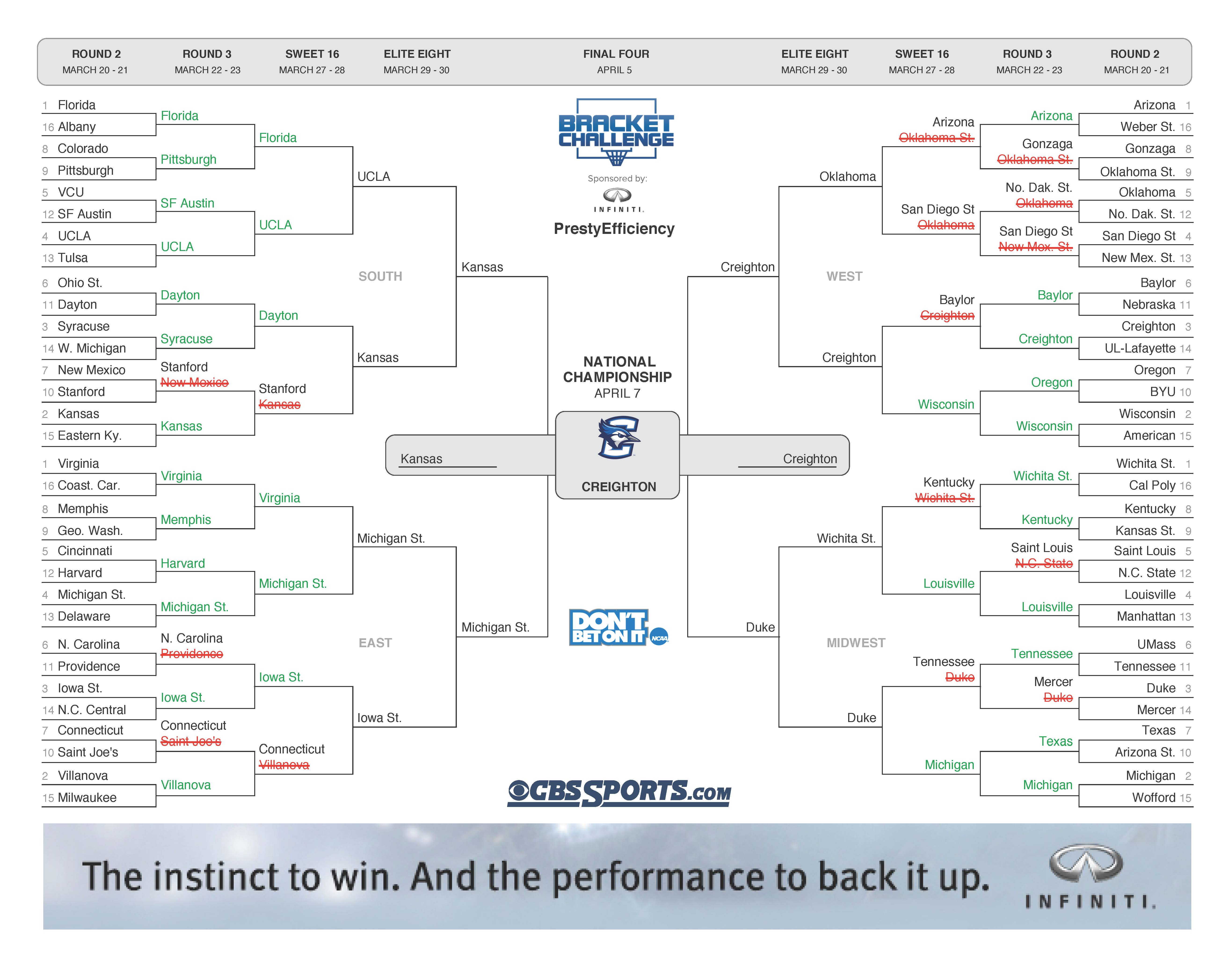

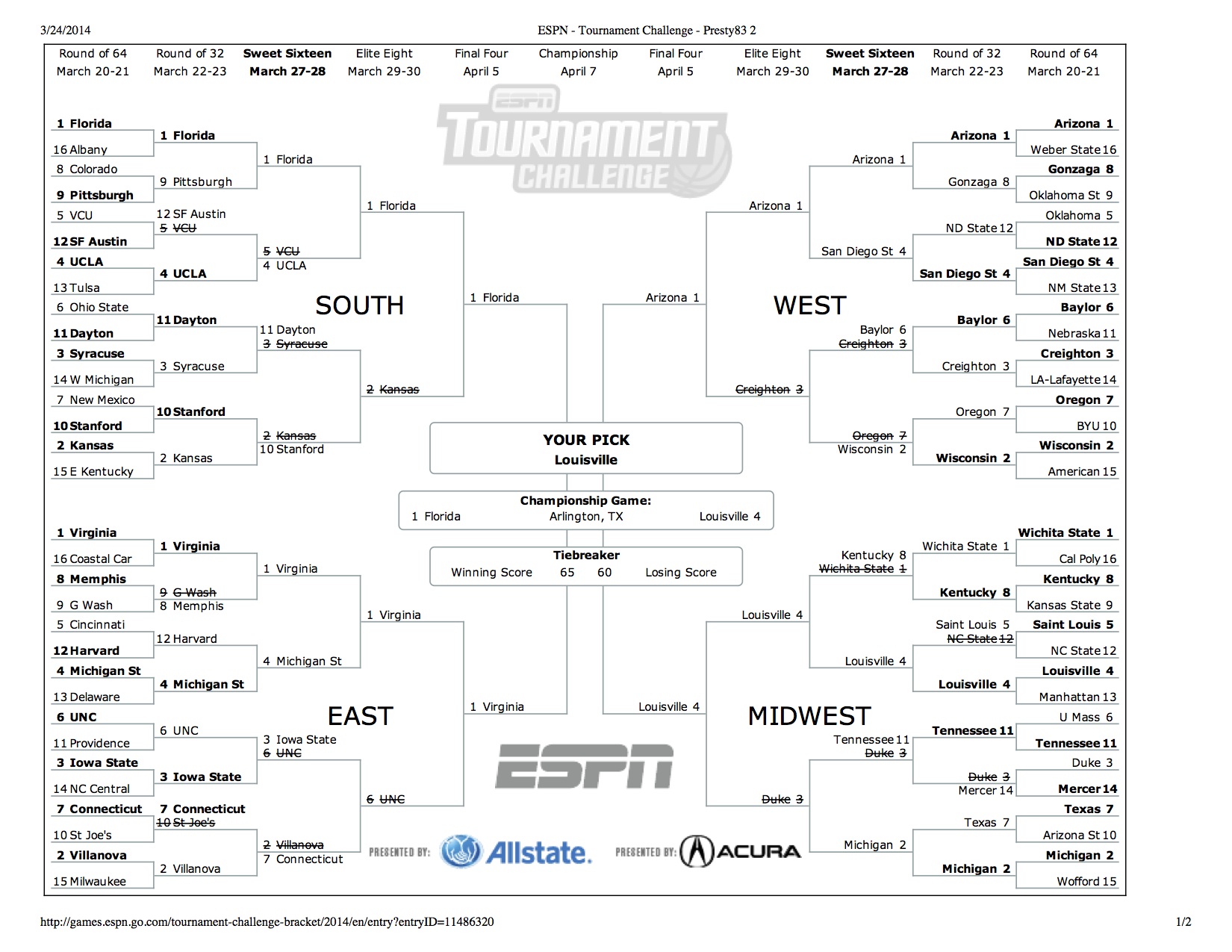
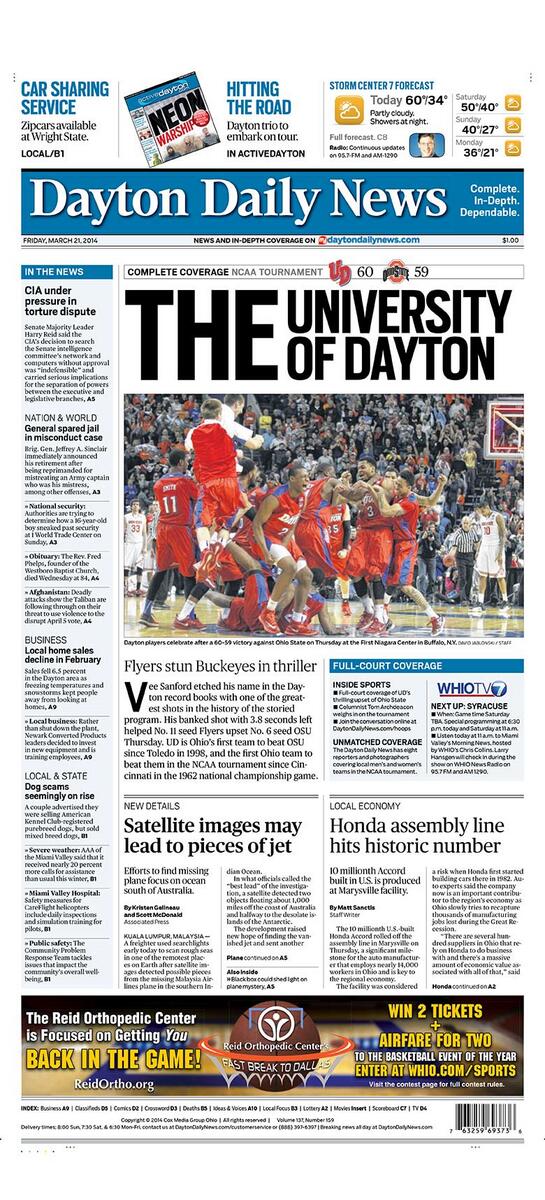


 … the jersey for Salute to Cows Night June 12. Really. I’m sure you’re all moooooved by this.


 Steve Prestegard.com: The Presteblog