I’ve written before on this blog about my TV-viewing preferences — generally the genre of action/adventure, including crime dramas.
One of the key aspects of a TV series is its opening. Whether the teaser — the first couple minutes designed to hook in a viewer — comes before the titles or as the beginning of the first act, the teaser has to draw in a potential viewer to put down the remote or TiVo control and watch what’s ahead.
The titles create the setting for the entire series, from the combination of visuals and music. Or at least they used to; titles have been truncated to in some cases no music at all, which proves yet again that change may be inevitable, but positive change is not.
A sense of realism, or at least verisimilitude, is useful. Consider the openings of these early ’60s Warner Bros. detective dramas:
If a TV series last longer than a couple seasons, the titles often end up changing. The cast changes, or producers change, or someone gets an idea to do something different.
Generally, if the words “Theme by Lalo Schifrin” are in the credits, that is a plus. The first season of “Medical Center” was nothing more than medical jargon before Schifrin hit the scene to start season two:
Schifrin also wrote the theme music for two iconic ’60s series:
I watched fewer sitcoms than cop/detective shows, but I thought immediately that I preferred the much-less-familiar version of “I Dream of Jeannie” …
… to the opening everyone who watched the show knows:
In contrast, the NBC “Get Smart” open …
… wasn’t as good as the (last-season) CBS “Get Smart” open:
I like the early version of “Ironside” …
… instead of the more familiar jazzed-up version (which writer Quincy Jones released as a single “Smackwater JAck”):
Everyone has probably seen the famous opening of the original “Hawaii Five-O” …
… but the first-season close racing through downtown Honolulu …
… is more action-oriented than the canoeists:
I prefer the first-season theme, written by the great Lalo Schifrin, of “Starsky and Hutch” …
… to the more familiar second- and fourth-season themes …
… and this third-season dreck that ends up sounding like something out of bad Saturday morning TV:
While the first opening of Kojak isn’t bad …
… the second is better …
… certainly compared to what’s been called “Disco Kojak” in its last season:
“We believe that Lee Enterprises has been burning its furniture to stay alive by aggressively cutting costs in order to service its crushing debt load,” writes a contributor to Seeking Alpha, a financial news/commentary site.
He points out:
* Lee has laid off 26 percent of its workforce since 2010.
* In that same time, the chain’s newsprint consumption has declined by 30 percent.
* The newsprint produced per subscriber has decline by 14 percent since 2010. (“Each of Lee’s subscribers is reading a smaller newspaper.”)
The Seeking Alpha writer’s conclusion:
Lee Enterprises has embarked on an unsustainable business model of destroying its product while raising prices in an effort to sustain its financial performance. …
Lee’s short-minded strategy of gutting its workforce (and therefore its product) while simultaneously increasing prices is doomed to fail. We believe the stock is worth at most $2.85 per share and is likely ultimately worthless based on industry average multiples and the high likelihood that LEE’s financial performance will begin to deteriorate once consumers catch on to the much weaker product and the company runs out of cost cutting measures. We are short the stock and suggest shorting the stock.
While Lee may be burning the newsroom furniture, its top executives are probably buying high-end leather sofas for themselves with their six-figure bonuses.
This was reposted by Jack Craver, a reporter for The Capital Times, with this introduction:
Will this serve as a wake up call to Lee Enterprises, which owns the Wisconsin State Journal as well as half of Capital Newspapers?
This is of personal interest to me as a literally lifelong (from age 2, according to my parents) reader of the State Journal, despite its resolute refusal to hire me for going on 30 years. I suppose it’s personal interest to Craver too as schadenfreude for a competitor of his. (Although the State Journal is not exactly competition for reasons that will soon reveal themselves. But here’s one: The Capital Times, formerly a six-day-a-week newspaper, downsized to two issues per week, stuffed inside the State Journal and available at newsstands for free, to switch its competition from the State Journal to Isthmus, the weekly tabloid that has been around as a tabloid since the late 1970s.)
I am glad Craver posted this, though, because one of the comments …
Jack, other than the fact I don’t want you or anyone on staff there to lose [their] job, I hope they fail—big time! They are nothing but a shill for the 1% and militarism.
… reminds me why I try to avoid Madison like the plague — it is full of stupid people who believe and say stupid things. Live in Madison long enough, and you will come to question the wisdom of the First Amendment.
For two newspapers that once upon a time couldn’t have been more different on their opinion pages, the State Journal and the Capital Times have a lot in common. See if you can follow this, which may read like one of those “I am my own grandfather” riddles:
Lee Newspapers 0wns the State Journal. (Lee also owns the La Crosse Tribune and Kenosha News, along with the weekly Vernon County Broadcaster.)
The Capital Times Co. owns the Capital Times.
Lee and The Capital Times Co. each owns half of Capital Newspapers, which since 1948 (as Madison Newspapers, which apparently is Capital Newspapers’ corporate name) handles advertising for and printing of both newspapers. (Their newsrooms are separate, but their business operations are not.)
Capital Newspapers owns the Portage Daily Register, Baraboo News Republic, Reedsburg Times Press and Beaver Dam Daily Citizen, along with several weekly newspapers. (The latter daily is a former employer of mine.)
A former writer at the aforementioned Isthmus claims that Madison Newspapers owns not just the advertising and printing arms of the State Journal and Capital Times, but actually owns both newspapers. That might come as news to Lee, but someone with more knowledge of their corporate structure should explain all that.
I have run into State Journal employees from time to time, including when I was an employee of Journal Communications, publisher of the late great Marketplace Magazine. In fact, I met some members of the State Journal’s business news staff at a business journalism conference held in the Journal Communications building in downtown Milwaukee. They seemed to be nervous, and I think at least one of them who was there is no longer employed there, though I don’t know whether that person left by choice or not. (This was about the time that I started to realize that Journal Communications as an Employee Stock Option Plan company and Journal Communications as a publicly traded company were not the same company.)
Lee as a company apparently is not doing very well. What does Lee itself have to say about this? Just ask Lee:
Lee Enterprises Inc. (NYSE: LEE), a major provider of local news, information and advertising in 50 markets, reported today that for its fourth fiscal quarter ended September 29, 2013, digital revenue continued to increase, operating expenses continued to decrease and debt has been reduced to a level two years ahead of its reorganization plan.
Because of period accounting, year-over-year comparisons are distorted. The 2012 quarter and fiscal year included an additional week of business activity, which added both revenue and cash costs in comparison with the 2013 periods. Tables below summarize key 2013 and 2012 results on a comparable 13- and 52-week basis(1), respectively.
Also, the 2013 quarter includes a non-cash impairment charge of $1.94 per diluted common share. As a result, Lee reported a preliminary loss of $1.71 per diluted common share, compared with a loss of 6 cents in 2012. Excluding unusual matters, adjusted earnings per diluted common share totaled 25 cents for the 2013 quarter, compared with 7 cents a year ago.
Since it is the People’s Republic of Madison, an obligatory slam on management’s compensation is required. To that, two points: (1) Management pay is a small fraction of overall payroll, unconscionable bonuses or not, and (2) I’ve always suggested that employees of publicly traded companies, which includes Lee, buy stock in their company so they can reap the benefits of whatever management does to increase profitability and stock price, and to give the employee a voice, even if a small one, as a shareholder.
Oh wait, here’s a third point: I suspect the State Journal salaries are where they are less because of Lee management salaries than because of the employment market. Madison is about as great a news city as exists in the Midwest, and therefore reporters would … well, insert your favorite violent metaphorical verb here … to work in Madison. If someone leaves the State Journal, easily 100 applicants would seek to replace him or her. One rule of business is that a business that wants to stay in business does not overpay its employees. Because there are so many journalists, anyone who leaves the State Journal — or the Capital Times, or one of the radio station groups, or one of the TV stations — are very easy, financially speaking, to replace.
Based on Facebook comments (and you know how accurate those are), the State Journal is doing well financially, enough to subsidize other Lee newspapers. The State Journal is not the newspaper I grew up reading, although you could say that about any newspaper since about 1980. There is more national and world news than you might think should be in a daily today, though that could be attributed to Madison being a supposedly more worldly community. (It also could be attributed to wire-service subscriptions costing less than reporters’ salaries.)
The State Journal has always had a great sports department. The State Journal also seems to cover Madison and Dane County well, though that might be a better statement posed to a Dane County resident. (Those three words will never again describe me.) The State Journal used to be Madison’s conservative newspaper in terms of opinions. “Less liberal” would be a better description now (though any newspaper looks like a John Birch Society newsletter compared to the communists who write C(r)apital Times opinions).
One irony of the Capital Times is that the family that started it has a large charitable foundation, the Evjue Foundation, which gives a lot of money to a lot of Madison and Wisconsin causes. The irony is that the newspaper whose profits created the foundation has spent its entire existence castigating business and wealth, and editorially espousing taking others’ wealth for their own idiotic pet lefty cause.
(Another is that the Capital Times started WIBA radio in Madison, which carries the three-hour show of the non-liberal Rush Limbaugh. Still another is this: Madison Newspapers employees went on strike in the 1970s. My high school journalism teacher, who I conclude was quite active in Madison Teachers Inc., refused to take his classes to Madison Newspapers — which one would think would be a place high school journalism students would like to see — because he refused to cross the union’s picket line, several years after the strike. The target of his ire was not, interestingly, the State Journal; it was the Capital Times.)
One irony of the State Journal is that one of Lee’s owners is Warren Buffett, who didn’t make his billions of dollars making stupid investment decisions. In fact, Buffett is also not known for making short-term investment decisions, which suggests against the theory that Buffett bought into Lee expecting Lee to be sold in whole or in part.
So because speculation costs nothing, Craver’s Facebook posters speculated on whether the Capital Times Co. would want to buy the State Journal from Lee. If it’s true that the State Journal is one of the most profitable — maybe the most profitable — Lee newspaper, then Lee’s not going to sell except for a high price. The State Journal’s future seems better than Lee’s, particularly if Lee keeps reporting eight-digit fiscal-year losses. If Lee hasn’t figured out how to make newspapers work in a digital world, well, Lee has a lot of company.
My prediction for years has been that what we now know separately as newspapers, radio and TV are going to merge into one, to where an information provider will provide the news in whatever form a reader wants it — as video, audio, print (as a PDF or something like it that the subscriber can read online or print), online, and whatever the next medium of information is. The value of the State Journal is that it has covered Madison and surroundings since 1839. How information is delivered will change; the need for that information won’t.
To demonstrate why I like hanging around with the news media, someone who works on Fish Hatchery Road posted:
Romenesko’s post made me realize that I need to start keeping a flask of alcohol in my desk. Although, as a friendly competitor pointed out, I may need to keep the booze safely away from any burning furniture.
That last point is because, of course, you can’t see the flame of burning alcohol. But you knew that.
It’s great to have my own theme music, although typing with gloves on isn’t easy. And of course I’m always concerned about running out of oxygen.
The next logical sci-fi question: What Star Trek character is my personality? (This isn’t all about me, by the way, unlike this, because 40 to 45 percent of the population is said to be in the SJ, or “guardian,” category.) There’s a website for that too:
You share a basic personality configuration with William Riker and B’Elanna Torres.
People like you are generally quick decision makers, organized and efficient. Your personality is charismatic, friendly and energetic, but you take life seriously and can be a little opinionated on your own turf. You’re extremely outspoken when you feel you’re in the right. You have great trouble dealing with people who are dishonest and/or disorderly.
You’re highly productive, realistic and sensible. Somewhat of a traditionalist, you’re distrustful of new and untested ideas, and you’re more than a little blunt telling others how you feel about them, or about whatever other faults you see. When you give a compliment, however, you mean it.
Your primary goal in life is doing the right thing, and being in charge. Your reward is to be appreciated by others and have your opinion respected. You also enjoy having others willingly follow your orders.
Good careers for your type include being a command officer, pharmacist, teacher, and personnel manager.
Well, Riker has a beard (after the first season) and plays a horn (though a trombone, not a trumpet).
Captain Kirk, by the way, is an ENFP (“champion”), while his successor, Captain Jean-Luc Picard, is an INTJ (“mastermind”). Deep Space Nine’s Commander Benjamin Sisko is an INFJ (“counselor”), and Captain Kathryn Janeway is an ESFP (“performer”). Spock is an ISTJ (“inspector”), Dr. McCoy is an ESFJ (“provider”), Dr. Crusher and Commander Chakotay are an ISFJ (“protector”), engineers Scott and Geordi LaForge are an ESTP (“promoter”), Counselor Troi is an ENFJ (“teacher”), and Worf is an INTP (“architect”).
Logical? There’s an entire universe of characters that are ESTJs, according to this site:
Princess Leia Organa from Star Wars (listed as an ENTJ on the first site)
I recognize only a few of these. Captain Aubrey is great. (“Master and Commander” is a movie that should have been a series.)
So is Gene Kranz:
Jake Hoyt is the younger of the two cops in “Training Day,” apparently related in personality to Detective Stabler in “Law & Order: SVU,” Supervisory Special Agent Hotchner on “Criminal Minds,” and Marshal Earp. Sam Gerard is the U.S. marshal from the movies “The Fugitive” and “U.S. Marshals,” as opposed to Lt. Philip Gerard from the TV series “The Fugitive.”
Mike is the small, one-eyed monster. (I am part-Polish, but I am neither green nor one-eyed nor short.) Wade Gustafson is the father-in-law who gets killed, but then in “Fargo” nearly everyone gets killed. The Fire Lord of “Avatar: The Last Airbender” is not to be confused with any character on the other “Avatar” movie.
The Wisconsin Policy Research Institute excerpts the new book of Gov. Scott Walker, Unintimidated: A Governor’s Story and a Nation’s Challenge, including what fun it was to be governor during Recallarama:
On Feb. 15, I went to La Crosse for a visit to a manufacturing company. Outside the facility, we were greeted by hundreds of angry protesters, but inside we got an enthusiastic reception from the blue-collar workers. As I recall, they were paying about 25 percent of their health insurance premiums and had to match their employer contributions to their pensions, so they didn’t have a whole lot of sympathy for the folks outside complaining about having to pay 5.6 percent for their pensions and 12.6 percent for their health care. It was a great event.
As we prepared to leave, the state troopers saw that the protesters had physically blocked the entrance we had used to come onto the property. So they turned the squad car around and headed toward the other exit. We watched in disbelief as the throng of people rushed toward the second exit to block our path. As we tried to pull out, they surrounded the car and began beating on the windows and rocking the vehicle. Just as we extricated ourselves from their grip, a truck pulled up and blocked our path, playing a game of chicken with the troopers. They turned the lights and sirens on and warned him to get out of way. Eventually he backed up, and we sped off.
It was a lesson in how much our circumstance had changed in a matter of a few days. We were dealing with people who were so blinded by their anger that they were not in the least bit afraid to storm and shake a police car. We had never seen anything like it in Wisconsin before.
And that was only the beginning. The protests following us around the state grew bigger and louder — and the protesters got more aggressive with each passing day.
After the La Crosse incident, State Patrol Capt. Dave Erwin took me aside and explained that we needed to increase security — not just for me but also for Tonette and the kids. Dave briefed me about the stream of intelligence he was receiving from the state Division of Criminal Investigation. Our whole family was being watched, followed and tracked, he said.
Dave was not prone to exaggeration. He is a former marine who had headed former Gov. Jim Doyle’s security detail. He is the consummate professional.
“Governor, I’ve been at this awhile, and when the hairs stand up on the back of my neck, you have to be concerned,” Dave said. “They know where you go to church; they’ve been to your church. They’re following your children and tracking your children. They know where your children go to school, what time they have class, what time they get out of class. They know when they had football practice. They know where your wife works, they know that she was at the grocery store at this time, they know that she went to visit her father at his residence.”
We talked about some of the additional measures he would take to keep the family safe. Dave increased the size of our detail and assigned troopers to keep an eye on the kids at school. (Both of my sons were attending a public high school, and the Wauwatosa police officers really looked out for Matt and Alex too.) He also explained that we could no longer do simple tasks like going to the curb to pick up the mail, which would now have to be screened.
We soon began to get a steady stream of death threats. Most of these Dave and his team intercepted and kept from Tonette and me. They were often graphic (one threatened to “gut her like a deer”), but for the most part they amounted to little more than angry venting.
But one afternoon, as I prepared to go out to the conference room for my daily press briefing, Dave came into my office and shut the door. “Sir, I don’t show you most of these, but I thought you ought to see this one.” He handed me a letter addressed to Tonette that had been picked up by a police officer at the executive residence in Maple Bluff. It read:
HI TONETTE,
Has Wisconsin ever had a governor assassinated? Scotts heading that way. Or maybe one of your sons getting killed would hurt him more. I want him to feel the pain. I already follow them when they went to school in Wauwatosa, so it won’t be too hard to find them in Mad. Town. Big change from that house by [BLANK] Ave. to what you got now. Just let him know that it’s not right to [EXPLETIVE] over all those people. Or maybe I could find one of the Tarantinos [Tonette’s parents] back here.
Lots of choices for me.
The letter had a Green Bay postmark, but there were no fingerprints or other indications of who had sent it. Dave explained that it raised red flags because, unlike most of the hate mail and death threats we received, it was very specific. The sender talked about following our kids to school, the street where we lived, and threatened not just me but my children and my in-laws. …
One of the reasons for Dave’s increased vigilance was the fact that the protests in Madison came just a month after the shooting of U.S. Representative Gabby Giffords in Tucson, Arizona. In the wake of that tragedy, I was amazed to see how quickly so many on the left jumped at the opportunity to blame conservative political rhetoric for the shooting.New York Times columnist Paul Krugman wrote, “We don’t have proof yet that this was political, but the odds are that it was. … [V]iolent acts are what happen when you create a climate of hate. And it’s long past time for the GOP’s leaders to take a stand against the hate-mongers.”Well, just a few weeks later, when protesters screamed at elected officials, threatened them and created a “climate of hate” in Madison, their actions were met with silence from these same quarters. Protesters followed us around the state, assaulted police vehicles, harassed Republican legislators and vandalized their homes. One day, someone scattered dozens of .22-caliber bullets across the Capitol grounds.
At the Capitol, they carried signs comparing me to Adolf Hitler, Hosni Mubarak and Osama bin Laden. Those never seemed to make the evening news, so we took pictures to document them. One read “Death to tyrants.” Another had a picture of me in crosshairs with the words, “Don’t retreat, reload.” Another declared, “The only good Republican is a dead Republican.” Another said “Walker = Hitler” and “Repubs = Nazi Party.”
It wasn’t just the protesters who engaged in such shameful rhetoric. Democratic Sen. Lena Taylor also compared me to Hitler, declaring, “The history of Hitler, in 1933, he abolished unions, and that’s what our governor’s doing today.” Her colleague Sen. Spencer Coggs called our plan “legalized slavery.” Jesse Jackson came to Madison and compared me to the late segregationist governor of Alabama, George Wallace (who was paralyzed in an assassination attempt), declaring we had “the same position” and that I was practicing the politics of the “old South.”
Later, when the Capitol was cleared of protesters, Time magazine reported, “The Wisconsin State Capitol had taken on an eerie quiet by late Friday. … The chalk outlines around fake dead bodies etched with Wisconsin Gov. Scott Walker’s name remained in dismembered parts, not yet completely washed away by hoses.”
Krugman and his cohorts never got around to taking “a stand against the hate-mongers” in Madison.
In his moving speech after the Giffords shooting, President Obama declared, “at a time when our discourse has become so sharply polarized, at a time when we are far too eager to lay the blame for all that ails the world at the feet of those who happen to think differently than we do, it’s important for us to pause for a moment and make sure that we’re talking with each other in a way that — that heals, not in a way that wounds.”
Those words apparently fell on deaf ears in Madison.
Ultimately, the unions took their stand in Wisconsin because of the unprecedented nature of our reforms. We did not simply go after the money — the lavish benefits the unions had extorted from taxpayers over the years. We dismantled the entire system of corruption and cronyism by which the unions perpetuated their political power and dictated spending decisions to state and local government. We took the reins of power from the union bosses and put the taxpayers back in charge.
Normally, they would have succeeded in thwarting our efforts. But two things suggested to me that we had a unique opportunity to do something that might be impossible at any other time: We had the votes, and we had no choice. We were in a fiscal hole with no way out. I didn’t lead our party into this fight when we had a budget surplus. It wasn’t like I was Evel Knievel saying, “I wonder if I can jump this canyon” just for the sake of jumping over a canyon. I did it because we had a $3.6 billion deficit and no practical way to close it.
I wrote during the depths of Recallarama that politics was getting so nasty and spiteful that an assassination of a politician or a campaign worker was likely. Nothing has really changed to change my opinion. It’s not the words being used; read around the Civil War and you’ll find politicians and their supporters have been called far worse things than epithets common today. But in those days government wasn’t nearly as pervasive and powerful as today. Democrats and liberals want Walker out of office, and some might add that phrase from the 1960s, “by any means necessary.” When human turds like the aforementioned Green Bay-postmark-writer feel free to threaten the lives of family members of elected officials, it’s just a matter of when, not if.
You’ll have to forgive Right Wisconsin for chortling over Democrats’ eating their young:
A day after RightWisconsin reported some of liberal radio host John ‘Sly’ Sylvester’s critical comments comments about Democratic candidate for governor Mary Burke, Sly took to the airwaves to report that Democratic Chairman Mike Tate was unhappy with him.
“I got a text today from the Chairman of the Democratic Party. And it went kind of like this: “Dude, what are you doing here? You’re not helping us win here brother.”
Tate was reacting to the RightWisconsin piece that quoted Sly’s Friday comments on Burke at length. RightWisconsin’s story read in part:
“I’m not getting on this train,” said Sly on Friday. “I couldn’t live with myself.”
“This woman and her brother are responsible for putting people out of work and shipping the jobs to China,” said Sly. “When she went on the snowboard sabbatical do you think she thought about those unemployed people?”
Sly, a stalwart progressive and protectionist who has championed the labor uprising in recent years taps into the serious hypocrisy of the Democratic Party’s choice of Burke and why grassroots progressives are not thrilled.
“She’s Mitt Romney in a red dress,” explains the Monroe radio host. “Look at how much money was spent to paint Mitt Romney as an out-sourcer. The hypocrisy here. I don’t know if I could live with myself.”
Expressing his belief that Mike Tate and the Democrats chose Burke for her personal fortune, Sly called Burke “a wallet.” And as for her promise to not make any promises, particularly on a pledge to repeal Act 10, Sly called Burke a “coward.”
Sly didn’t apologize or retract any of his statements about Burke emphasizing, “when someone does something contrary to my core beliefs, I can’t let it go.”
Give Sly credit for consistency … so far. As Right Wisconsin previously reported:
The liberal blogs have been merciless in their treatment of Burke. And now liberal radio host John ‘Sly’ Sylvester has declared that he would be “the biggest hypocrite in the world” if he endorsed Burke for governor due to her past as an executive for the Trek bicycle company that has moved much of it’s manufacturing facilities overseas.
“I’m not getting on this train,” said Sly on Friday. “I couldn’t live with myself.”
“This woman and her brother are responsible for putting people out of work and shipping the jobs to China,” said Sly. “When she went on the snowboard sabbatical do you think she thought about those unemployed people?”
Sly, a stalwart progressive and protectionist who has championed the labor uprising in recent years taps into the serious hypocrisy of the Democratic Party’s choice of Burke and why grassroots progressives are not thrilled.
“She’s Mitt Romney in a red dress,” explains the Monroe radio host. “Look at how much money was spent to paint Mitt Romney as an out-sourcer. The hypocrisy here. I don’t know if I could live with myself.”
Expressing his belief that Mike Tate and the Democrats chose Burke for her personal fortune, Sly called Burke “a wallet.” And as for her promise to not make any promises, particularly on a pledge to repeal Act 10, Sly called Burke a “coward.”
There is some irony on Sly’s accusing Democrats of choosing Burke for her supposed ability or willingness to self-finance her campaign. The Democrats spent tens of millions of dollars on the 2011 and 2012 Recallarama with nothing beyond temporary effect. Walker is still in office, Republicans still control both houses of the Legislature, and conservatives still have a majority on the state Supreme Court.
One thing this demonstrates is that talk-radio hosts should never align themselves too closely with political parties. The purpose of political parties is to get their members elected and reelected, first and foremost. The Democratic Party would nominate anyone it believes can beat Walker. Conversely, political party heads should never assume that the media is on their side, particularly someone like Sly. Talk show hosts are hired and paid to make money (through attracting advertising revenue) for their employers. That is why WEKZ radio employs Sly — to attract Madison listeners and therefore advertisers — not to shill for politicians or candidates.
Sly doth protest a bit much, since most of Burke’s positions, to the extent she has positions, come from the same Democrat hymnal that’s worked so badly at the state level. It would be refreshing to have a Democrat who actually understood business, and understood what the state needs to do to attract and keep business, other than the usual start-a-new-government-program answer Democrats have.
Regular readers know I’m a fan of police TV, perhaps the largest non-sports subset of the excess of TV I’ve watched over the years.
If one is a cop TV aficionado of at least middle age, you have to know who Jack Webb is. (I know, I know, “just the facts.”) Webb was an actor and producer of three versions of the biggest police media franchise until “Law & Order” came along — “Dragnet,” first on radio …
… and then on black and white TV …
… and then in a movie …
… and then on color TV ..
… with another movie (which was filmed before the color series but released afterward):
The subject of this blog came up because of a second Webb cop series, “Adam-12” …
I’m not sure if I saw “Dragnet” or “Adam-12” first, but I know I watched “Adam-12” religiously once I was allowed to stay up to watch it. (It usually was on at 8 Eastern, 7 Central.) I just missed a chance to meet the stars of “Adam-12” because Martin Milner and Kent McCord appeared at a telethon the NBC station in Madison carried. Unfortunately, they were claimed to be in the shower when the opportunity came to meet them, so I didn’t get the chance.
Webb also produced the definitive fire and rescue TV series, “Emergency!” But this blog is about neither “Adam-12” nor “Emergency!” (Nor “Sierra” nor “Project UFO, two more Webb series.)
On said Facebook group I brought up another Webb series that came and went toward the end of “Adam-12.” The Internet Movie Database describes “Chase” as containing “Adventures of an unconventional police unit led by Capt. Chase Reddick” (hence the series name). More completely …
Captain Chase Reddick is the leader of an undercover investigative unit of the Los Angeles Police Department that uses unorthodox methods in solving crimes. Reddick’s men are specialists: MacCray trains police dogs, Sing is an expert motorcycle rider, Hamilton flies choppers and Baker is an expert behind the wheel of a car. Chase’s unit answers only to the top brass in the department.
Chase was a Jack Webb-produced series which ran from September 1973 to August of 1974. Mitchell Ryan starred as the head of a special police unit assigned to cases that no one else would touch with a ten-foot pole. Ryan‘s staff included Wayne Maunder, Reid Smith, Michael Richardson and Brian Fong; surprisingly, there was no female Chase Squad member (three of the above-mentioned actors would be replaced in mid-season; among the replacements was old reliable Jack Webb cohort Gary Crosby). In the Chase 60-minute pilot, telecast on September 11, 1973, the Chase gang goes after an auto-theft ring. They catch them…or haven’t you tumbled to that fact?
The title character was played by actor Mitchell Ryan, who had played a cop in the second “Dirty Harry” movie, “The Enforcer,” and later played Greg’s father in “Dharma and Greg.” I’m not sure how a police captain gets to have only four people answer to him while also getting all these cool toys, but given Webb’s mania about accuracy, the idea must have come from somewhere.
The second in command, Sgt. MacCray, was played by Wayne Maunder, who had apparently been reasonably popular in one Western, “Lancer,” and played Gen. George Armstrong Custer in another.
The details of Ryan and Maunder’s careers were less interesting to an eight-year-old viewer than what else was on the series — to wit, the K-9 dog (named Fuzz, of course), the motorcycle, the helicopter (a Hughes 500 similar to what Thomas Magnum’s buddy flew on “Magnum, P.I.”) and the car, a silver Plymouth Satellite (possibly a police model) with mag wheels.
The series therefore already had half of my formula for worthwhile TV watching — wheels. (And rotors, too.) The other half is, of course, the right theme music. The opening contained the Satellite, the helicopter and the motorcycle racing toward the camera out of the sun, with a jazzy theme from composer Oliver Nelson. (Webb was a huge jazz aficionado.)
I found the theme music on a TV theme website some years ago. (In fact, two versions — the version that opened the show, and a version that combined the open with the close for one piece.) So, inspired for some reason earlier this week, and being unable to find the actual open on YouTube, I put together a crude one myself:
The series was reportedly based on the Special Investigation Section of the Los Angeles Police Department. This was the during a wave of “special” police series, preceded by “Hawaii Five-O” and “The Mod Squad” and followed by “SWAT” and “Police Woman.” Forty years later, “special” police investigators are far more subdivided than they were in the 1970s.
Similar to many series of the ’70s, the series featured actors you heard from since then, such as Tom Bosley (Mr. C on “Happy Days”), Sharon Gless (half of “Cagney and Lacey”), Harold Gould (too many roles to count, but particularly the second of the three Vachons on “Hawaii Five-O”), Pat Harrington Jr. (Schneider on “One Day at a Time”), Steve Kanaly (later to go to “Dallas” — ironically, his one-episode character name was “Jock,” the name of, as “Dallas” viewers know, the patriarch of the Ewing clan, and his character’s father), Larry Manetti (later another of Magnum’s buddies), John Mitchum (Robert’s brother and Dirty Harry’s partner), Del Monroe (who fans of sci-fi know as Kowalski on “Voyage to the Bottom of the Sea”), Cesar Romero (Batman’s Joker, of course), Robert Reed (father and stepfather of the Brady Bunch, of course), Craig Stevens (previously “Peter Gunn”), and various members of what could be called the Jack Webb Players, a group of actors that appeared interchangeably on Webb’s shows.
I remember only snippets of the series, which was carried one summer on USA Network a decade later. I remember the start of an episode where Fuzz got shot, but survived. There was another where a truck got hijacked by “police officers” who afterward took the light bar out of their “squad car” and put it in their trunk, then peeled off the door logos. Another Facebook group member recalled an episode where MacCray went undercover to try to get someone to try to steal Fuzz. Two men did steal Fuzz, only to regret it moments later when Fuzz turned on them.
The series was on for one season, About two-thirds of the way through, Webb fired everyone but Ryan and Maunder and replaced three actors with two, Gary Crosby (who was in most Webb series in one role or another) and Craig Gardner. The latter went on to be a writer. The series ended after the one season, probably for the reasons Wikipedia details:
NBC first scheduled the show on Tuesdays at 8 p.m. Eastern, opposite CBS‘ hit series Maude and Hawaii Five-O. At about the same time as the casting change, the network moved Chase to Wednesday nights at 8 p.m. against the Sonny and Cher Comedy Hour. Despite the declining appeal and ratings of the latter (and the couple’s forthcoming divorce), Chase did no better there and ended after a one-season run.
The career of its creator did not end, however. Webb had one of his “Adam-12” writers create “Chase.” His name was Stephen J. Cannell, and he did pretty well thereafter, as Jim Rockford and the A-Team would attest.
Somewhat to my surprise, between Facebook and a web search, I have found the 14 people who actually watched the series:
being an avid crime-drama fan in the 70s and 80s, I am STILL a diehard Chase fan. I too, liked Norm Hamilton, got interested in helicopters, collected books, built models and work at an aviation museum because of that show. I always wanted to tell Mr. Mitch Ryan that….
I remember this series when it first came on in Fall ’73. Sadly, I missed the pilot, but heard it was a flash!. When they added Wayne Maunder, the show was even hotter. This show show excellent potential had it not been for the cast chenge. I really think this was a great portrayal of a hip-snadbag team. My favorite (only slight) character was Officer Norm Hamilton-the fascination of a former combat helicopter ace. But I was also attracted at the partnership of Sgt McCray and Steve Baker (BTW what type of car was his hot rod). Those two were very much like a “Pre-Starsky & Hutch”. In fact it was because of Chase, I kept watching Starsky & Hutch. And then there was MCray’s Dog–FUZZ (a typical name for a cop-dog of the time). That dog put rin-tin-tin to shame–a very intelligent dog. This show (even if short-lived) needs to get out on DVD 5 years ago. I hope you consider this show for release!!!!!!!
The series is supposedly available on (probably homemade) DVD. Our two sons might watch it, which is amusing to contemplate since I watched it when I was younger than they are now.
This being the era of remade old TV series (“Hawaii Five-0,” the three-episode “Ironside” and a brief remake of “Dragnet”) or TV series made into movies (“Starsky and Hutch,” “Miami Vice,” “SWAT”), the logical question to ask is how “Chase” would fare as a remake. TNT had a series, “Wanted,” of (stop me if you’ve read this before) an elite police unit detailed to catch the jurisdiction’s 100 most wanted criminals. To me, it felt somewhat like “Chase,” except that the hostility level among the main characters was much more than you’d ever see on any Jack Webb production. I doubt “Chase” would work now merely because the concept of an elite police unit isn’t novel anymore, although one episode idea would be how this answerable-to-only-the-top-brass unit was able to procure a hot car, helicopter and police dog. (Likely answer today: Drug-dealer seizures.) On the other hand, TV series creators love mavericks, and my hazy memory of the series is that at least the younger officers were not wanted where they previously had been stationed for some reason.
There is only one way to end a blog that involves Jack Webb:
As it turns out, this World Series, whether it goes four, five, six or seven games, will be known for one thing among sports media geeks at least.
Tim McCarver is retiring from network baseball announcing after this World Series.
For those too young to remember: McCarver was a catcher for the Cardinals (his backup: Bob Uecker), Phillies, Expos and Red Sox from 1959 to 1980. (The Cardinals brought him directly to the big leagues after signing him because of the rules for players receiving what passed for large bonuses at the time. He retired and then briefly unretired in 1980 to be a four-decade player after he had already started announcing.)
After a couple of cameo appearances for NBC, McCarver worked the 1984 National League Championship Series as ABC’s backup-team analyst. He wasn’t scheduled to work the 1985 World Series in the booth, but Howard Cosell’s book I Never Played the Game and its criticisms of Cosell’s employer got Cosell removed from the Series (and eventually fired on TV, though he worked for ABC Radio for several years afterward), and McCarver replaced him on the World Series, delighting TV critics.
McCarver worked for ABC until 1990, when ABC lost the baseball contract to CBS. CBS hired McCarver and even had him co-host the 1990 Winter Olympics (which was not really his forte).
Then CBS lost the baseball contract to Fox after the 1993 season. So, similar to John Madden moving from CBS to Fox after CBS lost the NFL, McCarver went to Fox. And there he’s been, having now announced 24 World Series, more than any other announcer — more than Curt Gowdy (1966-1975), Tony Kubek (12 between 1968 and 1982), and Mel Allen (22 between 1938 and 1963).
McCarver has gotten increasing criticism over the years, as has his partner, Joe Buck. (Whose father, Jack, worked with McCarver at CBS.) Part of the reason is probably those 24 World Series he’s worked. Gowdy got criticized toward the end because he was on every big NBC sports event — the World Series, the American Football League and then NFL (and thus playoffs and Super Bowls), and the first few NCAA men’s basketball championships NBC carried — as is Buck, who is on Fox every week from the start of the baseball season until the end of the NFL playoffs. McCarver has also been criticized for overexplaining and talking too much.
Still, though, it’s an accomplishment to be part of anything for 54 years, which totals McCarver’s career from a 17-year-old Cardinal catcher to an announcer of a World Series involving, fittingly, the Cardinals. (Though McCarver, who has done local announcing all this time, may still do that.) I’d rather have an announcer who’s too critical than a vanilla announcer who isn’t critical enough.
In addition to being one of the few announcers to work with a father and son, McCarver will work game 4 Sunday opposite his former ABC partner, Al Michaels, who at the same time will be calling the Packers-Vikings game for NBC.
For those who think Washington has never been worse, George Will provides a reminder of four decades in the past:
“When I first met Richard Nixon,” Robert Bork says in the book he completed a few weeks before his death in December, “I could see in his expression the conviction that someone had blundered badly.” …
Saving Justice: Watergate, the Saturday Night Massacre, and Other Adventures of a Solicitor General, Bork’s recounting of events of 40 years ago, is an antidote to today’s tendency to think that things in Washington have never been worse. Bork became Nixon’s solicitor general in June 1973, 12 months after the Watergate burglary. Then Bork, fresh from Yale Law School’s faculty, met Nixon: “Apparently unsure if he was really dealing with a conservative Ivy League professor, he assured me his conservatism was something of a pose to keep others from moving too far left.” Conservatives knew this.
In the summer of 1973, Vice President Spiro Agnew asked to see Bork but “really had nothing of substance to say.” Bork would soon learn why Agnew wanted to establish a relationship. A few weeks later, Nixon’s chief of staff, Al Haig, asked Bork to become Nixon’s chief defense counsel concerning Watergate matters and told Bork that Agnew was under criminal investigation for accepting bribes while governor of Maryland, payments that continued while he was vice president.
While pondering Haig’s offer, Bork sought the advice of a Yale colleague, with whom he spoke on a “dark, semi-rural road” in suburban Virginia: “It’s an indication of the paranoia of the time that I really wanted to be someplace where it was impossible to be overheard.” By September, Bork and a few others knew the nation faced a novel possibility — a double impeachment, which could elevate to the presidency the speaker of the House, Oklahoma’s Carl Albert, who the year before may have been intoxicated when he drove his car into some other cars outside Washington’s Zebra Room saloon.
Agnew, Bork says, was “never one to miss out on making a little extra cash,” so he said that if he was forced out of the vice presidency, “he hoped to remain in the administration a few more months to ensure his pension would vest.” When Bork and Attorney General Elliot Richardson were being taken to the Oval Office to explain to Nixon why Agnew should be indicted, Richardson first got Bork into a White House restroom to talk. He turned on the faucets “in the expectation that the noise of running water would make our conversation inaudible if anybody was eavesdropping electronically.”
Claiming “vice presidential immunity,” Agnew said he could not be indicted until he had been impeached and removed from office. Bork and others rejected this because the vice presidency is not sufficiently central to governance. Yet in those fevered days, a Justice Department memo suggested that even a president could be indicted before impeachment because, with the aid of modern technology, he could run the executive branch from jail. But, the memo said measuredly, this “might be beneath the dignity of the office.”
On an October Saturday, when Nixon ordered Richardson to fire Archibald Cox, the Watergate special prosecutor, Richardson and his deputy resigned, urging Bork to execute Nixon’s lawful order, which he did. By the two resignations, Bork became acting attorney general, in which capacity he protected the ongoing investigation of Nixon.
At work the Sunday morning after the “Saturday Night Massacre,” Bork’s first official act as attorney general was to sign lease-renewal forms for an oil field in Natrona County, Wyo., that became famous during President Warren Harding’s unsavory administration. The field’s name — Teapot Dome — was shorthand for political corruption, until it was displaced by Watergate.
Watergate now seems as distant as the Punic Wars. Nixon, born 100 years ago in January, is remembered for large diplomatic, as well as criminal, deeds. Agnew is deservedly forgotten. Bork deserves to be remembered by a grateful nation for the services he rendered in preventing disarray in the Justice Department at a moment of unprecedented assault on the rule of law, and for facilitating the removal of a president during Washington days that were darker than most people today can imagine. His book confirms the axiom that our ignorance of history makes us libel our own times.
Earlier this week I posted an interview of author Ira Stoll that was written by blogger Ira Stoll. And I wrote that I should try that sometime.
“Sometime” turned out to be, well, today. Stoll’s arguing with himself prompted this, as well as the news that one of this state’s longest running right-wing political blogs, Badger Blogger, is hanging it up.
I think I am a good interviewer. (If I’m not after a quarter-century of interviewing people, I need to find another line of work.) On the instances where I was on the other side of the notebook or microphone (seven years in institutional public relations and four years on a plan commission), I have tried to be quotable, since I understand what the media wants. I’ve been accused of being a media “ho” (because the people who called me that apparently thought “whore” was an impolite term), particularly on days where I made appearances in more than one medium on the same day.
Those who have been interviewed by me may or may not have noticed that my interviews tend to wander. I go into an interview with a few questions I need to have answered, but for the most part my interviews are conversations with the subject of the interview, conversations that go wherever the answers go. When I write, I write in order of the answers, but thanks to word processing software, if the best quote or fact to open or close the story is in the middle of the interview, it’s easy to put it in the right place while writing — certainly easier than the old days of using typewriters.
I’m too lazy to search for it here, but at some point I’ve probably used the term “the five Ws and one H” — Who, What, Where, When, Why and How on this blog. (I’ve used the term so often my kids know what it means.) The two things I want to find out when I’m interviewing someone who does something are the Why and the How — why do you what you do, and how do you do it, or, in a related sense, what’s it like to … whatever.
This may read like Playboy Magazine’s The Playboy Interview (for those who read Playboy for content besides the photos). There is no particular reason to do this other than the fact that the StevePrestegard.com domain name is two years old this month. (I don’t believe it’s National Multiple Personality Day, but we can’t be sure about that.)
Steve (A): That is quite an honor. I felt really, really honored when I read that.
Q: Let’s see how you’re described: … “a rock ’n roll and classic cars aficionado … strong on business matters … Like the Beach Boys, he gets around … does “Presty the DJ” on his music faves from back in the day … blog sometimes so clogged with music videos the pages take forever to load. He’s so good he is featured at In Business/Wisconsin and, also like yours truly, appears on Joy Cardin’s WI Public Radio show, Week in Review.”
A: Actually, since then I don’t think InBusiness picks up my blog anymore, but that’s their call. What’s funny about that list is he compares certain bloggers to national names — Christian Schneider to George Will, Kevin Binversie to Paul Ryan, James Wigderson to William F. Buckley Jr., Brian Fraley to Andrew Breitbart, Brian Sikma to Brent Bozell of the Media Research Center … but not me. So apparently I’m comparable to no one else, which could be good or bad, I suppose.
Q: Are you actually a media “ho”?
A: Probably. What amazes me is that people recognize me. I used to do the last part of a show called “WeekEnd” on Wisconsin Public Television. And people recognized me from that show. When I did “Sunday Insight with Charlie Sykes,” people recognized me from that. I’ve been on Joy Cardin’s Week in Review segment for several years, and people now recognize me from that. I interviewed someone in Scott Walker’s Cabinet, and he knew my blog.
Q: Those are all either visual or sound mediums.
A: True, but sometimes you do your work and you feel like no one notices. When people do notice, it kind of makes you think: people read my stuff? And it’s a little awkward when people call you by name, and you’re standing there trying to remember who they are.
Q: You’ve appeared on public radio and public TV with people who don’t agree with you politically.
A: Well, when you’re invited, it would be rude to turn down the invitation. It’s funny that public TV and public radio have this reputation of being highbrow and more civil, given that I’ve been on two of the most fractious hours in the history of Wisconsin public broadcasting. There was one hour where the other guy, who was in the studio in Madison while I was on the phone, kept hitting the table while we were talking. We may have come to blows had we been in the studio together. I finally met him earlier this year, and we had a good laugh about it. This other guy I was on with … the most civil thing I can say about him is that he better hope he never meets me in person. I do think commentators on the right side of the political aisle don’t advance the conservative cause, whatever that is, by not debating those on other sides. Arguments don’t improve by going unchallenged.
Q: How did your blog get started?
A: Well, I’ve written opinions ever since I started in journalism. I’ve probably had opinions since … let’s see, I’m 48, so … that long. I got laid off from the business magazine I was the editor and publisher of, Marketplace Magazine, when the company closed it, and I had some people tell me I needed to keep writing, and that seemed like good advice. I had an opinion column and then daily blog at Marketplace — it was called “Marketplace of Ideas,” get it? — and I guess this blog is an extension of that, the discipline of daily writing.
Q: How would you describe StevePrestegard.com?
A: Well, it’s my thoughts on what’s going on, including, but not limited to, politics. They are only my thoughts or the thoughts of others I mostly agree with. It represents no one else’s views but mine.
Q: You might be the only blogger in the state who writes about state business climate comparisons.
A: Well, they’re important because somehow the state Legislature has to get it through their thick skulls that this state needs to be a better place to do business. It’s basically been bottom quarter among the states as long as comparisons have been done, which is about three decades. They’re all from different organizations, and they measure different things differently, but they all include taxes, and the state fares poorly because our taxes, including business taxes, are too high. We also have too many government employees and too many regulations, and our schools are not as good as we’ve been led to think they are.
Q: Is the business climate better with Scott Walker as governor?
A: Maybe, but it’s still not good enough. People hate to pay property taxes, but income taxes affect businesses much more, and they’re still way too high. The Department of Natural Resources is still a fundamentally anti-business agency. Maybe it’ll never get really better because I think we have a cultural antipathy toward making money in this state, and we’ve been about big government pretty much since our founding. We are below average in wealth and growth in income, and we are below average in business formation, and those things are tied together.
Q: Do you write about business issues just because of your business media experience?
A: At first, but it’s bigger than that. If you think about it, businesses stay in existence only as long as they serve their customers. You don’t just show up, put in your eight hours and leave. And I think government pays entirely too little attention to what affects business. It’s as if, depending on where you are and what party you’re talking about, politicians and bureaucrats spend their days thinking about what they can do to business, instead of making it easier to start a business and be in business. A lot of people are good at making things, but to succeed at business you have to make sure all the bills get paid, your employees get paid, the government forms get filled out, and all that.
Q: Where do you think StevePrestegard.com fits in the blogosphere?
A: Hmmm … I like to think that I argue based on ideas and not personalities, and based on ideas and not party. There’s a phrase that’s stuck with me over the years that came from, of all places, the Al Davis-era Oakland Raiders when they were an NFL power — “We never say ‘never,’ we never say ‘always’; we’d rather be right at that particular point in time than to be consistent.” But I think how you think about things as an opinionmonger needs to be grounded in some kind of guiding principles. I appropriated the term “conservatarian” to describe my political beliefs. I don’t belong to a political party, and I’ve criticized Republicans when I think they deserve criticism, even though I’ve certainly voted for many more Republicans than Democrats over the years. I also like to think I make arguments based on facts and logic. There may be something that makes me angry, but to write a good opinion piece requires a good deal more than just “I hate this” or whatever.
Q: Do you always do that?
A: Do what?
Q: Speak in blog links.
A: Only when I’m being interviewed by a blog about my blog.
Q: Why don’t you belong to a political party?
A: Because it would interfere with my ability to independently judge a politician or candidate or a political idea based on the merits, not based on the attached labels. As a journalist you have to be seen as independent. Also, I’m too cheap to contribute to politicians. I can count on one or two hands the number of political candidates I’ve given money to over the years. And while I get along with certain politicians, and I even like a few, I don’t like politicians as a class. I don’t think it’s proper for anyone to go into politics as a profession. The Founding Fathers never intended, say, Fred Risser to be in the state Senate since before my second birthday.
Q: So you support term limits?
A: Actually, I don’t. Term limits are really about getting politicians you don’t like out of office. Supporters of term limits tend to forget that if you get Nancy Pelosi out of office, you’re extremely likely to replace a D with another D. In legislative races and in House of Representative races, the political parties are pretty cemented in their seats.
Q: So how do you fix that?
A: That depends on whether you think that’s a problem. In this state, Democrats are in the big cities, and Republicans are in the suburbs and most rural areas. Many of the state’s newspapers are on this big crusade to end partisan redistricting. They’ve treated it like it’s a Republican evil when Democrats would have done the exact same thing had they won control of the Legislature in 2010. Democrats complain about Republican redistricting — well, Democrats controlled the Legislature in 2009 and 2010, and they didn’t change the redistricting process because they thought they were going to win in 2010 and control the redistricting process in 2011. Elections have consequences. I would probably favor nonpartisan, 100 percent neutral redistricting, but number one, that’s impossible, and number two, that’s not even 50th on the list of problems this state has. I think a way to deal with the whole term-limits issue, and maybe the gerrymandering issue too, is to reduce politician pay to zero, at every level. No one will go into politics as a career if they make absolutely no money at it. The other way is to limit the ability of politicians to do things, period. Limits on spending and taxes would do that.
Q: Here’s a nice, safe, uncontroversial question for you: Are reporters biased?
A: Well, humans are biased. I do think there’s a natural bias for a reporter toward the people they interact with on a regular basis. If you’re a government reporter, I think it’s probably hard to not give the people you cover or interview regularly more credibility than whoever their opposition is. That’s probably one reason so many incumbents get reelected — they get all the attention from the media, much more than their challengers do.
Q: Are reporters liberals?
A: Most I’ve met could be described that way, I think. In a way that’s not a surprise. There are more people in government and certainly education who are probably liberals than conservatives. People who are politically conservative tend to go into different lines of work. I think. Jake Tapper of ABC recently said that there are a lot of reporters who have never worked a manual-labor job and never shot a gun. There are a lot too, I suspect, that don’t go to church. Religion is something the mainstream media is terrible at covering.
Q: Is the news media biased?
A: Well, as I said, humans are biased. The news media is a business, and a business’ bias is to make money. In fact, a business’ first responsibility is to make money for its owners. So if most of your readers are liberals, it stands to reason that you tailor your product to your audience. There’s also a number of things where politics really has no role — sports scores, the weather, police reports — although how they’re interpreted can be subject to bias. And that last fact is how what Hillary Clinton called the Vast Right Wing Conspiracy came to be. Some readers grew tired of seeing news through a reporter’s political lens. Other readers wanted to see their own beliefs affirmed instead of trashed.
Q: So why are you not a liberal?
A: I am a liberal. I’m a classical liberal. I believe in individual rights, both in economics and personally, and neither party really believes totally in individual rights. My parents are pretty conservative — my dad is more than my mom — but living in the People’s Republic of Madison and being on the UW campus for five years made me more conservative, not less, because of the stupid stuff I saw every day.
Q: What are your most popular blog posts?
A: It’s interesting …
Q: I’ll be the judge of that.
A: What is interesting, if you’ll let me finish, is something I learned many years ago — that what you as a journalist think is important is not necessarily what the readers think is important, and vice versa. My most read blogs are about cars — six of my 10 most read blogs are about cars. Misfit cars, like Chevy El Caminos; land yachts, Cadillacs, Chevrolets, station wagons, and a piece I wrote about car instrument panels and starter motors.
Q: Someone actually read that?
A: More than 1,800 people have read that. I’ve written a lot about the car I want but don’t have, a Corvette.
Q: Why the Corvette?
A: Because I want one. Cars in general represent transportation freedom — you go where you want to go when you want to go, subject to only the traffic laws and how much gas you have. When I was six years old, a neighbor of ours had a 1970 Corvette. Once I got over being afraid of it — it looked sinister sitting in the garage — I wanted one. And I’ve gotten to drive a couple, and they were cool driving experiences, even though they were sort of uncomfortable driving experiences.
Q: Why is that?
A: Corvettes aren’t really built for tall people. The first Corvette I ever drove was a 1969 coupe with a 435-horsepower V-8. It was also the first manual-transmission car I ever drove, and it had a transmission known as the “rock crusher.” Plus it had manual steering and brakes. Driving a manual-steering car was quite a workout.
Q: Since you write more about politics than anything else, what are your most popular political blogs?
A: Well, part of it is politicians’ fault in the sense that both Republicans and Democrats are happy to assume control over our lives by passing laws in whatever area that party happens to be interested in.
Q: What’s your least-read blog of all time?
A: Probably this one.
Q: I’ll need to get those blog addresses, by the way.
A: They’re all on StevePrestegard.com.
Q: What else do you write about other than politics?
Q: It sounds as if the UW Band was a formative experience in your life.
A: It was. Band was, both high school and at UW. I think I got out of band what athletes get out of a good sports program — teamwork and having your own role on a team, the team’s being more important than any one individual, the importance of doing good work whether or not you get credit for it. I’m interested in sports because sports also teaches life lessons, like overcoming adversity and coming back from failure, but also coming back from success. When anyone suggests that band isn’t an academic subject, I tend to get very angry.
Q: Why do you do the “Presty the DJ” blogs?
A: At one time I was interested in becoming a radio DJ.
Q: You’re not now?
A: I know more now about what radio as a line of work is like. It makes the print media look normal. The Presty the DJ blogs also allow me to indulge my interest in rock music, particularly the too-brief brass rock era.
Q: Why is Chicago your favorite rock group? Most people know them from a bunch of sappy ballads.
A: They were the first group, or group 1A or 1B — Blood Sweat & Tears came along at the same time — to make the horns a main part of the group, instead of just accompaniment. And if you’ve spent years playing trumpet in school bands, well, listen to their first few albums, and they make playing the trumpet cool. That would be my Walter Mitty moment — to play with Chicago — were it not for the fact that I’ve never been better than a barely average trumpet player.
A: Is your interviewing style to insult the person you’re interviewing?
Q: Is your being-interviewed style to answer the questions you want to answer instead of the questions you’re asked?
A: I’ve been accused of that.
Q: What other strange things do you write about?
A: I also write some about Madison beyond politics, more in history — Madison is my home town.
Q: You seem to have a love–hate relationship with your home town.
A: Well, I don’t think the phrase “love–hate” is accurate. You can’t love a thing, so you can’t hate a thing — at least you shouldn’t love things. I think that Madison was a very good place to grow up in the ’70s and ’80s, and I don’t think it is today.
Q: Why is that?
A: I think that as Madison has grown, it’s gotten the negative trappings of large cities — higher crime and much more violent crime, and it’s more expensive to do things there. And at the same time I think Madison has also retained what I think are the negatives the city’s had in my lifetime. Basically, institutional Madison seems to think it’s the center of the universe, and every goofy thing that comes out of there is worthy of a Nobel Prize. Can I say that, so to speak, Madison thinks its shit doesn’t stink?
Q: No, you can’t. This is a family blog.
A: Oh. And the other thing about Madison is that winter sucks.
Q: Winter sucks? Haven’t you lived in Wisconsin your entire life?
A: Yes, I have.
Q: So if winter sucks, why do you still live in Wisconsin?
A: Ha. Well … nearly all of my family lives here. And the summers and some of the fall is nice. And if we moved, our chances of seeing the Packers play would probably diminish greatly.
Q: Were you serious when you wrote that Madison and Milwaukee should be ejected from Wisconsin?
A: Well, obviously that’s not going to happen. The point I was making was most of Wisconsin is not what I used to call the Madison–Milwaukee Axis of Evil. It took some time living outside Madison for me to realize that, and now I have no interest in ever returning.
Q: You called Madison and Milwaukee evil?
A: Yeah. That was back at Marketplace. We were a Northeast Wisconsin business magazine, and that seemed to be a good metaphor for Gov. James Doyle and the Democrats when they controlled the Legislature in the late 2000s — tax increases, big bureaucracy, and doing whatever the public employee unions want to do, all of which is anti-business. And we’re still recovering from that in this state. This state’s motto has been “Pedicabo qui soluit tributum” …
Q: What’s that mean?
A: I guess you’d say “Screw the Taxpayer.” That’s been this state’s motto for a long, long time.
Q: I bet that was real popular in Madison. You know, people all over the world can read blogs.
A: Yes. There was a Madison radio talk show host who took what I wrote and … I wouldn’t say he took it out of context, but he acted as if I was serious about punting Madison and Milwaukee out of Wisconsin. That was funny, because that took up an entire hour of his show. There was one caller who suggested I was self-hating. I have no idea what that was supposed to mean. And then he had me on his show to debate the whole thing, which was an amusing experience.
Q: Do you hate public employees?
A: Of course not. My mother worked for a technical college, and she was in the union. My kids go to public schools. I went to a public school, and so did my wife. Police and firefighters are in one of the few lines of work where it’s conceivable their next day of work could be their last day on Earth. I do think public employee unions should not exist, because, among other things, unions protect employees who deserve to be fired, either because they engage in misconduct or they’re just bad at what they’re supposed to be doing. I saw what teacher unions do when I was a student in Madison, and it wasn’t good. Unions in the private sector, that’s between a company and its employees; if you like or dislike unions, you can choose to be a customer of a specific business, or not. We taxpayers don’t get to choose. And in this state, it’s a fact that many — in some places, even most — government employees make more money and have better benefits than the people whose taxes pay for their salaries and benefits.
Q: And yet government employees were claiming they weren’t getting paid as well as people in the private sector.
A: In bigger areas they’re not. In more rural areas they are. I see bumper stickers that say that weekends are brought to you by unions. That’s a bunch of bull. If you own a business, you work nights, you work weekends, you work holidays, and your employees get more vacation than you do. I work nights. I work every weekend. I shoot photos for the newspaper on Christmas Eve and Christmas Day.
Q: So are teachers overpaid?
A: No, they are not overpaid. There are people who think teachers just work nine months a year. If you figure out the number of hours someone working 40 hours a week over a year with no time off works, that’s 2,080 hours. I’m sure teachers work that many hours over a year, and a lot of them work more than that over a year. But — and here’s what the public-sector unions refuse to acknowledge — so do a lot of the people whose taxes pay their salaries.
Q: A reader of your blog might conclude that you hate politicians generally and liberals specifically.
A: I’m not sure “hate” is the right word. Too many people use the terms “love” and “hate” in the wrong way. … I think politicians at all levels in both parties as well as nonpartisan have lost sight of what they’re supposed to be doing, and that is providing government services, not regulating our lives. Politicians get intoxicated with their own power, and that happens all the way up and down the government ladder.
Q: Well, which politicians do you like?
A: If I like a politician, it’s personally, and only personally. I support politicians to the extent they do what I think they should do, and that’s it.
Q: You went to La Follette High School in Madison. There’s some irony in that given your political worldview.
A: I am from the ’80s, and that is kind of the Ironic Decade. (Also the Cynical Decade and the Sarcastic Decade.) Politics in this state has been driven by the Progressive Era, which claimed that man could be improved through government. Man cannot be “improved,” and if man could be improved, that’s not possible from a flawed human institution.
Q: You’re not a fan of Barack Obama.
A: Understatement of the year.
Q: Why do you not like Obama?
A: Well, he was fundamentally unqualified to be president from the start. Arguably no one from Congress is qualified to be president. The presidency is an executive position, and Obama had nothing in his professional background that represented meaningful executive experience. He also completely misread — possibly deliberately — his mandate from the 2008 election, which was to make things better, not merely different. Voters want improvement, not change. In a lot of ways he represents everything wrong with what we call “liberals” today — identity politics; taking from people who have worked damn hard for what they have and giving it to those who haven’t; envy of the “rich,” which I define as anyone with more money than you. To the Obamas, if you’re a white man and you’re not a Democrat, you’re pond scum.
Q: You really believe that?
A: Oh, yes. Look at what the Obama administration has done to business for the past four years. We are worse off in every meaningful way since Obama took office in 2009. There is an unemployment number called U6 — unemployed and underemployed, people who want to work full-time but are only working part-time, and those who have given up looking for a job. And there is no presidential administration in history that has had a worse U6 number than the Obama administration. The irony is that the people who voted for him — non-whites are worse off, and young people are worse off. Their unemployment numbers are through the roof. Of course, if you criticize Obama for his policies, you’re a racist. And I guess that means that when you criticize Hillary Clinton, you’re sexist too.
Q: Why is politics so nasty?
A: Well … I get less upset about the nastiness of politics than some people. I think we live in a society that is more coarse every day. Freedom of expression is a paramount right of ours, but a lot of people do not listen to any opinion that is different from theirs. They don’t even respect the right of someone to have a different opinion. Politics specifically has become a zero-sum game — one side wins, so the other side loses. And politicians have gotten too powerful because government has gotten too powerful. If you don’t like the tone of politics, if you don’t like money in politics, if you don’t like campaign ads, take away power from government.
Q: Do you talk about politics all the time?
A: No. I know people who literally cannot shut up about politics, even when the people they’re talking to don’t want to hear it. I pride myself on the ability to not do that. There are some people I know who have no idea what my political beliefs are, because I’ve decided to not share those with them.
Q: Do you believe everything you write?
A: Well, yes, at the time I write it. I’ve changed my mind on some things. I used to think Mike McCarthy wasn’t a very good coach, and Aaron Rodgers would never be able to replace Brett Favre. Wrong on both counts. I’m not one of those writers who writes things for the sole purpose of inflaming readers. There was a sportswriter for The Post~Crescent in Appleton who would write stories that claimed the Packers basically sucked and would never get to the Super Bowl, while the Packers were in the process of going to back-to-back Super Bowls. That’s just asinine, and I would never insult my readers by doing something like that.
Q: So are you right all the time?
A: I say that I’m right, and if you agree with me you’re right too. Everyone’s entitled to their opinion … which makes me think of one of my favorite journalism memoirs, David Brinkley’s Everyone Is Entitled to My Opinion. The thing is if you don’t have the courage of your own convictions to state and defend your convictions, why bother to have them? I think that’s one of the major problems of newspaper opinion pages, and one reason why I like the Wall Street Journal editorial page — they have a philosophy, and every one of their editorials, and most of their columns, is based on that philosophy. Newspapers need to have opinion pages, but the ad hoc editorial-by-committee approach results in a whole lot of nothing, stuff like “Business development: We’re for it” and “Make sure you vote tomorrow.” I used to write in Marketplace of Ideas that an uninformed vote is worse than not voting, and it is.
Q: And who has the editorial-by-committee approach?
A: Most of this state’s daily newspapers. The Milwaukee Journal Sentinel and the Wisconsin State Journal do, and as a result their opinions are all over the place. Better to have a group of opinions with their writers’ names on them instead of writing an opinion that supposedly represents The Newspaper that gets contradicted a few days later.
Q: My job is to ask questions. Your job is to answer them.
A: You know, I can end this interview at any time.
Q: You’re right. But how is cutting off the media going to look on your own blog?
A: Well, there is that. … I didn’t read this until sometime in the last year; it came from one of those advice-to-graduates opinions. You hear advice like “do what you love, and you’ll love your work,” or something like that. I think that’s bad advice. The thing is that every job has unpleasant aspects to it — things you have to do, but they’re drudgery. The better advice is to do what you’re good at. I think I started as a pretty good writer, and I was told when I was in college I was a good interviewer, but journalism is one of those lines of work that you get better at by doing it. My first media ambitions were in TV, but once I started actually working in journalism, I found that I could do the job, and I think do it well.
Q: What are your strengths as a journalist?
A: I’m not very creative, but I think I’m good at improving things. The two newspapers for which I’ve been the editor both won Most Improved Newspaper awards. I think I write good headlines and good lead paragraphs. I think I quote people accurately given that I still write notes instead of using recorders. And I meet deadlines. That’s what broadcast is good for — if you’re even 10 seconds late, you’re late. From sports, I think I’m good at getting the broadcast on through whatever technological hurdles exist, even if that means calling a game into a telephone, which I’ve done before.
Q: And your weaknesses?
A: My work space, according to everyone I have ever worked with. I procrastinate, but nearly every journalist does that. There are stories I don’t like doing that I probably do the minimum necessary to get the work done. My parents would probably tell you that was my attitude toward school too. My play-by-play is probably not descriptive enough; I called TV for so many years that I probably need to be more descriptive since radio listeners can’t see what I see.
Q: What do you think is the key to writing a good opinion piece?
A: I think it’s marshaling facts and logic — argument — for whatever you’re espousing. I think it’s also about counter-counterargument — being able to anticipate and argue against whatever the opposite side is.
Q: Why do you like announcing sports?
A: Well, it’s certainly not based on my past athletic prowess.
Q: Why is that?
A: Why is what?
Q: I ask the questions here. (That’s why this line starts with “Q.”) Why do you suck at sports?
A: I don’t know for sure. My father was a state champion relay runner, and my brother was a four-year varsity swimmer in high school. All three of our kids are involved in sports. But I was always the last, or next to last, kid to be picked for teams in gym class. I think I have the worst hand–eye coordination of someone who doesn’t have a neuromuscular disease. I have 20/400 vision. I think I’ve always had a fear of getting hit in the face. I have arms like sticks. I’ve hit my head on some kind of overhanging thing more times than I can count. I actually imitated that “agony of defeat” thing when I went cross country skiing — I had this epic wipeout, and at the end of it I started laughing because I literally thought I should have been dead.
Q: Oh. Brain damage?
A: Entirely possible. I chose to go into journalism, after all.
Q: But how many bones have you broken?
A: Well, none. I still have all my ligaments and all my teeth, too. I played boys volleyball in high school for two years, which consisted of (1) practicing and (2) watching the matches from the bench. Other than basketball, our high school sports weren’t necessarily very good, particularly football — in four years in high school, our football team won three, one, one and four games. I guess part of it too is that I didn’t understand until it was too late that to do something well, you have to work at it. Whoever told me that, it apparently didn’t sink in. You have to practice and you have to work at it even when it’s not fun to work at it. It wasn’t until a couple years into the UW Band that I actually looked forward to going to practice.
Q: Do you always start answers with “well”?
A: Well … no.
Q: You could have fooled me. You were saying …?
A: About …?
Q: Announcing sports.
A: Oh, yeah. … read the blog. I think it was Supreme Court Justice Hugo Black who said that he always read the sports page first because the sports page chronicles man’s successes, but the front page chronicles man’s failures. ABC’s “Wild World of Sports” was about “the human drama of athletic competition” — “the thrill of victory and the agony of defeat” — and there’s something fun about observing that, even if you can’t do that.
Q: How long do you intend on doing this?
A: Doing what? Saying “read the blog”?
Q: No, but now that you bring it up … but I meant your blog.
A: Oh. Probably until I don’t want to do it anymore. I’ll certainly never lack for things to write about.
Q: Is there anything you won’t write about?
A: Yes.
Q: What would that be?
A: I’m not telling you.
Q: What’s the most shocking thing people could know about you?
A: Who are you, James Lipton?
Q: No. Just play along.
A: It’s probably the fact that I’ve gotten to like some current country music. It’s funny because I used to be very loud about hating country. I still don’t like the my-wife-left-me/my-dog-died/my-truck-blew-up/I’m-gonna-go-get-drunk so-called classic country. But today’s contemporary country artists do what today’s pop music stars can’t do, and that’s write and sing a song that has a melody and has a theme beyond me-so-horny.
Q: Sometimes reading your blog makes you think you’d prefer the past to the present.
A: Well, technology is obviously much better today. I wouldn’t want to do without computers. Cars are much more capable today, but they’re lacking the style of cars of, say, the ’60s or even ’70s. Music was better then than now, I think, but we forget that the radio played some songs that probably should never have been recorded. We have more TV now, and so that may well have diluted the quality of what you see. And of course there’s reality TV, which isn’t.
Q: So what are your professional goals?
A: Well …
Q: There you go again.
A: Very clever of you. A lot of things I wanted to do 25 years ago I won’t be doing — announce a Super Bowl or World Series. I wanted to be my favorite sportscaster, Dick Enberg. I would have loved to have had the career of David Brinkley, because he was such a great writer and really witty. I’d like to write novels, but if a novel is supposed to go from A to Z in terms of plot, I get hung up around E or F. I’ve never had a job longer than seven years. My father worked for the same bank, though with different owners, for 40½ years. I had more employers than him after 3½ years. I got my Eagle Scout award in 1981, and one thing the Boy Scouts say is to leave a place in better condition than you found it in. And I’ve always tried to do that.
Q: Do you love your work?
A: No. You should never love your job, because your job doesn’t love you.
Q: But do you love your work?
A: No. But I think we are supposed to work. We are put on this earth to accomplish things, not to sit and watch the world go by and enjoy the breeze and the flowers.
Q: What advice would you give to new or would-be journalists?
A: Other than go into a different line of work?
Q: Journalism is a bad line of work?
A: Well, someone once said the pay is lousy, but the hours are long. The hours are also irregular. And that’s certainly the case for new journalists. I’ve said journalist pay would increase dramatically if college schools of journalism would all close for five years — supply and demand. I think the old dividing lines are going away, and we’re seeing that already — newspapers that do nothing but print, radio stations that only broadcast audio, TV stations that only do 60-second-long stories — they’re all starting to blur together thanks to the Internet. The traditional news cycle is disappearing fast; it’s not 24/7 only in the very smallest markets. Something similar to the blurring of media outlets is happening with media jobs — journalists really need to be able to perform job functions in different forms of media, not just sit there and write down what someone says. So a journalist really needs to embrace and get good at different forms of technology. But regardless of tech or delivery of information, there is no substitute for doing a good job. There’s also no substitute for actually doing the work, which is not glamorous and not fun, but it’s required.
Q: What’s doing a good job?
A: Being accurate. Being as complete as possible as quickly as possible. Being curious. Not taking what you’re told at face value, even when it comes from authority. Being fair, which is more important than appearing unbiased. Having a thick skin helps.
Q: Why?
A: Because journalists don’t get a lot of feedback, but when they do, it’s often more negative than positive. You don’t always hear from people when you’ve done a good job. You do hear from people when you screw up something. Twice I had stories where I got the first name of the person I interviewed wrong.
Q: Would you want your kids to go into journalism?
A: Well, I’ve already gotten them to help me during games, and two of them shoot photos for me from time to time. If that’s what they want to do, and God help them if it is, I would want them to go into it fully knowing what it requires — long and irregular hours and so on.
Q: I find it interesting that you’ve gotten through an entire interview without an ’80s song.
A: You mean like …
Q: Yeah, like that. (No wonder Blaska says your pages take so long to load.)
A: I was waiting for the proper moment.
Q: No Chicago in that list?
A: They didn’t do anything great in the ’80s, though they did do a few pretty good songs:
Q: Is there anything you’d like to say that I didn’t ask?
A: Isn’t this enough?
Q: I should hope so. You sure do you like to talk.
A: There’s some irony in that — a reporter who likes to talk. But then again, I’m from the ’80s, so irony is my thing.
Q: Don’t you think this whole thing is an exercise in self-indulgence?
A: Don’t ask me. This was your idea.
Q: So why did you agree to do this?
A: Beats the hell out of me. By the way, can I read this before it’s posted?
Something called Seabreeze Computers has devised a test that claims to identify the test-taler to a character on one of the first two versions of “Star Trek.”
The test asks questions, answered from strongly yes to strongly no, that I imagine correspond to characters, such as:
Are you a strict follower of rules?
Have you made out with a lot of pretty women? (Clearly Captain Kirk.)
Are you overly expressive and melodramatic? (Kirk again?)
Are you a motivational and influential speaker? (Got to be Kirk.)
Are you cocky?
Do you often point out the faults of others? (Spock, perhaps.)
Do you never smile? (Definitely Spock.)
Do you find yourself at odds with your father. (Spock again.)
Do you major in science? (Either Spock or Data.)
Are you self-sacrificing? (Hmmm … “The needs of the many outweigh the needs of the few. Or the one.”)
Have you taken the Hippocratic Oath? (Clearly one of the doctors. If this test included “Star Trek: Voyager,” one could ponder whether a medical hologram would take the Hippocratic Oath.)
Are you constantly in conflict with overly logical people? (McCoy.)
Are you often the bearer of bad news? (Perhaps “He’s dead, Jim.”)
Are you usually cynical? (Probably McCoy, though the ultimate cynic was Odo from “Star Trek: Deep Space Nine. His questioning Worf about how the Klingons eradicated tribbles is biting indeed.)
Do others expect the impossible out of you? (Perhaps Chief Engineer Montgomery Scott, who proceeded to perform the impossible with his engines.)
Are you a good mechanic? (Either Scott or Geordi LaForge.)
Do you have a thick accent? (Duh.)
Do you drink a lot of scotch? (Ditto.)
Do others have to tell you to calm down? (Definitely not Spock.)
Are you presumptuous? (Not sure who.)
Are you a nice person that everybody likes? (Probably Troi, but there are other reasons to like her …)
Are you constantly taking messages for others? (Lt. Uhura to the bridge.)
Do you have a good, pleasing sound to your voice? (That’s a little broad. I mean, they’re actors.)
Do you often wear mini skirts?
Do you like to sing?
Have you been in the closet for years? (That’s a ringer of a question, because it applies to Sulu’s actor, George Takei.)
Do you have a deep voice? (Worf.)
Are you a sword fighter? (“The Naked Time,” as much an example of overacting as anything.)
Do you like botany? (In the first episode, Sulu talks to plants.)
Do you know martial arts?
Do you like children? (Not Picard.)
Are you strict?
Are you a booklover?
Are you afraid of long-term relationships? (Captain Kirk to the bridge …)
Do you have a tactical mind? (I’d say Kirk.)
Are you a loving parent?
Do you have good relationships with authority figures?
Do you have maternal instincts? (Probably Dr. Crusher.)
Are you void of emotion? (Gee, who do you think?)
Are you a mathematical wizard? (Spock or Data.)
Are you amazingly strong even though you don’t look it?
Do you often long to be more like those around you? (Data wanted to be human.)
Are you shy with women? (Not Kirk.)
Do you use corrective eyewear? (Geordi.)
Are you good at delegating?
Do you have a dry personality? (Spock? Picard?)
Do you adapt to other cultures easily?
Do you have a temper? (Worf, but Kirk and McCoy were known to ventilate the room too.)
Are you good with weapons? (Worf or perhaps Sulu.)
Are you strong?
Were you adopted? (Worf was, by Russians.)
Are you constantly at odds with your mother? (Troi, whose mother looks suspiciously like a brunette version of Nurse Christine Chapel.)
Are you in tune to people’s emotions? (Troi.)
Do you often counsel others? (Ditto.)
Do you love chocolate? (Ditto.)
Are you trained in psychology? (Ditto.)
Do you have low self-esteem?
Do you split off from the main group? (Red shirts about to die, but that’s the script-writer’s fault.)
Are you unappreciated at work?
Do you often go unnoticed?
I took the test, and here’s how I scored:
Jean-Luc Picard 55%
James T. Kirk (Captain) 50%
Geordi LaForge 50%
Deanna Troi 50%
An Expendable Character (Redshirt) 45%
Chekov 40%
Will Riker 40%
Worf 40%
Spock 35%
Leonard McCoy (Bones) 35%
What I find interesting is that in polls at StarTrek.com, Picard more often than not wins out over Kirk. I find that frankly strange, and perhaps attributable to a 2010s eye at 1960s acting style, in the case of William Shatner. Those who accuse Shatner of overacting really need to watch other ’60s TV, where they will see for the most part that that’s how most actors acted. Early TV actors came from the stage more often than movies, and on the stage you do everything bigger than on a camera.
The other thing is that if you’re looking for a bold explorer, that’s clearly Kirk more than Picard. If you’re looking for someone who is most loyal to his crew and to his ship, that’s also Kirk. Recall that in “The Doomsday Machine” Kirk orders Spock to take command of the Enterprise from Kirk’s superior officer, who Kirk believes is working hard to destroy the Enterprise. It is impossible to imagine Picard or any other Star Trek captain doing that. Either because of how Kirk was written or how Kirk was played, I think his crew would do anything he told them to do and go anywhere he told them to go. That is leadership.
Picard has a certain je ne sais quoi, but not in a good sense — there’s something not there that should be. Picard came across sometimes as stuffy and officious, particularly when something he didn’t want to deal with showed up — Troi’s mother, or children, or Q. Kirk had so much personal charm that he seemed like someone who could get along with anyone, except superior officers he didn’t care for, and that’s certainly not a negative.
One of the several fiction ideas I have failed to develop is a Star Trek series that bridges the first two. There is supposed to be 80 or so years between the first and second Star Treks, and it would be interesting to explore (get it?) what happened in between. That would require creating a captain who stands out from the other five, of course, in keeping with the traditions of the series. They’ve had an Iowan, they’ve had a Frenchman with a British accent, they’ve had a black man, they’ve had a woman, and they’ve had whatever the first captain of the first Enterprise was supposed to be. They’ve never had (at least on TV) a captain who maybe is a doesn’t-play-well-with-others type, someone who is obviously talented and capable of leading people, but has a cynical and not-entirely-respectful attitude toward his superiors and so is sent away in a starship so they can be rid of him. Maybe he (or she) is the Starfleet Academy graduate voted Most Likely to Lead a Rebellion.

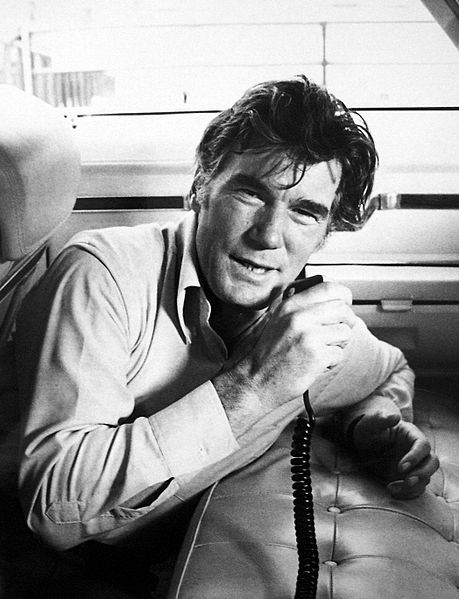
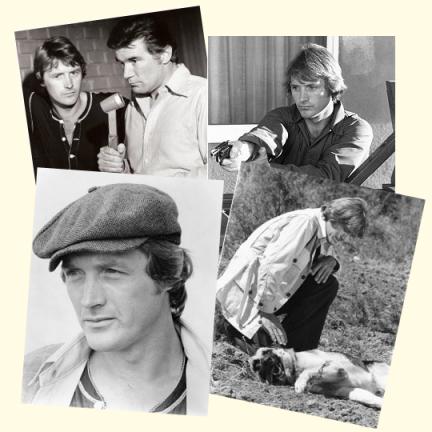
 Steve Prestegard.com: The Presteblog