With the Iowa caucuses today, Michael Barone brings up a pertinent point about the seeming weakness of the Republican presidential field:
Has one of our two major parties ever had a weaker field of presidential candidates in a year when its prospects for victory seemed so great? That question was posed to me by another journalist in conversation today.
My answer, after hemming and hawing a bit, was yes: the Democratic party in 1932. Its prospects for victory were excellent by just about any measure. The gross national product had declined by 56% in four years, the unemployment rate had risen from 4% to 24% and banks were failing and wiping out depositors. We don’t know the job approval rating of the incumbent president, Republican Herbert Hoover, since the first random sample poll was not conducted until October 1935, but it surely was a lot lower than Barack Obama’s approval rating today. …
Obviously this was a golden opportunity for the Democratic party. But its field of candidates looked weak at the time. Al Smith was running again, but his Catholicism had cost him many ordinarily Democratic votes in the South and Midwest in 1928 and it seemed possible that it might do so again. House Speaker John Nance Garner was running, an unpleasant figure from the South (which produced no presidents between Zachary Taylor and Lyndon Johnson) whose major policy was to increase taxes at a time of depression. Sharing his Southern background was Harry Byrd, who had served one term as governor of Virginia. Maryland Governor Albert Ritchie was a favorite of Baltimore newspaperman H. L. Mencken but of few others. Former Secretary of War and Cleveland Mayor Newton Baker was seen as a dark horse candidate, but he was a colorless and little known figure.
Of course we all know who the Democrats did nominate, Franklin D. Roosevelt, and we know that Roosevelt turned out to be a great or at least a formidable president (a great wartime president in my view, but certainly undeniably a formidable president whatever you think of his decisions and policies). But that wasn’t clear at the time. He had served seven years as Assistant Secretary of the Navy during the Wilson administration and four years as Governor of New York. But many considered him a lightweight, profiting on the fact that he was a distant cousin (his wife Eleanor was a closer cousin) of Theodore Roosevelt, a president considered great enough at that time to be worthy of being depicted on Mount Rushmore and the winner of the largest percentage of the popular vote for president of any candidate between 1820 and 1920. Theodore Roosevelt had written several impressive books (his account of the naval War of 1812 is still considered authoritative) before he was elected president and had resigned as Assistant Secretary of the Navy to serve in combat in the Spanish American war at age 39. Franklin Roosevelt had written no books before 1932 and had stayed in the same civilian post rather than enlist at 38 when the United States entered World War I. Franklin Roosevelt was the Democratic vice presidential nominee in 1920 when the ticket lost by a 60%-34% margin to the Republican ticket of Warren G. Harding and Calvin Coolidge, and Roosevelt nearly lost the 1928 governor election to Republican Albert Ottinger. Few journalists espied greatness in him. He was “Roosevelt Minor” to Mencken, who wrote, “No one, in fact, really likes Roosevelt, not even his ostensible friends, and no one quite trusts him.” Walter Lippmann, who supported the Democratic party as editorial page editor of the New York World in the 1920s, and who had known Roosevelt for more than a dozen years, described him as “a pleasant man who, without any important qualifications for the office, would very much like to be president.” …
Why did the Democratic party have such a weak field (as people then saw it) in a year when its prospects were so good? One reason is that its last national administration, that of Woodrow Wilson, had left few people behind of presidential caliber; the same might be said for the Republicans this year of the much more recent administration of George W. Bush. Another reason is that Democrats won relatively few elections between 1920 and 1932 and that most of its major elected officials were either Catholics or Southerners, both of whom were widely seen as unelectable (an impression strengthened by Smith’s defeat in 1928). The situation is not quite the same as that of this year’s Republicans, but 2006 and 2008 were harrowing election years for Republicans, leaving them with a field of candidates only one of whom has demonstrated the ability to run ahead of his party any time recently. …
My point is this. The 2012 Republican field does indeed look weak, at a time of great opportunity for the party. But so did the 1932 Democratic field. We can try to learn as much about these candidates as we can, but we cannot foresee the future. We must hope that at least one of these candidates turns out to have greater strengths and virtues than are now apparent. It’s happened before.
A more recent example (as someone pointed out on Twitter Monday night) is 1992, the election that 18 months earlier seemed a waste of time given George H.W. Bush’s approval ratings after Operation Desert Storm and before people started noticing the economy wasn’t doing so well. New York Gov. Mario Cuomo and 1988 candidate Al Gore decided not to run. Arkansas Gov. Bill Clinton was known only for giving an amazingly long-winded speech at the 1988 Democratic convention. And yet, thanks to the flaccid economy, H. Ross Perot’s third party run and Clinton’s appeal as a new-generation Democrat (sound familiar?) gave Clinton the election.
Meanwhile, David McElroy has a few things to say about some of the aforementioned last names:
USA Today released its annual poll last week of who Americans admire most. I shouldn’t be disgusted — because I know human nature — but I am disgusted. Topping the list of men is Barack Obama. Topping the list of women is Hillary Clinton.
I’m not making a partisan statement in saying this. My issue isn’t that they’re both Democrats. I’d have felt the same way when it was George W. Bush during his administration. My issue with it its that we deify politicians in this culture — instead of honoring the people who actually achieve things worth doing. …
Take a look at the list and see all the politicians. I’ve colored all the political figures in red. (And, yes, I count Michelle Obama and Laura Bush as politicians. You’d have never heard of them if they weren’t associated with politics.) On the women’s side, 80 percent are politicians and the two remaining choices are entertainers. Why do we admire these people? …
The people we really admire aren’t celebrities, are they? Isn’t it more a matter of a few hundred people in every little place seeing the difference that some man or woman makes? It could be a teacher, a pastor, a co-worker, a friend or scores of different roles. But if we all mention John Smith or Mary Jones — the people we know that we admire — there aren’t enough people who even know those people for them to make the list.
So is there something wrong with Americans to produce such a shallow list? Or are we asking the wrong questions in a media-saturated world? I suspect it’s a little of both. I think most of us have real people in real life who we admire deeply, but those real-life heroes can never make a poll such as this.
But there are some people who truly do admire the Clintons and Bush and Newt Gingrich. (Heaven help us.) I wonder if these are the people who are most engrossed in the media culture. I can’t say for sure, but I suspect those groups would correlate tightly.
I don’t admire the people on these lists. I actively distrust most of them. I’m indifferent about most of the rest. Even someone such as Graham — whose faith is similar to my own — is a mere footnote of the past in my mind.
I admire a few people, but they aren’t people you know. The public obsession with making heroes out of politicians and entertainers — and the media’s complicity in it — is a dangerous thing. As long as we believe these people are the ones to admire, we’re going to keep giving our honor to people who don’t deserve it — rather than the truly admirable people who labor without recognition all around us.
The last Presteblog of 2011 is called That Was the Year That Was 2011, a tradition of the Marketplace of Ideas column from 1994 to 2000 and then of the Marketplace of Ideas blog from 2008 to 2010.
The title comes from the British TV series “That Was the Week that Was,” a weekly satirical series that made David Frost and Roy Kinnear popular:
While the TWTYTW 2010 blog no longer exists (ask my former employer what happened to it), a video version of sorts does still exist courtesy of FDL Podcasting:
There was one prediction that I didn’t make — the creation of this blog for the reason you all know. For what it’s worth, this blog is nine months old today. This was not how I planned to spend three-fourths of 2011, but someone once said that if you want to make God laugh, tell him your plans.
I also didn’t predict that I’d be on Facebook, and I don’t believe Google+ existed when this blog began. The former has been more satisfying than the latter, largely because Facebook has allowed me to reconnect with people I’d lost track of, in one case, from middle school. (That, I should point out, includes the one Facebook Friend I deFriended, and the one Facebook Friend who deFriended me. The latter was because my political views angered him for the last time; the first was because he was as much of an idiot on Facebook — unless you think a 45-year-old fan of “The Jersey Shore” is not incredibly strange, that is — as he was in high school. C’est la vie.)
This is an opinion blog, which means readers get opinions here every day, whether about federal or state politics, American or Wisconsin business, food and drink (I’m in favor of both), motor vehicles, the media, music, sports (particularly the Packers and Badgers), and whatever else comes to my mind. As I’ve written before, after the best thing someone can tell a reader — something like “I enjoy your work and I agree with you” — the second best thing someone can tell a writer is something along the line of “I read your stuff, and you are absolutely wrong.” (I’m getting a lot of that recently; can’t imagine why.) The worst thing someone can tell a writer is something like “You write? I’ve never read your stuff.” My blog software tells me that people are reading this blog, whether they agree with what I write or not.
I continue to be what (at least) two people have called me: a “media ho’.” I occasionally appear on WTMJ-TV’s “Sunday Insight with Charlie Sykes” …
… and Wisconsin Public Radio’s Friday Week in Review, and, twicethis month, WTDY in Madison. That is the logical result of never saying no to a media invitation, I guess. This is also a personal blog, so readers have gotten to read (or, if you like, have had to endure) the unusual facets of my past in small-town newspapers (including my biggest story), radio and sports announcing.
I’m pretty sure the largest number of blog entries this year (other than the daily “Presty the DJ” pieces) involved state politics. We endured several state Senate recalls (all but two of which were unsuccessful) because of the efforts of Gov. Scott Walker and Republicans to undo the disaster area that was state finance under the Doyle (mis)administration and the 2009–10 Legislature. The 15 percent of state workers who work for government had a different opinion, as Christian Schneider notes:
The year began with an appeal for more civility in politics, in the wake of the shooting of Arizona Democratic Congresswoman Gabrielle Giffords. Yet when the Capitol explosion began in mid-February, Walker and legislators of both parties started receiving death threats. State Sen. Spencer Coggs called Walker’s plan “legalized slavery,” and state Sen. Lena Taylor (along with dozens of protesters) compared Walker to Adolf Hitler. A Democratic Assemblyman yelled “you’re fucking dead” to a Republican colleague on the chamber floor following debate on Walker’s plan. Protesters targeted Walker’s children on Facebook, and Republican Rep. Robin Vos was assaulted with a flying pilsner.
So shocking was Walker’s plan that President Barack Obama criticized the governor, deeming it an “assault” on unions. Yet if Walker was a first-time union assailant, Obama continues to be a serial offender — federal employees aren’t allowed to collectively bargain for wages and benefits. …
During the summer, unions spent over $20 million to unseat six Republican state senators who voted for Walker’s plan. This exposed exactly why it’s about the money. Government employees merely serve as conduits for taxpayer funds to work their way to the unions, who then spend money electing obeisant legislators to negotiate favorable contracts. Shockingly, lefty “good government” groups appear not to have a problem with this blatant purchase of favors.
It was a year that granted the definition of the word “democracy” a previously unimaginable elasticity. While bullhorns around the Capitol blared “this is what democracy looks like,” 14 Democratic state senators fled to Illinois to prevent democracy from occurring. Later, a single Dane County judge would overturn Walker’s law, which irony-deficient Assembly Minority Leader Peter Barca called “a huge win for democracy in Wisconsin.” The law would later be reinstated by an incredulous state Supreme Court. …
2011 was the year that public-sector bargaining became a fundamental human right, bestowed on the people of Wisconsin from the heavens. “We will not be denied our God-given right to join a real union,” thundered Marty Beil, head of the Wisconsin State Employees Union, in February.
Yet God apparently first appeared in Wisconsin in 1959, when Democratic Gov. Gaylord Nelson signed the nation’s first public-sector collective bargaining law. It was a shrewd political move — four years earlier, unions had financed 55% of unsuccessful Democrat William Proxmire’s gubernatorial campaign. The year before Nelson created the law, Democrats had a $10,000 deficit in their state account; four years later, that had turned into a $50,000 surplus. At the time, it looked a lot less like a divine right and more like a naked political favor. (God has yet to visit 24 other states, which either have limited or no public-sector collective bargaining at all.)
Public-sector unions want you to believe that they are synonymous with public-sector employees. They are not. No self-respecting professional teacher should want to have anything to do with teacher unions, the biggest blight upon our educational system. That’s my opinion, but that was also the opinion of the late Steve Jobs.
One should never expect the unvarnished truth during the political process, but unions and their apparatchiks took falsehoods to new depths during Recallarama. Unfortunately for unions, evidence contrasting their assertions existed online. Unfortunately for Democrats and unions and other lefties, the more than $40 million they spent succeeding in reducing the state Senate Republican margin from 19–14 to 17–16, or 16 Republicans, 16 Democrats and one RINO, Dale Schultz.
One should never expect ideological or philosophical consistency from human beings, so keep that in mind when you read tributes to the Occupy ______ types. Most of the same people falling all over themselves praising the protesters were singing quite a different tune when the tea party movement began in 2009. Other than the obvious ideological differences, the biggest difference between Occupy _____ and the tea party movement is that the tea party movement succeeded in electing its candidates in November 2010. Occupy _____ has not one single electoral win and not one single political accomplishment yet. That includes Red Fred Clark, who a majority of 14th Senate District voters foundwanting.
One should never expect politicians to do what they say they’re going to do immediately (or perhaps not at all), but Walker doesn’t deserve an A grade yet. The state’s business climate rankings are better than they were a year ago, but 24th, 25th, 38th and 40th, with a C grade, is not nearly good enough. Until Wisconsin gets consistent top five rankings, Wisconsin will continue to trail the nation in business creation and per capita personal income growth, Wisconsinites will continue to suffer from excessive unemployment and insufficient income, and state and local governments will continue to lack the kind of revenue that comes from a healthy economy.
Speaking of the economy, it is in “recovery,” if that’s what you want to call it. The brilliance of the Obama administration is demonstrated in the current national unemployment rate of 8.6 percent, after nearly three years of the stimulus that stimulus supporters guaranteed would reduce unemployment below 8 percent. Since everyone who was paying attention knew that one major argument for the stimulus was to trade job creation now for higher unemployment (during a theoretically recovered economy) later, you can safely conclude there will be no improvement in unemployment for the foreseeable future. The “jobless recovery” has been predicted for three decades; well, it’s here now, which means that the economy will not be noticeably better in consumer spending generally or purchasing of big-ticket items specifically.
As usually happens, a number of stories didn’t get the attention they should, as WND.com notes:
1. The true rate of unemployment and inflation and the real state of the U.S. economy, which is far worse than reported.
The figure was five times the 2010 gross domestic product of the United States and exceeded the estimated gross domestic product for the world by approximately $14.4 trillion, according to economist John Williams.
The difference between the $1.3 trillion “official” 2010 federal budget deficit numbers and the $5.3 trillion budget deficit is that the official budget deficit is calculated on a cash basis, where all tax receipts, including Social Security tax receipts, are used to pay government liabilities as they occur.
“The government cannot raise taxes high enough to bring the budget into balance,” Williams said. “You could tax 100 percent of everyone’s income and 100 percent of corporate profits and the U.S. government would still be showing a federal budget deficit on a GAAP accounting basis.”
What’s more, the seasonally-adjusted rate adjusted for long-term discouraged workers – who were defined out of official existence in 1994 – was more than 22 percent in November.
The Bureau of Labor Statistics broadest measure of unemployment, which includes the short-term discouraged and other marginally attached works, along with part-time workers who can’t find full-time employment is more than 15 percent.
Methodological shifts in government reporting also have depressed reported inflation. If inflation were calculated the way it was in 1990, the annual rate would be nearly 7 percent. …
7. The real impact on the U.S. economy of Obama’s $787 billion stimulus.
While the Recovery Act boosted the economy in the short term, the extra debt generated by the stimulus “crowds out” private investment and “will reduce output slightly in the long run – by between 0 and 0.2 percent after 2016.”
The Obama administration had promised that at the peak of spending, 3.5 million jobs would be produced. …
8. The harmful impact of unions on the American economy.
“The most fundamental fact about labor unions is that they do not create any wealth,” he said.
Sowell pointed to a bill the Obama administration is trying to push through Congress, called the “Employee Free Choice Act,” as the best example of “the utter cynicism of the unions and the politicians who do their bidding.”
“Employees’ free choice as to whether or not to join a union is precisely what that legislation would destroy,” he said. …
While private-sector workers, using secret-ballot elections, have increasingly voted against being represented by unions in secret-ballot elections, government unions continue to thrive as taxpayers “provide their free lunch.” …
In September, Teamsters union President James Hoffa, addressing a large Labor Day rally, brazenly proclaimed that labor unions – especially the huge government employee unions like the 3-million-member National Education Association and 2-million-member Service Employees International Union – provide the ground troops in the ongoing war to “fundamentally transform” America into a socialist utopia.
“President Obama, this is your army! We are ready to march! Let’s take these son-of-a-b*tches out and give America back to an America where we belong,” he shouted, referring to the tea party movement.
The Obama administration has been generously “funding” the union army since the inauguration, from the General Motors bailout, which blatantly favored union workers, to Obamacare, whose burdensome new regulations don’t apply to many unions thanks to special White House waivers. Obama’s early executive order required all federal agencies to accept construction bids only from contractors who agree to use union workers, and he packed the D.C. bureaucracy with union officials.
Thank heavens for the current state of sports in Wisconsin. The Brewers got into the National League Championship Series (a place I predict they will not revisit soon), the Badgers are playing in their second consecutive Rose Bowl Monday (for my prediction, see this space Monday morning), and the Packers are the number one seed in the NFC playoffs a season after their fourth Super Bowl win. (I’ll have more to write about their next Super Bowl opportunity in January.) For those of us who endured such football as in 1988 (the Packers were 4–12 and the Badgers were 1–10), this still has an air of unreality to it.
Other interesting (and better) things happened in 2011. Our family set a personal record by heading for the basement three times as the tornado sirens went off for a non-test. The first happened while our German/French (now Italian) foreign exchange student was here. My, uh, freer schedule allowed me to go on field trips with our kids, including a church camp.
On to the year to come. I predict that the current economy will not be enough to get a majority of voters to fire Obama and his toadies. (Even if I run.) Too many Americans are still enthralled with the promise of Obama, even though the performance is best noted by his failures, and even though his biggest accomplishment (if that’s what you want to call it), ObamaCare, is tremendously unpopular with voters. (Perhaps they’ll start noticing when their employers drop employee health insurance, which will begin happening this coming year.)
The second reason for my prediction is that the Republicans are not exactly blowing the socks off voters through the interminable presidential-candidate-selection process, are they? There is no way in hell I will vote for Obama, and nor should you, but I can’t say there is a single GOP candidate I support for any reason than the fact that that candidate is not Obama. The fact that other voters feel like I do will be shown by support for a third-party — maybe more than one, in fact — candidate for president, including possibly Republican-turned-Libertarian Gary Johnson, Republican-about-to-turn-Libertarian Ron Paul, and Donald Trump.
Democrats shouldn’t jump for joy, though, because Republicans will not only retain the House of Representatives, but they will win the Senate in November. The demographic realities of the 2012 and 2014 Senate races will mean that, if my prediction (Obama’s winning with less than 50 percent of the popular vote) is correct, the gridlock you see in Washington will continue for most of this decade. I hope you enjoy it.
By the end of 2012, Wisconsin Democrats and their comrades will discover that Recallarama part deux was bad strategy, because whatever money they spend on defeating Walker in a recall election (which will result in Walker’s winning, by the way) cannot be used for (1) the U.S. Senate election, featuring socialist U.S. Rep. Tammy Baldwin (D–Madison); (2) efforts to unseat freshman U.S. Reps. Sean Duffy (R–Ashland) and Reid Ribble (R–Sherwood); efforts to win back (3A) the state Senate and (3B) Assembly by recall or by the November election; and, oh, by the way, (4) Obama’s campaign in this supposedly swing state.
It would be nice if Democratic and Republican office-holders and candidates would engrave in their brains article 1, section 22 of the state Constitution, which I repeat here for those Wisconsinites ignorant of it:
The blessings of a free government can only be maintained by a firm adherence to justice, moderation, temperance, frugality and virtue, and by frequent recurrence to fundamental principles.
My longer-term prediction is that this scorched-earth politics of ours will be reality for the foreseeable future, both at the national and state levels. Politics today is a zero-sum game — one side wins, the other side loses. How do you get past that, particularly when one side seeks to steal from the other? (That is exactly what Occupy ______ wants to do, either because they believe that’s how to solve unsolvable income and wealth inequality, or because they’re thieves at heart.) The 2011 Legislature is the direct result of the 2009–10 Legislature and its abuses of taxpayers, and whenever Democrats regain control of the Legislature, they will stick it to Republicans and their allies however, whenever and wherever they can. That wasn’t how politics worked when I was a UW Political Science student, but it is now.
The way I always end That Was the Year That Was is with these words: May your 2012 be better than your 2011. That may seem to be a low standard. That may also not be possible.
I will be appearing on Sly in the Morning on WTDY (1670 AM) in Madison Friday around 9 a.m.
This will be the second time I’ve been on WTDY since my noting the differences between Madison (as well as Milwaukee, though they are different) and the rest of Wisconsin. Sly’s and his listeners’ reaction thereto killed an hour of Sly’s show, which resulted in another blog entry, which resulted in my first Slypearance. (I made up that word because a reader claims that if Sly criticizes you, you have been Slymed. Lest you try the same thing, I point out that I own the copyright on any compound word that starts with “Preste_____”, such as the name of this blog.)
Since I wasn’t sure what Sly wanted to talk about earlier this month, I do what I always do before a media appearance, news, sports or otherwise — what I call “game prep” whether or not an actual game is involved. The previous “game prep” is the outline of today’s blog.
I haven’t lived in Madison since May 22, 1988, one week after my graduation from UW–Madison, when I jumped in my car and headed to my first job at the Grant County Herald Independent in Lancaster. (I pointed out on Sly’s show that this is all the fault of the Wisconsin State Journal, which has resolutely refused to hire me for years. I could have added WKOW-TV, where I was a news and sports intern, or the holders of the broadcast rights to UW football, basketball and hockey, but I forgot.)
The first point I made 2½ weeks ago was that …
It took my leaving Madison in 1988 (never to return as a resident, I guarantee you) to see not only that there is much, much more to Wisconsin than Madison, but also the institutionalized sense of superiority and arrogance found within Dane County (and the closer you get to Madison the worse it is).
The corollary to the point that no one has yet refuted is that …
… there is a kind of diversity that is totally absent in Madison — political and ideological diversity. Madison’s city council for years felt the need to express itself on such subjects as the Vietnam War and Central America, when non-politically interested Madisonians were more interested in how their tax dollars were being spent and how the streets were being plowed in the winter. (In my neighborhood’s case, the answer was “not.”) The type of liberal who elsewhere in the state would be seen as wacky-lefty is pretty much mainstream in the People’s Republic of Madison. Madison has a socialist (really) congresswomon, Tammy Baldwin, who if Wisconsinites are not careful will be their next U.S. senator.
Isthmus, which now carries [former Madison mayor Dave] Cieslewicz’s column, axed the column and blog of former Dane County Sup. David Blaska over “economic pressures” (read: people threatening advertisers because they don’t like reading anything other than liberal BS) and their decision to rejigger their editorial content to “inform rather than persuade.” That would seem more believable had they not decided to retain Cieslewicz, who from what I’ve read is more interested in persuading than informing.
My point about Madison’s ideological intolerance has been proven twice since then. On Facebook I made a simple three-phrase post about the conservative tenets of government’s staying out of my life. And I was immediately accused by a fellow ’80s UW–Madison student (from Monona, but the mindset is the same) of how I supposedly feel about abortion, Muslims, gays and Latinos, despite the fact that none of those subjects was included in my three-phrase post.
The second instance of ideological intolerance was by a former grade and middle school classmate of mine, who on this blog wrote:
I have casually read your comments for the last few years and have to say I am disappointed. You rail against Madison, it’s teachers and the environment that helped make you successful. … Your family had a good neighborhood and schools in the city you now hate. I am glad you will never move back, you and yours are not welcome here.
Had my former classmate read this blog more thoroughly, he would have read what I wrote here about growing up in Madison …
Most of us (certainly me) probably need to thank our parents for their contributions to the Madison in which they raised us. Many, including my parents, came to Madison from various other places, sometimes for better occupational opportunity, or perhaps because they thought Madison would be a better place to raise their kids than where they grew up. They were the people went to work every weekday (or more), paid the high taxes, took up their free time with various civic involvements, endured the institutional strangeness, and made the other sacrifices parents make for their kids.
You may have concluded from reading this blog and its predecessor that I have a love–hate relationship with my hometown. That’s actually not accurate — you can love neither things nor places, since neither is capable of loving you back. (That includes jobs, by the way.) I think I had a very nice, mostly uneventful childhood in a place that really doesn’t exist anymore, or at least exist in the way I remember it.
Ideological intolerance is a rather esoteric complaint. A more practical complaint is Madison’s institutional dysfunction. The city received a $200 million gift (go back and read those five previous words) toward the creation of an arts center, the Overture Center. Despite the size of that gift, the center quickly accumulated $28.6 million in debt, and was facing closing before the city agreed to buy the center and pay off the debt. For those who think bailouts are exclusive to the federal government, well, they’re not.
Madison’s most recent kerfuffle that doesn’t involve Capitol Square protesters was the failure of Madison’s best-known hotel, the Edgewater, to receive $16 million in Tax Incremental District financing for its proposed expansion. Longtime Ald. Tim Bruer was quoted after the eight-hour Common Council meeting that killed the financing plan that “it could haunt the city for decades to come.”
Speaking of decades, there is the Monona Terrace Convention Center, which opened in 1997, only 59 years after Frank Lloyd Wright — yes, that Frank Lloyd Wright — first proposed the project. Between 1954, when Madison voters approved a $4 million referendum to build an “auditorium and civic center,” and 1997 the project’s cost ballooned to $67.1 million, which is more than three times the 1954–1997 inflation rate. (And since the project was funded in part by “direct support from the State of Wisconsin,” it was paid for by your tax dollars, not just Madison’s.)
Of course, mentioning that Madison puts the word “fun” into “dysfunction” means I am repeating a “tired myth,” according to the Capital Times, which used to be a daily newspaper:
The same city that is filled with liberals, socialists, elitists and, heaven forbid, public employees, is also rife with politicians and bureaucrats bent on making life hell for developers.
Unless, that is, you actually listen to the mayor and the city’s economic development director, both of whom express a vision for and urgency about the redevelopment path ahead.
Mayor Paul Soglin and Aaron Olver are focused on a series of infill projects in which tracts would be redeveloped with an eye to creating commercial, retail and residential space, thus enlarging Madison’s tax base.
Yes, but what about those recent, high-profile bumps in the development road?
Well, I don’t think it’s an indictment of the city’s approach that the developer’s high-pressure Edgewater campaign failed to convince policymakers to pony up five times the amount of taxpayer subsidy the project would normally merit. …
Soglin says a key is that potential sites for infill development, whether east, west or south of downtown, are all close to healthy neighborhoods, “and there is a variety of retail from the practical and necessary to the interesting and different.”
Olver contends that the careful scrutiny typical of projects in Madison is a plus. “Madison is full of smart, civically engaged, well-educated people and that contributes to this dynamic, but what also makes Madison great is that we have people who care passionately,” he says.
For most, I suspect ensuring that Madison’s proverbial bricks are put together in that spirit works just fine.
My four years on Ripon’s Plan Commission proved that infill development is what everyone wants, but it is much more expensive and an inevitable compromise. Ripon (which as a college town has at least as many “smart, civically engaged, well-educated people” per capita as Madison does) has several vacant lots in older residential areas. Building modern houses attractive to future buyers using current zoning standards in areas where the existing houses predate current zoning standards creates obvious problems.
The other thing that comes to mind from the Capital (Arrogance) Times is that developers can only develop where city government wants them to develop, jumping through whatever hoops the city chooses to put in front of them. That restricts development to developers who are used to all those hoops that Soglin helped put in during his three separate terms as mayor. That helps explain why one of the Madison area’s biggest private sector employers, Epic Systems, is in Verona, not Madison.
The preceding examples of what the real world would define as dysfunction (which apparently qualify as normalcy in the People’s Republic of Madison) might seem to you just expensive annoyances. In 1968, the state Department of Transportation proposed replacing what was called the South Beltline — U.S. 12/18 from Nob Hill east past U.S. 51, known as Broadway in Monona — with a modern freeway. Which got the environmentalists upset, because to them wetlands are more important than fatal traffic crashes, which were alarmingly frequent on Broadway:
Concerns for the impacts of a proposed “beltline” highway on the south side of Madison brought a handful of wetland enthusiasts together in 1969-1970. This loosely formed group called itself the Dane County Wetlands Association, later the Southern Wisconsin Wetlands Association. At a time when most people didn’t know what a wetland was, the group … was crusading to protect important wetlands on Madison’s urban fringe. …
The struggle was truly a “David and Goliath” experience for the persistent wetland preservationists, as they were a handful of citizens challenging the powerful Department of Transportation at a time when there were no federal or state laws to protect wetlands. Although the group caused some delays, and some accommodations were made by DOT, the Beltline inevitably was constructed.
The Beltline “inevitably” opened in 1988 after many deaths and injuries, including permanent injuries, of which I can attest. (Unless you think a survivor of one of those fatal crashes suffering permanent injury is no big deal, that is.) The fact that the wetlands displaced by South Beltline construction were replaced with new wetlands of double the size (of which I once got a media tour in a boat) still failed to satisfy some environmentalists.
The plants-before-people crowd triumphed outside Madison too. Traffic on U.S. 12 between Middleton and Sauk City vastly exceeded the capacity of the two-lane road for years, but, reports WisconsinHighways.org:
While proposals to upgrade the US-12 corridor between Middleton and Sauk City had been advanced for decades, a 17-member “US-12 Study Committee” of local citizens was appointed in 1990 specifically to provide recommendations to WisDOT and the state legislature as to which improvements were desired for the highway. …
Even with the several years of public hearings and the formation of the “US-12 Study Committee” by the state Legislature, various citizen groups fought WisDOT over the US-12 corridor improvements stating the upgrades would encourage sprawl, take valuable farmland and threaten the Baraboo Hills, a National Natural Landmark. However, the corridor had become increasingly unsafe over the years. While various roadway deficiencies, flooding problems and capacity dificiencies were contribtions, crash statistics clearly pointed to the need for a new alignment. WisDOT statistics note that from 1985 through 1996, 2,200 crashes occurred—nearly one every two days—with 688 of those resulting in non-fatal injuries and 31 fatalities. WisDOT made several rounds of safety-related improvements over the years only to note the crash and fatality levels not decreasing.
I drive the Beltline and U.S. 18/151 every time we visit the in-laws. I’m guessing my ashes will be dissolved by the four winds before Madison’s current favorite bottleneck, Verona Road from the Beltline southwestward toward Verona, is converted to something approximating a modern road. (The state Department of Transportation estimates “2030 or beyond,” the last word being the key term. I would take the northern bypass around Madison instead, but there is no northern bypass (by the modern definition), nor will there ever be.
Official Madison also appears to be blind to its diminishing quality of life that may or may not be coincidental to its increasing population. Before conservative David Blaska was booted off the pages of the Isthmus tabloid for daring to write conservative things, he wrote about “filthy language, littering, vandalism, intimidation, drugs, gangs, [and] killings” in Madison neighborhoods about which official Madison either yawns or wrings its hands and moans about “root causes.” South Madison has had problems for decades that the city has failed to deal with as well. I knew my hometown wasn’t the same place when drive-by shootings started happening at my high school in what then was the most white-collar part of Madison. I have no idea what Madison police actually do; from what I read in media reports law enforcement isn’t one of their jobs anymore. The spiraling residential real estate prices are great for existing homeowners, less great for those who want to move to Madison, which may be why residential development is occurring more outside Madison than in Madison.
The latest attempt to do something about those “root causes” was a proposed charter school targeted to minority boys, killed by the Madison school board because of the school district’s contract with Madison Teachers Inc. (I’m guessing the massive business support for the charter school worked against it too.) I’d like to say that such a teacher-union-before-students attitude exists only in Madison, but as we’ve seen this year, it exists elsewhere too. It is, however, a fine example of the limousine liberalism of Madison, particularly since there appears to be no other serious proposal to deal with the achievement gap between Madison’s white students and Madison’s non-white students.
There is also the institutional weirdness of Madison, which I found reasonably entertaining 25 years ago, but would find decreasingly entertaining as a property taxpayer and parent in Madison. Madison’s most odious institution is the Freedom from Religion Foundation, which seeks not its own adherents’ freedom from any evidence of any religion, but your mandated adherence to its own anti-Christian doctrine. The organization is fine taking potshots at Christianity and Christians, but lacks the courage to utter one public word about Islam. I wonder why.
The Daily Cardinal, one of the UW’s student newspapers, noted the end of the Vietnam War in April 1975 with an end-of-the-world-type-size headline of “VICTORY!” (The more than 1 million Cambodians killed by the winning side after the war ended might disagree with that assessment.) Sly’s former employer proposed changing the liberal talk format of one of its radio stations, a move stopped by protesters, who seemed to not grasp that liberal talk radio as an all-day format is a commercial failure. The city in 2008 actually considered banning drive-thru restaurants. As a parent of young children, I would prefer to be able to drive through the city whose taxes I pay without having to explain to them naked bicycling protesters.
My parents endured the abuse of their tax dollars and the official disrespect of their views as Madison homeowners for 40 years. Even though I get more libertarian as I get older, I choose to participate in none of what I’ve written about because I refuse to become a political prisoner of the People’s Republic of Madison. Which is apparently OK because, to directly quote my former classmate, “you and yours are not welcome here.” If I were interested in living in a Madison-like environment, I’d move to Austin, Texas. Texas taxes are lower, and the weather is better.
“Our plan offers a stable calendar that is absolutely identical from year to year and which allows the permanent, rational planning of annual activities, from school to work holidays,” says Henry, who is also director of the Maryland Space Grant Consortium. “Think about how much time and effort are expended each year in redesigning the calendar of every single organization in the world and it becomes obvious that our calendar would make life much simpler and would have noteworthy benefits.” …
According to Hanke and Henry, their calendar is an improvement on the dozens of rival reform calendars proffered by individuals and institutions over the last century.
“Attempts at reform have failed in the past because all of the major ones have involved breaking the seven-day cycle of the week, which is not acceptable to many people because it violates the Fourth Commandment about keeping the Sabbath Day,” Henry explains. “Our version never breaks that cycle.”
The proposed calendar would give eight months 30 days and four months — March, June, September and December — 31 days. (So if you have a birthday Jan. 31, May 31, July 31 or Aug. 31, now you won’t. And what happens to Halloween?)
Do the math, and eight 30-day months and four 31-day months equals 364 days, not 365. (The earth revolves around the sun once every 365¼ days, give or take a few decimal points). Their solution is to add not an every-four-years leap day, but a leap week — an extra seven days added to December every five to six years. (Which should kill the idea right there for those of us who live this close to the Arctic Circle, though those in the Southern Hemisphere may consider it a plus.)
The previous graphic would be the calendar every year, except for the “Extra-Week Years.” That, the authors claim, would be a benefit. To that, fans of the Sports Illustrated SwimsuitCalendar and the Pirelli Tire Calendar say: Really?
There are enormous economic advantages to the proposed calendar. These benefits come because the new calendar is identical every year… except that, every five or six years, there is a one-week long “Mini-Month,” called “Xtr (or Extra),” at the end of December. “Xtr (or Extra) Week” brings the calendar into sync with the seasonal change as the Earth circles the Sun. How much needless work do institutions, such as companies and colleges, put into arranging their calendars for every coming year? From 2017 on, they do it once … and it is done forevermore. …
An example of the “enormous economic advantages” was cited in Globe Asia:
That modern calendar would simplify financial calculations and eliminate the “rip-off factor.” To determine how much interest accrues for a wide variety of instruments — bonds, mortgages, swaps, forward rate agreements, etc. — day counts are required. The current calendar contains complexities and anomalies that create day count problems. In consequence, a wide range of conventions have evolved in an attempt to simplify interest calculations. For U.S. government bonds, the interest earned between two dates is based on the ratio of the actual number of days elapsed to the actual number of days between the interest payments (actual/actual). For convenience, U.S. corporates, municipals and many agency bonds employ the 30/360 day count convention. These different conventions create their own complications, inefficiencies and arbitrage opportunities.
Specifically, discrepancies between the actual/ actual and 30/360 day count conventions occur with all months that do not have exactly 30 days. The best example comes from calculating accrued interest between February 28th and March 1st in a non-leap year. A corporate bond accrues three days of interest, while a government bond accrues interest for only one day. The proposed permanent calendar — with a predictable 91-day quarterly pattern of two months of 30 days and a third month of 31 days — eliminates the need for artificial day count conventions.
Wait, there’s more! (That’s an ’80s cable TV reference for the unaware.) From the website:
… starting 2017 January 1, it is proposed that Universal Time, on a 24 hour scale, be used, everywhere on earth, and forevermore. As a result of this, beginning 2017 January 1, the date and time will always be the same, everywhere, greatly facilitating international understanding. …
Daylight Saving Time disappears, … but also, it stays, as changes in working hours. Time zones, such as Eastern Standard Time, still exist exactly as they do now, but are considered to be “working hours” zones. In Eastern Standard Time Zone, a “9-to-5” job is defined as a 14:00-to-22:00 (14 o’clock to 22 o’clock) job. The next calendar day begins at what we now call 7 p.m. in the Eastern Time zone. (On the West Coast of the US, the next day begins at 4 p.m.) “Spring forward, Fall back” now means that, on the chosen day, everyone changes their work hours by one hour, but the clock time stays the same. “See you tomorrow” refers to the sun being overhead, not the calendar.
Back to the news release:
In addition to advocating the adoption of this new calendar, Hanke and Henry encourage the abolition of world time zones and the adoption of “Universal Time” (formerly known as Greenwich Mean Time) in order to synchronize dates and times worldwide, streamlining international business.
“One time throughout the world, one date throughout the world,” they write, in a January 2012 Global Asia article about their proposals. “Business meetings, sports schedules and school calendars would be identical every year. Today’s cacophony of time zones, daylight savings times and calendar fluctuations, year after year, would be over. The economy – that’s all of us – would receive a permanent ‘harmonization’ dividend.”
As a former college public relations director, I can attest that publicity like this for a college is great. (Every college in Wisconsin not named Beloit is envious of the annual Beloit College Mindset List.) As an American, this calendar strikes me as a solution in search of a problem. (Henry, a Canadian, ends on the wrong foot by mentioning his late mother using Celsius temperature, which is a bad example since Celsius temperature is less accurate than Fahrenheit temperature — 1 Celsius degree is 1.8 Fahrenheit degrees.)
The claim that “business meetings, sports schedules and school calendars would be identical every year” is false. Business meetings are scheduled based on the availability of the participants. Sports schedules will only stay the same if the sports leagues in question keep not just the same game dates, but the same opponents in a schedule sequence, which almost never happens. (Ripon should always end its football season against Berlin, and Ripon College should always end its football season against Lawrence — the two are the oldest high school and college football rivalries in the state — but only the latter will happen in 2012.) The aforementioned school calendar question is up to individual school districts, private schools and states (such as Wisconsin’s requirement that public schools not start classes until Sept. 1), so that is an implausible assertion.
Other assertions don’t hold water. Most government offices and many businesses were closed Dec. 23 and 26 and will be closed today and Monday because, respectively, Christmas and New Year’s Day are on Sundays, which give workers five three-day weekends this year. (If you extend the “year” into next week, that is.) The calendar creators claim that this calendar “will also be pleasing to companies who currently lose up to two weeks of work to the Christmas/New Year’s annual mess,” which presumably would eliminate all but the Memorial Day (May 28, assuming the May 30 advocates don’t succeed) and Labor Day (Sept. 5) three-day weekends. Perhaps the calendar creators need to be told that tourism is an industry too. (Particularly in this state.) And you can safely predict high employee absenteeism on Dec. 23 and 26 under this calendar.
When you reach my age, the fact that my birthday would be on a Saturday or my wife’s birthday would be on a Sunday doesn’t mean much. Appropriately celebrating our anniversary on a Tuesday, though, would be difficult. I doubt our kids would be happy with birthdays on, respectively, Thursday, Monday and Thursday.
As for the time proposal, let’s consider a typical day here at the Presteblog world headquarters under the Hanke–Henry calendar. (Which apparently switches from a.m. and p.m. to 24-hour military time, which should drive the peace activists up the wall, as well as the far right, given that the former Soviet Union ran on military time and European transportation schedules run on 24-hour time.)
Jannan may be OK with leaving for work at 12:45, but then she’ll be working three nights (overnights?) a week from 22:00 t0 2:00. After I yell “Get up! It’s after 12:30!” (something my mother would have said to me 30 years ago), the kids will be at school from around 14:00 to around 21:00. Michael’s Boy Scout meetings will be Tuesdays at 00:30, and Dylan’s Cub Scout meetings will be Wednesdays at 00:30. High school basketball games will be Wednesdays, Fridays and Saturdays around 1:15. On non-game nights I’ll close the day by saying “It’s after 2! Get to bed!” (See previous comment from my mother.)
The Ripon College football coach believes college football games should be at 1 p.m., but his games will be moved to 19:00, whether he likes it or not. (That would be 18 hours after high school football at 1. So much for the “Friday night lights.” Should I open Red Hawk games with “Good afternoon, football fans” or “good evening, football fans”?) Church will still be on Sunday, but at 15:30. (Unless we go to St. Mary’s Chapel in Wautoma, in which case church will be at 23:30 on Saturdays.) In the fall, the Packers will play at either 18:00 or 21:15, unless they’re a Sunday night game, which will be Monday at 1:20, or a Monday night game, which will be Tuesday at 1:30. Does your church do midnight Mass at Christmas or Easter? Not anymore, because midnight will be at 6:00. And I look forward to seeing how the four over-the-air networks deal with Hanke–Henry Time, since prime time will be from 1:00 to 4:00 in the former Eastern and Central time zones, but 0:00 (or 24:00?) to 3:00 in the former Mountain Time Zone and 22:00 to 1:00 in the former Pacific Time Zone.
(Another required change will be in the Associated Press Stylebook, because AP style does not use “o’clock” except in quotations, nor does it use, for instance, “8:00,” because that’s redundant; the correct term is “8 a.m.” Without a.m. and p.m., what will replace “1 p.m.”? “13”? For that matter, what will replace “noon” or “midnight”?)
Daylight Saving Time is a subject whose controversy increases the farther south you go. Up here in the high-number latitudes, people think it’s silly for the sun to rise at 4 a.m. in June. Maybe a 10:00 sunrise makes more sense to some, but does a sunset near 2:00 make any more sense? How about, this time of year, sunrise after 13:00 and sunset before 23:00? The Boy Scout instruction of finding due north by seeing which direction your shadow points at high noon will be obsolescent, since high noon will be at, respectively, 17:00 in the East, 18:00 here, 19:00 in the Rocky Mountains and 20:00 on the West Coast.
By now, it should be obvious that unless you work for a business with customers in Great Britain and extreme western Europe, or you live within a couple time zones of Greenwich, England (which doesn’t seem to apply to readers of this blog), the time proposal would be ridiculously inconvenient. The “enormous economic advantages to the proposed calendar” are illusory since most companies’ customers are, at most, within a couple time zones of the business’ home office. Business hours are based first on their customers’ needs, followed by their employees’ availability.
The reality is that most human activities are conducted during daylight. (Though not all, as most people’s presence on the Earth probably demonstrates.) That is what our time system is based upon, including Daylight Saving Time. Converting the entire planet to 24-hour Universal Time — particularly having the day and date change at, uh, 6:00 — will be of absolutely no benefit to most people.
As for the calendar proposal, in 15 years of working in non-daily publishing, I spent, at most, one day per year working on calendars, which obviously did change from year to year. People and businesses are more adaptable than apparently Hanke and Henry give them credit for, as demonstrated by business’ use of metric measures without the feds’ eliminating the inch, pound or Fahrenheit degree. Computers make the aforementioned different-length-month issue unremarkable for most people and businesses.
While calendar creep can be inconvenient (for instance, high school football starting Aug. 19, as happened this season), we have learned to live with the current calendar, illogical though it may be. The Hanke–Henry calendar would be different, but Hanke and Henry haven’t proven it would be better.
For those who didn’t notice (or are engaged in being contrarian), Christmas is Sunday.
I can’t believe you didn’t notice, because the media has inundated us with reminders of Christmas for months — literally, in the case of radio stations that started playing all-Christmas music around Halloween. During that time, those radio stations lose my listenership, because all-Christmas music is appropriately starting around today and lasting through Christmas.
Part of the reason for my assertion is that there really isn’t that much good Christmas music. In fact, the subset of good Christmas music, whether religious or secular, is a very small part of the total amount of Christmas music. (Examples of that very small subset can be seen in this space tomorrow.)
Back in 2002, the Music Choice channel analyzed every British number one Christmas song from the previous three decades to identify reasons for their success. The common criteria included sleigh bells, singing children, church bells and references to love. The “perfect” Christmas hit, they concluded, was …
That would be Britain’s idea of a “perfect” Christmas hit, because it did not make Mediaguide’s list of this country’s top 100 Christmas songs of all time. That’s OK, though, because only 20 of those songs on Mediaguide’s list would make my list of top Christmas songs or performances.
My definition of bad Christmas music is unfortunately like Supreme Court Justice Potter Stewart’s famous definition of pornography: he knows it when he sees it, and I know it when I hear it. (Unlike my definition of bad music, which is at least partly objective.) This abomination will make a Scrooge or a Grinch out of anyone:
Part of my disdain for most Christmas music is a disconnect between song and performer. Gloria Estefan is a great talent, but she’s Cuban and from Miami, so having her sing “Let It Snow” is a non sequitur. And if you don’t like the act when it performs anything else (say, Celine Dion), why listen to its Christmas work (say, Dion’s “The Christmas Song”) I am not a fan of “The Little Drummer Boy,” so when Bob Seger gravels his way through it, it’s time to select something else.
The Milwaukee Journal Sentinel’s Duane Dudek believes the aforementioned advent (get it?) of all-Christmas radio programming has actually hurt the cause of Christmas music:
In 1994 Bill Clinton was president, the Dow Jones average reached a record 3,900 points and Mariah Carey was 24 and released the album “Merry Christmas,” which has since sold more than 15 million copies and is believed to be the bestselling Christmas album in the world.
Today the single from that album, “All I Want for Christmas,” is radio’s 12th-most played holiday song, according to data collected between Oct. 1 and Dec. 12 by Mediaguide, which measures song and advertising radio airplay.
It is the last new song to enter the list, behind 11th-ranked “Blue Christmas” by Elvis Presley. …
Carey’s song originally was released “just as the all-holiday format started to take hold” on radio, and is “the newest of the now (holiday) standards,” Sean Ross, executive editor for Radio-Info.com, wrote in an email.
It signaled an “end of the era” when radio was used to introduce new holiday songs, he said.
Ross said holiday songs “used to be between-the-albums knockoffs for major artists.”
Today they are intended to keep “a ‘no longer on the radio’ or ‘never on the radio’ artist on the radar. The goal is to sell albums, not singles, and to maximize your chances with radio, which won’t play many new holiday songs but might play a new version of a standard.”
The media goes far beyond Christmas music, of course. I was one year old when my favorite Christmas-themed TV show premiered (which has to be preceded by something long-time TV viewers will recognize):
“The Grinch Who Stole Christmas” is simply brilliant from beginning to end. Dr. Seuss wrote it, of course. It was directed by Chuck Jones of the Looney Tunes works of art. Boris Karloff narrates. And Thurl Ravenscroft, the voice of Tony the Tiger, sings the most recognizable song:
It is no accident that “Grinch,” “A Charlie Brown Christmas,” the “Frosty the Snowman” cartoon and the stop-motion-animation “Rudolph the Red-Nosed Reindeer” and “Santa Claus Is Coming to Town” show up on the TV schedule every year. All of those were 1960s creations, and yet they were better done than anything comparable today. (If you want to get a politician mad at you, call him the Burgermeister Meisterburger to his face.)
Other Christmas media I avoid like the plague is the Christmas-themed episode of your favorite TV series. The most famous was for a show that I was not allowed to watch in its late ’60s iteration:
The worst … well, it may be the worst two hours in the history of communication:
The advent of VCRs and DVD players allowed people to stockpile their favorite Christmas movies. The two favorites around here are …
“A Christmas Story,” based on Jean Shepherd’s In God We Trust, All Others Pay Cash, is the funniest thing Darren McGavin ever did, and a movie former children and parents can relate to, for such scenes as saying something you shouldn’t say in front of your parents:
You can tell McGavin was having the time of his life playing the father, veering between studied ironic underreaction (“You look like a deranged Easter bunny”), unusual enthusiasms (his “frah-GEE-lay” leg lamp), and his never-ending expletives-deleted battles with his house’s furnace and the neighborhood stray dogs. When the aforementioned dogs swipe the Christmas turkey, the father does what all fathers must do in times of crisis — use his brain to devise a solution, such as finding the only restaurant that would possibly be open on Christmas Day.
Another reality of parenting is demonstrated in “Christmas Vacation.” Clark Griswold seeks the perfect Christmas for his family — a blot-out-the-sun Christmas tree (what happened to the Wagon Queen Family Truckster, by the way?), having both sides of the family over for Christmas dinner, and the announcement of the swimming pool paid for by his Christmas bonus. And, of course, everything goes horribly wrong.
Both movies demonstrate a parental reality as well — certain occasions are best handled when either drinking or hung over. That includes when the following presents are opened:
Since the past week featured my being talked about, and then talking, on talk radio, let’s talk about talk radio, but not in Madison.
WTMJ radio in Milwaukee did an interview with Graeme Zielinski, the communications director for the state Democratic Party, last week. At least, that was WTMJ’s intention. What happened was … well, let’s let WTMJ’s Gene Mueller tell the tale:
Personally, I was 55 minutes away from starting my pre-Christmas hiatus when the 7:35 interview rolled around, and suddenly all thought of leaving quietly amid that Advent mid-morning vaporized amid a chat that could best be described as both acrimonious and among the strangest of my professional career. If you didn’t hear it or see any of the post-interview coverage, go to the link above to get caught up. In a sentence, Zielinski used his five minutes to blast the radio station in general and mid-day host Charlie Sykes in particular. The Journal/Sentinel blogged about it, and the story got traction in some of the other state media, too.
In a nearly five-minute back and forth between Zielinski and hosts Jon Byman and Gene Mueller, Zielinski attacked the station and talk-show host Charlie Sykes for their support of Gov. Scott Walker’s administration.
Zielinski, asked about the announcement on Thursday that Walker opponents had gathered more than 500,000 signatures to recall the governor, accused the station of spending “millions of in-kind hours every day propping up Scott Walker.” …
The WTMJ hosts wanted to ask Zielinski about allegations of fake signatures on recall petitions, but Zielsinski said the issue was a non-story and was being perpetuated editorially by the radio station. He said Wisconsin was leading the nation in jobs lost, and ranked second in the nation in terms of cuts to education.
“People in Wisconsin are taking their state back from jokers like Charlie Sykes and you guys,” Zielinski said. “People are standing up for themselves.”
As Zielinski attacked Sykes and Walker’s record as governor, Mueller pointed out that, “What happens after 8:30 on this station is none of my concern. Let’s keep it to the issues here.”
Which is what Zielinski should have done. Zielinski was a Journal Sentinel reporter before working for the Democratic Party, which means he, like me, was an employee of the multifaceted Journal Communications empire. (Which Sykes is.) Zielinski was being deliberately obtuse if he didn’t understand that Wisconsin’s Morning News is separate from Sykes’ show or Jeff Wagner’s show.
Obviously, Zielinski had an ulterior motive, which revealed itself later, according to Media Trackers:
Following up on an unhinged rant on 620WTMJ last Friday, Graeme Zielinski, the official spokesman of the Democratic Party of Wisconsin, authored a letter to supporters asking for donations of $6.20 to “fight back” against Wisconsin’s largest radio station. Zielinski singles out morning radio host Charlie Sykes in particular.
Charlie Sykes is a bully with a bullhorn and the other day we called him out on it. You can listen here.
For years, he’s used WTMJ 620 as a platform to dishonestly advance an extreme and divisive agenda – and carry water for Scott Walker. …
Help us fight back against the Republican Party’s free air time on WalkerTMJ 620 by making a donation of $6.20 to the grassroots effort to recall Scott Walker right now.
Of course, the word “extreme” means “an agenda I disagree with,” and “divisive” means “I lost the argument.” In the zero-sum-game world of politics, accusations that the opposing side is “divisive” waste everyone’s time when the word “wrong” is what you really want to say.
Media Trackers’ Collin Roth adds:
In one sense, it is no surprise that Wisconsin Democrats would attempt to raise money off of their collective disdain for talk radio and radio hosts like Charlie Sykes. But perhaps Zielinski’s Friday rant and this letter are a window into what Wisconsin Democrats truly fear. They are terrified that talk radio is providing an alternative source of news that they cannot control.
And the irony is simply beautiful.
Graeme Zielinski, whose rhetoric can gently be described as “over-the-top,” is complaining about Charlie Sykes being a “bully with a bullhorn.” The Democratic Party of Wisconsin is complaining about “balance.” And the same individual that blatantly lied on election night last August about “vote-tampering,” and the same party that is tearing Wisconsin apart through endless recall campaigns, is complaining that a radio station, 620WTMJ, is “dishonestly advancing an extreme and divisive agenda.”
As has been the case throughout this past year. In Wisconsin, you just can’t make stuff like this up.
A neutral observer, Dick Alpert, added on Facebook:
I agree with Gene on this one. A rare chance for The Dems to be on a program on TMJ that is actually down the middle content-wise and they came off as knobs. Very unfortunate.
This is #headdesk or #facepalm stupid on Zielinski’s part, as well as his boss, Democratic Party chair Mike Tate. I know Democrats who work in public relations. I cannot believe public relations professionals would consider this to be a professional way to get your message across to a persuadable audience. The people who listen to WTMJ before 8:30 a.m. want to hear news, weather, traffic and the Packers, not political opinions, and that’s what Wisconsin’s Morning News reports before Sykes’ show.
Moreover, if I were a wealthy Democratic donor, I would wonder where my party donations were going if my donations were funding this sort of representation of the cause to which I was donating. Zielinski is highly unlikely to have persuaded any listener that the state Democratic Party was responsible enough to deserve their vote or their money.
The timing of this is interesting given the release of “Liberty or Lies,” a website created by Brian Farley, who describes himself as “a victim of the Conservative talk radio revolution.” I wouldn’t call Farley’s website unbiased or impartial about talk radio, but he raises valid points, beginning with:
“The reason I’m a U.S. Senator,” explained Ron Johnson in a Wall Street Journal editorial, “is because Charlie Sykes did that.” What did Charlie do?
He simply read on the air a speech Johnson had given at a Lincoln Day dinner in Oshkosh, Wisconsin. …
But Milwaukee Conservative talk radio is much larger than Charlie Sykes. Wisconsin politicians and office seekers can and do communicate directly with voters through a number of local Conservative talk shows including those of Jay Weber, Vicki McKenna, Jeff Wagner and, of course, regular Rush Limbaugh fill-in host, Mark Belling. In fact, Milwaukee boasts one of the most robust local line-ups of Conservative talk radio hosts in the United States.
Is it a coincidence then that Wisconsin’s Tea Party is one of the most active and organized and in the country? Or that Wisconsin Conservatives helped bring about the largest turnover of power of any state in the Union in the Conservative Revolution of November 2010? Or that Johnson, Walker, Priebus, Ryan and Sensenbrenner all hail from within the Milwaukee Conservative talk radio listening area?
We think not.
Farley’s later point drives liberals nuts:
Corporate greed, says the Left, has driven media conglomerates to squeeze the quality and profitability out of their own products. The resulting cutbacks and layoffs comprise a “Crisis in Journalism” that, according to some, necessitates immediate government intervention in the form of stimulus dollars for failing American news outlets.
The Right says not greed but corporate complacency has rendered mainstream media owners oblivious to the repellent effects of Leftwing bias pervading their products and clueless in the ongoing information revolution. Expansion and diversification of the news and information market — the democratization of the media — is, for Conservatives, the logical and appropriate solution.
In this emerging content-focused, people-driven, opinion-based portable media environment, Conservative talk radio is right at home; adopting new technologies to expand its reach, enhance its interactivity with its audience, and increase its ability to outperform traditional media where it cannot or will not apply itself.
What will become of the American mainstream news and information industry? Will it follow market trends and adopt transparency as its guiding principle, openly admitting bias one way or the other and allowing increasingly media-savvy consumers to decide for themselves? Or will it attempt to maintain its pretense of “objectivity,” a brand attribute in which fewer and fewer Americans believe.
So does this:
… demographic information identifies the Conservative talk radio audience as mostly white, middle-aged, suburban and male (and we all know how they are.) A slightly closer look at that information reveals that they are also highly educated, well-compensated homeowners who seek and consume more news and information than the average citizen; donate their time, money and blood far more generously than self-described Liberals; are far more civically literate and engaged than most and are pretty much a sure bet to vote. By some standards, model citizens.
All told, it seems unlikely this demographic is sufficiently gullible to accept the wanton fabrications of bigoted shock jocks. Nor does it seem plausible they would have the inclination to invest their time listening to “hateful, racist misinformation.”
I would argue that such a person is unlikely to be persuaded by having his beliefs termed “extreme” and “divisive” as well.
There is a bigger, nonpartisan point to be made: Conservative talk radio succeeds because it makes money for the radio stations that carry it. The media is a business. Media outlets make program choices based on whether those choices will produce ratings and advertising revenue. (Not necessarily across-the-board high ratings, but high ratings in the demographic the media outlet seeks.)
If Sykes didn’t make money for WTMJ, he wouldn’t be on the air. If Belling didn’t make money for WISN, he wouldn’t be on the air. If Sly didn’t make money for WTDY in Madison, he wouldn’t be on the air. (That’s assuming no career-killing behavior such as Don Imus’ poor description of the Rutgers women’s basketball team, which ended his MSNBC job.) If Limbaugh didn’t make money for the stations that carry him, they wouldn’t carry him.
You would think someone would have more brains than to pick a fight with someone whose employer purchases electric power in 50,000-watt increments. In case the lack of wisdom of trying to recall a governor the same year you’re trying to fund races for president, the U.S. Senate, Congress, half of the state Senate and all of the state Assembly wasn’t a clue, this also demonstrates the brainpower of the leadership of the state Democratic Party.
The next chapter comes this morning when I appear on said Madison media outlet, WTDY, and its Sly in the Morning show at 8:35 a.m.
A little Madison media history: WTDY is the former WISM, which was Madison’s top 40 station in the 1970s. WISM’s FM was an automated station playing euphemistically misnamed “beautiful music” while WISM was rocking. And then in 1983 WISM-FM became WMGN, “Magic 98,” and WISM became what initially was known as “Today Radio,” WTDY, now a news–talk station. (They should have kept the great WISM call letters for Magic 98.)
Back in the late 1980s, the University of Wisconsin decided to have one provider of football and basketball broadcasts instead of letting anyone who wanted to broadcast into the Camp Randall Stadium press box. The decision and the network’s selecting WTSO as its Madison affiliate eliminated WIBA and WTDY from carrying Badger games, which were still a valuable property despite the sinking Badger fortunes. WIBA’s response was to start carrying Notre Dame games back when the Fighting Irish were one of the country’s best teams. WTDY’s response was to start carrying, of all teams, Iowa.
Sly worked for years at WIBA-FM, Madison’s rock station. His morning show featured a talk segment, “Social Dilemma,” and “Vinyl from Hell,” featuring songs bad enough to make your ears bleed.
Perhaps the first thing we can discuss this morning is where on this blog I specifically advocated for the secession of Madison and Milwaukee from Wisconsin. (As opposed to asking what Wisconsin would be like minus Madison and Milwaukee.)
Yesterday, my home town replied — specifically WTDY radio and their morning host, Sly in the Morning. (Who, he claims, I once called “the most obnoxious person in Wisconsin,” to which he said, “I resemble those remarks!”)
The first thought that comes to mind is that perhaps I should demand equal time, or send them a bill for providing them with 37 minutes of programming. (Which I’m guessing was close to the entire 9 to 10 a.m. hour, minus commercials, news and weather updates, etc.) On the other hand, he did point out an error I had in the column; the half-fast Madison-to-Milwaukee train was going to cost $800 million, not $800 billion (before the inevitable cost overruns, that is).
(Before I go on: Another blogger made similar points. That blog — written by “an unemployed former liberal radio talk host that can’t find a job in one of the most liberal cities in the country” — is a bizarre mix of bitterness and paranoia, which is why I’m not wasting my time commenting on it.)
Sly loved dramatically reading my point (at about 6:00) “the institutionalized sense of superiority and arrogance found within Dane County (and the closer you get to Madison the worse it is),” a point neither he nor his callers refuted. He seems to have deliberately misread what I believe to be a pretty solid point …
A state Senate with one senator per county would make considerably different law than what we have now. So would a state Legislature without Madison-legislator participation.
… by saying (at 8:10), “Oh, that makes a lot of sense! Let’s exclude 230,000 people from having representation in Wisconsin! Wouldn’t that make Wisconsin a fairer and better place?” (You really want me to answer that, Sly?) But that umbrage doesn’t compare to his umbrage (at 9:21) at my assertion that …
Come to think of it, a Madison-to-Milwaukee train might be appropriate after all to connect the two parts of the state that, in different ways, are dragging down the rest of us Wisconsinites.
“Written by a man who grew up going to a Madison public school, who grew up and got a good foundation in this terrible place called Madison. That’s the mindset of a conservative pundit in Wisconsin,” he said, “that Madison and Milwaukee are a detriment to the rest of the state, that they’re dragging the rest of the state down.” He then later reiterated it (at 11:05), “He grew up here, got a great foundation for life, and then somehow decided that we’re not an important part of Wisconsin? Really?” (My “great foundation for life” came from my family, not Madison, Sly.)
I apparently erred by not providing my bonafides from previousblog entries about growing up in Madison, the former of which included this conclusion:
Most of us (certainly me) probably need to thank our parents for their contributions to the Madison in which they raised us. Many, including my parents, came to Madison from various other places, sometimes for better occupational opportunity, or perhaps because they thought Madison would be a better place to raise their kids than where they grew up. They were the people went to work every weekday (or more), paid the high taxes, took up their free time with various civic involvements, endured the institutional strangeness, and made the other sacrifices parents make for their kids.
I believe, based on Facebook comments, that Sly at least went to high school in Madison (I went to La Follette High School, as you know, while he reportedly went to Memorial, the poor misguided soul), so it would be interesting to hear his counterargument to my assertions that the Madison I grew up in “had fewer of the problems that Madison has today,” and that while “Mad City was a good place to grow up, I don’t think it is a good place to grow up today, assuming you could even afford to live there.”
The fun part of the hour should have been what came next — “what would Wisconsin be without the 600,000 people who live in Milwaukee or the 230,000 people — that’s almost one-fifth of the state gone.” (During the Miller Park debate in the mid-1990s, someone claimed that without the Brewers Milwaukee would be another Omaha.) Unfortunately, Sly’s callers don’t get very high marks for creative answers. The most creative answer was a “‘fluorescent orange version of Montana.” (Unfortunately, the caller then inferred that the University of Wisconsin System is just the Madison campus, which will come as a surprise to the other 12 four-year campuses.) Another suggested “East Dakota” and “North Illinois,” the latter due to the caller’s relatives’ loathing of Flatlanders. Two others used the usual liberal trope of “Missouribama” and “Wississippi,” which will be demonstrably false when we get our usual three-foot-deep snow cover, below-zero temperatures and three-digit-below-zero wind chills.
Most of the calls commenting on my blog were what you’d expect out of the People’s Republic of Madison. Both Sly and a caller accused me of being racist (26:30). The last caller compared business people to “robber barons,” apparently based on his experience with his first private-sector employer. The same “Missouribama” deep-thinker shared his insight that “The same people that like to come down on Milwaukee and Madison love to show up here on the weekend for their sporting events, theater, restaurants [and] history,” which is a statement I can’t personally confirm given the state’s lousy business climate and the cumulative effects of Barack Obama’s effort to destroy the U.S. economy and the work of Gov. James Doyle and the 2009–10 Legislature. (That’s my answer to Sly’s claim that enacting Gov. Scott Walker’s entire agenda would not improve the state’s economy. Had Sly read yesterday’s blog, he would have read that Walker has not gone nearly far enough legislatively.)
It’s always amusing to see someone put words in your mouth and thoughts in your own mind. Sly the psychiatrist accused me of “pandering to a group of collar-county conservatives that deride their power from stoking fear about Milwaukee and resentment towards Madison.” I haven’t checked into the location of this blog’s readers, so I don’t know if any “collar-county conservatives” (that would be counties around Milwaukee) even read it. (The last time I was in Mequon was for a high school basketball playoff game, and I can’t remember the last time I was in Brookfield, although I think I’ll be there for a swim meet in early January.) Apparently my directions from the “collar-county conservatives” are in the same place as my checks from the Koch brothers.
“Resentment about Madison” comes from the same source as resentment about Washington, as Sly proved by (correctly) condemning the National Transportation Safety Board’s call to ban vehicular cellphone use. And references to “stoking fear about Milwaukee” doesn’t disprove my point that Milwaukee “sucks up an inordinate amount of resources to deal with its various big-city social pathologies,” which, by the way, are most suffered by Milwaukee’s residents, such as some of the worst schools in the entire country.
Sly actually made a valid point that then got drowned in his self-congratulations: “The people that have done the best financially in this state are the ones that complain about their taxes the most. The ones most able to pay their taxes are the ones that complain the most.”
For Sly and his listeners, here’s a little secret from, among other sources, The Millionaire Next Door: The “rich” pay the largest share of taxes in this country and this state — income (because the more money you make, the more you pay in taxes, both in dollar terms and in percentage of their income), payroll (in dollar terms), sales (because “rich” people buy more stuff than the non-“rich”), and property taxes (because the “rich” own bigger houses than the non-“rich”). The “rich” don’t get “rich” by wasting their money. Perhaps Sly should ask his show’s and blog’s advertisers how much of their revenues they send back to Washington and Madison, where they are then wasted on laws to ban incandescent light bulbs and proposals to ban Sly from using his cellphone in his Chevrolet Suburban.
I was accused by two callers of being divisive. That’s been a familiar theme this year. You may notice that complaints of division usually come from the losing side of a political debate, although I don’t recall Republicans complaining about Democrats’ being “divisive” during the 2009–10 Legislature. (If they did, then Republicans should not have accused Democrats of being divisive, only of being wrong.) The fact remains that politics is a zero-sum game; one side wins, which means the other side loses. If that seems divisive to you, well, elections have consequences.
Sly did have two callers who were not singing from Sly’s hymnal. The first said the state without Milwaukee without Madison would be “a lot better,” citing my discussion about the “disease of liberalism” (I don’t think I’ve actually used those words on this blog, but whatever), which, he infers, has infected the state’s two largest metropolitan areas. The second noted the disconnect between Madison’s namesake, James Madison, and my hometown’s “government control-freak authoritarians” in such subjects as seat-belt use and smoking in taverns that “interfere with free enterprise … you say conservatives get in people’s bedrooms, but liberals get into every other room of the house!”
Sly did acknowledge “some concern that there’s a little too much domination in the political world, especially among Democrats, that not every candidate has to come out of Madison, which is valid.” He added, “We’re a state that is diverse. There’s a reason that Wisconsin is one of a handful of states left that’s actually up for grabs. … I love being in one of the handful of states that are up for grabs. I don’t like one-party states — not particularly good, as we’re seeing right now.”
It would be nice if Milwaukee or Madison recognized that political diversity. And my point was that Madison does not. People with political viewpoints similar to mine are not welcome in Madison, or at least the expression of conservative viewpoints is neither welcome nor respected in Madison. Isthmus’ spiking of David Blaska’s column is evidence, as is the leftward slide of the Wisconsin State Journal’s opinion page. (What about Vicki McKenna of WIBA? That demonstrates commercial realities more than tolerance of non-liberal viewpoints.) The only conservative Dane County supervisors do not represent Madison districts, and don’t even bother asking about the Madison Common Council.
The next words may seem strange to those readers unfamiliar with the bizarro world of journalism and the commentariat: Sly is free to have and express his own viewpoints about my work. The worst thing you can say to a journalist is not “I disagree with what you wrote” (expressed however politely or not), it’s “I never read what you write.” I assume everyone who called in to comment read the blog, and priority number one of a blogger is to have people read the blog.
Sports Business Daily reports that the National Football League is in the process of renewing its over-the-air broadcast contracts with Fox (for NFC games, including most Packer games), CBS (for AFC games and games where the AFC team is the road team, such as Sunday’s Packer game) and NBC (for Sunday Night Football).
The league is close to renewing TV deals with all of its broadcast partners that will result in massive rights fee increases of more than 60 percent across the board, underscoring the unrivaled strength of NFL programming.
For the first time, each of the broadcast networks will pay an annual average of at least $1 billion for the rights to carry NFL games. The expected windfall from CBS, Fox and NBC will be worth more than a combined $24 billion over the next eight years. …
Combined with ESPN’s annual average of $1.8 billion a year for “Monday Night Football,” DirecTV’s out-of-market “Sunday Ticket” deal, the league’s planned Thursday night game package that it is preparing to shop, Sirius Satellite Radio, Westwood One radio and Verizon’s mobile deal, the NFL could wind up generating close to $7 billion annually in national media revenue starting in 2014. That represents a whopping 64 percent increase over the $4.28 billion that the NFL received from national media before the most recent round of renewals.
As part of the contracts, there is one innovation I’d like to see: the fans’ opportunity to choose their own announcers for the CBS and Fox broadcasts. The technology is available, because it’s been done well before now.
The first NFL-wide TV contract was with CBS in 1963; before then, CBS and NBC had contracts with individual teams after DuMont exited broadcast TV. (NBC briefly exited the NFL after it replaced ABC in covering the American Football League for the AFL’s final six years of existence.) Until 1963, the NFL only had a contract for the NFL championship, which led to the odd spectacle of CBS’ covering the NFL regular season, but NBC’s carrying the Packers’ first three appearances in the NFL title game.
When CBS took over NFL coverage (and remember this was well before computers or anything digital), CBS hired a set of announcers for each team. Packers fans (except in Green Bay and Milwaukee for home games, which were blacked out) watched Ray Scott and Hall of Fame halfback Tony Canadeo announce their team, while fans of the Packers’ opponent watched their own announcers call the same game. (For the rest of the country, CBS chose one of the two announcer teams. In one season, 1964, one team’s announcers called one half and the other’s announcers called the other half.) This was, remember, back in the days when none of what you watched had any computer contribution at all. (Video was sent by land line from the game site to CBS in New York to the individual stations.) The tech needed to send two different audio signals to TV stations was more complicated than it is in today’s era of the Second Audio Program and digital subchannels.
The advantage for viewers of specific teams is that that their announcers became more knowledgeable about their teams because, like the teams’ radio announcers, they watched them every week. Fans did not have to put up with name mispronunciations, inaccurate facts, or faulty analysis because, in the Packers’ case, Scott and Canadeo saw every play of every game.
(The list of ex-Packers or announcers with Green Bay or Wisconsin connections to have called Packer games is relatively small, compared to former Cowboys or Giants or 49ers. Besides Canadeo, the longest-serving ex-Packer announcer is Paul Hornung, who worked for CBS from 1975 to 1981, and did preseason games for several years afterward. Jerry Kramer worked for CBS in 1969. Bart Starr worked for CBS in 1973, including Super Bowl VIII, and 1974. Gary Bender was the Packers’ radio announcer before coming to CBS, where he worked NFL games from 1975 to 1981 and in 1986. Willie Davis worked for NBC from 1970 to 1975; his replacement for the next two seasons was his defensive linemate, Lionel Aldridge. Former Brewers announcer Merle Harmon called games for NBC from 1979 to 1983. Kevin Harlan, son of Bob — yes, that Bob — worked for NBC in 1991 and Fox from 1994 to 1997, and has worked for CBS since 1998. James Lofton called NBC games in 1997. Ron Pitts, a defensive back for the Packers in 1990 and the son of Packer running back Elijah Pitts, has called games for Fox since 1994. Bill Maas, who played nose tackle in 1993, called Fox games from 1998 to 2006. Sean Jones worked for Fox in 2001, and John Jurkovic worked for Fox in 2002 and 2003. Former Brewers TV announcer Matt Vasgersian worked for Fox from 2005 to 2009.)
CBS ended the team-announcer practice after the 1967 season. NBC never had team announcers while it carried AFL and AFC games, and neither has Fox since it began carrying the NFL in 1994. Since the Packers have been good for nearly 20 years, Packers games have been called by better announcers, usually Fox’s or CBS’ first or second announcer teams. (Fox’s lead team, Joe Buck and Troy Aikman, called the first six games of the Packers’ current 18-game winning streak; CBS’ lead team, Jim Nantz and Phil Simms, who called the Broncos–Packers game earlier this year, get Sunday’s Raiders–Packers game.) But Packer fans of the ’70s and ’80s teams (if that’s what you can call them) remember some truly awful CBS and NBC announcers assigned to cover, well, the Gory Years teams.
The nadir might have been during the 1994 season, Fox’s first on the NFL, when analyst Jerry Glanville said of a spectacular Brett Favre play that they were cheering in “Owosso.” (Glanville was Favre’s first coach before the Falcons traded Favre to Green Bay.) Harlan replied that he was a Wisconsin native, and he had no idea where “Owosso” was. (One state to the east, Jerry.)
This came to mind not because of Sunday’s Fox broadcast, but because of Saturday’s Fox broadcast — the Big Ten football championship game. Fox’s Gus Johnson is an acquired taste, to put it mildly …
… but I’m guessing Wisconsin Fox stations received complaints about Johnson and analyst Charles Davis for their apparent bias against Wisconsin, beyond mentioning the game-ending “Hail Sparty” play only about 4,966 times. (I write that as someone who doesn’t usually complain about announcer bias, and as someone who was once accused of bias against both teams I was covering that game.) Fox’s sideline reporter, former Minnesota coach Tim Brewster, was a case study of passive–aggressive behavior in the difference between how he talked about Michigan State vs. how he talked about Wisconsin. Fox host Kevin Frazier also said the UW Marching Band was directed by “Michael Leckron.” And how many times do Badger and Packer fans have to listen to “Wisconsin” with the emphasis on the first syllable (Bob Griese of ABC), and “Green Bay” pronounced as if it’s one word (ex-Packer Paul Hornung formerly of CBS, who should have known better)?
The alternative is to turn down the TV sound and listen to the radio, but that’s not an alternative in the digital age. Radio audio is several seconds ahead of TV video and audio (whether delivered over the air, by cable or satellite, or online), so you can’t really have a satisfying viewing experience mixing TV with either Matt Lepay and Mike Lucas or Wayne Larrivee and Larry McCarren.
These bigger TV contracts will mean increased costs to consumers. If you have cable TV or satellite, you’ll pay more. The networks will increase ad rates for their NFL advertisers, and since advertising is part of the cost of doing business, those advertisers’ products and services will cost more. So what added value can CBS and Fox provide their viewers for more expensive TV service and for more expensive products and services?
The answer is to give viewers their choice of announcers. It’s hard for fans to complain about bad announcers if they have more than one choice, particularly for announcers who follow one team all season.
The networks would have to hire more announcer teams, since CBS and Fox broadcast up to eight NFL games per weekend. (There are 16 games in all but the bye weeks; NBC does Sunday Night Football, ESPN does Monday Night Football, and the NFL Network does Thursday night games the second half of the season.) This would be less expensive than it seems, because most NFL announcers on CBS and Fox are part-timers, paid by the game.
Both networks already have some natural teams to which to assign their analysts. Fox could assign either ex-Cowboys Troy Aikman or Daryl Johnston to Dallas (or both, since they used to work together on Fox), former Viking assistant coach Brian Billick to Minnesota, ex-Buccaneer John Lynch to Tampa Bay, ex-Bear Tim Ryan to Chicago, and Jim Mora Jr. to either Atlanta or Seattle, since he coached the Falcons and Seahawks. CBS could assign ex-Charger Dan Fouts to San Diego, ex-Raider Rich Gannon to Oakland, Solomon Wilcots to either Cincinnati or Pittsburgh since he played for the Bengals and Steelers, ex-Bill Steve Tasker to Buffalo, and ex-Jaguar Steve Beuerlein to Jacksonville. Perhaps an announcer trade or two could be arranged to allow ex-Raven Tony Siragusa to call Ravens games for CBS, or ex-49er Randy Cross to call San Francisco games for Fox.
Assuming Larrivee couldn’t be persuaded to move to TV (and he has considerable TV experience with WGN-TV, ESPN and the Big Ten Network), the natural play-by-play guy for Packers games would be Harlan (who sounds nothing like his father; Bob had no explanation for Kevin’s voice when I once asked him), since he grew up in Green Bay. There is also a natural color commentator choice, someone who started doing college games this fall … Brett Favre. (He’s going to be announcing games for someone someday.)
Technology today makes this much simpler to do than in the 1960s, when CBS did it, or in the 1990s, when ESPN Plus had separate announcers for Big Ten games carried on over-the-air TV. For all the innovations TV’s seen over the past couple of decades — stereo sound, continuous score-and-time graphics, first-down lines superimposed on the field, HD video and now digital TV and subchannels — this seems like a natural next step. (And if Fox or CBS is interested in me, you know how to reach me.)
Assuming everyone involved can be roused out of our tryptophan comas, I will be on Wisconsin Public Radio’s Joy Cardin program Friday at 8 a.m.
Wisconsin Public Radio’s Ideas Network can be heard on WHA (970 AM) in Madison, WLBL (930 AM) in Auburndale, WHID (88.1 FM) in Green Bay, WHWC (88.3 FM) in Menomonie, WRFW (88.7 FM) in River Falls, WEPS (88.9 FM) in Elgin, Ill. (that is, the state whose finances are worse than Wisconsin’s), WHAA (89.1 FM) in Adams, WHBM (90.3 FM) in Park Falls, WHLA (90.3 FM) in La Crosse, WRST (90.3 FM) in Oshkosh, WHAD (90.7 FM) in Delafield, W215AQ (90.9 FM) in Middleton, KUWS (91.3 FM) in Superior, WHHI (91.3 FM) in Highland, WSHS (91.7 FM) in Sheboygan, WHDI (91.9 FM) in Sister Bay, WLBL (91.9 FM) in Wausau, W275AF (102.9 FM) in Ashland, W300BM (107.9 FM) in Madison, and of course online at www.wpr.org.


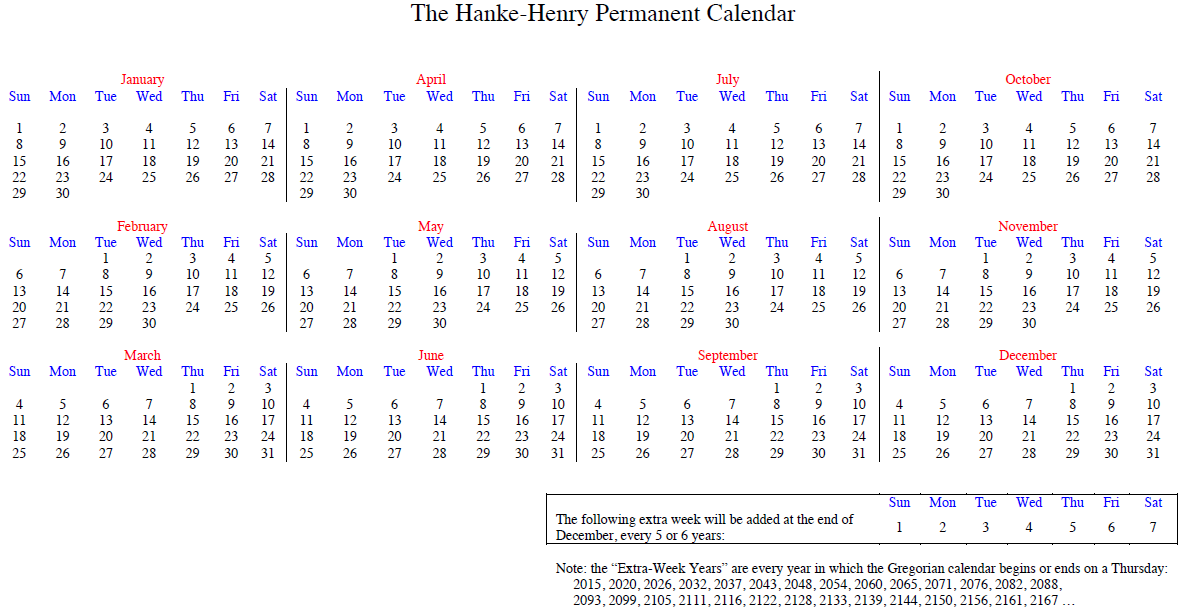


 Steve Prestegard.com: The Presteblog