Americans for Prosperity unveiled its 2014 Wisconsin Economic Report, which states …
Pro-growth policies signed into law by Wisconsin governor Scott Walker have helped bring renewed economic prosperity to Wisconsin. During Governor Walker’s time in office, job growth has increased, unemployment has fallen, taxes have been cut, state revenue has increased, and the quality of education has improved. The state is back on stable financial footing, and job creators overwhelmingly believe Wisconsin is headed in the right direction.
AFP’s evidence is found in these charts:
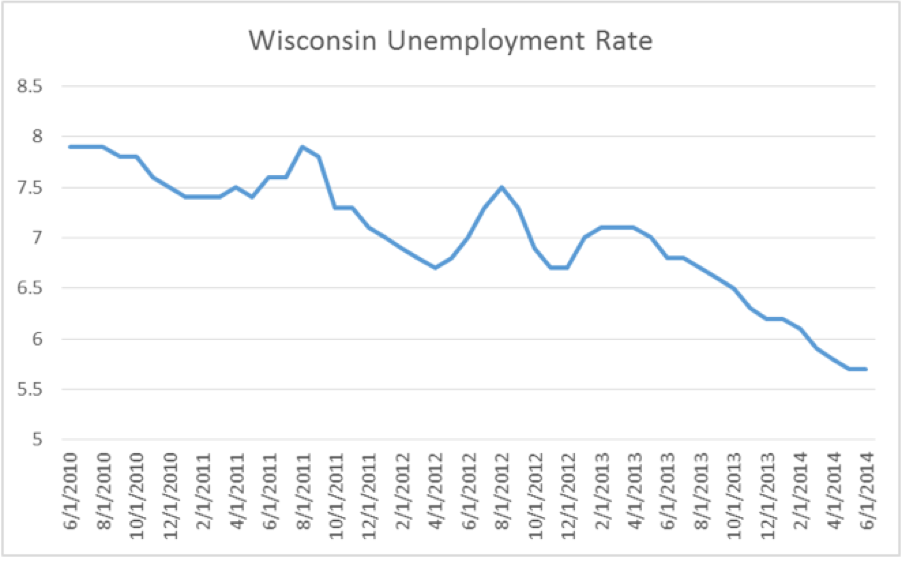
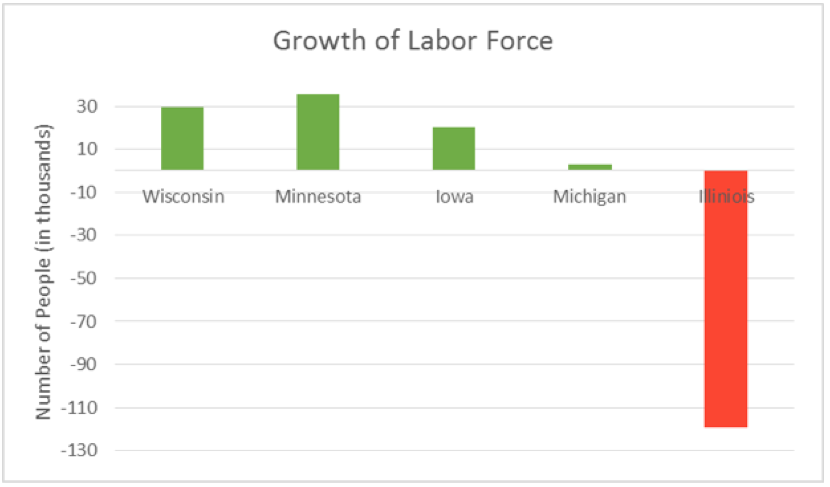

You would think it would be hard to make the tiresome Democratic argument about job growth (particularly when it’s not accompanied by a plan to improve job growth beyond what’s happened since Scott Walker became governor) when Wisconsin’s job growth is better than our Midwestern neighbors.
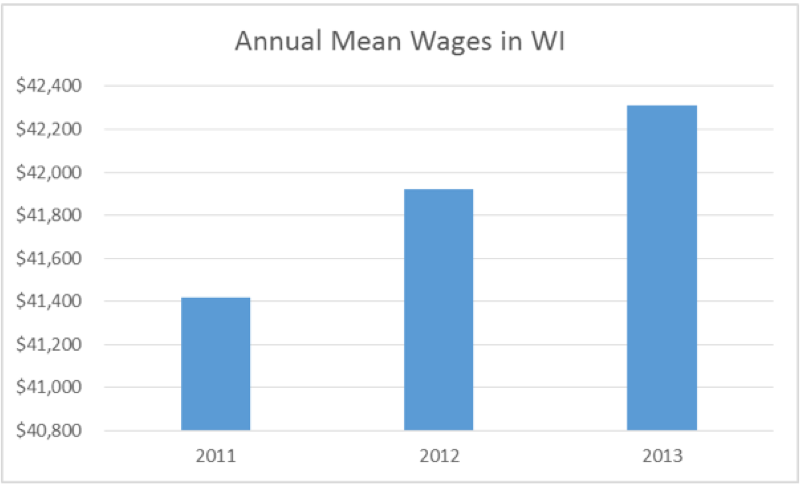
This actually is not much of an improvement — about 2.2 percent from 2011 to 2013. It looks better, though, when compared with this Tax Foundation graphic …

… that shows that the cost of things in Wisconsin is less than all our neighbors except Iowa and Indiana.

This graphic is both a positive and a negative. Tax revenue growth as a result of economic growth as a positive. It also shows, however, that our taxes are still too high, which AFP grants:
However, there is still more work to do. Wisconsin’s income tax remains too high, with almost 12 percent of individuals’ income – $118 out of every $1,000 earned—going to paying local and state taxes. Wisconsin has seen billions of dollars leave the state because of these high tax rates, an outflow that benefits lower-income tax states, many of which enjoy even greater growth and prosperity than Wisconsin does.
The good news is that Governor Walker and Wisconsin lawmakers have made significant headway by cutting taxes by some $2 billion. Just this past May, amid a billion dollar surplus, Walker and the legislature provided additional tax relief in the form of a $541 million income and property tax cut.
As Walker stated when he signed the cut into law, “You deserve to keep as much of your hard-earned money as possible — because after all, it is your money.” More work still needs to be done in order for the state to increase its competitiveness, but Walker’s tax cuts are a great start.
However, not only are the tax cuts not enough, something else needs to happen. Wisconsin is, not surprisingly, according to The Street, the 10th most socialist state in the U.S. (way to go, Fighting Bob, or should the namesake of my high school be called Bolshevik Bob?):
Total State Expenditures (FY 2013): $42.8 Billion
Gross Domestic Product (2013): $254.1 Billion
Expenditures as Proportion of GDP: 16.2%
“America’s Dairyland” is the 10th most socialist state in America on this list with its economy largely driven by manufacturing, agriculture, and health care. Wisconsin is known for high property taxes and ranks fourth nationally in this category.
Its residents have voted for Democrats in nine of the last 10 presidential elections.
The Street’s rationale:
Socialism at its core is a political term applied to an economic system in which individual property, like money, is held and used in common, within a state or a country as an attempt to equalize the standard of living for the average citizen.
In a completely socialist society, there would be no money. Basic needs such as food, shelter, education and healthcare would be available and provided to everyone, so division of classes based on wealth would not exist.
But if America is really turning into a more socialist country, then where can we see evidence of this happening? Are any states becoming socialist before our eyes? And if so, how do we define the most socialist state, you ask?
In order to measure the degree to which different states reflect socialist principles, we determined state expenditures and state GDP as the best indicators because socialist states tax and spend a higher percentage of their GDP. We used data on the total state expenditures for fiscal year 2013 from the most recent National Association of State Budget Officers report and pulled 2013 gross domestic product by state data from the Bureau of Economic Analysis.
The math? Simple. The FY2013 state expenditure divided by the state’s 2013 GDP.
By this criteria, the states you’d think would be most socialist are not, and the states you’d think would be least socialist are not. The rampant excessive government in Illinois, for instance, is overcome by that state’s much larger economy.
The fate of the Soviet Union and the Warsaw Pact should have proven that government does not create prosperity for its citizens. But in this state, some people fail to learn.
 Steve Prestegard.com: The Presteblog
Leave a comment