Skip to content
  • The “free” in “free enterprise”

    August 14, 2012
    US business, US politics

    Tim Nerenz:

    The argument for free enterprise is won at “free”. And the thing that enterprise must be liberated from is, of course, government.

    When people are free (from government) to produce, own, exchange, store, transport, invest, save, buy, sell, invent, work, and consume in any manner they see fit, the most possible prosperity is delivered to the widest possible number of people in the shortest possible time.  This is the lesson that economic history teaches to those who will observe and learn.

    And it is not difficult to understand why it is so – 310 million distributed brains focused on rational self-interest have a higher aggregated IQ than do a few dozen civil-service central planners whose priorities are more time off and early pension. …

    As much as it might like to, the socialists’ evil nemesis Walmart can’t raise prices on a whim – not because there is a government, but because there is a Target.  Meanwhile, the sugar cartel can charge three times world market price because of U.S. government protection. …

    In fact, most of the material things that we find indispensable to modern living were unavailable to all but the last seven or less generations of humans.  Why? What happened to suddenly turn the fight for survival into the pursuit of happiness?

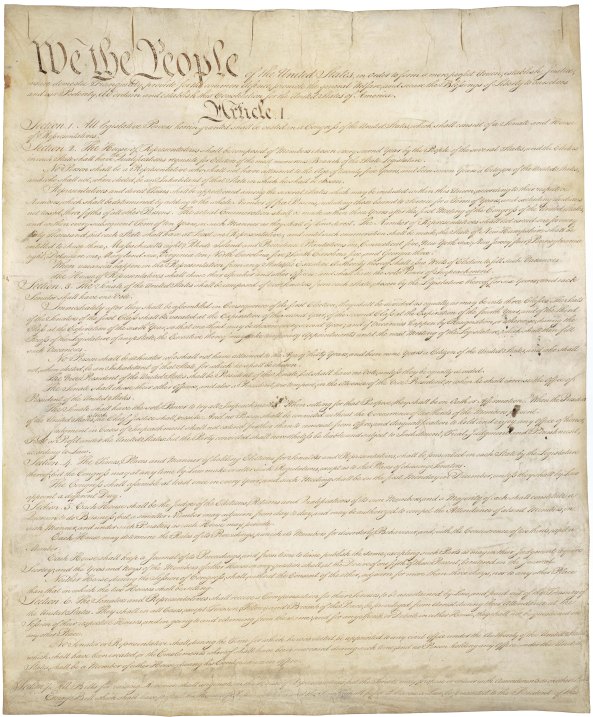
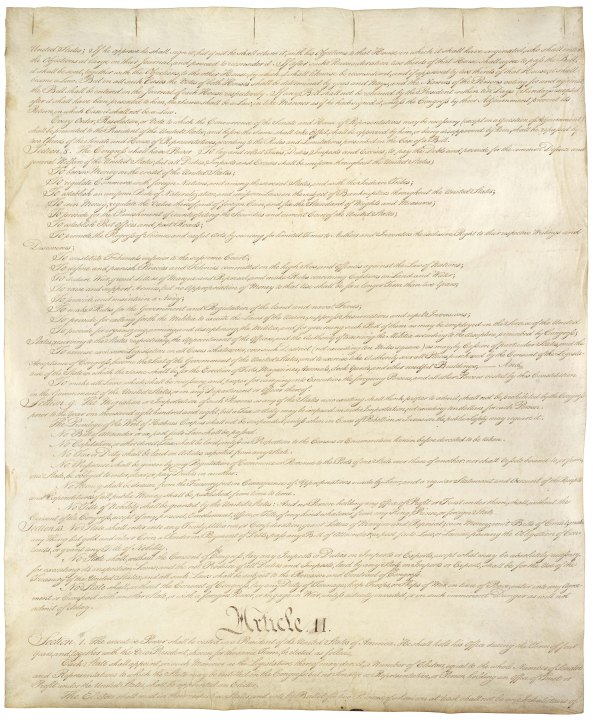
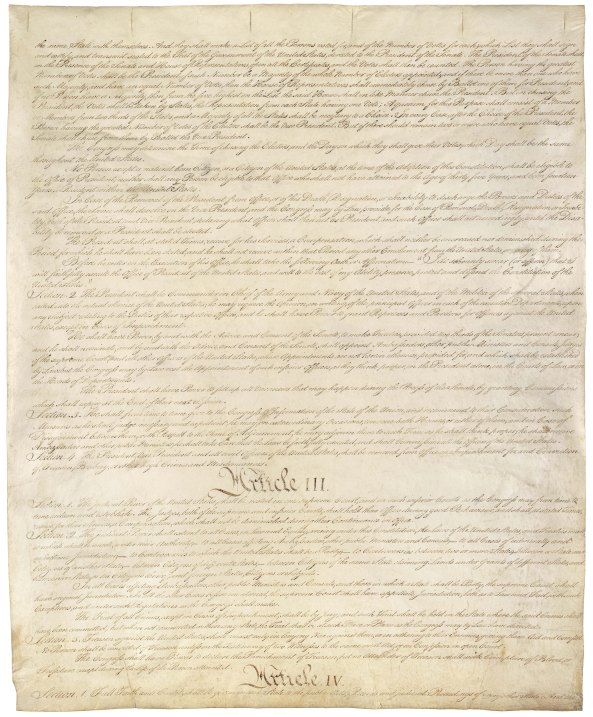
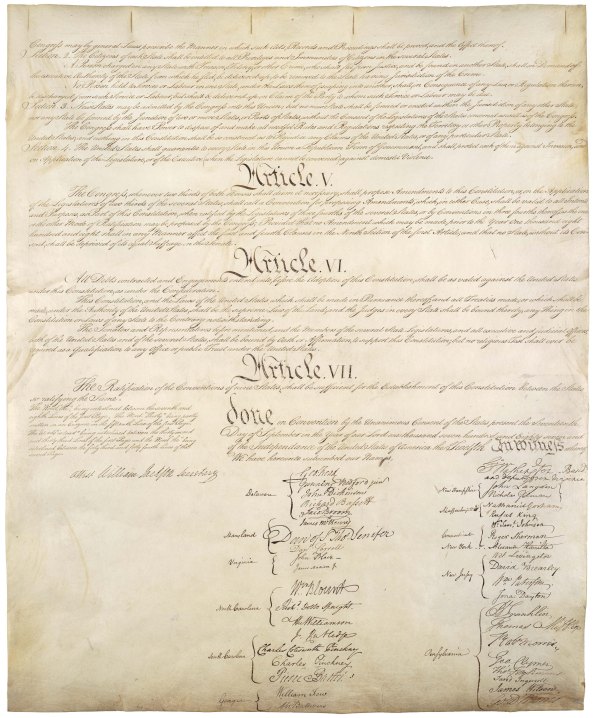
    America happened, with its free enterprise system and its Constitutionally-limited government.  For the first time in history, people owned themselves and the fruits of their labors.  They kept what they produced instead of turning it over to a king, priest, dictator, warlord, tribal chief, colonial governor, general, emperor, commissar, or entire village.

    People who can keep the surplus they produce, produce in surplus; those who can’t, don’t.  The word economists use to describe this phenomenon is “duh”.

    And America would not have happened but for two other seminal events – the Protestant Reformation and the invention of the printing press.  Religious freedom and freedom of speech were the necessary precursors for the establishment of political and economic freedom.  More freedom is good, less freedom is bad and yes, it is really that simple. …

    Free enterprise has raised the average manufacturing wage in China from 58 cents per hour in 2000 to nearly $6 per hour today.  Let’s connect the dots for the UW grads: government lets go of the rope, 43 million new businesses are formed, the economy is 70% liberated, and wages go up 10-fold in a decade.  Get it?

    Meanwhile, our government is tying us up with more rope, business start-ups have slowed to a trickle, government takes a bigger share of GDP each year, and wages (measured in tangible value, like ounces of gold) have plummeted over the last decade.  The Chinese are not kicking our butts; we are sitting on their foot. …

    Free enterprise doesn’t care who wins and by how much.  It lets each of us discover how high is up for us.  And when our enterprise is free from government, most of us discover that up is a lot higher than we could have ever possibly imagined.

    Barack Obama understands none of this, of course.

    Share this on …

    • Share on X (Opens in new window) X
    • Share on Facebook (Opens in new window) Facebook
    • Share on LinkedIn (Opens in new window) LinkedIn
    • Email a link to a friend (Opens in new window) Email
    • Print (Opens in new window) Print
    Like Loading…
    No comments on The “free” in “free enterprise”
  • Presty the DJ for Aug. 14

    August 14, 2012
    Music

    The number one song today in 1965:

    Three years later, the singer of the number one song in Britain announced …

    Today in 1976, Chicago released what would become its first number one single:

    Darrell “Dash” Crofts, the latter half of Seals and Crofts …

    … was born one year before David Crosby of the Byrds and Crosby Stills Nash (and occasionally Young):

    Tim Bogert of Vanilla Fudge:

    Today in 1992, Tony Williams, the first singer of the Platters, died:

    Share this on …

    • Share on X (Opens in new window) X
    • Share on Facebook (Opens in new window) Facebook
    • Share on LinkedIn (Opens in new window) LinkedIn
    • Email a link to a friend (Opens in new window) Email
    • Print (Opens in new window) Print
    Like Loading…
    No comments on Presty the DJ for Aug. 14
  • RR

    August 13, 2012
    US politics, Wisconsin politics

    I’d first like to thank Mitt Romney for publicly proving me wrong.

    Some time ago on Wisconsin Public Radio, I said I didn’t think any Wisconsinite — Paul Ryan, Scott Walker, Ron Johnson or anyone else — would be Romney’s vice presidential candidate. Wisconsinites (at least a majority thereof who vote) have gone for Democrats for the White House since Michael Dukakis in 1988.

    Even though Ryan has been successful in what used to be considered a swing district (as recently as the 1990s Ryan’s First Congressional District was represented by Democrats Les Aspin and Peter Barca), it seemed, and seems, unlikely that adding Ryan to the Republican ticket would put Wisconsin’s 10 electoral votes in Romney’s column. There therefore seemed little value to adding Ryan to the presidential ticket.

    In my lifetime, the only vice presidential choice that could be argued to have made a difference among voters was Dick Cheney in 2000. Cheney provided the gravitas that George W. Bush seemed to lack, which may have swung undecided voters toward Bush. John McCain’s 2008 selection of Sarah Palin generated enthusiasm among Republicans, but McCain wasn’t going to beat Barack Obama anyway. Walter Mondale’s 1984 selection of Geraldine Ferraro briefly generated enthusiasm among Democrats, but it’s hard to see how picking Ferraro improved what turned out to be a 49-state juggernaut. Ronald Reagan’s 1980 selection of George Bush, his main primary rival, served to unify the GOP, but given what the economy was doing, Jimmy Carter would have lost (and deserved to lose) to nearly any candidate not named Carter.

    The Ryan pick means the Republicans are going all-in on Ryan’s economic plan, which mere existence shows that the Republicans are serious about the deficit, the debt and entitlement reform, unlike the Obama administration. It also helps reinforce the GOP’s stance on the poor state of the economy, as in …

    … and making the case that the deficit is a cause of the bad economy, not merely a result of it. Voters will not be able to argue that they don’t have a choice, because Romney–Ryan represents doing things differently from how they have done since Jan. 20, 2009.

    (Obama and his parrots argue that we tried the Romney–Ryan approach in the 2000s. No, we didn’t. There was nothing approximating fiscal discipline — as in not spending more than you have — in the George W. Bush administration. There was no fiscal discipline in the Clinton administration either; the “surplus” — which was actually from counting more revenue than should be counted, in their case the Social Security surpluses of the day — was the result of the economy, not of policy.)

    This pick might also prove that a sea change in Wisconsin’s politics really has taken place. Until Scott Walker became governor Wisconsin’s contribution to national politics was on the left side — the Progressive Era, the anti-Vietnam War movement, and Earth Day, to name three.

    But in the 2010 election, the party of the governor, state treasurer, one U.S. Senate seat, two House of Representatives and both houses of the Legislature all switched. The (illegitimate) state Senate recalls flipped the Senate back to the Democrats until Nov. 6, when control is likely to revert back to the GOP. Walker is arguably the best known governor in the U.S. now, and other governors are following Walker’s lead on putting public employee unions in their proper place. Wisconsin has brought welfare reform (Tommy Thompson), government and fiscal reform (Walker) and fiscal and entitlement reform (Ryan) to the political debate, and that has to make Democrats grind their molars into dust in disgust.

    The Republican Party has always claimed the mantle of fiscal responsibility, often in theory more than practice. Maybe the GOP is finally living up to its own words.

    Share this on …

    • Share on X (Opens in new window) X
    • Share on Facebook (Opens in new window) Facebook
    • Share on LinkedIn (Opens in new window) LinkedIn
    • Email a link to a friend (Opens in new window) Email
    • Print (Opens in new window) Print
    Like Loading…
    No comments on RR
  • Just what you want to wake up to read

    August 13, 2012
    US politics

    Boston University economist Lawrence Kotlikoff and columnist Scott Burns, authors of The Clash of Generations (as reported by Bloomberg):

    Republicans and Democrats spent last summer battling how best to save $2.1 trillion over the next decade. They are spending this summer battling how best to not save $2.1 trillion over the next decade.

    In the course of that year, the U.S. government’s fiscal gap — the true measure of the nation’s indebtedness — rose by $11 trillion.

    The fiscal gap is the present value difference between projected future spending and revenue. It captures all government liabilities, whether they are official obligations to service Treasury bonds or unofficial commitments, such as paying for food stamps or buying drones. …

    The U.S. fiscal gap, calculated (by us) using the Congressional Budget Office’s realistic long-term budget forecast — the Alternative Fiscal Scenario — is now $222 trillion. Last year, it was $211 trillion. The $11 trillion difference — this year’s true federal deficit — is 10 times larger than the official deficit and roughly as large as the entire stock of official debt in public hands. …

    When fully retired, 78 million baby boomers will collect, on average, more than 85 percent of per-capita gross domestic product ($40,000 in today’s dollars) in Social Security, Medicare and Medicaid benefits. Each passing year brings these outlays one year closer, which raises their present value. …

    The answer for the U.S. isn’t pretty. Closing the gap using taxes requires an immediate and permanent 64 percent increase in all federal taxes. Alternatively, the U.S. needs to cut, immediately and permanently, all federal purchases and transfer payments, including Social Security and Medicare benefits, by 40 percent. Or it can mix these terrible fiscal medicines with honey, namely radical fiscal reforms that make the economy much fairer and far stronger. What the government can’t do is pay its bills by spending more and taxing less. America’s children, whose futures are being rapidly destroyed, are smart enough to tell us this.

    Two thoughts: (1) Perhaps the winners Nov. 6 will be the real losers. (2) Don’t bother making retirement plans. You won’t be able to.

    Share this on …

    • Share on X (Opens in new window) X
    • Share on Facebook (Opens in new window) Facebook
    • Share on LinkedIn (Opens in new window) LinkedIn
    • Email a link to a friend (Opens in new window) Email
    • Print (Opens in new window) Print
    Like Loading…
    No comments on Just what you want to wake up to read
  • Presty the DJ for Aug. 13

    August 13, 2012
    Music

    The number one song in Britain today in 1964 (a song brought back to popularity by the movie “Stripes”):

    That same day, the Kinks hit the British charts for the first time with …

    This was, of course, the number one song in the U.S. today in 1966:

    That same day, the number one album in the U.K.  was the Beatles’ “Revolver”:

    That same day, the Supremes hit the charts for the first time by reminding listeners that …

    Speaking of the Beatles: Today in 1971, John Lennon left on a jet plane from Heathrow Airport in London to New York, and never set foot in Britain again. (Despite Richard Nixon’s efforts to deport Lennon.)

    Today in 1980, four masked burglars broke into the New York home of Todd Rundgren, tied him up, and stole audio equipment and paintings. According to reports, during the break-in one of them was humming …

    The only birthday of note today is Dan Fogelberg:

    Share this on …

    • Share on X (Opens in new window) X
    • Share on Facebook (Opens in new window) Facebook
    • Share on LinkedIn (Opens in new window) LinkedIn
    • Email a link to a friend (Opens in new window) Email
    • Print (Opens in new window) Print
    Like Loading…
    No comments on Presty the DJ for Aug. 13
  • Presty the DJ for Aug. 12

    August 12, 2012
    Music

    Today in 1968, Jimmy Page, Robert Plant, John Paul Jones and John Bonham played together for the first time when they rehearsed at a London studio. You know them as Led Zeppelin:

    http://www.youtube.com/watch?v=sfR_HWMzgyc

    Today in 1972, this was the number one song in Britain, which is odd since school was indeed out at the time:

    (That, by the way, is a song that will be played as long as school exists.)

    These are not rock music birthdays, but since country music is one of the fathers of rock, I’ll note that Buck Owens and Porter Wagoner are celebrating birthdays today.

    Today’s first birthday is the writer of “Hit the Road Jack,” Percy Mayfield:

    Cliff Fish of one-hit-wonder Paperlace:

    Mark Knopfler of Dire Straits:

    Jerry Speiser of Men at Work:

    Roy Hay of Culture Club:

    Today in 1985, Kyu Sakamoto died in a plane crash in Japan. He was the first Japanese artist to have a U.S.-number-one song, in 1963:

    Share this on …

    • Share on X (Opens in new window) X
    • Share on Facebook (Opens in new window) Facebook
    • Share on LinkedIn (Opens in new window) LinkedIn
    • Email a link to a friend (Opens in new window) Email
    • Print (Opens in new window) Print
    Like Loading…
    No comments on Presty the DJ for Aug. 12
  • Presty the DJ for Aug. 11

    August 11, 2012
    Music

    We begin with a non-musical anniversary: On Aug. 11, 1919, Green Bay Press–Gazette sports editor George Calhoun and Indian Packing Co. employee Earl “Curly” Lambeau, a former Notre Dame football player, organized a pro football team that would be called the Green Bay Packers:

    Today in 1964, the Beatles movie “A Hard Day’s Night” opened in New York:

    Two years later, the Beatles opened their last American concert tour on the same day that John Lennon apologized for saying that the Beatles were “more popular than Jesus. … Look, I wasn’t saying The Beatles are better than God or Jesus, I said ‘Beatles’ because it’s easy for me to talk about The Beatles. I could have said ‘TV’ or ‘Cinema’, ‘Motorcars’ or anything popular and would have got away with it…”

    Today in 1976, the Who drummer Keith Moon collapsed and was hospitalized in Miami.

    You might have the knack for music trivia if you can identify the number one today in 1979:

    Today in 1984, President Reagan either forgot or ignored the dictum that one should always assume a microphone is open:

    Birthdays start with Manfred Mann drummer Mike Hegg:

    James Kale of the Guess Who …

    … was born the same day as Denis Payton, one of the Dave Clark Five:

    Joe Jackson:

    Who is Richie Beau? You know him better as Richie Ramone:

    Share this on …

    • Share on X (Opens in new window) X
    • Share on Facebook (Opens in new window) Facebook
    • Share on LinkedIn (Opens in new window) LinkedIn
    • Email a link to a friend (Opens in new window) Email
    • Print (Opens in new window) Print
    Like Loading…
    No comments on Presty the DJ for Aug. 11
  • Big Red (I mean Cardinal) at Big Red (I mean Scarlet)

    August 10, 2012
    Sports

    The second Big T1e2n football meeting between Wisconsin and Nebraska will be in Lincoln Sept. 29.

    The Cornhuskers will be attired thusly for the game (from Omaha.com):

    Their opponents, the Badgers, will wear these special uniforms:

    The Madison.com story understates by beginning:

    Say this about the “special” jerseys the University of Wisconsin football team will wear Sept. 29 for their prime-time game at Nebraska: They’re going to generate a reaction.

    Indeed they will. My reaction is: They suck. Both sets.

    To review from my previous writing on the Cardinal and White vs. the Scarlet and Cream: The first error here is that the Badgers are wearing the wrong shade of red. Cardinal is darker than the red shown here. (I blame Nebraska alumnus Barry Alvarez, although the red has been too bright since the Dave McClain days. Ironically, before coming to Wisconsin McClain coached the Ball State … Cardinals.)

    This photo of the 2000 Rose Bowl shows the “road” team, Stanford, wearing the correct cardinal, not the “home” team, Wisconsin:

    The only UW game in which the Badgers have successfully worn an alternate uniform (that is, worn it and won) was when UW was paying tribute to its 1959- and 1962-season Rose Bowl teams:

    This is the correct shade of cardinal. Not what they are wearing now.

    The issue is not with the helmet by itself. UW has worn white helmets for so long most people forget that the Badgers have worn red helmets in the past …

    … most recently in 1969 (the back-row far right helmet). That was the season UW’s 23-game losing streak ended. (That 23-game losing streak, during the reign of error of coach John Coatta, who changed the helmets from white to red, is probably why they were switched back to red by his replacement, John Jardine.) During the 1950s the Badgers wore both red and white helmets (the back-row left pair).

    You’ll notice, however, that in the two schools’ colors, cardinal and white and scarlet and cream, that the word “black” is nowhere to be seen. I don’t consider outlining numbers or logos in black to make them stand out to be an unnecessary use of black. I do consider a black helmet (and facemask) and a black logo to be an unnecessary addition of black. So are black socks.

    This is also a lazy design on Adidas’ part. The W is supposed to remind you of the 1960 and 1963 Rose Bowl teams (both of which, by the way, lost). The Badgers’ Motion W would be more appropriate, but neither the N nor the W belongs on the front at that size. These are football jerseys designed like hockey jerseys, particularly with the red shoulders on UW’s uniform.

    I already designed road uniforms for the Badgers, with choice of white …

    … or cardinal helmet …

    … that (1) are the correct color red, (2) use the correct Badger font (which you see on their basketball uniforms), (3) clean up some issues with UW’s current look (namely the jersey stripes, which look slapped-on) and (4) look neither as hopelessly old-fashioned and cheap as Penn State’s football uniforms nor look thoughtlessly futuristic.

    Some argue that out-there uniform designs are designed to appeal to current and prospective future student–athletes, which means that 17-year-olds are choosing their college education based on a 17-year-old’s sense of aesthetics. (Insert acerbic comment about shallowness of today’s youth here.) Others argue uniform design is based on the marketers’ determination of what will sell.

    As far as I’m concerned, these two criteria should be the only consideration: (1) how does it look on video, and (2) will the sports media be able to read the players’ numbers and letters. If the uniform doesn’t match criterion 2, then it is, to quote today’s vernacular, an epic fail.


    Share this on …

    • Share on X (Opens in new window) X
    • Share on Facebook (Opens in new window) Facebook
    • Share on LinkedIn (Opens in new window) LinkedIn
    • Email a link to a friend (Opens in new window) Email
    • Print (Opens in new window) Print
    Like Loading…
    3 comments on Big Red (I mean Cardinal) at Big Red (I mean Scarlet)
  • Olympian football

    August 10, 2012
    Sports

    From a Dan Patrick Show interview with NFL commissioner Roger Goodell:

    On the possibility of American football becoming an Olympic sport:

    “Absolutely. We’re already taking steps to gain that IOC recognition. We have, I think it’s 64 countries that are playing American football now, and that’s one of the requirements. And that’s been growing dramatically. I think it was 40 just five years ago, so we’re seeing that kind of growth internationally. It’s being played around the world. We have a national federation under USA Football Federation, and those are the types of things you have to do to become an Olympic sport.”

    On if there’s a timeline in place for that:

    “No, again, those decisions are made by the IOC. They look at how the game is being played around the globe, and we’re trying to make sure we continue to broaden the scope of our game, and if they give us the opportunity we certainly would push for it.”

    I assume Goodell is correct in his assertion that 64 countries are playing American football. The number of countries playing American football as well as the U.S. is likely to be 63 fewer than that. Only one country, Canada, could touch the U.S. in an international game, and of course Canada plays under different rules.

    The history of Olympic baseball (demonstration sport in 1984 and 1988, played in the next five Olympics, now gone) and softball (four Olympics, now gone) are cautionary tales for American football. There is an International Federation of American Football with 62 member nations,

    While football has had players from Argentina, Australia (former UW kicker Pat O’Dea, the “Kangaroo Kicker”), Austria, the Bahamas, Barbados, Britain, Cameroon, Canada (former Packer punter Jon Ryan), Colombia, the Congo, Cuba, (the late) Czechoslovakia, Denmark, Estonia, Fiji, Finland, France, Germany (former Packer John Jurkovic), Ghana, Greece, Haiti, Honduras, Iran, Ireland, Italy, Jamaica (former Packer safety Atari Bigby and Super Bowl XXXI defensive end Sean Jones), Japan, Lebanon, Liberia (former Packer defensive back Bhawoh Jue), Macedonia, the Marshall Islands, Mexico (former Packer kicker Max Zendejas), the Netherlands, New Zealand, Nigeria (former Packer running back Samkon Gado), Norway (former Packer Jan Stenerud and Knute Rockne), Panama, Paraguay, Poland (former Badger Jason Maniecki and former Packer Chester Marcol), Russia (former Badger Charles “Buckets” Goldenberg, credited as the creator of the draw play), Saint Kitts and Nevis (former Badger defensive lineman Erasmus James), El Salvador, Samoa, Sierra Leone (former Badger defensive back B.J. Tucker), South Africa, Spain, Sweden, Taiwan, Tonga (former Packer kick returner Vai Sikahema), Trinidad and Tobago, Uganda and the Ukraine, that doesn’t mean any of those countries could beat a U.S. football team.

    Consider also the fact that the Olympics takes place over 17 days, and football games are usually placed once per week. That leaves three rounds of games, which means a maximum of eight games — four the first weekend, two the next, and then the gold-medal (and perhaps bronze-medal) games. How would you find eight countries, even if you counted Puerto Rico as a country (which the Olympics does and the U.S. doesn’t)? And of those eight, at least three have to be at least somewhat competitive with the U.S. Otherwise, the games could end up looking like Stockbridge(enrollment 68) against Stevens Point (enrollment 2,251).

    It would also be helpful if the U.S. would host a summer Olympics, which isn’t in the cards until 2024 at the earliest. (The 2020 Olympics will be held in Tokyo, Istanbul or Madrid.)

    Share this on …

    • Share on X (Opens in new window) X
    • Share on Facebook (Opens in new window) Facebook
    • Share on LinkedIn (Opens in new window) LinkedIn
    • Email a link to a friend (Opens in new window) Email
    • Print (Opens in new window) Print
    Like Loading…
    No comments on Olympian football
  • Presty the DJ for Aug. 10

    August 10, 2012
    Music

    Today, this would be the sort of thing to embellish a band’s image. Not so in 1959, when four members of The Platters were arrested on drug and prostitution charges following a concert in Cincinnati when they were discovered with four women (three of them white) in what was reported as “various stages of undress.” Despite the fact that none of the Platters were convicted of anything, the Platters (who were all black) were removed from several radio stations’ playlists.

    Speaking of odd music anniversaries: Today in 1985, Michael Jackson purchased the entire Beatles music library for more than $45 million.

    (more…)

    Share this on …

    • Share on X (Opens in new window) X
    • Share on Facebook (Opens in new window) Facebook
    • Share on LinkedIn (Opens in new window) LinkedIn
    • Email a link to a friend (Opens in new window) Email
    • Print (Opens in new window) Print
    Like Loading…
    No comments on Presty the DJ for Aug. 10
Previous Page
1 … 942 943 944 945 946 … 1,048
Next Page

Website Powered by WordPress.com.

Steve Prestegard.com: The Presteblog

The thoughts of a journalist/libertarian–conservative/Christian husband, father, Eagle Scout and aficionado of obscure rock music. Thoughts herein are only the author’s and not necessarily the opinions of his family, friends, neighbors, church members or past, present or future employers.

  • Steve
    • About, or, Who is this man?
    • Facebook
    • Twitter
    • Adventures in ruralu0026nbsp;inkBack in June 2009, I was driving somewhere through a rural area. And for some reason, I had a flashback to two experiences in my career about that time of year many years ago. In 1988, eight days after graduating from the University of Wisconsin, I started work at the Grant County Herald Independent in Lancaster as a — well, the — reporter. Four years after that, on my 27th birthday, I purchased, with a business partner, the Tri-County Press in Cuba City, my first business venture. Both were experiences about which Wisconsin author Michael Perry might write. I thought about all this after reading a novel, The Deadline, written by a former newspaper editor and publisher. (Now who would write a novel about a weekly newspaper?) As a former newspaper owner, I picked at some of it — why finance a newspaper purchase through the bank if the seller is willing to finance it? Because the mean bank lender is a plot point! — and it is much more interesting than reality, but it is very well written, with a nicely twisting plot, and quite entertaining, again more so than reality. There is something about that first job out of college that makes you remember it perhaps more…
    • Adventures in radioI’ve been in the full-time work world half my life. For that same amount of time I’ve been broadcasting sports as a side interest, something I had wanted to since I started listening to games on radio and watching on TV, and then actually attending games. If you ask someone who’s worked in radio for some time about the late ’70s TV series “WKRP in Cincinnati,” most of them will tell you that, if anything, the series understated how wacky working in radio can be. Perhaps the funniest episode in the history of TV is the “WKRP” episode, based on a true story, about the fictional radio station’s Thanksgiving promotion — throwing live turkeys out of a helicopter under the mistaken belief that, in the words of WKRP owner Arthur Carlson, “As God is my witness, I thought turkeys could fly.” [youtube=http://www.youtube.com/watch?v=ST01bZJPuE0] I’ve never been involved in anything like that. I have announced games from the roofs of press boxes (once on a nice day, and once in 50-mph winds), from a Mississippi River bluff (more on that later), and from the front row of the second balcony of the University of Wisconsin Fieldhouse (great view, but not a place to go if…
    • “Good morning/afternoon/evening, ________ fans …”
    • My biggest storyEarlier this week, while looking for something else, I came upon some of my own work. (I’m going to write a blog someday called “Things I Found While Looking for Something Else.” This is not that blog.) The Grant County Sheriff’s Department, in the county where I used to live, has a tribute page to the two officers in county history who died in the line of duty. One is William Loud, a deputy marshal in Cassville, shot to death by two bank robbers in 1912. The other is Tom Reuter, a Grant County deputy sheriff who was shot to death at the end of his 4 p.m.-to-midnight shift March 18, 1990. Gregory Coulthard, then a 19-year-old farmhand, was convicted of first-degree intentional homicide and is serving a life sentence, with his first eligibility for parole on March 18, 2015, just 3½ years from now. I’ve written a lot over the years. I think this, from my first two years in the full-time journalism world, will go down as the story I remember the most. For journalists, big stories contain a paradox, which was pointed out in CBS-TV’s interview of Andy Rooney on his last “60 Minutes” Sunday. Morley Safer said something along the line…
  • Food and drink
    • The Roesch/Prestegard familyu0026nbsp;cookbookFrom the family cookbook(s) All the families I’m associated with love to eat, so it’s a good thing we enjoy cooking. The first out-of-my-house food memory I have is of my grandmother’s cooking for Christmas or other family occasions. According to my mother, my grandmother had a baked beans recipe that she would make for my mother. Unfortunately, the recipe seems to have  disappeared. Also unfortunately, my early days as a picky, though voluminous, eater meant I missed a lot of those recipes made from such wholesome ingredients as lard and meat fat. I particularly remember a couple of meals that involve my family. The day of Super Bowl XXXI, my parents, my brother, my aunt and uncle and a group of their friends got together to share lots of food and cheer on the Packers to their first NFL title in 29 years. (After which Jannan and I drove to Lambeau Field in the snow,  but that’s another story.) Then, on Dec. 31, 1999, my parents, my brother, my aunt and uncle and Jannan and I (along with Michael in utero) had a one-course-per-hour meal to appropriately end years beginning with the number 1. Unfortunately I can’t remember what we…
    • SkålI was the editor of Marketplace Magazine for 10 years. If I had to point to one thing that demonstrates improved quality of life since I came to Northeast Wisconsin in 1994, it would be … … the growth of breweries and  wineries in Northeast Wisconsin. The former of those two facts makes sense, given our heritage as a brewing state. The latter is less self-evident, since no one thinks of Wisconsin as having a good grape-growing climate. Some snobs claim that apple or cherry wines aren’t really wines at all. But one of the great facets of free enterprise is the opportunity to make your own choice of what food and drink to drink. (At least for now, though some wish to restrict our food and drink choices.) Wisconsin’s historically predominant ethnic group (and our family’s) is German. Our German ancestors did unfortunately bring large government and high taxes with them, but they also brought beer. Europeans brought wine with them, since they came from countries with poor-quality drinking water. Within 50 years of a wave of mid-19th-century German immigration, brewing had become the fifth largest industry in the U.S., according to Maureen Ogle, author of Ambitious Brew: The Story of American Beer. Beer and wine have…
  • Wheels
    • America’s sports carMy birthday in June dawned without a Chevrolet Corvette in front of my house. (The Corvette at the top of the page was featured at the 2007 Greater Milwaukee Auto Show. The copilot is my oldest son, Michael.) Which isn’t surprising. I have three young children, and I have a house with a one-car garage. (Then again, this would be more practical, though a blatant pluck-your-eyes-out violation of the Corvette ethos. Of course, so was this.) The reality is that I’m likely to be able to own a Corvette only if I get a visit from the Corvette Fairy, whose office is next door to the Easter Bunny. (I hope this isn’t foreshadowing: When I interviewed Dave Richter of Valley Corvette for a car enthusiast story in the late great Marketplace Magazine, he said that the most popular Corvette in most fans’ minds was a Corvette built during their days in high school. This would be a problem for me in that I graduated from high school in 1983, when no Corvette was built.) The Corvette is one of those cars whose existence may be difficult to understand within General Motors Corp. The Corvette is what is known as a “halo car,” a car that drives people into showrooms, even if…
    • Barges on fouru0026nbsp;wheelsI originally wrote this in September 2008.  At the Fox Cities Business Expo Tuesday, a Smart car was displayed at the United Way Fox Cities booth. I reported that I once owned a car into which trunk, I believe, the Smart could be placed, with the trunk lid shut. This is said car — a 1975 Chevrolet Caprice coupe (ours was dark red), whose doors are, I believe, longer than the entire Smart. The Caprice, built down Interstate 90 from us Madisonians in Janesville (a neighbor of ours who worked at the plant probably helped put it together) was the flagship of Chevy’s full-size fleet (which included the stripper Bel Air and middle-of-the-road Impala), featuring popular-for-the-time vinyl roofs, better sound insulation, an upgraded cloth interior, rear fender skirts and fancy Caprice badges. The Caprice was 18 feet 1 inch long and weighed 4,300 pounds. For comparison: The midsize Chevrolet of the ear was the Malibu, which was the same approximate size as the Caprice after its 1977 downsizing. The compact Chevrolet of the era was the Nova, which was 200 inches long — four inches longer than a current Cadillac STS. Wikipedia’s entry on the Caprice has this amusing sentence: “As fuel economy became a bigger priority among Americans…
    • Behind the wheel
    • Collecting only dust or rust
    • Coooooooooooupe!
    • Corvettes on the screen
    • The garage of misfit cars
    • 100 years (and one day) of our Chevrolets
    • They built Excitement, sort of, once in a while
    • A wagon by any otheru0026nbsp;nameFirst written in 2008. You will see more don’t-call-them-station-wagons as you drive today. Readers around my age have probably had some experience with a vehicle increasingly rare on the road — the station wagon. If you were a Boy Scout or Girl Scout, or were a member of some kind of youth athletic team, or had a large dog, or had relatives approximately your age, or had friends who needed to be transported somewhere, or had parents who occasionally had to haul (either in the back or in a trailer) more than what could be fit inside a car trunk, you (or, actually, your parents) were the target demographic for the station wagon. “Station wagons came to be like covered wagons — so much family activity happened in those cars,” said Tim Cleary, president of the American Station Wagon Owners Association, in Country Living magazine. Wagons “were used for everything from daily runs to the grocery store to long summer driving trips, and while many men and women might have wanted a fancier or sportier car, a station wagon was something they knew they needed for the family.” The “station wagon” originally was a vehicle with a covered seating area to take people between train stations…
    • Wheels on theu0026nbsp;screenBetween my former and current blogs, I wrote a lot about automobiles and TV and movies. Think of this post as killing two birds (Thunderbirds? Firebirds? Skylarks?) with one stone. Most movies and TV series view cars the same way most people view cars — as A-to-B transportation. (That’s not counting the movies or series where the car is the plot, like the haunted “Christine” or “Knight Rider” or the “Back to the Future” movies.) The philosophy here, of course, is that cars are not merely A-to-B transportation. Which disqualifies most police shows from what you’re about to read, even though I’ve watched more police video than anything else, because police cars are plain Jane vehicles. The highlight in a sense is in the beginning: The car chase in my favorite movie, “Bullitt,” featuring Steve McQueen’s 1968 Ford Mustang against the bad guys’ 1968 Dodge Charger: [youtube=http://www.youtube.com/watch?v=GMc2RdFuOxIu0026amp;fmt=18] One year before that (but I didn’t see this until we got Telemundo on cable a couple of years ago) was a movie called “Operación 67,” featuring (I kid you not) a masked professional wrestler, his unmasked sidekick, and some sort of secret agent plot. (Since I don’t know Spanish and it’s not…
    • While riding in my Cadillac …
  • Entertainments
    • Brass rocksThose who read my former blog last year at this time, or have read this blog over the past months, know that I am a big fan of the rock group Chicago. (Back when they were a rock group and not a singer of sappy ballads, that is.) Since rock music began from elements of country music, jazz and the blues, brass rock would seem a natural subgenre of rock music. A lot of ’50s musical acts had saxophone players, and some played with full orchestras … [youtube=http://www.youtube.com/watch?v=9CPS-WuUKUE] … but it wasn’t until the more-or-less simultaneous appearances of Chicago and Blood Sweat u0026amp; Tears on the musical scene (both groups formed in 1967, both had their first charting singles in 1969, and they had the same producer) that the usual guitar/bass/keyboard/drum grouping was augmented by one or more trumpets, a sax player and a trombone player. While Chicago is my favorite group (but you knew that already), the first brass rock song I remember hearing was BSu0026amp;T’s “Spinning Wheel” — not in its original form, but on “Sesame Street,” accompanied by, yes, a giant spinning wheel. [youtube=http://www.youtube.com/watch?v=qi9sLkyhhlE] [youtube=http://www.youtube.com/watch?v=OxWSOuNsN20] [youtube=http://www.youtube.com/watch?v=U9U34uPjz-g] I remember liking Chicago’s “Just You ‘n Me” when it was released as a single, and…
    • Drive and Eat au0026nbsp;RockThe first UW home football game of each season also is the opener for the University of Wisconsin Marching Band, the world’s finest college marching band. (How the UW Band has not gotten the Sudler Trophy, which is to honor the country’s premier college marching bands, is beyond my comprehension.) I know this because I am an alumnus of the UW Band. I played five years (in the last rank of the band, Rank 25, motto: “Where Men Are Tall and Run-On Is Short”), marching in 39 football games at Camp Randall Stadium, the Hubert H. Humphrey Metrodome in Minneapolis, Michigan Stadium in Ann Arbor, Memorial Stadium at the University of Illinois (worst artificial turf I had ever seen), the University of Nevada–Las Vegas’ Sam Boyd Silver Bowl, the former Dyche Stadium at Northwestern University, five high school fields and, in my one bowl game, Legion Field in Birmingham, Ala., site of the 1984 Hall of Fame Bowl. The UW Band was, without question, the most memorable experience of my college days, and one of the most meaningful experiences of my lifetime. It was the most physical experience of my lifetime, to be sure. Fifteen minutes into my first Registration…
    • Keep on rockin’ in the freeu0026nbsp;worldOne of my first ambitions in communications was to be a radio disc jockey, and to possibly reach the level of the greats I used to listen to from WLS radio in Chicago, which used to be one of the great 50,000-watt AM rock stations of the country, back when they still existed. (Those who are aficionados of that time in music and radio history enjoyed a trip to that wayback machine when WLS a Memorial Day Big 89 Rewind, excerpts of which can be found on their Web site.) My vision was to be WLS’ afternoon DJ, playing the best in rock music between 2 and 6, which meant I wouldn’t have to get up before the crack of dawn to do the morning show, yet have my nights free to do whatever glamorous things big-city DJs did. Then I learned about the realities of radio — low pay, long hours, zero job security — and though I have dabbled in radio sports, I’ve pretty much cured myself of the idea of working in radio, even if, to quote WAPL’s Len Nelson, “You come to work every day just like everybody else does, but we’re playing rock ’n’ roll songs, we’re cuttin’ up.…
    • Monday on the flight line, not Saturday in the park
    • Music to drive by
    • The rock ofu0026nbsp;WisconsinWikipedia begins its item “Music of Wisconsin” thusly: Wisconsin was settled largely by European immigrants in the late 19th century. This immigration led to the popularization of galops, schottisches, waltzes, and, especially, polkas. [youtube=http://www.youtube.com/watch?v=yl7wCczgNUc] So when I first sought to write a blog piece about rock musicians from Wisconsin, that seemed like a forlorn venture. Turned out it wasn’t, because when I first wrote about rock musicians from Wisconsin, so many of them that I hadn’t mentioned came up in the first few days that I had to write a second blog entry fixing the omissions of the first. This list is about rock music, so it will not include, for instance, Milwaukee native and Ripon College graduate Al Jarreau, who in addition to having recorded a boatload of music for the jazz and adult contemporary/easy listening fan, also recorded the theme music for the ’80s TV series “Moonlighting.” Nor will it include Milwaukee native Eric Benet, who was for a while known more for his former wife, Halle Berry, than for his music, which includes four number one singles on the Ru0026amp;B charts, “Spend My Life with You” with Tamia, “Hurricane,” “Pretty Baby” and “You’re the Only One.” Nor will it include Wisconsin’s sizable contributions to big…
    • Steve TV: All Steve, All the Time
    • “Super Steve, Man of Action!”
    • Too much TV
    • The worst music of allu0026nbsp;timeThe rock group Jefferson Airplane titled its first greatest-hits compilation “The Worst of Jefferson Airplane.” Rolling Stone magazine was not being ironic when it polled its readers to decide the 10 worst songs of the 1990s. I’m not sure I agree with all of Rolling Stone’s list, but that shouldn’t be surprising; such lists are meant for debate, after all. To determine the “worst,” songs appropriate for the “Vinyl from Hell” segment that used to be on a Madison FM rock station, requires some criteria, which does not include mere overexposure (for instance, “Macarena,” the video of which I find amusing since it looks like two bankers are singing it). Before we go on: Blog posts like this one require multimedia, so if you find a song you hate on this blog, I apologize. These are also songs that I almost never listen to because my sound system has a zero-tolerance policy — if I’m listening to the radio or a CD and I hear a song I don’t like, it’s, to quote Bad Company, gone gone gone. My blonde wife won’t be happy to read that one of her favorite ’90s songs, 4 Non Blondes’ “What’s Up,” starts the list. (However,…
    • “You have the right to remain silent …”
  • Madison
    • Blasts from the Madison media past
    • Blasts from my Madison past
    • Blasts from our Madison past
    • What’s the matter with Madison?
    • Wisconsin – Madison = ?
  • Sports
    • Athletic aesthetics, or “cardinal” vs. “Big Red”
    • Choose your own announcer
    • La Follette state 1982 (u0022It was 30 years ago todayu0022)
    • The North Dakota–Wisconsin Hockey Fight of 1982
    • Packers vs. Brewers
  • Hall of Fame
    • The case(s) against teacher unions
    • The Class of 1983
    • A hairy subject, or face the face
    • It’s worse than you think
    • It’s worse than you think, 2010–11 edition
    • My favorite interview subject of all time
    • Oh look! Rural people!
    • Prestegard for president!
    • Unions vs. the facts, or Hiding in plain sight
    • When rhetoric goes too far
Privacy & Cookies: This site uses cookies. By continuing to use this website, you agree to their use.
To find out more, including how to control cookies, see here: Cookie Policy
  • Subscribe Subscribed
    • Steve Prestegard.com: The Presteblog
    • Join 197 other subscribers
    • Already have a WordPress.com account? Log in now.
    • Steve Prestegard.com: The Presteblog
    • Subscribe Subscribed
    • Sign up
    • Log in
    • Report this content
    • View site in Reader
    • Manage subscriptions
    • Collapse this bar
%d