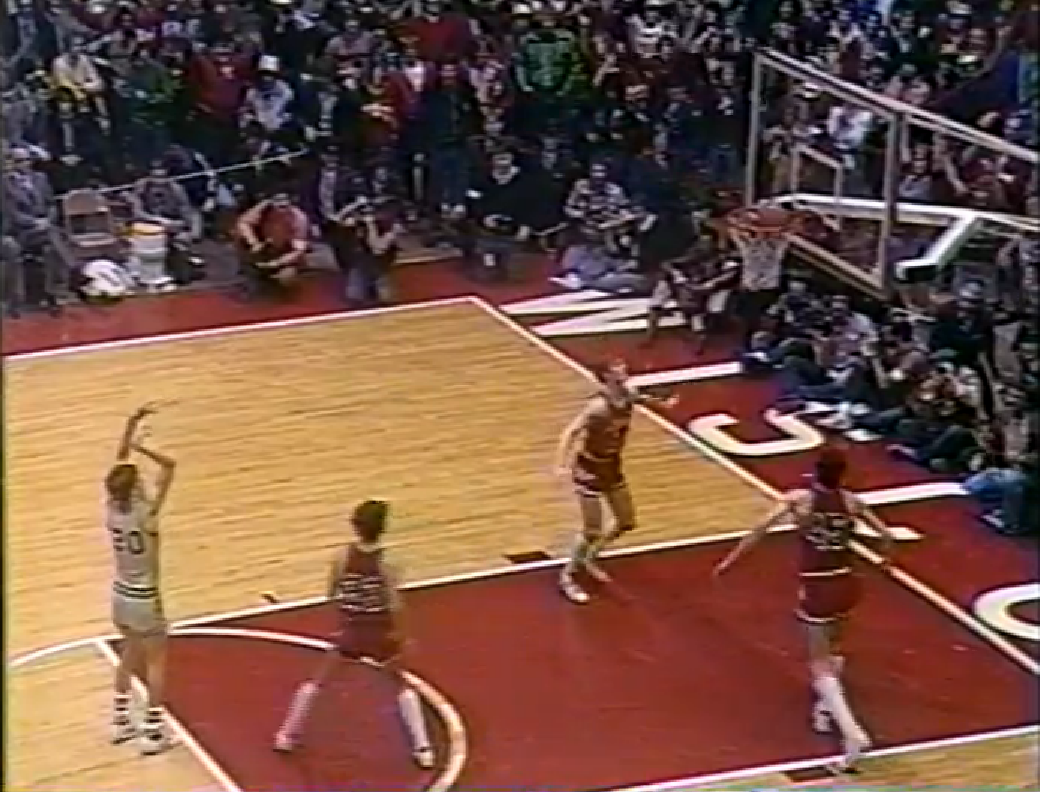
Given Rodgers’ likely Hall of Fame status (assuming his career continues as it is), he may become the last Packer to wear number 12. Which would put him last on this list Madison.com compiled (the asterisks signify players who wore multiple numbers):
George Abramson (G/T), 1925
*Rudy Rosatti (T), 1926
Tom Hearden (B), 1927-28
*Roy Baker (B), 1928
*Dave Zuidmulder (B), 1929
*Arnie Herber (B), 1930
*Frank Baker (E), 1931
*Bob Monnett (B), 1935-36
Zeke Bratkowski (QB), 1963-68, 1971
Jim Del Gaizo (QB), 1973
*John Hadl (QB), 1974
Don Milan (QB), 1975
Brian Dowling (QB), 1977
*Lynn Dickey (QB), 1980-85
T.J. Rubley (QB), 1995
Aaron Rodgers (QB), 2005-present
For much of the NFL’s Super Bowl era, the number 12 used to signify an elite NFL quarterback. Super Bowl-winning quarterbacks numbered 12 include the New York Jets’ Joe Namath, Dallas’ Roger Staubach, Miami’s Bob Griese, Pittsburgh’s Terry Bradshaw, Oakland’s Ken Stabler, New England’s Tom Brady, and, of course, Rodgers. Buffalo’s Jim Kelly never won a Super Bowl, but played in four of them. Super Bowl XXV, in which Kelly’s Bill’s lost to the Giants’ Jeff Hostetler (number15), was the first time a quarterback number 12 lost to a quarterback not numbered 12. (Pittsburgh’s two Super Bowl wins over Dallas was number 12, Bradshaw, beating number 12, Staubach.)
I remember a few of the Packers’ number 12s. Not Herber, but he was one of the few to have played for both the Badgers and the Packers. Herber played quarterback, as did fellow Badger/Packer Randy Wright, but Wright wore 16 for the Packers after wearing 12 for the Badgers.
Bratkowski was Bart Starr’s backup as quarterback, and then offensive coordinator. The former role was useful in the 1965 NFL Western Conference playoff between the Packers and the Baltimore Colts, because Starr lost a fumble that produced a Colts touchdown and was lost for the game due to injured ribs. Bratkowski quarterbacked the Packers to a controversial overtime win, and one week later Starr returned so the Packers could win the first of their three consecutive Glory Years wins.
Del Gaizo was a quarterback for the Dolphins, who were in the process of going to three consecutive Super Bowls in the early ’70s. Del Gaizo was acquired for two second-round draft picks. Del Gaizo did not perform like a draft pick, period, for the Packers, placing himself on the list of yet another stupid Packers player transaction during the Gory Years.
But trading two picks for Del Gaizo didn’t compare to trading five for Hadl in the infamous Lawrence Welk trade — you know, “a-one and-a-two and-a-three.” (Even worse, Hadl came to Green Bay for two first-round picks, two second-round picks and a third-round pick.) Hadl wore number 21 with the Rams, and only wore 12 long enough to get his old number back from a Packer defensive back.
Which brings us to another 12, Dickey, who came to the Packers in exchange for Hadl, All-Pro cornerback Ken Ellis and two more draft picks. (For those keeping score: Hadl cost five draft picks to acquire and two more to get rid of him.) Dickey switched from 10 to 12 after missing an entire season with a broken leg. Once healthy, and when upright (which was an open question because of his porous offensive line and his mobility, which was on a par with the Curly Lambeau statue outside Lambeau Field), he was an effective quarterback in the 1981 through 1983 seasons, when the Packers were — gasp! — a contender in Starr’s last three seasons as coach.
(Trivia note about the 12 before Dickey: Dowling was the quarterback of Yale’s undefeated team in 1968. Yale and Harvard met at the end of the 1968 season, with the game ending in a 29–29 tie. Harvard’s comeback over Yale was characterized in the Harvard Crimson newspaper: “Harvard beats Yale 29–29.” Dowling was also the inspiration for the “Doonesbury” character B.D.)
Rubley has his own moment in Packer ignominy. He was the third-string quarterback in 1995 when, in a game at Minnesota, starter Brett Favre suffered an ankle injury, and backup Ty Detmer broke his finger one play later. Despite that, the Packers were in position to kick a game-winning field goal, until on third down, Rubley audibled out of a quarterback sneak into a pass, which was intercepted. The Packers later lost. Rubley’s NFL career effectively ended with that bonehead decision.
Appearing on CNBC on Monday, Ex-New York Democratic state politician Richard Brodsky trotted out his party’s class-warfare-based fiscal cliff talking points.
“We’ve got to dig our way out” from under Bush policies, he contended. And “the president is saying that the wealthiest are most able to contribute” — after which Brodsky instantly admitted that raising taxes on the highest incomes “is not gonna dig us out alone.”
Debating Brodsky, Euro Pacific Capital CEO Peter Schiff provided a sorely needed dose of realism: The successful — all those miserable Scrooges who provide tens of millions of Americans with their livelihoods — are already taxed far, far beyond any sane definition of “fair.” Using himself as an example, Schiff pointed out:
“I’m paying 45% of my total income in income taxes, both to the state of Connecticut and to the federal government, and if you take the 3% Medicare tax.”
Expiration of the Bush tax cuts next year would mean that “more than half of my total income is going to go to the government,” Schiff said.
“Now, you tell me,” he asked, “what’s fair about that when medieval serfs paid 25%?”
A rightfully outraged Schiff declared that he doesn’t “care what the majority voted to do. They don’t have a right to steal my money just because they vote for it.”
We almost never hear the case against high taxes made in such personal terms from a successful individual, because the media consider such arguments to be laughably unpersuasive. But Schiff went further.
“You know what the wealthy are going to do?” he asked. “They’re going to invest more abroad. They’re not going to work as hard.”
As a result, “they’re not going to pay as much in taxes” and “they’re not going to employ as many people.”
Imagine having tickets to this concert at the National Guard Armory in Amory, Miss., today in 1955: Johnny Cash, Carl Perkins and Elvis Presley:
Today in 1957, while Jerry Lee Lewis secretly married his 13-year-old second cousin (while he was still married — three taboos in one!), Al Priddy, a DJ on KEX in Portland, was fired for playing Presley’s version of “White Christmas,” on the ground that “it’s not in the spirit we associate with Christmas.”
The blueprint for a new stadium for the Atlanta Falcons was approved early Monday in a special called meeting of the Georgia World Congress Center Authority.
The state agency, in a unanimous decision, gave its thumbs up to a “term sheet,” which lays out the business terms with team for a new field, including who will pay for it, how the revenue will be divided and who will own the building.
The stadium the World Congress Center Authority is apparently going to build (there are few details except it apparently will have a retractable roof) is a replacement for the Georgia Dome, the home of the Atlanta Falcons, and the site of both basketball and gymnastics during the 1996 Olympics. (Each had half of the building.) That was an example of thought-out design, as was Olympic Stadium, which after the Olympics was partially dismantled and became Turner Field, the Braves’ home.
Because in sports as in life, new and shiny trumps tried and true. The Dome opened in 1992, and it’s a nice place two decades on, but by 2017 it’ll be gone, having been rendered superfluous by its billion dollar baby brother. …
The Falcons’ lease with the Dome is due to expire around 2017, and that was their pressure point. They didn’t threaten to leave town – “There was not a 1995-type lever,” McKay said, speaking of the days when teams told cities to build a new stadium or else – but they did make it known they had no interest in re-upping this lease. That left the GWCCA, which runs the Dome, with a choice it didn’t know it would have to make: Do we ditch a perfectly sound building to placate our biggest tenant?
To their credit, [GWCCA executive director Frank] Poe and associates forged a not-terrible solution. The Falcons stand to foot 70 percent of the $1 billion it will take to erect a new stadium, with public money – roughly $300 million from a hotel-motel tax that affects mostly non-Georgians – making up the difference. There are those who wonder if that $300 million wouldn’t be better used to upgrade infrastructure or further education, but this leads us to the unanswerable question: Why should ballplayers earn millions while schoolteachers make do with thousands?
In pro sports, a new stadium is almost always a shared venture, and far less public money will be earmarked toward the Falcons’ new home than was the case, say, in Indianapolis with the Colts and Lucas Oil Stadium. That’s as it should be: The Falcons are the ones who wanted this, and they should pay the most.
When this new-stadium balloon was first floated, the thought was that the GWCCA might be so cowed by Arthur Blank that it handed the famous owner everything he wanted. Instead the Falcons will settle for one stadium — they first wanted the Dome to remain in place just down the street, a notion laughable on its face – with a retractable roof (as opposed to an open-air facility). …
In these uncertain times, handing $300 million in tax money to fund a stadium that will be run by a team owned by a billionaire isn’t an easy sell, especially when the building that team occupies is presentable enough that it will, come April, stage the big-ticket Final Four. But the Falcons had leverage – they could move to Doraville and leave the Dome vacant on NFL Sundays – and they applied it. The GWCAA fought its corner and will get what amounts to a newer Dome. Maybe everybody won’t win in this, but there shouldn’t be many losers.
And if not … well, nothing is forever. The Falcons will be obliged to stay in their new home for 30 years. Sometime around Year 20, they’ll start angling for something bigger and brighter. That’s the way of our world. Everybody wants the latest iPhone, even if the old one works fine. Every professional team wants a new stadium, even if the existing place still looks pretty darn good.
Bradley’s last sentence is one-third correct in Wisconsin. Yes, the Bucks want a replacement for the Bradley Center. However, the Brewers are fine with Miller Park, and the Packers are improving Lambeau Field.
There is a Wisconsin connection to this story. The Georgia Dome replaced, for football purposes, Atlanta–Fulton County Stadium, the original home of the Milwaukee-to-Atlanta Braves. The original Braves’ and Falcons’ home opened in 1966. I was 1 year old.
(Oh wait, there’s a second connection: Before moving to Lambeau Field, more about which in a moment, Brett Favre started his NFL career playing in Fulton County Stadium’s last year, if you want to call going 0-for-5 with three interceptions “playing.”)
Major League Baseball Commissioner Bud Selig paints a glowing picture of publicly funded sports complexes.
“There’s been a debate everywhere you’ve had it, and every community has wound up doing it and they’re happy they did it,” Selig told Wisconsin Reporter on Tuesday after a speaking appearance at the University of Wisconsin-Madison.
“They bring in business. They make the community a better place to live. And overall it’s been a very positive experience, and I happen to believe in it,” he added.
Selig, former owner of the Milwaukee Brewers, was at his alma mater to give a speech at the university’s business school on ethical leadership. In the big leagues, ethics of operation often involve wealthy franchise owners strong-arming cities for hundreds of millions of taxpayer dollars to pay for state-of-the-art stadiums on threat of losing the team to a city that will.
“We never really talked about that,” Selig said about the idea of moving the Milwaukee Brewers to North Carolina in the 1990s while politicians debated the merits of bilking $150 million from taxpayers.
They finally agreed. After the approval of a contentious multi-county sales tax that cost a Racinesenator his job through recall and tens of millions of dollars in cost overruns, Miller Park was built.
“But the Brewers put in a lot of money and there’s just not a debate. In fact … with (the Brewers) now drawing 3 million-plus people a year, that’s why I said all the critics are gone now, because they know they’re wrong. And they were wrong.”
The critics, as it turns out, are alive and well. Whenever a new stadium is pushed by an owner, however, their voices tend to be drowned out by vote-seeking politicians and the team’s loyal fan base.
Marc Levine, director of the Center for Economic Development University of Milwaukee, recently wrote in a Milwaukee Journal Sentinel op-ed:
“The same fallacious economic development arguments that were used to sell Miller Park are being trotted out to justify public spending for a new (Milwaukee) Bucks‘ arena: the building of a new facility, and the presence of a sports team, is an engine of economic growth for the city and region, a critical source of jobs, income and enhanced revenues for public services.
“Yet, with a unanimity that is rare in social science research, academic studies have found that professional sports franchises and facilities generate little or no job creation or income growth.” …
Selig and others suggest there’s an arguably bigger benefit to stadiums, particularly in communities like Milwaukee.
Minnesota state Sen. Geoff Michel, R-Edina, said during a discussion last spring on financing a $975 million Minnesota Vikings stadium that professional football is “one of the things that puts us on the map.”
Selig appears to have selective memory on that subject. I recall considerable speculation about the Brewers’ moving out of Milwaukee if Miller Park wasn’t built. One of the Carolinas was mentioned; so was, of all places, Mexico City. (Note that neither has a Major League Baseball team today.) Even had the 1996 package that got Miller Park not been approved, it seems likely the Brewers would have gotten a new stadium at some point, though not necessarily in Milwaukee.
Let’s be honest — how many Americans would know where Green Bay is were it not for the Packers, whose Lambeau Field was built with public funds (a 1956 bond issue approved by voters by a 2-to-1 margin) and renovated with more public funds (the 1/2-percent sales tax approved by 53 percent of Brown County voters in 2000)? Of course, the Packers’ stewardship of Lambeau Field since moving in in 1957 has been far superior to just the other NFC North teams. Since 1957, the Chicago Bears played in Wrigley Field, Soldier Field and whatever that is the Bears play in now; Detroit moved from Tiger Stadium to the Pontiac Silverdome to Ford Field; and Minnesota moved from Metropolitan Stadium to the Hubert H. Humphrey Metrodome (with an unscheduled stop at the University of Minnesota’s TCF Bank Stadium), with their new stadium at the Metrodome site in the works.
Regardless of the perceived benefits or lack thereof, there’s a big difference between a project such as Lambeau Field that taxpayers twice agreed to fund, and projects where there is no democratic buy-in. That would include Miller Park, depending on your perspective. The Legislature signed off on the funding, but Racine County voters who didn’t think they should be included in the 0.1-percent sales tax ended the political career of Sen. George Petak (R–Racine) via recall.
Had no replacement for Milwaukee County Stadium been built, at best the Brewers would have continued as an undercapitalized, underfunded, underperforming, underattended franchise. (Note the Brewers’ lack of winning seasons from 1993 until the Seligs sold the Brewers, which shows some combination of the slim margin for error of sports franchises in small markets, or years of poor management decisions in nearly every part of the franchise.) Maybe someone like Mark Attanasio would have purchased the Brewers and generated public support for a new stadium. And maybe someone else would have purchased the Brewers from the Selig family and moved them out of Wisconsin. And therein lies the rub: how important is professional sports — whether viewed in person in a stadium impervious to Wisconsin’s capricious weather, or viewable on TV — to you?
Whenever the Georgia Dome is deflated, man will do what nature was unable to do, in perhaps the strangest moment involving a stadium in at least U.S. history:
Fans weren’t expecting a tornado to visit the Georgia Dome during the 2008 Southeastern Conference men’s basketball tournament, but that’s what they got. Though the game interrupted by the tornado did finish, there was enough damage to the stadium that the remainder of the tournament had to be moved to Georgia Tech.
YouTube has other intersections of severe weather and sports, including tornado warnings at Wrigley Field in Chicago:
These are instances where a sports announcer becomes something between a newscaster and an amateur meteorologist. The second girls basketball game I ever announced, in November 1988, took place during a tornado watch, with tornado warnings across the Mississippi River in Iowa. Before the game I asked the athletic director what would happen in the event of a tornado warning. That forced him to pause, because he apparently had never had to consider a tornado warning-caused evacuation during a basketball game. (No tornado warning was issued where we were, although we could hear lightning over our FM signal, which isn’t typical.)
Two years later, a Lancaster High School football game got all of nine minutes in before a storm forced its postponement to the next night. Ordinarily football fields have the press box on the west sideline, which means, since weather generally moves west to east in this country, whatever weather there is is coming from behind you. The old LHS field, however, had the press box on the east side, which means we could see it coming. (So could my future father-in-law, a Grant County part-time sheriff’s deputy handling traffic in the parking lot. He got quite wet.)
Once I moved to TV, I announced two games with weather delays — the first during the first quarter, the second before the game. Both were, of course, on the road, meaning we returned home quite late. Both delays were longer than an hour, because of the Wisconsin Interscholastic Athletic Association’s policy of stopping play until 30 minutes has elapsed since the last lightning. Tape-delay TV means you merely turn off the camera. Live TV and radio that is not thrown to the studio requires a special art to fill images of rain and lightning.
The number one album today in 1961 was Elvis Presley’s “Blue Hawaii” …
… while the number one single was a request:
Today in 1968, filming began for the Rolling Stones movie “Rock and Roll Circus,” featuring, in addition to the group, John Lennon and Yoko Ono, The Who, Eric Clapton and Jethro Tull, plus clowns and acrobats.
The film was released in 1996. (That is not a typo.)
The Greater Madison Chamber of Commerce hired former state Secretary of Commerce Zach Brandon as its new president.
Brandon appears to be a man of more than one personality, depending on who interviews him. Start with the Wisconsin State Journal‘s Q&A:
A former business owner, three-term Madison City Council member, state Commerce Department executive and most recently, director of the Wisconsin Angel Network, Brandon, 39, succeeds Jennifer Alexander, who led the Chamber for nearly nine years.
Describing himself as a Democrat, Brandon says he was a fiscal conservative and social liberal on the City Council. He takes the helm of an organization traditionally known, he acknowledges, for its conservative stances. …
A: I want the Chamber to be intrepid, focusing on being innovative, entrepreneurial and identifiable. My goal is to make Madison an innovative and entrepreneurial hub that’s an envy of the world. …
We have lots of collisions in the city when it comes to policy ideas. The Chamber and the business community should be involved; there shouldn’t be an area where we’re afraid to be part of the dialogue. …
Madison is an under-performing city, based on its potential. It’s about the right leaders, the right vision. There’s a significant overhaul in our leadership system now, with a new school superintendent, UW-Madison chancellor, U.S. senator and U.S. representative coming in and a new leader of Thrive (the eight-county regional economic development organization). People are not entrenched; they will be willing to think differently.
But to The Capital Times, Brandon says different things, as shown in its Q&A, or “CT” and “ZB”:
Watching Scott Walker’s gubernatorial campaign in 2010, it’s no secret what one of its key over-arching strategies was.
Run against Madison.
Zach Brandon says that has got to stop.
As the new president of the Greater Madison Chamber of Commerce, Brandon plans to do all he can to end that wedge issue and work toward growing the entire state economy. …
Zach Brandon: I think everyone realizes that for many years Madison rested on its laurels. We are the seat of government, we’ve got this world-class research university and we were complacent. But with Act 10, people have come to the realization that government jobs are no longer going to be a growth industry. I was saying that back in 2005 and now other people are coming to that realization.
So what Madison needs to do now is think about the assets it has. We have natural beauty, a wonderful quality of life, tremendous civic engagement and a research institution that brings in $1 billion in federal grants each year. We have all the key elements to be a world-class innovation city. …
We need the right kind of research. It can’t be research for research’s sake. It’s a focus on things that can be commercialized. You need the right kind of talent to commercialize the research, you need the kind of investment capital that is interested in drawing on good ideas and finally you need the kind of environment that is conducive to making those things happen. I think we’ve got failings in all of those areas.
One place we really underperform is in exports — both inbound investment and outbound materials. If you look at Madison’s exports as a percentage of GDP (gross domestic product), we underperform just about every other metropolitan area in the country. We are on par with Wausau and that is just inexcusable.
CT: Can the state do anything to help Madison perform better, given that Walker ran on a platform of basically trashing state employees and Madison liberals, saying the first thing he would do as governor is “Stop that boondoggle train to Madison?”
ZB: We have to remind our state leaders of two things: One, Madison is a tremendous economic engine on its own and two, you can’t grow the state economy without Madison. Whatever your job creation goals might be, you need Madison to perform at the top levels. Regardless of your politics, we all have shared goals because Wisconsin doesn’t succeed unless Madison succeeds.
If there is a message I want to give state business leaders or elected officials it’s this: when you are upset with what you think is an activist judge, don’t say an “activist judge from Madison” or a “liberal judge from Madison.” Just say “a liberal judge.” If you are upset about a labor union don’t say “a labor union from Madison.” By using Madison as a descriptor, it really hurts the private sector where in fact the private sector had nothing to do with it.
Ex-Capital Times writer and, shockingly, Madison conservative David Blaska observes:
That really is the problem, isn’t it? The private sector had nothing to do with it. Maybe the private sector should have something to do with it. Instead, business has been AWOL.
Now think of what Zach IS saying: The statewide perception of Madison is a business buzz-kill.
Well, “the private sector had nothing to do with it” because Madison and Dane County government generally doesn’t listen to business. Official Madison believes business profits are greedy, evil, racist, classist, sexist, homophobic, etc. How a small start-up can ever succeed in the People’s Republic of Madison is beyond my comprehension. So if Brandon can change that, well, maybe he should be the next Democratic candidate for governor.
Then again, state government didn’t listen to business in the previous gubernatorial administration either. That would the administration Brandon served as secretary of commerce. That administration helped business so much that, among other things, the Legislature got rid of the Department of Commerce. (Seems that raising taxes by more than $2 billion doesn’t help the economy, but then again it didn’t help state finances either.)
I suspect Brandon is right, though, about official Madison’s complacency. If you have people, you have a business base, and with state government, Dane County government and UW–Madison in the same 77 square miles, that’s a lot of consumers. (Too many, from the perspective of those paying those salaries, but that’s a subject for another day.) High taxes? Micromanaging regulators? Who cares?
I hope Brandon succeeds. (See, Sly? Would someone who hates Madison write that?) There is nothing in the Wisconsin Democratic Party that remotely resembles being “pro-business” today. It’s beyond time for the Democrats to stop their knee-jerk opposition to anyone who has more money than they do and doesn’t get a paycheck from a governmental body.
Imagine having the opportunity to see Johnny Cash, with Elvis Presley his opening act, in concert at a high school. The concert was at Arkansas High School in Swifton, Ark., today in 1955:
Today in 1961, the Beatles played a concert at the Palais Ballroom in Aldershot, Great Britain. Because the local newspaper wouldn’t accept the promoter’s check for advertising, the concert wasn’t publicized, and attendance totaled 18.
After the concert, the Beatles reportedly were ordered out of town by local police due to their rowdiness.
That, however, doesn’t compare to what happened in New Haven, Conn., today in 1967. Before the Doors concert in the New Haven Arena, a policeman discovered singer Jim Morrison making out in a backstage shower with an 18-year-old girl.
The officer, unaware that he had discovered the lead singer of the concert, told Morrison and the woman to leave. After an argument, in which Morrison told the officer to “eat it,” the officer sprayed Morrison and his new friend with Mace. The concert was delayed one hour while Morrison recovered.
Halfway through the first set, Morrison decided to express his opinion about the New Haven police, daring them to arrest him. They did, on charges of inciting a riot, public obscenity and decency. The charges were later dropped for lack of evidence.
Today in 1940, the first NFL championship game was broadcast nationally on Mutual radio. Before long, Mutual announcer Red Barber probably wondered why they’d bothered.
Today in 1963, Frank Sinatra Jr. was kidnapped from a Lake Tahoe hotel. He was released two days later after his father paid $240,000 ransom. The kidnappers were arrested and sentenced to prison.