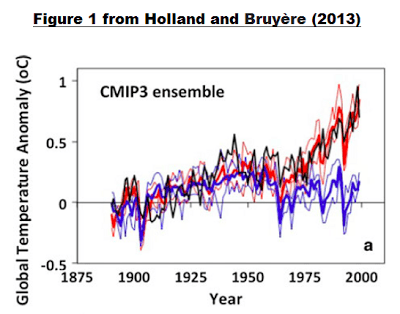
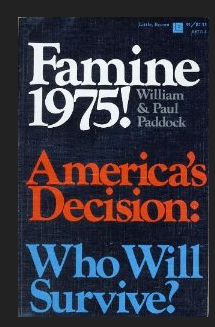
Mrs. Presteblog found this; see if you can see what’s wrong with it (other than the fact that I was only a finalist, no doubt due to my refusal to buy what the Clinton administration was selling):
-
No comments on Your tax dollars at wrok
-
The number one British single today in 1965:
The number one single today in 1967:
Today in 1968, this song went gold after its singer died in a plane crash in Lake Monona:
The Grammy Awards today in 1970 were given for song of the year …
… best new artist …
… and Record of the Year:
The number one album on both sides of the Atlantic today in 1972 was Neil Young’s “”Harvest”:
Birthdays begin with Ric Rothwell, drummer for Wayne Fontana and the Mindbenders:
Mark Stein of Vanilla Fudge:
George Kooymans played guitar for Golden Earring:
Bobby McFerrin:
Bruce Watson played guitar for Big Country:
Mike Percy of Dead or Alive:
Lisa Loeb:
Rami Jaffee played keyboards for the Wallflowers:
-
Today in 1956, RCA records purchased a half-page ad in that week’s Billboard magazine claiming that Elvis Presley was …

Ordinarily, if you have to tell someone something like that, the ad probably doesn’t measure up to the standards of accuracy. In this case, the hype was accurate.
Today in 1960, Britain’s Record Retailer printed the country’s first Extended Play and LP chart. Number one on the EP chart:
-
Today in 1963, the Beatles appeared in a concert at the East Ham Granada in London … as third billing after Tommy Roe and Chris Montez.
Today in 1964, Capitol Records released the Four Preps’ “Letter to the Beatles.”
The song started at number 85. And then Capitol withdrew the song to avoid a lawsuit because the song included a bit of “I Want to Hold Your Hand.”
-
Despite the six inches of snow we got earlier this week (which leaves us with a six-foot-high pile of snow outside the house), this is National Severe Weather Preparedness Week.
This is a clip from a Wichita Falls, Texas TV station when a tornado hit April 3, 1964. (That was one week after the infamous Good Friday earthquake that hit Alaska, by the way.)
Readers of this blog know that there is only one month in which a tornado hasn’t visited Wisconsin — last month.
More fun with graphics courtesy of the National Weather Service Storm Prediction Center:


Notice the most red Wisconsin county in the first map and the most blue Wisconsin county in the second? That’s where we now live, which is why I now get to have a professional, not just personal, interest in severe weather. If this is an average severe weather year, the weather radio will be going off every two weeks or so.
Readers of this blog recall that the blog’s previous location was between the National Weather Service’s Milwaukee (actually Sullivan, which has a Dousman address but is in Jefferson County) and Green Bay (actually Ashwaubenon) offices, which led to some skepticism whether the warnings for Fond du Lac County would be issued before the storm showed up in (western) Fond du Lac County. Down here in the great Southwest, we are in between three NWS offices. Grant County forecasts come from La Crosse. Forecasts for counties in Iowa come from the Quad Cities. Counties to the east get their forecasts from Sullivan/Dousman/the middle of the I–94 Corridor. I hope they all get along with each other.
Perhaps I’m spoiled because I grew up in Madison, which had its own NWS office — first in downtown Madison, then on the UW campus, then at Truax Field from 1939 — until it closed in 1996, seven years after the NWS Sullivan office opened. (The NWS Milwaukee office, which opened in 1870 and moved to Mitchell Field in 1939, closed in 1995.) The last time we lived in Grant County, the NWS had an office in Dubuque, sort of. The office wasn’t open nights or weekends, which was inconvenient during a 1993 overnight windstorm. (The office closed in 1995.)
We had a hot and dry summer last year. The next three months are predicted thusly by the National Weather Service Climate Prediction Center:
The temperature (burnt orange, warmer than normal, to blue, colder than normal) and precipitation (green, wetter than normal, to brown, drier than normal) outlooks for, respectively, the spring and summer predicts a warmer-than-normal spring and summer for us Sconnies. (Which will be required for the aforementioned snowpile to melt by Independence Day.) Of course, the further into the future you go, the less the forecasts are.
An alternative, and quite different forecast, comes from something called WeatherTrends360:

This refers to the whole country, not specifically the Midwest. We’ll see who’s right. (The first day thunderstorms are in WeatherTrends360‘s Platteville forecast is April 22, which is Earth Day.)
Severe weather has gotten the attention of entertainment, according to Associated Press:
Event organizers have learned the hard way that the usual half-hour warning of severe weather might be enough for people in their homes, but it’s not enough to clear people from big venues where concerts and football games are held.
Seven people died and more than 40 were injured at the Indiana State Fair in 2011 when a sudden 60 mph gust knocked a stage onto a crowd waiting to see the band Sugarland perform. In 2009, high wind toppled a canopy at a Dallas Cowboys practice facility, leaving one person paralyzed and 11 others less seriously hurt.
“Like 9-11, it takes a really bad thing to get our attention,” said Harold Hansen, the life, safety and security director for the International Association of Venue Managers. “The rules changed.”
The incidents prompted venue managers to move their annual weather-preparedness meeting to the National Weather Center in Norman, Okla. — the heart of tornado alley and the forecast centers that watch it. …
The conference had about a dozen participants when it started five years ago. This year, more than 40 emergency managers and event operators came, including the NFL and the Country Music Association.
Through lectures about weather watches, lightning, crowd dynamics and shelter readiness, the experts repeatedly stressed the need to have a plan before the weather turns bad.
“They’re waiting for a warning to be issued,” said Kevin Kloesel, associate dean of the University of Oklahoma’s College of Atmospheric and Geographic Sciences. “The message over the two days here is: if you wait until that point, you are not going to have the time. If you wait for the warning, it’s too late.”
The list of close calls is chilling. A 2010 tornado shredded the roof of a Montana sports arena packed with thousands of people the day before. A lightning bolt struck 500 feet from the Texas Rangers pitcher’s mound during a game in July 2012. Pennsylvania’s Pocono Raceway was struck by lightning the next month, three minutes after a race was canceled. …
As tornado expert Chuck Doswell told the conference, severe weather is relatively rare but inevitable.
“Imagine the Indianapolis 500 … with those hundreds and hundreds of RVs with nowhere to go,” Doswell said. If a tornado struck without a plan in place, “it would make Joplin look like a Saturday afternoon picnic.”
Here’s about the best that could happen, in the soon-to-be-demolished Georgia Dome during the 2008 Southeastern Conference men’s basketball tournament:
Meanwhile, one of my favorite meteorologists has this to say to broadcast meteorologists (from Broadcast Engineering):
The devastating EF5 tornado that struck Joplin, MO, in May 2011, killing 161 people and doing property damage valued in the billions, underscores the urgent need for broadcast meteorologists to be a “back stop” for the National Weather Service, according to Mike Smith, Senior VP/Chief Innovation Executive at AccuWeather Enterprise Solutions.
Smith, who authored “When the Sirens Were Silent,” a book that explores why so many people were killed by the Joplin tornado, last week called on the American Meteorological Society to beef up its Certified Broadcast Meteorology Program by adding a greater emphasis on training broadcast meteorologists to handle extreme weather during a presentation at the society’s annual meeting in Austin, TX.
Back stopping the National Weather Service with accurate reporting on the track of the deadly twister may have reduced the loss of life in Joplin, he said. Inaccurate and misleading warnings from the National Weather Service about where the tornado was headed led Joplin broadcasters to miss the imminent danger confronting the southwestern-Missouri town till it was too late to warn viewers.
“We need to be emphasizing handling severe weather for broadcast meteorologist,” Smith said in a telephone interview with Broadcast Engineering. “Neither the American Meteorological Society nor the National Weather Association have a great deal of emphasis on tornado interpretation.”
Smith, who sold his Wichita, KS, based Weather Data Inc. to AccuWeather in 2006 and was a TV meteorologist for 22 years, said that with greater skills in interpreting tornados television meteorologists will be better equipped to recognize when the National Weather Service makes a mistake and base reports on their own interpretations of weather data, not simply weather bulletins.
To illustrate the importance of having these skills, Smith compared the Joplin tornado to an EF4 twister that struck Hoisington, KS, in April 2001. That tornado, which destroyed the tiny central Kansas town, killed one person and injured 26.
“With the Hoisington tornado, the National Weather Service had a computer failure and didn’t realize that the computer wasn’t updating properly and didn’t issue a tornado warning till it was too late,” said Smith. However, unlike Joplin, the television stations in Wichita have full meteorology staffs of four per station, he explained. “All of the Wichita stations went on air with their own tornado warnings for Hoisington, and many people said they got the warning and took shelter because of the broadcasters,” said Smith.
According to Smith, who has investigated all aspects of the Joplin tornado, KOAM-TV, the CBS affiliate, figured out the inaccuracies of the National Weather Service data shortly before the tornado struck Joplin and began warning viewers of the immediate danger they faced. KSNF-TV, the NBC affiliate in Joplin, began warning viewers of the danger when on-air talent saw the tornado bearing down on the station in video shot from the station’s tower-cam.
-
… spring ahead. (Even if it neither looks nor feels like spring.)
-
Today in 1965, Bob Dylan’s “Subterranean Homesick Blues” was released. Other than the run-on nature of the lyrics, the song was one of the first to have an accompanying “promo film,” now known as a “music video”:
Today in 1971, Radio Hanoi played the Star Spangled Banner, presumably not as a compliment:
Today in 1973, Paul McCartney was fined £100 for growing marijuana at his farm in Campbelltown, Scotland.
McCartney’s excuse was that he didn’t know the seeds he claimed to have been given would actually grow.
-
From The Platteville Journal:
The Platteville Journal received seven Wisconsin Newspaper Association Better Newspaper Contest awards, including two first-place awards, at the annual WNA convention in Middleton Friday. …
The Journal won first place in the Most Improved Newspaper category. The category compared three editions in August 2012 from the same three editions one year earlier.
“Changes very noticeable,” judges wrote, mentioning The Journal’s logo “and front page in general. … Very newsy and well designed newspaper.”
Editor Steve Prestegard also received a first-place award in the editorial category for his June 27 Etc. column, “Parking problems.” Judges called it “good, punchy writing on topics of local interest.”
As a former fellow ink-stained wretch put it, newspaper people use words like “punchy” and “newsy.”
When winning awards, a journalist is supposed to say that he or she isn’t in the profession to win awards, and that quality work is its own reward.
Who in the name of Joseph Pulitzer am I kidding? Of course I’m happy that The Platteville Journal received seven awards in the Wisconsin Newspaper Association Better Newspaper Contest last weekend. Professional recognition of your work is always nice.And professional recognition is always nice, until the inevitable future lesson that you’re not as good as you think you are. Journalism is one of the few professions in which you make your mistakes in pubic. I mean public. (See?)
I had a great time at the WNA convention, even before award time. I saw former coworkers and colleagues in this line of work, along with my counterpart on the most contentious hour in the history of the Wisconsin Public Radio Week in Review. (When we were on the air two years ago during the height of Act 10, I truly thought that had we been in the same room, fisticuffs might have broken out, though when you’re looking at out-of-shape journalists the result probably would have been similar to your typical hockey fight.) I also got to see most of the staff of the Ripon Commonwealth Press, once again judged the state’s best weekly newspaper, and for good reason.
The timing of the WNA convention was ironic given the reporting of attempts at intimidation by the Obama administration of journalists covering the administration. (Including, most stupidly, Bob Woodward of All the President’s Men. Woodward seems unlikely to be able to be intimidated.) The reverse irony was the fact that Gov. Scott Walker spoke during the convention’s first night. (I couldn’t go, but I’ve heard him before.)
After a quarter-century in journalism I’ve concluded I’m better at improving than creating. I’m probably best at, shall we say, adapting (sounds better than “stealing,” right?) others’ more original ideas. If you put together the 1985–88 Monona Community Herald, the 1988–91 Grant County Herald Independent, the 1991–92 Beaver Dam Daily Citizen (where I learned that “under way” is two words, not one, and I learned the Fay Test — if the typesetter who doesn’t pay much attention to local events doesn’t know a name in a headline, don’t put it in the headline), and the 1992–94 Tri-County Press, with a few ideas thrown in from the 1994–2001 and 2008–11 Marketplace Magazine (R.I.P.), you get the 2012–13 Platteville Journal.
As I’ve gotten older, I’ve grown to appreciate the work of the old-timers more than I did 20 or so years ago. We purchased the Tri-County Press in Cuba City from a man who had owned it for 27 years, after his father owned it for 64 years. I redesigned it because (1) it needed to be redesigned, and (2) I couldn’t figure out how it had been designed. One of the nicest compliments I’ve ever gotten was from the son of a reader who said he previously could read the paper between his mailbox and the front door of his house, but now had to sit down and read it.
One of the more enjoyable hours I’ve had here was talking to the long-time owner of The Platteville Journal before he sold it in 2004. We were competitors when I was in Lancaster and in Cuba City. I confess I didn’t think much of how his newspaper looked. I further confess (because it’s Lent after all) that I didn’t react well to competition.
In both cases, it’s taken many years for me to realize that someone does the best he or she can with what he or she has, particularly when, as in the Journal’s and the Tri-County Press’ cases, the editor is also the publisher, job printer and business owner. I work long and irregular hours, but it’s hard to imagine working every night, every weekend and every holiday, and being ultimately responsible for literally everything. That’s what business owners do, whether or not they’re in journalism.
We old (or middle-aged in my case) warhorses can swap war stories. The Journal’s previous publisher told me of a city council meeting he covered in which two aldermen, with the same first name, got into such a heated argument though sitting on opposite ends of the council meeting room that one got up and crossed the room to take a swing at the other. I have my own stories, including taking on an entire school board (or so it seemed at the time) over its creative (yet incorrect) interpretation of the state Open Meetings Law.
The previous owner of The Journal (who purchased an ad thanking us and applauding the “past and present editors” after the sale for their work) didn’t get nearly as much credit as he should have for the things he did for Platteville. That was one reason to write about him. The other is that he has terminal cancer. I will make certain he gets an appropriate sendoff in the pages of his former newspaper.
The convention honors those journalists who have passed on to the Great Newsroom in the Sky in the past year. This year, that included Don and Laurel Huibregtse, owners of the Monona Community Herald and the source of my first journalism paycheck. Between that and meeting all those people I’ve interacted with in my journalism career, the convention was a one (very long) day trip into the wayback machine.
-
Today in 1962, the Beatles recorded their first radio appearance, on the BBC’s “Teenagers’ Turn — Here We Go”:
-
Remember the phrase “One is a fluke, two is a coincidence, three is a trend”?
Let us observe the Obama administration’s antipathy toward the First Amendment and the media, beginning with Bob Woodward of All the President’s Men, as reported by James Taranto:
The tiff began last Friday, when an op-ed piece Woodward wrote for last Sunday’s paper appeared on the Post’s website. Drawing on reporting from his most recent book, “The Price of Politics,” Woodward argued that President Obama’s efforts to blame the sequester on congressional Republicans constituted, as Woodward delicately put it, “partisan message management.” …
That did not go over well at a White House that is used to deferential, even admiring coverage from mainstream-media reporters, many of whom these days, in contrast with old-timers like Woodward, are brazen advocates of left-wing causes. (See ourMonday column for a detailed treatment of this problem at the Post.)
Press secretary Jay Carney tweeted that Woodward’s op-ed was “willfully wrong,”Politico reports. Obama aide David Plouffe, as Twitchy.com notes, got nastier, likening Woodward, who turns 70 later this month, to an athlete who is too old to perform well: “Watching Woodward last 2 days is like imagining my idol Mike Schmidt facing live pitching again. Perfection gained once is rarely repeated.”
The most hotly contested White House response came to Woodward in private. Its public revelation came in stages and occasioned a good deal of confusion and hostility. …
Woodward’s detractors now accuse him of having “lied” or “fabricated” the White House threat. That’s ridiculous. As Woodward tells the New York Times, “I never said it was a threat.” What he did say, as the video shows, is: “It’s Mickey Mouse.” He quoted the [Gene] Sperling email accurately. The lack of any factual dispute is sufficient to disprove the charge of lying or fabrication.
Woodward has reported on every presidential administration since Nixon. When he does his job, the administration in question doesn’t like it. That is as it should be.
But it’s not just Woodward. It’s also Lanny Davis, formerly of the Clinton administration …
Lanny Davis, who served under President Bill Clinton as special counsel to the White House, told Washington, D.C.’s WMAL this morning that the Obama White House had threatened theWashington Times over his column, warning that theTimes would suffer limited access to White House officials and might have its White House credentials revoked. Davis, a centrist Democrat, is sometimes critical of the Obama administration’s policies. …
UPDATE–From WMAL:
Davis told WMAL that his editor, John Solomon, “received a phone call from a senior Obama White House official who didn’t like some of my columns, even though I’m a supporter of Obama. I couldn’t imagine why this call was made.” Davis says the Obama aide told Solomon, “that if he continued to run my columns, he would lose, or his reporters would lose their White House credentials.”
… Jonathan Alter, former editor of Newsweek …
There is a kind of a threatening tone that from time to time, not all the time, but comes out of these guys http://problems this White House, but that doesn’t excuse it. And, you know, they should not play that way, but they, they feel like they’re holding the cards in the relationship. They’ve got people’s access, you know, to hold over them. I remember one time I reported something during the http://problems and we were on the road, and we were actually in Berlin. It was on Obama’s http://break in 2008, and they didn’t like something that I had reported, and I was disinvited to a dinner that night that reporters were having with the candidate. I was told “Don’t come” you know, you know fairly abusive email.
… Ron Fourier of the National Journal …
As editor-in-chief of National Journal, I received several e-mails and telephone calls from this White House official filled with vulgarity, abusive language, and virtually the same phrase that Woodward called a veiled threat. “You will regret staking out that claim,” The Washington Post reporter was told.
Once I moved back to daily reporting this year, the badgering intensified. I wrote Saturday night, asking the official to stop e-mailing me. The official wrote, challenging Woodward and my tweet. “Get off your high horse and assess the facts, Ron,” the official wrote.
I wrote back:
“I asked you to stop e-mailing me. All future e-mails from you will be on the record — publishable at my discretion and directly attributed to you. My cell-phone number is … . If you should decide you have anything constructive to share, you can try to reach me by phone. All of our conversations will also be on the record, publishable at my discretion and directly attributed to you.” I haven’t heard back from the official. It was a step not taken lightly because the note essentially ended our working relationship.
… and apparently the entire reporting staff of the San Francisco Chronicle:
In April of 2011 SF Chronicle staffer Carla Marinucci captured on videophone a group of protestors at an Obama event and posted it with her story.The next day Phil Bronstein, the Chronicle’s editor at large, exposed Marinucci was told by the White House that she would be barred from future Bay Area coverage of the president’s visits. The White House denied threatening the reporter which prompted this amazingly frank statement by Chronicle editor Ward Bushee.
“Sadly, we expected the White House to respond in this manner based on our experiences yesterday. It is not a truthful response. It follows a day of off-the-record exchanges with key people in the White House communications office who told us they would remove our reporter, then threatened retaliation to Chronicle and Hearst reporters if we reported on the ban, and then recanted to say our reporter might not be removed after all.”
Wait! There’s more! From the New York Post:
“The whole Woodward thing doesn’t surprise me at all,” says David Brody, chief political correspondent for CBN News. “I can tell you categorically that there’s always been, right from the get-go of this administration, an overzealous sensitivity to any push-back from any media outlet.” …
“I had a young reporter asking tough, important questions of an Obama Cabinet secretary,” says one DC veteran. “She was doing her job, and they were trying to bully her. In an e-mail, they called her the vilest names — bitch, c–t, a–hole.” He complained and was told the matter would be investigated: “They were hemming and hawing, saying, ‘We’ll look into it.’ Nothing happened.” …
He wound up confronting the author of the e-mail directly. “I said, ‘From now on, every e-mail you send this reporter will be on the record, and you will be speaking on behalf of the president of the United States.’ That shut it down.”
Neil Munro, White House correspondent for the conservative Daily Caller, says that after he interrupted Obama during a June 2012 press conference on immigration — inadvertently, Munro insists — he felt the wrath of the administration. “The White House called and bitched us out vigorously,” he says. “I haven’t been called on since shortly after Osama bin Laden was killed.”
“I’ve seen reporters get abused — but it’s the job of the press to push back hard,” says Ron Fournier, a White House correspondent under Bill Clinton and George W. Bush. “The people you’re covering don’t feel like they should be challenged, and they have immense resources at their disposal to beat back.”
Apparently to work for the Obama administration (or, for that matter, the Wisconsin Democratic Party, it seems) you must be an amoral scumbag. (I wonder what Obama would think if his daughters were referred to as “bitch, c–t, a–hole.”) Such behavior on the part of a Republican administration would get universal (and deserved) condemnation from every newspaper of any size. A Democratic administration gets a pass, apparently.
Taranto gets the last word:
What Woodward, Fournier and more than a few other Washington journalists ought to regret is the degree to which they have allowed themselves to become personally attached to the presidency of Barack Obama.