Skip to content
  • The coming collapse of American health care

    May 7, 2013
    US business, US politics

    Remember former Speaker of the House Nancy Pelosi‘s claim about ObamaCare that “we have to pass the bill so that you can find out what is in it, away from the fog of the controversy”?

    The more we learn about ObamaCare, the more controversial it gets, independent of the predictions by its opponents that are beginning to come true.

    There are those who claim that ObamaCare is actually designed to fail so that Americans would demand a single-payer health care system, just like (supposedly) the rest of the industrialized world.

    What would that be like? Look north, and despair, says Reason, which tells the story of Dr. Jacques Chaouill, who decided to fight Canada’s health care system on constitutional grounds, going so far as to get a law license:

    Ultimately, after many years, his efforts bore fruit. A lower-level court had ruled that Dr. Chaouilli was correct in contending that the prohibition of private health care violated ones rights to “life, liberty, and security,” as guaranteed by the Charter of Rights and Freedom, but that the development of a two-tiered medical system was unacceptable to the Canadian vision of “equality.”

    In 2005, the Supreme Court of Canada heard Dr. Chaouilli’s appeal, and ruled that the Canadian single-payer system led to situations whereby patients suffer and die on government waiting lists, in violation of their rights guaranteed by both the Canadian and the Quebec Charters of Rights and Freedoms. The Supreme Court ruled as unconstitutional the prohibition of a parallel private medical system in addition to the government mandated single-payer system.

    Dr. Chaouill’s heroic eight-year effort, during which time he sacrificed priceless time with his family and with his patients, left him financially distressed, but morally vindicated.

    The Court’s decision has since led to the growth of numerous private clinics, throughout the provinces, where patients can obtain private medical care for cash, in a consumer-driven market, and avoid having to travel south of the border to get off the queue. …

    The Canadian experience provides an opportunity to anticipate the future of health care delivery in the United States.

    Over the past 20-30 years, the practice of medicine has been slowly morphing into a government-run enterprise, often with private health insurance companies acting as the intermediaries. Medicare price controls serve as templates for private insurance reimbursement arrangements. Managed care, encouraged and nurtured by federal legislation, requires providers to obtain authorization from faceless bureaucrats in order to provide many services they deem necessary for their patients. Guidelines and protocols, drawn up by committees and panels serving federal regulators, are imposed upon providers, requiring them to practice according to one-size-fits-all to models or face financial or even legal sanctions.

    While not the simple Canadian style single-payer system, the U.S. system, especially with the advent of the Affordable Care Act, gets us to the same place—only in a more Byzantine fashion. True, there are multiple payers, but the insurance companies, as a result of the ACA, have become nothing more than publicly regulated utilities. The policies they will be allowed to offer patients are all designed and predetermined by the U.S. Department of Health and Human Services. The provider payment provisions, as well as the coding system, as has been the practice for years, will be pegged to Medicare reimbursement schedules.

    Already we are seeing increasing numbers of doctors retire or slow down their practices in response to the changing practice environment. Many are selling their practices to hospitals and becoming shift-working hospital employees. Still others are dropping out of all insurance plans—even Medicare in some instances—and embarking on cash-only “concierge” medical practices.

    In the meantime, demand for health care continues to rise, as 10,000 baby boomers become Medicare beneficiaries every day—and will continue to do so for the next 18 years. Emergency rooms continue to be overcrowded, as many people use them to obtain services that would otherwise be given by primary care providers, because they can’t get in for appointments.

    As perhaps another 32 million people are added to the Medicaid or private health insurance systems—the purported goal of the ACA—without a commensurate increase in the number of health care providers, one can expect wait times for physician appointments to only grow longer, and emergency rooms and urgent care centers to grow more crowded. The experience in Massachusetts after its health care reform of 2006 (upon which the ACA is largely modeled) tells us what to expect.

    If Canada’s experience serves as any guide, one can expect the one-tiered system in the U.S.—where anyone, regardless of socioeconomic status gets the same quality health care by the same physicians in the same hospitals with the same promptness—will slowly evolve into a two-tiered system, whereby those who can afford it will get state-of-the-art, prompt, courteous, consumer driven health care, while everyone else waits on line. …

    The demographic cliff has been reached. With increasing numbers of Medicare and Medicaid beneficiaries stressing state and federal budgets—and future liabilities impossible to fund, provider reimbursements will continue to drop. Add to this the piling on of regulatory compliance costs, from electronic health records, to complex coding requirements, and we can expect to see more and more doctors unable to survive in private practice. The current trend of private practice consolidation and corporatization will only be matched by doctors closing their practices and becoming hospital employees. The old model of the private physician or small group practice giving personalized, one-to-one patient care will soon fade from memory.

    Concurrent with the end of the physician as independent agent we see a shift in work incentives. Therefore, one can expect a decrease in physician productivity. Decreased physician productivity only exacerbates the physician shortage, which is, in turn, exacerbated by the sudden influx of Medicaid and privately insured patients. Wait times, a form of stealth rationing, will only get longer. It is worth remembering the adage: “Just because you have health care coverage doesn’t mean you will receive health care.” Ask any Canadian on a waiting list in the government-run system.

    The Hippocratic Oath, which 98 percent of American doctors recite, stipulates that a doctor will keep his or her patients “from harm and injustice.” Of course, that’s an oath for physicians, not politicians.


    Share this on …

    • Share on X (Opens in new window) X
    • Share on Facebook (Opens in new window) Facebook
    • Share on LinkedIn (Opens in new window) LinkedIn
    • Email a link to a friend (Opens in new window) Email
    • Print (Opens in new window) Print
    Like Loading…
    1 comment on The coming collapse of American health care
  • Presty the DJ for May 7

    May 7, 2013
    Music

    The number one single today in 1966:

    Today is the anniversary of the last Beatles U.S. single release, “Long and Winding Road” (the theme music of the Schenk Middle School eighth-grade Dessert Dance about this time in 1979):

    The number one album today in 1977 was the Eagles’ “Hotel California”:

    (more…)

    Share this on …

    • Share on X (Opens in new window) X
    • Share on Facebook (Opens in new window) Facebook
    • Share on LinkedIn (Opens in new window) LinkedIn
    • Email a link to a friend (Opens in new window) Email
    • Print (Opens in new window) Print
    Like Loading…
    1 comment on Presty the DJ for May 7
  • Just what we need

    May 6, 2013
    US politics, Wisconsin politics

    You might think after the 2010 elections, three rounds of recall elections, and the 2012 elections, Wisconsinites would be sick of politics.

    One, however, apparently is not: Reince Priebus, former chair of the Wisconsin Republican Party, and now chair of the national GOP. At the state convention last weekend, Priebus said, according to Wisconsin Report:

    “When we talk about the growth and opportunity plan, we’re talking about being a permanent party, a party that understands we’re in permanent politics all the time,” Priebus told the hundreds gathered at the Republican Party of Wisconsin‘s Republican State Convention at the Patriot Center in the Marathon County village of Rothschild.

    “The other side is engaged in a permanent, across-the-board campaign that started five years ago and never ended….We are becoming a granular, coast-to coast-operation that will go toe-to-toe and surpass our opponents, but it’s got to start now,” said Priebus, key-note speaker for the weekend event. …

    Part of that growth, he said, hinges on changing the presidential nomination process, including halving the number of primary debates – “a travelling circus” – and moving the national convention, where the presidential nominee is officially named, from August to June.

    That announcement led Priebus to answer attacks from within the party that he’d become “too establishment.”

    “It’s not an establishment takeover; it’s using your head,” the Kenosha native quipped.

    The thought that comes to mind is a quote from some wit about most people’s (supposed) attitude about their employer’s management, that they want them to stop managing them. While replacing idiot Democrats with Republicans would be preferable, what would be most preferable is for government to stop trying to run, or ruin, our lives. Politicians are not your friend, whether they have a D or an R after their names. Political parties are not run in your best interests; political parties are run in their best interests.

    Why, for instance, should voters choose Republicans when they appear to offer very little different from Democrats? The state budget is now cash-balanced (as opposed to correctly balanced, as in according to Generally Accepted Accounting Principles), but nearly all of Gov. James Doyle’s $2.2 billion tax increase remains in place. The state still buys tens of millions of dollars of land for no reason and no use (the Knowles–Nelson Stewardship Program). Government-employee unions still exist. The job-killing Department of Natural Resources still exists unchanged. State and local governments, all 3,120 of them, still employ far, far, far too many people, and nothing at all has been done to reduce Govzilla’s sucking the marrow out of us Wisconsinites.

    Now that a few weeks have passed since the Boston Marathon bombings, it should be clear that, from the failure to catch the brothers planting their bombs before the race to their (probably unconstitutionally) locking Bostonians in their houses (those houses they didn’t raid, that is) to find the one surviving brother, government screwed up much more than it did well. The only people who appear to have done their jobs well are the first responders after the bombs went off. Recall that the surviving brother was caught only after the stay-in-your-homes order was lifted.

    The lesson that has been repeated time and again is that politicians, regardless of party, will work to consolidate their power unless they are prevented from doing so. That is why we have a Bill of Rights in the U.S. Constitution. That is why we need a Taxpayer Bill of Rights in the state Constitution. Government does much, much, much, much more to us than for us, particularly in an overgoverned state like Wisconsin.

    Share this on …

    • Share on X (Opens in new window) X
    • Share on Facebook (Opens in new window) Facebook
    • Share on LinkedIn (Opens in new window) LinkedIn
    • Email a link to a friend (Opens in new window) Email
    • Print (Opens in new window) Print
    Like Loading…
    2 comments on Just what we need
  • Global warming, or starvation

    May 6, 2013
    US politics, weather

    I posted last week about global climate change and the silliness of trying to predict same, since the meteorologists cannot get even forecasts five days in advance correct.

    Mike Smith, a meteorologist, found something interesting:

    Anthony Watts has an article about a recent paper that purports to tie computer model simulations (what else?) to changes in hurricane intensity. While that is a topic of interest, what struck me was this graph showing actual temperatures (red) for the last 50 years and, in blue, what the climate models hindcast the temperatures to have been if humans had not been adding CO2 to the atmosphere. For the sake of this discussion, let’s assume they are correct.

    In the original paper, authors Holland and Bruyere explain their finding that the bulk of human-caused global warming occurred “in the past four decades.” If you view the above graph (the red lines) you see temperatures rise rapidly from about 1970 to 2000 (of course, temperatures have flattened since). According to the authors, had humans not injected so much carbon dioxide into the atmosphere (blue lines), temperatures would have been stable or have fallen slightly.

    So, what was the world like in the late 1960’s and 70’s?

    Does the word “famine” mean anything to you?

    Take a look at two of the best-sellers of that era:

    Published in 1967, the authors argued …

    They suggest a system of triage in which the United States must “divide the underdeveloped nations into three categories: 1) Those so hopelessly headed for or in the grip of famine (whether because of overpopulation, agricultural insufficiency, or political ineptness) that our aid will be a waste; these “can’t-be-saved nations” will be ignored and left to their fate; 2) Those who are suffering but who will stagger through without our aid, “the walking wounded”; and 3) Those who can be saved by our help.” 
    The Paddocks were aware that their policy of abandoning food aid to the “hopeless countries” for example India and Egypt, would lead to an immediate worsening of the situation there, but they wrote “to send food is to throw sand in the ocean.” Using the triage system they hoped to avoid a broader catastrophe and stabilize the global population.

    Then, there was the best-selling The Population Bomb:

    Early editions of The Population Bomb began with the statement:
    The battle to feed all of humanity is over. In the 1970s hundreds of millions of people will starve to death in spite of any crash programs embarked upon now. At this late date nothing can prevent a substantial increase in the world death rate…
    Much of the book is spent describing the state of the environment and the food security situation, which is described as increasingly dire. Ehrlich argues that as the existing population was not being fed adequately, and as it was growing rapidly it was unreasonable to expect sufficient improvements in food production to feed everyone. He further argued that the growing population placed escalating strains on all aspects of the natural world.

    Why were so many starving? Why were the forecasts for more starvation becoming more dire by the year? Because world temperatures had been falling since about 1944 (see graph above). The growing season had shortened to the point that world agriculture could not support the world’s population which, in 1970, was 3.7 billion.

    The population of the world today is just over 7 billion. But, “famine” is rarely in the news*. Why? Two reasons: The Green Revolution and the fact that temperatures warmed. The growing season has lengthened to where we can feed the world.

    Had temperatures continued to fall, causing the growing seasons to continue to shorten, there would have been starvation on a scale unprecedented in world history. Let that sink in for a moment. Hundreds of millions more people in grinding poverty going to bed hungry every night.

    I constantly ask climate scientists, including in articles on this blog,”What is the ideal temperature for humanity?” I never get an answer. One would think this temperature would have been determined, or at least estimated, decades ago. Yet, the “consensus” is we are currently too warm.

    What’s that? You say the world still has starving people in it? Smith has an answer:

    Of course, there are hungry people in the world but it is not due to a shortage of food. Per capita food production (measured in calories) is more than adequate to feed the world’s population especially if we stop using food grains (corn, for example) for fuel.

    Or if countries replace their bad governments with better governments. (Pick your favorite Eastern European country under the late Warsaw Pact.)

    Is climate change occurring? Obviously, because climate change has occurred as long as anyone can count. Are human activities contributing to climate change? Human activities change the environment, and that’s pretty necessary for human survival, unless you don’t care about eating. Neither of those statements requires you to be an acolyte of Al Gore or Thomas Friedman, who hypocritically pontificate about the need to starve and bankrupt people to prevent global climate change from the comfort of their five-digit-square-foot houses.

    People forget or ignore history. The Industrial Revolution pumped who knows how many tons of unfiltered pollutants into the sky. Earth survived that. Watch any TV show based in Los Angeles in the 1960s or 1970s and you’ll see something less than a clear sky. The American sky is clearer, and American water is cleaner, than other industrialized countries’ air and water. (See: China.) You know what affects the climate the most on Earth? The sun. Read a few of these links for evidence.

    The idea that mankind — too many people, people using fossil fuels, and/or people engaged in too much economic activity — is destroying Earth is not only not backed up by evidence, but impugns the credibility of those who make those claims. They’re in it for the power to control others’ lives to fit their own misbegotten ideas of the proper way to live.

    Share this on …

    • Share on X (Opens in new window) X
    • Share on Facebook (Opens in new window) Facebook
    • Share on LinkedIn (Opens in new window) LinkedIn
    • Email a link to a friend (Opens in new window) Email
    • Print (Opens in new window) Print
    Like Loading…
    No comments on Global warming, or starvation
  • Presty the DJ for May 6

    May 6, 2013
    Music

    The number one British album today in 1972 was a Tyrannosaurus Rex double album, the complete title of which is “My People Were Fair and Had Sky in Their Hair … But Now They’re Content to Wear Stars on Their Brows”/”Prophets, Seers & Sages: The Angels of the Ages.” Really.

    (more…)

    Share this on …

    • Share on X (Opens in new window) X
    • Share on Facebook (Opens in new window) Facebook
    • Share on LinkedIn (Opens in new window) LinkedIn
    • Email a link to a friend (Opens in new window) Email
    • Print (Opens in new window) Print
    Like Loading…
    No comments on Presty the DJ for May 6
  • Presty the DJ for May 5

    May 5, 2013
    Music

    The number one single today in 1956 was this artist’s first, but certainly not last:

    The number one single today in 1962:

    I’m unaware of whether the soundtrack of “West Side Story” got any radio airplay, but since I played it in both the La Follette and UW marching bands, I note that today in 1962 the soundtrack hit number one and stayed there for 54 weeks:

    (more…)

    Share this on …

    • Share on X (Opens in new window) X
    • Share on Facebook (Opens in new window) Facebook
    • Share on LinkedIn (Opens in new window) LinkedIn
    • Email a link to a friend (Opens in new window) Email
    • Print (Opens in new window) Print
    Like Loading…
    No comments on Presty the DJ for May 5
  • Presty the DJ for May 4

    May 4, 2013
    Music

    Today in 1957, Alan Freed hosted the first prime-time rock and roll TV show — called, in a blast of original inspiration, “Rock ‘n Roll Show”:

    The number one single today in 1961:

    The number one single today in 1967:

    Today in 1970, Ohio National Guard soldiers shot and killed four Kent State University students, prompting this song:

    (more…)

    Share this on …

    • Share on X (Opens in new window) X
    • Share on Facebook (Opens in new window) Facebook
    • Share on LinkedIn (Opens in new window) LinkedIn
    • Email a link to a friend (Opens in new window) Email
    • Print (Opens in new window) Print
    Like Loading…
    No comments on Presty the DJ for May 4
  • GM’s other Corvettes

    May 3, 2013
    History, Wheels

    I have written a lot in this space about the Corvette.  (And by the way, my birthday is one month from today.)

    The Corvette is a car that by conventional business standards probably should have been discontinued after its third year, when just 700 of them were sold. But 1955 was the year the Corvette got an actual engine, Chevy’s first V-8, after it got an engineer who actually cared about the car, Zora Arkus-Duntov.

    The rest, as they say, is history. Except that GM’s other divisions wanted Corvettes too, or at least cars like Corvettes — two-seat sports, or sporty, cars. (Well, except GMC, although one could easily put together a two-seat pickup truck with a big V-8 and manual transmission. Styling might leave something to be desired, though, but imagine the cargo space.)

    Every other GM division apparently got the two-seat bug in 1954. The list begins with the Pontiac Bonneville Special …

    … powered by a bored-out Pontiac straight-eight.

    One of the remaining Specials sold for $2.8 million. That is not a misprint.

    That same year, Oldsmobile trotted out its own two-seat concept, the F-88.

    The F-88 was designed the same time as the initial Corvette, but was powered by an Olds V-8 of 250 horsepower, 100 more than the initial Corvette six. After it appeared in GM’s Motorama, it became the personal transportation of the legendary Harley Earl, GM’s chief designer of the time. One of its duties was to represent GM at the grand opening of Road America in Elkhart Lake in 1955.

    The lone surviving F-88, by the way, sold at an auction for $3.24 million. That is not a misprint.

    Buick’s contribution was the Wildcat II, slightly smaller than the Corvette, and again with a stronger motor, a Buick 322 V-8.

    The Wildcat is in the foreground; the F-88 is in the background.

    Cadillac had multiple efforts at its own two-seater. In 1954 Cadillac unveiled the El Camino coupe …

    1954 Cadillac El Camino

    … and La Espada convertible …

    1954 Cadillac La Espada

    … both powered by Caddy V-8s. Each was 200 inches long, or a full two feet longer than the same year Corvette, so they weren’t intended as Corvette competitors, but they weren’t designed for production either.

    Cadillac LaSalle II coupe concept

    One year later Cadillac created two LaSalle II concepts — the pictured roadster and a four-door with suicide doors, a few inches longer than the ’55 Vette. The engine was an experimental aluminum V-6. The first GM V-6 was in a Buick nearly a decade later, and by the time Cadillac got a V-6, well, recall the difference between wanting something and finally getting it.

    None of these cars reached production; none was ever intended to reach production. The Bonneville became the top-of-the-line Pontiac (my mother-in-law owns the last Bonneville); the Wildcat became a sporty full-size Buick; the El Camino became, of course, a Chevy cartruck, or “coupe utility”; and despite numerous proposals, Cadillac never used the name “LaSalle” for one of its models.

    That more or less ended Olds’ and Buick’s attempts at Corvette-style cars. A decade later, however, Pontiac put together a car smaller than the Corvette, powered by Pontiac’s overhead-cam six, the Banshee. Motor Trend Classic sets the scene:

    Imagine yourself as the general manager of Chevrolet in 1966. You’re at the wheel of the largest division of General Motors, with total passenger car production in excess of 2 million units under your watch. Things are good, right? Not so fast. In 1966, Chevrolet was taking a beating on several fronts, and there was a sense that the competition was beginning to eat USA-1’s lunch. The greatest hit came from Ford’s Mustang. Without any direct competing model to consider (the Camaro was still a year away), a million Mustang buyers skipped past Chevy showrooms, where boxy Chevy II Novas and reputation-tarnished Corvairs were the only lines of defense.

    In this context of mounting hostility from Ford and the rest of Detroit, the last thing Chevy wanted was more competition from within General Motors. And that seems to be where the story of the Pontiac XP-833 begins — and ends.

    The sleek silver two-seat Banshee sports car on display was poised to enter production in 1966, but obviously never reached that goal. Some say its demise was a direct result of complaints from Chevrolet that it would bite deeply into Corvette sales. That assumption makes sense in light of the fact the XP-833 was a fiberglass-bodied two-seater, just like the Corvette. And with annual Corvette sales in the low 20,000-unit range, there wasn’t much room for competition.

    This car was at an Iola Old Car Show during a tribute to Pontiac (R.I.P.). It is smaller than any Corvette, and powered by a six, not a V-8. John DeLorean (yes, that John DeLorean) headed Pontiac at the time.

    Should the Corvette team have been frightened by Pontiac’s proposed lower-cost sports car? The likely answer is yes. While it would have snared a good number of potential Mustang buyers, its similar theme would have also been attractive to the lower end of the Corvette buyer demographic. Adding the XP-833 to Pontiac showrooms nationwide, especially at the height of GTO mania, would have resulted in excitement you could have seen from outer space. And with the possibility of options like disc brakes, performance-suspension goodies, and that big 421 riding the XP-833’s miniscule 91-inch wheelbase, maybe the 427 Corvette (half a foot longer) wouldn’t have seemed so hot after all.And so it was when DeLorean, [Pontiac engineer Bill] Collins, and the rest of the team unveiled the XP-833 to top GM executives in mid-1965. Permission and funding for further development were denied; the XP-833 program was over. …

    The Banshee offers a rare glimpse of what might have been. And if any comparison to the nearly 66,000 Solstices sold between 2006 and 2009 can be made, perhaps Pontiac’s concept of an affordable two-seat sports car wasn’t off base after all.

    The Solstice, and the companion Saturn Sky, were smaller-than-Corvette two-seaters. There was, however, a Cadillac “Corvette,” the XLR, built on the Corvette platform, but with the 32-valve Northstar V-8 (and, disgracefully, an automatic) instead of the Corvette small-block. Where the Corvette has sold in the tens of thousands every year, the XLR sold in the thousands.

    Before that was the Cadillac Allanté, another two-seater that was more like a Mercedes–Benz SL than a sports car.


    So why did the Corvette avoid inside-GM competition, let alone GM’s usual badge engineering? Part of it was perhaps corporate politics. Corvette has always had high-level backers within GM’s Byzantine management structure. Part of it also was perhaps GM’s realization of how much money the Corvette, even with  five-figure yearly production levels, made for GM, and GM was therefore reluctant to create an in-house competitor that wouldn’t have necessarily made more money for GM.

    Chevrolet (which was purchased by GM 95 years ago yesterday) has always been the most-things-to-most-buyers division of GM. The 6,000 or so Chevy dealers in the late 1970s sold everything from the minicompact Chevette to the land yacht Caprice, plus trucks and SUVs. The Corvette by rights should have been built by Pontiac, the “excitement division” (though it wasn’t when the Corvette was built), or even Cadillac for exclusivity. It’s been suggested more than once that Corvette should be split off into its own division. (Only about one-third of Chevy dealers are reportedly getting the new Corvette.)

    The other reason is that, for all the occasional criticism of way-out-there styling (the C3), the Vette’s being more expensive than other Chevys, and Chevy’s refusal to green-light a mid-engine Corvette, Chevy actually got the Corvette right as an affordable (by the standards of the genre) supercar. Consider this from Corvette Online:

    Some interesting facts:

    • Most expensive Corvette in constant dollars? The 1989 C4, at $59,216
    • Least expensive? $24,004 for the 1954 Corvette
    • Over its lengthy run, the MSRP of the C3 nearly quadrupled, and even adjusted for inflation, it still rose more than $10,000
    • The switch between C3 and C4 saw the biggest run up in real cost, jumping 15.5% from 1982 to 1984
    • On average, the adjusted cost of buying a Corvette has gone down since the dawn of the C4 era, from the mid-$56,000 range to $51k for the C6

    If not for Zora Arkus-Duntov, who turned the Corvette into an actual sports car, and Bill Mitchell, who designed the most recognizable Corvettes, perhaps the Corvette would have died after a few years. Or perhaps the Corvette would have  died after faring badly against inside-GM competition. Instead, the Corvette remains America’s sports car.

    Share this on …

    • Share on X (Opens in new window) X
    • Share on Facebook (Opens in new window) Facebook
    • Share on LinkedIn (Opens in new window) LinkedIn
    • Email a link to a friend (Opens in new window) Email
    • Print (Opens in new window) Print
    Like Loading…
    1 comment on GM’s other Corvettes
  • Why the microbrewery

    May 3, 2013
    Culture, US business, US politics

    One of the most salutary developments in American business is the growth of the microbrewery.

    Tom Acitelli explains how the growth of microbrewing proves the converse of the phrase “if you want less something of it, tax it”:

    Today there are more than 2,300 breweries in the United States—where beer production is second only to China’s—but it wasn’t long ago that American beer was an international punch line. Embodied by yellowy lagers in aluminum cans, nearly all domestic beer was made by a handful of breweries like Miller and Anheuser-Busch. As recently as 35 years ago, there were fewer than 50 breweries in the whole country, and the fastest-growing type of American beer was light, which Miller introduced in 1975.

    The story of the U.S. ascent to the top tier of world beer began in the late 1970s, when brewing was liberated from government taxation and regulation that had held it back since Prohibition.

    In 1976, Henry King, a gregarious World War II hero whose favorite drink was a whiskey-based Rob Roy, trained the attention of his U.S. Brewers Association, the industry’s biggest trade group, on Congress. The brewing industry had been trying unsuccessfully for years to get Washington to lower excise taxes on beer produced by smaller brewers.

    King was determined to change things. In an impressive feat of bridge-building, he lined up support from the industry’s labor unions as well as its owners. Steelworker and glassworker unions called in favors; the big brewery owners wrote personal checks. These owners, whose excise taxes would remain the same, figured that by helping their smaller brethren, they would ultimately help themselves by inspiring more beer consumption in an American alcohol market suddenly awash with California wines.

    Brewer Peter Stroh—whose family name was a mainstay of Midwestern beer—lobbied a fellow Michigander, President Gerald Ford, to sign the bill that King’s efforts finally steered through Congress. H.R. 3605 cut the federal excise tax on beer to $7 from $9 per barrel on the first 60,000 barrels produced, so long as a brewery produced no more than two million barrels annually. (There were few breweries that did, which was another reason King’s association went to bat for the tax cut.)

    The tax cut unleashed a revolution in American brewing. Hundreds of smaller breweries began to open across the country selling what came to be called craft beer. But as significant as the numbers was the rise of American brewers and consumers as the industry’s tastemakers. …

    Some of the stars of American craft beer, such as Ken Grossman of Sierra Nevada and Sam Calagione at Dogfish Head, got their start with home brewing—an activity that until the late 1970s was illegal in the U.S.

    The repeal of Prohibition in 1933 legalized home winemaking, but, because of an oversight, did not legalize home-brewing of beer. Stores that sold supplies for winemaking also sold supplies for making beer at home, and the government did little to enforce the anti-home-brewing law. …

    Gradually, though, the secretive home brewers grew bolder. In the 1970s—about when Henry King was lobbying Congress to cut the beer tax—home-brewing clubs in California, where America’s craft-beer revolution began, joined with trade groups representing the winemaking shops that sold home-brewing supplies. They lobbied California Sen. Alan Cranston to introduce legislation legalizing home-brewing at the federal level.

    Cranston introduced legislation that was reconciled with a House bill in August 1978. President Carter signed the law that October, and it took effect the following February. Home-brewing of up to 200 gallons a year per household was suddenly permitted.

    Following the federal example, state legislatures also began rewriting their bans on home-brewing, and it is legal now in every state except Alabama. The result: Home-brewing took off, helping to spur the movement toward craft beer that had been touched off by the beer tax reduction.

    Keep all this in mind the next time you read about a state legislator wanting to increase alcohol taxes. Keep this in mind as well when you read calls for higher taxes, as Acitelli concludes:

    The rise of American beer wasn’t an accident. It was spurred by efforts to cut taxes and regulation that unleashed entrepreneurship. Too bad Washington doesn’t raise a toast to that idea more often.

    Or Madison.

    Share this on …

    • Share on X (Opens in new window) X
    • Share on Facebook (Opens in new window) Facebook
    • Share on LinkedIn (Opens in new window) LinkedIn
    • Email a link to a friend (Opens in new window) Email
    • Print (Opens in new window) Print
    Like Loading…
    1 comment on Why the microbrewery
  • Presty the DJ for May 3

    May 3, 2013
    Music

    The number one album today in 1975 was “Chicago VIII”:

    (more…)

    Share this on …

    • Share on X (Opens in new window) X
    • Share on Facebook (Opens in new window) Facebook
    • Share on LinkedIn (Opens in new window) LinkedIn
    • Email a link to a friend (Opens in new window) Email
    • Print (Opens in new window) Print
    Like Loading…
    No comments on Presty the DJ for May 3
Previous Page
1 … 885 886 887 888 889 … 1,044
Next Page

Website Powered by WordPress.com.

Steve Prestegard.com: The Presteblog

The thoughts of a journalist/libertarian–conservative/Christian husband, father, Eagle Scout and aficionado of obscure rock music. Thoughts herein are only the author’s and not necessarily the opinions of his family, friends, neighbors, church members or past, present or future employers.

  • Steve
    • About, or, Who is this man?
    • Facebook
    • Twitter
    • Adventures in ruralu0026nbsp;inkBack in June 2009, I was driving somewhere through a rural area. And for some reason, I had a flashback to two experiences in my career about that time of year many years ago. In 1988, eight days after graduating from the University of Wisconsin, I started work at the Grant County Herald Independent in Lancaster as a — well, the — reporter. Four years after that, on my 27th birthday, I purchased, with a business partner, the Tri-County Press in Cuba City, my first business venture. Both were experiences about which Wisconsin author Michael Perry might write. I thought about all this after reading a novel, The Deadline, written by a former newspaper editor and publisher. (Now who would write a novel about a weekly newspaper?) As a former newspaper owner, I picked at some of it — why finance a newspaper purchase through the bank if the seller is willing to finance it? Because the mean bank lender is a plot point! — and it is much more interesting than reality, but it is very well written, with a nicely twisting plot, and quite entertaining, again more so than reality. There is something about that first job out of college that makes you remember it perhaps more…
    • Adventures in radioI’ve been in the full-time work world half my life. For that same amount of time I’ve been broadcasting sports as a side interest, something I had wanted to since I started listening to games on radio and watching on TV, and then actually attending games. If you ask someone who’s worked in radio for some time about the late ’70s TV series “WKRP in Cincinnati,” most of them will tell you that, if anything, the series understated how wacky working in radio can be. Perhaps the funniest episode in the history of TV is the “WKRP” episode, based on a true story, about the fictional radio station’s Thanksgiving promotion — throwing live turkeys out of a helicopter under the mistaken belief that, in the words of WKRP owner Arthur Carlson, “As God is my witness, I thought turkeys could fly.” [youtube=http://www.youtube.com/watch?v=ST01bZJPuE0] I’ve never been involved in anything like that. I have announced games from the roofs of press boxes (once on a nice day, and once in 50-mph winds), from a Mississippi River bluff (more on that later), and from the front row of the second balcony of the University of Wisconsin Fieldhouse (great view, but not a place to go if…
    • “Good morning/afternoon/evening, ________ fans …”
    • My biggest storyEarlier this week, while looking for something else, I came upon some of my own work. (I’m going to write a blog someday called “Things I Found While Looking for Something Else.” This is not that blog.) The Grant County Sheriff’s Department, in the county where I used to live, has a tribute page to the two officers in county history who died in the line of duty. One is William Loud, a deputy marshal in Cassville, shot to death by two bank robbers in 1912. The other is Tom Reuter, a Grant County deputy sheriff who was shot to death at the end of his 4 p.m.-to-midnight shift March 18, 1990. Gregory Coulthard, then a 19-year-old farmhand, was convicted of first-degree intentional homicide and is serving a life sentence, with his first eligibility for parole on March 18, 2015, just 3½ years from now. I’ve written a lot over the years. I think this, from my first two years in the full-time journalism world, will go down as the story I remember the most. For journalists, big stories contain a paradox, which was pointed out in CBS-TV’s interview of Andy Rooney on his last “60 Minutes” Sunday. Morley Safer said something along the line…
  • Food and drink
    • The Roesch/Prestegard familyu0026nbsp;cookbookFrom the family cookbook(s) All the families I’m associated with love to eat, so it’s a good thing we enjoy cooking. The first out-of-my-house food memory I have is of my grandmother’s cooking for Christmas or other family occasions. According to my mother, my grandmother had a baked beans recipe that she would make for my mother. Unfortunately, the recipe seems to have  disappeared. Also unfortunately, my early days as a picky, though voluminous, eater meant I missed a lot of those recipes made from such wholesome ingredients as lard and meat fat. I particularly remember a couple of meals that involve my family. The day of Super Bowl XXXI, my parents, my brother, my aunt and uncle and a group of their friends got together to share lots of food and cheer on the Packers to their first NFL title in 29 years. (After which Jannan and I drove to Lambeau Field in the snow,  but that’s another story.) Then, on Dec. 31, 1999, my parents, my brother, my aunt and uncle and Jannan and I (along with Michael in utero) had a one-course-per-hour meal to appropriately end years beginning with the number 1. Unfortunately I can’t remember what we…
    • SkålI was the editor of Marketplace Magazine for 10 years. If I had to point to one thing that demonstrates improved quality of life since I came to Northeast Wisconsin in 1994, it would be … … the growth of breweries and  wineries in Northeast Wisconsin. The former of those two facts makes sense, given our heritage as a brewing state. The latter is less self-evident, since no one thinks of Wisconsin as having a good grape-growing climate. Some snobs claim that apple or cherry wines aren’t really wines at all. But one of the great facets of free enterprise is the opportunity to make your own choice of what food and drink to drink. (At least for now, though some wish to restrict our food and drink choices.) Wisconsin’s historically predominant ethnic group (and our family’s) is German. Our German ancestors did unfortunately bring large government and high taxes with them, but they also brought beer. Europeans brought wine with them, since they came from countries with poor-quality drinking water. Within 50 years of a wave of mid-19th-century German immigration, brewing had become the fifth largest industry in the U.S., according to Maureen Ogle, author of Ambitious Brew: The Story of American Beer. Beer and wine have…
  • Wheels
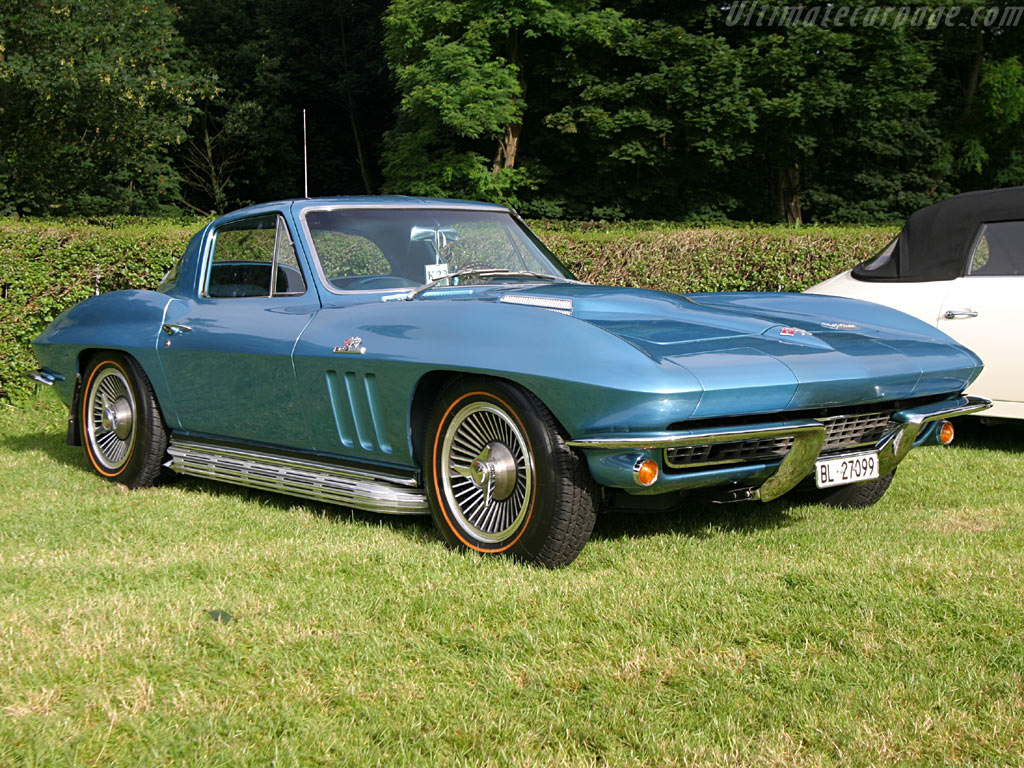
    • America’s sports carMy birthday in June dawned without a Chevrolet Corvette in front of my house. (The Corvette at the top of the page was featured at the 2007 Greater Milwaukee Auto Show. The copilot is my oldest son, Michael.) Which isn’t surprising. I have three young children, and I have a house with a one-car garage. (Then again, this would be more practical, though a blatant pluck-your-eyes-out violation of the Corvette ethos. Of course, so was this.) The reality is that I’m likely to be able to own a Corvette only if I get a visit from the Corvette Fairy, whose office is next door to the Easter Bunny. (I hope this isn’t foreshadowing: When I interviewed Dave Richter of Valley Corvette for a car enthusiast story in the late great Marketplace Magazine, he said that the most popular Corvette in most fans’ minds was a Corvette built during their days in high school. This would be a problem for me in that I graduated from high school in 1983, when no Corvette was built.) The Corvette is one of those cars whose existence may be difficult to understand within General Motors Corp. The Corvette is what is known as a “halo car,” a car that drives people into showrooms, even if…
    • Barges on fouru0026nbsp;wheelsI originally wrote this in September 2008.  At the Fox Cities Business Expo Tuesday, a Smart car was displayed at the United Way Fox Cities booth. I reported that I once owned a car into which trunk, I believe, the Smart could be placed, with the trunk lid shut. This is said car — a 1975 Chevrolet Caprice coupe (ours was dark red), whose doors are, I believe, longer than the entire Smart. The Caprice, built down Interstate 90 from us Madisonians in Janesville (a neighbor of ours who worked at the plant probably helped put it together) was the flagship of Chevy’s full-size fleet (which included the stripper Bel Air and middle-of-the-road Impala), featuring popular-for-the-time vinyl roofs, better sound insulation, an upgraded cloth interior, rear fender skirts and fancy Caprice badges. The Caprice was 18 feet 1 inch long and weighed 4,300 pounds. For comparison: The midsize Chevrolet of the ear was the Malibu, which was the same approximate size as the Caprice after its 1977 downsizing. The compact Chevrolet of the era was the Nova, which was 200 inches long — four inches longer than a current Cadillac STS. Wikipedia’s entry on the Caprice has this amusing sentence: “As fuel economy became a bigger priority among Americans…
    • Behind the wheel
    • Collecting only dust or rust
    • Coooooooooooupe!
    • Corvettes on the screen
    • The garage of misfit cars
    • 100 years (and one day) of our Chevrolets
    • They built Excitement, sort of, once in a while
    • A wagon by any otheru0026nbsp;nameFirst written in 2008. You will see more don’t-call-them-station-wagons as you drive today. Readers around my age have probably had some experience with a vehicle increasingly rare on the road — the station wagon. If you were a Boy Scout or Girl Scout, or were a member of some kind of youth athletic team, or had a large dog, or had relatives approximately your age, or had friends who needed to be transported somewhere, or had parents who occasionally had to haul (either in the back or in a trailer) more than what could be fit inside a car trunk, you (or, actually, your parents) were the target demographic for the station wagon. “Station wagons came to be like covered wagons — so much family activity happened in those cars,” said Tim Cleary, president of the American Station Wagon Owners Association, in Country Living magazine. Wagons “were used for everything from daily runs to the grocery store to long summer driving trips, and while many men and women might have wanted a fancier or sportier car, a station wagon was something they knew they needed for the family.” The “station wagon” originally was a vehicle with a covered seating area to take people between train stations…
    • Wheels on theu0026nbsp;screenBetween my former and current blogs, I wrote a lot about automobiles and TV and movies. Think of this post as killing two birds (Thunderbirds? Firebirds? Skylarks?) with one stone. Most movies and TV series view cars the same way most people view cars — as A-to-B transportation. (That’s not counting the movies or series where the car is the plot, like the haunted “Christine” or “Knight Rider” or the “Back to the Future” movies.) The philosophy here, of course, is that cars are not merely A-to-B transportation. Which disqualifies most police shows from what you’re about to read, even though I’ve watched more police video than anything else, because police cars are plain Jane vehicles. The highlight in a sense is in the beginning: The car chase in my favorite movie, “Bullitt,” featuring Steve McQueen’s 1968 Ford Mustang against the bad guys’ 1968 Dodge Charger: [youtube=http://www.youtube.com/watch?v=GMc2RdFuOxIu0026amp;fmt=18] One year before that (but I didn’t see this until we got Telemundo on cable a couple of years ago) was a movie called “Operación 67,” featuring (I kid you not) a masked professional wrestler, his unmasked sidekick, and some sort of secret agent plot. (Since I don’t know Spanish and it’s not…
    • While riding in my Cadillac …
  • Entertainments
    • Brass rocksThose who read my former blog last year at this time, or have read this blog over the past months, know that I am a big fan of the rock group Chicago. (Back when they were a rock group and not a singer of sappy ballads, that is.) Since rock music began from elements of country music, jazz and the blues, brass rock would seem a natural subgenre of rock music. A lot of ’50s musical acts had saxophone players, and some played with full orchestras … [youtube=http://www.youtube.com/watch?v=9CPS-WuUKUE] … but it wasn’t until the more-or-less simultaneous appearances of Chicago and Blood Sweat u0026amp; Tears on the musical scene (both groups formed in 1967, both had their first charting singles in 1969, and they had the same producer) that the usual guitar/bass/keyboard/drum grouping was augmented by one or more trumpets, a sax player and a trombone player. While Chicago is my favorite group (but you knew that already), the first brass rock song I remember hearing was BSu0026amp;T’s “Spinning Wheel” — not in its original form, but on “Sesame Street,” accompanied by, yes, a giant spinning wheel. [youtube=http://www.youtube.com/watch?v=qi9sLkyhhlE] [youtube=http://www.youtube.com/watch?v=OxWSOuNsN20] [youtube=http://www.youtube.com/watch?v=U9U34uPjz-g] I remember liking Chicago’s “Just You ‘n Me” when it was released as a single, and…
    • Drive and Eat au0026nbsp;RockThe first UW home football game of each season also is the opener for the University of Wisconsin Marching Band, the world’s finest college marching band. (How the UW Band has not gotten the Sudler Trophy, which is to honor the country’s premier college marching bands, is beyond my comprehension.) I know this because I am an alumnus of the UW Band. I played five years (in the last rank of the band, Rank 25, motto: “Where Men Are Tall and Run-On Is Short”), marching in 39 football games at Camp Randall Stadium, the Hubert H. Humphrey Metrodome in Minneapolis, Michigan Stadium in Ann Arbor, Memorial Stadium at the University of Illinois (worst artificial turf I had ever seen), the University of Nevada–Las Vegas’ Sam Boyd Silver Bowl, the former Dyche Stadium at Northwestern University, five high school fields and, in my one bowl game, Legion Field in Birmingham, Ala., site of the 1984 Hall of Fame Bowl. The UW Band was, without question, the most memorable experience of my college days, and one of the most meaningful experiences of my lifetime. It was the most physical experience of my lifetime, to be sure. Fifteen minutes into my first Registration…
    • Keep on rockin’ in the freeu0026nbsp;worldOne of my first ambitions in communications was to be a radio disc jockey, and to possibly reach the level of the greats I used to listen to from WLS radio in Chicago, which used to be one of the great 50,000-watt AM rock stations of the country, back when they still existed. (Those who are aficionados of that time in music and radio history enjoyed a trip to that wayback machine when WLS a Memorial Day Big 89 Rewind, excerpts of which can be found on their Web site.) My vision was to be WLS’ afternoon DJ, playing the best in rock music between 2 and 6, which meant I wouldn’t have to get up before the crack of dawn to do the morning show, yet have my nights free to do whatever glamorous things big-city DJs did. Then I learned about the realities of radio — low pay, long hours, zero job security — and though I have dabbled in radio sports, I’ve pretty much cured myself of the idea of working in radio, even if, to quote WAPL’s Len Nelson, “You come to work every day just like everybody else does, but we’re playing rock ’n’ roll songs, we’re cuttin’ up.…
    • Monday on the flight line, not Saturday in the park
    • Music to drive by
    • The rock ofu0026nbsp;WisconsinWikipedia begins its item “Music of Wisconsin” thusly: Wisconsin was settled largely by European immigrants in the late 19th century. This immigration led to the popularization of galops, schottisches, waltzes, and, especially, polkas. [youtube=http://www.youtube.com/watch?v=yl7wCczgNUc] So when I first sought to write a blog piece about rock musicians from Wisconsin, that seemed like a forlorn venture. Turned out it wasn’t, because when I first wrote about rock musicians from Wisconsin, so many of them that I hadn’t mentioned came up in the first few days that I had to write a second blog entry fixing the omissions of the first. This list is about rock music, so it will not include, for instance, Milwaukee native and Ripon College graduate Al Jarreau, who in addition to having recorded a boatload of music for the jazz and adult contemporary/easy listening fan, also recorded the theme music for the ’80s TV series “Moonlighting.” Nor will it include Milwaukee native Eric Benet, who was for a while known more for his former wife, Halle Berry, than for his music, which includes four number one singles on the Ru0026amp;B charts, “Spend My Life with You” with Tamia, “Hurricane,” “Pretty Baby” and “You’re the Only One.” Nor will it include Wisconsin’s sizable contributions to big…
    • Steve TV: All Steve, All the Time
    • “Super Steve, Man of Action!”
    • Too much TV
    • The worst music of allu0026nbsp;timeThe rock group Jefferson Airplane titled its first greatest-hits compilation “The Worst of Jefferson Airplane.” Rolling Stone magazine was not being ironic when it polled its readers to decide the 10 worst songs of the 1990s. I’m not sure I agree with all of Rolling Stone’s list, but that shouldn’t be surprising; such lists are meant for debate, after all. To determine the “worst,” songs appropriate for the “Vinyl from Hell” segment that used to be on a Madison FM rock station, requires some criteria, which does not include mere overexposure (for instance, “Macarena,” the video of which I find amusing since it looks like two bankers are singing it). Before we go on: Blog posts like this one require multimedia, so if you find a song you hate on this blog, I apologize. These are also songs that I almost never listen to because my sound system has a zero-tolerance policy — if I’m listening to the radio or a CD and I hear a song I don’t like, it’s, to quote Bad Company, gone gone gone. My blonde wife won’t be happy to read that one of her favorite ’90s songs, 4 Non Blondes’ “What’s Up,” starts the list. (However,…
    • “You have the right to remain silent …”
  • Madison
    • Blasts from the Madison media past
    • Blasts from my Madison past
    • Blasts from our Madison past
    • What’s the matter with Madison?
    • Wisconsin – Madison = ?
  • Sports
    • Athletic aesthetics, or “cardinal” vs. “Big Red”
    • Choose your own announcer
    • La Follette state 1982 (u0022It was 30 years ago todayu0022)
    • The North Dakota–Wisconsin Hockey Fight of 1982
    • Packers vs. Brewers
  • Hall of Fame
    • The case(s) against teacher unions
    • The Class of 1983
    • A hairy subject, or face the face
    • It’s worse than you think
    • It’s worse than you think, 2010–11 edition
    • My favorite interview subject of all time
    • Oh look! Rural people!
    • Prestegard for president!
    • Unions vs. the facts, or Hiding in plain sight
    • When rhetoric goes too far
Privacy & Cookies: This site uses cookies. By continuing to use this website, you agree to their use.
To find out more, including how to control cookies, see here: Cookie Policy
  • Subscribe Subscribed
    • Steve Prestegard.com: The Presteblog
    • Join 197 other subscribers
    • Already have a WordPress.com account? Log in now.
    • Steve Prestegard.com: The Presteblog
    • Subscribe Subscribed
    • Sign up
    • Log in
    • Report this content
    • View site in Reader
    • Manage subscriptions
    • Collapse this bar
%d