• Carter, Reagan and Obama

    July 8, 2013
    History, US business, US politics

    We start in chronological order with Victor Davis Hansen:

    Next year could be a frightening one, in the fashion of 1979–80.

    The developing circumstances of our withdrawal from Afghanistan conjure up Vietnam 1975, with all the refugees, reprisals, humiliation, and emboldened enemies on the horizon, though this time there is no coastline for a flotilla of boat people to launch from. The Obama administration is debating no-fly zones over Syria; more likely, it will have the same discussion over Afghanistan soon, once the Taliban drops the diplomatic veneer and comes back into town.

    Because of the failure to negotiate a single residual base in Iraq, Iran has appropriated a vast air corridor to the Middle East. John Kerry speaks sonorously to Russia and China, but apparently assumes that diplomacy follows gentlemanly New England yacht protocols, the right of way given to the more sober, judicious, and pontificating.

    When Obamacare comes on line full bore, I think the American people could be quite depressed over the strange things they encounter. The economy offers only marginal encouragement, given that unemployment is still high and growth low; printing money at a record pace is not sustainable. Only gas and oil production is encouraging — and that is despite, not because of, administration efforts.

    The Snowden extradition affair in and of itself could be small potatoes, but it takes on enormous iconic importance when the Chinese and Russians feel no compunction about publicly snubbing the administration — with North Korea, Iran, and many in the Middle East watching and drawing the conclusion that there are no consequences to getting on the bad side of the United States. Or perhaps they no longer see a bad side at all and consider us complacent neutral observers. Red lines, deadlines, ultimatums, “make no mistake about it,” “let me be perfectly clear,” the Nobel Peace Prize — all that is the stuff of yesteryear, its currency depleted by the years of speaking quite loudly while carrying a tiny stick. …

    We are back to the future, with the same old, same old sort of Carteresque engineered malaise.

    Happily, the 1980 voters punted Jimmy Carter back to Plains, Ga. Ronald Reagan inherited a bad economy from Carter, as Barack Obama inherited a bad economy from George W. Bush. And there the stories diverge, as Investors Business Daily shows:

    Reagan vs Obama recoveries

    On Friday, the Labor Department announced that unemployment stayed at 7.6 percent in June. This is supposed to be good news. It’s not. Among other things, the U6 rate — unemployment plus underemployment — jumped from 13.7 percent to 14.3 percent.

    With that unemployment report, Barack Obama became the first president in the history of unemployment measurements to have a national unemployment rate beyond 7.5 percent for 54 consecutive months. As an added bonus, if you want to call it that, only 47 percent of U.S. adults have full-time jobs. If you are an adult, and you have a full-time job, you are in the minority in this country.

    The reason for the U6 jump ties not just to our Recovery In Name Only, but to the Obama administration’s announcement last week delaying for one year the employer-mandate provision of ObamaCare. Someone getting a federal paycheck must have noticed that businesses are not hiring — indeed, are cutting back their employees’ hours — because of their legitimate concerns of the negative effects of ObamaCare’s costs on their bottom lines. If the Obama administration thought things were going just fine economically, there would be no reason to delay the mandate; businesses would just have to suck it up.

    And what of those providers of jobs? The U.S. Daily Review quotes William C. Dunkelberg, chief economist of the National Federation of Independent Business:

    “Small firms are continuing to shrink as small employers in June reported an average gain of negative 0.09 workers per firm-essentially zero. We only have to look to Washington for reasons why our economy can’t seem to maintain steam and is on a painfully slow journey towards job creation. …

    “Uncertainty about the health care law continues to have a negative impact on small business. Small employers are still trying to figure out what labor will cost and what firm size will have to comply with which rules. As long as Washington is continues to create rolling disasters- exemptions, special deals, delays, confusion, contradictory regulations, small businesses will not be ready to bet on their future by hiring lots of workers with uncertain cost.”

    The other obvious ObamaCare issue is the fact that 2014 is a Congressional election year, and the White House appears to have deluded itself into believing it has a chance, despite history and economic reality, of capturing Democratic control of the House of Representatives. With the economy really in the tank in an election year, how likely is that?

    Obama voters should be really, really proud of themselves.

    Share this on …

    • Share on X (Opens in new window) X
    • Share on Facebook (Opens in new window) Facebook
    • Share on LinkedIn (Opens in new window) LinkedIn
    • Email a link to a friend (Opens in new window) Email
    • Print (Opens in new window) Print
    Like Loading…
    No comments on Carter, Reagan and Obama
  • You will not drink to this

    July 8, 2013
    US business, US politics

    From the Huffington Post:

    Beer’s ingredients of yeast, hops and water make up its deliciously golden hue. But the one cost that makes beer hardest to swallow might just be the taxes on it.

    When combining state, federal, excise and wholesale taxes, among others, around 45 percent of the cost of a beer is tax related, according to trade association The Beer Institute. State and Federal business taxes are among the most expensive, accounting for 36 cents of every dollar spent on beer.

    When all those glasses, solo cups, cans and bottles of beer add up, the beer industry accounts for around $44 billion in tax revenue, with $10.8 billion of that being attributed just to the consumer, CNBC reports.

    Share this on …

    • Share on X (Opens in new window) X
    • Share on Facebook (Opens in new window) Facebook
    • Share on LinkedIn (Opens in new window) LinkedIn
    • Email a link to a friend (Opens in new window) Email
    • Print (Opens in new window) Print
    Like Loading…
    No comments on You will not drink to this
  • Presty the DJ for July 8

    July 8, 2013
    Music

    It is generally not considered a good career move to be indicted for drug trafficking, as Jonathan “Chico” and Robert DeBarge were today in 1988:

    Birthdays begin with Jaimoe “Johnny” Johanson, drummer for the Allman Brothers:

    (more…)

    Share this on …

    • Share on X (Opens in new window) X
    • Share on Facebook (Opens in new window) Facebook
    • Share on LinkedIn (Opens in new window) LinkedIn
    • Email a link to a friend (Opens in new window) Email
    • Print (Opens in new window) Print
    Like Loading…
    No comments on Presty the DJ for July 8
  • Presty the DJ for July 7

    July 7, 2013
    Music

    Today in 1967, the Beatles released “All You Need Is Love” …

    … which proved insufficient for the Yardbirds, which disbanded one year later:

    (more…)

    Share this on …

    • Share on X (Opens in new window) X
    • Share on Facebook (Opens in new window) Facebook
    • Share on LinkedIn (Opens in new window) LinkedIn
    • Email a link to a friend (Opens in new window) Email
    • Print (Opens in new window) Print
    Like Loading…
    No comments on Presty the DJ for July 7
  • Presty the DJ for July 6

    July 6, 2013
    Music

    Can one wish a happy birthday to an entire band? If so, wish Jefferson Airplane a happy birthday:

    (more…)

    Share this on …

    • Share on X (Opens in new window) X
    • Share on Facebook (Opens in new window) Facebook
    • Share on LinkedIn (Opens in new window) LinkedIn
    • Email a link to a friend (Opens in new window) Email
    • Print (Opens in new window) Print
    Like Loading…
    No comments on Presty the DJ for July 6
  • The nation in maps, on a blog in Red River Land

    July 5, 2013
    Culture, History

    For some reason, online maps depicting things other than geographic features have become a popular online subject over the past few months.

    Let’s start with the mother of all dialect maps:

    The author of this monster divides Wisconsin into three dialectical groups — The North, North Inland and North Central. Click here for a selection of YouTube videos to bring sound to what we Wisconsinites supposedly sound like.

    That may be a little dense for some readers. It’s easier to explain differences in language not only by how people pronounce words, but the words people use. That’s the idea behind these maps from North Carolina State University.

    Our state’s most famous vocabulary divide is over water …

    … followed closely by …

    … pop vs. soda. However …

    … would you believe this state is divided over pecan pie?

    Here’s Steve Lovelace‘s map of the 50 states by their most prominent (according to him) corporation:

    If you think about iconic brands, you could do much worse than Harley–Davidson.

    Speaking of wheels, Jalopnik provides this map of the most-sold new car model:

    If you think you see a lot of Ford F-150s, it’s not your imagination. (People who buy new cars often discover a lot of their own new car around. F-150 owners must be used to this by now.)

    This map of Declan Cashin claims to pick a movie for each the 50 states:

    Some of these are obvious — “The Blues Brothers” for Illinois, “Hoosiers” for Indiana, “The Wizard of Oz” for Kansas, “Forrest Gump” for Alabama, “Groundhog Day” for Pennsylvania, “Casino” for Nevada, and so on. (Washington’s “First Blood” was better than the other Rambo movies by an order of magnitude.) “Fargo,” despite its name, is a movie mostly set in Minnesota, not North Dakota.

    What, however, is “American Movie”? The Internet Movie Database calls it a …

    Documentary about an aspiring filmmaker’s attempts to finance his dream project by finally completing the low-budget horror film he abandoned years before.

    This rings a bell in that I may have seen part of this on PBS. The movie’s website says (capital letters theirs):

    It takes a village to make a movie, but when that village is Menomonee Falls, Wisconsin and not Hollywood, CA, the results are at times bizarre, comical, and very American.  With  the help of his mother, his 82-year old uncle, and local cast of hilarious and lovable characters, filmmaker Mark Borchardt fights his way through internal and external roadblocks to achieve his goal-to make his movie, his way.

    Mark’s vision for his dream film is unlike most in independent filmmaking today.  His inspiration comes from films as desarate as Texas Chainsaw Massacre and The Seventh Seal, as well as his experiences growing up amidst the grey skies, rusty cars, and ranch houses of Milwaukee’s Northwest side.

    AMERICAN MOVIE is the story of filmmaker Mark Borchardt, his mission, and his dream.  Spanning over two years of intense struggle with his film, his family, financial decline, and spiritual crisis, AMERICAN MOVIE is a portrayal of ambition, obsession, excess, and one man’s quest for the American Dream.

    My first thought is that I’m not sure why someone would want to chronicle his own “intense struggle” with “financial decline, and spiritual crisis.” My second thought is: This represents Wisconsin? Really? Pick one of these movies filmed in Wisconsin (yes, “American Movie” is on this list), or these movies set in Wisconsin.

    Finally, here’s an interesting map, the Atlas of True Names, which has the English translations for our stew of American Indian, French and other place names.

    It is ironic to be a native of Son of Combat Strength given Madison’s history of opposing “combat strength.” Fond du Lac likes to call itself “First on the Lake” instead of its more correct translation. As for Red River Land’s largest city, “Good Land” has, as you know, bad water every time the city spits out millions of “partially treated” storm water that the Deep Tunnel cannot handle. On the other hand, no more appropriate name has ever been created for Chicago.

    Share this on …

    • Share on X (Opens in new window) X
    • Share on Facebook (Opens in new window) Facebook
    • Share on LinkedIn (Opens in new window) LinkedIn
    • Email a link to a friend (Opens in new window) Email
    • Print (Opens in new window) Print
    Like Loading…
    No comments on The nation in maps, on a blog in Red River Land
  • Get thee to the garage

    July 5, 2013
    media, Wheels

    On this Independence Day sort-of weekend, Jalopnik answers a question that I’m sure is burning in all our brains …

    These Are the Cars the Founding Fathers Would Have Driven

    … complete with psychological explanations. For instance:

    James Madison likely had an inferiority complex, as his health was frail, and was the smallest president, by height and by weight. He was also the president to lead America into the War of 1812. As an enemy of Britain, he had to choose something that promoted America, and would help with his inferiority complex by making him seem bigger and manlier than he was. If he didn’t drive a Ford F-150, the Shelby GT500 (or Chevrolet Camaro ZL1) would be his pick.

    An even more interesting explanation is presented for Alexander Hamilton’s wheels:

    “He stands at the front rank of a generation never surpassed in history, but whose countrymen seem to have never duly recognized his splendid gifts.” – James Bryce, in reference to Hamilton, who, like the Forester XT, was often never fully recognized for his many less-publicized exemplary accomplishments.

    “When America ceases to remember his greatness, America will no longer be great.” – Calvin Coolidge, in reference to Hamilton. Like America’s recognition of Hamilton’s greatness, when Car Culture ceases to remember just how and why the Forester XT was awesome, then it’s no longer a true car culture.

    “Good roads, canals, and navigable rivers, by diminishing the expense of carriage, put the remote parts of a country more nearly upon a level with those in the neighborhood of the town. They are, upon that account, the greatest of all improvements. They encourage the cultivation of the remote, which must always be the most extensive circle of the country.” -Hamilton, on making the rural areas of the country more accessible for the masses, something Subaru is quite adept at.

    “The rights of neutrality will only be respected, when they are defended by an adequate power.” – Alexander Hamilton on the Subaru XT not having any flashy exterior styling beyond a functional hoodscoop. Why does the XT have such neutral styling? Because it has enough power under the hood that it doesn’t feel it has anything to prove.

    “I never expect to see a perfect work from imperfect man.” – Hamilton, if asked to comment on Subaru’s designers.

    “And it is long since I have learned to hold popular opinion of no value.” – Alexander Hamilton. I’m pretty sure this quote is stamped somewhere on the chassis of every Forester XT, Impreza Outback Sport, Baja, Brat, Justy, Legacy GT, and WRX Sportwagon.

    The added benefit is that Subarus are built in Lafayette in the Northwest Territory — I mean, Indiana.

    What about friends and rivals John Adams and Thomas Jefferson? An Aston Martin Vanquish and, of all things, a Citroen DS, respectively:

    Adams was a key instrument in declaring independence from Great Britain, but after the war he served as a diplomat in Europe. Adams was one of the men responsible for authoring the eventual treaty between the United States and Great Britain. Therefore, it is only fitting that the would drive a British car… that was built while owned by the MOST American of companies, Ford!

    As for Jefferson:

    He loved French novelties!

    The most exotic choice goes to my favorite Founding Father, Ben Franklin: A Facel Vega, a French-designed car powered by the first and second iterations of the Chrysler Hemi V-8:

    French on the outside, American on the inside. It’s badass and I’m sure great for picking up chicks.

    The first president, George Washington, is assigned a Jeep Wagoneer:

    Washington was probably the wealthiest man in America in the late 18th century – his holdings would easily be worth more than $500 million today, at the low end. This car is the definition of old money landed gentry- the closest American vehicle you can get to a Range Rover, and even 20 years after the last one was built, they’re still fairly popular among upscale East Coast summer colonies like Martha’s Vineyard. This is a car for someone with a large estate that needs to occasionally travel across it for inspections or hunting, and is so wealthy and self-assured that he doesn’t need something flashy and new to prove it. I figure he would have had a Range Rover first, as any good Southerner would have been fairly pro-British before 1775, but he would have swapped it for the Jeep once war clouds started to appear.

    Washington might have swapped the Range Rover for the Jeep before “war clouds started to appear” due to the lack of liability for which British cars are legendary.


    Share this on …

    • Share on X (Opens in new window) X
    • Share on Facebook (Opens in new window) Facebook
    • Share on LinkedIn (Opens in new window) LinkedIn
    • Email a link to a friend (Opens in new window) Email
    • Print (Opens in new window) Print
    Like Loading…
    1 comment on Get thee to the garage
  • Presty the DJ for July 5

    July 5, 2013
    Music

    Today is the anniversary of the Beatles’ first song to reach the U.S. charts, “From Me to You.” Except it wasn’t recorded by the Beatles, it was recorded by Del Shannon:

    Five years later,  John Lennon sold his Rolls–Royce:

    Sharing my daughter’s birthday are Smiley Lewis, who first did …

    (more…)

    Share this on …

    • Share on X (Opens in new window) X
    • Share on Facebook (Opens in new window) Facebook
    • Share on LinkedIn (Opens in new window) LinkedIn
    • Email a link to a friend (Opens in new window) Email
    • Print (Opens in new window) Print
    Like Loading…
    No comments on Presty the DJ for July 5
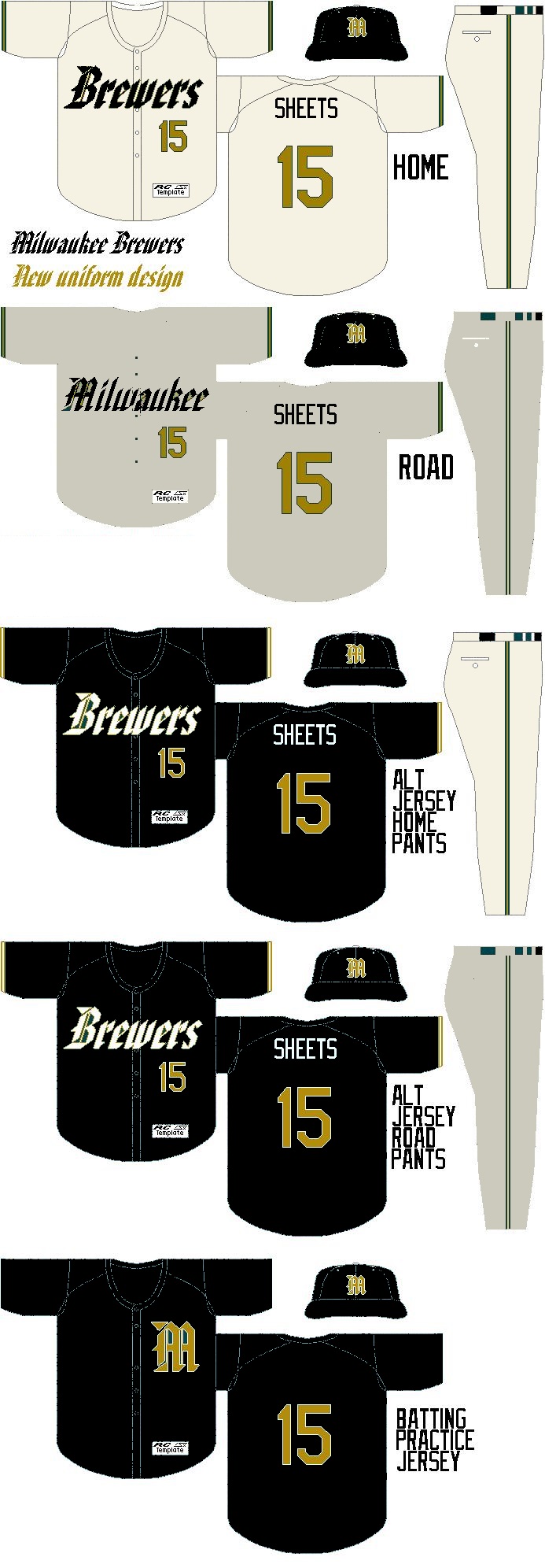
  • Something’s brewing, and it’s not good

    July 4, 2013
    media, Sports

    I wasn’t going to post a blog today, but I decided to because (1) I have to work anyway (similar to business owners, I only work on days ending in Y), and (2) Independence Day is traditionally a day for baseball.

    For some reason, Grantland decided to inflict the Brewers upon its readers:

    If you had to boil down the entire 2013 Milwaukee Brewers season to one game, Monday’s loss to the Nationals would’ve been it. Facing one of the worst offenses in baseball, the Crew got hammered. The Nationals struck for one in the first, then five more in the third. Ron Roenicke tried to get another inning or two out of his starter, only to have the Nats go single, double, single to start the fourth. The final line for Milwaukee’s starter: three innings, nine hits, two walks, and eight runs. The Brewers went on to lose 10-5.

    That loss was the Brewers’ sixth in a row, briefly dropping them to 17 games under .500. Milwaukee now owns the second-worst record and second-worst run differential in the National League, despite carrying a respectable Opening Day payroll of just less than $89 million, which ranked eighth in the league. The Brewers are on pace for their second-worst season since moving to Milwaukee in 1970. And the pitcher who got strafed for eight runs, hiking his ERA to 4.78? That was Yovani Gallardo, the team’s best piece of trade bait and thus one of the only sources of hope in what will likely end as one of the most depressing seasons in franchise history.

    We know right now that the writer lacks a sense of history. Since the Brewers moved from Seattle to Milwaukee in 1970, most Brewers seasons have been “most depressing.”The Brewers did not have their first above-.500 season until 1978. The Brewers did not have their first playoff berth until 1981. The Brewers have been to the World Series exactly once, 1982, and have won 2½ division titles. On average, the Brewers get to the postseason once a decade.

    You want depressing seasons? How about 1984, when the Brewers went from 87 wins the previous season to 67? Pick any season between 1993 and 2004, the best of which, 1996, ended with an 80–82 record. (In 2002, the Brewers finished 56–106.) Their all-time win–loss record translates to a 77-win season, four games under .500, a mark the Brewers have exceeded 16 times in more than 40 seasons.

    This discussion begins with one of the most important front office people in the team’s history, as we are learning now:

    The usual protocol when a new general manager takes over a team is for a rash of firings to ensue, so that the new guy can bring in his own handpicked favorites to run the rest of the organization. But when Doug Melvin took over as Brewers general manager in 2002, he opted not to hire a new scouting director, instead keeping Jack Zduriencik in that role. The Brewers had suffered through seven consecutive losing seasons when they handed over the keys to their scouting operation to Zduriencik following the ’99 season. This was a far cry from their glory years of the late ’70s and early ’80s. Then, the team fielded future Hall of Famers like Robin Yount and Paul Molitor. The mid-to-late ’90s, on the other hand, were the time of Scott Karl, post-injury Cal Eldred, and the ghost of Marquis Grissom. By the time Zduriencik seized the task of rebuilding the organization’s talent pool, the only 25-and-under players on the big league roster with even a hint of upside were Geoff Jenkins, Ronnie Belliard, and, if you’re feeling generous, Jeff D’Amico. This was going to take a hell of a lot of work.

    One advantage the Brewers (like any consistently bad team) had was a string of high draft picks. Starting with Zduriencik’s first draft in 2000, Milwaukee picked 11th, 12th, seventh, second, fifth, fifth, 16th, and seventh through 2007. But unlike the NBA and NFL drafts, which offer much higher hit rates for high picks, baseball teams whiff all the time when given top-five and top-10 opportunities, even when given a bunch in a row. … Playing in the smallest metropolitan market in the majors and lacking major revenue streams, the Brewers would need to find, sign, and develop premium talent with all those high picks, or risk many more years of misery. …

    That first year started a string of drafts that would be the envy of nearly any other team. The next season’s first-round pick, Mike Jones, never panned out; but J.J. Hardy proved to be a big score in the second round, giving the Brewers several quality seasons at shortstop before getting traded for current star center fielder Carlos Gomez. They did hit on their first-round pick in 2002, landing mega-slugger Prince Fielder seventh overall. (And though none of these players ever played a game for the Brewers, they showed a keen eye for talent in drafting Tom Wilhelmsen in the seventh round, Craig Breslow in the 26th, and Hunter Pence in the 40th.)

    Rickie Weeks hasn’t quite lived up to the superstar expectations thrust on him when he went no. 2 overall in 2003, but he has been a solid regular for years in Milwaukee (second-round pick Tony Gwynn Jr. has had his uses too). Mark Rogers disappointed as the top pick in 2004, but Gallardo more than made up for it as the second-round pick, with Lorenzo Cain turning into a 17th-round steal. The next year proved to be the score of all scores. Though the 2005 draft will go down as one of the best in baseball history, no. 5 overall pick Ryan Braun has shone brighter than Justin Upton, Alex Gordon, Troy Tulowitzki, Ryan Zimmerman, Andrew McCutchen, Jay Bruce, Jacoby Ellsbury, or anyone else from that class. And in true Zduriencik-era fashion, Milwaukee landed a couple of later-round steals, too, including Andrew Bailey and Michael Brantley, with the latter later to be packaged in one of the boldest trades the team has ever made. The Brewers did fare poorly in their 2006 draft, though top pick Jeremy Jeffress would at least make his way into yet another blockbuster trade. The top pick in 2007, Matt LaPorta, has been a sub–replacement level player thus far in the majors, but he was actually the linchpin in that massive deal that included Brantley; meanwhile, third-round pick Jonathan Lucroy has emerged as a key player on the current roster. Zduriencik capped off his 10-year run by snagging Brett Lawrie and Jake Odorizzi with the 16th and 32nd overall picks in the 2008 draft, with both players ending up in major trades for veteran pitching help inside of three years. …

    Those players formed the foundation for the winning teams that would follow. The Brewers extended their streak of sub-.500 seasons to 12 before finally finishing 81-81 in 2005. Then in 2008, Milwaukee snapped the second-longest playoff drought for any team, surging to 90-72 and claiming the NL wild-card spot. That ’08 team featured 24-year-olds Braun and Fielder combining for 71 home runs, with 25-year-olds Hardy and Weeks and 26-year-old Hart chipping in 58 more. Even with all that hitting talent, though, the 2008 club lacked front-line pitchers other than Ben Sheets. So on July 7 of that year, the Brewers shocked the baseball world, dealing four prospects to the Indians for CC Sabathia, three months before the defending Cy Young winner would be eligible for free agency. Sabathia was so dominant in his half a season with Milwaukee that he actually led the National League in complete games (seven) and shutouts (three) despite making just 17 regular-season starts as a Brewer. He posted a 5.1-to-1 strikeout-to-walk rate and a 1.65 ERA, propelling the Brewers into the postseason.

    When Sabathia left to sign with the Yankees after the 2008 season, the Brewers’ biggest weakness was reexposed: They’d developed a passel of excellent, young position players, but few pitchers of note other than Gallardo and Manny Parra, though Parra’s ’08 campaign would prove to be the highlight of his otherwise unremarkable career. That lack of pitching talent showed the following year, when the Brewers stumbled to an 80-82 season thanks to a staff that yielded more than five runs a game. Stinging from that pitching deficit and emboldened from the success of the Sabathia trade (three great months plus a compensatory draft pick in exchange for a package that has yielded a league-average outfielder in Brantley and little else certainly qualifies as a success), the Brewers figured trading prospects for more veteran pitching help would help pry open that proverbial window for a while longer. After another losing season in 2010, they made two such deals. First, Lawrie went to Toronto for right-hander Shaun Marcum. Thirteen days later, Cain, Jeffress, Odorizzi and 24-year-old shortstop Alcides Escobar got shipped to Kansas City for another former Cy Young winner, Zack Greinke (and Yuniesky Betancourt, but for everyone’s sake, we’ll pretend that didn’t happen).

    The short-term results of these two deals were outstanding. Marcum topped 200 innings for the first time in his career, producing a 3.54 ERA and 3.73 FIP. Greinke did spend time on the disabled list, but he was very good (albeit not nearly as unhittable as he’d been two years earlier), leading the majors in strikeout rate while posting a 2.98 FIP and 2.56 xFIP. This time, the Brewers trumped their 2008 result, winning a franchise-best 96 games and advancing all the way to the League Championship Series before falling to the eventual World Series champion Cardinals. With Greinke in tow for the 2012 season, the Brewers hoped to bag a better follow-up result than what they’d managed in 2009. Didn’t happen. Though they did get some surprisingly strong contributions from a couple of twentysomething pitchers (waiver claim Marco Estrada and 2009 22nd-round pick Mike Fiers), they were ultimately undone by some terrible performances by several other pitchers, including most of the bullpen, and 142⅓ nightmarish innings from a washed-up Randy Wolf. Though they enjoyed a strong closing kick to finish the season above .500, the Brewers had again failed to build on a big year.

    “You can win,” Melvin said, “but the toughest part is sustaining success. You think about a year like we’re having right now; Boston had a down year last year, but they regrouped, recovered, and they’re still at a $140 million payroll [actually closer to $155 million as of Opening Day]. Smaller-market clubs can’t do that, that is not the world we live in.

    “When we traded for CC, that caught everyone off guard. We got 3 million fans in 2008. Then we trade for Greinke and Marcum, and 2011 was our best year in almost 30 years. But when you make those trades, there is a cost. You say, ‘We’ll worry about it later.’ Well, ‘later’ is now.”

    What later/now means to the Brewers is a collection of organizational talent that ESPN’s Keith Law ranked next-to-last in baseball before the start of this season. Leading his Brewers wrap, Law wrote: “This system has one top-100 prospect and a lot of back-end starters or probable relievers.” Cashing in a dump truck full of highly rated prospects to make go-for-it trades played a big role in downgrading Milwaukee’s farm system. But so, too, did a talent drain of another sort: an exodus of highly regarded scouts.

    I compared the Packers, which have mostly been successful in player evaluation, to the Brewers here last week. After good work by Brewers scouts before the departure of Zduriencik (to become general manager in Seattle) and others, what followed?

    Though drafts can take years to bear fruit, the industry consensus is that Milwaukee has fared very poorly in their drafting for the past few years, even after adjusting for the Brewers picking later than they did when the team was a perennial loser. The 26th overall pick in 2009, Indiana University pitcher Eric Arnett, isn’t going to make it to the Show. The Brewers’ top pick in 2010, right-hander Dylan Covey, was about to sign when a physical revealed he had diabetes; he went to college instead and ended up getting drafted later by the A’s. Blessed with both the 12th and 15th overall picks in 2011 after the Covey snafu, Milwaukee picked Texas right-hander Taylor Jungmann and Georgia Tech lefty Jed Bradley. With a minor league pipeline that sorely lacked upper-tier pitching talent, Jungmann and Bradley seemed like exactly what the Brewers needed, two polished college products who’d move quickly through the rotation and hopefully make an impact in the big leagues within two or three years, if everything broke right. It hasn’t worked out that way. Jungmann has been serviceable, posting a combined 3.55 ERA over the past two seasons in high Class A and Double-A ball … but with a weak strikeout rate of less than six batters per nine innings. That still beats Bradley, who posted a 5.02 ERA during that same span.

    A handful of players from those drafts have made it to the majors, including Fiers, Hiram Burgos, Scooter Gennett, and Tyler Thornburg. But no one from the 2009-2011 drafts projects as an impact player of any kind, with doubts about whether any of them can even mature into an effective big league regular on a winning team — the organization’s affection for Gennett notwithstanding.

    So what’s next? Trade away every good player?

    “Do we take a step back [to replenish the talent pool]?” Melvin asked. “We have to realize where we are right now. If you don’t realize it, you could end up in the middle, then it becomes a four- or five-year project. If you have the patience to step back a bit, the stomach for it, it can be worth it.”

    From a baseball standpoint only, Melvin’s point of view makes sense. Maybe accepting a truly lean year or two now sets the Brewers up for a quicker and more robust recovery once the pitching staff has been built back up and the team is ready to contend again. But it’s never about baseball only, not for any team, and certainly not for a revenue-limited team that’s also owned by a shrewd and aggressive owner like Mark Attanasio. The Brewers have one of the weakest local TV deals for any team. That makes the momentum in attendance and general interest that the Brewers have built up over the past few years so vital to the team’s success.

    By the time Attanasio took over the team after the 2004 season, interest had hit rock bottom. The Brewers ranked 13th in the NL in attendance that year, while carrying a payroll below $28 million. Having made his money in investing, Attanasio drew on a lesson he’d learned in snatching up distressed businesses: Sometimes it’s best to wait and see what you’ve got before making any drastic changes. What he found was a team that on the major league level hadn’t yet brought those future stars to the fore, with interest in the existing players so low that the top-selling item in the fan store were plush replicas of the team’s sausage-race participants. As the top prospects began to make the big club and grow into key contributors, Attanasio had to decide how to proceed next. An avid reader who’d soaked up Moneyball soon after its release, he’d considered the A’s method of ditching players early, trading them before they could hit free agency rather than losing them for nothing more than comp picks. Instead, he settled on a different approach, one that had been made popular by John Hart and his young Indians teams in the ’90s: Sign everyone you can. The owner depended on Melvin and his staff to identify those players worth retaining; after that, Attanasio started writing checks. Over the past eight-plus years, they’ve signed Braun, Hart, Weeks, Lucroy, Gallardo, Gomez, and even Bill Hall to long-term deals, buying out their arbitration years, buying out their first couple years of potential free agency, or both.

    Attanasio firmly believes that the combination of winning and building a core group of players that fans could follow for more than just a handful of years has contributed greatly to the team’s ability to draw three million fans a year (or close to it) in the smallest market in baseball. Trading away stars, or even recognizable regulars, thus gives the Brewers owner pause. In a recent meeting with Melvin and assistant GM Gord Ash, Attanasio conveyed a clear message:

    “We don’t have to do anything,” he said. “We’re in a good financial position. We have a lot of good players. We have no albatross contracts. What makes the job hard is that we actually have a lot of options.” …

    But behind the scenes, there’s anxiety, especially at the lower levels. A source close to the situation said some baseball ops people below the GM and assistant GM level have started preparing résumés, with the Cubs confirming they’ve received one such résumé for a job posting they put out. The Brewers have called on a tech-savvy friend of Attanasio’s son to help build a new database, with rumors that the new system might be designed to be used by a new regime and a more quantitatively inclined general manager. Melvin is the sixth-longest-tenured GM in the majors, a smart and respected baseball man who’s quick to give others such as Zduriencik credit for Milwaukee’s recent turnaround, but who deserves his own fair share of credit, too. Many of his top lieutenants are also industry veterans who’ve been with the team for a while, through bad times, then good, and now bad again.

    Still, nothing lasts forever. The Brewers are losing, and with losing often comes change. Stay tuned.

    Share this on …

    • Share on X (Opens in new window) X
    • Share on Facebook (Opens in new window) Facebook
    • Share on LinkedIn (Opens in new window) LinkedIn
    • Email a link to a friend (Opens in new window) Email
    • Print (Opens in new window) Print
    Like Loading…
    1 comment on Something’s brewing, and it’s not good
  • Presty the DJ for July 4

    July 4, 2013
    Music

    This seems appropriate to begin Independence Day:

    This being Independence Day, you wouldn’t think there would be many music anniversaries today. I love this one, though: WOWO radio in Fort Wayne, Ind., celebrated the nation’s 153rd birthday by burning its transmitter to the ground.

    Independence Day 1970 was not a holiday for Casey Kasem, who premiered “America’s Top 40”:

    (more…)

    Share this on …

    • Share on X (Opens in new window) X
    • Share on Facebook (Opens in new window) Facebook
    • Share on LinkedIn (Opens in new window) LinkedIn
    • Email a link to a friend (Opens in new window) Email
    • Print (Opens in new window) Print
    Like Loading…
    1 comment on Presty the DJ for July 4
Previous Page
1 … 865 866 867 868 869 … 1,038
Next Page

Website Powered by WordPress.com.

Steve Prestegard.com: The Presteblog

The thoughts of a journalist/libertarian–conservative/Christian husband, father, Eagle Scout and aficionado of obscure rock music. Thoughts herein are only the author’s and not necessarily the opinions of his family, friends, neighbors, church members or past, present or future employers.

  • Steve
    • About, or, Who is this man?
    • Facebook
    • Twitter
    • Adventures in ruralu0026nbsp;inkBack in June 2009, I was driving somewhere through a rural area. And for some reason, I had a flashback to two experiences in my career about that time of year many years ago. In 1988, eight days after graduating from the University of Wisconsin, I started work at the Grant County Herald Independent in Lancaster as a — well, the — reporter. Four years after that, on my 27th birthday, I purchased, with a business partner, the Tri-County Press in Cuba City, my first business venture. Both were experiences about which Wisconsin author Michael Perry might write. I thought about all this after reading a novel, The Deadline, written by a former newspaper editor and publisher. (Now who would write a novel about a weekly newspaper?) As a former newspaper owner, I picked at some of it — why finance a newspaper purchase through the bank if the seller is willing to finance it? Because the mean bank lender is a plot point! — and it is much more interesting than reality, but it is very well written, with a nicely twisting plot, and quite entertaining, again more so than reality. There is something about that first job out of college that makes you remember it perhaps more…
    • Adventures in radioI’ve been in the full-time work world half my life. For that same amount of time I’ve been broadcasting sports as a side interest, something I had wanted to since I started listening to games on radio and watching on TV, and then actually attending games. If you ask someone who’s worked in radio for some time about the late ’70s TV series “WKRP in Cincinnati,” most of them will tell you that, if anything, the series understated how wacky working in radio can be. Perhaps the funniest episode in the history of TV is the “WKRP” episode, based on a true story, about the fictional radio station’s Thanksgiving promotion — throwing live turkeys out of a helicopter under the mistaken belief that, in the words of WKRP owner Arthur Carlson, “As God is my witness, I thought turkeys could fly.” [youtube=http://www.youtube.com/watch?v=ST01bZJPuE0] I’ve never been involved in anything like that. I have announced games from the roofs of press boxes (once on a nice day, and once in 50-mph winds), from a Mississippi River bluff (more on that later), and from the front row of the second balcony of the University of Wisconsin Fieldhouse (great view, but not a place to go if…
    • “Good morning/afternoon/evening, ________ fans …”
    • My biggest storyEarlier this week, while looking for something else, I came upon some of my own work. (I’m going to write a blog someday called “Things I Found While Looking for Something Else.” This is not that blog.) The Grant County Sheriff’s Department, in the county where I used to live, has a tribute page to the two officers in county history who died in the line of duty. One is William Loud, a deputy marshal in Cassville, shot to death by two bank robbers in 1912. The other is Tom Reuter, a Grant County deputy sheriff who was shot to death at the end of his 4 p.m.-to-midnight shift March 18, 1990. Gregory Coulthard, then a 19-year-old farmhand, was convicted of first-degree intentional homicide and is serving a life sentence, with his first eligibility for parole on March 18, 2015, just 3½ years from now. I’ve written a lot over the years. I think this, from my first two years in the full-time journalism world, will go down as the story I remember the most. For journalists, big stories contain a paradox, which was pointed out in CBS-TV’s interview of Andy Rooney on his last “60 Minutes” Sunday. Morley Safer said something along the line…
  • Food and drink
    • The Roesch/Prestegard familyu0026nbsp;cookbookFrom the family cookbook(s) All the families I’m associated with love to eat, so it’s a good thing we enjoy cooking. The first out-of-my-house food memory I have is of my grandmother’s cooking for Christmas or other family occasions. According to my mother, my grandmother had a baked beans recipe that she would make for my mother. Unfortunately, the recipe seems to have  disappeared. Also unfortunately, my early days as a picky, though voluminous, eater meant I missed a lot of those recipes made from such wholesome ingredients as lard and meat fat. I particularly remember a couple of meals that involve my family. The day of Super Bowl XXXI, my parents, my brother, my aunt and uncle and a group of their friends got together to share lots of food and cheer on the Packers to their first NFL title in 29 years. (After which Jannan and I drove to Lambeau Field in the snow,  but that’s another story.) Then, on Dec. 31, 1999, my parents, my brother, my aunt and uncle and Jannan and I (along with Michael in utero) had a one-course-per-hour meal to appropriately end years beginning with the number 1. Unfortunately I can’t remember what we…
    • SkålI was the editor of Marketplace Magazine for 10 years. If I had to point to one thing that demonstrates improved quality of life since I came to Northeast Wisconsin in 1994, it would be … … the growth of breweries and  wineries in Northeast Wisconsin. The former of those two facts makes sense, given our heritage as a brewing state. The latter is less self-evident, since no one thinks of Wisconsin as having a good grape-growing climate. Some snobs claim that apple or cherry wines aren’t really wines at all. But one of the great facets of free enterprise is the opportunity to make your own choice of what food and drink to drink. (At least for now, though some wish to restrict our food and drink choices.) Wisconsin’s historically predominant ethnic group (and our family’s) is German. Our German ancestors did unfortunately bring large government and high taxes with them, but they also brought beer. Europeans brought wine with them, since they came from countries with poor-quality drinking water. Within 50 years of a wave of mid-19th-century German immigration, brewing had become the fifth largest industry in the U.S., according to Maureen Ogle, author of Ambitious Brew: The Story of American Beer. Beer and wine have…
  • Wheels
    • America’s sports carMy birthday in June dawned without a Chevrolet Corvette in front of my house. (The Corvette at the top of the page was featured at the 2007 Greater Milwaukee Auto Show. The copilot is my oldest son, Michael.) Which isn’t surprising. I have three young children, and I have a house with a one-car garage. (Then again, this would be more practical, though a blatant pluck-your-eyes-out violation of the Corvette ethos. Of course, so was this.) The reality is that I’m likely to be able to own a Corvette only if I get a visit from the Corvette Fairy, whose office is next door to the Easter Bunny. (I hope this isn’t foreshadowing: When I interviewed Dave Richter of Valley Corvette for a car enthusiast story in the late great Marketplace Magazine, he said that the most popular Corvette in most fans’ minds was a Corvette built during their days in high school. This would be a problem for me in that I graduated from high school in 1983, when no Corvette was built.) The Corvette is one of those cars whose existence may be difficult to understand within General Motors Corp. The Corvette is what is known as a “halo car,” a car that drives people into showrooms, even if…
    • Barges on fouru0026nbsp;wheelsI originally wrote this in September 2008.  At the Fox Cities Business Expo Tuesday, a Smart car was displayed at the United Way Fox Cities booth. I reported that I once owned a car into which trunk, I believe, the Smart could be placed, with the trunk lid shut. This is said car — a 1975 Chevrolet Caprice coupe (ours was dark red), whose doors are, I believe, longer than the entire Smart. The Caprice, built down Interstate 90 from us Madisonians in Janesville (a neighbor of ours who worked at the plant probably helped put it together) was the flagship of Chevy’s full-size fleet (which included the stripper Bel Air and middle-of-the-road Impala), featuring popular-for-the-time vinyl roofs, better sound insulation, an upgraded cloth interior, rear fender skirts and fancy Caprice badges. The Caprice was 18 feet 1 inch long and weighed 4,300 pounds. For comparison: The midsize Chevrolet of the ear was the Malibu, which was the same approximate size as the Caprice after its 1977 downsizing. The compact Chevrolet of the era was the Nova, which was 200 inches long — four inches longer than a current Cadillac STS. Wikipedia’s entry on the Caprice has this amusing sentence: “As fuel economy became a bigger priority among Americans…
    • Behind the wheel
    • Collecting only dust or rust
    • Coooooooooooupe!
    • Corvettes on the screen
    • The garage of misfit cars
    • 100 years (and one day) of our Chevrolets
    • They built Excitement, sort of, once in a while
    • A wagon by any otheru0026nbsp;nameFirst written in 2008. You will see more don’t-call-them-station-wagons as you drive today. Readers around my age have probably had some experience with a vehicle increasingly rare on the road — the station wagon. If you were a Boy Scout or Girl Scout, or were a member of some kind of youth athletic team, or had a large dog, or had relatives approximately your age, or had friends who needed to be transported somewhere, or had parents who occasionally had to haul (either in the back or in a trailer) more than what could be fit inside a car trunk, you (or, actually, your parents) were the target demographic for the station wagon. “Station wagons came to be like covered wagons — so much family activity happened in those cars,” said Tim Cleary, president of the American Station Wagon Owners Association, in Country Living magazine. Wagons “were used for everything from daily runs to the grocery store to long summer driving trips, and while many men and women might have wanted a fancier or sportier car, a station wagon was something they knew they needed for the family.” The “station wagon” originally was a vehicle with a covered seating area to take people between train stations…
    • Wheels on theu0026nbsp;screenBetween my former and current blogs, I wrote a lot about automobiles and TV and movies. Think of this post as killing two birds (Thunderbirds? Firebirds? Skylarks?) with one stone. Most movies and TV series view cars the same way most people view cars — as A-to-B transportation. (That’s not counting the movies or series where the car is the plot, like the haunted “Christine” or “Knight Rider” or the “Back to the Future” movies.) The philosophy here, of course, is that cars are not merely A-to-B transportation. Which disqualifies most police shows from what you’re about to read, even though I’ve watched more police video than anything else, because police cars are plain Jane vehicles. The highlight in a sense is in the beginning: The car chase in my favorite movie, “Bullitt,” featuring Steve McQueen’s 1968 Ford Mustang against the bad guys’ 1968 Dodge Charger: [youtube=http://www.youtube.com/watch?v=GMc2RdFuOxIu0026amp;fmt=18] One year before that (but I didn’t see this until we got Telemundo on cable a couple of years ago) was a movie called “Operación 67,” featuring (I kid you not) a masked professional wrestler, his unmasked sidekick, and some sort of secret agent plot. (Since I don’t know Spanish and it’s not…
    • While riding in my Cadillac …
  • Entertainments
    • Brass rocksThose who read my former blog last year at this time, or have read this blog over the past months, know that I am a big fan of the rock group Chicago. (Back when they were a rock group and not a singer of sappy ballads, that is.) Since rock music began from elements of country music, jazz and the blues, brass rock would seem a natural subgenre of rock music. A lot of ’50s musical acts had saxophone players, and some played with full orchestras … [youtube=http://www.youtube.com/watch?v=9CPS-WuUKUE] … but it wasn’t until the more-or-less simultaneous appearances of Chicago and Blood Sweat u0026amp; Tears on the musical scene (both groups formed in 1967, both had their first charting singles in 1969, and they had the same producer) that the usual guitar/bass/keyboard/drum grouping was augmented by one or more trumpets, a sax player and a trombone player. While Chicago is my favorite group (but you knew that already), the first brass rock song I remember hearing was BSu0026amp;T’s “Spinning Wheel” — not in its original form, but on “Sesame Street,” accompanied by, yes, a giant spinning wheel. [youtube=http://www.youtube.com/watch?v=qi9sLkyhhlE] [youtube=http://www.youtube.com/watch?v=OxWSOuNsN20] [youtube=http://www.youtube.com/watch?v=U9U34uPjz-g] I remember liking Chicago’s “Just You ‘n Me” when it was released as a single, and…
    • Drive and Eat au0026nbsp;RockThe first UW home football game of each season also is the opener for the University of Wisconsin Marching Band, the world’s finest college marching band. (How the UW Band has not gotten the Sudler Trophy, which is to honor the country’s premier college marching bands, is beyond my comprehension.) I know this because I am an alumnus of the UW Band. I played five years (in the last rank of the band, Rank 25, motto: “Where Men Are Tall and Run-On Is Short”), marching in 39 football games at Camp Randall Stadium, the Hubert H. Humphrey Metrodome in Minneapolis, Michigan Stadium in Ann Arbor, Memorial Stadium at the University of Illinois (worst artificial turf I had ever seen), the University of Nevada–Las Vegas’ Sam Boyd Silver Bowl, the former Dyche Stadium at Northwestern University, five high school fields and, in my one bowl game, Legion Field in Birmingham, Ala., site of the 1984 Hall of Fame Bowl. The UW Band was, without question, the most memorable experience of my college days, and one of the most meaningful experiences of my lifetime. It was the most physical experience of my lifetime, to be sure. Fifteen minutes into my first Registration…
    • Keep on rockin’ in the freeu0026nbsp;worldOne of my first ambitions in communications was to be a radio disc jockey, and to possibly reach the level of the greats I used to listen to from WLS radio in Chicago, which used to be one of the great 50,000-watt AM rock stations of the country, back when they still existed. (Those who are aficionados of that time in music and radio history enjoyed a trip to that wayback machine when WLS a Memorial Day Big 89 Rewind, excerpts of which can be found on their Web site.) My vision was to be WLS’ afternoon DJ, playing the best in rock music between 2 and 6, which meant I wouldn’t have to get up before the crack of dawn to do the morning show, yet have my nights free to do whatever glamorous things big-city DJs did. Then I learned about the realities of radio — low pay, long hours, zero job security — and though I have dabbled in radio sports, I’ve pretty much cured myself of the idea of working in radio, even if, to quote WAPL’s Len Nelson, “You come to work every day just like everybody else does, but we’re playing rock ’n’ roll songs, we’re cuttin’ up.…
    • Monday on the flight line, not Saturday in the park
    • Music to drive by
    • The rock ofu0026nbsp;WisconsinWikipedia begins its item “Music of Wisconsin” thusly: Wisconsin was settled largely by European immigrants in the late 19th century. This immigration led to the popularization of galops, schottisches, waltzes, and, especially, polkas. [youtube=http://www.youtube.com/watch?v=yl7wCczgNUc] So when I first sought to write a blog piece about rock musicians from Wisconsin, that seemed like a forlorn venture. Turned out it wasn’t, because when I first wrote about rock musicians from Wisconsin, so many of them that I hadn’t mentioned came up in the first few days that I had to write a second blog entry fixing the omissions of the first. This list is about rock music, so it will not include, for instance, Milwaukee native and Ripon College graduate Al Jarreau, who in addition to having recorded a boatload of music for the jazz and adult contemporary/easy listening fan, also recorded the theme music for the ’80s TV series “Moonlighting.” Nor will it include Milwaukee native Eric Benet, who was for a while known more for his former wife, Halle Berry, than for his music, which includes four number one singles on the Ru0026amp;B charts, “Spend My Life with You” with Tamia, “Hurricane,” “Pretty Baby” and “You’re the Only One.” Nor will it include Wisconsin’s sizable contributions to big…
    • Steve TV: All Steve, All the Time
    • “Super Steve, Man of Action!”
    • Too much TV
    • The worst music of allu0026nbsp;timeThe rock group Jefferson Airplane titled its first greatest-hits compilation “The Worst of Jefferson Airplane.” Rolling Stone magazine was not being ironic when it polled its readers to decide the 10 worst songs of the 1990s. I’m not sure I agree with all of Rolling Stone’s list, but that shouldn’t be surprising; such lists are meant for debate, after all. To determine the “worst,” songs appropriate for the “Vinyl from Hell” segment that used to be on a Madison FM rock station, requires some criteria, which does not include mere overexposure (for instance, “Macarena,” the video of which I find amusing since it looks like two bankers are singing it). Before we go on: Blog posts like this one require multimedia, so if you find a song you hate on this blog, I apologize. These are also songs that I almost never listen to because my sound system has a zero-tolerance policy — if I’m listening to the radio or a CD and I hear a song I don’t like, it’s, to quote Bad Company, gone gone gone. My blonde wife won’t be happy to read that one of her favorite ’90s songs, 4 Non Blondes’ “What’s Up,” starts the list. (However,…
    • “You have the right to remain silent …”
  • Madison
    • Blasts from the Madison media past
    • Blasts from my Madison past
    • Blasts from our Madison past
    • What’s the matter with Madison?
    • Wisconsin – Madison = ?
  • Sports
    • Athletic aesthetics, or “cardinal” vs. “Big Red”
    • Choose your own announcer
    • La Follette state 1982 (u0022It was 30 years ago todayu0022)
    • The North Dakota–Wisconsin Hockey Fight of 1982
    • Packers vs. Brewers
  • Hall of Fame
    • The case(s) against teacher unions
    • The Class of 1983
    • A hairy subject, or face the face
    • It’s worse than you think
    • It’s worse than you think, 2010–11 edition
    • My favorite interview subject of all time
    • Oh look! Rural people!
    • Prestegard for president!
    • Unions vs. the facts, or Hiding in plain sight
    • When rhetoric goes too far
Privacy & Cookies: This site uses cookies. By continuing to use this website, you agree to their use.
To find out more, including how to control cookies, see here: Cookie Policy
 

Loading Comments...
 

    • Subscribe Subscribed
      • Steve Prestegard.com: The Presteblog
      • Join 197 other subscribers
      • Already have a WordPress.com account? Log in now.
      • Steve Prestegard.com: The Presteblog
      • Subscribe Subscribed
      • Sign up
      • Log in
      • Report this content
      • View site in Reader
      • Manage subscriptions
      • Collapse this bar
    %d