No comments on Presty the DJ for Aug. 6
-
-
As with any publication in which work is done in public, or the result of work is seen in public, journalism is not a profession for you if you can’t endure public second-guessing.
Right Wisconsin, part of Journal Communications, questions the editorial decisions of the Milwaukee Journal Sentinel, part of Journal Communications (and by the way, I used to be part of Journal Communications);
Not even two months ago, the media, Democrats, and liberals everywhere spoke with glee about Wisconsin being ranked 49th in six month economic forecast from the Philadelphia Federal Reserve bank.
But in the matter of just two months, the economic forecast for Wisconsin has taken a stunning trajectory up.
First, the April numbers (released at the end of May) that were the topic of headlines and press releases were revised upward to rank Wisconsin at 40th.
Then, the May numbers (released in June) saw Wisconsin jump to 20th.
And with new numbers out today for June, Wisconsin is now ranked 5th in new rankings among states on their six month economic outlook. For those keeping track, that’s 40th, to 20th, to 5th in just a couple months.
And in another leading economic indicator, the coincidence index, Wisconsin ranks 2nd. …
And what of the state’s largest newspaper, the Milwaukee Journal Sentinel?
Nothing.
Nothing on Tuesday. Nothing on Wednesday. Nothing [Thursday]. …A Journal Sentinel reader asked why. The answer, from assistant managing editor Chuck Melvin:Since reporting on the Philly Fed’s rankings in early June, we have determined – with input from the governor’s staff as well as state agency experts and independent economists – that the rankings’ volatility diminishes their value. The monthly index, for instance, gives great weight to each state’s monthly employment report, which is based on a small sample size with a margin of error that is sometimes greater than the number of jobs the state gains or loses in that month.
We have reported that the Philly Fed rankings are squishy, in each story we’ve written about them. Regardless, we decided that because we had played the June story on the cover of the paper, we followed with a story about the next month’s rankings – which were sharply better for Wisconsin – and used that on Page 1A as well. The jump in the rankings, however, was another clue to the volatility of the numbers – not a sign that the state had, over the course of a single month, suddenly become either a leader or a trailer. And we also noted that the previous month’s rankings had been revised sharply, reinforcing their questionable nature.
So we pointed out the flaws in the data, and we then came to the conclusion that the Philly Fed rankings were too unreliable to be reported on a monthly basis. After one report on the rankings that could be viewed as negative for Wisconsin and another that could be viewed as positive, we decided it was a disservice to continue reporting this as if it meant more than it does.
We are well aware of how politically sensitive, and even emotional, any story on job creation or the economy can be. We have done many, many stories about the state’s economy, and suggesting that there is some political bias in them, in any direction, is simply not borne out by the facts. We keep our economic reporting politically impartial and factual to the best of our ability. (The state workforce agency, in fact, just today sent out a notice highlighting our story on the national growth in construction jobs, pointing out Eau Claire’s prominence in the report.)
Which generates this response:
We are supposed to believe that this month’s decision just coincidentally happened when the data shows that the outlook for Wisconsin’s economy is among the best in the nation.
Dead tree fail.
But they’ll dismiss these concerns as merely emotional. As emotional as say, deciding whether or not to subscribe?
Truth be told, “subscribe” is less of a threatening word in that last sentence as “advertise.”
My first thought is that if you’re going to be criticized one way or the other, being right, as in correct, is better than being consistent. If you agree, though, then you better have a good explanation for why you’re not being consistent.
If the Journal Sentinel had a reputation for down-the-middle, unbiased reporting that lets the reader decide, then Melvin’s response would be more persuasive. I doubt you could find five conservatives in this state who would believe the Journal Sentinel engages in down-the-middle, unbiased, reporting.that lets the reader decide.
Part of this is because of the Journal Sentinel’s habit of putting columnists with opinions somewhere besides the opinion pages. The most egregious offender in this regard was Eugene Kane, who got to spout off his opinions on the left-side column of a news page. Kane was joined by Whitney Gould, formerly of The Capital Times (to the surprise of no one who read her), who espoused building owners’ spending more of their own money on aesthetic improvements to suit her taste, and government expansion to further enforce her aesthetic standards. That’s one way you get a reputation for bias. It’s not that they gave Kane a column; it’s where the column was. Not replacing the one actually conservative columnist they had, Patrick McIlheran, with a staff columnist after McIlheran left is another.
The Journal Sentinel now has a group of blogs they call “Purple Wisconsin,” which includes conservatives Rick Esenberg, Aaron Rodriguez and Christian Schneder and right-leaning Jay Miller. Lest you give the JS points for that, only Schneider’s column appears in the printed version, as do the thoughts of Kane and liberals John Gurda and James E. Causey. And for a newspaper that claims to be a statewide newspaper, none of the Journal Sentinel’s column-writers appear to pay much attention outside the 414 area code except for state politics.
(The C(r)apital Times deserves something, though I’m not sure what, for its at least consistent “reporting” of the story the JS eschewed: “Those banking on Wisconsin’s economy tanking in hopes it might cost Gov. Scott Walker his re-election are not going to like the latest numbers from the Philly Fed.” Ideologie über alles, or perhaps that should be Идеология над всеми.)
Meanwhile, the Chattanooga, Tenn., Times Free Press wrote a scathing editorial of Barack Obama’s latest focus on jobs, headlined by “Take Your Jobs Plan and Shove It, Mr. President.” Which increased unemployment, because the writer of the headline, editorial page editor Drew Johnson, was fired for that headline.
The Times Free Press explained thusly:
The headline was inappropriate for this newspaper. It was not the original headline approved for publication, and Johnson violated the normal editing process when he changed the headline. The newspaper’s decision to terminate Johnson had nothing to do with the content of the editorial, which criticized the president’s job creation ideas and Chattanooga’s Smart Grid. The Free Press page has often printed editorials critical of the president and his policies.
The Chattanooga Times Free Press is unique in that it has two editorial pages, the conservative Free Press page and the liberal Times page. This newspaper places high value on expressions of divergent opinion, but will not permit violations of its standards.
Johnson has a different view, as reported by the Times Free Press’ competitor, the online Chattanoogan:
Soon after his dismissal, Mr. Johnson sent out this tweet, “I just became the first person in the history of newspapers to be fired for writing a paper’s most-read article.” . . .
He also wrote, “The policy I ‘broke’ did not exist when I ‘broke’ it. It was created after people complained about the headline & was applied retroactively. Any time the paper wanted to change the headline online (which is how most people read the editorial), they could’ve.
“We change headlines all the time at the last minute. I had a filler headline in that stunk and thought of that Johnny Paycheck song.”
The Wall Street Journal’s James Taranto is a bit skeptical of both sides:
TFP management says it fired Johnson for a violation of procedure, but it’s abundantly clear that a disagreement over content is at the heart of this dispute. The TFP statement acknowledges deeming the Johnson headline “inappropriate.”
That strikes us as a highly defensible position. To be sure, Johnson’s play on “Take This Job and Shove It” was a clever pop-culture reference. When he wrote the headline, he was evidently focused on the cleverness, not on the rudeness of the exhortation to “shove it.” Conservatives who think the firing unjust and politically biased might want to ask if they would have the same reaction if the scenario were reversed and a liberal editorialist were fired over a similar headline addressed to George W. Bush.
Johnson has a defender in Betsy Phillips of Nashville Scene, an alternative weekly. A liberal and two-time Obama voter, Phillips calls the headline “rude and unwelcoming,” but she argues there’s nothing wrong with being rude to the president: “He is not our king.” She thinks the Johnson-TFP dispute emblematic of a clash among Tennessee Republicans between “the brash folks who tell it like they see it” and “the folks who think putting on a polite, reasonable face is important.”
But one could just as easily construe that as a justification for Johnson’s termination. If the TFP’s owners wish the Free Press’s editorial page to be a voice for “polite, reasonable” Republicans, they are within their rights, and it seems a sensible thing to do, to let go an editor who is a poor fit because he turns out to be too “brash.”
All that said, the TFP’s claim that Johnson was fired for violating editorial procedures is incredible. He tells the Daily Caller that the rule in question was imposed in reaction to the disputed editorial headline: “I was fired retroactively for violating a policy that was not in place when I violated the policy.”
The “policy” does sound like a pretense–an effort by management to duck responsibility for what was in fact a decision based on editorial content (a decision, we should note, that is likely to offend a substantial minority of the paper’s readers). And whether the policy was established before or after the fact, it is, quite simply, bizarre. What kind of newspaper gives a man the title “editorial page editor” while denying him the authority to write headlines for editorials?
Phillips is right, by the way. In the same sense that Gov. Scott Walker shouldn’t complain about being criticized in print (and as far as I know, he hasn’t complained), journalists are under no obligation to be, in Phillips’ words, the opposite of “rude and welcoming,” because neither Obama nor any other politician is our king.
The only daily newspaper I worked for was considerably smaller than the Times Free Press, or the Journal Sentinel for that matter. But in a quarter-century in print journalism, my understanding of the title “editor” is that you are responsible for every word in the newspaper that is put there by people who answer to you. That includes editorial page editors. So one concludes that the Times Free Press fired Johnson because management above Johnson couldn’t stand the heat they must have gotten from fans of Obama. (Who undoubtedly would not have complained about a similar headline addressed to a Republican president.) If the headline was that egregious, it seems to me someone with a shorter title —say, “editor” — should have gotten the ax, because the unacceptable (by their definition) headline got into print.
-
First, a non-rock anniversary: Today is the 91st anniversary of the first broadcasted baseball game, on KDKA in Pittsburgh: Harold Arlen described Pittsburgh’s 8–0 win over Philadelphia.
Today in 1966, the Beatles recorded “Yellow Submarine” …
… and “Eleanor Rigby” …
… while also releasing their “Revolver” album.
-
The first birthday today isn’t a rock music birthday, but fans of the trumpet have to recognize Louis Armstrong:
-
Today in 1963, two years and one day after the Beatles started as the house band for the Cavern Club in Liverpool, the Beatles performed there for the last time.
Three years later, the South African government banned Beatles records.
Five years later and one year removed from the Beatles, Paul McCartney formed Wings.
-
One of the first Milwaukee Brewers I can remember, first baseman George Scott, died Monday.

Scott was arguably the first Brewers star. He came up with the Boston Red Sox …
then was traded to Milwaukee before the 1972 season. He was a teammate of an 18-year-old shortstop, Robin Yount, and career home run leader Henry Aaron for Aaron’s final two seasons.
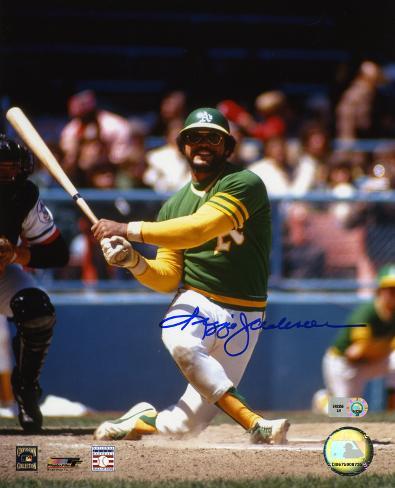
Scott generated national notice by leading the American League in runs batted in and tying for the lead in home runs with Reggie Jackson in 1975.
The Hardball Times remembers Scott fondly, beginning with a necklace he wore:
When a curious reporter asked him to identify the material that comprised the necklace, Scott answered matter-of-factly, “Second basemen’s teeth.” Whatever the actual composition of the necklace, the jewelry made the feared slugger that much more intimidating when he strolled to the plate or delivered a rolling block on a middle infielder.
Much like his contemporary, Dick Allen, Scott wore a helmet while playing first base for most of his career. Scott began wearing the helmet because of the idiotic behavior of some fans on the road who threw hard objects his way. Rather than take any additional chances, Scott ditched the usual soft cap for a hard helmet. He continued the practice, both at home and away, for the rest of his career.
The helmet and the necklace were ever-present during games in the 1970s, but Scott had another unusual fashion habit that trademarked his pre-game workouts. During his second stint with the Red Sox, Scott wore a rubberized suit in an attempt to lose some of the weight near his midsection. As Don Zimmer revealed in the first of his two books with New York sportswriter Bill Madden, Scott managed to sweat off a few pounds during each workout, but by the time the start of the game rolled around, Boomer seemed to have gained all of the weight back. Whatever he tried, he just couldn’t rid himself of the excess poundage.
Scott’s weight, helmet, and necklace tended to distract from one other important consideration: He was a very, very good player. Amazingly agile for a man his size, Scott’s quickness, footwork, and soft hands made him arguably the best defensive first baseman of the late 1960s and early 1970s. (Perhaps only the Dodgers’ Wes Parker was better.) At the plate, Scott had “light tower” power. When he connected, his ferocious swing and sheer strength produced an array of tape measure home runs. …
The 1968 season saw Scott begin the year in a deep and mysterious slump from which he could not recover that summer. He batted a meager .171 with three home runs in 124 games. It was a lost season, but Scott bounced back to put up decent numbers in each of the next three seasons. A 24-home run campaign in 1971 had some thinking that Scott would remain in Boston for years, but the Red Sox decided to take advantage of his growing trade value and turn him in for some speed and pitching. The Sox packaged Scott with outfielders Billy Conigliaro and Joe Lahoud, catcher Don Pavletich, and pitchers Jim Lonborg and Ken Brett, sending them to the Brewers for 30/30 outfielder Tommy Harper, right-handers Lew Krausse and Marty Pattin, and minor league outfielder Pat Skrable.
The massive 10-player deal took Scott away from friendly Fenway Park and into the relatively unfamiliar environ of County Stadium. Though he hit only seven home runs in Milwaukee that summer, he put up a better OPS at home than he did on the road. For the entire season, Scott hit 20 home runs while adding the surprising dimension of 16 stolen bases. He remained a solid player, earning MVP votes and winning a Gold Glove in each of his first three seasons with the Brewers. In 1973, he batted a career-high .306 while actually increasing his power output.
In 1975, Scott’s bat exploded. Reaching career highs with 36 home runs and 109 RBIs, Boomer tied Reggie Jackson for the league lead in the former category and captured the league crown in the latter. He also paced all league hitters in total bases. With his violent, all-out swing and raw power, Scott emerged as the most feared right-handed hitter in the American League.
After a downturn in 1976, the Brewers decided to cut bait with their 32-year-old slugger. The Red Sox, looking for another right-handed slugger, thought it was a good time to bring back their former first baseman. They sent the left-handed hitting Cecil Cooper to the Brewers for Scott and veteran outfielder Bernie Carbo.
Enormously popular in Boston, Scott enjoyed a happy homecoming with the Red Sox. He blasted 33 home runs and slugged an even .500. Scott helped the Red Sox win 97 games, but Boston ran second to the eventual world champions in New York. …
As fine a player as Scott was, he had even great impact as one of the game’s most colorful characters of the 1970s. Friendly and outgoing, Scott happily chatted with fans and regularly signed autographs at the ballpark. Willing to talk after both wins and losses, he readily provided quotes to members of the media, whether in Boston or Milwaukee. He even developed his own terminology, referring to home runs as “taters.” (Other players, like Reggie Jackson, caught on and began to talk about hitting taters, too.) Scott also had a nickname for the dark first baseman’s mitt that he used, calling it “Black Beauty.”
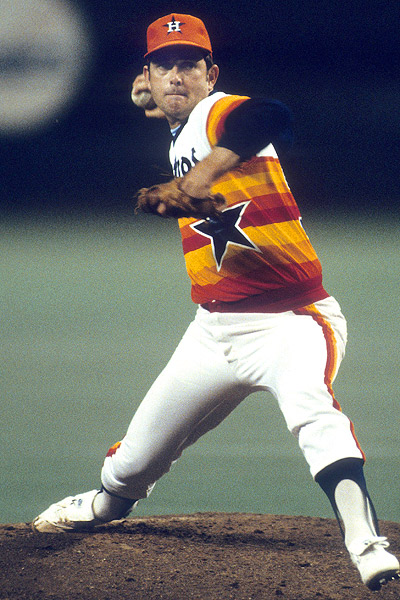
Scott played in the first Brewers game I ever saw, against California (now the Los Angeles Angels of Anaheim, or something like that) and pitcher Nolan Ryan June 14, 1975. Aaron homered, the game ended on a 4–6–3 double play, and the Brewers won 6–4. (And Aaron waved at me after the game, thus cementing his place as my favorite baseball player of all time.)
Boston sportswriter Leigh Montville remembers Scott’s two Red Sox stints:
He was a sweetheart. That was what he was, this one-time leader of the American League in home runs and runs batted in, winner of eight Gold Gloves, who died on Monday, sick and old before his time at 69 in Greenville, Miss. There were pieces of Babe Ruth and Josh Gibson in him, mixed with pieces of Jackie Gleason and Falstaff and, I don’t know, maybe Louis Armstrong and maybe your father’s brother, the big guy who comes to the house and makes everybody laugh for the entire evening.
He moved through his nine seasons in Boston, 14 in the major leagues, with thunder and charm. As soon as he arrived at Fenway Park in the summer of 1966, he dropped the word “tater” into the baseball lexicon as a better word for “home run” and promised to make so much money that he would be “driving an Oldsmobile with a Cadillac hitched up behind.” How could anyone not fall in love with a ballplayer like this?
He had a squeaky, different voice for a big man, memorable from the first time you heard it. He boasted in that voice. He pouted. He laughed. He complained. The voice made you smile, no matter what the words were. …
In baseball, his rookie season was a fine window to his future. He led the American League with 152 strikeouts. He also led the league in grounding into double plays with 25. Oh, wait a minute, he also hit 27 home runs and drove in 90 runs. Switched from third base to first, a position so new to him he had to find a glove to play it, he became a stylist, a dancer, a vacuum cleaner around the bag. He was selected to the All-Star team, first year at the position, and named that new glove “Black Beauty.”
A strikeout or a homer. That was George Scott’s modus operandi at the plate. The fielding was his constant. …
He would have two stints in Boston, traded to the Milwaukee Brewers in 1972, traded back to the Red Sox in 1977 for two more years, then part of a third. The 1975 season was his statistical best, as he led the league with 36 taters, 109 RBIs. He would finish his career with 271 taters, a .268 batting average, numbers that probably should have been better, could have been better, but at least were real. He probably never lifted a weight during his career, certainly never ingested a steroid. He was a big man doing big man things.
He was natural. He was clean. He was fun.
“Is it true that you once hit a ball onto the Massachusetts Turnpike?” a Boston radio host asked the Boomer last year, talking about the highway that runs well behind the left field wall at Fenway.
“I don’t know,” that voice replied, last time I heard it. “But I hit some that were going in that direction.”
Scott was one of the players who personified ’70s baseball. Jim Bouton, Seattle Pilots pitcher and author of Ball Four, wrote that as of 1969 the baseball establishment’s idea of color was a player’s wearing his cap at a “jaunty angle.” By the time Scott arrived in Milwaukee, baseball had Afros (even among white players), creative facial hair (see the photo), creative accessorizing (see Scott’s necklace) and jerseys ranging from Cleveland’s blood red (which made first baseman Boog Powell look like a giant tomato) to Oakland’s kelly green to Houston’s “tequila sunrise” multiple colors.
The Brewers traded Scott back to the Red Sox in exchange for a left-handed-hitting first baseman who couldn’t seem to get into the Sox lineup regularly. That would be Cecil Cooper. That trade worked out well for the Brewers.
Scott was fondly remembered in Milwaukee, though, to being honored with his own bobblehead:

-
I try to avoid discussing politics in this space on Fridays, but a moment of economic stupidity took place earlier this week.
I wrote earlier this week about New York Post columnist Kyle Smith’s claim that a McDonald’s McDouble, for $1, is “the cheapest, most nutritious and bountiful food that has ever existed in human history.”
That corresponded with a series of strikes, including in Milwaukee, by McDonald’s workers (led by a $130,000-per-year labor leader) who want their pay doubled from the federal minimum wage of $7.25 per hour. (Which is not McDonald’s average salary.) Some threatened to contaminate food, which is an excellent way to make sure no one eats fast food, which would result in higher unemployment among minimum-wage workers, wouldn’t it?
Regular readers would rightly conclude I am skeptical about the minimum wage anyway. The New York Times took the correct position in 1987 that the proper minimum wage is zero. Businesses pay their employees as little as they can, because a business’ first responsibility is to make a profit; no profit, no business. Labor is generally the largest expense for a business, and businesses that pay their employees more than they can afford end up with higher prices than their competitors and lose business as a result. Ultimately, an employee is paid based on the costs — mostly, but not all, financial — of replacing that employee. That’s why valued employees make more money than less-valued employees.
The majority of minimum wage workers are teenagers and young adults, people who are paid what they are because they are new in the workforce and therefore have few provable workplace skills, and because there is a lot of available labor for that salary in the workforce. (I got hired for my first part-time job 32 years ago right about now, a bus boy at the late Bridgeman’s Restaurant and Ice Cream Parlour near Fire Station 5 in Madison, for $3.35 per hour. It took me about eight months to get that job, two months after my 16th birthday, a traditional hiring age.) The average family income of a minimum-wage worker is not $15,080 per year (what you’d make in a year of full-time work at $7.25 per hour), it’s more than $53,000 per year.
The Huffington Post earlier this week reported claims from University of Kansas student Arnobio Morelix that if McDonald’s doubled its employees’ pay, the price of their food would increase only 17 percent.
That got noticed by self-admitted Big Mac eater Adam Elliott of WOLX in Madison:
68 cents is literally chump change to me. 17 cents on top of a Dollar Menu item is even less of a concern to me. If the research in this article is valid, then Isay we should just chalk up the extra cost as a personal tax for eating food that we know isn’t very good for us. Jeesh! 68 cents?! Give those poor workers a raise already.
The first problem with Elliott’s opinion is based on those eight words, “if the research in this article is valid.” It isn’t. The Wall Street Journal’s James Taranto begins:
Morelix’s “study” has a back-of-the-envelope quality to it. He looks at the company’s 2012 annual report and observes that its labor costs amounted to 17% of its total revenue. Therefore, he concludes, the consequence of doubling wages would be a 17% price rise–17 cents on a Dollar Menu item, times 4 for the $4 Big Mac.
There’s a let-them-eat-cake quality about [Puffington Host writer Caroline] Fairchild’s dismissive reference to a 17% increase in prices. Sixty-eight cents may not amount to much, and the hypothetical increase in the cost of a single meal, even adding fries and Coke, would break hardly anybody’s bank.
But people have to eat several times a day, every day. “Working- and middle-class families make up the bulk of McDonalds customers,” as blogger Tom Maguire notes. A 17% increase in one’s food budget would be much harder for them to bear than for a comfortably salaried professional journalist or for someone who is independently wealthy and thus can afford to write gratis for the Puffington Host …
The aforementioned Tom Maguire picks up from there by actually reading the entire McDonald’s Corp. annual report:
From the Consolidated Statement of Income (p. 30) we see that “Payroll and Employee Benefits” came to $4,710.3 (in millions, or $4,710,300,000, which is even past A-Rod territory.) Total Revenue was $27,567 (in millions). Dividing 4,710 by 27,567 yields 17.1%, which we take to be the 17% used by Morelix.
However! McDonalds reports a net revenue from both the stores it operates and its franchise fees. The McDonalds franchisors are separate businesses which pay a fee to McDonalds Corp and are responsible for their own payroll, as is discussed in the annual report (p. 13).
So Morelix has not included the payroll figure for the franchisees in this calculation. Is that a big problem? Huge, actually. From page 11 we see that their are 6,598 outlets run directly by McDonalds Corp and 27,882 franchised outlets. Sales from franchised outlets totalled $69,687 (in million) in 2012, which far exceeds the $18,602 (mm) revenue figure for company-operated stores. That $69 billion figure is condensed down to $8.9 billion of franchise revenue on the Consolidated Statement of Income (The rest of the $27,567 MM in total revenue comes from sales at McDonalds run stores).
Which leaves us where? Doubling all the salaries at McDonalds headquarters and in their 6,598 stores would be offset by a total revenue increase of 17%, but the franchisees won’t be agreeing to pay more in franchise fees and won’t be raising their payroll (the size of which we haven’t found in this report) in the 27,882 stores they operate. And yes, that slides right past the question of how to deal with their international operations.
If I were inclined to press down this road I would compare the $18 billion of revenue from McDonalds run stores with the payroll figure of $4.7 billion; that ratio is 26%. By that calculation, McDonalds would need to raise all its prices by 26% at its own stores in order to double all of its direct payroll expenses, which presumably includes a lot of non-hamburger flippers at headquarters. Hey, 17%, 26%, de nada – that is only a 50% error and it’s not my money anyway!
Or from a different tack – the McDonalds-operated stores average $2.8 million in sales per store. The franchisees average $2.5 million per store, so they are on average a bit smaller but close enough that maybe we can wave our hands and pretend they are the same. That suggests that if the franchisees cost structure looks like the parent company then they can double their payroll and recoup the additional expense by raising prices by 26%.
Of course, that is a big if. And it assumes that there are no elasticities – consumers don’t switch to Wendy’s, franchisees don’t finally buy that expensive whiz-bang machine that eliminates two jobs, and so on. One might argue that if minimum wage legislation obliged Wendy’s and other fast food chains to also raise payroll costs that all of them would be obliged to raise prices and some of the consumer substitution would be mitigated. One might also wonder why McDonalds and their franchisees have been so beneficient as to forebear a 26% price increase, taking all that new revenue straight to the bottom line. Have they forgotten to be greedy, or are they already charging as much as they think consumers will pay?
Moreever, there is yet another problem. The fundamental premise is that McDonalds customers will pay more, thereby raising the living standard of the McDonalds employees. That would be fine if Mitt Romney and his sons were over-represented in the McDonalds demographic, but I bet they aren’t. My guess is that working- and middle-class families make up the bulk of McDonalds customers, which means the working class and middle class will be reaching into their non-capacious pockets to elevate the lifestyle of McDonalds workers, not all of whom are themselves in the working class. …
House Representative Keith Ellison (D, MN) loves the idea of McDonalds charging more to pay more. …
“I would pay $0.17 for somebody to be able to feed their family,” Ellison stated.
Seventeen cents?!? Big spending from a Congressman making well over $100K. But here in reality, we are asking Joe Walmart to pay an extra dollar on a four dollar tab to boost the fortunes of Jane McDonald. Since a Big Mac meal already runs more than that, well, mangia!
Smith also noticed that most of McDonald’s customers are of the working class and middle class, defined for purposes of today’s blog as someone who makes less money than a government employee in Madison. To actual working people with families, a 26-percent more expensive trip to McDonald’s is, to quote Vice President Joe Biden out of context, a big f—ing deal. It’s not as if a McDonald’s McDouble that formerly cost you $1 will cost you $1.26 (plus tax) tomorrow; it’s that it will cost you 26 percent more every single time you buy it.
And forget Elliott’s occasional Big Macs. If I get a McDouble ($1), small French fries ($1.19), and sweet tea ($1), the total with tax will be $3.37. If the Dollar Menu becomes the $1.26 Menu, my two Dollar Menu-and-small-fries meal now costs $4.24. If I ate that every weekday for lunch, I would have to pay an additional $226.20 over a 52-week year. Given what I know about the salaries paid in radio, I doubt $226 per year is chump change for Elliott or his WOLX colleagues.
When the $20 trip to McDonald’s for your family of four becomes a $25 trip to McDonald’s, you will be making fewer trips to McDonald’s. You may go to Burger King, Wendy’s, or some place where the food costs less, or you may not go out at all. Either way, less business for McDonald’s means less employment by McDonald’s.
Which the Huffington Post had to admit Wednesday:
On Monday, The Huffington Post published a story entitled “Doubling McDonald’s Salaries Would Cause Your Big Mac To Cost Just 68¢ More.” HuffPost has since learned that the research used as the basis of the story contains significant errors that cast doubts on its claims. This story has replaced the one originally published in this space. …
A typical fast-food restaurant spends 30 to 35 percent of its income on labor, according to a recent release from the Employment Policies Institute, a research organization whose work is often cited by those who argue against increasing the minimum wage. The institute estimates that small-business owners who run McDonald’s franchises spend about a third of their income on wages, which would mean the price of a Big Mac would go up by $1.28 to $5.27. …
By the reckoning of Bonnie Riggs, a restaurant industry analyst at market information and advisory firm the NPD Group, a doubling of wages for all McDonald’s workers is “not even in the realm of feasibility.” With fewer and fewer Americans eating out at restaurants due to factors like the payroll tax hike and increases in gas prices, Riggs said restaurants like McDonald’s are trying to discount prices as much as possible to get customers through the door. This means the company’s profit margins could not withstand a labor cost increase of this magnitude, she added.
While we’re on the subject, let’s also repeat a point Smith made:
Driving up McDonald’s wage costs would drive up the price of burgers for millions of poor people. “So what?” say activists. Maybe that’ll drive people to farmers markets.
For the average poor person, it isn’t a great option to take a trip to the farmers market to puzzle over esoteric lefty-foodie codes. (Is sustainable better than organic? What if I have to choose between fair trade and cruelty-free?) Produce may seem cheap to environmentally aware blond moms who spend $300 on their highlights every month, but if your object is to fill your belly, it is hugely expensive per calorie.
Junk food costs as little as $1.76 per 1,000 calories, whereas fresh veggies and the like cost more than 10 times as much, found a 2007 University of Washington survey for the Journal of the American Dietetic Association. A 2,000-calorie day of meals would, if you stuck strictly to the good-for-you stuff, cost $36.32, said the study’s lead author, Adam Drewnowski.
“Not only are the empty calories cheaper,” he reported, “but the healthy foods are becoming more and more expensive. Vegetables and fruits are rapidly becoming luxury goods.” Where else but McDonald’s can poor people obtain so many calories per dollar?
And as for organic — the Abercrombie and Fitch jeans of food — if you have to check the price, you can’t afford it. (Not that it has any health benefits, as last year’s huge Stanford meta-study showed.)
Moreover, produce takes more time to prepare and spoils quickly, two more factors that effectively drive up the cost. Any time you’re spending peeling vegetables is time you aren’t spending on the job.
“Any time you’re spending peeling vegetables is time you aren’t spending” doing anything else. McDonald’s got to where it is today because it conveniently provides inexpensive food of consistent quality. (That’s why they call it “fast food.”) If you have little money in your pocket, you’re away from your home and you have limited time, you know what you are likely to get from the McDonald’s near you anywhere in the U.S.
And for those who do, try something that isn’t on the visible menu — a McGangBang (double cheeseburger and McChicken in one sandwich) or a Land, Sea and Air Burger (Big Mac, McChicken and Filet io’ Fish) or a Monster Mac. Add a McLeprechaun (Shamrock and chocolate shake) or Neapolitan (chocolate, strawberry and vanilla), and make sure your next physical is at least a month out.
-
Today in 1961, the Beatles made their debut as the house band of the Cavern Club in Liverpool, before they had recorded music of their own creation.
Birthdays start with Edward Pattern, one of Gladys Knight’s Pips …
… born one year before Doris Kenner of the Shirelles:
-
The Wall Street Journal nicely summarizes Barack Obama’s “grand bargain”:
In Chattanooga on Tuesday, the latest stop on his economic inequality tour, President Obama made himself an offer he couldn’t refuse. If Congressional Republicans agree to a corporate tax increase, he said, then he’ll agree to spend more money on his favorite public-works projects. If Republicans bargain hard, will he also offer an expansion of ObamaCare as a sweetener?
We know this sounds like an exaggeration, but that’s the essence of what the President proposed as what he called a new “grand bargain.” Mr. Obama will agree to reform the corporate tax code—a GOP priority and one even the President claims to support—but only if the reform raises more revenue and only if he is allowed to spend that windfall on his priorities.
A White House press release clarified that the President would also like to raise taxes on individuals, not just businesses, while allowing federal spending to rise still higher. But showing they retain a sense of humor in the West Wing, the press release suggests that the President is willing to forgo this tax increase for now because he wants to “work with Republicans.”
This isn’t a serious proposal, and he knows it. It also isn’t bipartisan, since he is offering a compromise with appeal to the ideological spectrum running from Elizabeth Warren to Chuck Schumer. …
The real bipartisan reform opportunity would be to get behind the chief Senate and House tax writers, Democrat Max Baucus and Republican Dave Camp. They’ve been holding hearings on tax reform for years, and Mr. Baucus has even invited all Senators to send him a list of tax provisions they’d like to retain and why.
The rub for Mr. Obama is that both men conceive of using whatever money they would raise from closing loopholes to reduce tax rates. This is crucial to getting rates as low as possible, especially given that the statutory U.S. corporate rate of 35% (plus state corporate taxes) is the highest in the developed world.
But it is also crucial to making reform politically possible. A reform that merely lowers rates a few percentage points has no chance of building enough support to overcome the opposition of companies and interests that will see their tax loopholes closed.
The problem, as ever, is that Mr. Obama simply can’t get over his ideological fixation to keep tax rates as high as possible. We say “ideological” because his own advisers concede that a 35% rate hurts U.S. business competitiveness. Even Japan, the last high-rate holdout among rich countries, is cutting its corporate rate. But recall the famous moment in the 2008 campaign when then Senator Obama was asked by ABC’s Charlie Gibson if he would support higher capital gains tax rates even if they raised less revenue than lower rates. Mr. Obama said yes. …
Even for businesses that might find the proposal intriguing, the simplification in Mr. Obama’s plan seems to apply mainly to those that file under the corporate tax system. Most small business owners file under the rules for individuals, which are not being simplified under this plan and whose tax rates Mr. Obama raised substantially in January. Cutting corporate rates without doing so for small businesses will merely increase the opportunities for tax arbitrage.
On the other side of Mr. Obama’s grand bargain, he offered his usual grab bag of spending that would create more union jobs at high Davis-Bacon wages, more teachers, and more job training, though the federal government already runs more than 40 job-training programs that don’t seem to do much training for real jobs. He also wants more subsidies for biofuels and electric cars—the ideas that worked so well in the first term.
The Weekly Standard also observes:
The New York Times reports that President Obama is reviving an old proposal to lower the corporate tax rate from 35 percent to 28 percent (and 25 percent for manufacturers). Obama’s push to lower the corporate tax rate to 28 percent comes less than a year after he raised the top individual income tax rate, paid by many small businesses, to 39.6 percent.
In a speech delivered Tuesday afternoon, Obama did not explain why he thinks it’s a sound economic idea to raise the top marginal tax rate on small businesses but lower it for corporations. …
Neither Obama’s Tuesday speech nor his February 2012 corporate tax reform plan explained in detail which loopholes would be closed. During the 2012 presidential campaign, the Obama campaign hammered Mitt Romney for not saying which loopholes he would close to pay for a proposed reduction in individual income tax rates.
“Many small businesses” pay the top income tax bracket because they are organized as subchapter-S corporations, whose taxes flow through to their owners. According to S-Corp, subchapter-S corporations employ one of four Americans. So Obama is perfectly fine with 40-percent tax rates (as of Jan. 1, when the George W. Bush tax cuts ended) on the employers of one in four Americans.
S-Corp is not thrilled with Obama’s proposal:
In effect, the President’s plan calls for raising taxes on pass-through businesses in order to cut them for larger C corporations.
How much? Our 2011 study from Ernst & Young showed that pass-through businesses will see their tax burden rise by 8 percent ($27 billion) per year under budget neutral, corporate-only tax reform. Industries most affected by the tax hike are agriculture (22 percent), construction (9 percent), retailers (9 percent), manufacturing (8 percent), and real estate (8 percent). This same study made clear that pass-through businesses employ the majority of private sector workers in the US.
So the President is proposing to hike taxes on the majority of employers in order to cut them for a smaller segment of C corporations.
Moreover, these estimates came before the recent rate hikes on pass-through businesses, so the total impact of the President’s proposal today should be higher. To the extent the President wants to raise revenue, that too would increase the hit to pass through businesses.
The Washington Post adds, and I assume this is not fiction:
The White House can’t be expecting the House GOP to suddenly cave. They’re trying to do a couple of things. First, expand the idea of a “grand bargain” to mean not just deficit reform but any sort of economic agreement, and challenge Republicans to come up with a counteroffer. Second, try to win support from the business community for a proposal that contains two things they want: tax reform and domestic investments.
Most of all, Obama is simply making clear that tax reform is one of his priorities, as Ronald Reagan did in his second term. “Tax reform is a drama with heroes and villains and a damsel in distress,” Reagan said in 1985, in a speech given in — wouldn’t you know it — Tennessee.
Reagan’s definition of “tax reform” resulted in two personal income tax brackets: 15 percent and 28 percent. (That lasted as long as George H.W. Bush’s tax increase, which resulted in Bush’s presidential election loss.) Obama’s definition of “tax reform” isn’t Reagan’s, nor is it any Republican’s definition. For that matter, it isn’t Bill Clinton’s definition either; he at least cut capital gains taxes with cooperation from Republicans.
The fact that Obama’s “grand bargain” isn’t going to happen doesn’t mean tax reform isn’t necessary. Tax reform that results in lower rates and a smaller bite of our money is necessary. Present tax rates are a major reason for Obama’s flaccid economy, as Investors Business Daily points out:
The fiscal cliff deal he signed at the start of the year hiked taxes a total of $620 billion over the next decade. And ObamaCare added another $1 trillion in new taxes.
Worse, 13 of these took effect in January, according to an analysis by the Heritage Foundation, with many of them hitting businesses and investments.
Among them:
- The top marginal tax rate climbed from 35% to 39.6% on incomes over $450,000. These same taxpayers saw rates on dividends and capital gains go from 15% last year to 20%.
- Personal exemptions and itemized deductions are now phased out on incomes over $300,000. And the full expensing of business investments expired at the start of the year.
- ObamaCare added a 3.8% surtax on investment income for those earning more than $250,000, and a Medicare surtax of 0.9% on incomes above that amount.
- In addition, there’s the 2.3% excise tax on medical devices, and cuts to two corporate tax deductions related to health benefits.
With so many anti-growth taxes all hitting at once, it’s hardly surprising that growth has slowed. The only mystery is why no one is talking about it.
-
My favorite meteorological blogger, Mike Smith, has a few things to say about the Emergency Alert System …
Is there anything more ridiculous than the government’s Emergency Alert System (EAS)? It is supposed to tell us if there is important weather or news. But, broadcasters already do that.
Last night, we had lots of damage from thunderstorms in south central Kansas. But, the KWCH-TV coverage of the storm got cut off by the “required weekly EAS test.” The audio was cut and the EAS crawl visually overwhelmed the important storm warning at the bottom of the screen.
But, we need it in a national crisis, right? It was not activated on September 11. Do you really believe Fox, CNN, ABC, CBS, won’t cover a story bigger than September 11??
… the “disease” of lightning …
The Centers for Disease Control (CDC) tell us men are six times more likely to be killed by lightning than women. Of course, meteorologists have known this for decades.
Okay, but why is the CDC even doing this work? Here is an article from 2009 that reaches the same conclusions. And, one from AccuWeather in 2011 with the same information.
Last time I checked, neither bacteria nor virus nor fungus were part of the composition of lightning. So, it is hardly a “disease.”
We keep hearing the federal government is short of money but there sure seems to be a lot of duplication, mission-creep, and reporting the obvious.
… and the difference between what the feds think is important and what actually is important:
With all of the global warming, NSA, TSA nonsense going in Washington, as usual, our government is focused on the wrong things. Rather than spending money on re-re-determining men get killed by lightning more often than women, let’s focus on the huge threats for which we need government coordination:
Pry, Cooper, and former CIA Director James Woolsey have been recently demanding that Washington prepare the nation’s electric grid for an EMP, either from the sun or an enemy’s nuclear bomb. They want the 2,000-3,000 transformers in the grid protected with a high-tech metal box and spares ready to rebuild the system. Woolsey said knocking out just 20 would shut down electricity to parts of the nation “for a long time.” …
Just two weeks ago, we had a dangerous “near miss.”Imagine living in 1880 without the 1880’s infrastructure: Horses, grain milled by a stream-driven mill, no modern medicines, etc. That is what we would have to deal with — for months — if this occurs.One of the comments on Smith’s EAS observations:
I work at a radio station and I’ve been cut off live on the air trying to announce a tornado warning by the EAS system giving a “warning”.
That is obviously contrary to the intent of the EAS. Then again, as the New York Times reported in 2002, “No president has ever used the current [EAS] system or its technical predecessors in the last 50 years, despite the Soviet missile crisis, a presidential assassination, the Oklahoma City bombing, major earthquakes and three recent high-alert terrorist warnings.” That statement remains accurate 11 years later. There has been only one nationwide EAS test, which didn’t go too well.
If the electromagnetic pulse of which Smith wrote fried everything electronic, no one would be able to hear a presidential message, or any other kind of message unless delivered by someone with a loud voice.
 Steve Prestegard.com: The Presteblog