… here.
No comments on Hard-hitting journalism, found by clicking …
… here.
Today in 1975, the Bee Gees hit number one, even though they were just just just …
Birthdays start with Harry Mills of the Mills Brothers:
Tim Nerenz coined the term “conservatarian” — conservative on economic issues, libertarian (or as Nerenz put it, neutral) on social issues.
I like that term, even though there isn’t much difference between today’s conservatives and libertarians on economic issues. (Libertarians would claim that Republicans say one thing and do another on economic issues, and libertarians have a pretty convincing argument.)
By that logic, the opposite should be “libertarial” — liberal on economic issues, libertarian on social issues. The Washington Amazon.com Post wonders where left–libertarians fit within the Democratic Party:
For evidence of the widespread uneasiness on the left, one need look no further than the vote in the House last week to defund the NSA’s phone record collection program. While much was made of the fact that nearly half of Republicans voted for the measure, it’s just as notable that 111 of 194 Democrats did the same.
In other words, well more than half the House Democratic conference voted to defund a surveillance program overseen by a president of their own party. That’s a pretty stunning fact that has gotten lost in the current debate.
So why hasn’t this issue played out on the Democratic side like it has on the Republican side (i.e. in full view)?
Put plainly: It’s a movement in search of a leader. There isn’t one big nationally known player on the left that is pushing this issue in a way that Paul is on the right.
For now, the de facto leaders of the left’s effort to rein in the Obama Administration’s surveillance programs are Sen. Ron Wyden (D-Ore.) and, arguably, the journalist who has been working with Edward Snowden to reveal the programs, Glenn Greenwald. While these two have been pushing the issue hard, they aren’t exactly political figures with huge built-in constituencies.
Aside from those two, Sen. Dianne Feinstein (D-Calif.) has been talking about ways to make the programs better, working as a bridge between libertarian-leaning Democrats and the Obama Administration (she wrote a Washington Post op-ed to that effect earlier this week). But, as Senate Intelligence Committee chairwoman, Feinstein is hardly a libertarian leader on the left. …
Privacy concerns in the Democratic Party have waned — predictably — since Obama took office, but there remains a sizeable constituency for a potential 2016 contender to take advantage of — particularly given two possible candidates closely tied to the administration’s national security programs (Hillary Clinton and Vice President Biden) currently lead the field of contenders. …
While Republicans were very hawkish during George W. Bush’s presidency, Democrats have long been conflicted on issues of privacy and national security.
“Now that [GOP concerns are] finally being voiced, it sounds louder in contrast with the previous silence, and may even be a bit louder for having been pent up all this time,” Sanchez said. “And so it’s natural to note that more than the somewhat hoarse-voiced and weary objections from civil libertarians on the left who’ve been shouting since 2002.”
Potential 2016 contenders who could take up this mantle include noted liberals like Howard Dean or even Sen. Elizabeth Warren (D-Mass.). But Dean hasn’t been a major figure in the Democratic Party for a while now, and Warren has close ties to the Obama Administration, which would seem to make her less likely to buck it on these issues.
My split between economic and social issues really requires a third category — foreign policy and war. On that issue, most Democrats have parroted whatever Barack Obama wants them to say. On foreign policy, for the most part the party parrots the president, the exception being during the Johnson administration on Vietnam. Democrats became quite dovish after Johnson, with disastrous consequences for this country, and, for that matter, their own political careers. Such peacenik Democratic U.S. senators as Frank Church, George McGovern and Wisconsin’s own Gaylord Nelson saw their political careers end like, well, Hiroshima and Nagasaki in the 1980 elections.
The Democrats have always been libertarian on certain social issues — abortion rights and women’s rights, to name two. The Democrats were libertarian on other social issues until Bill Clinton, as usual interested only in his own political present and future, figured out that voters supported candidates who were tough on crime. Democrats now oppose freedom of expression for their opponents, similar to many Republicans.
The modern Democratic Party has never been libertarian on economic issues, except to the extent that Bill Clinton and, in name only, Obama support free trade. Unions opposed liberalizing immigration because of the possibility of cheaper labor to compete against their members. To the extent Democrats now favor more open immigration, it is based on their belief that that will gain them new voters.
The appeal to me of libertarianism is that it is consistent. (Putting aside the fact that human beings are never consistent.) If you do not want government butting into your bedroom, you should not want government in your wallet either. Smaller government and fiscal responsibility with tax dollars are utterly anathema to the Democratic Party today, and that is unlikely to change in my lifetime.
Since Hillary Clinton appears to be the Democratic nominee for president in 2016, it will be interesting to see how these so-called libertarian Democrats take on foreign and military policies for which a Republican president would have been shredded, but are A-OK by the Obama/Hillary-worshiping Democrats.
In late July the Washington Examiner examined the salaries of city employees and found that — surprise! — salaries of City of Madison and City of Milwaukee employees were far out of whack compared to the salaries of those whose taxes pay their salaries.
What does “out of whack” mean? According to the U.S. Census, as of 2011 the average per capita income in this state was $27,192, and the median family income was $52,374. The average City of Madison employee makes $62,233 per year, and the average City of Milwaukee employee makes $61,729 per year.
The Examiner has done a similar comparison with county employees, this time comparing “average county worker salaries from the Census Bureau’s 2011 Government Employment & Payroll survey, and compared them with the median salaries of full-time workers in the same counties, from the Census’ 2009-2011 tally, to account for cost of living differences.”
So here’s the Wisconsin list, ranked in the nation:
74. Milwaukee County: Average county employee salary $54,994, which is 136 percent of the median salaries of Milwaukee County full-time workers.
111. Racine County: Average salary $54,364, 129 percent of median.
129. Rock County: Average salary $51,304, 127 percent of median.
132. Brown County: Average salary $51,529, 126 percent of median.
134. Kenosha County: Average salary $56,638, 126 percent of median.
137. Outagamie County: Average salary $54,847, 125 percent of median.
138. Walworth County: Average salary $50,970, 125 percent of median.
150. Fond du Lac County: Average salary $50,661, 124 percent of median.
152. Sheboygan County: Average salary $50,988, 123 percent of median.
174. Dane County: Average salary $55,630, 120 percent of median.
County employees in at least 10 counties — which means probably more than that, since the list ended at 117 percent of median — make more money by themselves than not only the median (as in half above and half below) worker in those employees, but make more than the median income of a family in this state. It’s not hard to see how UW Prof. Katherine Cramer Walsh was able to observe, “In most communities, the public workers are the ones who are rich.”
It also exposes the lack of veracity of claims by public employee unions during the Act 10 debate and resulting Recallarama that public employees traded lower pay for better benefits. When a government employee by himself or herself makes more money in a year than the average Wisconsin family does, that employee is getting better salary and benefits. It would be nice if the unions had been honest about that, but honesty has never been a strong point with union leadership in the political sphere. You’ll never get a union mouthpiece, particularly a teacher union mouthpiece, to admit, for instance, the reality of every workplace in the world — some employees are better than others, some employees work harder than others, and some employees work harder than their salaries and some barely meet the minimum requirements for their work. And unlike at a business that you choose to use or not, taxpayers are paying the salaries of good, bad and average government employees.
Public employee salaries are important for taxpayers to know because (1) taxpayers pay their salaries, (2) public employee salaries and expenses are the highest expense in nearly every unit of government; and (3) public employee pensions are the next looming fiscal crisis in some areas, except for those areas (Detroit, Illinois and California, for instance) where pensions are not a future crisis, they’re a crisis now.
I eagerly await the Examiner’s next examination of state employee salaries vs. those who pay their salaries through taxes. That one may be even more revealing. (I’ll give you another group who makes by themselves nearly as much money as the average family in this state: State legislators.)
Two anniversaries today demonstrate the fickle nature of the pop charts. This is the number one song today in 1960:
Three years later, the Kingsmen released “Louie Louie.” Some radio stations refused to play it because they claimed it was obscene. Which is ridiculous, because the lyrics were not obscene, merely incomprehensible:
Today in 1969, while the Beatles were wrapping up work on “Abbey Road,” they shot the album cover:
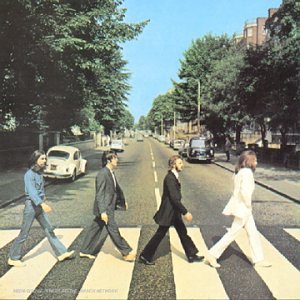
Christian Schneider said earlier this week:
In 2014, Wisconsin will hold its third gubernatorial election in a little over four years. And in the run-up to an election that will shape the future of the state, Democrats have created the perfect candidate to win the election. Unfortunately for them, that candidate is Republican Scott Walker.
On the day after the 2012 Wisconsin gubernatorial recall election, I argued that Democrats essentially moved the 2014 election ahead two years. In trying to oust Walker over his plan to virtually end collective bargaining for most public employees, the Wisconsin left created a Republican star with national street cred and a database of donors that spanned the 50 states.
Now, Walker can raise a million dollars in the amount of time it takes him to listen to a Styx album. His talking points are now forged of titanium, impenetrable by any prospective electoral opponent.
Polls have shown that Walker is more popular than President Barack Obama, who also won the state twice. According to the latest Marquette University survey, Walker’s approval rating is down to 48%, although that number was only 51% when he won the recall election by seven percentage points. In fact, a large share of Walker’s slight drop is due to Republicans who believe his recently signed budget isn’t conservative enough. Presumably, in an election, those voters will come back home.
Of course, it takes two candidates to make an election, and in 2014, Walker only has to be better than the candidate the Democrats throw his way.
To date, the most prominent name rumored to be taking on Walker is Madison School Board member and millionaire former Trek Bicycle executive Mary Burke. The fact that an untested local school board representative is the best option the Democrats can dredge up in a statewide election is telling enough; but the progressives aren’t so hot on Burke’s candidacy, either.
In many ways, Burke is a moderate. If the state’s liberals were displeased with Tom Barrett as their Walker adversary in 2010 and 2012, they won’t be high-fiving over a Burke nomination; Burke makes Barrett look like Che Guevara.
Calling Burke the “Mitt Romney of the left,” many progressives have criticized Burke for donating $2.5 million to a failed effort to start a charter school for at-risk African-American and Latino children in Madison. Her critics on the left point out that she once supported a study urging staff cutbacks in the Milwaukee Public Schools — a post at the DailyKos asks the Romneyesque question, “Who would Mary Burke fire?” In taking on Walker, clearly Democrats want a choice, not an echo.
The GOP also quotes Ruth Conniff, an occasional Wisconsin Public Radio foil of mine, as saying, “The Democrats have seemed alarmingly unprepared to challenge him.” Which brings two lessons to mind: (1) Don’t be a member of a political party (and I am not), and (2) never underestimate your opponent. Wisconsin Democrats have underestimated Walker ever since he became Milwaukee County executive, and that is now biting them in the, uh, donkey. Recallarama not only flushed tens of millions of Democratic donor dollars down the drain of media companies’ bank accounts for no actual effect, it turned the governor of a state representing not even 2 percent of the U.S.’ populatoin into a conservative star and a potential presidential candidate, if not in 2016, then later.
If not Burke or Democrats you’ve heard of, then who? How about state Rep. Brett Hulsey (D–Madison)? The Milwaukee Journal Sentinel’s Dan Bice reports:
With embattled Rep. Brett Hulsey, you never know what to expect.
This started out being a post on Hulsey’s unusual use of campaign funds to buy an old convertible and register for a triathlon. But by the end of two chats on Monday, the Madison lawmaker was openly contemplating a run for governor after dismissing the leading Democrat eyeing a bid.
“I was at an event with Mary Burke the other day,” said Hulsey, a Democrat. “She’s got the charisma of a turnip.”
Yes, that was on the record.
For those who don’t know, Hulsey is a 54-year-old liberal lawmaker who has made a name for himself with his sometimes bizzare behavior.
When he’s not getting ticketed for photographing and engaging in horseplay with a boy at a Madison beach, he is terrifying his Capitol staff by carrying around a box cutter and talking about toting a muzzle-loading rifle onto the Assembly floor. …
In May, Hulsey also paid $85.39 to participate in a triathlon. He wouldn’t identify which one it was, but online records show he finished 139th out of 324 competitors at the Pardeeville Triathlon on July 6.
Of course, Hulsey wore Speedo-style swimwear, and a photographer has posted shots of him during different legs of the event. …
Actually, Hulsey believes it’s his fellow Democrats who are leaking negative stories about him. Earlier this year, he said said he might bolt his party to become an Independent.
“It is pathetic that Democrats are going after me rather than fighting Gov. Scott Walker and trying to get Wisconsin working again,” he said Monday.
Hulsey certainly is not fond of Burke, the millionaire Madison School Board member and former Trek Bicycle executive who is making the rounds with Democratic leaders as she gears up for a possible gubernatorial run next year.
Not only did he suggest that she is personality-deprived, Hulsey said she was MIA during the fight with the GOP governor over his legislation stripping most state workers of their collective bargaining rights.
“While we were fighting Gov. Walker — trying to keep him from cutting $800 million from education and gut Wisconsin’s school system — she was working with right-wing interests to take money away from Madison schools to create this bogus private academy,” Hulsey said. “I’m not impressed.”
He’s referring to Burke’s $2.5 million donation in 2011 to set up two public charter schools in Madison targeting low-income, minority students. It has since been voted down by the Madison School Board.
Burke did not respond to a message about Hulsey’s remarks.
So who does Hulsey like for governor?
As crazy and implausible as it sounds, he suggested that he is pondering the idea. He said people like his message when he’s out and about the state.
But Hulsey — who raised only $30 in the past six months — certainly doesn’t have the campaign stash to match Burke or Walker. Undeterred, Hulsey said he would like to run a low-budget, populist-style campaign in the manner of former Wisconsin Sen. William Proxmire.
Given that Hulsey’s red convertible appears to be a Volkswagen Golf, one wonders how unions will feel about that.
The self-comparison to Proxmire is ludicrous, given that Proxmire was able to run his “low-budget, populist-style” campaigns after winning the 1957 special election to replace the deceased Sen. Joe McCarthy because Proxmire was an incumbent. Proxmire also was popular with non-Democrats because he was a fiscal conservative. No one considers Hulsey to be a fiscal conservative; the past five years prove that fiscal conservatives do not exist in today’s Wisconsin Democratic Party.
However, every Wisconsin political reporter, myself included, hopes that Hulsey does run. (Whether as a Democrat, presumably forcing a primary, or as an independent is immaterial, because no one who would consider voting for Hulsey would be voting for Walker anyway.) At a minimum, Hulsey would be entertaining to watch.
RedState has no fewer than 73 rules for prospective Republican presidential candidates, including (including me? We’ll see):
1-Run because you think your ideas are right and you believe you would be the best president. Don’t stay out because your chances are slim, and don’t get in because someone else wants you to. Candidates who don’t have a good reason for running or don’t want to be there are a fraud on their supporters.
2-Ask yourself what you’re willing to sacrifice or compromise on to win. If there’s nothing important you’d sacrifice, don’t run; you will lose. If there’s nothing important you wouldn’t, don’t run; you deserve to lose.
3- If you don’t like Republican voters, don’t run.
4-Don’t start a campaign if you’re not prepared for the possibility that you might become the frontrunner. Stranger things have happened.
5-If you’ve never won an election before, go win one first. This won’t be the first one you win.
6-Winning is what counts. Your primary and general election opponents will go negative, play wedge issues that work for them, and raise money wherever it can be found. If you aren’t willing to do all three enthusiastically, you’re going to be a high minded loser. Nobody who listens to the campaign-trail scolds wins. In the general election, if you don’t convey to voters that you believe in your heart that your opponent is a dangerously misguided choice, you will lose.
7-Pick your battles, or they will be picked for you. You can choose a few unpopular stances on principle, but even the most principled candidates need to spend most of their time holding defensible ground. If you have positions you can’t explain or defend without shooting yourself in the foot, drop them. …
10-You will be called a racist, regardless of your actual life history, behavior, beliefs or platform. Any effort to deny that you’re a racist will be taken as proof that you are one. Accept it as the price of admission. …
12-Ask yourself if there’s anything people will demand to know about you, and get it out there early. If your tax returns or your business partnerships are too important to disclose, don’t run. (We might call this the Bain Capital Rule). …
14-Run as who you are, not who you think the voters want. There’s no substitute for authenticity. …
16-If you never give the media new things to talk about, they’ll talk about things you don’t like.
17-Never assume the voters are stupid or foolish, but also don’t assume they are well-informed. Talk to them the way you’d explain something to your boss for the first time. …
19-Voters may be motivated by hope, fear, resentment, greed, altriusm or any number of other emotions, but they want to believe they are voting for something, not against someone. Give them some positive cause to rally around beyond defeating the other guy.
20-Optimism wins. If you are going to be a warrior, be a happy warrior. Anger turns people off, so laugh at yourself and the other side whenever possible, even in a heated argument.
21-Ideas don’t run for President; people do. If people don’t like you, they won’t listen to you.
22-Your biography is the opening act. Your policy proposals and principles are the headliner. Never confuse the two. The voters know the difference.
23-Show, don’t tell. Proclaiming your conservatism is meaningless, and it’s harder to sell to the unconverted than policy proposals and accomplishments that are based on conservative thinking. …
27-Be ready and able to explain how your plans benefit individual voters. Self-interest is a powerful thing in a democracy.
31-When in doubt, go on the attack against the Democratic frontrunner rather than your primary opponents. Never forget that you are auditioning to run the general election against the Democrat, not just trying to be the least-bad Republican.
32-Attacking your opponents from the left, or using left-wing language, is a mistake no matter how tempting the opportunity. It makes Republican voters associate you with people they don’t like. This is how both Newt Gingrich and Rick Perry ended up fumbling the Bain Capital attack.
33-Be prepared to defend every attack you make, no matter where your campaign made it. Nobody likes a rabbit puncher. Tim Pawlenty’s attack on Romneycare dissolved the instant he refused to repeat it to Romney’s face, and so did his campaign.
34-If your position has changed, explain why the old one was wrong. People want to know how you learn. If you don’t think the old one was wrong, just inconvenient, the voters will figure that out.
35-If a debate or interview question is biased or ridiculous, point that out. Voters want to know you can smell a trap. This worked for Newt Gingrich every single time he did it. It worked when George H.W. Bush did it to Dan Rather. It will work for you.
36-Cultivate sympathetic media, from explicitly conservative outlets to fair-minded local media. But even in the primaries, you need to engage periodically with hostile mainstream media outlets to stay in practice and prove to primary voters that you can hold your ground outside the bubble. …
38-Hecklers are an opportunity, not a nuisance. If you can’t win an exchange with a heckler, how are you going to win one with a presidential candidate? If you’re not sure how it’s done, go watch some of Chris Christie’s YouTube collection. …
40-Never whine about negative campaigning. If it’s false, fight back; if not, just keep telling your own story. Candidates who are complaining about negative campaigning smell like losing. …
44-Voters do not like obviously insincere pandering, but you cannot win an election by refusing on principle to meet the voters where they are. That includes, yes, addressing Hispanic and other identity groups with a plan for sustained outreach and an explanation of how they benefit from your agenda. Build your outreach team, including liaisons and advertising in Spanish-language media, early and stay engaged as if this was the only way to reach the voters. For some voters, it is. …
47-If you’re not making enemies among liberals, you’re doing it wrong.
49-The goal is to win the election, not just the primary. Never box yourself in to win a primary in a way that will cause you to lose the election.
51-Some Republicans can be persuaded to vote for you in the general, but not in the primary. Some will threaten to sit out the general. Ignore them. You can’t make everyone happy. Run a strong general election campaign and enough of them will come your way. …
54-If you’re not prepared for a debate, don’t go. Nobody ever had their campaign sunk by skipping a primary debate. But looking unprepared for a debate can, as Rick Perry learned, create a bad impression that even a decade-long record can’t overcome.
55-The Iowa Straw Poll is a trap with no upside. Avoid it. Michele Bachmann won the Straw Poll and still finished last in Iowa. …
63-Don’t plan to match the Democrats’ operations and technology, because then you’re just trying to win the last election. Plan to beat it.
64-Political consultants are like leeches. Small numbers, carefully applied, can be good for you. Large numbers will suck you dry, kill you, and move on to another host without a backward look. …
69-Getting distance from your base in the general on ancillary issues won’t hurt you; they’ll suck it up and independents will like it. Attacking your base on core issues will alienate your most loyal voters and confuse independents. …
72-Never, ever, ever take anything for granted. Every election, people lose primary or general elections because they were complacent.
73-Make a few rules of your own. Losing campaigns imitate; winning campaigns innovate.
To reinforce a couple of points: The party follows presidential candidates who win. Whether the GOP was on board with “compassionate conservatism” in 2000, they were as soon as George W. Bush became president. Whether the GOP was on board with what became Reaganomics in 1980, they were as soon as Ronald Reagan became president. If I win in 2016, the GOP will become a party of conservatarian ideas.
Truth be told, though, I don’t want to run for president. I’d rather be Lyn Nofziger.
Birthdays today start with the singer of perhaps the most inappropriate song for a Western in the history of movies, B.J. Thomas:
Baseball player Alex Rodriguez got what might amount to a lifetime ban from Major League Baseball for his use of performance-enhancing drugs.
The suspension issued Monday is for the rest of this season and all of next season. But with 20 seasons in baseball, taking more than a year off is likely to end his career.
Wisconsinites may forget where Rodriguez’s career began. It began in Appleton, where the Foxes, Seattle’s Class A affiliate, played at ancient, amenity-free Goodland Field. My wife and I saw Rodriguez play (and not well this particular night) before the Mariners promoted him to Class AA, and then to the big club before sending him down to Class AAA just before the 1994 baseball strike so that he could continue to play. Once the strike ended, Rodriguez was in the major leagues to stay.
The Foxes were not, exactly. The next year, the Foxes moved to Grand Chute and became the Wisconsin Timber Rattlers, whose Fox Cities Stadium hosts the WIAA spring baseball tournament. Rodriguez has signed a few lottery-grand-prize-size contracts — one with the Texas Rangers, two with the New York Yankees — but those days are certainly over.
David Vecsey writes about Rodriguez in his Foxes days:
In the summer of 1994, I was the clubhouse manager for the Peoria Chiefs, a job that entailed washing hundreds of dirty uniforms, setting out pregame meals and vacuuming copious amounts of chewed-up sunflower seeds out of the carpeting, all for about 40 cents an hour. Best job ever. I was paid to come to the ballpark every day, where I shagged balls in batting practice and traded obscenity-laced barbs with Jimmy Piersall. …
The No. 1 overall draft pick from the year before, Rodriguez was perhaps the top prospect in all of baseball. The Seattle Mariners had given him a $1 million signing bonus and a three-year, $1.3 million contract. Everybody in the ballpark knew he was a big deal, and his natural talent was obvious. As with any teenage phenom, the only question was whether the big deal could be the real deal. And it was trial by fire, with fans riding Rodriguez mercilessly and jeering every move he made.
I don’t recall what he did on the field over those couple of days. What I do remember was something that I, and almost nobody else, saw him do off the field. Standing outside the clubhouse one night, he peeled off a few bills from that million-dollar bonus and sent my assistant to get a stack of postgame pizzas for his teammates. …
People will puzzle over and debate this strange, spectacular athlete for years to come. And that’s fine. He deserves it. Rodriguez is responsible for his own legacy, whatever that may yet be. And I don’t begrudge anybody’s opinion of him, of his ambition or his ham-handed public-relations fiascoes. I don’t come to praise A-Rod, nor do I come to bury him.
In the end, just as I did 19 years ago at a minor league ballpark in central Illinois, I won’t remember him for whatever he did to amuse the cheering mob of the bloodthirsty coliseum. I won’t remember him for his postseason struggles or for dating Madonna or for kissing his own reflection. Or for Biogenesis. Or for eating popcorn out of Cameron Diaz’s hands. Or for any of the other ridiculous chapters this epic failure will ultimately comprise.
I’ll try to remember him as an 18-year-old with the whole world in front of him, riding the buses and buying pizza for his teammates.
The Times’ George Vecsey makes you think:
The singular event in the life of Alex Rodriguez is not his imminent suspension, or the career home run record that now will never happen.
The event that makes him so remote, so rudderless, took place when he was 9, when his father disappeared. This is not pop psychology to explain a man who blundered into the airplane propeller of adult reality. This is his own theory.
Back when he was a young major leaguer, Rodriguez would occasionally explain himself in terms of his missing father. His mother was strong and smart, and remains so to this day, but he expressed bewilderment that a father could just take off.
People who knew him in Seattle accepted that as the flaw in that apparently perfect equipment — the willowy shortstop with power, who worked so hard and innately understood the game but not life. He went from earnest to clueless, with no warning light — “always on the outside of whatever side there was,” as Dylan wrote about the gangster Joey Gallo.
Barely into his 20s, Rodriguez once told a reporter a poignant tale that in his spare time on the road he visited college campuses, like Harvard, asking students how they chose the college, and what they studied. He had once feinted toward taking a few courses at the University of Miami, probably as a negotiating tactic with the Seattle Mariners, before taking their huge bonus. Now he claimed he was sampling that alternative life — but common sense, self-protection, could not be grafted on by visiting a campus or accumulating elegant business suits.
Many athletes, many people, grow up without a parent or two. Some get through it. But Rodriguez stands on the brink of the suspension that will take him out of baseball, perhaps through the 2014 season, or forever. It is quite safe to say he would not be paying his newest set of lawyers — he is always changing authority figures — if baseball did not have a huge case against him. …
One does not have to be a Yankees fan to understand that there are two kinds of Yankee stars: Rent-a-Yankees Yankees and Real Yankees. Roger Clemens, that swaggering bully, apart from any drug or legal issues, was not a Real Yankee. Wade Boggs was just seeking the brass ring on the merry-go-round. What about Dave Winfield? Ask the Bleacher Bums to take a vote. But Paul O’Neill and Hideki Matsui became Real Yankees, instantly.
Maybe A-Rod never had a chance to be a Real Yankee, but he ruined his image permanently with his scandals and machinations and posturing. He missed the voice in his childhood saying, “Alex, cut that out.”
“Dad left us when I was 9,” Rodriguez told Bob Finnigan of The Seattle Times in the spring of 1998. “What did I know back then? I thought he was coming back. I thought he had gone to the store or something. But he never came back. … It still hurts.”
His father ran a shoe store, but after moving from New York to the Dominican Republic to Miami, he suddenly left.
“He had been so good to me, actually spoiled me because I was the baby of the family,” Rodriguez told Finnigan, adding: “I couldn’t understand what he had done. To this day, I still don’t really know how a man could do that to his family: turn his back.”
His mother remarried and did well in business, but Rodriguez said he was still upset over the split.
“After a while, I lied to myself,” Rodriguez said. “I tried to tell myself that it didn’t matter, that I didn’t care. But times I was alone, I often cried. Where was my father? To this day, I still can’t get close to people.”
By contrast, Derek Jeter has a father, Charles, who was a drug counselor and a mother, Dorothy, who was an accountant, as well as a sister. The family seems to have sent him a message: “Derek, whatever you do, don’t be a jerk.” Which he never has been.
He is heading for the dreaded Sargasso Sea of sports, where banished athletes wait, becalmed, hoping for winds of pardon. Shoeless Joe Jackson, who never ratted on the plot to throw the 1919 World Series, never reached the Hall of Fame. Pete Rose hobbles around on his aging stumpy body, paying for being a knucklehead when baseball caught him betting on his team’s games, as a manager. Lance Armstrong is downsizing his life in Texas. Many behemoths of the past generation are hoping baseball writers forget why they aren’t voting all those fantastic career statistics into the Hall. And good luck with that.
Alex Rodriguez, just turned 38, is about to fade away. He never had that stern voice in his ear that said, “Alex — don’t!”
 You wonder if Rodriguez’s father, wherever he is now (assuming he’s still alive), thinks about that.
A lot of people envy athletes and other celebrities, or at least the money they make. (As you know from this blog, they shouldn’t.) In older days, many star athletes had, shall we say, complicated relationships with their fathers. (That can be seen with some high school athletes today.) There may well be a disproportionate number of pro athletes who grew up not knowing their fathers, or not knowing them for very long. For many pro and college athletes today, growing up in single-parent families in poor areas, the money of sports is their only ticket out of repeating the life of their parents. Fathers are, for better or worse, the first and most important role models for boys. It’s hard to have a role model when the role model isn’t there.
Michael Auslin of the American Enterprise Institute compares two major cities on Interstate 94 — now-bankrupt Detroit and Chicago:
Having just been downgraded three notches by Moody’s, Chicago is suddenly hearing the uncomfortable shifting of deck chairs, as people wonder if the nation’s third-largest city is about to slam into the same debt-and-pensions iceberg that sank the SS Detroit last month.
It was once inconceivable that the Motor City would become the setting for post-apocalyptic visions of burned out, abandoned neighborhoods, a corrupt and incarcerated city government, and all-but-nonexistent public services. Yet Detroit’s collapse took but a few decades. Now, the same disbelief and denial about Chicago is being heard, yet the evidence for the inescapable bill of mismanagement and bad policy is still making headlines just a few hundred miles north of the Windy City.
For all its manifest faults (such as being the world’s most dangerous global city), Chicago is not yet close to matching Detroit’s mismanagement, hollowed-out tax base, or loss of productive sectors. Neither is it the one-industry town that Detroit was, nor has it been hemorrhaging residents for decades. In fact, it is a far more vibrant place than when I was growing up here in the 1970s and 1980s, with lots more young people, gentrified neighborhoods (which, admittedly, reduces its gritty charm for an erstwhile resident), and money sloshing around. Even those decades, though, were an improvement over the city’s near-death experience in the 1960s when faced with the decline of traditional industries like steel. Then, Mayor Richard J. Daley, the “Boss,” saved the city, or at least argued that he did, by building vital transportation lifelines into the downtown, making real development of the suburbs and exurbs a viable proposition. Of course, to do so, he had to drive the Dan Ryan Expressway through vibrant ethnic neighborhoods like Little Italy. It was messy and highly controversial, but it was focused solely on making the city economically competitive again.
Today, Chicago faces another threat, shared by many Democratic municipal governments. The city may seem healthy on the surface, but its finances are shaky, to say the least. Chicago is staring at a massive, $340 million budget deficit, which, if pension plans aren’t radically changed, may open up to a $1 billion shortfall as soon as 2015. The Moody’s downgrade was tied directly to the looming budget hole and lack of progress on restructuring its pension and health-care obligations. All too predictably, Mayor Rahm Emanuel has addressed this by focusing on increasing revenue and getting a bigger slice of state taxes.
The next decade will likely determine the city’s future, and mordant urban death watchers should track every step Emanuel and City Hall makes from now on. Whatever you think about Emanuel, he’s no deer-in-the-headlights politician, and his battle with the Chicago Teachers Union last year showed his willingness to take on heavyweight opponents, regardless of the outcome. He knows that Chicago will face the same fiscal pressures Detroit did, the same political battles to preserve pension plans, and the same pressure on businesses to relocate to friendlier confines in Indiana and Wisconsin. And there’s no hope for help from the state capital: Illinois’s situation is far more dire, with unfunded pension liabilities topping $100 billion. Time will tell whether Emanuel adapts and forces Chicago to make the tough choices, or follows the Detroit model of slow, inexorable collapse.
One thing both Mayor Emanuel and Illinois governor Pat Quinn can be sure of: Their neighbors aren’t standing still. A friend who runs a Chicago food-industry business told me that one of his subcontractors looking for new land in Indiana personally was contacted by then-governor Mitch Daniels. Daniels apparently had standing orders that he be informed about any company considering relocating to Indiana, so he could reach out himself to sell them on the virtues of the state. Daniels and Wisconsin’s Scott Walker are just as sharp-eyed as Rahm Emanuel but happen to understand that the key to prosperity is creating business-friendly conditions that will lead to more and higher-paying jobs. Meanwhile, as the excellent Illinois Policy Institute reports, Illinois has the nation’s second-highest property taxes in the U.S., which comes on top of 2011’s 67 percent increase in income-tax rates. Quinn and Emanuel may win their fight to limit pension benefits, but none of that will matter if they don’t create a viable economic environment for entrepreneurs and manufacturers.
Meanwhile, society is suffering. A large part of the city’s budget deficit comes from higher-than-expected costs for public safety. Of course, with an elevated murder rate, one can see why Chicago’s Finest are putting in lots of overtime. Already, however, warnings are coming that Emanuel may have to start cutting city services to bring down the budget deficit. That could send Chicago into a Detroit-style death spiral whereby the affluent flee the ever more dangerous city, taking their tax dollars and investments with them.,
Anyone who has driven through Chicago’s northern suburbs knows that’s already happening.
Regardless of the state of Chicago’s finances, the aforementioned “world’s most dangerous city” appears to lack the ability to keep its citizens safe, as WBBM-TV reports:
Lit fireworks thrown into crowds. Purses and phones stolen. Gangs beating up people and fighting with each other on Oak Street Beach.
Those are some of the occurrences callers reported to 9-1-1 operators on the night of the July 4. …
At 9:34 p.m., a caller at the beach says a fight is breaking out: “Yeah, we need the cops down here on Oak Street Beach. There’s a whole gang of hoodlums fighting and kicking each other in the head and jumping on each other.”
A caller also mentions people trying to escape the chaos by crossing a busy roadway.
“We need cops out here ASAP,” he says.
Later, a caller reports purses being stolen at Division and Oak.
“People are running, things are getting stolen,” the caller says. “People are hitting the ground.”
Another caller says: “We’re at Oak Street Beach and there are gangs of kids beating up people here. I don’t know if there’s any cops in the area.”
The Chicago Police Department says its staffing was appropriate on July 4.
 Steve Prestegard.com: The Presteblog