• Presty the DJ for Oct. 15

    October 15, 2013
    Music

    The number one single today in 1966:

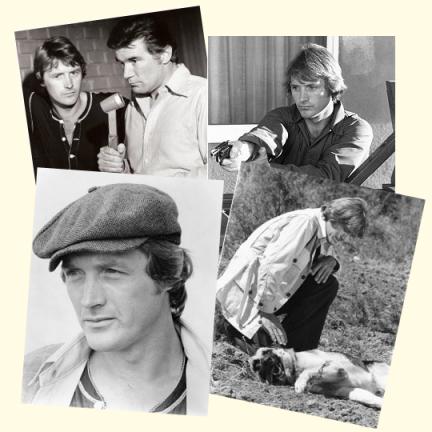
    Today in 1971, Rick Nelson was booed at Madison Square Garden in New York when he dared to sing new material at a concert. That prompted him to write …

    If I told you the number one British album today in 1983 was “Genesis,” I would have given you the artist and the title:

    (more…)

    Share this on …

    • Share on X (Opens in new window) X
    • Share on Facebook (Opens in new window) Facebook
    • Share on LinkedIn (Opens in new window) LinkedIn
    • Email a link to a friend (Opens in new window) Email
    • Print (Opens in new window) Print
    Like Loading…
    No comments on Presty the DJ for Oct. 15
  • Is this impeachable?

    October 14, 2013
    US politics

    Jonah Goldberg:

    Last week I wrote a column accusing the president of having a vindictive streak — of deliberately trying to make the lives of average Americans worse just so he could score ideological and political points.

    We already knew from how he handled the budget sequester that Obama liked this approach. He ordered Cabinet secretaries not to do their jobs — i.e., to manage as best they could under spending restraints — but instead to find ways to make the cuts needlessly painful for innocents caught in the Beltway crossfire.

    They dusted off the same playbook for the shutdown. As one park ranger told the Washington Times, “We’ve been told to make life as difficult for people as we can.”

    Admittedly, the case was circumstantial. There was no smoking gun. What was really needed was a confession.

    Obama delivered. On October 8, Obama was asked by Mark Knoller of CBS if he was “tempted” to sign the numerous funding bills passed by the GOP-controlled House that would greatly alleviate the pain of the shutdown. Republicans have voted to reopen parks, fund cancer trials for children at the NIH, and to keep FEMA and the FDA going through this partial shutdown. But Obama has threatened to veto any such efforts, effectively keeping the Senate from considering the legislation.

    “Of course I’m tempted” to sign those bills, Obama explained. “But here’s the problem. What you’ve seen are bills that come up wherever Republicans are feeling political pressure, they put a bill forward. And if there’s no political heat, if there’s no television story on it, then nothing happens.”

    Obama’s answer dragged on, as all of Obama’s answers do. But the point was made. For the first time in American history, a president confessed to deliberately hurting his country to score points against his enemies.

    Which brings us to the national disgrace this week in which the Department of Defense denied death benefits to the families of fallen service members.

    White House press secretary Jay Carney insists, with operatic righteousness, that Obama never intended for the 26 families of the fallen to be denied this aid or to be hindered from retrieving their beloveds’ remains from Dover Air Force Base.

    But Carney is surely lying — and the evidence isn’t simply that his lips are moving.

    Carney defends the administration by noting that the Pentagon warned Congress in late September that the shutdown would prevent the payments from going out.

    But Congress passed the Pay Our Military Act to fund the military through the shutdown. Administration officials first stonewalled Congress’s efforts for clarity on the issue, then the lawyers eventually determined that because the act didn’t specifically include the word “benefits,” they couldn’t err on the side of helping grieving families.

    In other words, when asked to make a judgment call, and knowing that Congress wanted the benefits paid, this administration still claimed its hands were tied by the fine print. Given how often the White House routinely ignores the plain meaning of the law — and the will of Congress — when it suits its political agenda, logic dictates that it denied the benefits on purpose.

    Moreover, by its own account, the White House says it knew for weeks this would happen. During all the back-and-forth, the White House did nothing to remedy the situation. It only sprang into outraged action when suddenly faced with a PR nightmare. …

    Let me say it again. The president confessed. It’s his express policy to punish innocent bystanders in order to score partisan points. That order has gone forth like a fatwa to the bureaucracy. And it is only when that policy blows up in his face that Obama becomes “very disturbed.”

    When terrible things happened on George W. Bush’s watch — Katrina, Abu Ghraib, etc. — the immediate liberal response was to insist that Bush had in fact ordered or wanted the terrible things to happen.

    Now we have a president openly admitting it — and no one seems to care.

    Does that strike you as an example of “high crimes and misdemeanors”? Whatever you think of Obama’s 43 predecessors, none of them were fools enough to admit to being fine with hurting the people he’s supposed to serve so that his party can work to destroy the opposition.

    Share this on …

    • Share on X (Opens in new window) X
    • Share on Facebook (Opens in new window) Facebook
    • Share on LinkedIn (Opens in new window) LinkedIn
    • Email a link to a friend (Opens in new window) Email
    • Print (Opens in new window) Print
    Like Loading…
    1 comment on Is this impeachable?
  • Read past the lead

    October 14, 2013
    US politics

    Kevin Jackson starts with a bold statement:

    Admit it. You want a white Republican president again.

    Jackson follows that with:

    In the pre-black president era, criticizing the president was simply the American thing to do. An exercise of one’s First Amendment right. Criticism had nothing to do with color, because there had never been a black president, or at least one whom people recognized as black.

    So to criticize the president meant that you didn’t like his policies.

    The election of a recognized black president was not supposed to change anything. In fact, it was supposed to (1) ease any perceived racial tensions, and (2) allow the government to focus on legislating without race. So America would be more free than ever to discuss the issues.

    Not the case. And that is why having a white Republican president is best for the country.

    Consider that nobody is ever accused of being racist for disagreeing with white presidents. Mexicans disagreed with most white Republican presidents over America’s immigration policy. Many deranged Mexicans believe we should open the country up to them, some saying that much of America belongs to Mexico anyway. They are not called racists.

    Liberal blacks have disagreed with most Republican presidents since Eisenhower, yet these blacks are not considered racists. In fact, when blacks had sanity and disagreed with the policies of racist white Democrat presidents, nobody accused black people of being racists.

    Fighting for one’s civil rights was not racist then, nor is it racist now. Blacks (and Republicans) were on the side of righteousness, when they disagreed with the racist policies of Andrew Johnson, and adopted by every Democrat president since.

    Never has a black person been called racist, because they didn’t like one of the white presidents’ policies. Blacks were just exercising their First Amendment rights to speak freely. Blacks have disagreed with policy positions of about every Republican president in the modern era, including those who have helped them. …

    African-American columnist Joseph Perkins has studied the effects of Reaganomics on black America. He found that, after the Reagan tax cuts gained traction, African-American unemployment fell from 19.5 percent in 1983 to 11.4 percent in 1989. Black-owned businesses saw income rise from $12.4 billion in 1982 to $18.1 billion in 1987—an annual average growth rate of 7.9 percent. The black middle class expanded by one-third during the Reagan years, from 3.6 million to 4.8 million.

    Real Politics reports Obama’s statistics as follows:

    Median family income for black Americans has declined a whopping 10.9 percent during the Obama administration…This decline does not include losses suffered during the financial crisis and the recession that followed, but it instead measures declines since June 2009, when the recession officially ended.

    That’s not the only bad news for African-Americans. The poverty rate for blacks is now 25.8 percent. The black labor force participation rate, which rose throughout the 1980s and 1990s, has declined for the past decade and quite sharply under Obama to 61.4 percent. The black unemployment rate, according to Pew Research, stands at 13.4 percent. Among black, male, high school dropouts, PBS’ Paul Salmon reports, the unemployment rate is a staggering 95 percent.

    That report was from 2011, and it’s gotten worse since then. Facts don’t lie. Yet blacks want to put Obama on Mt. Rushmore and hang Reagan in effigy.

    I don’t think Jackson’s point was actually as bold as his headline. The first comment on this piece says:

    I didn’t read the article, just headline that I do not agree with: Dr. Thomas Sowell, Dr. Ben Carson, Dr. Walter Williams, Col. Allen West, Col. Allen West, a LOT, there are so many qualified people that could help lead this country return back to greatness.

    I am afraid that Obama has caused people to be apprehensive about another Black President because he encouraged hate between the races so much rather than being a Leader and taking the Country down the right (correct) path to keep us strong and our eye on the real issue other than maxing out his “race card”.

    Jackson’s point is that our first mixed-race president has been bad for blacks. (Obama has been bad for whites and every other race too.) Claiming that every criticism of Obama is “Raaaacist!” (and, after that, every criticism of future Democratic presidential nominee Hillary Clinton or U.S. Sen. Tammy Baldwin (D–Not Anywhere I Live) is sexist or, better yet, is misogynist or, in Baldwin’s case, homophobic) is the corollary to Godwin’s Law, the online rule that the side in a debate that calls the other a Nazi automatically loses.

    Jackson, by the way, is the author of Sexy Brilliance … and Other Political Lies and The BIG Black Lie. Here is his photo.

    Share this on …

    • Share on X (Opens in new window) X
    • Share on Facebook (Opens in new window) Facebook
    • Share on LinkedIn (Opens in new window) LinkedIn
    • Email a link to a friend (Opens in new window) Email
    • Print (Opens in new window) Print
    Like Loading…
    No comments on Read past the lead
  • Presty the DJ for Oct. 14

    October 14, 2013
    Music

    The number one song today in 1957 was the Everly Brothers’ first number one:

    The number one British single today in 1960:

    The number one album today in 1967 is about an event that supposedly took place on my birthday:

    (more…)

    Share this on …

    • Share on X (Opens in new window) X
    • Share on Facebook (Opens in new window) Facebook
    • Share on LinkedIn (Opens in new window) LinkedIn
    • Email a link to a friend (Opens in new window) Email
    • Print (Opens in new window) Print
    Like Loading…
    No comments on Presty the DJ for Oct. 14
  • Presty the DJ for Oct. 13

    October 13, 2013
    Music

    The number one British album today in 1973 was the Rolling Stones’ “Goats Head Soup,” despite (or perhaps because of) the BBC’s ban of one of its songs, “Star Star”:

    Who shares a birthday with my brother (who celebrated his sixth birthday, on a Friday the 13th, by getting chicken pox from me)? Start with Paul Simon:

    Robert Lamm plays keyboards — or more accurately, the keytar — for Chicago:

    Sammy Hagar:

    Craig McGregor of Foghat:

    John Ford Coley, formerly a duet with England Dan Seals:

    Rob Marche played guitar for the Jo Boxers, who …

    One death of note: Ed Sullivan, whose Sunday night CBS-TV show showed off rock and roll (plus Topo Gigio and Senor Wences) to millions, died today in 1974:

    Share this on …

    • Share on X (Opens in new window) X
    • Share on Facebook (Opens in new window) Facebook
    • Share on LinkedIn (Opens in new window) LinkedIn
    • Email a link to a friend (Opens in new window) Email
    • Print (Opens in new window) Print
    Like Loading…
    No comments on Presty the DJ for Oct. 13
  • Presty the DJ for Oct. 12

    October 12, 2013
    Music

    We begin with an entry from the It Seemed Like a Good Idea at the Time Dept.: Today in 1956, Chrysler Corp. launched its 1957 car lineup with a new option: a record player. The record player didn’t play albums or 45s, however; it played only seven-inch discs at 16⅔ rpm. Chrysler sold them until 1961.

    Today in 1957, Little Richard was on an Australian tour when he publicly renounced rock and roll and embraced religion and announced he was going to record Gospel music from now on. The conversion was the result of his praying during a flight when one of the plane’s engines caught fire.

    Little Richard returned to rock and roll five years later.

    The number one song today in 1963:

    (more…)

    Share this on …

    • Share on X (Opens in new window) X
    • Share on Facebook (Opens in new window) Facebook
    • Share on LinkedIn (Opens in new window) LinkedIn
    • Email a link to a friend (Opens in new window) Email
    • Print (Opens in new window) Print
    Like Loading…
    No comments on Presty the DJ for Oct. 12
  • Of-fense! Of-fense!

    October 11, 2013
    Sports

    On Saturday, I was the sideline reporter for the UW–Platteville Homecoming football game. Final score: UWP 49, UW–Eau Claire 27.

    Three weeks ago, I announced Platteville High School’s 56–13 win over Richland Center. The Hillmen scored, believe it or not, the fewest points of the three winning teams in their conference that week.

    I have also called a 48–45 Platteville loss and, two weeks ago, a 50–7 win, the same night as this epic: Oconomowoc 84, Wisconsin Lutheran 82. (No, that was not a basketball game. In fact, I predict that that football game will have more points than any high school basketball game in Wisconsin this year.)

    Last season, Wisconsin locked up its third consecutive Rose Bowl trip by beating Nebraska in the Big Ten championship, 70–31. That came a year after Wisconsin beat Michigan State, 42–39 to win the first Big Ten title game. One season before that, the Badgers broke their single-game scoring record — which was set in 1962 — three times, with wins of 70–3, 83–20 and 70–23.

    The Packers went 15–1 in the 2011 season despite the fact that they ranked 19th in the NFL in scoring defense and dead last in yardage given up. They were number one because they had the number one scoring offense in the NFL.

    It seems a gross understatement to say that in football, the offense is ahead of the defense. That seems to be the case in every level of football, not just the pros.

    One of my favorite football commentators, ESPN.com’s Gregg Easterbrook, has noticed:

    Denver and Dallas played a contest with 99 points, 1,039 yards of offense and one punt. At 46 points per game, the Broncos are on a pace to score 736 points, which would pulverize the NFL season record of 589 points. At 490 offensive yards per game, they’re on pace to gain 7,840 yards, which would best the league record of 7,474.

    And the Broncos are staring at the taillights of the Oregon Ducks and Baylor Bears! Baylor is averaging 71 points and 790 offensive yards per game; Oregon, 59 points and 630 yards. Saturday, Baylor gained 617 yards in the first half.

    The offense surge is remarkable across football. A decade ago, the hot quarterback was the same — Peyton Manning — but no NFL team averaged more than 400 yards on offense. Today, Philadelphia’s 453-yard average is practically ho-hum. NFL average scoring per team per game has risen from 18.7 points two decades ago to 22.8 points in 2012 to 23.1 so far this season. The NFL scoring record came in 2007 (New England), the yardage record in 2011 (New Orleans). The NFL’s three best performances ever for first downs were in 2012 (New England), 2011 (New Orleans) and 2011 (New England). How many records will fall in 2013?

    And the NFL is staring at the taillights of the NCAA! FBS scoring has risen from 20.6 points per game per team in 1972 to 28.3 points in 2012 to 30.4 points so far this season. The 122 schools of the FBS are averaging — averaging — 420 offensive yards gained. So far 19 big-time colleges average at least 500 yards per game. Roll in the FCS, Division II and Division III: All told, 69 colleges and universities are gaining more yards than the Denver Broncos. Even the small schools are making the scoreboard spin. Johns Hopkins, an elite academic college, is averaging 544 yards gained.

    Broadly across football, rule changes that favor offense — tighter pass-interference regulations especially — are having the intended impact of increasing scoring. Coaches are putting their best athletes on offense, further shifting the balance. The 7-on-7 fad that began in the high school ranks around the year 2000 has led to college and pro players who spent endless hours in youth practicing passing the ball, and the way you get to Carnegie Hall is to practice, practice, practice. (Or to go on strike.) New emphasis on flagging helmet-to-helmet hits has made defenders a tad less aggressive, which benefits offense. …

    But gaudy numbers have become the new normal in college play. College offensive lines have switched to wider spacing, which spreads out the spread and generates yards. NFL teams could spread their lines too, but this would expose the quarterback to more hits, and protection of the $50 million quarterback is essential in the long professional season.

    The NCAA’s first-down rule — clock stops on each first down — is snaps-friendly. So is the NCAA preference for running the ball. This weekend, Baylor rushed 65 percent of the time, while Denver passes 60 percent of the time. In a quick-snap offense, running allows a faster pace: The line can reform more rapidly, the wide receivers don’t have to walk back a long distance. Max Olson notes that quick-snap rushing has allowed Baylor to score in two minutes or less 29 times in just four games. NCAA first-down rules and college rushing preference add up to more snaps, which increases yards. In the Baylor-West Virginia game, there were 170 offensive snaps; in the Denver-Dallas game, 127 snaps.

    Ultimately, more snaps may account for the big offensive differentials in the NCAA versus the NFL. Dallas and Denver combined to average 8.2 yards per snap; Baylor and West Virginia, 7.4 yards per snap. But Baylor snapped 95 times versus 73 times for Denver. The pace of the Baylor-West Virginia game was dizzying — the official who spotted the ball had to sprint out of the way because he knew the snap was coming so fast. More snaps soften the defense. It’s hard to explain unless you’ve been on the field, but playing defense is more tiring than playing offense. At Colorado, the Oregon Ducks snapped the ball 30 times in the first quarter. Defenders were gasping for air, and were only halfway to halftime.

    The NFL is understandable. Since the late 1970s the league has sought to increase scoring, by changing rules in favor of the offense — limiting allowable contact between defensive backs and receivers and liberalizing what offensive linemen can do to hold off defensive linemen. Rules and fines aim to keep the game’s most marquee players, quarterbacks, from being injured. The NFL concluded years ago that fans like more points than fewer points. (The NFL concluded before that that fans like to think at the start of a season their team has a chance to win the Super Bowl, and so the NFL has worked to make building a dynasty more difficult.)

    The college explanation for offense’s current triumph over defense has more dimensions. NFL trends inevitably flow down to colleges, but colleges also have been responsible for NFL innovations.

    First, some offensive history: Nearly every football offense is based on what was first called the T formation, created by the Chicago Bears in 1940. The T has a quarterback, fullback behind the quarterback, two halfbacks on either side of the fullback, and two ends outside the tackles. Several years later, the Los Angeles Rams moved the right halfback farther to the right, outside the right-side end, and the “flanker,” or “Z” receiver, was born. Teams then took one of the ends and separated him from the rest of the line, creating the “split end,” or “X” receiver. (The tight end, on the opposite side as the split end, because the “Y” receiver.)

    So the basic football formation was two running backs, two ends, and either a third running back or third receiver. (A “wingback” is a running back who plays outside the tight end but just one position over, instead of several yards outside the tight end.) Running backs ran the ball, and receivers caught the ball. Then the American Football League, which figured out before the NFL that the key to drawing non-diehards to be fans was to score a lot, threw the ball lot, even to running backs. Sometimes one of the running backs was moved out of the backfield, either next to another receiver or in motion. (Flankers also went in motion to mess up the defense, whose alignment was based on where the offensive players were when they lined up.)

    Two offensive changes took place in the 1970s and 1980s. Bill Walsh created what became known as the West Coast offense (once he got to San Francisco), in which all five offensive non-linemen could catch the ball, and instead of hurling the ball down the field, short passes were used to move the ball while keeping possession of the ball.

    Not long after that, two coaches separately decided to throw the ball on nearly every down, more out of necessity than anything else. If you’re going to do that, why do you need more than one running back? Thus was born the run-and-shoot, an offense that uses four wide receivers and just one running back.

    Other coaches passed, so to speak, on the run-and-shoot, but decided to adopt one of its attributes — spreading out the offense horizontally (from sideline to sideline), which requires the defense to spread horizontally, which opens up the field for the offense. (Including, it was discovered a few years later, for running the football.)

    That may be more offensive strategy than you cared to read. A more simple explanation for the growth of scoring is better players on offense. Today’s players are unquestionably bigger and stronger, and yet faster and quicker than players of the previous generation. The old adage “offense wins games, defense wins championships” meant college coaches tended to put their best athletes on defense, under the theory that holding your opponent to fewer points is easier than scoring more points. The related adage that three things happen when you throw the football and two of them are bad either led to, or was an example of, the ground-bound offenses, and thus low-scoring games of, well, decades.

    In the 1970s, the National Collegiate Athletic Association restricted football teams to, eventually, 85 scholarship players. So if you were a good high school football player and wanted to play in college, you had to consider schools other than, say, Michigan, Ohio State, Nebraska, Oklahoma, Texas, Alabama and so on. That spread out the available talent.

    Football is not exactly a progressive sport, or at least it wasn’t. However, a few coaches who worked at then-unknown schools figured out that they weren’t likely to be able to recruit, say, Alabama’s players, but they could recruit players to do things Alabama and the other football powers weren’t doing. When Brigham Young University hired one of their assistants, LaVell Edwards, as head coach in 1972, Edwards started throwing the ball because the best previous season BYU had had was with a passing-oriented offense. Between 1972 and 2000, BYU had one losing season. Penn State recruited a kid from western Pennsylvania, Jim Kelly, to play linebacker. But Kelly wanted to play quarterback. Howard Schnellenberger, the coach at the University of Miami, thought Kelly would make a fine college quarterback. Kelly’s replacement at quarterback, Bernie Kosar, led the Hurricanes to a national championship.

    The almighty dollar intervened elsewhere. If you are the athletic director of a college with a losing football program, a program that looks as if it will take several years to build, how can you get fans through the turnstiles? Entertain them. Mike White was hired as coach at Illinois. One of his first quarterbacks, Dave Wilson, threw for more than 600 yards in a game. People started to show up in Champaign. Fans want to win first, but if their team is going to lose, fans prefer to be entertained than bored. Similar to diehard baseball fans being entertained by a pitcher’s duel, only diehard football fans are entertained by, to quote NFL Films narrator John Facenda, a grim defensive struggle.

    I haven’t studied it, but I predict that coaches with offensive backgrounds are hired more often as college head coaches than coaches with defensive backgrounds. (But that can be misleading; the three NFL coaches who ran the run-and-shoot were Jack Pardee, Jerry Glanville and Wayne Fontes. All were defensive coaches who adopted the run-and-shoot because they didn’t think defenses could stop it.)

    As Easterbrook noted, college football rules haven’t kept up with the explosion in offense, which  is why college games can take longer than NFL games. (The 1984 Boston College–Miami game, featuring quarterbacks Doug Flutie and Kosar, took 4½ hours to play, and there was no overtime.) In high school and college, every first down stops the clock long enough to move the chains. (The aforementioned Dodgeville–Platteville game, with a 45-minute halftime lightning, took nearly four hours to play, with 12-minute quarters.) The clock stops on incompletions and plays out of bounds; the clock stops on out-of-bounds plays in the NFL only in the last two minutes of a half.


    Share this on …

    • Share on X (Opens in new window) X
    • Share on Facebook (Opens in new window) Facebook
    • Share on LinkedIn (Opens in new window) LinkedIn
    • Email a link to a friend (Opens in new window) Email
    • Print (Opens in new window) Print
    Like Loading…
    1 comment on Of-fense! Of-fense!
  • Decisions, decisions

    October 11, 2013
    Sports

    The study of leadership is really a study of decision-making, both in macro and micro terms.

    In pro and college football, a “macro” decision is hiring the head coach, whether that’s done by a team owner or general manager, or by a college athletic director. A “micro” decision is field goal vs. going for the first down vs. punting. Make the wrong micro decisions too often, and you might find yourself the target of a macro decision you won’t like.

    Grantland’s Bill Barnwell looked at five game decisions before the season began, because …

    It’s difficult to think out of the box in the middle of a game, which is why the time to really think about these somewhat-aggressive concepts is actually now, before the season even begins. …

    The Fourth-and-Goal Decision

    Despite coaches having access to more information than ever before (including teams with full-time analytics departments), they’re also getting more and more conservative near the goal line. Last year, when teams faced a fourth down with goal-to-go inside the opposition’s 2-yard line, they kicked a field goal 59.3 percent of the time. In 2011, they were all the way up at 61.7 percent, a higher frequency than had been seen since 2000. Teams are supposed to be getting smarter, but somehow, they’re giving away points just when they need them most.

    This is a really simple decision to understand. When teams kick a field goal, and they’ll hit just about 100 percent of the time here, they get three points. When they score a touchdown, they get seven points, including the extra point. Simple math tells us that if a team can convert on a fourth-down attempt 43 percent of the time, it is better off going for it than kicking a field goal.2 Since 1999, teams that have gone for it in this very situation have succeeded and scored a touchdown 50.7 percent of the time. That suggests you’ll score an average of 3.0 points by choosing to kick a field goal and 3.55 points every time you choose to go for it, meaning you leave more than a half-point on the field every time you kick in that situation.

    But wait, there’s more! There’s a hidden benefit of going for it deep in the opposition’s territory: When you try to score, even if you fail, you retain excellent field position against an opposing team trapped near its own end zone. If you kick a field goal, you kick off to the other team, and the average kickoff with the new rules has resulted in a return to the 24-yard line. Assuming that your failed fourth-down attempt turns the ball over on the 2-yard line, you’re giving up an average of 22 yards in field position by taking the easy three as opposed to trying for the touchdown. The difference in expected points scored by a team when it takes over on the 2-yard line as opposed to the 24-yard line is another 0.61 points. Add that to our figure from earlier and you’re now throwing away 1.16 points every time you kick inside the 2-yard line.

    It doesn’t sound like a lot, but those points can be valuable, even if you don’t succeed by going for it. In two recent Super Bowls, teams have failed on a fourth-down try deep in opposition territory late in the second quarter, only to come back and score on a quick drive shortly thereafter. The Saints did it in their win over the Colts by going for it on fourth-and-goal and failing, forcing a quick punt from a pressed-against-his–goal line Peyton Manning, and then kicking a field goal just before halftime. Last year, the Ravens went for a fake field goal on fourth down inside the red zone with 3:12 to go, and while they came up a yard short, they pushed the 49ers onto the 6-yard line and got a quick three-and-out of their own, getting them the ball back on their own 44-yard line with 2:07 to go. Three plays later, Jacoby Jones was in the end zone. …

    Readers of ESPN.com’s Tuesday Morning Quarterback are familiar with the Coach Who Never Punts. I announced (from the sideline) the UW–Eau Claire/UW–Platteville game Saturday, a game in which Eau Claire’s strategy was to use its ground-bound offense (with a Ron Dayne-size running back who averaged 5 yards per carry) to play keep-away from the high-flying Pioneer offense. Eau Claire’s first series featured a fourth-and-1 around midfield. Eau Claire punted instead of going for the first down, with a chance to grind at the Platteville defense. I thought at the time that was a bad decision, and, though Eau Claire led 20–14 at the half, Platteville, despite being very generous with the ball (missed 21-yard field goal, fumbled punt, kickoff return given up, red-zone fumble), still won 49–27.

    Hindsight is always 20/20, but if Eau Claire had gotten one yard and the first down, the Blugolds could have scored while keeping the ball away from Platteville. The Pioneers drove the ball down the field to score after Eau Claire decided to punt instead of going for it. Maybe Eau Claire would still have lost, but if your game plan is to keep the ball away from the other team’s offense, punting is not how to do that.

    Timeouts Near the Two-Minute Warning

    This one is way less theoretical and works best with a real-life example from last season. During Denver’s Week 2 loss to Atlanta, John Fox mismanaged the clock in a way that cost his team a few precious seconds. The Falcons had just picked up an enormous first down with 2:30 left in the game, up by six points, leaving the Broncos with one timeout and the two-minute warning to try to stop the clock. At that point, Fox’s only hope is to stop the Falcons on three plays and get the ball back with as much time as possible for Manning to make magic happen. His chances aren’t good, but as Broncos fans cruelly remember, anything can happen at the end of an NFL game.

    Fox chose to let the clock run down to the two-minute warning and let the Falcons run a play before using his final timeout. Now, it seems fair to assume the Falcons will run the ball on each of the three downs, with each run play (and the fourth-down punt) taking five seconds from snap to whistle. If Fox doesn’t call a timeout, the Falcons will burn 39 seconds off the clock between each play. …

    By calling his timeout immediately, Fox saves his team five seconds. That comes from the first-down play. When Fox calls his timeout before the two-minute warning, that play occurs during time Fox is otherwise giving away. If he uses it after the two-minute warning, it’s coming during time Fox is trying to save.

    And, again, sure, five seconds doesn’t mean a whole lot. But who knows when five seconds is going to be the difference between, say, a lob into the end zone from 40 yards out and an actual diagrammed play from 20 yards away? Or when it will give a team sprinting up to the 5-yard line for a spike the chance to get one extra play off? Coaches devour film hoping to find some tiny advantage that will give their team a chance to win on Sunday. This is nothing different. …

    Don’t Put Your Two-Point Conversions in a Corner

    Coaches go for the two-point conversion so infrequently that they really don’t ever think about it. They have a chart that tells them when to go for two, but they come up with arbitrary rules that don’t actually fit any scenario. Some coaches don’t go for two until the fourth quarter. Others wait even deeper; Mike Smith of the Falcons said last year that he doesn’t look at the two-point conversion chart until there are seven minutes left in the game, an arbitrary rule that nearly cost his team its playoff game against the Seahawks.

    In that game, the Falcons were coasting, having just scored a third-quarter touchdown to go up 26-7, pending the extra-point try. Since the game had 17 minutes to go, Smith didn’t even think to go for two, lining up to kick an extra point. The Seahawks then went offside on two consecutive plays, moving the ball from the 2-yard line (where teams scored on 38.4 percent of their plays on any down last year) to the 1-yard line (at 56.2 percent now) and then, incredibly, to the half-yard line (the calculator just exploded). Even though Matt Ryan could have taken the snap and just shoved the ball forward with his hands to break the plane from 1.5 feet away, Smith still kicked an extra point to go up 27-7.

    The benefits of a 20-point lead are murky: You’re still tied if the opposing team kicks two field goals and two touchdowns, I guess. A 21-point lead is much more tangible, and as it turned out, much more relevant, because the Seahawks proceeded to score three touchdowns and kick extra points during the next 16 minutes, which gave them a 28-27 lead with 34 seconds left, as opposed to the 28-28 tie that would almost surely have arisen if the Falcons had attempted a two-point conversion in that situation. The Falcons were able to piece together a quick drive and kick a game-winning field goal in that brief time, but if Matt Bryant misses his field goal with 13 seconds left, Smith’s simple decision to avoid his two-point chart until reaching an arbitrary game time would have cost his team its playoff life.

    There’s a model that does a very good job of calculating the odds of when a team should go for two: The footballcommentary.com model uses history to chart the value of a given lead with a certain amount of time left and then creates breakeven expectations for when it’s better to go for two as opposed to kicking an extra point. In this case, Smith should have gone for two up 26-7 with 17 minutes left if he thought his team had a 34 percent chance of succeeding on the play. Atlanta had the league’s worst running game in “power” situations last year, but even it succeeded 39 percent of the time; it was a strong call from two yards out, and it was a gimme from a half-yard away.

    Coaches shouldn’t have to look at a two-point chart for every touchdown, but there are a number of situations when it’s obvious to go for two at just about any point during the second half, some more so than others. Going for two when you’re down two points seems pretty clear. It’s also logical if you’re down 10 pending the extra point, since a two-pointer would make the game a possible one-possession contest, while an extra point would only really help by turning a tie into a win if you kick a field goal and score a touchdown (without having to attempt a two-pointer).

    In all, the footballcommentary.com chart yields 11 score situations where a two-pointer is the right choice. They fit into a few simple categories. There’s the two-pointer to tie it up, for when you’re down two points after a touchdown. There’s the two-pointer that makes the opposing team score an additional touchdown to tie, which comes with leads of 5, 12, 19, and 26 points. There’s the two for a three-point margin, which comes up with a one-point lead and a five-point deficit, bringing you three points away from the other team in a situation when the alternative extra point is of little value. Then, there’s the two-pointer to eliminate a possession, which comes up when your team is trailing by 10, 13, and 18 points, which does exactly what it says it does: If you convert the two-pointer, you’ll need one fewer possession to tie. Finally, there’s the get to the two-pointer, which is when you’re down 16 and need to go for two on one of your three touchdowns. Remember those five basic rules and you won’t even need a chart. …

    Don’t Get “Field Goal Range” Twisted

    It’s amazing to see what head coaches do once they enter the magical realm of their kicker’s “field goal range.” Even if they moved the ball steadily up the field with a number of easy passes to open receivers against a tired defense, they take the ball out of their quarterback’s hands and hand it to their running back, whom they instruct to keep the ball safe at all costs. They run the ball into the line three times, don’t gain more than a yard or two of field position, and force their kicker to kick from the spot where they entered his “range,” even if that’s a disadvantageous kick. It’s like Jesse Camp winning the MTV veejay job and turning into Kurt Loder the second he walked through the doors on his first day. Well, it’s not like that, but you get the idea. Jason Garrett does this a lot, which is why he might be more likely to be an MTV veejay than Cowboys head coach in a year.

    The problem is that kickers don’t have a steady rate of success3 from every single spot within that range. Jeff Fisher fell in love with Greg Zuerlein’s big leg last season, but he took a few early-season hits from 50-plus yards and seemed to infer that Zuerlein was just as good from 55 as he was from 35. This simply is not the case. …

    If a team gets the ball into the edge of what would be considered the range for any healthy NFL kicker — 48 yards — it can run the ball into the line three times for no gain, run clock, and expect to get a successful field goal about 67 percent of the time. If it can get just one more first down and turn it into a 38-yard attempt, its success rate rises all the way to 82 percent. That’s a pretty notable swing.

    There’s also the possibility that you could accidentally stumble upon a win, too. Remember that crazy 49ers-Saints game from the playoffs a couple years back? The 49ers were down three points with 40 seconds left and completed a pass to Vernon Davis for 47 yards, giving them the ball on New Orleans’s 20-yard line. This was back when David Akers was great and Alex Smith was under center, so about 80 percent of the league’s coaches would have settled for a pretty easy field goal attempt and pushed the game into overtime. As an underdog, Jim Harbaugh knew he probably couldn’t trade punches with the Saints in a situation where a bad coin flip could have allowed the Saints to score a game-winning touchdown on the first series of overtime. So, he drove forward: Smith completed a pass for six yards on first down, spiked the ball on second down, and then threw a fateful touchdown pass to Davis on third down for the game-winning score. By being aggressive, Harbaugh won a game as opposed to simply extending it into overtime. …

    Don’t Ice the Freaking Kicker

    Don’t do it. The numbers say it doesn’t work. Coaches do it because it’s a free opportunity to influence a game: If they ice a made kick and then get a miss, they’re hailed as geniuses for forcing a re-kick. If the opposite happens and they ice a missed kick before allowing a make to go through on the second try, we talk about the game-winning kicker, not the stupid coach. This is another case when correlation (the “icing”) has nothing to do with causation (the kicker making or missing a kick). Just save the timeout. Even if you’re not going to use it, just donate it to charity after regulation is over.

    I have seen this work, though with a devilish twist. Ripon led Lodi 28–26 in the final seconds of a 2006 playoff game. Lodi’s kicker had already kicked two field goals, so the Blue Devils got to field goal range and ran down the clock for what they hoped would be the game-winning field goal. Ripon had all three time outs remaining, so the Tigers called … two. Whether someone in the long snapper/holder/kicker triumvirate was waiting for the third time out that was never called, the field goal attempt was blocked, and Ripon pulled off the biggest upset of the night in the state, given that Lodi was undefeated and number-one-seeded.

    Share this on …

    • Share on X (Opens in new window) X
    • Share on Facebook (Opens in new window) Facebook
    • Share on LinkedIn (Opens in new window) LinkedIn
    • Email a link to a friend (Opens in new window) Email
    • Print (Opens in new window) Print
    Like Loading…
    No comments on Decisions, decisions
  • Presty the DJ for Oct. 11

    October 11, 2013
    Music

    Britain’s number one song today in 1961:

    The number one song today in 1975 (and I remember when it was number one) was credited to Neil Sedaka, with a big assist to Elton John:

    The number one album today in 1980 was the Police’s “Zenyattà Mondatta”:

    (more…)

    Share this on …

    • Share on X (Opens in new window) X
    • Share on Facebook (Opens in new window) Facebook
    • Share on LinkedIn (Opens in new window) LinkedIn
    • Email a link to a friend (Opens in new window) Email
    • Print (Opens in new window) Print
    Like Loading…
    No comments on Presty the DJ for Oct. 11
  • 40 years ago today

    October 10, 2013
    History, US politics

    Forty years ago today, Vice President Spiro Agnew resigned, unconnected to Watergate.

    Which is why Literary Kicks writes, “It’s Time to Talk About Spiro Agnew.”

    The resignation of Spiro Agnew was arranged as a secret confluence of two important events, carefully timed by government and criminal lawyers.

    Two things had been pre-arranged to happen at 2 pm in two different cities, both without advance notice to the press. In Washington DC, Spiro Angew’s letter of resignation was delivered to Secretary of State Henry Kissinger. In a downtown Baltimore courtroom, just a few city blocks from Spiro Agnew’s humble childhood home, the Vice President stood in court to accept a gentle plea bargain for accepting bribes in his previous capacity of Governor of Maryland. His demeanor, as the deal was struck, was said to be gruff but elegant. As it always was.

    Spiro Agnew was one of the most famous, most loved and most hated Americans of his time, and the story of his spectacular rise and fall is dramatic and exciting. His fame and notoriety blazed and burned itself out in a hot five year span from the summer of 1968 to the autumn of 1973. During those years, he was the kind of divisive figure that Sarah Palin has more recently been, though their conservative personas were completely different: he was dapper, surly and brainy where Palin is casual, cheery and outdoorsy. But like Sarah Palin he was always larger than life, and absolutely magnetic on TV. You couldn’t take your eyes off him.

    Richard Nixon picked Spiro Agnew from obscurity to be his running mate. Agnew had only recently risen to governor of Maryland following a career in real estate administration, and was unknown on the national stage when Nixon introduced him to the world in the summer of 1968. Nixon may have been attracted to Agnew as a pure and concentrated reflection of himself: a powerful quiet man, straight and unhip, self-made, a non-Ivy Leaguer, bull-headed but tightly disciplined, with working-class masculine hard-hat appeal.

    Agnew eagerly contributed to the Nixon campaign and the early years of the Nixon presidency by amplifying Nixon’s conservative message with an aggressive, snarling demeanor. He was a deft speaker who knew how to strike chords with common folk, and he was capable of sparring intensely with the press corps over Vietnam, civil rights, student protests. He adopted a showy poetic style (with the help of Nixon speechwriters like William Safire and Pat Buchanan) and famously referred to the nation’s top journalists as “an effete corps of impudent snobs who characterize themselves as intellectuals”, as “pusillanimous pussyfooters”, as “nattering nabobs of negativism”.

    Let there be no mistake about this: Spiro Agnew was very popular. He was not well liked inside the DC beltway, but was a superstar all over square America, the #1 favorite of the Archie Bunker crowd. …

    For the USA’s down-to-earth conservative base, which was then called “the silent majority” and is today called “the Tea Party”, Agnew was even more of a hero than Nixon. Political experts of both parties worried that he was too much of a policy lightweight to ever be President (this is something else he has in common with Sarah Palin — both of them rose so quickly from local to state to national politics that neither ever gained the benefit of deep political experience). But it was clear that he’d have strong grassroots support if he ever tried.

    Then came the fall, the gigantic fall.

    Richard Nixon made Spiro Agnew a star, and then Nixon stole it all back. It was Nixon’s spectacular entanglement in the Watergatescandal in 1973 and 1974 that first led to Spiro Agnew’s fall, and then even added insult to injury by eclipsing Spiro Agnew’s historic fame. The Watergate story was so much bigger and juicier than the Agnew bribery scandal that it eventually stole from the Grecian sage of Baltimore even the legendary notoriety that a Vice President who resigns under the cloud of criminal prosecution would be expected to get. Agnew barely even earns the satisfaction of famous historic disgrace. …

    For all his unsavoriness — and, yes, Spiro Agnew was unsavory, and it would have been a disaster for the country if he ascended to the Presidency after Richard Nixon’s removal from office — it is a simple fact, difficult for any honest historian to dispute, that the Agnew bribery scandal was a sham, a show trial. Spiro Agnew was railroaded out of office. The broad justifications for removing him from office were probably good ones, but the legal mechanisms used to do so are embarrassing to our proud self-image as a constitutional republic.

    The entire Watergate affair was a constitutional crisis, in that it pitted the Executive office against the rest of the government. When it became apparent, somewhere between the spring and autumn of 1973, that Richard Nixon would probably be forced from the presidency, the constitutional crisis expanded to include a crisis of succession. It would have been less of a crisis if Nixon’s Vice President had been even remotely well-liked within Washington DC, if he had picked a Vice President who was less controversial and less explosive than himself.

    But Agnew was even more Nixon than Nixon, more of a hardliner on Vietnam, on race relations, on executive power. An Agnew presidency was the last thing the country needed after the catharsis of Watergate. Something had to be done. …

    The crime itself? Yes, Agnew was certainly guilty of continuing a long tradition of graft and corruption while he was County Executive of Baltimore County and Governor of Maryland. He personally accepted inappropriate payments from architectural and engineering firms while selecting these firms for government contracts, and shamefully even continued to accept questionable payments after he became Vice President of the United States. His guilt is evident, but it was also business as usual for county and state government. Agnew did not innovate new forms of graft, or increase the amount of graft, or make himself grossly wealthy at the expense of taxpayers.

    The process of selecting architectural and engineering firms for county and state work was sleazy, but there is no evidence that the building projects these firms worked on were inferior, or that other building firms lost contracts for failing to offer political gifts. That couldn’t have happened, because all the building firms in Baltimore County and Maryland knew that they had to grease palms to get contracts. That’s how it was before Agnew was in power, while he was in power, and (probably) after he was in power.

    We don’t really need to grapple with the question of whether Agnew was guilty (he was) in order to determine whether or not he was railroaded out of office. The question is, would these criminal charges have emerged if not for the Watergate mess and the sudden necessity to block Agnew from the succession? If they had emerged, would the Vice President have been helpless to prevent the Department of Justice from proceeding with the criminal charges in normal circumstances?

    The answer, I think, is clear. The bribery scandal that eventually became the Spiro Agnew scandal would have fizzled out far below the level of the federal Executive office in normal circumstances. Look at it this way: the crimes Agnew was charged with all occurred before he was elected Vice President in 1968. Why wasn’t it until 1973 that the county/state bribery scandal suddenly became so urgent to federal prosecutors? …

    I find Spiro Agnew appalling as a political figure, and am not at all sympathetic to his leadership style or his principles (the more I learn about his life story, though, the more I find myself charmed by his unique personality). My motivation in arguing that Spiro Agnew was railroaded out of office on trumped-up charges is mainly in pointing out the many ways we manipulate history to please our conceits, and fail to apprehend historical facts in plain sight.

    Why are there no books about Spiro Agnew? Why is his story so little known? I think it’s because we hate to face up to our own national hypocrisies, and the removal of Spiro Agnew from office was a shameful lapse of justice — conducted for all the right reasons.

    President Spiro Agnew succeeding President Richard Nixon would have been a disaster, and I don’t regret that he was shoved aside. But we also need to get the truth out about the way he was shoved aside. We had the national catharsis of Watergate, but we never had the catharsis of facing up to what we did to Nixon’s Vice President. It’s time for all of us to talk about Spiro Agnew.

    The irony of Agnew’s being shoved out of office (if our writer is correct) is that Nixon managed to not be shoved out of office by the Checkers “scandal” and became vice president, then (after the JFK/LBJ interregnum) president, so that his vice president could be punted out of office.

    Nixon himself was an irony given how hated he was by liberals despite all the things he did that liberals should have loved — got the U.S. out of Vietnam, enacted wage and price controls (“We are all Keynesians now”), signed into law the Environmental Protection Agency and Occupational Safety and Health Adminsitration, and visited China and detente with the Soviet Union.

    The final irony of Nixon is that the Watergate break-in wasn’t necessary at all to Nixon’s reelection. Nixon won 61 percent of the vote and the electoral votes of every state except Massachusetts (and the District of Columbia). On the other hand, Nixon was the very embodiment of the old saw, “It’s not the crime, it’s the cover-up.” And the labeling of every government scandal as _____gate.

    Share this on …

    • Share on X (Opens in new window) X
    • Share on Facebook (Opens in new window) Facebook
    • Share on LinkedIn (Opens in new window) LinkedIn
    • Email a link to a friend (Opens in new window) Email
    • Print (Opens in new window) Print
    Like Loading…
    No comments on 40 years ago today
Previous Page
1 … 841 842 843 844 845 … 1,038
Next Page

Website Powered by WordPress.com.

Steve Prestegard.com: The Presteblog

The thoughts of a journalist/libertarian–conservative/Christian husband, father, Eagle Scout and aficionado of obscure rock music. Thoughts herein are only the author’s and not necessarily the opinions of his family, friends, neighbors, church members or past, present or future employers.

  • Steve
    • About, or, Who is this man?
    • Facebook
    • Twitter
    • Adventures in ruralu0026nbsp;inkBack in June 2009, I was driving somewhere through a rural area. And for some reason, I had a flashback to two experiences in my career about that time of year many years ago. In 1988, eight days after graduating from the University of Wisconsin, I started work at the Grant County Herald Independent in Lancaster as a — well, the — reporter. Four years after that, on my 27th birthday, I purchased, with a business partner, the Tri-County Press in Cuba City, my first business venture. Both were experiences about which Wisconsin author Michael Perry might write. I thought about all this after reading a novel, The Deadline, written by a former newspaper editor and publisher. (Now who would write a novel about a weekly newspaper?) As a former newspaper owner, I picked at some of it — why finance a newspaper purchase through the bank if the seller is willing to finance it? Because the mean bank lender is a plot point! — and it is much more interesting than reality, but it is very well written, with a nicely twisting plot, and quite entertaining, again more so than reality. There is something about that first job out of college that makes you remember it perhaps more…
    • Adventures in radioI’ve been in the full-time work world half my life. For that same amount of time I’ve been broadcasting sports as a side interest, something I had wanted to since I started listening to games on radio and watching on TV, and then actually attending games. If you ask someone who’s worked in radio for some time about the late ’70s TV series “WKRP in Cincinnati,” most of them will tell you that, if anything, the series understated how wacky working in radio can be. Perhaps the funniest episode in the history of TV is the “WKRP” episode, based on a true story, about the fictional radio station’s Thanksgiving promotion — throwing live turkeys out of a helicopter under the mistaken belief that, in the words of WKRP owner Arthur Carlson, “As God is my witness, I thought turkeys could fly.” [youtube=http://www.youtube.com/watch?v=ST01bZJPuE0] I’ve never been involved in anything like that. I have announced games from the roofs of press boxes (once on a nice day, and once in 50-mph winds), from a Mississippi River bluff (more on that later), and from the front row of the second balcony of the University of Wisconsin Fieldhouse (great view, but not a place to go if…
    • “Good morning/afternoon/evening, ________ fans …”
    • My biggest storyEarlier this week, while looking for something else, I came upon some of my own work. (I’m going to write a blog someday called “Things I Found While Looking for Something Else.” This is not that blog.) The Grant County Sheriff’s Department, in the county where I used to live, has a tribute page to the two officers in county history who died in the line of duty. One is William Loud, a deputy marshal in Cassville, shot to death by two bank robbers in 1912. The other is Tom Reuter, a Grant County deputy sheriff who was shot to death at the end of his 4 p.m.-to-midnight shift March 18, 1990. Gregory Coulthard, then a 19-year-old farmhand, was convicted of first-degree intentional homicide and is serving a life sentence, with his first eligibility for parole on March 18, 2015, just 3½ years from now. I’ve written a lot over the years. I think this, from my first two years in the full-time journalism world, will go down as the story I remember the most. For journalists, big stories contain a paradox, which was pointed out in CBS-TV’s interview of Andy Rooney on his last “60 Minutes” Sunday. Morley Safer said something along the line…
  • Food and drink
    • The Roesch/Prestegard familyu0026nbsp;cookbookFrom the family cookbook(s) All the families I’m associated with love to eat, so it’s a good thing we enjoy cooking. The first out-of-my-house food memory I have is of my grandmother’s cooking for Christmas or other family occasions. According to my mother, my grandmother had a baked beans recipe that she would make for my mother. Unfortunately, the recipe seems to have  disappeared. Also unfortunately, my early days as a picky, though voluminous, eater meant I missed a lot of those recipes made from such wholesome ingredients as lard and meat fat. I particularly remember a couple of meals that involve my family. The day of Super Bowl XXXI, my parents, my brother, my aunt and uncle and a group of their friends got together to share lots of food and cheer on the Packers to their first NFL title in 29 years. (After which Jannan and I drove to Lambeau Field in the snow,  but that’s another story.) Then, on Dec. 31, 1999, my parents, my brother, my aunt and uncle and Jannan and I (along with Michael in utero) had a one-course-per-hour meal to appropriately end years beginning with the number 1. Unfortunately I can’t remember what we…
    • SkålI was the editor of Marketplace Magazine for 10 years. If I had to point to one thing that demonstrates improved quality of life since I came to Northeast Wisconsin in 1994, it would be … … the growth of breweries and  wineries in Northeast Wisconsin. The former of those two facts makes sense, given our heritage as a brewing state. The latter is less self-evident, since no one thinks of Wisconsin as having a good grape-growing climate. Some snobs claim that apple or cherry wines aren’t really wines at all. But one of the great facets of free enterprise is the opportunity to make your own choice of what food and drink to drink. (At least for now, though some wish to restrict our food and drink choices.) Wisconsin’s historically predominant ethnic group (and our family’s) is German. Our German ancestors did unfortunately bring large government and high taxes with them, but they also brought beer. Europeans brought wine with them, since they came from countries with poor-quality drinking water. Within 50 years of a wave of mid-19th-century German immigration, brewing had become the fifth largest industry in the U.S., according to Maureen Ogle, author of Ambitious Brew: The Story of American Beer. Beer and wine have…
  • Wheels
    • America’s sports carMy birthday in June dawned without a Chevrolet Corvette in front of my house. (The Corvette at the top of the page was featured at the 2007 Greater Milwaukee Auto Show. The copilot is my oldest son, Michael.) Which isn’t surprising. I have three young children, and I have a house with a one-car garage. (Then again, this would be more practical, though a blatant pluck-your-eyes-out violation of the Corvette ethos. Of course, so was this.) The reality is that I’m likely to be able to own a Corvette only if I get a visit from the Corvette Fairy, whose office is next door to the Easter Bunny. (I hope this isn’t foreshadowing: When I interviewed Dave Richter of Valley Corvette for a car enthusiast story in the late great Marketplace Magazine, he said that the most popular Corvette in most fans’ minds was a Corvette built during their days in high school. This would be a problem for me in that I graduated from high school in 1983, when no Corvette was built.) The Corvette is one of those cars whose existence may be difficult to understand within General Motors Corp. The Corvette is what is known as a “halo car,” a car that drives people into showrooms, even if…
    • Barges on fouru0026nbsp;wheelsI originally wrote this in September 2008.  At the Fox Cities Business Expo Tuesday, a Smart car was displayed at the United Way Fox Cities booth. I reported that I once owned a car into which trunk, I believe, the Smart could be placed, with the trunk lid shut. This is said car — a 1975 Chevrolet Caprice coupe (ours was dark red), whose doors are, I believe, longer than the entire Smart. The Caprice, built down Interstate 90 from us Madisonians in Janesville (a neighbor of ours who worked at the plant probably helped put it together) was the flagship of Chevy’s full-size fleet (which included the stripper Bel Air and middle-of-the-road Impala), featuring popular-for-the-time vinyl roofs, better sound insulation, an upgraded cloth interior, rear fender skirts and fancy Caprice badges. The Caprice was 18 feet 1 inch long and weighed 4,300 pounds. For comparison: The midsize Chevrolet of the ear was the Malibu, which was the same approximate size as the Caprice after its 1977 downsizing. The compact Chevrolet of the era was the Nova, which was 200 inches long — four inches longer than a current Cadillac STS. Wikipedia’s entry on the Caprice has this amusing sentence: “As fuel economy became a bigger priority among Americans…
    • Behind the wheel
    • Collecting only dust or rust
    • Coooooooooooupe!
    • Corvettes on the screen
    • The garage of misfit cars
    • 100 years (and one day) of our Chevrolets
    • They built Excitement, sort of, once in a while
    • A wagon by any otheru0026nbsp;nameFirst written in 2008. You will see more don’t-call-them-station-wagons as you drive today. Readers around my age have probably had some experience with a vehicle increasingly rare on the road — the station wagon. If you were a Boy Scout or Girl Scout, or were a member of some kind of youth athletic team, or had a large dog, or had relatives approximately your age, or had friends who needed to be transported somewhere, or had parents who occasionally had to haul (either in the back or in a trailer) more than what could be fit inside a car trunk, you (or, actually, your parents) were the target demographic for the station wagon. “Station wagons came to be like covered wagons — so much family activity happened in those cars,” said Tim Cleary, president of the American Station Wagon Owners Association, in Country Living magazine. Wagons “were used for everything from daily runs to the grocery store to long summer driving trips, and while many men and women might have wanted a fancier or sportier car, a station wagon was something they knew they needed for the family.” The “station wagon” originally was a vehicle with a covered seating area to take people between train stations…
    • Wheels on theu0026nbsp;screenBetween my former and current blogs, I wrote a lot about automobiles and TV and movies. Think of this post as killing two birds (Thunderbirds? Firebirds? Skylarks?) with one stone. Most movies and TV series view cars the same way most people view cars — as A-to-B transportation. (That’s not counting the movies or series where the car is the plot, like the haunted “Christine” or “Knight Rider” or the “Back to the Future” movies.) The philosophy here, of course, is that cars are not merely A-to-B transportation. Which disqualifies most police shows from what you’re about to read, even though I’ve watched more police video than anything else, because police cars are plain Jane vehicles. The highlight in a sense is in the beginning: The car chase in my favorite movie, “Bullitt,” featuring Steve McQueen’s 1968 Ford Mustang against the bad guys’ 1968 Dodge Charger: [youtube=http://www.youtube.com/watch?v=GMc2RdFuOxIu0026amp;fmt=18] One year before that (but I didn’t see this until we got Telemundo on cable a couple of years ago) was a movie called “Operación 67,” featuring (I kid you not) a masked professional wrestler, his unmasked sidekick, and some sort of secret agent plot. (Since I don’t know Spanish and it’s not…
    • While riding in my Cadillac …
  • Entertainments
    • Brass rocksThose who read my former blog last year at this time, or have read this blog over the past months, know that I am a big fan of the rock group Chicago. (Back when they were a rock group and not a singer of sappy ballads, that is.) Since rock music began from elements of country music, jazz and the blues, brass rock would seem a natural subgenre of rock music. A lot of ’50s musical acts had saxophone players, and some played with full orchestras … [youtube=http://www.youtube.com/watch?v=9CPS-WuUKUE] … but it wasn’t until the more-or-less simultaneous appearances of Chicago and Blood Sweat u0026amp; Tears on the musical scene (both groups formed in 1967, both had their first charting singles in 1969, and they had the same producer) that the usual guitar/bass/keyboard/drum grouping was augmented by one or more trumpets, a sax player and a trombone player. While Chicago is my favorite group (but you knew that already), the first brass rock song I remember hearing was BSu0026amp;T’s “Spinning Wheel” — not in its original form, but on “Sesame Street,” accompanied by, yes, a giant spinning wheel. [youtube=http://www.youtube.com/watch?v=qi9sLkyhhlE] [youtube=http://www.youtube.com/watch?v=OxWSOuNsN20] [youtube=http://www.youtube.com/watch?v=U9U34uPjz-g] I remember liking Chicago’s “Just You ‘n Me” when it was released as a single, and…
    • Drive and Eat au0026nbsp;RockThe first UW home football game of each season also is the opener for the University of Wisconsin Marching Band, the world’s finest college marching band. (How the UW Band has not gotten the Sudler Trophy, which is to honor the country’s premier college marching bands, is beyond my comprehension.) I know this because I am an alumnus of the UW Band. I played five years (in the last rank of the band, Rank 25, motto: “Where Men Are Tall and Run-On Is Short”), marching in 39 football games at Camp Randall Stadium, the Hubert H. Humphrey Metrodome in Minneapolis, Michigan Stadium in Ann Arbor, Memorial Stadium at the University of Illinois (worst artificial turf I had ever seen), the University of Nevada–Las Vegas’ Sam Boyd Silver Bowl, the former Dyche Stadium at Northwestern University, five high school fields and, in my one bowl game, Legion Field in Birmingham, Ala., site of the 1984 Hall of Fame Bowl. The UW Band was, without question, the most memorable experience of my college days, and one of the most meaningful experiences of my lifetime. It was the most physical experience of my lifetime, to be sure. Fifteen minutes into my first Registration…
    • Keep on rockin’ in the freeu0026nbsp;worldOne of my first ambitions in communications was to be a radio disc jockey, and to possibly reach the level of the greats I used to listen to from WLS radio in Chicago, which used to be one of the great 50,000-watt AM rock stations of the country, back when they still existed. (Those who are aficionados of that time in music and radio history enjoyed a trip to that wayback machine when WLS a Memorial Day Big 89 Rewind, excerpts of which can be found on their Web site.) My vision was to be WLS’ afternoon DJ, playing the best in rock music between 2 and 6, which meant I wouldn’t have to get up before the crack of dawn to do the morning show, yet have my nights free to do whatever glamorous things big-city DJs did. Then I learned about the realities of radio — low pay, long hours, zero job security — and though I have dabbled in radio sports, I’ve pretty much cured myself of the idea of working in radio, even if, to quote WAPL’s Len Nelson, “You come to work every day just like everybody else does, but we’re playing rock ’n’ roll songs, we’re cuttin’ up.…
    • Monday on the flight line, not Saturday in the park
    • Music to drive by
    • The rock ofu0026nbsp;WisconsinWikipedia begins its item “Music of Wisconsin” thusly: Wisconsin was settled largely by European immigrants in the late 19th century. This immigration led to the popularization of galops, schottisches, waltzes, and, especially, polkas. [youtube=http://www.youtube.com/watch?v=yl7wCczgNUc] So when I first sought to write a blog piece about rock musicians from Wisconsin, that seemed like a forlorn venture. Turned out it wasn’t, because when I first wrote about rock musicians from Wisconsin, so many of them that I hadn’t mentioned came up in the first few days that I had to write a second blog entry fixing the omissions of the first. This list is about rock music, so it will not include, for instance, Milwaukee native and Ripon College graduate Al Jarreau, who in addition to having recorded a boatload of music for the jazz and adult contemporary/easy listening fan, also recorded the theme music for the ’80s TV series “Moonlighting.” Nor will it include Milwaukee native Eric Benet, who was for a while known more for his former wife, Halle Berry, than for his music, which includes four number one singles on the Ru0026amp;B charts, “Spend My Life with You” with Tamia, “Hurricane,” “Pretty Baby” and “You’re the Only One.” Nor will it include Wisconsin’s sizable contributions to big…
    • Steve TV: All Steve, All the Time
    • “Super Steve, Man of Action!”
    • Too much TV
    • The worst music of allu0026nbsp;timeThe rock group Jefferson Airplane titled its first greatest-hits compilation “The Worst of Jefferson Airplane.” Rolling Stone magazine was not being ironic when it polled its readers to decide the 10 worst songs of the 1990s. I’m not sure I agree with all of Rolling Stone’s list, but that shouldn’t be surprising; such lists are meant for debate, after all. To determine the “worst,” songs appropriate for the “Vinyl from Hell” segment that used to be on a Madison FM rock station, requires some criteria, which does not include mere overexposure (for instance, “Macarena,” the video of which I find amusing since it looks like two bankers are singing it). Before we go on: Blog posts like this one require multimedia, so if you find a song you hate on this blog, I apologize. These are also songs that I almost never listen to because my sound system has a zero-tolerance policy — if I’m listening to the radio or a CD and I hear a song I don’t like, it’s, to quote Bad Company, gone gone gone. My blonde wife won’t be happy to read that one of her favorite ’90s songs, 4 Non Blondes’ “What’s Up,” starts the list. (However,…
    • “You have the right to remain silent …”
  • Madison
    • Blasts from the Madison media past
    • Blasts from my Madison past
    • Blasts from our Madison past
    • What’s the matter with Madison?
    • Wisconsin – Madison = ?
  • Sports
    • Athletic aesthetics, or “cardinal” vs. “Big Red”
    • Choose your own announcer
    • La Follette state 1982 (u0022It was 30 years ago todayu0022)
    • The North Dakota–Wisconsin Hockey Fight of 1982
    • Packers vs. Brewers
  • Hall of Fame
    • The case(s) against teacher unions
    • The Class of 1983
    • A hairy subject, or face the face
    • It’s worse than you think
    • It’s worse than you think, 2010–11 edition
    • My favorite interview subject of all time
    • Oh look! Rural people!
    • Prestegard for president!
    • Unions vs. the facts, or Hiding in plain sight
    • When rhetoric goes too far
Privacy & Cookies: This site uses cookies. By continuing to use this website, you agree to their use.
To find out more, including how to control cookies, see here: Cookie Policy
  • Subscribe Subscribed
    • Steve Prestegard.com: The Presteblog
    • Join 197 other subscribers
    • Already have a WordPress.com account? Log in now.
    • Steve Prestegard.com: The Presteblog
    • Subscribe Subscribed
    • Sign up
    • Log in
    • Report this content
    • View site in Reader
    • Manage subscriptions
    • Collapse this bar
%d