The Heartland Institute’s Justin Haskins isn’t a fan of Pope Francis’ recent pronouncements:
Just two weeks after reports surfaced that Pope Francis plans to put significant pressure on global leaders to fight what he believes to be manmade, imminent global warming, the leader of the world’s largest church is receiving strong and worthy criticism from conservatives again — this time for suggesting there is a “limit” to freedom of speech in wake of the Paris attacks on magazine Charlie Hebdo.
According to the Associated Press’ Nicole Winfield, Francis responded to questions about the Paris attacks and the notorious cartoons and satirical articles published by Charlie Hebdo that inspired them, saying, “You cannot provoke. You cannot insult the faith of others. You cannot make fun of the faith of others.”
“There are so many people who speak badly about religions or other religions, who make fun of them, who make a game out of the religions of others,” Pope Francis said. “They are provocateurs. … There is a limit.”
France apparently agrees. According to CNN, French comic Dieudonné M’bala M’bala now faces up to seven years in prison for posting a Facebook comment in wake of the terrorist attack. He allegedly wrote “Je suis Charlie Coulibaly,” a combination of a popular French phrase in support of Charlie Hebdo and the last name of one of the attackers. M’bala has a history of making anti-Semitic remarks, and the French government is now claiming he should be charged with publicly supporting terrorism.
What the pope and the French do not understand is that freedom of speech is not the problem; radical Islamism mixed with violence is. This is not to say Charlie Hebdo’s disgusting jokes and cartoons about the religious beliefs of others were moral, but the idea that freedom should be limited whenever there is a chance deeply held beliefs could be “insulted” is an idea far more dangerous to a free society than anything cowardly terrorists could ever do.
If Francis is correct and speech ought to be limited, who gets to decide what permissible language is and what it isn’t? Which “moral” government agency decides which commentaries are too shocking or insulting?
The logical end result of Pope Francis’s comments is the majority population subjugating minority groups to whatever standards the majority determines acceptable. The pontiff can praise the virtues of liberty all he wants, but if he doesn’t support putting liberty into practice, his voice will ultimately be used to oppose freedom. …
The “limits” on speech the pontiff seems to be suggesting, which may be nothing more than society choosing not to tolerate offensive organizations like Charlie Hebdo, is precisely what Al Qaeda and other radicals want: to create an environment where people are afraid to speak freely.
If freedom of speech is abridged — even if it’s only limited by society and not bysome sort of legal restraint from the government — and other potentially offensive behaviors are forbidden as an overreaction to the horrific attacks on Charlie Hebdo, the terrorists win. French society will become slaves to whatever politically correct fad comes next, and the voice of the minority will slowly and surely be drowned out by popular waves of emotion and irrational attacks on liberty.
That includes, by the way, the liberty of Roman Catholics. Francis’ church opposes abortion, which is legal in every state in this country, and capital punishment, which is legal at the federal level and in many states. Would Francis feel so sanguine about “limits” to free expression if, say, the Justice Department decided that a priest’s discussing the evils of abortion during a homily was an incitement to violence against abortion providers and started locking up priests? (Which some stupid liberals believe should happen, by the way.)
Free expression is an extension of free will, which God gave us. Remember Abraham Lincoln’s assertion that the question was not whether God was on our side, but whether we were on his side?
In one of the first tests of his second term, Walker must decide by Feb. 19 whether to approve the $800 million project proposed by the Menominee tribe and backed by Hard Rock International, owned by the Seminole tribe of Florida.
As Walker considers the impact of a casino on Wisconsin, gambling opponents want to make sure he doesn’t forget Iowa’s first-in-the-nation caucus to select presidential nominees. Important for any presidential bid, Iowa is particularly key for Walker, who spent part of his childhood there and now governs a neighboring state.
Tom Coates, executive director of Consumer Credit of Des Moines, wrote Walker after his November re-election and sent him a petition against gambling expansion he said had been signed by 600 Republicans, including U.S. Sen. Joni Ernst (R-Iowa) and both Republican National Committee members from Iowa, Steve Scheffler and Tamara Scott.
“As you are contemplating a presidential bid, I sincerely hope you will consider a ‘No Expanding Gaming’ policy,” Coates wrote.
A second letter came from Bob Vander Plaats, the president and chief executive officer of The Family Leader who is influential among social conservatives in Iowa.
“The increased societal problems of divorce, bankruptcy, debt, depression and suicide, and the additional cost to local governments to handle these problems and the crimes associated with gambling far outweigh any perceived advantages that may be provided by expanded gambling,” he wrote last month.
Vander Plaats, who has three failed bids for Iowa governor, led the successful effort to oust three state Supreme Court justices in 2010 after they ruled in favor of same-sex marriage. He chaired Mike Huckabee’s presidential campaign in Iowa in 2008, when he won the Republican caucus.
In December 2011, Vander Plaats boosted Rick Santorum’s campaign by endorsing him just before the caucus. Boosted by social conservatives in the Midwest state, Santorum won the Iowa contest by a handful of votes.
Huckabee’s and Santorum’s showings in the Iowa caucus gave their campaigns momentum in later primaries, but neither was ultimately able to clinch the party’s nomination.
Walker said last week, however, that he wouldn’t let his casino decision be influenced by his potential campaign, noting that he has delayed it for more than a year — pushing it past his November re-election — while his administration studies it.
“If it was based purely on politics, I could have made that decision a long time ago,” Walker said of the casino decision.
“I’ve taken the full amount of time and I’ve actually removed the political decision, whether it’s politics here in Wisconsin or politics anywhere else … to make sure the decision here is really based on what’s in the best interests of the hardworking taxpayers of Wisconsin.”
Michael Beightol, a spokesman for the Menominee, said the tribe sees the governor as engaged on the issue and believes he will make his decision based on what is good for Wisconsin.
“We’re not worried at all about anything that takes place in Iowa because the governor is focused on the people of Wisconsin,” he said. …
Social conservatives matter for any Republican candidate in Iowa and couldbe important supporters for Walker, a Baptist minister’s son who can tout his record opposing abortion.
The Forest County Potawatomi, whose Milwaukee casino is the most lucrative one in Wisconsin, have been major political contributors in the state but appeared to stay on the sidelines during last year’s race for governor.
That strategy could potentially change if Walker approved the Kenosha casino plan that is bitterly opposed by the Potawatomi.
When Democratic Gov. Jim Doyle ran for re-election in 2006, the Potawatomi poured at least $1 million into the Greater Wisconsin Committee, a liberal group that supported Doyle and other Democrats.
The tribe, which wins about $400 million annually from gamblers, gave the Republican Governors Association more than $160,000 from July 2011 through 2013.
In addition, the Potawatomi are already withholding a $25 million gambling payment to the State of Wisconsin, further complicating a challenging state budget picture here.
Walker has said he’s worried that approving the Kenosha casino could further endanger state finances.
As for Iowa, that state has long had racetracks and riverboat gambling, so many voters there are used to the idea, said Chuck Laudner, a former executive director of the Iowa Republican Party. But that doesn’t mean the issue can be overlooked.
“Six hundred people putting their name on a letter shows you how serious they are about an issue,” said Laudner, who backed Santorum in the 2012 race.
But, he added, other issues are likely to dominate the caucus campaign in Iowa a year from now, citing as possible examples immigration, education and the United States’ relationship with Israel.
At the same time, Vander Plaats is influential among a key slice of Iowa voters.
“It’s an endorsement everybody’s going to be seeking, and seeking probably for several months,” Laudner said.
As a social libertarian, I wouldn’t be seeking Vander Plaats’ endorsement, but that’s just me. Someone on Facebook pointed out the willingness of Republicans to use the law to enforce their own beliefs on others, just like Democrats, and that’s hard to argue otherwise here.
As for the merits of the expansion, I’m not sure how I feel about that. The claimed economic benefits are unconvincing, because I suspect the number of people who want to gamble are already gambling, so a Kenosha casino (or the proposed Shullsburg casino) will mean less business for all the casinos. Perhaps Walker shouldn’t care about that.
Back in 1993, state voters decided how they felt about gambling in a seven-part referendum. The votes basically indicated that voters, by comfortable margins, favored as much gambling as was legal at that point (including dog racing, which is gone now), but not more than that. I’m not sure that adding a casino would really be an expansion of gambling, since it’s a new place to gamble and not a new form of gambling. Whether you consider another casino to be expanding gambling might make the decision for you on supporting or opposing the casino.
I’m not sure Vander Plaats is going to make much difference anyway. If social conservatives are that powerful in the Iowa GOP, one of their favorites will win the caucus. Which didn’t help Santorum in 2012, Huckabee in 2008, Bob Dole in 1988 and George H.W. Bush in 1980 get the GOP nomination.
Government data reports are so funny. The blaring headlines today tells us that prices dropped in December. We are all saving billions from the drop in oil and gas. Hallelujah!!!
The corporate MSM never digs into the numbers to get the real truth. These reports and their distribution to the sheep are designed to keep you sedated and calm. Facts are not necessary. How this data pertains to your everyday life is not important to the .1% who control the flow of information.
Here is a link to the detailed inflation numbers by category. We already know they massage these numbers to achieve a happy ending, but even the massaged numbers tell an entirely different story than the one peddled to the masses by the government and corporate media.
Below are the annual price increases for items that might impact your life on a daily basis:
Food at home – 3.7%
Food away from home – 3.0%
Meat – 12.7%
Fish and seafood – 5.6%
Eggs – 10.7%
Milk – 5.2%
Fruits & vegetables – 4.1%
Coffee – 4.2%
Butter – 22.5%
Natural gas – 5.8
Footwear – 2.8%
Prescription drugs – 6.4%
Newspapers & magazines – 4.8%
College textbooks – 5.0%
Cigarettes – 3.1%
Apartment rent – 3.4%
Owners equivalent rent – 2.6%
Hotels – 7.3%
Water & sewer – 5.6%
Medical care -2.4%
Hospital care – 4.9%
College tuition – 3.4%
Postage – 4.1%
Tax preparation – 6.1%
I don’t know about you, but the costs listed above account for a significant amount of my budget. Do those price increases jive with the message being spewed by the government controlled media?
The credibility of their numbers is highly questionable in that they say health insurance accounts for .75% of a person’s annual budget. They actually have the balls to say health insurance fell by 0.5% over the last year. I’d love to hear from anyone out there whose health insurance premiums fell in the last year. Mine went up by 20%.
The headline refers to the old saw that the first step to get out of a hole is to stop digging.
Rich Galen sees Barack Obama not following that advice in the upcoming State of the (Dis)Union speech that I once again will not watch:
Not content with overseeing the largest — in terms of both numbers and scope — seat losses by any President in American history during his term, Barack Obama has set his sights on causing potential nominees for his office to have to run against his schemes in 2016. …
The same geniuses at the White House who concocted the politics and policies that allowed Republicans to gain the largest majority in the House in three generations and to take control of the U.S. Senate by winning a net nine seats in the last election have decided that they can utilize the “bully pulpit” of the Presidency to keep the GOP back on its heels in spite of its large majorities. …
President Obama and his staff have determined that he and he alone must be the voice of those [voting] non-participants. They didn’t stay away because of Conservative plots to keep minorities from voting. They stayed away because neither party — and that includes Obama’s Democrats — gave them a reason to spend maybe one hour of the 8,760 hours available to them over the course of a year to vote.
Remember that Obama said during the run up to the elections that even if his name wasn’t on the ballot, his “policies are on the ballot. Every single one of them.”
He also helped out Democrats struggling for re-election by saying, according to reporting in The Hill newspaper:
“lawmakers avoiding him on the campaign trail were ‘strong allies’ who have ‘supported my agenda in Congress.’”
And we know how that all worked out.
The White House brain trust believes that approach was so successful that they are now “paying it forward” by having the President announce his version of tax reform is, as reported in Bloomberg.com …
“proposing new taxes on the wealthiest Americans that would limit their profits from investments and make it harder for them to pass assets to heirs.”
Bloomberg points out that his plan would raise the tax rate on capital gains — income from investing in things like new companies — “to 28 percent from 23.8 percent.”
Ok, a 4.7 percentage point increase might not sound so bad, even though it is a 17.6percent increase. But, Bloomberg reminds us that it is even worse:
“The rate was 15 percent when Obama took office in 2009, meaning that he’s proposing to almost double it over his two terms in office.”
The percentage or percent increase in this tax or that is not that important because, as we might have mentioned before, the House and Senate are firmly in the hands of Republicans and the few remaining Democrats have learned the hard lessons of just how wet become those who have walked the political plank on behalf of Obama policies.
It would be amusing for Senate Majority Leader Mitch McConnell (R-Ky) to bring Obama’s tax plan to the floor and force Senate Democrats running for re-election in 2016 to spend the next 22-or-so months defending a vote to increase taxes on investors and on death taxes.
House Speaker John Boehner (R–Ohio) should do the same thing in the House if only to get House Minority Leader Nancy Pelosi (D–California) on the record defending forcing her caucus to support it.
Moreover, it will make Hillary Clinton and other non-announced candidates for the Democratic nomination for President to have to run against Obama and his tax plan, or support it and risk a 2014-style revolt by the voters.
Barack Obama is determined to force the Democratic Party to become the American version of the Socialist parties in Europe who believe it is better to wreck the economy for everyone equally than to have some people become — and remain — successful.
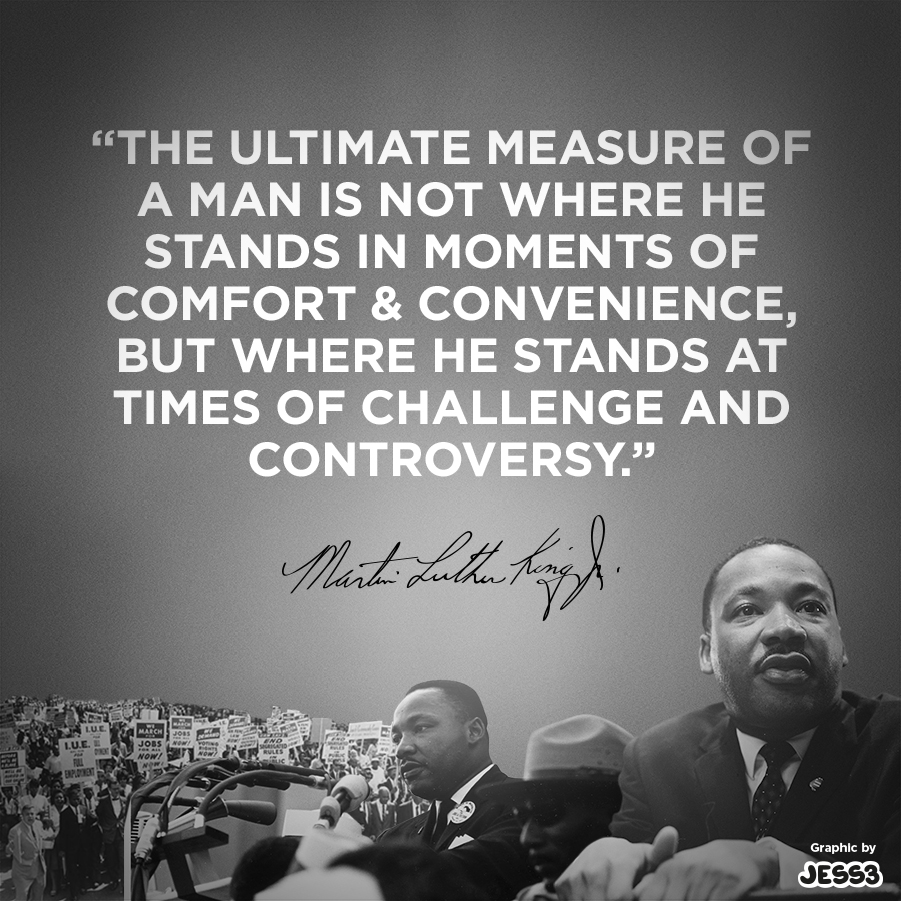
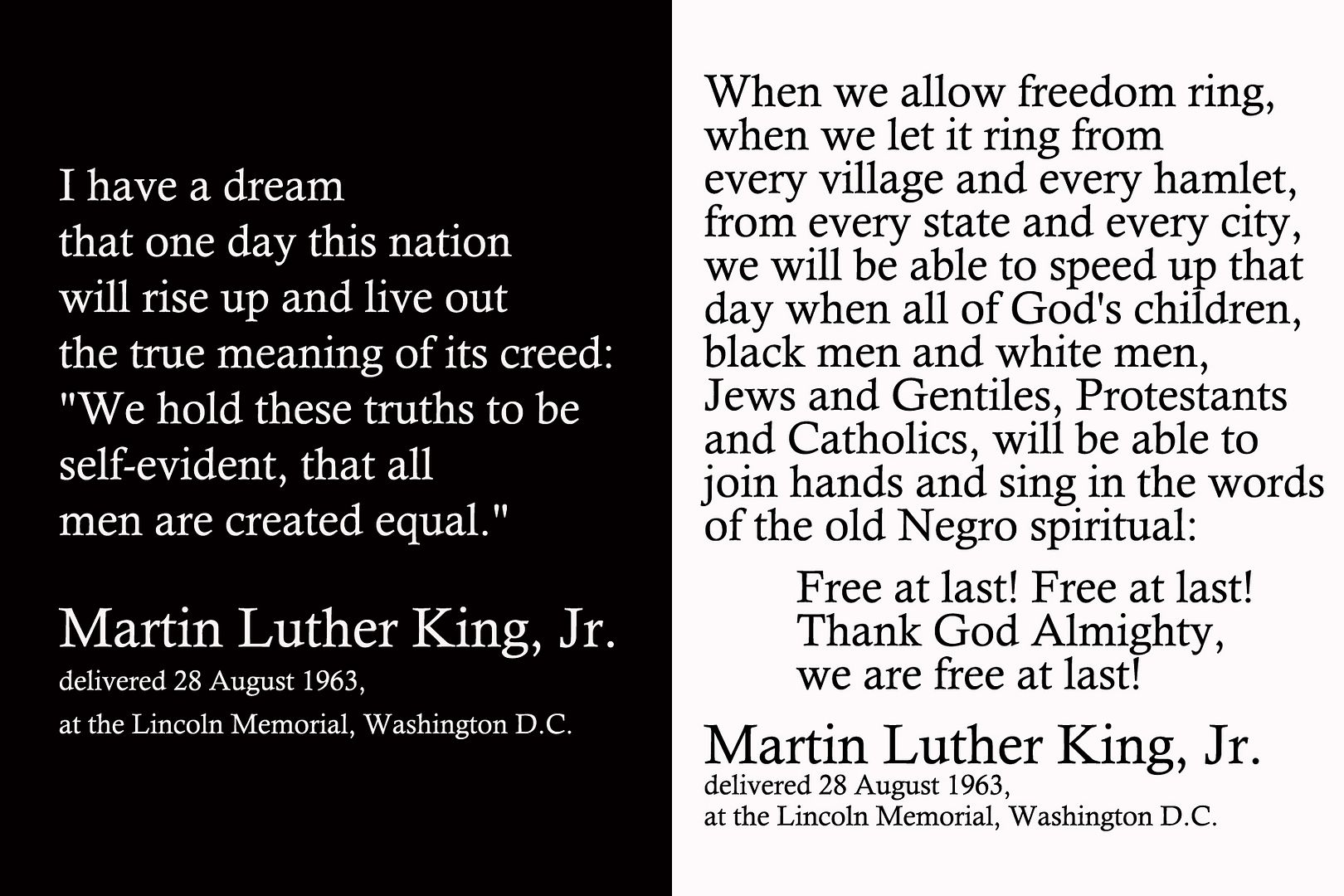
One may well ask: ‘How can you advocate breaking some laws and obeying others?’ The answer lies in the fact that there are two types of laws: just and unjust. I would be the first to advocate obeying just laws. One has not only a legal but a moral responsibility to obey just laws. Conversely, one has a moral responsibility to disobey unjust laws. I would agree with St. Augustine that ‘an unjust law is no law at all.’
Human salvation lies in the hands of the creatively maladjusted.
Whatever your life’s work is, do it well. A man should do his job so well that the living, the dead, and the unborn could do it no better.
Man is man because he is free to operate within the framework of his destiny. He is free to deliberate, to make decisions, and to choose between alternatives. He is distinguished from animals by his freedom to do evil or to do good and to walk the high road of beauty or tread the low road of ugly degeneracy.
Success, recognition, and conformity are the bywords of the modern world where everyone seems to crave the anesthetizing security of being identified with the majority.
“No work is insignificant. All labor that uplifts humanity has dignity and importance and should be undertaken with painstaking excellence.”
Today in 1971, selections from the Beatles’ White Album were played in the courtroom at the Sharon Tate murder trial to answer the question of whether any songs could have inspired Charles Manson and his “family” to commit murder.
Manson was sentenced to death, but his sentence was commuted to life imprisonment when the U.S. Supreme Court outlawed the death penalty.
Chris Lempesis has a somewhat obvious recipe for getting to Super Bowl XLIX today:
The Seattle Seahawks have lost once since late October. They’ve won seven games in a row and their defense has allowed 56 points – or eight points per game, if you want to make it sound even scarier – in that span.
They have maybe the best home-field advantage in the game. It’s certainly the loudest.
They are the defending world champions and they seem completely and totally focused on winning it all again this year, further cementing their status as a potential dynasty.
Still, the Seahawks are not perfect. They have, in fact, lost some games this year. They’ve even struggled at times in victories.
For this article, seven Seattle games were studied. Those games were its four losses (to San Diego, Dallas, St. Louis and Kansas City), plus close wins over Carolina and San Francisco and a close-for-three-quarters rematch against Carolina in the divisional round last weekend.
In studying those games, some definite statistical trends emerged. To varying degrees, these things could and should give Packers fans hope that Green Bay can pull off the upset.
Perhaps the biggest thing the Packers must do is stay committed on the ground, even if it’s not always working.
In the seven games studied, only once did a team not have at least 30 rushing attempts against Seattle. That would be St. Louis, who defeated the Seahawks on October 19. The Rams still ran it 27 times, though, so they came fairly close.
Interestingly enough, even though all of those teams made a concerted effort to pound the rock, not all of them had big days on the ground.
The Rams averaged just 3.8 yards per carry, for example, finishing with 102 yards rushing. The Chargers, who beat Seattle on September 14, only had 101 yards on 37 carries (2.7 yards per attempt).
In their first meeting with Seattle, on October 26, the Panthers averaged just 3.7 yards per attempt, running it 31 times for 114 yards.
The point is, you have to keep trying with the run game. You may not rack up big yardage, but by sticking with it, it at least gives you a chance to wear down that defense, even slightly.
The Packers didn’t really do this in their week one loss at Seattle, only running the ball 21 times. In their three other losses this season, they didn’t, either, never topping more than 24 carries in any of those games (the 24 carries came against Buffalo).
In their best three wins of the season – New England, Detroit and last week against Dallas – they did, running the ball at least 29 times in each of those games.
So keep an eye on 30 – it could be a big number Sunday.
Another big number to watch is two, as in sacks allowed.
Five of the seven teams that gave the Seahawks trouble surrendered two sacks or less in those games.
Green Bay’s offensive line has been perhaps the best in the game since its bye week, so the Packers have the unit to pull this off.
Aaron Rodgers has only been sacked five times in the team’s last four games, so that’s a very good sign. With Rodgers still nursing an injured calf, the o-line will have to turn in another sterling showing Sunday.
Staying committed to the running game and keeping your quarterback upright tends to have a nice side effect, too: You find yourself in more manageable third downs. When you are in those spots against a ferocious defense like Seattle’s, you pretty much have to convert at a sizeable clip.
In the seven games studied, five of those teams converted on at least 40 percent of their third-down attempts. Only Carolina, who went 2-of-10 on third downs in the first meeting between the teams, really struggled in that department.
Green Bay did well here in week one, hitting on 6-of-12 third downs, and in the end, it didn’t mean much. For the Packers to have any chance, they will have to duplicate that type of showing Sunday. Good news on that front – Green Bay is 17-of-27 (63 percent) on third down over its last two games.
If all of these things work in Green Bay’s favor, it will have a very good chance at winning the time of possession battle.
Again, five of the seven teams who gave Seattle trouble this year won that category. That helps not only the offense, but it can be a massive boost for Green Bay’s defense, as well.
The Seahawks are not known for their offense, but it can be as explosive as any offense in the league at times, so it’s best to keep that group on the sidelines for as long as you can.
It also limits Seattle’s opportunities to wear Green Bay’s defense down with its bruising ground game. Seattle held the edge in time of possession, 33:20-26:40, in the week one matchup. That probably can’t happen again if Green Bay wants to win.
Another thing that can’t happen is failing to convert in the red zone.
Seattle’s first game with Carolina is an excellent example. The Panthers lost, 13-9, and a huge reason for that was their 0-for-3 showing in the red zone. Convert even once there and Carolina likely wins. In the other six games studied, the opposition went 15-for-20 in the red zone (75 percent).
It’s hard to even reach the red zone against Seattle, especially lately, so when Green Bay gets there Sunday, it’s fair to say it will have to cash in on at least 75 percent of its chances, if not more.
The Packers have been close to that number in their last two games, going 5-of-7 in the red zone (71.4 percent). Field goals just don’t get it done against these guys.
Winning the turnover battle and getting to the quarterback are always important, especially this time of year, but in an interesting twist, that may not be absolutely crucial for Green Bay in terms of winning.
Teams gave Seattle trouble this season and didn’t necessarily do well in either of those categories. In only four of the seven games did the opponent either win or tie the turnover battle and only twice did those teams have more than two sacks.
That’s not to say Green Bay shouldn’t put massive effort into winning these categories, because of course it should. But there could be at least a small amount of wiggle room here.
When you add all this up, you get a fairly clear picture of what Green Bay will have to do to win Sunday.
The Packers don’t need to rely on gimmicks or tricks or anything crazy, really. They just have to play smart, patient football and consistently cash in on opportunities when they arise.
That last paragraph seems like master-of-the-obvious stuff, but teams usually do win big games by doing the obvious stuff, particularly when playing a stout defense like the Seahawks.
Fans pessimistic about today might be placing too much import on the season-opening loss to Seattle, because, Cheesehead TV notes, the Packers playing today aren’t the same team that opened the season for these reasons:
1. Clay Matthews at Inside Linebacker
It’s no secret the success the Packers have had on defense since the post-bye role expansion of Matthews to include inside linebacker, particularly their run defense.
At the season’s midpoint, it ranked dead last in the NFL—32nd—allowing more than 150 yards per game on the ground. But by the end of the regular season, the run defense climed up to 23rd in the NFL, giving up 119.9 yards per game.
Matthews and the rest of the Packers run defense will have to be at its best as they face the league’s No. 1 rushing offense with the Seahawks rumbling for an average of more than 170 yards per game.
It’s very possible Matthews will also be used as a spy on Seahawks quarterback Russell Wilson, the NFL’s 16th leading rusher, gaining 849 yards on the year.
2. Sam Barrington’s Role Expands While A.J. Hawk’s and Brad Jones’ Contracts
The starters at inside linebacker Week 1 for the Packers were Hawk and Jones, both of whom have received demotions since that time.
Although they still play small roles on the Packers defense, Hawk has been relegated primarily to the base 3-4 defense while Jones plays almost exclusively in the team’s dime look.
Back during Week 1, Hawk and Jones received the lowest grades on the Packers defense from ProFootballFocus.com, both players guilty of poor run fits, missed tackles and inadequate pass coverage. Jones, in particular, was also flagged for two penalties.
Barrington, meanwhile, has stepped up as the Packers’ inside linebacker in the Packers’ nickel defensive package, playing an average of 46 snaps per game from Week 13 onward.
Even though Barrington has been prone to miscues too, they’ve been far less glaring than Hawk and Jones. And the physical presence Barrington brings to the Packers defense has made a noticeable impact.
3. Julius Peppers Kept Fresh
In Weeks 1 through 15, Peppers played no fewer than 50 snaps per game on both defense and special teams.
The cumulative effect of such high snap counts appeared to have taken a toll as Peppers failed to record a single sack during a five-game stretch ending Week 15.
In the Packers’ last three games, including playoffs, Peppers has played 32, 35 and 37 snaps, keeping him fresher and more effective. In those three games Peppers has eight tackles, three sacks, three forced fumbles and two deflected passes.
The Packers have found a formula that works for the 34-year-old Peppers, one that figures to continue on Sunday as the hybrid linebacker/defensive end looks for the first Super Bowl championship of his 13-year career.
4. Ha Ha Clinton-Dix Goes Full-Time at Safety, Micah Hyde at Slot
Although the first round draft pick of the Packers has played in every game this season, Clinton-Dix didn’t make his first start until Week 7 when he became a full-time player on defense.
Clinton-Dix took over for Hyde at the free safety position, which has benefitted both players. Clinton-Dix has been the better safety while Hyde has settled into his comfort zone as a slot cornerback.
Following the bye week, Hyde took over the nickel cornerback responsbilities, pushing Casey Hayward into dime duty.
Since the bye week, Hyde has grabbed both of his interceptions, broke up six of his seven passes and wrapped up his only sack.
5. More Man-to-Man Coverage by the Cornerbacks
Yet another bye-week adjustment, the Packers have started to committ safety Morgan Burnett to the box more frequently, aiding in stopping the run.
At the same time, they’ve also increased their rate of blitzes under defensive coordinator Dom Capers as outlined by Bob McGinn of the Milwaukee Journal Sentinel:
His five-man pressure numbers on pass plays went from 36.2% in Games 1-8 to 39.3% in Games 9-16, and his all-out pressure (more than five rushers) rate almost doubled from 5.7% to 9.2%.
More responsibility has fallen on the shoulders of the Packers cornerbacks to play more man-to-man coverage with Clinton-Dix acting as the deep safety, providing Cover 1 responsbilities over the top.
As a result, the Packers have given up fewer explosive, big plays in the passing game and have only allowed three wide receivers to gain over 100 yards this season. …
7. Offensive Line Finds Continuity
Back during Week 1, Bryan Bulaga went down with a knee injury 20 snaps into the game and was replaced by Derek Sherrod in the lineup.
The Packers’ new right tackle proceeded to allow a fourth-down sack, turning the ball over on downs and then gave up a strip-sack, recovering the ball in the end zone for a safety.
Green Bay had to endure one more game without Bulaga in Week 2, but he’s been back in the lineup ever since as the Packers have had the same starting five on the offensive line for 15 straight games.
Continuity on the offensive line has been evident. They’ve allowed 30 sacks on the season, their fewest since 2007. And they’ve also opened up holes for Eddie Lacy, allowing him to gain 100-plus yards from scrimmage in each of the last 10 games, the longest streak in team history.
8. Third, Fourth, Fifth Receiving Options Emerge
The Packers aren’t worried about Jordy Nelson and Randall Cobb, but the concern all season has been for other options to emerge when opponents take away the Packers’ top receiving threats.
Back during Week 1, not a single wide receivers outside of Nelson or Cobb caught a pass. Since that time, rookie Davante Adams has taken hold of the No. 3 wide receiver job and hasn’t let go.
Adams has been up and down, going through an especially rough patch during the month of December, but he stepped up big time in the Packers divisional round playoff win over the Dallas Cowboys when quarterback Aaron Rodgers identified a mismatch and targeted him 11 times, catching seven for 117 yards and a touchdown.
The Packers have also struck a comfortable balance with Andrew Quarless and Richard Rodgers at the tight end position with both players catching touchdown passes in the win over the Cowboys.
9. Lesson Learned from Avoiding Richard Sherman
Not unlike the scrapping of the “Quad” on defense, the Packers learned a valuable lesson on the offensive side of the football in Week 1, knowing they can’t be one dimensional and throw the football to only one side of the field.
“We’re a no-huddle offense, and my thought was—and I told Jordy (Nelson) in the game plan—just line him up on the left side,” explained McCarthy on Monday. “We thought Richard would come over there and guard him on the left side. That didn’t happen.”
Aaron Rodgers threw just one pass to the right side of the field beyond the line of scrimmage for a gain of just two yards. The Packers plan to adjust accordingly.
“It just depends on who’s open,” said Rodgers. “It’s always important to throw it to the right and throw it to the left a little bit.”
10. Rookies Become Battle-Tested
Outside of center Corey Linsley, who did an admirable job making his first career regular-season start in Week 1, the other rookies on the Packers roster weren’t ready for primetime.
As described above, Ha Ha Clinton-Dix hadn’t yet become a full-time starter. Davante Adams played just nine snaps on offense in the season opener. Richard Rodgers played 20.
Each of these first-year players have gone on to play key roles for the Packers this season, and they’re light years ahead of where they were back in September.
Even the role players, such as defensive lineman Mike Pennel and linebacker Jayrone Elliott, weren’t trusted to even be on the 46-man active roster back during Week 1. Now they’re week-in, week-out contributors.
I’m pretty sure the Packers won’t win today, which will bring on the Dead of Winter in Wisconsin. (Winter starts Thanksgiving weekend and runs until the end of Packer season; the Dead of Winter runs until Easter.) I hope I’m wrong about the Packers today.




 Steve Prestegard.com: The Presteblog