Today in 1968, Jimmy Page, Robert Plant, John Paul Jones and John Bonham played together for the first time when they rehearsed at a London studio. You know them as Led Zeppelin:
CareerHMO.com CEO J.T. O’Donnell on why your newest employees are from the worst workforce generation:
Recently, I wrote this article explaining why Millennials aren’t getting promoted. In response to Millennial readers’ requests for a deeper understanding of how being misperceived can negatively affect their careers, I’m taking it a step further and outlining exactly what’s getting them fired.
Employers are seriously fed up
To get a sense of how heated this has become, read this article by one irate employer and his prediction of the backlash that will soon ensue from the Millennials’ attitudes toward work.
Additionally, this survey by SmartRecruiter of 28,000 bosses detailing where Millennials are falling short is just one example of the data to support the huge disconnect costing some Millennials their jobs. Here are the key takeaways Millennials need to know.
1. Employers don’t want to be parents
Growing up, Millennials were coached their entire lives and they unknowingly assume employers will coach them too. However, the relationship isn’t the same. An employer pays us to do a job. We are service providers. Expecting extensive training and professional development to do the job doesn’t make financial sense. In many employers’ minds (especially, small to midsized businesses with limited budgets and resources), Millennials should foot the bill to develop themselves and make themselves worth more to the employer.
Tip: Millennials should do their best to proactively seek resources on their own to help them close gaps in skills and knowledge in the workplace. There are plenty of online tools and resources to help them put their best professional self forward. Additionally, they should seek out a mentor to privately ask questions and get guidance on how to make the right impression.
2. The anti-work attitude isn’t appreciated (or tolerated)
As explained here, Millennials tend to work only the minimum time expected–and will push for flexibility and a reduced work schedule to create more time for other pursuits. Being demanding about when and how they want to do their job can be viewed as disrespectful. A great way to look at how some employers feel is the way the dysfunctional phone/cable companies work. It’s annoying when they announce they can come out only on a certain day. They can’t tell you what time, and then they say they’ll call the day of and give you a four-hour window when they’ll arrive. While the phone/cable companies have us trapped, employers don’t feel the same about Millennials. They’ll fire the Millennial worker and find someone who can work when they need them to–and without the attitude.
Tip: In the early days and weeks of a new job, Millennials can make up for what they lack in skills by being consistently on time. When an employer sees their commitment to their work, they will earn her trust and respect, resulting in her being comfortable with their taking time off, and even providing them with a more flexible work schedule. When Millennials prove they can deliver on their company’s terms, their company will give them more of what they want.
3. Millennials’ happiness isn’t the employer’s responsibility
Millennials are pretty vocal about wanting work to be a “fun” place to go. Besides career development, they also desire lots of cool perks and benefits to make their job feel more rewarding. Besides nice work spaces, amenities like gym memberships, healthy meals on-site, in-house parties, etc., are being used in an effort to attract and maintain Millennial workers. Unfortunately, this is backfiring on employers–and that makes them angry. In spite of all the perks to keep them happy, Millennials are getting to these jobs and quickly showing visible signs of disappointment and dissatisfaction within months of joining the company.
Why are Millennials so tough to keep happy?
Part of the problem is how much external motivators were used on Millennials growing up. In the book Punished by Rewards, Alfie Kohn argues that Millennials have an addiction to praise, perks, and other incentives to learn–better known as bribes. Thus, when they get to the job and the newness wear off, they think it’s the company’s job to fix it with more incentives. But, this is where the cycle of bribing has to stop. A company can offer only so much in the form of compensation and benefits. The reality is thatMillennials (like all workers) must learn to find intrinsicmotivation (internal drive for work), so they can find real satisfaction and success in their careers. SinceMillennials haven’t learned this yet, they’re experiencing sadness and confusion in the workplace. Unfortunately, their unhappiness is transparent to employers who have no desire to pay for what they perceive as a bad attitude at work.
Tip: Millennials who feel confused and unhappy in their job should not blame the employer (yet). First, they should seek some career coaching. Many Millennials just need help understanding some of the basic elements for finding an internal motivation for work. They need to know their professional strengths and workplace personas, and the defining skills they’d like to grow so they can build up their specialties and find direction and motivation at the job.
The comments probably demonstrate that bad attitudes are not just part of the millennial generation — claims that all employers screw their employees, that it’s abusive to have to work after 5 p.m. or before 8 a.m. or, horrors, on weekends, etc., etc., etc. One article actually claims that “This article – and every other like it – is boarding age discrimination.” Another started with “Like it or not, the future of the workforce belongs to Millennials,” and then proceeded to validate every stereotype of millennials as thinking they’re smarter and more special than you are.
Those are countered by …
I entered the workforce 34 years ago during the early-1980s recession, and the full-time workforce 27 years ago. No one had to tell me that it was important to show up on time. Whatever was “fun” about the places I have worked had little to do with work perks (largely because I’ve had almost none, other than flexibility, anywhere I’ve worked); it had to do with having challenging work, along with the people with whom I’ve worked. (In the same way that you can choose your friends but you can’t choose your family, you can choose where you work if they’ll have you, but you can’t choose your coworkers.)
What O’Donnell describes appears to me to be a gross failure of parenting and possibly education as well. The extent to which schools should train students for the workplace is debatable, but schools certainly should be emphasizing those habits of successfully employed people — showing up on time when scheduled to work, working hard, focusing on work instead of other things while you’re at work — regardless of a student’s future plans. Maybe my parents did what today’s parents of millennials didn’t do by setting examples of how people are supposed to act in public. (Yes, the parents of millennials apparently are people my age, but I certainly do not want our kids to grow up lazy and self-entitled.)
There are risks of generalizing (about which I can speak from experience as part of the “liberal media”), but stereotypes always have a source. O’Donnell must at least be hearing complaints from other CEOs and those who work for her to generate these ideas. If I had to guess, I would guess that those complaints come from employers who employ a lot of entry-level people. (Which suggests, for one thing, that millennials maybe should become more creative at where they decide to work, instead of just going to a big company they’ve heard of.)
These are the sorts of things Mike Rowe has been pointing out on his Facebook page. It is not because you should be wedded to your employer forever. You should, however, be committed to work, to being productive, to contributing more than you take out of the planet. I have found in employing people that you can teach almost everything about a job except for work ethic. Either you have it, and you will remain employed (somewhere) regardless of how your employer does, or you will not.
We begin with a non-musical anniversary, though we can certainly add music:
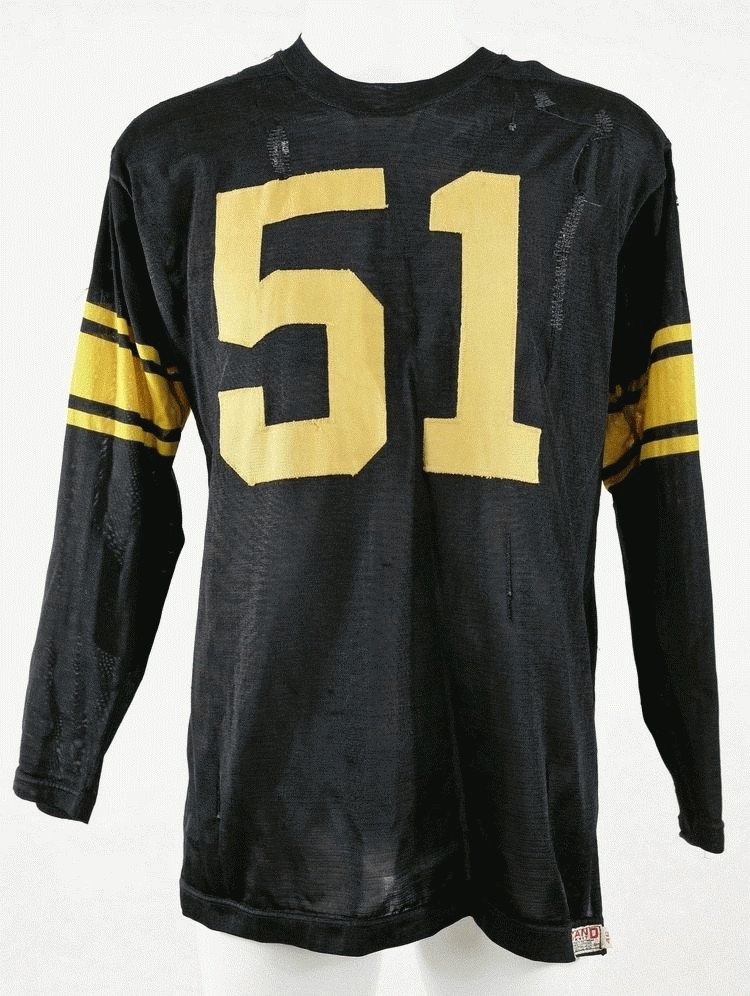
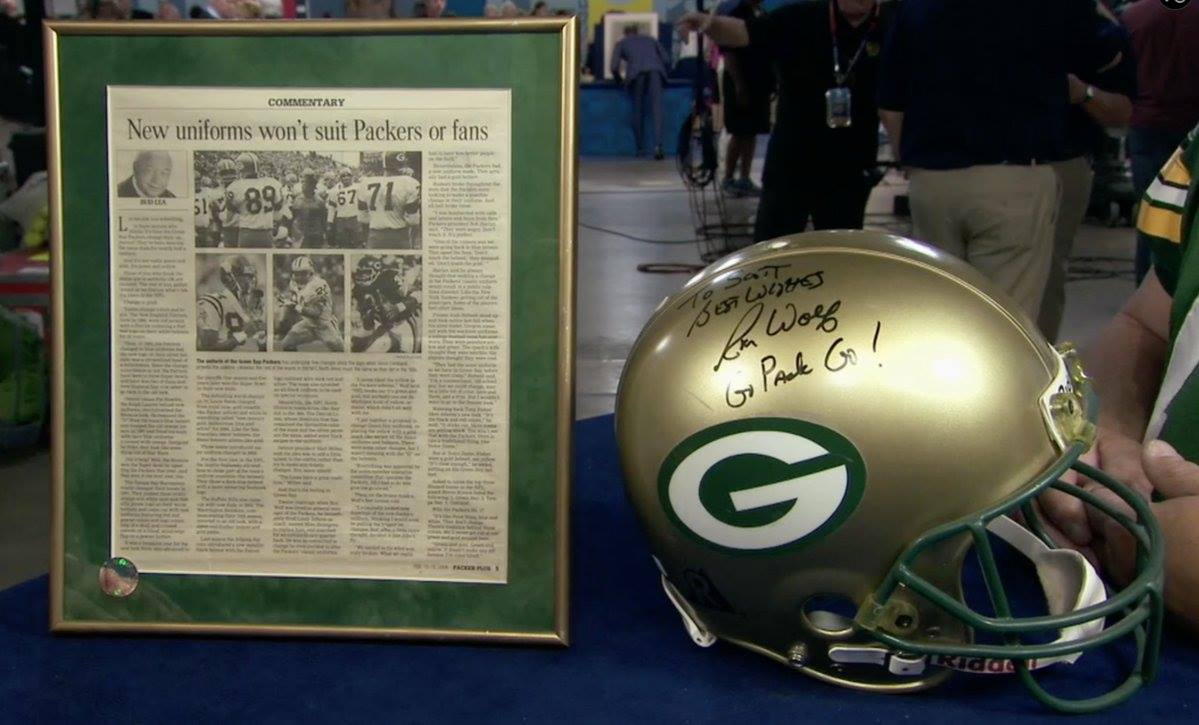
On Aug. 11, 1919, Green Bay Press–Gazette sports editor George Calhoun and Indian Packing Co. employee Earl “Curly” Lambeau, a former Notre Dame football player, organized a pro football team that would be called the Green Bay Packers:

(Clearly the photo was not taken on this day in 1919. Measurable snow has never fallen in Wisconsin in August … so far.)
Today in 1964, the Beatles movie “A Hard Day’s Night” opened in New York:
Two years later, the Beatles opened their last American concert tour on the same day that John Lennon apologized for saying that the Beatles were “more popular than Jesus. … Look, I wasn’t saying The Beatles are better than God or Jesus, I said ‘Beatles’ because it’s easy for me to talk about The Beatles. I could have said ‘TV’ or ‘Cinema’, ‘Motorcars’ or anything popular and would have got away with it…”
The Washington Post’s Philip Bump lists those Donald Trump finds to be inferior to Donald Trump:
RedState’s Erick Erickson is a total loser who “has a history of supporting establishment losers in failed campaigns,” according to Donald Trump, who didn’t want to go to Erickson’s stupid meeting anyway and is probably glad he got banned, just as he’s glad that Macy’s ended its relationship with him. Trump has no time for losers like Erickson, and like the thousands of other losers he has identified over the last few years.
Like Rosie O’Donnell. Rosie O’Donnell is a true loser and a total loser. George Will is also a loser. Beauty queen Sheen Monnin is a loser. People without egos are losers. Seriously. The online magazine Salon is a loser, as is the Huffington Post and the Patch.
Tim O’Brien is a real loser. Roger Stone, who quit Trump’s campaign on Saturday (Trump says he was fired, of course) is a stone-cold loser, just like Richard Belzer. Michael Forbes is a loser, as is Glenfiddich Scotch.
Various random Twitter users are losers, as is Karl Rove, who is also a total loser and the biggest loser. Lord Sugar is a total loser — or, rather, the worst kind of loser, a total fool.
Vanity Fair’s Graydon Carter is a real loser with bad food. Bill Maher is a loser like Rosie O’Donnell and will self-destruct (as of December 2012). Angelo Carusone is a loser. Mark Cuban is a loser as are Ana Navarro and Michelle Malkin and Danny Zuker, who is not only a known loser but also a clown.
Where were we? Oh, right. An elderly woman who sued Trump is terrible and her lawyer was a total loser. Anyone who tweets that he wears a wig is a sad and lonely hater and loser. Scottish politician Alex Salmond is also a loser as is New York’s attorney general.
Other random Twitter users are also losers, by the way. So is Seth Meyers. Architecture critic Paul Goldberger was a … let me double-check this … yes, a loser. The New York Daily News is a loser newspaper. Frank Luntz is a hard worker and also a total loser. Russell Brand, by contrast, is a major loser.
Jonah Goldberg is a loser as is Charles Krauthammer. By now it almost goes without saying that John McCain is a loser.
It also goes without saying that this post needs musical accompaniment:
Whether or you agree with some or none of Trump’s observations, obviously if you don’t vote for him (because, among other reasons, he’s not really a Republican and certainly not a conservative), you’re a loser too.
The modern GOP hit bottom Nov. 4, 2008, the day a freshman senator from Illinois defeated Sen. John McCain. Actually it hit bottom that Sept. 24, when Mr. McCain suspended his campaign to help solve the financial crisis. There’s a reason they call this sort of thing a Hail Mary.
The Obama wave swept 21 GOP House members from office, reducing them to 178 seats. Eight Senate losses reduced the party to 40 seats. Naturally, the majority Democrats spent the next 18 months passing big legislation. …
In March 2010, President Obama signed the Affordable Care Act and then Dodd-Frank’s federal takeover of the financial industry in July. Both were widely publicized to the American people as legacy achievements for Mr. Obama. In November, Democrats lost 63 seats in the House and entered minority status. Republicans gained six seats in the Senate, but weak GOP candidates—running on a lot of anger and not much political skill—lost in Delaware, Colorado and Nevada.
Outside the Washington Beltway, a Republican tsunami was building in 2010. After the elections, the party held more state legislative seats—more than 3,900—than at any time since 1928. The party hadn’t controlled so many full legislatures since 1952, and in the South GOP legislators surpassed Democrats for the first time since 1870.
Barack Obama’s re-election in 2012 was real enough, a tour de force of base turnout. But arguably that election was an anomaly amid a bigger political trend. Two years later, in the 2014 election, the Republican tsunami in the states rolled into Washington.
The GOP took control of the Senate by winning nine seats, including every tossup state. It was no fluke. The Democratic incumbents in Louisiana, Colorado, Arkansas and Alaska weren’t pushovers. The GOP won with smart, experienced candidates. Cory Gardner, Tom Cotton, Ben Sasse, Joni Ernst, Dan Sullivan—this wasn’t amateur hour.
Meanwhile, Republican gubernatorial candidates carried traditionally blue states: Bruce Rauner in Illinois, Larry Hogan in Maryland, Charlie Baker in Massachusetts. In 2010, Ohioans elected John Kasich governor, and Scott Walker won for the first time in Wisconsin. Chris Christie defeated a Democrat in New Jersey the year before.
During the Obama presidency, Democrats have lost more than 900 state legislative seats, giving the GOP its greatest degree of state-level control since 1920.
Not that the Democrats rolled over. There were the IRS/Lois Lerner audits of local tea-party groups from 2010 onward, which caused many to disband. Then there was the case of ALEC.
ALEC is the American Legislative Exchange Council, the right-of-center group that creates policy templates for state legislators who want to push issues such as the reform of public pensions or school reforms. This is life in the daily trenches of U.S. politics. Because of ALEC’s success in the states, progressive groups began a campaign to drive ALEC’s corporate contributors away from the “right-wing extremists.”
All this winning didn’t happen because Batman showed up or because of rage in Maryland, Ohio or Massachusetts over the Mexican border. It happened because someone took the time, a lot of it, to match smart candidates to smart policies.
The Democratic Party for much of the past 75 years did political blocking and tackling, too—and won many elections. But since 2008, it has succumbed to the Great Man theory of politics, which siphons all political life into one charismatic person.
That began to fall apart for the Democrats in the 2010 midterms. In a Wall Street Journal/NBC News poll published this week, two-thirds say they now want a departure from the Obama presidency.
With a weak political bench, the Democrats will default in 2016 to an already stumbling Great Woman theory of American politics. They’ll have to fake a debate to hold the media’s interest.
The Republicans are one tough election away from consolidating five years of historic victories by controlling both the presidency and Congress.
But of course they could blow it.
Today, this would be the sort of thing to embellish a band’s image. Not so in 1959, when four members of The Platters were arrested on drug and prostitution charges following a concert in Cincinnati when they were discovered with four women (three of them white) in what was reported as “various stages of undress.” Despite the fact that none of the Platters were convicted of anything, the Platters (who were all black) were removed from several radio stations’ playlists.
Speaking of odd music anniversaries: Today in 1985, Michael Jackson purchased the entire Beatles music library for more than $45 million.
Today should be a national holiday. That is because this group first entered the music charts today in 1969:
That was the same day the number one single predicted life 556 years in the future:
Today in 1975, the Bee Gees hit number one, even though they were just just just …
Two anniversaries today demonstrate the fickle nature of the pop charts. This is the number one song today in 1960:
Three years later, the Kingsmen released “Louie Louie.” Some radio stations refused to play it because they claimed it was obscene. Which is ridiculous, because the lyrics were not obscene, merely incomprehensible:
Today in 1969, while the Beatles were wrapping up work on “Abbey Road,” they shot the album cover:

The Chicago Sun–Times writes about a contemporary of mine, Madison native Chris Farley:
Matt Foley the motivational speaker lived in a van down by the river. The real Matt Foley — the one Chris Farley named his iconic “Saturday Night Live” character after — is head pastor at St. James Catholic Church in Arlington Heights and still misses his good friend.
Foley and Farley’s close friendship started more than 30 years ago on the rugby field at Marquette University. It continued with backstage visits to “Saturday Night Live,” phone calls from Mexico to New York, celebrations of Farley’s sobriety dates, and prayers when he fell off the wagon. It ended on a cold Wisconsin day in December 1997 when Foley presided over Farley’s funeral after the 33-year-old actor and comedian died of an overdose.
Foley is one of many friends and family members interviewed for a new documentary called “I Am Chris Farley.” The film is at the Music Box Theatre in Chicago until Thursday and will play on the Spike TV cable channel Aug. 10.
The documentary is executive produced by Farley’s brother Kevin and shows the gentler side of the famous comedian that Foley says is truer to his friend’s spirit than his rowdy legacy.
Foley met Farley on the first day of rugby practice in 1982. Farley was a freshman. Foley was a year older and not sure what to think of the big guy who showed up to practice in nice shorts and a polo shirt with his collar popped.
“He was kind of a prepster. Rugby is a rugged group, and I thought he might have a difficult time. But he fit right in and he was a pretty decent athlete, too,” Foley remembered.
Farley didn’t hesitate to use his size to make others laugh, a skill that he would continue to capitalize on for years to come.
“He was really creative in terms of his physical comedy even back then,” Foley said. After college the two were on the same traveling rugby team. When Foley was in seminary in Mundelein, Farley would come out to visit him, and they’d play basketball or talk about faith.
“He was very religious,” Foley said. Farley attended daily Mass in college and continued to ask Foley for spiritual guidance as he struggled with addiction later in life.
A few years later, Foley was a newly ordained priest working in North Lawndale and Farley was onstage at Second City.
There, he invented an over-the-top but down-on-his-luck motivational speaker character that he based on both his father and his old football coach. If he had a friend in the audience the character that night would take the friend’s name.
“My name is Matt Foley, and I’m a motivational speaker,” Farley began one night when Foley was in the audience. The two went out after the show, and Farley told him he wanted to keep using that name.
When Farley got to “Saturday Night Live,” he intended to bring the Matt Foley character with him.
On May 8, 1993, Foley got a call from his old friend. “Matt Foley is going to be on tonight; you’ve got to watch it,” he said.
Foley turned in and heard his name on national TV for the first, but certainly not the last, time.
“It was a little shocking,” he admitted. “But I thought the skit was hilarious.”
Some consider it the best skit in “SNL” history. In it, Matt Foley yells, spits, breaks tables and throws himself around trying to get the message across to two kids (David Spade and Christina Applegate) that if they don’t get their act together they, too, will have to live in a van down by the river.
In real life, Matt Foley is a mild-spoken priest who has spent his career bringing faith to some of the toughest places in the world. He spent six years at a mission in Mexico and eight years in Chicago’s Little Village neighborhood, and he did four tours of duty in Afghanistan as an Army chaplain before he became head pastor of St. James in Arlington Heights in 2013. …
Foley got to New York to see “Saturday Night Live” a few times a year, and Farley always insisted on bringing him backstage to meet his new friends, like Mike Myers and David Spade.
Foley admits he didn’t always keep up with pop culture, which is why he once mistook Spade for Adam Sandler while backstage in Studio 8H.
“I don’t think David Spade was too happy about that,” Foley said.
Foley got a chance to make it up to Spade when he performed the marriage of Farley’s brother Kevin, with Spade standing up as a groomsman.
It was no secret that Farley struggled with addiction through much of his adult life, but his friendship with Foley was a solace from the glare of fame.
“I don’t drink or partake in any substances, so I think I was a good balance for him. It was a safe place for him,” Foley said.
When Farley achieved his first year of sobriety, Foley flew out to New York and attended his AA meeting with him to celebrate. Farley made it to three years sober but then fell off the wagon several times and was reportedly in and out of rehab the last years of his life.
Addiction, said Foley, was a “brutal” thing for Farley. He helped as best he could, acting as a counselor as well as a friend. They bonded over their deep faith and attended Mass together during Foley’s visits.
“He was very much aware of his struggle, but I think he was a good Catholic in practice because he recognized God’s saving grace,” Foley said.
During the summer of 1997, Foley came home to Chicago for a visit from his parish in Mexico. Farley was working on movies then and was back in Chicago living in the Hancock Center. He and Farley had lunch, worked out and spent the day together.
Walking down the street with Farley was always an experience, and this day was no different. People recognized him, and some asked for their favorite impression. Farley was kind to people who stopped him on the street, said Foley, noting there was a deep and sensitive person behind Farley’s public persona, that he was a “real, tender, generous man.” He always asked about Foley’s brother, James, who has Down syndrome.
“That was the last time I saw him alive,” Foley said.
Right before Christmas Foley would fly back to the Midwest again, this time to Madison, Wisconsin, to bury his friend.
While presiding over the funeral Foley could have looked out and seen Dan Aykroyd, Adam Sandler, Lorne Michaels or the sea of other famous faces in the crowd, but all he saw was Farley’s mother and his siblings.
“People think about burying a celebrity, but the reality is you’re burying someone’s brother, someone’s friend, someone’s son. That is very painful,” Foley said. “It was a very sad day.”
After the funeral, Farley’s mother asked Foley not to give any interviews. The media was hungry for details of Farley’s life and death from anyone close to the comedian in his last days. He obliged.
Last year, though, Foley got a call from Mrs. Farley, who asked him to participate in the “I Am Chris Farley” documentary. He agreed and sat for a two-hour interview talking about his friend and reminiscing about old times.
He hasn’t seen the movie yet but will be attending the premiere in Madison with the Farley family on Aug. 8.
Eighteen years have passed since Farley died, but Foley said he will never forget him.
“I think about him a lot. He was a very good friend,” Foley said. “You think about growing old with somebody, but at 33 his life was ended. He’s missed so many good things.”
Foley wishes Farley could have met his own nieces and nephews, been to his brothers’ weddings — which Foley presided over — and finally beat his addiction.
Once a year, Foley visits Farley’s grave and celebrates Mass in the chapel there with his family.
Farley’s grave is in the mausoleum at Resurrection Cemetery in Madison. It is a short walk away from the babies’ section at Resurrection where, among others, my older brother is buried. So when I visit Resurrection I always stop in the mausoleum if it’s open.
As you know because you’ve been reading this blog for more than four years now, Farley was a year ahead of me in the Madison high school world. I think he and I crossed paths at an Edgewood–La Follette football game at Warner Park in Madison, where he would have played offensive and defensive line and I played trumpet.
Before the documentary that premieres Saturday, there was The Chris Farley Show: A Biography in Three Acts, written by Farley’s brother, Tom. It was quite a read, discussing his troubled family life and his career.
If, by the way, “Matt Foley” isn’t the funniest SNL sketch …
… perhaps this is, featuring Farley as, of all things, a Chippendale dancer wannabe opposite Patrick Swayze:
Then ponder this: Farley as Shrek:
Some might argue that this program today in 1955 started the rock and roll era:
I have a hard time believing the Beatles needed any help getting to number one, including today in 1965:
That was in Britain. On this side of the Atlantic, today’s number one pop …
… and R&B songs:
What a trio of songs released today in 1967: