• Nerdy things recently found on social media

    September 15, 2017
    media

    First: How does one combine love of Corvettes, Star Trek and dogs?

    With the Meme Generator, of course:

    OK, some people prefer Spock to Kirk, so …

    Meanwhile, a Facebook group revealed a drag racing video …

    … which proves that the great Dick Enberg could announce anything, just like …

    … the great Vin Scully.

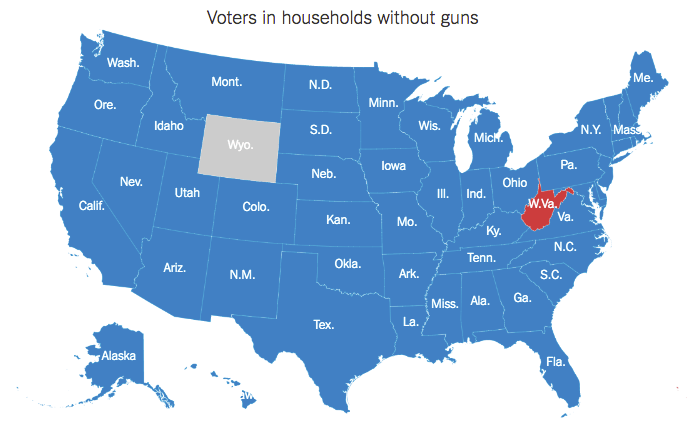
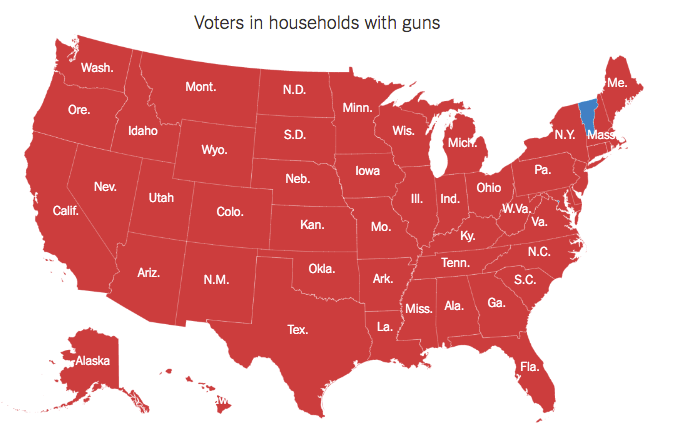
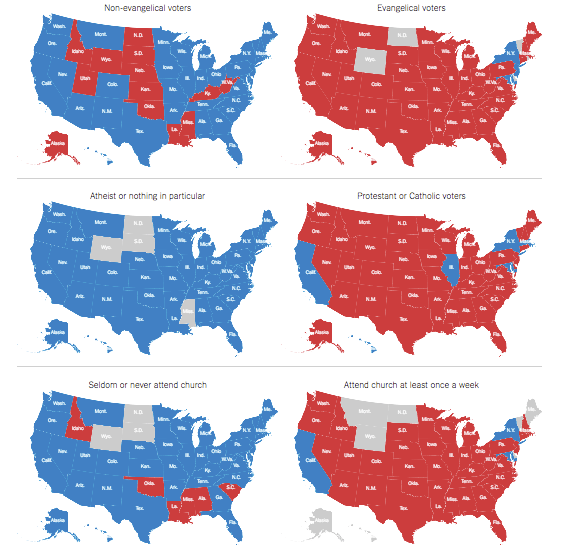
    Meanwhile, if you want to see what professional Steve is up to, click here. (Hint: It involves guns.)


    Share this on …

    • Share on X (Opens in new window) X
    • Share on Facebook (Opens in new window) Facebook
    • Share on LinkedIn (Opens in new window) LinkedIn
    • Email a link to a friend (Opens in new window) Email
    • Print (Opens in new window) Print
    Like Loading…
    No comments on Nerdy things recently found on social media
  • Presty the DJ for Sept. 15

    September 15, 2017
    Music

    Today in 1956, Elvis Presley had his first number one song:

    Today in 1965, Ford Motor Co. began offering eight-track tape players in their cars. Since eight-track tape players for home audio weren’t available yet, car owners had to buy eight-track tapes at auto parts stores.

    Today in 1970, Vice President Spiro Agnew said in a speech that the youth of America were being “brainwashed into a drug culture” by rock music, movies, books and underground newspapers.

    (more…)

    Share this on …

    • Share on X (Opens in new window) X
    • Share on Facebook (Opens in new window) Facebook
    • Share on LinkedIn (Opens in new window) LinkedIn
    • Email a link to a friend (Opens in new window) Email
    • Print (Opens in new window) Print
    Like Loading…
    No comments on Presty the DJ for Sept. 15
  • Trump, his supporters and DACA

    September 14, 2017
    US politics

    Politico reports:

    A majority of voters want Congress to pass legislation that allows undocumented immigrants brought to the U.S. as children to become citizens if they meet certain requirements, according to a new POLITICO/Morning Consult poll conducted following the Trump administration’s decision to wind down the program protecting these so-called Dreamers from deportation.

    The poll — conducted in the days after Attorney General Jeff Sessions announced that the administration was ending the Deferred Action for Childhood Arrivals program, which Sessions described as “unilateral executive amnesty” that “contributed to a surge of unaccompanied minors on the southern border” and “denied jobs to hundreds of thousands of Americans” — shows that 54 percent of voters want Congress to establish a path to citizenship for DACA recipients, and another 19 percent want Congress to allow them to stay without establishing citizenship.

    “Not only do a majority, 73 percent, of voters want legislation protecting Dreamers from deportation, a majority want Congress to make that a priority,” said Kyle Dropp, Morning Consult’s co-founder and chief research officer. “Overall, 65 percent of voters say protecting Dreamers should be either an important or top priority for Congress.”

    Just 35 percent say ending the DACA program was the right thing to do — fewer than the 45 percent who say it was the wrong thing to do. Two-in-10 voters are not sure.

    Here is the most important paragraph:

    In last week’s poll, 24 percent of Republicans thought DACA recipients should be deported; this week, 20 percent think Congress should codify that policy. Two-thirds of self-identified Trump voters wanted these immigrants to be allowed to stay in last week’s survey, and 68 percent of Trump voters want Congress to pass legislation that lets them remain in the U.S. in the new poll.


    Share this on …

    • Share on X (Opens in new window) X
    • Share on Facebook (Opens in new window) Facebook
    • Share on LinkedIn (Opens in new window) LinkedIn
    • Email a link to a friend (Opens in new window) Email
    • Print (Opens in new window) Print
    Like Loading…
    No comments on Trump, his supporters and DACA
  • The gift that just keeps on giving

    September 14, 2017
    media, US politics

    I’m not a Republican, but if I were, until the 2018 election I would keep passing out excerpts of Hillary Clinton’s What Happened, possibly renaming it What (Could Have) Happened.

    Or, I suppose, what could still happen, based on this Facebook meme:

    The latest example of Hillary’s state of internal depravity comes from the Daily Wire:

    Hillary Clinton says she won’t be granting “absolution” to any person who now regrets staying home on Election Day.

    According to a passage in Clinton’s new book, What Happened, she’s definitely adopted the Madeline Albright theory of women voters: the ones who didn’t cast their ballot for Hillary Clinton are doomed to a “special place in Hell” and their High Priestess will not step in to save them from it.

    “Since November, more than two dozen women — of all ages, but mostly in their twenties — had approached me in restaurants, theaters, and stores to apologize for not voting or not doing more to help my campaign,” Clinton writes. “I responded with forced smiles and tight nods.”

    These women probably didn’t do nothing, they just felt their sacrament of confession might be good for their soul and hers. They tried, they failed. They sought reconciliation. They were denied.

    Things got worse when the confessions were forced, rather than voluntary. In one case, Clinton speaks of a woman who dragged her daughter over to Clinton and made her apologize for failing to vote on November 9th (which is weird to begin with, but whatever). With her “head bowed in contrition,” the girl admitted her sins, but while Clinton was outwardly forgiving, inwardly she was seething with rage.

    “I wanted to stare right in her eyes and say, ‘You didn’t vote? How could you not vote?! You abdicated your responsibility as a citizen at the worst possible time! And now you want me to make you feel better?’”Clinton wrote. “Of course I didn’t say any of that.”

    “These people were looking for absolution that I just couldn’t give.”

    After all, it’s completely their fault, right? If only a few hundred women had turned out to the polls, Hillary would have achieved the victory that was rightfully hers!

    The math, of course, doesn’t work out. Hillary’s core demographic, older white women, voted in smaller numbers for the “First Female President” than they did for Barack Obama. And Clinton’s fatal mistake was counting on free votes, even though voters clearly expected her to earn their allegiance. She simply took her people for granted. It’s not their fault they didn’t work harder; it’s her fault she didn’t work harder. She should be seeking absolution from them.

    How much ego does this require? At this point one wonders if Hillary has a diagnosable personality disorder.

    That’s assuming she wrote that, and based on one of the comments, did she?

    I can’t believe she used that word. If you’ve never been Catholic…you have no idea how ridiculous, absurd, offensive the idea is that Hillary Clinton might offer the moral equivalent of the “Last Rites” to women who dared not vote for her corrupt, lying, truly wicked self.

    More comes from the American Spectator:

    She writes about her defeat with the emotional intensity of a parent who lost a child — a chilling and neurotic proof of her clawing, bottomless and now forever thwarted political ambition.

    She is a failed Lady Macbeth, but a Lady Macbeth who wants us to feel sorry for her, what with her chardonnay-chugging and alternate nostril breathing after the election. She writes: “If you’ve never done alternate nostril breathing, it’s worth a try.… It may sound silly, but it works for me. It wasn’t all yoga and breathing: I also drank my share of chardonnay.”

    But in the course of acknowledging her post-election emotional tailspin, she gets in a curious dig at her husband and friends. She wants us to know that she is not as screwed up as they are. “I remember when Bill lost his reelection as Governor of Arkansas. He was so distraught at the outcome that I had to go to the hotel where the election night party was held to speak to his supporters on his behalf,” she writes. “For a good while afterward, he was so depressed that he practically couldn’t get off the ground. That’s not me. I keep going.”

    About her friends, she writes that they “advised me on the power of Xanax and raved about their amazing therapists.… But that wasn’t for me. Never has been.”

    See, she is still the strong one! It is true that Bill did moon about after his defeat in 1980. He would hang out in grocery stores, following people to their cars as he explained why they should give him another shot. But it is not clear why Hillary thinks that is more pathetic than her frantic closet-cleaning, taking to her bed on election night (while her crying supporters sat stupidly at the Javits Center waiting for her to appear), or any of the other attempts at “self-care” that she reports in the book.

    Hillary, when not insisting upon her own claimed superiority, sounds less like Lady Macbeth than Madame Bovary. Hillary, Bovary-like, cops to a frenzied attempt to find pleasure and meaning in the void of her denied dream, in everything from movies, plays, and evening soaps to sentimental books to even religion. “I prayed a lot,” she writes. “I can almost see the cynics rolling their eyes.”

    They should, especially after she likens her defeat to the crucifixion of Jesus Christ. She ludicrously quotes a Methodist minister who told her, “You are experiencing a Friday. But Sunday is coming!”

    The book is full of inadvertent humor. She pats herself on the back for the generosity that she showed the “4,400 members of my campaign staff” in the midst of her grief, such as when she re-gifted 1,200 red roses to them that a woman’s advocacy group had delivered to her Chappaqua mansion. It sounded less like a gift than more closet-cleaning.

    But Hillary’s grimly comic lack of self-awareness is most on display when she tries to explain why the peasants rejected her. She essentially recycles Obama’s claim that Americans are still clinging to their God and guns. She recounts Bill telling her an ominous story about an Arkansan store owner who was going to vote for Tom Cotton because the “Democrats want to take away my gun and make me go to a gay wedding.” Boy, how did he ever get that idea? Hillary, who ditched Arkansas for New York, pretends not to understand: “the politics of cultural identity and resentment were overwhelming evidence, reason, and personal experience.”

    Hillary hasn’t even matured beyond her days as a brat at Wellesley who looked down upon Nixon-supporting hard hats. It was this infantile, egocentric liberalism that led her into the “deplorables” gaffe which she still can’t quite bring herself to regret. She continues to call Republican voters racists and libels Reagan (“It was no accident that Ronald Reagan launched his general election campaign near Philadelphia, Mississippi, where three civil rights workers had been murdered in 1964”).

    The book rests on the absurd conceit that Americans chose a demagogue over a brave “policy wonk” unwilling to stoke the “rage” of the American people. This from a candidate who hired 4,400 people to push every special interest button imaginable. The book contains no evidence of any mental superiority. Hillary, like other pretentious baby boomers, thinks quoting books she hasn’t read and putting the platitudes of Maya Angelou and other “big names” (at the beginning of chapters) makes her deep. It only confirms her essential emptiness.

    It is obvious from the windy acknowledgments that she relied upon a raft of ghostwriters to cobble the book together. The words are theirs; the whining is hers. One of the more extraordinary whines revolves around the media. She never once admits the enormous advantage she enjoyed as a result of an endless anti-Trump feeding frenzy. Instead, she bleats about those few moments when the media treated her with skepticism. Similarly, she rants and raves about Russia and Comey while ignoring that the only government we know with certainty that tried to tip the election was hers (there is no mention of the Obama administration’s political espionage against Trump).

    In the closing stretch of the book, Hillary wallows in her self-pity, even lashing out at the founding fathers for the “archaic fluke” of the electoral college. She says that she “takes responsibility” for her defeat, then absolves herself of any in a fit of finger-pointing. In the end, she consoles herself with explanations she considers beyond her control. There is a lot of muttering about a nebulous “gender” anxiety. She even fantasizes about chewing out young women who didn’t vote for her.

    Speaking of books Hillary has never read, Paul Bois adds:

    George Orwell’s 1984 served as a cautionary tale for what happens when authority goes horribly wrong and when government intrudes into every aspect of its citizens life, including their own thoughts. It was a prophecy of what was (and is) to come if people did not fight back against the militant leftism – then the Soviet Union – that had ruled Eastern Europe with an iron fist.

    However, the woman who should never be President (and thankfully never will be) believes that Orwell’s warning was about why people should trust authority: people like herself, the mainstream media, sycophantic journalists, Hollywood, etc.

    In Hillary Clinton’s latest memoir What Happened, where she blames everyone but herself for her abysmal loss to President Trump this past election, the former First Lady explains how Trump is really the Big Brother of 1984 and that elitists like herself are the heroic Winston Smiths out to uncover the truth.

    “Attempting to define reality is a core feature of authoritarianism,” she writes in her book. “This is what the Soviets did when they erased political dissidents from historical photos. This is what happens in George Orwell’s classic novel Nineteen Eighty-Four, when a torturer holds up four fingers and delivers electric shocks until his prisoner sees five fingers as ordered.”

    “The goal is to make you question logic and reason and to sow mistrust,” she continued. “For Trump, as with so much he does, it’s about simple dominance.”

    Hillary then explains how Trump’s “war on Truth” will manifest in year’s to come. “If he stood up tomorrow and declared that the Earth is flat, his counselor Kellyanne Conway might just go on Fox News and defend it as an ‘alternative fact,’ and too many people would believe it,” she cautioned.

    Just another reason, in a very long list of reasons, why Hillary should never be President. She claims that Trump has made us question “logic and reason” when her entire book cannot bring itself to point the finger at the most logical reason for her loss in 2016: herself.

    As I write about most losers of elections: She lost. She deserved to lose.

    Share this on …

    • Share on X (Opens in new window) X
    • Share on Facebook (Opens in new window) Facebook
    • Share on LinkedIn (Opens in new window) LinkedIn
    • Email a link to a friend (Opens in new window) Email
    • Print (Opens in new window) Print
    Like Loading…
    No comments on The gift that just keeps on giving
  • The mess we live in

    September 14, 2017
    Culture, US politics

    Russ Roberts:

    The current state of the country and the current state of political and intellectual conversation depresses me in a way that it never has before. You have to understand — I’m never happy with the state of the country — that’s the inevitable fate of holding an ideological position that rarely gets any traction — I’m a classical liberal who’d like government to be dramatically smaller than it is now.

    But the world today feels different. Everything feels angrier. I think of Yeats’s masterpiece, The Second Coming:

    Things fall apart; the centre cannot hold
    Mere anarchy is loosed upon the world,
    The blood-dimmed tide is loosed, and everywhere
    The ceremony of innocence is drowned;
    The best lack all conviction, while the worst
    Are full of passionate intensity

    Maybe it’s paranoia but it’s been a long time since I felt the thinness of the veneer of civilization and our vulnerability to a sequence of events that might threaten not just the policy positions I might favor but the very existence of the American experiment.

    The main way I’ve been dealing with this feeling of despair is to stop paying close attention. I don’t know what depresses me more — the stupidities and dishonesty and tolerance of darkness that come out of the President’s mouth or the response from those that oppose him. Given that I don’t like the President, you’d think I find the response of his enemies inspiring or important. But the responses scare me too, the naked hatred of Trump or anyone who supports or likes him. And of course, it goes way beyond Trump and politics. The same level of vitriol and anger and unreason is happening on college campuses and at the dinner table when families gather to talk about the hot-button issues of the day. Everything seems magnified.

    It feels as if we’re in a very dangerous moment. Not because I think that Donald Trump is going to declare himself emperor or that there are going to see riots in the streets until he’s impeached. I think we’re in a dangerous moment because of what we’ve learned from the response to the Trump candidacy and the Trump presidency. I feel as if a giant flat rock has been lifted up and what is suddenly made visible crawling around underneath has lots of legs and plenty of venom.

    I’m not naive. I know there’s a lot of hatred in the human heart. It’s nothing new. But what appears to be new at least in America in my experience and I’m 62 years old, is a willingness to vocalize that hatred and to act on it. The only parallel in my lifetime is the 1960s. There are some obvious parallels, but once the Vietnam war ended, things settled down. I’m not sure the divisions and lack of respect we’re seeing now is going to fade away. Certainly not while Trump is president.

    A part of me wants to go off to the 18th century and think some more about Adam Smith. But another part of me thinks that standing idly by is the wrong thing to do. It feels as if we are at crucial juncture. But what action are we to take, those of us who are alarmed at the state of the country? It’s not the heat of the political kitchen that is hard to take, it’s the hatred and anger and intolerance that is spilling out of the kitchen and out into the dining room and into the streets.

    So running away, while appealing, is the wrong thing to do. But what is the right thing to do?

    To figure that out, we have to have some diagnosis of what malaise or disease we’re trying to cure. Here are my thoughts on how we got here and why I’m so unmoored and alarmed by the current state of our country and then at the end I’ll suggest some steps individuals might take to improve matters.

    The underlying problem is very old. Most of us know very little. The world is a complex place and it’s hard to know what is going on. So we grope around in the dark trying to make sense of what is happening and what explains what we observe. We manage to convince ourselves that we are seeking the truth and we have found it. Trump is evil or Hillary is evil. Black people are the victims of a conspiracy by white people to oppress them or white people are being marginalized as their majority status dwindles. The country is on the wrong track. (Everyone believes this one). And subtlety is not our strong suit as human beings. We like simple stories without too much nuance.

    So we manage to convince ourselves that the evidence speaks so loudly, so emphatically, that we have no choice but to declare our allegiance to a particular tribe as a result of that evidence. The red tribe. Or the blue one. Or the white one. Or the black one. It rarely crosses our minds to notice that causation is probably going the opposite direction — the tribe we are in determines the evidence we notice and accept.

    This is also very old. What is new is the confidence people have in the righteousness of their tribe. Certainly some of this is due to the echo chambers we frequently inhabit on the internet. We tend to visit websites and follow people on Twitter and Facebook who think the way we do and reinforce the narratives we tell ourselves.

    The media is part of the problem. I follow a lot of mildy left-leaning journalists on Twitter who write for major publications and outlets. They are not fringe players. Their employers aren’t either. These reporters aren’t ideologues. They’re just right-thinking people who lean left. Somewhere along the line, they stopped pretending to be objective about Trump. They have decided he is dangerous and a liar and they write about it openly on Twitter. They mock him in a way they didn’t mock previous presidents who they didn’t particularly like. They may be right about the dangers posed by a Trump presidency. But their stance which violates long-standing norms of their profession amplifies the feelings of Trump supporters that those supporters are under attack from mainstream American culture.

    Here’s a relatively benign but simple example. Trump says America is the most taxed nation in the world. This is not a true statement. But I suspect in Trump’s mind and the minds of his supporters, it’s not a lie. To them, Trump’s claim is a marketing statement, the way a real estate developer would tell you that this corner is the best location in the city. It’s enthusiasm to get you sympathetic to a tax cut.

    Politicians lie and dissemble all the time. But they tend not to lie and dissemble about things that can be fact-checked. So this is new and it understandably outrages people and reporters. There is indeed something outrageous about this kind of hyperbole. So when a member of the media tweets or prints a chart showing Trump’s claim is totally incorrect, the chart reminds Haters of Trump that Trump is a buffoon and a liar. But it doesn’t convince the Lovers of Trump. Instead it confirms their view that the media is hostile to Trump. And as the media becomes more self-righteous in its denunciations of Trump, the Lovers of Trump see this as confirmation not of Trumps idiocy but of Trump as victim and the media as the enemy of their friend.

    I am not suggesting that the media shouldn’t fact-check the President. But it’s a little like shooting fish in a barrel. And when its done with disdain or triumphalism it reinforces the view that Trump is embattled.

    Jordan Peterson has pointed out that there’s a destructive positive feedback loop operating these days — my outrage doesn’t convince you to rethink your position, it only encourages you to ratchet up your own. He is on to something.

    For reasons I don’t fully understand, deviationism from the party line is increasibly unacceptable. The extreme version of this is so-called intersectionality. If you’re a feminist, you also have to oppose Zionism. These kinds of litmus tests may be useful for political power. They aren’t good for nuance or independent thinking. But increasingly it seems people are uncomfortable failing these tests of ideological purity. They don’t want to lose their membership in the right tribe, the tribe that gives them a sense of identity.

    The result is an unjustified confidence in one’s own side of the debate, whatever that debate is. Consider religion. I live a religious life as a Jew and have for about 30 years. Being a religious Jew or Christian in the academy was once merely a novelty. Now it’s a badge of shame. There’s a hostility to religion that goes beyond non-belief. People write me asking how I can be religious given that I’m so smart. Not sure there is a more back-handed compliment than that one. Now I’m well aware of the intellectual paradoxes of believing in a Creator and living one’s life according to an ancient set of precepts. Many of those make me uncomfortable. Many bring comfort. I fully understand how someone could reject them as irrrational or stultifying. What bothers me is that I don’t think many of those who are surprised or outraged at my leading a religious life could begin to explain its appeal to me. It is simply unimaginable to them that an educated person could be religious.

    This lack of imagination is a common problem across most issues. People don’t just disagree with each other. They can’t imagine how a decent caring human being could disagree with their own view of race or the minimum wage or immigration or Trump. Being a member of the virtuous tribe means not only carrying the correct card in your wallet to reassure yourself. You have to also believe that the people carrying any other card are irrational, or worse, evil. They’re not people to engage in conversation with. They are barriers to be ignored or pushed aside on the virtuous path to paradise.

    This intolerance and inability to imagine the virtue of the other side is the road to tyranny and chaos. It dehumanizes a good chunk of humanity and that in turn justifies the worst atrocities human beings are capable of. The increased tribalism of discourse today is leading to a lot more self-righteousness and intolerance. (This superb essay by Scott Alexander lays it out beautifully. Read it.) We all understand in some part of our being how dangerous self-righteousness can be. The left can point to the religious crusader who murders innocents in God’s name. The right can point to the millions murdered by Communists convinced they could remake humankind and bring heaven on earth. But somehow we think the problems are all on the other side.

    One answer is Jordan Peterson’s. Here is how I would summarize what he has been suggesting: You want to improve the world? Improve yourself. Read history and understand the dangers of self-righteousness. Read literature and understand the human condition. Know who you are and the strengths and weaknesses of being a human being. Learn the limitations of reason. Be an exemplar of personal virtue.

    This is good advice. It’s good for you. But it’s also good for the world even if you believe it oversells the possibility of individual action to ripple outward.

    Unconvinced? Sure. I don’t blame you. It’s pretty unfashionable these days. So here are a few practical things I’d suggest for how to behave on Twitter, Facebook, and at social gatherings that are threatening to end in shouting matches or worse. I would summarize these suggestions as saying — when the world is increasingly uncivilized, take a step toward civility.

    1. Don’t be part of the positive feedback problem. When someone yells at you on the internet or in an email or across the dinner table, turn the volume down rather than up. Don’t respond in kind to the troll. Stay calm. It’s not as much fun as yelling or humiliating your opponent with a clever insult, but it’s not worth it. It takes a toll on you and it’s bad for the state of debate. And you might actually change someone’s mind.
    2. Be humble. Shakespeare had it right: There are more things in heaven and earth than are dreamt of in your philosophy. You’re inevitably a cherry-picker, ignoring the facts and evidence that might challenge the certainty of your views. The world is a complex place. Truth is elusive. Don’t be so confident. You shouldn’t be.
    3. Imagine the possibility not just that you are wrong, but that the person you disagree with could be right. Try to imagine the best version of their views and not the straw man your side is constantly portraying. Imagine that it is possible that there is some virtue on the other side. We are all human beings, flawed, a mix of good and bad.

    As best as I can remember, I only saw James Buchanan speak twice. The first time he changed the way I thought about trade. The second time I saw him speak, shortly before he passed away, he said something very deep and paradoxical. He said something like this: When I look to the future, I’m a pessimist. But when I look the past, I’m an optimist. What did he mean by that? He meant that right now, the future looks pretty bleak. But if we look to the past, we see times like the 1930s, when things must have looked a lot bleaker. Unemployment reached 25% in the United States and elsewhere. Fascism was on the rise around the world. And yet, the world recovered from those times and while things got worse, much worse before they got better, the resulting path was unimaginably more positive than could have been imagined at the time.

    So maybe I am overreacting to the state of things today. But it doesn’t matter. The virtues of humility and decency are timeless. They are out of fashion today. Through our actions, maybe they can be fashionable once again.

    Share this on …

    • Share on X (Opens in new window) X
    • Share on Facebook (Opens in new window) Facebook
    • Share on LinkedIn (Opens in new window) LinkedIn
    • Email a link to a friend (Opens in new window) Email
    • Print (Opens in new window) Print
    Like Loading…
    No comments on The mess we live in
  • Presty the DJ for Sept. 14

    September 14, 2017
    Music

    Today in 1968, ABC-TV premiered “The Archies,” created by the creator of the Monkees, Don Kirshner:

    The number one single today in 1974 is a confession and correction:

    Stevie Wonder had the number one album today in 1974, “Fulfillingness First Finale,” which wasn’t a finale at all:

    (more…)

    Share this on …

    • Share on X (Opens in new window) X
    • Share on Facebook (Opens in new window) Facebook
    • Share on LinkedIn (Opens in new window) LinkedIn
    • Email a link to a friend (Opens in new window) Email
    • Print (Opens in new window) Print
    Like Loading…
    No comments on Presty the DJ for Sept. 14
  • The (potential) joys of global warming

    September 13, 2017
    US politics, weather

    Investors Business Daily notes about Hurricane Irma:

    Perhaps the best indication that Irma failed to live up to its billing is the fact that the broad stock indexes — including insurance companies — rallied on Monday while various construction-related stocks took it on the chin. When can we expect to see stories about how global warming deserves the credit?

    There’s no question that Irma was and continues to be destructive. But there’s also no question that it was not nearly the storm it was predicted by all the experts to be.

    Last week, there was talk of massive destruction across the state, with damage estimates ranging up to $200 billion. Miami Beach Mayor Philip Levin called it “a nuclear hurricane.” Storm tracks last week showed Irma remaining a Category 4 hurricane for a significant portion of its trek across Florida. When Irma shifted to the west as it approached, it was described as the “worst-case scenario” for the state.

    However, when Irma made landfall in the U.S., it’s strength quickly diminished and the actual damages to Florida in dollar terms will likely be 75% lower than predicted.

    While those dire forecasts were being made, environmentalists and politicians were busy pinning the blame on global warming.

    It was the same after Hurricane Harvey caused massive flooding in Houston. It’s the case whenever there is an adverse weather event. If there’s a drought, it’s because of “climate change.” If there’s flooding, climate change. Wild fires, climate change. Blizzards? Climate change.

    So will environmentalists credit climate change for Irma’s unexpected turn for the better?

    Even if that were true — and, for the record, we aren’t saying it is — environmentalists wouldn’t admit it, because the only thing that never, ever gets linked to climate change is good weather.

    Indeed, any talk of the benefits of climate change is treated as dangerous nonsense, not because the benefits are unlikely, but because that sort of happy talk might cause people to become “complacent” about the need to fight climate change through onerous, intrusive and massively expensive government edicts.

    That’s why you rarely hear about longer growing seasons that a warmer planet would produce in northern regions, which would lower food prices and reduce hunger, or the reduced number of fatalities from extreme cold, or how past periods of non-human-caused warming were ones of relative abundance.

    It’s also why there’s so little research into other potential benefits of climate change, or what the relative balance between costs and benefits would be. Who is going to fund research into such things when the entire government-science-research complex is singularly devoted to proving that climate change will destroy humanity?

    This one-sidedness isn’t evidence that global warming is real or inherently cataclysmic. It is, instead, evidence that global warming advocates are more interested in pushing a political agenda than actual science.

    Occasionally, however, some good news slips through the climate change praetorian guard.

    One was in the form of a study published by the prestigious peer-reviewed journal Nature in April 2016. The authors found that the weather in America had actually become increasingly pleasant over the past 40 years because of climate change — winters have been less severe while summers didn’t get much hotter.

    As a result, the authors said, “80% of Americans live in counties that are experiencing more pleasant weather than they did four decades ago.”

    This summer, University of York environmental professor Chris Thomas published a book, “Inheritors of the Earth”, in which he showed how global warming could be good for biodiversity, because species that need warmth would benefit while those that don’t would be largely unaffected.

    Needless to say, these findings were not greeted with adulation from environmentalists.

    In fact, when Rep. Lamar Smith made the case that climate change could be an overall benefit to humanity, he was mocked by Michael Mann, the climate scientists who as we noted in this space has been accused of manipulating temperature data but who is still the go-to expert for journalists. Mann told the far-left Huffington Post “it is clear” Smith is “slowly advancing through the stages of denial … having apparently now moved from ‘it’s not happening,’ to ‘ok—it’s happening, but IT WILL BE GOOD FOR US.”

    Don’t expect Mann to apologize if he, not Smith, turns out to be wrong.

    Joe Bastardi adds on Twitter:

    Let me be clear, I believe in climate change, and always have. Its what history has always shown. Warm=climate optimums its natural

    The last two Wisconsin winters have been historically mild. This past summer was certainly not hot, and it was wet, as predicted. Mild winters mean lower heating bills, which means more money in your pocket. That’s a good thing, not a bad thing, except, I guess, for those who want to control our lives through government.

    Or, in cartoon form:

    Winters are a major reason to not live in Wisconsin. I am favor of anything that makes winter less hideous.


    Share this on …

    • Share on X (Opens in new window) X
    • Share on Facebook (Opens in new window) Facebook
    • Share on LinkedIn (Opens in new window) LinkedIn
    • Email a link to a friend (Opens in new window) Email
    • Print (Opens in new window) Print
    Like Loading…
    No comments on The (potential) joys of global warming
  • Hurricane facts and hysterics

    September 13, 2017
    US politics, weather

    The arrivals of hurricanes Harvey and Irma led to predictable screaming about global climate change and the connection to hurricanes.

    The truth comes from Mike Smith:

    Whether it is Leonard Pitts or New Republic, the misinformation about global warming and its connection, if any, to U.S. hurricanes gotten really silly. Because the genuine science doesn’t support the contention, their argument is reduced to this:

    “And the timing of them, combined with the historic awfulness of them, feels more sinister than simple coincidence, does it not?”

    “Feels more sinister”? — The arguments for catastrophic global warming have jumped the shark.

    Fact: Until August 25, 2017, when Harvey came ashore, the United States (including Hawaii) went a record 11 years and 10 months without a major hurricane. The period of record is from 1850 to the present. The former record was from 1900 to 1906, so we nearly doubled the previous record — very good news. 

    Fact: Worldwide, there is no upward trend in hurricanes. See the data for yourself (below).

    Both graphs courtesy Dr. Roger Pielke, Jr., click to enlarge

    Fact: Worldwide, natural disaster costs are lessening.

    Is global warming an issue? Yes, it is, as I have stated many times. But, exaggeration or appeals to feelings do far more harm than good.
    Smith is a meteorologist. Of his profession, the Los Angeles Times says:

    During a hurricane in 1900, a storm surge rose out of the Gulf of Mexico and annihilated Galveston, Texas, killing about 8,000 men, women and children.

    In 1935, at least 408 people died when another cyclone slammed into the Florida Keys, many of them World War I veterans working on construction projects.

    And in 1957, Hurricane Audrey’s storm surges crashed into the coasts of Texas and Louisiana, killing 390 people.

    Hurricane Irma, which slammed into Florida over the weekend, was in a similar league as those storms in its sheer power, and the number of people living in vulnerable areas has only grown.

    So how has the number of deaths — in Florida, Georgia and South Carolina as of Monday night — remained in single digits?

    The answer is the modern science of hurricane monitoring and preparation, which has saved countless lives as forecasting, satellite monitoring and government planning have dramatically improved in recent decades.

    One study in the journal Epidemiologic Reviews calculated that America suffered an average of 1,400 hurricane deaths per decade from 1910 to 1939, 700 deaths per decade from 1940 to 1969, and about 250 deaths per decade from 1970 to 1999.

    “The number of people killed in hurricanes halves about every 25 years, in spite of the fact that coastal populations have been increasing, because of what we’re doing with forecasting,” said Hugh Willoughby, a professor of meteorology at Florida International University in Miami.

     That makes Facebook Friend Ken Gardner observe:

    Don’t just thank the meteorologists. Thank the modern, scientific, technological, and INDUSTRIAL civilization that made a science such as meteorology possible — and remember this the next time you hear a climate change alarmist want to take that civilization away. Human life was far shorter, more painful, and more uncertain in the pre-Industrial era.

    Return later today for a radical thought.

    Share this on …

    • Share on X (Opens in new window) X
    • Share on Facebook (Opens in new window) Facebook
    • Share on LinkedIn (Opens in new window) LinkedIn
    • Email a link to a friend (Opens in new window) Email
    • Print (Opens in new window) Print
    Like Loading…
    No comments on Hurricane facts and hysterics
  • Presty the DJ for Sept. 13

    September 13, 2017
    Music

    Today in Great Britain in the first half of the 1960s was a day for oddities.

    Today in 1960, a campaign began to ban the Ray Peterson song “Tell Laura I Love Her” (previously mentioned here) on the grounds that it was likely to inspire a “glorious death cult” among teens. (The song was about a love-smitten boy who decides to enter a car race to earn money to buy a wedding ring for her girlfriend.  To sum up, that was his first and last race.)

    The anti-“Tell Laura” campaign apparently was not based on improving traffic safety. We conclude this from the fact that three years later, Graham Nash of the Hollies leaned against a van door at 40 mph after a performance in Scotland to determine if the door was locked. Nash determined it wasn’t locked on the way to the pavement.

    (more…)

    Share this on …

    • Share on X (Opens in new window) X
    • Share on Facebook (Opens in new window) Facebook
    • Share on LinkedIn (Opens in new window) LinkedIn
    • Email a link to a friend (Opens in new window) Email
    • Print (Opens in new window) Print
    Like Loading…
    No comments on Presty the DJ for Sept. 13
  • The worst person ever to run for president

    September 12, 2017
    US politics

    Twenty years ago, George S. Will wrote that Bill Clinton was the worst person ever to have been president. (Which is not the same thing as calling someone the worst president.)

    The leaks of Hillary Clinton’s What Happened reveal the cancerous nature of Slick Willie’s supposed wife’s character, and provide clues to what four years of Hillary! would have been like.

    The Daily Caller reports:

    A defiant Hillary Clinton is standing by her infamous campaign trail comment that a significant portion of Donald Trump’s supporters belong in a “basket of deplorables.”

    In an interview with CBS’ Jane Pauley, her first on a tour for her new book, “What Happened,” Clinton dismissed the idea that her comment, made at a Sept. 9, 2016, campaign event, had an impact on the outcome of the election.

    “You can put half of Trump’s supporters in what I call a basket of deplorables,” Clinton said during that campaign event.

    Trump supporters and other conservatives jumped on the comment and used it to paint Clinton as an out-of-touch elitist.

    “Why do you think that word ‘deplorable’ was circulating in your mind?” Pauley asked Clinton.

    “I thought Trump was behaving in a deplorable manner. I thought a lot of his appeals to voters were deplorable. I thought his behavior, as we saw on the ‘Access Hollywood’ tape was deplorable. And there were a large number of people who didn’t care. It did not matter to them,” Clinton said.

    “You fed into that though, when you said ‘basket of deplorables,’ you energized…,” Pauley began to respond.

    A defiant Clinton cut in: “No, but they were already energized.”

    “But you offended some people who didn’t personally feel deplorable at all,” Pauley continued.

    “I don’t buy that, I don’t buy that. I’m sorry I gave them a political gift of any kind, but I don’t think it was determinative,” said Clinton.

    “It was a gift,” Pauley said, nodding her head and smiling.

    Despite Clinton’s denials about the impact of her comment, an internal study conducted on behalf of her campaign suggested that voters were turned off by the quip.

    Diane Hessen, the author of the internal study, found that after Clinton’s remark, “all hell broke loose” among the group of voters she was tracking at the time.

    One participant in the study, a Pennsylvania man named George, told Hessen that he was “outraged” by Clinton’s comment.

    “George told me that his neighborhood was outraged, that many of his hard-working, church-going, family-loving friends resented being called that name,” Hessan wrote an op-ed reviewing her findings.

    “You know, he said, Clinton ended up being the biggest bully of them all.”

    Grabien helpfully compiles all the reasons Hillary says she lost:

    Hillary Clinton believes that were it not for James Comey, Russia, Wikileaks, Facebook, fake news, voter ID laws, or America’s “endemic” sexism and misogyny, she would currently be president of the United States.

    In just under two minutes, Clinton rattled off eight separate excuses for losing the 2016 election.

    Clinton claims that, “If the election were on October 27, I would be your president,” singling out James Comey in particular for re-opening an investigation into her mishandling of classified material. (Others notably argue that Comey kept Clinton in the campaign by preemptively exonerating Clinton before the FBI had concluded its own investigation.)

    “I went from 26 points ahead to 13 points ahead, and I needed about 18 points in order to be sure to win Pennsylvania,” Clinton said of the impact of Comey’s notorious letter explaining he was re-opening the investigation. “I watched how analysts who I have a great deal of respect for, like Nate Silver, burrowed into all the data and said that ‘but for that Comey letter, she would have won.’”

    “So it was very personal to me,” she said in an interview with CBS’s Jane Pauley. “I think my general election prospects were badly damaged because of that, so that even though I was starting to come back, it was not enough time to overcome it.”

    Clinton also rattled off Russia, Wikileaks, and even fake news as other culprits in her failed presidential run.

    “But even though [the Comey letter] was the primary blow to my campaign at the very end, it has to be looked at in context — with the Russians weaponizing information, negative stories about me; this whole Wikileaks beginning to leak in early October of John Podesta’s emails — which if you read them all were, they’re pretty anodyne, but they were taken out of context; stories were made up about them.”

    Clinton then cited a recent story about Facebook accepting advertising from a Russian firm as another reason for her loss.

    “We now know that Facebook was taking money from Russian companies to run negative stories about me,” she continued. “If you look at all of this, yes, it affected me and my campaign. But I am more concerned now going forward that we haven’t come to grips with what it means for future elections.”

    In comments that echo Donald Trump’s claims that the votes from illegal aliens affected the vote totals, Clinton likewise claims that Republican-led “voter suppression” enabled Trump to win toss-up states.

    “I would also add that the voter suppression that we now know had been in the works and really put into effect in a lot of states like Wisconsin and North Carolina, etc., played a role,” she said.”

    And she blamed America’s “sexism and misogyny, which are endemic to our society. And certainly as I write in my chapter called ‘On Being a Woman in Politics,’ have to be factored in as well.”

    Every day that Hillary opens her mouth, she proves that as bad as The Donald sometimes has been, she is, and would have been, worse. Hillary combines the worst features of Slick Willie (obviously not the “bimbo eruptions”) and her would-be predecessor.

    Share this on …

    • Share on X (Opens in new window) X
    • Share on Facebook (Opens in new window) Facebook
    • Share on LinkedIn (Opens in new window) LinkedIn
    • Email a link to a friend (Opens in new window) Email
    • Print (Opens in new window) Print
    Like Loading…
    No comments on The worst person ever to run for president
Previous Page
1 … 508 509 510 511 512 … 1,035
Next Page

Website Powered by WordPress.com.

Steve Prestegard.com: The Presteblog

The thoughts of a journalist/libertarian–conservative/Christian husband, father, Eagle Scout and aficionado of obscure rock music. Thoughts herein are only the author’s and not necessarily the opinions of his family, friends, neighbors, church members or past, present or future employers.

  • Steve
    • About, or, Who is this man?
    • Facebook
    • Twitter
    • Adventures in ruralu0026nbsp;inkBack in June 2009, I was driving somewhere through a rural area. And for some reason, I had a flashback to two experiences in my career about that time of year many years ago. In 1988, eight days after graduating from the University of Wisconsin, I started work at the Grant County Herald Independent in Lancaster as a — well, the — reporter. Four years after that, on my 27th birthday, I purchased, with a business partner, the Tri-County Press in Cuba City, my first business venture. Both were experiences about which Wisconsin author Michael Perry might write. I thought about all this after reading a novel, The Deadline, written by a former newspaper editor and publisher. (Now who would write a novel about a weekly newspaper?) As a former newspaper owner, I picked at some of it — why finance a newspaper purchase through the bank if the seller is willing to finance it? Because the mean bank lender is a plot point! — and it is much more interesting than reality, but it is very well written, with a nicely twisting plot, and quite entertaining, again more so than reality. There is something about that first job out of college that makes you remember it perhaps more…
    • Adventures in radioI’ve been in the full-time work world half my life. For that same amount of time I’ve been broadcasting sports as a side interest, something I had wanted to since I started listening to games on radio and watching on TV, and then actually attending games. If you ask someone who’s worked in radio for some time about the late ’70s TV series “WKRP in Cincinnati,” most of them will tell you that, if anything, the series understated how wacky working in radio can be. Perhaps the funniest episode in the history of TV is the “WKRP” episode, based on a true story, about the fictional radio station’s Thanksgiving promotion — throwing live turkeys out of a helicopter under the mistaken belief that, in the words of WKRP owner Arthur Carlson, “As God is my witness, I thought turkeys could fly.” [youtube=http://www.youtube.com/watch?v=ST01bZJPuE0] I’ve never been involved in anything like that. I have announced games from the roofs of press boxes (once on a nice day, and once in 50-mph winds), from a Mississippi River bluff (more on that later), and from the front row of the second balcony of the University of Wisconsin Fieldhouse (great view, but not a place to go if…
    • “Good morning/afternoon/evening, ________ fans …”
    • My biggest storyEarlier this week, while looking for something else, I came upon some of my own work. (I’m going to write a blog someday called “Things I Found While Looking for Something Else.” This is not that blog.) The Grant County Sheriff’s Department, in the county where I used to live, has a tribute page to the two officers in county history who died in the line of duty. One is William Loud, a deputy marshal in Cassville, shot to death by two bank robbers in 1912. The other is Tom Reuter, a Grant County deputy sheriff who was shot to death at the end of his 4 p.m.-to-midnight shift March 18, 1990. Gregory Coulthard, then a 19-year-old farmhand, was convicted of first-degree intentional homicide and is serving a life sentence, with his first eligibility for parole on March 18, 2015, just 3½ years from now. I’ve written a lot over the years. I think this, from my first two years in the full-time journalism world, will go down as the story I remember the most. For journalists, big stories contain a paradox, which was pointed out in CBS-TV’s interview of Andy Rooney on his last “60 Minutes” Sunday. Morley Safer said something along the line…
  • Food and drink
    • The Roesch/Prestegard familyu0026nbsp;cookbookFrom the family cookbook(s) All the families I’m associated with love to eat, so it’s a good thing we enjoy cooking. The first out-of-my-house food memory I have is of my grandmother’s cooking for Christmas or other family occasions. According to my mother, my grandmother had a baked beans recipe that she would make for my mother. Unfortunately, the recipe seems to have  disappeared. Also unfortunately, my early days as a picky, though voluminous, eater meant I missed a lot of those recipes made from such wholesome ingredients as lard and meat fat. I particularly remember a couple of meals that involve my family. The day of Super Bowl XXXI, my parents, my brother, my aunt and uncle and a group of their friends got together to share lots of food and cheer on the Packers to their first NFL title in 29 years. (After which Jannan and I drove to Lambeau Field in the snow,  but that’s another story.) Then, on Dec. 31, 1999, my parents, my brother, my aunt and uncle and Jannan and I (along with Michael in utero) had a one-course-per-hour meal to appropriately end years beginning with the number 1. Unfortunately I can’t remember what we…
    • SkålI was the editor of Marketplace Magazine for 10 years. If I had to point to one thing that demonstrates improved quality of life since I came to Northeast Wisconsin in 1994, it would be … … the growth of breweries and  wineries in Northeast Wisconsin. The former of those two facts makes sense, given our heritage as a brewing state. The latter is less self-evident, since no one thinks of Wisconsin as having a good grape-growing climate. Some snobs claim that apple or cherry wines aren’t really wines at all. But one of the great facets of free enterprise is the opportunity to make your own choice of what food and drink to drink. (At least for now, though some wish to restrict our food and drink choices.) Wisconsin’s historically predominant ethnic group (and our family’s) is German. Our German ancestors did unfortunately bring large government and high taxes with them, but they also brought beer. Europeans brought wine with them, since they came from countries with poor-quality drinking water. Within 50 years of a wave of mid-19th-century German immigration, brewing had become the fifth largest industry in the U.S., according to Maureen Ogle, author of Ambitious Brew: The Story of American Beer. Beer and wine have…
  • Wheels
    • America’s sports carMy birthday in June dawned without a Chevrolet Corvette in front of my house. (The Corvette at the top of the page was featured at the 2007 Greater Milwaukee Auto Show. The copilot is my oldest son, Michael.) Which isn’t surprising. I have three young children, and I have a house with a one-car garage. (Then again, this would be more practical, though a blatant pluck-your-eyes-out violation of the Corvette ethos. Of course, so was this.) The reality is that I’m likely to be able to own a Corvette only if I get a visit from the Corvette Fairy, whose office is next door to the Easter Bunny. (I hope this isn’t foreshadowing: When I interviewed Dave Richter of Valley Corvette for a car enthusiast story in the late great Marketplace Magazine, he said that the most popular Corvette in most fans’ minds was a Corvette built during their days in high school. This would be a problem for me in that I graduated from high school in 1983, when no Corvette was built.) The Corvette is one of those cars whose existence may be difficult to understand within General Motors Corp. The Corvette is what is known as a “halo car,” a car that drives people into showrooms, even if…
    • Barges on fouru0026nbsp;wheelsI originally wrote this in September 2008.  At the Fox Cities Business Expo Tuesday, a Smart car was displayed at the United Way Fox Cities booth. I reported that I once owned a car into which trunk, I believe, the Smart could be placed, with the trunk lid shut. This is said car — a 1975 Chevrolet Caprice coupe (ours was dark red), whose doors are, I believe, longer than the entire Smart. The Caprice, built down Interstate 90 from us Madisonians in Janesville (a neighbor of ours who worked at the plant probably helped put it together) was the flagship of Chevy’s full-size fleet (which included the stripper Bel Air and middle-of-the-road Impala), featuring popular-for-the-time vinyl roofs, better sound insulation, an upgraded cloth interior, rear fender skirts and fancy Caprice badges. The Caprice was 18 feet 1 inch long and weighed 4,300 pounds. For comparison: The midsize Chevrolet of the ear was the Malibu, which was the same approximate size as the Caprice after its 1977 downsizing. The compact Chevrolet of the era was the Nova, which was 200 inches long — four inches longer than a current Cadillac STS. Wikipedia’s entry on the Caprice has this amusing sentence: “As fuel economy became a bigger priority among Americans…
    • Behind the wheel
    • Collecting only dust or rust
    • Coooooooooooupe!
    • Corvettes on the screen
    • The garage of misfit cars
    • 100 years (and one day) of our Chevrolets
    • They built Excitement, sort of, once in a while
    • A wagon by any otheru0026nbsp;nameFirst written in 2008. You will see more don’t-call-them-station-wagons as you drive today. Readers around my age have probably had some experience with a vehicle increasingly rare on the road — the station wagon. If you were a Boy Scout or Girl Scout, or were a member of some kind of youth athletic team, or had a large dog, or had relatives approximately your age, or had friends who needed to be transported somewhere, or had parents who occasionally had to haul (either in the back or in a trailer) more than what could be fit inside a car trunk, you (or, actually, your parents) were the target demographic for the station wagon. “Station wagons came to be like covered wagons — so much family activity happened in those cars,” said Tim Cleary, president of the American Station Wagon Owners Association, in Country Living magazine. Wagons “were used for everything from daily runs to the grocery store to long summer driving trips, and while many men and women might have wanted a fancier or sportier car, a station wagon was something they knew they needed for the family.” The “station wagon” originally was a vehicle with a covered seating area to take people between train stations…
    • Wheels on theu0026nbsp;screenBetween my former and current blogs, I wrote a lot about automobiles and TV and movies. Think of this post as killing two birds (Thunderbirds? Firebirds? Skylarks?) with one stone. Most movies and TV series view cars the same way most people view cars — as A-to-B transportation. (That’s not counting the movies or series where the car is the plot, like the haunted “Christine” or “Knight Rider” or the “Back to the Future” movies.) The philosophy here, of course, is that cars are not merely A-to-B transportation. Which disqualifies most police shows from what you’re about to read, even though I’ve watched more police video than anything else, because police cars are plain Jane vehicles. The highlight in a sense is in the beginning: The car chase in my favorite movie, “Bullitt,” featuring Steve McQueen’s 1968 Ford Mustang against the bad guys’ 1968 Dodge Charger: [youtube=http://www.youtube.com/watch?v=GMc2RdFuOxIu0026amp;fmt=18] One year before that (but I didn’t see this until we got Telemundo on cable a couple of years ago) was a movie called “Operación 67,” featuring (I kid you not) a masked professional wrestler, his unmasked sidekick, and some sort of secret agent plot. (Since I don’t know Spanish and it’s not…
    • While riding in my Cadillac …
  • Entertainments
    • Brass rocksThose who read my former blog last year at this time, or have read this blog over the past months, know that I am a big fan of the rock group Chicago. (Back when they were a rock group and not a singer of sappy ballads, that is.) Since rock music began from elements of country music, jazz and the blues, brass rock would seem a natural subgenre of rock music. A lot of ’50s musical acts had saxophone players, and some played with full orchestras … [youtube=http://www.youtube.com/watch?v=9CPS-WuUKUE] … but it wasn’t until the more-or-less simultaneous appearances of Chicago and Blood Sweat u0026amp; Tears on the musical scene (both groups formed in 1967, both had their first charting singles in 1969, and they had the same producer) that the usual guitar/bass/keyboard/drum grouping was augmented by one or more trumpets, a sax player and a trombone player. While Chicago is my favorite group (but you knew that already), the first brass rock song I remember hearing was BSu0026amp;T’s “Spinning Wheel” — not in its original form, but on “Sesame Street,” accompanied by, yes, a giant spinning wheel. [youtube=http://www.youtube.com/watch?v=qi9sLkyhhlE] [youtube=http://www.youtube.com/watch?v=OxWSOuNsN20] [youtube=http://www.youtube.com/watch?v=U9U34uPjz-g] I remember liking Chicago’s “Just You ‘n Me” when it was released as a single, and…
    • Drive and Eat au0026nbsp;RockThe first UW home football game of each season also is the opener for the University of Wisconsin Marching Band, the world’s finest college marching band. (How the UW Band has not gotten the Sudler Trophy, which is to honor the country’s premier college marching bands, is beyond my comprehension.) I know this because I am an alumnus of the UW Band. I played five years (in the last rank of the band, Rank 25, motto: “Where Men Are Tall and Run-On Is Short”), marching in 39 football games at Camp Randall Stadium, the Hubert H. Humphrey Metrodome in Minneapolis, Michigan Stadium in Ann Arbor, Memorial Stadium at the University of Illinois (worst artificial turf I had ever seen), the University of Nevada–Las Vegas’ Sam Boyd Silver Bowl, the former Dyche Stadium at Northwestern University, five high school fields and, in my one bowl game, Legion Field in Birmingham, Ala., site of the 1984 Hall of Fame Bowl. The UW Band was, without question, the most memorable experience of my college days, and one of the most meaningful experiences of my lifetime. It was the most physical experience of my lifetime, to be sure. Fifteen minutes into my first Registration…
    • Keep on rockin’ in the freeu0026nbsp;worldOne of my first ambitions in communications was to be a radio disc jockey, and to possibly reach the level of the greats I used to listen to from WLS radio in Chicago, which used to be one of the great 50,000-watt AM rock stations of the country, back when they still existed. (Those who are aficionados of that time in music and radio history enjoyed a trip to that wayback machine when WLS a Memorial Day Big 89 Rewind, excerpts of which can be found on their Web site.) My vision was to be WLS’ afternoon DJ, playing the best in rock music between 2 and 6, which meant I wouldn’t have to get up before the crack of dawn to do the morning show, yet have my nights free to do whatever glamorous things big-city DJs did. Then I learned about the realities of radio — low pay, long hours, zero job security — and though I have dabbled in radio sports, I’ve pretty much cured myself of the idea of working in radio, even if, to quote WAPL’s Len Nelson, “You come to work every day just like everybody else does, but we’re playing rock ’n’ roll songs, we’re cuttin’ up.…
    • Monday on the flight line, not Saturday in the park
    • Music to drive by
    • The rock ofu0026nbsp;WisconsinWikipedia begins its item “Music of Wisconsin” thusly: Wisconsin was settled largely by European immigrants in the late 19th century. This immigration led to the popularization of galops, schottisches, waltzes, and, especially, polkas. [youtube=http://www.youtube.com/watch?v=yl7wCczgNUc] So when I first sought to write a blog piece about rock musicians from Wisconsin, that seemed like a forlorn venture. Turned out it wasn’t, because when I first wrote about rock musicians from Wisconsin, so many of them that I hadn’t mentioned came up in the first few days that I had to write a second blog entry fixing the omissions of the first. This list is about rock music, so it will not include, for instance, Milwaukee native and Ripon College graduate Al Jarreau, who in addition to having recorded a boatload of music for the jazz and adult contemporary/easy listening fan, also recorded the theme music for the ’80s TV series “Moonlighting.” Nor will it include Milwaukee native Eric Benet, who was for a while known more for his former wife, Halle Berry, than for his music, which includes four number one singles on the Ru0026amp;B charts, “Spend My Life with You” with Tamia, “Hurricane,” “Pretty Baby” and “You’re the Only One.” Nor will it include Wisconsin’s sizable contributions to big…
    • Steve TV: All Steve, All the Time
    • “Super Steve, Man of Action!”
    • Too much TV
    • The worst music of allu0026nbsp;timeThe rock group Jefferson Airplane titled its first greatest-hits compilation “The Worst of Jefferson Airplane.” Rolling Stone magazine was not being ironic when it polled its readers to decide the 10 worst songs of the 1990s. I’m not sure I agree with all of Rolling Stone’s list, but that shouldn’t be surprising; such lists are meant for debate, after all. To determine the “worst,” songs appropriate for the “Vinyl from Hell” segment that used to be on a Madison FM rock station, requires some criteria, which does not include mere overexposure (for instance, “Macarena,” the video of which I find amusing since it looks like two bankers are singing it). Before we go on: Blog posts like this one require multimedia, so if you find a song you hate on this blog, I apologize. These are also songs that I almost never listen to because my sound system has a zero-tolerance policy — if I’m listening to the radio or a CD and I hear a song I don’t like, it’s, to quote Bad Company, gone gone gone. My blonde wife won’t be happy to read that one of her favorite ’90s songs, 4 Non Blondes’ “What’s Up,” starts the list. (However,…
    • “You have the right to remain silent …”
  • Madison
    • Blasts from the Madison media past
    • Blasts from my Madison past
    • Blasts from our Madison past
    • What’s the matter with Madison?
    • Wisconsin – Madison = ?
  • Sports
    • Athletic aesthetics, or “cardinal” vs. “Big Red”
    • Choose your own announcer
    • La Follette state 1982 (u0022It was 30 years ago todayu0022)
    • The North Dakota–Wisconsin Hockey Fight of 1982
    • Packers vs. Brewers
  • Hall of Fame
    • The case(s) against teacher unions
    • The Class of 1983
    • A hairy subject, or face the face
    • It’s worse than you think
    • It’s worse than you think, 2010–11 edition
    • My favorite interview subject of all time
    • Oh look! Rural people!
    • Prestegard for president!
    • Unions vs. the facts, or Hiding in plain sight
    • When rhetoric goes too far
Privacy & Cookies: This site uses cookies. By continuing to use this website, you agree to their use.
To find out more, including how to control cookies, see here: Cookie Policy
 

Loading Comments...
 

    • Subscribe Subscribed
      • Steve Prestegard.com: The Presteblog
      • Join 198 other subscribers
      • Already have a WordPress.com account? Log in now.
      • Steve Prestegard.com: The Presteblog
      • Subscribe Subscribed
      • Sign up
      • Log in
      • Report this content
      • View site in Reader
      • Manage subscriptions
      • Collapse this bar
    %d