• Presty the DJ for Aug. 6

    August 6, 2018
    Music

    Today in 1965, the Beatles sought “Help” in purchasing an album:

    Two years later, Beatles manager Brian Epstein tried to help quell the worldwide furor over John Lennon’s “bigger than Jesus” comment:

    “The quote which John Lennon made to a London columnist has been quoted and misrepresented entirely out of context of the article, which was in fact highly complimentary to Lennon as a person. … Lennon didn’t mean to boast about the Beatles’ fame. He meant to point out that the Beatles’ effect appeared to be a more immediate one upon, certainly, the younger generation. John is deeply concerned and regrets that people with certain religious beliefs should have been offended.”

    (more…)

    Share this on …

    • Share on X (Opens in new window) X
    • Share on Facebook (Opens in new window) Facebook
    • Share on LinkedIn (Opens in new window) LinkedIn
    • Email a link to a friend (Opens in new window) Email
    • Print (Opens in new window) Print
    Like Loading…
    No comments on Presty the DJ for Aug. 6
  • Presty the DJ for Aug. 5

    August 5, 2018
    Music, Sports

    First, a non-rock anniversary: Today is the 95th anniversary of the first broadcasted baseball game, on KDKA in Pittsburgh: Harold Arlen described Pittsburgh’s 8–0 win over Philadelphia.

    Speaking of Philadelphia … today in 1957, ABC-TV picked up WFIL-TV’s “American Bandstand” …

    … though ABC interrupted it in the middle for “The Mickey Mouse Club.”

    Today in 1966, the Beatles recorded “Yellow Submarine” …

    … and “Eleanor Rigby” …

    … while also releasing their “Revolver” album.

    (more…)

    Share this on …

    • Share on X (Opens in new window) X
    • Share on Facebook (Opens in new window) Facebook
    • Share on LinkedIn (Opens in new window) LinkedIn
    • Email a link to a friend (Opens in new window) Email
    • Print (Opens in new window) Print
    Like Loading…
    No comments on Presty the DJ for Aug. 5
  • Presty the DJ for Aug. 4

    August 4, 2018
    Music

    Today in 1957, the Everly Brothers performed on CBS-TV’s Ed Sullivan Shew …

    … performing a song about a couple who falls asleep on a date, making others assume that they spent the night together when they didn’t. The song was banned in some markets.

    Today in 1958, Billboard magazine combined its five charts measuring record sales, jukebox plays and radio airplay to the Hot 100. And the first Hot 100 number one was …

    Today in 1967, a 16-year-old girl stowed away on the Monkees’ flight from Minneapolis to St. Louis. The girl’s father accused the Monkees of transporting a minor across state lines, presumably for immoral purposes.

    Today in 1970, Beach Boy Dennis Wilson married his second wife.

    Possibly connected: Jim Morrison of the Doors was arrested for public drunkenness after being found passed out on the front steps of a house.

    (more…)

    Share this on …

    • Share on X (Opens in new window) X
    • Share on Facebook (Opens in new window) Facebook
    • Share on LinkedIn (Opens in new window) LinkedIn
    • Email a link to a friend (Opens in new window) Email
    • Print (Opens in new window) Print
    Like Loading…
    No comments on Presty the DJ for Aug. 4
  • The biggest and fastest

    August 3, 2018
    Wheels

    The correct definition of “muscle car” is a mid-sized or compact car with a more-powerful-than-stock engine.

    Muscle cars arrived in the early 1960s as U.S. automakers started selling cars that were smaller, and therefore less powerful, than the cars they’d been selling since the end of World War II. Therefore, most cars on Motor Junkie‘s list cannot properly be called “Classic Full-Sized Muscle Cars” because that term is an oxymoron.

    Which doesn’t mean they’re not worthwhile cars:

    Over the years, the American car industry has introduced many cars people consider full-fledged muscle machines. However, some of them came in different packaging. Back in the 60’s and early 70’s, full-size models were family sedans or luxury cars. Despite the fact they had optional big block engines with high horsepower ratings, nobody considered them performance cars. Their heavy bodies, soft suspension and slow-shifting automatic transmissions had limitations when it came to driving dynamics.

    However, not all full-size coupes were slow and boring to drive. During the muscle car heyday, Detroit produced a dozen capable, powerful and fast full-size muscle cars. In fact, they could run with the best of them and still look elegant. Most of those cars were luxury cruisers or personal luxury cars yet they performed and sounded like true muscle cars. Read on to find out what exactly makes those models so special and desirable.

    1. Mercury Marauder X100

    Today, the Mercury brand is defunct as a cost-cutting measure Ford made. But back in the 60’s, it was a well-respected luxury division, above the working-class Fords and just below the patrician Lincolns. With Cougars and Cyclones, Mercury was well into the muscle car segment. However, luxury performance models were scarce until 1969 when they introduced a new generation of the Marauder.

    Mercury envisioned it as a luxury coupe. The Marauder had a fresh design with some interesting features like concealed headlights, a massive front end, and a sloping rear end with concave rear glass. It was a big, heavy car they intended for cruising rather than street racing. However, Mercury needed something to fight the Pontiac Grand Prix and Buick Riviera GS.

    They knew they needed to upgrade the Marauder to higher spec if they wanted a piece of the action. So, they presented the Marauder X100. Behind the strange name was a regular 1969 Marauder. However, it came with a 429 V8 engine delivering 360 HP and a heavy-duty suspension. It also had bucket seats, blackout rear trim and fender skirts.
    The performance was respectable, but it was still a large, weighty car, so compared to some barebones smaller, lighter muscle models, it was significantly slower. The Marauder line was relatively popular, but the X100 didn’t become a bestseller, And in its two years of production, Mercury made just over 8,000 of them.

    Just look at this. Fender skirts? Check. Hidden headlights? Check. Sport wheels? Check. Bucket seats on a full-size car? Check. The only thing this lacks is a manual transmission.

    1. Pontiac Grand Prix SJ

    Back in the 60’s, Pontiac was GM’s performance brand, so it is no coincidence when Pontiac conceived the GTO. The allure of powerful engines and aggressive design was Pontiac’s trademark. But the management wanted to widen its appeal and go beyond regular muscle cars like the GTO and the Firebird. To enter the world of luxury muscle cars, Pontiac had a perfect candidate in form of the Grand Prix.

    The Grand Prix was a personal luxury coupe they introduced in 1962 in a coupe body style. It also came with powerful engines and a long list of options. They put this model against the Ford Thunderbird and Oldsmobile 98, as a so-called “gentleman’s express.” However, with the restyling of the Grand Prix for 1969 model year, there was a chance to introduce trim packages to transform this comfy cruiser into a real muscle car. And Pontiac jumped at the opportunity.

    First, there was a new design with a long hood and short rear end and a driver-oriented dashboard. The 1969 Grand Prix stood apart from its competitors so sales immediately jumped. Second, there was a trim option called the SJ featuring a high output 428 V8 engine. It delivered 390 HP and a host of other performance options. Pontiac borrowed the moniker, “SJ,” from the legendary Duesenberg brand.

    The SJ insignia was on the most powerful Duesenberg cars, so Pontiac wanted to get a piece of that legend with the Grand Prix SJ. The automotive press and car fans received this luxury muscle car well, so the Grand Prix sold in large numbers. The powerful V8 propelled this big coupe to some respectable acceleration times. Although Pontiac conceived it as an executive transport, the Grand Prix SJ was a respectable street machine.

    1. Buick Wildcat

    Buick introduced the Wildcat in 1962. It was one of the first personal luxury coupes featuring a performance-tuned engine and other go-fast options. Since it was a Buick product, they guaranteed their luxury appointments and upscale options. Even before the Rivera GS or the start of the muscle car craze, Buick noticed there was a market for full-size coupes with the performance of a sports car.

    Young, successful people wanted an upscale product that looked expensive. But they also wanted enough power and driving dynamics to make driving fun. In those days, luxury coupes like Thunderbirds or Eldorados were all big, heavy cruisers with soft handling. That is why Buick introduced the Wildcat. Available as a regular four-door hardtop, two-door coupe or convertible, the Wildcat was a separate model.

    Under the hood was a powerful V8 from the top of Buick’s engine lineup. One popular year was 1967 when they offered the Wildcat with the mighty 430 V8 engine producing 360 HP. This kind of power in an unassuming sedan or coupe was unheard of at the time. The Wildcat provided great performance, but also exclusivity to the owners.

    1. Ford 7-Litre

    Mustangs and Thunderbirds were the most famous, recognizable Fords of the 60’s, so the Ford 7-Litre is a forgotten luxury muscle model. In fact, most people are not even aware of its existence, but this is an interesting, powerful car. Unfortunately, it has a short history. The story starts in the mid-60’s when Ford introduced a new engine with 428 CID; an evolution of their venerable FE block.

    They designed this engine to be a powerful street engine with lots of horsepower and torque. At the same time, Chevrolet had a successful Impala SS model featuring the 427 V8 engine, so Ford wanted to compete with it. But, Ford had a different vision. If Chevrolet produced the Impala SS as a mundane car, Ford would produce its model as an upscale coupe or convertible with an emphasis on luxury and exclusivity.

    So, using a full-size Galaxie two-door hardtop or convertible platform, Ford introduced a new model for 1966 they called the 7-Litre. The 7 stood for displacement and the Litre spelling gave more European charm to the otherwise ordinary Galaxie. Under the hood was the 428 V8 with respectable 345 HP, which delivered a convincing performance. However, the 7-Litre’s equipment was also interesting since Ford put everything they had into this car. Buyers could get air conditioning and bucket seats were standard.

    There was also a heavy-duty suspension, power everything, a choice of special colors and the 7-Litre badges on the sides to identify this model. This was a one-year only model so in 1967, the 428 was back, but only as an option on the Galaxie. In muscle car history, the 7-Litre was forgotten for quite a while. But, in recent years, its popularity has grown.

    So now these big coupes and convertibles are of high value on the classic car market. In 1966, they produced a little over 11,000 7-Litres, so it can be hard to find one.

    1. Chevrolet Impala SS

    The legendary Super Sport or SS has its place in muscle car history as a model that promoted performance to the public. This was one of the first high-performance automobiles that were relatively affordable yet fast. Everything started when Chevrolet decided to transform its 409 truck engine for use in passenger cars. They found out that the unit was so powerful, it could outrun all other cars on the road.

    With some modifications to the engine, it could produce up to 409 HP. This was enough to propel the Impala from a standstill to 60 mph in six seconds flat. At the time that was Corvette territory. So, as a mid-year introduction, Chevrolet presented the SS package featuring bucket seats and a sports trim. It also came with the 348 V8 engine producing 350 HP. However, another option was the 409 V8 with up to 409 HP if you got the dual quad intake system.

    Although Chevrolet sold over a million of its full-size models, they only made 456 Impalas SS that year. And out of those only 142 Impalas came with 409 engines. This started the SS sub-model for Impala lineup. So from 1961 to 1969, Chevrolet offered the biggest, most powerful engines in the prestigious SS package for its two-door coupes and convertibles. They turned a regular family car into a fire breathing full-size muscle car.

    1. Chrysler 300 Hurst

    Everybody knows about the legendary Chrysler 300 “Letter Cars.” They were a series of high powered coupes and convertibles Chrysler built from 1955 to 1965. Chrysler called them “Letter Cars,” since they marked each model year with a letter starting with “C” and finishing with “L” in 1965. With low production numbers, bespoke interiors, leather upholstery and powerful engines, the “Letter Cars” were true Gran Turismo coupes of their era.

    However, when production stopped in 1965, everybody thought that a true 300 Series car would never be available again. But, in 1970, they produced a special limited edition 300 Hurst. Chrysler built just 500 with the help of the famous transmission company, Hurst. The Hurst featured a special white and gold paint job. It also had a similarly styled interior and rear spoiler integrated into the rear deck lid.

    Under the hood was a mighty 440 V8 engine with 395 HP that could propel the two-ton beast to respectful acceleration times. They offered this model for one year only, so people soon forgot it. But true Mopar aficionados will always remember those gold and white behemoths with Hurst emblems. And dedicated Chrysler historians place this special version as a continuation of the “Letter Cars” lineup.

    1. Pontiac Catalina 2+2

    In the mid-60’s, the Pontiac GTO was the car to have since it was on the forefront of the exciting new muscle car movement. With its performance, powerful engine and great Pontiac styling, the GTO was the perfect car for the moment. But, it wasn’t the only stellar performance machine coming from Pontiac. In 1965, there was another pure muscle car icon in form of the Catalina 2+2. Behind this strange name hides a full-size Catalina model available as a coupe or a convertible but with a performance twist.

    The regular Catalina was a great looking, decent selling model. However, in 2+2 form, it transformed into a true Gran Turismo with a luxury interior and fire-breathing engine. Since the Catalina was a full-size model, it was eligible for engines over 400 CID, according to the GM rules of the time. This meant that the Catalina 2+2 came with the famous 421 V8.

    But, if you wanted, you could get the Tri-Power intake system like on the GTO. This boosted your car’s power to 376 HP. Car buyers could also order limited slip differentials, heavy duty steering and brakes. This made the Catalina 2+2 well appointed, but expensive, too.

    The top of the line 2+2 cost over $4,000. This was a hefty sum and much more than the similarly equipped GTO, for example. However, Pontiac produced around 11,000 of these fine machines in 1965, but only around 200 convertibles.

    1. Plymouth Fury GT

    Despite being an economy brand for the Chrysler Corporation, the Plymouth had a surprisingly large number of muscle cars during the 60’s and 70’s, as well as numerous special versions. Their luxury muscle car was the GTX, but in 1970, the Fury GT debuted as the biggest model on offer. The Fury GT was a two-door coupe version of the Fury sedan. But in the GT guise, it was a full-size muscle car with a perfect combination of looks and power.

    Under the hood was a well-known 440 V8 with a three-carburetor setup and 375 HP on tap. Buyers could choose between the 727 Torqueflite automatic and the four-speed manual. But, if you wanted real performance, you could choose the manual.

    However, despite the power and looks, the Fury GT wasn’t a big performer since it was still a heavy car. In combination with a relatively high price tag, it proved to be a slow seller. So, after just one year in production, Plymouth discontinued the GT model.

    1. Chevrolet Monte Carlo SS

    Back in the late 60’s, Chevrolet’s product planners decided to enter the personal luxury segment with a new model. Since Chevrolet was famous as a mid-priced car brand, moving up the ladder was a big deal. Chevy knew that they needed a fresh design, name and powerful engine. So, in 1970, the presented the Chevrolet Monte Carlo.

    Chevy built it on the modified Chevelle platform. The Monte Carlo was a handsome coupe-only car with V8 engines, a nice interior and decent performance. Although most Monte Carlos came with small V8 engines, there was one crazy muscle option in the form of the SS 454 package. This version was a true full-size muscle beast with a monstrous 7.4-liter V8 engine.

    It pumped 360 HP and propelled the heavy Monte Carlo to amazing 0 to 60 mph times. For just $420 above the base price, buyers could get this trim level to transform this coupe from a lazy cruiser to a quarter mile beast. However, only around 3,800 people decided to do that, so the Monte Carlo SS 454 remains one of the rarest luxury muscle cars they ever produced.

    The reason is that Chevrolet had a few muscle cars in their model lineup already. So, most car enthusiasts turned to the Chevelle, Camaro or Corvette for performance and looks. The typical Monte Carlo buyers preferred comfort and luxury. So, the SS 454 option fell somewhere in the middle, contributing to the low sales numbers.

    1. Buick Riviera GS

    In the early 60’s, Detroit was aware of luxury Gran Turismo European coupes coming to America and selling in significant numbers. Performance-oriented buyers didn’t want big, heavy domestic coupes. This is because they had the power, but didn’t provide the handling or the feel of a sports car. So, instead, they turned to Ferraris, Maseratis, and Jaguars for that performance car excitement and prestige.

    GM decided to capitalize on this trend by introducing a new luxury model with great styling, a cool name and enough power to put all those European coupes to shame. So, in 1963, they presented the Buick Riviera. It immediately became one of the most interesting cars on the American market back then. A combination of sleek and elegant styling, modern interior and powerful Buick’s Nailhead engine made the Riviera an instant bestseller.

    It was also the first real competitor to the famous Ford Thunderbird. But Buick wanted more, so the company introduced the legendary Riviera Grand Sport or GS in 1965. The car featured a revised suspension, a bigger 425 engine, and a host of other performance upgrades. In this version, the Rivera was a true world class automobile with 360 HP and acceleration times of 7.9 seconds.

    This was better than most of the sports cars of the period. The Riviera as a model stayed in production until 1993. But the first three generations, especially the GS models remained the most sought after as some of the best full-size muscle cars Detroit ever produced.

    1. Chrysler C-300

    The fastest, most powerful American production model for 1955 and the car that shook the car scene was the mighty Chrysler C-300. The car got its name from the 331 V8 Hemi engine which they equipped with 8.5:1 compression. Chrysler added a race camshaft and twin four-barrel carburetors to produce 300 HP, which was a magical figure for the mid-50s.

    The performance was outstanding with nine seconds 0 to 60 mph times and 130 mph top speeds. The car was expensive and full of luxury items, but it proved successful in racing, winning 37 stock car events. …

    1. Oldsmobile Starfire

    Even though Oldsmobile started the muscle car segment, it wasn’t active until 1961. This was when the rest of Detroit’s manufacturers introduced more powerful models, gaining respect on the streets and on the strips. Oldsmobile saw the potential and introduced the Starfire, its top of the line model which featured engine from the bigger models.

    All big Oldsmobiles used a 394 V8 with 325 HP ratings. But in the Starfire, the engine delivered 330 HP and gave the 1961 model some performance credentials. These models weren’t true muscle cars since they were more luxury machines. However, they still had the power, performance and looks.

    1. Chevrolet Impala

    As the muscle car era came to an end, Chevrolet discontinued the Impala SS, only to resurrect it in 1994 as an option on the seventh generation of this legendary model. Since the early ’90s marked the return to performance, Chevrolet installed the famous 5.7-liter LT1 V8 engine in this full-size rear wheel drive sedan.

    Then they equipped it with a heavy-duty suspension and components, creating a modern-day muscle legend. The engine delivered 260 HP and propelled the big sedan to 0 to 60 mph times of seven seconds. Although not exactly spectacular numbers, for the mid-90s, those were quite good results.

    1. Mercury Marauder

    Despite the fact they never intended the Grand Marquis to be a performance car, Mercury decided to turn it into one. So, they installed a highly tuned 4.6-liter V8 with 302 HP and added a revised suspension, gearbox and brakes. All those changes turned this sleepy and comfy sedan into a sharp muscle car.

    The black paint, which was one of three colors available, gave the Marauder menacing looks and an aggressive stance. This clearly differentiated it from its more sedate cousins. The performance was good for a big, heavy sedan with 0 to 60 mph time in around seven seconds.

    1. Buick Roadmaster

    The legendary Roadmaster name returned to the Buick lineup in 1991 after a 33-year long hiatus as a freshly styled luxurious sedan and station wagon model. The car was basically the same as other offerings from General Motors in the same class. However, the Roadmaster had some more luxury options.

    Also, it had one interesting engine that turned this comfy cruiser into a muscle car. Buick engineers found a way to install a Corvette LT1 5.7-liter V8 engine into the Roadmaster’s engine bay. The LT1 produced 300 HP in the Corvette, but in the Buick, it delivered 260 HP, which was more than enough.

    1. Cadillac Coupe DeVille 1949

    The ’49 Cadillac was an important model for the company since introduced a new design element that sparked the trend of big chrome fins. The raised rear fenders near the rear lights started a revolution in American design during the ’50s.

    And with the new 331 CID V8, the ’49 Cadillac produced 160 HP, which was powerful for the standards of the day. Equipped with a manual transmission, the pillarless Coupe De Ville could accelerate to 60 mph in just 12 seconds. This was fast for the late ’40s and transformed this luxury coupe into a muscle machine.

    The reasons muscle cars muscled out these speed yachts is (1) they were less expensive and (2) therefore purchased by younger buyers.

    Share this on …

    • Share on X (Opens in new window) X
    • Share on Facebook (Opens in new window) Facebook
    • Share on LinkedIn (Opens in new window) LinkedIn
    • Email a link to a friend (Opens in new window) Email
    • Print (Opens in new window) Print
    Like Loading…
    No comments on The biggest and fastest
  • A review worth reading of a memoir worth reading

    August 3, 2018
    media

    Kyle Smith:

    Andrew Lloyd Webber is a self-deprecating fellow, and properly so, since his self has done much that is worthy of deprecation. Cats, Jesus Christ Superstar, Joseph and the Amazing Technicolor Dreamcoat, Starlight Express, Cats . . . the one about the chap with half a Chinet plate sewn to his cheek . . . the one about Mrs. Dictator. Lloyd Webber perpetrated them all. Your average war criminal at the Hague has less to apologize for.

    So say the theater nobs, anyway. But not I. I thrilled to them all. Well, not Cats so much, and not Starlight Express at all, but still: The gift is there, and I’d call Phantom of the Opera, Evita, and J. C. Superstar three of the most enchanting works of the musical theater since Richard Rodgers laid down his pen. Still, there is a certain tendency to be overmuch in the composing and in the conceptualizing, to place a casserole atop a wedding cake atop a soufflé. It’s music to crash chandeliers by, isn’t it? You can picture Celine Dion or Barbra Streisand drumming her lacquered talons impatiently while awaiting issuance of the next bombastic ballad.

    Lloyd Webber is cheekily aware of how much people hate him, but he has roughly one billion reasons to have a playful sense of humor about this, and — prepare for amazement — he does! Name me another billionaire who even half-heartedly pokes fun at himself. Lloyd Webber does it full-heartedly. His memoir Unmasked is a Wodehousian romp, generous and spirited and drolly understated about all the suicide attempts and instances of child molestation that a precocious lad deals with growing up in swinging London. Lloyd Webber is the “f***in poncy posh nancy-boy,” as a gang of youths once described him, a lad who, as the Beatles and the Stones rewire the culture of the entire North Atlantic, cries to the heavens, “I will write showtunes!” Talk about a successful contrarian: Today he is listed by those who list such things as the single wealthiest maker of music on this planet, one spot ahead of Paul McCartney. (That’s Sir Paul McCartney, to be precise, but if so, it’s also Lord Lloyd Webber, so Andrew wins at titles as well.)

    The whole book is a merry justification for the wisdom of following your own aesthetic compass, especially when it points in what everyone says is the wrong direction. Aged 14, he visited Athens and Rome on a school trip and declared his favorite building was the American Church in Rome, citing its mosaics by the Victorian Edward Burne-Jones. Apoplexy ensued when Lloyd Webber put the case for the pre-Raphaelite in an essay. “How can you write such garbage?” his art teacher screamed at him. “Don’t you realize that church is full of Victorian tat?” Merely implied, not stated, is the rejoinder that a taste for tat made Andrew as rich as King Tut.

    Unmasked (500 pages, ending with Lloyd Webber not yet 40) is essentially three volumes in one. Primarily it’s a gossipy memoir about the lovable eccentrics on and around the stage. It’s also a show business book with lots of detail about, for instance, what rights a young composer should jealously guard (Grand Rights, apparently); moreover it offers plenty of technical material about composition. Lloyd Webber says Lorin Maazel is the only person known to have laughed at a joke about 7/8 time in Phantom of the Opera; I wish I could say I also grokked it, but I couldn’t tell a 7/8 from a 7-Eleven. The technical stuff is nevertheless counterbalanced by a tabloidy style; I love that Lloyd Webber calls conductors “baton wavers.” For a somewhat posh boy (raised in South Kensington, he is the son of two music teachers, his father Billy holding the title professor of composition at the Royal College of Music), he has a populist streak. He refers to some of his fellow theater lovers as “queens” and salts his recollections with slangy turns of phrase such as “asap.” The prose is sharp, not flat.

    Streisand makes an appearance; weighing whether or not to record Memory, she appears at the London production of Cats, where, for a drink at intermission, she requests milk. Baffled, one of Lloyd Webber’s pals goes off in search of the elusive beverage, returning only when he had managed to rip open enough of the sealed little containers used for lightening coffee to fill a glass. Then Streisand declined the drink anyway and flounced out before act two, claiming claustrophobia. Lloyd Webber sent her a note “apologizing for having an audience in the theater that night,” he says dryly.

    The Wodehousian overtones are unmistakable when the film director Milos Forman relentlessly pursues Lloyd Webber, whom he pictures playing Mozart in a film he’s making called Amadeus. Lloyd Webber doesn’t want to decline but doesn’t want to act, either, though Forman insists the composer would merely be playing himself. So Lloyd Webber and Cats director Trevor Nunn kick up a scheme: In order to get Forman to reject him, he must insist that he’ll do the movie only if his own compositions are substituted for those amateurish noodlings of Wolfgang’s. Lloyd Webber says this in a conference room full of film executives, and somewhere at the table the following words ring out: “I think we have a deal!”

    What’s most disarming about the book is the sense of gratitude that shimmers through it: Gratitude toward collaborators, toward relatives, toward fortune itself. In an anteroom where he awaited a professor who was to interview him about his application to Oxford (Lloyd Webber would later enjoy the distinctions of both getting in and dropping out, when his tunes for Joseph and the Amazing Technicolor Dreamcoat began to attract attention), the teen made fast friends with a Siamese cat he found there and, unable to detach the animal, wound up doing the entire interview with the furry thing on his knee.

    “Mr. Lloyd Webber,” the professor asked him gravely, “do you like cats?” The interview ended abruptly and the prospective student was told it would not be necessary for him to return for a scheduled followup the next day. Fearing he had blown it, he returned to the family flat, where his granny shared with him a dire prophecy: One day, she warned him, cats would be his undoing.


    Share this on …

    • Share on X (Opens in new window) X
    • Share on Facebook (Opens in new window) Facebook
    • Share on LinkedIn (Opens in new window) LinkedIn
    • Email a link to a friend (Opens in new window) Email
    • Print (Opens in new window) Print
    Like Loading…
    No comments on A review worth reading of a memoir worth reading
  • Presty the DJ for Aug. 3

    August 3, 2018
    Music

    Today in 1963, two years and one day after the Beatles started as the house band for the Cavern Club in Liverpool, the Beatles performed there for the last time.

    Three years later, the South African government banned Beatles records due to John Lennon’s infamous “bigger than Jesus” comment.

    Five years later and one year removed from the Beatles, Paul McCartney formed Wings.

    (more…)

    Share this on …

    • Share on X (Opens in new window) X
    • Share on Facebook (Opens in new window) Facebook
    • Share on LinkedIn (Opens in new window) LinkedIn
    • Email a link to a friend (Opens in new window) Email
    • Print (Opens in new window) Print
    Like Loading…
    No comments on Presty the DJ for Aug. 3
  • Tax cuts, pro, con and pro

    August 2, 2018
    US politics, Wisconsin politics

    Daniel Mitchell:

    Earlier this month, I talked about the economy’s positive job numbers. I said the data is unambiguously good, but warned that protectionism and wasteful spending will offset some of the good news from last year’s tax reform.

    This is what’s frustrating about the Trump presidency.

    Good policies in some areas are being offset by bad policies in other areas, so it’s not easy assigning an overall grade.

    And it’s also difficult to predict the effect on economic performance. If you look at the formula for a prosperous economy, there’s no way of predicting whether Trump is a net positive or a net negative. At least in my humble opinion.

    As such, I’ll be very curious to see what happens to America’s score in subsequent issues of Economic Freedom of the World.

    It would be nice if the United States got back into the Top 10. For what it’s worth, I’m guessing America’s score won’t measurably improve.

    That being said, if there was a pro-con debate on Trump‘s performance, some people would be quite confident about declaring victory.

    Mike Solon, a former budget staffer on Capitol Hill, offers the “pro” assessment in the Wall Street Journal.

    Are low taxes key to a booming economy? Their success is harder than ever to deny after Friday’s report that the U.S. economy grew 4.1% in the second quarter, bringing the average quarterly growth rate during the Trump presidency, growth has been almost 40% higher than the average rate during the Obama years, and per capita growth in gross domestic product has been 63% faster. …The CBO now projects that additional revenue from this economic surge will offset 88.2% of the estimated 10-year cost of the tax cut. …The CBO’s April revision projected an extra $6.1 trillion in GDP over the next decade—more than $18,000 of growth for every man, woman and child in America. …the Labor Department reports that worker bonuses have hit the highest level ever recorded. The Commerce Department reports that wages and salaries are growing almost 25% faster under President Trump than under Mr. Obama.

    Since I have great confidence that lower tax rates are good for growth and that Laffer Curve-type feedback effects are real, I want to applaud what Mike wrote.

    And since I’ve also dissed the idea of “secular stagnation,” I also like this part of his column.

    Perhaps the most important narrative discredited by the economic revival is the “secular stagnation” excuse. Throughout the Obama years, progressive economists said Americans had become too old, lazy and complacent to achieve the growth that was regular before 2009. But somehow American workers overcame all of these supposed weaknesses when Mr. Trump changed federal policy. The problem was not our people but our government. Stagnation is not fate but a political choice.

    Amen to that final sentence. Stagnation is the result of bad policy.

    But my problem is that Trump has some bad policies that are offsetting his good tax reform. So I can’t help but think Mike is being too optimistic.

    Let’s look at another perspective. It would be an exaggeration to state that Jimmy Pethokoukis of the American Enterprise Institute is in the “con” camp, but he definitely is skeptical.

    GOP hot takes will come as fast and furious as the economic growth. “The tax cuts worked!” “Trumponomics rocks!” …Celebrating a stronger economy is not a bad thing, of course. Over the long run, sustainable economic growth is what generates higher living standards and greater social mobility. But drawing sweeping conclusions from a single three-month period is problematic…it doesn’t necessarily tell you a whole lot about where the economy is heading. There were eight quarters of 3 percent growth or faster scattered across the Obama presidency, including four of 4 percent or faster and one of 5.2 percent. But there was never much follow-through, and overall the expansion muddled through at roughly a 2 percent annual pace. …even a very strong report won’t tell us whether the Trump tax cuts, passed in December, are “working.” It’s just too soon. …that process will play out over a numbers of years.

    This is a very sensible perspective. I’ve repeatedly warned not to overstate the importance of short-run data. And I also fully agree that there’s often a time lag between the adoption of good policy and the evidence of good results.

    But I have the same complaint about the Pethokoukis column as I did about the Solon column. There’s a sin of omission because both focused on the tax reform.

    As I noted above, we also need to consider the other policies that have changed in the last 18 months.

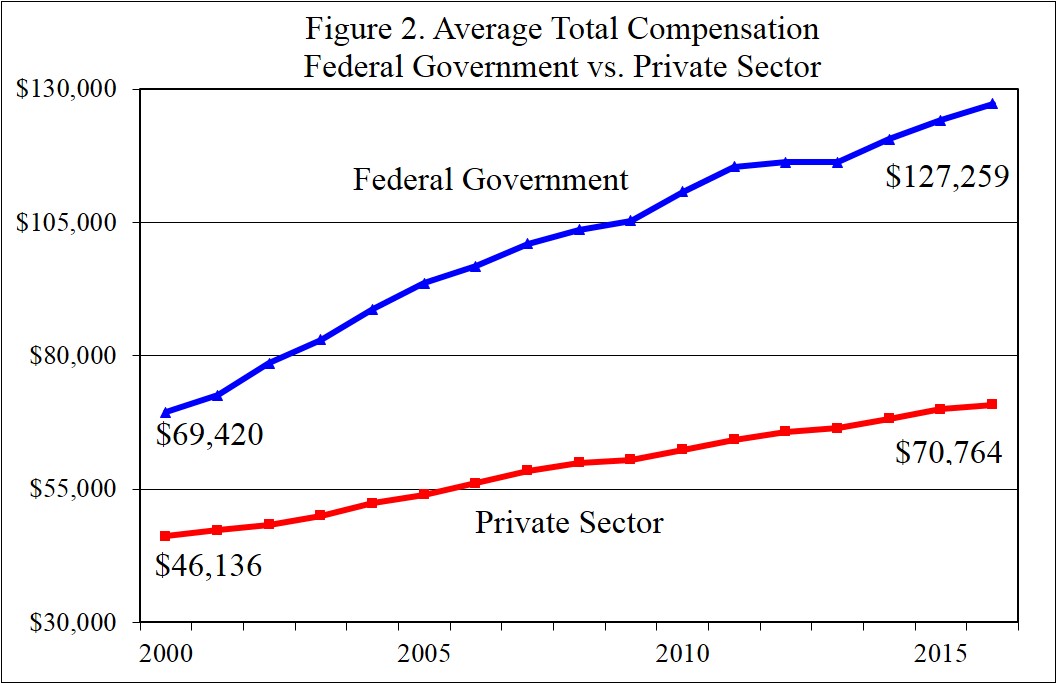
    I don’t know the answer, but maybe this image will illustrate why we should hesitate before making sweeping assessments.

    And also keep in mind that we have no way of knowing whether there’s a Fed-created bubble in the economy. As I said in the interview, what if 2018 is akin to 2006? Back then, most people underestimated the possibility that easy money and Fannie-Freddie subsidies had created an unsustainable housing boom.

    But even if we ignore that wild card, I can’t help but wonder whether Trump‘s pro-growth polices and Trump‘s anti-growth policies are resulting in a wash.

    That ignores the moral component of tax cuts, that government does not deserve more of your money just because politicians want more of your money. That is particularly true given the fact that no societal problem we have today can be solved by government. The War on Poverty, started more than a half-century ago to get Democrats black votes, has achieved as much as doing nothing would have, except for that part about Democratic votes.

    Investors Business Daily doesn’t hesitate:

    On the left, the idea that the tax cuts signed into law by President Trump benefited no one but “the rich” is almost a mantra. False, of course, but somehow the media continue to repeat it.

    Google “Trump tax cuts of the rich” and you get about 6.67 million hits. So it’s quite an item of discussion out there.

    And it’s an increasingly common talking point among the Democrats’ far-left-of-center representatives as the midterm elections loom. Why, it’s almost like they’re spreading “fake news” to the voters or something.

    The truth is, as a new report shows, average American workers are benefiting not solely by having their incomes boosted by tax cuts, but by having bigger benefit-packages, too.

    Rather than focus on the abstract benefits of the tax changes, Americans for Tax Reform has listed literally dozens of companies that are delivering more benefits to their workers, thanks to tax cuts. They range from very small businesses to major multinational corporations.

    Take Firebird Bronze, an Oregon-based foundry, for instance.

    “We are a small manufacturing business casting artwork for artist in bronze we have 9 employees and because of the tax cuts and the current business friendly climate we are for the first time offering employees health care insurance costing our company 40k per year,” the company said.

    Meanwhile, following tax cuts, Express Scripts in Missouri announced, “The company will … create a $30 million education fund for employees’ children. The fund will assist with paying for college and vocational training.”

    Retailing giants Wal-Mart and Lowes’ employees will provide a special benefit up to $5,000 for families that want to adopt children.

    Lowes says it will also “be expanding its benefits package for full-time workers to include paid maternity leave for 10 weeks, paid parental leave for two weeks … and faster eligibility for health benefits.”

    Fast-food giant McDonald’s, which along with Wal-Mart is one of the nation’s largest employers, is extending a raft of benefits to some 400,000 of its workers.

    As ATR notes, even McDonald’s “employees who work just 15 hours a week, receive $1,500 worth of tuition assistance every year per year. The money can be applied to community college, trade schools, or a traditional 4-year university for employees or their family members.”

    LHC Group, a Lafayette, La.-based health services company, sent out an email to its workers from the CEO detailing exactly why things were changing so workers would understand.

    “I want to point out the positive impact the ‘Tax Cut and Jobs Act’ will have for our company and for each of you,” the email begins.

    “As a result of this legislation, our company’s effective tax rate has been reduced from roughly 41% to a projected range of 29-30% for 2018. Because of our reduced tax burden, we will be able to make important investments in our company, including additional investments in our greatest asset — our people. But rather than making a small, short-term financial overture, we have decided to make meaningful investments in 2018 that will positively impact our employees — in a sustainable and long-term fashion.”

    In addition to most workers seeing more take-home pay, the company will help pay even more of the burden for fast-rising insurance premiums, which have increased at double-digit rates under ObamaCare.

    Again, that means more money in workers’ paychecks.

    We hope you get the picture. The list of companies goes on and on, and the number of employees that benefit go into the tens of millions. Tax cuts have made everyone richer by enlarging the economic pie.

    In case you’ve forgotten, the amount of tax relief was significant.

    As CNSNews.com reminds us: “The Tax Cuts and Jobs Act, which was opposed by all Democrat members of Congress, did several things, such as change the tax brackets to lower rates for individuals, nearly doubled the standard deduction, and eliminated the mandate to buy health insurance, among other reforms.”

    And it also cut taxes on U.S. corporations, which, at 35%, faced the stiffest tax burden in the world before Trump’s cuts. Today they’re at 21%.

    As a result of these tax cuts, companies have more money left for investments, not just in equipment, but in workers’ training, education and personal lives.

    In a faster growing economy with a tightening labor market — and that’s where we are right now, with 4.1% GDP growth and a 3.8% unemployment rate — companies have much greater incentives to retain good workers. So, with the higher profits from tax cuts, they boost pay and benefits.

    This, by the way, is why when presidents of both major political parties have cut taxes over the last 100 years, economic boom times have followed. And it happens not some of the time, but all of the time. It’s happening now.

    There’s no question that American workers have it better today than they did a mere two years ago. Their wages are higher. They’re getting fat bonuses, some for the first time. And they’re receiving better, more diverse, benefit packages than ever before.

    Knowing this, when their politicians return to their districts to campaign for upcoming midterm elections, voters should ask them a simple question: Will you now vote to make the tax cuts permanent?

    As economist Milton Friedman famously put it:

    But … but … what about the budget deficit?

    That applies to this state too. Thanks to Republicans and not Democrats, families with children younger than 18 got a $100-per-child tax rebate earlier this year, and everyone in this state is enjoying our first sales tax holiday on school supplies, clothing and computers and computer supplies through Sunday. (More information here.)

    That didn’t come from Democrats. Not a single Democrat running for governor nor, as far as I’m aware, any Democrat running for the Legislature has proposed cutting $1 of taxes. Not one. The letter D after a politician’s name in this state stands for “Dracula,” drinking your money, not your blood.


    Share this on …

    • Share on X (Opens in new window) X
    • Share on Facebook (Opens in new window) Facebook
    • Share on LinkedIn (Opens in new window) LinkedIn
    • Email a link to a friend (Opens in new window) Email
    • Print (Opens in new window) Print
    Like Loading…
    No comments on Tax cuts, pro, con and pro
  • Presty the DJ for Aug. 2

    August 2, 2018
    Music

    Today in 1961, the Beatles made their debut as the house band of the Cavern Club in Liverpool, before they had recorded music of their own creation.

    Birthdays start with Edward Pattern, one of Gladys Knight’s Pips …

    … born one year before Doris Kenner of the Shirelles:

    (more…)

    Share this on …

    • Share on X (Opens in new window) X
    • Share on Facebook (Opens in new window) Facebook
    • Share on LinkedIn (Opens in new window) LinkedIn
    • Email a link to a friend (Opens in new window) Email
    • Print (Opens in new window) Print
    Like Loading…
    No comments on Presty the DJ for Aug. 2
  • Internet 1, gun-grabbing judges 0

    August 1, 2018
    US politics

    Earlier today I reported about the hysteria over the releasing of blueprints for guns that could be assembled with a 3-D printer.

    A federal judge blocked the release of those blueprints. But, the Huffington Post reports via Yahoo! News:

    Gun rights activist groups found a way around the temporary halting of 3D-printed gun blueprints by publishing another set of blueprints on a new website Tuesday, which they say is activity protected under the First Amendment.

    “Through CodeIsFreeSpeech.com, we intend to encourage people to consider new and different aspects of our nation’s marketplace of ideas – even if some government officials disagree with our views or dislike our content – because information is code, code is free speech, and free speech is freedom,” reads a statement on the site, which was created by a variety of groups including the Firearms Policy Coalition and the Firearms Policy Foundation.

    The site features downloadable blueprints for a variety of firearms, including the AR-15 semiautomatic rifle, the AR-10 battle rifle as well as the Liberator, a single-shot handgun.

    It went live the same day that U.S. District Judge Robert Lasnik blocked a settlement that President Donald Trump’s administration had reached with digital firearms nonprofit Defense Distributed, which had been granted permission to relaunch its website on Wednesday with blueprints.

    Attorneys general from eight states and Washington, D.C., announced Monday they were suing the federal government in an attempt to halt the settlement.

    “There are 3D printers in public colleges and public spaces and there is the likelihood of potential irreparable harm,” Lasnik said.

    Defense Distributed had been hosting schematics for seven different firearms from July 27 until the site’s founder Cody Wilson announced on Twitter Tuesday that the site was “going dark.” Thousands of the blueprints had already been downloaded by Tuesday.

    Three comments on this story point out the silliness of this latest anti-gun controversy:

    • MakerBot Replicator Z18 – 3D printer $6,499.00 MakerBot PLA Filament $160.00 per roll,Not cheep for a use and lose 1 timer.
    • Even though this new era of 3D printable parts to manufacture firearms is in controversy, it may come as somewhat of a surprise that it is still completely legal to make and own a homemade gun.
    • Anyone with minimal mechanical ability can build a zip gun from hardware store supplies in under 5 minutes…. Why is this such an issue?

    Brandon Burdette added on Facebook:

    Ghost guns only seem to terrify the political class. No average person I’ve met really gives a crap.

    I wonder why that is.

    Share this on …

    • Share on X (Opens in new window) X
    • Share on Facebook (Opens in new window) Facebook
    • Share on LinkedIn (Opens in new window) LinkedIn
    • Email a link to a friend (Opens in new window) Email
    • Print (Opens in new window) Print
    Like Loading…
    No comments on Internet 1, gun-grabbing judges 0
  • More media ignorance on guns (but we repeat ourselves)

    August 1, 2018
    US politics

    David French on the latest hysteria over guns:

    If you pay attention to the news, you know that the Internet is blowing up right now with claims that the Trump administration is “now” “permitting” individuals to share plans for 3D-printed guns, and that this move will “now” allow Americans to make guns at home — including plastic guns of the sort that can be used to penetrate airport and school security. Here’s a perfect example of the kind of coverage that’s rocketing around the Web, as shared by Massachusetts attorney general Maura Healey:

    Everyone needs to know how dangerous downloadable guns are.pic.twitter.com/SJ47ro6CSM

    — Maura Healey (@MassAGO) July 30, 2018

    Note the key claims in the video:

    “Downloadable guns are a real thing because of the Trump administration.”

    “Individuals will now be able to log on to a website and, if they have access to a 3D printer, print fully functional and totally undetectable firearms.”

    “All of this is because the Trump administration quietly settled a lawsuit with Cody Wilson, a 3D-gun creator who had sued the federal government for being forced to take down his downloadable 3D guns back in 2013.”

    The video then urges federal and state governments to mandate the placement of permanent metal components on guns and to “outlaw printable guns.”

    Healey says she has sued to “stop the illegal distribution of 3D printable guns.”

    There is so very much wrong with these statements that it’s hard to know where to begin. But let’s start with some basic facts. The controversy revolves around a case brought by a company called Defense Distributed, together with an advocacy organization called the Second Amendment Foundation. The plaintiffs challenged the Obama administration’s decision to apply federal International Traffic in Arms Regulations (ITAR) in order to block Defense Distributed from distributing plans that would permit individuals with a 3D printer to manufacture a plastic handgun (called “the Liberator”) and a “fully functional plastic AR-15 lower receiver” — the indispensable portion of an AR that is considered the “firearm” and that typically contains the serial number.

    The Obama administration justified its decision to prevent the plaintiffs from posting the files on the grounds that the files would be available for international download and international use. It also argued that the files at issue were not “expressive speech.” As the Fifth Circuit explained, printing a fully functional plastic lower receiver or Defense Distributed’s single-shot plastic pistol “is legal for United States citizens and will remain legal for United States citizens regardless of the outcome of this case.”

    (The federal Undetectable Firearms Act makes it illegal to manufacture or possess a weapon undetectable by walk-through metal detectors.)

    Indeed, the international-export aspects of the case were indispensable to court rulings at the district- and circuit-court levels that denied the plaintiffs’ motion for a preliminary injunction that would permit it to distribute its files. Specifically, the district court relied on the “public’s keen interest in restricting the export of defense articles.” The Fifth Circuit held that the district did not abuse its discretion in denying the motion, and it declined to address the question of whether the plaintiff demonstrated a likelihood of success on the merits.

    Despite these rulings, the federal government faced a difficult challenge on the merits. The plaintiffs’ case was fundamentally a speech case, not a gun case. The plaintiffs weren’t distributing guns, they were distributing information, and by blocking the flow of information, the Obama administration had placed a “prior restraint” on the plaintiffs’ speech. Prior restraints are among the least-favored government actions in First Amendment jurisprudence.

    In fact, the Obama administration’s action was worse than the typical prior restraint in part because it was censoring further distribution of information that was already all over the Internet. That’s right, plastic-gun plans are but one Google search away for every man, woman, and child in the United States. Just before I wrote this piece, I typed a single phrase and found plans for multiple guns.

    And, by the way, people have been making homemade guns since before the founding of the Republic. You don’t need a license to make a gun for personal use; you need one only if you make a gun for sale or distribution. Guns can be made at home easily and cheaply. Home manufacture is common (I’m close to someone who makes better ARs than any manufacturer). Oh, and technology for “undetectable” guns existed long before 3D printing — hence the need for the Undetectable Firearms Act.

    What did the Trump administration actually do? Simply put, it entered into a settlement agreement that permitted the plaintiffs to post their designs and required the government to issue a letter indicating that the designs were not subject to the licensing requirements set forth by the International Traffic in Arms Regulations. It did not alter in any way the underlying statutory or regulatory laws governing the manufacture, use, or possession of firearms.

    So, let’s recap the claims above:

    “Downloadable guns are a real thing because of the Trump administration.”
    False
    . 3D-printed guns were legal regardless of the outcome of the case, and plans for 3D-printed guns were widely available online.

    “Individuals will now be able to log on to a website, and if they have access to a 3D printer, print fully functional and totally undetectable firearms.”
    Misleading
    . The word “now” is deceptive. Individuals were able to do this before the Trump administration’s settlement, and they would have been able to do so even if the Trump administration kept litigating the case. Moreover, it’s important to note that possessing “totally undetectable” firearms violates federal law.

    “All of this is because the Trump administration quietly settled a lawsuit with Cody Wilson, a 3D-gun creator who had sued the federal government for being forced to take down his downloadable 3D guns back in 2013.”
    False
    . As the Fifth Circuit clearly stated, manufacture and possession of a plastic pistol or plastic lower receiver (subject to the Undetectable Firearms Act) “is legal for United States citizens and will remain legal for United States citizens regardless of the outcome of this case.”

    Multiple states are now suing on their own, hoping to replace the Obama administration’s prior restraint with one of their own. Here’s Pennsylvania attorney general Josh Shapiro:

    Tonight, I went to court to prohibit access to new 3D-printable guns in PA.

    These downloadable firearms were just about to be widely available online. It’s an existential threat to our state & we stepped in to stop it. The site is – & will remain – dark throughout PA. pic.twitter.com/A1siKeAf5a

    — AG Josh Shapiro (@PAAttorneyGen) July 30, 2018

    I’ve got news for Mr. Shapiro: 3D plans are still widely available. They’ve been widely available. And it’s odd to refer to the plans as an “existential threat to our state” when the original justification for the Obama administration’s action was concern over arms exports.

    Why does this keep happening? Why do media outlets and politicians continue to spread false information and then — when called on it — remain proudly ignorant and instead condemn so-called “gunsplaining”?

    My own view is simple. For critics of gun rights, details don’t matter because the gun debate is less a policy debate than it is a cultural conflict. The Trump administration’s settlement isn’t so much an outrage on its own terms as it is a vehicle for a different argument — a broader argument against gun culture. And in that broader attack on gun culture, other essential American liberties must be sacrificed, including freedom of expression. Prior restraints on free speech are a small price to pay when gun control is at stake.

    Share this on …

    • Share on X (Opens in new window) X
    • Share on Facebook (Opens in new window) Facebook
    • Share on LinkedIn (Opens in new window) LinkedIn
    • Email a link to a friend (Opens in new window) Email
    • Print (Opens in new window) Print
    Like Loading…
    No comments on More media ignorance on guns (but we repeat ourselves)
Previous Page
1 … 433 434 435 436 437 … 1,035
Next Page

Website Powered by WordPress.com.

Steve Prestegard.com: The Presteblog

The thoughts of a journalist/libertarian–conservative/Christian husband, father, Eagle Scout and aficionado of obscure rock music. Thoughts herein are only the author’s and not necessarily the opinions of his family, friends, neighbors, church members or past, present or future employers.

  • Steve
    • About, or, Who is this man?
    • Facebook
    • Twitter
    • Adventures in ruralu0026nbsp;inkBack in June 2009, I was driving somewhere through a rural area. And for some reason, I had a flashback to two experiences in my career about that time of year many years ago. In 1988, eight days after graduating from the University of Wisconsin, I started work at the Grant County Herald Independent in Lancaster as a — well, the — reporter. Four years after that, on my 27th birthday, I purchased, with a business partner, the Tri-County Press in Cuba City, my first business venture. Both were experiences about which Wisconsin author Michael Perry might write. I thought about all this after reading a novel, The Deadline, written by a former newspaper editor and publisher. (Now who would write a novel about a weekly newspaper?) As a former newspaper owner, I picked at some of it — why finance a newspaper purchase through the bank if the seller is willing to finance it? Because the mean bank lender is a plot point! — and it is much more interesting than reality, but it is very well written, with a nicely twisting plot, and quite entertaining, again more so than reality. There is something about that first job out of college that makes you remember it perhaps more…
    • Adventures in radioI’ve been in the full-time work world half my life. For that same amount of time I’ve been broadcasting sports as a side interest, something I had wanted to since I started listening to games on radio and watching on TV, and then actually attending games. If you ask someone who’s worked in radio for some time about the late ’70s TV series “WKRP in Cincinnati,” most of them will tell you that, if anything, the series understated how wacky working in radio can be. Perhaps the funniest episode in the history of TV is the “WKRP” episode, based on a true story, about the fictional radio station’s Thanksgiving promotion — throwing live turkeys out of a helicopter under the mistaken belief that, in the words of WKRP owner Arthur Carlson, “As God is my witness, I thought turkeys could fly.” [youtube=http://www.youtube.com/watch?v=ST01bZJPuE0] I’ve never been involved in anything like that. I have announced games from the roofs of press boxes (once on a nice day, and once in 50-mph winds), from a Mississippi River bluff (more on that later), and from the front row of the second balcony of the University of Wisconsin Fieldhouse (great view, but not a place to go if…
    • “Good morning/afternoon/evening, ________ fans …”
    • My biggest storyEarlier this week, while looking for something else, I came upon some of my own work. (I’m going to write a blog someday called “Things I Found While Looking for Something Else.” This is not that blog.) The Grant County Sheriff’s Department, in the county where I used to live, has a tribute page to the two officers in county history who died in the line of duty. One is William Loud, a deputy marshal in Cassville, shot to death by two bank robbers in 1912. The other is Tom Reuter, a Grant County deputy sheriff who was shot to death at the end of his 4 p.m.-to-midnight shift March 18, 1990. Gregory Coulthard, then a 19-year-old farmhand, was convicted of first-degree intentional homicide and is serving a life sentence, with his first eligibility for parole on March 18, 2015, just 3½ years from now. I’ve written a lot over the years. I think this, from my first two years in the full-time journalism world, will go down as the story I remember the most. For journalists, big stories contain a paradox, which was pointed out in CBS-TV’s interview of Andy Rooney on his last “60 Minutes” Sunday. Morley Safer said something along the line…
  • Food and drink
    • The Roesch/Prestegard familyu0026nbsp;cookbookFrom the family cookbook(s) All the families I’m associated with love to eat, so it’s a good thing we enjoy cooking. The first out-of-my-house food memory I have is of my grandmother’s cooking for Christmas or other family occasions. According to my mother, my grandmother had a baked beans recipe that she would make for my mother. Unfortunately, the recipe seems to have  disappeared. Also unfortunately, my early days as a picky, though voluminous, eater meant I missed a lot of those recipes made from such wholesome ingredients as lard and meat fat. I particularly remember a couple of meals that involve my family. The day of Super Bowl XXXI, my parents, my brother, my aunt and uncle and a group of their friends got together to share lots of food and cheer on the Packers to their first NFL title in 29 years. (After which Jannan and I drove to Lambeau Field in the snow,  but that’s another story.) Then, on Dec. 31, 1999, my parents, my brother, my aunt and uncle and Jannan and I (along with Michael in utero) had a one-course-per-hour meal to appropriately end years beginning with the number 1. Unfortunately I can’t remember what we…
    • SkålI was the editor of Marketplace Magazine for 10 years. If I had to point to one thing that demonstrates improved quality of life since I came to Northeast Wisconsin in 1994, it would be … … the growth of breweries and  wineries in Northeast Wisconsin. The former of those two facts makes sense, given our heritage as a brewing state. The latter is less self-evident, since no one thinks of Wisconsin as having a good grape-growing climate. Some snobs claim that apple or cherry wines aren’t really wines at all. But one of the great facets of free enterprise is the opportunity to make your own choice of what food and drink to drink. (At least for now, though some wish to restrict our food and drink choices.) Wisconsin’s historically predominant ethnic group (and our family’s) is German. Our German ancestors did unfortunately bring large government and high taxes with them, but they also brought beer. Europeans brought wine with them, since they came from countries with poor-quality drinking water. Within 50 years of a wave of mid-19th-century German immigration, brewing had become the fifth largest industry in the U.S., according to Maureen Ogle, author of Ambitious Brew: The Story of American Beer. Beer and wine have…
  • Wheels
    • America’s sports carMy birthday in June dawned without a Chevrolet Corvette in front of my house. (The Corvette at the top of the page was featured at the 2007 Greater Milwaukee Auto Show. The copilot is my oldest son, Michael.) Which isn’t surprising. I have three young children, and I have a house with a one-car garage. (Then again, this would be more practical, though a blatant pluck-your-eyes-out violation of the Corvette ethos. Of course, so was this.) The reality is that I’m likely to be able to own a Corvette only if I get a visit from the Corvette Fairy, whose office is next door to the Easter Bunny. (I hope this isn’t foreshadowing: When I interviewed Dave Richter of Valley Corvette for a car enthusiast story in the late great Marketplace Magazine, he said that the most popular Corvette in most fans’ minds was a Corvette built during their days in high school. This would be a problem for me in that I graduated from high school in 1983, when no Corvette was built.) The Corvette is one of those cars whose existence may be difficult to understand within General Motors Corp. The Corvette is what is known as a “halo car,” a car that drives people into showrooms, even if…
    • Barges on fouru0026nbsp;wheelsI originally wrote this in September 2008.  At the Fox Cities Business Expo Tuesday, a Smart car was displayed at the United Way Fox Cities booth. I reported that I once owned a car into which trunk, I believe, the Smart could be placed, with the trunk lid shut. This is said car — a 1975 Chevrolet Caprice coupe (ours was dark red), whose doors are, I believe, longer than the entire Smart. The Caprice, built down Interstate 90 from us Madisonians in Janesville (a neighbor of ours who worked at the plant probably helped put it together) was the flagship of Chevy’s full-size fleet (which included the stripper Bel Air and middle-of-the-road Impala), featuring popular-for-the-time vinyl roofs, better sound insulation, an upgraded cloth interior, rear fender skirts and fancy Caprice badges. The Caprice was 18 feet 1 inch long and weighed 4,300 pounds. For comparison: The midsize Chevrolet of the ear was the Malibu, which was the same approximate size as the Caprice after its 1977 downsizing. The compact Chevrolet of the era was the Nova, which was 200 inches long — four inches longer than a current Cadillac STS. Wikipedia’s entry on the Caprice has this amusing sentence: “As fuel economy became a bigger priority among Americans…
    • Behind the wheel
    • Collecting only dust or rust
    • Coooooooooooupe!
    • Corvettes on the screen
    • The garage of misfit cars
    • 100 years (and one day) of our Chevrolets
    • They built Excitement, sort of, once in a while
    • A wagon by any otheru0026nbsp;nameFirst written in 2008. You will see more don’t-call-them-station-wagons as you drive today. Readers around my age have probably had some experience with a vehicle increasingly rare on the road — the station wagon. If you were a Boy Scout or Girl Scout, or were a member of some kind of youth athletic team, or had a large dog, or had relatives approximately your age, or had friends who needed to be transported somewhere, or had parents who occasionally had to haul (either in the back or in a trailer) more than what could be fit inside a car trunk, you (or, actually, your parents) were the target demographic for the station wagon. “Station wagons came to be like covered wagons — so much family activity happened in those cars,” said Tim Cleary, president of the American Station Wagon Owners Association, in Country Living magazine. Wagons “were used for everything from daily runs to the grocery store to long summer driving trips, and while many men and women might have wanted a fancier or sportier car, a station wagon was something they knew they needed for the family.” The “station wagon” originally was a vehicle with a covered seating area to take people between train stations…
    • Wheels on theu0026nbsp;screenBetween my former and current blogs, I wrote a lot about automobiles and TV and movies. Think of this post as killing two birds (Thunderbirds? Firebirds? Skylarks?) with one stone. Most movies and TV series view cars the same way most people view cars — as A-to-B transportation. (That’s not counting the movies or series where the car is the plot, like the haunted “Christine” or “Knight Rider” or the “Back to the Future” movies.) The philosophy here, of course, is that cars are not merely A-to-B transportation. Which disqualifies most police shows from what you’re about to read, even though I’ve watched more police video than anything else, because police cars are plain Jane vehicles. The highlight in a sense is in the beginning: The car chase in my favorite movie, “Bullitt,” featuring Steve McQueen’s 1968 Ford Mustang against the bad guys’ 1968 Dodge Charger: [youtube=http://www.youtube.com/watch?v=GMc2RdFuOxIu0026amp;fmt=18] One year before that (but I didn’t see this until we got Telemundo on cable a couple of years ago) was a movie called “Operación 67,” featuring (I kid you not) a masked professional wrestler, his unmasked sidekick, and some sort of secret agent plot. (Since I don’t know Spanish and it’s not…
    • While riding in my Cadillac …
  • Entertainments
    • Brass rocksThose who read my former blog last year at this time, or have read this blog over the past months, know that I am a big fan of the rock group Chicago. (Back when they were a rock group and not a singer of sappy ballads, that is.) Since rock music began from elements of country music, jazz and the blues, brass rock would seem a natural subgenre of rock music. A lot of ’50s musical acts had saxophone players, and some played with full orchestras … [youtube=http://www.youtube.com/watch?v=9CPS-WuUKUE] … but it wasn’t until the more-or-less simultaneous appearances of Chicago and Blood Sweat u0026amp; Tears on the musical scene (both groups formed in 1967, both had their first charting singles in 1969, and they had the same producer) that the usual guitar/bass/keyboard/drum grouping was augmented by one or more trumpets, a sax player and a trombone player. While Chicago is my favorite group (but you knew that already), the first brass rock song I remember hearing was BSu0026amp;T’s “Spinning Wheel” — not in its original form, but on “Sesame Street,” accompanied by, yes, a giant spinning wheel. [youtube=http://www.youtube.com/watch?v=qi9sLkyhhlE] [youtube=http://www.youtube.com/watch?v=OxWSOuNsN20] [youtube=http://www.youtube.com/watch?v=U9U34uPjz-g] I remember liking Chicago’s “Just You ‘n Me” when it was released as a single, and…
    • Drive and Eat au0026nbsp;RockThe first UW home football game of each season also is the opener for the University of Wisconsin Marching Band, the world’s finest college marching band. (How the UW Band has not gotten the Sudler Trophy, which is to honor the country’s premier college marching bands, is beyond my comprehension.) I know this because I am an alumnus of the UW Band. I played five years (in the last rank of the band, Rank 25, motto: “Where Men Are Tall and Run-On Is Short”), marching in 39 football games at Camp Randall Stadium, the Hubert H. Humphrey Metrodome in Minneapolis, Michigan Stadium in Ann Arbor, Memorial Stadium at the University of Illinois (worst artificial turf I had ever seen), the University of Nevada–Las Vegas’ Sam Boyd Silver Bowl, the former Dyche Stadium at Northwestern University, five high school fields and, in my one bowl game, Legion Field in Birmingham, Ala., site of the 1984 Hall of Fame Bowl. The UW Band was, without question, the most memorable experience of my college days, and one of the most meaningful experiences of my lifetime. It was the most physical experience of my lifetime, to be sure. Fifteen minutes into my first Registration…
    • Keep on rockin’ in the freeu0026nbsp;worldOne of my first ambitions in communications was to be a radio disc jockey, and to possibly reach the level of the greats I used to listen to from WLS radio in Chicago, which used to be one of the great 50,000-watt AM rock stations of the country, back when they still existed. (Those who are aficionados of that time in music and radio history enjoyed a trip to that wayback machine when WLS a Memorial Day Big 89 Rewind, excerpts of which can be found on their Web site.) My vision was to be WLS’ afternoon DJ, playing the best in rock music between 2 and 6, which meant I wouldn’t have to get up before the crack of dawn to do the morning show, yet have my nights free to do whatever glamorous things big-city DJs did. Then I learned about the realities of radio — low pay, long hours, zero job security — and though I have dabbled in radio sports, I’ve pretty much cured myself of the idea of working in radio, even if, to quote WAPL’s Len Nelson, “You come to work every day just like everybody else does, but we’re playing rock ’n’ roll songs, we’re cuttin’ up.…
    • Monday on the flight line, not Saturday in the park
    • Music to drive by
    • The rock ofu0026nbsp;WisconsinWikipedia begins its item “Music of Wisconsin” thusly: Wisconsin was settled largely by European immigrants in the late 19th century. This immigration led to the popularization of galops, schottisches, waltzes, and, especially, polkas. [youtube=http://www.youtube.com/watch?v=yl7wCczgNUc] So when I first sought to write a blog piece about rock musicians from Wisconsin, that seemed like a forlorn venture. Turned out it wasn’t, because when I first wrote about rock musicians from Wisconsin, so many of them that I hadn’t mentioned came up in the first few days that I had to write a second blog entry fixing the omissions of the first. This list is about rock music, so it will not include, for instance, Milwaukee native and Ripon College graduate Al Jarreau, who in addition to having recorded a boatload of music for the jazz and adult contemporary/easy listening fan, also recorded the theme music for the ’80s TV series “Moonlighting.” Nor will it include Milwaukee native Eric Benet, who was for a while known more for his former wife, Halle Berry, than for his music, which includes four number one singles on the Ru0026amp;B charts, “Spend My Life with You” with Tamia, “Hurricane,” “Pretty Baby” and “You’re the Only One.” Nor will it include Wisconsin’s sizable contributions to big…
    • Steve TV: All Steve, All the Time
    • “Super Steve, Man of Action!”
    • Too much TV
    • The worst music of allu0026nbsp;timeThe rock group Jefferson Airplane titled its first greatest-hits compilation “The Worst of Jefferson Airplane.” Rolling Stone magazine was not being ironic when it polled its readers to decide the 10 worst songs of the 1990s. I’m not sure I agree with all of Rolling Stone’s list, but that shouldn’t be surprising; such lists are meant for debate, after all. To determine the “worst,” songs appropriate for the “Vinyl from Hell” segment that used to be on a Madison FM rock station, requires some criteria, which does not include mere overexposure (for instance, “Macarena,” the video of which I find amusing since it looks like two bankers are singing it). Before we go on: Blog posts like this one require multimedia, so if you find a song you hate on this blog, I apologize. These are also songs that I almost never listen to because my sound system has a zero-tolerance policy — if I’m listening to the radio or a CD and I hear a song I don’t like, it’s, to quote Bad Company, gone gone gone. My blonde wife won’t be happy to read that one of her favorite ’90s songs, 4 Non Blondes’ “What’s Up,” starts the list. (However,…
    • “You have the right to remain silent …”
  • Madison
    • Blasts from the Madison media past
    • Blasts from my Madison past
    • Blasts from our Madison past
    • What’s the matter with Madison?
    • Wisconsin – Madison = ?
  • Sports
    • Athletic aesthetics, or “cardinal” vs. “Big Red”
    • Choose your own announcer
    • La Follette state 1982 (u0022It was 30 years ago todayu0022)
    • The North Dakota–Wisconsin Hockey Fight of 1982
    • Packers vs. Brewers
  • Hall of Fame
    • The case(s) against teacher unions
    • The Class of 1983
    • A hairy subject, or face the face
    • It’s worse than you think
    • It’s worse than you think, 2010–11 edition
    • My favorite interview subject of all time
    • Oh look! Rural people!
    • Prestegard for president!
    • Unions vs. the facts, or Hiding in plain sight
    • When rhetoric goes too far
Privacy & Cookies: This site uses cookies. By continuing to use this website, you agree to their use.
To find out more, including how to control cookies, see here: Cookie Policy
 

Loading Comments...
 

    • Subscribe Subscribed
      • Steve Prestegard.com: The Presteblog
      • Join 198 other subscribers
      • Already have a WordPress.com account? Log in now.
      • Steve Prestegard.com: The Presteblog
      • Subscribe Subscribed
      • Sign up
      • Log in
      • Report this content
      • View site in Reader
      • Manage subscriptions
      • Collapse this bar
    %d