You might think the number one British single today in 1967 is …
The number one single today in 1974:
Today in 1980, Grease was no longer the word: The musical closed in New York, after 3,883 performances.
No comments on Presty the DJ for April 13
You might think the number one British single today in 1967 is …
The number one single today in 1974:
Today in 1980, Grease was no longer the word: The musical closed in New York, after 3,883 performances.
Readers know that I have bemoaned the lack of quality movie and TV depiction of journalists.
It turns out that 50 TV seasons ago, there was a quality depiction of journalists, though realism, as with most fictional entertainments, was not its forte.
Michael Callahan explains:
Fifty years ago, TV had mostly one flavor, and it was vanilla. In fall 1968, the airwaves were full of blandly loopy family-friendly fare like The Andy Griffith Show, Gomer Pyle and Petticoat Junction. But on Friday nights on NBC, slipped between a Bonanza-clone Western called The High Chaparral and the troubled third season of Star Trek, there was an unusual little series that, even more than Gene Roddenberry’s show, seemed to be beamed in from the future.
The Name of the Game was a 90-minute cable-style adult drama that came on the air decades before anybody had heard of cable TV. Centered on the glamorous Howard Publications magazine empire and the adventures of its various writers and editors — played by Tony Franciosa, Gene Barry and Robert Stack, with Susan Saint James as their frequently kidnapped secretary — it drilled down into the inner workings of a media company a half-century before HBO got around to doing it with Succession. With a Game of Thrones-size budget ($400,000 an episode, the largest of its day) and a roster of soon-to-be-famous behind-the-camera talent — including a just-out-of-college story editor named Steven Bochco and a 23-year-old neophyte director named Steven Spielberg, along with directors Marvin Chomsky (cousin of Noam) and Leo Penn (father of Sean) — it opened up a world of glamour and luxury that TV mostly wouldn’t explore until Dallas and Dynasty. Even the name of the magazine the characters worked for was prescient: It was called People, six years before Time Inc. launched the real publication (“The dumbest title I have ever heard of,” cracked Fanciosa when he read the script).
“It was flat-out entertaining melodrama,” says Sid Sheinberg, then the maverick Universal exec overseeing the show (he would later become the studio’s president). “I actually looked forward to it every week. I would go home and sit on the floor and watch it every Friday night.”
As it happened, though, The Name of the Game was as melodramatic offscreen as it was on-. And after a tumultuous three-year run, the show exploded in a spectacular flameout during an episode shot in, of all places, Las Vegas.
Today in 1966, Jan Berry of Jan and Dean crashed his Corvette into a parked truck in Los Angeles, suffering permanent injuries.
The number one single today in 1969:
Today in 1975, David Bowie announced, “I’ve rocked my roll. It’s a boring dead end, there will be no more rock ‘n’ roll records from me.”
Ask me about the ’80s, and I’ll show you what I was doing:
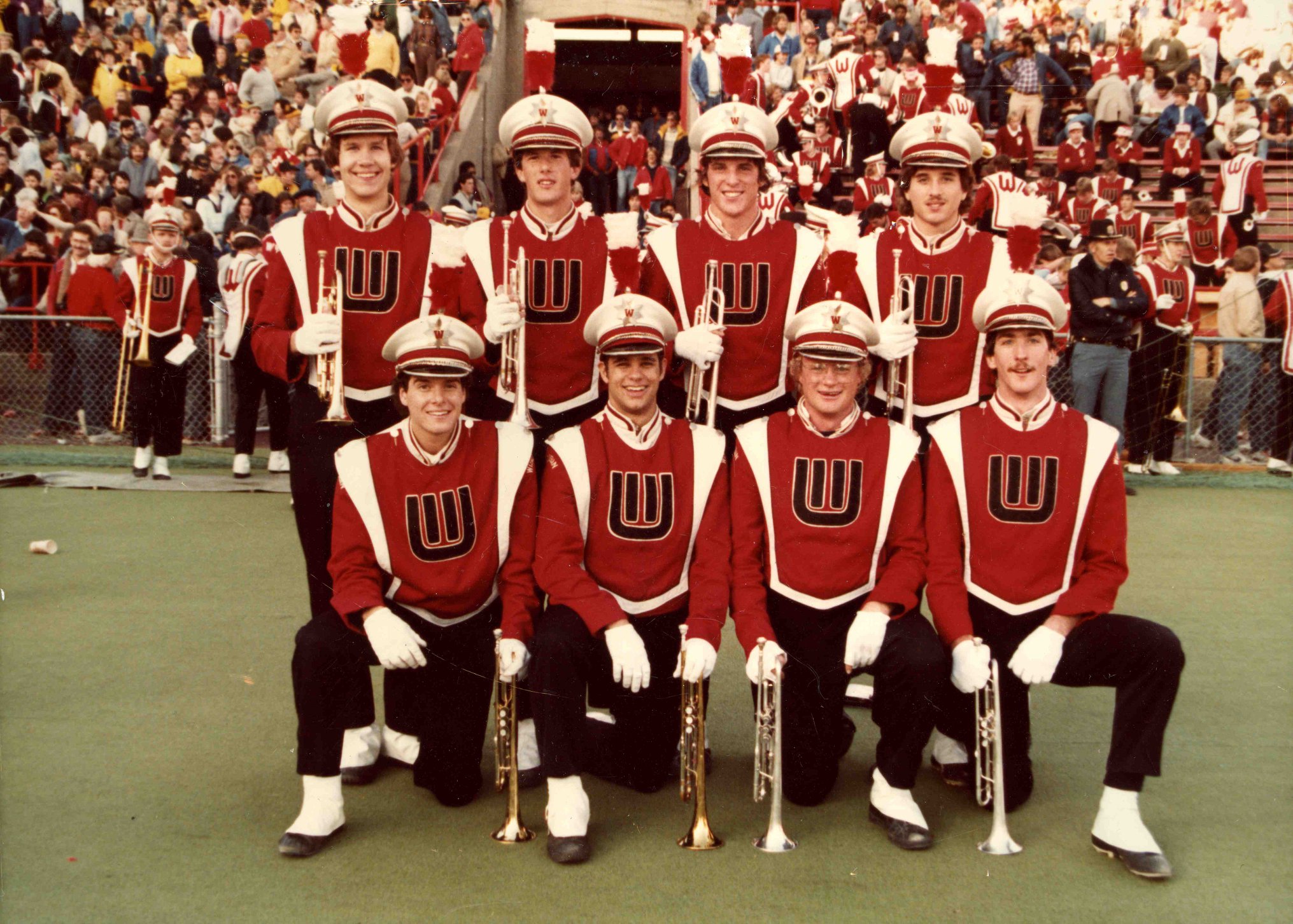
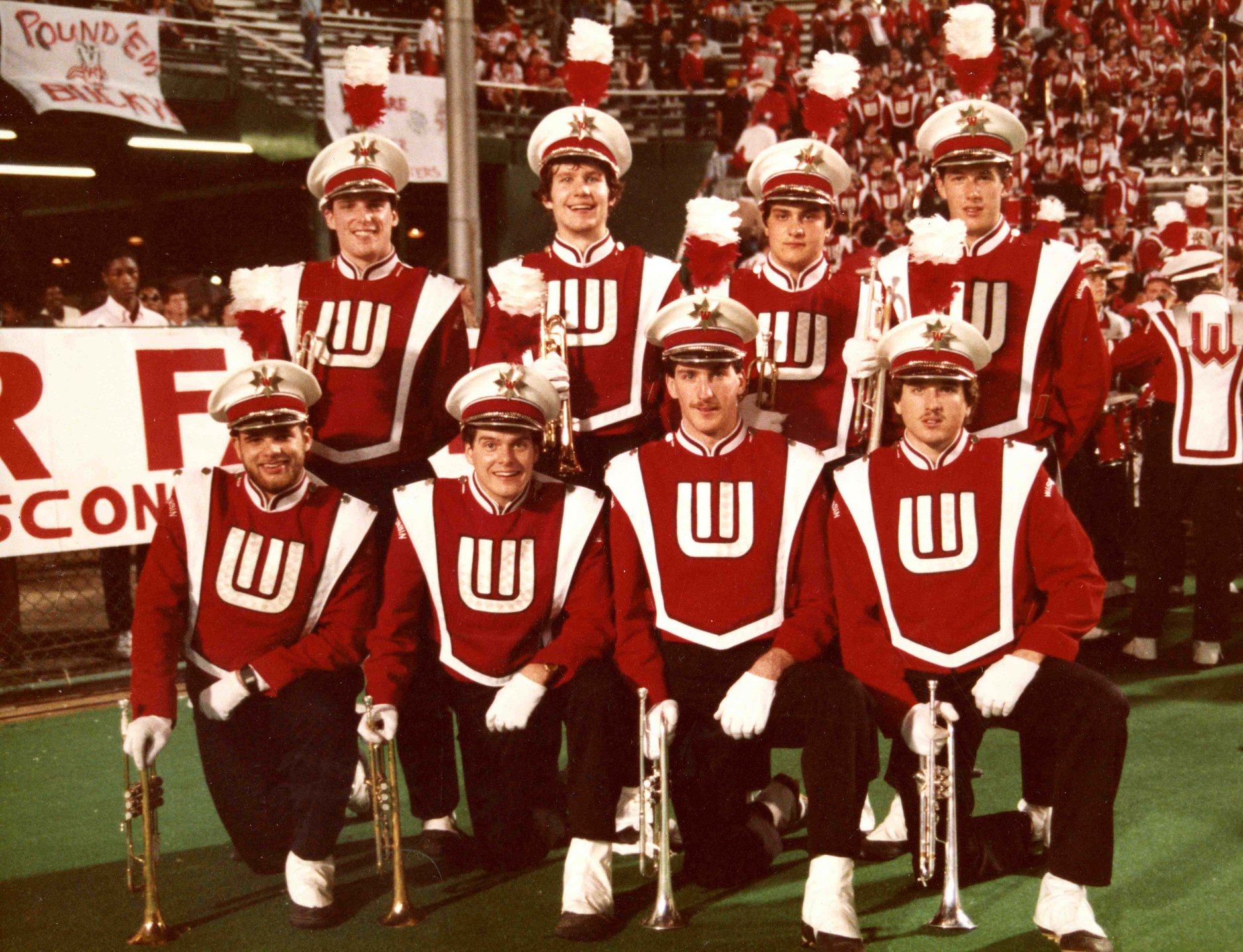
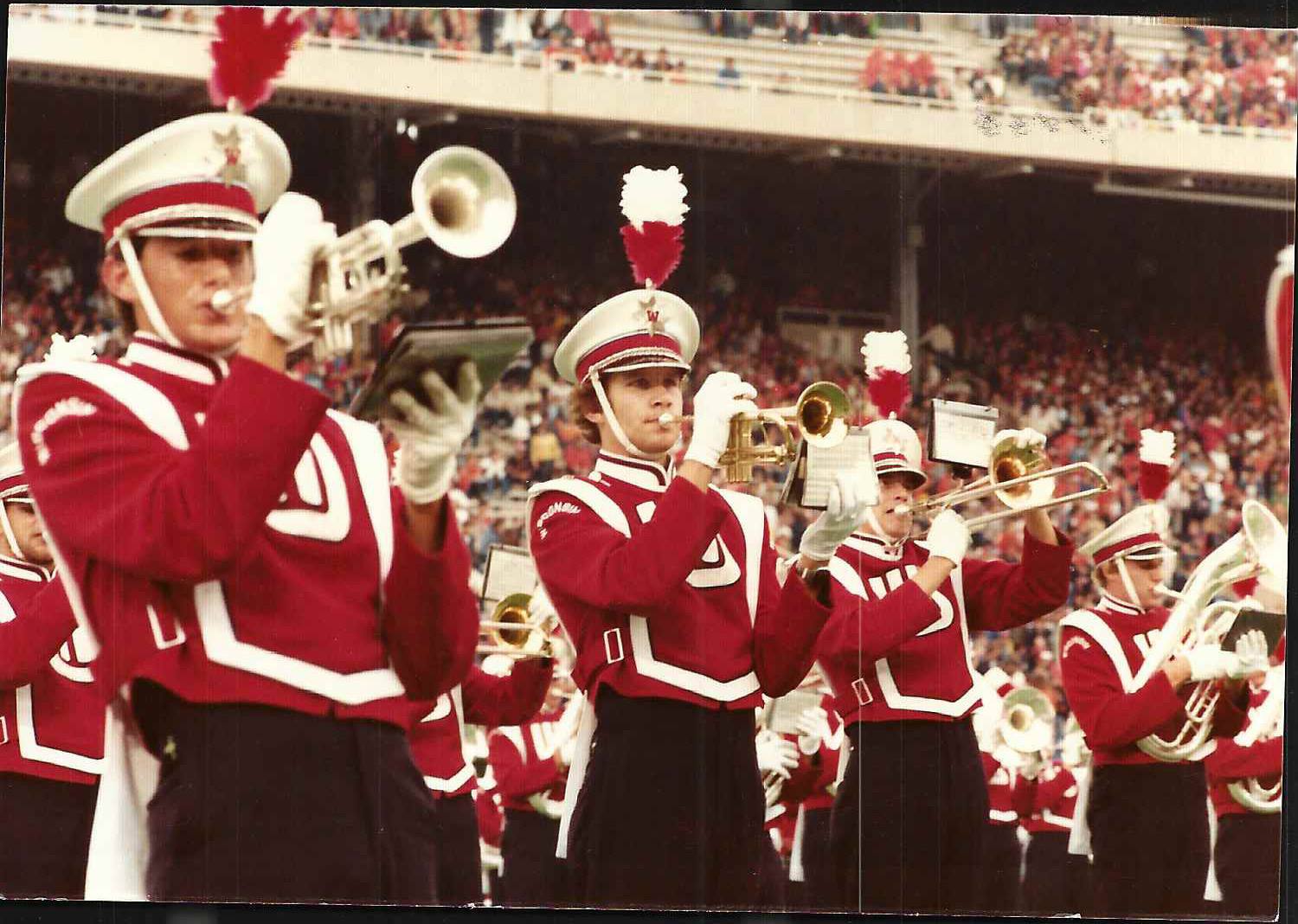
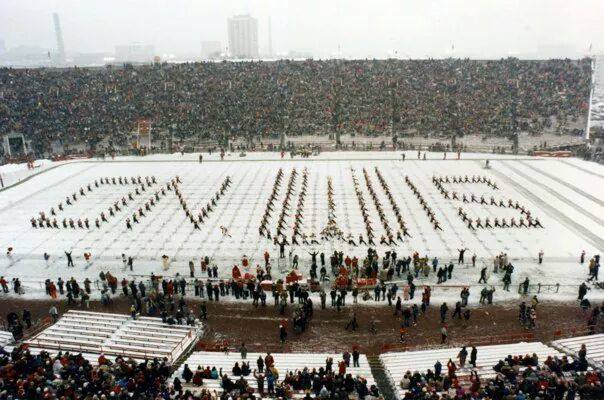
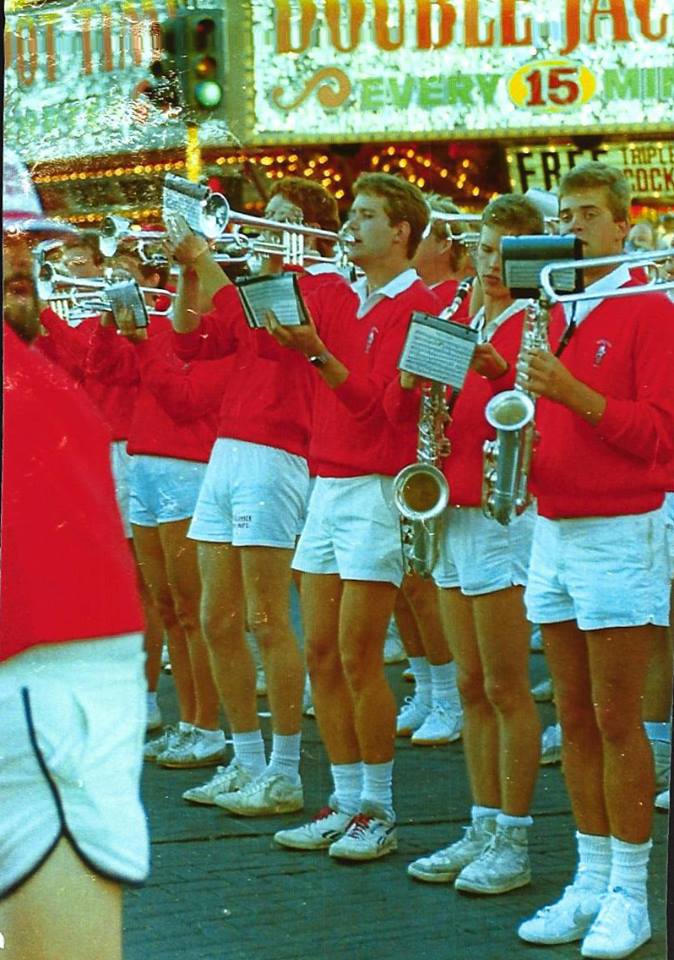
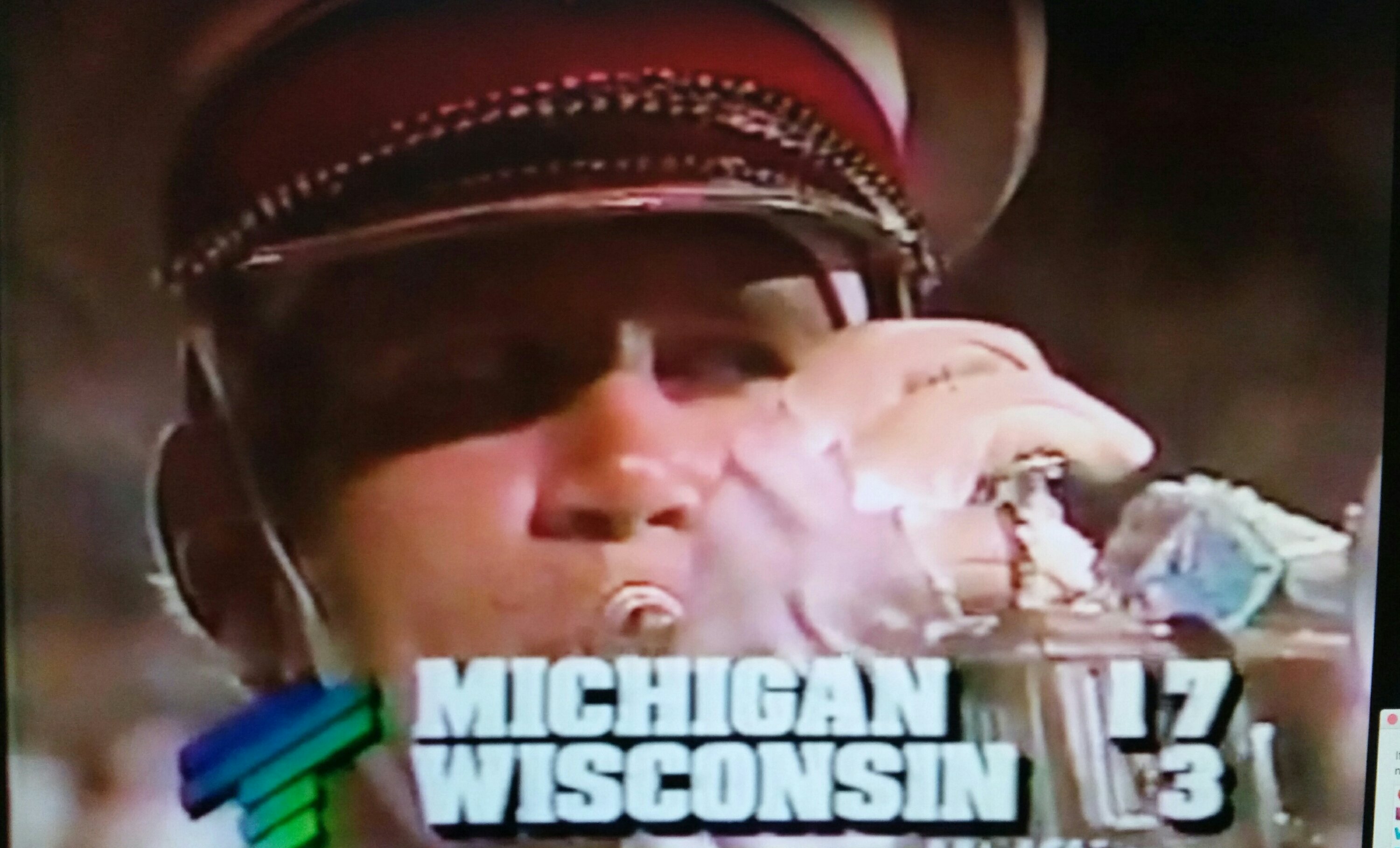
Madison.com on the big event tonight through Saturday night:
He has thought long and hard about what to say to the thousands attending the UW Varsity Band spring concerts this week at the Kohl Center.
Spectators want more than a show. They want to witness UW Bands director Mike Leckrone’s last “last”: the sold-out concert series — slated for Thursday, Friday and Saturday — that will cap an end to a storied 50-year career before he retires this academic year.
“This is the moment everybody is sort of looking for to represent the curtain coming down in a lot of ways,” Leckrone said. “Is that too dramatic?”
Leckrone’s speech at the end of the show, he’s decided, will be one of reassurance.
“This is the thought that everyone seems to be bringing to me now is, what’s going to happen next?” he said. “Where is the band going to go? What I want to do is assure people that there is a tradition. There are certain things the band has done over the years that I don’t see evaporating. There will be changes, yes, but there’s not going to be a complete change in the traditions.”
He paused, as if editing the speech inside his head.
“That’s kind of the gist of it,” he said. “I will hopefully say it much better than that.”
This entire year has been a last year since Leckrone’s announcement last August …
… and the end of the football season last fall.
In March 1975, just five years into his career, Leckrone, then 37, decided an end-of-the-year gathering for his Marching and Varsity bands would be nice.
“Let’s have a party,” the kids said.
“Let’s have one last performance,” Leckrone replied.
Leckrone met the students half an hour before the concert began in Room 1341 of the Humanities building. On the blackboard, he scribbled down the songs students would play later that night in Mills Hall.
They had debated earlier whether to charge a dollar to attend.
“Nobody will pay a buck,” someone said.
About 450 people did.
He sweated through his red blazer by intermission. On went a gaudy blue and red splotched shirt he had brought to wear to the after-party as a joke.
The next year, he wore a red sequined vest, and his attire kept escalating in ostentatiousness from there.
The single-day show has morphed into massive, multi-day blowouts led by ringmaster Leckrone.
Saturday’s show sold out Jan. 14, the first day tickets became available. Friday’s show sold out the next day. Thursday’s show sold out three weeks later.
Those who can’t get tickets can still see the show when it airs at 7 p.m. Saturday on Wisconsin Public Television at go.madison.com/leckrone-concert.
Leckrone has few concrete plans to share when people ask him about his retirement plans.
“I haven’t had time to think about it,” he said. “It’s been a nonstop pace practically since I announced (my retirement).”
He gave up golf long ago. He doesn’t like to fish or hunt. He even considers eating a waste of time.
“I can absolutely guarantee I’m not going to pack up, sell my house and move to Florida or Arizona,” he said.
UW-Madison granted Leckrone, who never took a sabbatical in his 50 years working for the university, a paid leave next academic year.
He plans to spend part of it archiving some of his work with Mills Music Library. He looks forward to composing and arranging more music. He will also host a Wisconsin Alumni Association tour traveling through Europe next fall.
While Leckrone may be on campus from time to time, the sabbatical doesn’t change the sentimentality of his last year.
“I’m not going to have that day-to-day contact with the students,” he said. “That’s the finality of it.”
Leckrone has received between 400 and 500 letters from students and former students this year thanking him for the influence he had on their lives. Over his 50-year career, he’s accumulated file drawers’ worth of notes.
For a man who says he has never seen a perfect performance — the tubas came in too early in one song, or students sprung from their seats too quickly or the flugelhorns lacked fervor — these concerts are Leckrone’s grand finale.
The first meeting for this week’s shows took place in July.
His concerts have featured fireworks, blimps, confetti, strobe lights and a Fifth Quarter chicken dance, among other special effects. One year, sparklers attached to his hands accidentally misfired, burning a few strands of his hair. Another time a boxing championship banner caught fire.
Leckrone directs 280 students, along with scores of stagehands, electricians, sound technicians, pyrotechnicians and others. He says everyone knows what his or her job is but jokes that the only person who knows everyone else’s job is himself.
Leckrone’s entrances have become legendary. He has swung from a trapeze, soared over the stage on a motorcycle and ridden a bicycle across the Fieldhouse on a wire.
In 2017, he took it easy following double-bypass heart surgery. He characterized his 2018 entrances as “modest.”
His grand entrance this year?
“Oh that, I’m not telling!” he said. “But we’re going to blow the whole thing here.”
After the 1984 Olympics in Los Angeles, whose opening ceremony included someone flying into the L.A. Coliseum on a jet pack, Leckrone considered that for the band’s 1986 100th-anniversary concert in Camp Randall Stadium, but decided he didn’t have enough time to be properly trained on it.
Doug Moe adds:
Ask Mike Leckrone to sort through a half century of Badgers memories for a favorite and he’ll give you the 1994 Rose Bowl, Wisconsin’s first appearance in the modern era.
“It was so over the top,” says the longtime band director, who is in his final weeks as conductor. “We played every possible venue. We were on the Queen Mary, at Disneyland and Knott’s Berry Farm. Then we won the game!”
Over the top? Leckrone conjures another indelible memory: the 1973 NCAA hockey championship at fabled Boston Garden. It was the first national title for the Badgers hockey team. The Wisconsin fans nearly stole the show, and not for the last time. Coach Bob Johnson — whose exuberance matched Leckrone’s — knew the fans’ value and would occasionally shout from the bench to his friend, “Get the crowd going, Leckrone!”
Perhaps nothing says over the top quite so much as the three-night extravaganza known as the University of Wisconsin–Madison Varsity Band Concert. Slated for April 11-13, this sold-out edition is the 45th, and Leckrone’s last. He directed the first one in March 1975 — six years after arriving on campus — and helped turn it from an impromptu gathering at Mills Hall into a pyrotechnic, multimedia spectacular at the Kohl Center.
It won’t be the true swan song for Leckrone, 82, who last August announced he’d retire at the end of this school year. The band will play at commencement in May. But the three nights of spring concerts figure to be particularly memorable. Leckrone said 150 or so alumni band members might return for a riff on “The Music Man” he has planned.
Mike Leckrone has taken an over-the-top approach almost from the beginning. When he was a kid, Leckrone and his dad had a comedic musical act that wowed service clubs in rural Indiana. Leckrone blew some specialty notes on trumpet and his dad played intricate piano pieces with mittens on.
“It looks harder than it is,” Leckrone says.
Leckrone explored other avenues — chemical engineering and coaching — but music kept its grip on him. He earned a music degree at Butler University and later became the school’s band director.
That’s where UW–Madison found him when Ray Dvorak retired after leading the UW bands for 34 years. At the time Leckrone thought, “How could anyone do 34 years?”
While Leckrone was considering the Madison job, he and his wife, Phyllis, got a tour of the campus. It was the Vietnam era and there were protest signs and broken windows in sight.
When Leckrone announced he was taking the UW–Madison job, his wife burst into tears. “She was an Indiana farm girl and didn’t know what she was getting into.” Phyllis warmed to her new home and became known as the “Badger band mom.” Her death in August 2017, after 62 years of marriage, was a crushing blow.
When they arrived in Madison in 1969, Leckrone himself took some time to acclimate. His duties expanded beyond marching band. He began teaching. Early on, Leckrone was asked to assemble a pep band to appear at indoor sporting events. That led to the season-ending varsity band concerts.
Every year — for 50 years now — 100 to 150 new students have attended tryouts for the celebrated UW band. Do the math: Leckrone has met and mentored more than 5,000 young men and women.
Dr. Frank Byrne, retired president of St. Mary’s Hospital and a member of the UW alumni band (although he went to Notre Dame; it’s a long story), is a friend and fan of Leckrone.
“What you learn in marching band is accountability and teamwork,” Byrne says. “You’re accountable to each other.” Leckrone held them accountable — but he always had their backs.
“He’s entertained millions,” Byrne continues. “But he’s changed the trajectory of thousands of lives by giving them the opportunity to get engaged with music.” …
Prominent in Leckrone’s memory bank is directing the varsity band concert just weeks after his double bypass heart surgery in January 2017. “I’ll never forget the day I walked back into rehearsal,” he says.
Leckrone had prepared everyone for his not being there. That’s what he’s doing now, preparing people — himself especially— for his retirement. He’s been too busy to really think it through. Leckrone will be on a Wisconsin Alumni Association cruise down the Danube River in Eastern Europe in September. After that, only one thing is certain. “It will have something to do with music.”
I’ve been thinking about that this week. There were football halftimes — turning boos into a standing ovation from 100,000 fans at Michigan; what I considered to be a perfect (at least error-free) performance at Illinois, the one bowl game I got to march in. There were also football games — beating Ohio State twice — and other games — a triple-overtime game against Indiana in 1987, beating Iowa in 1985 (preceded and followed by an amusing five seconds with a group of Hawkeye fans), and UW’s going 9–0 in overtime hockey games the five years I was at UW.
I can’t remember all the shows I marched, but I remember a number of them. The 1984 rock show, which included “Sh-Boom” and “Tequila,” got performed four times — at Michigan, at Illinois, at Homecoming against Minnesota and at the bowl game. (All UW losses.) I marched “West Side Story” in high school (since our director was a field assistant) and at UW. The next year, we did “Jesus Christ Superstar.”
There were other moments. A 1987 Marching Band practice was interrupted for about 10 seconds by a tornado warning — five seconds of Leckrone’s announcing the tornado warning, followed by five seconds of tuba players’ yelling “Auntie Em! Auntie Em! It’s a twister!” There was the day coming back from a concert in Merrill where we had to push our bus through an intersection in Madison to get to the hockey game we were playing in that night. There was the brief drag race between Leckrone and myself on South Park Street going from the Fieldhouse to the Dane County Coliseum from the former’s basketball game to the latter’s hockey game. There was the night after an exhibition basketball game against an Eastern Bloc national team where a group of us tried to find the team at a series of Madison hotels, but failed. There was having an entire hotel in Indianapolis to ourselves coming back from the 1984 Hall of Fame Bowl, where the bowl game was replayed in the halls at 2:30 a.m., and the right team won.
There is another reason to bring this up. Leckrone’s final three concerts will include a contingent of alumni playing part of “The Music Man.” I will be one of those alumni band players, so if you are at one of the concerts, or you watch on Wisconsin Public Television taped or WPT.org live, you may see me playing. That is a bit ironic since I’ve only played a couple of alumni events since I graduated, but on the other hand I enjoyed playing in the concerts more than watching them, I get my chance tonight through Saturday night.
I’ve written here before that 30 years after I graduated I still have dreams about getting thrown into either football games or UW band concerts, lacking most of what I need for the performance. It turns out the dreams (nightmares?) came true.
The Milwaukee Journal Sentinel’s Dan Bice teed up an interesting Facebook exchange following Brian Hagedorn’s apparent victory. Bice provides insight into the newsroom’s mindset regarding Hagedorn’s traditional Christian views. It’s a reminder of how far the paper has drifted away from traditional journalistic standards.
(Disclosure: I am decidedly not a fan of Bice. I argued here that resignation would be the honorable thing to do in light of his John Doe writings.)
Bice began his Facebook string by citing an excellent column by Rick Esenberg of the Wisconsin Institute for Law & Liberty.
Here’s Bice:
Wisconsin Institute for Law and Liberty chief Rick Esenberg argues in a column that Judge Hagedorn’s victory is a “vindication for religious tolerance.” Interesting spin on Hagedorn’s less-than-tolerant position on same-sex marriage and gay rights. Intolerance = tolerance.
Got that? Hagedorn is “less-than-tolerant” for adhering to a traditional Christian view, one that also is prominent in Hebrew and Muslim doctrines.
Bice thus passes judgement. Reporters are not supposed to do that. While a “columnist” is afforded leeway in expressing personal views, Bice’s writing in the recent campaign constituted a key part of the Journal Sentinel’s news coverage. It’s crystal clear here what he thought of Hagedorn’s beliefs while reporting on the campaign.
At a later point in the Facebook exchange, Bice adopts the classic Journal Sentinel pose of neutrality and objectivity:
I let people know that Hagedorn had written a number of controversial things on his blog. I also wrote about Neubauer’s family ties to Planned Parenthood. I didn’t ask either candidate to do anything in response. I let voters know about this info. They decided the merit of the info.
But other comments from Bice offer a much different perspective. Amazingly, at one point he includes opposition to same-sex marriage in a litany of bona fide historical American black marks. Check this out:
Religious people in American history have used their faith to argue for slavery, Prohibition, eugenics and against civil rights and same-sex marriage.
As Esenberg separately noted in the exchange, “…as recently as 10 years ago, Barack Obama would have been ineligible to be President” if opposition to same-sex marriage was a litmus test.
In a vintage Journal Sentinel style mastered by the paper’s editor, George Stanley, Bice also knocks down some straw men.
He says, for example, “Because people base their political positions on faith doesn’t mean those opinions are above scrutiny.” I know of no one who said Hagedorn’s political positions are “above scrutiny.” The objection to the Journal Sentinel coverage was that is so obviously reflected a non-neutral assessment Hagedorn, i.e., he is “less-than-tolerant.”
Bice includes me in his straw men targets, to wit, “George Mitchell‘s point about religious tolerance is nothing more than an effort to shut down public debate — an odd position for a free speech advocate.” Yeah, I seek to “shut down public debate.”
Many factors, Craig’slist, for one, explain the precipitous demise in Journal Sentinel circulation. Other issues, notably the newsroom’s blinders when it comes to loss of objectivity, also are prominent. I, for one, thought the early 2019 hits on Hagedorn from Bice and Molly Beck doomed the Hagedorn campaign. Never have I been more encouraged to have been so wrong.
There is another dimension here of how the media (about whom I wrote here yesterday) might have contributed to Hagedorn’s win and with the slump in newspaper readership. My thesis is that most people in my line of work are out of touch with their readers.
In the shower the other day (where I do my best thinking) I came up with a five-part test for people in the media — is or are (insert journalist name here):
Notice there is no mention of the journalist’s political worldview, though the more No answers, the more likely someone is to be a liberal. The first three get to the subject of commitment, and questions two and three are about commitment where you are, not merely considering where you live to be your next stop on your career journey. Moving when you own a house is not a very snap decision.
Marriage (as opposed to living together) is making a public commitment to your spouse. (It also reflects on the ability of a journalist to remain in journalism given that many journalists are the smaller contributor to their household income.)
Being a parent only changes your entire life, and in ways you can’t predict when you find out a child is on the way. Being a parent means you become concerned about the state of the schools your children attend, but also how much they cost in terms of property taxes on your house. Property taxes fund other government services, so home ownership translates into interest in local government.
The last two relate to how the journalist relates to the dominant culture in “flyover country.” Media in at least the Madison and Milwaukee markets fail this test repeatedly. Maybe that’s why the Madison and Milwaukee media, at a minimum, guessed wrong about Donald Trump’s winning Wisconsin and the future Justice Hagedorn.
A columnist of the 1990s — I’m thinking P.J. O’Rourke or Dave Barry, but I can’t find this quote attributed to either — once wrote that he had been managed by others for years and was therefore trying to avoid being managed.
This comes to mind in reading Arthur Brooks:
I always thought people liked me. I make friends easily and am at about the 99th percentile in extroversion.
But when I first moved to the American Enterprise Institute as president in 2009, I often felt a distinct distance from my colleagues. As I approached the lunch table, I’d see my colleagues laughing and telling stories, but when I sat down, they would look down at their plates. I started to take it personally.
But then I read the work of Princeton University’s Daniel Kahneman, a Nobel Prize laureate in economics although he is a psychologist, and my relational isolation suddenly began to make sense. Kahneman’s work reveals a hard truth: Tyrannical or not, people don’t enjoy being around leaders all that much. In a well-known study, Kahneman and several colleagues looked at sources of unhappiness in our ordinary lives. They found that the No. 1 unhappiness-provoking activity in a typical day is spending time with one’s boss. Leaders who think their employees look forward to seeing them are basically fooling themselves. Many leaders want to be the exception to this; few are. Why? Because most people find it stressful to be bossed.
Most of us in leadership roles make an uneasy peace with this truth. I, for example, started eating lunch at my desk. Tyrants, on the other hand, embrace it fully. The canonical text for despotic leaders is Niccolo Machiavelli’s classic The Prince, in which he famously advised, “It is better to be feared than loved, if you cannot be both.” By process of elimination, since you cannot be loved and still be the boss, go ahead and be feared.
People who follow Machiavelli’s advice are what psychologist Daniel Goleman calls “coercive leaders” in his seminal Harvard Business Review article, “ Leadership That Gets Results.” In his research, he studied the leadership styles of nearly 4,000 CEOs. The most hated? “Coercive leadership.” The coercive leader, Goleman wrote, creates “a reign of terror, bullying and demeaning his executives, roaring his displeasure at the slightest misstep.”
That doesn’t sound like a leader most people would be eager to follow, but it does sound like a lot of current leaders and the general tenor of our political discourse. From television to social media to everyday politics at the highest level, we see powerful people belittling, maligning, and mocking those with lower status. Citizens, colleagues, and opponents are all routinely insulted and shamed in a system that rewards the loudest voices and most audacious claims.
Is this what we really want? After all, we vote for our politicians and tune in voluntarily to the media. Obviously, we’ve selected coercive leaders. Why?
Goleman’s work explains this choice. Divisive, coercive political leaders, in Goleman’s telling, can be appealing during times of national despair, when voters want to change the status quo. If people are convinced a crisis is being ignored, a coercive leader might be just what they want, at least for a little while. Goleman describes one such executive who was brought in to save a food company that was hemorrhaging money. “His first act was to have the executive conference room demolished. To him, the room, with its long marble table that looked like ‘the deck of the Starship Enterprise,’ symbolized the tradition-bound formality that was paralyzing the company.” The demolition was cheered by the rank and file, because it sent a message that the failing culture had to change.
Sound familiar? It should, because the motif of shaking up the system, if only to send a message, has dominated our politics and media since the run-up to the 2016 election. From populist politicians, including everyone from the president to his democratic socialist adversaries to angry pundits, leading figures on the Right and Left have spoken to broad swaths of the population that see themselves as having been given a bad deal, or worse, deprived of the sense of dignity that comes from meaningful work and community life. With wages stagnant for the middle class in the decade after the 2008 financial crisis, suicides and opioid-related deaths soaring to record numbers and labor force participation among prime-age men in decline, Americans had been looking for a leader who would rescue them from an economy of despair, even if it meant rupturing the system.
A crisis explains the emergence of coercive leaders, in business and politics. As Goleman notes, this can be both appealing and even somewhat effective in the short run if for no other reason than that coercive leaders put an abrupt end to what people consider an unacceptable status quo. For an organization in free fall, this is not a small victory. In the long run, however, coercive leadership can end badly, in scandal or ignominious defeat.
Coercive behavior often destroys morale and leaves people alienated. As psychologists Jennifer Lerner and Larissa Tiedens have found, tendencies toward blame and anger exhibited by coercive leaders escalate “in a recursive loop” and have “especially deleterious effects in interpersonal and intergroup relations.”
Under coercive leadership, people often turn on each other and don’t trust their colleagues or neighbors. People in power scapegoat and vilify others in order to maintain their positions. If you don’t reject this as a follower, you imply assent. That creates in-groups and out-groups among followers, which foments distrust and animosity. This certainly characterizes the current political moment in America, where 1 in 6 have ruptured a relationship over politics, doesn’t it?
Can leaders who want a better ideological culture address the needs for dignity and opportunity without the costs of coercive leadership? The answer is yes, and it takes us back once again to Goleman’s research on leaders. Specifically, we need what he calls ” authoritative leadership,” not to be confused with authoritarian leadership. These are far and away the most effective leaders.
Authoritative leaders in a company, according to Goleman, are visionaries who set a course for an institution and inspire each member to take responsibility for getting to the final destination. While coercive leaders drive people away by belittling and blaming, authoritative leaders garner their support by offering encouragement and trust. They foster a culture that affirms each team member’s importance to the work being done, and in doing so convince individuals to invest deeply in the long-term prosperity of the organization.
Authoritative leadership is not just advantageous in business. It can be used in any setting, including public life. If our goal is to reclaim the sense of dignity that has been attenuated for so many Americans, it’s not enough to smash a conference table and excoriate the establishment. What we require is a new vision from authoritative leaders for the purpose of our economy and public policy. By articulating a clear aim of restoring human dignity and expanding opportunity, authoritative leaders can create space for Americans to solve the pressing challenges the country faces.
Authoritative leaders are not peacemakers, however. They know we need disagreement to improve policy in all domains, from social safety net reform to a revamping of America’s education system. Sometimes, disagreement leads to a conflict of values, but for authoritative leaders, that’s all right. Their goal is not that we all get along. In fact, they typically instigate vigorous debates and challenge people in uncomfortable ways.
Maybe you’re thinking there’s no appetite in America for authoritative public leadership, at least not any more. Perhaps the last few years have beaten you down so much that you have become pessimistic or hopeless and concluded that our new state of political nature is something like what Thomas Hobbes described as what life would be if left up to nothing but our own devices: “nasty, brutish, and short.”
I disagree. I look at a lot of public opinion data in my job, including a survey from the nonprofit More in Common showing that 93 percent of Americans dislike how divided we have become as a country. I believe America is ready for unifying, authoritative, visionary leadership at all levels. Authoritative leadership gives us what we crave more than revenge, and more even than pure victory. At the level of deep moral values, authoritative leadership helps us connect with our fellow citizens, even those we disagree with on political matters.
How do we uncover and feed this hunger for more authoritative leadership in our nation today? For clues, we can look to our recent history. In the 1950s and 1960s, America was deeply divided over race relations. Conventional politicians believed white America was not willing to fight for civil rights for black Americans. Civil rights legislation in Congress stalled. Divisive, coercive leaders fed a political demand for segregation and resisted change.
But from a time dominated by coercive leaders emerged one of the greatest authoritative leaders in American history, Dr. Martin Luther King Jr. He envisioned what escaped the eyes, and even imaginations, of many other leaders of his time: an America insistent on the common humanity and the right to dignity, of all people, no matter their race. He saw that, deep down, Americans wanted their country to live up to the promise of the nation’s founding, and would work to that end if only a leader would inspire them to do so.
King offered a unifying vision for the future. Standing in the shadow of Abraham Lincoln on the National Mall, he declared, “I have a dream that one day this nation will rise up and live out the true meaning of its creed: ‘We hold these truths to be self-evident, that all men are created equal.’ … I have a dream that my four children will one day live in a nation where they will not be judged by the color of their skin but by the content of their character.”
His message touched the hearts not just of those gathered on the National Mall, but of millions of Americans who had not yet been part of the civil rights cause and would be motivated by his example. Of course, America did not change overnight. King was broadly unpopular at the outset of the civil rights movement, and in fact, in the year of his assassination, he faced a public disapproval rating of nearly 75 percent. But what made King such a profoundly effective leader was that he saw — indeed, created — a mainstream hunger for civil rights that people didn’t even know they had.
Going further back, authoritative public leadership was the secret to America’s founding. In the 1760s, many colonists were unhappy with King George III. They hated the tea tax and the Stamp Act. But they didn’t know they wanted to create a new country. I was amused to learn that my direct ancestor, John Brooks, was married in Boston on July 4, 1776. There is absolutely no evidence he was agitating in any way for the birth of a republic.
It wasn’t until a group of visionary leaders, including George Washington, Benjamin Franklin, and Thomas Jefferson, claimed we could make a new kind of nation that the independence movement began. They articulated a revolutionary vision of self-government, and they inspired their fellow men and women to take up together the cause of life, liberty, and, most radically, the pursuit of happiness.
These examples demonstrate that the most lasting moral victories are propelled by authoritative leaders, not those who belittle, coerce, or polarize. When we land upon hard times, it is only natural to look for a coercive leader, one who will identify the enemy, shake up the status quo, and fight using any means necessary, dirty or clean.
However, if we want to build a better country, we need leaders who exemplify the authoritative style. This does not mean we need leaders who agree on all questions of policy. Far from it. But what America does need is leaders who are capable of building a shared moral consensus of pushing opportunity to those who need it the most and facilitating meaningful disagreement about how to achieve that shared aim, all while treating all Americans with love and respect.
The solution doesn’t only begin with national figures in politics and culture. It also starts with each of us. We can be everyday authoritative leaders, whether at home, around the watercooler at work, or in our neighborhoods. We can exhibit the kind of leadership we wish to see from our country’s public figures. And as we practice authoritative leadership in our own lives, we will find ourselves better prepared to weather the storms we face as individuals and as a nation.
As for me, I’ve learned a lot over my decade at the helm of the American Enterprise Institute. Machiavelli’s question of whether it is better to be feared than loved turns out to be an irrelevant one, because great leadership isn’t about how people feel about the leader. Rather, it is about whether they are inspired to work for their shared cause and serve each other. I never get tired of working for that, even if I wind up eating lunch by myself.
The number one single today in 1954:
Today in 1964, the Billboard Hot 100 could have been called the Beatles 14 and the non-Beatles 86, topped by …
The number one single today in 1970:
Wisconsin Chief Appeals Court Judge Lisa Neubauer announced she has conceded to opponent Brian Hagedorn in the race for Wisconsin Supreme Court, bringing the closest judicial race in recent memory to its conclusion.
Neubauer’s announcement comes just over a week after a statewide election whose results, reminiscent of the razor-thin margins of the 2018 governor’s race and 2011 Supreme Court race that ended in a recount, showed the conservative-backed Hagedorn with a lead of about 6,000 votes out of about 1.2 million votes cast, or a margin of about 0.49 of one percentage point.
The tally was close enough for Neubauer to have requested a recount, which she had considered up until today, but her campaign would have had to pay for it.
Neubauer Wednesday morning said in a statement she had called Hagedorn to concede, and that she wishes him the best.
“Judge Hagedorn said that he was running to get partisan influences out of our courts, and I hope he lives up to his promise,” Neubauer said. “Our courts are strongest when politics are set aside and we follow the law regardless of personal views.”
The outcome of last Tuesday’s election means the Wisconsin Supreme Court will begin its new session later this year with a 5-2 conservative majority on the court. It ensures that, even if the conservative-backed Justice Dan Kelly runs and loses his race next year, the court will remain dominated by conservatives through at least 2023.
That outcome will likely extinguish the possibility of the expansion of voter rights, revisiting controversial cases such as Act 10, the 2011 law that limited the power of public-sector unions, or tempering the Republican advantage over drawing the state’s political maps in 2021.
Neubauer’s campaign manager, Tyler Hendricks, said Neubauer does not plan to mount another bid for Supreme Court, though she does plan to seek re-election for her Appeals Court seat.
This is two announcements in one, given that Neubauer decided not to run for the Supremes in 2020, leaving the next great liberal hope, whoever that is, to run against Kelly in 2020, when the spring general election will coincide with the presidential primary. The assumption is that Kelly will suffer from a large Democratic turnout, but one wonders if that will be the case if the Democratic nomination is a done deal by next April 7, since 31 states will already have had primaries or caucuses by then.
I figured a recount was inevitable, but the fact that there was little change from the canvasses that have been completed so far must have indicated to the Neubauer campaign that a recount was unlikely to change the outcome, only the margin.
C.J. Szafir and Collin Roth:
In Arthur Conan Doyle’s Sherlock Holmes mystery “The Adventure of Silver Blaze,” the dog that didn’t bark reveals the greater truth. The same might be said of Wisconsin Gov. Tony Evers’s first state budget proposal. Derided by critics as a “liberal wish list,” Mr. Evers’s budget proposes to expand Medicaid, freeze school choice, overturn right to work, fund Planned Parenthood, add more than 700 government jobs, increase spending by $7 billion, and raise taxes by more than $1 billion.
But the budget dog that didn’t bark is the bigger story. Mr. Evers’s budget leaves alone former Republican Gov. Scott Walker’s 2011 collective-bargaining reforms, known as Act 10, revealing that strong fiscal reforms can create a legacy that is practically impossible to unwind even when the political pendulum inevitably swings back.
Mr. Walker and a Republican-controlled Legislature passed Act 10 to solve a $3.6 billion state budget shortfall. The law, among other things, significantly limited public employee unions’ ability to bargain collectively and required public employees to pay more for their benefits—5.8% of pension contributions and 12.6% of health-care premiums.
This spurred political warfare in the Badger State. Nearly 100,000 activists descended on the State Capitol. Republican lawmakers received death threats. Democrats and labor unions that tried and failed to remove Mr. Walker in a 2012 recall election have pledged to overturn Act 10.
On the campaign trail last year, Mr. Evers enthusiastically promised to repeal it: “I fought against it as state superintendent. I spoke at the Capitol. I’ve seen the either unintended or intended consequences of it. I think collective bargaining is a right, and people should be able to do that.”
Yet as governor, Mr. Evers has been silent on repealing Act 10. No speeches. No executive orders or regulations. No bill requests. And not even a partial repeal of Act 10 in a state budget proposal packed with progressive priorities.
The reason is simple. Act 10 has become an integral part of how government operates in Wisconsin, from the statehouse in Madison down to local school districts. Rolling it back would cripple government finances and lead to higher taxes or curtailed government services.
When public employees were required to contribute more to their pensions and health care, every level of government in Wisconsin experienced enormous savings; the conservative MacIver Institute estimates more than $5 billion statewide, $3 billion of which has been realized by local school districts. The city of Milwaukee under two-time Scott Walker opponent Mayor Tom Barrett saved $20 million.
Savings from Act 10 bent the cost curve for public-employee benefits, keeping Wisconsin safe from Illinois-style fiscal disaster. “Act 10 has become so ingrained in operational savings that it would probably cost more than it has actually saved over the last eight years to try and repeal it,” said Waukesha County Executive Paul Farrow, a former state assemblyman who voted for the reforms in 2011.
Without mandated collective bargaining with unions, local governments now have the freedom to make decisions on employee benefits that occur in the private economy every day. School districts can shop around for the best health-insurance plans rather than being forced to purchase union-supported plans. In the first year after Act 10’s passage, the Elmbrook School District saved $2.6 million on health-care costs alone through changes to their health plan and increased employee contributions.
Many school superintendents won’t admit it publicly, but weakened teachers unions have given them unprecedented freedom to make important decisions about the schools they oversee. The ability to offer better pay and incentives has school districts across the state competing for the best teachers.
“Act 10 changed the way we as school administrators do business,” says John Humphries, school superintendent in rural Thorp and a 2017 candidate for state superintendent. “The relationship between management and teachers is much easier. We as administrators have to do things to retain teachers because of the new marketplace.”
This new market for teaching talent has had a significant positive effect on student outcomes. A 2018 report from the Wisconsin Institute for Law & Liberty concluded that Act 10 led to higher math test scores in the state. A 2016 study found no difference between Wisconsin’s student-teacher ratios and gross teacher salaries and those in Michigan, Minnesota, Iowa and Illinois, which, at the time, had not enacted similar reforms.
The Evers administration didn’t respond to our requests for comment. But it’s likely that what candidate Tony Evers did not understand, Gov. Tony Evers now does. The fiscal and collective-bargaining reforms of Act 10 ushered in an era of political tumult in Wisconsin, but they also unlocked savings and unleashed government innovation. This makes even proposing going back to the pre-Act 10 days unrealistic.
Act 10 is a reminder that good policy transcends partisan politics. Reform-minded governors and Washington politicians should take note.
Which is not surprising. The chances of Evers’ getting Act 10 changes through the Legislature are presently zero, and will remain zero as long as Republicans control one house of the Legislature. Act 10 changes will be opposed by superintendents, school boards and taxpayers.
The number one single today in 1965:
The number one album today in 1976 was Peter Frampton’s “Frampton Comes Alive,” the best selling live album in rock music history:
The number one album today in 1993 was Depeche Mode’s “Songs of Faith and Devotion”:
Birthdays start with one-hit wonder Sheb Wooley:
 Steve Prestegard.com: The Presteblog