Skip to content
  • Volunteering for college

    July 22, 2019
    Culture, US politics

    Joseph Epstein:

    Democratic candidates for president, in their impressive expansiveness, are promising free college. Some limit their proposals to community colleges, others to state-run schools, and a few, going for broke, want also to forgive student debt for private-college tuition. Since no realm of American life has undergone greater inflation in recent decades than higher education, this is no piddling promise. The cost to taxpayers could be in the trillions, though the prospect would please a nephew of mine who this autumn is sending a son to Dartmouth at the annual price of $76,000.

    If government is going to pay for college, at least it ought to try to bring down the cost. I taught at a university for 30 years and have a few suggestions. Start at the top: I would reduce the salaries of university presidents by, say, 90%. (At the institution where I taught, the president made more than $2 million when last I checked.) I would also evict them from their rent-free mansions and remove their cadres of servants. The contemporary university president, after all, has little or nothing to do with education, but is chiefly occupied with fundraising and public relations. If universities were restaurants, the president would be a maître d’. To encourage their fundraising skills, perhaps they could be paid a small commission on the money they bring into their schools—cash, so to speak, and carry—excepting that on money used to erect more otiose buildings filled with treadmills, computers and condom machines.

    The next big cut in the cost of higher education would be in superfluous administrative jobs, for the contemporary university is nothing if not vastly overstaffed. All those assistant provosts for diversity, those associate deans presiding over sensitivity programs, those directors for student experience—out, out with them. I would also suggest dispensing with courses that specialize exclusively in victimology, the history of victim groups told from the point of view of the victims. Young men and women do not need reinforcement in their already mistaken belief that they are victims because of their skin color, ethnicity or sexuality.

    Another place serious money could be saved is college athletics. I’ve read that the highest-paid public employee in most states is the state-university football coach. The school at which I taught is not a state school, but its reasonably successful football coach earned $3.3 million in 2017, ranking him only 32nd among all college football coaches.

    Nick Saban, the football coach at the University of Alabama, earns $8.3 million a year. Mike Krzyzewski, the basketball coach at Duke, earns $7 million. The argument for these astonishing figures is that football at Alabama and basketball at Duke more than pay for themselves. The Alabama football “program,” as they like to refer to this most brutal of sports, with its postseason games and television fees, brings in nearly $100 million a year. Duke’s perpetually winning basketball teams doubtless result in more student applications and alumni donations.

    Under pure capitalism, Messrs. Saban and Krzyzewski might be said to earn their pay. But if higher education is to be free, as Bernie Sanders and Elizabeth Warren would have it, we are no longer talking about capitalism. Coaches’ salaries could be greatly reduced and the money earned by college sports—which means chiefly football and basketball—would need to be turned over to the federal government to help pay the cost of education itself.

    Which brings us to the faculty. Faculty jobs in American universities have risen well in excess of any visible improvement in the quality of university teachers: $200,000-a-year-or-more professorships are now not uncommon. When I began teaching in my mid-30s, an older friend, long resident at the same university, said to me, “Welcome to the racket.” What he meant is that I would be getting a full-time salary for what was essentially a six-month job, and without ever having to put in an eight-hour day. At the tonier universities, professors in the humanities and social sciences might teach as few as three or four courses a year, the remainder of their time supposedly devoted to research. Like the man said, a sweet racket.

    Under free higher education, perhaps it would make sense to pay university teachers by the hour, with raises in the wage awarded by seniority. Surely they could not complain. After all, the two most common comments (some would say the two biggest lies) about university teaching are, “I learn so much from my students” and “It’s so inspiring, I’d do it for nothing.” A strict hourly wage for teachers, as free university education may require, would nicely test the validity of that second proposition.

    Free higher education—what a splendid ring it has, sufficient tintinnabulation to cause one to forget the old axiom that you get what you pay for.

    Share this on …

    • Share on X (Opens in new window) X
    • Share on Facebook (Opens in new window) Facebook
    • Share on LinkedIn (Opens in new window) LinkedIn
    • Email a link to a friend (Opens in new window) Email
    • Print (Opens in new window) Print
    Like Loading…
    No comments on Volunteering for college
  • Presty the DJ for July 22

    July 22, 2019
    Music

    Birthdays start with the indescribable George Clinton of Parliament Funkadelic:

    Rick Davies played keyboards for Supertramp:

    Estelle Bennett was the older sister of Ronnie Spector, and both were part of the Ronettes:

    Don Henley of the Eagles:

    [youtube=http://www.youtube.com/watch?v=kslHr7_9Zac

    Share this on …

    • Share on X (Opens in new window) X
    • Share on Facebook (Opens in new window) Facebook
    • Share on LinkedIn (Opens in new window) LinkedIn
    • Email a link to a friend (Opens in new window) Email
    • Print (Opens in new window) Print
    Like Loading…
    No comments on Presty the DJ for July 22
  • Presty the DJ for July 21

    July 21, 2019
    Music

    Today in 1970, after Joe Cocker dropped out due to illness and unable to get Jimi Hendrix, promoter Bill Graham (possibly at Hendrix’s suggestion) presented Chicago in concert at Tanglewood, a classical music venue in Lenox, Mass.:

    I would have loved to go to this concert, but I was 5 years old at the time.

    The number one song today in 1973:

    The number one R&B song today in 1979:

    Today in 1980, AC/DC released “Back in Black,” their first album with new singer Brian Johnson, who replaced the deceased Bon Scott:

    (more…)

    Share this on …

    • Share on X (Opens in new window) X
    • Share on Facebook (Opens in new window) Facebook
    • Share on LinkedIn (Opens in new window) LinkedIn
    • Email a link to a friend (Opens in new window) Email
    • Print (Opens in new window) Print
    Like Loading…
    No comments on Presty the DJ for July 21
  • 50 years ago

    July 20, 2019
    History

    George S. Will:

    Thirty months after setting the goal of sending a mission 239,000 miles to the moon, and returning safely, President John Kennedy cited a story the Irish author Frank O’Connor told about his boyhood. Facing the challenge of a high wall, O’Connor and his playmates tossed their caps over it. Said Kennedy, “They had no choice but to follow them. This nation has tossed its cap over the wall of space.” Kennedy said this on Nov. 21, 1963, in San Antonio. The next day: Dallas.

    To understand America’s euphoria about the moon landing 50 years ago, remember 51 years ago: 1968 was one of America’s worst years — the Tet Offensive in Vietnam, Martin Luther King Jr. and Robert Kennedy assassinated, urban riots. President Kennedy’s May 25, 1961, vow to reach the moon before 1970 came 43 days after Soviet cosmonaut Yuri Gagarin became the first person to enter outer space and orbit the Earth, and 38 days after the Bay of Pigs debacle. When Kennedy audaciously pointed to the moon, America had only sent a single astronaut on a 15-minute suborbital flight.

    Kennedy’s goal was reckless, and exhilarating leadership. Given existing knowledge and technologies, it was impossible. But Kennedy said the space program would “serve to organize and measure the best of our energies and skills.” It did. The thrilling story of collaborative science and individual daring is told well in HBO’s twelve-part From the Earth to the Moon, and PBS’s three-part Chasing the Moon, and in the companion volume with that title, by Robert Stone and Alan Andres, who write:

    The American effort to get to the moon was the largest peacetime government initiative in the nation’s history. At its peak in the mid-1960s, nearly 2% of the American workforce was engaged in the effort to some degree. It employed more than 400,000 individuals, most of them working for 20,000 different private companies and 200 universities. 

    The “space race” began as a Cold War competition, military and political. Even before Sputnik, the first orbiting satellite, jolted Americans’ complacency in 1957 (ten days after President Dwight Eisenhower sent paratroopers to Little Rock’s Central High School), national security was at stake in the race for rockets with ever-greater thrusts to deliver thermonuclear warheads with ever-greater accuracy.

    By 1969, however, the Soviet Union was out of the race to the moon, a capitulation that anticipated the Soviets’ expiring gasp, two decades later, when confronted by the technological challenge of Ronald Reagan’s Strategic Defense Initiative. By mid-1967, a majority of Americans no longer thought a moon landing was worth the expense.

    But it triggered a final flaring of post-war confidence and pride. “The Eagle has landed” came as defiant last words of affirmation, at the end of a decade that, Stone and Andres note, had begun with harbingers of a coming culture of dark irony and satire: Joseph Heller’s novel Catch-22 (1961) and Stanley Kubrick’s film Dr. Strangelove (1964). …

    Stone and Andres say Apollo 11 was hurled upward by engines burning “15 tons of liquid oxygen and kerosene per second, producing energy equal to the combined power of 85 Hoover Dams.” People spoke jauntily of “the conquest of space.” Well.

    The universe, 99.9 (and about 58 other nines) percent of which is already outside Earth’s atmosphere, is expanding (into we know not what) at 46 miles per second per megaparsec. (One megaparsec is approximately 3.26 million light years.) Astronomers are studying light that has taken perhaps twelve billion years to reach their instruments. This cooling cinder called Earth, spinning in the darkness at the back of beyond, is a minor speck of residue from the Big Bang, which lasted less than a billionth of a trillionth of a trillionth of a second 13.8 billion years ago. The estimated number of stars — they come and go — is 100 followed by 22 zeros. The visible universe (which is hardly all of it) contains more than 150 billion galaxies, each with billions of stars. But if there were only three bees in America, the air would be more crowded with bees than space is with stars. The distances, and the violently unheavenly conditions in “the heavens,” tell us that our devices will roam our immediate cosmic neighborhood, but in spite of Apollo 11’s still-dazzling achievement, we are not really going anywhere.

    Share this on …

    • Share on X (Opens in new window) X
    • Share on Facebook (Opens in new window) Facebook
    • Share on LinkedIn (Opens in new window) LinkedIn
    • Email a link to a friend (Opens in new window) Email
    • Print (Opens in new window) Print
    Like Loading…
    No comments on 50 years ago
  • Presty the DJ for July 20

    July 20, 2019
    Music

    Today in 1968, Iron Butterfly’s “In-a-Gadda-da-Vita” reached the charts. It is said to be the first heavy metal song to chart. It charted at number 117.

    That was the short version. The long version takes an entire album side:

    At the other end of the charts was South African trumpeter Hugh Masekela:

    Quite a selection of birthdays today, starting with T.G. Sheppard:

    (more…)

    Share this on …

    • Share on X (Opens in new window) X
    • Share on Facebook (Opens in new window) Facebook
    • Share on LinkedIn (Opens in new window) LinkedIn
    • Email a link to a friend (Opens in new window) Email
    • Print (Opens in new window) Print
    Like Loading…
    No comments on Presty the DJ for July 20
  • Shorter: Die of heat stroke for the planet

    July 19, 2019
    Culture, media, US politics

    With excessive heat warnings and heat advisories in southern Wisconsin today and Saturday, surely Penelope Green of the New York Times knows better than us:

    Modernity was born 116 years, 11 months, two weeks and two days ago, at a printing plant in the East Williamsburg section of Brooklyn, when a junior engineer named Willis Carrier devised a contraption that blew air over water-filled pipes to dry out the humidity that was gumming up the pages of a humor magazine called Judge.

    And in that moment (well, within a few decades), entire industries and geographies were transformed, and new technologies made possible, including, terribly, the internet: Without cooling, there would be no server farms.

    Nearly 90 percent of American households now have some form of air-conditioning, more than any other country in the world except Japan, though that will change as global warming alters more temperate zones, and swelling populations and rising incomes in hot zones mean the folks there will clamor for AC, too.

    On an overheated planet, air-conditioning becomes more and more desirable, solving in the short term the problem it helped create.

    It is another paradox that even as architects and engineers are making ever more efficient buildings to meet energy standards set by cities like New York, where a new law says that buildings over 25,000 square feet must reduce their carbon emissions by 80 percent by 2050, we are still freezing in our offices and fighting with our partners over whether to turn on the Friedrich.

    Parts of Germany and France were recently steaming through record temperatures — during last week’s heat wave, police officers in Paris used tear gas on climate change protesters — while I was southbound on Amtrak’s Northeast Regional, shivering in the quiet car, rugged up in a scarf, jacket, long pants and boots.

    So were my fellow travelers, like Solange Singer, a 41-year-old fashion stylist muffled in similar gear, with a red wool scarf laid out on her lap like a blanket. The conductor seemed puzzled when I asked him what temperature the thermostat was set to. There is no thermostat, he said: “It’s either off or on.”

    Fire, the saying goes, made us human. Does air-conditioning make us less so? In “The Capital,” Robert Menasse’s satirical novelabout European Union bureaucrats, published in June, one particularly fastidious character packs cold-weather gear for meetings set in desert nations, “where cold was viewed as a luxury, and luxury as a raison d’être.”

    “Think about that term: air-conditioning,” said Mark Feeney, a culture critic at The Boston Globe who suffers at work and does without at home. “Do you want to condition your air? Your skin maybe, or your hair. I’m a vegetarian, but I didn’t become one for any specific reason. It just happened. But there are all sorts of ex post facto good reasons for not eating meat. Same with AC: If you modify your actions, it’s good for the planet, it’s good for everyone. Also, I’m a lapsed Catholic and I’m Irish so I need a certain degree of self-imposed suffering in my life and I guess this qualifies.”

    Then he quoted the air-conditioning-averse title character in “Lancelot,” by Walker Percy: “I’d rather sweat and stink and drink ice water.”

    “Cooling is the removal of heat, a form of dieting,” Neri Oxman, the computational designer and architect in charge of the Mediated Matter Group at M.I.T.’s Media Lab, said in an email.

    She and her colleagues are developing self-cooling building facades and clothing. “Overcooling using conventional AC is extreme dieting, removing calories without improving nutrition,” Dr. Oxman said. “One ends up installing heaters in summer in office spaces that do not enable local temperature control — the quintessential sugar rush. Air-conditioning demystifies nature’s miracles, and contributes to a culture characterized by disconnection and overconsumption.”

    At M.I.T., Dr. Oxman’s team is experimenting with polymers and bacteria in the hopes they might “grow” building facades, and “wearables” — clothing, for example — complete with arteries to hold cooled liquids or gas. They can already 3-D-print glass structures with “spatial pockets” designed to be filled with cooling liquid, as well as “biocompatible synthetic skins” for bodies and buildings, Dr. Oxman said, which would “act as thermodynamic, environmentally sensitive filters and barriers” to respond to temperature changes in the environment and self-regulate.

    Dr. Oxman, preternaturally gifted, is attempting to make buildings that sweat. But in her own office, she had been flummoxed by the temperature, suffering the icy blasts of summer until she hacked the AC system and dismantled it.

    There is an oft-cited study published in Nature.com that notes how building temperatures, once set to the comfort preferences of 1960s-era men in suits, disregard the “thermal comfort” of female staffers.

    Come summer, Twitter invariably lights up with charges that air-conditioning is sexist, an engine of the patriarchy, in threads that in turn fire up conservative commentators eager to prove the daftness of the opposition.

    Building temperatures are largely controlled by building managers, to industry standards that aim for the thermal comfort of 80 percent of a building’s occupants — which means, of course, that 20 percent will be uncomfortable, if not miserable.

    Those standards are updated regularly by the American Society of Heating, Refrigerating and Air Conditioning Engineers, which suggests that building temperatures range from 67 to 82 degrees Fahrenheit and be set according to an enormously complicated calculus.

    Among the variables are the number of occupants in the place, what they’re wearing (with values assigned to 17 clothing styles, including sweatpants, miniskirts and bathrobes), humidity, air speed (at one’s ankles) and more. No wonder everyone is caviling; you can’t expect building managers to behave like Stephen Hawking.

    Many offices, including those of The New York Times, set their thermostats to 74 to 76 degrees, which you would think would feel balmy (imagine a thermostat set to that temperature during winter). Yet the other day, my colleagues — probably about 20 percent of them — were shivering in sweatshirts and sweaters. (Patrick Whelan, facilities director at The Times, blamed those in the Page One meeting room, who wanted that space to be cooler.)

    The Times has a nearly-even gender split; 51 percent of its employees are female. But what of 100 percent female operations? How do they handle their thermostats? At all eight locations of the Wing, the co-working space designed for women, the seating has been fabricated to accommodate a 5-foot-4 woman — the average female height — in soft fabrics, like velvet, anticipating users with bare legs.

    In the summer months, temperature is similarly considered: The thermostats are set to 72 to 74 degrees, said Zara Rahim, senior director of communications, a number gleaned from reading studies that suggested men were happier at 70 degrees, and women at temperatures 2.5 degrees higher.

    If members are still chilly, there are baskets of knitted cotton blankets placed strategically throughout the club. On a recent visit to the Wing Soho, the place looked like a college dorm during exam week, with some members sitting cross-legged in arm chairs, laptops open, their laps swaddled in blankets.

    In 2015, Kieran Timberlake, an architectural firm with more than 100 employees in Philadelphia, tried to work without any air-conditioning at all. The firm renovated a former bottling plant — a concrete and steel warehouse built in 1945 — with many, many design flourishes and technologies, but without modern AC.

    Passive and active features provided the cooling, like mechanical and natural ventilation (fans and windows that opened); automated shades; insulation, including a concrete slab floor; and dehumidifiers. The design thinking behind these contemporary refinements has worked for millenniums — imagine an adobe house, or a Roman villa, sealed and shaded against the day’s heat, and opened up at night.

    That first summer, however, staffers found themselves increasingly hot, limp and damp, their experience captured by daily surveys that included this plaintive report from one suffering soul: “I am physically melting.”

    More fans were brought in, employees were encouraged to work early in the morning — before the day got too hot — and the dress code was relaxed. Clients who visited, including State Department officials (at the time, the firm was working on an American embassy in London) were forewarned. Witold Rybczynski, writing of the experiment in Architect magazine, imagined a scene from a P.G. Wodehouse novel: diplomats in short pants!

    It was a grand experiment, and not exactly a failure, since the building, which is now cooled by what’s known as mixed mode operation — that is, using a bit of conventional air-conditioning when needed — is still a model of energy efficiency. Switching to mixed-mode has added only 1 or 2 percent to the building’s total energy load, according to Roderick Bates, a Kieran Timberlake principal.

    Mr. Bates said that one of the reasons natural cooling wasn’t fully successful was that Philadelphia’s nighttime temperatures during the peak summer months weren’t low enough to allow natural ventilation to cool the place down. Passive house systems work really well in climates with big diurnal temperature swings, like the desert.

    A byproduct of the experiment was the evolution of the survey process, now a cloud-based app called Roast, that revealed something rather illuminating: While there were slightly more survey responses from female staff, the differences in thermal comfort between sexes were insignificant. (Are women just more inclined to participate in surveys?)

    It turns out gender is less a predictor of thermal comfort than other factors, like age, activity level or, tellingly, the relative wealth of the society surveyed, according to studies conducted by researchers at the Center for the Built Environment at the University of California, Berkeley.

    People in countries with lower G.D.P.s, said David Lehrer, the communications director and a researcher there, are more comfortable with a wider range of temperatures. It appears that first world discomfort is a learned behavior.

    Whereas stupid points of view at the New York Times are, what? Congenital? Hereditary? A condition of employment?


    Share this on …

    • Share on X (Opens in new window) X
    • Share on Facebook (Opens in new window) Facebook
    • Share on LinkedIn (Opens in new window) LinkedIn
    • Email a link to a friend (Opens in new window) Email
    • Print (Opens in new window) Print
    Like Loading…
    No comments on Shorter: Die of heat stroke for the planet
  • What is not funny

    July 19, 2019
    Culture, media

    Facebook Friend Michael Smith:

    I was running today and was streaming iHeart radio on my phone and heard a statistic I had to check out.

    There was a discussion of how our society and culture has lost its ability to laugh and it was suggested that a measure of that could be the revenue realized from comedy movies vs. all other types.

    I didn’t hear the number they quoted, so I went to look for myself and dug up some interesting numbers.

    It was 7.24%.

    Versus 12.5% in 2016, 13.5% in 2008 and 19.6% in 2000.

    Of course, some of the action and adventure movies had comedy in them but for the pure definition, 92.76% of all movies in 2018 were NOT classified as comedies.

    And it looks like America is about 64% less humorous as we were in 2000. In 18 years, we have lost two thirds of our funny.

    I was surprised but not surprised – surprised that the number was that low but not really after looking at the comedy movies that were released in 2018.

    They all pretty much sucked.

    The leading revenue generator was “Night School” with Kevin Hart.

    Given that there are almost no TV comedies (at least none that don’t bash hetero men, have a stereotypical gay character or have a political agenda) that are even mildly interesting or funny and SNL is truly awful in so many ways, there is a distinct lack of comedic production in the United States.

    I didn’t think a lot about how to quantify it but I could feel it. Back about 6 months or so ago, I wrote what follows, titled “What Happened to the Happy?”:

    “Over the past couple of weeks, few random thoughts and observations have been ricocheting around in my quite spacious empty skull like a marble in an empty paint can.

    – If America is not to be allowed to judge the cultures of others, then other cultures are not to be allowed to judge America.

    – If you think policies pursued by former presidents are now bad because they are pursued by the current president, the problem isn’t the current president, it’s you.

    – America seems to be losing its sense of humor, and while it is appropriate to be serious about truly serious things, what many in America consider serious are ridiculous. It seems a minority of our country believes they have a solution and spend all their waking hours looking for problems that solution can solve…and in the process, making most Americans 100% miserable.

    To me, the first two are sort of basic logic and reason. It’s the last one that really bothers me – and at the risk of a double entendre – it’s not even funny.

    Losing our sense of humor is something that seems unusual in American history – one of the interesting aspects of the most difficult and dangerous times in American history, wars- and particularly WWII, gave rise to great comedians, actors and musicians – Bob Hope, George Burns, Red Buttons, Red Skelton, Jack Benny, Glenn Miller, Tommy Dorsey, Artie Shaw, the Andrews Sisters, Vera Lynn, Bing Crosby, Danny Kaye, Richard Burton, Kirk Douglas, Clark Cable, Audrey Hepburn, Jimmy Stewart – and Ronald Reagan to name a few…

    Our entertainment industry has bought into the idea that they need to push the postmodernist agenda…and therein lies the problem. If everything is serious enough to be an issue, then nothing is funny. Many established comedians have stopped playing college venues due to this very fact – and as a result, the comedy institutions are producing young comedians who just aren’t funny, at least not to the majority of America.

    Where are people like the original SNL cast, “The Not Ready For Prime-Time Players” – Laraine Newman, John Belushi, Jane Curtin, Gilda Radner, Dan Aykroyd, Garrett Morris, and Chevy Chase (even though Chevy Chase has turned into a bitter old man) or the original SCTV cast – John Candy, Joe Flaherty, Eugene Levy, Andrea Martin, Catherine O’Hara, Harold Ramis, and Dave Thomas? Where are comedians like Cheech and Chong, Richard Pryor, and Eddie Murphy?

    Where is the new Mel Brooks – for Christ’s sake, this man made arguably the funniest movie of all time, Blazing Saddles, a movie based on lampooning racial stereotypes. He even made a movie called “The Producers”, the central plot of which revolved around putting on a Broadway musical titled “Springtime for Hitler”.

    Can you even imagine a film like “Blazing Saddles” getting green lit by Hollywood today?

    Never happen.

    As I told one of my kids, when you succumb to the postmodernist idea that there are no objective standards, that truth is relative and that opinions are equal in weight to facts, it should come as no surprise that people will be offended by anything and everything can be construed to fit any narrative. It just so happens that most of the narratives today are negative and designed to punish.

    This is not to say America doesn’t have serious problems – because it does – but the attention given to issues created by the social justice postmodernists is taking time away from working on the real issues and without humor, the relief needed to deal with the true seriousness is missing.

    What we need is a healthy dose of MAFA – Make America Funny Again.”

    It seems the quantification agrees with the feeling I had last year.

    Share this on …

    • Share on X (Opens in new window) X
    • Share on Facebook (Opens in new window) Facebook
    • Share on LinkedIn (Opens in new window) LinkedIn
    • Email a link to a friend (Opens in new window) Email
    • Print (Opens in new window) Print
    Like Loading…
    No comments on What is not funny
  • Presty the DJ for July 19

    July 19, 2019
    Music

    David Bowie fans might remember today for two reasons. In 1974, his “Diamond Dog” tour ended in New York City …

    … six years before he appeared in Denver as the title character of “The Elephant Man.”

    (more…)

    Share this on …

    • Share on X (Opens in new window) X
    • Share on Facebook (Opens in new window) Facebook
    • Share on LinkedIn (Opens in new window) LinkedIn
    • Email a link to a friend (Opens in new window) Email
    • Print (Opens in new window) Print
    Like Loading…
    No comments on Presty the DJ for July 19
  • Here comes the last Corvette

    July 18, 2019
    US business, Wheels

    Tonight at 10 p.m. Central time …

    … the eighth-generation Corvette gets revealed.

    This is destined to be the final Corvette for one of two reasons. It is impossible for GM — the developer of such great leaps forward in automotive technology as the Chevrolet Vega (with melting aluminum engine) and Citation (prominent on the lists of the Worst Cars of All Time), Computer Command Control, V-8-6-4 engine and other examples of Not Ready for Prime Time Tech — to get this right right away, particularly when the rumored all-wheel-drive version comes out, since GM has never manufactured a rear/mid-engine all-wheel-drive vehicle.

    The other reason is its price. Either the Corvette is going to be an order of magnitude more expensive than any previous Corvette, or GM won’t make money on it. GM has made money on its Corvettes for decades, but that may end now. Either way, when GM fails to make its profit expectations on this car, that certainly will kill the Corvette.

    About that, Raphael Orlove writes:

    I’ll start with a little digression. Back in 2007, another gigantic corporate megalith debuted a new generation of one of its classic sports car nameplates. It was controversial in its engine layout, its styling, its size, its weight, everything. But over the years people came to understand it as a legendary vehicle. I’m talking about the R35 Nissan GT-R.

    What made that car such an icon was that it offered supercar performance for decidedly not-supercar prices. As we noted a few years ago, at $69,850 was about $30,000 less than a Corvette ZR-1, but not slower.

    The thing is, the GT-R has grown increasingly expensive over the years and now is not just as fast as a six-figure car, but priced as a six-figure car. If you want one, you need to drop more than $100,000 for it, at which point it’s not really moving any narrative forward. It’s just a fast car that’s expensive, just like all the other ones, only it has a V6 for some reason. There’s nothing special about it.

    The point is, dynamics unchanged, the price is what made the GT-R once iconic and now normal.

    The same situation presents itself with the mid-engine Corvette. As anyone who has driven a C7 (or any other modern Corvette) could tell you, the way the car drives is just about faultless. It has tons of power, even in base form. The handling is great. The ride, particularly once you get into the magnetic shocks era, is outstanding. These are usable, practical, exploitable performance cars. They have been for years. There is no reason to doubt that the C8 will be, like the C7 before it, a great driving car.

    But if it costs $100,000 or more, there’s no real point to it existing. What’s the point of GM, basically, making a non-turbo McLaren of a few years ago? It’s not new thematically, other than being made by GM. There’s nothing there to prove. There’s nothing meaningful going on there.

    But if the car costs what a regular front-engine Corvette does now or even just above it, say, at around an R35-esque $70,000 mark, things are different. Then GM is advancing the sports car narrative. It’s then offering an exotic car platform at a non-exotic price. It’s democratizing a mid-engine powerhouse, and it’s not coming from some low-volume manufacturer. This is Corvette, not DeTomaso Panteras being sold by Lincoln-Mercury dealers.

    So while everyone else sweats 0-60 times and power-to-weight figures, keep your eye focused on the MSRP. That’s the only thing here that could make a good car great.

    The childlike faith in GM management is pretty disgusting to read. GM seems to believe that one of the great performance bargains in the entire world is not sufficiently exotic enough for buyers interested in Ferraris, Porsches or other overpriced yet unreliable supercars. GM is also catering to the lazy by not equipping this Corvette with a manual transmission. I’m surprised GM didn’t throw in a V-6 instead of a V-8. And, according to Jalopnik …
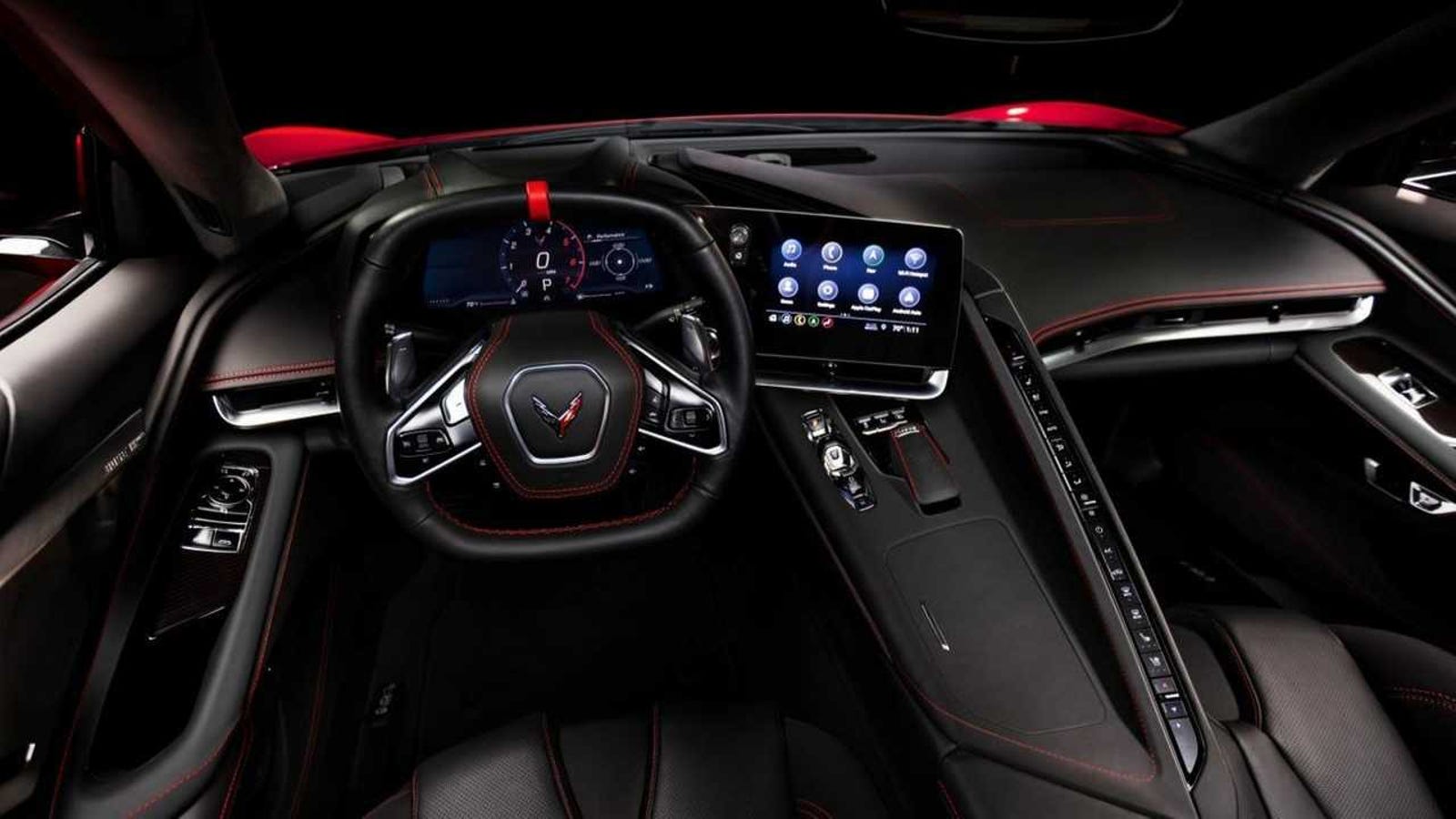
    … a square steering wheel.

    Not that this matters, since I won’t be buying one of these. In fact, thanks to my career choice and having children, I most likely won’t ever own a Corvette. As someone once put it, life’s a bitch, then you die.

    Share this on …

    • Share on X (Opens in new window) X
    • Share on Facebook (Opens in new window) Facebook
    • Share on LinkedIn (Opens in new window) LinkedIn
    • Email a link to a friend (Opens in new window) Email
    • Print (Opens in new window) Print
    Like Loading…
    No comments on Here comes the last Corvette
  • More liberal scumbaggery

    July 18, 2019
    US politics

    Michael Van Der Galien:

    Scientific research has shown that a great and fascinating — perhaps even mysterious — bond exists between dogs and human beings. They even understand human language.

    The love story between dogs and humans goes back tens of thousands of years, the results of which can still be seen everywhere, every single day. Families going out with their dogs, which are carefully groomed, looking extremely healthy and happy. The pet is a real member of the family. His needs are as important to his owners as their own. Because of this close relationship, dogs have developed the ability to perfectly understand us.

    Dogs are capable of understanding the emotions behind an expression on a human face. For example, if a dog turns its head to the left, it could be picking up that someone is angry, fearful or happy. If there is a look of surprise on a person’s face, dogs tend to turn their head to the right. The heart rates of dogs also go up when they see someone who is having a bad day, say Marcello Siniscalchi, Serenella d’Ingeo and Angelo Quaranta of the University of Bari Aldo Moro in Italy. The study in Springer’s journal Learning & Behavior is the latest to reveal just how connected dogs are with people. The research also provides evidence that dogs use different parts of their brains to process human emotions.

    Considering these abilities, it’s not so strange that we love dogs so much.

    Liberal Twitter-user Danielle (@ladypalerider) has a different explanation for people’s love for dogs, however. Wait. I should’ve written: for white people’s love for our canine comrades. According to her, “white people love dogs so much because deep down they miss owning slaves. They love the owner and master dynamic, desperate for something to control.”

    Silly me, here I was thinking that slave owners generally treated their slaves very badly indeed. But, according to Miss Liberal, slave owners cuddled their slaves, took them for regular walks, groomed them, hugged them regularly, showered them with love, bought them all kinds of gifts, and even made sure that when they went on holiday, their slaves would be treated well. After all, that is how we dog-owners treat our dogs.

    yes because slave owners pet their slaves and gave them affection and let them eat from the table and played ball with them and snuggled them and gave them baths and took care of them

    — totally a legit Elfen Lied Fan ?????? (Iromem) (@Meccamputechtur) July 17, 2019

    Calling Danielle’s tweet “ridiculous” would be the understatement of the century.

    It goes without saying that many Twitter users (rightfully) took offense to Danielle’s tweet. “What about cats, gerbils, birds, snakes, horses, ducks…” @MadonnaMadsen asks, after which she says she gives Danielle “the STUPIDEST TWEET award.”

    Gee, I didn’t know white people owned dogs exclusively! What about cats, gerbils, birds, snakes, horses, ducks, . . . you get the picture. You also get the STUPIDEST TWEET award. pic.twitter.com/kGdRnZEJ5m

    — MS.?? MAC (@MadonnaMadsen) July 17, 2019

    And what about African American people who own dogs? Do they miss slavery too? Or do they love dogs because they like taking care of others (which, according to Danielle’s reasoning, could also be constructed as a result of slavery)?

    Ahh damn! I’m white now because I LOVE my dog too.

    — Cowboys Outlaw (@rodgregg66) July 16, 2019

    Yet another Twitter user comments sarcastically that he sure does miss owning slaves, but that he hopes he’ll get new ones “for my next birthday when I turn 170 [explicit] years old”:

    I’ll be honest I do miss owning slaves. Hoping someone buys me one for my next birthday when I turn 170 fucking years old. pic.twitter.com/oHbjl4gb1M

    — MethBurrito (@nosleepems) July 16, 2019

    @B_Rad_ikal calls Danielle’s tweet “the quintessential example of pseudoscience.”

    Perfect. The quintessential example of pseudoscience. Thanks for being a living example of how stupid Americans have become.

    — Bradical the Squadster?????? (@B_Rad_ikal) July 17, 2019

    Joel points out that he actually adopted his dog from the pound. “I couldn’t stand that pup being well taken care of in a cage 100% of the time,” he adds cynically, “given crap food, and seemed traumatized. I just had to exert my control to allow her to roam my yard, while spending hundreds on her.”

    Human Events Managing Editor Ian Miles Cheong is quite happy with Danielle’s tweet, though. “Listen, I just wanted to thank you for driving more people towards the right,” he writes. “Trump wouldn’t be president without people like you.”

    Listen, I just wanted to thank you for driving more people towards the right. Trump wouldn’t be president without people like you.

    — Ian Miles Cheong (@stillgray) July 17, 2019

    A very good point indeed. The more radical leftists repeat such silly accusations, the more voters are driven in the arms of Trump and other conservatives.

    Our two dogs do nothing remotely definable as “work.” But this shouldn’t be a surprise, because those who believe people shouldn’t own pets are exclusively from the left side of the political spectrum.

    Share this on …

    • Share on X (Opens in new window) X
    • Share on Facebook (Opens in new window) Facebook
    • Share on LinkedIn (Opens in new window) LinkedIn
    • Email a link to a friend (Opens in new window) Email
    • Print (Opens in new window) Print
    Like Loading…
    No comments on More liberal scumbaggery
Previous Page
1 … 363 364 365 366 367 … 1,042
Next Page

Website Powered by WordPress.com.

Steve Prestegard.com: The Presteblog

The thoughts of a journalist/libertarian–conservative/Christian husband, father, Eagle Scout and aficionado of obscure rock music. Thoughts herein are only the author’s and not necessarily the opinions of his family, friends, neighbors, church members or past, present or future employers.

  • Steve
    • About, or, Who is this man?
    • Facebook
    • Twitter
    • Adventures in ruralu0026nbsp;inkBack in June 2009, I was driving somewhere through a rural area. And for some reason, I had a flashback to two experiences in my career about that time of year many years ago. In 1988, eight days after graduating from the University of Wisconsin, I started work at the Grant County Herald Independent in Lancaster as a — well, the — reporter. Four years after that, on my 27th birthday, I purchased, with a business partner, the Tri-County Press in Cuba City, my first business venture. Both were experiences about which Wisconsin author Michael Perry might write. I thought about all this after reading a novel, The Deadline, written by a former newspaper editor and publisher. (Now who would write a novel about a weekly newspaper?) As a former newspaper owner, I picked at some of it — why finance a newspaper purchase through the bank if the seller is willing to finance it? Because the mean bank lender is a plot point! — and it is much more interesting than reality, but it is very well written, with a nicely twisting plot, and quite entertaining, again more so than reality. There is something about that first job out of college that makes you remember it perhaps more…
    • Adventures in radioI’ve been in the full-time work world half my life. For that same amount of time I’ve been broadcasting sports as a side interest, something I had wanted to since I started listening to games on radio and watching on TV, and then actually attending games. If you ask someone who’s worked in radio for some time about the late ’70s TV series “WKRP in Cincinnati,” most of them will tell you that, if anything, the series understated how wacky working in radio can be. Perhaps the funniest episode in the history of TV is the “WKRP” episode, based on a true story, about the fictional radio station’s Thanksgiving promotion — throwing live turkeys out of a helicopter under the mistaken belief that, in the words of WKRP owner Arthur Carlson, “As God is my witness, I thought turkeys could fly.” [youtube=http://www.youtube.com/watch?v=ST01bZJPuE0] I’ve never been involved in anything like that. I have announced games from the roofs of press boxes (once on a nice day, and once in 50-mph winds), from a Mississippi River bluff (more on that later), and from the front row of the second balcony of the University of Wisconsin Fieldhouse (great view, but not a place to go if…
    • “Good morning/afternoon/evening, ________ fans …”
    • My biggest storyEarlier this week, while looking for something else, I came upon some of my own work. (I’m going to write a blog someday called “Things I Found While Looking for Something Else.” This is not that blog.) The Grant County Sheriff’s Department, in the county where I used to live, has a tribute page to the two officers in county history who died in the line of duty. One is William Loud, a deputy marshal in Cassville, shot to death by two bank robbers in 1912. The other is Tom Reuter, a Grant County deputy sheriff who was shot to death at the end of his 4 p.m.-to-midnight shift March 18, 1990. Gregory Coulthard, then a 19-year-old farmhand, was convicted of first-degree intentional homicide and is serving a life sentence, with his first eligibility for parole on March 18, 2015, just 3½ years from now. I’ve written a lot over the years. I think this, from my first two years in the full-time journalism world, will go down as the story I remember the most. For journalists, big stories contain a paradox, which was pointed out in CBS-TV’s interview of Andy Rooney on his last “60 Minutes” Sunday. Morley Safer said something along the line…
  • Food and drink
    • The Roesch/Prestegard familyu0026nbsp;cookbookFrom the family cookbook(s) All the families I’m associated with love to eat, so it’s a good thing we enjoy cooking. The first out-of-my-house food memory I have is of my grandmother’s cooking for Christmas or other family occasions. According to my mother, my grandmother had a baked beans recipe that she would make for my mother. Unfortunately, the recipe seems to have  disappeared. Also unfortunately, my early days as a picky, though voluminous, eater meant I missed a lot of those recipes made from such wholesome ingredients as lard and meat fat. I particularly remember a couple of meals that involve my family. The day of Super Bowl XXXI, my parents, my brother, my aunt and uncle and a group of their friends got together to share lots of food and cheer on the Packers to their first NFL title in 29 years. (After which Jannan and I drove to Lambeau Field in the snow,  but that’s another story.) Then, on Dec. 31, 1999, my parents, my brother, my aunt and uncle and Jannan and I (along with Michael in utero) had a one-course-per-hour meal to appropriately end years beginning with the number 1. Unfortunately I can’t remember what we…
    • SkålI was the editor of Marketplace Magazine for 10 years. If I had to point to one thing that demonstrates improved quality of life since I came to Northeast Wisconsin in 1994, it would be … … the growth of breweries and  wineries in Northeast Wisconsin. The former of those two facts makes sense, given our heritage as a brewing state. The latter is less self-evident, since no one thinks of Wisconsin as having a good grape-growing climate. Some snobs claim that apple or cherry wines aren’t really wines at all. But one of the great facets of free enterprise is the opportunity to make your own choice of what food and drink to drink. (At least for now, though some wish to restrict our food and drink choices.) Wisconsin’s historically predominant ethnic group (and our family’s) is German. Our German ancestors did unfortunately bring large government and high taxes with them, but they also brought beer. Europeans brought wine with them, since they came from countries with poor-quality drinking water. Within 50 years of a wave of mid-19th-century German immigration, brewing had become the fifth largest industry in the U.S., according to Maureen Ogle, author of Ambitious Brew: The Story of American Beer. Beer and wine have…
  • Wheels
    • America’s sports carMy birthday in June dawned without a Chevrolet Corvette in front of my house. (The Corvette at the top of the page was featured at the 2007 Greater Milwaukee Auto Show. The copilot is my oldest son, Michael.) Which isn’t surprising. I have three young children, and I have a house with a one-car garage. (Then again, this would be more practical, though a blatant pluck-your-eyes-out violation of the Corvette ethos. Of course, so was this.) The reality is that I’m likely to be able to own a Corvette only if I get a visit from the Corvette Fairy, whose office is next door to the Easter Bunny. (I hope this isn’t foreshadowing: When I interviewed Dave Richter of Valley Corvette for a car enthusiast story in the late great Marketplace Magazine, he said that the most popular Corvette in most fans’ minds was a Corvette built during their days in high school. This would be a problem for me in that I graduated from high school in 1983, when no Corvette was built.) The Corvette is one of those cars whose existence may be difficult to understand within General Motors Corp. The Corvette is what is known as a “halo car,” a car that drives people into showrooms, even if…
    • Barges on fouru0026nbsp;wheelsI originally wrote this in September 2008.  At the Fox Cities Business Expo Tuesday, a Smart car was displayed at the United Way Fox Cities booth. I reported that I once owned a car into which trunk, I believe, the Smart could be placed, with the trunk lid shut. This is said car — a 1975 Chevrolet Caprice coupe (ours was dark red), whose doors are, I believe, longer than the entire Smart. The Caprice, built down Interstate 90 from us Madisonians in Janesville (a neighbor of ours who worked at the plant probably helped put it together) was the flagship of Chevy’s full-size fleet (which included the stripper Bel Air and middle-of-the-road Impala), featuring popular-for-the-time vinyl roofs, better sound insulation, an upgraded cloth interior, rear fender skirts and fancy Caprice badges. The Caprice was 18 feet 1 inch long and weighed 4,300 pounds. For comparison: The midsize Chevrolet of the ear was the Malibu, which was the same approximate size as the Caprice after its 1977 downsizing. The compact Chevrolet of the era was the Nova, which was 200 inches long — four inches longer than a current Cadillac STS. Wikipedia’s entry on the Caprice has this amusing sentence: “As fuel economy became a bigger priority among Americans…
    • Behind the wheel
    • Collecting only dust or rust
    • Coooooooooooupe!
    • Corvettes on the screen
    • The garage of misfit cars
    • 100 years (and one day) of our Chevrolets
    • They built Excitement, sort of, once in a while
    • A wagon by any otheru0026nbsp;nameFirst written in 2008. You will see more don’t-call-them-station-wagons as you drive today. Readers around my age have probably had some experience with a vehicle increasingly rare on the road — the station wagon. If you were a Boy Scout or Girl Scout, or were a member of some kind of youth athletic team, or had a large dog, or had relatives approximately your age, or had friends who needed to be transported somewhere, or had parents who occasionally had to haul (either in the back or in a trailer) more than what could be fit inside a car trunk, you (or, actually, your parents) were the target demographic for the station wagon. “Station wagons came to be like covered wagons — so much family activity happened in those cars,” said Tim Cleary, president of the American Station Wagon Owners Association, in Country Living magazine. Wagons “were used for everything from daily runs to the grocery store to long summer driving trips, and while many men and women might have wanted a fancier or sportier car, a station wagon was something they knew they needed for the family.” The “station wagon” originally was a vehicle with a covered seating area to take people between train stations…
    • Wheels on theu0026nbsp;screenBetween my former and current blogs, I wrote a lot about automobiles and TV and movies. Think of this post as killing two birds (Thunderbirds? Firebirds? Skylarks?) with one stone. Most movies and TV series view cars the same way most people view cars — as A-to-B transportation. (That’s not counting the movies or series where the car is the plot, like the haunted “Christine” or “Knight Rider” or the “Back to the Future” movies.) The philosophy here, of course, is that cars are not merely A-to-B transportation. Which disqualifies most police shows from what you’re about to read, even though I’ve watched more police video than anything else, because police cars are plain Jane vehicles. The highlight in a sense is in the beginning: The car chase in my favorite movie, “Bullitt,” featuring Steve McQueen’s 1968 Ford Mustang against the bad guys’ 1968 Dodge Charger: [youtube=http://www.youtube.com/watch?v=GMc2RdFuOxIu0026amp;fmt=18] One year before that (but I didn’t see this until we got Telemundo on cable a couple of years ago) was a movie called “Operación 67,” featuring (I kid you not) a masked professional wrestler, his unmasked sidekick, and some sort of secret agent plot. (Since I don’t know Spanish and it’s not…
    • While riding in my Cadillac …
  • Entertainments
    • Brass rocksThose who read my former blog last year at this time, or have read this blog over the past months, know that I am a big fan of the rock group Chicago. (Back when they were a rock group and not a singer of sappy ballads, that is.) Since rock music began from elements of country music, jazz and the blues, brass rock would seem a natural subgenre of rock music. A lot of ’50s musical acts had saxophone players, and some played with full orchestras … [youtube=http://www.youtube.com/watch?v=9CPS-WuUKUE] … but it wasn’t until the more-or-less simultaneous appearances of Chicago and Blood Sweat u0026amp; Tears on the musical scene (both groups formed in 1967, both had their first charting singles in 1969, and they had the same producer) that the usual guitar/bass/keyboard/drum grouping was augmented by one or more trumpets, a sax player and a trombone player. While Chicago is my favorite group (but you knew that already), the first brass rock song I remember hearing was BSu0026amp;T’s “Spinning Wheel” — not in its original form, but on “Sesame Street,” accompanied by, yes, a giant spinning wheel. [youtube=http://www.youtube.com/watch?v=qi9sLkyhhlE] [youtube=http://www.youtube.com/watch?v=OxWSOuNsN20] [youtube=http://www.youtube.com/watch?v=U9U34uPjz-g] I remember liking Chicago’s “Just You ‘n Me” when it was released as a single, and…
    • Drive and Eat au0026nbsp;RockThe first UW home football game of each season also is the opener for the University of Wisconsin Marching Band, the world’s finest college marching band. (How the UW Band has not gotten the Sudler Trophy, which is to honor the country’s premier college marching bands, is beyond my comprehension.) I know this because I am an alumnus of the UW Band. I played five years (in the last rank of the band, Rank 25, motto: “Where Men Are Tall and Run-On Is Short”), marching in 39 football games at Camp Randall Stadium, the Hubert H. Humphrey Metrodome in Minneapolis, Michigan Stadium in Ann Arbor, Memorial Stadium at the University of Illinois (worst artificial turf I had ever seen), the University of Nevada–Las Vegas’ Sam Boyd Silver Bowl, the former Dyche Stadium at Northwestern University, five high school fields and, in my one bowl game, Legion Field in Birmingham, Ala., site of the 1984 Hall of Fame Bowl. The UW Band was, without question, the most memorable experience of my college days, and one of the most meaningful experiences of my lifetime. It was the most physical experience of my lifetime, to be sure. Fifteen minutes into my first Registration…
    • Keep on rockin’ in the freeu0026nbsp;worldOne of my first ambitions in communications was to be a radio disc jockey, and to possibly reach the level of the greats I used to listen to from WLS radio in Chicago, which used to be one of the great 50,000-watt AM rock stations of the country, back when they still existed. (Those who are aficionados of that time in music and radio history enjoyed a trip to that wayback machine when WLS a Memorial Day Big 89 Rewind, excerpts of which can be found on their Web site.) My vision was to be WLS’ afternoon DJ, playing the best in rock music between 2 and 6, which meant I wouldn’t have to get up before the crack of dawn to do the morning show, yet have my nights free to do whatever glamorous things big-city DJs did. Then I learned about the realities of radio — low pay, long hours, zero job security — and though I have dabbled in radio sports, I’ve pretty much cured myself of the idea of working in radio, even if, to quote WAPL’s Len Nelson, “You come to work every day just like everybody else does, but we’re playing rock ’n’ roll songs, we’re cuttin’ up.…
    • Monday on the flight line, not Saturday in the park
    • Music to drive by
    • The rock ofu0026nbsp;WisconsinWikipedia begins its item “Music of Wisconsin” thusly: Wisconsin was settled largely by European immigrants in the late 19th century. This immigration led to the popularization of galops, schottisches, waltzes, and, especially, polkas. [youtube=http://www.youtube.com/watch?v=yl7wCczgNUc] So when I first sought to write a blog piece about rock musicians from Wisconsin, that seemed like a forlorn venture. Turned out it wasn’t, because when I first wrote about rock musicians from Wisconsin, so many of them that I hadn’t mentioned came up in the first few days that I had to write a second blog entry fixing the omissions of the first. This list is about rock music, so it will not include, for instance, Milwaukee native and Ripon College graduate Al Jarreau, who in addition to having recorded a boatload of music for the jazz and adult contemporary/easy listening fan, also recorded the theme music for the ’80s TV series “Moonlighting.” Nor will it include Milwaukee native Eric Benet, who was for a while known more for his former wife, Halle Berry, than for his music, which includes four number one singles on the Ru0026amp;B charts, “Spend My Life with You” with Tamia, “Hurricane,” “Pretty Baby” and “You’re the Only One.” Nor will it include Wisconsin’s sizable contributions to big…
    • Steve TV: All Steve, All the Time
    • “Super Steve, Man of Action!”
    • Too much TV
    • The worst music of allu0026nbsp;timeThe rock group Jefferson Airplane titled its first greatest-hits compilation “The Worst of Jefferson Airplane.” Rolling Stone magazine was not being ironic when it polled its readers to decide the 10 worst songs of the 1990s. I’m not sure I agree with all of Rolling Stone’s list, but that shouldn’t be surprising; such lists are meant for debate, after all. To determine the “worst,” songs appropriate for the “Vinyl from Hell” segment that used to be on a Madison FM rock station, requires some criteria, which does not include mere overexposure (for instance, “Macarena,” the video of which I find amusing since it looks like two bankers are singing it). Before we go on: Blog posts like this one require multimedia, so if you find a song you hate on this blog, I apologize. These are also songs that I almost never listen to because my sound system has a zero-tolerance policy — if I’m listening to the radio or a CD and I hear a song I don’t like, it’s, to quote Bad Company, gone gone gone. My blonde wife won’t be happy to read that one of her favorite ’90s songs, 4 Non Blondes’ “What’s Up,” starts the list. (However,…
    • “You have the right to remain silent …”
  • Madison
    • Blasts from the Madison media past
    • Blasts from my Madison past
    • Blasts from our Madison past
    • What’s the matter with Madison?
    • Wisconsin – Madison = ?
  • Sports
    • Athletic aesthetics, or “cardinal” vs. “Big Red”
    • Choose your own announcer
    • La Follette state 1982 (u0022It was 30 years ago todayu0022)
    • The North Dakota–Wisconsin Hockey Fight of 1982
    • Packers vs. Brewers
  • Hall of Fame
    • The case(s) against teacher unions
    • The Class of 1983
    • A hairy subject, or face the face
    • It’s worse than you think
    • It’s worse than you think, 2010–11 edition
    • My favorite interview subject of all time
    • Oh look! Rural people!
    • Prestegard for president!
    • Unions vs. the facts, or Hiding in plain sight
    • When rhetoric goes too far
Privacy & Cookies: This site uses cookies. By continuing to use this website, you agree to their use.
To find out more, including how to control cookies, see here: Cookie Policy
  • Subscribe Subscribed
    • Steve Prestegard.com: The Presteblog
    • Join 197 other subscribers
    • Already have a WordPress.com account? Log in now.
    • Steve Prestegard.com: The Presteblog
    • Subscribe Subscribed
    • Sign up
    • Log in
    • Report this content
    • View site in Reader
    • Manage subscriptions
    • Collapse this bar
%d