Skip to content
  • News from my line of work

    November 27, 2019
    media, US business

    The New York Times:

    School board and city council meetings are going uncovered. Overstretched reporters receive promising tips about stories but have no time to follow up. Newspapers publish fewer pages or less frequently or, in hundreds of cases across the country, are shuttered completely.

    All of this has added up to a crisis in local news coverage in the United States that has frayed communities and left many Americans woefully uninformed, according to a report by PEN America released on Wednesday.

    “A vibrant, responsive democracy requires enlightened citizens, and without forceful local reporting they are kept in the dark,” the report said. “At a time when political polarization is increasing and fraudulent news is spreading, a shared fact-based discourse on the issues that most directly affect us is more essential and more elusive than ever.”

    The report, “Losing the News: The Decimation of Local Journalism and the Search for Solutions,” paints a grim picture of the state of local news in every region of the country. The prelude is familiar to journalists: As print advertising revenue has plummeted, thousands of newspapers have been forced to cut costs, reduce their staffs or otherwise close.

    And while the disruption has hampered the ability of newsrooms to fully cover communities, it also has damaged political and civic life in the United States, the report says, leaving many people without access to crucial information about where they live.

    “That first draft of history is not being written — it has completely disappeared,” said Suzanne Nossel, the chief executive of PEN America, a nonprofit organization that celebrates literature and free expression. “That’s what is so chilling about this crisis.”

    The authors of the report spoke to dozens of journalists, elected officials and activists, who described how cutbacks in local newsrooms have left communities in the dark and have failed to keep public and corporate officials accountable.

    In 2017, when work on the PEN project began, researchers planned to call it “News Deserts,” examining pockets of the country where local news was scarce. But the more research the group did, the more it realized that the original scope was inadequate: Since 2004, more than 1,800 local print outlets have shuttered in the United States, and at least 200 counties have no newspaper at all.

    “This was a national crisis,” Ms. Nossel said. “This was not about a few isolated areas that were drying up.”

    Many Americans are completely unaware that local news is suffering. According to a Pew survey this year, 71 percent of Americans believe that their local news outlets are doing well financially. But, according to that report, only 14 percent say they have paid for or donated money to a local news source in the past year.

    “They don’t realize that their local news outlet is under threat,” said Viktorya Vilk, manager of special projects for PEN, who was one of the report’s authors.

    The decline of local news outlets threatens the reporting on public health crises in places like Flint, Mich., where residents voiced concern about the quality of their water to The Flint Journal long before the national media reported on the issue.

    In Denver, a diminished local news presence — after the closure of The Rocky Mountain News and the shrunken Denver Post — has contributed to civic disengagement, one case study in the report says. Kevin Flynn, a former journalist turned City Council member, lamented the large number of people who seemed to be unaware of local elections, and the relative handful of reporters covering a quickly growing city. “It feels like we could all be getting away with murder right now,” Mr. Flynn said of public officials.
    In some communities, a dearth of local news was associated with a population that was less aware of politics.

    “Voting and consuming news — those things go hand in hand,” said Tom Huang, assistant managing editor of The Dallas Morning News.

    First: You cannot make people vote, because you cannot make people care. Second: This may be the media’s fault for excessive coverage of horse-race politics and less What Does This Mean to You reporting of government, which is not politics.

    One case study in the report shared the experience of Greg Barnes, who took a buyout in 2018 after three decades at The Fayetteville Observer in North Carolina.

    Toward the end of his time at the paper, the report said, “his job had essentially been filling holes for the rapidly diminishing staff instead of doing the sprawling investigations that had been his trademark.”

    The report offers several solutions: It cites newer, digitally focused outlets like Chalkbeat, an online organization that focuses on education; Outlier, based in Detroit; and Block Club Chicago as examples of small but vibrant news sources that have stepped into the void.

    But a more comprehensive solution is required, the report suggests, including private donations and expansions of public funding.

    The irony of the “private donations” suggestion is that that is the model that has been used by a longstanding publication for decades — National Review.

    The “public funding” proposal is a horrible idea. If government is funding it, government will say what is in it and what is not in it. An attempt at that was recently made in Lafayette County, where unidentified members of the County Board tried to get the board to pass a resolution that would have required only an official release of the results of a three-county groundwater study, with penalties against county supervisors who refused to sing from that hymnal, and prosecuted reporters for daring to be reporters.

    A retired ink-stained wretch posted that someone where she lives asked why they needed a newspaper since the city has a website and radio station. She asked whether the city would self-report budget problems, or the school district would self-report bad test scores. Take a wild guess.

    One thing conservatives should realize is that journalists properly doing their jobs discover governmental financial malfeasance. A 2018 study found that communities without newspapers paid more to bond for municipal projects:

    Cities where newspapers closed up shop saw increases in government costs as a result of the lack of scrutiny over local deals, say researchers who tracked the decline of local news outlets between 1996 and 2015.

    Disruptions in local news coverage are soon followed by higher long-term borrowing costs for cities. Costs for bonds can rise as much as 11 basis points after the closure of a local newspaper—a finding that can’t be attributed to other underlying economic conditions, the authors say. Those civic watchdogs make a difference to the bottom line.

    A big problem in this is that many people assume “the media” is a big monolith of groupthink. I have been in the media for more than half of my life. Were I hired at the New York Times, do you think my worldview would be the same as everyone else’s there? Stereotyping is seldom useful.

    Dan Kennedy blames Big Business:

    There are two elephants in the room that are threatening to destroy local news.

    One, technological disruption, is widely understood: the internet has undermined the value of advertising and driven it to Craigslist, Facebook and Google, thus eliminating most of the revenues that used to pay for journalism.

    But the other, corporate greed, is too often regarded as an effect rather than as a cause. The standard argument is that chain owners moved in to suck the last few drops of blood out of local newspapers because no one else wanted them. In fact, the opposite is the case. Ownership by hedge funds and publicly traded corporations has squeezed newspapers that might otherwise be holding their own and deprived them of the runway they need to invest in the future.

    The last several weeks have been brutal for local newspapers. GateHouse Media and Gannett merged (the new company is known simply as Gannett), a union of two bottom-feeding chains that are reported to be considering at least another $400 million in cuts. MediaNews Group, owned by the hedge fund Alden Global Capital, acquired a 32% share of the Tribune newspapers. McClatchy may be moving toward bankruptcy.

    And yet, here and there, independent community news projects are thriving. Free of the debt that must be taken on to build a chain and of the need to ship revenues to their corporate overlords, the indies — both for-profit and nonprofit — are meeting the information needs of their communities.

    The narrative about the death of local journalism is an easy one to grasp, because the tale of technological disruption used to explain it has quite a bit of truth to it, as Lehigh University journalism professor Jeremy Littau wrote in a widely quoted Twitter thread over the weekend. The narrative of the ongoing vitality of local journalism doesn’t get heard often enough because it’s harder to wrap your arms around. It’s happening here and there, with different approaches and without a one-size-fits-all solution.

    As such, examples are necessarily anecdotal — and you know the saying that anecdotes aren’t data. Still, good things are happening at the grassroots. For instance:

    • The small daily newspaper where I worked for my first 10 years out of college, The Daily Times Chronicle of Woburn, is still owned by the founding Haggerty family and still providing decent coverage of the communities it serves. The paper is smaller than it used to be, but it’s doing far better work than a typical chain-owned paper.

    • Several months ago I had an opportunity to attend the fall conference of the New York Press Association, which comprises upstate independent publishers. Those folks told me that though business was more challenging than ever, their papers were doing reasonably well.

    • New Haven, Connecticut, may enjoy the best coverage of any medium-sized city in the country. Why? One veteran journalist, Paul Bass, had the vision to create the nonprofit, online-only New Haven Independent, supported by grants and donations, and still thriving 14 years after its founding. (The Independent is the main subject of my 2013 book, “The Wired City.”)

    • For-profit digital news sites are doing well in some places, too. Among them: The Batavian, in Western New York, also profiled in “The Wired City.” Overall, there are enough for-profit and nonprofit sites that they have their own trade organization, LION (Local Independent Online News) Publishers. No, their numbers are too small to offset the overall decline. But the opportunity is out there for entrepreneurial-minded journalists. The chains, sadly, are creating more opportunities every day.

    • Among the regions I reported on in my 2018 book, “The Return of the Moguls,” was Burlington, Vermont, whose daily, the Burlington Free Press, had been decimated by Gannett. What happened? An excellent, for-profit alternative weekly, Seven Days, bolstered its online news coverage. Two nonprofit news organizations, Vermont Public Radio and VT Digger, beefed up their local coverage as well.

    • In Western Massachusetts, the once-great Berkshire Eagle is being rebuilt by local owners who bought it from MediaNews Group several years ago. That could provide a roadmap for other communities — at some point, chain owners will no longer be able to keep cutting their way to profits and will presumably be looking for a way out.

    • Regional newspapers are experimenting with new forms of ownership. The Salt Lake Tribune recently won IRS approval to become a nonprofit organization. The Philadelphia Inquirer, though still a for-profit, is now owned by the nonprofit Lenfest Foundation. Neither of these moves guarantees salvation. But it has bought them time to shift to a new business model built less on advertising and more on support from their readers.

    • Speaking of which: It’s been nearly a year since The Boston Globe announced it had achieved profitability despite continuing to employ a newsroom far larger than any chain owner would tolerate.

    No, there is little hope of returning to the old days. Newspapers will never be as richly staffed as they were before the early 2000s, when the internet began to take a toll on revenues. Papers will continue to die. Nonprofits will have to become an increasingly important part of the mix.

    Washington Post media columnist Margaret Sullivan wrote the other day that “the recent news about the news could hardly be worse. What was terribly worrisome has tumbled into disaster.”

    She’s right. But in all too many instances, local news isn’t dying — it’s being murdered. The solution, if there is to be one, has to start with getting the corporate chains out of the way and paving a path for a new generation of independent publishers.

    I wonder how Kennedy feels about the corporations that donate to his employer, Boston public radio, or about how Kennedy feels about his retirement accounts, which most likely are made up of those evil corporations. It’s sort of like “A Few Good Men,” where Col. Jessup notes the dichotomy of liking the ends (growing stock) but not the means (businesses making business decisions).

    However, I’m not going to defend bad media companies, such as Gannett, whose newspapers, at least in Wisconsin, are no one’s idea of good journalism. With the exception of the Milwaukee Journal Sentinel, if you’ve seen one Gannett Wisconsin newspaper, you’ve seen all of them (the Oshkosh Northwestern, Fond du Lac Reporter, Manitowoc Herald Times Reporter and Sheboygan Press might as well be one newspaper, and that also counts for the Wausau Daily Herald, Stevens Point Journal, Marshfield News Herald and Wisconsin Rapids Daily Tribune), and you’ve read the same news (or lack thereof) in them.

    One thing these stories and opinions universally lack is what educators like to call self-reflection, as if the media is absolutely blameless in any sense for the demise of individual media outlets. It’s hard to believe people in the media can’t grasp that the complaints, which are often not unfounded, of media bias by people who generally do in fact follow the news would have consequences that would affect media employees — like canceling subscriptions and ads, which means less money coming in, which means cuts in costs.

    Beyond media bias is the simple question of whether or not a media outlet serves its readers, listeners or viewers anymore. Newspapers that reduce their news hole lose readers, which reduces revenue, which makes them reduce their news hole more, which loses readers … you get the picture.

    One way to not serve your audience is to not be like your audience. I’ve written here previously about how many reporters lack any of five life features that are most common with average Wisconsinites — married parents who own a house, go to church and own at least one gun.

    I don’t know what the answers are, but I see some answers that are the wrong answers.
    Share this on …

    • Share on X (Opens in new window) X
    • Share on Facebook (Opens in new window) Facebook
    • Share on LinkedIn (Opens in new window) LinkedIn
    • Email a link to a friend (Opens in new window) Email
    • Print (Opens in new window) Print
    Like Loading…
    No comments on News from my line of work
  • Presty the DJ for Nov. 27

    November 27, 2019
    Music

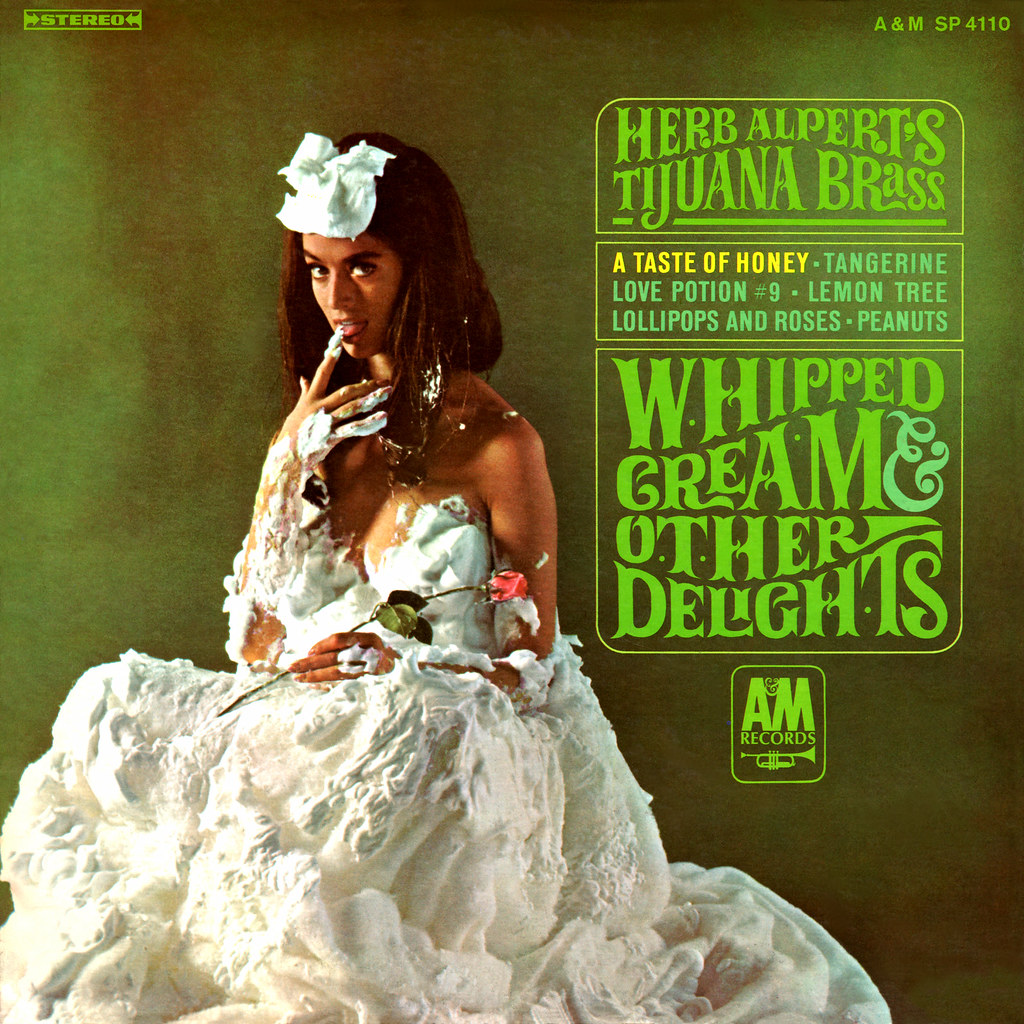
    The number one album today in 1965 was Herb Alpert and the Tijuana Brass’ “Whipped Cream and Other Delights”:

    The number one single today in 1966 was this one-hit wonder:

    The number one British album today in 1976 was Glen Campbell’s “20 Golden Greats”:

    (more…)

    Share this on …

    • Share on X (Opens in new window) X
    • Share on Facebook (Opens in new window) Facebook
    • Share on LinkedIn (Opens in new window) LinkedIn
    • Email a link to a friend (Opens in new window) Email
    • Print (Opens in new window) Print
    Like Loading…
    No comments on Presty the DJ for Nov. 27
  • And people say the media is biased

    November 26, 2019
    media, US politics

    Valerie Richardson:

    With Michael Bloomberg’s jump into the Democratic presidential primary, Bloomberg News plans to cease investigating Democratic presidential candidates — but not President Trump.

    Bloomberg editor-in-chief John Micklethwait said in a staff memo obtained by multiple media outlets that the news division would refrain from digging into Mr. Bloomberg, describing that policy as part of its journalism “tradition.”

    “We will continue our tradition of not investigating Mike (and his family and foundation) and we will extend the same policy to his rivals in the Democratic primaries,” the memo said. “We cannot treat Mike’s democratic competitors differently from him.”

    In addition, he said at least two members of the editorial board — Tim O’Brien and David Shipley — will take a “leave of absence to join Mike’s campaign,” which suggests they will return to the media outlet after the 2020 election.

    “For the moment, our [political] team will continue to investigate the Trump administration as the government of the day,” Mr. Micklethwait said. “If Mike is chosen as the Democratic presidential candidate (and Donald Trump emerges as the Republican one), we will reassess how we do that.”

    The billionaire Bloomberg announced Sunday that he had entered the primary contest “to defeat Donald Trump and rebuild America.”

    The former New York City mayor, Mr. Bloomberg was founder and controls 89% of the shares in Bloomberg LP, the financial-software company that owns Bloomberg News, according to CNBC.

    Journalists on social media decried the moves. The Washington Post’s Paul Farhi called the statement “extraordinary,” while Ohio State media ethicist Kevin Z. Smith said it was “outlandish.”

    “This is so outlandish it has to be recognized as a historical collapse of ethical standards,” tweeted Mr. Smith, executive director of the Kiplinger Program in Public Affairs Journalism. “This isn’t just worthy of a future textbook case study, it needs immediate condemnation by the profession.”

    I wouldn’t be voting for Bloomberg anyway thanks to this …

    … and his belief, like other Democrats, that we are too stupid to make our own decisions (see “soda tax”).


    Share this on …

    • Share on X (Opens in new window) X
    • Share on Facebook (Opens in new window) Facebook
    • Share on LinkedIn (Opens in new window) LinkedIn
    • Email a link to a friend (Opens in new window) Email
    • Print (Opens in new window) Print
    Like Loading…
    No comments on And people say the media is biased
  • Presty the DJ for Nov. 26

    November 26, 2019
    Music

    Today in 1967, the Beatles’ “Hello Goodbye” promotional film (now called a “video”) was shown on CBS-TV’s Ed Sullivan Show. It was not shown in Britain because of a musicians’ union ban on miming:

    One death of odd note, today in 1973: John Rostill, former bass player with the Shadows (with which Cliff Richard got his start), was electrocuted in his home recording studio. A newspaper headline read: “Pop musician dies; guitar apparent cause.”

    (more…)

    Share this on …

    • Share on X (Opens in new window) X
    • Share on Facebook (Opens in new window) Facebook
    • Share on LinkedIn (Opens in new window) LinkedIn
    • Email a link to a friend (Opens in new window) Email
    • Print (Opens in new window) Print
    Like Loading…
    No comments on Presty the DJ for Nov. 26
  • Shorter: Don’t tread on me

    November 25, 2019
    US politics

    Steven Greenhut:

    We’ve recently celebrated another Veteran’s Day, where we’ve heard all the usual “freedom isn’t free” speeches extolling the role of the U.S. military in protecting our liberties. I’ve got nothing against the military and respect those who served in it, but wish that Americans would spend less time waving the flag and trading in bromides—and more time thinking seriously about the precarious state of our own freedoms.

    “Liberty,” Thomas Jefferson wrote, “is unobstructed action according to our will; but rightful liberty is unobstructed action according to our will, within the limits drawn around us by the equal rights of others. I do not add ‘within the limits of the law’; because law is often but the tyrant’s will, and always so when it violates the right of an individual.” That’s as good a definition of liberty as one will ever find.

    Americans are supposed to be free to live as we choose—unobstructed by government and limited solely by others’ right to exercise their free will. Jefferson’s words can be summarized by that old cliché: Your right to swing your fist ends at the beginning of my nose. Obviously, our nation’s founding was fraught with hypocrisy given that a large portion of the population wasn’t free at all, but that doesn’t mean that the country’s ideals aren’t worth pondering today.

    The second part of that Jefferson quotation is as important as the first part. Just because the government has passed laws, through its established process of legislating and regulating, doesn’t mean that such rules are worthy of blind obedience. Many are legitimate, but others merely are the “tyrant’s will”—an effort by one group to impose its preferences on other people. We’ve got plenty of laws against murder and mayhem, so most lawmaking now is devoted to these other meddlesome things, which is what Jefferson warned against.

    Our country has strayed so far from those concepts that we’ve morphed into society where we constantly need permission from the government to proceed. Whereas government previously needed a compelling reason to restrict our actions, it now demands a host of permits, fees, pre-approvals and justifications. This “Mother, may I?” situation has turned the notion of a free society on its head.

    “Whether it be building a house, getting a job, owning a gun, expressing one’s political beliefs, or even taking a life-saving medicine, laws and regulations at the federal, state and local levels now impose permit requirements that forbid us to act unless we first get permission from the government,” wrote Timothy Sandefur in his new book, “The Permission Society.” He blames the Progressive movement, which is accurate, but conservatives also do the same thing when it comes to drug laws, tariffs and security measures.

    One of the best permission-society examples involves occupational licensing. If you want to earn a living in any number of fields, you’re required to spend thousands of dollars in government-dictated training—much of it irrelevant to the job you want to perform—and then get a permit. These rules apply not only to highly skilled professions such as surgery, but to fields such as hairdressing and tree trimming. Keep in mind that a competitive market—not government rule-making—does the best job of assuring that people have necessary skills.

    Instead of making it easier for people to work, our state government is ramping up its undercover stings so that it can arrest people for committing these victimless crimes. Not only must we ask permission first—but we risk fines and arrest if we don’t. That’s true even though most licensing rules are not about protecting the public’s safety, but about established industries using their political clout to pass laws that limit the competition.

    Critics of the licensing regimen often focus on the many practical ways that it harms people, by limiting economic opportunities and forcing people into the underground economy. Likewise, those of us who argue against the state’s burdensome building regulations and conditional-use permits—i.e., you can operate your business only under the conditions detailed by the government—focus on how it inflates housing costs and harms business development. That’s true, but maybe we need to talk more about how these rules stifle our freedom.

    The most pernicious recent permission-society law is Assembly Bill 5, which forbids companies (those who failed to successfully lobby for an exemption) from hiring contractors to perform many jobs. Government decides in advance whether we can enter into work relationships of our own choosing.

    There’s no easy button to clear the decks of Nanny State rules. But Sandefur suggests that all new laws should start with a presumption of freedom, with the burden of proof resting on those who propose them. He compares it to criminal courts, where we are presumed innocent until proven otherwise. Until we reorder our thinking, I’m afraid our liberties will continue to fritter away—and freedom will become just something that we prattle about during holiday parades.

    Share this on …

    • Share on X (Opens in new window) X
    • Share on Facebook (Opens in new window) Facebook
    • Share on LinkedIn (Opens in new window) LinkedIn
    • Email a link to a friend (Opens in new window) Email
    • Print (Opens in new window) Print
    Like Loading…
    No comments on Shorter: Don’t tread on me
  • Presty the DJ for Nov. 25

    November 25, 2019
    Music

    Today in 1969, John Lennon returned his Member of the Order of the British Empire medal as, in his accompanying note,  “a protest against Britain’s involvement in the Nigeria–Biafra thing, against our support of America in Vietnam and against ‘Cold Turkey’ slipping down the charts.”

    The number one single today in 1972 should have been part of my blog about the worst music of all time:

    Today in 1976, The Band gave its last performance, commemorated in Martin Scorsese’s film “The Last Waltz”:

    (more…)

    Share this on …

    • Share on X (Opens in new window) X
    • Share on Facebook (Opens in new window) Facebook
    • Share on LinkedIn (Opens in new window) LinkedIn
    • Email a link to a friend (Opens in new window) Email
    • Print (Opens in new window) Print
    Like Loading…
    No comments on Presty the DJ for Nov. 25
  • Presty the DJ for Nov. 24

    November 24, 2019
    Music

    The number one single today in 1968:

    The number one single today in 1973:

    The number one British single today in 1976:

    (more…)

    Share this on …

    • Share on X (Opens in new window) X
    • Share on Facebook (Opens in new window) Facebook
    • Share on LinkedIn (Opens in new window) LinkedIn
    • Email a link to a friend (Opens in new window) Email
    • Print (Opens in new window) Print
    Like Loading…
    No comments on Presty the DJ for Nov. 24
  • Presty the DJ for Nov. 23

    November 23, 2019
    Music

    Today in 1899, the world’s first jukebox was installed at the Palais Royal Hotel in San Francisco.

    (more…)

    Share this on …

    • Share on X (Opens in new window) X
    • Share on Facebook (Opens in new window) Facebook
    • Share on LinkedIn (Opens in new window) LinkedIn
    • Email a link to a friend (Opens in new window) Email
    • Print (Opens in new window) Print
    Like Loading…
    No comments on Presty the DJ for Nov. 23
  • Come see what’s now Brewing

    November 22, 2019
    Brewers

    The biggest Wisconsin sports news for a team no longer playing is …

    … the Brewers’ new uniforms to go with their new/old logo:

    I wrote about what might be happening a couple of weeks ago. The logo is modified somewhat from the original …

    … but not enough for non-uniform geeks to notice.

    The obvious inspiration is the “Bambi’s Bombers” and “Harvey’s Wallbangers” Brewers of the late 1970s and early 1980s, which includes their only World Series trip. This is despite the fact that the previous uniform design was in the playoffs four times, as opposed to twice in the ball-in-glove era.

    One of the colors changed, from metallic gold to yellowgold. The other did not; navy blue, which is a uniform color of nearly every Major League Baseball team, will remain instead of going back to the Brewers’ original royal blue colors. (Most likely because the big rival to the south on Interstate 94 wears royal blue.)

    Also new is the primary home uniforms’ cream color, matching the Bucks’ home uniforms to represent cream city brick, a Milwaukee thing. The other home set brings back the 1978–1993 pinstripes, which I have argued are inappropriate for a team with little heritage, unlike such pinstripe-wearers as the Yankees and Cubs. (In the later case, consistent losing is heritage too.)

    The one uniform that doesn’t match the others is the navy alternates. Those supposedly will be worn mostly on the road, though the only thing preventing them from home use is the tradition of having the team’s name on home uniforms and the team’s location on road uniforms. If you watched the Brewers on TV, you may have noticed how often the Brewers wore their navy alternates the last few seasons, so you might see those more often than the word “alternate” might make you think.


    Share this on …

    • Share on X (Opens in new window) X
    • Share on Facebook (Opens in new window) Facebook
    • Share on LinkedIn (Opens in new window) LinkedIn
    • Email a link to a friend (Opens in new window) Email
    • Print (Opens in new window) Print
    Like Loading…
    No comments on Come see what’s now Brewing
  • Presty the DJ for Nov. 22

    November 22, 2019
    Music

    Today in 1963, the Beatles released their second album, “With the Beatles,” in the United Kingdom.

    That same day, Phil Spector released a Christmas album from his artists:

    Given what else happened that day, you can imagine neither of those received much notice.

    (more…)

    Share this on …

    • Share on X (Opens in new window) X
    • Share on Facebook (Opens in new window) Facebook
    • Share on LinkedIn (Opens in new window) LinkedIn
    • Email a link to a friend (Opens in new window) Email
    • Print (Opens in new window) Print
    Like Loading…
    No comments on Presty the DJ for Nov. 22
Previous Page
1 … 336 337 338 339 340 … 1,042
Next Page

Website Powered by WordPress.com.

Steve Prestegard.com: The Presteblog

The thoughts of a journalist/libertarian–conservative/Christian husband, father, Eagle Scout and aficionado of obscure rock music. Thoughts herein are only the author’s and not necessarily the opinions of his family, friends, neighbors, church members or past, present or future employers.

  • Steve
    • About, or, Who is this man?
    • Facebook
    • Twitter
    • Adventures in ruralu0026nbsp;inkBack in June 2009, I was driving somewhere through a rural area. And for some reason, I had a flashback to two experiences in my career about that time of year many years ago. In 1988, eight days after graduating from the University of Wisconsin, I started work at the Grant County Herald Independent in Lancaster as a — well, the — reporter. Four years after that, on my 27th birthday, I purchased, with a business partner, the Tri-County Press in Cuba City, my first business venture. Both were experiences about which Wisconsin author Michael Perry might write. I thought about all this after reading a novel, The Deadline, written by a former newspaper editor and publisher. (Now who would write a novel about a weekly newspaper?) As a former newspaper owner, I picked at some of it — why finance a newspaper purchase through the bank if the seller is willing to finance it? Because the mean bank lender is a plot point! — and it is much more interesting than reality, but it is very well written, with a nicely twisting plot, and quite entertaining, again more so than reality. There is something about that first job out of college that makes you remember it perhaps more…
    • Adventures in radioI’ve been in the full-time work world half my life. For that same amount of time I’ve been broadcasting sports as a side interest, something I had wanted to since I started listening to games on radio and watching on TV, and then actually attending games. If you ask someone who’s worked in radio for some time about the late ’70s TV series “WKRP in Cincinnati,” most of them will tell you that, if anything, the series understated how wacky working in radio can be. Perhaps the funniest episode in the history of TV is the “WKRP” episode, based on a true story, about the fictional radio station’s Thanksgiving promotion — throwing live turkeys out of a helicopter under the mistaken belief that, in the words of WKRP owner Arthur Carlson, “As God is my witness, I thought turkeys could fly.” [youtube=http://www.youtube.com/watch?v=ST01bZJPuE0] I’ve never been involved in anything like that. I have announced games from the roofs of press boxes (once on a nice day, and once in 50-mph winds), from a Mississippi River bluff (more on that later), and from the front row of the second balcony of the University of Wisconsin Fieldhouse (great view, but not a place to go if…
    • “Good morning/afternoon/evening, ________ fans …”
    • My biggest storyEarlier this week, while looking for something else, I came upon some of my own work. (I’m going to write a blog someday called “Things I Found While Looking for Something Else.” This is not that blog.) The Grant County Sheriff’s Department, in the county where I used to live, has a tribute page to the two officers in county history who died in the line of duty. One is William Loud, a deputy marshal in Cassville, shot to death by two bank robbers in 1912. The other is Tom Reuter, a Grant County deputy sheriff who was shot to death at the end of his 4 p.m.-to-midnight shift March 18, 1990. Gregory Coulthard, then a 19-year-old farmhand, was convicted of first-degree intentional homicide and is serving a life sentence, with his first eligibility for parole on March 18, 2015, just 3½ years from now. I’ve written a lot over the years. I think this, from my first two years in the full-time journalism world, will go down as the story I remember the most. For journalists, big stories contain a paradox, which was pointed out in CBS-TV’s interview of Andy Rooney on his last “60 Minutes” Sunday. Morley Safer said something along the line…
  • Food and drink
    • The Roesch/Prestegard familyu0026nbsp;cookbookFrom the family cookbook(s) All the families I’m associated with love to eat, so it’s a good thing we enjoy cooking. The first out-of-my-house food memory I have is of my grandmother’s cooking for Christmas or other family occasions. According to my mother, my grandmother had a baked beans recipe that she would make for my mother. Unfortunately, the recipe seems to have  disappeared. Also unfortunately, my early days as a picky, though voluminous, eater meant I missed a lot of those recipes made from such wholesome ingredients as lard and meat fat. I particularly remember a couple of meals that involve my family. The day of Super Bowl XXXI, my parents, my brother, my aunt and uncle and a group of their friends got together to share lots of food and cheer on the Packers to their first NFL title in 29 years. (After which Jannan and I drove to Lambeau Field in the snow,  but that’s another story.) Then, on Dec. 31, 1999, my parents, my brother, my aunt and uncle and Jannan and I (along with Michael in utero) had a one-course-per-hour meal to appropriately end years beginning with the number 1. Unfortunately I can’t remember what we…
    • SkålI was the editor of Marketplace Magazine for 10 years. If I had to point to one thing that demonstrates improved quality of life since I came to Northeast Wisconsin in 1994, it would be … … the growth of breweries and  wineries in Northeast Wisconsin. The former of those two facts makes sense, given our heritage as a brewing state. The latter is less self-evident, since no one thinks of Wisconsin as having a good grape-growing climate. Some snobs claim that apple or cherry wines aren’t really wines at all. But one of the great facets of free enterprise is the opportunity to make your own choice of what food and drink to drink. (At least for now, though some wish to restrict our food and drink choices.) Wisconsin’s historically predominant ethnic group (and our family’s) is German. Our German ancestors did unfortunately bring large government and high taxes with them, but they also brought beer. Europeans brought wine with them, since they came from countries with poor-quality drinking water. Within 50 years of a wave of mid-19th-century German immigration, brewing had become the fifth largest industry in the U.S., according to Maureen Ogle, author of Ambitious Brew: The Story of American Beer. Beer and wine have…
  • Wheels
    • America’s sports carMy birthday in June dawned without a Chevrolet Corvette in front of my house. (The Corvette at the top of the page was featured at the 2007 Greater Milwaukee Auto Show. The copilot is my oldest son, Michael.) Which isn’t surprising. I have three young children, and I have a house with a one-car garage. (Then again, this would be more practical, though a blatant pluck-your-eyes-out violation of the Corvette ethos. Of course, so was this.) The reality is that I’m likely to be able to own a Corvette only if I get a visit from the Corvette Fairy, whose office is next door to the Easter Bunny. (I hope this isn’t foreshadowing: When I interviewed Dave Richter of Valley Corvette for a car enthusiast story in the late great Marketplace Magazine, he said that the most popular Corvette in most fans’ minds was a Corvette built during their days in high school. This would be a problem for me in that I graduated from high school in 1983, when no Corvette was built.) The Corvette is one of those cars whose existence may be difficult to understand within General Motors Corp. The Corvette is what is known as a “halo car,” a car that drives people into showrooms, even if…
    • Barges on fouru0026nbsp;wheelsI originally wrote this in September 2008.  At the Fox Cities Business Expo Tuesday, a Smart car was displayed at the United Way Fox Cities booth. I reported that I once owned a car into which trunk, I believe, the Smart could be placed, with the trunk lid shut. This is said car — a 1975 Chevrolet Caprice coupe (ours was dark red), whose doors are, I believe, longer than the entire Smart. The Caprice, built down Interstate 90 from us Madisonians in Janesville (a neighbor of ours who worked at the plant probably helped put it together) was the flagship of Chevy’s full-size fleet (which included the stripper Bel Air and middle-of-the-road Impala), featuring popular-for-the-time vinyl roofs, better sound insulation, an upgraded cloth interior, rear fender skirts and fancy Caprice badges. The Caprice was 18 feet 1 inch long and weighed 4,300 pounds. For comparison: The midsize Chevrolet of the ear was the Malibu, which was the same approximate size as the Caprice after its 1977 downsizing. The compact Chevrolet of the era was the Nova, which was 200 inches long — four inches longer than a current Cadillac STS. Wikipedia’s entry on the Caprice has this amusing sentence: “As fuel economy became a bigger priority among Americans…
    • Behind the wheel
    • Collecting only dust or rust
    • Coooooooooooupe!
    • Corvettes on the screen
    • The garage of misfit cars
    • 100 years (and one day) of our Chevrolets
    • They built Excitement, sort of, once in a while
    • A wagon by any otheru0026nbsp;nameFirst written in 2008. You will see more don’t-call-them-station-wagons as you drive today. Readers around my age have probably had some experience with a vehicle increasingly rare on the road — the station wagon. If you were a Boy Scout or Girl Scout, or were a member of some kind of youth athletic team, or had a large dog, or had relatives approximately your age, or had friends who needed to be transported somewhere, or had parents who occasionally had to haul (either in the back or in a trailer) more than what could be fit inside a car trunk, you (or, actually, your parents) were the target demographic for the station wagon. “Station wagons came to be like covered wagons — so much family activity happened in those cars,” said Tim Cleary, president of the American Station Wagon Owners Association, in Country Living magazine. Wagons “were used for everything from daily runs to the grocery store to long summer driving trips, and while many men and women might have wanted a fancier or sportier car, a station wagon was something they knew they needed for the family.” The “station wagon” originally was a vehicle with a covered seating area to take people between train stations…
    • Wheels on theu0026nbsp;screenBetween my former and current blogs, I wrote a lot about automobiles and TV and movies. Think of this post as killing two birds (Thunderbirds? Firebirds? Skylarks?) with one stone. Most movies and TV series view cars the same way most people view cars — as A-to-B transportation. (That’s not counting the movies or series where the car is the plot, like the haunted “Christine” or “Knight Rider” or the “Back to the Future” movies.) The philosophy here, of course, is that cars are not merely A-to-B transportation. Which disqualifies most police shows from what you’re about to read, even though I’ve watched more police video than anything else, because police cars are plain Jane vehicles. The highlight in a sense is in the beginning: The car chase in my favorite movie, “Bullitt,” featuring Steve McQueen’s 1968 Ford Mustang against the bad guys’ 1968 Dodge Charger: [youtube=http://www.youtube.com/watch?v=GMc2RdFuOxIu0026amp;fmt=18] One year before that (but I didn’t see this until we got Telemundo on cable a couple of years ago) was a movie called “Operación 67,” featuring (I kid you not) a masked professional wrestler, his unmasked sidekick, and some sort of secret agent plot. (Since I don’t know Spanish and it’s not…
    • While riding in my Cadillac …
  • Entertainments
    • Brass rocksThose who read my former blog last year at this time, or have read this blog over the past months, know that I am a big fan of the rock group Chicago. (Back when they were a rock group and not a singer of sappy ballads, that is.) Since rock music began from elements of country music, jazz and the blues, brass rock would seem a natural subgenre of rock music. A lot of ’50s musical acts had saxophone players, and some played with full orchestras … [youtube=http://www.youtube.com/watch?v=9CPS-WuUKUE] … but it wasn’t until the more-or-less simultaneous appearances of Chicago and Blood Sweat u0026amp; Tears on the musical scene (both groups formed in 1967, both had their first charting singles in 1969, and they had the same producer) that the usual guitar/bass/keyboard/drum grouping was augmented by one or more trumpets, a sax player and a trombone player. While Chicago is my favorite group (but you knew that already), the first brass rock song I remember hearing was BSu0026amp;T’s “Spinning Wheel” — not in its original form, but on “Sesame Street,” accompanied by, yes, a giant spinning wheel. [youtube=http://www.youtube.com/watch?v=qi9sLkyhhlE] [youtube=http://www.youtube.com/watch?v=OxWSOuNsN20] [youtube=http://www.youtube.com/watch?v=U9U34uPjz-g] I remember liking Chicago’s “Just You ‘n Me” when it was released as a single, and…
    • Drive and Eat au0026nbsp;RockThe first UW home football game of each season also is the opener for the University of Wisconsin Marching Band, the world’s finest college marching band. (How the UW Band has not gotten the Sudler Trophy, which is to honor the country’s premier college marching bands, is beyond my comprehension.) I know this because I am an alumnus of the UW Band. I played five years (in the last rank of the band, Rank 25, motto: “Where Men Are Tall and Run-On Is Short”), marching in 39 football games at Camp Randall Stadium, the Hubert H. Humphrey Metrodome in Minneapolis, Michigan Stadium in Ann Arbor, Memorial Stadium at the University of Illinois (worst artificial turf I had ever seen), the University of Nevada–Las Vegas’ Sam Boyd Silver Bowl, the former Dyche Stadium at Northwestern University, five high school fields and, in my one bowl game, Legion Field in Birmingham, Ala., site of the 1984 Hall of Fame Bowl. The UW Band was, without question, the most memorable experience of my college days, and one of the most meaningful experiences of my lifetime. It was the most physical experience of my lifetime, to be sure. Fifteen minutes into my first Registration…
    • Keep on rockin’ in the freeu0026nbsp;worldOne of my first ambitions in communications was to be a radio disc jockey, and to possibly reach the level of the greats I used to listen to from WLS radio in Chicago, which used to be one of the great 50,000-watt AM rock stations of the country, back when they still existed. (Those who are aficionados of that time in music and radio history enjoyed a trip to that wayback machine when WLS a Memorial Day Big 89 Rewind, excerpts of which can be found on their Web site.) My vision was to be WLS’ afternoon DJ, playing the best in rock music between 2 and 6, which meant I wouldn’t have to get up before the crack of dawn to do the morning show, yet have my nights free to do whatever glamorous things big-city DJs did. Then I learned about the realities of radio — low pay, long hours, zero job security — and though I have dabbled in radio sports, I’ve pretty much cured myself of the idea of working in radio, even if, to quote WAPL’s Len Nelson, “You come to work every day just like everybody else does, but we’re playing rock ’n’ roll songs, we’re cuttin’ up.…
    • Monday on the flight line, not Saturday in the park
    • Music to drive by
    • The rock ofu0026nbsp;WisconsinWikipedia begins its item “Music of Wisconsin” thusly: Wisconsin was settled largely by European immigrants in the late 19th century. This immigration led to the popularization of galops, schottisches, waltzes, and, especially, polkas. [youtube=http://www.youtube.com/watch?v=yl7wCczgNUc] So when I first sought to write a blog piece about rock musicians from Wisconsin, that seemed like a forlorn venture. Turned out it wasn’t, because when I first wrote about rock musicians from Wisconsin, so many of them that I hadn’t mentioned came up in the first few days that I had to write a second blog entry fixing the omissions of the first. This list is about rock music, so it will not include, for instance, Milwaukee native and Ripon College graduate Al Jarreau, who in addition to having recorded a boatload of music for the jazz and adult contemporary/easy listening fan, also recorded the theme music for the ’80s TV series “Moonlighting.” Nor will it include Milwaukee native Eric Benet, who was for a while known more for his former wife, Halle Berry, than for his music, which includes four number one singles on the Ru0026amp;B charts, “Spend My Life with You” with Tamia, “Hurricane,” “Pretty Baby” and “You’re the Only One.” Nor will it include Wisconsin’s sizable contributions to big…
    • Steve TV: All Steve, All the Time
    • “Super Steve, Man of Action!”
    • Too much TV
    • The worst music of allu0026nbsp;timeThe rock group Jefferson Airplane titled its first greatest-hits compilation “The Worst of Jefferson Airplane.” Rolling Stone magazine was not being ironic when it polled its readers to decide the 10 worst songs of the 1990s. I’m not sure I agree with all of Rolling Stone’s list, but that shouldn’t be surprising; such lists are meant for debate, after all. To determine the “worst,” songs appropriate for the “Vinyl from Hell” segment that used to be on a Madison FM rock station, requires some criteria, which does not include mere overexposure (for instance, “Macarena,” the video of which I find amusing since it looks like two bankers are singing it). Before we go on: Blog posts like this one require multimedia, so if you find a song you hate on this blog, I apologize. These are also songs that I almost never listen to because my sound system has a zero-tolerance policy — if I’m listening to the radio or a CD and I hear a song I don’t like, it’s, to quote Bad Company, gone gone gone. My blonde wife won’t be happy to read that one of her favorite ’90s songs, 4 Non Blondes’ “What’s Up,” starts the list. (However,…
    • “You have the right to remain silent …”
  • Madison
    • Blasts from the Madison media past
    • Blasts from my Madison past
    • Blasts from our Madison past
    • What’s the matter with Madison?
    • Wisconsin – Madison = ?
  • Sports
    • Athletic aesthetics, or “cardinal” vs. “Big Red”
    • Choose your own announcer
    • La Follette state 1982 (u0022It was 30 years ago todayu0022)
    • The North Dakota–Wisconsin Hockey Fight of 1982
    • Packers vs. Brewers
  • Hall of Fame
    • The case(s) against teacher unions
    • The Class of 1983
    • A hairy subject, or face the face
    • It’s worse than you think
    • It’s worse than you think, 2010–11 edition
    • My favorite interview subject of all time
    • Oh look! Rural people!
    • Prestegard for president!
    • Unions vs. the facts, or Hiding in plain sight
    • When rhetoric goes too far
Privacy & Cookies: This site uses cookies. By continuing to use this website, you agree to their use.
To find out more, including how to control cookies, see here: Cookie Policy
  • Subscribe Subscribed
    • Steve Prestegard.com: The Presteblog
    • Join 197 other subscribers
    • Already have a WordPress.com account? Log in now.
    • Steve Prestegard.com: The Presteblog
    • Subscribe Subscribed
    • Sign up
    • Log in
    • Report this content
    • View site in Reader
    • Manage subscriptions
    • Collapse this bar
%d