Skip to content
  • Presty the DJ for July 5

    July 5, 2023
    Music

    Today is the anniversary of the Beatles’ first song to reach the U.S. charts, “From Me to You.” Except it wasn’t recorded by the Beatles, it was recorded by Del Shannon:

    Five years later,  John Lennon sold his Rolls–Royce:

    Sharing my daughter’s birthday are Smiley Lewis, who first did …

    (more…)

    Share this on …

    • Share on X (Opens in new window) X
    • Share on Facebook (Opens in new window) Facebook
    • Share on LinkedIn (Opens in new window) LinkedIn
    • Email a link to a friend (Opens in new window) Email
    • Print (Opens in new window) Print
    Like Loading…
    No comments on Presty the DJ for July 5
  • Presty the DJ for July 4

    July 4, 2023
    Music

    This seems appropriate to begin Independence Day …

    … as is this, whether or not Independence Day is on a Saturday:

    This being Independence Day, you wouldn’t think there would be many music anniversaries today. There is a broadcasting anniversary, though: WOWO radio in Fort Wayne, Ind., celebrated the nation’s 153rd birthday by burning its transmitter to the ground.

    Independence Day 1970 was not a holiday for Casey Kasem, who premiered “America’s Top 40,” though it likely was on tape instead of live:

    (more…)

    Share this on …

    • Share on X (Opens in new window) X
    • Share on Facebook (Opens in new window) Facebook
    • Share on LinkedIn (Opens in new window) LinkedIn
    • Email a link to a friend (Opens in new window) Email
    • Print (Opens in new window) Print
    Like Loading…
    No comments on Presty the DJ for July 4
  • What “liberal” should (but now doesn’t) mean

    July 3, 2023
    US politics

    Jonah Goldberg:

    God bless this liberal court.

    I’m not trolling, I’m using the correct terminology.

    Of course, by “liberal” I mean the original or “classical” understanding of the word.

    I know that most readers know what I mean by classical liberalism. But since I am in back-to-basics mode these days, I’m going to assert author’s (and editor’s and co-founder’s) privilege and go down a rabbit hole for a moment. …

    The American use of “liberal” as a synonym for “progressive” is a relatively recent invention.

    In the 1930s, progressives needed a new brand name because they had exhausted the p-word like an old horse that had no giddy-up left. So, led by FDR, they started using the word “liberal.”

    This also created an opportunity for the hard, communist-sympathizing left to adopt the “progressive” label for themselves. Tensions between progressives and liberals came to head in the mid-1940s when the Progressive Party, a quasi-communist front led by Henry Wallace, and liberal Democrats, centered around Americans for Democratic Action, went to war with each other. Regardless, the term liberal was not owned by left or right prior to the middle of the 20th century. Even folks like Robert Taft and Joseph McCarthy used “liberal” positively into the early 1950s. But by the end of the decade, liberal became the widely accepted ideological signifier of the left. It wasn’t until the early 2000s when the term had become problematic that the word “progressive” was revived as the go-to-word for the mainstream left.

    In 2007, when Hillary Clinton was asked in CNN/YouTube debate if she considered herself a liberal, she gave a revealing answer:

    You know, it is a word that originally meant that you were for freedom, that you were for the freedom to achieve, that you were willing to stand against big power and on behalf of the individual.

    Unfortunately, in the last 30, 40 years, it has been turned up on its head and it’s been made to seem as though it is a word that describes big government, totally contrary to what its meaning was in the 19th and early 20th century.

    I prefer the word “progressive,” which has a real American meaning, going back to the progressive era at the beginning of the 20th century.

    I consider myself a modern progressive, someone who believes strongly in individual rights and freedoms, who believes that we are better as a society when we’re working together and when we find ways to help those who may not have all the advantages in life get the tools they need to lead a more productive life for themselves and their family.

    So I consider myself a proud modern American progressive, and I think that’s the kind of philosophy and practice that we need to bring back to American politics.

    I used to have great fun with this. The idea that the original progressives weren’t in favor of big government is laughable—as is the idea that Hillary Clinton is an opponent of big government. It also leaves out the fact that those progressives she harkens back to were overwhelmingly racists. The whole answer defeats itself in contradiction and stolen bases until you realize she was just looking for a label that didn’t scare people.

    I disagree with Alan Wolfe on quite a few things, but I think it might be useful to quickly explore his three kinds of liberalism: substantive, procedural, and temperamental. Substantive liberalism is closest to what most people mean by libertarianism: “As many people as possible should have as much say as is feasible over the direction their lives will take.” Equality is a major component of substantive liberalism. All people have innate dignity and autonomy.

    Procedural liberalism, as it sounds, is the system we put in place to realize our substantive commitments. Constitutionalism, the rule of law, the idea that we all have the same civil rights: These are the practical safeguards of equality and liberty. But procedural liberalism is not “morally neutral.” It is imbued with the spirit of fairness and justice, rightly understood. For instance, the right to a fair trial is a profoundly moral concept, hard-learned over centuries of injustice. Get wrongly accused of murder or have the state seize your home and get back to me if you still think a right to a fair trial or getting your day in court is morally neutral.

    Procedural liberalism has been attacked from the left and right at various times. Michael Sandel and Stanley Fish beat a lot of the New Right to their arguments by decades. Sandel has argued that a “procedural republic” prohibits the state from encouraging a more robust, morally infused conception of citizenship (call it leftwing integralism). Fish, a pioneer of many of the arguments inherent to Critical Legal and Critical Race theories, agreed with me that liberalism is not morally neutral, but he went much further, arguing that the impartiality of the law (which is often described as “neutrality”) is a mirage, and that what we call neutrality and fairness are really disguises for privileging the powerful or the forces of conservatism, racism, whatever. On both the left and right, the attack on the concept of “merit” derives from this line of thought—who decides what counts as “merit”?

    In case you were wondering, I will not stop pointing out how much of the New Right either depends on, or is lamely reinventing, the illiberal ideas of the left.

    And then there’s the liberal temperament. Much like the conservative temperament, this can be found across the ideological spectrum. Big-heartedness, openness to technological change, tolerance for different opinions and creeds are primarily expressions of psychology and character. Some of the most ideologically conservative people I know have liberal temperaments and some of the most leftwing people in the world have very conservative temperaments. Indeed, some of the worst aspects of what we call contemporary liberalism (i.e. progressivism) are its aversion to change, its pinched and dour defense of the bureaucratic status quo, and its closed-minded attitude toward innovation. Teachers unions, for example, are ideologically left but temperamentally conservative, reflexively opposed to innovation and anything that smells like creative destruction. Humorlessness is illiberal, and humorless people are distributed across the political spectrum. Clarence Thomas may be the most ideologically conservative member of the Supreme Court, but if you know anything about him, he’s temperamentally quite liberal.

    As Sonia Sotomayor said last year:

    Justice Thomas is the one justice in the building that literally knows every employee’s name, every one of them. And not only does he know their names, he remembers their families’ names and histories. He’s the first one who will go up to someone when you’re walking with him and say, “Is your son okay? How’s your daughter doing in college?” He’s the first one that, when my stepfather died, sent me flowers in Florida.

    One useful way to think about it: The opposite of liberalism isn’t conservatism. Historically, much (though not all) of what we call American political conservatism is an effort to conserve American liberalism. If you believe the government should be bound by the rules laid out in the Constitution (including the amendments!), then you are arguing for conserving (or preserving) American liberalism. If you believe in the right of consenting adults to commit capitalist acts—or to refuse to for reasons of conscience—you are for conserving liberalism. In short, the opposite of political and philosophical liberalism isn’t conservatism—it is illiberalism. And neither the left nor the right have a monopoly on illiberalism.

    Okay, so back to this liberal court.

    Let’s start with the Dobbs v. Jackson Women’s Health Organization decision, now just a little over one year old. When the court overturned Roe v. Wade, some commentators dubbed it a “power grab” or “judicial activism.” But what did Dobbs do? It sent the abortion question back to the people. It didn’t ban abortion. It said that state legislatures (or, in principle, Congress) could regulate abortion. This, as Charlie Cooke often points out, is literally the opposite of a power grab. Roe, which imposed a uniform rule across the whole country, was a power grab. In Dobbs, the court relinquished that power.

    Now, intellectual honesty requires me to concede that there is a liberal argument for total legalization of abortion. The ability of women to be masters of their own fate is constrained by laws that restrict what they can do with their own bodies. I think this is an intellectually and morally serious argument grounded in legitimate liberal claims of individual rights. But it is not an argument in favor of Roe. It is an argument for legalizing abortion, lawfully. But because the Constitution is silent on the issue and because there is ample history of regulation of abortion, the Supreme Court concluded that it has no business inventing a right that isn’t in the Constitution or supported by history or tradition.

    There’s also the morally and intellectually serious argument that the principle of personal liberty inherent to liberalism is not absolute. Abortion involves ending a human life. We all understand that our freedom ends when it involves ending someone else’s life. I’m not arguing that abortion is murder. I’m simply acknowledging that there are liberal arguments on both sides of the debate. Liberalism is large. But there’s nothing liberal about the idea that the Supreme Court has unilateral authority to settle these questions. If you want the court to be run by priests and moral sages, you’re going to have to rewrite it—and stop appointing lawyers.

    Now let’s look at this week’s decisions. In the affirmative action case, the court ruled that universities cannot racially discriminate against some groups in favor of other groups. Personally, I’m pretty much entirely in Thomas’ camp on these questions. But you don’t have to be to see the point. I think the whole argument around “diversity” is fundamentally dishonest and illiberal because it reduces people to their skin color or ethnicity while denying that’s what’s going on. I don’t see how so many people who instantly recognize “bad” racism as illiberal can be so blind to the illiberalism of “good” racism. If liberalism means anything it means treating people as individuals, not as avatars for racial categories.

    Thomas writes:

    More fundamentally, it is not clear how racial diversity, as opposed to other forms of diversity, uniquely and independently advances Harvard’s goal. This is particularly true because Harvard blinds itself to other forms of applicant diversity, such as religion. … It may be the case that exposure to different perspectives and thoughts can foster debate, sharpen young minds, and hone students’ reasoning skills. But, it is not clear how diversity with respect to race, qua race, furthers this goal. Two white students, one from rural Appalachia and one from a wealthy San Francisco suburb, may well have more diverse outlooks on this metric than two students from Manhattan’s Upper East Side attending its most elite schools, one of whom is white and other of whom is black. If Harvard cannot even explain the link between racial diversity and education, then surely its interest in racial diversity cannot be compelling enough to overcome the constitutional limits on race consciousness.

    I understand Harvard’s intentions—remedying past discrimination, etc.—and I don’t think they’re intentionally bigoted or objectively ignoble. But the practice of distributing benefits to certain racial (or religious or ethnic) groups—and penalties to others—out of a desire to shape society according to your vision of the greater good is illiberal. It doesn’t matter what the content of that vision is—a secular society imbued by leftwing notions of social justice or a Catholic society imbued with rightwing notions of social justice—it’s still illiberal. And like all illiberal projects, the stated principles at play are almost always secondary to the real issue: the illiberal desire for arbitrary power to do what you want.

    Which brings me to the court’s student loan decision. Once again, I should concede that there is a variant of liberalism that lends support to the effort. Liberals of a Deweyan or Hillary Clintonian stripe have long emphasized that education is a crucial tool for liberal ends, because education liberates people and creates opportunities for them. But this is not exclusively a progressive view. Sen. Tim Scott—who, contrary to Barack Obama’s musings, knows a great deal about racial discrimination—likes to say that education is the closest thing we have to magic, given its power to unlock the potential of the individual. That is a very liberal argument (it’s also conservative). So freeing people from onerous debt imposed by education has a liberal feel to it.

    But here’s my problem. Not only do I think Biden’s scheme is wrong in every regard, but unlike with affirmative action, I struggle to even grant noble, if misguided, motives to it. If people with student debt were an important and disproportionate constituency of the Republican Party, it would never have occurred to Biden and the Democrats to lawlessly give them billions of dollars. Instead, we’d probably be hearing J.D. Vance, Marco Rubio, or Donald Trump telling us how important it is to liberate people from the shackles of student debt.

    In other words, I think virtually all of the “substantive” arguments are overwhelmingly pretextual. Biden reminds me of H.L. Mencken’s line about Harry Truman. “If there had been any formidable body of cannibals in the country he would have promised to provide them with free missionaries, fattened at the taxpayers’ expense.”

    But even if you agree with the ends on liberal grounds, Biden’s means are fundamentally illiberal. There is no law granting the president the power to unilaterally give people piles of money (spare me terminological or accounting flimflammery). Forgiving debt is the same thing as giving money (and not just because you can’t spell “forgive” without “give.”). In 2021 Biden said, “I don’t think I have the authority to do it by signing with a pen.” Now he says the court’s decision is “unthinkable.”

    It’s all so profoundly cynical. If he succeeded, he’d reap the political windfall of transferring wealth to a vital constituency. Now that he’s failed—for now—he’s reaping the windfall of the populist anger he’s orchestrated.

    Procedural liberalism is fundamentally about curtailing the use and abuse of “arbitrary power,” as Burke and Locke would say. The idea that the president can assert the power to reward constituencies with taxpayer dollars without any congressional or constitutional authorization is a form of monarchical or authoritarian thinking. Progressives would recognize it instantly if Donald Trump had announced that he was forgiving the car loans for every American who uses a pick-up truck for a living, on the unstated assumption that they tend to vote Republican. Never mind that such a policy would probably be fairer and less regressive.

    One of the most illiberal things about the New Deal—and there was a lot of illiberalism in the New Deal, just ask Jacob Maged—was the effort to turn citizens and mediating institutions into clients of the state. You can play word games and call this Rawlsian liberalism, but Rawlsian liberalism is not classical liberalism, it’s an intellectual effort to make progressivism sound liberal.

    Anyway, what’s truly amazing is that this liberal court asserted that Congress has the power and authority to forgive student debt if it wants. Again, the court’s decision isn’t a power grab, it’s an effort to return power to its rightful owner: Congress. And what is Chuck Schumer’s response? He refuses to accept delivery, saying he wants it forwarded back to the White House. The Senate majority leader wants the president to ignore Congress.

    There was more liberalism on offer from the court. In Groff v. DeJoy, the court ruled that a mailman’s religious convictions were superior to the Postal Service’s priorities (a crude summary, I know, but I’m running long). In 303 Creative v. Elenis, the court ruled that free speech and free enterprise cannot be compelled. Contrary to a lot of bad media coverage (and there’s been so much!) the court did not rule on the plaintiff’s claim of free exercise of religion, only her free speech rights. And contrary to Sonia Sotomayor’s embarrassing dissent, the court did not “for the first time in its history” grant “a business open to the public a constitutional right to refuse to serve members of a protected class.” It ruled that the state cannot compel speech involuntarily from a web designer. It was stipulated by both sides that she would do work for a gay client, she just wouldn’t make a same-sex marriage site. I wouldn’t have that policy. But freedom of expression—not to mention free enterprise—has to mean the freedom not to express things you don’t want to express. As Neil Gorsuch wrote, “The First Amendment envisions the United States as a rich and complex place where all persons are free to think and speak as they wish, not as the government demands.”

    That’s liberalism for you.

    Share this on …

    • Share on X (Opens in new window) X
    • Share on Facebook (Opens in new window) Facebook
    • Share on LinkedIn (Opens in new window) LinkedIn
    • Email a link to a friend (Opens in new window) Email
    • Print (Opens in new window) Print
    Like Loading…
    No comments on What “liberal” should (but now doesn’t) mean
  • Optimism on Independence Day?

    July 3, 2023
    Culture, History, US politics

    Michael Smith:

    I do not dismiss crises of a mental origin as hardship, but I do think that mortal threat, starvation, disease, and oppression would rank higher on the hardship scale than not being called by your preferred pronouns or not being treated as a woman when you still have a twig and berries.

    That the latter being assigned hardship status indicates to me that the first world isn’t that bad a place to be these days – mostly because those things I defined as true hardships most certainly do exist in the world outside our first world protections.

    A few years ago, my wife and I went to a sailing school down in Florida, learning to handle monohull and catamarans for a trip we were planning. We stayed aboard the boat with two other classmates and each night we were treated by the instructors to a shipboard dinner. One night near the midpoint of the course, we were about three bottles of wine into an after-dinner discussion – one of the instructors was a college age guy who liked to lambast Americans for being culturally insensitive. When asked why he thought that was, he said it was because Americans are insulated and don’t really travel outside their comfort zones.

    If we just spent time in other cultures, he said, Americans would be less arrogant and more understanding of other people’s struggles. I had a suspicion about what “cultures” he had experienced, and I questioned him about the places he had been – confirming my suspicions that his “extensive travels” had consisted mostly of summer backpacking with his upper-class college pals, staying in youth hostels and drinking his way across Europe and South Asia over the past few years – but never really venturing into the countryside outside the resort and tourist areas.

    I pointed out that his cultural “exchanges” were largely with young people of his same economic strata, they were just from across several countries plus the few people who were paid to make sure he had a safe, good time. Other than languages, they were pretty much alike. I didn’t do it in a way that demeaned him, but I made sure to get the point across that his view of the world was formed from extremely limited experiences and mostly based on siloed opinion rather than fact.

    I explained that he had not seen the places I had, the oppression of women in Saudi Arabia, the complete lack of humanity in China, the callous disregard of ethnic and religious minorities in the UAE, the tribal conflicts in equatorial Africa, the slums in Bangkok or those outside Rio, or the caste system that still exists in India. I pointed out that my decades of living and working in these areas, exposed to all layers of these societies, revealed to me that there were far worse class and ethnic prejudices in these other countries than would ever be tolerated in America. In some of these nations the discrimination was so deeply embedded, it was codified in their laws.

    I explained that study after study has shown that the “poor” in America, when compared to Europe’s middle class, live in larger homes, and have access to more cheap and nutritious food. They have at least one car, a mobile phone, an average of two televisions, cable TV and internet, refrigerators, microwaves, and air conditioning. 80 percent of poor households have air conditioning (in 1970, only 36 percent of the entire U.S. population enjoyed air conditioning) and to top it off, America consistently scores at the top of the least discriminatory nations in the world.

    It says a lot that we have so little to complain about that conflict and discord must be invented.

    There comes a time when it is more important to be thankful for what we have than angry for what we don’t. There was a time when Americans understood that. I pray that we return to a time when we can stop long enough to appreciate what a great country America still is.

    [Tomorrow] we will celebrate the birth of our great nation. It is a time to reflect on the blessings brought forth on this land and shared with the world the creation of America has wrought. In my heart, every day is July 4th, I hope it is for you as well.

    Erick Erickson:

    As we head to Independence Day and a celebration of this nation’s founding, the angry chorus of haters with idle hands and minds gets loud.  They prefer we dwell on the nation’s sins and ignore our great progress toward an always more perfect union.  No longer just angry academics and activists, the press too has joined the act.  It is a reminder the secular religion that dominates cultural institutions is a religion without grace or forgiveness, perpetually anchored in the grievances of the past.

    The New York Times produced its 1619 Project to, in the words of its creator, re-tell the story of our founding.  She claimed it was not to be taken as true fact, but narration.  She recast the United States and its revolution as about the preservation of slavery.  Widely criticized by historians across the political perspective, the damage was done and proudly so.  Many people who had grievance and needed a story around which to weave their grievance latched on to the false claims.

    The fabulists ignored the Northern colonies moving against slavery long before Great Britain did.  They ignored the writings of our founders, including Thomas Jefferson, who knew the institution of slavery undermined the words “all men are created equal” and would have to end.  They ignored the reparations paid in blood on battlefields across America as white men from the North killed their kin from the South to set slaves free.

    Though many people now sign “let us live to make men free” when singing the Battle Hymn of the Republic, Julia Ward Howe’s original language in 1862 during the Civil War read, “As [Christ] died to make men holy, let us die to make men free.”  And so they did.  The fabulists of American history would now, to prop up their own revenue from twenty-first century grievance, twist those deaths into something else.

    Reuters has gotten in on the act.  A week before Independence Day, it ran a story tying most living Presidents, two Supreme Court Justices, several Governors, and over 100 legislators to ancestors who owned slaves.  Ironically, the only President who did not descend from slave owners is Donald Trump, not Barack Obama.

    Undoubtedly, Reuters decided to run this piece in the week before Independence Day, as opposed to during Black History Month or Juneteenth, because its progressive editors want to perpetuate the race-based conversation about America’s founding started by the New York Times’s 1619 Project.  In the 1960’s, Americans rejected the progressive movement’s “blame America first” ideology, electing Richard Nixon.  Then, in 1984, they overwhelmingly re-electing Ronald Reagan after witnessing Democrats convene for their presidential convention in San Francisco with a blame America chorus that lamented all the world’s ills as our fault.

    Sadly, now, some on the right have taken up the opposite side of the same coin as the progressives.  Increasingly, loud voices on the right ponder the difference between our democratically elected presidents and Vladimir Putin.  “How can we say he’s worse?” they wonder.  Ironically, many of those on the right who have lost the ability to distinguish between a monster and an American are the same who saw January 6th as no big deal.

    This growing strain of progressive anti-Americanism taken up by the right solely because they increasingly see America not as a land of opportunity but as a land of us versus them will be repudiated by the American voter.  2022 could be a harbinger of worst to come if the right descends down the progressive left’s rabbit hole of hating their own country because they do not control the institutions of power.

    I say frequently “people are stupid,” but I also never bet against the American public and their wisdom.  Progressives and right-wing populists and nationalists intent on rejecting the will of the American voter will be, themselves, rejected.  Our Republic rose to defend its ancient freedoms from a monarchy seeking to deny them, then went on to slaughter themselves to end slavery, then rid the world of Nazis.  Our American Republic will not suffer fools on the left or the right who cannot tell the difference between our always more perfect union and tyrants.  Do not bet against America.

    Share this on …

    • Share on X (Opens in new window) X
    • Share on Facebook (Opens in new window) Facebook
    • Share on LinkedIn (Opens in new window) LinkedIn
    • Email a link to a friend (Opens in new window) Email
    • Print (Opens in new window) Print
    Like Loading…
    No comments on Optimism on Independence Day?
  • Presty the DJ for July 3

    July 3, 2023
    Music

    An interesting anniversary considering what tomorrow is: Today in 1978, the U.S. Supreme Court upheld a Federal Communications Commission ruling punishing WBAI radio in New York City for broadcasting George Carlin’s Seven Dirty Words. (If you click on the link, remember, you’ve been warned.)

    Birthdays begin with Fontella Bass:

    Damon Harris of the Temptations:

    (more…)

    Share this on …

    • Share on X (Opens in new window) X
    • Share on Facebook (Opens in new window) Facebook
    • Share on LinkedIn (Opens in new window) LinkedIn
    • Email a link to a friend (Opens in new window) Email
    • Print (Opens in new window) Print
    Like Loading…
    No comments on Presty the DJ for July 3
  • Presty the DJ for July 2

    July 2, 2023
    Music

    Today in 1969, Leslie West and Felix Pappalardi created Mountain:

    Birthdays today start with Paul Williams of the Temptations:

    (more…)

    Share this on …

    • Share on X (Opens in new window) X
    • Share on Facebook (Opens in new window) Facebook
    • Share on LinkedIn (Opens in new window) LinkedIn
    • Email a link to a friend (Opens in new window) Email
    • Print (Opens in new window) Print
    Like Loading…
    No comments on Presty the DJ for July 2
  • Presty the DJ for July 1

    July 1, 2023
    Music

    Today in 1963, the Beatles recorded “She Loves You,” yeah, yeah, yeah:

    Four years later, the Beatles’ “Sgt. Pepper’s Lonely Hearts Club Band” reached number one, and stayed there for 15 weeks:

    (more…)

    Share this on …

    • Share on X (Opens in new window) X
    • Share on Facebook (Opens in new window) Facebook
    • Share on LinkedIn (Opens in new window) LinkedIn
    • Email a link to a friend (Opens in new window) Email
    • Print (Opens in new window) Print
    Like Loading…
    No comments on Presty the DJ for July 1
  • It’s all our fault?

    June 30, 2023
    Culture, Parenthood/family

    Tim Johnson:

    I have to issue an apology. Not on my behalf, but on behalf of my generation. You see, we are the reason the world has to deal with a couple of self righteous, selfish, and entitled generations. It is because of us that things have taken such a turn for the worse.

    When I was growing up, it was the beginning of the “self esteem” movement. We were taught that our self esteem was not only important, it was paramount. How we felt about ourselves was the most important part of our lives. It didn’t matter how it affected others, as long as we felt good about ourselves, we could do anything. As you can imagine, this particular attitude is not completely healthy.

    So, naturally, we took that attitude and applied it to our children. Only we took it to a laughable extreme. We not only shielded our kids from negative feelings, we took steps to insure that nothing bad ever happened to them. We created the “bubble wrapped” generation. No hardships at all. Not even losing at sports. We gave them everything they wanted. We taught them that they were special and they didn’t have to worry about feeling bad and they deserve everything they want.

    As you can suspect, that is not a wholly healthy attitude either. We sent out waves of young adults into the world who had no idea how to handle negative stimuli. They never were given the opportunity to experience hardships and learn how to deal with it. So now, being thrust into a world where they aren’t the center of attention, we have at least one entire generation who lack the basic skills to handle day to day life and they respond with the only mechanism that they know…primal rage.

    As Razorfist described in his great rant, “Of School Shooters and Fabergé Eggs: A Rant” we created an entire generation (I think two, but that’s semantics) of Fabergé Eggs…ornate on the outside, perfectly hollow on the inside. The slightest bump or shake and the entire egg collapses in on itself…often with violent results.

    We caused this. We caused the screaming. We caused the screeching. We caused the entitlement. We caused the shootings. We caused all of it. We created the most narcissistic, self obsessive, entitled generation the country has ever seen. We are now reaping what we sowed. The only question left is, can we reverse it?

    So for that, I, on behalf of my generation, apologize. We didn’t mean it, but we did cause it.

    Well, I don’t, because we didn’t raise our kids this way. We were not helicopter parents. I don’t believe we shielded our kids from the consequences of their actions, or from hurt feelings. Their schools may have overloaded on self-esteem, but their parents did not.

    I would say our two sons have turned out quite well. They’re both fully (or more) employed responsible citizens living on their own, not in their parents’ basement, in their early 20s. Our daughter just graduated from high school, and is attending college this fall, so she doesn’t get a grade yet.

    This is far from the first attempt to blame a generation for the faults of that generation’s children. Facebook Friend Greg Apologia writes the Christian Living and Influence blog in which he believes the current state of today’s permissive society is because of excessively permissive Baby Boomers, themselves the children of World War II veterans who wanted to provide for their kids and shield them from the horrors of what they witnessed. Of course, the world has the habit of creating new horrors in every generation.

    I’m not entirely convinced in this theory because people of the same age who grow up during the same time might have similar shared experiences — for those of us in Gen X the space shuttle Challenger explosion, 9/11, the Great Recession and COVID-19 — but those experiences are shaped by where we are. Those of us celebrating (if that’s what you want to call it) Madison La Follette High School’s Class of 1983 40-year reunion grew up in a largely suburban, more white-collar than blue-collar part of Madison. That is a significantly different upbringing than growing up in an inner-city single-parent household, or growing up in a rural area.

    I have concluded from observation that how children turn out depends a lot on the state of their parents’ marriage. My wife’s parents were married for 54 years. My parents have been married for 62 years. My generation is reputed for being the first “latch-key kids,” in which they would go home to an empty house after school because either both parents or the single parent was working. I don’t know about the importance of that (my mother was also working while we were in middle school), but I do believe that if your parents were divorced, divorce appears to you to be the natural state instead of parents staying married. Similarly those people who had absent fathers would see that as normal as well (and then act accordingly), to the great detriment of our society today.


    Share this on …

    • Share on X (Opens in new window) X
    • Share on Facebook (Opens in new window) Facebook
    • Share on LinkedIn (Opens in new window) LinkedIn
    • Email a link to a friend (Opens in new window) Email
    • Print (Opens in new window) Print
    Like Loading…
    No comments on It’s all our fault?
  • Presty the DJ for June 30

    June 30, 2023
    Music

    Here’s an odd anniversary: Four days after Cher divorced Sonny Bono, she married Gregg Allman. Come back to this blog in nine days to find out what happened next.

    Birthdays start with Florence Ballard of the Supremes …

    (more…)

    Share this on …

    • Share on X (Opens in new window) X
    • Share on Facebook (Opens in new window) Facebook
    • Share on LinkedIn (Opens in new window) LinkedIn
    • Email a link to a friend (Opens in new window) Email
    • Print (Opens in new window) Print
    Like Loading…
    No comments on Presty the DJ for June 30
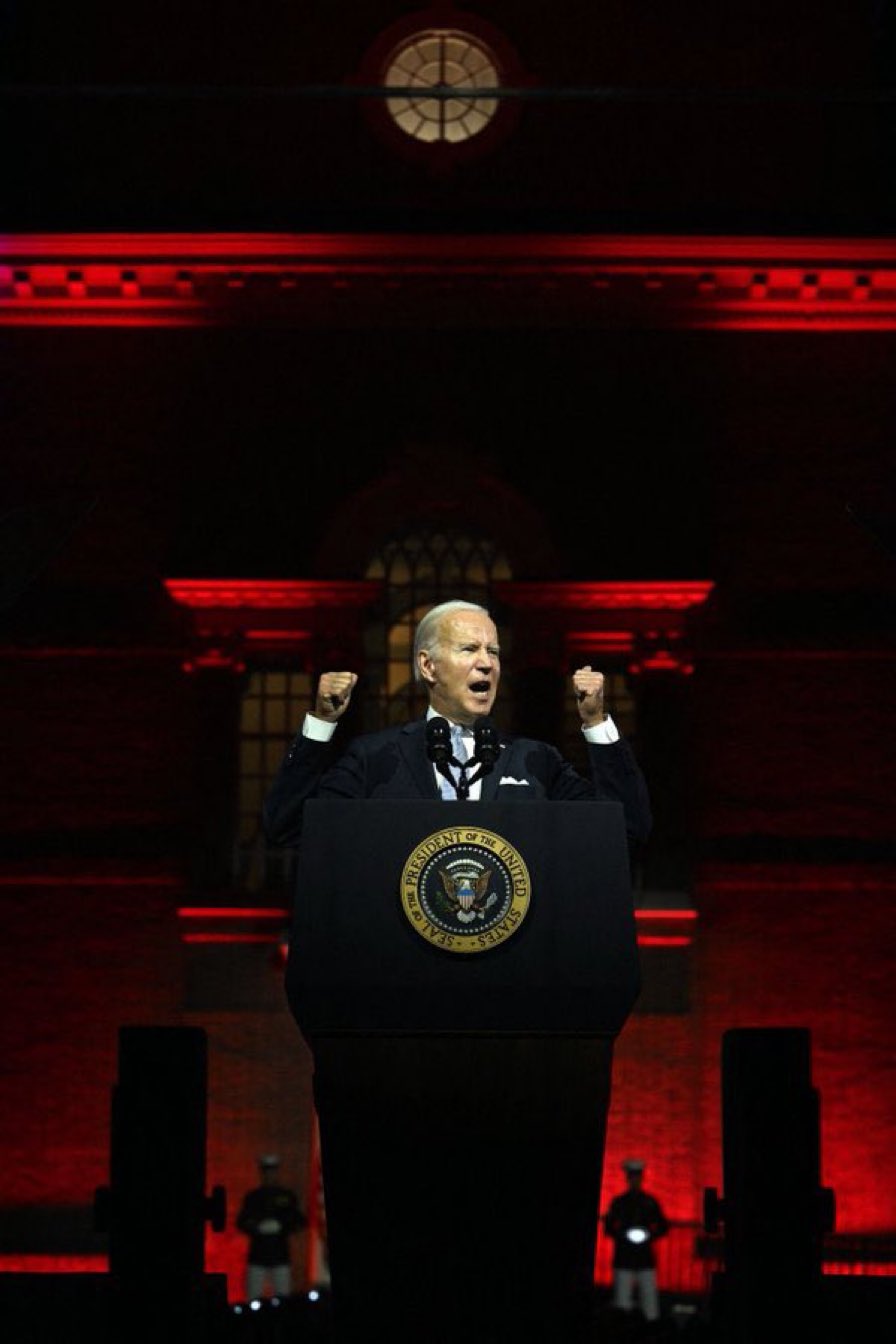
  • Bidenomics, Bidenflation and Biden ’24

    June 29, 2023
    US politics

    Greg Ip opined Wednesday:

    President Biden kicks off a national campaign Wednesday pitching his economic record to a deeply skeptical public.

    The challenge: Biden really has two economic records. One of them begins in late 2021 and consists of a series of legislative wins on infrastructure, semiconductor production and renewable energy, which he then preserved in a debt-ceiling deal with Republicans. These policies could shape the economy for years to come.

    That record, though, is overshadowed by the record of his first months in office, when his American Rescue Plan pumped $1.9 trillion of demand into a supply-constrained economy. The result was the tightest job market in memory and a surge in inflation that still hangs over Biden’s approval ratings and his prospects for re-election.

    In his speech in Chicago on Wednesday, Biden isn’t likely to distinguish between these two records: It’s all “Bidenomics,” a vision intended to “grow the middle class” and build stuff such as roads and factories. This doesn’t tell us much about what distinguishes Biden from other presidents, though. Don’t they all claim to want a stronger middle class and more roads and factories?

    His early agenda was also not particularly novel. The Rescue Plan was old-fashioned Keynesian demand stimulus, notable mostly for its sheer size. Biden’s staff designed it with the economy of 2009 in mind, when newly elected President Barack Obama and Biden, his vice president, faced a deep recession to be followed by a sluggish, yearslong recovery.

    Biden’s team is still sticking to that narrative. In a memo released this week, his political strategists Anita Dunn and Mike Donilon write that Biden “faced an immediate economic crisis when he took office.”

    Actually, he didn’t. By January 2021, the economic crisis brought on by Covid-19 was largely over, even if the health crisis wasn’t. As lockdowns were lifted and vaccines approved, businesses were furiously rehiring. Payroll growth averaged 800,000 a month over the last six months of 2020, in percentage terms the strongest such streak preceding a new president’s inauguration since 1952.

    The American Rescue Plan, in other words, was designed to bolster demand in an economy that already had plenty.

    Dunn and Donilon’s memo boasts that job creation under Biden has been the strongest of any president going back at least to Ronald Reagan.

    Much of that reflected recovery from the pandemic, which would have happened under any president. Still, the Rescue Plan probably explains why the U.S. recovery has been stronger than in countries with less stimulus. With the labor force depressed by retirements, the virus and reduced immigration, the result was the tightest labor market in memory. That particularly benefited historically disadvantaged groups: Blacks, Hispanics and workers without college degrees.

    But many of the benefits of that tight labor market have been negated by inflation. It soared from 2% just before the pandemic to a peak of 9.1% last year as gasoline prices leapt in the wake of Russia’s invasion of Ukraine. It has since retreated to 4% as gasoline prices dropped, but underlying inflation persists around 4% to 5%.

    Inflation is the main reason voters disapprove of Biden’s handling of the economy by a two-to-one ratio, according to a May poll by the Associated Press and NORC Center for Public Affairs Research. If inflation doesn’t fade of its own accord, the Federal Reserve might have to raise interest rates further and push the economy into recession, which won’t help Biden’s approval ratings.

    Historically, voters haven’t punished presidents for economic hardship brought on by events beyond their control. George W. Bush’s approval rose after the Sept. 11, 2001, terrorist attacks brought on recession, as did Donald Trump’s when Covid first hit in 2020. Since inflation has risen in almost every advanced country since the pandemic, Biden could logically claim it wasn’t his fault.

    But it’s logically inconsistent for Biden to disown inflation while taking credit for tight labor markets since they are mirror images of the same thing: an overheated economy. While economists debate how much stimulus contributed to this overheating, they agree it played a part. Voters are thus less inclined to give Biden a pass, especially since Republicans, and even some Democrats, keep reminding them of the connection.

    If Biden’s early agenda was all about macroeconomics—unemployment and inflation—his subsequent agenda has been about microeconomics, i.e., the composition of economic growth. Trump’s frequent “infrastructure weeks” never actually led to new infrastructure. Biden, by contrast, got a massive infrastructure bill through Congress in 2021 and it went beyond roads to water treatment and high-speed internet. The Chips and Science Act last year was the largest federal commitment to industrial policy in recent history. The Inflation Reduction Act offered game-changing incentives for renewable energy and electric vehicles.

    In a report Tuesday, the Treasury Department said those initiatives are making an imprint on the economic data. Factory construction, for example, has shot up, particularly for electronics. Not all of this is due to legislation: Semiconductor companies were increasing their U.S. footprint already in response to growing demand and pressure to diversify away from Asia. Nonetheless, comments of business leaders make it clear the effect on their plans is palpable.

    This newly assertive role for the federal government in shaping private investment isn’t without controversy. It is bulking up deficits, its “buy American” provisions have upset allies, and it has lowered the bar to interventions of questionable merit.

    Nor is it likely to change Biden’s political prospects: The effects on voters’ lives are small and gradual, whereas the effects of inflation and unemployment are big and immediate.

    Still, this part of Bidenomics represents a break with the past in ways stimulus didn’t. It is also popular: All three laws are backed by voters by large margins, according to polls by Morning Consult, and the infrastructure and semiconductor bills garnered Republican support in Congress. This likely confers staying power long beyond the next election, when inflation has faded from the headlines.

    In an interview, Jared Bernstein, chair of Biden’s Council of Economic Advisers, said: “When you’re engaged in an investment agenda, you’re partly playing the long game.”

    Jeff Mordock adds:

    President Biden is taking a page out of former President Jimmy Carter’s playbook by doubling down on policies that have resulted in soaring inflation.

    Mr. Biden appeared in Chicago on Wednesday to argue that Bidenomics — taxing the wealthy and spending massively to subsidize industries and on what he calls the danger of climate change — has spurred an American economic resurgence.

    He told the crowd more government programs canceling student loans and bringing high-speed internet to rural communities will lead to a revitalized middle class.

    “We have a plan that’s turning things around incredibly quickly,” Mr. Biden said.

    “Bidenomics is turning this around. We are supporting targeted investments for strengthening America’s economic security, our national security, energy security and our climate security.”

    Boasting about the economy while many Americans are struggling with high inflation, interest rates that make buying a house or car more expensive and increased spending on household items like groceries, gas and child care may seem like an unusual campaign strategy. But as Mr. Biden tries to convince Americans he deserves four more years in 2024, his campaign is digging in its heels that Bidenomics is working.

    Wednesday’s event was part of a three-week blitz of events and speeches to tout Mr. Biden’s economic agenda. On Friday, he will give remarks from the White House arguing that he has lowered costs for Americans.

    He is not the first president to attempt this strategy, but he’s hoping for a more successful result than when Mr. Carter tried it in 1979.

    Like Mr. Biden, Mr. Carter struggled to contain soaring prices. He also tried to argue that his economic policies were working ahead of his blowout loss to Ronald Reagan in the 1980 election.

    “Biden is taking a page from Jimmy Carter because he doesn’t believe Jimmy Carter failed,” historian Craig Shirley said. “If Biden believes Jimmy Carter failed at anything, it’s that he didn’t go far enough with spending.”

    Under Mr. Carter, U.S. inflation rose by an average of more than 11% in 1979 and 14% in 1980. When Mr. Biden took office, inflation was at 1.4% and peaked at 9.1% in June 2021, a figure not seen in more than 40 years. It receded to 5% in December 2021 and is currently at 5.6%.

    The Consumer Price Index rose from 4.8% at the time of Mr. Carter’s victory in 1976 to 12% ahead of the 1980 election, largely fueled by high gas prices.

    Yet Mr. Carter still tried to convince voters his policies were working.

    “Our proposals are very sound and very carefully considered to stimulate jobs, improve the industrial complex of this country, to create tools for American workers and at the same time be anti-inflationary in nature,” Mr. Carter said at the second 1980 presidential debate, pledging that his policies would create 9 million jobs.

    An Associated Press NORC Center for Public Affairs poll released Wednesday revealed that 64% of adults disapproved of Mr. Biden’s economic leadership. That’s worse than his overall 58% disapproval rating.

    With only 34% of voters approving of Mr. Biden’s handling of the economy, that gives the president a net approval rating of negative 30

    That is the lowest net economic approval rating since 1978, when Mr. Carter had a net approval rating of negative 28%.

    Are voters stupid enough to buy Biden? They did once already.

    Share this on …

    • Share on X (Opens in new window) X
    • Share on Facebook (Opens in new window) Facebook
    • Share on LinkedIn (Opens in new window) LinkedIn
    • Email a link to a friend (Opens in new window) Email
    • Print (Opens in new window) Print
    Like Loading…
    No comments on Bidenomics, Bidenflation and Biden ’24
Previous Page
1 … 122 123 124 125 126 … 1,044
Next Page

Website Powered by WordPress.com.

Steve Prestegard.com: The Presteblog

The thoughts of a journalist/libertarian–conservative/Christian husband, father, Eagle Scout and aficionado of obscure rock music. Thoughts herein are only the author’s and not necessarily the opinions of his family, friends, neighbors, church members or past, present or future employers.

  • Steve
    • About, or, Who is this man?
    • Facebook
    • Twitter
    • Adventures in ruralu0026nbsp;inkBack in June 2009, I was driving somewhere through a rural area. And for some reason, I had a flashback to two experiences in my career about that time of year many years ago. In 1988, eight days after graduating from the University of Wisconsin, I started work at the Grant County Herald Independent in Lancaster as a — well, the — reporter. Four years after that, on my 27th birthday, I purchased, with a business partner, the Tri-County Press in Cuba City, my first business venture. Both were experiences about which Wisconsin author Michael Perry might write. I thought about all this after reading a novel, The Deadline, written by a former newspaper editor and publisher. (Now who would write a novel about a weekly newspaper?) As a former newspaper owner, I picked at some of it — why finance a newspaper purchase through the bank if the seller is willing to finance it? Because the mean bank lender is a plot point! — and it is much more interesting than reality, but it is very well written, with a nicely twisting plot, and quite entertaining, again more so than reality. There is something about that first job out of college that makes you remember it perhaps more…
    • Adventures in radioI’ve been in the full-time work world half my life. For that same amount of time I’ve been broadcasting sports as a side interest, something I had wanted to since I started listening to games on radio and watching on TV, and then actually attending games. If you ask someone who’s worked in radio for some time about the late ’70s TV series “WKRP in Cincinnati,” most of them will tell you that, if anything, the series understated how wacky working in radio can be. Perhaps the funniest episode in the history of TV is the “WKRP” episode, based on a true story, about the fictional radio station’s Thanksgiving promotion — throwing live turkeys out of a helicopter under the mistaken belief that, in the words of WKRP owner Arthur Carlson, “As God is my witness, I thought turkeys could fly.” [youtube=http://www.youtube.com/watch?v=ST01bZJPuE0] I’ve never been involved in anything like that. I have announced games from the roofs of press boxes (once on a nice day, and once in 50-mph winds), from a Mississippi River bluff (more on that later), and from the front row of the second balcony of the University of Wisconsin Fieldhouse (great view, but not a place to go if…
    • “Good morning/afternoon/evening, ________ fans …”
    • My biggest storyEarlier this week, while looking for something else, I came upon some of my own work. (I’m going to write a blog someday called “Things I Found While Looking for Something Else.” This is not that blog.) The Grant County Sheriff’s Department, in the county where I used to live, has a tribute page to the two officers in county history who died in the line of duty. One is William Loud, a deputy marshal in Cassville, shot to death by two bank robbers in 1912. The other is Tom Reuter, a Grant County deputy sheriff who was shot to death at the end of his 4 p.m.-to-midnight shift March 18, 1990. Gregory Coulthard, then a 19-year-old farmhand, was convicted of first-degree intentional homicide and is serving a life sentence, with his first eligibility for parole on March 18, 2015, just 3½ years from now. I’ve written a lot over the years. I think this, from my first two years in the full-time journalism world, will go down as the story I remember the most. For journalists, big stories contain a paradox, which was pointed out in CBS-TV’s interview of Andy Rooney on his last “60 Minutes” Sunday. Morley Safer said something along the line…
  • Food and drink
    • The Roesch/Prestegard familyu0026nbsp;cookbookFrom the family cookbook(s) All the families I’m associated with love to eat, so it’s a good thing we enjoy cooking. The first out-of-my-house food memory I have is of my grandmother’s cooking for Christmas or other family occasions. According to my mother, my grandmother had a baked beans recipe that she would make for my mother. Unfortunately, the recipe seems to have  disappeared. Also unfortunately, my early days as a picky, though voluminous, eater meant I missed a lot of those recipes made from such wholesome ingredients as lard and meat fat. I particularly remember a couple of meals that involve my family. The day of Super Bowl XXXI, my parents, my brother, my aunt and uncle and a group of their friends got together to share lots of food and cheer on the Packers to their first NFL title in 29 years. (After which Jannan and I drove to Lambeau Field in the snow,  but that’s another story.) Then, on Dec. 31, 1999, my parents, my brother, my aunt and uncle and Jannan and I (along with Michael in utero) had a one-course-per-hour meal to appropriately end years beginning with the number 1. Unfortunately I can’t remember what we…
    • SkålI was the editor of Marketplace Magazine for 10 years. If I had to point to one thing that demonstrates improved quality of life since I came to Northeast Wisconsin in 1994, it would be … … the growth of breweries and  wineries in Northeast Wisconsin. The former of those two facts makes sense, given our heritage as a brewing state. The latter is less self-evident, since no one thinks of Wisconsin as having a good grape-growing climate. Some snobs claim that apple or cherry wines aren’t really wines at all. But one of the great facets of free enterprise is the opportunity to make your own choice of what food and drink to drink. (At least for now, though some wish to restrict our food and drink choices.) Wisconsin’s historically predominant ethnic group (and our family’s) is German. Our German ancestors did unfortunately bring large government and high taxes with them, but they also brought beer. Europeans brought wine with them, since they came from countries with poor-quality drinking water. Within 50 years of a wave of mid-19th-century German immigration, brewing had become the fifth largest industry in the U.S., according to Maureen Ogle, author of Ambitious Brew: The Story of American Beer. Beer and wine have…
  • Wheels
    • America’s sports carMy birthday in June dawned without a Chevrolet Corvette in front of my house. (The Corvette at the top of the page was featured at the 2007 Greater Milwaukee Auto Show. The copilot is my oldest son, Michael.) Which isn’t surprising. I have three young children, and I have a house with a one-car garage. (Then again, this would be more practical, though a blatant pluck-your-eyes-out violation of the Corvette ethos. Of course, so was this.) The reality is that I’m likely to be able to own a Corvette only if I get a visit from the Corvette Fairy, whose office is next door to the Easter Bunny. (I hope this isn’t foreshadowing: When I interviewed Dave Richter of Valley Corvette for a car enthusiast story in the late great Marketplace Magazine, he said that the most popular Corvette in most fans’ minds was a Corvette built during their days in high school. This would be a problem for me in that I graduated from high school in 1983, when no Corvette was built.) The Corvette is one of those cars whose existence may be difficult to understand within General Motors Corp. The Corvette is what is known as a “halo car,” a car that drives people into showrooms, even if…
    • Barges on fouru0026nbsp;wheelsI originally wrote this in September 2008.  At the Fox Cities Business Expo Tuesday, a Smart car was displayed at the United Way Fox Cities booth. I reported that I once owned a car into which trunk, I believe, the Smart could be placed, with the trunk lid shut. This is said car — a 1975 Chevrolet Caprice coupe (ours was dark red), whose doors are, I believe, longer than the entire Smart. The Caprice, built down Interstate 90 from us Madisonians in Janesville (a neighbor of ours who worked at the plant probably helped put it together) was the flagship of Chevy’s full-size fleet (which included the stripper Bel Air and middle-of-the-road Impala), featuring popular-for-the-time vinyl roofs, better sound insulation, an upgraded cloth interior, rear fender skirts and fancy Caprice badges. The Caprice was 18 feet 1 inch long and weighed 4,300 pounds. For comparison: The midsize Chevrolet of the ear was the Malibu, which was the same approximate size as the Caprice after its 1977 downsizing. The compact Chevrolet of the era was the Nova, which was 200 inches long — four inches longer than a current Cadillac STS. Wikipedia’s entry on the Caprice has this amusing sentence: “As fuel economy became a bigger priority among Americans…
    • Behind the wheel
    • Collecting only dust or rust
    • Coooooooooooupe!
    • Corvettes on the screen
    • The garage of misfit cars
    • 100 years (and one day) of our Chevrolets
    • They built Excitement, sort of, once in a while
    • A wagon by any otheru0026nbsp;nameFirst written in 2008. You will see more don’t-call-them-station-wagons as you drive today. Readers around my age have probably had some experience with a vehicle increasingly rare on the road — the station wagon. If you were a Boy Scout or Girl Scout, or were a member of some kind of youth athletic team, or had a large dog, or had relatives approximately your age, or had friends who needed to be transported somewhere, or had parents who occasionally had to haul (either in the back or in a trailer) more than what could be fit inside a car trunk, you (or, actually, your parents) were the target demographic for the station wagon. “Station wagons came to be like covered wagons — so much family activity happened in those cars,” said Tim Cleary, president of the American Station Wagon Owners Association, in Country Living magazine. Wagons “were used for everything from daily runs to the grocery store to long summer driving trips, and while many men and women might have wanted a fancier or sportier car, a station wagon was something they knew they needed for the family.” The “station wagon” originally was a vehicle with a covered seating area to take people between train stations…
    • Wheels on theu0026nbsp;screenBetween my former and current blogs, I wrote a lot about automobiles and TV and movies. Think of this post as killing two birds (Thunderbirds? Firebirds? Skylarks?) with one stone. Most movies and TV series view cars the same way most people view cars — as A-to-B transportation. (That’s not counting the movies or series where the car is the plot, like the haunted “Christine” or “Knight Rider” or the “Back to the Future” movies.) The philosophy here, of course, is that cars are not merely A-to-B transportation. Which disqualifies most police shows from what you’re about to read, even though I’ve watched more police video than anything else, because police cars are plain Jane vehicles. The highlight in a sense is in the beginning: The car chase in my favorite movie, “Bullitt,” featuring Steve McQueen’s 1968 Ford Mustang against the bad guys’ 1968 Dodge Charger: [youtube=http://www.youtube.com/watch?v=GMc2RdFuOxIu0026amp;fmt=18] One year before that (but I didn’t see this until we got Telemundo on cable a couple of years ago) was a movie called “Operación 67,” featuring (I kid you not) a masked professional wrestler, his unmasked sidekick, and some sort of secret agent plot. (Since I don’t know Spanish and it’s not…
    • While riding in my Cadillac …
  • Entertainments
    • Brass rocksThose who read my former blog last year at this time, or have read this blog over the past months, know that I am a big fan of the rock group Chicago. (Back when they were a rock group and not a singer of sappy ballads, that is.) Since rock music began from elements of country music, jazz and the blues, brass rock would seem a natural subgenre of rock music. A lot of ’50s musical acts had saxophone players, and some played with full orchestras … [youtube=http://www.youtube.com/watch?v=9CPS-WuUKUE] … but it wasn’t until the more-or-less simultaneous appearances of Chicago and Blood Sweat u0026amp; Tears on the musical scene (both groups formed in 1967, both had their first charting singles in 1969, and they had the same producer) that the usual guitar/bass/keyboard/drum grouping was augmented by one or more trumpets, a sax player and a trombone player. While Chicago is my favorite group (but you knew that already), the first brass rock song I remember hearing was BSu0026amp;T’s “Spinning Wheel” — not in its original form, but on “Sesame Street,” accompanied by, yes, a giant spinning wheel. [youtube=http://www.youtube.com/watch?v=qi9sLkyhhlE] [youtube=http://www.youtube.com/watch?v=OxWSOuNsN20] [youtube=http://www.youtube.com/watch?v=U9U34uPjz-g] I remember liking Chicago’s “Just You ‘n Me” when it was released as a single, and…
    • Drive and Eat au0026nbsp;RockThe first UW home football game of each season also is the opener for the University of Wisconsin Marching Band, the world’s finest college marching band. (How the UW Band has not gotten the Sudler Trophy, which is to honor the country’s premier college marching bands, is beyond my comprehension.) I know this because I am an alumnus of the UW Band. I played five years (in the last rank of the band, Rank 25, motto: “Where Men Are Tall and Run-On Is Short”), marching in 39 football games at Camp Randall Stadium, the Hubert H. Humphrey Metrodome in Minneapolis, Michigan Stadium in Ann Arbor, Memorial Stadium at the University of Illinois (worst artificial turf I had ever seen), the University of Nevada–Las Vegas’ Sam Boyd Silver Bowl, the former Dyche Stadium at Northwestern University, five high school fields and, in my one bowl game, Legion Field in Birmingham, Ala., site of the 1984 Hall of Fame Bowl. The UW Band was, without question, the most memorable experience of my college days, and one of the most meaningful experiences of my lifetime. It was the most physical experience of my lifetime, to be sure. Fifteen minutes into my first Registration…
    • Keep on rockin’ in the freeu0026nbsp;worldOne of my first ambitions in communications was to be a radio disc jockey, and to possibly reach the level of the greats I used to listen to from WLS radio in Chicago, which used to be one of the great 50,000-watt AM rock stations of the country, back when they still existed. (Those who are aficionados of that time in music and radio history enjoyed a trip to that wayback machine when WLS a Memorial Day Big 89 Rewind, excerpts of which can be found on their Web site.) My vision was to be WLS’ afternoon DJ, playing the best in rock music between 2 and 6, which meant I wouldn’t have to get up before the crack of dawn to do the morning show, yet have my nights free to do whatever glamorous things big-city DJs did. Then I learned about the realities of radio — low pay, long hours, zero job security — and though I have dabbled in radio sports, I’ve pretty much cured myself of the idea of working in radio, even if, to quote WAPL’s Len Nelson, “You come to work every day just like everybody else does, but we’re playing rock ’n’ roll songs, we’re cuttin’ up.…
    • Monday on the flight line, not Saturday in the park
    • Music to drive by
    • The rock ofu0026nbsp;WisconsinWikipedia begins its item “Music of Wisconsin” thusly: Wisconsin was settled largely by European immigrants in the late 19th century. This immigration led to the popularization of galops, schottisches, waltzes, and, especially, polkas. [youtube=http://www.youtube.com/watch?v=yl7wCczgNUc] So when I first sought to write a blog piece about rock musicians from Wisconsin, that seemed like a forlorn venture. Turned out it wasn’t, because when I first wrote about rock musicians from Wisconsin, so many of them that I hadn’t mentioned came up in the first few days that I had to write a second blog entry fixing the omissions of the first. This list is about rock music, so it will not include, for instance, Milwaukee native and Ripon College graduate Al Jarreau, who in addition to having recorded a boatload of music for the jazz and adult contemporary/easy listening fan, also recorded the theme music for the ’80s TV series “Moonlighting.” Nor will it include Milwaukee native Eric Benet, who was for a while known more for his former wife, Halle Berry, than for his music, which includes four number one singles on the Ru0026amp;B charts, “Spend My Life with You” with Tamia, “Hurricane,” “Pretty Baby” and “You’re the Only One.” Nor will it include Wisconsin’s sizable contributions to big…
    • Steve TV: All Steve, All the Time
    • “Super Steve, Man of Action!”
    • Too much TV
    • The worst music of allu0026nbsp;timeThe rock group Jefferson Airplane titled its first greatest-hits compilation “The Worst of Jefferson Airplane.” Rolling Stone magazine was not being ironic when it polled its readers to decide the 10 worst songs of the 1990s. I’m not sure I agree with all of Rolling Stone’s list, but that shouldn’t be surprising; such lists are meant for debate, after all. To determine the “worst,” songs appropriate for the “Vinyl from Hell” segment that used to be on a Madison FM rock station, requires some criteria, which does not include mere overexposure (for instance, “Macarena,” the video of which I find amusing since it looks like two bankers are singing it). Before we go on: Blog posts like this one require multimedia, so if you find a song you hate on this blog, I apologize. These are also songs that I almost never listen to because my sound system has a zero-tolerance policy — if I’m listening to the radio or a CD and I hear a song I don’t like, it’s, to quote Bad Company, gone gone gone. My blonde wife won’t be happy to read that one of her favorite ’90s songs, 4 Non Blondes’ “What’s Up,” starts the list. (However,…
    • “You have the right to remain silent …”
  • Madison
    • Blasts from the Madison media past
    • Blasts from my Madison past
    • Blasts from our Madison past
    • What’s the matter with Madison?
    • Wisconsin – Madison = ?
  • Sports
    • Athletic aesthetics, or “cardinal” vs. “Big Red”
    • Choose your own announcer
    • La Follette state 1982 (u0022It was 30 years ago todayu0022)
    • The North Dakota–Wisconsin Hockey Fight of 1982
    • Packers vs. Brewers
  • Hall of Fame
    • The case(s) against teacher unions
    • The Class of 1983
    • A hairy subject, or face the face
    • It’s worse than you think
    • It’s worse than you think, 2010–11 edition
    • My favorite interview subject of all time
    • Oh look! Rural people!
    • Prestegard for president!
    • Unions vs. the facts, or Hiding in plain sight
    • When rhetoric goes too far
Privacy & Cookies: This site uses cookies. By continuing to use this website, you agree to their use.
To find out more, including how to control cookies, see here: Cookie Policy
  • Subscribe Subscribed
    • Steve Prestegard.com: The Presteblog
    • Join 197 other subscribers
    • Already have a WordPress.com account? Log in now.
    • Steve Prestegard.com: The Presteblog
    • Subscribe Subscribed
    • Sign up
    • Log in
    • Report this content
    • View site in Reader
    • Manage subscriptions
    • Collapse this bar
%d