• Hunter vs. Joe, and the real 2024 issues

    July 26, 2023
    US politics

    TIPP Insights:

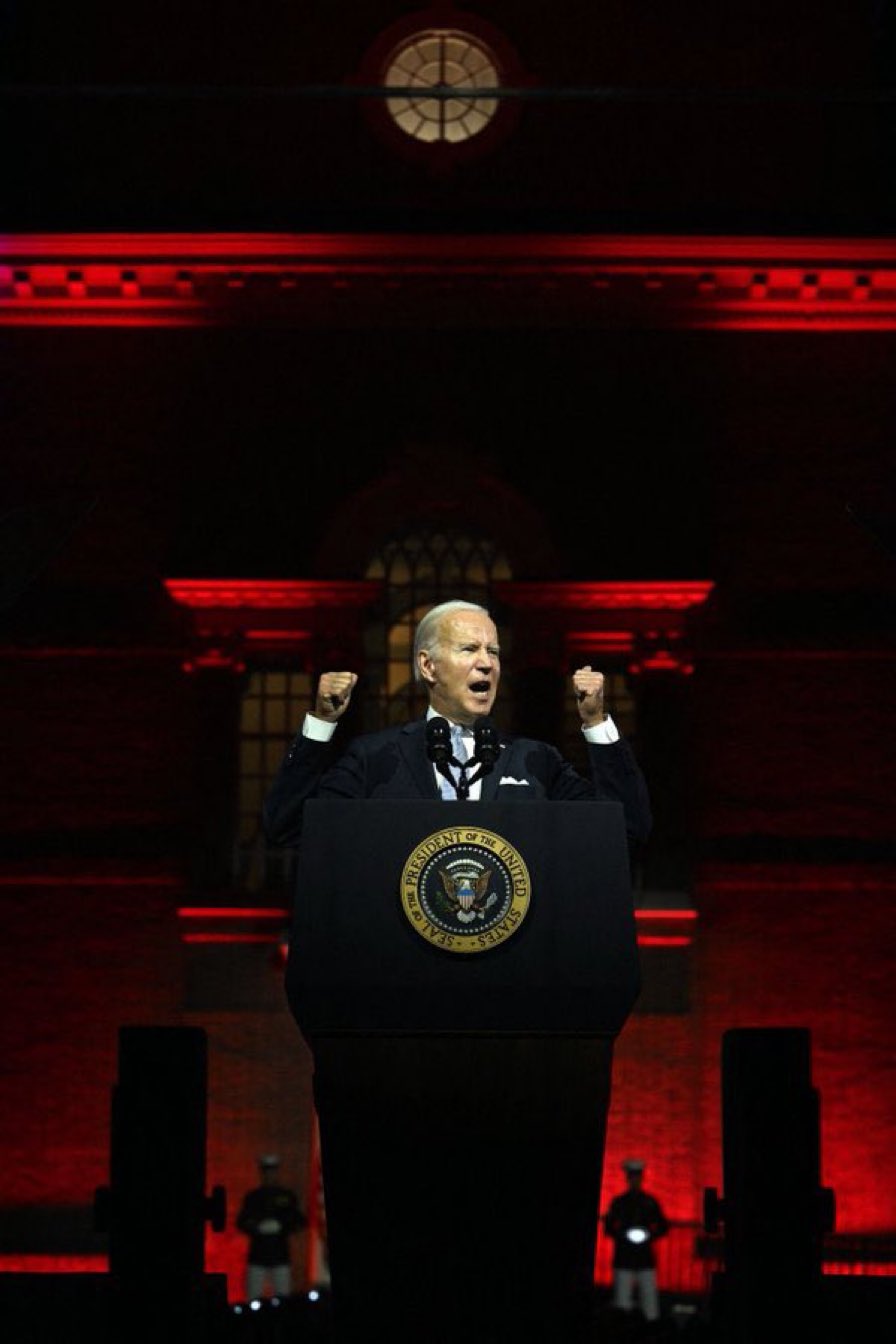
    Hunter Biden has been a terrible distraction for President Biden and the Democrats. He has been in the news for a long time, going back to former President Trump’s first impeachment.

    There’s very little the public does not know about Hunter – and nearly everything is that of someone who is an abject failure. His discharge from the Navy, his relationship with his late brother’s wife, the involvement with prostitutes, lying on the gun form, drug use, and fathering of a child to whom he refused to pay child support – all speak of a quite flawed character.

    His business dealings, in which he allegedly took advantage of the Biden family name and received millions in compensation for access to Washington, while terrible, are nothing new. (The Beltway crowd is made up of tens of thousands of people who have connections because of family – in the three branches of government and the media.)

    In effect, Hunter Biden is a classic story of political power and corruption, but if the GOP wants to beat President Biden in the coming elections using this theme, the rest of the country will yawn. For decades, those inside the Beltway have lived by a core set of values different from the rest of Middle America, especially in the battleground states where the 2024 elections will be decided.

    Recent attacks by Rep. Marjorie Taylor Green, when she displayed salacious photos of Hunter Biden in the House chamber, went over the top. What was she trying to prove? That Hunter was a distorted and weak individual? No. Green showed the world that he may have violated an obscure law called the Mann Act of 1910, which made it a crime to transport women across state lines “for the purpose of prostitution or debauchery, or for any other immoral purpose.” Is this the best the GOP will run on in 2024?

    Although we are mostly willing to look the other way regarding Hunter Biden, two stories in the saga are noteworthy because they affect the very fabric of America – and both point to President Biden’s dishonesty and hypocrisy. We believe pursuing inquiries into both are fair game for the GOP.

    The first is when the Democrats leveraged their new-found unity in early 2020 to apply all the powers of the Deep State to suppress the Hunter laptop story – including when over 50 intelligence officials certified that the laptop was a ‘Russian misinformation’ campaign. During the 2020 presidential debates – remember that only two were held, with one being canceled – Biden openly referred to the intelligence officials’ assessment.

    In response to Trump’s taunts of “it’s the laptop from hell, the laptop from hell,” Biden pushed back, “There are 50 former national intelligence folks who said that what this — he’s accusing me of is a Russian plan — they have said that this has all the characteristics — four — five former heads of the CIA — both parties, say what he’s saying is a bunch of garbage. Nobody believes it except him…and his good friend Rudy Giuliani.”

    Biden’s assertions were a bold lie. Not only do we now know that the laptop story was 100% accurate, but we also know that those officials unethically colluded with the Biden campaign. The GOP-led House Judiciary and Intelligence Committees released a 64-page report in May that showed emails from the intelligence officials who released a signed statement before the debate: “We think Trump will attack Biden on the issue at this week’s debate, and we want to offer perspectives on this from Russia watchers and other seasoned experts, and we want to give the [Vice President] a talking point to use in response.” This collusion story resonates across the country as election interference of the highest order as the Deep State pressed its thumb on the scale to swing the result to one candidate.

    The second issue is if “The Big Guy” received kickbacks from Hunter Biden’s dealings and those somehow influenced American policy, such as towards Ukraine, including expending over $120 billion in arms support and forever dividing the world.

    The average American will be repulsed if these stories are true. It does not matter if Justice again slow-walks investigations and even buries them, not indicting President Biden. As we said this week, the Court of Public Opinion is a powerful platform, and Biden can never survive the adverse reaction of the people if the kickback story further takes shape. House Speaker Kevin McCarthy knows that this story has legs, which is why he indicated again on Tuesday, after doing so over the weekend, that he could launch an impeachment inquiry.

    All other Hunter Biden stories are noise – and the more the GOP defines Hunter as a deeply-disturbed individual, the more the average voter will see that the GOP is desperate. An emergency brief filed in Federal District Court in Wilmington by Representative Jason Smith of Missouri, the House Ways, and Means Committee chairman, requesting the judge to scuttle the plea deal is an example of sheer desperation. Hunter is not running for office – so if the court accepts his plea deal, the GOP should let Hunter go and not take off the eye from the bigger picture.

    There’s so much more the GOP can prosecute President Biden for in taking America backward by decades – inflation, economy, war, standing in the world, executive outreach, crime, the borders, foreign policy, woke agenda, and dangerously rising debt – that Hunter’s sorry story pales in comparison.

    Share this on …

    • Share on X (Opens in new window) X
    • Share on Facebook (Opens in new window) Facebook
    • Share on LinkedIn (Opens in new window) LinkedIn
    • Email a link to a friend (Opens in new window) Email
    • Print (Opens in new window) Print
    Like Loading…
    No comments on Hunter vs. Joe, and the real 2024 issues
  • The U.S., Israel and their courts

    July 26, 2023
    International relations, US politics

    Paul Mirengoff wrote Tuesday:

    Yesterday, Israel’s democratically elected Knesset voted to curb the power of Israel’s undemocratic judiciary. In what, by any fair analysis, is a pro-democracy move, the Knesset took away the Supreme Court’s ability to nix laws it deems “unreasonable.”

    Israel erupted in protests, which is fine. But many military and national security personnel vowed that, in protest, they would not meet their service obligations. This is not fine.

    Although the issue of judicial power in Israel is none of America’s business, Joe Biden weighed in. Naturally, he weighed in on the wrong side, arguing that a change like this one shouldn’t be undertaken without bipartisan support. Biden has never treated such support as a prerequisite for imposing significant change in the U.S.

    Let’s start with the Knesset’s decision to stop Israel’s Supreme Court from voiding legislation the judges consider unreasonable. It’s inherently undemocratic for any body of unelected judges (and the Israeli Supreme Court is such a body) to strike down a law passed by a democratically elected legislature. Thus, the howling that Prime Minister Netanyahu and the Knesset are undermining democracy is absurd on its face.

    This doesn’t mean that judicial review of legislation is always a bad idea. On balance, I favor the judicial review of legislation the U.S. permits.

    But that’s because the review is designed to ensure that the legislature doesn’t violate our Constitution — the supreme law of the land. U.S. judges aren’t supposed to strike down a law because they think it’s unreasonable.

    U.S. judges sometime abuse their authority to review legislation. In these cases, the Constitution becomes a pretext for imposing personal notions of reasonableness. But these abuses aren’t frequent and severe enough to justify opposing judicial review, in my opinion.

    Israel is a very different case. It has no constitution with which to justify and constrain judicial review. Without any real anchor, judges are free to overturn laws that fail their personal “reasonableness” test.

    In a society where nearly everyone agrees about what is reasonable, this system might be acceptable. But neither the U.S., nor Israel, nor any free society I know of meets that description.

    In the U.S., many consider late term abortions to be murder (or something close to murder), and therefore worse than unreasonable. But many other Americans don’t share this view, at all.

    On the other side of the divide, many Americans consider bans on abortion in the first six weeks unreasonable. But many Americans disagree completely.

    The same phenomenon exists on a host of other major issues. Indeed, disagreement on nearly all important policy questions is so profound that neither side finds the other side’s position reasonable.

    If anything, Israeli society is even more divided than ours. Thus, it’s eminently reasonable for the Knesset to have taken away the Supreme Court’s ability to void legislation as unreasonable. The mass protests that this move has produced — along with the mass protests in its favor — reinforce the reality that his society is too divided to form consensus on what’s reasonable.

    I should also note that the Israeli Supreme Court’s right to review legislation for reasonableness appears to be a partisan creation. According to Avi Bell, an Israeli law professor, the Supreme Court’s criterion of “reasonableness” was developed after 1993 in a judicial power grab to counter the rise of the democratically elected Likud party. Since then, the Supreme Court has used it to force the firing of senior officials including cabinet members, block and delay military operations, raise and lower taxes and welfare benefits, and bar major foreign-policy initiatives.

    This much judicial power is an affront to democracy.

    Nor does annulment of the reasonableness criterion prevent judicial review or entail countenancing violations of human rights. Most of the main review grounds in administrative law will remain.

    These points on the merits notwithstanding, it is, of course, the right of those who oppose the new legislation to protest vehemently. At that same time, it’s the right of authorities to disperse and arrest protesters who turn violent or violate the law.

    The big problem with the protests is this: Large numbers of IDF reservists, members of the Mossad and the Shin Bet secret service, air force pilots and technical staff, special ops personnel, elite units, intelligence personnel, and military doctors have said they won’t report for duty now that the judicial overhaul legislation has passed.

    This form of protest amounts to an attempt by national security personnel to dictate Israeli judicial policy by holding Israel’s national security hostage. That’s about as undemocratic as it gets.

    Melanie Phillips quotes a journalist who supports this form of protest against the judicial reform legislation, who calls it an attempted military coup. Phillips writes:

    While some protesters are undoubtedly motivated by a principled (if misguided) opposition to the judicial reform, the leaders of this insurrection made it clear from the get-go that such opposition was merely a useful ploy to sweep aside the democratically elected wishes of the public and bring down the government it had elected.

    Whatever label one attaches to a refusal by national security personnel to serve unless they get their way — in this case, the undemocratic way of maintaining the Supreme Court’s unprecedented power — that refusal is anti-democracy and disgraceful.

    It also poses a serious threat to Israel. Israel’s enemies — Hamas, Hezbollah, and Iran’s Quds forces —reportedly are all now “discussing ways to upgrade the work of resistance” in light of the protests.

    Speaking of disgraceful, Joe Biden’s White House said this:

    It is unfortunate that the vote today took place with the slimmest possible majority.

    And Biden himself has said, in discussing the legislation. that it’s best not to make fundamental changes unless they have widespread support.

    These statements make sense only if one views them the way Phillips views the Israeli protests — as a way to “bring down the elected government.” Absent this motive, Biden’s complaint is the height of hypocrisy.

    Biden had no problem with ending the ability of the Senate to filibuster key judicial and executive branch nominees. This was a fundamental change that had no bipartisan support. He had no problem with passing Obamacare along strictly partisan lines. This was a fundamental change in our health care system.

    If Israel, under a new, left-leaning government, restored the Supreme Court’s power without widespread support, there’s no doubt that Biden would be delighted. He doesn’t care about widespread support. He’s all about siding with the Israeli left.

    There’s nothing new about this. Democrat presidents have been trying to bring down Netanyahu since the days Bill Clinton.

    What’s new and particularly dangerous, though, is giving encouragement and ammunition to protesters who have resorted to jeopardizing Israel’s national security in order to get their way. Plus encouragement to Hezbollah, Iran, and Hamas, all of whom hope to use this dispute to harm Israel.

    Biden had his press secretary say that “the core of [the U.S. Israeli] relationship is certainly on democratic values.” If so, Biden should favor the pro-democracy reform Israel has just instituted. But the real point is this: How Israel organizes its democracy should not be America’s concern.

    Nor, as noted, is it Biden’s real concern. He simply wants to topple Israel’s democratically elected government.

    That shouldn’t be his mission, either.

    Share this on …

    • Share on X (Opens in new window) X
    • Share on Facebook (Opens in new window) Facebook
    • Share on LinkedIn (Opens in new window) LinkedIn
    • Email a link to a friend (Opens in new window) Email
    • Print (Opens in new window) Print
    Like Loading…
    No comments on The U.S., Israel and their courts
  • Presty the DJ for July 26

    July 26, 2023
    Music

    Today in 1965, the Rolling Stones were to release “Beggar’s Banquet,” except that the record label decided that the original cover …

    … was inappropriate, and substituted …

    … angering one member of the band on his birthday.

    The number one single …

    … and album today in 1975:

    (more…)

    Share this on …

    • Share on X (Opens in new window) X
    • Share on Facebook (Opens in new window) Facebook
    • Share on LinkedIn (Opens in new window) LinkedIn
    • Email a link to a friend (Opens in new window) Email
    • Print (Opens in new window) Print
    Like Loading…
    2 comments on Presty the DJ for July 26
  • Unlikely, but interesting

    July 25, 2023
    US politics

    Charles Hurt starts with a famous quotation:

    “The tree of liberty must be refreshed from time to time with the blood of patriots and tyrants.” — Thomas Jefferson, 1787

    Few lines from our founding inspire more hysteria these days from the bureaucratic tyrants in Washington and their crotch-nuzzling cheerleaders in the media.

    When it comes to bloodshed in your neighborhood, CNN calls it “fiery but most peaceful.” When the unrest reaches the neighborhood of tyrants, CNN calls it an “insurrection” and demands the full force of the federal government to quash every last tendril of dissent.

    At a minimum, you have to commend the “insurrectionists” for at least hitting the right house for refreshing the tree of liberty. The “fiery but mostly peaceful” riots that roiled your neighborhoods, burned down your churches and looted your stores were pure anarchy — the petty, redheaded stepchild of tyranny. But tyranny nonetheless.

    Certainly, watering the tree of liberty with anybody’s blood is a strong message for suburban soccer moms these days. Jefferson was famous for his brass-knuckled commitment to liberty.

    “What signify a few lives lost in a century or two?” he wondered in the same letter that he discusses refreshing the Tree of Liberty.

    Probably not the most effective bumper sticker to win over those suburban soccer moms.

    You can blame the contentment of these moms on the overabundance of fruits from our liberty.

    Jefferson called this contentment “lethargy” and warned that it was “the forerunner of death to the public liberty.”

    “God forbid,” he remarked, “we should ever be 20 years without such a rebellion.”

    Granted, nobody today wants to see bloodshed in the streets. So, what about a bloodless revolution? Instead of blood flowing in the streets of bureaucratic Washington, what about a sea of pink slips?

    As grievously dismayed as Jefferson would be over the state of lethargy and tyranny in our country today, he would also cheer the arrival of pharmaceutical executive Vivek Ramaswamy on the political battlefield. Smart, worldly and insatiably curious, Mr. Ramaswamy is about as close as you get to a Renaissance man in our times.

    While at his first job out of college working for an investment firm focused on biotech companies, Mr. Ramaswamy got bored. So we went to law school, during which time he earned both a law degree and his first $15 million. He has even dabbled in stand-up comedy.

    Jefferson would especially admire that Mr. Ramaswamy accomplished something in the private sector before getting into politics. (All the Founders would be disgusted by the hordes of lifelong government grifters like President Biden.)

    But mostly, Jefferson would applaud Mr. Ramaswamy’s approach to the bloated, malignant federal government that has grown so large and powerful that it is ungovernable and entirely unresponsive to the people.

    “Do you believe in reform? Or do you believe in revolution?” Mr. Ramaswamy asked in an editorial board meeting with The Washington Times last week.

    “I am the candidate — I think the sole candidate — who is actually, unapologetically on the side of revolution. I think that is the only way forward.”

    In a Republican primary field dominated by former President Donald Trump, most candidates are tiptoeing around promising to be Mr. Trump without the drama. Or Trump Light. Or Trump without Trump. Trump — minus the mean tweets.

    Mr. Ramaswamy is running a different campaign. He is not running to the left of Trump or to the center of Trump — but to the Trump of Trump. If anything, Mr. Ramaswamy is critical of Mr. Trump for not being enough of a disrupter.

    Why would you pick a secretary of education, Mr. Ramaswamy asked, for a department you intended to abolish?

    As for the somewhat chaotic personality of Mr. Trump, Mr. Ramaswamy says the MAGA movement does not belong to any one man. After all, he said, George Washington was “America First” before anybody else.

    He intends to follow in those footsteps.

    Share this on …

    • Share on X (Opens in new window) X
    • Share on Facebook (Opens in new window) Facebook
    • Share on LinkedIn (Opens in new window) LinkedIn
    • Email a link to a friend (Opens in new window) Email
    • Print (Opens in new window) Print
    Like Loading…
    No comments on Unlikely, but interesting
  • Presty the DJ for July 25

    July 25, 2023
    Music

    Today in 1964, the Beatles’ “A Hard Day’s Night” hit number one and stayed there for 14 weeks:

    Today in 1973, George Harrison got a visit from the taxman, who told him he owed £1 million in taxes on his 1973 Bangladesh album and concert:

    (more…)

    Share this on …

    • Share on X (Opens in new window) X
    • Share on Facebook (Opens in new window) Facebook
    • Share on LinkedIn (Opens in new window) LinkedIn
    • Email a link to a friend (Opens in new window) Email
    • Print (Opens in new window) Print
    Like Loading…
    No comments on Presty the DJ for July 25
  • Biden’s (and his voters’) economic dementia

    July 24, 2023
    US politics

    Jim Geraghty:

    At this point, President Biden and his top staff want his reelection campaign to focus on two broad themes. The first, discussed earlier this week, is to turn the election into a referendum on Donald Trump and tie every other GOP candidate on the ballot to “mega-MAGA Republicans.” The second, which seems like a riskier bet, is to tout the success of “Bidenomics” and the president’s economic record.

    The first problem is that most Americans don’t feel good about the economy and don’t feel good about how Biden is handling economic issues. As a CNBC headline put it, “The White House plan to sell Bidenomics: Hit the road, ignore the polls.”

    Back in February, Gallup found that just 35 percent of Americans say they are better off now than they were a year ago, while 50 percent say they are worse off than a year ago. The organization noted that, “since Gallup first asked this question in 1976, it has been rare for half or more of Americans to say they are worse off.” In fact, “the only other times this occurred was during the Great Recession era in 2008 and 2009.”

    Things haven’t changed much in the past few months. Yesterday, CNBC unveiled a new poll that found just 37 percent of Americans approve of how Biden is handling the economy, while 58 percent disapprove:

    The survey showed small gains in Americans’ views on the economy, though to levels that remain depressed. The percentage of Americans saying the economy is excellent or good rose 6 points to a still-low 20 percent. The percentage saying the economy is just fair or poor declined 6 points to a still-high 79 percent. Just 24 percent of the public believes the economy will improve in the next year, a relatively low mark for the survey but up 6 points compared with April and the percentage expecting the economy to get worse fell 10 points to 43 percent.

    On paper, the current U.S. inflation rate is 3 percent year-over-year, a significant decline from the 9 percent of June 2022 and much closer to the U.S. Federal Reserve’s target rate of 2 percent. But judging from the survey responses, Americans are still feeling the effects of the explosion in prices from early 2021 to this past spring. Remember, for most goods, prices haven’t gone down to the pre-inflation “normal,” they’ve just stopped increasing so dramatically. That CNBC survey found:

    Inflation was named the number one issue by 30 percent of respondents. That’s more than double any of the other areas of concern, which include threats to democracy, immigration and border security, health care and crime.

    And Americans believe Republicans have better policies than Democrats to handle the key economic issues, often by substantial margins. Republicans lead Democrats by double digits when asked which party would do a better job on the economy, inflation and improving the respondent’s personal financial situation. They lead by single digits when it comes to jobs and keeping energy costs down.

    This is not what Democrats or fans of the Biden administration want to see. You don’t have to look far to find economists and economic columnists asking some version of the question, “The economy is doing really well, so why are Americans so glum?”

    Last week, Neil Irwin of Axios contended that when Americans answer pollsters’ questions about the economy, they’re really offering their opinion of the president. “Polling about the economy is extremely polarized. A survey question along the lines of, ‘Do you think economic conditions are good or bad?’ is answered more along the lines of, ‘Do you like the current president or not?’” Irwin argued that “attitudes about the economy and President Biden’s approval ratings are both being driven by bad vibes shaped by the pandemic’s scars.”

    I’m not convinced that’s the case, at least not for all polls. In April of this year, Gallup found that just 10 percent of Republicans and Republican-leaning voters rated the economy “excellent” or “good.” If a refusal to give the economy one of those ratings is the same as saying “I don’t like Biden,” then yes, that’s what we would expect to find. But among independents, just 19 percent rated the economy “excellent” or “good,” and among Democrats and Democratic-leaning voters . . . just 28 percent did so. Are we to believe that 72 percent of Democrats wanted to register their hostility to Biden in that survey?

    In that same Gallup survey, Biden’s job approval among all voters was a lousy 37 percent, but among Democrats and Democratic leaners, 35 percent said they approved strongly of the job Biden was doing, and another 32 percent said they approved but not so strongly, adding up to 67 percent. To me, the much simpler explanation is that a decent number of Democrats out there approve of the job Biden is doing and give him the benefit of the doubt but also perceive the nation’s economic performance as from fair to poor.

    Apparently, inside the White House, the view is that because of polarization, Biden’s current subpar job-approval numbers are about as good as it gets. (If you can’t reach your goal, lower your standards.)

    Shortly before he left the White House, Ron Klain, Biden’s former chief of staff, told the New Yorker that Biden was polling well for this era:

    I think we’re at a time where the public is just very hard on leaders. Joe Biden’s approval rating is forty-three, or whatever it is. It’s the highest approval rating of any leader in the G7, other than the new Prime Minister of Italy. A lot higher than Macron, a lot higher than Scholz.

    So I just think that this is a giant conversation, that we’re just at a place where, in democracies, we’re going to find that forty-three or forty-four will turn out to be a very high approval rating, just because people are polarized: The people on the other side are never going to say you’re doing a good job, and for the people in the middle it’s just easier to say, “Eh.”

    Except Biden debuted with a 54 percent approval rating, and he remained above 50 percent for roughly his first six months in office, until the Afghanistan-withdrawal debacle. It’s a slightly different measuring stick, but plenty of senators and governors enjoy job-approval ratings in the high 50s or low 60s. Yes, Mr. Klain, “the public is just very hard on leaders” … who are doing a lousy job.

    After a lengthy bout of inflation, the highest in 40 years, it’s no surprise that Americans aren’t that impressed by a low unemployment rate or a booming stock market. Nor is it irrational for them to feel economic anxiety.

    Today, Joseph Sullivan writes here at National Review,

    economists and historians often look at real wages — wages adjusted for inflation. And by one measure of real wages, judged by his first two years in office, Biden is the worst president for America’s middle class in the last 40 years. . . . If you’re working like you used to, but your paycheck buys less than it used to, the mystery would be if you didn’t feel like the economy was in trouble.

    From 2017 to 2019, Sullivan served as the special adviser to the chairman of the White House Council of Economic Advisers and as a staff economist. Perhaps some readers out there are scoffing, “Eh, he worked for Trump, of course his analysis is that the economy under Biden is bad.” I would point those readers to the folks at Jacobin, full-on left-wing socialists, who are raging against certain pundits for insisting the economy is doing great. Their headline declares: “Americans Feel Negative About Biden’s Economy Because There’s a Lot to Feel Negative About.”

    Obviously, the solutions offered over at that socialist publication are completely different from what you’ll find here. But the Jacobin people do have a valid point when they observe that much of this debate features multimillionaires insisting to those with modest five-figure incomes that the economy is thriving and that the latter’s perceptions of financial hardship are irrational. “Well-paid commentators on cable news and legacy papers, after all, know what’s going on with your financial situation better than you do,” Jacobin scoffs.

    I would point out that if you’re regularly saying, “Wow, that’s expensive,” at the cash register, you’re just not going to feel good. Even if you recently got a raise, you’re seeing that influx of extra cash get eaten up in every purchase.

    Mortgage rates are really high by the standards of the past four decades. Car prices are extremely high by historical standards. Gasoline prices aren’t as high as the exorbitant prices of last summer, but they’re still high by historical standards. Air travel is much more expensive than before the pandemic. And it’s not just your imagination: Screens asking if you want to tip are indeed much more ubiquitous than a few years ago. …

    This is not to say that everything is bad about the economy. The present long bout of high inflation would have been much more painful if unemployment was high.

    But “Bidenomics” mostly consisted of dumping trillions of dollars of new spending into an economy that was already recovering from the effects of the pandemic, creating a situation in which far too much money was chasing far too few goods. The stimulus, or “American Rescue Plan,” threw in $1.9 trillion alone, and that burst of spending was calculated to have added about three percentage points to the inflation rate in 2021. In response to warnings, Biden insisted, “There’s nobody suggesting there’s unchecked inflation on the way — no serious economist.”

    How much more of this do you want, America?

    Share this on …

    • Share on X (Opens in new window) X
    • Share on Facebook (Opens in new window) Facebook
    • Share on LinkedIn (Opens in new window) LinkedIn
    • Email a link to a friend (Opens in new window) Email
    • Print (Opens in new window) Print
    Like Loading…
    No comments on Biden’s (and his voters’) economic dementia
  • We’ve got ours; to hell with you

    July 24, 2023
    US politics

    Carol Roth:

    Wealth comes from ownership. Being involved in the financial industry for nearly thirty years, and spending the past dozen-plus years in the media helping people create economic freedom and wealth for themselves and their families, I know that wealth being derived from ownership is an indisputable truth. More concretely, wealth comes from the ownership of assets that increase in value over time.

    Ownership is a subject people tend to greatly misunderstand. We misconstrue where wealth comes from, and we misinterpret the benefits of hard work and taking risks. You can meet a poor construction worker putting in eighty hours a week for someone else. You can find professional athletes declaring bankruptcy as soon as their multimillion-dollar contracts end. And you can find guys sailing their boats who haven’t been to an office in years. That’s because it’s not just how much money you make, but how you manage it and put it to work for you.

    Asset ownership provides the ability for people to increase their wealth exponentially — by several multiples of the original investment. This is something that working and earning alone cannot do.

    For many Americans, creating generational wealth has come from owning homes that have appreciated in value. Some individuals hold stock and other financial instruments via brokerage accounts and 401(k) plans that have largely increased in value over time. Millions of Americans have built businesses that meet the wants and needs of customers and have created wealth through that process. Others have invested in alternative scarce assets, whether they be precious metals, art or even trading cards.

    So, if there was an institutional, governmental desire for more people to become wealthy and grow that wealth, making it easier to invest and gain ownership would be a priority.

    Today’s reality is just the opposite. Ownership — and the opportunities for individual wealth creation and economic freedom that come with it — is under attack.

    I am known as someone with a commonsense approach to just about everything, so when I first heard that the World Economic Forum (WEF), an international organization run by Klaus Schwab and connected to a cadre of elites that includes business, financial and political leaders, put out a set of predictions for this decade that included the disappearance of ownership, I figured it was a conspiracy theory.

    The WEF has courted, developed and associated with business magnates and political heavyweights like Bill Gates, Salesforce CEO and co-founder Marc Benioff, Canadian prime minister Justin Trudeau and former chancellor of Germany Angela Merkel. The WEF hosts a fancy networking forum in Davos, Switzerland, yearly. They put out “thought leadership” around social, political, business and economic concepts. Surely there must have been some mistake that this organization littered with the global elite would be predicting the end of private property?

    It didn’t take much research to find that it was right out in the open. The WEF’s 2030 predictions included the stark warning, under the guise of sunshine and rainbows, “You’ll own nothing. And you’ll be happy.” And that’s just the beginning.

    Yes, property rights and the ownership they convey, the cornerstone of freedom and wealth-creation opportunities, have come under fire. And I am quite certain that owning nothing and being devoid of the opportunities that come with ownership makes you poor and unfree, not… happy.

    What is being said by the elites aloud worldwide is playing out in real time in the US. But why?

    Everyone, including your own government, wants what you have. More accurately, they are in desperate need of what you have — your wealth, both today and in the future.

    These allied forces are on a quest to take your wealth and, by extension, your freedoms for their benefit, their prosperity and, ultimately, their survival. Without it, their very existence is threatened.

    Over the year following the March 2020 Covid lockdowns and mandates, we saw the most historic wealth transfer of all time, enabled by the US government and the Federal Reserve, alongside connected financial institutions. That multitrillion-dollar transfer went from Main Street to Wall Street. The already wealthy and well-connected saw their wealth inflated at the expense of average Americans, including savers and retirees, as well as the backbone of the US economy, small business. The coordination of the big players in the financial sector along with the government has benefited the wealthiest at your expense.  

    On the tail end of this giveaway, quite predictably, the highest inflation in forty years took hold. Once again, those who had the least bore the brunt of this burden. Then, two years later, the same central planning powers extracted trillions of dollars from the stock market, including from 401(k)s and other individual retirement accounts.

    These represent just a few battles in a much larger, coordinated and dangerous endeavor. It is all part of a multi-pronged shift toward a new financial world order where they own everything and you own nothing.

    These shifts in the world economy are driven by two underlying trends. The first is the modern drivers of wealth. The elite know where the valuable resources are in the world and where new value can be created, extracted, or conquered. They know who holds wealth today and where they can get it from in the future. And they know how they plan to take every penny of it that they can.

    When the Constitution and Bill of Rights were framed in the eighteenth century, America was primarily an agrarian society. Property rights and the wealth that you could create were heavily tied to land ownership.

    Then, as industry advanced and the monetary system evolved, individuals were able to build businesses and create wealth via investment.

    Americans prospered through hard work, ingenuity, thriftiness and risk-taking, all enhanced and protected by the founding concepts of individual rights, including property rights.

    As Americans leveraged their work ethic and the structure that protected their fruitfulness, they became increasingly prosperous — at levels not seen anywhere around the globe at any time in history. Credit Suisse’s Global Wealth Report 2022 estimated global wealth at around $463.6 trillion, with 31 percent of that, or around $145.8 trillion, in the hands of Americans.

    However, those in charge of safeguarding individual rights — the government — were derelict in their duties. They realized that to take and hold power, they had to make promises and offer “services.” Services that, by the way, they weren’t paying for — you were.

    This led to massive increases in spending. As the government spent, given that government doesn’t produce anything of intrinsic value, there were only so many ways to pay for that spending.

    Of course, one source of financing government spending is taxation — the taking of a portion of your productivity and wealth.

    Another financing route is debt. This leads us to a second, deeper issue: the shifting of the financial world order because of the natural opposition between power and too much debt. Debt isn’t always bad. It can be a powerful investment tool if used to build something worth far more than the debt in the future. But, increasingly, people owe money on things that have little monetary value, and companies and governments owe money to companies and governments that owe even more money.

    The US government can’t afford all its spending and has turned time and again to debt as its source of financing (running upwards of $31 trillion, outpacing the GDP and rapidly growing at the time of writing). Debt isn’t a magic payment source because it eventually still needs to be paid. This is ultimately paid from — you guessed it — your productivity. It starts with more taxes to pay for the interest on the debt, making you pay additional money toward “services” you effectively have already purchased by government proxy.

    When the government runs out of people who are interested in buying their debt, then they pull an accounting trick and buy (AKA monetize) their own debt. By doing so, it again robs your productivity via debasing the dollars that are a proxy for that productivity.

    Government could, of course, cut services, but that would threaten its power. Moreover, as everything is done on your dime, why would they choose this route?

    They could also take the wealth and riches of other countries and people via invasions, something that isn’t popular, for obvious reasons. It’s more stealthy and genteel to rob and plunder “legally.”

    This works for a while, as people go along with the scheme or perhaps don’t notice what is going on.

    But at some point, the financial scheme starts to show cracks. Debt levels get too high. Neither investors nor other countries want to buy new debt. It becomes incredibly costly to service the substantial amount of existing debt. The monetization scheme produces notice- able damage via inflation. Everything starts to unravel — including the financial empire itself.

    I will say it again: power and massive debt loads are at odds with each other.

    It becomes mathematically impossible for the current trajectory to be sustained. That’s where the desperation kicks in. And new and robust schemes are hatched as a way to continue this spending cycle and protect their power.

    The government is desperate and in debt, and you and your fellow citizens represent a massive amount of wealth to be “legally” conquered. As the US’s financial empire is in its twilight, with the government’s behaviors threatening the dollar’s role as the world’s reserve currency, you are at even more risk of owning nothing. The Federal Reserve’s policies are greatly impacting the soundness of your money and its global financial standing. This ultimately impacts your wealth creation opportunities as well. You may hold dollars, but they are buying you less and less.

    That leads us to where we are today. Many people see where we are in the broader financial cycle and where this is going. The elite and well-connected know that the economic reality isn’t sustainable and that it will lead to a new financial world order, as has been the case numerous times throughout history. They have studied it and they want to capitalize upon it.

    So, with this knowledge, and the power, wealth and connections to make it happen, the elite are posturing and positioning. They want to influence, create, dictate and, most importantly, come out on top in this new financial world order.

    That’s why they are working, often in alliance, together against you. To ensure that you own nothing, because that means they own as much as possible of everything as a global financial reset happens.

    With that, in a post-industrial digital age, between fiat currency, technology and elite central planning, it is becoming harder than ever to secure and maintain ownership of anything.

    You work hard. You save. You invest. You do all the right things, but you still find that you aren’t able to get ahead. You know that there’s something wrong, but you aren’t exactly sure how it all comes together and how you can fight back.

    As I argue in my new book, You Will Own Nothing, the time is now to create a counter-revolution to these forces. It is more clear than ever that as a new financial world order takes shape, the American Dream is under fire and may soon be unattainable. The intention is to hollow out the middle and working class and leave them with nothing. It’s being done via the encroachment of government, Big Tech, big finance and other ruling elite into all aspects of your life. Your rights, your privacy and ultimately your wealth hang in the balance.


    Share this on …

    • Share on X (Opens in new window) X
    • Share on Facebook (Opens in new window) Facebook
    • Share on LinkedIn (Opens in new window) LinkedIn
    • Email a link to a friend (Opens in new window) Email
    • Print (Opens in new window) Print
    Like Loading…
    No comments on We’ve got ours; to hell with you
  • Presty the DJ for July 24

    July 24, 2023
    Music

    Today in 1964, a member of the audience at a Rolling Stones concert in the Empress Ballroom in Blackpool, England, spat upon guitarist Brian Jones, sparking a riot that injured 30 fans and two police officers.

    The Stones were banned from performing in Blackpool until 2008.

    Today in 1965, Bob Dylan released “Like a Rolling Stone,” which is not like said Rolling Stones:

    Today in 1967, the Beatles and other celebrities took out a full-page ad in the London Times calling for the legalization of …

    … marijuana.

    (more…)

    Share this on …

    • Share on X (Opens in new window) X
    • Share on Facebook (Opens in new window) Facebook
    • Share on LinkedIn (Opens in new window) LinkedIn
    • Email a link to a friend (Opens in new window) Email
    • Print (Opens in new window) Print
    Like Loading…
    No comments on Presty the DJ for July 24
  • Presty the DJ for July 23

    July 23, 2023
    Music

    Today in 1963, high school student Neil Young and his band, the Squires, recorded in a Winnipeg studio a surf instrumental:

    Today in 1965, the Beatles asked for  …

    The number one single — really — today in 1966:

    Today in 1979, Iran’s new ruler, Grand Ayatollah Seyyed Ruhollah Musavi Khomeini, banned rock and roll, an event that inspired a British band:

    (more…)

    Share this on …

    • Share on X (Opens in new window) X
    • Share on Facebook (Opens in new window) Facebook
    • Share on LinkedIn (Opens in new window) LinkedIn
    • Email a link to a friend (Opens in new window) Email
    • Print (Opens in new window) Print
    Like Loading…
    No comments on Presty the DJ for July 23
  • Presty the DJ for July 22

    July 22, 2023
    Music

    Birthdays start with the indescribable George Clinton of Parliament Funkadelic:

    Rick Davies played keyboards for Supertramp:

    Estelle Bennett was the older sister of Ronnie Spector, and both were part of the Ronettes:

    Don Henley of the Eagles:

    Share this on …

    • Share on X (Opens in new window) X
    • Share on Facebook (Opens in new window) Facebook
    • Share on LinkedIn (Opens in new window) LinkedIn
    • Email a link to a friend (Opens in new window) Email
    • Print (Opens in new window) Print
    Like Loading…
    No comments on Presty the DJ for July 22
Previous Page
1 … 106 107 108 109 110 … 1,032
Next Page

Website Powered by WordPress.com.

Steve Prestegard.com: The Presteblog

The thoughts of a journalist/libertarian–conservative/Christian husband, father, Eagle Scout and aficionado of obscure rock music. Thoughts herein are only the author’s and not necessarily the opinions of his family, friends, neighbors, church members or past, present or future employers.

  • Steve
    • About, or, Who is this man?
    • Facebook
    • Twitter
    • Adventures in ruralu0026nbsp;inkBack in June 2009, I was driving somewhere through a rural area. And for some reason, I had a flashback to two experiences in my career about that time of year many years ago. In 1988, eight days after graduating from the University of Wisconsin, I started work at the Grant County Herald Independent in Lancaster as a — well, the — reporter. Four years after that, on my 27th birthday, I purchased, with a business partner, the Tri-County Press in Cuba City, my first business venture. Both were experiences about which Wisconsin author Michael Perry might write. I thought about all this after reading a novel, The Deadline, written by a former newspaper editor and publisher. (Now who would write a novel about a weekly newspaper?) As a former newspaper owner, I picked at some of it — why finance a newspaper purchase through the bank if the seller is willing to finance it? Because the mean bank lender is a plot point! — and it is much more interesting than reality, but it is very well written, with a nicely twisting plot, and quite entertaining, again more so than reality. There is something about that first job out of college that makes you remember it perhaps more…
    • Adventures in radioI’ve been in the full-time work world half my life. For that same amount of time I’ve been broadcasting sports as a side interest, something I had wanted to since I started listening to games on radio and watching on TV, and then actually attending games. If you ask someone who’s worked in radio for some time about the late ’70s TV series “WKRP in Cincinnati,” most of them will tell you that, if anything, the series understated how wacky working in radio can be. Perhaps the funniest episode in the history of TV is the “WKRP” episode, based on a true story, about the fictional radio station’s Thanksgiving promotion — throwing live turkeys out of a helicopter under the mistaken belief that, in the words of WKRP owner Arthur Carlson, “As God is my witness, I thought turkeys could fly.” [youtube=http://www.youtube.com/watch?v=ST01bZJPuE0] I’ve never been involved in anything like that. I have announced games from the roofs of press boxes (once on a nice day, and once in 50-mph winds), from a Mississippi River bluff (more on that later), and from the front row of the second balcony of the University of Wisconsin Fieldhouse (great view, but not a place to go if…
    • “Good morning/afternoon/evening, ________ fans …”
    • My biggest storyEarlier this week, while looking for something else, I came upon some of my own work. (I’m going to write a blog someday called “Things I Found While Looking for Something Else.” This is not that blog.) The Grant County Sheriff’s Department, in the county where I used to live, has a tribute page to the two officers in county history who died in the line of duty. One is William Loud, a deputy marshal in Cassville, shot to death by two bank robbers in 1912. The other is Tom Reuter, a Grant County deputy sheriff who was shot to death at the end of his 4 p.m.-to-midnight shift March 18, 1990. Gregory Coulthard, then a 19-year-old farmhand, was convicted of first-degree intentional homicide and is serving a life sentence, with his first eligibility for parole on March 18, 2015, just 3½ years from now. I’ve written a lot over the years. I think this, from my first two years in the full-time journalism world, will go down as the story I remember the most. For journalists, big stories contain a paradox, which was pointed out in CBS-TV’s interview of Andy Rooney on his last “60 Minutes” Sunday. Morley Safer said something along the line…
  • Food and drink
    • The Roesch/Prestegard familyu0026nbsp;cookbookFrom the family cookbook(s) All the families I’m associated with love to eat, so it’s a good thing we enjoy cooking. The first out-of-my-house food memory I have is of my grandmother’s cooking for Christmas or other family occasions. According to my mother, my grandmother had a baked beans recipe that she would make for my mother. Unfortunately, the recipe seems to have  disappeared. Also unfortunately, my early days as a picky, though voluminous, eater meant I missed a lot of those recipes made from such wholesome ingredients as lard and meat fat. I particularly remember a couple of meals that involve my family. The day of Super Bowl XXXI, my parents, my brother, my aunt and uncle and a group of their friends got together to share lots of food and cheer on the Packers to their first NFL title in 29 years. (After which Jannan and I drove to Lambeau Field in the snow,  but that’s another story.) Then, on Dec. 31, 1999, my parents, my brother, my aunt and uncle and Jannan and I (along with Michael in utero) had a one-course-per-hour meal to appropriately end years beginning with the number 1. Unfortunately I can’t remember what we…
    • SkålI was the editor of Marketplace Magazine for 10 years. If I had to point to one thing that demonstrates improved quality of life since I came to Northeast Wisconsin in 1994, it would be … … the growth of breweries and  wineries in Northeast Wisconsin. The former of those two facts makes sense, given our heritage as a brewing state. The latter is less self-evident, since no one thinks of Wisconsin as having a good grape-growing climate. Some snobs claim that apple or cherry wines aren’t really wines at all. But one of the great facets of free enterprise is the opportunity to make your own choice of what food and drink to drink. (At least for now, though some wish to restrict our food and drink choices.) Wisconsin’s historically predominant ethnic group (and our family’s) is German. Our German ancestors did unfortunately bring large government and high taxes with them, but they also brought beer. Europeans brought wine with them, since they came from countries with poor-quality drinking water. Within 50 years of a wave of mid-19th-century German immigration, brewing had become the fifth largest industry in the U.S., according to Maureen Ogle, author of Ambitious Brew: The Story of American Beer. Beer and wine have…
  • Wheels
    • America’s sports carMy birthday in June dawned without a Chevrolet Corvette in front of my house. (The Corvette at the top of the page was featured at the 2007 Greater Milwaukee Auto Show. The copilot is my oldest son, Michael.) Which isn’t surprising. I have three young children, and I have a house with a one-car garage. (Then again, this would be more practical, though a blatant pluck-your-eyes-out violation of the Corvette ethos. Of course, so was this.) The reality is that I’m likely to be able to own a Corvette only if I get a visit from the Corvette Fairy, whose office is next door to the Easter Bunny. (I hope this isn’t foreshadowing: When I interviewed Dave Richter of Valley Corvette for a car enthusiast story in the late great Marketplace Magazine, he said that the most popular Corvette in most fans’ minds was a Corvette built during their days in high school. This would be a problem for me in that I graduated from high school in 1983, when no Corvette was built.) The Corvette is one of those cars whose existence may be difficult to understand within General Motors Corp. The Corvette is what is known as a “halo car,” a car that drives people into showrooms, even if…
    • Barges on fouru0026nbsp;wheelsI originally wrote this in September 2008.  At the Fox Cities Business Expo Tuesday, a Smart car was displayed at the United Way Fox Cities booth. I reported that I once owned a car into which trunk, I believe, the Smart could be placed, with the trunk lid shut. This is said car — a 1975 Chevrolet Caprice coupe (ours was dark red), whose doors are, I believe, longer than the entire Smart. The Caprice, built down Interstate 90 from us Madisonians in Janesville (a neighbor of ours who worked at the plant probably helped put it together) was the flagship of Chevy’s full-size fleet (which included the stripper Bel Air and middle-of-the-road Impala), featuring popular-for-the-time vinyl roofs, better sound insulation, an upgraded cloth interior, rear fender skirts and fancy Caprice badges. The Caprice was 18 feet 1 inch long and weighed 4,300 pounds. For comparison: The midsize Chevrolet of the ear was the Malibu, which was the same approximate size as the Caprice after its 1977 downsizing. The compact Chevrolet of the era was the Nova, which was 200 inches long — four inches longer than a current Cadillac STS. Wikipedia’s entry on the Caprice has this amusing sentence: “As fuel economy became a bigger priority among Americans…
    • Behind the wheel
    • Collecting only dust or rust
    • Coooooooooooupe!
    • Corvettes on the screen
    • The garage of misfit cars
    • 100 years (and one day) of our Chevrolets
    • They built Excitement, sort of, once in a while
    • A wagon by any otheru0026nbsp;nameFirst written in 2008. You will see more don’t-call-them-station-wagons as you drive today. Readers around my age have probably had some experience with a vehicle increasingly rare on the road — the station wagon. If you were a Boy Scout or Girl Scout, or were a member of some kind of youth athletic team, or had a large dog, or had relatives approximately your age, or had friends who needed to be transported somewhere, or had parents who occasionally had to haul (either in the back or in a trailer) more than what could be fit inside a car trunk, you (or, actually, your parents) were the target demographic for the station wagon. “Station wagons came to be like covered wagons — so much family activity happened in those cars,” said Tim Cleary, president of the American Station Wagon Owners Association, in Country Living magazine. Wagons “were used for everything from daily runs to the grocery store to long summer driving trips, and while many men and women might have wanted a fancier or sportier car, a station wagon was something they knew they needed for the family.” The “station wagon” originally was a vehicle with a covered seating area to take people between train stations…
    • Wheels on theu0026nbsp;screenBetween my former and current blogs, I wrote a lot about automobiles and TV and movies. Think of this post as killing two birds (Thunderbirds? Firebirds? Skylarks?) with one stone. Most movies and TV series view cars the same way most people view cars — as A-to-B transportation. (That’s not counting the movies or series where the car is the plot, like the haunted “Christine” or “Knight Rider” or the “Back to the Future” movies.) The philosophy here, of course, is that cars are not merely A-to-B transportation. Which disqualifies most police shows from what you’re about to read, even though I’ve watched more police video than anything else, because police cars are plain Jane vehicles. The highlight in a sense is in the beginning: The car chase in my favorite movie, “Bullitt,” featuring Steve McQueen’s 1968 Ford Mustang against the bad guys’ 1968 Dodge Charger: [youtube=http://www.youtube.com/watch?v=GMc2RdFuOxIu0026amp;fmt=18] One year before that (but I didn’t see this until we got Telemundo on cable a couple of years ago) was a movie called “Operación 67,” featuring (I kid you not) a masked professional wrestler, his unmasked sidekick, and some sort of secret agent plot. (Since I don’t know Spanish and it’s not…
    • While riding in my Cadillac …
  • Entertainments
    • Brass rocksThose who read my former blog last year at this time, or have read this blog over the past months, know that I am a big fan of the rock group Chicago. (Back when they were a rock group and not a singer of sappy ballads, that is.) Since rock music began from elements of country music, jazz and the blues, brass rock would seem a natural subgenre of rock music. A lot of ’50s musical acts had saxophone players, and some played with full orchestras … [youtube=http://www.youtube.com/watch?v=9CPS-WuUKUE] … but it wasn’t until the more-or-less simultaneous appearances of Chicago and Blood Sweat u0026amp; Tears on the musical scene (both groups formed in 1967, both had their first charting singles in 1969, and they had the same producer) that the usual guitar/bass/keyboard/drum grouping was augmented by one or more trumpets, a sax player and a trombone player. While Chicago is my favorite group (but you knew that already), the first brass rock song I remember hearing was BSu0026amp;T’s “Spinning Wheel” — not in its original form, but on “Sesame Street,” accompanied by, yes, a giant spinning wheel. [youtube=http://www.youtube.com/watch?v=qi9sLkyhhlE] [youtube=http://www.youtube.com/watch?v=OxWSOuNsN20] [youtube=http://www.youtube.com/watch?v=U9U34uPjz-g] I remember liking Chicago’s “Just You ‘n Me” when it was released as a single, and…
    • Drive and Eat au0026nbsp;RockThe first UW home football game of each season also is the opener for the University of Wisconsin Marching Band, the world’s finest college marching band. (How the UW Band has not gotten the Sudler Trophy, which is to honor the country’s premier college marching bands, is beyond my comprehension.) I know this because I am an alumnus of the UW Band. I played five years (in the last rank of the band, Rank 25, motto: “Where Men Are Tall and Run-On Is Short”), marching in 39 football games at Camp Randall Stadium, the Hubert H. Humphrey Metrodome in Minneapolis, Michigan Stadium in Ann Arbor, Memorial Stadium at the University of Illinois (worst artificial turf I had ever seen), the University of Nevada–Las Vegas’ Sam Boyd Silver Bowl, the former Dyche Stadium at Northwestern University, five high school fields and, in my one bowl game, Legion Field in Birmingham, Ala., site of the 1984 Hall of Fame Bowl. The UW Band was, without question, the most memorable experience of my college days, and one of the most meaningful experiences of my lifetime. It was the most physical experience of my lifetime, to be sure. Fifteen minutes into my first Registration…
    • Keep on rockin’ in the freeu0026nbsp;worldOne of my first ambitions in communications was to be a radio disc jockey, and to possibly reach the level of the greats I used to listen to from WLS radio in Chicago, which used to be one of the great 50,000-watt AM rock stations of the country, back when they still existed. (Those who are aficionados of that time in music and radio history enjoyed a trip to that wayback machine when WLS a Memorial Day Big 89 Rewind, excerpts of which can be found on their Web site.) My vision was to be WLS’ afternoon DJ, playing the best in rock music between 2 and 6, which meant I wouldn’t have to get up before the crack of dawn to do the morning show, yet have my nights free to do whatever glamorous things big-city DJs did. Then I learned about the realities of radio — low pay, long hours, zero job security — and though I have dabbled in radio sports, I’ve pretty much cured myself of the idea of working in radio, even if, to quote WAPL’s Len Nelson, “You come to work every day just like everybody else does, but we’re playing rock ’n’ roll songs, we’re cuttin’ up.…
    • Monday on the flight line, not Saturday in the park
    • Music to drive by
    • The rock ofu0026nbsp;WisconsinWikipedia begins its item “Music of Wisconsin” thusly: Wisconsin was settled largely by European immigrants in the late 19th century. This immigration led to the popularization of galops, schottisches, waltzes, and, especially, polkas. [youtube=http://www.youtube.com/watch?v=yl7wCczgNUc] So when I first sought to write a blog piece about rock musicians from Wisconsin, that seemed like a forlorn venture. Turned out it wasn’t, because when I first wrote about rock musicians from Wisconsin, so many of them that I hadn’t mentioned came up in the first few days that I had to write a second blog entry fixing the omissions of the first. This list is about rock music, so it will not include, for instance, Milwaukee native and Ripon College graduate Al Jarreau, who in addition to having recorded a boatload of music for the jazz and adult contemporary/easy listening fan, also recorded the theme music for the ’80s TV series “Moonlighting.” Nor will it include Milwaukee native Eric Benet, who was for a while known more for his former wife, Halle Berry, than for his music, which includes four number one singles on the Ru0026amp;B charts, “Spend My Life with You” with Tamia, “Hurricane,” “Pretty Baby” and “You’re the Only One.” Nor will it include Wisconsin’s sizable contributions to big…
    • Steve TV: All Steve, All the Time
    • “Super Steve, Man of Action!”
    • Too much TV
    • The worst music of allu0026nbsp;timeThe rock group Jefferson Airplane titled its first greatest-hits compilation “The Worst of Jefferson Airplane.” Rolling Stone magazine was not being ironic when it polled its readers to decide the 10 worst songs of the 1990s. I’m not sure I agree with all of Rolling Stone’s list, but that shouldn’t be surprising; such lists are meant for debate, after all. To determine the “worst,” songs appropriate for the “Vinyl from Hell” segment that used to be on a Madison FM rock station, requires some criteria, which does not include mere overexposure (for instance, “Macarena,” the video of which I find amusing since it looks like two bankers are singing it). Before we go on: Blog posts like this one require multimedia, so if you find a song you hate on this blog, I apologize. These are also songs that I almost never listen to because my sound system has a zero-tolerance policy — if I’m listening to the radio or a CD and I hear a song I don’t like, it’s, to quote Bad Company, gone gone gone. My blonde wife won’t be happy to read that one of her favorite ’90s songs, 4 Non Blondes’ “What’s Up,” starts the list. (However,…
    • “You have the right to remain silent …”
  • Madison
    • Blasts from the Madison media past
    • Blasts from my Madison past
    • Blasts from our Madison past
    • What’s the matter with Madison?
    • Wisconsin – Madison = ?
  • Sports
    • Athletic aesthetics, or “cardinal” vs. “Big Red”
    • Choose your own announcer
    • La Follette state 1982 (u0022It was 30 years ago todayu0022)
    • The North Dakota–Wisconsin Hockey Fight of 1982
    • Packers vs. Brewers
  • Hall of Fame
    • The case(s) against teacher unions
    • The Class of 1983
    • A hairy subject, or face the face
    • It’s worse than you think
    • It’s worse than you think, 2010–11 edition
    • My favorite interview subject of all time
    • Oh look! Rural people!
    • Prestegard for president!
    • Unions vs. the facts, or Hiding in plain sight
    • When rhetoric goes too far
Privacy & Cookies: This site uses cookies. By continuing to use this website, you agree to their use.
To find out more, including how to control cookies, see here: Cookie Policy
  • Subscribe Subscribed
    • Steve Prestegard.com: The Presteblog
    • Join 198 other subscribers
    • Already have a WordPress.com account? Log in now.
    • Steve Prestegard.com: The Presteblog
    • Subscribe Subscribed
    • Sign up
    • Log in
    • Report this content
    • View site in Reader
    • Manage subscriptions
    • Collapse this bar
%d