Amy Kremer, the head of the Tea Party Express nicely summarized what’s at stake in Tuesday’s recall elections when she spoke in North Fond du Lac Sunday:
“This is ground zero for the 2012 campaign,” Kremer said. “And the reason this is happening … is because we are a threat to their power. We are going to take away the power of the unions. It’s not the union bosses that should control the government, it’s we the people and our elected representatives.”
The public employee unions, remember, have lied throughout the recall campaigns about why the recall elections are taking place. They claimed the Walker campaign said nothing about wanting to curb public employee collective bargaining, which was provably false. And they haven’t uttered the magic words “collective bargaining” at all when asserting that the recall elections are about Gov. Scott Walker’s alleged radical agenda (because if you’re not a Republican, balanced budgets are radical?) and the current Legislature’s unwillingness to spend more money on education or social services or institute 100-percent taxes on all of the “rich” and evil corporations.
Another example of revisionist history comes from the mouth of Mark Zillges, president of the Mercury Marine union, who appears to have buyer’s remorse over the contract his union’s employees signed with Mercury Marine to prevent the company from ending its Fond du Lac manufacturing operations. Zillges now claims that Sen. Randy Hopper (R–Fond du Lac) “shamelessly has been exaggerating on television ads his role in the fight to keep Mercury Marine in Wisconsin.”
That is a claim neither Zillges nor anyone else was making when Hopper talked about phoning Gov. James Doyle during a wedding in the early days of the efforts to keep Mercury Marine in Wisconsin. I know that because I was at the press conference at Mercury Marine when Doyle specifically credited Hopper’s efforts in keeping Mercury Marine in Fond du Lac. (Along with the efforts of many others. And here’s a sound bite to prove it.) I’m not sure if Zillges was at that press conference, but Zillges’ superiors at the International Association of Machinists were there. I also know that Doyle, Hopper, IAM officials and others were at Marian University’s Business & Industry Awards when they were all honored for their efforts at preventing more than 10,000 (direct and indirect) jobs from leaving Fond du Lac.
I doubt any reader will be surprised at my strong suggestion that you vote for the six Republicans — Hopper, Sens. Robert Cowles (R–Green Bay), Alberta Darling (R–River Hills), Sheila Harsdorf (R–River Falls), Luther Olsen (R–Ripon) and Dan Kapanke (R–La Crosse) — against their illegitimate Democratic opposition in the illegitimate recall elections. Each did what grownups in office do — they made the difficult but correct decision to wrest control of state government from the public employee unions, which are a blight on the Wisconsin landscape. Each decided in favor of a budget that is much closer to balanced than anything the previous governor and Legislature created in the entirety of the Doyle administration. Each made the decision that the state’s business climate needed to be vastly improved from what the Walker administration inherited in January.
(One other item about Hopper: Whether you agree with his, shall we say, personal decisions, I find it interesting that Hopper is getting criticized from Democrats and their apparatchiks over what’s going on in his personal life. President Bill Clinton was accused of “bimbo eruptions,” and we were told at the time that sex is a private matter. The Democrats’ supporters’ discovery of personal morality seems conveniently timed, doesn’t it?)
Back on July 12 I pointed out the reasons that the Democratic candidates that won their primaries were bad choices. Nothing that has happened since has caused me to change my mind. Particularly Rep. Fred Clark (D–Baraboo), who still has yet to give a good answer to the question of why anyone in the 14th Senate District should vote for him … or, for that matter, why anyone in the 42nd Assembly District should vote for him in November 2012.
There has, in fact, been no legitimate alternative vision raised by any Democratic candidate for governing the state other than essentially going back to the way things were before the Nov. 2 election — higher taxes, yet more red budget ink, and public employee union control of every level of government. Wisconsinites knew exactly what they were getting when they chose to not choose Democrats left and, well, left Nov. 2. And there is no reason to change horses in the middle of the stream.
Two anniversaries today demonstrate the fickle nature of the pop charts. This is the number one song today in 1960:
Three years later, the Kingsmen released “Louie Louie.” Some radio stations refused to play it because they claimed it was obscene. Which is ridiculous, because the lyrics were not obscene, merely incomprehensible:
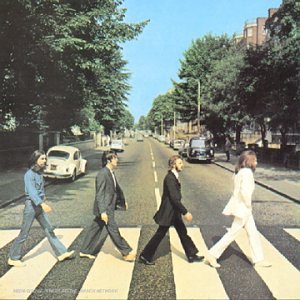
Today in 1969, while the Beatles were wrapping up work on “Abbey Road,” they shot the album cover:
One year later, Blood Sweat & Tears’ “Blood Sweat & Tears 3” hit number one:
Birthdays start with Philip Baisley, one of the Statler Brothers:
A month ago, I discovered a few old pieces of Madison media on YouTube, and posted them on this blog.
Then on Tuesday, I was trying to write Wednesday’s blog item when I checked on Facebook.
Several hours later, I decided to start writing this to make up for all the time I lost in the Facebook “If you grew up in Madison you remember” group. I think I once mentioned that most of my high school graduating class appeared to be on Facebook. Apparently everyone else who grew up in Madison the same time, or before then, is on Facebook too.
On Tuesday, the activity on this group slowed down my laptop and threatened to bring the Internet to a screeching halt more effectively than an electromagnetic pulse. It was like feeding bread to ducks, with people fighting to get their memories of Madison online.
In the four hours between when I was let into the group and when I finally turned off the email notifications, there were more than 500 posts. The group jumped over 1,000 members and 3,000 posts less than 24 hours after it was created. (As someone posted, “Hooray! We broke Facebook!”) By the end of its second day it exceeded 3,400 members and 7,500 posts. By the end of its third day it exceeded 4,600 members (and jumped over 5,000 members shortly thereafter) and 11,000 posts. WIBA (1310 AM) in Madison is doing a segment about this group today at 10:30 a.m. This site may need to be spun off of Facebook onto its own domain — maybe www.ifyougrewupinmadisonyouremember.com.
A lot of the memories, not surprisingly for Wisconsin, involved bars and drinking. (I’ll pause while you recover from the shock.) I was part of the last high school class that could legally drink at 18. One of my first mixed drinks was something called Swampwater, which was the color of antifreeze and was usually served in mason jars. I have been unable to determine what was in it. (I drank that in a campus bar where I was in more than any other campus bar; in a previous location, it was a favorite of my father’s back when he was a UW student.) There were also fond memories of Long Island Ice Teas, which, for those who can’t decide between gin, rum, vodka or whiskey, combines all four, plus triple sec, sour mixer and cola. As one poster put it, “This site is proof you can’t kill all your brain cells no matter how hard you tried.”
Many of the other memories (including the aforementioned memories involving adult beverages) undoubtedly were of the if-our-parents-only-knew variety. (The amusing point to ponder is how many of the members’ parents are also on Facebook.) The future corollary is when parents ask themselves how much of what they did when they were their children’s age would they want their own children to do.
In rough alphabetical order, what also came up included:
The A&W drive-in that sold root beer in the baby-size mugs quite inexpensively. Ask my parents, and they will tell you how on summer nights they would give their boys baths, put them in their pajamas, and take them to this drive-in, where they would order three root beers and one orange. (Guess who got the orange because he didn’t like root beer.) And the boys in the back seat would have one orange smile and one brown smile.
Arlans, a discount retailer that had a store on Milwaukee Street, and Eagle, the grocery store on the other half of the same building. Swiss Colony owned the building last time I saw it. The building is west of the “new” Madison post office, opened in Gerald Ford’s presidency.
Barnaby’s, a pizza place where numerous birthday parties were held. People placed orders and then picked them up when a light at their table informed them dinner was ready. It offered pizza-and-root beer combinations, which was fine unless you didn’t like root beer.
Bridgeman’s, a restaurant and ice cream parlour (that’s how they spelled it) that was my first employer. There was a Dairy Queen in the neighborhood before Bridgeman’s, but when Bridgeman’s arrived it blew DQ out of the water. (On the other hand, there is still a restaurant in the original DQ building, whereas the old Bridgeman’s is now, ironically, a dental office.) The best thing about working at Bridgeman’s was eating the mistakes, particularly the Tin Roof sundae (hot fudge, butterscotch and pecans, I think). Drinks were free, but food was full price unless, oops, someone made a mistake. (Perhaps that’s why it went out of business less than a decade after it opened.)
The C&P shopping center with a sloped parking lot. Most of the store was level with the west side of the lot, but there was a ramp that went from the main level to the ground level where shoppers could bring their cars and pick up their groceries. (Another thing you never see anymore.) Of course, five-year-olds loved to race down the ramp ahead of Mom’s grocery carts.
Cars we drove or owned, which were on the large side in the case of the former and were barely functioning in the case of the latter.
“Choi,” a term of approval at La Follette (I assume it’s short for “choice”), and the more superlative “choi to the max!” At the time I thought this was just an ’80s term. Based on posts, however, it appears to have been limited to only Madison. That makes one wonder who started “choi,” in the same way that La Follette alumni of the early ’80s still wonder who started the epic spring 1982 outdoor food fight.
Concerts in various venues ranging from the Shuffle Inn (Van Halen) to Headliners (Joan Jett) to Merlin’s (U2) to the Dane County Coliseum (Janis Joplin, Jimi Hendrix, the Doors, the Doobie Brothers, Elvis Presley, Cheap Trick opening for Queen, REO Speedwagon opening for every other act, Foreigner, Chicago more than once) to the Orpheum Theater (Bob Marley and the Wailers) to the Dane County Junior Fair (Rick Springfield) to the Memorial Union Terrace (the Violent Femmes) to Breese Stevens Field (Ready for the World and Sheila E) to … an East High School TWIRP (The Woman Is Required to Pay) dance, where Cheap Trick supposedly played.
Madison’s first convenience stores, Stop & Go and PDQ.
The drive between Madison and Cottage Grove, which was posted at 55 mph except for one 50-mph stretch. So much development has taken place in the intervening years that Dane County BB is now posted at 35 mph.
Department stores in the pre-mall era, including Gimbel’s, Manchester’s and Yost’s. Some offered not just clothing, but restaurants or hair styling. Similar to …
Several old drug stores, including Gerhardt’s (now a Walgreen’s) and Rennebohm’s, owned by a former governor of Wisconsin. I believe Gerhardt’s was where I purchased my first record (Rhythm Heritage’s “Theme from ‘SWAT’”). My parents remember the downtown Madison Rennebohm’s because it had a lunch counter (where I ate once before interviewing the mayor of Madison, who had just replaced the mayor who had replaced Paul Soglin.)
Our various doctors, dentists, etc. It turns out that our pediatrician, Dr. William Ylitalo of Quisling Clinic, was also the pediatrician of numerous other people in this group. (Quisling Clinic was started by two physicians who were cousins of Vidkin Quisling, who was to Norway what Vichy was to France. For running Norway for the Nazis, Vidkun was executed after the right side won.) Dr. Ylitalo’s son is in this group too, so I imagine he’s been enjoying the reading. And most of us also had in common various dental appliances to correct our overbites, underbites, or poorly spaced teeth.
The East Side Business Men’s Association festival on Milwaukee Street. Everyone who attended was of the age where they didn’t notice how rickety the Ferris wheel was. (The ESBMA building on Atwood Avenue/Monona Drive was also the site of the La Follette High School Class of 1983 post-graduation party, our final formal event as a class before the 1988 reunion. It’s now called the East Side Club.)
The early days of East Towne Mall, which in its first decade or two had fountains, smoking areas, a Burger King, County Seat (preferred source of Levi’s), the Aladdin’s Castle video arcade, a bar, a two-screen theater and the Moon Fun Shop, a head shop. East Towne also had York Steak House, where I had my first and last dates (and a few in between) with my first girlfriend.
The back road to East Towne, which before development there meant driving through a weird intersection that included a right-hand curve and a steep hill that ended at a stop sign. My brother was driving our 1975 Chevrolet Caprice to work one day when he was rear-ended at the multi-level intersection by a one-ton van. The van appeared as though a giant fist had smashed the front end. The Caprice suffered … a bent rear bumper.
The Hungry Hungry (or possibly Hungry Hungry Hungry), a drive-in I vaguely remember occasionally visiting across the street from Olbrich Park on the east shore of Lake Monona.
Ironic repositioning of store chains. What you know as Kohl’s, Wisconsin’s finest retail chain, was also a chain of grocery stores, most in buildings with curved roofs. What you know as Copps’ supermarkets also was a group of discount retail stores. The East Side had a Kohl’s grocery store and a Copps discount retail store, neither of which are in existence today. (The Kohl’s building on Monona Drive is still there, though.)
Kelly’s, a former fast-food chain in at least Madison. The difference between Kelly’s and McDonald’s was that Kelly’s had hot dogs, and its mascot was a dancing pickle reportedly named Pete.
Marc’s Big Boy, a restaurant on East Washington Avenue (the chain still exists, but not that restaurant) that featured fish in buckets wrapped with wax paper with London newspaper print, and Big Boy comic books.
Various off-brand gas stations, including Fisca, Kickapoo, Martin and Transport.
Paisan’s, which, in its fourth location, still has the best pizza in Madison.
The Pig’s Ear, a high-end restaurant (which I never went to) with garish pink walls. It is now called Talula and has gotten at least one good review.
Pizza Pit, which still runs this commercial:
Public employee strikes — the 1976 Madison teacher strike (which prompted the mediation/arbitration law), which got us two weeks off right after winter vacation for the price of (1) losing our entire spring vacation, (2) having to go to school on a Saturday, and (3) adding two days at the end of the school year) and the 1977 and 1980 Madison Metro bus strikes, which forced those who didn’t live near our middle and high schools to find alternative transportation to and from school.
Queen of Apostles High School, which was just east of Interstate 90. I didn’t go to “QAS,” but when I joined the Boy Scouts our meetings were there until it closed in the late 1970s. It’s now some kind of high-tech business.
The Catholic church many of us attended, St. Dennis, the only Catholic church in the entire La Follette attendance district. (St. Bernard was on Atwood Avenue, and Immaculate Heart of Mary were in Monona, but it still seems like poor planning to have a farther east or farther south Catholic church for the far East side’s exploding growth.) Until my senior year of high school, St. Dennis Masses were held in either a very small church, or the school gym. (For the first few years of my life, I thought every Catholic church had backboards and a scoreboard.) St. Dennis pre-adult parishioners were in two groups — those who also went to St. Dennis School between first and eighth grades, and those who attended the Madison public schools. St. Dennis didn’t have a church big enough for the enormous congregation until 1983, in a building project funded by monthly Friday fish fries in the 1970s, where I bused in exchange for free fish afterward.
Paul Soglin, when he was mayor of Madison the first time, from 1973 to 1979. And then he was mayor from 1989 to 1997. And then he was elected mayor again in April. (Perhaps when Soglin passes on they’ll just prop up his body El Cid-like in the City–County Building council chambers and have an assistant push keys on a laptop for “Motion to approve,” “those in favor say aye,” and so on.
Teachers, including former La Follette choir teacher Rod Witte (who was very popular with his singers) and Pete Olson, physical education and driver education teacher and (twice-state-championship-winning) boys basketball coach at La Follette, who now apparently can be found fishing on a lake in Vilas County. Any student or player of Olson’s knows exactly what he would have said about all this: “Not very impressive.”
Theaters, including the Cinema Theater on Atwood Avenue (where as previously noted my brother and I saw our first movie, “Lady and the Tramp”) and the Badger and Big Sky drive-ins.
The Wisconsin term for an ATM: a TYME machine, standing for “Take Your Money Everywhere.”
The old UW–Madison registration process. In the days before online registration, and even before the days you could register by phone, you were assigned a registration start time by your last name. Students at the state’s only world-class university started at the UW Stock Pavilion (just the place you want to be on a hot August day), then raced to various buildings corresponding with subject areas on campus, where the student would check with the academic department registration committee to see if any spots were available for the desired class. Repeat the process until you get your classes (if you have an early registration time), or, if not, figure out alternatives. One semester this process went so well that I had classes two days from 8:25 a.m. to 8:30 p.m., no classes at all two other days, and a morning full of classes on Friday. This is one of the excuses I have for not giving money to my alma mater.
The Vietnam War protests, well chronicled in the Academy Award-nominated documentary “The War at Home.” I had relatives outside Wisconsin who, not knowing the layout of Madison, assumed from what they saw on the evening news that their nephew and his young family was in danger of being assaulted by marauding college students. (There was no need for concern because (1) college students probably didn’t know Madison existed outside campus, and besides that (2) we were in bed by bartime.) The nadir of the antiwar movement occurred Aug. 24, 1970, when UW’s Sterling Hall was bombed by four people (one of whom disappeared shortly after the event and has never been found), killing one UW grad student. Many people remember the middle-of-the-night bombing for the sound it made and the damage it caused. I was a religious watcher of ABC-TV’s “The FBI” at the time, a show that ended with star Efrem Zimbalist Jr. doing a piece about someone on the FBI’s 10 Most Wanted list, and I remember the night those four were on.
“When we could road trip all night on $5 worth of gas!!!” And indeed you could do that, even with 11-mpg cars, because gas was less than $1 a gallon into the 1980s.
Various features of the Henry Vilas Zoo, including a polar bear that played with a bowling ball and the Mold-a-Rama machine. If that’s the polar bear I remember, I believe it came to a premature end when, after a mentally ill man jumped into the polar bear pit, Madison police shot the bear to protect the man. That led some people to suggest that the police had chosen which to shoot incorrectly. I went on a field trip with my oldest son to the zoo, and it, of course, blew my mind.
Younger readers and non-Madisonians will probably wonder what the hell these 3,000-plus people are babbling about. My prediction, however, is that you too will be reminiscing about the good old days (no matter how old you are) before you even realize it. My wife (who after her first La Follette reunion with me claimed she had more in common with my classmates than hers) recalls fondly driving around the courthouse square in Lancaster the wrong way, with her best friend screaming the whole way. (Or perhaps it was the mouse hiding in the headliner of the car — the stories sometimes get confused.)
I have no idea how many of the 3,000-plus members of the “If you grew up in Madison you remember” group still live in Madison. Based on what they remember, they, and I, grew up in a Madison that had fewer of the problems that Madison has today. (The weather, however, is unchangeable.) A number of posts included mention of going someplace by foot or on bus, by themselves, with no harm occurring, something you wouldn’t be likely to recommend doing today. So while Mad City was a good place to grow up, I don’t think it is a good place to grow up today, assuming you could even afford to live there.
These memories have also been softened, in one direction or another, by time. Distance makes us forget that, when we were in middle school, we wanted to get to high school, and when we were in high school (the giant angst factory), we wanted to get out of high school (whether “out” meant college, a job, or just out of Madison). Either we remember things as being better than they were, or things were better then than we thought they were at the time.
Most of us (certainly me) probably need to thank our parents for their contributions to the Madison in which they raised us. Many, including my parents, came to Madison from various other places, sometimes for better occupational opportunity, or perhaps because they thought Madison would be a better place to raise their kids than where they grew up. They were the people went to work every weekday (or more), paid the high taxes, took up their free time with various civic involvements, endured the institutional strangeness, and made the other sacrifices parents make for their kids. And the memories on this insanely popular Facebook page were one of the results.
First, a non-rock anniversary: Today is the 90th anniversary of the first broadcasted baseball game, on KDKA in Pittsburgh: Harold Arlen described Pittsburgh’s 8–0 win over Philadelphia. (Things have changed since then.)
Today in 1966, the Beatles recorded “Yellow Submarine” …
… and “Eleanor Rigby” …
… while also releasing their “Revolver” album.
One year later, the pirate rock radio station Radio London, eight miles off the British coast in the ship MV Galaxy, broadcasted for the final time after the British Parliament passed a law making it illegal:
Today in 1974, Joan Jett formed the Runaways:
Birthdays begin with Rick Huxley, one of the Dave Clark Five:
Sammi Smith was a one-crossover-hit wonder:
Who is Rick Zehringer? You know him better as Rick Derringer …
Another one-hit wonder: Samantha Sang, who sang …
Pete Burns of Dead or Alive:
Mike Nocito of Johnny Hates Jazz:
Two deaths of note: Jeff Porcaro, drummer for Toto, in 1992 …
We Wisconsinites who now pay the fourth highest state and local taxes in the nation have been told for decades that high taxes are the price we must pay for the quality of our public services.
Which is a highly debatable concept, particularly for those who (unlike me) have lived in other states and can see that their public services are not appreciably different from or inferior to ours.
This came to mind during a road construction (one of Wisconsin’s two seasons) adventure on the way to southwest Wisconsin for a few days.
No, Leo is not driving the minivan.
The drive from Ripon to Platteville was uneventful, including a couple of construction zones, except for the annoyance of the stoplight-to-stoplight drive on Verona Road leaving Madison. Then we got to Platteville, and I noticed the U.S. 151 exit we take to head toward Lancaster had a board over the word under “Platteville” on the Big Green Sign that indicates the Wisconsin 80/81 exit. And when I saw detour signs, I realized that the Big Green Sign covered up the word “Lancaster.”
OK, this is not a problem. I lived in Grant County long enough to know there are alternate routes from Platteville to Lancaster. The closest one to Lancaster is Grant County B, which runs from Platteville to Rockville, north of Potosi. Except that County B was also closed, with, unlike the 81 detour, no marked detour route. Several minutes of driving around the periphery of Platteville later, we found Grant County O, which runs from Platteville to Tennyson and is the detour for County B.
Grant County O, however, is winding, lacks shoulders, and appeared to have not had its center stripes (double yellow the whole way) painted in a year beginning with the number 2. And, of course, we were stuck behind a pickup truck pulling a horse trailer. But we finally did get to Tennyson and U.S. 61, which splits Tennyson and Potosi. Where we discovered that U.S. 61 is in the midst of a repaving project. While U.S. 61 is open, parts of it have only one lane open during said repaving.
This only made us late for my mother-in-law’s delectable chicken drumsticks and corn on the cob. (Not to mention giving me column fodder. Attention politicians: Bloggers with followers are the wrong people to make angry.) But the Grant County sheriff’s car ahead of us did make us wonder how fire trucks or ambulances would navigate the barely paved roads. And the inconvenience to farmers and trucking companies means lost revenue.
I don’t know who is at fault for this poor planning — the Wisconsin Department of Transportation, the Grant County Highway Department, the City of Platteville, or all three — of having not only a road closed (for, as it turns out, one bridge) and a detour route closed at the same time. Or having one of the county’s main highways coming out of the county’s largest city closed and a potential detour route (plus a second, Grant County A from Arthur to Lancaster, as we found out in the Grant County Herald Independent) also being repaved at the same time. (We didn’t follow the posted detour because, as those who live near Wisconsin 23 between Green Lake and Princeton know, WisDOT has a habit of extremely lengthy detours for its road projects on the principle that detouring traffic onto similar roads is preferable to detouring traffic on the most direct alternate route. The marked detour, U.S. 61/151 from Platteville to Dickeyville and 61 from Dickeyville to Lancaster, is both twice as long and, yes, also being repaved.) Someone didn’t plan the calendar correctly, given that road projects are planned years in advance. And if you are stuck in traffic or stuck behind a slow-moving vehicle, you don’t really care whose fault it is.
So for those who have noticed a lack of respect for government employees during the first six months of the Walker administration from the voters, well, that lack of respect may be for reasons unrelated to salaries or benefits. Saying you have great schools (this means you, WEAC!) or high-quality public services does not necessarily mean that is the case. Perhaps voters are unsympathetic to the public employee (collective bargaining, two words you haven’t heard) cause because they don’t think their tax dollars are being wisely spent.
The first birthday today isn’t a rock music birthday, but fans of the trumpet have to recognize Louis Armstrong:
Elsbeary Hobbs of (the Ben E. King iteration of) the Drifters:
Who is Frank Guzzo? Frankie Ford, who invited you to go on …
Paul Leyton of the Seekers:
Robbin Crosby of Ratt:
The Paul Williams with a birthday today isn’t the short ’70s songwriter who played Little Enos in the “Smokey and the Bandit” movies; he is the Paul Williams who played guitar for A Flock of Seagulls:
The Obama administration’s latest answer in search of a question is its regulation to raise Corporate Average Fuel Economy to 54.5 mpg by 2025.
Forbes.com’s Jim Gorzelany notes that “major automakers recently signed off ” on the 54.5-mpg standard. Which perhaps proves Karl Marx’s (misquoted) claim that capitalists will sell you the rope with which to hang them. Given the performance the past few years of Government Motors and Fiat’s U.S. subsidiary, I have difficulty giving GM and Chrysler much credibility in telling American car-owners what they want.
CAFE dates back to 1975, the federal government’s knee-jerk response to the first energy crisis of 1973–74. I remember this because when my family looked at cars in the summer of 1975, each new car had, for the first time, its estimated fuel economy. The 1975 Chevrolet Caprice we purchased was rated at 13 mpg in the city and 18 mpg on the highway.
I love this section from Wikipedia about CAFE that demonstrates how government is unable to figure out priorities:
US Congress specifies that CAFE standards must be set at the “maximum feasible level” given consideration for:
Priorities 1 and 2 are at cross purposes until technology advances from “bleeding edge” to “leading edge.” Those “other standards” are principally safety standards, which too many people think of as seat belts, air bags, side door beams and the like, and too few think of as how the car is able to perform, under the hood and through the tires and suspension. And you’ll notice that none of those four standards includes two words: “consumer demand.”
The CAFE standards require that an automaker have a fleet average — the average fuel economy of all the vehicles it sells — of 25 mpg for the 2011 model year and, by 2025, 54.5 mpg. Which requires some math to explain. Let’s say a carmaker sells five vehicles — four get 60 mpg, and its pickup truck gets 20 mpg. (In other words, 80 percent of the automaker’s vehicles get 60 mpg, and 20 percent get 20 mpg.) The automaker’s fleet average is 52 mpg. And by the Obama standards, the automaker will not make that 54.5-mpg standard.
Here is the complete list of vehicles whose mpg ratings allow them by themselves to meet the 2025 standard:
2011 Nissan Leaf (an electric car), 106 mpg city, 92 mpg highway, 99 combined mpg.
2011 smart fortwo (also electric) convertible or coupe, 94 mpg city, 79 mpg highway, 87 combined mpg.
That’s it. Of course, even for fuel mileage-minded consumers, that’s only one part of the equation. The more important part is: Will the car meet my vehicular needs? And the answer for most drivers will be: Have you lost your mind?
The Obama administration is misguided in too many areas to count, but this is certainly one of them: that American car owners look for fuel economy first and foremost in their vehicle purchases. (That’s when Americans are able to buy new cars, which excludes, well, any year since 2008.)
Consider this family — two adults (one of whom works out of town) and three children who, based on the height of their parents, will be taller than the national average as they near adulthood. Nissan claims for your $35,500 the Leaf seats five, but the mere presence of three sets of seat belts in the back seat is no assurance that the three sentenced to the back seat will go more than one mile without complaining about their lack of space. And the presence of only five seats means that their friends or other family will have to find other transportation if they’re ever going to the same place we are.
And there are a lot of things we don’t do that other families do — namely, pulling large loads such as campers, boats or similarly heavy trailers. Trailering requires torque, and small engines can be tuned for horsepower, but not usually torque. Living in a small town, the alleged 106-mpg city capacity won’t be used that much; its road performance — which includes but is primarily gas mileage, unless you like the idea of becoming someone’s hood ornament on U.S. 41 or U.S. 151 — is at least as important.
Nissan’s claims about the Leaf’s electric capabilities deserve skepticism as well. Up here near the Arctic Circle, the below-zero temperatures during our marathon winters suck energy out of batteries. Many homeowners also require more vehicles than garage space. Nissan’s alternative is to keep the car plugged in when not in use, which means (as owners of vehicles with engine block heaters know) you’ll be paying for your Leaf twice a month — once when your car payment is due, and once when your electric bill is due.
(You may think I’m picking on the Leaf. And I am, but the Leaf is as of today the only car that can seat more than two and meet the 54.5-mpg standard.)
Gorzelany runs down the list of ways he claims the automakers will meet the 54.5-mpg standard using technology being used today:
But while environmentalists and futurists lay high hopes on plug-in cars, analysts agree the conventional internal-combustion engine will remain the primary source of propulsion for vehicles in the U.S. for some time to come. “Gasoline engines will still power 80 to 90 percent of vehicles all the way through 2025,” predicts George Peterson, president of AutoPacific Group, a Tustin, California-based automotive research firm.
Automakers will thus have to dig deep into their engineering bags of tricks to make tomorrow’s cars and trucks more fuel efficient without the wholesale downsizing and de-powering that rocked the industry in the 1980s. Unfortunately, leveraging the full range of fuel economy-boosting technology will come at an added cost, which the Obama administration figures could amount to as much as $3,500 per vehicle. …
As it turns out the solutions don’t necessarily require a reinvention of the wheel, so to speak. … [A] look at 10 techniques and technologies we predict automakers will be employing in abundance to help boost their corporate average fuel economies to 54.5 mpg by 2025 … range from the easier solutions, like making cars lighter and more aerodynamic, to using more sophisticated engine and transmission technology to wring every last mpg out of a gallon of gas.
Some of these things seem fine, such as electric-powered accessories. Turbocharging is fine too except that turbocharging is not normally associated with long engine life. Given the disaster that was GM’s V8–6–4 engine, I am not willing to bet that engines whose cylinders turn on and off will work as designed. And the logic of starting and stopping at every stoplight absolutely escapes me. Moreover, automakers can put as much safety equipment as they can conjure up, and that still does not overcome the laws of physics — when big things hit little things, the little things lose.
CAFE standards destroyed the full-size station wagon, and consumers responded by buying sport utility vehicles. What will happen to, for instance, contractors or farmers when CAFE standards end the pickup truck? What will happen to families beyond two children when CAFE standards end the van? (And don’t even bring up sports cars; by 2050 they will be as dead as a car with its lights left on New Year’s night.)
What is most important to the Big Three, and probably their Japanese and European competition, is how to make more money by selling fewer cars. The 54.5-mpg standard, remember, is estimated to add up to $3,500 per vehicle. (And I’m guessing that’s a substantial underestimate.) We car buyers will supposedly get that money back through spending less on gas, which seems like a back-door method for what I believe the Obama administration wants to do but doesn’t dare publicly admit — increase taxes on fossil fuels by at least $1 per gallon to fund whatever stupidity they want to fund. (For instance, pseudo-high-speed rail.) That and the increasing reliability (as of now) of cars means people will buy fewer cars in their lifetimes, which gives carmakers fewer opportunities to sell their products.
The 54.5-mpg standard is the Obama administration’s latest attempt to enforce lifestyle change. If cars are more expensive to purchase and (thanks to their plans to jack up energy costs through taxation) operate, we won’t drive as much. That sticks it to anyone who has to commute from a small town, or travel for their job, doesn’t it? And if vehicles are not capable of transporting more than two people, or are not capable of pulling large loads, people aren’t going to be able to do those activities either. (Does the administration realize how big an industry tourism is in Wisconsin?)
This part of Wisconsin has one veteran member of Congress, U.S. Rep. Tom Petri (R–Fond du Lac), and two rookies, Reid Ribble (R–Kaukauna) and Sean Duffy (R–Ashland). They need to work together with Wisconsin’s new U.S. senator, Ron Johnson, to stop the increased CAFE standards specifically and to end CAFE standards generally. The only people who should decide what kind of cars they want to buy are car-buyers, not the federal government.


 Steve Prestegard.com: The Presteblog