Today is the anniversary of the Beatles’ first song to reach the U.S. charts, “From Me to You.” Except it wasn’t recorded by the Beatles, it was recorded by Del Shannon:
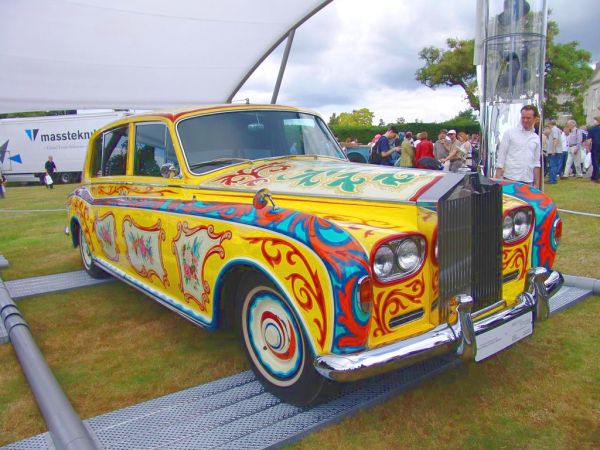
Five years later, John Lennon sold his Rolls–Royce:
Sharing my daughter’s birthday are Smiley Lewis, who first did …
This seems appropriate to begin Independence Day …
… as is this, whether or not Independence Day is on a Saturday:
This being Independence Day, you wouldn’t think there would be many music anniversaries today. There is a broadcasting anniversary, though: WOWO radio in Fort Wayne, Ind., celebrated the nation’s 153rd birthday by burning its transmitter to the ground.
Independence Day 1970 was not a holiday for Casey Kasem, who premiered “America’s Top 40,” though it likely was on tape instead of live:
An interesting anniversary considering what tomorrow is: Today in 1978, the U.S. Supreme Court upheld a Federal Communications Commission ruling punishing WBAI radio in New York City for broadcasting George Carlin’s Seven Dirty Words. (If you click on the link, remember, you’ve been warned.)
Here’s an odd anniversary: Four days after Cher divorced Sonny Bono, she married Gregg Allman. Come back to this blog in nine days to find out what happened next.
Birthdays start with Florence Ballard of the Supremes …
There was a definite horn rock theme today in 1968, as proven by number seven …
… six …
… two …
… and one on the charts:
Today in 1971, Mick Jagger and Keith Richards were sentenced on drug charges. And, of course, you could replace “1971” with any year and Jagger’ and Richards’ names with practically any rock musician’s name of those days.
Or other people: Today in 2000, Eminem’s mother sued her son for defamation from the line “My mother smokes more dope than I do” from his “My Name Is.”
Birthdays start with LeRoy Anderson, whose first work was the theme music for many afternoon movies, but who is best known for his second work (with which I point out that Christmas is less than six months away):
For some reason, the Beatles’ “Sie Liebt Dich” got only to number 97 on the German charts:
The English translation did much better, yeah, yeah, yeah:
Today in 1968, Elvis Presley started taping his comeback special:
Today in 1989, The Who performed its rock opera “Tommy” at Radio City Music Hall in New York, their first complete performance of “Tommy” since 1972:
This would have never happened in the People’s Republic of Madison, but … in Milwaukee today in 1993, Don Henley dedicated “It’s Not Easy Being Green” to President Bill Clinton … and got booed.
My German side should appreciate this: Today in 1870, Richard Wagner premiered “Die Valkyrie”:
Today in 1964, the Beatles released their album “A Hard Day’s Night”:
Today in 1975, Sonny and Cher decided they didn’t got you (that is, them) babe anymore — they divorced, which meant it was no longer true that …
(Interestingly, at least to me: Sonny and Cher revived their CBS-TV show after their divorce. Also, Cher did a touching eulogy at Sonny Bono’s funeral.)
Today in 1990, eight Kansas and Oklahoma radio stations decided to boycott singer KD Lang because she didn’t have a constant craving for meat, to the point she did an anti-meat ad:
Birthdays start with Billy Davis Jr. of the Fifth Dimension:
Jean Knight, who was dismissive of Mr. Big Stuff:
Rindy Ross, the B-minor-favoring singer of Quarterflash:
 Steve Prestegard.com: The Presteblog